Question bank

Q&A: practice questions with answers

Search questions on any topic. Filter by exam category, exam, subject and topic, try the question, then open the answer and explanation.

Courses – airGurukul

8,495 questions found.

Q6841.
The HCF and LCM of two numbers are 15 and 225, respectively. Which of the following pairs can be the numbers?
दो संख्याओं का HCF और LCM क्रमशः 15 और 225 है। निम्नलिखित में से कौन-सा युग्म वे संख्याएँ हो सकती हैं?
  1. A25 and 13525 और 135
  2. B25 and 6525 और 65
  3. C45 and 7545 और 75
  4. D15 and 7515 और 75
Show answer

Concept: Product of two numbers = HCF × LCM, and both numbers must be multiples of the HCF.

  1. Required product =15×225=3375.
  2. 45×75=3375 ✓; HCF(45,75)=15, LCM =225 ✓.
  3. 15×75=1125 ✗ and 25, 65, 135 pairs are not multiples-of-15 pairs ✗.

Trick: First discard any pair whose numbers are not both multiples of the HCF.

Answer: (C) 45 and 75

अवधारणा: दो संख्याओं का गुणनफल = HCF × LCM, और दोनों संख्याएँ HCF की गुणज होनी चाहिए।

  1. आवश्यक गुणनफल =15×225=3375।
  2. 45×75=3375 ✓; HCF =15, LCM =225 ✓।
  3. 15×75=1125 ✗; 25 वाले युग्म 15 के गुणज नहीं ✗।

ट्रिक: पहले वे युग्म हटाएँ जिनकी संख्याएँ HCF की गुणज नहीं।

उत्तर: (C) 45 और 75
RRB NTPC Undergraduate CBT 1MathematicsHCF and LCMRRB NTPC Undergraduate CBT 1 2025 · 16 Jun Shift 3 →
Q6842.
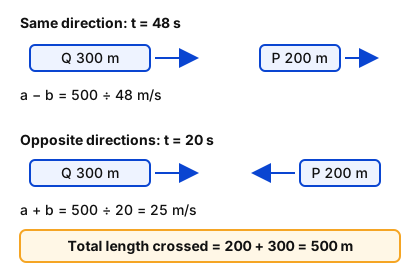
Two trains P and Q, measure 200 m and 300 m in length, respectively. The faster train, coming from behind, takes 48 seconds to overtake the slower when moving in the same direction. When they approach each other from opposite directions, they cross each other completely in 20 seconds. Determine the speed of the faster train.
दो रेलगाड़ियों P और Q की लंबाई क्रमशः 200 m और 300 m है। एक ही दिशा में चलते समय, पीछे से आ रही तेज़ रेलगाड़ी धीमी रेलगाड़ी को पार करने में 48 सेकंड लेती है। जब वे विपरीत दिशाओं से एक-दूसरे की ओर आती हैं, तो वे 20 सेकंड में एक-दूसरे को पूरी तरह पार कर लेती हैं। तेज़ रेलगाड़ी की चाल ज्ञात कीजिए।
  1. A62.75 km/h
  2. B61.75 km/h
  3. C63.75 km/h
  4. D60.75 km/h
Show answer

Concept: Crossing distance = sum of lengths. Same direction → speeds subtract; opposite direction → speeds add.

  1. Total length =200+300=500m.
  2. a−b=50048m/s, a+b=50020=25m/s.
  3. 2a=25+50048=170048⇒a=85048m/s.
  4. In km/h: 85048×185=63.75km/h.

Trick: Faster speed =12(Lt1+Lt2) with L=500.

Answer: (C) 63.75km/h

अवधारणा: पार करने की दूरी = दोनों लंबाइयों का योग। एक दिशा में चाल घटती है, विपरीत दिशा में जुड़ती है।

  1. कुल लंबाई =500m।
  2. a−b=50048, a+b=25m/s।
  3. 2a=170048⇒a=85048m/s।
  4. 85048×185=63.75km/h।

ट्रिक: तेज़ चाल =12(Lt1+Lt2), L=500।

उत्तर: (C) 63.75km/h

RRB NTPC Undergraduate CBT 1MathematicsTrains – Relative SpeedRRB NTPC Undergraduate CBT 1 2025 · 16 Jun Shift 3 →
Q6843.
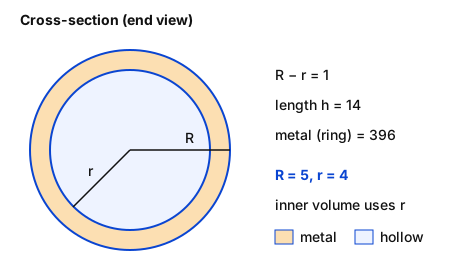
A hollow cylinder of thickness 1 unit and length 14 units is made with 396 cubic units of metal. Its inner volume is _____ cubic units. (Take π=227)
1 इकाई मोटाई और 14 इकाई लंबाई का एक खोखला बेलन 396 घन इकाई धातु से बना है। इसका आंतरिक आयतन _____ घन इकाई है। (π=227 लीजिए)
  1. A730
  2. B704
  3. C636
  4. D676
Show answer

Concept: Metal volume =π(R2−r2)h; inner volume =πr2h.

  1. 227(R2−r2)×14=396⇒R2−r2=9.
  2. (R−r)(R+r)=9 with R−r=1⇒R+r=9.
  3. R=5, r=4.
  4. Inner volume =227×16×14=704.

Trick: R2−r2=(R−r)(R+r) — thickness gives one factor instantly.

Answer: (B) 704

अवधारणा: धातु का आयतन =π(R2−r2)h; भीतरी आयतन =πr2h।

  1. 227(R2−r2)×14=396⇒R2−r2=9।
  2. R−r=1⇒R+r=9।
  3. R=5, r=4।
  4. भीतरी आयतन =227×16×14=704।

ट्रिक: R2−r2=(R−r)(R+r) — मोटाई से एक गुणनखंड तुरंत मिलता है।

उत्तर: (B) 704

RRB NTPC Undergraduate CBT 1MathematicsHollow CylinderRRB NTPC Undergraduate CBT 1 2025 · 16 Jun Shift 3 →
Q6844.
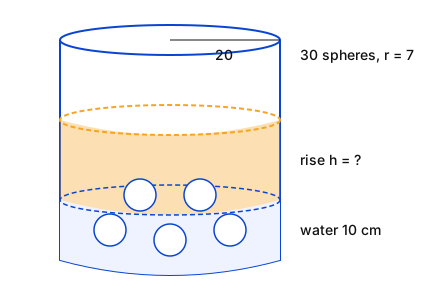
A cylindrical tank of radius 20 cm contains water up to a height of 10 cm. If 30 solid spheres, each of radius 7 cm, are completely immersed in the water, then the rise in the water level (in cm) is (Use π=3.14)
20 cm त्रिज्या वाले एक बेलनाकार टैंक में 10 cm की ऊँचाई तक पानी भरा है। यदि 7 cm त्रिज्या वाले 30 ठोस गोलों को पानी में पूरी तरह डुबो दिया जाए, तो जल स्तर में वृद्धि (cm में) कितनी होगी? (π=3.14 का प्रयोग कीजिए)
  1. A28.7 cm
  2. B34.3 cm
  3. C32.4 cm
  4. D36.5 cm
Show answer

Concept: Volume of immersed solids = volume of water raised: 30×43πr3=πR2h.

  1. π cancels: 30×43×73=202×h.
  2. 40×343=400h.
  3. h=13720400=34.3cm.

Trick: π cancels on both sides, so its value (3.14) is not even needed.

Answer: (B) 34.3 cm

अवधारणा: डुबोए गए ठोसों का आयतन = ऊपर उठे पानी का आयतन: 30×43πr3=πR2h।

  1. π कट जाता है: 30×43×343=400h।
  2. 13720=400h।
  3. h=34.3cm।

ट्रिक: π दोनों ओर कट जाता है, इसका मान लगाने की ज़रूरत नहीं।

उत्तर: (B) 34.3 cm

RRB NTPC Undergraduate CBT 1MathematicsMensuration – DisplacementRRB NTPC Undergraduate CBT 1 2025 · 16 Jun Shift 3 →
Q6845.
A cistern is filled by two taps, C and D, in 54 minutes and 81 minutes, respectively. There is also a drain E at the bottom. If all three are opened simultaneously, the cistern is filled in 108 minutes. In how many minutes can drain E alone empty the cistern? (up to two decimal places)
एक टंकी को दो नल C और D क्रमशः 54 मिनट और 81 मिनट में भरते हैं। तली में एक निकास E भी है। यदि तीनों को एक साथ खोल दिया जाए, तो टंकी 108 मिनट में भर जाती है। अकेला निकास E टंकी को कितने मिनट में खाली कर सकता है? (दशमलव के दो स्थानों तक)
  1. A42.06
  2. B45.64
  3. C46.29
  4. D49.24
Show answer

Concept: Net rate = fill rates − empty rate.

  1. 154+181−1E=1108.
  2. LCM 324: 6+4324−1E=3324.
  3. 1E=7324⇒E=3247≈46.29 min.

Trick: Take capacity = 324 units: C = 6, D = 4, all = 3 ⇒ E empties 7 units/min ⇒ 3247.

Answer: (C) 46.29

अवधारणा: शुद्ध दर = भरने की दरें − खाली करने की दर।

  1. 154+181−1E=1108।
  2. LCM 324: 10324−1E=3324।
  3. 1E=7324⇒E≈46.29 मिनट।

ट्रिक: क्षमता 324 इकाई मानें: C = 6, D = 4, सब मिलकर 3 ⇒ E = 7 इकाई/मिनट।

उत्तर: (C) 46.29

RRB NTPC Undergraduate CBT 1MathematicsPipes and CisternsRRB NTPC Undergraduate CBT 1 2025 · 16 Jun Shift 3 →
Q6846.
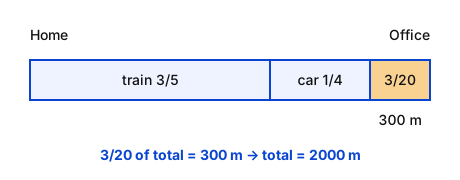
A person travels three-fifths of the total distance from home to office by train, one- fourth by car, and the remaining 300 metres on foot. What is the total distance (in kilometres) from home to office?
एक व्यक्ति घर से कार्यालय तक की कुल दूरी का तीन-पाँचवाँ भाग रेलगाड़ी से, एक-चौथाई भाग कार से और शेष 300 मीटर पैदल तय करता है। घर से कार्यालय तक की कुल दूरी (किलोमीटर में) कितनी है?
  1. A3
  2. B4
  3. C2
  4. D5
Show answer

Concept: Find the fraction left for walking and equate it to 300 m.

  1. Train + car =35+14=1720.
  2. On foot =1−1720=320 of total =300m.
  3. Total =300×203=2000m=2km.

Trick: Take total = 20 units: train 12, car 5, foot 3 units = 300 m ⇒ 1 unit = 100 m.

Answer: (C) 2

अवधारणा: पैदल वाला भाग निकालकर 300 m के बराबर रखें।

  1. ट्रेन + कार =35+14=1720।
  2. पैदल =320 भाग =300m।
  3. कुल =300×203=2000m=2km।

ट्रिक: कुल = 20 इकाई: ट्रेन 12, कार 5, पैदल 3 इकाई = 300 m।

उत्तर: (C) 2

RRB NTPC Undergraduate CBT 1MathematicsFractions – DistanceRRB NTPC Undergraduate CBT 1 2025 · 16 Jun Shift 3 →
Q6847.
A shopkeeper claims to sell rice at cost price, but uses a false weight and gains 25%. For 1 kg, how much rice does he actually give?
एक दुकानदार क्रय मूल्य पर चावल बेचने का दावा करता है, लेकिन गलत बाट का उपयोग करके 25% लाभ अर्जित करता है। 1 kg के लिए वह वास्तव में कितना चावल देता है?
  1. A900 gm
  2. B800 gm
  3. C750 gm
  4. D850 gm
Show answer

Concept: Selling at CP with a false weight: gain% =errortrue weight given×100.

  1. Let he gives w g for 1000 g price.
  2. 1000−ww=25100⇒1000=1.25w.
  3. w=800g.

Trick: Gain 25% =14 ⇒ gives 4 parts, charges 5 parts ⇒ 45×1000=800 g.

Answer: (B) 800 gm

अवधारणा: क्रय मूल्य पर बेचकर कम तौलना: लाभ% =कमीदिया गया वज़न×100।

  1. मान लें 1000 g के दाम में w g देता है।
  2. 1000−ww=14⇒1000=1.25w।
  3. w=800g।

ट्रिक: लाभ 14 ⇒ 4 भाग देता, 5 भाग का पैसा लेता ⇒ 800 g।

उत्तर: (B) 800 gm

RRB NTPC Undergraduate CBT 1MathematicsFalse WeightRRB NTPC Undergraduate CBT 1 2025 · 16 Jun Shift 3 →
Q6848.
If 1.2x=0.5y, find the value of x+yx−y.
यदि 1.2x=0.5y, तो x+yx−y का मान ज्ञात कीजिए।
  1. A143
  2. B−177
  3. C125
  4. D−214
Show answer

Concept: Convert the equation into a ratio x:y, then substitute.

  1. 1.2x=0.5y⇒xy=0.51.2=512.
  2. Put x=5, y=12.
  3. x+yx−y=17−7=−177.

Trick: Since x<y, x−y is negative, so the answer must be negative — only two options survive.

Answer: (B) −177

अवधारणा: समीकरण को अनुपात x:y में बदलें, फिर मान रखें।

  1. xy=0.51.2=512।
  2. x=5, y=12 रखें।
  3. 17−7=−177।

ट्रिक: x<y है, इसलिए उत्तर ऋणात्मक होगा।

उत्तर: (B) −177

RRB NTPC Undergraduate CBT 1MathematicsRatio – AlgebraRRB NTPC Undergraduate CBT 1 2025 · 16 Jun Shift 3 →
Q6849.
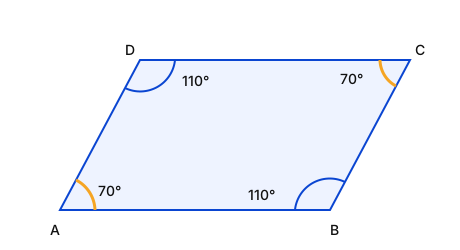
In a parallelogram, one angle is 70°. What are the measures of the other three angles?
एक समांतर चतुर्भुज में, एक कोण 70° है। अन्य तीन कोणों के माप क्या हैं?
  1. A110°, 110°, 110°
  2. B70°, 110°, 110°
  3. C70°, 90°, 110°
  4. D70°, 70°, 70°
Show answer

Concept: In a parallelogram, opposite angles are equal and adjacent angles are supplementary (sum 180∘).

  1. Opposite angle of 70∘ is 70∘.
  2. Adjacent angles =180∘−70∘=110∘ each.
  3. Other three: 70∘,110∘,110∘ (total 360∘ ✓).

Trick: Angles of a parallelogram come in two equal pairs adding to 180∘.

Answer: (B) 70∘,110∘,110∘

अवधारणा: समांतर चतुर्भुज में सम्मुख कोण बराबर और आसन्न कोणों का योग 180∘ होता है।

  1. 70∘ का सम्मुख कोण 70∘।
  2. आसन्न कोण =180∘−70∘=110∘।
  3. शेष तीन: 70∘,110∘,110∘ (योग 360∘ ✓)।

ट्रिक: दो-दो बराबर कोणों के जोड़े, जिनका योग 180∘।

उत्तर: (B) 70∘,110∘,110∘

RRB NTPC Undergraduate CBT 1MathematicsParallelogram AnglesRRB NTPC Undergraduate CBT 1 2025 · 16 Jun Shift 3 →
Q6850.
If ₹5,000 is invested at 8% per annum compounded annually, what will be the compound interest earned after 2 years?
यदि ₹5,000 को 8% वार्षिक चक्रवृद्धि ब्याज (वार्षिक रूप से संयोजित) पर निवेश किया जाए, तो 2 वर्ष बाद कितना चक्रवृद्धि ब्याज अर्जित होगा?
  1. A₹816
  2. B₹840
  3. C₹832
  4. D₹800
Show answer

Concept: CI=P[(1+R100)n−1].

  1. A=5000×(1.08)2=5000×1.1664=5832.
  2. CI=5832−5000=832.

Trick: 2-year CI rate =8+8+8×8100=16.64%; 16.64% of 5000 = 832.

Answer: (C) ₹832

अवधारणा: CI=P[(1+R100)n−1]।

  1. A=5000×1.1664=5832।
  2. CI=832।

ट्रिक: 2 वर्ष की प्रभावी दर =8+8+0.64=16.64%; 5000 का 16.64%=832।

उत्तर: (C) ₹832

RRB NTPC Undergraduate CBT 1MathematicsCompound InterestRRB NTPC Undergraduate CBT 1 2025 · 16 Jun Shift 3 →
Q6851.
A shopkeeper offers the following schemes on toys of the same marked price. (A) Successive discounts of 27% and 39% on any number of toys bought.
(B) Successive discounts of 39%, 7% and 40% on any number of toys bought. (C) 26% discount on the first 9 toys and 13% discount on each toy thereon.
(D) 7 toys free of cost on buying 9 toys.
A customer wants to buy 9 toys. Which of the above schemes is the least beneficial to her?
एक दुकानदार समान अंकित मूल्य वाले खिलौनों पर निम्नलिखित योजनाएँ प्रदान करता है। (A) कितने भी खिलौने खरीदने पर 27% और 39% की क्रमिक छूट।
(B) कितने भी खिलौने खरीदने पर 39%, 7% और 40% की क्रमिक छूट। (C) पहले 9 खिलौनों पर 26% छूट और उसके बाद प्रत्येक खिलौने पर 13% छूट।
(D) 9 खिलौने खरीदने पर 7 खिलौने मुफ़्त।
एक ग्राहक 9 खिलौने खरीदना चाहती है। उपर्युक्त में से कौन-सी योजना उसके लिए सबसे कम लाभदायक है?
  1. AD
  2. BC
  3. CB
  4. DA
Show answer

Concept: Compare the amount payable per toy (marked price = 100) under each scheme.

  1. A: 100×0.73×0.61=44.53.
  2. B: 100×0.61×0.93×0.60=34.04.
  3. C: all 9 toys at 26% off ⇒ 74. D: pays for 9, gets 16 ⇒ 90016=56.25 per toy.
  4. Scheme B stands apart from the others — its net payable (34.04) is the extreme value among the four schemes.

Trick: Multiply the 'remaining' fractions (1−d) of successive discounts; never add the discounts.

Answer: (B) B

अवधारणा: हर योजना में प्रति खिलौना देय राशि (अंकित मूल्य = 100) की तुलना करें।

  1. A: 100×0.73×0.61=44.53।
  2. B: 100×0.61×0.93×0.60=34.04।
  3. C: 9 खिलौनों पर 26% छूट ⇒ 74। D: 9 का दाम, 16 खिलौने ⇒ 56.25 प्रति खिलौना।
  4. योजना B का शुद्ध देय (34.04) चारों में सबसे अलग (चरम) मान है।

ट्रिक: क्रमिक छूट में (1−d) वाले भागों को गुणा करें, छूटों को जोड़ें नहीं।

उत्तर: (B) B

RRB NTPC Undergraduate CBT 1MathematicsSuccessive Discounts – SchemesRRB NTPC Undergraduate CBT 1 2025 · 16 Jun Shift 3 →
Q6852.
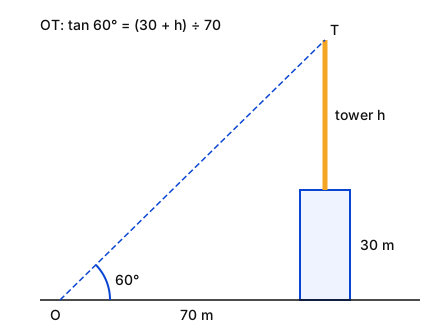
A vertical communication tower stands on a building 30 meters high. From a point 70 meters from the building, the angles of elevation to the top and bottom of the tower are 30° and 60°, respectively. What is the height of the tower (in m)?
30 मीटर ऊँचे एक भवन पर एक ऊर्ध्वाधर संचार टावर खड़ा है। भवन से 70 मीटर दूर स्थित एक बिंदु से टावर के शीर्ष और तल के उन्नयन कोण क्रमशः 30° और 60° हैं। टावर की ऊँचाई (m में) कितनी है?
  1. A703−30
  2. B303
  3. C703+30
  4. D7032+30
Show answer

Concept: From the observer, tanθ=heightdistance. Top of tower is at height 30+h.

  1. Elevation of the tower's top is 60∘ from 70 m away.
  2. tan60∘=30+h70⇒30+h=703.
  3. h=703−30m (about 91.2 m).

Trick: Total height =dtanθ; subtract the building to get the tower.

Answer: (A) 703−30

अवधारणा: प्रेक्षक से tanθ=ऊँचाईदूरी। टावर का शीर्ष 30+h ऊँचाई पर है।

  1. 70 m दूर से टावर के शीर्ष का उन्नयन कोण 60∘।
  2. tan60∘=30+h70⇒30+h=703।
  3. h=703−30m।

ट्रिक: कुल ऊँचाई =dtanθ; इमारत घटाकर टावर की ऊँचाई।

उत्तर: (A) 703−30

RRB NTPC Undergraduate CBT 1MathematicsHeights and DistancesRRB NTPC Undergraduate CBT 1 2025 · 16 Jun Shift 3 →
Q6853.
An item is sold after giving successive discounts of 10% and 20%. What is the net percentage reduction in its price?
एक वस्तु को 10% और 20% की क्रमिक छूट देने के बाद बेचा जाता है। इसके मूल्य में शुद्ध प्रतिशत कमी कितनी है?
  1. A28%
  2. B34%
  3. C32%
  4. D30%
Show answer

Concept: Net discount of a% and b%: a+b−ab100.

  1. 10+20−10×20100=30−2=28%.
  2. Check: 100→90→72, reduction 28%.

Trick: Two successive discounts are always a little less than their sum.

Answer: (A) 28%

अवधारणा: a% और b% की क्रमिक छूट: a+b−ab100।

  1. 10+20−2=28%।
  2. जाँच: 100→90→72, कमी 28%।

ट्रिक: दो क्रमिक छूट हमेशा उनके योग से थोड़ी कम होती है।

उत्तर: (A) 28%

RRB NTPC Undergraduate CBT 1MathematicsSuccessive DiscountsRRB NTPC Undergraduate CBT 1 2025 · 16 Jun Shift 3 →
Q6854.
Two taps can fill a cistern in 4 hours and 13 hours, respectively. A third tap can empty it in 13 hours. How long (in hours) will it take to fill one-fourth of the empty cistern if all the taps are opened together?
दो नल एक टंकी को क्रमशः 4 घंटे और 13 घंटे में भर सकते हैं। एक तीसरा नल इसे 13 घंटे में खाली कर सकता है। यदि सभी नल एक साथ खोल दिए जाएँ, तो खाली टंकी का एक-चौथाई भाग भरने में कितना समय (घंटों में) लगेगा?
  1. A2
  2. B4
  3. C1
  4. D3
Show answer

Concept: Net hourly work = sum of filling rates − emptying rate.

  1. 14+113−113=14 per hour.
  2. The second tap and the drain cancel each other.
  3. 14 of the cistern takes 1 hour.

Trick: Equal fill and empty times cancel — only the 4-hour tap matters.

Answer: (C) 1

अवधारणा: प्रति घंटा शुद्ध कार्य = भरने की दरें − खाली करने की दर।

  1. 14+113−113=14 प्रति घंटा।
  2. दूसरा नल और निकास एक-दूसरे को निरस्त कर देते हैं।
  3. 14 टंकी में 1 घंटा।

ट्रिक: समान भरने-खाली करने के समय कट जाते हैं।

उत्तर: (C) 1

RRB NTPC Undergraduate CBT 1MathematicsPipes and CisternsRRB NTPC Undergraduate CBT 1 2025 · 16 Jun Shift 3 →
Q6855.
A shopkeeper marks a washing machine at ₹24,000. During a festival, he offers a 20% discount and sells it for an additional ₹800 less. What is the final selling price of the washing machine?
एक दुकानदार एक वाशिंग मशीन पर ₹24,000 मूल्य अंकित करता है। एक त्योहार के दौरान, वह 20% छूट देता है और इसे अतिरिक्त ₹800 कम में बेचता है। वाशिंग मशीन का अंतिम विक्रय मूल्य क्या है?
  1. A₹17,600
  2. B₹18,800
  3. C₹18,400
  4. D₹19,200
Show answer

Concept: Apply the percentage discount first, then the flat reduction.

  1. After 20% discount: 24000×0.8=19200.
  2. Less ₹800: 19200−800=18400.

Trick: 20% of 24000 = 4800; total off =4800+800=5600.

Answer: (C) ₹18,400

अवधारणा: पहले प्रतिशत छूट, फिर अतिरिक्त कटौती।

  1. 20% छूट के बाद: 24000×0.8=19200।
  2. ₹800 कम: 19200−800=18400।

ट्रिक: कुल कटौती =4800+800=5600।

उत्तर: (C) ₹18,400

RRB NTPC Undergraduate CBT 1MathematicsDiscountRRB NTPC Undergraduate CBT 1 2025 · 16 Jun Shift 3 →
Q6856.
A shopkeeper sells an article to A at a profit of 20%. A sells it to B at a profit of 25%. If B pays ₹3,000, what is the cost price of the article for the shopkeeper?
एक दुकानदार एक वस्तु A को 20% लाभ पर बेचता है। A इसे B को 25% लाभ पर बेचता है। यदि B ₹3,000 का भुगतान करता है, तो दुकानदार के लिए वस्तु का क्रय मूल्य क्या है?
  1. A₹2,080
  2. B₹2,100
  3. C₹2,200
  4. D₹2,000
Show answer

Concept: Final price =CP×(1+p1100)(1+p2100).

  1. CP×1.2×1.25=3000.
  2. CP×1.5=3000⇒CP=2000.

Trick: 65×54=32 ⇒ CP =3000×23.

Answer: (D) ₹2,000

अवधारणा: अंतिम मूल्य =CP×(1+p1100)(1+p2100)।

  1. CP×1.2×1.25=3000।
  2. CP×1.5=3000⇒CP=2000।

ट्रिक: 65×54=32 ⇒ CP =3000×23।

उत्तर: (D) ₹2,000

RRB NTPC Undergraduate CBT 1MathematicsSuccessive ProfitRRB NTPC Undergraduate CBT 1 2025 · 16 Jun Shift 3 →
Q6857.
A shopkeeper buys two types of notebooks. The cost of 3 notebooks of the first type and 5 notebooks of the second type together is ₹420. The cost of one notebook of the second type is ₹20 more than the cost of one notebook of the first type. What is the cost of one notebook of the first type?
एक दुकानदार दो प्रकार की नोटबुक खरीदता है। पहले प्रकार की 3 नोटबुक और दूसरे प्रकार की 5 नोटबुक का कुल मूल्य ₹420 है। दूसरे प्रकार की एक नोटबुक का मूल्य पहले प्रकार की एक नोटबुक के मूल्य से ₹20 अधिक है। पहले प्रकार की एक नोटबुक का मूल्य क्या है?
  1. A₹40
  2. B₹45
  3. C₹42
  4. D₹48
Show answer

Concept: Let first type cost x; second costs x+20.

  1. 3x+5(x+20)=420.
  2. 8x+100=420⇒8x=320.
  3. x=40.

Trick: Option check: x=40 ⇒ 120+5×60=420 ✓.

Answer: (A) ₹40

अवधारणा: पहली प्रकार की कीमत x, दूसरी x+20।

  1. 3x+5(x+20)=420।
  2. 8x=320।
  3. x=40।

ट्रिक: विकल्प से जाँच: 120+300=420 ✓।

उत्तर: (A) ₹40

RRB NTPC Undergraduate CBT 1MathematicsLinear EquationsRRB NTPC Undergraduate CBT 1 2025 · 16 Jun Shift 3 →
Q6858.
Three friends, Amit, Bala, and Chetan, have savings in the ratio 5:7:9. If Bala's savings exceed Amit's by ₹3,600, what are Chetan's total savings?
तीन मित्रों, अमित, बाला और चेतन की बचत का अनुपात 5:7:9 है। यदि बाला की बचत अमित की बचत से ₹3,600 अधिक है, तो चेतन की कुल बचत कितनी है?
  1. A₹16,800
  2. B₹16,200
  3. C₹16,600
  4. D₹16,400
Show answer

Concept: Difference of ratio parts corresponds to the given difference.

  1. Bala − Amit =7−5=2 parts =3600.
  2. 1 part =1800.
  3. Chetan =9×1800=16200.

Trick: Unit method: find value of one part, multiply.

Answer: (B) ₹16,200

अवधारणा: अनुपात के भागों का अंतर दिए गए अंतर के बराबर।

  1. बाला − अमित =2 भाग =3600।
  2. 1 भाग =1800।
  3. चेतन =9×1800=16200।

ट्रिक: एक भाग का मान निकालें और गुणा करें।

उत्तर: (B) ₹16,200

RRB NTPC Undergraduate CBT 1MathematicsRatioRRB NTPC Undergraduate CBT 1 2025 · 16 Jun Shift 3 →
Q6859.
The sum of two positive numbers is 44 and their product is 228. The positive difference between them is:
दो धनात्मक संख्याओं का योग 44 है और उनका गुणनफल 228 है। उनके बीच धनात्मक अंतर है:
  1. A36
  2. B32
  3. C37
  4. D33
Show answer

Concept: (a−b)2=(a+b)2−4ab.

  1. (a−b)2=442−4×228=1936−912=1024.
  2. a−b=1024=32.
  3. (Numbers are 38 and 6.)

Trick: Check: 38+6=44, 38×6=228 ✓.

Answer: (B) 32

अवधारणा: (a−b)2=(a+b)2−4ab।

  1. (a−b)2=1936−912=1024।
  2. a−b=32।
  3. (संख्याएँ 38 और 6)।

ट्रिक: जाँच: 38+6=44, 38×6=228 ✓।

उत्तर: (B) 32

RRB NTPC Undergraduate CBT 1MathematicsAlgebraic IdentitiesRRB NTPC Undergraduate CBT 1 2025 · 16 Jun Shift 3 →
Q6860.
The average of five numbers is 24. If four of the numbers are 18, 20, 25 and 27, what is the fifth number?
पाँच संख्याओं का औसत 24 है। यदि इनमें से चार संख्याएँ 18, 20, 25 और 27 हैं, तो पाँचवीं संख्या क्या है?
  1. A28
  2. B30
  3. C35
  4. D32
Show answer

Concept: Sum = average × count.

  1. Sum of 5 numbers =24×5=120.
  2. Given four: 18+20+25+27=90.
  3. Fifth =120−90=30.

Trick: Deviations from 24: −6,−4,+1,+3 total −6 ⇒ fifth =24+6=30.

Answer: (B) 30

अवधारणा: योग = औसत × संख्या।

  1. 5 संख्याओं का योग =120।
  2. चार का योग =90।
  3. पाँचवीं =30।

ट्रिक: 24 से विचलन: −6,−4,+1,+3 = −6 ⇒ पाँचवीं =30।

उत्तर: (B) 30

RRB NTPC Undergraduate CBT 1MathematicsAverageRRB NTPC Undergraduate CBT 1 2025 · 16 Jun Shift 3 →