Question bank

Q&A: practice questions with answers

Search questions on any topic. Filter by exam category, exam, subject and topic, try the question, then open the answer and explanation.

Courses – airGurukul

8,495 questions found.

Q6921.
From which month and year are the Corporate Average Fuel Efficiency (CAFE-3) norms scheduled to be implemented in India?
भारत में कॉर्पोरेट औसत ईंधन दक्षता (CAFE-3) मानदंड किस माह और वर्ष से लागू होने निर्धारित हैं?
  1. AApril 2027अप्रैल 2027
  2. BApril 2028अप्रैल 2028
  3. CApril 2026अप्रैल 2026
  4. DApril 2029अप्रैल 2029
Show answer

Concept: CAFE norms limit the average CO₂ emission (fuel use) of all cars sold by a manufacturer in a year.

  1. CAFE-2 norms are in force from April 2022.
  2. The next stage, CAFE-3, proposed by the Bureau of Energy Efficiency (BEE), is scheduled to apply from April 2027 (for 2027–2032).

Yaad rakhein: CAFE-1: 2017, CAFE-2: 2022, CAFE-3: April 2027.

Answer: (A) April 2027

अवधारणा: CAFE मानक किसी निर्माता की वर्ष भर में बिकी सभी कारों के औसत CO₂ उत्सर्जन (ईंधन खपत) को सीमित करते हैं।

  1. CAFE-2 मानक अप्रैल 2022 से लागू हैं।
  2. अगला चरण CAFE-3, ऊर्जा दक्षता ब्यूरो (BEE) द्वारा प्रस्तावित, अप्रैल 2027 से (2027–2032 हेतु) लागू होना निर्धारित है।

याद रखें: CAFE-1: 2017, CAFE-2: 2022, CAFE-3: अप्रैल 2027।

उत्तर: (A) अप्रैल 2027
RRB NTPC Undergraduate CBT 1General AwarenessFuel efficiency normsRRB NTPC Undergraduate CBT 1 2025 · 16 Jun Shift 2 →
Q6922.
Which statement accurately explains the nature of the Inter Tropical Convergence Zone (ITCZ)?
कौन-सा कथन अंतर-उष्णकटिबंधीय अभिसरण क्षेत्र (ITCZ) की प्रकृति की सही व्याख्या करता है?
  1. AIt marks a westerly wind system close to the Tropic of Capricorn.यह मकर रेखा के निकट एक पछुआ पवन तंत्र को दर्शाता है।
  2. BIt forms a cold frontal region near the Himalayan ranges.यह हिमालय पर्वत श्रेणियों के निकट एक शीत वाताग्र क्षेत्र बनाता है।
  3. CIt is an equatorial low-pressure belt where trade winds meet.यह एक विषुवतीय निम्न दाब पेटी है जहाँ व्यापारिक पवनें मिलती हैं।
  4. DIt represents a zone of high pressure located near the poles.यह ध्रुवों के निकट स्थित उच्च दाब के क्षेत्र को दर्शाता है।
Show answer

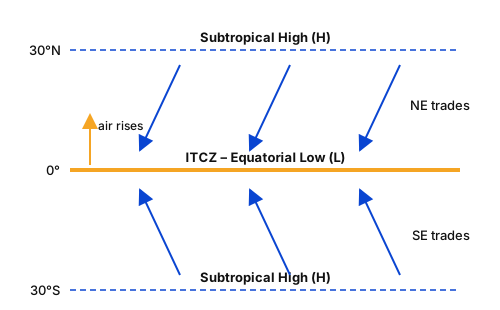
Concept: The ITCZ is the low-pressure zone near the equator where the trade winds of both hemispheres converge.

  1. Strong heating near the equator makes air rise, creating the Equatorial Low (doldrums).
  2. NE trade winds (north) and SE trade winds (south) blow from the subtropical highs (30∘) and meet here.
  3. It shifts north–south with the sun; its northward shift over India helps draw in the monsoon.

Trick: ITCZ = 'Inter-tropical' + 'Convergence' → between the tropics, where winds converge = equatorial low.

Answer: (C) It is an equatorial low-pressure belt where trade winds meet.

अवधारणा: ITCZ भूमध्य रेखा के पास का निम्न-दाब क्षेत्र है जहाँ दोनों गोलार्धों की व्यापारिक पवनें (trade winds) मिलती हैं।

  1. भूमध्य रेखा पर तीव्र तापन से हवा ऊपर उठती है – विषुवतीय निम्न दाब (doldrums) बनता है।
  2. उत्तर से NE व्यापारिक पवनें और दक्षिण से SE व्यापारिक पवनें उपोष्ण उच्च दाब (30∘) से आकर यहाँ मिलती हैं।
  3. यह सूर्य के साथ उत्तर–दक्षिण खिसकता है; भारत के ऊपर इसका उत्तर की ओर खिसकना मानसून लाने में मदद करता है।

ट्रिक: ITCZ = 'Inter-tropical' + 'Convergence' → उष्णकटिबंधों के बीच, जहाँ पवनें मिलती हैं = विषुवतीय निम्न दाब।

उत्तर: (C) यह विषुवतीय निम्न-दाब पेटी है जहाँ व्यापारिक पवनें मिलती हैं

RRB NTPC Undergraduate CBT 1General AwarenessPressure belts – ITCZRRB NTPC Undergraduate CBT 1 2025 · 16 Jun Shift 2 →
Q6923.
Which Indian city, as of October 2025, holds the world’s second-largest collection of Art Deco buildings, including the UNESCO-recognized Oval Maidan precinct with 94 structures?
अक्टूबर 2025 तक की स्थिति के अनुसार, कौन-सा भारतीय शहर आर्ट डेको (Art Deco) भवनों के विश्व के दूसरे सबसे बड़े संग्रह वाला शहर है, जिसमें 94 संरचनाओं वाला UNESCO-मान्यता प्राप्त ओवल मैदान परिसर भी शामिल है?
  1. AMumbaiमुंबई
  2. BKolkataकोलकाता
  3. CIndoreइंदौर
  4. DJaipurजयपुर
Show answer

Concept: Mumbai has the world's second-largest collection of Art Deco buildings, after Miami (USA).

  1. The 'Victorian Gothic and Art Deco Ensembles of Mumbai' became a UNESCO World Heritage Site in 2018.
  2. The ensemble around the Oval Maidan – Victorian Gothic on one side, Art Deco along Marine Drive/Backbay on the other – includes 94 buildings.

Yaad rakhein: Oval Maidan + Marine Drive = Mumbai's Art Deco; first is Miami.

Answer: (A) Mumbai

अवधारणा: मुंबई में मियामी (USA) के बाद विश्व का दूसरा सबसे बड़ा आर्ट डेको भवन-संग्रह है।

  1. 'Victorian Gothic and Art Deco Ensembles of Mumbai' को 2018 में UNESCO विश्व धरोहर घोषित किया गया।
  2. ओवल मैदान के आसपास – एक ओर विक्टोरियन गोथिक, दूसरी ओर मरीन ड्राइव/बैकबे पर आर्ट डेको – इस समूह में 94 इमारतें हैं।

याद रखें: ओवल मैदान + मरीन ड्राइव = मुंबई का आर्ट डेको; पहला स्थान मियामी।

उत्तर: (A) मुंबई

RRB NTPC Undergraduate CBT 1General AwarenessHeritage – Art DecoRRB NTPC Undergraduate CBT 1 2025 · 16 Jun Shift 2 →
Q6924.
Which Amendment made written Cabinet advice mandatory for Emergency in India?
किस संशोधन ने भारत में आपातकाल के लिए मंत्रिमंडल की लिखित सलाह को अनिवार्य बनाया?
  1. A26th Amendment26वाँ संशोधन
  2. B24th Amendment24वाँ संशोधन
  3. C44th Amendment44वाँ संशोधन
  4. D42nd Amendment42वाँ संशोधन
Show answer

Concept: The 44th Amendment Act, 1978 added safeguards to Article 352 after the 1975 Emergency.

  1. The President can proclaim a National Emergency only on the written recommendation of the Union Cabinet.
  2. It also replaced 'internal disturbance' with 'armed rebellion'.
  3. The 42nd Amendment (1976) had instead widened the Centre's powers.

Yaad rakhein: 42nd = 'mini-Constitution' (more power); 44th = repair job (safeguards).

Answer: (C) 44th Amendment

अवधारणा: 44वें संशोधन अधिनियम, 1978 ने 1975 के आपातकाल के बाद अनुच्छेद 352 में सुरक्षा उपाय जोड़े।

  1. राष्ट्रपति राष्ट्रीय आपातकाल केवल केंद्रीय मंत्रिमंडल (Cabinet) की लिखित सिफारिश पर ही घोषित कर सकते हैं।
  2. 'आंतरिक अशांति' के स्थान पर 'सशस्त्र विद्रोह' शब्द रखा गया।
  3. 42वें संशोधन (1976) ने इसके विपरीत केंद्र की शक्तियाँ बढ़ाई थीं।

याद रखें: 42वाँ = 'लघु संविधान' (अधिक शक्ति); 44वाँ = सुधार (सुरक्षा उपाय)।

उत्तर: (C) 44वाँ संशोधन

RRB NTPC Undergraduate CBT 1General AwarenessEmergency provisionsRRB NTPC Undergraduate CBT 1 2025 · 16 Jun Shift 2 →
Q6925.
For Windows operating system, choose the correct option that shows the primary difference between Sleep and Hibernate power-saving modes with respect to memory and system state?
Windows ऑपरेटिंग सिस्टम के लिए, वह सही विकल्प चुनिए जो मेमोरी और सिस्टम स्थिति (system state) के संदर्भ में Sleep और Hibernate पावर-सेविंग मोड के बीच मुख्य अंतर को दर्शाता है।
  1. ASleep keeps data in RAM; Hibernate saves it to diskSleep डेटा को RAM में रखता है; Hibernate उसे डिस्क पर सेव करता है
  2. BHibernate keeps data in RAM; Sleep saves to diskHibernate डेटा को RAM में रखता है; Sleep डिस्क पर सेव करता है
  3. CSleep saves system state to disk; Hibernate uses RAMSleep सिस्टम स्थिति को डिस्क पर सेव करता है; Hibernate RAM का उपयोग करता है
  4. DBoth save data to RAMदोनों डेटा को RAM में सेव करते हैं
Show answer

Concept: Sleep and Hibernate differ in where the open work (system state) is stored.

  1. Sleep: the session stays in RAM, which keeps getting a small amount of power – resume is almost instant.
  2. Hibernate: the contents of RAM are written to the hard disk (file hiberfil.sys) and the PC switches off fully – resume is slower but no power is used.

Trick: Sleep = RAM (needs power); Hibernate = Hard disk (no power).

Answer: (A) Sleep keeps data in RAM; Hibernate saves it to disk

अवधारणा: Sleep और Hibernate का अंतर यह है कि खुला काम (system state) कहाँ रखा जाता है।

  1. Sleep: सत्र RAM में रहता है, जिसे थोड़ी बिजली मिलती रहती है – तुरंत resume होता है।
  2. Hibernate: RAM की सामग्री हार्ड डिस्क (फ़ाइल hiberfil.sys) पर लिखी जाती है और PC पूरी तरह बंद हो जाता है – resume धीमा पर बिजली खर्च नहीं।

ट्रिक: Sleep = RAM (बिजली चाहिए); Hibernate = Hard disk (बिजली नहीं)।

उत्तर: (A) Sleep डेटा RAM में रखता है; Hibernate डिस्क पर सहेजता है

RRB NTPC Undergraduate CBT 1General AwarenessComputer – power modesRRB NTPC Undergraduate CBT 1 2025 · 16 Jun Shift 2 →
Q6926.
In 2022, the President pardoned a woman jailed for a minor crime. Which Article of the Indian Constitution allows the President to grant pardons?
2022 में, राष्ट्रपति ने एक छोटे अपराध के लिए जेल में बंद एक महिला को क्षमादान दिया। भारतीय संविधान का कौन-सा अनुच्छेद राष्ट्रपति को क्षमादान देने की शक्ति प्रदान करता है?
  1. AArticle 75अनुच्छेद 75
  2. BArticle 74अनुच्छेद 74
  3. CArticle 72अनुच्छेद 72
  4. DArticle 53अनुच्छेद 53
Show answer

Concept: Article 72 gives the President power to grant pardons, reprieves, respites, remissions or to suspend, remit or commute sentences.

  1. It covers punishment by court-martial, offences against Union laws and death sentences.
  2. Governor's similar power is in Article 161; Article 53 vests executive power in the President, Article 74 deals with the Council of Ministers advising the President, Article 75 with appointment of Ministers.

Yaad rakhein: President – 72, Governor – 161 (both act on ministerial advice).

Answer: (C) Article 72

अवधारणा: अनुच्छेद 72 राष्ट्रपति को क्षमा, प्रविलंबन, विराम, परिहार देने या दंड को निलंबित, परिहार या लघुकरण (commute) करने की शक्ति देता है।

  1. यह सैन्य न्यायालय के दंड, संघ के कानूनों के विरुद्ध अपराध और मृत्युदंड पर लागू है।
  2. राज्यपाल की ऐसी शक्ति अनुच्छेद 161 में है; अनुच्छेद 53 – संघ की कार्यपालिका शक्ति, 74 – राष्ट्रपति को सलाह देने वाली मंत्रिपरिषद, 75 – मंत्रियों की नियुक्ति।

याद रखें: राष्ट्रपति – 72, राज्यपाल – 161।

उत्तर: (C) अनुच्छेद 72

RRB NTPC Undergraduate CBT 1General AwarenessPardoning powerRRB NTPC Undergraduate CBT 1 2025 · 16 Jun Shift 2 →
Q6927.
What is GII in the context of Human Development?
मानव विकास के संदर्भ में GII क्या है?
  1. AGender Inequality Indexलैंगिक असमानता सूचकांक (Gender Inequality Index)
  2. BGender Inability IndexGender Inability Index (लैंगिक अक्षमता सूचकांक)
  3. CGender Inequality InformationGender Inequality Information (लैंगिक असमानता सूचना)
  4. DGeneral Inequality IndexGeneral Inequality Index (सामान्य असमानता सूचकांक)
Show answer

Concept: GII stands for Gender Inequality Index, published by UNDP in its Human Development Report.

  1. Introduced in the 2010 Human Development Report.
  2. It measures inequality between women and men in three dimensions: reproductive health, empowerment and labour-market participation.
  3. A value of 0 means perfect equality, 1 means maximum inequality.

Yaad rakhein: UNDP family: HDI, IHDI, GDI, GII, MPI.

Answer: (A) Gender Inequality Index

अवधारणा: GII का अर्थ है लैंगिक असमानता सूचकांक (Gender Inequality Index), जिसे UNDP अपनी मानव विकास रिपोर्ट में प्रकाशित करता है।

  1. 2010 की मानव विकास रिपोर्ट में शुरू किया गया।
  2. यह तीन आयामों में स्त्री–पुरुष असमानता मापता है: प्रजनन स्वास्थ्य, सशक्तिकरण और श्रम बाज़ार भागीदारी।
  3. मान 0 = पूर्ण समानता, 1 = अधिकतम असमानता।

याद रखें: UNDP परिवार: HDI, IHDI, GDI, GII, MPI।

उत्तर: (A) Gender Inequality Index (लैंगिक असमानता सूचकांक)

RRB NTPC Undergraduate CBT 1General AwarenessHuman development indicesRRB NTPC Undergraduate CBT 1 2025 · 16 Jun Shift 2 →
Q6928.
Which feature of the Brahmo Samaj best reflects its reformist interpretation of Hindu religious practice?
ब्रह्म समाज की कौन-सी विशेषता हिंदू धार्मिक प्रथाओं की उसकी सुधारवादी व्याख्या को सबसे अच्छी तरह दर्शाती है?
  1. APromoting monotheistic worship and rejecting ritual sacrifices entirely.एकेश्वरवादी उपासना को बढ़ावा देना और कर्मकांडीय बलि को पूर्णतः अस्वीकार करना।
  2. BDefending priestly authority and supporting elaborate temple ceremonies.पुरोहित वर्ग के अधिकार का समर्थन करना और विस्तृत मंदिर अनुष्ठानों का समर्थन करना।
  3. CUpholding hereditary priesthood and strengthening caste divisions everywhere.वंशानुगत पुरोहिताई को बनाए रखना और हर जगह जातिगत विभाजन को सुदृढ़ करना।
  4. DReviving Vedic polytheism and encouraging ritual offerings across India.वैदिक बहुदेववाद को पुनर्जीवित करना और पूरे भारत में कर्मकांडीय चढ़ावों को प्रोत्साहित करना।
Show answer

Concept: Brahmo Samaj (founded 1828 by Raja Ram Mohan Roy as Brahmo Sabha) preached worship of one formless God.

  1. It rejected idol worship, priestly rituals and sacrifices, and based belief on reason and the Upanishads.
  2. It opposed caste rigidity and social evils like sati – so options praising priests, hereditary priesthood or polytheism are the opposite of its ideas.

Yaad rakhein: Brahmo Samaj = Monotheism + no idols + no rituals (Ram Mohan Roy, 1828).

Answer: (A) Promoting monotheistic worship and rejecting ritual sacrifices entirely.

अवधारणा: ब्रह्म समाज (राजा राममोहन राय द्वारा 1828 में ब्रह्म सभा के रूप में स्थापित) एक निराकार ईश्वर की उपासना का प्रचार करता था।

  1. इसने मूर्ति पूजा, पुरोहितों के कर्मकांड और बलि का विरोध किया तथा विश्वास को तर्क और उपनिषदों पर आधारित किया।
  2. इसने जाति की कठोरता और सती जैसी कुरीतियों का विरोध किया – अतः पुरोहित-सत्ता, वंशानुगत पुरोहिती या बहुदेववाद वाले विकल्प इसके विचारों के उलट हैं।

याद रखें: ब्रह्म समाज = एकेश्वरवाद + मूर्ति पूजा नहीं + कर्मकांड नहीं (राममोहन राय, 1828)।

उत्तर: (A) एकेश्वरवादी उपासना को बढ़ावा देना और कर्मकांडी बलि को पूरी तरह अस्वीकार करना

RRB NTPC Undergraduate CBT 1General AwarenessSocio-religious reformRRB NTPC Undergraduate CBT 1 2025 · 16 Jun Shift 2 →
Q6929.
The Indian Medical Association (IMA) recently appointed a new President. Who assumed charge as the IMA National President in December 2025?
भारतीय चिकित्सा संघ (IMA) ने हाल ही में एक नए अध्यक्ष की नियुक्ति की। दिसंबर 2025 में IMA के राष्ट्रीय अध्यक्ष के रूप में किसने पदभार ग्रहण किया?
  1. ADr. Ketan Desaiडॉ. केतन देसाई
  2. BDr. Amit Chakrabartyडॉ. अमित चक्रवर्ती
  3. CDr. Anil Nayakडॉ. अनिल नायक
  4. DDr. Dilip Bhanushaliडॉ. दिलीप भानुशाली
Show answer

Concept: The Indian Medical Association (IMA) is the national voluntary body of doctors of modern medicine; its President changes every year.

  1. Dr. Anil Nayak assumed charge as IMA National President in December 2025 (at the annual national conference), for the year 2026.
  2. He succeeded Dr. Dilip Bhanushali, who was IMA National President for 2025.

Yaad rakhein: IMA headquarters – New Delhi; President's term – one year, taken over each December.

Answer: (C) Dr. Anil Nayak

अवधारणा: भारतीय चिकित्सा संघ (IMA) आधुनिक चिकित्सा के डॉक्टरों का राष्ट्रीय स्वैच्छिक संगठन है; इसका अध्यक्ष हर वर्ष बदलता है।

  1. डॉ. अनिल नायक ने दिसंबर 2025 में (वार्षिक राष्ट्रीय सम्मेलन में) वर्ष 2026 के लिए IMA राष्ट्रीय अध्यक्ष का कार्यभार संभाला।
  2. उन्होंने डॉ. दिलीप भानुशाली का स्थान लिया, जो 2025 के IMA राष्ट्रीय अध्यक्ष थे।

याद रखें: IMA मुख्यालय – नई दिल्ली; अध्यक्ष का कार्यकाल – एक वर्ष, हर दिसंबर में बदलता है।

उत्तर: (C) डॉ. अनिल नायक

RRB NTPC Undergraduate CBT 1General AwarenessCurrent affairs – appointmentsRRB NTPC Undergraduate CBT 1 2025 · 16 Jun Shift 2 →
Q6930.
Which pigment is responsible for the green color of plants?
पौधों के हरे रंग के लिए कौन-सा वर्णक (pigment) उत्तरदायी है?
  1. AXanthophyllज़ैंथोफ़िल
  2. BChlorophyllक्लोरोफ़िल (पर्णहरित)
  3. CCaroteneकैरोटीन
  4. DAnthocyaninएंथोसायनिन
Show answer

Concept: Chlorophyll gives leaves their green colour and traps light for photosynthesis.

  1. It absorbs mainly red and blue light and reflects green light – so leaves look green.
  2. Carotene (orange), xanthophyll (yellow) and anthocyanin (red/purple, in vacuoles) give other colours, seen in autumn leaves, carrots and flowers.

Yaad rakhein: Chlorophyll has magnesium (Mg) at its centre; found in chloroplasts.

Answer: (B) Chlorophyll

अवधारणा: क्लोरोफिल पत्तियों को हरा रंग देता है और प्रकाश-संश्लेषण के लिए प्रकाश ग्रहण करता है।

  1. यह मुख्यतः लाल और नीला प्रकाश अवशोषित करता है और हरा प्रकाश परावर्तित करता है – इसलिए पत्तियाँ हरी दिखती हैं।
  2. कैरोटीन (नारंगी), ज़ैंथोफिल (पीला) और एंथोसायनिन (लाल/बैंगनी) अन्य रंग देते हैं – पतझड़ की पत्तियाँ, गाजर, फूल।

याद रखें: क्लोरोफिल के केंद्र में मैग्नीशियम (Mg) होता है; यह हरितलवक (chloroplast) में पाया जाता है।

उत्तर: (B) क्लोरोफिल (Chlorophyll)

RRB NTPC Undergraduate CBT 1General AwarenessPlant pigmentsRRB NTPC Undergraduate CBT 1 2025 · 16 Jun Shift 2 →
Q6931.
"Appellate jurisdiction of the Supreme Court in appeals from High Courts in regard to civil matters" is provided in which of the following provisions of the Constitution of India?
"सिविल मामलों के संबंध में उच्च न्यायालयों से अपीलों में उच्चतम न्यायालय की अपीलीय अधिकारिता" भारत के संविधान के निम्नलिखित में से किस प्रावधान में दी गई है?
  1. AArticle 133अनुच्छेद 133
  2. BArticle 132अनुच्छेद 132
  3. CArticle 131अनुच्छेद 131
  4. DArticle 134अनुच्छेद 134
Show answer

Concept: Appeals from High Courts to the Supreme Court are divided by subject in Articles 132–134.

  1. Article 133 – appeals in civil matters.
  2. Article 132 – appeals involving a substantial question of law on interpretation of the Constitution; Article 134 – criminal matters.
  3. Article 131 is the original jurisdiction (Centre–State disputes), not appellate.

Trick: Order 132-133-134 = Constitutional – Civil – Criminal (C-C-C).

Answer: (A) Article 133

अवधारणा: उच्च न्यायालयों से सर्वोच्च न्यायालय में अपीलें अनुच्छेद 132–134 में विषयवार बँटी हैं।

  1. अनुच्छेद 133 – दीवानी (civil) मामलों में अपील।
  2. अनुच्छेद 132 – संविधान की व्याख्या से जुड़े महत्वपूर्ण विधि-प्रश्न; अनुच्छेद 134 – आपराधिक (criminal) मामले।
  3. अनुच्छेद 131 मूल क्षेत्राधिकार (केंद्र–राज्य विवाद) है, अपीलीय नहीं।

ट्रिक: 132-133-134 = संवैधानिक – दीवानी – आपराधिक (C-C-C)।

उत्तर: (A) अनुच्छेद 133

RRB NTPC Undergraduate CBT 1General AwarenessSupreme Court jurisdictionRRB NTPC Undergraduate CBT 1 2025 · 16 Jun Shift 2 →
Q6932.
In which year was the first "Sanskrit Commission" constituted?
प्रथम "संस्कृत आयोग" का गठन किस वर्ष किया गया था?
  1. A1952
  2. B2013
  3. C2019
  4. D1956
Show answer

Concept: The first Sanskrit Commission was set up by the Government of India in 1956.

  1. It was chaired by Suniti Kumar Chatterji and submitted its report in 1957 on the state of Sanskrit education.
  2. The second Sanskrit Commission was formed much later, in 2013–14 (chaired by Satyavrat Shastri) – hence 2013 is the tempting wrong choice.

Yaad rakhein: Sanskrit Commission: first 1956 (S. K. Chatterji), second 2013–14.

Answer: (D) 1956

अवधारणा: पहला संस्कृत आयोग भारत सरकार ने 1956 में गठित किया था।

  1. इसकी अध्यक्षता सुनीति कुमार चटर्जी ने की और 1957 में संस्कृत शिक्षा की स्थिति पर रिपोर्ट दी।
  2. दूसरा संस्कृत आयोग बहुत बाद 2013–14 में बना (अध्यक्ष सत्यव्रत शास्त्री) – इसलिए 2013 भ्रामक विकल्प है।

याद रखें: संस्कृत आयोग: पहला 1956 (एस. के. चटर्जी), दूसरा 2013–14।

उत्तर: (D) 1956

RRB NTPC Undergraduate CBT 1General AwarenessCommissions – SanskritRRB NTPC Undergraduate CBT 1 2025 · 16 Jun Shift 2 →
Q6933.
Article 243ZI of the Indian Constitution empowers the State Legislature to make laws regarding co-operative societies. Which principle is NOT included in its scope?
भारतीय संविधान का अनुच्छेद 243ZI राज्य विधानमंडल को सहकारी समितियों के संबंध में कानून बनाने की शक्ति देता है। निम्नलिखित में से कौन-सा सिद्धांत इसके दायरे में शामिल नहीं है?
  1. ADemocratic member controlलोकतांत्रिक सदस्य नियंत्रण
  2. BAutonomous functioningस्वायत्त कार्यप्रणाली
  3. CVoluntary formationस्वैच्छिक गठन
  4. DCompulsory State supervisionअनिवार्य राज्य पर्यवेक्षण
Show answer

Concept: Article 243ZI (Part IXB, added by the 97th Amendment, 2011) lets the State make laws on co-operatives based on co-operative principles.

  1. Principles listed: voluntary formation, democratic member control, member-economic participation and autonomous functioning.
  2. 'Compulsory State supervision' goes against autonomy, so it is not part of the scope.

Yaad rakhein: 97th Amendment, 2011: co-operatives in Part IXB, right to form them in Article 19(1)(c), Article 43B in DPSP.

Answer: (D) Compulsory State supervision

अवधारणा: अनुच्छेद 243ZI (भाग IXB, 97वें संशोधन 2011 द्वारा जोड़ा गया) राज्य को सहकारी सिद्धांतों के आधार पर सहकारी समितियों पर कानून बनाने देता है।

  1. सूचीबद्ध सिद्धांत: स्वैच्छिक गठन, लोकतांत्रिक सदस्य नियंत्रण, सदस्यों की आर्थिक भागीदारी और स्वायत्त कार्यप्रणाली।
  2. 'अनिवार्य राज्य पर्यवेक्षण' स्वायत्तता के विपरीत है, अतः यह शामिल नहीं।

याद रखें: 97वाँ संशोधन, 2011: भाग IXB, अनुच्छेद 19(1)(c) में सहकारी समिति बनाने का अधिकार, DPSP में अनुच्छेद 43B।

उत्तर: (D) अनिवार्य राज्य पर्यवेक्षण

RRB NTPC Undergraduate CBT 1General AwarenessCo-operative societiesRRB NTPC Undergraduate CBT 1 2025 · 16 Jun Shift 2 →
Q6934.
The Morley-Minto Reforms were introduced by the British Government in India in ______.
मॉर्ले-मिंटो सुधार ब्रिटिश सरकार द्वारा भारत में ______ में लागू किए गए थे।
  1. A1919
  2. B1909
  3. C1905
  4. D1935
Show answer

Concept: The Morley-Minto Reforms are the Indian Councils Act of 1909.

  1. Named after John Morley (Secretary of State) and Lord Minto (Viceroy).
  2. They introduced separate electorates for Muslims and enlarged the legislative councils.
  3. 1919 = Montagu-Chelmsford Reforms; 1935 = Government of India Act; 1905 = Partition of Bengal.

Yaad rakhein: 1909 – Morley-Minto – separate electorate ('father of communal electorate': Minto).

Answer: (B) 1909

अवधारणा: मार्ले-मिंटो सुधार ही भारतीय परिषद अधिनियम, 1909 हैं।

  1. नाम जॉन मार्ले (भारत सचिव) और लॉर्ड मिंटो (वायसराय) पर।
  2. इनसे मुसलमानों के लिए पृथक निर्वाचन मंडल शुरू हुआ और विधान परिषदों का विस्तार हुआ।
  3. 1919 = मॉन्टेग्यू-चेम्सफोर्ड सुधार; 1935 = भारत शासन अधिनियम; 1905 = बंगाल विभाजन।

याद रखें: 1909 – मार्ले-मिंटो – पृथक निर्वाचन (मिंटो: 'सांप्रदायिक निर्वाचन का जनक')।

उत्तर: (B) 1909

RRB NTPC Undergraduate CBT 1General AwarenessConstitutional developmentRRB NTPC Undergraduate CBT 1 2025 · 16 Jun Shift 2 →
Q6935.
As of 1 March 2001, what was the population of India?
1 मार्च 2001 की स्थिति के अनुसार, भारत की जनसंख्या कितनी थी?
  1. A1,027 million1,027 मिलियन
  2. B1,210 million1,210 मिलियन
  3. C1,000 million1,000 मिलियन
  4. D950 million950 मिलियन
Show answer

Concept: Census 2001 had its reference date as 00:00 hours of 1 March 2001.

  1. The provisional population figure released was about 1,027 million (102.7 crore) – India crossed one billion.
  2. The final figure was revised to about 1,028.7 million; 1,210 million is the 2011 Census figure.

Yaad rakhein: Census 2001 ≈ 102.7 crore; Census 2011 ≈ 121 crore.

Answer: (A) 1,027 million

अवधारणा: जनगणना 2001 की संदर्भ तिथि 1 मार्च 2001 के 00:00 बजे थी।

  1. जारी अनंतिम (provisional) जनसंख्या लगभग 1,027 मिलियन (102.7 करोड़) थी – भारत एक अरब पार कर गया।
  2. अंतिम आँकड़ा लगभग 1,028.7 मिलियन हुआ; 1,210 मिलियन 2011 की जनगणना का आँकड़ा है।

याद रखें: जनगणना 2001 ≈ 102.7 करोड़; जनगणना 2011 ≈ 121 करोड़।

उत्तर: (A) 1,027 मिलियन

RRB NTPC Undergraduate CBT 1General AwarenessCensus of IndiaRRB NTPC Undergraduate CBT 1 2025 · 16 Jun Shift 2 →
Q6936.
Find the volume of a cylinder whose height is 21 cm and its radius is 35 of the radius of another cylinder with a volume of 317900 cm3 and a height of 14 cm. (Use π=227)
उस बेलन का आयतन ज्ञात कीजिए जिसकी ऊँचाई 21 cm है और जिसकी त्रिज्या, 317900 cm3 आयतन और 14 cm ऊँचाई वाले एक अन्य बेलन की त्रिज्या का 35 है। (π=227 का प्रयोग कीजिए)
  1. A171656 cm3
  2. B161666 cm3
  3. C171660 cm3
  4. D171666 cm3
Show answer

Concept: Volume of a cylinder V=πr2h. First find the radius of the second cylinder, then scale it by 35.

  1. Second cylinder: 227×r2×14=317900⇒44r2=317900⇒r2=7225, so r=85 cm.
  2. Required radius =35×85=51 cm.
  3. Volume =227×512×21=22×2601×3=171666 cm3.

Trick: h=21 cancels the 7 neatly: 227×21=66, so just compute 66×2601.

Answer: (D) 171666 cm3

अवधारणा: बेलन का आयतन V=πr2h। पहले दूसरे बेलन की त्रिज्या निकालें, फिर उसका 35 लें।

  1. दूसरा बेलन: 227×r2×14=317900⇒44r2=317900⇒r2=7225, अतः r=85 cm।
  2. अभीष्ट त्रिज्या =35×85=51 cm।
  3. आयतन =227×512×21=22×2601×3=171666 cm3।

ट्रिक: h=21 से 7 कट जाता है: 227×21=66, बस 66×2601 निकालें।

उत्तर: (D) 171666 cm3

RRB NTPC Undergraduate CBT 1MathematicsMensuration – CylinderRRB NTPC Undergraduate CBT 1 2025 · 16 Jun Shift 2 →
Q6937.
A recipe uses 2 cups of rice for every 3 cups of water. If you want to cook using 6 cups of rice, how much water will you need?
एक व्यंजन विधि में प्रत्येक 3 कप पानी के लिए 2 कप चावल का उपयोग होता है। यदि आप 6 कप चावल पकाना चाहते हैं, तो आपको कितने पानी की आवश्यकता होगी?
  1. A7 cups7 कप
  2. B9 cups9 कप
  3. C3 cups3 कप
  4. D6 cups6 कप
Show answer

Concept: Rice : water stays in the fixed ratio 2:3 (direct proportion).

  1. 23=6x.
  2. x=6×32=9 cups.

Trick: Rice is tripled (2→6), so triple the water too: 3×3=9.

Answer: (B) 9 cups

अवधारणा: चावल : पानी का अनुपात 2:3 स्थिर रहता है (सीधा समानुपात)।

  1. 23=6x।
  2. x=6×32=9 कप।

ट्रिक: चावल तीन गुना हुआ (2→6), पानी भी तीन गुना: 3×3=9।

उत्तर: (B) 9 cups

RRB NTPC Undergraduate CBT 1MathematicsRatio and ProportionRRB NTPC Undergraduate CBT 1 2025 · 16 Jun Shift 2 →
Q6938.
The sum of two positive numbers is 36 and their product is 180. The positive difference between them is:
दो धनात्मक संख्याओं का योग 36 है और उनका गुणनफल 180 है। उनके बीच का धनात्मक अंतर है:
  1. A24
  2. B34
  3. C37
  4. D32
Show answer

Concept: (a−b)2=(a+b)2−4ab.

  1. (a−b)2=362−4×180=1296−720=576.
  2. a−b=576=24.

Trick: Check: the numbers are 30 and 6 (30+6=36, 30×6=180), difference 24.

Answer: (A) 24

अवधारणा: (a−b)2=(a+b)2−4ab।

  1. (a−b)2=362−4×180=1296−720=576।
  2. a−b=576=24।

ट्रिक: जाँच: संख्याएँ 30 और 6 हैं (30+6=36, 30×6=180), अंतर 24।

उत्तर: (A) 24

RRB NTPC Undergraduate CBT 1MathematicsAlgebraic IdentitiesRRB NTPC Undergraduate CBT 1 2025 · 16 Jun Shift 2 →
Q6939.
Simplify: sin2A1−cosA+sin2A1+cosA
सरल कीजिए: sin2A1−cosA+sin2A1+cosA
  1. A3
  2. B2
  3. C4
  4. D1
Show answer

Concept: Take LCM; use 1−cos2A=sin2A.

  1. sin2A1−cosA+sin2A1+cosA=sin2A·(1+cosA)+(1−cosA)(1−cosA)(1+cosA).
  2. =sin2A·21−cos2A=sin2A·2sin2A=2.

Trick: 11−cosA+11+cosA=2sin2A=2csc2A – a standard pair worth remembering.

Answer: (B) 2

अवधारणा: LCM लें; 1−cos2A=sin2A का प्रयोग करें।

  1. sin2A1−cosA+sin2A1+cosA=sin2A·(1+cosA)+(1−cosA)(1−cosA)(1+cosA)।
  2. =sin2A·21−cos2A=sin2A·2sin2A=2।

ट्रिक: 11−cosA+11+cosA=2sin2A=2csc2A – यह जोड़ी याद रखें।

उत्तर: (B) 2

RRB NTPC Undergraduate CBT 1MathematicsTrigonometric IdentitiesRRB NTPC Undergraduate CBT 1 2025 · 16 Jun Shift 2 →
Q6940.
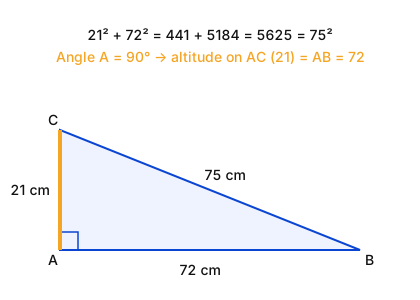
The sides of a triangle are 75 cm, 21 cm, and 72 cm. What is the length (in cm) of its altitude corresponding to the side with a length of 21 cm?
एक त्रिभुज की भुजाएँ 75 cm, 21 cm और 72 cm हैं। 21 cm लंबाई वाली भुजा के संगत उसके शीर्षलंब की लंबाई (cm में) क्या है?
  1. A107
  2. B65
  3. C90
  4. D72
Show answer

Concept: Check whether the triangle is right-angled; in a right triangle each leg is the altitude on the other leg.

  1. 212+722=441+5184=5625=752, so the triangle is right-angled with hypotenuse 75.
  2. The legs 21 and 72 are perpendicular, so the altitude on the side of 21 cm is the other leg =72 cm.
  3. Check via area: 12×21×72=756=12×21×h⇒h=72.

Trick: (21,72,75)=3×(7,24,25) – a Pythagorean triplet. Spotting it saves all the work.

Answer: (D) 72

अवधारणा: जाँचें कि त्रिभुज समकोण है या नहीं; समकोण त्रिभुज में एक भुजा दूसरी भुजा पर शीर्षलंब (altitude) होती है।

  1. 212+722=441+5184=5625=752, अतः त्रिभुज समकोण है, कर्ण 75।
  2. भुजाएँ 21 और 72 परस्पर लंब हैं, अतः 21 cm वाली भुजा पर शीर्षलंब =72 cm।
  3. क्षेत्रफल से जाँच: 12×21×72=756=12×21×h⇒h=72।

ट्रिक: (21,72,75)=3×(7,24,25) – पाइथागोरस त्रिक। इसे पहचानते ही उत्तर मिल जाता है।

उत्तर: (D) 72

RRB NTPC Undergraduate CBT 1MathematicsTriangles – AltitudeRRB NTPC Undergraduate CBT 1 2025 · 16 Jun Shift 2 →