Question bank

Q&A: practice questions with answers

Search questions on any topic. Filter by exam category, exam, subject and topic, try the question, then open the answer and explanation.

Courses – airGurukul

8,495 questions found.

Q6941.
A, B and C started a business, investing amounts of ₹1,960, ₹1,660, and ₹1,130 respectively. If B's share in the profit earned by them is ₹968, what is the difference in the profit (in ₹) earned by A and C?
A, B और C ने क्रमशः ₹1,960, ₹1,660 और ₹1,130 की राशि निवेश करके एक व्यवसाय शुरू किया। यदि उनके द्वारा अर्जित लाभ में B का हिस्सा ₹968 है, तो A और C द्वारा अर्जित लाभ (₹ में) का अंतर क्या है?
  1. A₹487
  2. B₹486
  3. C₹482
  4. D₹484
Show answer

Concept: Profit is shared in the ratio of investments (same time).

  1. Ratio =1960:1660:1130=196:166:113.
  2. B's 166 parts = ₹968, so 1 part =968166.
  3. A − C =196−113=83 parts =968166×83=9682=484.

Trick: 83 is exactly half of 166, so the answer is simply half of B's share: 9682=484.

Answer: (D) ₹484

अवधारणा: समान समय पर लाभ निवेश के अनुपात में बँटता है।

  1. अनुपात =1960:1660:1130=196:166:113।
  2. B के 166 भाग = ₹968, अतः 1 भाग =968166।
  3. A − C =196−113=83 भाग =968166×83=9682=484।

ट्रिक: 83, 166 का ठीक आधा है, इसलिए उत्तर B के हिस्से का आधा: 9682=484।

उत्तर: (D) ₹484

RRB NTPC Undergraduate CBT 1MathematicsPartnershipRRB NTPC Undergraduate CBT 1 2025 · 16 Jun Shift 2 →
Q6942.
What will be the total amount payable after 3 years on a principal of ₹4,000 at 5% per annum, compounded annually?
₹4,000 के मूलधन पर 5% वार्षिक दर से, वार्षिक रूप से चक्रवृद्धि होने पर, 3 वर्ष बाद देय कुल राशि कितनी होगी?
  1. A₹4,550.50
  2. B₹4,050.50
  3. C₹4,600.50
  4. D₹4,630.50
Show answer

Concept: A=P(1+r100)n.

  1. A=4000×(2120)3=4000×92618000.
  2. =92612=4630.50.

Trick: Effective 3-year rate at 5% =15.7625%; 4000×0.157625=630.5, add to 4000.

Answer: (D) ₹4,630.50

अवधारणा: A=P(1+r100)n।

  1. A=4000×(2120)3=4000×92618000।
  2. =92612=4630.50।

ट्रिक: 5% पर 3 वर्ष की प्रभावी दर =15.7625%; 4000×0.157625=630.5, इसे 4000 में जोड़ें।

उत्तर: (D) ₹4,630.50

RRB NTPC Undergraduate CBT 1MathematicsCompound InterestRRB NTPC Undergraduate CBT 1 2025 · 16 Jun Shift 2 →
Q6943.
What is the simplified value of the following expression?
{(33+52)×23−43}÷(7−3)
निम्नलिखित व्यंजक का सरलीकृत मान क्या है?
{(33+52)×23−43}÷(7−3)
  1. A88
  2. B95
  3. C44
  4. D84
Show answer

Concept: Solve brackets first, powers before × and −.

  1. 33+52=27+25=52; 52×23=52×8=416.
  2. 416−43=416−64=352.
  3. 352÷(7−3)=352÷4=88.

Trick: Keep small cubes handy: 23=8, 33=27, 43=64.

Answer: (A) 88

अवधारणा: पहले कोष्ठक, फिर घात, फिर × और −।

  1. 33+52=27+25=52; 52×23=52×8=416।
  2. 416−43=416−64=352।
  3. 352÷(7−3)=352÷4=88।

ट्रिक: छोटे घन याद रखें: 23=8, 33=27, 43=64।

उत्तर: (A) 88

RRB NTPC Undergraduate CBT 1MathematicsSimplification (BODMAS)RRB NTPC Undergraduate CBT 1 2025 · 16 Jun Shift 2 →
Q6944.
Chetan’s salary is ₹17,000 per month. He spends ₹4,000 on house rent, ₹2,500 on bills, and the rest of the amount is his monthly savings. Find his savings (in ₹) in a year, if in the month of his birthday, he spent his complete monthly savings for a birthday celebration.
चेतन का वेतन ₹17,000 प्रति माह है। वह ₹4,000 मकान किराए पर, ₹2,500 बिलों पर खर्च करता है, और शेष राशि उसकी मासिक बचत है। एक वर्ष में उसकी बचत (₹ में) ज्ञात कीजिए, यदि अपने जन्मदिन वाले महीने में उसने अपनी पूरी मासिक बचत जन्मदिन के उत्सव पर खर्च कर दी।
  1. A94,500
  2. B1,26,000
  3. C1,15,500
  4. D1,05,000
Show answer

Concept: Monthly savings = salary − expenses; count only the months he actually saved.

  1. Savings per month =17000−4000−2500=10500.
  2. In the birthday month the whole saving is spent, so savings happen in 11 months.
  3. Yearly savings =10500×11=1,15,500.

Trick: 10500×12=1,26,000 is the trap (option B); subtract one month's 10500.

Answer: (C) 1,15,500

अवधारणा: मासिक बचत = वेतन − खर्च; केवल उन महीनों को गिनें जिनमें बचत हुई।

  1. मासिक बचत =17000−4000−2500=10500।
  2. जन्मदिन वाले महीने में पूरी बचत खर्च हो गई, अतः 11 महीनों की बचत।
  3. वार्षिक बचत =10500×11=1,15,500।

ट्रिक: 10500×12=1,26,000 जाल है (विकल्प B); एक महीने का 10500 घटाएँ।

उत्तर: (C) 1,15,500

RRB NTPC Undergraduate CBT 1MathematicsArithmetic – SavingsRRB NTPC Undergraduate CBT 1 2025 · 16 Jun Shift 2 →
Q6945.
A trader buys 20 kg of rice for ₹1,000. He sells the rice at the rate of ₹60 per kg. What is the percentage profit made by the trader?
एक व्यापारी ₹1,000 में 20 kg चावल खरीदता है। वह चावल को ₹60 प्रति kg की दर से बेचता है। व्यापारी द्वारा अर्जित लाभ प्रतिशत कितना है?
  1. A20%
  2. B18%
  3. C15%
  4. D22%
Show answer

Concept: Profit% =SP−CPCP×100.

  1. CP = ₹1000; SP =20×60= ₹1200.
  2. Profit =200; Profit% =2001000×100=20%.

Trick: Per kg: CP ₹50, SP ₹60 → ₹10 on ₹50 =20%.

Answer: (A) 20%

अवधारणा: लाभ% =SP−CPCP×100।

  1. CP = ₹1000; SP =20×60= ₹1200।
  2. लाभ =200; लाभ% =2001000×100=20%।

ट्रिक: प्रति kg: CP ₹50, SP ₹60 → ₹50 पर ₹10 =20%।

उत्तर: (A) 20%

RRB NTPC Undergraduate CBT 1MathematicsProfit and LossRRB NTPC Undergraduate CBT 1 2025 · 16 Jun Shift 2 →
Q6946.
What is the smallest 5-digit number that is exactly divisible by 12, 15 and 20?
वह सबसे छोटी 5-अंकीय संख्या कौन-सी है जो 12, 15 और 20 से पूर्णतः विभाज्य है?
  1. A10080
  2. B10020
  3. C10200
  4. D10320
Show answer

Concept: The number must be a multiple of LCM(12, 15, 20).

  1. LCM =60.
  2. Smallest 5-digit number =10000; 10000÷60 leaves remainder 40.
  3. Required =10000+(60−40)=10020.

Trick: Only 10020 among the options is the first multiple of 60 after 10000 (60×167).

Answer: (B) 10020

अवधारणा: संख्या LCM(12, 15, 20) का गुणज होनी चाहिए।

  1. LCM =60।
  2. सबसे छोटी 5-अंकीय संख्या =10000; 10000÷60 पर शेष 40।
  3. अभीष्ट =10000+(60−40)=10020।

ट्रिक: 10000 के बाद 60 का पहला गुणज 60×167=10020।

उत्तर: (B) 10020

RRB NTPC Undergraduate CBT 1MathematicsLCM – DivisibilityRRB NTPC Undergraduate CBT 1 2025 · 16 Jun Shift 2 →
Q6947.
The average age of 7 students in a class is 17 years. When a new student join the class, the average age of the class becomes 18 years. Find the age of the new student.
एक कक्षा के 7 विद्यार्थियों की औसत आयु 17 वर्ष है। जब एक नया विद्यार्थी कक्षा में शामिल होता है, तो कक्षा की औसत आयु 18 वर्ष हो जाती है। नए विद्यार्थी की आयु ज्ञात कीजिए।
  1. A20 years20 वर्ष
  2. B26 years26 वर्ष
  3. C25 years25 वर्ष
  4. D23 years23 वर्ष
Show answer

Concept: New member's value = new total − old total.

  1. Old total =7×17=119; new total =8×18=144.
  2. New student =144−119=25 years.

Trick: New entrant = new average + (rise in average × old count) =18+1×7=25.

Answer: (C) 25 years

अवधारणा: नए सदस्य की आयु = नया योग − पुराना योग।

  1. पुराना योग =7×17=119; नया योग =8×18=144।
  2. नया छात्र =144−119=25 वर्ष।

ट्रिक: नया सदस्य = नया औसत + (औसत में वृद्धि × पुरानी संख्या) =18+1×7=25।

उत्तर: (C) 25 years

RRB NTPC Undergraduate CBT 1MathematicsAverageRRB NTPC Undergraduate CBT 1 2025 · 16 Jun Shift 2 →
Q6948.
A military camp has provisions for 360 soldiers for 50 days. After 10 days, 120 more soldiers arrive at the camp. Assuming the daily consumption per soldier remains constant, for how many more days will the remaining provisions last?
एक सैन्य शिविर में 360 सैनिकों के लिए 50 दिनों की रसद है। 10 दिनों के बाद, 120 और सैनिक शिविर में आ जाते हैं। यह मानते हुए कि प्रति सैनिक दैनिक खपत स्थिर रहती है, शेष रसद और कितने दिनों तक चलेगी?
  1. A30 days30 दिन
  2. B25 days25 दिन
  3. C32 days32 दिन
  4. D28 days28 दिन
Show answer

Concept: Total provision = men × days (inverse proportion).

  1. After 10 days, remaining food =360×40 soldier-days.
  2. Soldiers now =360+120=480.
  3. Days =360×40480=30.

Trick: Soldiers become 43 times, so days become 34 of 40 =30.

Answer: (A) 30 days

अवधारणा: कुल राशन = व्यक्ति × दिन (व्युत्क्रम समानुपात)।

  1. 10 दिन बाद बचा राशन =360×40 सैनिक-दिन।
  2. अब सैनिक =360+120=480।
  3. दिन =360×40480=30।

ट्रिक: सैनिक 43 गुना हुए, तो दिन 40 के 34 =30।

उत्तर: (A) 30 days

RRB NTPC Undergraduate CBT 1MathematicsChain Rule – ProvisionsRRB NTPC Undergraduate CBT 1 2025 · 16 Jun Shift 2 →
Q6949.
If 45% of a number exceeds 20% of it by 36, then the number is:
यदि किसी संख्या का 45%, उसी संख्या के 20% से 36 अधिक है, तो वह संख्या है:
  1. A124
  2. B144
  3. C184
  4. D164
Show answer

Concept: Difference of percentages of the same number.

  1. 45%x−20%x=25%x=36.
  2. x=36×4=144.

Trick: 25%=14, so the number is 4×36.

Answer: (B) 144

अवधारणा: एक ही संख्या के प्रतिशतों का अंतर।

  1. 45%x−20%x=25%x=36।
  2. x=36×4=144।

ट्रिक: 25%=14, अतः संख्या 4×36।

उत्तर: (B) 144

RRB NTPC Undergraduate CBT 1MathematicsPercentageRRB NTPC Undergraduate CBT 1 2025 · 16 Jun Shift 2 →
Q6950.
A car travels the first 60 km at 45 km/hr and the next 90 km at 60 km/hr. What is the average speed for the entire journey?
(Round off your answer to two decimal places.)
एक कार पहले 60 km की दूरी 45 km/hr की चाल से और अगले 90 km की दूरी 60 km/hr की चाल से तय करती है। संपूर्ण यात्रा की औसत चाल क्या है?
(अपने उत्तर को दशमलव के दो स्थानों तक पूर्णांकित कीजिए।)
  1. A50.78 km/hr
  2. B52.94 km/hr
  3. C54.56 km/hr
  4. D53.84 km/hr
Show answer

Concept: Average speed =total distancetotal time (not the average of speeds).

  1. Time1=6045=43 h; Time2=9060=32 h.
  2. Total time =43+32=176 h; distance =150 km.
  3. Average speed =150×617=90017≈52.94 km/h.

Trick: The answer must lie between 45 and 60; remember 90017 – dividing by 17 gives 52.94.

Answer: (B) 52.94 km/hr

अवधारणा: औसत चाल =कुल दूरीकुल समय (चालों का औसत नहीं)।

  1. समय1=6045=43 h; समय2=9060=32 h।
  2. कुल समय =43+32=176 h; दूरी =150 km।
  3. औसत चाल =150×617=90017≈52.94 km/h।

ट्रिक: उत्तर 45 और 60 के बीच होगा; 90017 याद रखें – 17 से भाग देकर 52.94 मिलता है।

उत्तर: (B) 52.94 km/hr

RRB NTPC Undergraduate CBT 1MathematicsAverage SpeedRRB NTPC Undergraduate CBT 1 2025 · 16 Jun Shift 2 →
Q6951.
If the sum of the ages of a father and son is 56 years and the father is 24 years older than his son, what is the son's age (in years)?
यदि एक पिता और पुत्र की आयु का योग 56 वर्ष है और पिता अपने पुत्र से 24 वर्ष बड़ा है, तो पुत्र की आयु (वर्षों में) क्या है?
  1. A16
  2. B32
  3. C24
  4. D20
Show answer

Concept: Sum and difference given → smaller =sum−difference2.

  1. Son =56−242=16 years.
  2. Father =16+24=40; check 40+16=56.

Trick: Larger =S+D2, smaller =S−D2 – apply directly.

Answer: (A) 16

अवधारणा: योग और अंतर दिए हों → छोटी =योग−अंतर2।

  1. पुत्र =56−242=16 वर्ष।
  2. पिता =16+24=40; जाँच 40+16=56।

ट्रिक: बड़ी =S+D2, छोटी =S−D2 – सीधे लगाएँ।

उत्तर: (A) 16

RRB NTPC Undergraduate CBT 1MathematicsAges – Linear EquationsRRB NTPC Undergraduate CBT 1 2025 · 16 Jun Shift 2 →
Q6952.
Two taps can fill a cistern in 4 hours and 9 hours, respectively. A third tap can empty it in 9 hours. How long (in hours) will it take to fill one-fourth of the empty cistern if all the taps are opened together?
दो नल एक टंकी को क्रमशः 4 घंटे और 9 घंटे में भर सकते हैं। एक तीसरा नल इसे 9 घंटे में खाली कर सकता है। यदि सभी नल एक साथ खोल दिए जाएँ, तो खाली टंकी का एक-चौथाई भाग भरने में कितना समय (घंटों में) लगेगा?
  1. A3
  2. B2
  3. C4
  4. D1
Show answer

Concept: Net work per hour = sum of filling rates − emptying rate.

  1. Net rate =14+19−19=14 per hour.
  2. Full cistern takes 4 h, so one-fourth takes 14×4=1 h.

Trick: The 9-hour filler and 9-hour emptier cancel exactly – only the 4-hour tap matters.

Answer: (D) 1

अवधारणा: प्रति घंटा शुद्ध कार्य = भरने की दरों का योग − खाली करने की दर।

  1. शुद्ध दर =14+19−19=14 प्रति घंटा।
  2. पूरी टंकी 4 h में, अतः एक-चौथाई 14×4=1 h में।

ट्रिक: 9 घंटे वाला भरने का नल और 9 घंटे वाला खाली करने का नल एक-दूसरे को काट देते हैं – केवल 4 घंटे वाला नल मायने रखता है।

उत्तर: (D) 1

RRB NTPC Undergraduate CBT 1MathematicsPipes and CisternsRRB NTPC Undergraduate CBT 1 2025 · 16 Jun Shift 2 →
Q6953.
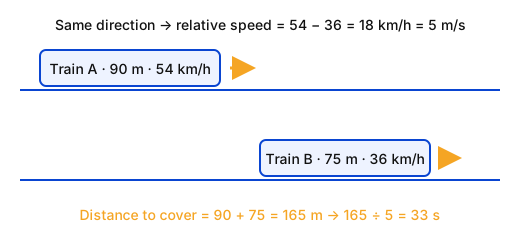
Two trains are running on parallel tracks in the same direction. Train A is 90 m long and moves at 54 km/h. Train B is 75 m long and moves at 36 km/h. How much time will Train A take to completely overtake Train B?
दो रेलगाड़ियाँ समानांतर पटरियों पर एक ही दिशा में चल रही हैं। रेलगाड़ी A 90 m लंबी है और 54 km/h की चाल से चलती है। रेलगाड़ी B 75 m लंबी है और 36 km/h की चाल से चलती है। रेलगाड़ी A को रेलगाड़ी B को पूरी तरह से पार करने में कितना समय लगेगा?
  1. A25 seconds25 सेकंड
  2. B30 seconds30 सेकंड
  3. C33 seconds33 सेकंड
  4. D22 seconds22 सेकंड
Show answer

Concept: Same direction → relative speed = difference; distance to overtake = sum of lengths.

  1. Relative speed =54−36=18 km/h =18×518=5 m/s.
  2. Distance =90+75=165 m.
  3. Time =1655=33 s.

Trick: km/h → m/s: multiply by 518; 18 km/h is exactly 5 m/s.

Answer: (C) 33 seconds

अवधारणा: एक ही दिशा → सापेक्ष चाल = अंतर; पार करने की दूरी = लंबाइयों का योग।

  1. सापेक्ष चाल =54−36=18 km/h =18×518=5 m/s।
  2. दूरी =90+75=165 m।
  3. समय =1655=33 s।

ट्रिक: km/h → m/s: 518 से गुणा; 18 km/h ठीक 5 m/s है।

उत्तर: (C) 33 seconds

RRB NTPC Undergraduate CBT 1MathematicsTrains – Relative SpeedRRB NTPC Undergraduate CBT 1 2025 · 16 Jun Shift 2 →
Q6954.
Simplify
256+144+(22)2+841×(2)2
सरल कीजिए
256+144+(22)2+841×(2)2
  1. A(32)2
  2. B(2)2
  3. C(22)2
  4. D(42)2
Show answer

Concept: Simplify from the innermost radical outward.

  1. 256=16, 144=12, (22)2=8 → inner sum =36, 36=6.
  2. 841×(2)2=29×2=58.
  3. 6+58=64=8=(22)2.

Trick: Options are all of the form (k2)2=2k2: 18, 2, 8, 32. Only 8 matches.

Answer: (C) (22)2

अवधारणा: सबसे भीतरी मूल से बाहर की ओर सरल करें।

  1. 256=16, 144=12, (22)2=8 → भीतरी योग =36, 36=6।
  2. 841×(2)2=29×2=58।
  3. 6+58=64=8=(22)2।

ट्रिक: सभी विकल्प (k2)2=2k2 रूप में हैं: 18, 2, 8, 32। केवल 8 मेल खाता है।

उत्तर: (C) (22)2

RRB NTPC Undergraduate CBT 1MathematicsSurds and Square RootsRRB NTPC Undergraduate CBT 1 2025 · 16 Jun Shift 2 →
Q6955.
A student's marks were incorrectly entered as 37 instead of 22. Due to this, the average marks of the class got increased by 54. What is the number of students in the class?
एक विद्यार्थी के अंक गलती से 22 के स्थान पर 37 दर्ज कर दिए गए। इसके कारण, कक्षा के औसत अंकों में 54 की वृद्धि हो गई। कक्षा में विद्यार्थियों की संख्या कितनी है?
  1. A4
  2. B11
  3. C12
  4. D21
Show answer

Concept: Rise in average × number of students = excess marks entered.

  1. Excess =37−22=15.
  2. n×54=15⇒n=15×45=12.

Trick: n=errorchange in average – one line.

Answer: (C) 12

अवधारणा: औसत में वृद्धि × छात्रों की संख्या = अधिक दर्ज किए गए अंक।

  1. अधिकता =37−22=15।
  2. n×54=15⇒n=15×45=12।

ट्रिक: n=त्रुटिऔसत में परिवर्तन – एक पंक्ति में।

उत्तर: (C) 12

RRB NTPC Undergraduate CBT 1MathematicsAverage – Wrong EntryRRB NTPC Undergraduate CBT 1 2025 · 16 Jun Shift 2 →
Q6956.
What is the mean proportional between 0.0009 and 0.25?
0.0009 और 0.25 के बीच मध्यानुपाती क्या है?
  1. A0.015
  2. B0.16
  3. C0.016
  4. D0.15
Show answer

Concept: Mean proportional between a and b is ab.

  1. 0.0009×0.25=0.0009×0.25.
  2. =0.03×0.5=0.015.

Trick: Take roots separately: 0.0009=(0.03)2, 0.25=(0.5)2.

Answer: (A) 0.015

अवधारणा: a और b का मध्यानुपाती ab होता है।

  1. 0.0009×0.25=0.0009×0.25।
  2. =0.03×0.5=0.015।

ट्रिक: अलग-अलग मूल लें: 0.0009=(0.03)2, 0.25=(0.5)2।

उत्तर: (A) 0.015

RRB NTPC Undergraduate CBT 1MathematicsMean ProportionalRRB NTPC Undergraduate CBT 1 2025 · 16 Jun Shift 2 →
Q6957.
A grocery store gives a Buy 5, Get 2 Free offer. The price of each item is ₹300. A customer needs a total of 21 items and procures the items under this scheme. What is the effective cost per item? (Round off your answer to two decimal places.)
एक किराना स्टोर '5 खरीदें, 2 मुफ़्त पाएँ' का ऑफ़र देता है। प्रत्येक वस्तु का मूल्य ₹300 है। एक ग्राहक को कुल 21 वस्तुओं की आवश्यकता है और वह इस योजना के अंतर्गत वस्तुएँ प्राप्त करता है। प्रति वस्तु प्रभावी लागत क्या है? (अपने उत्तर को दशमलव के दो स्थानों तक पूर्णांकित कीजिए।)
  1. A₹214.45
  2. B₹114.29
  3. C₹241.29
  4. D₹214.29
Show answer

Concept: In "Buy 5 Get 2 Free", 7 items cost the price of 5.

  1. 21=3×7, so the customer pays for 3×5=15 items.
  2. Total =15×300= ₹4500.
  3. Effective cost per item =450021=15007≈ ₹214.29.

Trick: Effective price =300×57 directly.

Answer: (D) ₹214.29

अवधारणा: "5 खरीदो 2 मुफ्त" में 7 वस्तुओं की कीमत 5 के बराबर।

  1. 21=3×7, अतः ग्राहक 3×5=15 वस्तुओं का भुगतान करता है।
  2. कुल =15×300= ₹4500।
  3. प्रभावी कीमत प्रति वस्तु =450021=15007≈ ₹214.29।

ट्रिक: प्रभावी कीमत =300×57 सीधे।

उत्तर: (D) ₹214.29

RRB NTPC Undergraduate CBT 1MathematicsDiscount – OffersRRB NTPC Undergraduate CBT 1 2025 · 16 Jun Shift 2 →
Q6958.
If the interest on a sum of ₹y at 2% per annum compounded annually for 2 years is ₹404, then the total amount payable at the end of the two-year period will be _________.
यदि ₹y की राशि पर 2% वार्षिक दर से, वार्षिक रूप से चक्रवृद्धि होने पर, 2 वर्षों का ब्याज ₹404 है, तो दो वर्ष की अवधि के अंत में देय कुल राशि _________ होगी।
  1. A₹10,404
  2. B₹10,604
  3. C₹10,704
  4. D₹10,504
Show answer

Concept: CI for 2 years =P[(1+r100)2−1].

  1. Effective 2-year rate at 2% =2+2+2×2100=4.04%.
  2. 4.04% of y=404⇒y=10000.
  3. Amount =10000+404= ₹10,404.

Trick: a+b+ab100 gives the 2-year CI rate instantly.

Answer: (A) ₹10,404

अवधारणा: 2 वर्ष का CI =P[(1+r100)2−1]।

  1. 2% पर 2 वर्ष की प्रभावी दर =2+2+2×2100=4.04%।
  2. y का 4.04%=404⇒y=10000।
  3. मिश्रधन =10000+404= ₹10,404।

ट्रिक: a+b+ab100 से 2 वर्ष की CI दर तुरंत मिलती है।

उत्तर: (A) ₹10,404

RRB NTPC Undergraduate CBT 1MathematicsCompound InterestRRB NTPC Undergraduate CBT 1 2025 · 16 Jun Shift 2 →
Q6959.
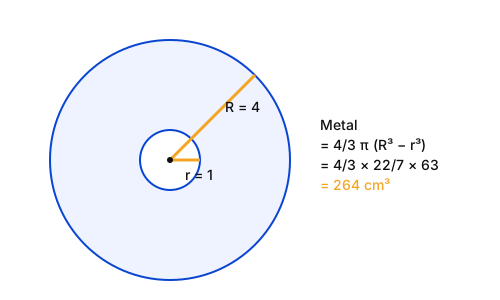
A hollow spherical shell is made of a metal of density 10 g/cm3. Its internal and external radius are 1 cm and 4 cm, respectively. What is the weight (in kg) of the shell?
(Use π=227 and Density=MassVolume)
एक खोखला गोलीय कोश 10 g/cm3 घनत्व वाली धातु से बना है। इसकी आंतरिक और बाहरी त्रिज्याएँ क्रमशः 1 cm और 4 cm हैं। कोश का भार (kg में) क्या है?
(π=227 और Density=MassVolume का प्रयोग कीजिए)
  1. A2.24
  2. B1.98
  3. C1.92
  4. D2.64
Show answer

Concept: Volume of metal =43π(R3−r3); mass = density × volume.

  1. R3−r3=64−1=63.
  2. Volume =43×227×63=4×22×3=264 cm3.
  3. Mass =10×264=2640 g =2.64 kg.

Trick: 63 is divisible by both 3 and 7, so 43×227×63 collapses to 4×22×3.

Answer: (D) 2.64

अवधारणा: धातु का आयतन =43π(R3−r3); द्रव्यमान = घनत्व × आयतन।

  1. R3−r3=64−1=63।
  2. आयतन =43×227×63=4×22×3=264 cm3।
  3. द्रव्यमान =10×264=2640 g =2.64 kg।

ट्रिक: 63, 3 और 7 दोनों से विभाज्य है, अतः 43×227×63=4×22×3।

उत्तर: (D) 2.64

RRB NTPC Undergraduate CBT 1MathematicsMensuration – Hollow SphereRRB NTPC Undergraduate CBT 1 2025 · 16 Jun Shift 2 →
Q6960.
Find the smallest natural number x, for which 2x + 1 is not a prime number.
वह सबसे छोटी प्राकृत संख्या x ज्ञात कीजिए, जिसके लिए 2x + 1 एक अभाज्य संख्या नहीं है।
  1. A3
  2. B2
  3. C4
  4. D5
Show answer

Concept: Test 2x+1 for small natural numbers x.

  1. x=1→3 (prime), x=2→5 (prime), x=3→7 (prime).
  2. x=4→9=3×3, not prime.

Trick: The first odd composite number is 9, so 2x+1=9⇒x=4.

Answer: (C) 4

अवधारणा: छोटी प्राकृत संख्याओं x के लिए 2x+1 जाँचें।

  1. x=1→3 (अभाज्य), x=2→5 (अभाज्य), x=3→7 (अभाज्य)।
  2. x=4→9=3×3, अभाज्य नहीं।

ट्रिक: पहली विषम भाज्य संख्या 9 है, अतः 2x+1=9⇒x=4।

उत्तर: (C) 4

RRB NTPC Undergraduate CBT 1MathematicsPrime NumbersRRB NTPC Undergraduate CBT 1 2025 · 16 Jun Shift 2 →