Question bank

Q&A: practice questions with answers

Search questions on any topic. Filter by exam category, exam, subject and topic, try the question, then open the answer and explanation.

Courses – airGurukul

8,495 questions found.

Q681.
Based on the English alphabetical order, three of the following four letter-cluster pairs are alike in a certain way and thus form a group. Which letter-cluster pair DOES NOT belong to that group?
(Note: The odd one out is not based on the number of consonants/vowels or their position in the letter-cluster.)
अंग्रेज़ी वर्णमाला क्रम के आधार पर, निम्नलिखित चार अक्षर-समूह युग्मों में से तीन किसी निश्चित प्रकार से एक समान हैं और इस प्रकार एक समूह बनाते हैं। कौन-सा अक्षर-समूह युग्म उस समूह से संबंधित नहीं है?
(ध्यान दें: असंगत अक्षर-समूह, उस अक्षर-समूह में व्यंजनों/स्वरों की संख्या या उनके स्थान पर आधारित नहीं है।)
  1. ANJ-OL
  2. BTP-US
  3. CQM-RO
  4. DKG-LI
Show answer

Concept: Compare each letter of the first cluster with the matching letter of the second.

  1. NJ-OL: N→O +1, J→L +2.
  2. QM-RO: +1, +2; KG-LI: +1, +2.
  3. TP-US: T→U +1, P→S +3 ✗.

Trick: In all pairs the first cluster has a gap of −4 (N→J, T→P …); the second cluster gap should be −3: OL, RO, LI yes, US is −2.

Answer: (B) TP-US

अवधारणा: पहले समूह के प्रत्येक अक्षर की तुलना दूसरे समूह के संगत अक्षर से करें।

  1. NJ-OL: N→O +1, J→L +2।
  2. QM-RO: +1, +2; KG-LI: +1, +2।
  3. TP-US: T→U +1, P→S +3 ✗।

ट्रिक: दूसरे समूह में अंतर −3 होना चाहिए: OL, RO, LI सही; US में −2।

उत्तर: (B) TP-US

RRB NTPC Undergraduate CBT 1General Intelligence and ReasoningOdd one out (letter pairs)RRB NTPC Undergraduate CBT 1 2024 · 22 Aug Shift 3 →
Q682.
Read the given statement(s) and conclusions carefully. Assuming that the information given in the statements is true, even if it appears to be at variance with commonly known facts, decide which of the given conclusions logically follow(s) from the statement(s).
Statements:
All Steel are Nickel.
Some Nickel are Chromium.
Conclusions:
I: Some Steel are Chromium.
II: No Chromium are Steel.
दिए गए कथन/कथनों और निष्कर्षों को ध्यानपूर्वक पढ़िए। यह मानते हुए कि कथनों में दी गई जानकारी सत्य है, भले ही वह सामान्यतः ज्ञात तथ्यों से भिन्न प्रतीत होती हो, निर्णय लीजिए कि दिए गए निष्कर्षों में से कौन-सा/से निष्कर्ष तार्किक रूप से कथन/कथनों का अनुसरण करता है/करते हैं।
कथन:
सभी स्टील, निकल हैं।
कुछ निकल, क्रोमियम हैं।
निष्कर्ष:
I: कुछ स्टील, क्रोमियम हैं।
II: कोई भी क्रोमियम, स्टील नहीं है।
  1. ABoth conclusions (I) and (II) follow.निष्कर्ष (I) और (II) दोनों अनुसरण करते हैं।
  2. BNeither conclusion (I) nor (II) follows.न तो निष्कर्ष (I) और न ही (II) अनुसरण करता है।
  3. COnly conclusion (I) follows.केवल निष्कर्ष (I) अनुसरण करता है।
  4. DOnly conclusion (II) follows.केवल निष्कर्ष (II) अनुसरण करता है।
Show answer

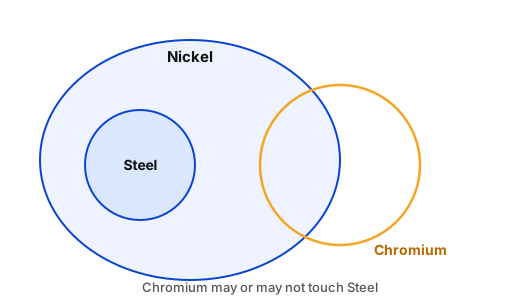
Concept: A conclusion follows only if it is true in every possible Venn diagram.

  1. Steel lies inside Nickel; Chromium overlaps only some part of Nickel.
  2. Chromium may be drawn away from Steel → 'Some Steel are Chromium' is not certain (I ✗).
  3. Chromium may also be drawn touching Steel → 'No Chromium are Steel' is not certain (II ✗).

Yaad rakhein: All + Some with the middle term on the wrong side gives no definite conclusion.

Answer: (B) Neither conclusion (I) nor (II) follows.

अवधारणा: निष्कर्ष तभी सही है जब वह हर संभव वेन आरेख में सत्य हो।

  1. Steel पूरी तरह Nickel के अंदर; Chromium, Nickel के केवल कुछ भाग से जुड़ा है।
  2. Chromium को Steel से अलग बनाया जा सकता है → 'कुछ Steel, Chromium हैं' निश्चित नहीं (I ✗)।
  3. Chromium को Steel से जोड़ा भी जा सकता है → 'कोई Chromium, Steel नहीं' निश्चित नहीं (II ✗)।

याद रखें: All + Some में बीच वाला पद सही स्थिति में न हो तो कोई निश्चित निष्कर्ष नहीं।

उत्तर: (B) न तो (I) और न ही (II) अनुसरण करता है।

RRB NTPC Undergraduate CBT 1General Intelligence and ReasoningSyllogismRRB NTPC Undergraduate CBT 1 2024 · 22 Aug Shift 3 →
Q683.
Samar ranked 39th from the top and 34th from the bottom in his class. How many students are there in his class?
समर की अपनी कक्षा में ऊपर से 39वीं और नीचे से 34वीं रैंक है। उसकी कक्षा में कितने विद्यार्थी हैं?
  1. A72
  2. B74
  3. C71
  4. D73
Show answer

Concept: Total =rank from top+rank from bottom−1.

  1. Total =39+34−1.
  2. =72.

Trick: Samar is counted twice, so subtract 1.

Answer: (A) 72

अवधारणा: कुल =ऊपर से रैंक+नीचे से रैंक−1।

  1. कुल =39+34−1।
  2. =72।

ट्रिक: समर दो बार गिना गया, इसलिए 1 घटाएँ।

उत्तर: (A) 72

RRB NTPC Undergraduate CBT 1General Intelligence and ReasoningRankingRRB NTPC Undergraduate CBT 1 2024 · 22 Aug Shift 3 →
Q684.
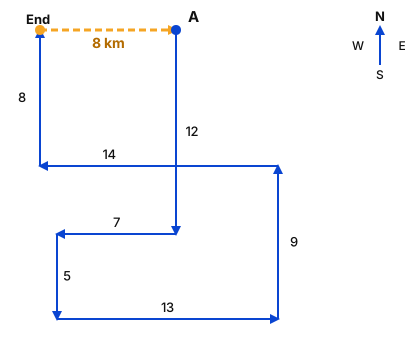
Ram starts his journey from point A and drives for 12 km towards the south. He then turns right and drives for 7 km. He then turns left, drives for 5 km, then again turns left and drives for 13 km, and then again turns left and drives for 9 km. He then turns left and drives for 14 km. He takes a final right turn and drives for 8 km and stops. How far (shortest distance) and in which direction should he drive in order to reach point A again? (All turns are 90-degree turns only unless specified.)
राम बिंदु A से अपनी यात्रा शुरू करता है और दक्षिण की ओर 12 km गाड़ी चलाता है। फिर वह दाएँ मुड़ता है और 7 km गाड़ी चलाता है। फिर वह बाएँ मुड़ता है, 5 km गाड़ी चलाता है, फिर पुनः बाएँ मुड़ता है और 13 km गाड़ी चलाता है, और फिर पुनः बाएँ मुड़ता है और 9 km गाड़ी चलाता है। फिर वह बाएँ मुड़ता है और 14 km गाड़ी चलाता है। वह अंतिम बार दाएँ मुड़ता है और 8 km गाड़ी चलाकर रुक जाता है। बिंदु A पर पुनः पहुँचने के लिए उसे कितनी दूर (न्यूनतम दूरी) और किस दिशा में गाड़ी चलानी चाहिए? (जब तक निर्दिष्ट न किया जाए, सभी मोड़ केवल 90 डिग्री के मोड़ हैं।)
  1. A8 km towards the eastपूर्व की ओर 8 km
  2. B8 km towards the northउत्तर की ओर 8 km
  3. C6 km towards the eastपूर्व की ओर 6 km
  4. D5 km towards the eastपूर्व की ओर 5 km
Show answer

Concept: Take A at origin; track East–West and North–South separately.

  1. South 12 → right (west) 7 → left (south) 5 → left (east) 13 → left (north) 9 → left (west) 14 → right (north) 8.
  2. East–West: −7+13−14=−8 (8 km west of A).
  3. North–South: −12−5+9+8=0.
  4. He is 8 km west of A → drive 8 km towards the east.

Trick: Net vertical movement is 0, so the answer is just the net horizontal shift.

Answer: (A) 8 km towards the east

अवधारणा: A को मूल बिंदु मानें; पूर्व–पश्चिम और उत्तर–दक्षिण अलग-अलग जोड़ें।

  1. दक्षिण 12 → दाएँ (पश्चिम) 7 → बाएँ (दक्षिण) 5 → बाएँ (पूर्व) 13 → बाएँ (उत्तर) 9 → बाएँ (पश्चिम) 14 → दाएँ (उत्तर) 8।
  2. पूर्व–पश्चिम: −7+13−14=−8 (A से 8 km पश्चिम)।
  3. उत्तर–दक्षिण: −12−5+9+8=0।
  4. वह A से 8 km पश्चिम में है → 8 km पूर्व की ओर चलना होगा।

ट्रिक: शुद्ध ऊर्ध्वाधर दूरी 0 है, उत्तर केवल क्षैतिज विस्थापन है।

उत्तर: (A) 8 km पूर्व की ओर

RRB NTPC Undergraduate CBT 1General Intelligence and ReasoningDirection and distanceRRB NTPC Undergraduate CBT 1 2024 · 22 Aug Shift 3 →
Q685.
What should come in place of the question mark (?) in the given series based on the English alphabetical order?
RXY TTV ? XLP ZHM
अंग्रेज़ी वर्णमाला क्रम के आधार पर दी गई शृंखला में प्रश्न चिह्न (?) के स्थान पर क्या आना चाहिए?
RXY TTV ? XLP ZHM
  1. AVWZ
  2. BPDM
  3. CVPS
  4. DSRV
Show answer

Concept: Track each letter position separately.

  1. 1st letters: R, T, _, X, Z → +2 → V.
  2. 2nd letters: X, T, _, L, H → −4 → P.
  3. 3rd letters: Y, V, _, P, M → −3 → S.

Trick: Middle term = average of neighbours: between T and X is V, between T and L is P, between V and P is S.

Answer: (C) VPS

अवधारणा: प्रत्येक स्थान के अक्षर अलग-अलग देखें।

  1. पहले अक्षर: R, T, _, X, Z → +2 → V।
  2. दूसरे अक्षर: X, T, _, L, H → −4 → P।
  3. तीसरे अक्षर: Y, V, _, P, M → −3 → S।

ट्रिक: बीच का पद = पड़ोसियों का मध्य: T-X के बीच V, T-L के बीच P, V-P के बीच S।

उत्तर: (C) VPS

RRB NTPC Undergraduate CBT 1General Intelligence and ReasoningLetter seriesRRB NTPC Undergraduate CBT 1 2024 · 22 Aug Shift 3 →
Q686.
Refer to the following number and symbol series and answer the question that follows. Counting to be done from left to right only.
(Left) 0 3 # π 2 σ Ω 9 $ # 4 8 9 % 1 & 5 @ 8 6 μ (Right)
How many such symbols are there, which are immediately preceded by a prime number and also immediately followed by a symbol?
निम्नलिखित संख्या और प्रतीक शृंखला को देखिए और उसके बाद दिए गए प्रश्न का उत्तर दीजिए। गिनती केवल बाएँ से दाएँ की जानी है।
(बाएँ) 0 3 # π 2 σ Ω 9 $ # 4 8 9 % 1 & 5 @ 8 6 μ (दाएँ)
ऐसे कितने प्रतीक हैं, जिनके ठीक पहले एक अभाज्य संख्या है और ठीक बाद भी एक प्रतीक है?
  1. AOneएक
  2. BTwoदो
  3. CNoneएक भी नहीं
  4. DThreeतीन
Show answer

Concept: Pattern: prime number – SYMBOL – symbol. Primes in the series: 3, 2, 5 (1 is not prime).

  1. 3 # π → # is preceded by 3 and followed by π (a symbol) ✓.
  2. 2 σ Ω → σ is preceded by 2 and followed by Ω ✓.
  3. 5 @ 8 → @ is followed by a number ✗.
  4. Count =2.

Trick: Start from each prime number and look at the next two places only.

Answer: (B) Two

अवधारणा: पैटर्न: अभाज्य संख्या – प्रतीक – प्रतीक। श्रृंखला में अभाज्य: 3, 2, 5 (1 अभाज्य नहीं)।

  1. 3 # π → # से पहले 3 और बाद में π (प्रतीक) ✓।
  2. 2 σ Ω → σ से पहले 2 और बाद में Ω ✓।
  3. 5 @ 8 → @ के बाद संख्या ✗।
  4. कुल =2।

ट्रिक: हर अभाज्य संख्या से शुरू करके केवल अगले दो स्थान देखें।

उत्तर: (B) दो

RRB NTPC Undergraduate CBT 1General Intelligence and ReasoningSymbol-number seriesRRB NTPC Undergraduate CBT 1 2024 · 22 Aug Shift 3 →
Q687.
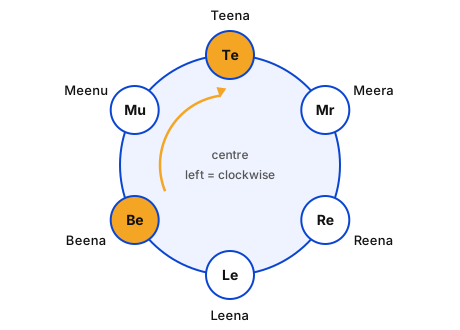
Teena, Beena, Meera, Leena, Meenu and Reena are sitting around a circle, facing the centre. Reena sits second to the left of Teena. Meenu sits third to the left of Reena. Leena sits second to the left of Meera. Who sits second to the left of Beena?
टीना, बीना, मीरा, लीना, मीनू और रीना एक वृत्त के चारों ओर केंद्र की ओर मुख करके बैठी हैं। रीना, टीना के बाईं ओर दूसरे स्थान पर बैठी है। मीनू, रीना के बाईं ओर तीसरे स्थान पर बैठी है। लीना, मीरा के बाईं ओर दूसरे स्थान पर बैठी है। बीना के बाईं ओर दूसरे स्थान पर कौन बैठी है?
  1. AReenaरीना
  2. BTeenaटीना
  3. CLeenaलीना
  4. DMeeraमीरा
Show answer

Concept: Facing the centre, moving to a person's left = clockwise.

  1. Fix Teena at top; Reena 2nd to her left; Meenu 3rd to the left of Reena (directly opposite Reena).
  2. Empty seats: just left of Teena, opposite Teena, and just left of Reena. Leena 2nd to the left of Meera works only if Meera sits just left of Teena and Leena opposite Teena.
  3. Beena takes the last seat; 2nd to the left of Beena is Teena.

Trick: With 6 seats, '3rd to the left' = directly opposite.

Answer: (B) Teena

अवधारणा: केंद्र की ओर मुख होने पर बायाँ = दक्षिणावर्त (clockwise)।

  1. टीना को ऊपर रखें; रीना उसके बाएँ दूसरे स्थान पर; मीनू, रीना के बाएँ तीसरे स्थान पर (रीना के ठीक सामने)।
  2. लीना, मीरा के बाएँ दूसरे स्थान पर — यह तभी संभव जब मीरा, टीना के ठीक बाएँ हो और लीना टीना के सामने।
  3. बचे स्थान पर बीना; बीना के बाएँ दूसरे स्थान पर टीना।

ट्रिक: 6 स्थानों में 'बाएँ तीसरा' = ठीक सामने।

उत्तर: (B) टीना (Teena)

RRB NTPC Undergraduate CBT 1General Intelligence and ReasoningCircular seating arrangementRRB NTPC Undergraduate CBT 1 2024 · 22 Aug Shift 3 →
Q688.
Select the pair that follows the same pattern as that followed by the two pairs given below. Both pairs follow the same pattern.
EYN : FAQ
GWA : HYD
उस युग्म का चयन कीजिए जो उसी पैटर्न का अनुसरण करता है जिसका अनुसरण नीचे दिए गए दो युग्म करते हैं। दोनों युग्म समान पैटर्न का अनुसरण करते हैं।
EYN : FAQ
GWA : HYD
  1. AJUF : KWI
  2. BSBL : TEM
  3. CTQH : WSI
  4. DOCR : PDS
Show answer

Concept: Compare letter by letter: EYN → FAQ is +1, +2, +3.

  1. GWA → HYD: G+1=H, W+2=Y, A+3=D ✓.
  2. JUF → KWI: J+1=K, U+2=W, F+3=I ✓.
  3. SBL→TEM (+1,+3,+1), TQH→WSI, OCR→PDS (+1,+1,+1) do not fit.

Trick: Y+2 wraps to A – remember the alphabet is circular.

Answer: (A) JUF : KWI

अवधारणा: अक्षर-दर-अक्षर तुलना: EYN → FAQ में +1, +2, +3।

  1. GWA → HYD: G+1=H, W+2=Y, A+3=D ✓।
  2. JUF → KWI: J+1=K, U+2=W, F+3=I ✓।
  3. SBL→TEM (+1,+3,+1), TQH→WSI, OCR→PDS (+1,+1,+1) मेल नहीं खाते।

ट्रिक: Y+2 घूमकर A बनता है – वर्णमाला चक्रीय है।

उत्तर: (A) JUF : KWI

RRB NTPC Undergraduate CBT 1General Intelligence and ReasoningLetter analogyRRB NTPC Undergraduate CBT 1 2024 · 22 Aug Shift 3 →
Q689.
This question is based on the five, three-digit numbers given below.
(Left) 438 745 217 153 876 (Right)
(Example- 697 – First digit = 6, second digit = 9 and third digit = 7)
(NOTE: All operations to be done from left to right.)
What will be the resultant if the third digit of the highest number is added to the second digit of the lowest number?
यह प्रश्न नीचे दी गई पाँच, तीन-अंकीय संख्याओं पर आधारित है।
(बाएँ) 438 745 217 153 876 (दाएँ)
(उदाहरण- 697 – पहला अंक = 6, दूसरा अंक = 9 और तीसरा अंक = 7)
(ध्यान दें: सभी संक्रियाएँ बाएँ से दाएँ की जानी हैं।)
यदि सबसे बड़ी संख्या के तीसरे अंक को सबसे छोटी संख्या के दूसरे अंक में जोड़ा जाए, तो परिणाम क्या होगा?
  1. A10
  2. B12
  3. C13
  4. D11
Show answer

Concept: Identify the highest and lowest numbers first, then pick the required digits.

  1. Highest =876 → third digit =6.
  2. Lowest =153 → second digit =5.
  3. 6+5=11.

Trick: Only the first digit is needed to spot highest (8) and lowest (1).

Answer: (D) 11

अवधारणा: पहले सबसे बड़ी और सबसे छोटी संख्या पहचानें, फिर अंक चुनें।

  1. सबसे बड़ी =876 → तीसरा अंक =6।
  2. सबसे छोटी =153 → दूसरा अंक =5।
  3. 6+5=11।

ट्रिक: सबसे बड़ी (8) और सबसे छोटी (1) पहचानने के लिए पहला अंक काफी है।

उत्तर: (D) 11

RRB NTPC Undergraduate CBT 1General Intelligence and ReasoningNumber-digit operationsRRB NTPC Undergraduate CBT 1 2024 · 22 Aug Shift 3 →
Q690.
Based on the English alphabetical order, three of the following four letter-cluster pairs are alike in a certain way and thus form a group. Which letter-cluster pair DOES NOT belong to that group?
(Note: The odd one out is not based on the number of consonants/vowels or their position in the letter-cluster.)
अंग्रेज़ी वर्णमाला क्रम के आधार पर, निम्नलिखित चार अक्षर-समूह युग्मों में से तीन किसी निश्चित प्रकार से एक समान हैं और इस प्रकार एक समूह बनाते हैं। कौन-सा अक्षर-समूह युग्म उस समूह से संबंधित नहीं है?
(ध्यान दें: असंगत अक्षर-समूह, उस अक्षर-समूह में व्यंजनों/स्वरों की संख्या या उनके स्थान पर आधारित नहीं है।)
  1. ARV-MP
  2. BNR-IL
  3. CKO-FI
  4. DIM-DH
Show answer

Concept: Find the gap within each cluster.

  1. RV-MP: R→V +4, M→P +3.
  2. NR-IL: +4, +3; KO-FI: +4, +3.
  3. IM-DH: I→M +4, D→H +4 ✗.

Trick: Second-cluster gap is +3 in three pairs; DH has +4.

Answer: (D) IM-DH

अवधारणा: हर समूह के अंदर अक्षरों का अंतर देखें।

  1. RV-MP: R→V +4, M→P +3।
  2. NR-IL: +4, +3; KO-FI: +4, +3।
  3. IM-DH: I→M +4, D→H +4 ✗।

ट्रिक: तीन युग्मों में दूसरे समूह का अंतर +3; DH में +4।

उत्तर: (D) IM-DH

RRB NTPC Undergraduate CBT 1General Intelligence and ReasoningOdd one out (letter pairs)RRB NTPC Undergraduate CBT 1 2024 · 22 Aug Shift 3 →
Q691.
In the following triads, each group of letters is related to the subsequent one following a certain logic. Select from the given options, the one which follows the same logic. POST - OPST - PSTO
LITE - ILTE - LTEI
निम्नलिखित त्रिकों में, अक्षरों का प्रत्येक समूह एक निश्चित तर्क का अनुसरण करते हुए अपने बाद वाले समूह से संबंधित है। दिए गए विकल्पों में से उस विकल्प का चयन कीजिए जो समान तर्क का अनुसरण करता है। POST - OPST - PSTO
LITE - ILTE - LTEI
  1. AGANY - AGNY - GNYA
  2. BHOST - OHST - OSTH
  3. CVAIN - VIAN - NIAV
  4. DMIND - IMND - DINM
Show answer

Concept: Rule: POST (1 2 3 4) → OPST (2 1 3 4) → PSTO (1 3 4 2).

  1. LITE → ILTE (2 1 3 4), LTEI (1 3 4 2) ✓.
  2. GANY → AGNY (2 1 3 4), GNYA (1 3 4 2) ✓.
  3. HOST → OSTH should be HSTO ✗; VAIN → VIAN ✗; MIND → DINM ✗.

Trick: Third group = first group with its 2nd letter moved to the end.

Answer: (A) GANY - AGNY - GNYA

अवधारणा: नियम: POST (1 2 3 4) → OPST (2 1 3 4) → PSTO (1 3 4 2)।

  1. LITE → ILTE (2 1 3 4), LTEI (1 3 4 2) ✓।
  2. GANY → AGNY (2 1 3 4), GNYA (1 3 4 2) ✓।
  3. HOST में HSTO होना चाहिए ✗; VAIN → VIAN ✗; MIND → DINM ✗।

ट्रिक: तीसरा समूह = पहले समूह का दूसरा अक्षर अंत में।

उत्तर: (A) GANY - AGNY - GNYA

RRB NTPC Undergraduate CBT 1General Intelligence and ReasoningLetter triadsRRB NTPC Undergraduate CBT 1 2024 · 22 Aug Shift 3 →
Q692.
Select the set in which the numbers are related in the same way as are the numbers of the following sets.
(NOTE: Operations should be performed on the whole numbers, without breaking down the numbers into their constituent digits. E.g. 13 – Operations on 13 such as adding to/subtracting from/multiplying with 13 can be performed. Breaking down 13 into 1 and 3 and then performing mathematical operations on 1 and 3 is not allowed.)
(19, 374, 14)
(47, 2230, 22)
उस समुच्चय का चयन कीजिए जिसमें संख्याएँ उसी प्रकार संबंधित हैं जिस प्रकार निम्नलिखित समुच्चयों की संख्याएँ संबंधित हैं।
(ध्यान दें: संक्रियाएँ संख्याओं को उनके घटक अंकों में तोड़े बिना, पूर्ण संख्याओं पर की जानी चाहिए। उदाहरण के लिए, 13 – 13 पर संक्रियाएँ जैसे 13 में जोड़ना/घटाना/गुणा करना आदि किया जा सकता है। 13 को 1 और 3 में तोड़कर फिर 1 और 3 पर गणितीय संक्रियाएँ करने की अनुमति नहीं है।)
(19, 374, 14)
(47, 2230, 22)
  1. A(50, 2514, 15)
  2. B(27, 744, 11)
  3. C(45, 2031, 2)
  4. D(4, 22, 2)
Show answer

Concept: Find the rule linking the three numbers: middle = first2+ third −1.

  1. (19,374,14): 192+14−1=361+13=374 ✓.
  2. (47,2230,22): 472+22−1=2209+21=2230 ✓.
  3. (50,2514,15): 2500+15−1=2514 ✓; (B) gives 739, (C) 2026, (D) 17.

Trick: Middle number is close to the square of the first number – start from there.

Answer: (A) (50,2514,15)

अवधारणा: तीनों संख्याओं का संबंध: बीच वाली = पहली2+ तीसरी −1।

  1. (19,374,14): 192+14−1=361+13=374 ✓।
  2. (47,2230,22): 472+22−1=2209+21=2230 ✓।
  3. (50,2514,15): 2500+15−1=2514 ✓; (B) से 739, (C) से 2026, (D) से 17।

ट्रिक: बीच की संख्या पहली संख्या के वर्ग के करीब है – वहीं से शुरू करें।

उत्तर: (A) (50,2514,15)

RRB NTPC Undergraduate CBT 1General Intelligence and ReasoningNumber set analogyRRB NTPC Undergraduate CBT 1 2024 · 22 Aug Shift 3 →
Q693.
What should come in place of the question mark (?) in the given series?
750 755 745 750 740 745 735 ?
दी गई शृंखला में प्रश्न चिह्न (?) के स्थान पर क्या आना चाहिए?
750 755 745 750 740 745 735 ?
  1. A740
  2. B750
  3. C735
  4. D745
Show answer

Concept: Pattern of differences alternates: +5, −10.

  1. 750+5=755, 755−10=745, 745+5=750, 750−10=740, 740+5=745, 745−10=735.
  2. Next: 735+5=740.

Trick: Terms at even places: 755,750,745,? → falls by 5 → 740.

Answer: (A) 740

अवधारणा: अंतर एकांतर क्रम में: +5, −10।

  1. 750+5=755, 755−10=745, 745+5=750, 750−10=740, 740+5=745, 745−10=735।
  2. अगला: 735+5=740।

ट्रिक: सम स्थानों के पद: 755,750,745,? → 5 घटते हैं → 740।

उत्तर: (A) 740

RRB NTPC Undergraduate CBT 1General Intelligence and ReasoningNumber series (alternating)RRB NTPC Undergraduate CBT 1 2024 · 22 Aug Shift 3 →
Q694.
Navish ranked 14th from the bottom and 17th from the top in his class. How many students are there in his class?
नवीश की अपनी कक्षा में नीचे से 14वीं और ऊपर से 17वीं रैंक है। उसकी कक्षा में कितने विद्यार्थी हैं?
  1. A28
  2. B30
  3. C27
  4. D29
Show answer

Concept: Total =rank from top+rank from bottom−1.

  1. Total =17+14−1.
  2. =30.

Trick: The person is counted in both ranks – subtract 1.

Answer: (B) 30

अवधारणा: कुल =ऊपर से रैंक+नीचे से रैंक−1।

  1. कुल =17+14−1।
  2. =30।

ट्रिक: व्यक्ति दोनों रैंकों में गिना गया – 1 घटाएँ।

उत्तर: (B) 30

RRB NTPC Undergraduate CBT 1General Intelligence and ReasoningRankingRRB NTPC Undergraduate CBT 1 2024 · 22 Aug Shift 3 →
Q695.
If ‘A’ stands for ‘÷’ , ‘B’ stands for ‘×’, ‘C’ stands for ‘+’ and ‘D’ stands for ‘−’, then the resultant of which of the following would be 18?
यदि ‘A’ का अर्थ ‘÷’, ‘B’ का अर्थ ‘×’, ‘C’ का अर्थ ‘+’ और ‘D’ का अर्थ ‘−’ है, तो निम्नलिखित में से किसका परिणाम 18 होगा?
  1. A45 D 6 B 8 C 42 A 2
  2. B45 C 6 A 8 B 42 A 2
  3. C45 B 6 C 8 D 42 A 2
  4. D45 A 6 B 8 D 42 C 2
Show answer

Concept: Replace A = ÷, B = ×, C = +, D = − and evaluate each option by BODMAS.

  1. (A): 45−6×8+42÷2=45−48+21=18 ✓.
  2. (B): 45+6÷8×42÷2 is not an integer near 18 (=60.75).
  3. (C): 45×6+8−21=257; (D): 45÷6×8−42+2=20.

Trick: Test the options in order and stop at the first that gives 18.

Answer: (A) 45 D 6 B 8 C 42 A 2

अवधारणा: A = ÷, B = ×, C = +, D = − रखें और हर विकल्प BODMAS से हल करें।

  1. (A): 45−6×8+42÷2=45−48+21=18 ✓।
  2. (B): 45+6÷8×42÷2=60.75।
  3. (C): 45×6+8−21=257; (D): 45÷6×8−42+2=20।

ट्रिक: विकल्प क्रम से जाँचें; जो पहले 18 दे वहीं रुकें।

उत्तर: (A) 45 D 6 B 8 C 42 A 2

RRB NTPC Undergraduate CBT 1General Intelligence and ReasoningMathematical operations (letters)RRB NTPC Undergraduate CBT 1 2024 · 22 Aug Shift 3 →
Q696.
Which of the following letter-number clusters will replace the question mark (?) in the given series to make it logically complete?
DKR 79, HOV 73, LSZ 67, PWD 61, TAH 55, ?
दी गई शृंखला को तार्किक रूप से पूर्ण करने के लिए निम्नलिखित में से कौन-सा अक्षर-संख्या समूह प्रश्न चिह्न (?) का स्थान लेगा?
DKR 79, HOV 73, LSZ 67, PWD 61, TAH 55, ?
  1. AXEM 50
  2. BXEL 49
  3. CZEL 51
  4. DXOL 53
Show answer

Concept: Each letter moves +4; the number falls by 6.

  1. 1st letters: D, H, L, P, T → X.
  2. 2nd letters: K, O, S, W, A → E; 3rd letters: R, V, Z, D, H → L.
  3. Numbers: 79,73,67,61,55 → 49.

Trick: After W comes A and after Z comes D (alphabet wraps around).

Answer: (B) XEL 49

अवधारणा: हर अक्षर +4 आगे बढ़ता है; संख्या 6 घटती है।

  1. पहले अक्षर: D, H, L, P, T → X।
  2. दूसरे अक्षर: K, O, S, W, A → E; तीसरे अक्षर: R, V, Z, D, H → L।
  3. संख्याएँ: 79,73,67,61,55 → 49।

ट्रिक: W के बाद A और Z के बाद D (वर्णमाला घूमती है)।

उत्तर: (B) XEL 49

RRB NTPC Undergraduate CBT 1General Intelligence and ReasoningLetter-number seriesRRB NTPC Undergraduate CBT 1 2024 · 22 Aug Shift 3 →
Q697.
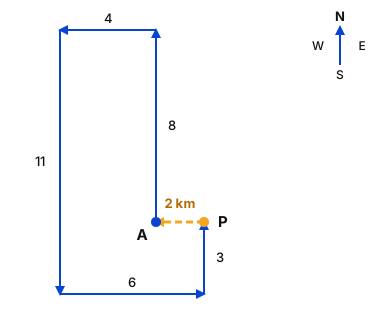
Vinay starts from Point A and drives 8 km towards North. He then takes a left turn, drives 4 km, turns left and drives 11 km. He then takes a left turn and drives 6 km. He takes a final left turn, drives 3 km and stops at Point P. How far (shortest distance) and towards which direction should he drive in order to reach Point A again? (All turns are 90° turns only unless specified.)
विनय बिंदु A से प्रारंभ करता है और उत्तर की ओर 8 km गाड़ी चलाता है। फिर वह बाएँ मुड़ता है, 4 km गाड़ी चलाता है, बाएँ मुड़ता है और 11 km गाड़ी चलाता है। फिर वह बाएँ मुड़ता है और 6 km गाड़ी चलाता है। वह अंतिम बार बाएँ मुड़ता है, 3 km गाड़ी चलाता है और बिंदु P पर रुक जाता है। बिंदु A पर पुनः पहुँचने के लिए उसे कितनी दूर (न्यूनतम दूरी) और किस दिशा में गाड़ी चलानी चाहिए? (जब तक निर्दिष्ट न किया जाए, सभी मोड़ केवल 90° के मोड़ हैं।)
  1. A3 km to westपश्चिम की ओर 3 km
  2. B2 km to eastपूर्व की ओर 2 km
  3. C3 km to eastपूर्व की ओर 3 km
  4. D2 km to westपश्चिम की ओर 2 km
Show answer

Concept: Take A at origin; add East–West and North–South separately.

  1. North 8 → left (west) 4 → left (south) 11 → left (east) 6 → left (north) 3.
  2. East–West: −4+6=+2 (2 km east of A).
  3. North–South: 8−11+3=0.
  4. P is 2 km east of A → drive 2 km towards the west.

Trick: Four left turns in a row bring you back facing the start direction – just total the moves.

Answer: (D) 2 km to west

अवधारणा: A को मूल बिंदु मानें; पूर्व–पश्चिम और उत्तर–दक्षिण अलग-अलग जोड़ें।

  1. उत्तर 8 → बाएँ (पश्चिम) 4 → बाएँ (दक्षिण) 11 → बाएँ (पूर्व) 6 → बाएँ (उत्तर) 3।
  2. पूर्व–पश्चिम: −4+6=+2 (A से 2 km पूर्व)।
  3. उत्तर–दक्षिण: 8−11+3=0।
  4. P, A से 2 km पूर्व है → 2 km पश्चिम की ओर चलना होगा।

ट्रिक: लगातार बाएँ मुड़ने पर दिशाएँ क्रम से बदलती हैं – बस दूरियाँ जोड़ें।

उत्तर: (D) 2 km पश्चिम की ओर

RRB NTPC Undergraduate CBT 1General Intelligence and ReasoningDirection and distanceRRB NTPC Undergraduate CBT 1 2024 · 22 Aug Shift 3 →
Q698.
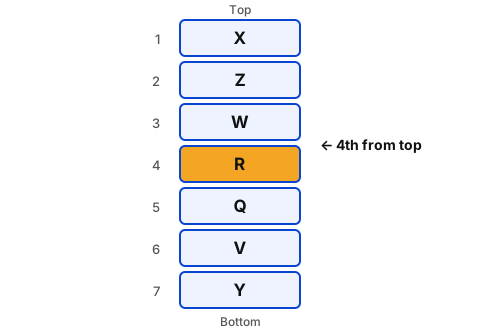
Seven boxes V, W, X, Y, Z, Q and R are kept one over the other but not necessarily in the same order. Only four boxes are kept between Z and Y. Only X is kept above Z. Only two boxes are kept between W and V. R is kept immediately above Q. V is not kept immediately above R. Which box is kept fourth from the top?
सात बक्से V, W, X, Y, Z, Q और R एक के ऊपर एक रखे गए हैं, लेकिन आवश्यक नहीं कि इसी क्रम में हों। Z और Y के बीच केवल चार बक्से रखे गए हैं। Z के ऊपर केवल X रखा गया है। W और V के बीच केवल दो बक्से रखे गए हैं। R, Q के ठीक ऊपर रखा गया है। V, R के ठीक ऊपर नहीं रखा गया है। ऊपर से चौथे स्थान पर कौन-सा बक्सा रखा गया है?
  1. AW
  2. BR
  3. CQ
  4. DY
Show answer

Concept: Number the positions 1 (top) to 7 (bottom) and fix the definite clues first.

  1. Only X above Z → X 1, Z 2. Four boxes between Z and Y → Y 7.
  2. W and V with two boxes between them in slots 3–6 → slots 3 and 6.
  3. R immediately above Q → R 4, Q 5.
  4. V not immediately above R → V 6, W 3. Fourth from top = R.

Trick: Once W/V take 3 and 6, the R–Q pair can only fit in 4–5.

Answer: (B) R

अवधारणा: स्थान 1 (ऊपर) से 7 (नीचे) तक मानें और पहले निश्चित सूचनाएँ लगाएँ।

  1. Z के ऊपर केवल X → X 1, Z 2। Z और Y के बीच चार बॉक्स → Y 7।
  2. W और V के बीच दो बॉक्स, स्थान 3–6 में → स्थान 3 और 6।
  3. R, Q के ठीक ऊपर → R 4, Q 5।
  4. V, R के ठीक ऊपर नहीं → V 6, W 3। ऊपर से चौथा = R।

ट्रिक: W/V के 3 और 6 लेने पर R–Q केवल 4–5 में आ सकते हैं।

उत्तर: (B) R

RRB NTPC Undergraduate CBT 1General Intelligence and ReasoningBox arrangement (vertical)RRB NTPC Undergraduate CBT 1 2024 · 22 Aug Shift 3 →
Q699.
Each of the digits in the number 8127365 is arranged in ascending order from left to right. What will be the sum of the digits that are second from the left and second from the right in the new number thus formed?
संख्या 8127365 के प्रत्येक अंक को बाएँ से दाएँ आरोही क्रम में व्यवस्थित किया जाता है। इस प्रकार बनी नई संख्या में बाएँ से दूसरे और दाएँ से दूसरे अंकों का योग क्या होगा?
  1. A9
  2. B8
  3. C6
  4. D7
Show answer

Concept: Arrange the digits in ascending order and read the required places.

  1. 8127365 → 1235678.
  2. Second from left =2; second from right =7.
  3. Sum =2+7=9.

Trick: Second smallest + second largest digit =2+7.

Answer: (A) 9

अवधारणा: अंकों को आरोही क्रम में लगाएँ और स्थान पढ़ें।

  1. 8127365 → 1235678।
  2. बाएँ से दूसरा =2; दाएँ से दूसरा =7।
  3. योग =2+7=9।

ट्रिक: दूसरा सबसे छोटा + दूसरा सबसे बड़ा अंक =2+7।

उत्तर: (A) 9

RRB NTPC Undergraduate CBT 1General Intelligence and ReasoningDigit arrangementRRB NTPC Undergraduate CBT 1 2024 · 22 Aug Shift 3 →
Q700.
What should come in place of the question mark (?) in the given series?
9 13 21 33 49 ?
दी गई शृंखला में प्रश्न चिह्न (?) के स्थान पर क्या आना चाहिए?
9 13 21 33 49 ?
  1. A69
  2. B70
  3. C75
  4. D67
Show answer

Concept: Differences increase by 4 each time.

  1. 13−9=4, 21−13=8, 33−21=12, 49−33=16.
  2. Next difference =20 → 49+20=69.

Trick: Differences are the table of 4: 4,8,12,16,20.

Answer: (A) 69

अवधारणा: अंतर हर बार 4 बढ़ता है।

  1. 13−9=4, 21−13=8, 33−21=12, 49−33=16।
  2. अगला अंतर =20 → 49+20=69।

ट्रिक: अंतर 4 का पहाड़ा: 4,8,12,16,20।

उत्तर: (A) 69

RRB NTPC Undergraduate CBT 1General Intelligence and ReasoningNumber series (differences)RRB NTPC Undergraduate CBT 1 2024 · 22 Aug Shift 3 →