Question bank

Q&A: practice questions with answers

Search questions on any topic. Filter by exam category, exam, subject and topic, try the question, then open the answer and explanation.

Courses – airGurukul

8,495 questions found.

Q6981.
Seven boxes A, B, C, D, E, F and G are kept one over the other but not necessarily in the same order. Exactly two boxes are kept between E and B. B is kept on one of the positions above E. C is kept at the bottommost position. Box G is kept immediately above E. Exactly two boxes are kept between D and G. Only one box is kept below F. Which box is immediately below B?
सात बक्से A, B, C, D, E, F और G एक के ऊपर एक रखे गए हैं, परंतु आवश्यक नहीं कि इसी क्रम में हों। E और B के बीच ठीक दो बक्से रखे गए हैं। B, E के ऊपर के स्थानों में से किसी एक पर रखा गया है। C सबसे नीचे के स्थान पर रखा गया है। बक्सा G, E के ठीक ऊपर रखा गया है। D और G के बीच ठीक दो बक्से रखे गए हैं। F के नीचे केवल एक बक्सा रखा गया है। B के ठीक नीचे कौन-सा बक्सा है?
  1. AG
  2. BA
  3. CF
  4. DE
Show answer

Concept: Number the positions 1 (bottom) to 7 (top) and place fixed boxes first.
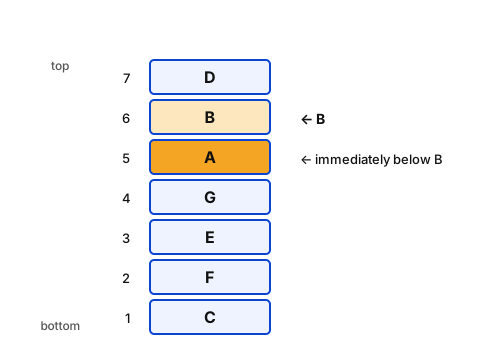
  1. C = 1 (bottom); only one box below F → F = 2.
  2. G is just above E, and B is 3 places above E: E = 3 gives G = 4, B = 6 (E = 4 would need D = 2 or 8 – impossible).
  3. Two boxes between D and G (4) → D = 7; A takes the last place, 5.
  4. Box immediately below B (6) is A (5).

Trick: Fix the bottom first; the 'gap' clues then leave only one fit.

Answer: (B) A

अवधारणा: स्थान 1 (नीचे) से 7 (ऊपर) तक क्रमांकित करें और पहले निश्चित बॉक्स रखें।

  1. C = 1 (सबसे नीचे); F के नीचे केवल एक बॉक्स → F = 2।
  2. G, E के ठीक ऊपर और B, E से 3 स्थान ऊपर: E = 3 से G = 4, B = 6 (E = 4 पर D = 2 या 8 चाहिए – असंभव)।
  3. D और G (4) के बीच दो बॉक्स → D = 7; A अंतिम बचे स्थान 5 पर।
  4. B (6) के ठीक नीचे A (5) है।

ट्रिक: पहले नीचे का हिस्सा तय करें; 'अंतर' वाले सुराग फिर एक ही स्थिति छोड़ते हैं।

उत्तर: (B) A
RRB NTPC Undergraduate CBT 1General Intelligence and ReasoningBox arrangementRRB NTPC Undergraduate CBT 1 2025 · 16 Jun Shift 2 →
Q6982.
ORVS is related to QTXU in a certain way based on the English alphabetical order. In the same way, PSWT is related to RUYV. To which of the following is HKOL related, following the same logic?
अंग्रेज़ी वर्णमाला क्रम के आधार पर ORVS एक निश्चित प्रकार से QTXU से संबंधित है। उसी प्रकार, PSWT, RUYV से संबंधित है। उसी तर्क का अनुसरण करते हुए, HKOL निम्नलिखित में से किससे संबंधित है?
  1. AJLPN
  2. BJNPW
  3. CJMQN
  4. DJMPN
Show answer

Concept: Find the shift applied to each letter.

  1. ORVS → QTXU: each letter +2.
  2. PSWT → RUYV: each letter +2 ✓.
  3. HKOL +2 → J M Q N.

Trick: Check only the third letter: O + 2 = Q; just one option has Q there.

Answer: (C) JMQN

अवधारणा: प्रत्येक अक्षर पर लगा खिसकाव (shift) खोजें।

  1. ORVS → QTXU: हर अक्षर +2।
  2. PSWT → RUYV: हर अक्षर +2 ✓।
  3. HKOL +2 → J M Q N।

ट्रिक: केवल तीसरा अक्षर देखें: O + 2 = Q; केवल एक विकल्प में Q है।

उत्तर: (C) JMQN

RRB NTPC Undergraduate CBT 1General Intelligence and ReasoningLetter analogyRRB NTPC Undergraduate CBT 1 2025 · 16 Jun Shift 2 →
Q6983.
What will come in place of the question mark (?) in the following equation, if ‘+’ and ‘−’ are interchanged and ‘×’ and ‘÷’ are interchanged?
43 – 85 × 5 + 10 ÷ 3 = ?
यदि '+' और '−' को आपस में बदल दिया जाए तथा '×' और '÷' को आपस में बदल दिया जाए, तो निम्नलिखित समीकरण में प्रश्न चिह्न (?) के स्थान पर क्या आएगा?
43 – 85 × 5 + 10 ÷ 3 = ?
  1. A32
  2. B30
  3. C38
  4. D35
Show answer

Concept: Swap the signs as told, then apply BODMAS.

  1. After interchanging: 43+85÷5−10×3.
  2. =43+17−30.
  3. =30.

Trick: Rewrite the whole expression first – mistakes happen when swapping signs mentally.

Answer: (B) 30

अवधारणा: बताए अनुसार चिह्न बदलें, फिर BODMAS लगाएँ।

  1. बदलने के बाद: 43+85÷5−10×3।
  2. =43+17−30।
  3. =30।

ट्रिक: पहले पूरा व्यंजक दोबारा लिखें – मन में चिह्न बदलने पर गलती होती है।

उत्तर: (B) 30

RRB NTPC Undergraduate CBT 1General Intelligence and ReasoningInterchanging signsRRB NTPC Undergraduate CBT 1 2025 · 16 Jun Shift 2 →
Q6984.
RWFG is related to OTCD in a certain way based on the English alphabetical order. In the same way, FKTU is related to CHQR. To which of the following options is WBKL related, following the same logic?
अंग्रेज़ी वर्णमाला क्रम के आधार पर RWFG एक निश्चित प्रकार से OTCD से संबंधित है। उसी प्रकार, FKTU, CHQR से संबंधित है। उसी तर्क का अनुसरण करते हुए, WBKL निम्नलिखित में से किस विकल्प से संबंधित है?
  1. ATHYU
  2. BTUHO
  3. CTHYI
  4. DTYHI
Show answer

Concept: Find the shift applied to each letter.

  1. RWFG → OTCD: each letter −3.
  2. FKTU → CHQR: each letter −3 ✓.
  3. WBKL −3: W→T, B→Y (looping back), K→H, L→I → TYHI.

Trick: B −3 goes backwards past A to Y.

Answer: (D) TYHI

अवधारणा: प्रत्येक अक्षर पर लगा खिसकाव खोजें।

  1. RWFG → OTCD: हर अक्षर −3।
  2. FKTU → CHQR: हर अक्षर −3 ✓।
  3. WBKL −3: W→T, B→Y (A से पीछे चक्र में), K→H, L→I → TYHI।

ट्रिक: B −3 पीछे जाते हुए A के पार Y बनता है।

उत्तर: (D) TYHI

RRB NTPC Undergraduate CBT 1General Intelligence and ReasoningLetter analogyRRB NTPC Undergraduate CBT 1 2025 · 16 Jun Shift 2 →
Q6985.
Read the given statements and conclusions carefully. Assuming that the information given in the statements is true, even if it appears to be at variance with commonly known facts, decide which of the given conclusions logically follow(s) from the statements.
Statements: Some stones are minerals. All minerals are elements.
Conclusions
(I) Some elements are stones.
(II) All stones are minerals.
दिए गए कथनों और निष्कर्षों को ध्यानपूर्वक पढ़िए। यह मानते हुए कि कथनों में दी गई जानकारी सत्य है, भले ही वह सामान्यतः ज्ञात तथ्यों से भिन्न प्रतीत होती हो, निर्णय कीजिए कि दिए गए निष्कर्षों में से कौन-सा/से निष्कर्ष कथनों का तार्किक रूप से अनुसरण करता है/करते हैं।
कथन: कुछ पत्थर, खनिज हैं। सभी खनिज, तत्व हैं।
निष्कर्ष
(I) कुछ तत्व, पत्थर हैं।
(II) सभी पत्थर, खनिज हैं।
  1. AOnly conclusion (II) followsकेवल निष्कर्ष (II) अनुसरण करता है
  2. BOnly conclusion (I) followsकेवल निष्कर्ष (I) अनुसरण करता है
  3. CBoth conclusions (I) and (II) followनिष्कर्ष (I) और (II) दोनों अनुसरण करते हैं
  4. DNeither conclusion (I) nor (II) followsन तो निष्कर्ष (I) और न ही (II) अनुसरण करता है
Show answer

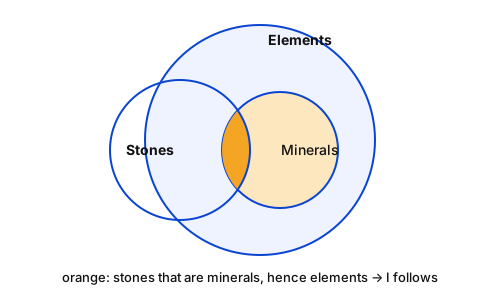
Concept: Draw the Venn diagram and test each conclusion against every possibility.

  1. Some stones are minerals → Stones overlaps Minerals.
  2. All minerals are elements → Minerals lies inside Elements.
  3. The stones that are minerals are also elements → I (some elements are stones) follows ✓.
  4. Only 'some' stones are minerals, so II (all stones are minerals) is not certain ✗.

Trick: Some + All (in this order) gives a 'Some' conclusion.

Answer: (B) Only conclusion (I) follows

अवधारणा: वेन आरेख बनाकर प्रत्येक निष्कर्ष को हर संभावना पर जाँचें।

  1. कुछ पत्थर खनिज हैं → Stones, Minerals को काटता है।
  2. सभी खनिज तत्व हैं → Minerals, Elements के अंदर।
  3. जो पत्थर खनिज हैं वे तत्व भी हैं → I (कुछ तत्व पत्थर हैं) अनुसरण करता है ✓।
  4. केवल 'कुछ' पत्थर खनिज हैं, अतः II (सभी पत्थर खनिज हैं) निश्चित नहीं ✗।

ट्रिक: 'कुछ' + 'सभी' (इसी क्रम में) से 'कुछ' वाला निष्कर्ष निकलता है।

उत्तर: (B) केवल निष्कर्ष (I) अनुसरण करता है

RRB NTPC Undergraduate CBT 1General Intelligence and ReasoningSyllogismRRB NTPC Undergraduate CBT 1 2025 · 16 Jun Shift 2 →
Q6986.
Each vowel in the word CONTAIN is changed to the letter immediately following it in the English alphabetical order and each consonant is changed to the letter immediately preceding it in the English alphabetical order. Which of the following letters will be third from the left in the new group of letters thus formed?
शब्द CONTAIN में प्रत्येक स्वर को अंग्रेज़ी वर्णमाला क्रम में उसके ठीक बाद वाले अक्षर से बदल दिया जाता है और प्रत्येक व्यंजन को अंग्रेज़ी वर्णमाला क्रम में उसके ठीक पहले वाले अक्षर से बदल दिया जाता है। इस प्रकार बने अक्षरों के नए समूह में बाएँ से तीसरा अक्षर निम्नलिखित में से कौन-सा होगा?
  1. AM
  2. BO
  3. CL
  4. DN
Show answer

Concept: Vowels move one step forward, consonants one step back.

  1. C→B, O→P, N→M, T→S, A→B, I→J, N→M.
  2. New group: B P M S B J M.
  3. Third from the left is M.

Trick: Only the 3rd letter (N, a consonant) is needed: N − 1 = M.

Answer: (A) M

अवधारणा: स्वर एक कदम आगे, व्यंजन एक कदम पीछे जाते हैं।

  1. C→B, O→P, N→M, T→S, A→B, I→J, N→M।
  2. नया समूह: B P M S B J M।
  3. बाएँ से तीसरा अक्षर M है।

ट्रिक: केवल तीसरा अक्षर (N, व्यंजन) चाहिए: N − 1 = M।

उत्तर: (A) M

RRB NTPC Undergraduate CBT 1General Intelligence and ReasoningLetter codingRRB NTPC Undergraduate CBT 1 2025 · 16 Jun Shift 2 →
Q6987.
Each letter in the word PREDIAL is changed to the letter immediately following it in the English alphabetical order and then all the letters thus obtained are arranged in the English alphabetical order. Which of the following letters will be fourth from the right in the new group of letters thus formed?
शब्द PREDIAL के प्रत्येक अक्षर को अंग्रेज़ी वर्णमाला क्रम में उसके ठीक बाद वाले अक्षर से बदल दिया जाता है और फिर इस प्रकार प्राप्त सभी अक्षरों को अंग्रेज़ी वर्णमाला क्रम में व्यवस्थित किया जाता है। इस प्रकार बने अक्षरों के नए समूह में दाएँ से चौथा अक्षर निम्नलिखित में से कौन-सा होगा?
  1. AE
  2. BM
  3. CF
  4. DJ
Show answer

Concept: Shift every letter, then sort alphabetically.

  1. P R E D I A L → Q S F E J B M.
  2. Arranged: B E F J M Q S.
  3. From the right: S (1st), Q (2nd), M (3rd), J (4th).

Trick: In a 7-letter group, 4th from the right = 4th from the left – the middle letter.

Answer: (D) J

अवधारणा: हर अक्षर को खिसकाएँ, फिर वर्णानुक्रम में लगाएँ।

  1. P R E D I A L → Q S F E J B M।
  2. क्रम में: B E F J M Q S।
  3. दाएँ से: S (1), Q (2), M (3), J (4)।

ट्रिक: 7 अक्षरों में दाएँ से चौथा = बाएँ से चौथा – बीच वाला अक्षर।

उत्तर: (D) J

RRB NTPC Undergraduate CBT 1General Intelligence and ReasoningLetter rearrangementRRB NTPC Undergraduate CBT 1 2025 · 16 Jun Shift 2 →
Q6988.
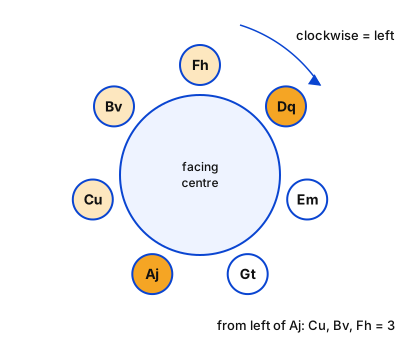
Aj, Bv, Cu, Dq, Em, Fh and Gt are sitting around a circular table, facing the centre. Gt sits third to the left of Fh. Em sits second to the left of Fh. Bv sits third to the right of Em. Aj is the immediate neighbour of Cu and Gt.
How many people sit between Dq and Aj when counted from the left of Aj?
Aj, Bv, Cu, Dq, Em, Fh और Gt एक वृत्ताकार मेज़ के चारों ओर केंद्र की ओर मुख करके बैठे हैं। Gt, Fh के बाएँ से तीसरे स्थान पर बैठा है। Em, Fh के बाएँ से दूसरे स्थान पर बैठा है। Bv, Em के दाएँ से तीसरे स्थान पर बैठा है। Aj, Cu और Gt दोनों का निकटतम पड़ोसी है।
Aj के बाएँ से गिनने पर Dq और Aj के बीच कितने व्यक्ति बैठे हैं?
  1. AOneएक
  2. BTwoदो
  3. CFourचार
  4. DThreeतीन
Show answer

Concept: Facing the centre: left = clockwise, right = anticlockwise.

  1. Fix Fh. Em is 2nd to the left and Gt 3rd to the left of Fh.
  2. Bv is 3rd to the right of Em → immediate right of Fh.
  3. Aj is next to Gt and Cu → Aj sits on Gt's other side, Cu after Aj; Dq takes the last seat (immediate left of Fh).
  4. Counting left (clockwise) from Aj: Cu, Bv, Fh, then Dq → three people.

Trick: Place the person mentioned most (Fh) first; everything else hangs on it.

Answer: (D) Three

अवधारणा: केंद्र की ओर मुख: बायाँ = दक्षिणावर्त, दायाँ = वामावर्त।

  1. Fh को स्थिर करें। Em, Fh के बाएँ दूसरे और Gt बाएँ तीसरे स्थान पर।
  2. Bv, Em के दाएँ तीसरे → Fh के ठीक दाएँ।
  3. Aj, Gt और Cu दोनों का पड़ोसी → Aj, Gt के दूसरी ओर, उसके बाद Cu; Dq अंतिम स्थान (Fh के ठीक बाएँ) पर।
  4. Aj के बाएँ (दक्षिणावर्त) से गिनें: Cu, Bv, Fh, फिर Dq → तीन व्यक्ति।

ट्रिक: सबसे अधिक बार आए व्यक्ति (Fh) को पहले रखें; बाकी उसी से जुड़ते हैं।

उत्तर: (D) तीन

RRB NTPC Undergraduate CBT 1General Intelligence and ReasoningCircular seatingRRB NTPC Undergraduate CBT 1 2025 · 16 Jun Shift 2 →
Q6989.
Sima ranked 12th from the top and 13th from the bottom in her class. How many students are there in her class?
सीमा अपनी कक्षा में ऊपर से 12वें और नीचे से 13वें स्थान पर है। उसकी कक्षा में कितने विद्यार्थी हैं?
  1. A20
  2. B23
  3. C22
  4. D24
Show answer

Concept: Total = rank from top + rank from bottom −1 (the person is counted twice).

  1. Total =12+13−1.
  2. =24 students.

Trick: Always subtract 1 – Sima is counted in both ranks.

Answer: (D) 24

अवधारणा: कुल = ऊपर से रैंक + नीचे से रैंक −1 (व्यक्ति दो बार गिना जाता है)।

  1. कुल =12+13−1।
  2. =24 छात्र।

ट्रिक: हमेशा 1 घटाएँ – सीमा दोनों रैंक में गिनी गई है।

उत्तर: (D) 24

RRB NTPC Undergraduate CBT 1General Intelligence and ReasoningRankingRRB NTPC Undergraduate CBT 1 2025 · 16 Jun Shift 2 →
Q6990.
Based on the English alphabetical order, three of the following four are alike in a certain way and thus form a group. Which is the one that does not belong to that group? (Note: The odd man out is not based on the number of consonants/vowels or their position in the letter cluster.)
अंग्रेज़ी वर्णमाला क्रम के आधार पर, निम्नलिखित चार में से तीन किसी निश्चित प्रकार से एकसमान हैं और इस प्रकार एक समूह बनाते हैं। वह कौन-सा है जो उस समूह से संबंधित नहीं है? (ध्यान दें: असंगत, अक्षर-समूह में व्यंजनों/स्वरों की संख्या या उनके स्थान पर आधारित नहीं है।)
  1. AEFJ
  2. BFGK
  3. CYAD
  4. DGHL
Show answer

Concept: Find the gaps between letters using positions (A = 1 … Z = 26).

  1. EFJ: 5→6→10: +1,+4.
  2. FGK: 6→7→11: +1,+4; GHL: 7→8→12: +1,+4.
  3. YAD: 25→1(27)→4: +2,+3 ✗.

Trick: The first two letters of the group members are consecutive (EF, FG, GH) – Y and A are not.

Answer: (C) YAD

अवधारणा: स्थानीय मान (A = 1 … Z = 26) से अक्षरों के बीच अंतर निकालें।

  1. EFJ: 5→6→10: +1,+4।
  2. FGK: 6→7→11: +1,+4; GHL: 7→8→12: +1,+4।
  3. YAD: 25→1(27)→4: +2,+3 ✗।

ट्रिक: बाकी समूहों के पहले दो अक्षर लगातार हैं (EF, FG, GH) – Y और A नहीं।

उत्तर: (C) YAD

RRB NTPC Undergraduate CBT 1General Intelligence and ReasoningLetter cluster odd one outRRB NTPC Undergraduate CBT 1 2025 · 16 Jun Shift 2 →
Q6991.
What should come in place of ? in the given series based on the English alphabetical order?
GJL ORT WZB EHJ ?
अंग्रेज़ी वर्णमाला क्रम के आधार पर दी गई श्रृंखला में ? के स्थान पर क्या आना चाहिए?
GJL ORT WZB EHJ ?
  1. AMOQ
  2. BMQQ
  3. CMNP
  4. DMPR
Show answer

Concept: Each term follows +3, +2 inside; first letters move +8.

  1. Inside each term: G(+3)J(+2)L, O(+3)R(+2)T, W(+3)Z(+2)B, E(+3)H(+2)J.
  2. First letters: G → O → W → E → M (each +8, looping after Z).
  3. Next term: M, M+3 = P, P+2 = R → MPR.

Trick: Find the first letter (+8) and the inner +3, +2 rule; only MPR fits.

Answer: (D) MPR

अवधारणा: हर पद के अंदर +3, +2; पहले अक्षर +8 खिसकते हैं।

  1. हर पद में: G(+3)J(+2)L, O(+3)R(+2)T, W(+3)Z(+2)B, E(+3)H(+2)J।
  2. पहले अक्षर: G → O → W → E → M (हर बार +8, Z के बाद चक्र में)।
  3. अगला पद: M, M+3 = P, P+2 = R → MPR।

ट्रिक: पहला अक्षर (+8) और अंदर का +3, +2 नियम – केवल MPR फिट।

उत्तर: (D) MPR

RRB NTPC Undergraduate CBT 1General Intelligence and ReasoningLetter seriesRRB NTPC Undergraduate CBT 1 2025 · 16 Jun Shift 2 →
Q6992.
Which of the following letter-number clusters will replace the question mark (?) in the given series to make it logically complete?
BLE 6 UEX 11 NXQ 16 GQJ 21 ?
निम्नलिखित में से कौन-सा अक्षर-संख्या समूह दी गई श्रृंखला में प्रश्न चिह्न (?) के स्थान पर आकर उसे तार्किक रूप से पूर्ण करेगा?
BLE 6 UEX 11 NXQ 16 GQJ 21 ?
  1. AZFB 25
  2. BXHE 26
  3. CZJC 26
  4. DYLI 25
Show answer

Concept: Each letter position moves back 7 (looping after A); the number rises by 5.

  1. 1st letters: B → U → N → G → Z (−7 each).
  2. 2nd letters: L → E → X → Q → J; 3rd letters: E → X → Q → J → C.
  3. Numbers: 6,11,16,21,26 (+5) → ZJC 26.

Trick: The number alone cuts options to two (26); the first letter Z then confirms.

Answer: (C) ZJC 26

अवधारणा: हर अक्षर 7 पीछे जाता है (A के बाद चक्र में); संख्या 5 बढ़ती है।

  1. पहले अक्षर: B → U → N → G → Z (हर बार −7)।
  2. दूसरे अक्षर: L → E → X → Q → J; तीसरे अक्षर: E → X → Q → J → C।
  3. संख्याएँ: 6,11,16,21,26 (+5) → ZJC 26।

ट्रिक: केवल संख्या से दो विकल्प (26) बचते हैं; पहला अक्षर Z पुष्टि करता है।

उत्तर: (C) ZJC 26

RRB NTPC Undergraduate CBT 1General Intelligence and ReasoningAlphanumeric seriesRRB NTPC Undergraduate CBT 1 2025 · 16 Jun Shift 2 →
Q6993.
BGLQ is related to CHMR in a certain way based on the English alphabetical order. In the same way, VAFX is related to WBGY. To which of the following is PUZE related, in the same way?
अंग्रेज़ी वर्णमाला क्रम के आधार पर BGLQ एक निश्चित प्रकार से CHMR से संबंधित है। उसी प्रकार, VAFX, WBGY से संबंधित है। उसी प्रकार, PUZE निम्नलिखित में से किससे संबंधित है?
  1. AQVLP
  2. BQVRT
  3. CQVAF
  4. DQVJK
Show answer

Concept: Find the shift applied to each letter.

  1. BGLQ → CHMR: each letter +1.
  2. VAFX → WBGY: each letter +1 ✓.
  3. PUZE +1: P→Q, U→V, Z→A (looping), E→F → QVAF.

Trick: Z + 1 = A – the loop-back is the only trap here.

Answer: (C) QVAF

अवधारणा: प्रत्येक अक्षर पर लगा खिसकाव खोजें।

  1. BGLQ → CHMR: हर अक्षर +1।
  2. VAFX → WBGY: हर अक्षर +1 ✓।
  3. PUZE +1: P→Q, U→V, Z→A (चक्र में), E→F → QVAF।

ट्रिक: Z + 1 = A – यही एकमात्र जाल है।

उत्तर: (C) QVAF

RRB NTPC Undergraduate CBT 1General Intelligence and ReasoningLetter analogyRRB NTPC Undergraduate CBT 1 2025 · 16 Jun Shift 2 →
Q6994.
What should come in place of ‘?’ in the given series?
28 33 44 61 84 113 ?
दी गई श्रृंखला में '?' के स्थान पर क्या आना चाहिए?
28 33 44 61 84 113 ?
  1. A137
  2. B143
  3. C140
  4. D148
Show answer

Concept: Check the differences between consecutive terms.

  1. Differences: 5,11,17,23,29 – each increases by 6.
  2. Next difference =29+6=35.
  3. ?=113+35=148.

Trick: Differences in AP (+6) → just add the next difference.

Answer: (D) 148

अवधारणा: लगातार पदों के अंतर देखें।

  1. अंतर: 5,11,17,23,29 – हर बार 6 बढ़ता है।
  2. अगला अंतर =29+6=35।
  3. ?=113+35=148।

ट्रिक: अंतर समांतर श्रेणी (+6) में → बस अगला अंतर जोड़ें।

उत्तर: (D) 148

RRB NTPC Undergraduate CBT 1General Intelligence and ReasoningNumber seriesRRB NTPC Undergraduate CBT 1 2025 · 16 Jun Shift 2 →
Q6995.
What will come in place of the question mark (?) in the following equation if ‘+’ and ‘−’ are interchanged and ‘×’ and ‘÷’ are interchanged?
12 − 50 ÷ 2 × 2 + 15 = ?
यदि '+' और '−' को आपस में बदल दिया जाए तथा '×' और '÷' को आपस में बदल दिया जाए, तो निम्नलिखित समीकरण में प्रश्न चिह्न (?) के स्थान पर क्या आएगा?
12 − 50 ÷ 2 × 2 + 15 = ?
  1. A49
  2. B45
  3. C48
  4. D47
Show answer

Concept: Swap the signs as told, then apply BODMAS.

  1. After interchanging: 12+50×2÷2−15.
  2. =12+100÷2−15=12+50−15.
  3. =47.

Trick: ×2 and ÷2 cancel each other, so it is simply 12+50−15.

Answer: (D) 47

अवधारणा: बताए अनुसार चिह्न बदलें, फिर BODMAS लगाएँ।

  1. बदलने के बाद: 12+50×2÷2−15।
  2. =12+100÷2−15=12+50−15।
  3. =47।

ट्रिक: ×2 और ÷2 एक-दूसरे को काट देते हैं, अतः सीधे 12+50−15।

उत्तर: (D) 47

RRB NTPC Undergraduate CBT 1General Intelligence and ReasoningInterchanging signsRRB NTPC Undergraduate CBT 1 2025 · 16 Jun Shift 2 →
Q6996.
Which river forms a fertile region within parts of the Great Indian Desert?
महान भारतीय मरुस्थल (Great Indian Desert) के कुछ भागों में कौन-सी नदी एक उपजाऊ क्षेत्र का निर्माण करती है?
  1. ASabarmati Riverसाबरमती नदी
  2. BNarmada Riverनर्मदा नदी
  3. CBeas Riverब्यास नदी
  4. DGhaggar Riverघग्गर नदी
Show answer

Concept: The Ghaggar is the seasonal river of the Thar region.

  1. The Ghaggar rises in the Shivaliks, flows through Haryana and Punjab and disappears in the sands near Hanumangarh–Suratgarh in Rajasthan.
  2. Its flood plain forms a fertile belt (identified with the ancient Saraswati) inside the Great Indian Desert.
  3. Sabarmati, Narmada and Beas do not enter the Thar.

Yaad rakhein: Ghaggar = Thar's only inland river; Luni is the other desert river (to the Rann of Kutch).

Answer: (D) Ghaggar River

अवधारणा: घग्गर थार क्षेत्र की मौसमी नदी है।

  1. घग्गर शिवालिक से निकलकर हरियाणा-पंजाब होते हुए राजस्थान में हनुमानगढ़–सूरतगढ़ के पास रेत में लुप्त हो जाती है।
  2. इसका बाढ़-मैदान महान भारतीय मरुस्थल के भीतर एक उपजाऊ पट्टी बनाता है (प्राचीन सरस्वती से जोड़ा जाता है)।
  3. साबरमती, नर्मदा और ब्यास थार में प्रवेश नहीं करतीं।

याद रखें: घग्गर = थार की अंतर्देशीय नदी; लूनी दूसरी मरुस्थलीय नदी (कच्छ के रण तक)।

उत्तर: (D) Ghaggar River

RRB NTPC Undergraduate CBT 1General AwarenessIndian RiversRRB NTPC Undergraduate CBT 1 2025 · 16 Jun Shift 1 →
Q6997.
Which of the following cases for the first time held the Preamble to be part of the Constitution?
निम्नलिखित में से किस वाद (case) में पहली बार प्रस्तावना को संविधान का भाग माना गया?
  1. AKesavananda Bharati Case, 1973केशवानंद भारती वाद, 1973
  2. BGolaknath Case, 1967गोलकनाथ वाद, 1967
  3. CS.R. Bommai Case, 1994एस.आर. बोम्मई वाद, 1994
  4. DBerubari Case, 1960बेरुबारी वाद, 1960
Show answer

Concept: The Supreme Court's view on the Preamble changed between 1960 and 1973.

  1. Berubari Union case (1960): Preamble is not a part of the Constitution.
  2. Kesavananda Bharati case (1973): the 13-judge bench held the Preamble is a part of the Constitution and reflects its basic structure.
  3. S.R. Bommai (1994) later reaffirmed this.

Yaad rakhein: Berubari – NO, Kesavananda – YES (first), Bommai – again YES.

Answer: (A) Kesavananda Bharati Case, 1973

अवधारणा: प्रस्तावना पर सुप्रीम कोर्ट का मत 1960 से 1973 के बीच बदला।

  1. बेरुबारी यूनियन वाद (1960): प्रस्तावना संविधान का भाग नहीं।
  2. केशवानंद भारती वाद (1973): 13-न्यायाधीशों की पीठ ने कहा कि प्रस्तावना संविधान का भाग है और मूल ढाँचे को दर्शाती है।
  3. एस.आर. बोम्मई (1994) ने इसे फिर दोहराया।

याद रखें: बेरुबारी – नहीं, केशवानंद – हाँ (पहली बार), बोम्मई – फिर हाँ।

उत्तर: (A) Kesavananda Bharati Case, 1973

RRB NTPC Undergraduate CBT 1General AwarenessPreamble – Case LawRRB NTPC Undergraduate CBT 1 2025 · 16 Jun Shift 1 →
Q6998.
Which of the following Government of India schemes was launched in 2017 to achieve universal household electrification by providing electricity connections to all un- electrified households in rural areas and all poor households in urban areas in the country?
भारत सरकार की निम्नलिखित में से कौन-सी योजना देश के ग्रामीण क्षेत्रों के सभी गैर-विद्युतीकृत परिवारों और शहरी क्षेत्रों के सभी गरीब परिवारों को बिजली कनेक्शन प्रदान करके सार्वभौमिक घरेलू विद्युतीकरण प्राप्त करने के लिए 2017 में शुरू की गई थी?
  1. ASaubhagya Scheme (Pradhan Mantri Sahaj Bijli Har Ghar Yojana)सौभाग्य योजना (प्रधानमंत्री सहज बिजली हर घर योजना)
  2. BPradhan Mantri Ghar Ghar Bijili Yojana (PMGGBY)प्रधानमंत्री घर घर बिजली योजना (PMGGBY)
  3. CPower for All Schemeसभी के लिए बिजली योजना (Power for All Scheme)
  4. DDeen Dayal Upadhyaya Gram Jyoti Yojana (DDUGJY)दीनदयाल उपाध्याय ग्राम ज्योति योजना (DDUGJY)
Show answer

Concept: Saubhagya targeted the last-mile household connection.

  1. Pradhan Mantri Sahaj Bijli Har Ghar Yojana (Saubhagya) was launched on 25 September 2017 for free/cheap electricity connections to all un-electrified rural households and poor urban households.
  2. DDUGJY (2014) dealt with rural electrification infrastructure (feeder separation, village electrification), not individual households.

Yaad rakhein: DDUGJY = villages (2014); Saubhagya = households (2017).

Answer: (A) Saubhagya Scheme (Pradhan Mantri Sahaj Bijli Har Ghar Yojana)

अवधारणा: सौभाग्य योजना का लक्ष्य हर घर तक बिजली कनेक्शन था।

  1. प्रधानमंत्री सहज बिजली हर घर योजना (सौभाग्य) 25 सितंबर 2017 को शुरू हुई — सभी गैर-विद्युतीकृत ग्रामीण घरों और शहरी गरीब घरों को कनेक्शन।
  2. DDUGJY (2014) ग्रामीण विद्युत ढाँचे (फीडर अलगाव, गाँव विद्युतीकरण) की योजना थी, घरों की नहीं।

याद रखें: DDUGJY = गाँव (2014); सौभाग्य = घर (2017)।

उत्तर: (A) Saubhagya Scheme (Pradhan Mantri Sahaj Bijli Har Ghar Yojana)

RRB NTPC Undergraduate CBT 1General AwarenessGovernment SchemesRRB NTPC Undergraduate CBT 1 2025 · 16 Jun Shift 1 →
Q6999.
The historical chronicle Rajatarangini, which presents a detailed account of the kings of Kashmir, was composed by:
कश्मीर के राजाओं का विस्तृत विवरण प्रस्तुत करने वाले ऐतिहासिक ग्रंथ राजतरंगिणी की रचना किसने की थी?
  1. ABilhanaबिल्हण
  2. BSomadevaसोमदेव
  3. CKalhanaकल्हण
  4. DKshemendraक्षेमेंद्र
Show answer

Concept: Rajatarangini ("River of Kings") is the Sanskrit history of Kashmir.

  1. Written by Kalhana in 1148–50 CE; it is regarded as India's first proper historical work.
  2. Bilhana wrote Vikramankadevacharita; Somadeva wrote Kathasaritsagara; Kshemendra wrote Brihatkathamanjari.

Yaad rakhein: Kalhana – Kashmir – Rajatarangini (all with K).

Answer: (C) Kalhana

अवधारणा: राजतरंगिणी ("राजाओं की नदी") कश्मीर का संस्कृत इतिहास-ग्रंथ है।

  1. कल्हण ने इसे 1148–50 ई. में लिखा; इसे भारत का पहला व्यवस्थित इतिहास-ग्रंथ माना जाता है।
  2. बिल्हण – विक्रमांकदेवचरित; सोमदेव – कथासरित्सागर; क्षेमेंद्र – बृहत्कथामंजरी।

याद रखें: कल्हण – कश्मीर – राजतरंगिणी।

उत्तर: (C) Kalhana

RRB NTPC Undergraduate CBT 1General AwarenessAncient Indian LiteratureRRB NTPC Undergraduate CBT 1 2025 · 16 Jun Shift 1 →
Q7000.
Which Indian non-profit organization became the first Indian to win the Ramon Magsaysay Award in 2025?
कौन-सा भारतीय गैर-लाभकारी संगठन 2025 में रेमन मैग्सेसे पुरस्कार जीतने वाला पहला भारतीय (संगठन) बना?
  1. AEducate Girlsएजुकेट गर्ल्स (Educate Girls)
  2. BPrathamप्रथम
  3. CAkshaya Patraअक्षय पात्र
  4. DTeach For Indiaटीच फॉर इंडिया (Teach For India)
Show answer

Concept: The 2025 Ramon Magsaysay Award went, for the first time, to an Indian organisation.

  1. Educate Girls (founded 2007, Rajasthan) was named a 2025 Magsaysay awardee for enrolling out-of-school girls and improving learning outcomes in rural India.
  2. Earlier Indian laureates were individuals (Vinoba Bhave 1958 onwards); Educate Girls is the first Indian organisation to win.

Yaad rakhein: Magsaysay 2025 – Educate Girls (India), along with Shaahina Ali (Maldives) and Father Flaviano Villanueva (Philippines).

Answer: (A) Educate Girls

अवधारणा: 2025 का रेमन मैग्सेसे पुरस्कार पहली बार किसी भारतीय संगठन को मिला।

  1. Educate Girls (स्थापना 2007, राजस्थान) को स्कूल से बाहर लड़कियों के नामांकन और ग्रामीण भारत में सीखने के स्तर में सुधार के लिए 2025 का मैग्सेसे पुरस्कार मिला।
  2. पहले के भारतीय विजेता व्यक्ति थे (1958 में विनोबा भावे से); Educate Girls पहला भारतीय संगठन है।

याद रखें: मैग्सेसे 2025 – Educate Girls (भारत), साथ में शाहिना अली (मालदीव) और फादर फ्लैवियानो विलानुएवा (फिलीपींस)।

उत्तर: (A) Educate Girls

RRB NTPC Undergraduate CBT 1General AwarenessAwards – Current AffairsRRB NTPC Undergraduate CBT 1 2025 · 16 Jun Shift 1 →