Question bank

Q&A: practice questions with answers

Search questions on any topic. Filter by exam category, exam, subject and topic, try the question, then open the answer and explanation.

Courses – airGurukul

8,495 questions found.

Q7081.
In a certain code language,
A @ B means ‘A is the mother of B’,
A × B means ‘A is the wife of B’,
A + B means ‘A is the brother of B’ and
A ÷ B means ‘A is the father of B’.
How is S related to H if ‘S × D ÷ R + Y @ H’?
एक निश्चित कूट भाषा में,
A @ B का अर्थ है ‘A, B की माँ है’,
A × B का अर्थ है ‘A, B की पत्नी है’,
A + B का अर्थ है ‘A, B का भाई है’ और
A ÷ B का अर्थ है ‘A, B का पिता है’।
यदि ‘S × D ÷ R + Y @ H’ है, तो S का H से क्या संबंध है?
  1. AMother's sisterमाँ की बहन
  2. BSisterबहन
  3. CMother's motherमाँ की माँ
  4. DMotherमाँ
Show answer

Concept: Decode each symbol and build the family tree.
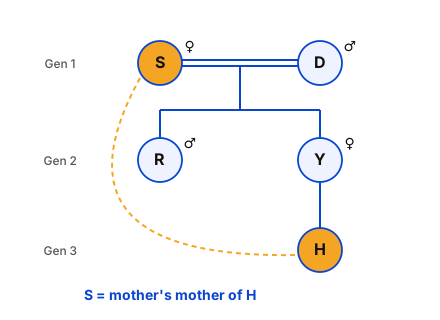
  1. S × D: S is the wife of D. D ÷ R: D is the father of R.
  2. R + Y: R is the brother of Y ⇒ S is the mother of R and Y.
  3. Y @ H: Y is the mother of H.
  4. So S is the mother of H’s mother.

Trick: Always mark gender (♂/♀) while decoding – it decides ‘mother’ vs ‘father’.

Answer: (C) Mother's mother

अवधारणा: हर चिह्न को डिकोड कर वंश-वृक्ष बनाएँ।

  1. S × D: S, D की पत्नी है। D ÷ R: D, R का पिता है।
  2. R + Y: R, Y का भाई है ⇒ S, R और Y की माँ है।
  3. Y @ H: Y, H की माँ है।
  4. अतः S, H की माँ की माँ (नानी) है।

ट्रिक: डिकोड करते समय लिंग (♂/♀) अवश्य लिखें।

उत्तर: (C) माँ की माँ (नानी)
RRB NTPC Undergraduate CBT 1General Intelligence and ReasoningBlood relations – codedRRB NTPC Undergraduate CBT 1 2025 · 16 Jun Shift 1 →
Q7082.
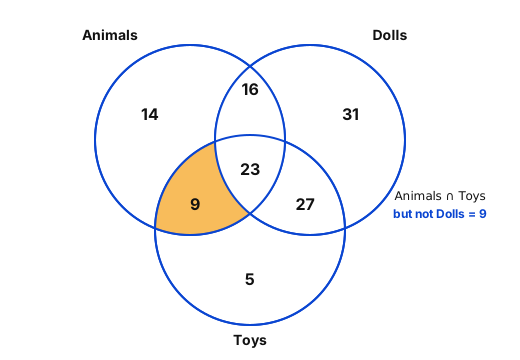
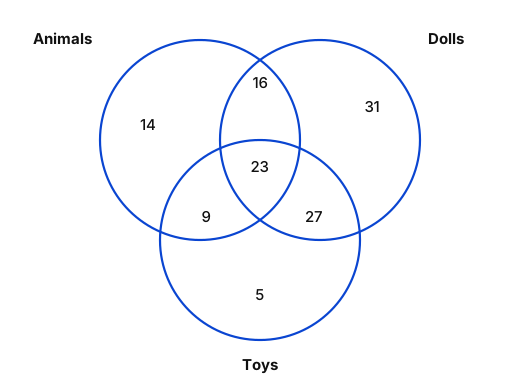
Study the given diagram carefully and answer the question. The numbers in different sections indicate the number of persons. (NOTE: You have to take the given data to be true even if it seems to be at variance from commonly known facts.)
How many such Animals are there which are also Toys but are not Dolls?
दिए गए आरेख का ध्यानपूर्वक अध्ययन कीजिए और प्रश्न का उत्तर दीजिए। विभिन्न खंडों में दी गई संख्याएँ व्यक्तियों की संख्या दर्शाती हैं। (ध्यान दें: आपको दिए गए आँकड़ों को सत्य मानना है, भले ही वे सामान्य रूप से ज्ञात तथ्यों से भिन्न प्रतीत होते हों।)
ऐसे कितने जानवर (Animals) हैं जो खिलौने (Toys) भी हैं परंतु गुड़िया (Dolls) नहीं हैं?
  1. A9
  2. B31
  3. C5
  4. D16
Show answer

Concept: ‘Animals and Toys but not Dolls’ = the region common to Animals and Toys, outside Dolls.

  1. Animals ∩ Toys contains 9 and 23.
  2. 23 is also inside Dolls, so exclude it.
  3. Required number =9.

Trick: Shade the ‘in’ circles, then remove every part touching the ‘not’ circle.

Answer: (A) 9

अवधारणा: ‘Animals और Toys पर Dolls नहीं’ = Animals और Toys का साझा भाग जो Dolls के बाहर है।

  1. Animals ∩ Toys में 9 और 23 हैं।
  2. 23, Dolls के अंदर भी है, इसलिए हटाएँ।
  3. अभीष्ट संख्या =9।

ट्रिक: ‘में’ वाले वृत्तों को छायांकित करें, फिर ‘नहीं’ वाले वृत्त का हिस्सा हटा दें।

उत्तर: (A) 9

RRB NTPC Undergraduate CBT 1General Intelligence and ReasoningVenn diagram – dataRRB NTPC Undergraduate CBT 1 2025 · 16 Jun Shift 1 →
Q7083.
In a certain code language,
A + B means ‘A is the sister of B’,
A - B means ‘A is the wife of B’,
A × B means ‘A is the father of B’, and
A ÷ B means ‘A is the mother of B’.
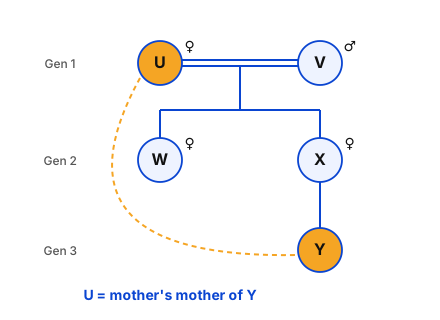
Based on the above, how is U related to Y if ‘U - V × W + X ÷ Y’?
एक निश्चित कूट भाषा में,
A + B का अर्थ है ‘A, B की बहन है’,
A - B का अर्थ है ‘A, B की पत्नी है’,
A × B का अर्थ है ‘A, B का पिता है’, और
A ÷ B का अर्थ है ‘A, B की माँ है’।
उपर्युक्त के आधार पर, यदि ‘U - V × W + X ÷ Y’ है, तो U का Y से क्या संबंध है?
  1. AMother’s motherमाँ की माँ
  2. BFather’s motherपिता की माँ
  3. CFather’s sisterपिता की बहन
  4. DMother’s sisterमाँ की बहन
Show answer

Concept: Decode each symbol and build the family tree.

  1. U − V: U is the wife of V. V × W: V is the father of W.
  2. W + X: W is the sister of X ⇒ U is the mother of W and X.
  3. X ÷ Y: X is the mother of Y.
  4. So U is Y’s mother’s mother.

Trick: Wife of the father = mother; go one generation at a time.

Answer: (A) Mother’s mother

अवधारणा: हर चिह्न को डिकोड कर वंश-वृक्ष बनाएँ।

  1. U − V: U, V की पत्नी है। V × W: V, W का पिता है।
  2. W + X: W, X की बहन है ⇒ U, W और X की माँ है।
  3. X ÷ Y: X, Y की माँ है।
  4. अतः U, Y की माँ की माँ (नानी) है।

ट्रिक: पिता की पत्नी = माँ; एक-एक पीढ़ी आगे बढ़ें।

उत्तर: (A) माँ की माँ (नानी)

RRB NTPC Undergraduate CBT 1General Intelligence and ReasoningBlood relations – codedRRB NTPC Undergraduate CBT 1 2025 · 16 Jun Shift 1 →
Q7084.
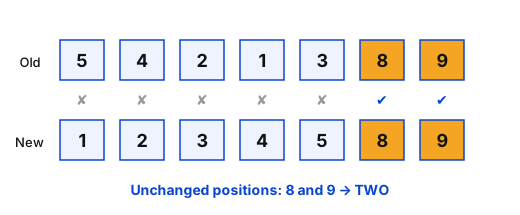
Each of the digits in the number 5421389 is arranged in ascending order from left to right. The position(s) of how many digits will remain unchanged as compared to that in the original number?
संख्या 5421389 के प्रत्येक अंक को बाएँ से दाएँ आरोही क्रम में व्यवस्थित किया जाता है। मूल संख्या की तुलना में कितने अंकों का/के स्थान अपरिवर्तित रहेगा/रहेंगे?
  1. ATHREEतीन
  2. BNONEकोई नहीं
  3. CTWOदो
  4. DONEएक
Show answer

Concept: Write the digits in ascending order and compare place by place.

  1. Original: 5 4 2 1 3 8 9
  2. Ascending: 1 2 3 4 5 8 9
  3. Same positions: 8 (6th) and 9 (7th) ⇒ two digits.

Trick: Digits already in the right place are usually at the ends – check them first.

Answer: (C) TWO

अवधारणा: अंकों को आरोही क्रम में लिखें और स्थान-दर-स्थान तुलना करें।

  1. मूल: 5 4 2 1 3 8 9
  2. आरोही: 1 2 3 4 5 8 9
  3. समान स्थान: 8 (छठा) और 9 (सातवाँ) ⇒ दो अंक।

ट्रिक: जो अंक पहले से सही जगह हों, वे प्रायः सिरों पर होते हैं – पहले वहीं देखें।

उत्तर: (C) दो (TWO)

RRB NTPC Undergraduate CBT 1General Intelligence and ReasoningNumber arrangementRRB NTPC Undergraduate CBT 1 2025 · 16 Jun Shift 1 →
Q7085.
Based on the alphabetical order, three of the following four are alike in a certain way and thus form a group. Which is the one that does not belong to that group?
(Note: The odd man out is not based on the number of consonants/vowels or their position in the letter cluster.)
वर्णमाला क्रम के आधार पर, निम्नलिखित चार में से तीन किसी निश्चित प्रकार से एकसमान हैं और इस प्रकार एक समूह बनाते हैं। कौन-सा उस समूह से संबंधित नहीं है?
(ध्यान दें: असंगत, व्यंजनों/स्वरों की संख्या या अक्षर-समूह में उनके स्थान पर आधारित नहीं है।)
  1. AXTW
  2. BIEH
  3. CGEF
  4. DNJM
Show answer

Concept: Check the gaps between consecutive letters.

  1. XTW: X−4=T, T+3=W → (−4,+3)
  2. IEH: (−4,+3); NJM: (−4,+3)
  3. GEF: G−2=E, E+1=F → (−2,+1) ✗

Trick: Same pattern in three; the cluster with different gaps is odd.

Answer: (C) GEF

अवधारणा: लगातार अक्षरों के बीच का अंतर देखें।

  1. XTW: X−4=T, T+3=W → (−4,+3)
  2. IEH: (−4,+3); NJM: (−4,+3)
  3. GEF: G−2=E, E+1=F → (−2,+1) ✗

ट्रिक: तीन में एक जैसा पैटर्न; अलग अंतर वाला विषम।

उत्तर: (C) GEF

RRB NTPC Undergraduate CBT 1General Intelligence and ReasoningOdd one out – letter clustersRRB NTPC Undergraduate CBT 1 2025 · 16 Jun Shift 1 →
Q7086.
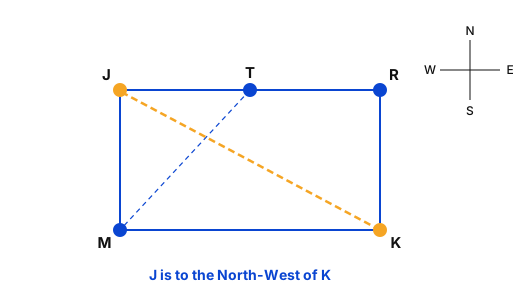
Town J is to the west of Town T. Town R is to the east of Town T. Town K is to the south of Town R. Town M is to the west of Town K. Town M is to the south-west of Town T. Town J is to the north of Town M. What is the position of Town J with respect to Town K?
नगर J, नगर T के पश्चिम में है। नगर R, नगर T के पूर्व में है। नगर K, नगर R के दक्षिण में है। नगर M, नगर K के पश्चिम में है। नगर M, नगर T के दक्षिण-पश्चिम में है। नगर J, नगर M के उत्तर में है। नगर K के सापेक्ष नगर J की स्थिति क्या है?
  1. ASouth-eastदक्षिण-पूर्व
  2. BSouth-westदक्षिण-पश्चिम
  3. CNorth-eastउत्तर-पूर्व
  4. DNorth-westउत्तर-पश्चिम
Show answer

Concept: Place towns on a grid step by step (N up, E right).

  1. J – T – R lie on one west-to-east line.
  2. K is south of R; M is west of K and south-west of T; J is north of M ⇒ J, T, R, K, M form a rectangle-like grid.
  3. K is east and south of J ⇒ J is to the north-west of K.

Trick: Asked ‘J w.r.t. K’ – stand at K and look at J.

Answer: (D) North-west

अवधारणा: नगरों को ग्रिड पर क्रम से रखें (ऊपर उत्तर, दाएँ पूर्व)।

  1. J – T – R एक ही पश्चिम-पूर्व रेखा पर हैं।
  2. K, R के दक्षिण में; M, K के पश्चिम और T के दक्षिण-पश्चिम में; J, M के उत्तर में।
  3. K, J से पूर्व और दक्षिण में है ⇒ J, K के उत्तर-पश्चिम में है।

ट्रिक: ‘K के सापेक्ष J’ – K पर खड़े होकर J को देखें।

उत्तर: (D) उत्तर-पश्चिम (North-west)

RRB NTPC Undergraduate CBT 1General Intelligence and ReasoningDirection senseRRB NTPC Undergraduate CBT 1 2025 · 16 Jun Shift 1 →
Q7087.
What should come in place of the ‘?’ in the given series?
8 22 64 134 232 ?
दी गई श्रृंखला में ‘?’ के स्थान पर क्या आना चाहिए?
8 22 64 134 232 ?
  1. A345
  2. B385
  3. C358
  4. D354
Show answer

Concept: Take first and second differences.

  1. Differences: 14,42,70,98
  2. Second differences: 28,28,28 ⇒ next difference =98+28=126.
  3. Next term =232+126=358.

Trick: When first differences grow evenly, add the constant second difference.

Answer: (C) 358

अवधारणा: पहला व दूसरा अंतर निकालें।

  1. अंतर: 14,42,70,98
  2. दूसरा अंतर: 28,28,28 ⇒ अगला अंतर =98+28=126।
  3. अगला पद =232+126=358।

ट्रिक: पहले अंतर बराबर बढ़ें तो स्थिर दूसरा अंतर जोड़ें।

उत्तर: (C) 358

RRB NTPC Undergraduate CBT 1General Intelligence and ReasoningNumber seriesRRB NTPC Undergraduate CBT 1 2025 · 16 Jun Shift 1 →
Q7088.
Select the pair which follows the same pattern as that followed by the two sets of pairs given below. Both pairs follow the same pattern.
JTT : OQS
NQS : SNR
उस युग्म का चयन कीजिए जो उसी पैटर्न का अनुसरण करता है जिसका अनुसरण नीचे दिए गए युग्मों के दो समुच्चय करते हैं। दोनों युग्म एक ही पैटर्न का अनुसरण करते हैं।
JTT : OQS
NQS : SNR
  1. AEOR : JLQ
  2. BVMK : QKJ
  3. CSGD : NDB
  4. DTUJ : ORK
Show answer

Concept: Find the shift for each position: (+5,−3,−1).

  1. JTT → OQS: J+5=O, T−3=Q, T−1=S
  2. NQS → SNR: N+5=S, Q−3=N, S−1=R
  3. EOR → JLQ: E+5=J, O−3=L, R−1=Q ✓

Trick: Options B, C, D start with −5 – reject them from the first letter itself.

Answer: (A) EOR : JLQ

अवधारणा: हर स्थान का खिसकाव निकालें: (+5,−3,−1)।

  1. JTT → OQS: J+5=O, T−3=Q, T−1=S
  2. NQS → SNR: N+5=S, Q−3=N, S−1=R
  3. EOR → JLQ: E+5=J, O−3=L, R−1=Q ✓

ट्रिक: विकल्प B, C, D में पहला अक्षर −5 खिसकता है – वहीं से हटा दें।

उत्तर: (A) EOR : JLQ

RRB NTPC Undergraduate CBT 1General Intelligence and ReasoningLetter analogyRRB NTPC Undergraduate CBT 1 2025 · 16 Jun Shift 1 →
Q7089.
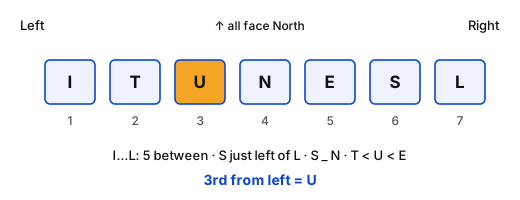
Seven people, U, T, E, N, S, I and L, are sitting in a row, facing the north.
Only five people sit between I and L. S sits to the immediate left of L. Only one person sits between S and N. U sits at some place to the left of E but at some place to the right of T.
Who sits third from the left end of the line?
सात व्यक्ति, U, T, E, N, S, I और L, उत्तर की ओर मुख करके एक पंक्ति में बैठे हैं।
I और L के बीच केवल पाँच व्यक्ति बैठे हैं। S, L के ठीक बाएँ बैठा है। S और N के बीच केवल एक व्यक्ति बैठा है। U, E के बाएँ किसी स्थान पर परंतु T के दाएँ किसी स्थान पर बैठा है।
पंक्ति के बाएँ छोर से तीसरे स्थान पर कौन बैठा है?
  1. AU
  2. BT
  3. CE
  4. DN
Show answer

Concept: Facing north, left/right are the solver’s left/right; 7 seats numbered from left.

  1. Five between I and L ⇒ they occupy seats 1 and 7. S is immediately left of L ⇒ L =7, S =6, I =1.
  2. One between S and N ⇒ N =4.
  3. T, U, E in seats 2, 3, 5 with T left of U left of E ⇒ T =2, U =3, E =5.
  4. Third from left = U.

Trick: ‘Five between’ in a row of 7 means the two people sit at the ends.

Answer: (A) U

अवधारणा: उत्तर की ओर मुख होने पर बायाँ/दायाँ हमारा ही बायाँ/दायाँ; 7 सीटें बाएँ से गिनें।

  1. I और L के बीच पाँच ⇒ दोनों सिरों (1 और 7) पर। S, L के ठीक बाएँ ⇒ L =7, S =6, I =1।
  2. S और N के बीच एक ⇒ N =4।
  3. T, U, E सीट 2, 3, 5 में, T, U के बाएँ और U, E के बाएँ ⇒ T =2, U =3, E =5।
  4. बाएँ से तीसरा = U।

ट्रिक: 7 की पंक्ति में ‘बीच में पाँच’ = दोनों सिरों पर।

उत्तर: (A) U

RRB NTPC Undergraduate CBT 1General Intelligence and ReasoningSeating – linear rowRRB NTPC Undergraduate CBT 1 2025 · 16 Jun Shift 1 →
Q7090.
Select the set in which the numbers are related in the same way as are the numbers of the following sets.
(NOTE: Operations should be performed on the whole numbers, without breaking down the numbers into their constituent digits. E.g. 13 – Operations on 13 such as
adding/subtracting/multiplying etc. to 13 can be performed. Breaking down 13 into 1 and 3 and then performing mathematical operations on 1 and 3 is not allowed.) 19, 229
22, 265
उस समुच्चय का चयन कीजिए जिसमें संख्याएँ उसी प्रकार संबंधित हैं जिस प्रकार निम्नलिखित समुच्चयों की संख्याएँ संबंधित हैं।
(ध्यान दें: संक्रियाएँ संख्याओं को उनके घटक अंकों में विभाजित किए बिना, पूर्ण संख्याओं पर की जानी चाहिए। उदाहरण के लिए 13 – 13 पर संक्रियाएँ जैसे 13 में
जोड़ना/घटाना/गुणा करना आदि किया जा सकता है। 13 को 1 और 3 में विभाजित करना और फिर 1 और 3 पर गणितीय संक्रियाएँ करना वर्जित है।) 19, 229
22, 265
  1. A24, 252
  2. B23, 278
  3. C28, 337
  4. D26, 314
Show answer

Concept: Find one rule linking the first number to the second.

  1. 19×12+1=229; 22×12+1=265
  2. Rule: second = first ×12+1.
  3. 28×12+1=337 ✓ (others: 24→289, 23→277, 26→313).

Trick: If the second number is about 12 times the first, test ×12± small number.

Answer: (C) 28, 337

अवधारणा: पहली संख्या को दूसरी से जोड़ने वाला नियम खोजें।

  1. 19×12+1=229; 22×12+1=265
  2. नियम: दूसरी = पहली ×12+1।
  3. 28×12+1=337 ✓ (अन्य: 24→289, 23→277, 26→313)।

ट्रिक: दूसरी संख्या पहली की लगभग 12 गुनी हो तो ×12± छोटी संख्या जाँचें।

उत्तर: (C) 28, 337

RRB NTPC Undergraduate CBT 1General Intelligence and ReasoningNumber relation (sets)RRB NTPC Undergraduate CBT 1 2025 · 16 Jun Shift 1 →
Q7091.
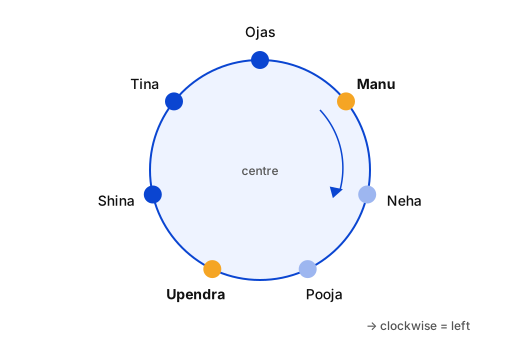
Seven people, Manu, Neha, Ojas, Pooja, Shina, Tina and Upendra, are sitting around a circular table, facing the centre. Neha sits second to the left of Ojas. Upendra sits second to the left of Neha. Tina sits to the immediate left of Shina. Manu is not an immediate neighbour of Upendra.
How many people sit between Manu and Upendra, when counted from the left of Manu?
सात व्यक्ति, मनु, नेहा, ओजस, पूजा, शीना, टीना और उपेंद्र, एक वृत्ताकार मेज़ के चारों ओर केंद्र की ओर मुख करके बैठे हैं। नेहा, ओजस के बाएँ से दूसरे स्थान पर बैठी है। उपेंद्र, नेहा के बाएँ से दूसरे स्थान पर बैठा है। टीना, शीना के ठीक बाएँ बैठी है। मनु, उपेंद्र का निकटतम पड़ोसी नहीं है।
मनु के बाएँ से गिनने पर, मनु और उपेंद्र के बीच कितने व्यक्ति बैठे हैं?
  1. AThreeतीन
  2. BTwoदो
  3. CNoneकोई नहीं
  4. DOneएक
Show answer

Concept: Facing the centre, moving to a person’s left = clockwise.

  1. Fix Ojas; Neha is 2nd to his left; Upendra is 2nd to Neha’s left.
  2. Tina–Shina must be adjacent; the only free adjacent pair is the two seats after Upendra ⇒ Shina, then Tina to her left.
  3. Manu is not next to Upendra ⇒ Manu is to the immediate left of Ojas; Pooja sits between Neha and Upendra.
  4. From Manu moving left: Neha, Pooja, then Upendra ⇒ two people.

Trick: Draw the circle and always move clockwise for ‘left’ when facing the centre.

Answer: (B) Two

अवधारणा: केंद्र की ओर मुख होने पर किसी के बाएँ चलना = दक्षिणावर्त (clockwise)।

  1. ओजस को स्थिर करें; नेहा उसके बाएँ दूसरे स्थान पर; उपेंद्र नेहा के बाएँ दूसरे स्थान पर।
  2. टीना–शीना पास-पास; केवल उपेंद्र के बाद की दो खाली सीटें लगातार हैं ⇒ शीना, फिर उसके बाएँ टीना।
  3. मनु उपेंद्र का पड़ोसी नहीं ⇒ मनु, ओजस के ठीक बाएँ; पूजा, नेहा और उपेंद्र के बीच।
  4. मनु से बाएँ चलें: नेहा, पूजा, फिर उपेंद्र ⇒ दो व्यक्ति।

ट्रिक: वृत्त बनाएँ; केंद्र की ओर मुख हो तो ‘बायाँ’ = दक्षिणावर्त।

उत्तर: (B) दो

RRB NTPC Undergraduate CBT 1General Intelligence and ReasoningSeating – circularRRB NTPC Undergraduate CBT 1 2025 · 16 Jun Shift 1 →
Q7092.
Refer to the given number series and answer the question that follows. All numbers are single-digit numbers only. Counting to be done from left to right only.
(Left) 4 9 6 5 9 9 7 7 9 7 9 3 6 2 1 2 1 6 9 1 7 4 7 (Right)
How many such even digits are there, each of which is immediately preceded by an even digit and also immediately followed by an odd digit?
दी गई संख्या श्रृंखला को देखिए और उसके बाद आने वाले प्रश्न का उत्तर दीजिए। सभी संख्याएँ केवल एक अंक वाली संख्याएँ हैं। गिनती केवल बाएँ से दाएँ की जानी है।
(बाएँ) 4 9 6 5 9 9 7 7 9 7 9 3 6 2 1 2 1 6 9 1 7 4 7 (दाएँ)
ऐसे कितने सम अंक हैं, जिनमें से प्रत्येक के ठीक पहले एक सम अंक है और ठीक बाद एक विषम अंक है?
  1. AThreeतीन
  2. BOneएक
  3. CTwoदो
  4. DFourचार
Show answer

Concept: Check every even digit: previous digit even AND next digit odd.

  1. Even digits with neighbours: 4 (start), 9-6-5, 3-6-2, 6-2-1, 1-2-1, 1-6-9, 7-4-7.
  2. Only 6-2-1 fits (6 even before, 1 odd after).
  3. Count =1.

Trick: First find even-even pairs (here only 6 2), then check the next digit.

Answer: (B) One

अवधारणा: हर सम अंक जाँचें: पहले वाला अंक सम और बाद वाला विषम।

  1. सम अंक व पड़ोसी: 4 (शुरू), 9-6-5, 3-6-2, 6-2-1, 1-2-1, 1-6-9, 7-4-7।
  2. केवल 6-2-1 सही (पहले 6 सम, बाद में 1 विषम)।
  3. संख्या =1।

ट्रिक: पहले सम-सम जोड़ी खोजें (यहाँ केवल 6 2), फिर अगला अंक देखें।

उत्तर: (B) एक (One)

RRB NTPC Undergraduate CBT 1General Intelligence and ReasoningNumber series – positionRRB NTPC Undergraduate CBT 1 2025 · 16 Jun Shift 1 →
Q7093.
In a certain code language, ‘know city routes’ is coded as ‘ha mi ko’ and ‘city lights beautiful’ is coded as ‘ly ha jh’. How is ‘city’ coded in the given language?
एक निश्चित कूट भाषा में, ‘know city routes’ को ‘ha mi ko’ लिखा जाता है और ‘city lights beautiful’ को ‘ly ha jh’ लिखा जाता है। उसी भाषा में ‘city’ को कैसे लिखा जाएगा?
  1. Ajh
  2. Bko
  3. Cly
  4. Dha
Show answer

Concept: A word common to two sentences takes the code common to both.

  1. ‘know city routes’ → ha mi ko
  2. ‘city lights beautiful’ → ly ha jh
  3. Common word: city; common code: ha.

Trick: Common word ↔ common code.

Answer: (D) ha

अवधारणा: दोनों वाक्यों में समान शब्द का कोड भी दोनों में समान होता है।

  1. ‘know city routes’ → ha mi ko
  2. ‘city lights beautiful’ → ly ha jh
  3. समान शब्द: city; समान कोड: ha।

ट्रिक: समान शब्द ↔ समान कोड।

उत्तर: (D) ha

RRB NTPC Undergraduate CBT 1General Intelligence and ReasoningCoding-decoding – wordsRRB NTPC Undergraduate CBT 1 2025 · 16 Jun Shift 1 →
Q7094.
What should come in place of ‘?’ in the given series?
41 53 66 80 95 111 ?
दी गई श्रृंखला में ‘?’ के स्थान पर क्या आना चाहिए?
41 53 66 80 95 111 ?
  1. A131
  2. B134
  3. C128
  4. D123
Show answer

Concept: Look at the differences between consecutive terms.

  1. Differences: 12,13,14,15,16
  2. Next difference =17.
  3. Next term =111+17=128.

Trick: Consecutive increasing differences ⇒ just add the next natural number.

Answer: (C) 128

अवधारणा: लगातार पदों का अंतर देखें।

  1. अंतर: 12,13,14,15,16
  2. अगला अंतर =17।
  3. अगला पद =111+17=128।

ट्रिक: अंतर लगातार 1-1 बढ़े तो अगली प्राकृत संख्या जोड़ें।

उत्तर: (C) 128

RRB NTPC Undergraduate CBT 1General Intelligence and ReasoningNumber seriesRRB NTPC Undergraduate CBT 1 2025 · 16 Jun Shift 1 →
Q7095.
What should come in place of the question mark (?) in the given series based on the English alphabetical order?
JKA KNF LQK MTP ?
अंग्रेज़ी वर्णमाला क्रम के आधार पर दी गई श्रृंखला में प्रश्न चिह्न (?) के स्थान पर क्या आना चाहिए?
JKA KNF LQK MTP ?
  1. AMNG
  2. BOIU
  3. CNWU
  4. DMKJ
Show answer

Concept: Track each letter position separately.

  1. 1st letters: J, K, L, M → N (+1)
  2. 2nd letters: K, N, Q, T → W (+3)
  3. 3rd letters: A, F, K, P → U (+5)

Trick: Only option C starts with N – the first letter alone gives the answer.

Answer: (C) NWU

अवधारणा: हर स्थान के अक्षर अलग-अलग देखें।

  1. पहले अक्षर: J, K, L, M → N (+1)
  2. दूसरे अक्षर: K, N, Q, T → W (+3)
  3. तीसरे अक्षर: A, F, K, P → U (+5)

ट्रिक: केवल विकल्प C, N से शुरू होता है – पहला अक्षर ही उत्तर दे देता है।

उत्तर: (C) NWU

RRB NTPC Undergraduate CBT 1General Intelligence and ReasoningLetter seriesRRB NTPC Undergraduate CBT 1 2025 · 16 Jun Shift 1 →
Q7096.
Solar energy is globally measured in the unit of KWh. The physical quantity
corresponding to the unit KWh is _____________.
सौर ऊर्जा को विश्व स्तर पर KWh इकाई में मापा जाता है। KWh इकाई के संगत
भौतिक राशि _____________ है।
  1. ACurrentधारा (current)
  2. BElectric energyविद्युत ऊर्जा
  3. CElectric chargeविद्युत आवेश
  4. DForceबल
Show answer

Concept: kWh (kilowatt-hour) = power × time = energy.

  1. 1kWh=1000W×3600s=3.6×10⁶J – it is the commercial unit of electrical energy ("one unit" on the electricity bill).
  2. Current is in ampere, charge in coulomb, force in newton.

Yaad rakhein: Watt is power; multiply by time (hour) and you get energy.

Answer: (B) Electric energy

अवधारणा: kWh (किलोवाट-घंटा) = शक्ति × समय = ऊर्जा।

  1. 1kWh=1000W×3600s=3.6×10⁶J – यह विद्युत ऊर्जा का व्यावसायिक मात्रक है (बिजली बिल का "एक यूनिट")।
  2. धारा ऐम्पियर में, आवेश कूलॉम में, बल न्यूटन में मापा जाता है।

याद रखें: वाट शक्ति है; समय (घंटा) से गुणा करने पर ऊर्जा मिलती है।

उत्तर: (B) Electric energy

RRB NTPC Undergraduate CBT 1General AwarenessPhysics – UnitsRRB NTPC Undergraduate CBT 1 2025 · 15 Jun Shift 3 →
Q7097.
Which of the following features of the Constitution of India is NOT borrowed from the United Kingdom?
भारत के संविधान की निम्नलिखित में से कौन-सी विशेषता यूनाइटेड किंगडम से नहीं ली गई है?
  1. ASpeaker of Lok Sabhaलोकसभा अध्यक्ष
  2. BSingle citizenshipएकल नागरिकता
  3. CBicameral Parliamentद्विसदनीय संसद
  4. DAppointment of state governors by the Centreकेंद्र द्वारा राज्यपालों की नियुक्ति
Show answer

Concept: Each borrowed feature of the Indian Constitution has a known source country.

  1. From the UK: parliamentary system, single citizenship, bicameralism, office of Speaker, rule of law, cabinet system, writs.
  2. Appointment of state governors by the Centre comes from Canada (along with a strong Centre and residuary powers with the Union).

Yaad rakhein: Canada = federation with strong Centre + Governors appointed by Centre + residuary powers; UK = Parliament, Speaker, single citizenship.

Answer: (D) Appointment of state governors by the Centre

अवधारणा: भारतीय संविधान की हर उधार ली गई विशेषता का एक ज्ञात स्रोत देश है।

  1. UK से: संसदीय प्रणाली, एकल नागरिकता, द्विसदनीय संसद, स्पीकर का पद, विधि का शासन, मंत्रिमंडल प्रणाली, रिट।
  2. केंद्र द्वारा राज्यपालों की नियुक्ति कनाडा से ली गई है (साथ ही सशक्त केंद्र और अवशिष्ट शक्तियाँ केंद्र के पास)।

याद रखें: कनाडा = सशक्त केंद्र वाला संघ + केंद्र द्वारा राज्यपाल + अवशिष्ट शक्तियाँ; UK = संसद, स्पीकर, एकल नागरिकता।

उत्तर: (D) Appointment of state governors by the Centre

RRB NTPC Undergraduate CBT 1General AwarenessPolity – Sources of the ConstitutionRRB NTPC Undergraduate CBT 1 2025 · 15 Jun Shift 3 →
Q7098.
Which Constitutional Amendment introduced 10% reservation for Economically Weaker Sections in education and jobs?
किस संविधान संशोधन ने शिक्षा और नौकरियों में आर्थिक रूप से कमजोर वर्गों के लिए 10% आरक्षण की शुरुआत की?
  1. A103rd Amendment103वाँ संशोधन
  2. B98th Amendment98वाँ संशोधन
  3. C102nd Amendment102वाँ संशोधन
  4. D104th Amendment104वाँ संशोधन
Show answer

Concept: The 103rd Constitutional Amendment Act, 2019 provides 10% reservation for Economically Weaker Sections (EWS).

  1. It inserted Articles 15(6) and 16(6) – reservation in educational institutions and public employment for EWS among non-reserved categories.
  2. Upheld by the Supreme Court in Janhit Abhiyan (2022). The 102nd (2018) gave constitutional status to the NCBC; the 104th (2020) extended SC/ST reservation in legislatures.

Yaad rakhein: 102 → NCBC, 103 → EWS 10%, 104 → SC/ST seats extended.

Answer: (A) 103rd Amendment

अवधारणा: 103वाँ संविधान संशोधन अधिनियम, 2019 आर्थिक रूप से कमज़ोर वर्गों (EWS) को 10% आरक्षण देता है।

  1. इसने अनुच्छेद 15(6) और 16(6) जोड़े – गैर-आरक्षित वर्गों के EWS के लिए शिक्षण संस्थानों और सरकारी नौकरियों में आरक्षण।
  2. सुप्रीम कोर्ट ने जनहित अभियान (2022) में इसे वैध ठहराया। 102वाँ (2018) NCBC को संवैधानिक दर्जा; 104वाँ (2020) विधायिकाओं में SC/ST आरक्षण का विस्तार।

याद रखें: 102 → NCBC, 103 → EWS 10%, 104 → SC/ST सीटें बढ़ीं।

उत्तर: (A) 103rd Amendment

RRB NTPC Undergraduate CBT 1General AwarenessPolity – Constitutional AmendmentsRRB NTPC Undergraduate CBT 1 2025 · 15 Jun Shift 3 →
Q7099.
How many Departmentally Related Standing Committees (DRSCs) are there in the Indian Parliament?
भारतीय संसद में कितनी विभाग-संबंधित स्थायी समितियाँ (DRSCs) हैं?
  1. A15
  2. B24
  3. C31
  4. D21
Show answer

Concept: Departmentally Related Standing Committees (DRSCs) examine demands for grants and bills of ministries.

  1. Set up in 1993 with 17 committees; increased to 24 in 2004.
  2. Of the 24, 8 work under the Rajya Sabha and 16 under the Lok Sabha; each has 31 members (21 LS + 10 RS).

Yaad rakhein: 24 committees, 31 members each (that is why 31 is a tempting wrong option).

Answer: (B) 24

अवधारणा: विभागीय स्थायी समितियाँ (DRSCs) मंत्रालयों की अनुदान माँगों और विधेयकों की जाँच करती हैं।

  1. 1993 में 17 समितियों से शुरुआत; 2004 में बढ़ाकर 24 की गईं।
  2. 24 में से 8 राज्यसभा और 16 लोकसभा के अधीन; प्रत्येक में 31 सदस्य (21 LS + 10 RS)।

याद रखें: 24 समितियाँ, प्रत्येक में 31 सदस्य (इसीलिए 31 भ्रामक विकल्प है)।

उत्तर: (B) 24

RRB NTPC Undergraduate CBT 1General AwarenessPolity – Parliamentary CommitteesRRB NTPC Undergraduate CBT 1 2025 · 15 Jun Shift 3 →
Q7100.
Who wrote the iconic nationalist novel Anandamath?
प्रसिद्ध राष्ट्रवादी उपन्यास आनंदमठ किसने लिखा था?
  1. ASarat Chandra Chattopadhyay
  2. BRabindranath Tagore
  3. CBankim Chandra Chattopadhyay
  4. DDinabandhu Mitra
Show answer

Concept: Anandamath (1882) is a Bengali novel by Bankim Chandra Chattopadhyay set against the Sannyasi Rebellion.

  1. The national song "Vande Mataram" first appeared in this novel.
  2. Sarat Chandra wrote Pather Dabi; Dinabandhu Mitra wrote Neel Darpan; Tagore wrote Gora, Ghare Baire.

Yaad rakhein: Bankim → Anandamath → Vande Mataram.

Answer: (C) Bankim Chandra Chattopadhyay

अवधारणा: आनंदमठ (1882) बंकिम चंद्र चट्टोपाध्याय का बांग्ला उपन्यास है, जिसकी पृष्ठभूमि संन्यासी विद्रोह है।

  1. राष्ट्रीय गीत "वंदे मातरम्" पहली बार इसी उपन्यास में छपा।
  2. शरतचंद्र ने पथेर दाबी, दीनबंधु मित्र ने नील दर्पण, टैगोर ने गोरा, घरे बाइरे लिखे।

याद रखें: बंकिम → आनंदमठ → वंदे मातरम्।

उत्तर: (C) Bankim Chandra Chattopadhyay

RRB NTPC Undergraduate CBT 1General AwarenessModern History – LiteratureRRB NTPC Undergraduate CBT 1 2025 · 15 Jun Shift 3 →