Question bank

Q&A: practice questions with answers

Search questions on any topic. Filter by exam category, exam, subject and topic, try the question, then open the answer and explanation.

Courses – airGurukul

8,495 questions found.

Q7161.
The LCM of the numbers 5, 3.2 and 0.03 is:
संख्याओं 5, 3.2 और 0.03 का LCM कितना है?
  1. A120
  2. B185
  3. C215
  4. D240
Show answer

Concept: Make all numbers have the same number of decimal places, take LCM of the integers, then restore the decimal.

  1. 5=5.00, 3.2=3.20, 0.03 → integers 500, 320, 3.
  2. LCM(500,320)=8000 (500=2253, 320=265 → 2653); with 3 → 24000.
  3. Divide by 100: LCM =240.

Trick: LCM of decimals =LCM of numeratorsHCF of denominators when written as fractions over 100.

Answer: (D) 240

अवधारणा: सभी संख्याओं में दशमलव के बाद समान अंक रखें, पूर्णांकों का LCM लें, फिर दशमलव वापस रखें।

  1. 5=5.00, 3.2=3.20, 0.03 → पूर्णांक 500, 320, 3.
  2. LCM(500,320)=8000 (500=2253, 320=265 → 2653); 3 के साथ → 24000.
  3. 100 से भाग: LCM =240.

ट्रिक: 100 के हर वाली भिन्नों में लिखने पर दशमलवों का LCM =अंशों का LCMहरों का HCF.

उत्तर: (D) 240

RRB NTPC Undergraduate CBT 1MathematicsLCM of DecimalsRRB NTPC Undergraduate CBT 1 2025 · 15 Jun Shift 3 →
Q7162.
If the income tax is increased by 18%, the net income is reduced by 2%. Find the original rate of income tax.
यदि आयकर में 18% की वृद्धि की जाती है, तो शुद्ध आय में 2% की कमी हो जाती है। आयकर की मूल दर ज्ञात कीजिए।
  1. A10%
  2. B12%
  3. C5%
  4. D8%
Show answer

Concept: Net income = income − tax. The extra tax equals the fall in net income.

  1. Let income =100 and tax rate =t%; net =100−t.
  2. Tax rises by 18% of t: extra tax =0.18t. Net falls by 2% of (100−t).
  3. 0.18t=0.02(100−t)⇒0.2t=2⇒t=10%.

Trick: Test the options: at 10%, tax goes 10→11.8; net goes 90→88.2, a fall of 1.8=2% of 90 ✓.

Answer: (A) 10%

अवधारणा: शुद्ध आय = आय − कर। अतिरिक्त कर = शुद्ध आय में कमी।

  1. माना आय =100 और कर दर =t%; शुद्ध =100−t.
  2. कर t का 18% बढ़ा: अतिरिक्त कर =0.18t. शुद्ध आय (100−t) का 2% घटी।
  3. 0.18t=0.02(100−t)⇒0.2t=2⇒t=10%.

ट्रिक: विकल्प जाँचें: 10% पर कर 10→11.8; शुद्ध 90→88.2, कमी 1.8 = 90 का 2% ✓.

उत्तर: (A) 10%

RRB NTPC Undergraduate CBT 1MathematicsPercentage – Income TaxRRB NTPC Undergraduate CBT 1 2025 · 15 Jun Shift 3 →
Q7163.
An article is sold at a profit of 58%. If the cost price is increased by ₹20 and the selling price is reduced by ₹74, then the profit would be 52.5%. What is the original cost price (in ₹) of the article?
एक वस्तु को 58% के लाभ पर बेचा जाता है। यदि क्रय मूल्य में ₹20 की वृद्धि की जाए और विक्रय मूल्य में ₹74 की कमी की जाए, तो लाभ 52.5% होगा। वस्तु का मूल क्रय मूल्य (₹ में) क्या है?
  1. A1,900
  2. B2,100
  3. C2,000
  4. D2,200
Show answer

Concept: Write SP in terms of CP for both situations and equate.

  1. Let CP =x. Original SP =1.58x.
  2. New: CP =x+20, SP =1.58x−74, profit 52.5%: 1.58x−74=1.525(x+20).
  3. 1.58x−1.525x=30.5+74⇒0.055x=104.5⇒x=1900.

Trick: Check: CP 1900, SP 3002; new CP 1920, SP 2928; 10081920=52.5% ✓.

Answer: (A) 1,900

अवधारणा: दोनों स्थितियों में SP को CP के रूप में लिखकर बराबर करें।

  1. माना CP =x. मूल SP =1.58x.
  2. नया: CP =x+20, SP =1.58x−74, लाभ 52.5%: 1.58x−74=1.525(x+20).
  3. 1.58x−1.525x=30.5+74⇒0.055x=104.5⇒x=1900.

ट्रिक: जाँच: CP 1900, SP 3002; नया CP 1920, SP 2928; 10081920=52.5% ✓.

उत्तर: (A) 1,900

RRB NTPC Undergraduate CBT 1MathematicsProfit and LossRRB NTPC Undergraduate CBT 1 2025 · 15 Jun Shift 3 →
Q7164.
What sum (in ₹) will earn a simple interest of ₹1,440 in 3 years at 8% per year rate of interest?
कौन-सी धनराशि (₹ में) 8% वार्षिक ब्याज दर पर 3 वर्ष में ₹1,440 का साधारण ब्याज अर्जित करेगी?
  1. A6,000
  2. B3,000
  3. C345.6
  4. D12,000
Show answer

Concept: P=SI×100R×T.

  1. P=1440×1008×3=14400024.
  2. P= ₹6,000.

Trick: 8%×3=24% of the sum =1440⇒ sum =1440÷0.24=6000.

Answer: (A) 6,000

अवधारणा: P=SI×100R×T.

  1. P=1440×1008×3=14400024.
  2. P= ₹6,000.

ट्रिक: 8%×3=24% राशि का =1440⇒ राशि =1440÷0.24=6000.

उत्तर: (A) 6,000

RRB NTPC Undergraduate CBT 1MathematicsSimple InterestRRB NTPC Undergraduate CBT 1 2025 · 15 Jun Shift 3 →
Q7165.
Simplify: {2033÷207}÷(35×109+211)+74÷2823 of 234
सरल कीजिए: {2033÷207}÷(35×109+211)+74÷2823 of 234
  1. A1929
  2. B2331
  3. C12
  4. D619
Show answer

Concept: Solve brackets first, treat "of" as multiplication before ÷, then ÷, then +.

  1. 2033÷207=2033×720=733.
  2. 35×109+211=23+211=22+633=2833; so 733÷2833=14.
  3. 2823 of 234=7; 74÷7=14.
  4. Total =14+14=12.

Trick: "of" binds tighter than ÷: compute 2823 of 234 first – it collapses to 7.

Answer: (C) 12

अवधारणा: पहले कोष्ठक, "of" को ÷ से पहले गुणा मानें, फिर ÷, फिर +.

  1. 2033÷207=2033×720=733.
  2. 35×109+211=23+211=22+633=2833; अतः 733÷2833=14.
  3. 2823 of 234=7; 74÷7=14.
  4. कुल =14+14=12.

ट्रिक: "of" की प्राथमिकता ÷ से ऊपर है: पहले 2823 of 234 करें – यह सीधे 7 बन जाता है।

उत्तर: (C) 12

RRB NTPC Undergraduate CBT 1MathematicsSimplification – BODMASRRB NTPC Undergraduate CBT 1 2025 · 15 Jun Shift 3 →
Q7166.
Refer to the given number series and answer the question that follows. All numbers are single-digit numbers only. Counting to be done from left to right only.
(Left) 9 6 3 1 8 7 2 9 5 6 1 4 7 5 3 4 5 6 2 6 8 7 2 3 7 6 5 8 (Right)
How many such even digits are there which are immediately preceded by a perfect square and immediately followed by an odd digit?
(NOTE: 1 is also a perfect square.)
दी गई संख्या शृंखला को देखिए और उसके बाद पूछे गए प्रश्न का उत्तर दीजिए। सभी संख्याएँ केवल एक अंक वाली संख्याएँ हैं। गिनती केवल बाएँ से दाएँ की जानी है।
(बाएँ) 9 6 3 1 8 7 2 9 5 6 1 4 7 5 3 4 5 6 2 6 8 7 2 3 7 6 5 8 (दाएँ)
ऐसे कितने सम अंक हैं जिनके ठीक पहले एक पूर्ण वर्ग है और ठीक बाद एक विषम अंक है?
(नोट: 1 भी एक पूर्ण वर्ग है।)
  1. AMore than threeतीन से अधिक
  2. BTwoदो
  3. CThreeतीन
  4. DOneएक
Show answer

Concept: Scan the series left to right and test each even digit: the digit before it must be a perfect square (1, 4 or 9) and the digit after it must be odd.

  1. Series: 9 6 3 1 8 7 2 9 5 6 1 4 7 5 3 4 5 6 2 6 8 7 2 3 7 6 5 8.
  2. Matches: 9 6 3 (6 between 9 and 3), 1 8 7 (8 between 1 and 7), 1 4 7 (4 between 1 and 7).
  3. Check the rest: 4 5 6 → 6 is followed by 2 (even) ✗; 9 5 → 5 is odd ✗. So exactly three.

Trick: Underline every 1, 4, 9 first and look only at the digit right after each – the search shrinks to a few spots.

Answer: (C) प

अवधारणा: ['Three', 'तीन (Three)']

  1. श
  2. ्
  3. र
  4. ृ
  5. ं
  6. ख
  7. ल
  8. ा
  9. क
  10. ो
  11. ब
  12. ा
  13. ए
  14. ँ
  15. स
  16. े
  17. द
  18. ा
  19. ए
  20. ँ
  21. द
  22. े
  23. ख
  24. े
  25. ं
  26. औ
  27. र
  28. ह
  29. र
  30. स
  31. म
  32. अ
  33. ं
  34. क
  35. क
  36. ो
  37. ज
  38. ा
  39. ँ
  40. च
  41. े
  42. ं
  43. :
  44. उ
  45. स
  46. क
  47. े
  48. ठ
  49. ी
  50. क
  51. प
  52. ह
  53. ल
  54. े
  55. प
  56. ू
  57. र
  58. ्
  59. ण
  60. व
  61. र
  62. ्
  63. ग
  64. (
  65. 1
  66. ,
  67. 4
  68. य
  69. ा
  70. 9
  71. )
  72. औ
  73. र
  74. ठ
  75. ी
  76. क
  77. ब
  78. ा
  79. द
  80. व
  81. ि
  82. ष
  83. म
  84. अ
  85. ं
  86. क
  87. ह
  88. ो
  89. न
  90. ा
  91. च
  92. ा
  93. ह
  94. ि
  95. ए
  96. ।

ट्रिक: ['श्रृंखला: 9 6 3 1 8 7 2 9 5 6 1 4 7 5 3 4 5 6 2 6 8 7 2 3 7 6 5 8.', 'मिलान: 9 6 3 (9 और 3 के बीच 6), 1 8 7 (1 और 7 के बीच 8), 1 4 7 (1 और 7 के बीच 4)।', 'बाकी जाँचें: 4 5 6 → 6 के बाद 2 (सम) ✗; 9 5 → 5 विषम ✗। अतः ठीक तीन।']

उत्तर: (C) ह

RRB NTPC Undergraduate CBT 1General Intelligence and ReasoningNumber Series – CountingRRB NTPC Undergraduate CBT 1 2025 · 15 Jun Shift 3 →
Q7167.
Based on the English alphabetical order, three of the following four letter-cluster pairs are alike in a certain way and thus form a group. Which is the one that does not belong to that group? (Note: The odd one out is not based on the number of
consonants/vowels or their position in the letter cluster.)
अंग्रेज़ी वर्णमाला क्रम के आधार पर, निम्नलिखित चार अक्षर-समूह युग्मों में से तीन किसी निश्चित प्रकार से समान हैं और इस प्रकार एक समूह बनाते हैं। वह कौन-सा युग्म है जो उस समूह से संबंधित नहीं है? (नोट: असंगत युग्म, अक्षर-समूह में व्यंजनों/स्वरों की संख्या या उनके
स्थान पर आधारित नहीं है।)
  1. AUX-QR
  2. BOR-KM
  3. CQT-MO
  4. DSV-OQ
Show answer

Concept: Write the place values (A = 1 … Z = 26) and compare how the second cluster is obtained from the first.

  1. OR–KM: O(15)→K(11) is −4, R(18)→M(13) is −5.
  2. QT–MO: Q(17)→M(13) −4, T(20)→O(15) −5. SV–OQ: S(19)→O(15) −4, V(22)→Q(17) −5.
  3. UX–QR: U(21)→Q(17) −4, but X(24)→R(18) is −6 – breaks the (−4,−5) pattern.

Trick: Also see the gap inside each cluster: OR, QT, SV, UX all +3; KM, MO, OQ are +2 but QR is +1 – the odd one jumps out.

Answer: (A) ह

अवधारणा: ['UX-QR', 'UX-QR']

  1. स
  2. ्
  3. थ
  4. ा
  5. न
  6. -
  7. म
  8. ा
  9. न
  10. (
  11. A
  12. =
  13. 1
  14. …
  15. Z
  16. =
  17. 2
  18. 6
  19. )
  20. ल
  21. ि
  22. ख
  23. क
  24. र
  25. द
  26. े
  27. ख
  28. े
  29. ं
  30. क
  31. ि
  32. प
  33. ह
  34. ल
  35. े
  36. स
  37. म
  38. ू
  39. ह
  40. स
  41. े
  42. द
  43. ू
  44. स
  45. र
  46. ा
  47. स
  48. म
  49. ू
  50. ह
  51. क
  52. ै
  53. स
  54. े
  55. ब
  56. न
  57. त
  58. ा
  59. ह
  60. ै
  61. ।

ट्रिक: ['OR–KM: O(15)→K(11) −4, R(18)→M(13) −5।', 'QT–MO: Q(17)→M(13) −4, T(20)→O(15) −5। SV–OQ: S(19)→O(15) −4, V(22)→Q(17) −5।', 'UX–QR: U(21)→Q(17) −4, पर X(24)→R(18) −6 – (−4,−5) का पैटर्न टूटता है।']

उत्तर: (A) र

RRB NTPC Undergraduate CBT 1General Intelligence and ReasoningOdd One Out – Letter ClustersRRB NTPC Undergraduate CBT 1 2025 · 15 Jun Shift 3 →
Q7168.
In a certain code language,
A $ B means ‘A is the father of B’,
A @ B means ‘A is the sister of B’,
A # B means ‘A is the wife of B’ and
A & B means ‘A is the brother of B’.
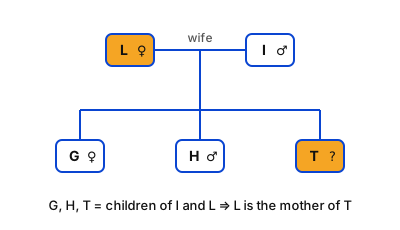
How is L related to T if ‘L # I $ G @ H & T’?
एक निश्चित कूट भाषा में,
A $ B का अर्थ है ‘A, B का पिता है’,
A @ B का अर्थ है ‘A, B की बहन है’,
A # B का अर्थ है ‘A, B की पत्नी है’ और
A & B का अर्थ है ‘A, B का भाई है’।
यदि ‘L # I $ G @ H & T’ है, तो L का T से क्या संबंध है?
  1. ABrotherभाई
  2. BSisterबहन
  3. CDaughterपुत्री
  4. DMotherमाता
Show answer

Concept: Decode each symbol step by step and build the family tree, then read L’s relation to T.

  1. L # I → L is the wife of I; I $ G → I is the father of G. So L is the mother of G.
  2. G @ H → G is the sister of H; H & T → H is the brother of T. So G, H and T are all children of I and L.
  3. Hence L is the mother of T.

Trick: In a chain, fix the generation of the first and last person only – here L is one level above G, H and T, and she is female, so “mother”.

Answer: (D) Mother

अवधारणा: हर संकेत को क्रम से डिकोड कर वंश-वृक्ष बनाएँ, फिर L का T से संबंध पढ़ें।

  1. L # I → L, I की पत्नी है; I $ G → I, G का पिता है। अतः L, G की माँ है।
  2. G @ H → G, H की बहन है; H & T → H, T का भाई है। अतः G, H और T तीनों I और L की संतानें हैं।
  3. इसलिए L, T की माता है।

ट्रिक: शृंखला में केवल पहले और अंतिम व्यक्ति की पीढ़ी तय करें – यहाँ L, G, H, T से एक पीढ़ी ऊपर और स्त्री है, अतः “माता”।

उत्तर: (D) Mother

RRB NTPC Undergraduate CBT 1General Intelligence and ReasoningBlood Relations – CodedRRB NTPC Undergraduate CBT 1 2025 · 15 Jun Shift 3 →
Q7169.
What should come in place of the ‘?’ in the given series?
7 11 20 24 46 50 ?
दी गई शृंखला में प्रश्न चिह्न ‘?’ के स्थान पर क्या आना चाहिए?
7 11 20 24 46 50 ?
  1. A98
  2. B96
  3. C100
  4. D102
Show answer

Concept: Look at the differences: +4, +9, +4, +22, +4, ? – the +4 steps alternate with a second rule.

  1. 7+4=11,11×2−2=20
  2. 20+4=24,24×2−2=46
  3. 46+4=50,50×2−2=98

Trick: When differences alternate small–big–small, test the big jumps as “×2±k”: 11→20 and 24→46 are both ×2−2.

Answer: (A) ज

अवधारणा: ['98', '98']

  1. अ
  2. ं
  3. त
  4. र
  5. द
  6. े
  7. ख
  8. े
  9. ं
  10. :
  11. </li><li>+</li><li>4</li><li>,</li><li>\</li><li></li><li>+</li><li>9</li><li>,</li><li>\</li><li></li><li>+</li><li>4</li><li>,</li><li>\</li><li></li><li>+</li><li>2</li><li>2</li><li>,</li><li>\</li><li></li><li>+</li><li>4</li><li>,</li><li>\</li><li></li><li>?</li><li>
  12. –
  13. </li><li>+</li><li>4</li><li>
  14. क
  15. े
  16. च
  17. र
  18. ण
  19. ए
  20. क
  21. द
  22. ू
  23. स
  24. र
  25. े
  26. न
  27. ि
  28. य
  29. म
  30. क
  31. े
  32. स
  33. ा
  34. थ
  35. ब
  36. ा
  37. र
  38. ी
  39. -
  40. ब
  41. ा
  42. र
  43. ी
  44. आ
  45. त
  46. े
  47. ह
  48. ै
  49. ं
  50. ।

ट्रिक: ['7+4=11,quad11times2−2=20', '20+4=24,quad24times2−2=46', '46+4=50,quad50times2−2=98']

उत्तर: (A) ब

RRB NTPC Undergraduate CBT 1General Intelligence and ReasoningNumber SeriesRRB NTPC Undergraduate CBT 1 2025 · 15 Jun Shift 3 →
Q7170.
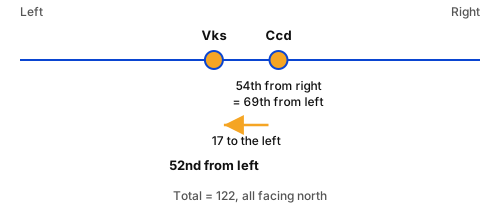
In a row of 122 students facing north, Ccd is 54th from the right end. If Vks is 17th to the left of Ccd, what is Vks's position from the left end of the line?
उत्तर की ओर मुख करके खड़े 122 विद्यार्थियों की एक पंक्ति में, Ccd दाएँ छोर से 54वें स्थान पर है। यदि Vks, Ccd के बाईं ओर 17वें स्थान पर है, तो पंक्ति के बाएँ छोर से Vks का स्थान क्या है?
  1. A52nd52वाँ
  2. B53rd53वाँ
  3. C56th56वाँ
  4. D54th54वाँ
Show answer

Concept: Position from the left = Total − position from the right +1. Moving to the left decreases the left-end position.

  1. Ccd from the left =122−54+1=69th.
  2. Vks is 17th to the left of Ccd: 69−17=52nd from the left.

Trick: “Left of” → subtract from the left-position; “right of” → add. First convert everyone to the same end.

Answer: (A) “

अवधारणा: ['52nd', '52वाँ (52nd)']

  1. ब
  2. ा
  3. ए
  4. ँ
  5. स
  6. े
  7. स
  8. ्
  9. थ
  10. ा
  11. न
  12. </li><li>=</li><li>
  13. क
  14. ु
  15. ल
  16. </li><li>−</li><li>
  17. द
  18. ा
  19. ए
  20. ँ
  21. स
  22. े
  23. स
  24. ्
  25. थ
  26. ा
  27. न
  28. </li><li>+</li><li>1</li><li>
  29. ।
  30. ब
  31. ा
  32. ई
  33. ं
  34. ओ
  35. र
  36. ज
  37. ा
  38. न
  39. े
  40. प
  41. र
  42. ब
  43. ा
  44. ए
  45. ँ
  46. स
  47. ि
  48. र
  49. े
  50. स
  51. े
  52. स
  53. ्
  54. थ
  55. ा
  56. न
  57. घ
  58. ट
  59. त
  60. ा
  61. ह
  62. ै
  63. ।

ट्रिक: ['Ccd बाएँ से =122−54+1=69वाँ।', 'Vks, Ccd से 17वाँ बाईं ओर: 69−17=52वाँ बाएँ से।']

उत्तर: (A) ब

RRB NTPC Undergraduate CBT 1General Intelligence and ReasoningLinear Arrangement – PositionRRB NTPC Undergraduate CBT 1 2025 · 15 Jun Shift 3 →
Q7171.
What should come in place of the ‘?’ in the given series?
8 6 9 23 87 ?
दी गई शृंखला में प्रश्न चिह्न ‘?’ के स्थान पर क्या आना चाहिए?
8 6 9 23 87 ?
  1. A421
  2. B429
  3. C437
  4. D433
Show answer

Concept: Each term is obtained by multiplying by an increasing number and subtracting the next number: ×1−2, ×2−3, ×3−4,…

  1. 8×1−2=6,6×2−3=9
  2. 9×3−4=23,23×4−5=87
  3. 87×5−6=435−6=429

Trick: A series that grows faster and faster (6, 9, 23, 87) usually hides a multiplier that increases by 1 each step.

Answer: (B) त

अवधारणा: ['429', '429']

  1. ह
  2. र
  3. प
  4. द
  5. प
  6. ि
  7. छ
  8. ल
  9. े
  10. प
  11. द
  12. क
  13. ो
  14. ब
  15. ढ
  16. ़
  17. त
  18. ी
  19. स
  20. ं
  21. ख
  22. ्
  23. य
  24. ा
  25. स
  26. े
  27. ग
  28. ु
  29. ण
  30. ा
  31. क
  32. र
  33. अ
  34. ग
  35. ल
  36. ी
  37. स
  38. ं
  39. ख
  40. ्
  41. य
  42. ा
  43. घ
  44. ट
  45. ा
  46. न
  47. े
  48. स
  49. े
  50. ब
  51. न
  52. त
  53. ा
  54. ह
  55. ै
  56. :
  57. </li><li>\</li><li>t</li><li>i</li><li>m</li><li>e</li><li>s</li><li>1</li><li>−</li><li>2</li><li>,</li><li>\</li><li></li><li>\</li><li>t</li><li>i</li><li>m</li><li>e</li><li>s</li><li>2</li><li>−</li><li>3</li><li>,</li><li>\</li><li></li><li>\</li><li>t</li><li>i</li><li>m</li><li>e</li><li>s</li><li>3</li><li>−</li><li>4</li><li>,</li><li>\</li><li>d</li><li>o</li><li>t</li><li>s</li><li>

ट्रिक: ['8times1−2=6,quad6times2−3=9', '9times3−4=23,quad23times4−5=87', '87times5−6=435−6=429']

उत्तर: (B) े

RRB NTPC Undergraduate CBT 1General Intelligence and ReasoningNumber SeriesRRB NTPC Undergraduate CBT 1 2025 · 15 Jun Shift 3 →
Q7172.
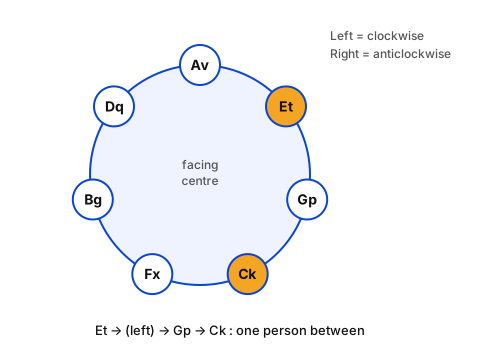
Av, Bg, Ck, Dq, Et, Fx and Gp are sitting around a circular table, facing the centre. Bg sits second to the right of Av. Gp sits second to the left of Av. Dq sits third to the right of Gp. Ck sits to the immediate right of Fx.
How many people sit between Et and Ck when counted from the left of Et?
Av, Bg, Ck, Dq, Et, Fx और Gp एक वृत्ताकार मेज़ के चारों ओर केंद्र की ओर मुख करके बैठे हैं। Bg, Av के दाएँ से दूसरे स्थान पर बैठा है। Gp, Av के बाएँ से दूसरे स्थान पर बैठा है। Dq, Gp के दाएँ से तीसरे स्थान पर बैठा है। Ck, Fx के ठीक दाएँ बैठा है।
Et के बाएँ से गिनने पर Et और Ck के बीच कितने व्यक्ति बैठे हैं?
  1. ATwoदो
  2. BThreeतीन
  3. CNoneकोई नहीं
  4. DOneएक
Show answer

Concept: For people facing the centre, “right” means anticlockwise and “left” means clockwise. Fix Av and place the others.

  1. Bg is 2nd to the right (anticlockwise) of Av; Gp is 2nd to the left (clockwise) of Av.
  2. Dq is 3rd to the right of Gp – going anticlockwise from Gp past Av, Dq lands just before Bg. Three seats remain: one between Av and Gp, and two between Gp and Bg.
  3. Ck is immediately right of Fx, so Fx and Ck take the two adjacent seats between Gp and Bg (Ck next to Gp); Et takes the seat between Av and Gp.
  4. Counting from the left (clockwise) of Et: Gp, then Ck – one person between.

Trick: Draw the circle first and mark arrows “L ↻, R ↺” – half the mistakes in such questions are direction slips.

Answer: (D) प

अवधारणा: ['One', 'एक (One)']

  1. क
  2. े
  3. ं
  4. द
  5. ्
  6. र
  7. क
  8. ी
  9. ओ
  10. र
  11. म
  12. ु
  13. ख
  14. व
  15. ा
  16. ल
  17. े
  18. ल
  19. ो
  20. ग
  21. ो
  22. ं
  23. क
  24. े
  25. ल
  26. ि
  27. ए
  28. “
  29. द
  30. ा
  31. ए
  32. ँ
  33. ”
  34. =
  35. व
  36. ा
  37. म
  38. ा
  39. व
  40. र
  41. ्
  42. त
  43. औ
  44. र
  45. “
  46. ब
  47. ा
  48. ए
  49. ँ
  50. ”
  51. =
  52. द
  53. क
  54. ्
  55. ष
  56. ि
  57. ण
  58. ा
  59. व
  60. र
  61. ्
  62. त
  63. ।
  64. A
  65. v
  66. क
  67. ो
  68. स
  69. ्
  70. थ
  71. ि
  72. र
  73. र
  74. ख
  75. क
  76. र
  77. ब
  78. ा
  79. क
  80. ी
  81. क
  82. ो
  83. ब
  84. ै
  85. ठ
  86. ा
  87. ए
  88. ँ
  89. ।

ट्रिक: ['Bg, Av के दाएँ (वामावर्त) दूसरे स्थान पर; Gp, Av के बाएँ (दक्षिणावर्त) दूसरे स्थान पर।', 'Dq, Gp के दाएँ तीसरे स्थान पर – Gp से वामावर्त Av पार कर Dq, Bg से ठीक पहले बैठता है। तीन सीटें बचीं: एक Av–Gp के बीच, दो Gp–Bg के बीच।', 'Ck, Fx के ठीक दाएँ है, अतः Fx और Ck, Gp–Bg के बीच की दो सटी सीटों पर (Ck, Gp के पास); Et, Av–Gp के बीच।', 'Et के बाएँ (दक्षिणावर्त) से गिनें: Gp, फिर Ck – बीच में एक व्यक्ति।']

उत्तर: (D) ह

RRB NTPC Undergraduate CBT 1General Intelligence and ReasoningCircular SeatingRRB NTPC Undergraduate CBT 1 2025 · 15 Jun Shift 3 →
Q7173.
What should come in place of '?' in the given series based on the English alphabetical order?
URW GDI SPU EBG ?
अंग्रेज़ी वर्णमाला क्रम के आधार पर दी गई शृंखला में प्रश्न चिह्न '?' के स्थान पर क्या आना चाहिए?
URW GDI SPU EBG ?
  1. AQNS
  2. BLIN
  3. CNJP
  4. DPLR
Show answer

Concept: Track the first letters of the clusters and the internal pattern of each cluster.

  1. First letters: U(21) → G(7) → S(19) → E(5) → ? : alternately −14 and +12, so next =5+12=17= Q.
  2. Inside every cluster: 2nd letter = 1st −3, 3rd letter = 1st +2 (U R W: 21, 18, 23).
  3. For Q(17): 17−3=14= N, 17+2=19= S → QNS.

Trick: Check the internal pattern against the options: only QNS has the shape (x, x−3, x+2).

Answer: (A) भ

अवधारणा: ['QNS', 'QNS']

  1. स
  2. म
  3. ू
  4. ह
  5. ो
  6. ं
  7. क
  8. े
  9. प
  10. ह
  11. ल
  12. े
  13. अ
  14. क
  15. ्
  16. ष
  17. र
  18. औ
  19. र
  20. ह
  21. र
  22. स
  23. म
  24. ू
  25. ह
  26. क
  27. े
  28. भ
  29. ी
  30. त
  31. र
  32. क
  33. ा
  34. प
  35. ै
  36. ट
  37. र
  38. ्
  39. न
  40. द
  41. े
  42. ख
  43. े
  44. ं
  45. ।

ट्रिक: ['पहले अक्षर: U(21) → G(7) → S(19) → E(5) → ? : बारी-बारी −14 और +12, अतः अगला =5+12=17= Q।', 'हर समूह में: दूसरा अक्षर = पहला −3, तीसरा = पहला +2 (U R W: 21, 18, 23)।', 'Q(17) के लिए: 17−3=14= N, 17+2=19= S → QNS।']

उत्तर: (A) ी

RRB NTPC Undergraduate CBT 1General Intelligence and ReasoningLetter SeriesRRB NTPC Undergraduate CBT 1 2025 · 15 Jun Shift 3 →
Q7174.
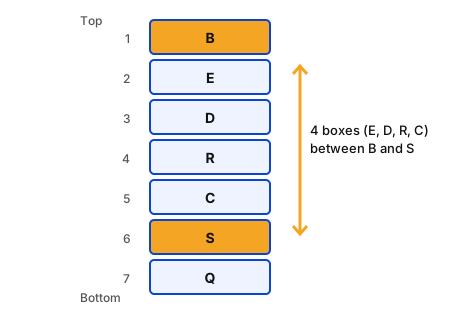
Seven boxes, B, C, D, E, Q, R and S, are kept one over the other, but not necessarily in the same order. Only one box is kept above E. Only two boxes are kept between C and E. B is kept immediately above E. Only Q is kept immediately below S. D is kept at some place below B and at some place above R. How many boxes are kept between B and S?
सात बक्से, B, C, D, E, Q, R और S, एक के ऊपर एक रखे गए हैं, परंतु आवश्यक नहीं कि इसी क्रम में हों। E के ऊपर केवल एक बक्सा रखा है। C और E के बीच केवल दो बक्से रखे हैं। B, E के ठीक ऊपर रखा है। S के ठीक नीचे केवल Q रखा है। D, B के नीचे किसी स्थान पर और R के ऊपर किसी स्थान पर रखा है। B और S के बीच कितने बक्से रखे हैं?
  1. AThreeतीन
  2. BFourचार
  3. COneएक
  4. DTwoदो
Show answer

Concept: Number the positions from the top (1) to the bottom (7) and place the boxes using the definite clues first.

  1. Only one box above E → E is 2nd; B is immediately above E → B is 1st (top).
  2. Two boxes between C and E → C is 5th.
  3. “Only Q is below S” → S is 6th and Q is 7th (bottom). The remaining D and R go to 3rd and 4th with D above R.
  4. Order (top→bottom): B, E, D, R, C, S, Q. Between B (1st) and S (6th): E, D, R, C = four boxes.

Trick: Start from clues that fix an exact slot (“only one above”, “immediately above”) – they anchor the stack in seconds.

Answer: (B) ठ

अवधारणा: ['Four', 'चार (Four)']

  1. ऊ
  2. प
  3. र
  4. (
  5. 1
  6. )
  7. स
  8. े
  9. न
  10. ी
  11. च
  12. े
  13. (
  14. 7
  15. )
  16. त
  17. क
  18. स
  19. ्
  20. थ
  21. ा
  22. न
  23. क
  24. ्
  25. र
  26. म
  27. ा
  28. ं
  29. क
  30. ि
  31. त
  32. क
  33. र
  34. े
  35. ं
  36. औ
  37. र
  38. प
  39. ह
  40. ल
  41. े
  42. न
  43. ि
  44. श
  45. ्
  46. च
  47. ि
  48. त
  49. स
  50. ं
  51. क
  52. े
  53. त
  54. ो
  55. ं
  56. स
  57. े
  58. ब
  59. ॉ
  60. क
  61. ्
  62. स
  63. र
  64. ख
  65. े
  66. ं
  67. ।

ट्रिक: ['E के ऊपर केवल एक बॉक्स → E दूसरा; B, E के ठीक ऊपर → B पहला (सबसे ऊपर)।', 'C और E के बीच दो बॉक्स → C पाँचवाँ।', '“S के नीचे केवल Q” → S छठा और Q सातवाँ (सबसे नीचे)। बचे D और R तीसरे-चौथे पर, D ऊपर।', 'क्रम (ऊपर→नीचे): B, E, D, R, C, S, Q। B (पहला) और S (छठा) के बीच: E, D, R, C = चार बॉक्स।']

उत्तर: (B) ी

RRB NTPC Undergraduate CBT 1General Intelligence and ReasoningBox Arrangement (Stacking)RRB NTPC Undergraduate CBT 1 2025 · 15 Jun Shift 3 →
Q7175.
MJ 8 is related to OM -6 in a certain way. In the same way, RW 12 is related to TZ -2. To which of the following is UR 1 related, following the same logic?
MJ 8 एक निश्चित प्रकार से OM -6 से संबंधित है। उसी प्रकार, RW 12, TZ -2 से संबंधित है। समान तर्क का अनुसरण करते हुए, UR 1 निम्नलिखित में से किससे संबंधित है?
  1. AKKO -12
  2. BYT -10
  3. CWU -13
  4. DUH -5
Show answer

Concept: Find how each letter and the number change in the given pairs, then apply the same change.

  1. MJ 8 → OM −6: M+2=O, J+3=M, 8−14=−6.
  2. RW 12 → TZ −2: R+2=T, W+3=Z, 12−14=−2 ✓ same rule.
  3. UR 1 → U+2=W, R+3=U, 1−14=−13 → WU −13.

Trick: Numbers going negative almost always mean a fixed subtraction – find it from the first pair (8→−6 is −14) and confirm with the second.

Answer: (C) ऋ

अवधारणा: ['WU -13', 'WU -13']

  1. द
  2. ि
  3. ए
  4. ग
  5. ए
  6. य
  7. ु
  8. ग
  9. ्
  10. म
  11. ो
  12. ं
  13. म
  14. े
  15. ं
  16. ह
  17. र
  18. अ
  19. क
  20. ्
  21. ष
  22. र
  23. औ
  24. र
  25. स
  26. ं
  27. ख
  28. ्
  29. य
  30. ा
  31. क
  32. ा
  33. प
  34. र
  35. ि
  36. व
  37. र
  38. ्
  39. त
  40. न
  41. न
  42. ि
  43. क
  44. ा
  45. ल
  46. े
  47. ं
  48. ,
  49. फ
  50. ि
  51. र
  52. व
  53. ह
  54. ी
  55. न
  56. ि
  57. य
  58. म
  59. ल
  60. ग
  61. ा
  62. ए
  63. ँ
  64. ।

ट्रिक: ['MJ 8 → OM −6: M+2=O, J+3=M, 8−14=−6।', 'RW 12 → TZ −2: R+2=T, W+3=Z, 12−14=−2 ✓ वही नियम।', 'UR 1 → U+2=W, R+3=U, 1−14=−13 → WU −13।']

उत्तर: (C) ण

RRB NTPC Undergraduate CBT 1General Intelligence and ReasoningAnalogy – Letter-NumberRRB NTPC Undergraduate CBT 1 2025 · 15 Jun Shift 3 →
Q7176.
Based on the English alphabetical order, three of the following four letter-cluster pairs are alike in a certain way and thus form a group. Which is the one that does not belong to that group?
(Note: The odd one out is not based on the number of consonants/vowels or their position in the letter-cluster pairs.)
अंग्रेज़ी वर्णमाला क्रम के आधार पर, निम्नलिखित चार अक्षर-समूह युग्मों में से तीन किसी निश्चित प्रकार से समान हैं और इस प्रकार एक समूह बनाते हैं। वह कौन-सा युग्म है जो उस समूह से संबंधित नहीं है?
(नोट: असंगत युग्म, अक्षर-समूह युग्मों में व्यंजनों/स्वरों की संख्या या उनके स्थान पर आधारित नहीं है।)
  1. AZB – PH
  2. BSU-KA
  3. CUW-MC
  4. DMO – EU
Show answer

Concept: Compare the shift of the first letters and of the second letters (use place values, wrapping past Z back to A).

  1. SU–KA: S(19)→K(11) −8; U(21)→A(1) −20.
  2. UW–MC: U(21)→M(13) −8; W(23)→C(3) −20. MO–EU: M(13)→E(5) −8; O(15)→U(21) is −20 after wrapping (15−20=−5⇒−5+26=21).
  3. ZB–PH: Z(26)→P(16) is −10, not −8 – the odd pair (B→H is −20 with wrap, consistent, but the first letter breaks).

Trick: Check first letters alone first: 19→11, 21→13, 13→5 are all −8; 26→16 is −10 – answer found without touching the second letters.

Answer: (A) प

अवधारणा: ['ZB – PH', 'ZB – PH']

  1. प
  2. ह
  3. ल
  4. े
  5. अ
  6. क
  7. ्
  8. ष
  9. र
  10. ो
  11. ं
  12. औ
  13. र
  14. द
  15. ू
  16. स
  17. र
  18. े
  19. अ
  20. क
  21. ्
  22. ष
  23. र
  24. ो
  25. ं
  26. क
  27. े
  28. प
  29. र
  30. ि
  31. व
  32. र
  33. ्
  34. त
  35. न
  36. क
  37. ी
  38. त
  39. ु
  40. ल
  41. न
  42. ा
  43. क
  44. र
  45. े
  46. ं
  47. (
  48. स
  49. ्
  50. थ
  51. ा
  52. न
  53. -
  54. म
  55. ा
  56. न
  57. ,
  58. Z
  59. क
  60. े
  61. ब
  62. ा
  63. द
  64. A
  65. प
  66. र
  67. ल
  68. ौ
  69. ट
  70. े
  71. ं
  72. )
  73. ।

ट्रिक: ['SU–KA: S(19)→K(11) −8; U(21)→A(1) −20।', 'UW–MC: U(21)→M(13) −8; W(23)→C(3) −20। MO–EU: M(13)→E(5) −8; O(15)→U(21) घुमाव के बाद −20 (15−20=−5Rightarrow−5+26=21)।', 'ZB–PH: Z(26)→P(16) −10 है, −8 नहीं – विषम युग्म (B→H घुमाव सहित −20 ठीक है, पर पहला अक्षर नियम तोड़ता है)।']

उत्तर: (A) ह

RRB NTPC Undergraduate CBT 1General Intelligence and ReasoningOdd One Out – Letter ClustersRRB NTPC Undergraduate CBT 1 2025 · 15 Jun Shift 3 →
Q7177.
In a certain code language, ‘DOLT’ is coded as ‘4963’ and ‘LOTS’ is coded as ‘6435’. What is the code for ‘S’ in the given code language?
एक निश्चित कूट भाषा में, ‘DOLT’ को ‘4963’ के रूप में कूटबद्ध किया जाता है और ‘LOTS’ को ‘6435’ के रूप में कूटबद्ध किया जाता है। दी गई कूट भाषा में ‘S’ का कूट क्या है?
  1. A6
  2. B5
  3. C4
  4. D3
Show answer

Concept: When two words share letters, the common letters share the common digits; the leftover letter gets the leftover digit.

  1. DOLT → 4 9 6 3 and LOTS → 6 4 3 5.
  2. Common letters O, L, T ↔ common digits 4, 6, 3.
  3. The extra letter in LOTS is S and the extra digit is 5, so S = 5 (and D = 9).

Trick: Don’t try to match positions – just cancel the common letters and common digits; what is left pairs up.

Answer: (B) स

अवधारणा: ['5', '5']

  1. ज
  2. ब
  3. द
  4. ो
  5. श
  6. ब
  7. ्
  8. द
  9. ो
  10. ं
  11. म
  12. े
  13. ं
  14. स
  15. म
  16. ा
  17. न
  18. अ
  19. क
  20. ्
  21. ष
  22. र
  23. ह
  24. ो
  25. ं
  26. ,
  27. त
  28. ो
  29. स
  30. म
  31. ा
  32. न
  33. अ
  34. क
  35. ्
  36. ष
  37. र
  38. ो
  39. ं
  40. क
  41. ो
  42. स
  43. म
  44. ा
  45. न
  46. अ
  47. ं
  48. क
  49. म
  50. ि
  51. ल
  52. त
  53. े
  54. ह
  55. ै
  56. ं
  57. ;
  58. ब
  59. च
  60. ा
  61. अ
  62. क
  63. ्
  64. ष
  65. र
  66. =
  67. ब
  68. च
  69. ा
  70. अ
  71. ं
  72. क
  73. ।

ट्रिक: ['DOLT → 4 9 6 3 और LOTS → 6 4 3 5।', 'समान अक्षर O, L, T ↔ समान अंक 4, 6, 3।', 'LOTS में अतिरिक्त अक्षर S और अतिरिक्त अंक 5, अतः S = 5 (और D = 9)।']

उत्तर: (B) ्

RRB NTPC Undergraduate CBT 1General Intelligence and ReasoningCoding-Decoding – Letter to DigitRRB NTPC Undergraduate CBT 1 2025 · 15 Jun Shift 3 →
Q7178.
Select the pair which follows the same pattern as that followed by the two sets of pairs given below. Both pairs follow the same pattern.
QVI : KZJ
USH : OWI
उस युग्म का चयन कीजिए जो उसी पैटर्न का अनुसरण करता है जिसका अनुसरण नीचे दिए गए युग्मों के दो समुच्चय करते हैं। दोनों युग्म समान पैटर्न का अनुसरण करते हैं।
QVI : KZJ
USH : OWI
  1. ALQG : FUH
  2. BCNK : WRJ
  3. CBRH : VVF
  4. DAHL : UMK
Show answer

Concept: Find the letter-wise shift in the given pairs and apply it to the options.

  1. QVI : KZJ → Q(17)→K(11) −6, V(22)→Z(26) +4, I(9)→J(10) +1.
  2. USH : OWI → U(21)→O(15) −6, S(19)→W(23) +4, H(8)→I(9) +1 ✓ pattern (−6,+4,+1).
  3. LQG : FUH → L(12)→F(6) −6, Q(17)→U(21) +4, G(7)→H(8) +1 ✓.

Trick: Test only the third letter first (+1): LQG→FUH (G→H ✓), CNK→WRJ (K→J ✗), BRH→VVF ✗, AHL→UMK ✗ – one check settles it.

Answer: (A) प

अवधारणा: ['LQG : FUH', 'LQG : FUH']

  1. द
  2. ि
  3. ए
  4. ग
  5. ए
  6. य
  7. ु
  8. ग
  9. ्
  10. म
  11. ो
  12. ं
  13. म
  14. े
  15. ं
  16. अ
  17. क
  18. ्
  19. ष
  20. र
  21. व
  22. ा
  23. र
  24. प
  25. र
  26. ि
  27. व
  28. र
  29. ्
  30. त
  31. न
  32. न
  33. ि
  34. क
  35. ा
  36. ल
  37. े
  38. ं
  39. औ
  40. र
  41. व
  42. ि
  43. क
  44. ल
  45. ्
  46. प
  47. ो
  48. ं
  49. प
  50. र
  51. ल
  52. ग
  53. ा
  54. ए
  55. ँ
  56. ।

ट्रिक: ['QVI : KZJ → Q(17)→K(11) −6, V(22)→Z(26) +4, I(9)→J(10) +1।', 'USH : OWI → U(21)→O(15) −6, S(19)→W(23) +4, H(8)→I(9) +1 ✓ पैटर्न (−6,+4,+1)।', 'LQG : FUH → L(12)→F(6) −6, Q(17)→U(21) +4, G(7)→H(8) +1 ✓।']

उत्तर: (A) ह

RRB NTPC Undergraduate CBT 1General Intelligence and ReasoningAnalogy – Letter ClustersRRB NTPC Undergraduate CBT 1 2025 · 15 Jun Shift 3 →
Q7179.
What should come in place of the question mark (?) in the given series based on the English alphabetical order?
FHD GIE HJF IKG ?
अंग्रेज़ी वर्णमाला क्रम के आधार पर दी गई शृंखला में प्रश्न चिह्न (?) के स्थान पर क्या आना चाहिए?
FHD GIE HJF IKG ?
  1. AJKM
  2. BJLH
  3. CJMG
  4. DJKG
Show answer

Concept: Compare corresponding letters of consecutive clusters.

  1. First letters F, G, H, I → next J; second letters H, I, J, K → next L; third letters D, E, F, G → next H.
  2. Every letter moves +1 each step, so the next cluster is JLH.

Trick: When all three positions step uniformly, just add 1 to each letter of the last cluster: IKG → JLH.

Answer: (B) ज

अवधारणा: ['JLH', 'JLH']

  1. ल
  2. ग
  3. ा
  4. त
  5. ा
  6. र
  7. स
  8. म
  9. ू
  10. ह
  11. ो
  12. ं
  13. क
  14. े
  15. स
  16. ं
  17. ग
  18. त
  19. अ
  20. क
  21. ्
  22. ष
  23. र
  24. ो
  25. ं
  26. क
  27. ी
  28. त
  29. ु
  30. ल
  31. न
  32. ा
  33. क
  34. र
  35. े
  36. ं
  37. ।

ट्रिक: ['पहले अक्षर F, G, H, I → अगला J; दूसरे H, I, J, K → अगला L; तीसरे D, E, F, G → अगला H।', 'हर अक्षर हर चरण में +1 बढ़ता है, अतः अगला समूह JLH।']

उत्तर: (B) ब

RRB NTPC Undergraduate CBT 1General Intelligence and ReasoningLetter SeriesRRB NTPC Undergraduate CBT 1 2025 · 15 Jun Shift 3 →
Q7180.
Seven people H, I, J, K, W, Y and Z are sitting around a circular table facing the center of the table. Only one person sits between H and W when counted from the left of W. Z sits third to the right of I. J sits third to the left of K. Z sits to the immediate right of J. Y is not an immediate neighbor of J. How many people sit between Y and W when counted from the right of Y?
सात व्यक्ति H, I, J, K, W, Y और Z एक वृत्ताकार मेज़ के चारों ओर मेज़ के केंद्र की ओर मुख करके बैठे हैं। W के बाएँ से गिनने पर H और W के बीच केवल एक व्यक्ति बैठा है। Z, I के दाएँ से तीसरे स्थान पर बैठा है। J, K के बाएँ से तीसरे स्थान पर बैठा है। Z, J के ठीक दाएँ बैठा है। Y, J का निकटतम पड़ोसी नहीं है। Y के दाएँ से गिनने पर Y और W के बीच कितने व्यक्ति बैठे हैं?
  1. ATwoदो
  2. BOneएक
  3. CThreeतीन
  4. DFourचार
Show answer

Concept: Facing the centre: right = anticlockwise, left = clockwise. Begin with the pair that is fixed relative to each other (J and Z).
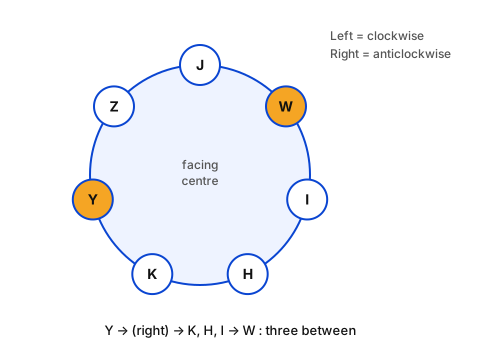
  1. Z is immediately right (anticlockwise) of J. J is 3rd to the left (clockwise) of K, so K is 3 seats anticlockwise from J (one seat beyond Z... i.e. Z, then a gap, then K). Z is 3rd to the right of I, so I is 3 seats clockwise from Z, i.e. 2 seats clockwise from J.
  2. Going clockwise from J: J, _, I, _, K, _, Z. The gaps are for H, W, Y.
  3. Y is not a neighbour of J, so Y is not in the seat between J and I; one person between H and W counted from the left (clockwise) of W → W between J and I, H between I and K, Y between K and Z.
  4. From the right (anticlockwise) of Y: K, H, I, then W → three people between Y and W.

Trick: Fill the circle with blanks first, then use “not a neighbour” clues to kill the wrong blanks.

Answer: (C) प

अवधारणा: ['Three', 'तीन (Three)']

  1. क
  2. े
  3. ं
  4. द
  5. ्
  6. र
  7. क
  8. ी
  9. ओ
  10. र
  11. म
  12. ु
  13. ख
  14. :
  15. द
  16. ा
  17. ए
  18. ँ
  19. =
  20. व
  21. ा
  22. म
  23. ा
  24. व
  25. र
  26. ्
  27. त
  28. ,
  29. ब
  30. ा
  31. ए
  32. ँ
  33. =
  34. द
  35. क
  36. ्
  37. ष
  38. ि
  39. ण
  40. ा
  41. व
  42. र
  43. ्
  44. त
  45. ।
  46. उ
  47. स
  48. ज
  49. ो
  50. ड
  51. ़
  52. ी
  53. स
  54. े
  55. श
  56. ु
  57. र
  58. ू
  59. क
  60. र
  61. े
  62. ं
  63. ज
  64. ो
  65. प
  66. र
  67. स
  68. ्
  69. प
  70. र
  71. न
  72. ि
  73. श
  74. ्
  75. च
  76. ि
  77. त
  78. ह
  79. ै
  80. (
  81. J
  82. औ
  83. र
  84. Z
  85. )
  86. ।

ट्रिक: ['Z, J के ठीक दाएँ (वामावर्त)। J, K के बाएँ तीसरा, अतः K, J से 3 सीट वामावर्त (Z के बाद एक सीट छोड़कर)। Z, I के दाएँ तीसरा, अतः I, Z से 3 सीट दक्षिणावर्त, यानी J से 2 सीट दक्षिणावर्त।', 'J से दक्षिणावर्त: J, _, I, _, K, _, Z। रिक्त स्थान H, W, Y के लिए।', 'Y, J का पड़ोसी नहीं, अतः Y, J–I के बीच नहीं; W के बाएँ (दक्षिणावर्त) से H–W के बीच एक व्यक्ति → W, J–I के बीच; H, I–K के बीच; Y, K–Z के बीच।', 'Y के दाएँ (वामावर्त) से: K, H, I, फिर W → Y और W के बीच तीन व्यक्ति।']

उत्तर: (C) ह

RRB NTPC Undergraduate CBT 1General Intelligence and ReasoningCircular SeatingRRB NTPC Undergraduate CBT 1 2025 · 15 Jun Shift 3 →