Question bank

Q&A: practice questions with answers

Search questions on any topic. Filter by exam category, exam, subject and topic, try the question, then open the answer and explanation.

Courses – airGurukul

8,495 questions found.

Q7181.
If ‘A’ stands for ‘÷’ , ‘B’ stands for ‘x’, ‘C’ stands for ‘+’ and ‘D’ stands for ‘-‘ , what will come in place of the question mark ‘?’ in the following equation?
81 A 3 D 7 B 2 C 16 = ?
यदि ‘A’ का अर्थ ‘÷’, ‘B’ का अर्थ ‘x’, ‘C’ का अर्थ ‘+’ और ‘D’ का अर्थ ‘-‘ है, तो निम्नलिखित समीकरण में प्रश्न चिह्न ‘?’ के स्थान पर क्या आएगा?
81 A 3 D 7 B 2 C 16 = ?
  1. A24
  2. B21
  3. C29
  4. D32
Show answer

Concept: Replace the letters by the given operators and apply BODMAS (division and multiplication before addition and subtraction).

  1. 81 A 3 D 7 B 2 C 16⇒81÷3−7×2+16
  2. =27−14+16
  3. =29

Trick: Write the substituted expression fully before computing – mixing substitution and calculation causes sign slips.

Answer: (C) ग

अवधारणा: ['29', '29']

  1. अ
  2. क
  3. ्
  4. ष
  5. र
  6. ो
  7. ं
  8. क
  9. ी
  10. ज
  11. ग
  12. ह
  13. द
  14. ि
  15. ए
  16. ग
  17. ए
  18. च
  19. ि
  20. ह
  21. ्
  22. न
  23. र
  24. ख
  25. े
  26. ं
  27. औ
  28. र
  29. B
  30. O
  31. D
  32. M
  33. A
  34. S
  35. ल
  36. ग
  37. ा
  38. ए
  39. ँ
  40. (
  41. भ
  42. ा
  43. ग
  44. -
  45. ग
  46. ु
  47. ण
  48. ा
  49. प
  50. ह
  51. ल
  52. े
  53. ,
  54. ज
  55. ो
  56. ड
  57. ़
  58. -
  59. घ
  60. ट
  61. ा
  62. व
  63. ब
  64. ा
  65. द
  66. म
  67. े
  68. ं
  69. )
  70. ।

ट्रिक: ['81textA3textD7textB2textC16Rightarrow81div3−7times2+16', '=27−14+16', '=29']

उत्तर: (C) ण

RRB NTPC Undergraduate CBT 1General Intelligence and ReasoningMathematical Operations – SubstitutionRRB NTPC Undergraduate CBT 1 2025 · 15 Jun Shift 3 →
Q7182.
Which of the following letter-number clusters will replace the question mark (?) in the given series to make it logically complete?
GAO 81 , EYM 75 , CWK 69 , AUI 63 , ?
निम्नलिखित में से कौन-सा अक्षर-संख्या समूह दी गई शृंखला में प्रश्न चिह्न (?) का स्थान लेकर उसे तार्किक रूप से पूर्ण करेगा?
GAO 81 , EYM 75 , CWK 69 , AUI 63 , ?
  1. AYRJ 50
  2. BXRF 55
  3. CXSF 52
  4. DYSG 57
Show answer

Concept: Treat the letters and the numbers as two separate series.

  1. Letters: G→E→C→A (each −2), A→Y→W→U (−2), O→M→K→I (−2). Next: A−2=Y, U−2=S, I−2=G → YSG.
  2. Numbers: 81,75,69,63 – each −6, so next =57.
  3. Combined: YSG 57.

Trick: Numbers alone eliminate three options (63−6=57); only option D has 57.

Answer: (D) क

अवधारणा: ['YSG 57', 'YSG 57']

  1. अ
  2. क
  3. ्
  4. ष
  5. र
  6. ो
  7. ं
  8. औ
  9. र
  10. स
  11. ं
  12. ख
  13. ्
  14. य
  15. ा
  16. ओ
  17. ं
  18. क
  19. ो
  20. द
  21. ो
  22. अ
  23. ल
  24. ग
  25. श
  26. ्
  27. र
  28. ृ
  29. ं
  30. ख
  31. ल
  32. ा
  33. ए
  34. ँ
  35. म
  36. ा
  37. न
  38. े
  39. ं
  40. ।

ट्रिक: ['अक्षर: G→E→C→A (हर बार −2), A→Y→W→U (−2), O→M→K→I (−2)। अगला: A−2=Y, U−2=S, I−2=G → YSG।', 'संख्याएँ: 81,75,69,63 – हर बार −6, अतः अगली =57।', 'मिलाकर: YSG 57।']

उत्तर: (D) े

RRB NTPC Undergraduate CBT 1General Intelligence and ReasoningLetter-Number SeriesRRB NTPC Undergraduate CBT 1 2025 · 15 Jun Shift 3 →
Q7183.
If ‘A’ stands for ‘+’, ‘B’ stands for ‘−’, ‘C’ stands for ‘×’, and ‘D’ stands for ‘÷’, then what will come in place of the question mark (?) in the following equation?
25 A 51 D 3 B 6 C 5 = ?
यदि ‘A’ का अर्थ ‘+’, ‘B’ का अर्थ ‘−’, ‘C’ का अर्थ ‘×’ और ‘D’ का अर्थ ‘÷’ है, तो निम्नलिखित समीकरण में प्रश्न चिह्न (?) के स्थान पर क्या आएगा?
25 A 51 D 3 B 6 C 5 = ?
  1. A12
  2. B14
  3. C15
  4. D10
Show answer

Concept: Substitute the operators and follow BODMAS.

  1. 25 A 51 D 3 B 6 C 5⇒25+51÷3−6×5
  2. =25+17−30
  3. =12

Trick: Do all ÷ and × first (51÷3=17, 6×5=30), then run left to right.

Answer: (A) प

अवधारणा: ['12', '12']

  1. च
  2. ि
  3. ह
  4. ्
  5. न
  6. प
  7. ्
  8. र
  9. त
  10. ि
  11. स
  12. ्
  13. थ
  14. ा
  15. प
  16. ि
  17. त
  18. क
  19. र
  20. े
  21. ं
  22. औ
  23. र
  24. B
  25. O
  26. D
  27. M
  28. A
  29. S
  30. ल
  31. ग
  32. ा
  33. ए
  34. ँ
  35. ।

ट्रिक: ['25textA51textD3textB6textC5Rightarrow25+51div3−6times5', '=25+17−30', '=12']

उत्तर: (A) ह

RRB NTPC Undergraduate CBT 1General Intelligence and ReasoningMathematical Operations – SubstitutionRRB NTPC Undergraduate CBT 1 2025 · 15 Jun Shift 3 →
Q7184.
In a certain code language,
A % B means ‘A is the sister of B’
A € B means ‘A is the son of B’
A = B means ‘A is the father of B’
A ? B means ‘A is the daughter of B’
Based on the above, how is B related to X if 'B % C ? O € P = X'?
एक निश्चित कूट भाषा में,
A % B का अर्थ है ‘A, B की बहन है’
A € B का अर्थ है ‘A, B का पुत्र है’
A = B का अर्थ है ‘A, B का पिता है’
A ? B का अर्थ है ‘A, B की पुत्री है’
उपर्युक्त के आधार पर, यदि 'B % C ? O € P = X' है, तो B का X से क्या संबंध है?
  1. AMother's motherमाता की माता
  2. BMotherमाता
  3. CWifeपत्नी
  4. DBrother's daughterभाई की पुत्री
Show answer

Concept: Decode from the end (X) backwards so that each person’s generation relative to X is clear.

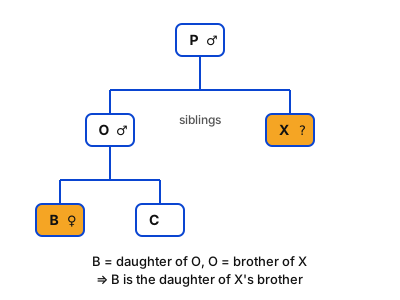
  1. P = X → P is the father of X. O € P → O is the son of P, so O is X’s brother.
  2. C ? O → C is the daughter of O. B % C → B is the sister of C, so B is also a daughter of O.
  3. Therefore B is the daughter of X’s brother.

Trick: “Son of X’s father” = X’s brother (gender known!). The child of a brother is a niece/nephew – here a daughter, so “brother’s daughter”.

Answer: (D) “

अवधारणा: ['Brother’s daughter', 'भाई की बेटी (Brother’s daughter)']

  1. अ
  2. ं
  3. त
  4. (
  5. X
  6. )
  7. स
  8. े
  9. प
  10. ी
  11. छ
  12. े
  13. क
  14. ी
  15. ओ
  16. र
  17. ड
  18. ि
  19. क
  20. ो
  21. ड
  22. क
  23. र
  24. े
  25. ं
  26. त
  27. ा
  28. क
  29. ि
  30. ह
  31. र
  32. व
  33. ्
  34. य
  35. क
  36. ्
  37. त
  38. ि
  39. क
  40. ी
  41. प
  42. ी
  43. ढ
  44. ़
  45. ी
  46. X
  47. क
  48. े
  49. स
  50. ा
  51. प
  52. े
  53. क
  54. ्
  55. ष
  56. स
  57. ्
  58. प
  59. ष
  60. ्
  61. ट
  62. र
  63. ह
  64. े
  65. ।

ट्रिक: ['P = X → P, X का पिता। O € P → O, P का पुत्र, अतः O, X का भाई।', 'C ? O → C, O की बेटी। B % C → B, C की बहन, अतः B भी O की बेटी।', 'इसलिए B, X के भाई की बेटी है।']

उत्तर: (D) X

RRB NTPC Undergraduate CBT 1General Intelligence and ReasoningBlood Relations – CodedRRB NTPC Undergraduate CBT 1 2025 · 15 Jun Shift 3 →
Q7185.
Read the given statement(s) and conclusions carefully. Assuming that the information given in the statements is true, even if it appears to be at variance with commonly known facts, decide which of the given conclusions logically follow(s) from the statement(s).
Statements:
All tigers are chairs.
All chairs are monks.
Conclusions:
(I) Some monks are chairs.
(II) All tigers are monks.
दिए गए कथन(नों) और निष्कर्षों को ध्यानपूर्वक पढ़िए। यह मानते हुए कि कथनों में दी गई जानकारी सत्य है, भले ही वह सामान्य रूप से ज्ञात तथ्यों से भिन्न प्रतीत होती हो, निर्णय कीजिए कि दिए गए निष्कर्षों में से कौन-सा/से निष्कर्ष कथन(नों) का तार्किक रूप से अनुसरण करता है/करते हैं।
कथन:
सभी बाघ, कुर्सियाँ हैं।
सभी कुर्सियाँ, भिक्षु हैं।
निष्कर्ष:
(I) कुछ भिक्षु, कुर्सियाँ हैं।
(II) सभी बाघ, भिक्षु हैं।
  1. AOnly conclusion (II) followsकेवल निष्कर्ष (II) अनुसरण करता है
  2. BOnly conclusion (I) followsकेवल निष्कर्ष (I) अनुसरण करता है
  3. CNeither conclusion (I) nor (II) followsन तो निष्कर्ष (I) और न ही (II) अनुसरण करता है
  4. DBoth conclusions (I) and (II) followनिष्कर्ष (I) और (II) दोनों अनुसरण करते हैं
Show answer

Concept: Draw Venn circles: “All A are B” puts circle A inside circle B.

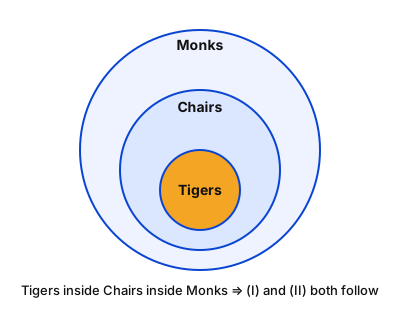
  1. All tigers are chairs and all chairs are monks → Tigers ⊂ Chairs ⊂ Monks.
  2. Conclusion (I) “Some monks are chairs” is the valid conversion of “All chairs are monks” – follows.
  3. Conclusion (II) “All tigers are monks” follows by the chain (two universal affirmatives give a universal affirmative).

Trick: All + All = All (A→B, B→C gives A→C), and every “All B are C” also yields “Some C are B”.

Answer: (D) A

अवधारणा: ['Both conclusions (I) and (II) follow', 'निष्कर्ष (I) और (II) दोनों अनुसरण करते हैं']

  1. व
  2. े
  3. न
  4. व
  5. ृ
  6. त
  7. ्
  8. त
  9. ब
  10. न
  11. ा
  12. ए
  13. ँ
  14. :
  15. “
  16. स
  17. भ
  18. ी
  19. A
  20. ,
  21. B
  22. ह
  23. ै
  24. ं
  25. ”
  26. क
  27. ा
  28. अ
  29. र
  30. ्
  31. थ
  32. –
  33. व
  34. ृ
  35. त
  36. ्
  37. त
  38. A
  39. ,
  40. व
  41. ृ
  42. त
  43. ्
  44. त
  45. B
  46. क
  47. े
  48. भ
  49. ी
  50. त
  51. र
  52. ।

ट्रिक: ['सभी बाघ कुर्सियाँ और सभी कुर्सियाँ साधु → बाघ ⊂ कुर्सियाँ ⊂ साधु।', 'निष्कर्ष (I) “कुछ साधु कुर्सियाँ हैं” – “सभी कुर्सियाँ साधु हैं” का वैध परिवर्तन – अनुसरण करता है।', 'निष्कर्ष (II) “सभी बाघ साधु हैं” शृंखला से अनुसरण करता है (दो सार्वभौम सकारात्मक से सार्वभौम सकारात्मक)।']

उत्तर: (D) l

RRB NTPC Undergraduate CBT 1General Intelligence and ReasoningSyllogismRRB NTPC Undergraduate CBT 1 2025 · 15 Jun Shift 3 →
Q7186.
Refer to the following series and answer the question. (Counting to be done from left to right only.) (All numbers are single-digit numbers only.)
(Left) 3 5 8 9 7 4 1 5 9 6 2 3 6 5 8 7 4 1 5 9 8 6 3 2 1 5 4 7 8 4 1 2 5 9 8 7 4 1 5 6 2 3 9 8 7 8 9 7 5 1(Right)
How many such odd digits are there, each of which is immediately preceded by a perfect cube and immediately followed by an even digit? (NOTE: 1 is also a perfect cube.)
निम्नलिखित शृंखला को देखिए और प्रश्न का उत्तर दीजिए। (गिनती केवल बाएँ से दाएँ की जानी है।) (सभी संख्याएँ केवल एक अंक वाली संख्याएँ हैं।)
(बाएँ) 3 5 8 9 7 4 1 5 9 6 2 3 6 5 8 7 4 1 5 9 8 6 3 2 1 5 4 7 8 4 1 2 5 9 8 7 4 1 5 6 2 3 9 8 7 8 9 7 5 1(दाएँ)
ऐसे कितने विषम अंक हैं, जिनमें से प्रत्येक के ठीक पहले एक पूर्ण घन है और ठीक बाद एक सम अंक है? (नोट: 1 भी एक पूर्ण घन है।)
  1. A6
  2. B5
  3. C4
  4. D8
Show answer

Concept: Look for an odd digit whose left neighbour is a perfect cube (1 or 8) and whose right neighbour is even.

  1. Series: 3 5 8 9 7 4 1 5 9 6 2 3 6 5 8 7 4 1 5 9 8 6 3 2 1 5 4 7 8 4 1 2 5 9 8 7 4 1 5 6 2 3 9 8 7 8 9 7 5 1.
  2. Matches: 8 7 4, 1 5 4, 8 7 4, 1 5 6, 8 7 8.
  3. Near-misses: 8 9 7 (followed by odd) ✗, 1 5 9 ✗, 1 2 5 (2 is even) ✗. Total = 5.

Trick: Circle every 1 and 8, then read the two digits after each – odd then even is a hit.

Answer: (B) ह

अवधारणा: ['5', '5']

  1. ऐ
  2. स
  3. ा
  4. व
  5. ि
  6. ष
  7. म
  8. अ
  9. ं
  10. क
  11. ख
  12. ो
  13. ज
  14. े
  15. ं
  16. ज
  17. ि
  18. स
  19. क
  20. े
  21. ब
  22. ा
  23. ए
  24. ँ
  25. प
  26. ू
  27. र
  28. ्
  29. ण
  30. घ
  31. न
  32. (
  33. 1
  34. य
  35. ा
  36. 8
  37. )
  38. औ
  39. र
  40. द
  41. ा
  42. ए
  43. ँ
  44. स
  45. म
  46. अ
  47. ं
  48. क
  49. ह
  50. ो
  51. ।

ट्रिक: ['श्रृंखला: 3 5 8 9 7 4 1 5 9 6 2 3 6 5 8 7 4 1 5 9 8 6 3 2 1 5 4 7 8 4 1 2 5 9 8 7 4 1 5 6 2 3 9 8 7 8 9 7 5 1।', 'मिलान: 8 7 4, 1 5 4, 8 7 4, 1 5 6, 8 7 8।', 'लगभग-मिलान: 8 9 7 (बाद में विषम) ✗, 1 5 9 ✗, 1 2 5 (2 सम) ✗। कुल = 5।']

उत्तर: (B) र

RRB NTPC Undergraduate CBT 1General Intelligence and ReasoningNumber Series – CountingRRB NTPC Undergraduate CBT 1 2025 · 15 Jun Shift 3 →
Q7187.
Refer to the following series and answer the question. (Counting to be done from left to right only.) (All numbers are single-digit numbers only.)
(Left) 7 5 9 2 7 9 4 1 5 1 7 8 3 2 8 4 1 2 3 8 2 7 9 (Right)
How many such odd digits are there, each of which is immediately preceded by an odd digit and also immediately followed by an even digit?
निम्नलिखित शृंखला को देखिए और प्रश्न का उत्तर दीजिए। (गिनती केवल बाएँ से दाएँ की जानी है।) (सभी संख्याएँ केवल एक अंक वाली संख्याएँ हैं।)
(बाएँ) 7 5 9 2 7 9 4 1 5 1 7 8 3 2 8 4 1 2 3 8 2 7 9 (दाएँ)
ऐसे कितने विषम अंक हैं, जिनमें से प्रत्येक के ठीक पहले एक विषम अंक है और ठीक बाद एक सम अंक भी है?
  1. AThreeतीन
  2. BTwoदो
  3. COneएक
  4. DNoneकोई नहीं
Show answer

Concept: Find an odd digit with an odd digit immediately before it and an even digit immediately after it.

  1. Series: 7 5 9 2 7 9 4 1 5 1 7 8 3 2 8 4 1 2 3 8 2 7 9.
  2. Matches: 5 9 2, 7 9 4, 1 7 8.
  3. Others fail: 7 5 9 (followed by odd), 1 5 1 ✗, 7 8 → 8 is even itself, 1 2 3 → 1 not odd-preceded... So three.

Trick: Scan for the pattern “odd, odd, even” as a sliding window of three – the middle digit is the one you count.

Answer: (A) त

अवधारणा: ['Three', 'तीन (Three)']

  1. ऐ
  2. स
  3. ा
  4. व
  5. ि
  6. ष
  7. म
  8. अ
  9. ं
  10. क
  11. ख
  12. ो
  13. ज
  14. े
  15. ं
  16. ज
  17. ि
  18. स
  19. क
  20. े
  21. ठ
  22. ी
  23. क
  24. प
  25. ह
  26. ल
  27. े
  28. व
  29. ि
  30. ष
  31. म
  32. औ
  33. र
  34. ठ
  35. ी
  36. क
  37. ब
  38. ा
  39. द
  40. स
  41. म
  42. अ
  43. ं
  44. क
  45. ह
  46. ो
  47. ।

ट्रिक: ['श्रृंखला: 7 5 9 2 7 9 4 1 5 1 7 8 3 2 8 4 1 2 3 8 2 7 9।', 'मिलान: 5 9 2, 7 9 4, 1 7 8।', 'बाकी असफल: 7 5 9 (बाद में विषम), 1 5 1 ✗, 2 3 8 (पहले सम) ✗। अतः तीन।']

उत्तर: (A) ी

RRB NTPC Undergraduate CBT 1General Intelligence and ReasoningNumber Series – CountingRRB NTPC Undergraduate CBT 1 2025 · 15 Jun Shift 3 →
Q7188.
FR 6 is related to KN -6 in a certain way. In the same way, LU 9 is related to QQ -3. To which of the following is LS 14 related, following the same logic?
FR 6 एक निश्चित प्रकार से KN -6 से संबंधित है। उसी प्रकार, LU 9, QQ -3 से संबंधित है। समान तर्क का अनुसरण करते हुए, LS 14 निम्नलिखित में से किससे संबंधित है?
  1. AQO 2
  2. BYT 8
  3. CPR 0
  4. DGT 6
Show answer

Concept: Find the rule from the first pair and verify with the second.

  1. FR 6 → KN −6: F+5=K, R−4=N, 6−12=−6.
  2. LU 9 → QQ −3: L+5=Q, U−4=Q, 9−12=−3 ✓.
  3. LS 14 → L+5=Q, S−4=O, 14−12=2 → QO 2.

Trick: The first letter rule (+5: L→Q) alone leaves only option A starting with Q.

Answer: (A) क

अवधारणा: ['QO 2', 'QO 2']

  1. प
  2. ह
  3. ल
  4. े
  5. य
  6. ु
  7. ग
  8. ्
  9. म
  10. स
  11. े
  12. न
  13. ि
  14. य
  15. म
  16. न
  17. ि
  18. क
  19. ा
  20. ल
  21. े
  22. ं
  23. औ
  24. र
  25. द
  26. ू
  27. स
  28. र
  29. े
  30. स
  31. े
  32. ज
  33. ा
  34. ँ
  35. च
  36. े
  37. ं
  38. ।

ट्रिक: ['FR 6 → KN −6: F+5=K, R−4=N, 6−12=−6।', 'LU 9 → QQ −3: L+5=Q, U−4=Q, 9−12=−3 ✓।', 'LS 14 → L+5=Q, S−4=O, 14−12=2 → QO 2।']

उत्तर: (A) े

RRB NTPC Undergraduate CBT 1General Intelligence and ReasoningAnalogy – Letter-NumberRRB NTPC Undergraduate CBT 1 2025 · 15 Jun Shift 3 →
Q7189.
Mr. Vasu starts from Point A and drives 23 km towards the south. He then takes a left turn, drives 19 km, turns left and drives 36 km. He then takes a left turn and drives 19 km, turns left drives 9 km. He then takes a right turn and drives 5 km. He takes a final left turn, drives 4 km and stops at Point P. How far (shortest distance) and towards which direction should he drive in order to reach Point A again? (All turns are 90-degree turns only unless specified.)
श्री वासु बिंदु A से चलना शुरू करते हैं और दक्षिण की ओर 23 km गाड़ी चलाते हैं। फिर वे बाएँ मुड़ते हैं, 19 km गाड़ी चलाते हैं, बाएँ मुड़ते हैं और 36 km गाड़ी चलाते हैं। फिर वे बाएँ मुड़ते हैं और 19 km गाड़ी चलाते हैं, बाएँ मुड़ते हैं और 9 km गाड़ी चलाते हैं। फिर वे दाएँ मुड़ते हैं और 5 km गाड़ी चलाते हैं। वे अंतिम बार बाएँ मुड़ते हैं, 4 km गाड़ी चलाते हैं और बिंदु P पर रुक जाते हैं। पुनः बिंदु A पर पहुँचने के लिए उन्हें कितनी दूरी (न्यूनतम दूरी) और किस दिशा में गाड़ी चलानी चाहिए? (जब तक निर्दिष्ट न हो, सभी मोड़ केवल 90 डिग्री के मोड़ हैं।)
  1. A8 km to the northउत्तर की ओर 8 km
  2. B7 km to the southदक्षिण की ओर 7 km
  3. C4 km to the westपश्चिम की ओर 4 km
  4. D5 km to the eastपूर्व की ओर 5 km
Show answer

Concept: Take A as the origin and track the position after every turn (facing south, a left turn faces east; facing east, left faces north, and so on).

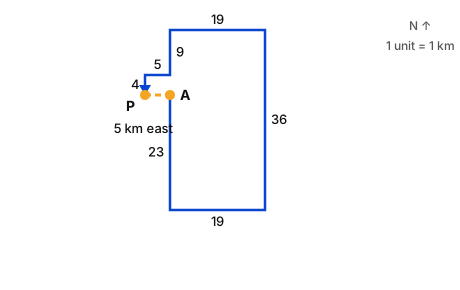
  1. A → 23 km south → (0, −23); left (east) 19 km → (19, −23); left (north) 36 km → (19, 13).
  2. Left (west) 19 km → (0, 13); left (south) 9 km → (0, 4); right (west) 5 km → (−5, 4); left (south) 4 km → P (−5, 0).
  3. P is 5 km due west of A, so he must drive 5 km to the east to reach A.

Trick: Add up the east–west moves and north–south moves separately: E 19−19−5=−5 (5 west); N −23+36−9−4=0 – P is 5 km west of A.

Answer: (D) प

अवधारणा: ['5 km to the east', '5 km पूर्व की ओर']

  1. A
  2. क
  3. ो
  4. म
  5. ू
  6. ल
  7. ब
  8. ि
  9. ं
  10. द
  11. ु
  12. म
  13. ा
  14. न
  15. े
  16. ं
  17. औ
  18. र
  19. ह
  20. र
  21. म
  22. ो
  23. ड
  24. ़
  25. क
  26. े
  27. ब
  28. ा
  29. द
  30. स
  31. ्
  32. थ
  33. ि
  34. त
  35. ि
  36. ल
  37. ि
  38. ख
  39. े
  40. ं
  41. (
  42. द
  43. क
  44. ्
  45. ष
  46. ि
  47. ण
  48. म
  49. ु
  50. ख
  51. म
  52. े
  53. ं
  54. ब
  55. ा
  56. य
  57. ा
  58. ँ
  59. म
  60. ो
  61. ड
  62. ़
  63. =
  64. प
  65. ू
  66. र
  67. ्
  68. व
  69. ;
  70. प
  71. ू
  72. र
  73. ्
  74. व
  75. म
  76. ु
  77. ख
  78. म
  79. े
  80. ं
  81. ब
  82. ा
  83. य
  84. ा
  85. ँ
  86. =
  87. उ
  88. त
  89. ्
  90. त
  91. र
  92. ,
  93. आ
  94. द
  95. ि
  96. )
  97. ।

ट्रिक: ['A → 23 km दक्षिण → (0, −23); बाएँ (पूर्व) 19 km → (19, −23); बाएँ (उत्तर) 36 km → (19, 13)।', 'बाएँ (पश्चिम) 19 km → (0, 13); बाएँ (दक्षिण) 9 km → (0, 4); दाएँ (पश्चिम) 5 km → (−5, 4); बाएँ (दक्षिण) 4 km → P (−5, 0)।', 'P, A से ठीक 5 km पश्चिम में है, अतः A पहुँचने के लिए 5 km पूर्व की ओर चलना होगा।']

उत्तर: (D) ू

RRB NTPC Undergraduate CBT 1General Intelligence and ReasoningDirection and DistanceRRB NTPC Undergraduate CBT 1 2025 · 15 Jun Shift 3 →
Q7190.
In a certain code language, ‘VIBE’ is coded as ‘4395’ and ‘BITE’ is coded as ‘5914’. What is the code for ‘T’ in the given code language?
एक निश्चित कूट भाषा में, ‘VIBE’ को ‘4395’ के रूप में कूटबद्ध किया जाता है और ‘BITE’ को ‘5914’ के रूप में कूटबद्ध किया जाता है। दी गई कूट भाषा में ‘T’ का कूट क्या है?
  1. A1
  2. B5
  3. C4
  4. D9
Show answer

Concept: Common letters of the two words take the common digits; the remaining letter takes the remaining digit.

  1. VIBE → 4 3 9 5 and BITE → 5 9 1 4.
  2. Common letters I, B, E ↔ common digits 4, 9, 5.
  3. Extra letter in BITE is T, extra digit is 1 → T = 1 (and V = 3).

Trick: Cancel what is common on both sides; the leftovers pair up instantly.

Answer: (A) द

अवधारणा: ['1', '1']

  1. द
  2. ो
  3. न
  4. ो
  5. ं
  6. श
  7. ब
  8. ्
  9. द
  10. ो
  11. ं
  12. क
  13. े
  14. स
  15. म
  16. ा
  17. न
  18. अ
  19. क
  20. ्
  21. ष
  22. र
  23. ो
  24. ं
  25. क
  26. ो
  27. स
  28. म
  29. ा
  30. न
  31. अ
  32. ं
  33. क
  34. म
  35. ि
  36. ल
  37. त
  38. े
  39. ह
  40. ै
  41. ं
  42. ;
  43. ब
  44. च
  45. ा
  46. अ
  47. क
  48. ्
  49. ष
  50. र
  51. =
  52. ब
  53. च
  54. ा
  55. अ
  56. ं
  57. क
  58. ।

ट्रिक: ['VIBE → 4 3 9 5 और BITE → 5 9 1 4।', 'समान अक्षर I, B, E ↔ समान अंक 4, 9, 5।', 'BITE में अतिरिक्त अक्षर T, अतिरिक्त अंक 1 → T = 1 (और V = 3)।']

उत्तर: (A) ो

RRB NTPC Undergraduate CBT 1General Intelligence and ReasoningCoding-Decoding – Letter to DigitRRB NTPC Undergraduate CBT 1 2025 · 15 Jun Shift 3 →
Q7191.
Select the set in which the numbers are related in the same way as are the numbers of the following sets.
(NOTE: Operations should be performed on the whole numbers, without breaking down the numbers into their constituent digits. E.g. 13 – Operations on 13 such as
adding/subtracting/multiplying etc. to 13 can be performed. Breaking down 13 into 1 and 3 and then performing mathematical operations on 1 and 3 is not allowed.) (14, 7, 21)
(56, 28, 42)
उस समुच्चय का चयन कीजिए जिसमें संख्याएँ उसी प्रकार संबंधित हैं जिस प्रकार निम्नलिखित समुच्चयों की संख्याएँ संबंधित हैं।
(नोट: संक्रियाएँ संख्याओं को उनके घटक अंकों में विभाजित किए बिना, पूर्ण संख्याओं पर की जानी चाहिए। उदाहरण के लिए, 13 – 13 पर संक्रियाएँ, जैसे
13 में जोड़ना/घटाना/गुणा करना आदि की जा सकती हैं। 13 को 1 और 3 में विभाजित करना और फिर 1 और 3 पर गणितीय संक्रियाएँ करना वर्जित है।) (14, 7, 21)
(56, 28, 42)
  1. A(114, 57, 72)
  2. B(242, 121, 134)
  3. C(346, 173, 188)
  4. D(62, 31, 45)
Show answer

Concept: Find a rule linking the three numbers of each given set and test the options with the same rule.

  1. (14, 7, 21): 7=14÷2 and 21=7+14. (56, 28, 42): 28=56÷2 and 42=28+14 ✓.
  2. Rule: 2nd = 1st ÷2, 3rd = 2nd +14.
  3. (62, 31, 45): 31=62÷2 ✓, 45=31+14 ✓. Others fail: 57+14=71≠72, 121+14=135≠134, 173+14=187≠188.

Trick: All options have 2nd = 1st ÷2, so the 3rd number decides: just check “2nd +14”.

Answer: (D) स

अवधारणा: ['(62, 31, 45)', '(62, 31, 45)']

  1. द
  2. ि
  3. ए
  4. ग
  5. ए
  6. ह
  7. र
  8. स
  9. म
  10. ु
  11. च
  12. ्
  13. च
  14. य
  15. क
  16. ी
  17. त
  18. ी
  19. न
  20. स
  21. ं
  22. ख
  23. ्
  24. य
  25. ा
  26. ओ
  27. ं
  28. क
  29. ा
  30. न
  31. ि
  32. य
  33. म
  34. न
  35. ि
  36. क
  37. ा
  38. ल
  39. े
  40. ं
  41. औ
  42. र
  43. व
  44. ह
  45. ी
  46. न
  47. ि
  48. य
  49. म
  50. व
  51. ि
  52. क
  53. ल
  54. ्
  55. प
  56. ो
  57. ं
  58. प
  59. र
  60. ज
  61. ा
  62. ँ
  63. च
  64. े
  65. ं
  66. ।

ट्रिक: ['(14, 7, 21): 7=14div2 और 21=7+14। (56, 28, 42): 28=56div2 और 42=28+14 ✓।', 'नियम: दूसरी = पहली div2, तीसरी = दूसरी +14।', '(62, 31, 45): 31=62div2 ✓, 45=31+14 ✓। बाकी असफल: 57+14=71ne72, 121+14=135ne134, 173+14=187ne188।']

उत्तर: (D) भ

RRB NTPC Undergraduate CBT 1General Intelligence and ReasoningNumber Analogy – SetsRRB NTPC Undergraduate CBT 1 2025 · 15 Jun Shift 3 →
Q7192.
In a row of 15 students facing the north, Yusuf is 10th from the right end. If Suman is 4th to the left of Yusuf, what is Suman's position from the left end of the line?
उत्तर की ओर मुख करके खड़े 15 विद्यार्थियों की एक पंक्ति में, यूसुफ़ दाएँ छोर से 10वें स्थान पर है। यदि सुमन, यूसुफ़ के बाईं ओर 4थे स्थान पर है, तो पंक्ति के बाएँ छोर से सुमन का स्थान क्या है?
  1. A1st1ला
  2. B2nd2रा
  3. C4th4था
  4. D3rd3रा
Show answer

Concept: Position from the left = Total − position from the right +1; moving left reduces it.

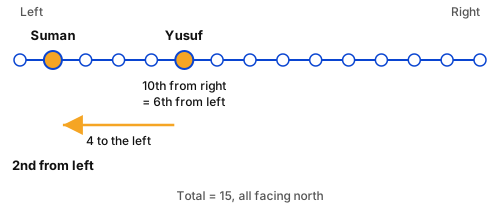
  1. Yusuf from the left =15−10+1=6th.
  2. Suman is 4th to the left of Yusuf: 6−4=2nd from the left.

Trick: Convert to one end first, then add for “right of” and subtract for “left of”.

Answer: (B) प

अवधारणा: ['2nd', '2रा (2nd)']

  1. ब
  2. ा
  3. ए
  4. ँ
  5. स
  6. े
  7. स
  8. ्
  9. थ
  10. ा
  11. न
  12. </li><li>=</li><li>
  13. क
  14. ु
  15. ल
  16. </li><li>−</li><li>
  17. द
  18. ा
  19. ए
  20. ँ
  21. स
  22. े
  23. स
  24. ्
  25. थ
  26. ा
  27. न
  28. </li><li>+</li><li>1</li><li>
  29. ;
  30. ब
  31. ा
  32. ई
  33. ं
  34. ओ
  35. र
  36. ज
  37. ा
  38. न
  39. े
  40. प
  41. र
  42. य
  43. ह
  44. घ
  45. ट
  46. त
  47. ा
  48. ह
  49. ै
  50. ।

ट्रिक: ['यूसुफ बाएँ से =15−10+1=6वाँ।', 'सुमन, यूसुफ से 4थे स्थान बाईं ओर: 6−4=2रा बाएँ से।']

उत्तर: (B) ह

RRB NTPC Undergraduate CBT 1General Intelligence and ReasoningLinear Arrangement – PositionRRB NTPC Undergraduate CBT 1 2025 · 15 Jun Shift 3 →
Q7193.
Based on the English alphabetical order, three of the following four letter-cluster pairs are alike in a certain way and thus form a group. Which is the one that does not belong to that group?
(Note: The odd man out is not based on the number of consonants/vowels or their position in the letter cluster.)
अंग्रेज़ी वर्णमाला क्रम के आधार पर, निम्नलिखित चार अक्षर-समूह युग्मों में से तीन किसी निश्चित प्रकार से समान हैं और इस प्रकार एक समूह बनाते हैं। वह कौन-सा युग्म है जो उस समूह से संबंधित नहीं है?
(नोट: असंगत युग्म, अक्षर-समूह में व्यंजनों/स्वरों की संख्या या उनके स्थान पर आधारित नहीं है।)
  1. AXA – TU
  2. BRF – NB
  3. CMJ – IF
  4. DPL – LH
Show answer

Concept: Compare the shift from the first cluster to the second for both letters.

  1. RF–NB: R(18)→N(14) −4, F(6)→B(2) −4. MJ–IF: M(13)→I(9) −4, J(10)→F(6) −4. PL–LH: P(16)→L(12) −4, L(12)→H(8) −4.
  2. XA–TU: X(24)→T(20) −4, but A(1)→U(21) is +20 (or −6 with wrap-around), not −4.
  3. So XA–TU is the odd one.

Trick: Three pairs show a clean (−4,−4); the pair that needs “wrapping past A” to explain is the odd one.

Answer: (A) त

अवधारणा: ['XA – TU', 'XA – TU']

  1. प
  2. ह
  3. ल
  4. े
  5. स
  6. म
  7. ू
  8. ह
  9. स
  10. े
  11. द
  12. ू
  13. स
  14. र
  15. े
  16. स
  17. म
  18. ू
  19. ह
  20. त
  21. क
  22. द
  23. ो
  24. न
  25. ो
  26. ं
  27. अ
  28. क
  29. ्
  30. ष
  31. र
  32. ो
  33. ं
  34. क
  35. ा
  36. प
  37. र
  38. ि
  39. व
  40. र
  41. ्
  42. त
  43. न
  44. म
  45. ि
  46. ल
  47. ा
  48. ए
  49. ँ
  50. ।

ट्रिक: ['RF–NB: R(18)→N(14) −4, F(6)→B(2) −4। MJ–IF: M(13)→I(9) −4, J(10)→F(6) −4। PL–LH: P(16)→L(12) −4, L(12)→H(8) −4।', 'XA–TU: X(24)→T(20) −4, पर A(1)→U(21) +20 (घुमाव सहित −6) है, −4 नहीं।', 'अतः XA–TU विषम है।']

उत्तर: (A) ी

RRB NTPC Undergraduate CBT 1General Intelligence and ReasoningOdd One Out – Letter ClustersRRB NTPC Undergraduate CBT 1 2025 · 15 Jun Shift 3 →
Q7194.
Which two numbers should be interchanged to make the given equation correct? (28 ÷ 4) × 6 + 14 × 3 − 7 × 9 + (66 ÷ 2) + 38 = 67
दिए गए समीकरण को सही करने के लिए किन दो संख्याओं को परस्पर बदला जाना चाहिए? (28 ÷ 4) × 6 + 14 × 3 − 7 × 9 + (66 ÷ 2) + 38 = 67
  1. A4 and 74 और 7
  2. B6 and 36 और 3
  3. C2 and 32 और 3
  4. D2 and 62 और 6
Show answer

Concept: Evaluate the equation as given, then try each interchange and recompute with BODMAS until the LHS equals 67.

  1. Given: (28÷4)×6+14×3−7×9+(66÷2)+38=42+42−63+33+38=92≠67.
  2. Interchange 2 and 3: (28÷4)×6+14×2−7×9+(66÷3)+38
  3. =42+28−63+22+38=67 ✓.

Trick: LHS is 25 too big; swapping 3 and 2 lowers 14×3 by 14 and 66÷2 by 11 – exactly 25.

Answer: (C) L

अवधारणा: ['2 and 3', '2 और 3']

  1. स
  2. म
  3. ी
  4. क
  5. र
  6. ण
  7. क
  8. ो
  9. व
  10. ै
  11. स
  12. े
  13. ह
  14. ी
  15. ह
  16. ल
  17. क
  18. र
  19. े
  20. ं
  21. ,
  22. फ
  23. ि
  24. र
  25. ह
  26. र
  27. अ
  28. द
  29. ल
  30. ा
  31. -
  32. ब
  33. द
  34. ल
  35. ी
  36. क
  37. र
  38. क
  39. े
  40. B
  41. O
  42. D
  43. M
  44. A
  45. S
  46. स
  47. े
  48. त
  49. ब
  50. त
  51. क
  52. ज
  53. ा
  54. ँ
  55. च
  56. े
  57. ं
  58. ज
  59. ब
  60. त
  61. क
  62. L
  63. H
  64. S
  65. =
  66. 6
  67. 7
  68. न
  69. ह
  70. ो
  71. ।

ट्रिक: ['दिया गया: (28div4)times6+14times3−7times9+(66div2)+38=42+42−63+33+38=92ne67।', '2 और 3 बदलें: (28div4)times6+14times2−7times9+(66div3)+38', '=42+28−63+22+38=67 ✓।']

उत्तर: (C) H

RRB NTPC Undergraduate CBT 1General Intelligence and ReasoningMathematical Operations – InterchangeRRB NTPC Undergraduate CBT 1 2025 · 15 Jun Shift 3 →
Q7195.
Read the given statements and conclusions carefully. Assuming that the information given in the statements is true, even if it appears to be at variance with commonly known facts, decide which of the given conclusions logically follow(s) from the statements.
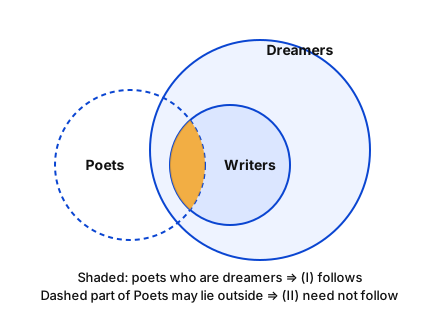
Statements: Some poets are writers. All writers are dreamers.
Conclusions:
(I) Some dreamers are poets.
(II) All poets are dreamers.
दिए गए कथनों और निष्कर्षों को ध्यानपूर्वक पढ़िए। यह मानते हुए कि कथनों में दी गई जानकारी सत्य है, भले ही वह सामान्य रूप से ज्ञात तथ्यों से भिन्न प्रतीत होती हो, निर्णय कीजिए कि दिए गए निष्कर्षों में से कौन-सा/से निष्कर्ष कथनों का तार्किक रूप से अनुसरण करता है/करते हैं।
कथन: कुछ कवि, लेखक हैं। सभी लेखक, स्वप्नदर्शी हैं।
निष्कर्ष:
(I) कुछ स्वप्नदर्शी, कवि हैं।
(II) सभी कवि, स्वप्नदर्शी हैं।
  1. ANeither conclusion (I) nor (II) followsन तो निष्कर्ष (I) और न ही (II) अनुसरण करता है
  2. BBoth conclusions (I) and (II) followनिष्कर्ष (I) और (II) दोनों अनुसरण करते हैं
  3. COnly conclusion (II) followsकेवल निष्कर्ष (II) अनुसरण करता है
  4. DOnly conclusion (I) followsकेवल निष्कर्ष (I) अनुसरण करता है
Show answer

Concept: Draw Venn circles: “Some poets are writers” makes the Poets and Writers circles overlap; “All writers are dreamers” puts Writers inside Dreamers.

  1. The overlap of Poets and Writers lies inside Dreamers, so some poets are dreamers – hence “Some dreamers are poets” (I) follows.
  2. Poets outside the Writers circle may or may not be dreamers, so “All poets are dreamers” (II) does not follow.

Trick: Some + All = Some (particular + universal gives only a particular conclusion); “Some A are B” always converts to “Some B are A”.

Answer: (D) S

अवधारणा: ['Only conclusion (I) follows', 'केवल निष्कर्ष (I) अनुसरण करता है']

  1. व
  2. े
  3. न
  4. व
  5. ृ
  6. त
  7. ्
  8. त
  9. ब
  10. न
  11. ा
  12. ए
  13. ँ
  14. :
  15. “
  16. क
  17. ु
  18. छ
  19. क
  20. व
  21. ि
  22. ल
  23. े
  24. ख
  25. क
  26. ह
  27. ै
  28. ं
  29. ”
  30. स
  31. े
  32. क
  33. व
  34. ि
  35. औ
  36. र
  37. ल
  38. े
  39. ख
  40. क
  41. व
  42. ृ
  43. त
  44. ्
  45. त
  46. ओ
  47. व
  48. र
  49. ल
  50. ै
  51. प
  52. ;
  53. “
  54. स
  55. भ
  56. ी
  57. ल
  58. े
  59. ख
  60. क
  61. स
  62. ्
  63. व
  64. प
  65. ्
  66. न
  67. द
  68. ्
  69. र
  70. ष
  71. ्
  72. ट
  73. ा
  74. ह
  75. ै
  76. ं
  77. ”
  78. स
  79. े
  80. ल
  81. े
  82. ख
  83. क
  84. व
  85. ृ
  86. त
  87. ्
  88. त
  89. स
  90. ्
  91. व
  92. प
  93. ्
  94. न
  95. द
  96. ्
  97. र
  98. ष
  99. ्
  100. ट
  101. ा
  102. क
  103. े
  104. भ
  105. ी
  106. त
  107. र
  108. ।

ट्रिक: ['कवि–लेखक का ओवरलैप स्वप्नद्रष्टा के भीतर है, अतः कुछ कवि स्वप्नद्रष्टा हैं – इसलिए “कुछ स्वप्नद्रष्टा कवि हैं” (I) अनुसरण करता है।', 'लेखक वृत्त से बाहर के कवि स्वप्नद्रष्टा हो भी सकते हैं, नहीं भी – अतः “सभी कवि स्वप्नद्रष्टा हैं” (II) अनुसरण नहीं करता।']

उत्तर: (D) o

RRB NTPC Undergraduate CBT 1General Intelligence and ReasoningSyllogismRRB NTPC Undergraduate CBT 1 2025 · 15 Jun Shift 3 →
Q7196.
Seleucus sent his ambassador Megasthenes to the court of which Mauryan ruler at Pataliputra?
सेल्यूकस ने अपने राजदूत मेगस्थनीज़ को पाटलिपुत्र में किस मौर्य शासक के दरबार में भेजा था?
  1. ABindusaraबिन्दुसार
  2. BBrihadrathaबृहद्रथ
  3. CAshokaअशोक
  4. DChandragupta Mauryaचन्द्रगुप्त मौर्य
Show answer

Concept: Greek ambassador Megasthenes and his book Indica.

  1. Seleucus I Nicator, after his treaty with Chandragupta Maurya (c. 305 BCE), sent Megasthenes as ambassador to Pataliputra.
  2. Megasthenes' Indica describes Chandragupta's court and administration.
  3. Deimachus was sent later to Bindusara's court – the usual confusion.

Yaad rakhein: Megasthenes → Chandragupta; Deimachus → Bindusara.

Answer: (D) Chandragupta Maurya

अवधारणा: यूनानी राजदूत मेगस्थनीज़ और उसकी पुस्तक इंडिका।

  1. सेल्यूकस निकेटर ने चंद्रगुप्त मौर्य से संधि (लगभग 305 ई.पू.) के बाद मेगस्थनीज़ को पाटलिपुत्र भेजा।
  2. इंडिका में चंद्रगुप्त के दरबार और प्रशासन का वर्णन है।
  3. डाइमेकस बाद में बिंदुसार के दरबार में आया – यही भ्रम होता है।

याद रखें: मेगस्थनीज़ → चंद्रगुप्त; डाइमेकस → बिंदुसार।

उत्तर: (D) Chandragupta Maurya

RRB NTPC Undergraduate CBT 1General AwarenessMauryan EmpireRRB NTPC Undergraduate CBT 1 2025 · 15 Jun Shift 2 →
Q7197.
Which of the following statements is NOT correct regarding the Indian Desert (Thar Desert)?
भारतीय मरुस्थल (थार मरुस्थल) के संबंध में निम्नलिखित में से कौन-सा कथन सही नहीं है?
  1. ATo the northwest of the Aravali hills lies the Great Indian desertअरावली पहाड़ियों के उत्तर-पश्चिम में वृहत भारतीय मरुस्थल स्थित है
  2. BDuring the Mesozoic era, this region is believed to have been under the sea.ऐसा माना जाता है कि मध्यजीवी महाकल्प (Mesozoic era) के दौरान यह क्षेत्र समुद्र के नीचे था।
  3. CThis region receives low rainfall below 15 mm per yearइस क्षेत्र में प्रति वर्ष 15 mm से कम अल्प वर्षा होती है
  4. DIt has an arid climate with low vegetation coverयहाँ की जलवायु शुष्क है और वनस्पति आवरण कम है
Show answer

Concept: Facts about the Great Indian (Thar) Desert from NCERT physiography.

  1. It lies north-west of the Aravalis, has an arid climate, scanty vegetation, and is believed to have been under the sea in the Mesozoic era – statements A, B, D are correct.
  2. Its rainfall is low but below about 150 mm per year, not 15 mm; so statement C is incorrect.

Yaad rakhein: Thar rainfall figure = 150 mm (NCERT); "15 mm" is a trap.

Answer: (C) This region receives low rainfall below 15 mm per year

अवधारणा: NCERT के अनुसार थार मरुस्थल के तथ्य।

  1. यह अरावली के उत्तर-पश्चिम में है, शुष्क जलवायु और कम वनस्पति वाला है, और मेसोज़ोइक युग में समुद्र के नीचे था – कथन A, B, D सही हैं।
  2. वर्षा लगभग 150 mm से कम होती है, 15 mm नहीं; इसलिए कथन C गलत है।

याद रखें: थार की वर्षा = 150 mm से कम; "15 mm" जाल है।

उत्तर: (C) This region receives low rainfall below 15 mm per year

RRB NTPC Undergraduate CBT 1General AwarenessIndian Physiography – Thar DesertRRB NTPC Undergraduate CBT 1 2025 · 15 Jun Shift 2 →
Q7198.
In October 2025, India and Spain signed a Memorandum of Understanding (MoU) to develop a world-class convention center in which Indian state?
अक्टूबर 2025 में, भारत और स्पेन ने किस भारतीय राज्य में एक विश्व स्तरीय सम्मेलन केंद्र (convention center) विकसित करने के लिए एक समझौता ज्ञापन (MoU) पर हस्ताक्षर किए?
  1. AMaharashtraमहाराष्ट्र
  2. BGujaratगुजरात
  3. CTamil Naduतमिलनाडु
  4. DMadhya Pradeshमध्य प्रदेश
Show answer

Concept: India–Spain cooperation agreements of October 2025.

  1. During the October 2025 engagements between India and Spain, an MoU was signed for developing a world-class convention centre in Maharashtra.
  2. Maharashtra (Mumbai region) has been the focus of such large-scale convention and tourism infrastructure tie-ups.

Yaad rakhein: Spain + convention centre (2025) → Maharashtra.

Answer: (A) Maharashtra

अवधारणा: अक्टूबर 2025 के भारत–स्पेन सहयोग समझौते।

  1. अक्टूबर 2025 में भारत और स्पेन के बीच महाराष्ट्र में विश्व-स्तरीय कन्वेंशन सेंटर विकसित करने का MoU हुआ।
  2. महाराष्ट्र (मुंबई क्षेत्र) ऐसे बड़े कन्वेंशन व पर्यटन अवसंरचना समझौतों का केंद्र रहा है।

याद रखें: स्पेन + कन्वेंशन सेंटर (2025) → महाराष्ट्र।

उत्तर: (A) Maharashtra

RRB NTPC Undergraduate CBT 1General AwarenessCurrent Affairs – India–SpainRRB NTPC Undergraduate CBT 1 2025 · 15 Jun Shift 2 →
Q7199.
Rashtriya Avishkar Abhiyan, introduced in 2015, focuses on encouraging school students to develop interest in:
2015 में शुरू किया गया राष्ट्रीय आविष्कार अभियान, स्कूली छात्रों में किसके प्रति रुचि विकसित करने को प्रोत्साहित करने पर केंद्रित है?
  1. AEnvironmental awareness programmesपर्यावरण जागरूकता कार्यक्रम
  2. BScience and mathematics learningविज्ञान और गणित अधिगम
  3. CSports and physical educationखेल और शारीरिक शिक्षा
  4. DArts and cultural activitiesकला और सांस्कृतिक गतिविधियाँ
Show answer

Concept: Rashtriya Avishkar Abhiyan (RAA), launched 9 July 2015 by the Ministry of HRD.

  1. Its aim: make science, mathematics and technology learning joyful for children aged 6–18 through observation, experiments and inquiry.
  2. It was inspired by Dr. A. P. J. Abdul Kalam and runs under Samagra Shiksha with mentoring by IITs/IISERs.

Yaad rakhein: "Avishkar" = invention → science & maths.

Answer: (B) Science and mathematics learning

अवधारणा: राष्ट्रीय आविष्कार अभियान (RAA), 9 जुलाई 2015 को MHRD द्वारा शुरू।

  1. उद्देश्य: 6–18 वर्ष के बच्चों में विज्ञान, गणित और प्रौद्योगिकी की पढ़ाई को प्रयोग व जिज्ञासा से रोचक बनाना।
  2. डॉ. ए.पी.जे. अब्दुल कलाम से प्रेरित; समग्र शिक्षा के अंतर्गत IIT/IISER मार्गदर्शन करते हैं।

याद रखें: "आविष्कार" = invention → विज्ञान और गणित।

उत्तर: (B) Science and mathematics learning

RRB NTPC Undergraduate CBT 1General AwarenessGovernment Schemes – EducationRRB NTPC Undergraduate CBT 1 2025 · 15 Jun Shift 2 →
Q7200.
Which of the following was officially named the Host City for the 2030 Centenary edition, following approval at the 2025 Commonwealth Sport General Assembly in Glasgow (UK)?
ग्लासगो (UK) में 2025 की कॉमनवेल्थ स्पोर्ट महासभा (General Assembly) में अनुमोदन के बाद, निम्नलिखित में से किसे आधिकारिक तौर पर 2030 के शताब्दी संस्करण (Centenary edition) के लिए मेज़बान शहर घोषित किया गया?
  1. AAhmedabadअहमदाबाद
  2. BPuneपुणे
  3. CNew Delhiनई दिल्ली
  4. DBhopalभोपाल
Show answer

Concept: Host of the 2030 Centenary Commonwealth Games.

  1. At the Commonwealth Sport General Assembly in Glasgow (November 2025), Ahmedabad (Gujarat) was confirmed as host of the 2030 Centenary Commonwealth Games.
  2. India last hosted the Games in New Delhi in 2010; 2030 marks 100 years since the first Games (Hamilton, 1930).

Yaad rakhein: CWG 2026 Glasgow → CWG 2030 Ahmedabad.

Answer: (A) Ahmedabad

अवधारणा: 2030 शताब्दी राष्ट्रमंडल खेलों का मेज़बान।

  1. ग्लासगो (नवंबर 2025) की Commonwealth Sport General Assembly में अहमदाबाद (गुजरात) को 2030 शताब्दी राष्ट्रमंडल खेलों का मेज़बान घोषित किया गया।
  2. भारत ने अंतिम बार 2010 में नई दिल्ली में मेज़बानी की थी; 2030 पहले खेलों (हैमिल्टन, 1930) के 100 वर्ष हैं।

याद रखें: CWG 2026 ग्लासगो → CWG 2030 अहमदाबाद।

उत्तर: (A) Ahmedabad

RRB NTPC Undergraduate CBT 1General AwarenessSports – Commonwealth Games 2030RRB NTPC Undergraduate CBT 1 2025 · 15 Jun Shift 2 →