Question bank

Q&A: practice questions with answers

Search questions on any topic. Filter by exam category, exam, subject and topic, try the question, then open the answer and explanation.

Courses – airGurukul

8,495 questions found.

Q7261.
A trader marks his goods such that even after allowing a discount of 25%, he makes a profit of 10%. If he gives only 10% discount, then find the profit percentage.
एक व्यापारी अपने माल पर इस प्रकार मूल्य अंकित करता है कि 25% की छूट देने के बाद भी उसे 10% का लाभ होता है। यदि वह केवल 10% की छूट देता है, तो लाभ प्रतिशत ज्ञात कीजिए।
  1. A28%
  2. B30%
  3. C35%
  4. D32%
Show answer

Concept: MP×(1−d)=CP×(1+p); find MP in terms of CP, then apply the new discount.

  1. 0.75MP=1.1CP⇒MP=1.10.75CP=2215CP.
  2. With 10% discount: SP =0.9×2215CP=1.32CP.
  3. Profit =32%.

Trick: Take CP =75: MP =110; SP at 10% off =99; profit =24 on 75 =32%.

Answer: (D) 32%

अवधारणा: MP×(1−d)=CP×(1+p); MP को CP में लिखें, फिर नई छूट लगाएँ।

  1. 0.75MP=1.1CP⇒MP=2215CP।
  2. 10% छूट पर SP =0.9×2215CP=1.32CP।
  3. लाभ =32%।

ट्रिक: CP =75 लें: MP =110; 10% छूट पर SP =99; लाभ 24/75=32%।

उत्तर: (D) 32%

RRB NTPC Undergraduate CBT 1MathematicsMarked Price and DiscountRRB NTPC Undergraduate CBT 1 2025 · 15 Jun Shift 2 →
Q7262.
Ramu is 8 years older than Keeran. Seven years ago, Ramu's age was three times Keeran's age. Find the present age of Ramu.
रामू, कीरन से 8 वर्ष बड़ा है। सात वर्ष पहले, रामू की आयु कीरन की आयु की तीन गुनी थी। रामू की वर्तमान आयु ज्ञात कीजिए।
  1. A25 years25 वर्ष
  2. B23 years23 वर्ष
  3. C19 years19 वर्ष
  4. D16 years16 वर्ष
Show answer

Concept: Translate the two statements into equations.

  1. Keeran =k, Ramu =k+8.
  2. Seven years ago: k+1=3(k−7)⇒k+1=3k−21⇒k=11.
  3. Ramu =11+8=19 years.

Trick: Seven years ago the difference (8) was twice Keeran's age → Keeran was 4, Ramu 12; add 7 → 19.

Answer: (C) 19 years

अवधारणा: दोनों कथनों को समीकरण में बदलें।

  1. Keeran =k, Ramu =k+8।
  2. सात वर्ष पहले: k+1=3(k−7)⇒k=11।
  3. Ramu =19 वर्ष।

ट्रिक: सात वर्ष पहले अंतर (8) Keeran की आयु का दोगुना था → Keeran 4, Ramu 12; 7 जोड़ें → 19।

उत्तर: (C) 19 years

RRB NTPC Undergraduate CBT 1MathematicsAgesRRB NTPC Undergraduate CBT 1 2025 · 15 Jun Shift 2 →
Q7263.
A retailer has fixed the price of an article at 20% above the cost price. If he offers a discount of ₹2 for a purchase of ₹30, what is his gain or loss percentage?
एक खुदरा विक्रेता ने एक वस्तु का मूल्य क्रय मूल्य से 20% अधिक निर्धारित किया है। यदि वह ₹30 की खरीद पर ₹2 की छूट देता है, तो उसका लाभ या हानि प्रतिशत क्या है?
  1. A16% gain16% लाभ
  2. B11% loss11% हानि
  3. C14% gain14% लाभ
  4. D12% gain12% लाभ
Show answer

Concept: Discount of ₹2 on ₹30 is a 230=115 discount on the marked price.

  1. Let CP =100 → MP =120.
  2. SP =120×1415=112.
  3. Gain =12%.

Trick: Take CP =25: MP =30, pay 28 → gain 3 on 25 =12%.

Answer: (D) 12% gain

अवधारणा: ₹30 पर ₹2 की छूट = अंकित मूल्य पर 115 छूट।

  1. CP =100 → MP =120।
  2. SP =120×1415=112।
  3. लाभ =12%।

ट्रिक: CP =25 लें: MP =30, भुगतान 28 → 25 पर 3 लाभ =12%।

उत्तर: (D) 12% gain

RRB NTPC Undergraduate CBT 1MathematicsProfit and LossRRB NTPC Undergraduate CBT 1 2025 · 15 Jun Shift 2 →
Q7264.
A recipe requires 0.75 cups of sugar and 114 cups of flour. What is the total amount (in cups) of ingredients used, expressed as a decimal?
एक व्यंजन विधि (recipe) में 0.75 कप चीनी और 114 कप आटे की आवश्यकता होती है। दशमलव के रूप में व्यक्त, प्रयुक्त सामग्री की कुल मात्रा (कप में) कितनी है?
  1. A2.5
  2. B2.05
  3. C2.0
  4. D1.95
Show answer

Concept: Convert the mixed fraction to a decimal and add.

  1. 114=1.25.
  2. 0.75+1.25=2.00 cups.

Yaad rakhein: 14=0.25, 34=0.75 – they pair up to make 1.

Answer: (C) 2.0

अवधारणा: मिश्र भिन्न को दशमलव में बदलकर जोड़ें।

  1. 114=1.25।
  2. 0.75+1.25=2.00 कप।

याद रखें: 14=0.25, 34=0.75 – मिलकर 1 बनाते हैं।

उत्तर: (C) 2.0

RRB NTPC Undergraduate CBT 1MathematicsFractions and DecimalsRRB NTPC Undergraduate CBT 1 2025 · 15 Jun Shift 2 →
Q7265.
Find the value of (169)2×(2.56)2×(0.25)2(13)4×(1.6)4×(0.5)2.
(169)2×(2.56)2×(0.25)2(13)4×(1.6)4×(0.5)2 का मान ज्ञात कीजिए।
  1. A0.05
  2. B1.5
  3. C1.05
  4. D0.5
Show answer

Concept: 169=132 and 2.56=1.62, so numerator and denominator cancel neatly.

  1. (169)2=134, (2.56)2=1.64 → these cancel with the denominator.
  2. Left: (0.25)2(0.5)2=0.250.5=0.5.

Trick: Spot perfect squares (169, 2.56) before multiplying anything.

Answer: (D) 0.5

अवधारणा: 169=132 और 2.56=1.62, इसलिए अंश-हर आपस में कट जाते हैं।

  1. (169)2=134, (2.56)2=1.64 → हर से कट गए।
  2. शेष: (0.25)2(0.5)2=0.250.5=0.5।

ट्रिक: गुणा करने से पहले पूर्ण वर्ग (169, 2.56) पहचानें।

उत्तर: (D) 0.5

RRB NTPC Undergraduate CBT 1MathematicsSurds and IndicesRRB NTPC Undergraduate CBT 1 2025 · 15 Jun Shift 2 →
Q7266.
Based on the alphabetical order, three of the following four are alike in a certain way and thus form a group. Which is the one that does not belong to that group?
(Note: The odd man out is not based on the number of consonants/vowels or their position in the letter cluster.)
अंग्रेज़ी वर्णमाला क्रम के आधार पर, निम्नलिखित चार में से तीन किसी निश्चित प्रकार से एक समान हैं और इस प्रकार एक समूह बनाते हैं। वह कौन-सा है जो उस समूह से संबंधित नहीं है?
(ध्यान दें: असंगत का निर्धारण व्यंजनों/स्वरों की संख्या या अक्षर-समूह में उनके स्थान के आधार पर नहीं किया गया है।)
  1. AAWY
  2. BCYA
  3. COLM
  4. DEAC
Show answer

Concept: Find the letter gaps inside each cluster (A=1 … Z=26, wrap-around allowed).

  1. AWY: A−4=W, W+2=Y
  2. CYA: C−4=Y, Y+2=A; EAC: E−4=A, A+2=C
  3. OLM: O−4=K, but the second letter is L (O−3) → breaks the pattern.

Trick: Check the first gap of every option first – OLM fails at once.

Answer: (C) OLM

अवधारणा: हर समूह में अक्षरों का अंतर देखें (A=1 … Z=26, Z के बाद फिर A)।

  1. AWY: A−4=W, W+2=Y
  2. CYA: C−4=Y, Y+2=A; EAC: E−4=A, A+2=C
  3. OLM: O−4=K होना चाहिए, पर दूसरा अक्षर L (O−3) है → नियम टूटा।

ट्रिक: सबसे पहले हर विकल्प का पहला अंतर जाँचें – OLM तुरंत अलग।

उत्तर: (C) OLM

RRB NTPC Undergraduate CBT 1General Intelligence and ReasoningOdd one out – letter clustersRRB NTPC Undergraduate CBT 1 2025 · 15 Jun Shift 2 →
Q7267.
What should come in place of the question mark (?) in the given series based on the English alphabetical order?
CIF IOL OUR UAX ?
अंग्रेज़ी वर्णमाला क्रम के आधार पर दी गई श्रृंखला में प्रश्न चिह्न (?) के स्थान पर क्या आना चाहिए?
CIF IOL OUR UAX ?
  1. ASTH
  2. BAGD
  3. CFYH
  4. DMFY
Show answer

Concept: Track each letter position separately.

  1. 1st letters: C, I, O, U → +6 each → next U+6=A.
  2. 2nd letters: I, O, U, A → +6 → next G.
  3. 3rd letters: F, L, R, X → +6 → next D. So the term is AGD.

Trick: All three positions move by the same +6 – find one, apply to all.

Answer: (B) AGD

अवधारणा: हर स्थान के अक्षर को अलग-अलग देखें।

  1. पहले अक्षर: C, I, O, U → हर बार +6 → अगला U+6=A।
  2. दूसरे अक्षर: I, O, U, A → +6 → अगला G।
  3. तीसरे अक्षर: F, L, R, X → +6 → अगला D। अतः पद AGD।

ट्रिक: तीनों स्थान समान +6 से चलते हैं – एक खोजें, सब पर लगाएँ।

उत्तर: (B) AGD

RRB NTPC Undergraduate CBT 1General Intelligence and ReasoningLetter seriesRRB NTPC Undergraduate CBT 1 2025 · 15 Jun Shift 2 →
Q7268.
The position(s) of how many letters will remain unchanged if each letter in the word COMBINE is arranged in the English alphabetical order?
यदि शब्द COMBINE के प्रत्येक अक्षर को अंग्रेज़ी वर्णमाला क्रम में व्यवस्थित किया जाए, तो कितने अक्षरों का स्थान अपरिवर्तित रहेगा?
  1. A1
  2. B3
  3. C0
  4. D2
Show answer

Concept: Write the word and its alphabetical arrangement one below the other and compare position by position.

  1. COMBINE: C O M B I N E
  2. Alphabetical: B C E I M N O
  3. Only position 6 (N) matches; all other positions differ. So 1 letter stays unchanged.

Trick: Alphabetical order of COMBINE: B C E I M N O – compare column-wise.

Answer: (A) 1

अवधारणा: शब्द और उसका वर्णानुक्रम एक के नीचे एक लिखकर स्थान-दर-स्थान मिलाएँ।

  1. COMBINE: C O M B I N E
  2. वर्णानुक्रम: B C E I M N O
  3. केवल छठे स्थान (N) पर मेल है; बाकी सब बदलते हैं। अतः 1 अक्षर अपरिवर्तित।

ट्रिक: COMBINE का वर्णानुक्रम: B C E I M N O – स्तंभ-वार मिलाएँ।

उत्तर: (A) 1

RRB NTPC Undergraduate CBT 1General Intelligence and ReasoningLetter arrangementRRB NTPC Undergraduate CBT 1 2025 · 15 Jun Shift 2 →
Q7269.
DVUK is related to GZZQ in a certain way based on the English alphabetical order. In the same way, PLOI is related to SPTO. To which of the following options is YXDA related, following the same logic?
अंग्रेज़ी वर्णमाला क्रम के आधार पर DVUK एक निश्चित प्रकार से GZZQ से संबंधित है। उसी प्रकार, PLOI, SPTO से संबंधित है। समान तर्क का अनुसरण करते हुए, YXDA निम्नलिखित में से किस विकल्प से संबंधित है?
  1. ABGIG
  2. BBBIG
  3. CGBBI
  4. DBGIB
Show answer

Concept: Find the shift applied to each letter.

  1. DVUK → GZZQ: +3,+4,+5,+6
  2. PLOI → SPTO: +3,+4,+5,+6 (same rule)
  3. YXDA: Y+3=B, X+4=B, D+5=I, A+6=G → BBIG

Trick: Increasing shifts +3,+4,+5,+6; remember wrap-around after Z.

Answer: (B) BBIG

अवधारणा: हर अक्षर पर लगा अंतर खोजें।

  1. DVUK → GZZQ: +3,+4,+5,+6
  2. PLOI → SPTO: +3,+4,+5,+6 (समान नियम)
  3. YXDA: Y+3=B, X+4=B, D+5=I, A+6=G → BBIG

ट्रिक: बढ़ते अंतर +3,+4,+5,+6; Z के बाद फिर A से गिनें।

उत्तर: (B) BBIG

RRB NTPC Undergraduate CBT 1General Intelligence and ReasoningAnalogy – letter codingRRB NTPC Undergraduate CBT 1 2025 · 15 Jun Shift 2 →
Q7270.
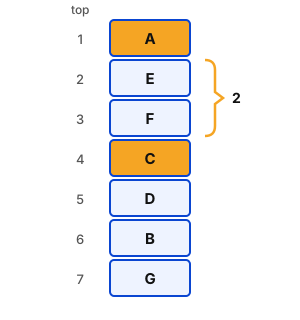
Seven boxes, A, B, C, D, E, F and G, are kept one over the other but not necessarily in the same order. Only two boxes are kept above F. Only three boxes are kept below C. B is kept above G but below D. E is kept immediately above F but below A. How many boxes are kept between A and C?
सात बक्से, A, B, C, D, E, F और G, एक के ऊपर एक रखे गए हैं, लेकिन आवश्यक नहीं कि इसी क्रम में हों। F के ऊपर केवल दो बक्से रखे गए हैं। C के नीचे केवल तीन बक्से रखे गए हैं। B, G के ऊपर लेकिन D के नीचे रखा गया है। E, F के ठीक ऊपर लेकिन A के नीचे रखा गया है। A और C के बीच कितने बक्से रखे गए हैं?
  1. AOneएक
  2. BTwoदो
  3. CThreeतीन
  4. DNoneकोई नहीं
Show answer

Concept: Fix boxes with exact positions first (1 = top, 7 = bottom).

  1. Two boxes above F → F = 3. Three boxes below C → C = 4.
  2. E immediately above F → E = 2; E below A → A = 1.
  3. B above G, below D, in 5–7 → D = 5, B = 6, G = 7.
  4. Between A (1) and C (4): E and F → two boxes.

Trick: Count 'above' clues from the top and 'below' clues from the bottom.

Answer: (B) Two

अवधारणा: पहले निश्चित स्थान वाले बॉक्स रखें (1 = सबसे ऊपर, 7 = सबसे नीचे)।

  1. F के ऊपर दो बॉक्स → F = 3। C के नीचे तीन → C = 4।
  2. E, F के ठीक ऊपर → E = 2; E, A के नीचे → A = 1।
  3. B, G के ऊपर और D के नीचे, स्थान 5–7 में → D = 5, B = 6, G = 7।
  4. A (1) और C (4) के बीच: E और F → दो बॉक्स।

ट्रिक: 'ऊपर' वाले सुराग ऊपर से, 'नीचे' वाले नीचे से गिनें।

उत्तर: (B) दो

RRB NTPC Undergraduate CBT 1General Intelligence and ReasoningBox stacking puzzleRRB NTPC Undergraduate CBT 1 2025 · 15 Jun Shift 2 →
Q7271.
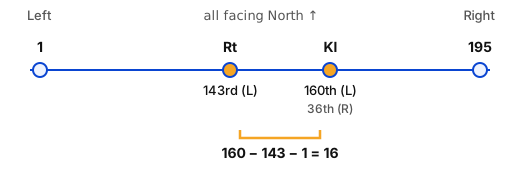
All 195 people are standing in a row facing north. Rt is 143rd from the left end while Kl is 36th from the right end. How many people are there between Rt and Kl?
सभी 195 व्यक्ति उत्तर की ओर मुख करके एक पंक्ति में खड़े हैं। Rt बाएँ छोर से 143वें स्थान पर है जबकि Kl दाएँ छोर से 36वें स्थान पर है। Rt और Kl के बीच कितने व्यक्ति हैं?
  1. A14
  2. B12
  3. C13
  4. D16
Show answer

Concept: Convert both positions to the same end, then subtract.

  1. Kl from the left =195−36+1=160th.
  2. Rt is 143rd from the left.
  3. People between =160−143−1=16.

Trick: Between two ranks from the same end = difference −1.

Answer: (D) 16

अवधारणा: दोनों स्थानों को एक ही छोर से बदलें, फिर घटाएँ।

  1. Kl बाएँ से =195−36+1=160वाँ।
  2. Rt बाएँ से 143वाँ।
  3. बीच के लोग =160−143−1=16।

ट्रिक: एक ही छोर से दो क्रमों के बीच = अंतर −1।

उत्तर: (D) 16

RRB NTPC Undergraduate CBT 1General Intelligence and ReasoningRanking in a rowRRB NTPC Undergraduate CBT 1 2025 · 15 Jun Shift 2 →
Q7272.
Based on the English alphabetical order, three of the following four letter-cluster pairs are alike in a certain way and thus form a group. Which is the one that does not belong to that group?
(Note: The odd one out is not based on the number of consonants/vowels or their position in the letter cluster.)
अंग्रेज़ी वर्णमाला क्रम के आधार पर, निम्नलिखित चार अक्षर-समूह युग्मों में से तीन किसी निश्चित प्रकार से एक समान हैं और इस प्रकार एक समूह बनाते हैं। वह कौन-सा है जो उस समूह से संबंधित नहीं है?
(ध्यान दें: असंगत का निर्धारण व्यंजनों/स्वरों की संख्या या अक्षर-समूह में उनके स्थान के आधार पर नहीं किया गया है।)
  1. AGY - FV
  2. BTL - SI
  3. CAI - ZF
  4. DQC - PY
Show answer

Concept: Compare each letter of the first cluster with the matching letter of the second.

  1. GY–FV: G−1=F, Y−3=V; TL–SI: T−1=S, L−3=I
  2. AI–ZF: A−1=Z, I−3=F (wrap-around)
  3. QC–PY: Q−1=P, but C−3=Z, not Y (C−4) → odd one.

Trick: Pattern (−1,−3); only QC–PY breaks it at the second letter.

Answer: (D) QC - PY

अवधारणा: पहले समूह के हर अक्षर की तुलना दूसरे समूह के संगत अक्षर से करें।

  1. GY–FV: G−1=F, Y−3=V; TL–SI: T−1=S, L−3=I
  2. AI–ZF: A−1=Z, I−3=F (Z के बाद चक्र)
  3. QC–PY: Q−1=P, पर C−3=Z होना चाहिए, Y (C−4) है → विषम।

ट्रिक: नियम (−1,−3); केवल QC–PY दूसरे अक्षर पर टूटता है।

उत्तर: (D) QC - PY

RRB NTPC Undergraduate CBT 1General Intelligence and ReasoningOdd pair – letter shiftsRRB NTPC Undergraduate CBT 1 2025 · 15 Jun Shift 2 →
Q7273.
In a certain code language, ‘MOPS’ is coded as ‘5863’ and ‘POEM’ is coded as ‘8765’. What is the code for ‘E’ in the given code language?
एक निश्चित कूट भाषा में, ‘MOPS’ को ‘5863’ और ‘POEM’ को ‘8765’ के रूप में कूटबद्ध किया जाता है। दी गई कूट भाषा में ‘E’ का कूट क्या है?
  1. A6
  2. B8
  3. C7
  4. D5
Show answer

Concept: Letters common to both words share the codes common to both codes.

  1. MOPS → 5863; POEM → 8765.
  2. Common letters M, O, P ↔ common digits 5, 6, 8.
  3. Leftover: S ↔ 3 in the first word, E ↔ 7 in the second.

Trick: Remove common letters/digits – the leftover pairs are fixed.

Answer: (C) 7

अवधारणा: दोनों शब्दों के उभयनिष्ठ अक्षरों के कोड भी दोनों कोडों में उभयनिष्ठ होते हैं।

  1. MOPS → 5863; POEM → 8765।
  2. उभयनिष्ठ अक्षर M, O, P ↔ उभयनिष्ठ अंक 5, 6, 8।
  3. बचे हुए: पहले में S ↔ 3, दूसरे में E ↔ 7।

ट्रिक: उभयनिष्ठ अक्षर/अंक हटाएँ – बचे हुए जोड़े तय हो जाते हैं।

उत्तर: (C) 7

RRB NTPC Undergraduate CBT 1General Intelligence and ReasoningCoding–decoding (common letters)RRB NTPC Undergraduate CBT 1 2025 · 15 Jun Shift 2 →
Q7274.
Each vowel in the word 'VOLUNTARY' is changed to the second letter immediately following it in the English alphabetical order and each consonant is changed to the letter immediately preceding it in the English alphabetical order. Which letter will appear exactly twice in the group of letters thus formed?
शब्द 'VOLUNTARY' के प्रत्येक स्वर को अंग्रेज़ी वर्णमाला क्रम में उसके ठीक बाद आने वाले दूसरे अक्षर से बदल दिया जाता है और प्रत्येक व्यंजन को अंग्रेज़ी वर्णमाला क्रम में उसके ठीक पहले आने वाले अक्षर से बदल दिया जाता है। इस प्रकार बने अक्षर-समूह में कौन-सा अक्षर ठीक दो बार आएगा?
  1. AM
  2. BQ
  3. CW
  4. DK
Show answer

Concept: Vowels → +2, consonants → −1.

  1. V O L U N T A R Y
  2. → U Q K W M S C Q X (O+2=Q, R−1=Q)
  3. Q appears twice; M, W, K appear once each.

Trick: Watch for a vowel and a consonant landing on the same letter (O and R both → Q).

Answer: (B) Q

अवधारणा: स्वर → +2, व्यंजन → −1।

  1. V O L U N T A R Y
  2. → U Q K W M S C Q X (O+2=Q, R−1=Q)
  3. Q दो बार आता है; M, W, K एक-एक बार।

ट्रिक: देखें कि कोई स्वर और व्यंजन एक ही अक्षर पर पहुँचें (O और R दोनों → Q)।

उत्तर: (B) Q

RRB NTPC Undergraduate CBT 1General Intelligence and ReasoningLetter transformationRRB NTPC Undergraduate CBT 1 2025 · 15 Jun Shift 2 →
Q7275.
What should come in place of '?' in the given series based on the English alphabetical order?
MAI PEN SIS VMX ?
अंग्रेज़ी वर्णमाला क्रम के आधार पर दी गई श्रृंखला में '?' के स्थान पर क्या आना चाहिए?
MAI PEN SIS VMX ?
  1. AYQC
  2. BZRD
  3. CZRC
  4. DAPD
Show answer

Concept: Each letter position follows its own constant jump.

  1. 1st: M, P, S, V → +3 → Y
  2. 2nd: A, E, I, M → +4 → Q
  3. 3rd: I, N, S, X → +5 → X+5=C (wrap-around). Term: YQC.

Trick: Jumps +3, +4, +5 for the three positions.

Answer: (A) YQC

अवधारणा: हर स्थान का अक्षर अपने स्थिर अंतर से चलता है।

  1. पहला: M, P, S, V → +3 → Y
  2. दूसरा: A, E, I, M → +4 → Q
  3. तीसरा: I, N, S, X → +5 → X+5=C (चक्र)। पद: YQC।

ट्रिक: तीनों स्थानों पर अंतर +3, +4, +5।

उत्तर: (A) YQC

RRB NTPC Undergraduate CBT 1General Intelligence and ReasoningLetter seriesRRB NTPC Undergraduate CBT 1 2025 · 15 Jun Shift 2 →
Q7276.
If + means −, − means ×, × means ÷, and ÷ means +, then what will come in place of the question mark (?) in the following equation?
9 − 4 + 45 × 5 ÷ 3 = ?
यदि + का अर्थ −, − का अर्थ ×, × का अर्थ ÷ और ÷ का अर्थ + है, तो निम्नलिखित समीकरण में प्रश्न चिह्न (?) के स्थान पर क्या आएगा?
9 − 4 + 45 × 5 ÷ 3 = ?
  1. A35
  2. B30
  3. C20
  4. D25
Show answer

Concept: Replace the symbols first, then apply BODMAS.

  1. 9−4+45×5÷3 becomes 9×4−45÷5+3
  2. =36−9+3
  3. =30

Trick: Write the new expression fully before calculating – avoids mixing old and new signs.

Answer: (B) 30

अवधारणा: पहले चिह्न बदलें, फिर BODMAS लगाएँ।

  1. 9−4+45×5÷3 बनता है 9×4−45÷5+3
  2. =36−9+3
  3. =30

ट्रिक: गणना से पहले नया व्यंजक पूरा लिख लें – पुराने/नए चिह्न नहीं मिलेंगे।

उत्तर: (B) 30

RRB NTPC Undergraduate CBT 1General Intelligence and ReasoningMathematical operationsRRB NTPC Undergraduate CBT 1 2025 · 15 Jun Shift 2 →
Q7277.
In a certain code language, ‘FAME’ is coded as ‘8341’ and ‘FEAL’ is coded as ‘6438’. What is the code for ‘L’ in the given code language?
एक निश्चित कूट भाषा में, ‘FAME’ को ‘8341’ और ‘FEAL’ को ‘6438’ के रूप में कूटबद्ध किया जाता है। दी गई कूट भाषा में ‘L’ का कूट क्या है?
  1. A6
  2. B8
  3. C3
  4. D4
Show answer

Concept: Common letters ↔ common digits.

  1. FAME → 8341; FEAL → 6438.
  2. Common letters F, A, E ↔ common digits 3, 4, 8.
  3. Leftover: M ↔ 1 and L ↔ 6.

Trick: Strike out the common part; the remaining letter takes the remaining digit.

Answer: (A) 6

अवधारणा: उभयनिष्ठ अक्षर ↔ उभयनिष्ठ अंक।

  1. FAME → 8341; FEAL → 6438।
  2. उभयनिष्ठ अक्षर F, A, E ↔ उभयनिष्ठ अंक 3, 4, 8।
  3. बचे: M ↔ 1 और L ↔ 6।

ट्रिक: उभयनिष्ठ भाग काट दें; बचा अक्षर बचा अंक लेता है।

उत्तर: (A) 6

RRB NTPC Undergraduate CBT 1General Intelligence and ReasoningCoding–decoding (common letters)RRB NTPC Undergraduate CBT 1 2025 · 15 Jun Shift 2 →
Q7278.
In a certain code language,
A × B means ‘A is the mother of B’,
A – B means ‘A is the brother of B’,
A + B means ‘A is the wife of B’ and
A * B means ‘A is the father of B’.
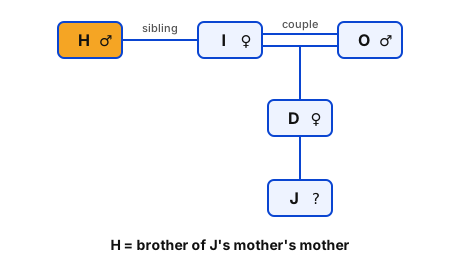
How is H related to J if ‘H – I + O * D × J’?
एक निश्चित कूट भाषा में,
A × B का अर्थ है ‘A, B की माता है’,
A – B का अर्थ है ‘A, B का भाई है’,
A + B का अर्थ है ‘A, B की पत्नी है’ और
A * B का अर्थ है ‘A, B का पिता है’।
यदि ‘H – I + O * D × J’ है, तो H, J से किस प्रकार संबंधित है?
  1. AMother's mother's brotherमाता की माता का भाई
  2. BMother's mother's fatherमाता की माता का पिता
  3. CSonपुत्र
  4. DHusbandपति
Show answer

Concept: Decode each symbol and draw the family tree.

  1. H – I: H is the brother of I. I + O: I is the wife of O.
  2. O * D: O is the father of D, so I is D's mother. D × J: D is the mother of J.
  3. So I is J's mother's mother, and H (her brother) is J's mother's mother's brother.

Trick: Go from J upwards: mother (D) → her mother (I) → her brother (H).

Answer: (A) Mother's mother's brother

अवधारणा: हर चिह्न का अर्थ लिखकर वंश-वृक्ष बनाएँ।

  1. H – I: H, I का भाई है। I + O: I, O की पत्नी है।
  2. O * D: O, D का पिता है, अतः I, D की माँ है। D × J: D, J की माँ है।
  3. अतः I, J की माँ की माँ है, और H (उसका भाई) J की माँ की माँ का भाई है।

ट्रिक: J से ऊपर चलें: माँ (D) → उसकी माँ (I) → उसका भाई (H)।

उत्तर: (A) माँ की माँ का भाई (Mother's mother's brother)

RRB NTPC Undergraduate CBT 1General Intelligence and ReasoningCoded blood relationRRB NTPC Undergraduate CBT 1 2025 · 15 Jun Shift 2 →
Q7279.
Based on the English alphabetical order, three of the following four letter-cluster pairs are alike in a certain way and thus form a group. Which letter-cluster pair DOES NOT belong to that group?
(Note: The odd one out is not based on the number of consonants/vowels or their position in the letter-cluster.)
अंग्रेज़ी वर्णमाला क्रम के आधार पर, निम्नलिखित चार अक्षर-समूह युग्मों में से तीन किसी निश्चित प्रकार से एक समान हैं और इस प्रकार एक समूह बनाते हैं। कौन-सा अक्षर-समूह युग्म उस समूह से संबंधित नहीं है?
(ध्यान दें: असंगत का निर्धारण व्यंजनों/स्वरों की संख्या या अक्षर-समूह में उनके स्थान के आधार पर नहीं किया गया है।)
  1. AOP - EA
  2. BUV - KG
  3. CJK - WV
  4. DMN - CY
Show answer

Concept: Find the backward shift from each letter of the first cluster to the second.

  1. OP–EA: O−10=E, P−15=A; UV–KG: U−10=K, V−15=G
  2. MN–CY: M−10=C, N−15=Y (wrap-around)
  3. JK–WV: J+13=W, K+11=V → does not follow (−10,−15).

Trick: First clusters are consecutive letters; the shifts −10 and −15 are fixed.

Answer: (C) JK - WV

अवधारणा: पहले समूह के हर अक्षर से दूसरे समूह तक का पीछे का अंतर खोजें।

  1. OP–EA: O−10=E, P−15=A; UV–KG: U−10=K, V−15=G
  2. MN–CY: M−10=C, N−15=Y (चक्र)
  3. JK–WV: J+13=W, K+11=V → (−10,−15) नियम नहीं।

ट्रिक: पहले समूह क्रमागत अक्षर हैं; अंतर −10 और −15 स्थिर हैं।

उत्तर: (C) JK - WV

RRB NTPC Undergraduate CBT 1General Intelligence and ReasoningOdd pair – letter shiftsRRB NTPC Undergraduate CBT 1 2025 · 15 Jun Shift 2 →
Q7280.
If + means -, - means ×, × means ÷, and ÷ means +, then what will come in place of the question mark (?) in the following equation?
38 - 25 ÷ 133 + 703 × 19 = ?
यदि + का अर्थ -, - का अर्थ ×, × का अर्थ ÷ और ÷ का अर्थ + है, तो निम्नलिखित समीकरण में प्रश्न चिह्न (?) के स्थान पर क्या आएगा?
38 - 25 ÷ 133 + 703 × 19 = ?
  1. A1046
  2. B1052
  3. C1191
  4. D1156
Show answer

Concept: Interchange symbols as told, then use BODMAS.

  1. 38−25÷133+703×19 becomes 38×25+133−703÷19
  2. 703÷19=37, 38×25=950
  3. 950+133−37=1046

Trick: 38×25=38004=950 – quick mental shortcut.

Answer: (A) 1046

अवधारणा: बताए अनुसार चिह्न बदलें, फिर BODMAS लगाएँ।

  1. 38−25÷133+703×19 बनता है 38×25+133−703÷19
  2. 703÷19=37, 38×25=950
  3. 950+133−37=1046

ट्रिक: 38×25=38004=950 – त्वरित मानसिक गणना।

उत्तर: (A) 1046

RRB NTPC Undergraduate CBT 1General Intelligence and ReasoningMathematical operationsRRB NTPC Undergraduate CBT 1 2025 · 15 Jun Shift 2 →