Question bank

Q&A: practice questions with answers

Search questions on any topic. Filter by exam category, exam, subject and topic, try the question, then open the answer and explanation.

Courses – airGurukul

8,495 questions found.

Q7281.
Read the given statement(s) and conclusions carefully. Assuming that the information given in the statements is true, even if it appears to be at variance with commonly known facts, decide which of the given conclusions logically follow(s) from the statement(s).
Statements:
Some cameras are pictures.
Some pictures are monkeys.
Conclusions:
(I) Some cameras are monkeys.
(II) All monkeys are pictures.
दिए गए कथन(नों) और निष्कर्षों को ध्यानपूर्वक पढ़िए। यह मानते हुए कि कथनों में दी गई जानकारी सत्य है, भले ही वह सामान्यतः ज्ञात तथ्यों से भिन्न प्रतीत होती हो, निर्णय लीजिए कि दिए गए निष्कर्षों में से कौन-सा/से निष्कर्ष तार्किक रूप से कथन(नों) का अनुसरण करता है/करते हैं।
कथन:
कुछ कैमरे, चित्र हैं।
कुछ चित्र, बंदर हैं।
निष्कर्ष:
(I) कुछ कैमरे, बंदर हैं।
(II) सभी बंदर, चित्र हैं।
  1. ABoth conclusions (I) and (II) followनिष्कर्ष (I) और (II) दोनों अनुसरण करते हैं
  2. BOnly conclusion (II) followsकेवल निष्कर्ष (II) अनुसरण करता है
  3. CNeither conclusion (I) nor (II) followsन तो निष्कर्ष (I) और न ही (II) अनुसरण करता है
  4. DOnly conclusion (I) followsकेवल निष्कर्ष (I) अनुसरण करता है
Show answer

Concept: Draw the least-overlap Venn diagram; a conclusion follows only if it is true in every possible case.
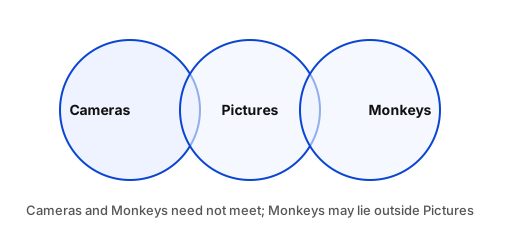
  1. Cameras meet Pictures and Pictures meet Monkeys, but Cameras and Monkeys can be drawn apart → (I) 'Some cameras are monkeys' is not certain.
  2. Only 'some' monkeys are pictures; the rest can lie outside → (II) 'All monkeys are pictures' does not follow.
  3. Hence neither conclusion follows.

Trick: Some + Some → no definite conclusion between the end terms.

Answer: (C) Neither conclusion (I) nor (II) follows

अवधारणा: न्यूनतम ओवरलैप वाला वेन आरेख बनाएँ; निष्कर्ष तभी सही है जब हर संभावित स्थिति में सही हो।

  1. कैमरे-चित्र और चित्र-बंदर मिलते हैं, पर कैमरे और बंदर अलग रखे जा सकते हैं → (I) 'कुछ कैमरे बंदर हैं' निश्चित नहीं।
  2. केवल 'कुछ' बंदर चित्र हैं; बाकी बाहर हो सकते हैं → (II) 'सभी बंदर चित्र हैं' नहीं निकलता।
  3. अतः कोई निष्कर्ष नहीं निकलता।

ट्रिक: कुछ + कुछ → अंतिम पदों के बीच कोई निश्चित निष्कर्ष नहीं।

उत्तर: (C) न तो (I) न ही (II) निकलता है
RRB NTPC Undergraduate CBT 1General Intelligence and ReasoningSyllogismRRB NTPC Undergraduate CBT 1 2025 · 15 Jun Shift 2 →
Q7282.
Read the given statement(s) and conclusions carefully. Assuming that the information given in the statements is true, even if it appears to be at variance with commonly known facts, decide which of the given conclusions logically follow(s) from the statement(s).
Statements: All kings are buttons. No pants are kings.
Conclusion (I): All buttons are kings.
Conclusion (II): Some buttons are not pants.
दिए गए कथन(नों) और निष्कर्षों को ध्यानपूर्वक पढ़िए। यह मानते हुए कि कथनों में दी गई जानकारी सत्य है, भले ही वह सामान्यतः ज्ञात तथ्यों से भिन्न प्रतीत होती हो, निर्णय लीजिए कि दिए गए निष्कर्षों में से कौन-सा/से निष्कर्ष तार्किक रूप से कथन(नों) का अनुसरण करता है/करते हैं।
कथन: सभी राजा, बटन हैं। कोई भी पैंट, राजा नहीं है।
निष्कर्ष (I): सभी बटन, राजा हैं।
निष्कर्ष (II): कुछ बटन, पैंट नहीं हैं।
  1. ABoth conclusions (I) and (II) followनिष्कर्ष (I) और (II) दोनों अनुसरण करते हैं
  2. BOnly conclusion (I) followsकेवल निष्कर्ष (I) अनुसरण करता है
  3. COnly conclusion (II) followsकेवल निष्कर्ष (II) अनुसरण करता है
  4. DNeither conclusion (I) nor (II) followsन तो निष्कर्ष (I) और न ही (II) अनुसरण करता है
Show answer

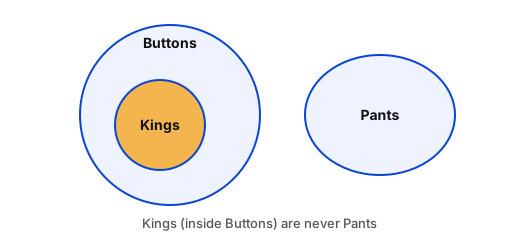
Concept: Place Kings inside Buttons and keep Pants away from Kings.

  1. (I) 'All buttons are kings' – Buttons may be larger than Kings, so it is not certain.
  2. (II) Every king is a button and no king is a pant, so those buttons that are kings are certainly not pants → 'Some buttons are not pants' follows.
  3. Hence only conclusion (II) follows.

Trick: All A are B + No C are A ⇒ Some B are not C (always).

Answer: (C) Only conclusion (II) follows

अवधारणा: राजाओं (Kings) को बटनों (Buttons) के अंदर रखें और पैंट (Pants) को राजाओं से अलग।

  1. (I) 'सभी बटन राजा हैं' – बटन, राजाओं से बड़े हो सकते हैं, अतः निश्चित नहीं।
  2. (II) हर राजा बटन है और कोई राजा पैंट नहीं, तो जो बटन राजा हैं वे निश्चित रूप से पैंट नहीं → 'कुछ बटन पैंट नहीं हैं' निकलता है।
  3. अतः केवल निष्कर्ष (II) निकलता है।

ट्रिक: सभी A, B हैं + कोई C, A नहीं ⇒ कुछ B, C नहीं (हमेशा)।

उत्तर: (C) केवल निष्कर्ष (II) निकलता है

RRB NTPC Undergraduate CBT 1General Intelligence and ReasoningSyllogismRRB NTPC Undergraduate CBT 1 2025 · 15 Jun Shift 2 →
Q7283.
What should come in place of ‘?’ in the given series?
486 441 401 366 336 ?
दी गई श्रृंखला में ‘?’ के स्थान पर क्या आना चाहिए?
486 441 401 366 336 ?
  1. A313
  2. B310
  3. C311
  4. D312
Show answer

Concept: Look at the differences between consecutive terms.

  1. 486−441=45, 441−401=40, 401−366=35, 366−336=30
  2. The differences fall by 5 each time, so the next is 25.
  3. 336−25=311

Trick: Differences 45,40,35,30,25 – a simple arithmetic pattern.

Answer: (C) 311

अवधारणा: क्रमागत पदों के अंतर देखें।

  1. 486−441=45, 441−401=40, 401−366=35, 366−336=30
  2. अंतर हर बार 5 घटता है, अतः अगला 25।
  3. 336−25=311

ट्रिक: अंतर 45,40,35,30,25 – सरल समांतर पैटर्न।

उत्तर: (C) 311

RRB NTPC Undergraduate CBT 1General Intelligence and ReasoningNumber seriesRRB NTPC Undergraduate CBT 1 2025 · 15 Jun Shift 2 →
Q7284.
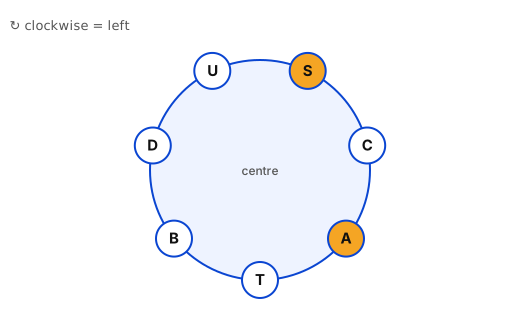
A, B, C, D, S, T and U are sitting around a circular table, facing the centre of the table. Only three people sit between B and C, when counted from the left of B. Only three people sit between U and T, when counted from the right of T. D sits to the immediate right of U. A is an immediate neighbor of T as well as C. Who sits second to the left of S?
A, B, C, D, S, T और U एक वृत्ताकार मेज़ के चारों ओर मेज़ के केंद्र की ओर मुख करके बैठे हैं। B के बाएँ से गिनने पर B और C के बीच केवल तीन व्यक्ति बैठे हैं। T के दाएँ से गिनने पर U और T के बीच केवल तीन व्यक्ति बैठे हैं। D, U के ठीक दाएँ बैठा है। A, T और C दोनों का निकटतम पड़ोसी है। S के बाएँ से दूसरे स्थान पर कौन बैठा है?
  1. AA
  2. BC
  3. CT
  4. DU
Show answer

Concept: Facing the centre: left = clockwise, right = anticlockwise.

  1. Fix T. U is 4th to the right of T (three people between), and D is immediately right of U.
  2. A must touch both T and C; the only free pair of seats gives A next to T and C next to A.
  3. C is 4th to the left of B (three people between, counted from B's left) → B sits between T and D; S takes the last seat (between U and C).
  4. Clockwise order: T, B, D, U, S, C, A → second to the left of S is A.

Trick: Count 'left' clockwise when everyone faces the centre.

Answer: (A) A

अवधारणा: केंद्र की ओर मुख: बायाँ = दक्षिणावर्त (clockwise), दायाँ = वामावर्त।

  1. T को स्थिर करें। U, T के दाएँ चौथा है (बीच में तीन), D, U के ठीक दाएँ।
  2. A, T और C दोनों का पड़ोसी है; खाली सीटों में A, T के बगल और C, A के बगल ही बैठ सकते हैं।
  3. B के बाएँ से गिनने पर तीन लोगों के बाद C है → B, T और D के बीच; S बची सीट (U और C के बीच) लेता है।
  4. दक्षिणावर्त क्रम: T, B, D, U, S, C, A → S के बाएँ दूसरा A।

ट्रिक: केंद्र की ओर मुख हो तो 'बायाँ' दक्षिणावर्त गिनें।

उत्तर: (A) A

RRB NTPC Undergraduate CBT 1General Intelligence and ReasoningCircular seating arrangementRRB NTPC Undergraduate CBT 1 2025 · 15 Jun Shift 2 →
Q7285.
What will come in place of the question mark (?) in the following equation, if ‘+’ and ‘÷' are interchanged and ‘−’ and ‘×’ are interchanged?
14 − 2 × 48 + 3 ÷ 7 = ?
यदि ‘+’ और ‘÷' को आपस में बदल दिया जाए तथा ‘−’ और ‘×’ को आपस में बदल दिया जाए, तो निम्नलिखित समीकरण में प्रश्न चिह्न (?) के स्थान पर क्या आएगा?
14 − 2 × 48 + 3 ÷ 7 = ?
  1. A23
  2. B19
  3. C14
  4. D7
Show answer

Concept: Swap the signs as told, then use BODMAS.

  1. '+'↔'÷' and '−'↔'×': 14−2×48+3÷7 becomes 14×2−48÷3+7
  2. =28−16+7
  3. =19

Trick: Do the swap on paper sign by sign; then division and multiplication first.

Answer: (B) 19

अवधारणा: बताए अनुसार चिह्न बदलें, फिर BODMAS लगाएँ।

  1. '+'↔'÷' और '−'↔'×': 14−2×48+3÷7 बनता है 14×2−48÷3+7
  2. =28−16+7
  3. =19

ट्रिक: हर चिह्न एक-एक कर बदलें; फिर पहले भाग और गुणा।

उत्तर: (B) 19

RRB NTPC Undergraduate CBT 1General Intelligence and ReasoningMathematical operations (interchange)RRB NTPC Undergraduate CBT 1 2025 · 15 Jun Shift 2 →
Q7286.
What should come in place of the question mark (?) in the given series based on the English alphabetical order?
FOL ZIF TCZ NWT ?
अंग्रेज़ी वर्णमाला क्रम के आधार पर दी गई श्रृंखला में प्रश्न चिह्न (?) के स्थान पर क्या आना चाहिए?
FOL ZIF TCZ NWT ?
  1. AHQN
  2. BHNY
  3. CHNJ
  4. DHON
Show answer

Concept: Every position moves back by 6 letters.

  1. 1st: F, Z, T, N → −6 → H
  2. 2nd: O, I, C, W → −6 → Q
  3. 3rd: L, F, Z, T → −6 → N. Term: HQN.

Trick: −6 is the same as +20 on the 26-letter circle.

Answer: (A) HQN

अवधारणा: हर स्थान 6 अक्षर पीछे जाता है।

  1. पहला: F, Z, T, N → −6 → H
  2. दूसरा: O, I, C, W → −6 → Q
  3. तीसरा: L, F, Z, T → −6 → N। पद: HQN।

ट्रिक: 26 अक्षरों के चक्र में −6 और +20 समान हैं।

उत्तर: (A) HQN

RRB NTPC Undergraduate CBT 1General Intelligence and ReasoningLetter seriesRRB NTPC Undergraduate CBT 1 2025 · 15 Jun Shift 2 →
Q7287.
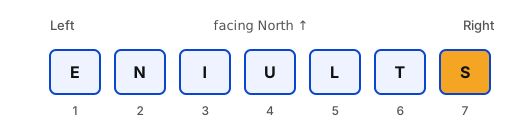
Seven people, U, T, E, N, S, I and L, are sitting in a row, facing the north.
Only E sits to the left of N. Only four people sit between E and T. Only U sits between I and L and I is not an immediate neighbor of T.
Who sits at the extreme right of the line?
सात व्यक्ति, U, T, E, N, S, I और L, उत्तर की ओर मुख करके एक पंक्ति में बैठे हैं।
N के बाएँ केवल E बैठा है। E और T के बीच केवल चार व्यक्ति बैठे हैं। I और L के बीच केवल U बैठा है और I, T का निकटतम पड़ोसी नहीं है।
पंक्ति के अंतिम दाएँ छोर पर कौन बैठा है?
  1. AU
  2. BL
  3. CS
  4. DN
Show answer

Concept: Seven seats, 1 = left end, all facing north.

  1. Only E is left of N → E = 1, N = 2. Four between E and T → T = 6.
  2. I, U, L are together with U in the middle, in seats 3–5 (seat 7 cannot hold the block).
  3. I not next to T (6) → I = 3, U = 4, L = 5; S = 7.
  4. Extreme right (seat 7) is S.

Trick: 'Only X to the left of Y' fixes both at seats 1 and 2 immediately.

Answer: (C) S

अवधारणा: सात सीटें, 1 = बायाँ सिरा, सभी उत्तर की ओर मुख।

  1. केवल E, N के बाएँ → E = 1, N = 2। E और T के बीच चार → T = 6।
  2. I, U, L साथ हैं, U बीच में; सीट 3–5 में (सीट 7 में यह समूह नहीं आता)।
  3. I, T (6) का पड़ोसी नहीं → I = 3, U = 4, L = 5; S = 7।
  4. सबसे दाएँ (सीट 7) S।

ट्रिक: 'केवल X, Y के बाएँ' से दोनों तुरंत सीट 1 और 2 पर तय।

उत्तर: (C) S

RRB NTPC Undergraduate CBT 1General Intelligence and ReasoningLinear seating arrangementRRB NTPC Undergraduate CBT 1 2025 · 15 Jun Shift 2 →
Q7288.
KG 13 is related to IC −2 in a certain way. In the same way, NH 20 is related to LD 5. To which of the following is NW 24 related, following the same logic?
KG 13 एक निश्चित प्रकार से IC −2 से संबंधित है। उसी प्रकार, NH 20, LD 5 से संबंधित है। समान तर्क का अनुसरण करते हुए, NW 24 निम्नलिखित में से किससे संबंधित है?
  1. ALS 9
  2. BMS 11
  3. CMR 11
  4. DLR 9
Show answer

Concept: Apply the same change to letters and number.

  1. KG 13 → IC −2: K−2=I, G−4=C, 13−15=−2
  2. NH 20 → LD 5: N−2=L, H−4=D, 20−15=5
  3. NW 24 → N−2=L, W−4=S, 24−15=9 → LS 9

Trick: Rule: (−2,−4,−15).

Answer: (A) LS 9

अवधारणा: अक्षरों और संख्या पर समान परिवर्तन लगाएँ।

  1. KG 13 → IC −2: K−2=I, G−4=C, 13−15=−2
  2. NH 20 → LD 5: N−2=L, H−4=D, 20−15=5
  3. NW 24 → N−2=L, W−4=S, 24−15=9 → LS 9

ट्रिक: नियम: (−2,−4,−15)।

उत्तर: (A) LS 9

RRB NTPC Undergraduate CBT 1General Intelligence and ReasoningAnalogy – letters and numbersRRB NTPC Undergraduate CBT 1 2025 · 15 Jun Shift 2 →
Q7289.
What should come in place of ‘?’ in the given series?
70 80 ? 106 122 140
दी गई श्रृंखला में ‘?’ के स्थान पर क्या आना चाहिए?
70 80 ? 106 122 140
  1. A100
  2. B94
  3. C96
  4. D92
Show answer

Concept: Differences increase by 2.

  1. 80−70=10, so the next differences are 12,14,16,18.
  2. 80+12=92
  3. Check: 92+14=106, 106+16=122, 122+18=140 ✓

Trick: When the last terms are known, check the differences backwards.

Answer: (D) 92

अवधारणा: अंतर 2-2 से बढ़ते हैं।

  1. 80−70=10, अतः अगले अंतर 12,14,16,18।
  2. 80+12=92
  3. जाँच: 92+14=106, 106+16=122, 122+18=140 ✓

ट्रिक: अंतिम पद ज्ञात हों तो अंतर पीछे से जाँचें।

उत्तर: (D) 92

RRB NTPC Undergraduate CBT 1General Intelligence and ReasoningNumber seriesRRB NTPC Undergraduate CBT 1 2025 · 15 Jun Shift 2 →
Q7290.
Select the set in which the numbers are related in the same way as are the numbers of the following sets.
(NOTE: Operations should be performed on the whole numbers, without breaking down the numbers into their constituent digits. E.g. 13 – Operations on 13 such as
adding/subtracting/multiplying etc. to 13 can be performed. Breaking down 13 into 1 and 3 and then performing mathematical operations on 1 and 3 is not allowed.) (2, 11, 31)
(13, 10, 41)
उस समुच्चय का चयन कीजिए जिसमें संख्याएँ उसी प्रकार संबंधित हैं जिस प्रकार निम्नलिखित समुच्चयों की संख्याएँ संबंधित हैं।
(ध्यान दें: संक्रियाएँ संख्याओं को उनके घटक अंकों में विभाजित किए बिना पूर्ण संख्याओं पर की जानी चाहिए। उदाहरण के लिए 13 – 13 पर संक्रियाएँ जैसे
13 में जोड़ना/घटाना/गुणा करना आदि की जा सकती हैं। 13 को 1 और 3 में विभाजित करना और फिर 1 और 3 पर गणितीय संक्रियाएँ करना वर्जित है।) (2, 11, 31)
(13, 10, 41)
  1. A(29, 19, 56)
  2. B(6, 1, 25)
  3. C(8, 22, 45)
  4. D(10, 20, 50)
Show answer

Concept: Find one rule linking the three numbers of each set.

  1. (2,11,31): 2+11+18=31; (13,10,41): 13+10+18=41 → third = first + second +18.
  2. (6,1,25): 6+1+18=25 ✓
  3. Others: 29+19+18=66≠56, 8+22+18=48≠45, 10+20+18=48≠50.

Trick: If the third number is just a little more than the sum, test 'sum + constant'.

Answer: (B) (6,1,25)

अवधारणा: हर समूह की तीनों संख्याओं को जोड़ने वाला एक नियम खोजें।

  1. (2,11,31): 2+11+18=31; (13,10,41): 13+10+18=41 → तीसरी = पहली + दूसरी +18।
  2. (6,1,25): 6+1+18=25 ✓
  3. अन्य: 29+19+18=66≠56, 8+22+18=48≠45, 10+20+18=48≠50।

ट्रिक: तीसरी संख्या योग से थोड़ी अधिक हो तो 'योग + स्थिरांक' जाँचें।

उत्तर: (B) (6,1,25)

RRB NTPC Undergraduate CBT 1General Intelligence and ReasoningNumber analogy (sets)RRB NTPC Undergraduate CBT 1 2025 · 15 Jun Shift 2 →
Q7291.
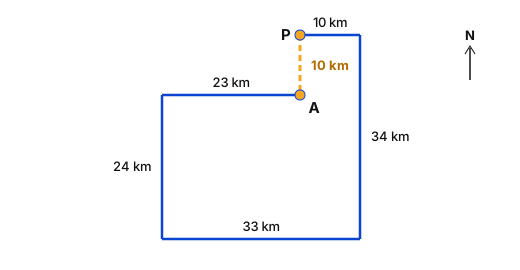
Sitara starts from Point A and drives 23 km towards the west. He then takes a left turn, drives 24 km, turns left and drives 33 km. He then takes a left turn and drives 34 km. He takes a final left turn, drives 10 km and stops at Point P. How far (shortest distance) and towards which direction should he drive in order to reach Point A again? (All turns are 90-degree turns only unless specified.)
सितारा बिंदु A से शुरू करता है और पश्चिम की ओर 23 km गाड़ी चलाता है। फिर वह बाएँ मुड़ता है, 24 km गाड़ी चलाता है, बाएँ मुड़ता है और 33 km गाड़ी चलाता है। फिर वह बाएँ मुड़ता है और 34 km गाड़ी चलाता है। वह अंतिम बार बाएँ मुड़ता है, 10 km गाड़ी चलाता है और बिंदु P पर रुक जाता है। पुनः बिंदु A पर पहुँचने के लिए उसे कितनी दूरी (न्यूनतम दूरी) और किस दिशा में गाड़ी चलानी चाहिए? (जब तक निर्दिष्ट न हो, सभी मोड़ केवल 90 डिग्री के मोड़ हैं।)
  1. A11 km to the eastपूर्व की ओर 11 km
  2. B10 km to the southदक्षिण की ओर 10 km
  3. C8 km to the southदक्षिण की ओर 8 km
  4. D9 km to the northउत्तर की ओर 9 km
Show answer

Concept: Plot the path on axes with A at the origin (east = +x, north = +y).

  1. West 23 → (−23,0); left (south) 24 → (−23,−24).
  2. Left (east) 33 → (10,−24); left (north) 34 → (10,10).
  3. Left (west) 10 → P =(0,10).
  4. A =(0,0) is 10 km straight south of P.

Trick: Four left turns in a row bring you back to the starting direction; just net the east–west and north–south moves.

Answer: (B) 10 km to the south

अवधारणा: A को मूल बिंदु मानकर पथ बनाएँ (पूर्व = +x, उत्तर = +y)।

  1. पश्चिम 23 → (−23,0); बाएँ (दक्षिण) 24 → (−23,−24)।
  2. बाएँ (पूर्व) 33 → (10,−24); बाएँ (उत्तर) 34 → (10,10)।
  3. बाएँ (पश्चिम) 10 → P =(0,10)।
  4. A =(0,0), P से 10 km सीधे दक्षिण में है।

ट्रिक: पूर्व–पश्चिम और उत्तर–दक्षिण की कुल चाल अलग-अलग निकालें।

उत्तर: (B) 10 km दक्षिण की ओर

RRB NTPC Undergraduate CBT 1General Intelligence and ReasoningDirection and distanceRRB NTPC Undergraduate CBT 1 2025 · 15 Jun Shift 2 →
Q7292.
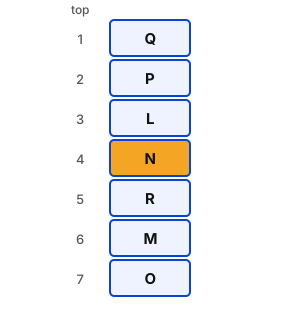
Seven boxes L, M, N, O, P, Q and R are kept one over the other but not necessarily in the same order. Only one box is kept between R and O. R is kept on one of the positions above O. Box N is kept immediately below L. Q is placed at the topmost position. Exactly three boxes are kept between P and M. P is kept on one of the positions above M. Box M is kept immediately above O. Which box is kept fourth from the top?
सात बक्से L, M, N, O, P, Q और R एक के ऊपर एक रखे गए हैं, लेकिन आवश्यक नहीं कि इसी क्रम में हों। R और O के बीच केवल एक बक्सा रखा गया है। R, O के ऊपर के किसी एक स्थान पर रखा गया है। बक्सा N, L के ठीक नीचे रखा गया है। Q सबसे ऊपर के स्थान पर रखा गया है। P और M के बीच ठीक तीन बक्से रखे गए हैं। P, M के ऊपर के किसी एक स्थान पर रखा गया है। बक्सा M, O के ठीक ऊपर रखा गया है। ऊपर से चौथे स्थान पर कौन-सा बक्सा रखा गया है?
  1. AL
  2. BP
  3. CN
  4. DM
Show answer

Concept: Positions 1 (top) to 7 (bottom); build fixed blocks.

  1. Q = 1. M immediately above O, and R two places above O → block R, M, O in a row.
  2. P is 4 places above M (three boxes between); P ≠ 1 (Q is there), so M = 6 → O = 7, R = 5, P = 2.
  3. L, N (N immediately below L) fill 3 and 4 → L = 3, N = 4.
  4. Fourth from top is N.

Trick: Turn 'immediately above' + 'one between' into one rigid block first.

Answer: (C) N

अवधारणा: स्थान 1 (ऊपर) से 7 (नीचे); निश्चित खंड बनाएँ।

  1. Q = 1। M, O के ठीक ऊपर, और R, O से दो स्थान ऊपर → खंड R, M, O लगातार।
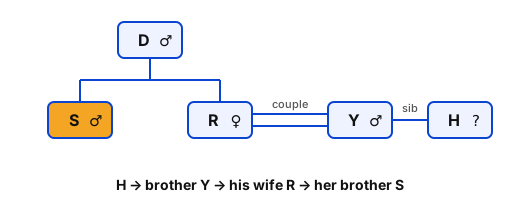
  2. P, M से 4 स्थान ऊपर (बीच में तीन); P = 1 नहीं (Q है), अतः M = 6 → O = 7, R = 5, P = 2।
  3. L, N (N, L के ठीक नीचे) स्थान 3 और 4 में → L = 3, N = 4।
  4. ऊपर से चौथा N।

ट्रिक: 'ठीक ऊपर' + 'एक बीच में' को पहले एक कठोर खंड बनाएँ।

उत्तर: (C) N

RRB NTPC Undergraduate CBT 1General Intelligence and ReasoningBox stacking puzzleRRB NTPC Undergraduate CBT 1 2025 · 15 Jun Shift 2 →
Q7293.
Refer to the given letter series and answer the question that follows.
(Left) P W I C T G T X W J N L X T D X E S C S Z (Right)
How many such vowels are there, each of which is immediately preceded by a consonant and also immediately followed by a consonant?
दी गई अक्षर श्रृंखला को देखिए और उसके बाद दिए गए प्रश्न का उत्तर दीजिए।
(बाएँ) P W I C T G T X W J N L X T D X E S C S Z (दाएँ)
ऐसे कितने स्वर हैं जिनमें से प्रत्येक के ठीक पहले एक व्यंजन है और ठीक बाद में भी एक व्यंजन है?
  1. AOneएक
  2. BTwoदो
  3. CNoneकोई नहीं
  4. DThreeतीन
Show answer

Concept: Find each vowel and check both its neighbours.

  1. The only vowels are I (3rd) and E (17th).
  2. I: W – I – C → both neighbours consonants ✓
  3. E: X – E – S → both neighbours consonants ✓. So two vowels qualify.

Trick: Locate vowels first – usually only a few – then check neighbours.

Answer: (B) Two

अवधारणा: हर स्वर खोजें और उसके दोनों पड़ोसी जाँचें।

  1. केवल स्वर I (तीसरा) और E (17वाँ) हैं।
  2. I: W – I – C → दोनों पड़ोसी व्यंजन ✓
  3. E: X – E – S → दोनों पड़ोसी व्यंजन ✓। अतः दो स्वर।

ट्रिक: पहले स्वर खोजें – आमतौर पर कम होते हैं – फिर पड़ोसी जाँचें।

उत्तर: (B) दो

RRB NTPC Undergraduate CBT 1General Intelligence and ReasoningLetter series – vowel/consonantRRB NTPC Undergraduate CBT 1 2025 · 15 Jun Shift 2 →
Q7294.
Select the pair which follows the same pattern as that followed by the two pairs given below. Both pairs follow the same pattern.
QMO−KGI
RNP−LHJ
उस युग्म का चयन कीजिए जो उसी पैटर्न का अनुसरण करता है जिसका अनुसरण नीचे दिए गए दो युग्मों द्वारा किया गया है। दोनों युग्म एक ही पैटर्न का अनुसरण करते हैं।
QMO−KGI
RNP−LHJ
  1. AKFG−EAC
  2. BKGI−EAC
  3. CKFG−DZB
  4. DKGI−DAB
Show answer

Concept: Find the rule inside a cluster and between the two clusters.

  1. QMO: Q−4=M, M+2=O; and QMO → KGI is −6 on every letter. RNP–LHJ follows the same.
  2. KGI–EAC: K−4=G, G+2=I; K−6=E, G−6=A, I−6=C ✓
  3. KFG (K−5) and DAB/DZB (K−7) break the rule.

Trick: Check the easy −6 link between the two halves first.

Answer: (B) KGI−EAC

अवधारणा: समूह के अंदर और दोनों समूहों के बीच नियम खोजें।

  1. QMO: Q−4=M, M+2=O; और QMO → KGI में हर अक्षर −6। RNP–LHJ भी ऐसा ही।
  2. KGI–EAC: K−4=G, G+2=I; K−6=E, G−6=A, I−6=C ✓
  3. KFG (K−5) और DAB/DZB (K−7) नियम तोड़ते हैं।

ट्रिक: पहले दोनों हिस्सों के बीच आसान −6 संबंध जाँचें।

उत्तर: (B) KGI−EAC

RRB NTPC Undergraduate CBT 1General Intelligence and ReasoningLetter-cluster pairsRRB NTPC Undergraduate CBT 1 2025 · 15 Jun Shift 2 →
Q7295.
In a certain code language,
A ÷ B means ‘A is the son of B’,
A # B means ‘A is the wife of B’,
A + B means ‘A is the brother of B’ and
A & B means ‘A is the father of B’.
How is S related to H if ‘S ÷ D & R # Y + H’?
एक निश्चित कूट भाषा में,
A ÷ B का अर्थ है ‘A, B का पुत्र है’,
A # B का अर्थ है ‘A, B की पत्नी है’,
A + B का अर्थ है ‘A, B का भाई है’ और
A & B का अर्थ है ‘A, B का पिता है’।
यदि ‘S ÷ D & R # Y + H’ है, तो S, H से किस प्रकार संबंधित है?
  1. ABrother's brotherभाई का भाई
  2. BWife's brotherपत्नी का भाई
  3. CBrother's wife's brotherभाई की पत्नी का भाई
  4. DBrother's wife's fatherभाई की पत्नी का पिता
Show answer

Concept: Decode each symbol and build the tree.

  1. S ÷ D: S is the son of D. D & R: D is the father of R → S and R are siblings.
  2. R # Y: R is the wife of Y. Y + H: Y is the brother of H.
  3. From H: brother (Y) → his wife (R) → her brother (S). So S is H's brother's wife's brother.

Trick: Read the relation starting from the person asked about (H) and walk to S.

Answer: (C) Brother's wife's brother

अवधारणा: हर चिह्न का अर्थ लिखकर वंश-वृक्ष बनाएँ।

  1. S ÷ D: S, D का पुत्र है। D & R: D, R का पिता है → S और R भाई-बहन।
  2. R # Y: R, Y की पत्नी है। Y + H: Y, H का भाई है।
  3. H से: भाई (Y) → उसकी पत्नी (R) → उसका भाई (S)। अतः S, H के भाई की पत्नी का भाई है।

ट्रिक: जिसके संदर्भ में पूछा है (H), वहीं से S तक चलें।

उत्तर: (C) भाई की पत्नी का भाई (Brother's wife's brother)

RRB NTPC Undergraduate CBT 1General Intelligence and ReasoningCoded blood relationRRB NTPC Undergraduate CBT 1 2025 · 15 Jun Shift 2 →
Q7296.
Which practice supports sustainable agriculture by maintaining soil health?
कौन-सी पद्धति मृदा के स्वास्थ्य को बनाए रखकर संधारणीय कृषि (sustainable agriculture) को बढ़ावा देती है?
  1. ADeforestationवनोन्मूलन
  2. BExcessive chemical fertilisersरासायनिक उर्वरकों का अत्यधिक उपयोग
  3. CCrop rotationफसल चक्रण (crop rotation)
  4. DMonoculture farmingएकल फसल खेती (monoculture)
Show answer

Concept: Sustainable agriculture keeps soil fertile for the long term.

  1. Crop rotation alternates crops (e.g. cereals with legumes), restoring nitrogen, breaking pest cycles and preventing nutrient depletion.
  2. Deforestation, excessive chemical fertilisers and monoculture all degrade soil structure and fertility.

Yaad rakhein: Rotation = restoration; monoculture = mining the same nutrients every year.

Answer: (C) Crop rotation

अवधारणा: सतत कृषि मिट्टी को दीर्घकाल तक उपजाऊ बनाए रखती है।

  1. फसल चक्र (crop rotation) में फसलें बदल-बदल कर (जैसे अनाज के बाद दलहन) बोई जाती हैं – नाइट्रोजन लौटती है, कीट चक्र टूटता है।
  2. वनों की कटाई, अत्यधिक रासायनिक उर्वरक और एकल फसल (monoculture) मिट्टी को खराब करते हैं।

याद रखें: फसल चक्र = मिट्टी की भरपाई; एकल फसल = हर साल वही पोषक तत्व खींचना।

उत्तर: (C) Crop rotation

RRB NTPC Undergraduate CBT 1General AwarenessSustainable agricultureRRB NTPC Undergraduate CBT 1 2025 · 14 Jun Shift 3 →
Q7297.
Joint Sitting of both the houses of the Parliament is summoned by:
संसद के दोनों सदनों की संयुक्त बैठक किसके द्वारा बुलाई जाती है?
  1. ASpeaker of Lok Sabhaलोकसभा अध्यक्ष
  2. BPrime Minister of Indiaभारत के प्रधानमंत्री
  3. CChairman Rajya Sabhaराज्यसभा के सभापति
  4. DPresident of Indiaभारत के राष्ट्रपति
Show answer

Concept: Article 108 – joint sitting of both Houses to resolve a deadlock on a bill.

  1. The joint sitting is summoned by the President of India; it is presided over by the Speaker of the Lok Sabha.
  2. Only three joint sittings have been held so far (1961, 1978, 2002 – POTA).

Yaad rakhein: President summons, Speaker presides; money bills and constitution amendment bills have no joint sitting.

Answer: (D) President of India

अवधारणा: अनुच्छेद 108 – किसी विधेयक पर गतिरोध दूर करने हेतु दोनों सदनों की संयुक्त बैठक।

  1. संयुक्त बैठक राष्ट्रपति द्वारा बुलाई जाती है; अध्यक्षता लोकसभा अध्यक्ष करते हैं।
  2. अब तक केवल तीन संयुक्त बैठकें हुई हैं (1961, 1978, 2002 – POTA)।

याद रखें: बुलाते हैं राष्ट्रपति, अध्यक्षता करते हैं स्पीकर; धन विधेयक और संविधान संशोधन विधेयक पर संयुक्त बैठक नहीं होती।

उत्तर: (D) President of India

RRB NTPC Undergraduate CBT 1General AwarenessIndian ParliamentRRB NTPC Undergraduate CBT 1 2025 · 14 Jun Shift 3 →
Q7298.
Which of the following teams won the Vijay Hazare Trophy in 2024-25?
निम्नलिखित में से किस टीम ने 2024-25 में विजय हजारे ट्रॉफी जीती?
  1. AMumbaiमुंबई
  2. BSaurashtraसौराष्ट्र
  3. CKarnatakaकर्नाटक
  4. DTamil Naduतमिलनाडु
Show answer

Concept: Vijay Hazare Trophy is India's domestic one-day (List A) championship.

  1. In the 2024-25 season, Karnataka won the title, beating Vidarbha in the final at Vadodara (January 2025).
  2. This was Karnataka's fifth Vijay Hazare title.

Yaad rakhein: 2024-25 domestic season: Vijay Hazare – Karnataka; Ranji Trophy – Vidarbha; Syed Mushtaq Ali – Mumbai.

Answer: (C) Karnataka

अवधारणा: विजय हजारे ट्रॉफी भारत की घरेलू एकदिवसीय (List A) प्रतियोगिता है।

  1. 2024-25 सत्र में कर्नाटक ने वडोदरा में फाइनल में विदर्भ को हराकर खिताब जीता (जनवरी 2025)।
  2. यह कर्नाटक का पाँचवाँ विजय हजारे खिताब था।

याद रखें: 2024-25: विजय हजारे – कर्नाटक; रणजी – विदर्भ; सैयद मुश्ताक अली – मुंबई।

उत्तर: (C) Karnataka

RRB NTPC Undergraduate CBT 1General AwarenessSports – cricketRRB NTPC Undergraduate CBT 1 2025 · 14 Jun Shift 3 →
Q7299.
What percentage of all detected trafficking victims in 2022 were children, as per the Global Report on Trafficking in Persons 2024?
ग्लोबल रिपोर्ट ऑन ट्रैफिकिंग इन पर्सन्स 2024 के अनुसार, 2022 में पहचाने गए सभी तस्करी पीड़ितों में से कितने प्रतिशत बच्चे थे?
  1. A45%
  2. B31%
  3. C38%
  4. D20%
Show answer

Concept: The Global Report on Trafficking in Persons is published by UNODC; the 2024 edition covers data up to 2022.

  1. It reported that children made up 38% of all detected trafficking victims in 2022, a sharp rise over 2019.
  2. The report also noted a 25% rise in detected victims globally compared with pre-pandemic 2019.

Yaad rakhein: GLOTIP 2024 → children 38%, overall victims +25% vs 2019.

Answer: (C) 38%

अवधारणा: Global Report on Trafficking in Persons UNODC प्रकाशित करता है; 2024 संस्करण में 2022 तक के आँकड़े हैं।

  1. रिपोर्ट के अनुसार 2022 में पहचाने गए कुल तस्करी पीड़ितों में 38% बच्चे थे – 2019 की तुलना में तेज़ वृद्धि।
  2. कुल पहचाने गए पीड़ित 2019 की तुलना में 25% बढ़े।

याद रखें: GLOTIP 2024 → बच्चे 38%, कुल पीड़ित +25% (2019 की तुलना में)।

उत्तर: (C) 38%

RRB NTPC Undergraduate CBT 1General AwarenessReports – UNODCRRB NTPC Undergraduate CBT 1 2025 · 14 Jun Shift 3 →
Q7300.
Which of the following is a characteristic feature of the gaseous state of matter?
निम्नलिखित में से कौन-सा पदार्थ की गैसीय अवस्था का एक अभिलाक्षणिक गुण है?
  1. AHigh rigidity and fixed volumeउच्च दृढ़ता और निश्चित आयतन
  2. BDefinite volume but no definite shapeनिश्चित आयतन परंतु कोई निश्चित आकार नहीं
  3. CNegligible intermolecular forces and high compressibilityनगण्य अंतराआण्विक बल और उच्च संपीड्यता
  4. DStrong intermolecular forces and fixed shapeप्रबल अंतराआण्विक बल और निश्चित आकार
Show answer

Concept: Gases have particles far apart with very weak attraction.

  1. Negligible intermolecular forces let gas particles move freely, so gases have neither fixed shape nor fixed volume and are highly compressible.
  2. Fixed volume with no fixed shape is a liquid; rigidity and fixed shape describe solids.

Yaad rakhein: Solid – shape + volume fixed; Liquid – only volume fixed; Gas – nothing fixed, easily compressed.

Answer: (C) Negligible intermolecular forces and high compressibility

अवधारणा: गैस के कण दूर-दूर होते हैं और उनके बीच आकर्षण बहुत कम होता है।

  1. नगण्य अंतराण्विक बल (intermolecular forces) के कारण गैस का न निश्चित आकार होता है न आयतन, और वह अत्यधिक संपीड्य (compressible) होती है।
  2. निश्चित आयतन पर अनिश्चित आकार द्रव का गुण है; दृढ़ता और निश्चित आकार ठोस का।

याद रखें: ठोस – आकार + आयतन निश्चित; द्रव – केवल आयतन; गैस – कुछ नहीं, आसानी से दबती है।

उत्तर: (C) Negligible intermolecular forces and high compressibility

RRB NTPC Undergraduate CBT 1General AwarenessStates of matterRRB NTPC Undergraduate CBT 1 2025 · 14 Jun Shift 3 →