Question bank

Q&A: practice questions with answers

Search questions on any topic. Filter by exam category, exam, subject and topic, try the question, then open the answer and explanation.

Courses – airGurukul

8,495 questions found.

Q7821.
What is the primary goal of the Bharatiya Antariksha Station (BAS) initiative announced by ISRO?
ISRO द्वारा घोषित भारतीय अंतरिक्ष स्टेशन (BAS) पहल का प्राथमिक लक्ष्य क्या है?
  1. ATo privatize satellite launches in Indiaभारत में उपग्रह प्रक्षेपणों का निजीकरण करना
  2. BTo establish an indigenous space stationएक स्वदेशी अंतरिक्ष स्टेशन स्थापित करना
  3. CTo build India’s first space telescopeभारत की पहली अंतरिक्ष दूरबीन (space telescope) बनाना
  4. DTo launch India’s first human mission to Marsमंगल ग्रह पर भारत का पहला मानव मिशन भेजना
Show answer

Concept: Bharatiya Antariksh Station (BAS) is India's planned indigenous space station, approved by the Union Cabinet in September 2024 as part of the expanded Gaganyaan programme.

  1. Its first module (BAS-1) is targeted for launch by 2028 and the full station by 2035; an Indian crewed Moon landing is targeted for 2040.
  2. It will orbit at about 400 km and support long-duration human spaceflight and microgravity research.
  3. Telescopes (AstroSat) or Mars missions (Mangalyaan) are separate programmes.

Yaad rakhein: BAS 2035 – Moon 2040 (Amrit Kaal space roadmap).

Answer: (B) To establish an indigenous space station

अवधारणा: भारतीय अंतरिक्ष स्टेशन (BAS) भारत का प्रस्तावित स्वदेशी अंतरिक्ष स्टेशन है, जिसे सितंबर 2024 में केंद्रीय मंत्रिमंडल ने विस्तारित गगनयान कार्यक्रम के तहत मंज़ूरी दी।

  1. इसका पहला मॉड्यूल (BAS-1) 2028 तक और पूरा स्टेशन 2035 तक प्रक्षेपित करने का लक्ष्य है; 2040 तक भारतीय को चंद्रमा पर उतारने का लक्ष्य है।
  2. यह लगभग 400 km की कक्षा में रहेगा और लंबी अवधि की मानव अंतरिक्ष उड़ान व सूक्ष्मगुरुत्व अनुसंधान में सहायक होगा।
  3. दूरबीन (AstroSat) या मंगल मिशन (मंगलयान) अलग कार्यक्रम हैं।

याद रखें: BAS 2035 – चंद्रमा 2040 (अमृत काल अंतरिक्ष रोडमैप)।

उत्तर: (B) स्वदेशी अंतरिक्ष स्टेशन स्थापित करना
RRB NTPC Undergraduate CBT 1General AwarenessISRO – Space StationRRB NTPC Undergraduate CBT 1 2025 · 9 May Shift 1 →
Q7822.
Which of the following SI prefixes has a multiplicative factor of 10–9 ?
निम्नलिखित में से किस SI उपसर्ग (prefix) का गुणक 10–9 है?
  1. AMilliमिली
  2. BNanoनैनो
  3. CCentiसेंटी
  4. DMicroमाइक्रो
Show answer

Concept: SI prefixes denote powers of ten: centi =10−2, milli =10−3, micro =10−6, nano =10−9, pico =10−12.

  1. 10−9 corresponds to the prefix nano (symbol n), e.g. 1 nanometre =10−9 m.
  2. Milli is one-thousandth, centi one-hundredth and micro one-millionth, so none of them matches.

Yaad rakhein: Descending by 3: milli (−3) → micro (−6) → nano (−9) → pico (−12); "nano" ~ "nine".

Answer: (B) Nano

अवधारणा: SI उपसर्ग दस की घातें दर्शाते हैं: सेंटी =10−2, मिली =10−3, माइक्रो =10−6, नैनो =10−9, पिको =10−12।

  1. 10−9 के लिए उपसर्ग नैनो (प्रतीक n) है, जैसे 1 नैनोमीटर =10−9 m।
  2. मिली = हज़ारवाँ, सेंटी = सौवाँ, माइक्रो = दस लाखवाँ भाग – इनमें से कोई मेल नहीं खाता।

याद रखें: 3-3 घटते क्रम में: मिली (−3) → माइक्रो (−6) → नैनो (−9) → पिको (−12); "नैनो" ~ "नाइन"।

उत्तर: (B) नैनो (Nano)

RRB NTPC Undergraduate CBT 1General AwarenessSI PrefixesRRB NTPC Undergraduate CBT 1 2025 · 9 May Shift 1 →
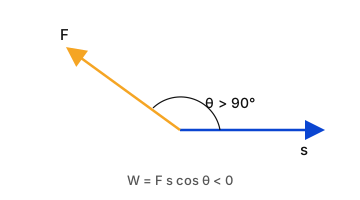
Q7823.
In which of the following cases is the work done negative?
निम्नलिखित में से किस स्थिति में किया गया कार्य ऋणात्मक होता है?
  1. AForce and displacement are between 0° and 90°बल और विस्थापन के बीच का कोण 0° और 90° के बीच हो
  2. BForce and displacement are in the same directionबल और विस्थापन एक ही दिशा में हों
  3. CForce and displacement are between 90° and 180°बल और विस्थापन के बीच का कोण 90° और 180° के बीच हो
  4. DForce and displacement are mutually perpendicularबल और विस्थापन परस्पर लंबवत हों
Show answer

Concept: Work done W=Fscosθ, where θ is the angle between the force and the displacement. Its sign depends only on cosθ.

  1. θ between 0∘ and 90∘: cosθ>0 → positive work (e.g. pushing a box forward).
  2. θ=90∘: cos90∘=0 → zero work (e.g. gravity on a horizontally moving body).
  3. θ between 90∘ and 180∘: cosθ<0 → negative work (e.g. friction, which acts opposite to motion).

Yaad rakhein: Force "helping" motion → +W; force "opposing" motion (friction, braking) → −W; force at right angle → zero.

Answer: (C) Force and displacement are between 90∘ and 180∘

अवधारणा: किया गया कार्य W=Fscosθ, जहाँ θ बल और विस्थापन के बीच का कोण है। कार्य का चिह्न केवल cosθ पर निर्भर करता है।

  1. θ, 0∘ और 90∘ के बीच: cosθ>0 → धनात्मक कार्य (जैसे बक्से को आगे धकेलना)।
  2. θ=90∘: cos90∘=0 → शून्य कार्य (जैसे क्षैतिज गति पर गुरुत्व बल)।
  3. θ, 90∘ और 180∘ के बीच: cosθ<0 → ऋणात्मक कार्य (जैसे घर्षण, जो गति के विपरीत लगता है)।

याद रखें: गति में "मदद" करने वाला बल → +W; गति का "विरोध" करने वाला बल (घर्षण, ब्रेक) → −W; लंबवत बल → शून्य।

उत्तर: (C) बल और विस्थापन 90∘ और 180∘ के बीच हों

RRB NTPC Undergraduate CBT 1General AwarenessWork – Sign of Work DoneRRB NTPC Undergraduate CBT 1 2025 · 9 May Shift 1 →
Q7824.
In which year was the Indian freedom fighter Tantia Tope, a prominent leader of the Revolt of 1857, executed by the British?
1857 के विद्रोह के प्रमुख नेता, भारतीय स्वतंत्रता सेनानी तात्या टोपे को अंग्रेज़ों द्वारा किस वर्ष फाँसी दी गई थी?
  1. A1860
  2. B1859
  3. C1857
  4. D1858
Show answer

Concept: Tantia Tope (Ramchandra Pandurang) was Nana Saheb's general and the most skilled guerrilla commander of the 1857 Revolt, fighting at Kanpur, Kalpi and Gwalior with Rani Lakshmibai.

  1. After the fall of Gwalior (June 1858) he carried on guerrilla warfare in Central India for nearly a year.
  2. He was betrayed by his associate Man Singh of Narwar, captured in April 1859 and hanged at Shivpuri (Sipri) on 18 April 1859.

Yaad rakhein: Lakshmibai fell June 1858; Tantia Tope hanged April 1859 – the last major leader to be executed.

Answer: (B) 1859

अवधारणा: तात्या टोपे (रामचंद्र पांडुरंग) नाना साहेब के सेनापति और 1857 के विद्रोह के सबसे कुशल छापामार (guerrilla) कमांडर थे, जिन्होंने कानपुर, कालपी और ग्वालियर में रानी लक्ष्मीबाई के साथ लड़ाई लड़ी।

  1. ग्वालियर के पतन (जून 1858) के बाद लगभग एक वर्ष तक मध्य भारत में छापामार युद्ध चलाते रहे।
  2. नरवर के मान सिंह के विश्वासघात से अप्रैल 1859 में पकड़े गए और 18 अप्रैल 1859 को शिवपुरी (सिप्री) में फाँसी दी गई।

याद रखें: लक्ष्मीबाई जून 1858 में शहीद; तात्या टोपे अप्रैल 1859 में फाँसी – अंतिम प्रमुख नेता जिन्हें फाँसी हुई।

उत्तर: (B) 1859

RRB NTPC Undergraduate CBT 1General AwarenessRevolt of 1857RRB NTPC Undergraduate CBT 1 2025 · 9 May Shift 1 →
Q7825.
Which of the following rulers issued the famous Junagarh inscription?
निम्नलिखित में से किस शासक ने प्रसिद्ध जूनागढ़ अभिलेख जारी किया था?
  1. ANahapanaनहपान
  2. BKanishkaकनिष्क
  3. CKadphises Iकडफिसेस प्रथम
  4. DRudradaman Iरुद्रदामन प्रथम
Show answer

Concept: The Junagadh (Girnar) rock inscription of 150 CE is the earliest long inscription in chaste Sanskrit and was issued by the Saka (Western Kshatrapa) ruler Rudradaman I.

  1. It records the repair of the Sudarshana lake, originally built under Chandragupta Maurya and improved under Ashoka, after it burst in a storm.
  2. It also praises Rudradaman's conquests, including victories over the Satavahana king Satakarni.
  3. Nahapana was an earlier Kshaharata Kshatrapa; Kanishka and Kadphises I were Kushana rulers.

Yaad rakhein: Junagadh = Rudradaman = Sudarshana lake = first Sanskrit inscription.

Answer: (D) Rudradaman I

अवधारणा: 150 ई. का जूनागढ़ (गिरनार) शिलालेख शुद्ध संस्कृत का सबसे पुराना लंबा अभिलेख है, जिसे शक (पश्चिमी क्षत्रप) शासक रुद्रदामन प्रथम ने जारी किया।

  1. इसमें सुदर्शन झील की मरम्मत का उल्लेख है, जो चंद्रगुप्त मौर्य के समय बनी और अशोक के समय सुधारी गई थी, तथा तूफ़ान में टूट गई थी।
  2. इसमें रुद्रदामन की विजयों, विशेषकर सातवाहन राजा शातकर्णि पर जीत, की प्रशंसा है।
  3. नहपान पहले का क्षहरात क्षत्रप था; कनिष्क और कडफिसेस प्रथम कुषाण शासक थे।

याद रखें: जूनागढ़ = रुद्रदामन = सुदर्शन झील = पहला संस्कृत अभिलेख।

उत्तर: (D) रुद्रदामन प्रथम

RRB NTPC Undergraduate CBT 1General AwarenessAncient InscriptionsRRB NTPC Undergraduate CBT 1 2025 · 9 May Shift 1 →
Q7826.
According to a 2025 release by the Department of Science and Technology, the new sodium-ion battery developed at Jawaharlal Nehru Centre for Advanced Scientific Research (JNCASR) can be fast-charged to about 80% in roughly:
विज्ञान और प्रौद्योगिकी विभाग द्वारा 2025 में जारी एक विज्ञप्ति के अनुसार, जवाहरलाल नेहरू उन्नत वैज्ञानिक अनुसंधान केंद्र (JNCASR) में विकसित नई सोडियम-आयन बैटरी को लगभग कितने समय में लगभग 80% तक फास्ट-चार्ज किया जा सकता है?
  1. A26 minutes26 मिनट
  2. B16 minutes16 मिनट
  3. C36 minutes36 मिनट
  4. D6 minutes6 मिनट
Show answer

Concept: In April 2025 the Department of Science and Technology announced that researchers at JNCASR, Bengaluru had developed a super-fast-charging sodium-ion (Na-ion) battery.

  1. The battery uses a NASICON-type anode (Na1.0V0.25Al0.25Nb1.5(PO4)3), engineered by nanosizing, carbon coating and aluminium doping.
  2. It can charge to about 80% in just 6 minutes and lasts over 3,000 charge cycles, offering a cheap, abundant alternative to lithium-ion.

Yaad rakhein: JNCASR sodium-ion → "6 minutes to 80%" – sodium is cheap and plentiful in India.

Answer: (D) 6 minutes

अवधारणा: अप्रैल 2025 में विज्ञान एवं प्रौद्योगिकी विभाग (DST) ने बताया कि JNCASR, बेंगलुरु के शोधकर्ताओं ने अति-तेज़ चार्ज होने वाली सोडियम-आयन (Na-ion) बैटरी विकसित की है।

  1. इसमें NASICON प्रकार का एनोड (Na1.0V0.25Al0.25Nb1.5(PO4)3) है, जिसे नैनो-आकार, कार्बन कोटिंग और एल्युमिनियम डोपिंग से तैयार किया गया।
  2. यह केवल 6 मिनट में लगभग 80% चार्ज हो जाती है और 3,000 से अधिक चक्र चलती है – लिथियम-आयन का सस्ता, सुलभ विकल्प।

याद रखें: JNCASR सोडियम-आयन → "6 मिनट में 80%" – सोडियम भारत में सस्ता और प्रचुर है।

उत्तर: (D) 6 मिनट

RRB NTPC Undergraduate CBT 1General AwarenessScience & Tech – BatteriesRRB NTPC Undergraduate CBT 1 2025 · 9 May Shift 1 →
Q7827.
The main aim of globalisation in India was to____.
भारत में वैश्वीकरण का मुख्य उद्देश्य ____ था।
  1. APromote only self-sufficiency within the nationराष्ट्र के भीतर केवल आत्मनिर्भरता को बढ़ावा देना
  2. BRestrict and close foreign trade completelyविदेशी व्यापार को पूरी तरह प्रतिबंधित और बंद करना
  3. CIncrease and maintain higher trade barriersव्यापार अवरोधों को बढ़ाना और ऊँचा बनाए रखना
  4. DIntegrate Indian economy with global marketsभारतीय अर्थव्यवस्था को वैश्विक बाज़ारों के साथ एकीकृत करना
Show answer

Concept: Globalisation, one of the three pillars of the 1991 New Economic Policy (Liberalisation, Privatisation, Globalisation), means integrating the national economy with the world economy.

  1. It involves reducing trade barriers, allowing foreign investment (FDI/FII), free flow of goods, services, technology and capital.
  2. Options about self-sufficiency only, closing trade or raising barriers describe the opposite – protectionism of the pre-1991 era.

Yaad rakhein: LPG 1991: Liberalisation = fewer controls, Privatisation = less government ownership, Globalisation = join the world market.

Answer: (D) Integrate Indian economy with global markets

अवधारणा: वैश्वीकरण 1991 की नई आर्थिक नीति के तीन स्तंभों (उदारीकरण, निजीकरण, वैश्वीकरण – LPG) में से एक है, जिसका अर्थ है राष्ट्रीय अर्थव्यवस्था को विश्व अर्थव्यवस्था से जोड़ना।

  1. इसमें व्यापार बाधाएँ घटाना, विदेशी निवेश (FDI/FII) की अनुमति, वस्तुओं, सेवाओं, तकनीक और पूँजी का मुक्त प्रवाह शामिल है।
  2. केवल आत्मनिर्भरता, व्यापार बंद करना या बाधाएँ बढ़ाना – ये 1991 से पहले के संरक्षणवाद (protectionism) को दर्शाते हैं, वैश्वीकरण के विपरीत।

याद रखें: LPG 1991: उदारीकरण = कम नियंत्रण, निजीकरण = कम सरकारी स्वामित्व, वैश्वीकरण = विश्व बाज़ार से जुड़ाव।

उत्तर: (D) भारतीय अर्थव्यवस्था को वैश्विक बाज़ारों से एकीकृत करना

RRB NTPC Undergraduate CBT 1General AwarenessEconomy – GlobalisationRRB NTPC Undergraduate CBT 1 2025 · 9 May Shift 1 →
Q7828.
Kalidasa, the celebrated Sanskrit poet and dramatist, flourished in the court of which Gupta ruler?
प्रसिद्ध संस्कृत कवि और नाटककार कालिदास किस गुप्त शासक के दरबार में फले-फूले?
  1. ASamudraguptaसमुद्रगुप्त
  2. BChandragupta IIचंद्रगुप्त द्वितीय
  3. CChandragupta Iचंद्रगुप्त प्रथम
  4. DSkandaguptaस्कंदगुप्त
Show answer

Concept: The Gupta age is called the golden age of Sanskrit literature; its greatest poet-dramatist Kalidasa is traditionally placed in the court of Chandragupta II 'Vikramaditya' (c. 375–415 CE).

  1. Kalidasa is counted among the Navaratnas (nine gems) of Vikramaditya's court; his works include Abhijnanashakuntalam, Meghadutam, Raghuvamsham and Kumarasambhavam.
  2. Samudragupta was a patron of Harishena; Chandragupta I founded the Gupta era (319–20 CE); Skandagupta repelled the Hunas.

Yaad rakhein: Kalidasa – Vikramaditya – Chandragupta II – Ujjain – Navaratna.

Answer: (B) Chandragupta II

अवधारणा: गुप्त काल संस्कृत साहित्य का स्वर्ण युग कहलाता है; इसके महानतम कवि-नाटककार कालिदास को परंपरागत रूप से चंद्रगुप्त द्वितीय 'विक्रमादित्य' (लगभग 375–415 ई.) के दरबार में माना जाता है।

  1. कालिदास विक्रमादित्य के दरबार के नवरत्नों में गिने जाते हैं; उनकी रचनाएँ – अभिज्ञानशाकुंतलम्, मेघदूतम्, रघुवंशम्, कुमारसंभवम्।
  2. समुद्रगुप्त हरिषेण के संरक्षक थे; चंद्रगुप्त प्रथम ने गुप्त संवत (319–20 ई.) चलाया; स्कंदगुप्त ने हूणों को हराया।

याद रखें: कालिदास – विक्रमादित्य – चंद्रगुप्त द्वितीय – उज्जैन – नवरत्न।

उत्तर: (B) चंद्रगुप्त द्वितीय

RRB NTPC Undergraduate CBT 1General AwarenessGupta Period – LiteratureRRB NTPC Undergraduate CBT 1 2025 · 9 May Shift 1 →
Q7829.
Name the popular technique used by the Harappans for casting bronze.
हड़प्पावासियों द्वारा काँसा ढालने के लिए प्रयुक्त प्रसिद्ध तकनीक का नाम बताइए।
  1. ASand Casting Techniqueसैंड कास्टिंग तकनीक
  2. BDie Casting Techniqueडाई कास्टिंग तकनीक
  3. CLost-Wax Techniqueलॉस्ट-वैक्स (मोम-विलय) तकनीक
  4. DOpen Mould Casting Techniqueओपन मोल्ड कास्टिंग तकनीक
Show answer

Concept: Harappan metal-workers cast bronze figurines by the lost-wax (cire perdue) technique.

  1. A wax model is coated with clay; on heating, the wax melts and drains out, leaving a hollow mould into which molten bronze is poured.
  2. The famous bronze 'Dancing Girl' from Mohenjodaro and the bronze buffalo and bull figures were made this way.
  3. Sand and die casting are modern industrial techniques, not Harappan.

Yaad rakhein: Harappan bronze = lost-wax; Dancing Girl = Mohenjodaro; bronze = copper + tin.

Answer: (C) Lost-Wax Technique

अवधारणा: हड़प्पाई धातुकार काँसे की मूर्तियाँ मोम-विलय (lost-wax / cire perdue) तकनीक से ढालते थे।

  1. मोम के मॉडल पर मिट्टी की परत चढ़ाई जाती थी; गर्म करने पर मोम पिघलकर बह जाता और खोखले साँचे में पिघला काँसा डाला जाता था।
  2. मोहनजोदड़ो की प्रसिद्ध काँसे की 'नर्तकी' (Dancing Girl) तथा भैंस और बैल की मूर्तियाँ इसी विधि से बनीं।
  3. सैंड कास्टिंग और डाई कास्टिंग आधुनिक औद्योगिक तकनीकें हैं, हड़प्पाई नहीं।

याद रखें: हड़प्पाई काँसा = lost-wax; नर्तकी = मोहनजोदड़ो; काँसा = ताँबा + टिन।

उत्तर: (C) मोम-विलय तकनीक (Lost-Wax Technique)

RRB NTPC Undergraduate CBT 1General AwarenessHarappan Civilisation – CraftsRRB NTPC Undergraduate CBT 1 2025 · 9 May Shift 1 →
Q7830.
Which of the following judicial approaches is best exemplified by the practice of Public Interest Litigation (PIL) in India?
भारत में जनहित याचिका (PIL) की प्रथा निम्नलिखित में से किस न्यायिक दृष्टिकोण का सर्वोत्तम उदाहरण है?
  1. AJudicial Absolutismन्यायिक निरंकुशता
  2. BJudicial Restraintन्यायिक संयम
  3. CJudicial Activismन्यायिक सक्रियता
  4. DJudicial Passivismन्यायिक निष्क्रियता
Show answer

Concept: Judicial activism is the proactive role of the judiciary in protecting citizens' rights and compelling the executive to act, going beyond strict interpretation of law.

  1. Public Interest Litigation (PIL), developed in India by Justices P.N. Bhagwati and V.R. Krishna Iyer around 1979–80, relaxed the rule of locus standi so that any public-spirited person can approach the court for the disadvantaged.
  2. Through PILs courts have ordered action on bonded labour, prison reforms, environment (M.C. Mehta cases) – a classic example of judicial activism.
  3. Judicial restraint is the opposite – deference to the legislature and executive.

Yaad rakhein: PIL = Bhagwati + Krishna Iyer = Judicial Activism (Hussainara Khatoon case, 1979).

Answer: (C) Judicial Activism

अवधारणा: न्यायिक सक्रियता (Judicial Activism) न्यायपालिका की वह सक्रिय भूमिका है जिसमें वह कानून की कठोर व्याख्या से आगे बढ़कर नागरिकों के अधिकारों की रक्षा करती है और कार्यपालिका को कार्य करने के लिए बाध्य करती है।

  1. जनहित याचिका (PIL) को भारत में न्यायमूर्ति पी.एन. भगवती और वी.आर. कृष्ण अय्यर ने 1979–80 के आसपास विकसित किया; इसमें locus standi का नियम शिथिल कर दिया गया ताकि कोई भी जनहितैषी व्यक्ति वंचितों के लिए अदालत जा सके।
  2. PIL से अदालतों ने बंधुआ मज़दूरी, जेल सुधार, पर्यावरण (एम.सी. मेहता मामले) पर आदेश दिए – न्यायिक सक्रियता का उत्कृष्ट उदाहरण।
  3. न्यायिक संयम (restraint) इसका विपरीत है – विधायिका और कार्यपालिका का सम्मान।

याद रखें: PIL = भगवती + कृष्ण अय्यर = न्यायिक सक्रियता (हुसैनारा खातून केस, 1979)।

उत्तर: (C) न्यायिक सक्रियता (Judicial Activism)

RRB NTPC Undergraduate CBT 1General AwarenessPolity – JudiciaryRRB NTPC Undergraduate CBT 1 2025 · 9 May Shift 1 →
Q7831.
Which policy decision of Lord Curzon directly provoked strong nationalist opposition in the early 1900s?
लॉर्ड कर्ज़न के किस नीतिगत निर्णय ने 1900 के दशक के प्रारंभ में प्रबल राष्ट्रवादी विरोध को सीधे भड़काया?
  1. AIssuing minor administrative regulations that changed routine procedures in provincial departments.प्रांतीय विभागों में नियमित प्रक्रियाओं को बदलने वाले छोटे प्रशासनिक नियम जारी करना।
  2. BRevising local body finances by making small adjustments to grants and supervisory rules.अनुदानों और पर्यवेक्षी नियमों में छोटे समायोजन करके स्थानीय निकायों के वित्त में संशोधन करना।
  3. CAltering advisory council arrangements without increasing Indian representation.भारतीय प्रतिनिधित्व बढ़ाए बिना सलाहकार परिषद की व्यवस्थाओं में परिवर्तन करना।
  4. DEnacting the Universities Act of 1904, which tightened official control over Indian higher education.1904 का विश्वविद्यालय अधिनियम लागू करना, जिसने भारतीय उच्च शिक्षा पर सरकारी नियंत्रण कड़ा कर दिया।
Show answer

Concept: Lord Curzon (Viceroy 1899–1905) passed several measures that Indians saw as attacks on their self-respect and institutions, fuelling early nationalism.

  1. The Indian Universities Act, 1904 (based on the Raleigh Commission, 1902) reduced elected senate members, increased government nominees and brought colleges under strict official control – nationalists condemned it as an attempt to curb growing political consciousness among educated Indians.
  2. Together with the Calcutta Corporation Act (1899), the Official Secrets Act (1904) and the Partition of Bengal (1905), it provoked intense opposition.
  3. The other options describe trivial routine changes that would not provoke a national movement.

Yaad rakhein: Curzon's "four blows": Calcutta Corporation 1899, Universities Act 1904, Official Secrets Act 1904, Bengal Partition 1905.

Answer: (D) Enacting the Universities Act of 1904, which tightened official control over Indian higher education.

अवधारणा: लॉर्ड कर्ज़न (वायसराय 1899–1905) ने ऐसे कई कदम उठाए जिन्हें भारतीयों ने अपने स्वाभिमान और संस्थाओं पर प्रहार माना; इनसे प्रारंभिक राष्ट्रवाद को बल मिला।

  1. भारतीय विश्वविद्यालय अधिनियम, 1904 (रैले आयोग, 1902 पर आधारित) ने सीनेट के निर्वाचित सदस्य घटाए, सरकारी मनोनीत सदस्य बढ़ाए और कॉलेजों पर कड़ा सरकारी नियंत्रण लगाया – राष्ट्रवादियों ने इसे शिक्षित भारतीयों की बढ़ती राजनीतिक चेतना दबाने का प्रयास बताया।
  2. कलकत्ता निगम अधिनियम (1899), शासकीय गोपनीयता अधिनियम (1904) और बंगाल विभाजन (1905) के साथ इसने तीव्र विरोध भड़काया।
  3. अन्य विकल्प मामूली प्रशासनिक बदलाव बताते हैं, जिनसे राष्ट्रीय आंदोलन नहीं उठता।

याद रखें: कर्ज़न के "चार प्रहार": कलकत्ता निगम 1899, विश्वविद्यालय अधिनियम 1904, गोपनीयता अधिनियम 1904, बंग-भंग 1905।

उत्तर: (D) 1904 का विश्वविद्यालय अधिनियम, जिसने भारतीय उच्च शिक्षा पर सरकारी नियंत्रण कड़ा किया

RRB NTPC Undergraduate CBT 1General AwarenessModern History – CurzonRRB NTPC Undergraduate CBT 1 2025 · 9 May Shift 1 →
Q7832.
What will be the resultant force if a body of mass 10 kg is moving with an acceleration of 5m/sec2?
यदि 10 kg द्रव्यमान का एक पिंड 5 m/sec2 के त्वरण से गति कर रहा है, तो परिणामी बल क्या होगा?
  1. A5 Newton5 न्यूटन
  2. B2 Joule2 जूल
  3. C2 Newton2 न्यूटन
  4. D50 Newton50 न्यूटन
Show answer

Concept: Newton's second law: resultant force F=m×a, with mass in kg and acceleration in m/s2 giving force in newton (N).

  1. m=10kg, a=5m/s2.
  2. F=10×5=50N.
  3. Joule is the unit of work/energy, so options in joule are wrong on units alone.

Trick: Check units first – force is always in newton; 1N=1kg·m/s2.

Answer: (D) 50 Newton

अवधारणा: न्यूटन का द्वितीय नियम: परिणामी बल F=m×a; द्रव्यमान kg में और त्वरण m/s2 में हो तो बल न्यूटन (N) में आता है।

  1. m=10kg, a=5m/s2।
  2. F=10×5=50N।
  3. जूल कार्य/ऊर्जा का मात्रक है, इसलिए जूल वाले विकल्प मात्रक के आधार पर ही गलत हैं।

ट्रिक: पहले मात्रक देखें – बल सदैव न्यूटन में; 1N=1kg·m/s2।

उत्तर: (D) 50 न्यूटन

RRB NTPC Undergraduate CBT 1General AwarenessNewton's Second LawRRB NTPC Undergraduate CBT 1 2025 · 9 May Shift 1 →
Q7833.
Which pancreatic hormone regulates blood glucose levels by stimulating the uptake of glucose by body cells?
अग्न्याशय (pancreas) का कौन-सा हार्मोन शरीर की कोशिकाओं द्वारा ग्लूकोज़ के अवशोषण को उत्तेजित करके रक्त ग्लूकोज़ के स्तर को नियंत्रित करता है?
  1. AThyroxineथायरॉक्सिन
  2. BGlucagonग्लूकागॉन
  3. CCortisolकॉर्टिसोल
  4. DInsulinइंसुलिन
Show answer

Concept: The pancreas (islets of Langerhans) secretes two hormones controlling blood sugar: insulin from beta cells and glucagon from alpha cells.

  1. Insulin lowers blood glucose by stimulating cells (muscle, fat, liver) to take up glucose and store it as glycogen; its deficiency causes diabetes mellitus.
  2. Glucagon does the opposite – raises blood glucose by breaking down glycogen.
  3. Thyroxine (thyroid) and cortisol (adrenal cortex) are not pancreatic hormones.

Yaad rakhein: Insulin = "in" – pushes glucose into cells (sugar down); Glucagon = "gone" – releases glucose (sugar up).

Answer: (D) Insulin

अवधारणा: अग्न्याशय (लैंगरहैंस की द्वीपिकाएँ) रक्त शर्करा नियंत्रित करने वाले दो हार्मोन स्रावित करता है: बीटा कोशिकाओं से इंसुलिन और अल्फा कोशिकाओं से ग्लूकागॉन।

  1. इंसुलिन कोशिकाओं (मांसपेशी, वसा, यकृत) को ग्लूकोज़ ग्रहण कर ग्लाइकोजन के रूप में संग्रहित करने के लिए प्रेरित कर रक्त शर्करा घटाता है; इसकी कमी से मधुमेह (diabetes) होता है।
  2. ग्लूकागॉन इसका विपरीत करता है – ग्लाइकोजन तोड़कर रक्त शर्करा बढ़ाता है।
  3. थायरॉक्सिन (थायरॉइड) और कॉर्टिसोल (अधिवृक्क) अग्न्याशय के हार्मोन नहीं हैं।

याद रखें: Insulin = "in" – ग्लूकोज़ कोशिका के अंदर (शर्करा कम); Glucagon = "gone" – ग्लूकोज़ बाहर (शर्करा अधिक)।

उत्तर: (D) इंसुलिन

RRB NTPC Undergraduate CBT 1General AwarenessHormones – PancreasRRB NTPC Undergraduate CBT 1 2025 · 9 May Shift 1 →
Q7834.
Which post-100th Amendment is the most recent and aims to reserve seats for women, with certain transitional and delimitation requirements before it becomes fully operational?
100वें संशोधन के बाद का कौन-सा संशोधन सबसे हाल का है और इसका उद्देश्य महिलाओं के लिए सीटें आरक्षित करना है, जिसके पूर्ण रूप से लागू होने से पहले कुछ संक्रमणकालीन और परिसीमन संबंधी आवश्यकताएँ हैं?
  1. A106th Amendment106वाँ संशोधन
  2. B105th Amendment105वाँ संशोधन
  3. C103rd Amendment103वाँ संशोधन
  4. D104th Amendment104वाँ संशोधन
Show answer

Concept: The Constitution (106th Amendment) Act, 2023 – the Nari Shakti Vandan Adhiniyam – reserves one-third of seats for women in the Lok Sabha, State Legislative Assemblies and the Delhi Assembly.

  1. It was passed in September 2023 in the new Parliament building; the reservation will take effect only after a census and the delimitation exercise based on it, and will last 15 years (extendable).
  2. 103rd (2019) – 10% EWS reservation; 104th (2020) – extended SC/ST reservation in legislatures, ended Anglo-Indian nomination; 105th (2021) – restored states' power to identify OBCs.

Yaad rakhein: 106 = Nari Shakti (women, 33%); 105 = OBC list; 104 = SC/ST extension; 103 = EWS.

Answer: (A) 106th Amendment

अवधारणा: संविधान (106वाँ संशोधन) अधिनियम, 2023 – नारी शक्ति वंदन अधिनियम – लोकसभा, राज्य विधानसभाओं और दिल्ली विधानसभा में महिलाओं के लिए एक-तिहाई सीटें आरक्षित करता है।

  1. यह सितंबर 2023 में नए संसद भवन में पारित हुआ; आरक्षण जनगणना और उस पर आधारित परिसीमन (delimitation) के बाद ही लागू होगा और 15 वर्ष (बढ़ाया जा सकता है) तक रहेगा।
  2. 103वाँ (2019) – EWS को 10% आरक्षण; 104वाँ (2020) – विधायिकाओं में SC/ST आरक्षण बढ़ाया, एंग्लो-इंडियन मनोनयन समाप्त; 105वाँ (2021) – राज्यों को OBC सूची बनाने की शक्ति बहाल।

याद रखें: 106 = नारी शक्ति (महिला 33%); 105 = OBC सूची; 104 = SC/ST विस्तार; 103 = EWS।

उत्तर: (A) 106वाँ संशोधन

RRB NTPC Undergraduate CBT 1General AwarenessConstitutional AmendmentsRRB NTPC Undergraduate CBT 1 2025 · 9 May Shift 1 →
Q7835.
Which declaration was NOT signed during PM Modi's visit to France in February 2025?
फरवरी 2025 में प्रधानमंत्री मोदी की फ्रांस यात्रा के दौरान किस घोषणा पर हस्ताक्षर नहीं किए गए थे?
  1. AIndia-France Innovation Treatyभारत-फ्रांस नवाचार संधि
  2. BIndia-France Declaration on Artificial Intelligenceकृत्रिम बुद्धिमत्ता पर भारत-फ्रांस घोषणा
  3. CIndia-France Cybersecurity Agreementभारत-फ्रांस साइबर सुरक्षा समझौता
  4. DIndia-France Infrastructure Pactभारत-फ्रांस अवसंरचना समझौता
Show answer

Concept: PM Modi visited France on 10–12 February 2025, co-chairing the AI Action Summit in Paris with President Macron and visiting Marseille and the ITER fusion project at Cadarache.

  1. Outcomes included the India-France Declaration on Artificial Intelligence, the launch of the India-France Year of Innovation 2026, a declaration of intent on cybersecurity/digital cooperation and the inauguration of India's consulate in Marseille.
  2. No "India-France Infrastructure Pact" was signed – that option is not part of the visit's outcomes.

Yaad rakhein: Feb 2025 Paris = AI Action Summit (India co-chair) + Innovation Year 2026 + Marseille consulate; the next AI summit is hosted by India (2026).

Answer: (D) India-France Infrastructure Pact

अवधारणा: प्रधानमंत्री मोदी ने 10–12 फरवरी 2025 को फ्रांस की यात्रा की, राष्ट्रपति मैक्रों के साथ पेरिस में AI Action Summit की सह-अध्यक्षता की तथा मार्सिले और कैडराश में ITER संलयन परियोजना का दौरा किया।

  1. परिणामों में भारत-फ्रांस कृत्रिम बुद्धिमत्ता घोषणा, भारत-फ्रांस नवाचार वर्ष 2026 का शुभारंभ, साइबर सुरक्षा/डिजिटल सहयोग पर आशय-घोषणा और मार्सिले में भारतीय वाणिज्य दूतावास का उद्घाटन शामिल थे।
  2. कोई "भारत-फ्रांस इन्फ्रास्ट्रक्चर पैक्ट" हस्ताक्षरित नहीं हुआ – यह विकल्प यात्रा के परिणामों में नहीं है।

याद रखें: फरवरी 2025 पेरिस = AI Action Summit (भारत सह-अध्यक्ष) + नवाचार वर्ष 2026 + मार्सिले दूतावास; अगला AI शिखर सम्मेलन भारत में (2026)।

उत्तर: (D) भारत-फ्रांस इन्फ्रास्ट्रक्चर पैक्ट

RRB NTPC Undergraduate CBT 1General AwarenessCurrent Affairs – India-FranceRRB NTPC Undergraduate CBT 1 2025 · 9 May Shift 1 →
Q7836.
During a sale, 50% of the goods are sold at 21% profit, 40% of the remaining goods are sold at 36% profit and the still remaining goods are sold at a loss of 29%. If there is an overall profit of x%, then what is the value of x?
एक सेल के दौरान, 50% वस्तुएँ 21% लाभ पर बेची जाती हैं, शेष वस्तुओं का 40% भाग 36% लाभ पर बेचा जाता है और फिर भी बची हुई वस्तुएँ 29% हानि पर बेची जाती हैं। यदि कुल मिलाकर x% का लाभ होता है, तो x का मान क्या है?
  1. A10
  2. B8.5
  3. C9
  4. D9.5
Show answer

Concept: When parts of the stock are sold at different profit/loss rates, the overall profit % is the weighted average of the rates (weights = fraction of goods, since cost per unit is the same).

  1. Fractions: first 50%, then 40% of the remaining 50% = 20%, the rest = 30%.
  2. Overall profit =0.5×21+0.2×36−0.3×29=10.5+7.2−8.7=9.

Trick: Think of total cost as ₹100: profit = 10.5+7.2−8.7=9 rupees = 9% directly.

Answer: (C) 9

अवधारणा: जब माल के अलग-अलग हिस्से अलग लाभ/हानि पर बिकें, तो कुल लाभ % उन दरों का भारित औसत (weighted average) होता है (भार = माल का अंश)।

  1. अंश: पहले 50%, फिर बचे 50% का 40% = 20%, शेष = 30%।
  2. कुल लाभ =0.5×21+0.2×36−0.3×29=10.5+7.2−8.7=9।

ट्रिक: कुल लागत ₹100 मानें: लाभ = 10.5+7.2−8.7=9 रुपये = सीधे 9%।

उत्तर: (C) 9

RRB NTPC Undergraduate CBT 1MathematicsProfit & Loss – mixed saleRRB NTPC Undergraduate CBT 1 2025 · 9 May Shift 1 →
Q7837.
The largest four-digit number which when divided by 6, 14 and 7 leaves remainder 5 in each case is:
चार अंकों की वह सबसे बड़ी संख्या, जिसे 6, 14 और 7 से विभाजित करने पर प्रत्येक स्थिति में शेषफल 5 बचता है, है:
  1. A9973
  2. B9959
  3. C9946
  4. D9998
Show answer

Concept: A number leaving the same remainder r on division by several numbers = (multiple of their LCM) +r.

  1. LCM(6,14,7)=42.
  2. Largest 4-digit multiple of 42: 9999=42×238+3, so 42×238=9996. But 9996+5=10001 is 5-digit, so take 42×237=9954.
  3. Required number =9954+5=9959.

Trick: Always check that adding the remainder does not push the number past 9999 – that is exactly the trap here.

Answer: (B) 9959

अवधारणा: कई संख्याओं से भाग देने पर समान शेष r देने वाली संख्या = (उनके ल.स. का गुणज) +r।

  1. LCM(6,14,7)=42।
  2. 42 का सबसे बड़ा 4-अंकीय गुणज: 9999=42×238+3, अतः 42×238=9996। पर 9996+5=10001 पाँच अंकों का है, इसलिए 42×237=9954 लें।
  3. अभीष्ट संख्या =9954+5=9959।

ट्रिक: शेष जोड़ने पर संख्या 9999 से आगे तो नहीं जा रही – यही इस प्रश्न का जाल है, हमेशा जाँचें।

उत्तर: (B) 9959

RRB NTPC Undergraduate CBT 1MathematicsLCM – same remainderRRB NTPC Undergraduate CBT 1 2025 · 9 May Shift 1 →
Q7838.
A shopkeeper marks an article 40% above its cost price. He then allows two successive discounts of 18% and 5% on the marked price. Find the profit percentage.
एक दुकानदार किसी वस्तु पर उसके क्रय मूल्य से 40% अधिक मूल्य अंकित करता है। फिर वह अंकित मूल्य पर 18% और 5% की दो क्रमिक छूट देता है। लाभ प्रतिशत ज्ञात कीजिए।
  1. A9.77%
  2. B8.96%
  3. C8.07%
  4. D9.06%
Show answer

Concept: SP = MP × (product of discount multipliers); compare SP with CP.

  1. Let CP =100, MP =140.
  2. SP =140×0.82×0.95=140×0.779=109.06.
  3. Profit =9.06%.

Trick: Combined discount of 18% and 5% =18+5−18×5100=22.1%; then 140×0.779.

Answer: (D) 9.06%

अवधारणा: SP = MP × (छूट गुणकों का गुणनफल); फिर SP की तुलना CP से करें।

  1. CP =100, MP =140 लें।
  2. SP =140×0.82×0.95=140×0.779=109.06।
  3. लाभ =9.06%।

ट्रिक: 18% और 5% की संयुक्त छूट =18+5−18×5100=22.1%; फिर 140×0.779।

उत्तर: (D) 9.06%

RRB NTPC Undergraduate CBT 1MathematicsSuccessive discounts & profitRRB NTPC Undergraduate CBT 1 2025 · 9 May Shift 1 →
Q7839.
A trader buys a chair for ₹200, sells it at a 10% profit, and then the buyer sells it again at a 15% profit. What is the final selling price?
एक व्यापारी ₹200 में एक कुर्सी खरीदता है, उसे 10% लाभ पर बेचता है, और फिर खरीदार उसे 15% लाभ पर पुनः बेच देता है। अंतिम विक्रय मूल्य क्या है?
  1. A₹253
  2. B₹242
  3. C₹260
  4. D₹230
Show answer

Concept: Successive profits multiply: final price =CP×(1+p1)(1+p2).

  1. First sale: 200×1.10=220.
  2. Second sale: 220×1.15=253.

Trick: Net % =10+15+10×15100=26.5% → 200×1.265=253.

Answer: (A) ₹253

अवधारणा: क्रमिक लाभ गुणा होते हैं: अंतिम मूल्य =CP×(1+p1)(1+p2)।

  1. पहली बिक्री: 200×1.10=220।
  2. दूसरी बिक्री: 220×1.15=253।

ट्रिक: कुल % =10+15+10×15100=26.5% → 200×1.265=253।

उत्तर: (A) ₹253

RRB NTPC Undergraduate CBT 1MathematicsSuccessive profitRRB NTPC Undergraduate CBT 1 2025 · 9 May Shift 1 →
Q7840.
What is the digit y if the number 6y512 is exactly divisible by both 8 and 9?
यदि संख्या 6y512, 8 और 9 दोनों से पूर्णतः विभाज्य है, तो अंक y क्या है?
  1. A6
  2. B2
  3. C4
  4. D8
Show answer

Concept: Divisible by 8 ⇔ last three digits divisible by 8; divisible by 9 ⇔ digit sum divisible by 9.

  1. Last three digits 512 =8×64 ✓ for any y.
  2. Digit sum =6+y+5+1+2=14+y; must be 18 → y=4.

Trick: The 8-test does not involve y here, so only the 9-test decides.

Answer: (C) 4

अवधारणा: 8 से विभाज्य ⇔ अंतिम तीन अंक 8 से विभाज्य; 9 से विभाज्य ⇔ अंकों का योग 9 से विभाज्य।

  1. अंतिम तीन अंक 512 =8×64 ✓ हर y के लिए।
  2. अंक-योग =6+y+5+1+2=14+y; यह 18 होना चाहिए → y=4।

ट्रिक: यहाँ 8 की जाँच में y शामिल ही नहीं, इसलिए केवल 9 की जाँच से उत्तर मिलता है।

उत्तर: (C) 4

RRB NTPC Undergraduate CBT 1MathematicsDivisibility by 8 and 9RRB NTPC Undergraduate CBT 1 2025 · 9 May Shift 1 →