Question bank

Q&A: practice questions with answers

Search questions on any topic. Filter by exam category, exam, subject and topic, try the question, then open the answer and explanation.

Courses – airGurukul

8,495 questions found.

Q8181.
If 2 is added to each odd digit and 1 is subtracted from each even digit in the number 82135746, then what will be the difference between the first digit from the right end and the first digit from the left end in the new number thus formed?
यदि संख्या 82135746 के प्रत्येक विषम अंक में 2 जोड़ा जाए और प्रत्येक सम अंक में से 1 घटाया जाए, तो इस प्रकार बनी नई संख्या में दाएँ छोर से पहले अंक और बाएँ छोर से पहले अंक के बीच का अंतर क्या होगा?
  1. A2
  2. B6
  3. C8
  4. D4
Show answer

Concept: Apply the rule digit by digit: odd digit +2, even digit −1, then read the required digits of the new number.

  1. 8 2 1 3 5 7 4 6 → 7 1 3 5 7 9 3 5.
  2. New number: 71357935. First from left = 7, first from right = 5.
  3. Difference =7−5=2.

Trick: Only the two end digits are asked – convert just 8 (→7) and 6 (→5) to save time.

Answer: (A) 2

अवधारणा: नियम अंक-दर-अंक लगाएँ: विषम अंक +2, सम अंक −1, फिर नई संख्या के माँगे गए अंक पढ़ें।

  1. 8 2 1 3 5 7 4 6 → 7 1 3 5 7 9 3 5।
  2. नई संख्या: 71357935। बाएँ से पहला = 7, दाएँ से पहला = 5।
  3. अंतर =7−5=2।

ट्रिक: केवल दोनों सिरों के अंक पूछे गए हैं – समय बचाने के लिए सिर्फ 8 (→7) और 6 (→5) बदलें।

उत्तर: (A) 2
RRB NTPC Undergraduate CBT 1General Intelligence and ReasoningDigit manipulationRRB NTPC Undergraduate CBT 1 2025 · 8 May Shift 1 →
Q8182.
If 1 is added to each odd digit and 2 is subtracted from each even digit in the number 51748623, then how many digits will appear more than once in the new number thus formed?
यदि संख्या 51748623 के प्रत्येक विषम अंक में 1 जोड़ा जाए और प्रत्येक सम अंक में से 2 घटाया जाए, तो इस प्रकार बनी नई संख्या में कितने अंक एक से अधिक बार आएँगे?
  1. AFourचार
  2. BTwoदो
  3. CThreeतीन
  4. DOneएक
Show answer

Concept: Odd digit +1, even digit −2; then count which digits repeat in the new number.

  1. 5 1 7 4 8 6 2 3 → 6 2 8 2 6 4 0 4.
  2. New number: 62826404.
  3. Frequency: 6 → 3 times, 2 → 2 times, 4 → 2 times, 8 → 1, 0 → 1. Digits appearing more than once: 6, 2, 4 → three.

Trick: Write the new digits and tick off repeats; count distinct repeated digits, not total repetitions.

Answer: (C) Three

अवधारणा: विषम अंक +1, सम अंक −2; फिर नई संख्या में कौन-से अंक दोहराए गए हैं, गिनें।

  1. 5 1 7 4 8 6 2 3 → 6 2 8 2 6 4 0 4।
  2. नई संख्या: 62826404।
  3. आवृत्ति: 6 → 3 बार, 2 → 2 बार, 4 → 2 बार, 8 → 1, 0 → 1। एक से अधिक बार आने वाले अंक: 6, 2, 4 → तीन।

ट्रिक: नए अंक लिखकर दोहराव पर निशान लगाएँ; अलग-अलग दोहराए गए अंक गिनें, कुल दोहराव नहीं।

उत्तर: (C) तीन

RRB NTPC Undergraduate CBT 1General Intelligence and ReasoningDigit manipulationRRB NTPC Undergraduate CBT 1 2025 · 8 May Shift 1 →
Q8183.
BFGJ is related to GKLO in a certain way based on the English alphabetical order. In the same way, HKMN is related to MPRS.
To which of the following is ORTU related, following the same logic?
अंग्रेज़ी वर्णमाला क्रम के आधार पर BFGJ किसी निश्चित प्रकार से GKLO से संबंधित है। उसी प्रकार, HKMN, MPRS से संबंधित है।
समान तर्क का अनुसरण करते हुए, ORTU निम्नलिखित में से किससे संबंधित है?
  1. AQEIY
  2. BTWYZ
  3. CUXZA
  4. DSVXY
Show answer

Concept: Compare each letter of the first cluster with the corresponding letter of the second.

  1. BFGJ → GKLO: B→G, F→K, G→L, J→O – every letter +5.
  2. HKMN → MPRS: H→M, K→P, M→R, N→S – again +5.
  3. ORTU: O+5 = T, R+5 = W, T+5 = Y, U+5 = Z → TWYZ.

Trick: Same shift for all four letters – check with the first letter only, then confirm with one more.

Answer: (B) TWYZ

अवधारणा: पहले क्लस्टर के हर अक्षर की तुलना दूसरे क्लस्टर के संगत अक्षर से करें।

  1. BFGJ → GKLO: B→G, F→K, G→L, J→O – हर अक्षर +5।
  2. HKMN → MPRS: H→M, K→P, M→R, N→S – फिर +5।
  3. ORTU: O+5 = T, R+5 = W, T+5 = Y, U+5 = Z → TWYZ।

ट्रिक: चारों अक्षरों पर एक ही शिफ्ट – पहले अक्षर से जाँचें, फिर एक और से पुष्टि करें।

उत्तर: (B) TWYZ

RRB NTPC Undergraduate CBT 1General Intelligence and ReasoningLetter-cluster analogyRRB NTPC Undergraduate CBT 1 2025 · 8 May Shift 1 →
Q8184.
What should come in place of ‘?’ in the given series?
7 ? 19 31 47 67
दी गई शृंखला में '?' के स्थान पर क्या आना चाहिए?
7 ? 19 31 47 67
  1. A11
  2. B16
  3. C14
  4. D18
Show answer

Concept: Use the known terms to find the pattern of differences, then fill the gap.

  1. 31−19=12, 47−31=16, 67−47=20 → differences increase by 4.
  2. So the differences before 12 are 8 and 4: ?=19−8=11 and 11−7=4 ✓.
  3. Series: 7, 11, 19, 31, 47, 67 with differences 4, 8, 12, 16, 20.

Trick: When the missing term is in the middle, work from the right-hand known terms backwards.

Answer: (A) 11

अवधारणा: ज्ञात पदों से अंतरों का पैटर्न निकालें, फिर रिक्त स्थान भरें।

  1. 31−19=12, 47−31=16, 67−47=20 → अंतर 4-4 बढ़ रहे हैं।
  2. अत: 12 से पहले के अंतर 8 और 4 हैं: ?=19−8=11 और 11−7=4 ✓।
  3. श्रृंखला: 7, 11, 19, 31, 47, 67 जिसके अंतर 4, 8, 12, 16, 20 हैं।

ट्रिक: जब लुप्त पद बीच में हो, दाईं ओर के ज्ञात पदों से पीछे की ओर चलें।

उत्तर: (A) 11

RRB NTPC Undergraduate CBT 1General Intelligence and ReasoningNumber seriesRRB NTPC Undergraduate CBT 1 2025 · 8 May Shift 1 →
Q8185.
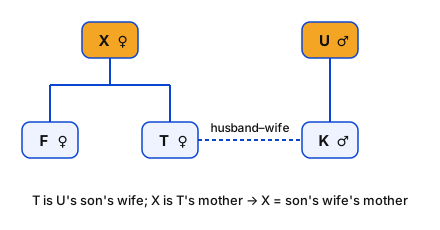
X is the mother of F. F is the sister of T. U is the father of K. K is the husband of T. How is X related to U?
X, F की माँ है। F, T की बहन है। U, K का पिता है। K, T का पति है। X, U से किस प्रकार संबंधित है?
  1. ASon's wife's motherपुत्र की पत्नी की माँ
  2. BMotherमाँ
  3. CDaughterपुत्री
  4. DSon's wife's sisterपुत्र की पत्नी की बहन
Show answer

Concept: Draw the family tree from U's side and find where X stands.

  1. U is the father of K; K is the husband of T → T is U's son's wife (daughter-in-law).
  2. F is the sister of T and X is the mother of F → X is also the mother of T.
  3. Therefore X is the mother of U's son's wife → son's wife's mother.

Trick: Siblings share parents – "mother of F" is automatically "mother of T".

Answer: (A) Son's wife's mother

अवधारणा: U की ओर से परिवार वृक्ष बनाएँ और X का स्थान देखें।

  1. U, K का पिता है; K, T का पति है → T, U के पुत्र की पत्नी (बहू) है।
  2. F, T की बहन है और X, F की माँ है → X, T की भी माँ है।
  3. अत: X, U के पुत्र की पत्नी की माँ है → पुत्र की पत्नी की माँ (समधिन)।

ट्रिक: भाई-बहन के माता-पिता समान होते हैं – "F की माँ" स्वत: "T की माँ" है।

उत्तर: (A) पुत्र की पत्नी की माँ

RRB NTPC Undergraduate CBT 1General Intelligence and ReasoningBlood relationsRRB NTPC Undergraduate CBT 1 2025 · 8 May Shift 1 →
Q8186.
Based on the English alphabetical order, three of the following four letter-cluster pairs are alike in a certain way and thus form a group. Which is the one that does not belong to that group?
(Note: The odd one out is not based on the number of consonants/vowels or their position in the letter-cluster.)
अंग्रेज़ी वर्णमाला क्रम के आधार पर, निम्नलिखित चार अक्षर-समूह युग्मों में से तीन किसी निश्चित प्रकार से एक समान हैं और इस प्रकार एक समूह बनाते हैं। वह कौन-सा है जो उस समूह से संबंधित नहीं है?
(नोट: असंगत युग्म अक्षर-समूह में व्यंजनों/स्वरों की संख्या या उनकी स्थिति पर आधारित नहीं है।)
  1. AAE - GK
  2. BDH - JN
  3. CKO - QV
  4. DHL - NR
Show answer

Concept: Find the jump from the first cluster to the second for each letter position.

  1. AE−GK : A→G (+6), E→K (+6). DH−JN : D→J (+6), H→N (+6). HL−NR : H→N (+6), L→R (+6).
  2. KO−QV : K→Q (+6) but O→V (+7) – not the same.

Trick: Within each cluster the two letters also differ by 4 (A–E, G–K …), but in QV they differ by 5 – a quick give-away.

Answer: (C) KO - QV

अवधारणा: हर अक्षर-स्थान के लिए पहले क्लस्टर से दूसरे तक का अंतर निकालें।

  1. AE−GK : A→G (+6), E→K (+6)। DH−JN : D→J (+6), H→N (+6)। HL−NR : H→N (+6), L→R (+6)।
  2. KO−QV : K→Q (+6) पर O→V (+7) – समान नहीं।

ट्रिक: हर क्लस्टर के भीतर भी दोनों अक्षरों में 4 का अंतर है (A–E, G–K …), पर QV में 5 – तुरंत पकड़ में आता है।

उत्तर: (C) KO - QV

RRB NTPC Undergraduate CBT 1General Intelligence and ReasoningLetter-cluster analogy (odd one out)RRB NTPC Undergraduate CBT 1 2025 · 8 May Shift 1 →
Q8187.
Based on the alphabetical order, three of the following four are alike in a certain way and thus form a group. Which is the one that does not belong to that group?
(Note: The odd man out is not based on the number of consonants/vowels or their position in the letter cluster.)
वर्णमाला क्रम के आधार पर, निम्नलिखित चार में से तीन किसी निश्चित प्रकार से एक समान हैं और इस प्रकार एक समूह बनाते हैं। वह कौन-सा है जो उस समूह से संबंधित नहीं है?
(नोट: असंगत अक्षर-समूह, अक्षर-समूह में व्यंजनों/स्वरों की संख्या या उनकी स्थिति पर आधारित नहीं है।)
  1. APNK
  2. BDAY
  3. COLJ
  4. DNKI
Show answer

Concept: Look at the gaps between consecutive letters inside each cluster (cyclic alphabet).

  1. DAY : D(4)→A(1) = −3, A(1)→Y(25) = −2 (going back past A). OLJ : 15→12 = −3, 12→10 = −2. NKI : 14→11 = −3, 11→9 = −2.
  2. PNK : P(16)→N(14) = −2, N(14)→K(11) = −3 – the order of the jumps is reversed.

Trick: Pattern (−3, −2) in three clusters; PNK is (−2, −3) → odd one out.

Answer: (A) PNK

अवधारणा: हर क्लस्टर के भीतर क्रमागत अक्षरों के अंतर देखें (वर्णमाला चक्रीय)।

  1. DAY : D(4)→A(1) = −3, A(1)→Y(25) = −2 (A से पीछे)। OLJ : 15→12 = −3, 12→10 = −2। NKI : 14→11 = −3, 11→9 = −2।
  2. PNK : P(16)→N(14) = −2, N(14)→K(11) = −3 – अंतरों का क्रम उल्टा है।

ट्रिक: तीन क्लस्टर में पैटर्न (−3, −2); PNK में (−2, −3) → विषम।

उत्तर: (A) PNK

RRB NTPC Undergraduate CBT 1General Intelligence and ReasoningLetter-cluster classificationRRB NTPC Undergraduate CBT 1 2025 · 8 May Shift 1 →
Q8188.
Each of the digits in the number 84157639 is arranged in ascending order from left to right. The position of how many digits will remain unchanged as compared to that in the original number?
संख्या 84157639 के प्रत्येक अंक को बाएँ से दाएँ आरोही क्रम में व्यवस्थित किया जाता है। मूल संख्या की तुलना में कितने अंकों की स्थिति अपरिवर्तित रहेगी?
  1. AOneएक
  2. BTwoदो
  3. CNoneकोई नहीं
  4. DThreeतीन
Show answer

Concept: Write the original and the ascending-order number one below the other and compare position by position.

  1. Original: 8 4 1 5 7 6 3 9.
  2. Ascending: 1 3 4 5 6 7 8 9.
  3. Position 4 (5 = 5) and position 8 (9 = 9) match; all others differ → two digits unchanged.

Trick: The largest digit at the right end (9) always stays – start counting from there.

Answer: (B) Two

अवधारणा: मूल संख्या और आरोही क्रम वाली संख्या को एक के नीचे एक लिखकर स्थान-दर-स्थान तुलना करें।

  1. मूल: 8 4 1 5 7 6 3 9।
  2. आरोही: 1 3 4 5 6 7 8 9।
  3. स्थान 4 (5 = 5) और स्थान 8 (9 = 9) मेल खाते हैं; बाकी बदल गए → दो अंक अपरिवर्तित।

ट्रिक: दाएँ सिरे पर सबसे बड़ा अंक (9) हमेशा वहीं रहता है – वहीं से गिनना शुरू करें।

उत्तर: (B) दो

RRB NTPC Undergraduate CBT 1General Intelligence and ReasoningDigit rearrangementRRB NTPC Undergraduate CBT 1 2025 · 8 May Shift 1 →
Q8189.
LM 5 is related to NL -14 in a certain way. In the same way, JK 9 is related to LJ -10. To which of the following is UV 11 related, following the same logic?
LM 5 किसी निश्चित प्रकार से NL -14 से संबंधित है। उसी प्रकार, JK 9, LJ -10 से संबंधित है। समान तर्क का अनुसरण करते हुए, UV 11 निम्नलिखित में से किससे संबंधित है?
  1. ANJ 9
  2. BGT 3
  3. CWU -8
  4. DYT -7
Show answer

Concept: Find separate rules for the two letters and the number from both given pairs.

  1. LM 5 → NL −14: L→N (+2), M→L (−1), 5→−14 i.e. 5−19=−14.
  2. JK 9 → LJ −10: J→L (+2), K→J (−1), 9−19=−10. Rule confirmed.
  3. UV 11: U+2 = W, V−1 = U, 11−19=−8 → WU −8.

Trick: Letters (+2, −1) and number −19; only one option starts with WU.

Answer: (C) WU -8

अवधारणा: दोनों दिए गए जोड़ों से दोनों अक्षरों और संख्या के नियम अलग-अलग निकालें।

  1. LM 5 → NL −14: L→N (+2), M→L (−1), 5→−14 अर्थात 5−19=−14।
  2. JK 9 → LJ −10: J→L (+2), K→J (−1), 9−19=−10। नियम पुष्ट।
  3. UV 11: U+2 = W, V−1 = U, 11−19=−8 → WU −8।

ट्रिक: अक्षर (+2, −1) और संख्या −19; केवल एक विकल्प WU से शुरू होता है।

उत्तर: (C) WU -8

RRB NTPC Undergraduate CBT 1General Intelligence and ReasoningLetter–number analogyRRB NTPC Undergraduate CBT 1 2025 · 8 May Shift 1 →
Q8190.
Which of the following letter-number clusters will replace the question mark (?) in the given series to make it logically complete?
HWR66 , MBW78 , RGB90 , WLG102 , ?
दी गई शृंखला को तार्किक रूप से पूर्ण करने के लिए निम्नलिखित में से कौन-सा अक्षर-संख्या समूह प्रश्नचिह्न (?) के स्थान पर आएगा?
HWR66 , MBW78 , RGB90 , WLG102 , ?
  1. ABOL114
  2. BBQM114
  3. CEQL114
  4. DBQL114
Show answer

Concept: Treat each letter position and the number as separate series.

  1. 1st letters H→M→R→W (+5 each) → next B (W+5 wraps past Z).
  2. 2nd letters W→B→G→L (+5) → Q; 3rd letters R→W→B→G (+5) → L.
  3. Numbers 66, 78, 90, 102 (+12) → 102+12=114. Term: BQL114.

Trick: Each new cluster is the previous one shifted by 5; the number rises by 12.

Answer: (D) BQL114

अवधारणा: हर अक्षर-स्थान और संख्या को अलग श्रृंखला मानें।

  1. पहले अक्षर H→M→R→W (हर बार +5) → अगला B (W+5, Z के बाद चक्र)।
  2. दूसरे अक्षर W→B→G→L (+5) → Q; तीसरे अक्षर R→W→B→G (+5) → L।
  3. संख्याएँ 66, 78, 90, 102 (+12) → 102+12=114। पद: BQL114।

ट्रिक: हर नया क्लस्टर पिछले से 5 आगे; संख्या 12 बढ़ती है।

उत्तर: (D) BQL114

RRB NTPC Undergraduate CBT 1General Intelligence and ReasoningLetter–number seriesRRB NTPC Undergraduate CBT 1 2025 · 8 May Shift 1 →
Q8191.
Read the given statement(s) and conclusions carefully. Assuming that the information given in the statements is true, even if it appears to be at variance with commonly known facts, decide which of the given conclusions logically follow(s) from the statement(s).
Statements:
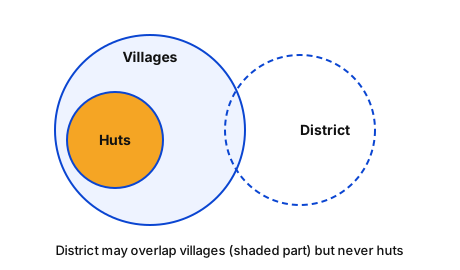
All huts are villages.
No hut is a district.
Conclusions:
(I) No village is a district.
(II) Some districts are huts.
दिए गए कथन(कथनों) और निष्कर्षों को ध्यानपूर्वक पढ़िए। यह मानते हुए कि कथनों में दी गई जानकारी सत्य है, भले ही वह सामान्यतः ज्ञात तथ्यों से भिन्न प्रतीत होती हो, निर्णय कीजिए कि दिए गए निष्कर्षों में से कौन-सा/कौन-से निष्कर्ष कथन(कथनों) का तार्किक रूप से अनुसरण करता है/करते हैं।
कथन:
सभी झोपड़ियाँ, गाँव हैं।
कोई झोपड़ी, ज़िला नहीं है।
निष्कर्ष:
(I) कोई गाँव, ज़िला नहीं है।
(II) कुछ ज़िले, झोपड़ियाँ हैं।
  1. ABoth conclusions (I) and (II) followनिष्कर्ष (I) और (II) दोनों अनुसरण करते हैं
  2. BOnly conclusion (II) followsकेवल निष्कर्ष (II) अनुसरण करता है
  3. CNeither conclusion (I) nor (II) followsन तो निष्कर्ष (I) और न ही (II) अनुसरण करता है
  4. DOnly conclusion (I) followsकेवल निष्कर्ष (I) अनुसरण करता है
Show answer

Concept: "All huts are villages" + "No hut is a district" only tells us that the hut-part of villages is outside districts; other villages may or may not be districts.

  1. Conclusion I "No village is a district" – not necessary; a village that is not a hut could be a district. Does not follow.
  2. Conclusion II "Some districts are huts" – directly contradicts "No hut is a district". Does not follow.
  3. The valid conclusion would be "Some villages are not districts", which is not given.

Trick: All A are B + No A is C ⇒ only "Some B are not C"; never "No B is C".

Answer: (C) Neither conclusion (I) nor (II) follows

अवधारणा: "सभी huts, villages हैं" + "कोई hut, district नहीं" से केवल इतना पता चलता है कि villages का hut-वाला भाग district से बाहर है; बाकी villages district हो भी सकते हैं।

  1. निष्कर्ष I "कोई village, district नहीं" – आवश्यक नहीं; जो village hut नहीं है वह district हो सकता है। अनुसरण नहीं करता।
  2. निष्कर्ष II "कुछ districts, huts हैं" – "कोई hut, district नहीं" का सीधा विरोध। अनुसरण नहीं करता।
  3. वैध निष्कर्ष होता "कुछ villages, district नहीं हैं", जो दिया नहीं गया।

ट्रिक: सभी A, B + कोई A, C नहीं ⇒ केवल "कुछ B, C नहीं"; कभी "कोई B, C नहीं" नहीं।

उत्तर: (C) न तो निष्कर्ष (I) न ही (II) अनुसरण करता है

RRB NTPC Undergraduate CBT 1General Intelligence and ReasoningSyllogismRRB NTPC Undergraduate CBT 1 2025 · 8 May Shift 1 →
Q8192.
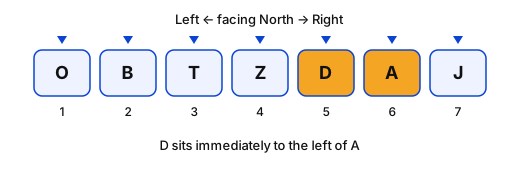
Seven people A, B, D, J, O, T and Z are sitting in a row, facing north. Only one person sits to the right of A. Only three people sit between B and A. Only three people sit between T and J, neither of whom sits on the left end. D sits immediately to the right of Z. Only one person sits between T and O. Who sits immediately to the left of A?
सात व्यक्ति A, B, D, J, O, T और Z एक पंक्ति में उत्तर की ओर मुख करके बैठे हैं। A के दाईं ओर केवल एक व्यक्ति बैठा है। B और A के बीच केवल तीन व्यक्ति बैठे हैं। T और J के बीच केवल तीन व्यक्ति बैठे हैं, जिनमें से कोई भी बाएँ छोर पर नहीं बैठा है। D, Z के ठीक दाईं ओर बैठा है। T और O के बीच केवल एक व्यक्ति बैठा है। A के ठीक बाईं ओर कौन बैठा है?
  1. AT
  2. BJ
  3. CB
  4. DD
Show answer

Concept: Number the seats 1–7 from left to right (all face north). Fix definite positions first, then test the "three between" pairs.

  1. Only one person right of A → A at 6. Three between B and A → B at 2.
  2. T and J have three between them: possible pairs (1,5), (2,6), (3,7). Neither is at the left end and 2, 6 are taken → T, J at 3 and 7.
  3. D is immediately right of Z: free seats 1, 4, 5 → Z at 4, D at 5, O at 1.
  4. One person between T and O(1) → T at 3, J at 7. Order: O B T Z D A J. Immediately left of A(6) is D.

Trick: List all seat-pairs with the required gap and strike out those blocked by earlier clues.

Answer: (D) D

अवधारणा: बाएँ से दाएँ सीटें 1–7 (सभी उत्तर की ओर)। पहले निश्चित स्थान तय करें, फिर "बीच में तीन" वाले जोड़े जाँचें।

  1. A के दाएँ केवल एक → A सीट 6। B और A के बीच तीन → B सीट 2।
  2. T और J के बीच तीन: संभावित जोड़े (1,5), (2,6), (3,7)। कोई बाएँ सिरे पर नहीं और 2, 6 भरी हैं → T, J सीट 3 व 7 पर।
  3. D, Z के ठीक दाएँ: खाली सीटें 1, 4, 5 → Z सीट 4, D सीट 5, O सीट 1।
  4. T और O(1) के बीच एक → T सीट 3, J सीट 7। क्रम: O B T Z D A J। A(6) के ठीक बाएँ D।

ट्रिक: आवश्यक अंतर वाले सभी सीट-जोड़े लिखें और पहले के सुरागों से बंद जोड़े काट दें।

उत्तर: (D) D

RRB NTPC Undergraduate CBT 1General Intelligence and ReasoningLinear seating arrangementRRB NTPC Undergraduate CBT 1 2025 · 8 May Shift 1 →
Q8193.
Refer to the following series and answer the question (all numbers are single digit numbers only).
(Left) 4 5 6 2 3 3 3 2 1 1 2 3 8 7 4 6 4 6 5 8 2 5 6 5 4 3 4 2 3 (Right)
How many such odd digits are there each of which is immediately preceded by an even digit and also immediately followed by an odd digit?
निम्नलिखित शृंखला को देखिए और प्रश्न का उत्तर दीजिए (सभी संख्याएँ केवल एक अंक की संख्याएँ हैं)।
(बाएँ) 4 5 6 2 3 3 3 2 1 1 2 3 8 7 4 6 4 6 5 8 2 5 6 5 4 3 4 2 3 (दाएँ)
ऐसे कितने विषम अंक हैं जिनमें से प्रत्येक के ठीक पहले एक सम अंक है और ठीक बाद में एक विषम अंक है?
  1. AONEएक
  2. BTWOदो
  3. CFIVEपाँच
  4. DNONEकोई नहीं
Show answer

Concept: We need an odd digit with an even digit just before it and an odd digit just after it (even–odd–odd triplet).

  1. Series: 4 5 6 2 3 3 3 2 1 1 2 3 8 7 4 6 4 6 5 8 2 5 6 5 4 3 4 2 3.
  2. 2 3 3 (positions 4–6): 3 is odd, preceded by 2 (even), followed by 3 (odd) ✓.
  3. 2 1 1 (positions 8–10): 1 is odd, preceded by 2, followed by 1 ✓.
  4. Others fail: 8 7 4 (followed by even), 6 5 8, 2 5 6, 6 5 4, 4 3 4 – all followed by even digits.

Trick: Scan for two odd digits side by side, then check that the digit before them is even.

Answer: (B) TWO

अवधारणा: ऐसा विषम अंक चाहिए जिसके ठीक पहले सम और ठीक बाद विषम अंक हो (सम–विषम–विषम त्रिक)।

  1. श्रृंखला: 4 5 6 2 3 3 3 2 1 1 2 3 8 7 4 6 4 6 5 8 2 5 6 5 4 3 4 2 3।
  2. 2 3 3 (स्थान 4–6): 3 विषम, पहले 2 (सम), बाद में 3 (विषम) ✓।
  3. 2 1 1 (स्थान 8–10): 1 विषम, पहले 2, बाद में 1 ✓।
  4. बाकी असफल: 8 7 4 (बाद में सम), 6 5 8, 2 5 6, 6 5 4, 4 3 4 – सबके बाद सम अंक।

ट्रिक: पास-पास दो विषम अंक खोजें, फिर जाँचें कि उनसे पहले का अंक सम है।

उत्तर: (B) दो (TWO)

RRB NTPC Undergraduate CBT 1General Intelligence and ReasoningNumber series countingRRB NTPC Undergraduate CBT 1 2025 · 8 May Shift 1 →
Q8194.
In a certain code language, ‘COAL’ is coded as ‘7649’ and ‘ALSO’ is coded as ‘5967’. What is the code for ‘S’ in the given code language?
एक निश्चित कूट भाषा में, 'COAL' को '7649' के रूप में और 'ALSO' को '5967' के रूप में कूटबद्ध किया जाता है। दी गई कूट भाषा में 'S' का कूट क्या है?
  1. A5
  2. B9
  3. C6
  4. D7
Show answer

Concept: Each letter has a fixed digit. Compare the two words: letters common to both must have codes common to both.

  1. COAL → 7 6 4 9 ; ALSO → 5 9 6 7.
  2. Common letters: A, L, O. Common digits: 7, 6, 9.
  3. The only letter of ALSO not in COAL is S, and the only digit of 5967 not in 7649 is 5 → S = 5.

Trick: Uncommon letter ↔ uncommon digit; no need to decode every letter.

Answer: (A) 5

अवधारणा: हर अक्षर का एक निश्चित अंक है। दोनों शब्दों की तुलना करें: दोनों में समान अक्षरों के कोड भी दोनों में समान होंगे।

  1. COAL → 7 6 4 9 ; ALSO → 5 9 6 7।
  2. समान अक्षर: A, L, O। समान अंक: 7, 6, 9।
  3. ALSO का एकमात्र अक्षर जो COAL में नहीं है, S है, और 5967 का एकमात्र अंक जो 7649 में नहीं, 5 है → S = 5।

ट्रिक: असमान अक्षर ↔ असमान अंक; हर अक्षर डिकोड करने की ज़रूरत नहीं।

उत्तर: (A) 5

RRB NTPC Undergraduate CBT 1General Intelligence and ReasoningCoding–decoding (letters to digits)RRB NTPC Undergraduate CBT 1 2025 · 8 May Shift 1 →
Q8195.
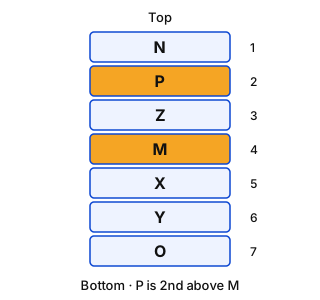
Seven boxes M, N, O, P, X, Y and Z are kept one over the other but not necessarily in the same order. Only N is kept above P. Only two boxes are kept between P and X. Only O is kept below Y. Z is not kept immediately above X. Which box is kept second above M?
सात बक्से M, N, O, P, X, Y और Z एक के ऊपर एक रखे गए हैं, लेकिन आवश्यक नहीं कि इसी क्रम में हों। P के ऊपर केवल N रखा है। P और X के बीच केवल दो बक्से रखे हैं। Y के नीचे केवल O रखा है। Z, X के ठीक ऊपर नहीं रखा है। M के ऊपर दूसरे स्थान पर कौन-सा बक्सा रखा है?
  1. AP
  2. BX
  3. CZ
  4. DO
Show answer

Concept: Number the positions 1 (top) to 7 (bottom) and fix the boxes with definite positions first.

  1. Only N is above P → N at 1, P at 2. Two boxes between P and X → X at 5.
  2. Only O is below Y → Y at 6, O at 7.
  3. Positions 3 and 4 remain for M and Z. Z is not immediately above X (not at 4) → Z at 3, M at 4.
  4. Stack: N, P, Z, M, X, Y, O. Second box above M (4) is at position 2 → P.

Trick: "Only X is above/below Y" fixes both boxes at an end – use such clues first.

Answer: (A) P

अवधारणा: स्थान 1 (सबसे ऊपर) से 7 (सबसे नीचे) तक नंबर दें और पहले निश्चित स्थान वाले बॉक्स रखें।

  1. P के ऊपर केवल N → N स्थान 1, P स्थान 2। P और X के बीच दो बॉक्स → X स्थान 5।
  2. Y के नीचे केवल O → Y स्थान 6, O स्थान 7।
  3. स्थान 3 और 4 M व Z के लिए बचे। Z, X के ठीक ऊपर नहीं (स्थान 4 नहीं) → Z स्थान 3, M स्थान 4।
  4. ढेर: N, P, Z, M, X, Y, O। M (4) से दूसरा ऊपर स्थान 2 → P।

ट्रिक: "Y के ऊपर/नीचे केवल X" दोनों बॉक्स सिरे पर तय कर देता है – ऐसे सुराग पहले लें।

उत्तर: (A) P

RRB NTPC Undergraduate CBT 1General Intelligence and ReasoningBox arrangement (stacking)RRB NTPC Undergraduate CBT 1 2025 · 8 May Shift 1 →
Q8196.
In genetics, a gene refers to which of the following?
आनुवंशिकी (genetics) में, जीन (gene) निम्नलिखित में से किसे संदर्भित करता है?
  1. AA sex chromosomeएक लिंग गुणसूत्र
  2. BA unit of blood groupरक्त समूह की एक इकाई
  3. CA section of DNA that codes for a proteinDNA का एक खंड जो किसी प्रोटीन के लिए कोड करता है
  4. DA type of chromosomeएक प्रकार का गुणसूत्र
Show answer

Concept: A gene is the basic unit of heredity.

  1. A gene is a specific segment (section) of DNA that carries the code for making a particular protein or RNA.
  2. Genes sit at fixed positions (loci) on chromosomes; a chromosome is a long DNA molecule containing thousands of genes – so a gene is not itself a chromosome.
  3. Blood groups are controlled by genes, but a gene is not a unit of blood group.

Yaad rakhein: DNA → gene (a section of DNA) → chromosome (many genes packed together). Mendel called them 'factors'.

Answer: (C) A section of DNA that codes for a protein

अवधारणा: जीन (gene) आनुवंशिकता की मूल इकाई है।

  1. जीन DNA का एक विशिष्ट खंड (section) है जो किसी विशेष प्रोटीन या RNA बनाने का कोड रखता है।
  2. जीन गुणसूत्रों (chromosomes) पर निश्चित स्थानों (loci) पर होते हैं; गुणसूत्र एक लंबा DNA अणु है जिसमें हज़ारों जीन होते हैं – अतः जीन स्वयं गुणसूत्र नहीं है।
  3. रक्त समूह जीनों द्वारा नियंत्रित होते हैं, पर जीन रक्त समूह की इकाई नहीं है।

याद रखें: DNA → जीन (DNA का खंड) → गुणसूत्र (अनेक जीन एक साथ)। मेंडल ने इन्हें 'कारक (factors)' कहा था।

उत्तर: (C) A section of DNA that codes for a protein

RRB NTPC Undergraduate CBT 1General AwarenessBiology – geneticsRRB NTPC Undergraduate CBT 1 2025 · 7 May Shift 3 →
Q8197.
Which of the following Harappan sites yielded excellent examples of metal-cast sculptures?
निम्नलिखित में से किस हड़प्पा स्थल से धातु-ढलाई (metal-cast) की मूर्तियों के उत्कृष्ट उदाहरण प्राप्त हुए हैं?
  1. ANageshwarनागेश्वर
  2. BKalibanganकालीबंगन
  3. CDaimabadदैमाबाद
  4. DRangpurरंगपुर
Show answer

Concept: Daimabad (Ahmednagar district, Maharashtra) is the southernmost Harappan site and famous for its bronze hoard.

  1. Four solid bronze (metal-cast) sculptures were found at Daimabad – a chariot driven by a man with two oxen, an elephant, a rhinoceros and a buffalo.
  2. Nageshwar (Gujarat) was a shell-working centre, Kalibangan (Rajasthan) is known for the ploughed field and fire altars, Rangpur (Gujarat) for rice husk evidence.

Yaad rakhein: Daimabad = bronze chariot; Lothal = dockyard; Kalibangan = ploughed field; Chanhudaro = bead-making.

Answer: (C) Daimabad

अवधारणा: दैमाबाद (अहमदनगर ज़िला, महाराष्ट्र) सबसे दक्षिणी हड़प्पा स्थल है और अपने कांस्य भंडार के लिए प्रसिद्ध है।

  1. दैमाबाद से चार ठोस कांस्य (धातु-ढली) मूर्तियाँ मिलीं – दो बैलों वाला रथ चलाता मनुष्य, हाथी, गैंडा और भैंसा।
  2. नागेश्वर (गुजरात) शंख-उद्योग केंद्र था, कालीबंगा (राजस्थान) जुते खेत व अग्निवेदियों के लिए, रंगपुर (गुजरात) धान की भूसी के साक्ष्य के लिए जाना जाता है।

याद रखें: दैमाबाद = कांस्य रथ; लोथल = गोदीबाड़ा; कालीबंगा = जुता खेत; चन्हूदड़ो = मनका-निर्माण।

उत्तर: (C) Daimabad

RRB NTPC Undergraduate CBT 1General AwarenessHarappan civilisationRRB NTPC Undergraduate CBT 1 2025 · 7 May Shift 3 →
Q8198.
According to the Constitution of India, which constitutional body advises the President on the principles governing grants-in-aid to States from the Consolidated Fund of India?
भारत के संविधान के अनुसार, कौन-सा संवैधानिक निकाय भारत की संचित निधि से राज्यों को सहायता-अनुदान (grants-in-aid) देने वाले सिद्धांतों पर राष्ट्रपति को सलाह देता है?
  1. APlanning Commissionयोजना आयोग
  2. BComptroller and Auditor General of Indiaभारत के नियंत्रक एवं महालेखा परीक्षक
  3. CFinance Commissionवित्त आयोग
  4. DNITI Aayogनीति आयोग
Show answer

Concept: Article 280 provides for a Finance Commission, constituted by the President every five years.

  1. Article 280(3)(b) asks it to recommend the principles governing grants-in-aid of the revenues of the States out of the Consolidated Fund of India (grants under Article 275).
  2. It also recommends the distribution of net tax proceeds between the Union and the States.
  3. Planning Commission and NITI Aayog are executive bodies, not constitutional; CAG audits accounts.

Yaad rakhein: Article 280 = Finance Commission; Article 275 = grants-in-aid to States; 16th Finance Commission chairman: Arvind Panagariya.

Answer: (C) Finance Commission

अवधारणा: अनुच्छेद 280 में वित्त आयोग का प्रावधान है, जिसे राष्ट्रपति हर पाँच वर्ष में गठित करते हैं।

  1. अनुच्छेद 280(3)(b) के अनुसार यह भारत की संचित निधि से राज्यों को सहायता अनुदान (grants-in-aid) के सिद्धांतों की सिफ़ारिश करता है (अनुच्छेद 275 के अनुदान)।
  2. यह संघ और राज्यों के बीच करों के शुद्ध आगम के बँटवारे की भी सिफ़ारिश करता है।
  3. योजना आयोग और NITI आयोग कार्यपालिका निकाय हैं, संवैधानिक नहीं; CAG लेखा-परीक्षा करता है।

याद रखें: अनुच्छेद 280 = वित्त आयोग; अनुच्छेद 275 = राज्यों को सहायता अनुदान; 16वें वित्त आयोग के अध्यक्ष: अरविंद पनगढ़िया।

उत्तर: (C) Finance Commission

RRB NTPC Undergraduate CBT 1General AwarenessPolity – Finance CommissionRRB NTPC Undergraduate CBT 1 2025 · 7 May Shift 3 →
Q8199.
Provisions for the 'Control over subordinate courts' are provided in which of the following Articles of the Constitution of India?
'अधीनस्थ न्यायालयों पर नियंत्रण' के प्रावधान भारत के संविधान के निम्नलिखित में से किस अनुच्छेद में दिए गए हैं?
  1. AArticle 225अनुच्छेद 225
  2. BArticle 235अनुच्छेद 235
  3. CArticle 255अनुच्छेद 255
  4. DArticle 245अनुच्छेद 245
Show answer

Concept: Articles 233–237 (Part VI, Chapter VI) deal with subordinate courts.

  1. Article 235: 'Control over subordinate courts' – vests in the High Court the control over district courts and courts subordinate to them (posting, promotion, leave of judicial officers).
  2. Article 233 is appointment of district judges; Article 234 recruitment of other judicial officers.
  3. Article 225 concerns jurisdiction of existing High Courts; 245 is extent of laws made by Parliament/States; 255 is about recommendations and previous sanctions.

Yaad rakhein: 233 appoint, 234 recruit, 235 control – the three 'subordinate court' articles in sequence.

Answer: (B) Article 235

अवधारणा: अनुच्छेद 233–237 (भाग VI, अध्याय VI) अधीनस्थ न्यायालयों से संबंधित हैं।

  1. अनुच्छेद 235: 'अधीनस्थ न्यायालयों पर नियंत्रण' – ज़िला और उनके अधीनस्थ न्यायालयों पर नियंत्रण (न्यायिक अधिकारियों की तैनाती, पदोन्नति, अवकाश) उच्च न्यायालय में निहित है।
  2. अनुच्छेद 233 ज़िला न्यायाधीशों की नियुक्ति; अनुच्छेद 234 अन्य न्यायिक अधिकारियों की भर्ती।
  3. अनुच्छेद 225 विद्यमान उच्च न्यायालयों की अधिकारिता; 245 संसद/राज्य विधियों का विस्तार; 255 सिफ़ारिशों और पूर्व मंज़ूरी के बारे में है।

याद रखें: 233 नियुक्ति, 234 भर्ती, 235 नियंत्रण – अधीनस्थ न्यायालय के तीन अनुच्छेद क्रम से।

उत्तर: (B) Article 235

RRB NTPC Undergraduate CBT 1General AwarenessPolity – JudiciaryRRB NTPC Undergraduate CBT 1 2025 · 7 May Shift 3 →
Q8200.
How many Indian languages hold Classical Language status as of October 2025?
अक्टूबर 2025 तक कितनी भारतीय भाषाओं को शास्त्रीय भाषा (Classical Language) का दर्जा प्राप्त है?
  1. A8
  2. B6
  3. C11
  4. D10
Show answer

Concept: India has 11 Classical Languages after the Union Cabinet added five on 3 October 2024.

  1. Earlier six: Tamil (2004), Sanskrit (2005), Telugu and Kannada (2008), Malayalam (2013), Odia (2014).
  2. Added in October 2024: Marathi, Pali, Prakrit, Assamese and Bengali – total 11.
  3. No further addition up to October 2025.

Yaad rakhein: 6 + 5 = 11; Tamil was first (2004), Odia was the sixth (2014), Bengali/Assamese/Marathi/Pali/Prakrit came together in 2024.

Answer: (C) 11

अवधारणा: 3 अक्टूबर 2024 को केंद्रीय मंत्रिमंडल द्वारा पाँच भाषाएँ जोड़ने के बाद भारत में 11 शास्त्रीय भाषाएँ हैं।

  1. पहले की छह: तमिल (2004), संस्कृत (2005), तेलुगु व कन्नड़ (2008), मलयालम (2013), ओड़िया (2014)।
  2. अक्टूबर 2024 में जोड़ी गईं: मराठी, पालि, प्राकृत, असमिया और बांग्ला – कुल 11।
  3. अक्टूबर 2025 तक कोई और भाषा नहीं जोड़ी गई।

याद रखें: 6 + 5 = 11; तमिल पहली (2004), ओड़िया छठी (2014), बांग्ला/असमिया/मराठी/पालि/प्राकृत 2024 में एक साथ।

उत्तर: (C) 11

RRB NTPC Undergraduate CBT 1General AwarenessClassical languagesRRB NTPC Undergraduate CBT 1 2025 · 7 May Shift 3 →