Question bank

Q&A: practice questions with answers

Search questions on any topic. Filter by exam category, exam, subject and topic, try the question, then open the answer and explanation.

Courses – airGurukul

8,495 questions found.

Q961.
Mahesh bought some sharpeners at the rate of ₹150 a dozen. He sold them for ₹41 each. His profit percentage is ______%.
महेश ने कुछ शार्पनर ₹150 प्रति दर्जन की दर से खरीदे। उसने उन्हें ₹41 प्रति नग की दर से बेचा। उसका लाभ प्रतिशत ______% है।
  1. A226
  2. B230
  3. C232
  4. D228
Show answer

Concept: Profit%=SP−CPCP×100 for one sharpener.

  1. CP of one =15012= ₹12.50
  2. SP of one = ₹41, profit = ₹28.50
  3. Profit%=28.512.5×100=228%

Trick: 4112.5=3.28 ⇒ profit =3.28−1=2.28=228%.

Answer: (D) 228

अवधारणा: एक शार्पनर के लिए लाभ%=विक्रय मूल्य−क्रय मूल्यक्रय मूल्य×100।

  1. एक का क्रय मूल्य =15012= ₹12.50
  2. एक का विक्रय मूल्य = ₹41, लाभ = ₹28.50
  3. लाभ%=28.512.5×100=228%

ट्रिक: 4112.5=3.28 ⇒ लाभ =3.28−1=2.28=228%।

उत्तर: (D) 228

RRB NTPC Undergraduate CBT 1MathematicsProfit and lossRRB NTPC Undergraduate CBT 1 2024 · 21 Aug Shift 3 →
Q962.
The marks scored by 10 students are given below.
18, 13, 14, 14, 19, 14, 17, 17, 14, 20
The mode of the data is:
10 विद्यार्थियों द्वारा प्राप्त अंक नीचे दिए गए हैं।
18, 13, 14, 14, 19, 14, 17, 17, 14, 20
आँकड़ों का बहुलक है:
  1. A13
  2. B14
  3. C18
  4. D19
Show answer

Concept: Mode is the value that occurs most often.

  1. Frequencies: 14 → 4 times, 17 → 2 times, the rest once.
  2. Highest frequency is for 14.

Yaad rakhein: Mode = most frequent observation.

Answer: (B) 14

अवधारणा: बहुलक (mode) वह मान है जो सबसे अधिक बार आता है।

  1. बारंबारता: 14 → 4 बार, 17 → 2 बार, बाकी एक-एक बार।
  2. सबसे अधिक बारंबारता 14 की है।

याद रखें: बहुलक = सबसे अधिक बार आने वाला मान।

उत्तर: (B) 14

RRB NTPC Undergraduate CBT 1MathematicsModeRRB NTPC Undergraduate CBT 1 2024 · 21 Aug Shift 3 →
Q963.
Find the value of: 55−13÷ 5514× 55−11
मान ज्ञात कीजिए: 55−13÷ 5514× 55−11
  1. A55−36
  2. B55−48
  3. C55−38
  4. D55−32
Show answer

Concept: am÷an=am−n and am×an=am+n (left to right).

  1. 55−13÷5514=55−13−14=55−27
  2. 55−27×55−11=55−38

Trick: Same base: just add/subtract the exponents: −13−14−11=−38.

Answer: (C) 55−38

अवधारणा: am÷an=am−n और am×an=am+n (बाएँ से दाएँ)।

  1. 55−13÷5514=55−13−14=55−27
  2. 55−27×55−11=55−38

ट्रिक: समान आधार: बस घातांक जोड़ें/घटाएँ: −13−14−11=−38।

उत्तर: (C) 55−38

RRB NTPC Undergraduate CBT 1MathematicsLaws of indicesRRB NTPC Undergraduate CBT 1 2024 · 21 Aug Shift 3 →
Q964.
By selling an article at 615 of its actual selling price, Nirbhay incurs a loss of 14%.
If he sells it at 54% of its actual selling price, then the profit percentage is:
एक वस्तु को उसके वास्तविक विक्रय मूल्य के 615 पर बेचने से निर्भय को 14% की हानि होती है।
यदि वह इसे इसके वास्तविक विक्रय मूल्य के 54% पर बेचता है, तो लाभ प्रतिशत है:
  1. A18.4%
  2. B18.7%
  3. C16.1%
  4. D16.5%
Show answer

Concept: Express the actual SP in terms of CP using the loss case.

  1. 615SP=0.4SP=0.86CP
  2. SP=0.860.4CP=2.15CP
  3. 54% of SP =0.54×2.15CP=1.161CP
  4. Profit%=16.1%

Trick: Take CP =100: 0.4SP=86⇒SP=215; 0.54×215=116.1.

Answer: (C) 16.1%

अवधारणा: हानि वाली स्थिति से वास्तविक विक्रय मूल्य (SP) को क्रय मूल्य (CP) में लिखें।

  1. 615SP=0.4SP=0.86CP
  2. SP=0.860.4CP=2.15CP
  3. SP का 54% =0.54×2.15CP=1.161CP
  4. लाभ%=16.1%

ट्रिक: CP =100 लें: 0.4SP=86⇒SP=215; 0.54×215=116.1।

उत्तर: (C) 16.1%

RRB NTPC Undergraduate CBT 1MathematicsProfit and lossRRB NTPC Undergraduate CBT 1 2024 · 21 Aug Shift 3 →
Q965.
Which of the following numbers divides 3,27,087?
निम्नलिखित में से कौन-सी संख्या 3,27,087 को विभाजित करती है?
  1. A3
  2. B12
  3. C8
  4. D5
Show answer

Concept: A number is divisible by 3 if its digit sum is divisible by 3.

  1. Digit sum =3+2+7+0+8+7=27, divisible by 3 ✓
  2. It is odd, so not divisible by 8 or 12; last digit 7, so not by 5.

Trick: Odd numbers can never be divisible by 8 or 12.

Answer: (A) 3

अवधारणा: यदि अंकों का योग 3 से विभाज्य हो तो संख्या 3 से विभाज्य होती है।

  1. अंकों का योग =3+2+7+0+8+7=27, 3 से विभाज्य ✓
  2. संख्या विषम है, अतः 8 या 12 से नहीं; अंतिम अंक 7, अतः 5 से नहीं।

ट्रिक: विषम संख्या कभी 8 या 12 से विभाज्य नहीं होती।

उत्तर: (A) 3

RRB NTPC Undergraduate CBT 1MathematicsDivisibilityRRB NTPC Undergraduate CBT 1 2024 · 21 Aug Shift 3 →
Q966.
4 men can complete a piece of work in 18 days, while 9 women can do it in 8 days. In how many days can 3 women and 6 men complete this work?
4 पुरुष एक कार्य को 18 दिनों में पूरा कर सकते हैं, जबकि 9 महिलाएँ उसे 8 दिनों में कर सकती हैं। 3 महिलाएँ और 6 पुरुष मिलकर इस कार्य को कितने दिनों में पूरा कर सकते हैं?
  1. A11 days11 दिन
  2. B13 days13 दिन
  3. C8 days8 दिन
  4. D4 days4 दिन
Show answer

Concept: Convert everything to man-days / woman-days.

  1. Work =4×18=72 man-days =9×8=72 woman-days
  2. So 1 man = 1 woman in efficiency.
  3. 3 women +6 men =9 men
  4. Days =729=8

Trick: M1D1=M2D2 once the units are made equal.

Answer: (C) 8 days

अवधारणा: सब कुछ पुरुष-दिवस / महिला-दिवस में बदलें।

  1. कार्य =4×18=72 पुरुष-दिवस =9×8=72 महिला-दिवस
  2. अतः 1 पुरुष = 1 महिला (क्षमता में)।
  3. 3 महिलाएँ +6 पुरुष =9 पुरुष
  4. दिन =729=8

ट्रिक: इकाई समान करके M1D1=M2D2।

उत्तर: (C) 8 दिन

RRB NTPC Undergraduate CBT 1MathematicsTime and workRRB NTPC Undergraduate CBT 1 2024 · 21 Aug Shift 3 →
Q967.
A man driving a car at a speed of 41 km/hr crosses a bridge in 2.4 minutes. Find the length of the bridge.
41 km/hr की चाल से कार चला रहा एक व्यक्ति एक पुल को 2.4 मिनट में पार करता है। पुल की लंबाई ज्ञात कीजिए।
  1. A2.18 km
  2. B2.54 km
  3. C0.69 km
  4. D1.64 km
Show answer

Concept: Distance = speed × time (time in hours).

  1. 2.4min=2.460=0.04h
  2. Length =41×0.04=1.64km

Trick: km/h × minutes ÷ 60 gives km directly.

Answer: (D) 1.64 km

अवधारणा: दूरी = चाल × समय (समय घंटों में)।

  1. 2.4min=2.460=0.04h
  2. लंबाई =41×0.04=1.64km

ट्रिक: km/h × मिनट ÷ 60 = सीधे km।

उत्तर: (D) 1.64 km

RRB NTPC Undergraduate CBT 1MathematicsSpeed, distance and timeRRB NTPC Undergraduate CBT 1 2024 · 21 Aug Shift 3 →
Q968.
A company earns a profit (in ₹) that is distributed among the company's three partners in the ratio of 14 : 10 : 16. If the difference between the smallest and the largest shares is ₹29,547, the total profit (in ₹) of the company is:
एक कंपनी लाभ (₹ में) अर्जित करती है जो कंपनी के तीन साझेदारों के बीच 14 : 10 : 16 के अनुपात में वितरित किया जाता है। यदि सबसे छोटे और सबसे बड़े हिस्से के बीच का अंतर ₹29,547 है, तो कंपनी का कुल लाभ (₹ में) है:
  1. A1,96,892
  2. B1,96,980
  3. C1,97,067
  4. D1,96,943
Show answer

Concept: Find the value of one ratio part from the given difference.

  1. Largest − smallest =16−10=6 parts = ₹29,547
  2. 1 part =295476=4924.5
  3. Total =40 parts =40×4924.5= ₹1,96,980

Trick: Total =difference×406.

Answer: (B) 1,96,980

अवधारणा: दिए गए अंतर से अनुपात के एक भाग का मान निकालें।

  1. सबसे बड़ा − सबसे छोटा =16−10=6 भाग = ₹29,547
  2. 1 भाग =295476=4924.5
  3. कुल =40 भाग =40×4924.5= ₹1,96,980

ट्रिक: कुल =अंतर×406।

उत्तर: (B) 1,96,980

RRB NTPC Undergraduate CBT 1MathematicsRatio and partnershipRRB NTPC Undergraduate CBT 1 2024 · 21 Aug Shift 3 →
Q969.
A man makes a monthly payment equal to 30% of his monthly salary towards debt repayment. He spends 20% of the remaining salary and saves ₹602. His monthly salary (in ₹) is:
एक व्यक्ति अपने मासिक वेतन के 30% के बराबर मासिक भुगतान ऋण चुकाने के लिए करता है। वह शेष वेतन का 20% खर्च करता है और ₹602 बचाता है। उसका मासिक वेतन (₹ में) है:
  1. A1,075
  2. B1,072
  3. C1,115
  4. D1,078
Show answer

Concept: Apply the percentages one after another on the remaining amount.

  1. After debt: 70% of salary remains.
  2. Spends 20% of this, saves 80%: 0.7×0.8S=0.56S
  3. 0.56S=602⇒S=6020.56=1075

Trick: Savings fraction =710×45=1425.

Answer: (A) 1,075

अवधारणा: शेष राशि पर प्रतिशत एक के बाद एक लगाएँ।

  1. ऋण के बाद वेतन का 70% बचता है।
  2. इसका 20% खर्च, 80% बचत: 0.7×0.8S=0.56S
  3. 0.56S=602⇒S=6020.56=1075

ट्रिक: बचत भिन्न =710×45=1425।

उत्तर: (A) 1,075

RRB NTPC Undergraduate CBT 1MathematicsIncome and expenditureRRB NTPC Undergraduate CBT 1 2024 · 21 Aug Shift 3 →
Q970.
M and N started a business. M invested ₹48,000 more than N for 3 months, while N invested for 4 months. M's share is ₹498 more than that of N, out of a total profit of ₹1,494. Find the capital contributed by M.
M और N ने एक व्यवसाय शुरू किया। M ने 3 महीनों के लिए N से ₹48,000 अधिक निवेश किया, जबकि N ने 4 महीनों के लिए निवेश किया। ₹1,494 के कुल लाभ में से M का हिस्सा N के हिस्से से ₹498 अधिक है। M द्वारा लगाई गई पूँजी ज्ञात कीजिए।
  1. A₹78,600
  2. B₹76,800
  3. C₹75,000
  4. D₹78,000
Show answer

Concept: Profit is shared in the ratio capital × time.

  1. M+N=1494, M−N=498 ⇒ M=996, N=498, ratio 2:1
  2. 3(N+48000)4N=2⇒3N+144000=8N
  3. N=28800, M's capital =28800+48000=76800

Trick: Check: 3×76800=230400, 4×28800=115200 → 2:1 ✓

Answer: (B) ₹76,800

अवधारणा: लाभ पूँजी × समय के अनुपात में बँटता है।

  1. M+N=1494, M−N=498 ⇒ M=996, N=498, अनुपात 2:1
  2. 3(N+48000)4N=2⇒3N+144000=8N
  3. N=28800, M की पूँजी =28800+48000=76800

ट्रिक: जाँच: 3×76800=230400, 4×28800=115200 → 2:1 ✓

उत्तर: (B) ₹76,800

RRB NTPC Undergraduate CBT 1MathematicsPartnershipRRB NTPC Undergraduate CBT 1 2024 · 21 Aug Shift 3 →
Q971.
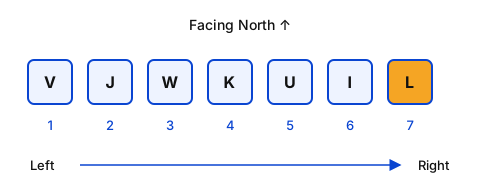
Seven people, I, J, K, L, U, V and W are sitting in a row, facing north.
No one sits to the left of V. Only four people sit between V and I. Only three people sit to the right of K. J sits to the immediate left of W. L is not an immediate neighbour of K. Who sits at the rightmost end of the line?
सात व्यक्ति I, J, K, L, U, V और W एक पंक्ति में उत्तर की ओर मुख करके बैठे हैं।
V के बाईं ओर कोई नहीं बैठा है। V और I के बीच केवल चार व्यक्ति बैठे हैं। K के दाईं ओर केवल तीन व्यक्ति बैठे हैं। J, W के ठीक बाईं ओर बैठा है। L, K का निकटतम पड़ोसी नहीं है। पंक्ति के सबसे दाएँ छोर पर कौन बैठा है?
  1. AL
  2. BK
  3. CW
  4. DI
Show answer

Concept: Fix the definite positions first (ends and counts), then place the pairs.

  1. No one left of V ⇒ V at position 1; four between V and I ⇒ I at 6.
  2. Three to the right of K ⇒ K at 4.
  3. J immediately left of W: only free pair is 2-3 ⇒ J2, W3.
  4. L not next to K (4) ⇒ L at 7, U at 5.

Trick: In a 7-seat row, 'n people to the right' ⇒ position 7−n.

Answer: (A) L

अवधारणा: पहले निश्चित स्थान (छोर व गिनती) तय करें, फिर जोड़े रखें।

  1. V के बाएँ कोई नहीं ⇒ V स्थान 1 पर; V और I के बीच चार ⇒ I स्थान 6 पर।
  2. K के दाएँ तीन ⇒ K स्थान 4 पर।
  3. J, W के ठीक बाएँ: खाली जोड़ा केवल 2-3 ⇒ J2, W3।
  4. L, K (4) का पड़ोसी नहीं ⇒ L स्थान 7, U स्थान 5।

ट्रिक: 7 सीटों में 'दाएँ n लोग' ⇒ स्थान 7−n।

उत्तर: (A) L

RRB NTPC Undergraduate CBT 1General Intelligence and ReasoningLinear seating arrangementRRB NTPC Undergraduate CBT 1 2024 · 21 Aug Shift 3 →
Q972.
Refer to the following letter-symbol series and answer the question that follows. Counting is to be done from left to right only.
(Left) 7 1 $ % 3 $ % 8 < 7 8 1 8 # < 7 @ * 5 5 + (Right)
How many such numbers are there, each of which is immediately preceded by a symbol and also immediately followed by a symbol?
निम्नलिखित अक्षर-प्रतीक श्रृंखला को देखिए और नीचे दिए गए प्रश्न का उत्तर दीजिए। गिनती केवल बाएँ से दाएँ की जानी है।
(बाएँ) 7 1 $ % 3 $ % 8 < 7 8 1 8 # < 7 @ * 5 5 + (दाएँ)
ऐसी कितनी संख्याएँ हैं, जिनमें से प्रत्येक के ठीक पहले एक प्रतीक है और ठीक बाद में भी एक प्रतीक है?
  1. AFourचार
  2. BOneएक
  3. CTwoदो
  4. DThreeतीन
Show answer

Concept: Check every number: the element just before it and just after it must both be symbols.

  1. Series: 7 1 $ % 3 $ % 8 < 7 8 1 8 # < 7 @ * 5 5 +
  2. % 3 $ ✓ ; % 8 < ✓ ; < 7 @ ✓
  3. < 7 8 ✗ ; * 5 5 ✗ ; other numbers have a number beside them.
  4. Such numbers: 3, 8, 7 ⇒ Three

Trick: Scan only the numbers and look at both neighbours.

Answer: (D) Three

अवधारणा: प्रत्येक संख्या जाँचें: उसके ठीक पहले और ठीक बाद दोनों प्रतीक (symbol) होने चाहिए।

  1. श्रृंखला: 7 1 $ % 3 $ % 8 < 7 8 1 8 # < 7 @ * 5 5 +
  2. % 3 $ ✓ ; % 8 < ✓ ; < 7 @ ✓
  3. < 7 8 ✗ ; * 5 5 ✗ ; बाकी संख्याओं के पास कोई संख्या है।
  4. ऐसी संख्याएँ: 3, 8, 7 ⇒ तीन

ट्रिक: केवल संख्याओं को देखें और दोनों पड़ोसी जाँचें।

उत्तर: (D) तीन

RRB NTPC Undergraduate CBT 1General Intelligence and ReasoningSymbol-number seriesRRB NTPC Undergraduate CBT 1 2024 · 21 Aug Shift 3 →
Q973.
Kabir ranked 27th from the top and 34th from the bottom in his class. How many students are there in his class?
कबीर अपनी कक्षा में ऊपर से 27वें और नीचे से 34वें स्थान पर था। उसकी कक्षा में कितने विद्यार्थी हैं?
  1. A59
  2. B60
  3. C62
  4. D61
Show answer

Concept: Total = rank from top + rank from bottom −1.

  1. Total =27+34−1=60

Yaad rakhein: Subtract 1 because the person is counted twice.

Answer: (B) 60

अवधारणा: कुल = ऊपर से रैंक + नीचे से रैंक −1।

  1. कुल =27+34−1=60

याद रखें: 1 घटाएँ क्योंकि वही व्यक्ति दो बार गिना गया है।

उत्तर: (B) 60

RRB NTPC Undergraduate CBT 1General Intelligence and ReasoningRank and positionRRB NTPC Undergraduate CBT 1 2024 · 21 Aug Shift 3 →
Q974.
In a certain code language, ‘MORE’ is coded as ‘1432’ and ‘MOVE’ is coded as ‘3254’. What is the code for ‘V’ in the given code language?
एक निश्चित कूट भाषा में, 'MORE' को '1432' और 'MOVE' को '3254' के रूप में कूटबद्ध किया जाता है। दी गई कूट भाषा में 'V' का कूट क्या है?
  1. A3
  2. B5
  3. C4
  4. D1
Show answer

Concept: Common letters get common digits; the leftover letter takes the leftover digit.

  1. MORE → 1432, MOVE → 3254
  2. Common letters M, O, E ↔ common digits 2, 3, 4
  3. R → 1 (left in first), V → 5 (left in second)

Trick: Eliminate common letters/digits, compare the remainders.

Answer: (B) 5

अवधारणा: साझा अक्षरों के साझा अंक होते हैं; बचा अक्षर बचे अंक को लेता है।

  1. MORE → 1432, MOVE → 3254
  2. साझा अक्षर M, O, E ↔ साझा अंक 2, 3, 4
  3. R → 1 (पहले में बचा), V → 5 (दूसरे में बचा)

ट्रिक: साझा अक्षर/अंक हटाएँ, बचे हुओं का मिलान करें।

उत्तर: (B) 5

RRB NTPC Undergraduate CBT 1General Intelligence and ReasoningCoding-decodingRRB NTPC Undergraduate CBT 1 2024 · 21 Aug Shift 3 →
Q975.
Read the given statements and conclusions carefully. Assuming that the information given in the statements is true, even if it appears to be at variance with commonly known facts, decide which of the given conclusion(s) logically follow(s) from the statements.
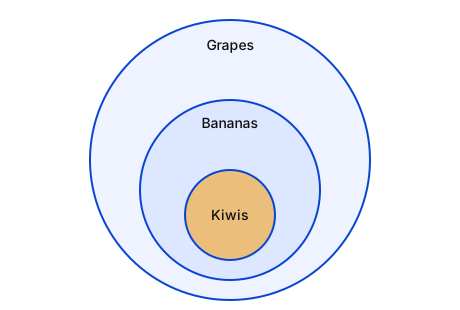
Statements: All kiwis are bananas. All bananas are grapes.
Conclusions (I): All kiwis are grapes.
Conclusions (II): Some grapes are bananas.
दिए गए कथनों और निष्कर्षों को ध्यानपूर्वक पढ़िए। यह मानते हुए कि कथनों में दी गई जानकारी सत्य है, भले ही वह सामान्यतः ज्ञात तथ्यों से भिन्न प्रतीत होती हो, निर्णय कीजिए कि दिए गए निष्कर्षों में से कौन-सा/से निष्कर्ष कथनों का तार्किक रूप से अनुसरण करता है/करते हैं।
कथन: सभी कीवी, केले हैं। सभी केले, अंगूर हैं।
निष्कर्ष (I): सभी कीवी, अंगूर हैं।
निष्कर्ष (II): कुछ अंगूर, केले हैं।
  1. AOnly conclusion (II) follows.केवल निष्कर्ष (II) अनुसरण करता है।
  2. BOnly conclusion (I) follows.केवल निष्कर्ष (I) अनुसरण करता है।
  3. CNeither conclusion (I) nor (II) follows.न तो निष्कर्ष (I) और न ही (II) अनुसरण करता है।
  4. DBoth conclusions (I) and (II) follow.निष्कर्ष (I) और (II) दोनों अनुसरण करते हैं।
Show answer

Concept: Draw nested circles: Kiwis inside Bananas inside Grapes.

  1. All kiwis are bananas and all bananas are grapes ⇒ all kiwis are grapes. (I) follows.
  2. All bananas are grapes ⇒ some grapes are bananas (conversion). (II) follows.

Yaad rakhein: 'All A are B' always gives 'Some B are A'.

Answer: (D) Both conclusions (I) and (II) follow.

अवधारणा: नेस्टेड वृत्त बनाएँ: कीवी ⊂ केले ⊂ अंगूर।

  1. सभी कीवी केले हैं और सभी केले अंगूर हैं ⇒ सभी कीवी अंगूर हैं। (I) अनुसरण करता है।
  2. सभी केले अंगूर हैं ⇒ कुछ अंगूर केले हैं (रूपांतरण)। (II) अनुसरण करता है।

याद रखें: 'सभी A, B हैं' से हमेशा 'कुछ B, A हैं' निकलता है।

उत्तर: (D) निष्कर्ष (I) और (II) दोनों अनुसरण करते हैं।

RRB NTPC Undergraduate CBT 1General Intelligence and ReasoningSyllogismRRB NTPC Undergraduate CBT 1 2024 · 21 Aug Shift 3 →
Q976.
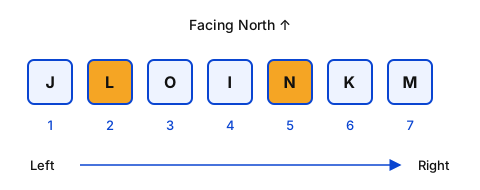
Seven people, I, J, K, L, M, N and O are sitting in a row, facing north. Only two people sit between J and I. Only M sits to the right of K. Only one person sits between I and K. O sits at some place to the right of L but at some place to the left of N. How many people sit between N and L?
सात व्यक्ति I, J, K, L, M, N और O एक पंक्ति में उत्तर की ओर मुख करके बैठे हैं। J और I के बीच केवल दो व्यक्ति बैठे हैं। K के दाईं ओर केवल M बैठा है। I और K के बीच केवल एक व्यक्ति बैठा है। O, L के दाईं ओर किसी स्थान पर, किंतु N के बाईं ओर किसी स्थान पर बैठा है। N और L के बीच कितने व्यक्ति बैठे हैं?
  1. ATwoदो
  2. BOneएक
  3. CFourचार
  4. DThreeतीन
Show answer

Concept: Start from the definite clue 'only M to the right of K'.

  1. K at 6, M at 7.
  2. One person between I and K ⇒ I at 4.
  3. Two between J and I ⇒ J at 1 (7 is taken).
  4. L, O, N in 2, 3, 5 with L left of O left of N ⇒ L2, O3, N5.
  5. Between N(5) and L(2): O, I ⇒ Two

Trick: Seats between positions p and q =|p−q|−1=5−2−1=2.

Answer: (A) Two

अवधारणा: निश्चित संकेत 'K के दाएँ केवल M' से शुरू करें।

  1. K स्थान 6, M स्थान 7।
  2. I और K के बीच एक ⇒ I स्थान 4।
  3. J और I के बीच दो ⇒ J स्थान 1 (7 भरा है)।
  4. L, O, N स्थान 2, 3, 5 में, L < O < N ⇒ L2, O3, N5।
  5. N(5) और L(2) के बीच: O, I ⇒ दो

ट्रिक: स्थान p और q के बीच व्यक्ति =|p−q|−1=5−2−1=2।

उत्तर: (A) दो

RRB NTPC Undergraduate CBT 1General Intelligence and ReasoningLinear seating arrangementRRB NTPC Undergraduate CBT 1 2024 · 21 Aug Shift 3 →
Q977.
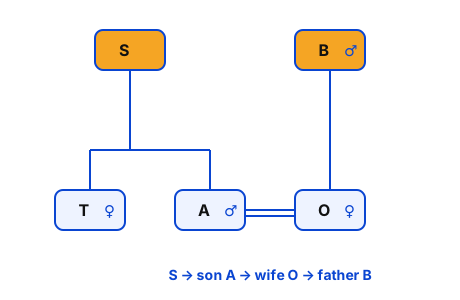
B is the father of O. O is the wife of A. A is the brother of T. T is the daughter of S. How is B related to S?
B, O का पिता है। O, A की पत्नी है। A, T का भाई है। T, S की पुत्री है। B का S से क्या संबंध है?
  1. ASon's wife's brotherपुत्र की पत्नी का भाई
  2. BSon's wife's sisterपुत्र की पत्नी की बहन
  3. CSon's wife's motherपुत्र की पत्नी की माता
  4. DSon's wife's fatherपुत्र की पत्नी का पिता
Show answer

Concept: Build the family tree from S downwards.

  1. T is the daughter of S and A is T's brother ⇒ A is S's son.
  2. O is A's wife ⇒ O is S's son's wife.
  3. B is O's father ⇒ B is S's son's wife's father.

Trick: Trace the path S → A → O → B and read each link.

Answer: (D) Son's wife's father

अवधारणा: S से नीचे की ओर वंश-वृक्ष बनाएँ।

  1. T, S की बेटी है और A, T का भाई ⇒ A, S का बेटा है।
  2. O, A की पत्नी ⇒ O, S के बेटे की पत्नी।
  3. B, O का पिता ⇒ B, S के बेटे की पत्नी का पिता।

ट्रिक: रास्ता S → A → O → B पढ़ें।

उत्तर: (D) बेटे की पत्नी के पिता (Son's wife's father)

RRB NTPC Undergraduate CBT 1General Intelligence and ReasoningBlood relationRRB NTPC Undergraduate CBT 1 2024 · 21 Aug Shift 3 →
Q978.
Which of the following options is the closest approximate value that will come in place of question mark (?) in the following equation?
63.9983+54 of 120.01% of 399.89−29.99÷3.01=?
निम्नलिखित में से कौन-सा विकल्प निकटतम अनुमानित मान है जो निम्नलिखित समीकरण में प्रश्न चिह्न (?) के स्थान पर आएगा?
63.9983+54 of 120.01% of 399.89−29.99÷3.01=?
  1. A544
  2. B594
  3. C449
  4. D494
Show answer

Concept: Round each value to the nearest convenient number, then follow BODMAS.

  1. 63.9983≈643=4
  2. 54 of 120% of 400=54×480=600
  3. 29.99÷3.01≈30÷3=10
  4. ?≈4+600−10=594

Trick: 'of' is multiplication; do it before + and −.

Answer: (B) 594

अवधारणा: प्रत्येक मान को निकटतम सुविधाजनक संख्या में बदलें, फिर BODMAS लगाएँ।

  1. 63.9983≈643=4
  2. 400 के 120% का 54=54×480=600
  3. 29.99÷3.01≈30÷3=10
  4. ?≈4+600−10=594

ट्रिक: 'का' (of) = गुणा; इसे + और − से पहले करें।

उत्तर: (B) 594

RRB NTPC Undergraduate CBT 1General Intelligence and ReasoningApproximationRRB NTPC Undergraduate CBT 1 2024 · 21 Aug Shift 3 →
Q979.
XAYA is related to BECE in a certain way based on the English alphabetical order. In the same way, GJHJ is related to KNLN. To which of the given options is MPNP related, following the same logic?
अंग्रेज़ी वर्णमाला क्रम के आधार पर XAYA एक निश्चित प्रकार से BECE से संबंधित है। उसी प्रकार, GJHJ, KNLN से संबंधित है। समान तर्क का अनुसरण करते हुए, MPNP दिए गए विकल्पों में से किससे संबंधित है?
  1. AQUQV
  2. BQSQT
  3. CQTQT
  4. DQTRT
Show answer

Concept: Find the shift of each letter in the given pairs.

  1. X→B, A→E, Y→C, A→E: each +4
  2. G→K, J→N, H→L, J→N: each +4
  3. M+4=Q, P+4=T, N+4=R, P+4=T ⇒ QTRT

Trick: Repeated letter (P, P) must give repeated letter (T, T).

Answer: (D) QTRT

अवधारणा: दिए गए युग्मों में हर अक्षर का खिसकाव (shift) निकालें।

  1. X→B, A→E, Y→C, A→E: प्रत्येक +4
  2. G→K, J→N, H→L, J→N: प्रत्येक +4
  3. M+4=Q, P+4=T, N+4=R, P+4=T ⇒ QTRT

ट्रिक: दोहराया अक्षर (P, P) दोहराया अक्षर (T, T) ही देगा।

उत्तर: (D) QTRT

RRB NTPC Undergraduate CBT 1General Intelligence and ReasoningLetter analogyRRB NTPC Undergraduate CBT 1 2024 · 21 Aug Shift 3 →
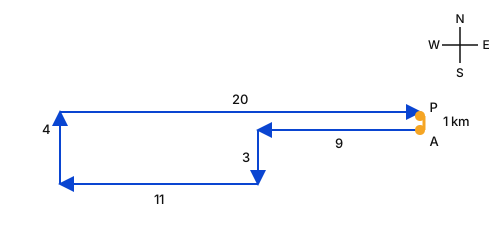
Q980.
Mr. Tim starts from point A and drives 9 km towards the west. He then takes a left turn, drives 3 km, turns right and drives 11 km. He then takes a right turn and drives 4 km. He takes a final right turn, drives 20 km and stops at Point P. How far (shortest distance) and in which direction should he drive in order to reach Point A again? (All turns are 90- degree turns only unless specified.)
श्री टिम बिंदु A से चलना शुरू करते हैं और 9 km पश्चिम की ओर गाड़ी चलाते हैं। फिर वे बाएँ मुड़ते हैं, 3 km गाड़ी चलाते हैं, दाएँ मुड़ते हैं और 11 km गाड़ी चलाते हैं। फिर वे दाएँ मुड़ते हैं और 4 km गाड़ी चलाते हैं। वे अंतिम बार दाएँ मुड़ते हैं, 20 km गाड़ी चलाते हैं और बिंदु P पर रुक जाते हैं। फिर से बिंदु A पर पहुँचने के लिए उन्हें कितनी दूरी (न्यूनतम दूरी) तक और किस दिशा में गाड़ी चलानी चाहिए? (जब तक निर्दिष्ट न हो, सभी मोड़ केवल 90 डिग्री के हैं।)
  1. A1 km to the southदक्षिण की ओर 1 km
  2. B3 km to the southदक्षिण की ओर 3 km
  3. C4 km to the eastपूर्व की ओर 4 km
  4. D2 km to the southदक्षिण की ओर 2 km
Show answer

Concept: Track net east-west and north-south displacement from A.

  1. West 9, left → South 3, right → West 11, right → North 4, right → East 20.
  2. East-West: −9−11+20=0
  3. North-South: −3+4=+1 ⇒ P is 1 km north of A.
  4. To return: 1 km towards south.

Trick: Left from West = South; right from South = West.

Answer: (A) 1 km to the south

अवधारणा: A से कुल पूर्व-पश्चिम और उत्तर-दक्षिण विस्थापन निकालें।

  1. पश्चिम 9, बाएँ → दक्षिण 3, दाएँ → पश्चिम 11, दाएँ → उत्तर 4, दाएँ → पूर्व 20।
  2. पूर्व-पश्चिम: −9−11+20=0
  3. उत्तर-दक्षिण: −3+4=+1 ⇒ P, A से 1 km उत्तर में।
  4. वापसी: 1 km दक्षिण की ओर।

ट्रिक: पश्चिम से बाएँ = दक्षिण; दक्षिण से दाएँ = पश्चिम।

उत्तर: (A) 1 km दक्षिण की ओर

RRB NTPC Undergraduate CBT 1General Intelligence and ReasoningDirection and distanceRRB NTPC Undergraduate CBT 1 2024 · 21 Aug Shift 3 →