Question bank

Q&A: practice questions with answers

Search questions on any topic. Filter by exam category, exam, subject and topic, try the question, then open the answer and explanation.

Courses – airGurukul

8,495 questions found.

Q981.
Refer to the following number and symbol series and answer the question that follows. All numbers are single-digit. Counting to be done from left to right only.
(Left) 4 6 @ 2 & % 8 $ 7 + 1 * £ 5 & 3 Ω 9 # (Right)
How many such symbols are there each of which is immediately preceded by a number and also immediately followed by another number?
निम्नलिखित संख्या और प्रतीक श्रृंखला को देखिए और नीचे दिए गए प्रश्न का उत्तर दीजिए। सभी संख्याएँ एक-अंकीय हैं। गिनती केवल बाएँ से दाएँ की जानी है।
(बाएँ) 4 6 @ 2 & % 8 $ 7 + 1 * £ 5 & 3 Ω 9 # (दाएँ)
ऐसे कितने प्रतीक हैं जिनमें से प्रत्येक के ठीक पहले एक संख्या है और ठीक बाद में भी एक अन्य संख्या है?
  1. A5
  2. B3
  3. C1
  4. D2
Show answer

Concept: For each symbol, check that both neighbours are numbers.

  1. 6 @ 2 ✓, 8 $ 7 ✓, 7 + 1 ✓, 5 & 3 ✓, 3 Ω 9 ✓
  2. & % (after 2), * £ (after 1) and # (at end) fail.
  3. Count =5

Trick: Look for the pattern number–symbol–number.

Answer: (A) 5

अवधारणा: हर प्रतीक के लिए दोनों पड़ोसी संख्याएँ हों, यह जाँचें।

  1. 6 @ 2 ✓, 8 $ 7 ✓, 7 + 1 ✓, 5 & 3 ✓, 3 Ω 9 ✓
  2. & % (2 के बाद), * £ (1 के बाद) और # (अंत में) विफल।
  3. संख्या =5

ट्रिक: पैटर्न संख्या–प्रतीक–संख्या खोजें।

उत्तर: (A) 5
RRB NTPC Undergraduate CBT 1General Intelligence and ReasoningSymbol-number seriesRRB NTPC Undergraduate CBT 1 2024 · 21 Aug Shift 3 →
Q982.
What should come in place of the question mark (?) in the given series?
96 102 104 110 112 ?
दी गई श्रृंखला में प्रश्न चिह्न (?) के स्थान पर क्या आना चाहिए?
96 102 104 110 112 ?
  1. A118
  2. B116
  3. C120
  4. D119
Show answer

Concept: Differences alternate between +6 and +2.

  1. 96+6=102, 102+2=104, 104+6=110, 110+2=112
  2. 112+6=118

Trick: Alternating differences – continue the cycle.

Answer: (A) 118

अवधारणा: अंतर बारी-बारी से +6 और +2 हैं।

  1. 96+6=102, 102+2=104, 104+6=110, 110+2=112
  2. 112+6=118

ट्रिक: बारी-बारी वाले अंतर – चक्र आगे बढ़ाएँ।

उत्तर: (A) 118

RRB NTPC Undergraduate CBT 1General Intelligence and ReasoningNumber seriesRRB NTPC Undergraduate CBT 1 2024 · 21 Aug Shift 3 →
Q983.
What will come in the place of the question mark (?) in the following equation, if ‘+’ and ‘÷’ are interchanged, and ‘−’ and ‘×’ are interchanged?
13 − 2 × 75 + 3 ÷ 24 = ?
यदि '+' और '÷' को आपस में बदल दिया जाए तथा '−' और '×' को आपस में बदल दिया जाए, तो निम्नलिखित समीकरण में प्रश्न चिह्न (?) के स्थान पर क्या आएगा?
13 − 2 × 75 + 3 ÷ 24 = ?
  1. A38
  2. B34
  3. C46
  4. D25
Show answer

Concept: Interchange the signs first, then apply BODMAS.

  1. 13−2×75+3÷24 becomes 13×2−75÷3+24
  2. =26−25+24=25

Trick: Rewrite the expression fully before calculating.

Answer: (D) 25

अवधारणा: पहले चिह्न बदलें, फिर BODMAS लगाएँ।

  1. 13−2×75+3÷24 बनता है 13×2−75÷3+24
  2. =26−25+24=25

ट्रिक: गणना से पहले पूरा व्यंजक दोबारा लिखें।

उत्तर: (D) 25

RRB NTPC Undergraduate CBT 1General Intelligence and ReasoningMathematical operationsRRB NTPC Undergraduate CBT 1 2024 · 21 Aug Shift 3 →
Q984.
What will come in place of the question mark (?) in the following equation, if ‘+’ and ‘×’ are interchanged and ‘−’ and ‘÷’ are interchanged?
8 + 5 ÷ 40 − 4 × 17 = ?
यदि '+' और '×' को आपस में बदल दिया जाए तथा '−' और '÷' को आपस में बदल दिया जाए, तो निम्नलिखित समीकरण में प्रश्न चिह्न (?) के स्थान पर क्या आएगा?
8 + 5 ÷ 40 − 4 × 17 = ?
  1. A52
  2. B47
  3. C58
  4. D40
Show answer

Concept: Interchange the signs first, then apply BODMAS.

  1. 8+5÷40−4×17 becomes 8×5−40÷4+17
  2. =40−10+17=47

Trick: Rewrite the expression fully before calculating.

Answer: (B) 47

अवधारणा: पहले चिह्न बदलें, फिर BODMAS लगाएँ।

  1. 8+5÷40−4×17 बनता है 8×5−40÷4+17
  2. =40−10+17=47

ट्रिक: गणना से पहले पूरा व्यंजक दोबारा लिखें।

उत्तर: (B) 47

RRB NTPC Undergraduate CBT 1General Intelligence and ReasoningMathematical operationsRRB NTPC Undergraduate CBT 1 2024 · 21 Aug Shift 3 →
Q985.
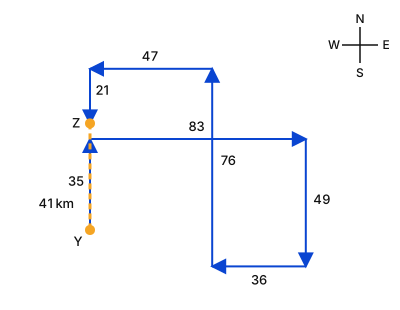
Mohit starts from Point Y and drives 35 km towards north. He then takes a right turn, drives 83 km, turns right and drives 49 km. He then takes a right turn and drives 36 km. He takes a right turn, drives 76 km. He then turns left, drives 47 km, turns left again, drives 21 km and stops at Point Z. How far (shortest distance) and towards which direction should he drive in order to reach Point Y again? (All turns are 90° turns only unless specified.)
मोहित बिंदु Y से चलना शुरू करता है और 35 km उत्तर की ओर गाड़ी चलाता है। फिर वह दाएँ मुड़ता है, 83 km गाड़ी चलाता है, दाएँ मुड़ता है और 49 km गाड़ी चलाता है। फिर वह दाएँ मुड़ता है और 36 km गाड़ी चलाता है। वह दाएँ मुड़ता है, 76 km गाड़ी चलाता है। फिर वह बाएँ मुड़ता है, 47 km गाड़ी चलाता है, फिर से बाएँ मुड़ता है, 21 km गाड़ी चलाता है और बिंदु Z पर रुक जाता है। फिर से बिंदु Y पर पहुँचने के लिए उसे कितनी दूरी (न्यूनतम दूरी) तक और किस दिशा में गाड़ी चलानी चाहिए? (जब तक निर्दिष्ट न हो, सभी मोड़ केवल 90° के हैं।)
  1. A37 km towards westपश्चिम की ओर 37 km
  2. B39 km towards northउत्तर की ओर 39 km
  3. C43 km towards eastपूर्व की ओर 43 km
  4. D41 km towards southदक्षिण की ओर 41 km
Show answer

Concept: Take Y as origin and add up east-west and north-south moves.

  1. N 35, right → E 83, right → S 49, right → W 36, right → N 76, left → W 47, left → S 21.
  2. East-West: 83−36−47=0
  3. North-South: 35−49+76−21=41 ⇒ Z is 41 km north of Y.
  4. Return: 41 km towards south.

Trick: If the east-west total is 0, the answer is purely N or S.

Answer: (D) 41 km towards south

अवधारणा: Y को मूल बिंदु मानकर पूर्व-पश्चिम और उत्तर-दक्षिण गतियाँ जोड़ें।

  1. उ 35, दाएँ → पू 83, दाएँ → द 49, दाएँ → प 36, दाएँ → उ 76, बाएँ → प 47, बाएँ → द 21।
  2. पूर्व-पश्चिम: 83−36−47=0
  3. उत्तर-दक्षिण: 35−49+76−21=41 ⇒ Z, Y से 41 km उत्तर में।
  4. वापसी: 41 km दक्षिण की ओर।

ट्रिक: पूर्व-पश्चिम योग 0 हो तो उत्तर केवल उ या द होगा।

उत्तर: (D) 41 km दक्षिण की ओर

RRB NTPC Undergraduate CBT 1General Intelligence and ReasoningDirection and distanceRRB NTPC Undergraduate CBT 1 2024 · 21 Aug Shift 3 →
Q986.
Based on the English alphabetical order, three of the following four letter-cluster pairs are alike in a certain way and thus form a group. Which letter-cluster pair DOES NOT belong to that group?
(Note: The odd one out is not based on the number of consonants/vowels or their position in the letter-cluster.)
अंग्रेज़ी वर्णमाला क्रम के आधार पर, निम्नलिखित चार अक्षर-समूह युग्मों में से तीन किसी निश्चित प्रकार से एकसमान हैं और इस प्रकार एक समूह बनाते हैं। कौन-सा अक्षर-समूह युग्म उस समूह से संबंधित नहीं है?
(ध्यान दें: असंगत अक्षर-समूह, उस अक्षर-समूह में व्यंजनों/स्वरों की संख्या या उनके स्थान पर आधारित नहीं है।)
  1. ANE-HL
  2. BPG-JN
  3. CLC-FJ
  4. DJA-DG
Show answer

Concept: Compare the letter shifts in each pair using positions (A=1 … Z=26).

  1. NE-HL: N14→H8 (−6), E5→L12 (+7)
  2. PG-JN: −6, +7; LC-FJ: −6, +7
  3. JA-DG: J10→D4 (−6), A1→G7 (+6) ✗

Trick: Write positions under letters and find the different step.

Answer: (D) JA-DG

अवधारणा: स्थानों (A=1 … Z=26) से हर युग्म में अक्षरों का खिसकाव देखें।

  1. NE-HL: N14→H8 (−6), E5→L12 (+7)
  2. PG-JN: −6, +7; LC-FJ: −6, +7
  3. JA-DG: J10→D4 (−6), A1→G7 (+6) ✗

ट्रिक: अक्षरों के नीचे स्थान लिखें और अलग चरण खोजें।

उत्तर: (D) JA-DG

RRB NTPC Undergraduate CBT 1General Intelligence and ReasoningOdd one out (letters)RRB NTPC Undergraduate CBT 1 2024 · 21 Aug Shift 3 →
Q987.
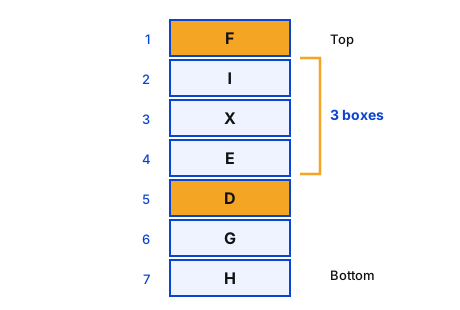
Seven boxes D, E, F, G, H, I and X are kept one over the other but not necessarily in the same order. Only F is kept above I. Only X is kept between I and E. Only H is kept below G. How many boxes are kept between D and F?
सात डिब्बे D, E, F, G, H, I और X एक के ऊपर एक रखे गए हैं, लेकिन जरूरी नहीं कि इसी क्रम में हों। I के ऊपर केवल F रखा है। I और E के बीच केवल X रखा है। G के नीचे केवल H रखा है। D और F के बीच कितने डिब्बे रखे हैं?
  1. AThreeतीन
  2. BTwoदो
  3. COneएक
  4. DFourचार
Show answer

Concept: Number positions 1 (top) to 7 (bottom) and place the definite clues.

  1. Only F above I ⇒ F1, I2.
  2. Only X between I and E ⇒ X3, E4.
  3. Only H below G ⇒ G6, H7; so D5.
  4. Between D(5) and F(1): I, X, E ⇒ Three

Trick: 'Only one above/below' fixes the top/bottom positions.

Answer: (A) Three

अवधारणा: स्थान 1 (ऊपर) से 7 (नीचे) तक मानकर निश्चित संकेत रखें।

  1. केवल F, I के ऊपर ⇒ F1, I2।
  2. I और E के बीच केवल X ⇒ X3, E4।
  3. केवल H, G के नीचे ⇒ G6, H7; अतः D5।
  4. D(5) और F(1) के बीच: I, X, E ⇒ तीन

ट्रिक: 'केवल एक ऊपर/नीचे' से शीर्ष/तल के स्थान तय होते हैं।

उत्तर: (A) तीन

RRB NTPC Undergraduate CBT 1General Intelligence and ReasoningBox arrangementRRB NTPC Undergraduate CBT 1 2024 · 21 Aug Shift 3 →
Q988.
VXZA is related to WYAB in a certain way based on the English alphabetical order. In the same way, YACD is related to ZBDE. To which of the following is BDFG related, following the same logic?
अंग्रेज़ी वर्णमाला क्रम के आधार पर VXZA एक निश्चित प्रकार से WYAB से संबंधित है। उसी प्रकार, YACD, ZBDE से संबंधित है। समान तर्क का अनुसरण करते हुए, BDFG निम्नलिखित में से किससे संबंधित है?
  1. ACFFH
  2. BCEGH
  3. CCDFH
  4. DCEFH
Show answer

Concept: Each letter moves +1.

  1. V→W, X→Y, Z→A, A→B
  2. Y→Z, A→B, C→D, D→E
  3. B→C, D→E, F→G, G→H ⇒ CEGH

Trick: Z +1 wraps around to A.

Answer: (B) CEGH

अवधारणा: हर अक्षर +1 आगे बढ़ता है।

  1. V→W, X→Y, Z→A, A→B
  2. Y→Z, A→B, C→D, D→E
  3. B→C, D→E, F→G, G→H ⇒ CEGH

ट्रिक: Z +1 घूमकर A बनता है।

उत्तर: (B) CEGH

RRB NTPC Undergraduate CBT 1General Intelligence and ReasoningLetter analogyRRB NTPC Undergraduate CBT 1 2024 · 21 Aug Shift 3 →
Q989.
In a certain code language, ‘the glass broke’ is written as ‘al tk jb’ and ‘answer the question ’ is coded as ‘ mo jb tu’. How is ‘the’ coded in the given language?
एक निश्चित कूट भाषा में, 'the glass broke' को 'al tk jb' लिखा जाता है और 'answer the question' को 'mo jb tu' के रूप में कूटबद्ध किया जाता है। दी गई भाषा में 'the' को किस प्रकार कूटबद्ध किया जाता है?
  1. Amo
  2. Btk
  3. Cjb
  4. Dal
Show answer

Concept: A word common to both sentences has the code common to both.

  1. 'the' is common to both sentences.
  2. 'jb' is the only code common to 'al tk jb' and 'mo jb tu'.

Trick: Match common words with common codes.

Answer: (C) jb

अवधारणा: दोनों वाक्यों में साझा शब्द का कोड भी दोनों में साझा होगा।

  1. 'the' दोनों वाक्यों में है।
  2. 'al tk jb' और 'mo jb tu' में केवल 'jb' साझा है।

ट्रिक: साझा शब्द ↔ साझा कोड।

उत्तर: (C) jb

RRB NTPC Undergraduate CBT 1General Intelligence and ReasoningCoding-decodingRRB NTPC Undergraduate CBT 1 2024 · 21 Aug Shift 3 →
Q990.
URKE is related to ZWPJ in a certain way based on the English alphabetical order. In the same way, OLEY is related to TQJD. To which of the given options is DATN related, following the same logic?
अंग्रेज़ी वर्णमाला क्रम के आधार पर URKE एक निश्चित प्रकार से ZWPJ से संबंधित है। उसी प्रकार, OLEY, TQJD से संबंधित है। समान तर्क का अनुसरण करते हुए, DATN दिए गए विकल्पों में से किससे संबंधित है?
  1. AIFYS
  2. BIYSF
  3. CIFSY
  4. DIUOP
Show answer

Concept: Each letter moves +5.

  1. U→Z, R→W, K→P, E→J
  2. O→T, L→Q, E→J, Y→D
  3. D→I, A→F, T→Y, N→S ⇒ IFYS

Trick: After Z, continue from A (Y +5 = D).

Answer: (A) IFYS

अवधारणा: हर अक्षर +5 आगे बढ़ता है।

  1. U→Z, R→W, K→P, E→J
  2. O→T, L→Q, E→J, Y→D
  3. D→I, A→F, T→Y, N→S ⇒ IFYS

ट्रिक: Z के बाद A से गिनें (Y +5 = D)।

उत्तर: (A) IFYS

RRB NTPC Undergraduate CBT 1General Intelligence and ReasoningLetter analogyRRB NTPC Undergraduate CBT 1 2024 · 21 Aug Shift 3 →
Q991.
What should come in place of the question mark (?) in the given series?
23 ? 46 59 73 88
दी गई श्रृंखला में प्रश्न चिह्न (?) के स्थान पर क्या आना चाहिए?
23 ? 46 59 73 88
  1. A36
  2. B34
  3. C42
  4. D30
Show answer

Concept: Differences increase by 1 each time.

  1. 59−46=13, 73−59=14, 88−73=15
  2. So earlier differences are 11 and 12.
  3. 23+11=34, 34+12=46 ✓

Trick: Work backwards from the known differences.

Answer: (B) 34

अवधारणा: अंतर हर बार 1 से बढ़ता है।

  1. 59−46=13, 73−59=14, 88−73=15
  2. अतः पहले के अंतर 11 और 12 हैं।
  3. 23+11=34, 34+12=46 ✓

ट्रिक: ज्ञात अंतरों से पीछे की ओर चलें।

उत्तर: (B) 34

RRB NTPC Undergraduate CBT 1General Intelligence and ReasoningNumber seriesRRB NTPC Undergraduate CBT 1 2024 · 21 Aug Shift 3 →
Q992.
If 1 is subtracted from each odd digit of the number 95423671, then what will be the product of the digits that are repeated more than once in the new number formed?
यदि संख्या 95423671 के प्रत्येक विषम अंक में से 1 घटा दिया जाए, तो इस प्रकार बनी नई संख्या में एक से अधिक बार आने वाले अंकों का गुणनफल क्या होगा?
  1. A8
  2. B48
  3. C24
  4. D16
Show answer

Concept: Change only the odd digits, then find repeated digits.

  1. 95423671: odd digits 9, 5, 3, 7, 1 become 8, 4, 2, 6, 0.
  2. New number: 84422660
  3. Repeated digits: 4, 2, 6
  4. Product =4×2×6=48

Trick: Even digits stay unchanged – write the new number fully.

Answer: (B) 48

अवधारणा: केवल विषम अंक बदलें, फिर दोहराए गए अंक खोजें।

  1. 95423671: विषम अंक 9, 5, 3, 7, 1 बनते हैं 8, 4, 2, 6, 0।
  2. नई संख्या: 84422660
  3. दोहराए अंक: 4, 2, 6
  4. गुणनफल =4×2×6=48

ट्रिक: सम अंक वैसे ही रहते हैं – नई संख्या पूरी लिखें।

उत्तर: (B) 48

RRB NTPC Undergraduate CBT 1General Intelligence and ReasoningDigit operationsRRB NTPC Undergraduate CBT 1 2024 · 21 Aug Shift 3 →
Q993.
What should come in place of the question mark (?) in the given series?
50 61 78 101 132 173 ?
दी गई श्रृंखला में प्रश्न चिह्न (?) के स्थान पर क्या आना चाहिए?
50 61 78 101 132 173 ?
  1. A201
  2. B220
  3. C221
  4. D210
Show answer

Concept: Differences are alternate prime numbers.

  1. Differences: 11, 17, 23, 31, 41
  2. Primes: 11, (13), 17, (19), 23, (29), 31, (37), 41, (43), 47
  3. Next difference 47 ⇒ 173+47=220

Trick: If differences look irregular, compare with the prime list.

Answer: (B) 220

अवधारणा: अंतर एकांतर अभाज्य संख्याएँ (alternate primes) हैं।

  1. अंतर: 11, 17, 23, 31, 41
  2. अभाज्य: 11, (13), 17, (19), 23, (29), 31, (37), 41, (43), 47
  3. अगला अंतर 47 ⇒ 173+47=220

ट्रिक: अंतर अनियमित लगें तो अभाज्य सूची से मिलाएँ।

उत्तर: (B) 220

RRB NTPC Undergraduate CBT 1General Intelligence and ReasoningNumber seriesRRB NTPC Undergraduate CBT 1 2024 · 21 Aug Shift 3 →
Q994.
Based on the English alphabetical order, three of the following four letter-clusters are alike in a certain way and thus form a group. Which letter-cluster DOES NOT belong to that group?
(Note: The odd one out is not based on the number of consonants/vowels or their position in the letter-cluster.)
अंग्रेज़ी वर्णमाला क्रम के आधार पर, निम्नलिखित चार अक्षर-समूहों में से तीन किसी निश्चित प्रकार से एकसमान हैं और इस प्रकार एक समूह बनाते हैं। कौन-सा अक्षर-समूह उस समूह से संबंधित नहीं है?
(ध्यान दें: असंगत अक्षर-समूह, उस अक्षर-समूह में व्यंजनों/स्वरों की संख्या या उनके स्थान पर आधारित नहीं है।)
  1. AMPO
  2. BYBZ
  3. CORP
  4. DEHF
Show answer

Concept: Check the shifts first→second and second→third.

  1. YBZ: +3, −2; ORP: +3, −2; EHF: +3, −2
  2. MPO: M→P +3, P→O −1 ✗

Trick: Same first step, so the second step decides.

Answer: (A) MPO

अवधारणा: पहले→दूसरे और दूसरे→तीसरे अक्षर का खिसकाव देखें।

  1. YBZ: +3, −2; ORP: +3, −2; EHF: +3, −2
  2. MPO: M→P +3, P→O −1 ✗

ट्रिक: पहला चरण समान है, इसलिए दूसरा चरण निर्णय करता है।

उत्तर: (A) MPO

RRB NTPC Undergraduate CBT 1General Intelligence and ReasoningOdd one out (letters)RRB NTPC Undergraduate CBT 1 2024 · 21 Aug Shift 3 →
Q995.
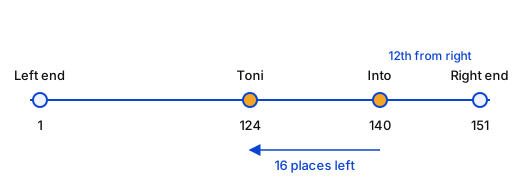
In a row of 151 students facing north, Mr. Into is 12th from the right end. If Mr. Toni is 16th to the left of Mr. Into; what is Mr. Toni's position from the left end of the line?
उत्तर की ओर मुख करके खड़े 151 विद्यार्थियों की एक पंक्ति में, श्री इंटो दाएँ छोर से 12वें स्थान पर हैं। यदि श्री टोनी, श्री इंटो के बाईं ओर 16वें स्थान पर हैं, तो पंक्ति के बाएँ छोर से श्री टोनी का स्थान क्या है?
  1. A126th126वाँ
  2. B123rd123वाँ
  3. C124th124वाँ
  4. D125th125वाँ
Show answer

Concept: Position from left = total − position from right +1.

  1. Into from left =151−12+1=140
  2. Toni is 16 places to the left: 140−16=124

Trick: Moving left decreases the position from the left end.

Answer: (C) 124th

अवधारणा: बाएँ से स्थान = कुल − दाएँ से स्थान +1।

  1. Into बाएँ से =151−12+1=140
  2. Toni 16 स्थान बाएँ: 140−16=124

ट्रिक: बाएँ जाने पर बाएँ छोर से स्थान घटता है।

उत्तर: (C) 124वाँ

RRB NTPC Undergraduate CBT 1General Intelligence and ReasoningRank and positionRRB NTPC Undergraduate CBT 1 2024 · 21 Aug Shift 3 →
Q996.
What should come in place of the question mark (?) in the given series based on the English alphabetical order?
WJO, BHR, GFU, ?, QBA
अंग्रेज़ी वर्णमाला क्रम के आधार पर दी गई श्रृंखला में प्रश्न चिह्न (?) के स्थान पर क्या आना चाहिए?
WJO, BHR, GFU, ?, QBA
  1. ALDC
  2. BLWC
  3. CLDX
  4. DLMX
Show answer

Concept: Track each letter position separately.

  1. 1st: W, B, G, L, Q (+5)
  2. 2nd: J, H, F, D, B (−2)
  3. 3rd: O, R, U, X, A (+3)
  4. Missing term: LDX

Trick: Split the clusters into columns.

Answer: (C) LDX

अवधारणा: हर स्थान के अक्षर को अलग से देखें।

  1. पहला: W, B, G, L, Q (+5)
  2. दूसरा: J, H, F, D, B (−2)
  3. तीसरा: O, R, U, X, A (+3)
  4. लुप्त पद: LDX

ट्रिक: समूहों को स्तंभों में बाँटें।

उत्तर: (C) LDX

RRB NTPC Undergraduate CBT 1General Intelligence and ReasoningLetter seriesRRB NTPC Undergraduate CBT 1 2024 · 21 Aug Shift 3 →
Q997.
In the following number-pairs, the second number is obtained by applying certain mathematical operation(s) to the first number. Select the number-pair in which the numbers are related in the same way as are the numbers of the following pairs. (NOTE: Operations should be performed on the whole numbers, without breaking down the numbers into their constituent digits. E.g. 13 – Operations on 13 such as adding to/subtracting from/multiplying with 13 can be performed. Breaking down 13 into 1 and 3 and then performing mathematical operations on 1 and 3 is not allowed.)
15, 224
8, 63
निम्नलिखित संख्या-युग्मों में, पहली संख्या पर कुछ निश्चित गणितीय संक्रिया/संक्रियाएँ करके दूसरी संख्या प्राप्त की जाती है। उस संख्या-युग्म का चयन कीजिए जिसमें संख्याएँ उसी प्रकार संबंधित हैं जिस प्रकार निम्नलिखित युग्मों की संख्याएँ संबंधित हैं। (ध्यान दें: संक्रियाएँ संख्याओं को उनके घटक अंकों में विभाजित किए बिना, पूर्ण संख्याओं पर की जानी चाहिए। उदाहरण के लिए 13 – 13 पर संक्रियाएँ जैसे 13 में जोड़ना/13 में से घटाना/13 से गुणा करना आदि की जा सकती हैं। 13 को 1 और 3 में विभाजित करके फिर 1 और 3 पर गणितीय संक्रियाएँ करने की अनुमति नहीं है।)
15, 224
8, 63
  1. A9, 80
  2. B11, 123
  3. C6, 37
  4. D13, 170
Show answer

Concept: Second number =(first)2−1.

  1. 152−1=224, 82−1=63
  2. 92−1=80 ✓
  3. 112−1=120≠123; 62−1=35≠37; 132−1=168≠170

Trick: Numbers just below a square ⇒ try n2−1.

Answer: (A) 9, 80

अवधारणा: दूसरी संख्या =(पहली)2−1।

  1. 152−1=224, 82−1=63
  2. 92−1=80 ✓
  3. 112−1=120≠123; 62−1=35≠37; 132−1=168≠170

ट्रिक: वर्ग से ठीक कम संख्याएँ ⇒ n2−1 आज़माएँ।

उत्तर: (A) 9, 80

RRB NTPC Undergraduate CBT 1General Intelligence and ReasoningNumber pair analogyRRB NTPC Undergraduate CBT 1 2024 · 21 Aug Shift 3 →
Q998.
Based on the English alphabetical order, three of the following four letter-cluster pairs are alike in a certain way and thus form a group. Which is the letter-cluster pair that DOES NOT belong to that group?
(Note: The odd one out is not based on the number of consonants/vowels or their position in the letter-cluster.)
अंग्रेज़ी वर्णमाला क्रम के आधार पर, निम्नलिखित चार अक्षर-समूह युग्मों में से तीन किसी निश्चित प्रकार से एकसमान हैं और इस प्रकार एक समूह बनाते हैं। वह कौन-सा अक्षर-समूह युग्म है जो उस समूह से संबंधित नहीं है?
(ध्यान दें: असंगत अक्षर-समूह, उस अक्षर-समूह में व्यंजनों/स्वरों की संख्या या उनके स्थान पर आधारित नहीं है।)
  1. ABR-XE
  2. BCS-YA
  3. CVL-RT
  4. DHX-DF
Show answer

Concept: Compare the shifts of first letters and second letters (A=1 … Z=26).

  1. CS-YA: C→Y −4, S→A +8
  2. VL-RT: −4, +8; HX-DF: −4, +8
  3. BR-XE: B→X −4, R18→E5 +13 ✗

Trick: Count forward with wrap-around: S +8 = A, X +8 = F.

Answer: (A) BR-XE

अवधारणा: पहले और दूसरे अक्षरों का खिसकाव (A=1 … Z=26) तुलना करें।

  1. CS-YA: C→Y −4, S→A +8
  2. VL-RT: −4, +8; HX-DF: −4, +8
  3. BR-XE: B→X −4, R18→E5 +13 ✗

ट्रिक: Z के बाद घूमकर गिनें: S +8 = A, X +8 = F।

उत्तर: (A) BR-XE

RRB NTPC Undergraduate CBT 1General Intelligence and ReasoningOdd one out (letters)RRB NTPC Undergraduate CBT 1 2024 · 21 Aug Shift 3 →
Q999.
Which of the following letter-number clusters will replace the question mark (?) in the given series to make it logically complete?
BD 99 GI 97 LN 93 QS 87 ?
दी गई श्रृंखला को तार्किक रूप से पूर्ण करने के लिए निम्नलिखित में से कौन-सा अक्षर-संख्या समूह प्रश्न चिह्न (?) का स्थान लेगा?
BD 99 GI 97 LN 93 QS 87 ?
  1. AVX 79
  2. BTV 79
  3. CUW 77
  4. DVW 77
Show answer

Concept: Letters and numbers follow separate patterns.

  1. Letters: BD, GI, LN, QS → each letter +5 ⇒ VX
  2. Numbers: 99, 97, 93, 87 → −2,−4,−6, next −8 ⇒ 79
  3. Next term: VX 79

Trick: Handle the letter and number parts separately.

Answer: (A) VX 79

अवधारणा: अक्षर और संख्याएँ अलग पैटर्न अपनाते हैं।

  1. अक्षर: BD, GI, LN, QS → प्रत्येक +5 ⇒ VX
  2. संख्या: 99, 97, 93, 87 → −2,−4,−6, अगला −8 ⇒ 79
  3. अगला पद: VX 79

ट्रिक: अक्षर और संख्या भाग अलग-अलग हल करें।

उत्तर: (A) VX 79

RRB NTPC Undergraduate CBT 1General Intelligence and ReasoningLetter-number seriesRRB NTPC Undergraduate CBT 1 2024 · 21 Aug Shift 3 →
Q1000.
Read the given statements and conclusions carefully. Assuming that the information given in the statements is true, even if it appears to be at variance with commonly known facts, decide which of the given conclusion(s) logically follow(s) from the statements.
Statements:
Some lipsticks are tabs.
No tab is a kite.
Conclusions:
(I): Some lipsticks are kites.
(II): Some tabs are lipsticks.
दिए गए कथनों और निष्कर्षों को ध्यानपूर्वक पढ़िए। यह मानते हुए कि कथनों में दी गई जानकारी सत्य है, भले ही वह सामान्यतः ज्ञात तथ्यों से भिन्न प्रतीत होती हो, निर्णय कीजिए कि दिए गए निष्कर्षों में से कौन-सा/से निष्कर्ष कथनों का तार्किक रूप से अनुसरण करता है/करते हैं।
कथन:
कुछ लिपस्टिक, टैब हैं।
कोई टैब, पतंग नहीं है।
निष्कर्ष:
(I): कुछ लिपस्टिक, पतंग हैं।
(II): कुछ टैब, लिपस्टिक हैं।
  1. AOnly conclusion (II) follows.केवल निष्कर्ष (II) अनुसरण करता है।
  2. BBoth conclusions (I) and (II) follow.निष्कर्ष (I) और (II) दोनों अनुसरण करते हैं।
  3. COnly conclusion (I) follows.केवल निष्कर्ष (I) अनुसरण करता है।
  4. DNeither conclusion (I) nor (II) follows.न तो निष्कर्ष (I) और न ही (II) अनुसरण करता है।
Show answer

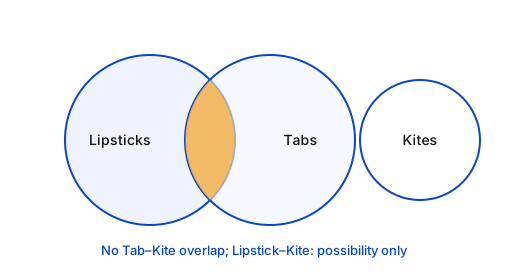
Concept: Draw Lipsticks overlapping Tabs, and Kites separate from Tabs.

  1. 'Some lipsticks are tabs' ⇒ 'Some tabs are lipsticks' (conversion). (II) follows.
  2. Kites only avoid Tabs; Lipsticks may or may not meet Kites ⇒ (I) is only a possibility, does not follow.

Yaad rakhein: 'Some + No' never gives a definite 'Some' between the end terms.

Answer: (A) Only conclusion (II) follows.

अवधारणा: Lipsticks और Tabs को अतिव्यापी, Kites को Tabs से अलग बनाएँ।

  1. 'कुछ लिपस्टिक टैब हैं' ⇒ 'कुछ टैब लिपस्टिक हैं' (रूपांतरण)। (II) अनुसरण करता है।
  2. Kites केवल Tabs से अलग हैं; Lipsticks और Kites मिल भी सकते हैं, नहीं भी ⇒ (I) केवल संभावना है, अनुसरण नहीं करता।

याद रखें: 'कुछ + कोई नहीं' से अंतिम पदों में निश्चित 'कुछ' नहीं निकलता।

उत्तर: (A) केवल निष्कर्ष (II) अनुसरण करता है।

RRB NTPC Undergraduate CBT 1General Intelligence and ReasoningSyllogismRRB NTPC Undergraduate CBT 1 2024 · 21 Aug Shift 3 →