Question bank

Q&A: practice questions with answers

Search questions on any topic. Filter by exam category, exam, subject and topic, try the question, then open the answer and explanation.

Courses – airGurukul

8,495 questions found.

Q1081.
Tiya, Tarun, Shyam, Jiya, Varun and Ram are sitting around a circle, facing the centre. Ram sits third to the right of Tarun. Tarun sits second to the right of Tiya. Shyam sits to the immediate right of Varun. Who sits second to the right of Tarun?
टिया, तरुण, श्याम, जिया, वरुण और राम एक वृत्त के चारों ओर केंद्र की ओर मुख करके बैठे हैं। राम, तरुण के दाईं ओर तीसरे स्थान पर बैठा है। तरुण, टिया के दाईं ओर दूसरे स्थान पर बैठा है। श्याम, वरुण के ठीक दाईं ओर बैठा है। तरुण के दाईं ओर दूसरे स्थान पर कौन बैठा है?
  1. AVarunवरुण
  2. BTiyaटिया
  3. CJiyaजिया
  4. DShyamश्याम
Show answer

Concept: Facing the centre, 'right' means moving anticlockwise.
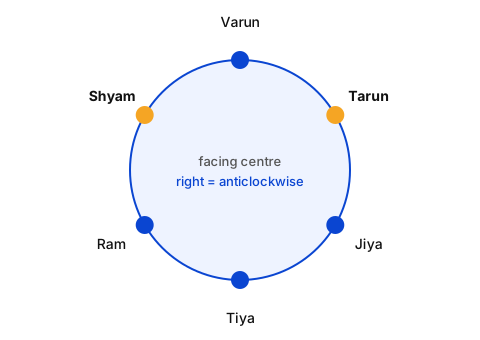
  1. Place Tiya; Tarun is 2nd to her right.
  2. Ram is 3rd to the right of Tarun (exactly opposite).
  3. Remaining seats: one between Tiya and Tarun, two between Tarun and Ram. Shyam is immediate right of Varun → Varun, Shyam fill the pair after Tarun; Jiya sits between Tiya and Tarun.
  4. 2nd to the right of Tarun: Varun (1st), Shyam (2nd).

Trick: In a circle of 6, 3rd to the right = directly opposite.

Answer: (D) Shyam

अवधारणा: केंद्र की ओर मुख होने पर 'दाएँ' = वामावर्त (anticlockwise)।

  1. टिया को रखें; तरुण उसके दाएँ दूसरे स्थान पर।
  2. राम, तरुण के दाएँ तीसरे स्थान पर (ठीक सामने)।
  3. शेष: टिया-तरुण के बीच एक स्थान, तरुण-राम के बीच दो। श्याम, वरुण के ठीक दाएँ → तरुण के बाद वरुण, फिर श्याम; जिया टिया और तरुण के बीच।
  4. तरुण के दाएँ: वरुण (पहला), श्याम (दूसरा)।

ट्रिक: 6 के वृत्त में दाएँ तीसरा = ठीक सामने।

उत्तर: (D) श्याम
RRB NTPC Undergraduate CBT 1General Intelligence and ReasoningCircular Seating ArrangementRRB NTPC Undergraduate CBT 1 2024 · 21 Aug Shift 1 →
Q1082.
Read the given statements and conclusions carefully. Assuming that the information given in the statements is true, even if it appears to be at variance with commonly known facts, decide which of the given conclusions logically follow(s) from the statements.
Statements:
All fans are bulbs.
No bulb is a geyser.
Conclusions:
(I): No fan is a geyser.
(II): No geyser is a bulb.
दिए गए कथनों और निष्कर्षों को ध्यानपूर्वक पढ़िए। यह मानते हुए कि कथनों में दी गई जानकारी सत्य है, भले ही वह सामान्यतः ज्ञात तथ्यों से भिन्न प्रतीत होती हो, निर्णय लीजिए कि दिए गए निष्कर्षों में से कौन-सा/कौन-से निष्कर्ष कथनों का तार्किक रूप से अनुसरण करता है/करते हैं।
कथन:
सभी पंखे, बल्ब हैं।
कोई बल्ब, गीज़र नहीं है।
निष्कर्ष:
(I): कोई पंखा, गीज़र नहीं है।
(II): कोई गीज़र, बल्ब नहीं है।
  1. ABoth conclusions (I) and (II) follow.निष्कर्ष (I) और (II) दोनों अनुसरण करते हैं।
  2. BOnly conclusion (II) follows.केवल निष्कर्ष (II) अनुसरण करता है।
  3. COnly conclusion (I) follows.केवल निष्कर्ष (I) अनुसरण करता है।
  4. DNeither conclusion (I) nor (II) follows.न तो निष्कर्ष (I) और न ही (II) अनुसरण करता है।
Show answer

Concept: All A are B + No B is C ⇒ No A is C; and 'No B is C' converts to 'No C is B'.

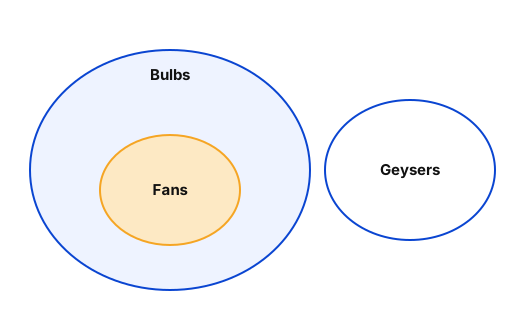
  1. Fans lie fully inside Bulbs; Bulbs and Geysers do not touch.
  2. So no fan can be a geyser → (I) follows.
  3. 'No bulb is a geyser' is the same as 'No geyser is a bulb' → (II) follows.

Trick: A universal negative (No…) can always be reversed.

Answer: (A) Both conclusions (I) and (II) follow.

अवधारणा: सभी A, B हैं + कोई B, C नहीं ⇒ कोई A, C नहीं; और 'कोई B, C नहीं' = 'कोई C, B नहीं'।

  1. पंखे पूरी तरह बल्ब के अंदर; बल्ब और गीज़र अलग।
  2. अतः कोई पंखा गीज़र नहीं → (I) अनुसरण करता है।
  3. 'कोई बल्ब गीज़र नहीं' = 'कोई गीज़र बल्ब नहीं' → (II) अनुसरण करता है।

ट्रिक: सार्वभौमिक नकारात्मक (कोई…नहीं) कथन को हमेशा उलटा जा सकता है।

उत्तर: (A) निष्कर्ष (I) और (II) दोनों अनुसरण करते हैं।

RRB NTPC Undergraduate CBT 1General Intelligence and ReasoningSyllogismRRB NTPC Undergraduate CBT 1 2024 · 21 Aug Shift 1 →
Q1083.
MONK is related to SUTQ in a certain way based on the English alphabetical order. In the same way, KMLI is related to QSRO. To which of the following is CEDA related, following the same logic?
अंग्रेज़ी वर्णमाला क्रम के आधार पर MONK एक निश्चित प्रकार से SUTQ से संबंधित है। उसी प्रकार, KMLI, QSRO से संबंधित है। समान तर्क का अनुसरण करते हुए, CEDA निम्नलिखित में से किससे संबंधित है?
  1. AIKOP
  2. BIKJG
  3. CJUIY
  4. DJUYT
Show answer

Concept: Find the shift of each letter.

  1. MONK → SUTQ: M+6=S, O+6=U, N+6=T, K+6=Q.
  2. KMLI → QSRO: each +6 ✓.
  3. CEDA +6 each: I, K, J, G → IKJG.

Trick: Uniform +6 shift for every letter.

Answer: (B) IKJG

अवधारणा: प्रत्येक अक्षर का खिसकाव निकालें।

  1. MONK → SUTQ: M+6=S, O+6=U, N+6=T, K+6=Q।
  2. KMLI → QSRO: हर अक्षर +6 ✓।
  3. CEDA में हर अक्षर +6: I, K, J, G → IKJG।

ट्रिक: हर अक्षर में समान +6।

उत्तर: (B) IKJG

RRB NTPC Undergraduate CBT 1General Intelligence and ReasoningLetter AnalogyRRB NTPC Undergraduate CBT 1 2024 · 21 Aug Shift 1 →
Q1084.
What will come in place of the question mark (?) in the following equation, if ‘+’ and ‘−’ are interchanged and ‘×’ and ‘÷’ are interchanged?
42 × 6 − 18 ÷ 4 + 15 = ?
यदि ‘+’ और ‘−’ को आपस में बदल दिया जाए तथा ‘×’ और ‘÷’ को आपस में बदल दिया जाए, तो निम्नलिखित समीकरण में प्रश्न चिह्न (?) के स्थान पर क्या आएगा?
42 × 6 − 18 ÷ 4 + 15 = ?
  1. A64
  2. B66
  3. C68
  4. D62
Show answer

Concept: Interchange the signs, then apply BODMAS.

  1. New expression: 42÷6+18×4−15.
  2. 42÷6=7, 18×4=72.
  3. 7+72−15=64.

Trick: Rewrite the whole expression with new signs before calculating.

Answer: (A) 64

अवधारणा: चिह्न आपस में बदलें, फिर BODMAS लगाएँ।

  1. नया व्यंजक: 42÷6+18×4−15।
  2. 42÷6=7, 18×4=72।
  3. 7+72−15=64।

ट्रिक: गणना से पहले पूरा व्यंजक नए चिह्नों में लिख लें।

उत्तर: (A) 64

RRB NTPC Undergraduate CBT 1General Intelligence and ReasoningMathematical OperationsRRB NTPC Undergraduate CBT 1 2024 · 21 Aug Shift 1 →
Q1085.
Based on the English alphabetical order, three of the following four letter-clusters are alike in a certain way and thus form a group. Which letter-cluster DOES NOT belong to that group?
(Note: The odd one out is not based on the number of consonants/vowels or their position in the letter-cluster.)
अंग्रेज़ी वर्णमाला क्रम के आधार पर, निम्नलिखित चार अक्षर-समूहों में से तीन किसी निश्चित प्रकार से एकसमान हैं और इस प्रकार एक समूह बनाते हैं। कौन-सा अक्षर-समूह उस समूह से संबंधित नहीं है?
(नोट: असंगत अक्षर-समूह, उस अक्षर-समूह में व्यंजनों/स्वरों की संख्या या उनके स्थान पर आधारित नहीं है।)
  1. APRN
  2. BVXT
  3. CTVR
  4. DRTO
Show answer

Concept: Check the gaps between letters in each cluster.

  1. PRN: P+2=R, R−4=N.
  2. VXT: V+2=X, X−4=T; TVR: T+2=V, V−4=R.
  3. RTO: R+2=T, but T−5=O (not −4) → odd one.

Trick: Write position numbers: P16 R18 N14 – pattern +2,−4.

Answer: (D) RTO

अवधारणा: प्रत्येक समूह में अक्षरों के बीच का अंतर देखें।

  1. PRN: P+2=R, R−4=N।
  2. VXT: V+2=X, X−4=T; TVR: T+2=V, V−4=R।
  3. RTO: R+2=T, पर T−5=O (−4 नहीं) → विषम।

ट्रिक: स्थान संख्या लिखें: P16 R18 N14 – पैटर्न +2,−4।

उत्तर: (D) RTO

RRB NTPC Undergraduate CBT 1General Intelligence and ReasoningOdd One Out – LettersRRB NTPC Undergraduate CBT 1 2024 · 21 Aug Shift 1 →
Q1086.
Read the given statements and conclusions carefully. Assuming that the information given in the statements is true, even if it appears to be at variance with commonly known facts, decide which of the given conclusion(s) logically follow(s) from the statements.
Statements:
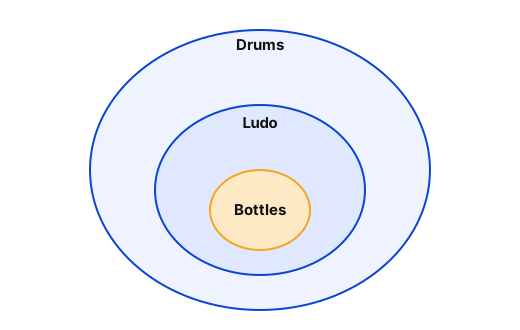
All bottles are ludo.
All ludo are drums.
Conclusions:
(I): Some drums are ludo.
(II): All bottles are drums.
दिए गए कथनों और निष्कर्षों को ध्यानपूर्वक पढ़िए। यह मानते हुए कि कथनों में दी गई जानकारी सत्य है, भले ही वह सामान्यतः ज्ञात तथ्यों से भिन्न प्रतीत होती हो, निर्णय लीजिए कि दिए गए निष्कर्षों में से कौन-सा/कौन-से निष्कर्ष कथनों का तार्किक रूप से अनुसरण करता है/करते हैं।
कथन:
सभी बोतलें, लूडो हैं।
सभी लूडो, ड्रम हैं।
निष्कर्ष:
(I): कुछ ड्रम, लूडो हैं।
(II): सभी बोतलें, ड्रम हैं।
  1. AOnly conclusion (I) follows.केवल निष्कर्ष (I) अनुसरण करता है।
  2. BBoth conclusions (I) and (II) follow.निष्कर्ष (I) और (II) दोनों अनुसरण करते हैं।
  3. COnly conclusion (II) follows.केवल निष्कर्ष (II) अनुसरण करता है।
  4. DNeither conclusion (I) nor (II) follows.न तो निष्कर्ष (I) और न ही (II) अनुसरण करता है।
Show answer

Concept: Chain of 'All' statements: All A are B, All B are C ⇒ All A are C.

  1. Bottles ⊂ Ludo ⊂ Drums.
  2. Ludo lies inside Drums, so some drums are ludo → (I) follows.
  3. Bottles lie inside Drums → all bottles are drums → (II) follows.

Trick: 'All A are B' always gives 'Some B are A'.

Answer: (B) Both conclusions (I) and (II) follow.

अवधारणा: 'सभी' कथनों की श्रृंखला: सभी A, B हैं; सभी B, C हैं ⇒ सभी A, C हैं।

  1. बोतल ⊂ लूडो ⊂ ड्रम।
  2. लूडो ड्रम के अंदर है, अतः कुछ ड्रम लूडो हैं → (I) अनुसरण करता है।
  3. बोतल ड्रम के अंदर → सभी बोतलें ड्रम हैं → (II) अनुसरण करता है।

ट्रिक: 'सभी A, B हैं' से हमेशा 'कुछ B, A हैं' निकलता है।

उत्तर: (B) निष्कर्ष (I) और (II) दोनों अनुसरण करते हैं।

RRB NTPC Undergraduate CBT 1General Intelligence and ReasoningSyllogismRRB NTPC Undergraduate CBT 1 2024 · 21 Aug Shift 1 →
Q1087.
What should come in place of the question mark (?) in the given series?
515 518 523 530 539 ?
दी गई श्रृंखला में प्रश्न चिह्न (?) के स्थान पर क्या आना चाहिए?
515 518 523 530 539 ?
  1. A550
  2. B549
  3. C548
  4. D551
Show answer

Concept: Check the differences.

  1. Differences: 3,5,7,9 (consecutive odd numbers).
  2. Next difference =11.
  3. 539+11=550.

Trick: Terms are 514+n2: 514+62=550.

Answer: (A) 550

अवधारणा: अंतर देखें।

  1. अंतर: 3,5,7,9 (क्रमागत विषम संख्याएँ)।
  2. अगला अंतर =11।
  3. 539+11=550।

ट्रिक: पद 514+n2 हैं: 514+62=550।

उत्तर: (A) 550

RRB NTPC Undergraduate CBT 1General Intelligence and ReasoningNumber SeriesRRB NTPC Undergraduate CBT 1 2024 · 21 Aug Shift 1 →
Q1088.
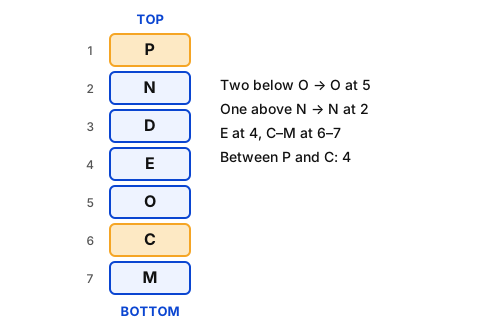
Seven boxes C, D, E, M, N, O and P are kept one over the other but not necessarily in the same order.
Only two boxes are kept below O. Only one box is kept above N. Only one box is kept between N and E. C is kept immediately above M. D is kept at some place below P. How many boxes are kept between P and C?
सात बॉक्स C, D, E, M, N, O और P एक के ऊपर एक रखे गए हैं, लेकिन आवश्यक नहीं कि इसी क्रम में हों।
O के नीचे केवल दो बॉक्स रखे गए हैं। N के ऊपर केवल एक बॉक्स रखा गया है। N और E के बीच केवल एक बॉक्स रखा गया है। C को M के ठीक ऊपर रखा गया है। D को P के नीचे कहीं रखा गया है। P और C के बीच कितने बॉक्स रखे गए हैं?
  1. AOneएक
  2. BFourचार
  3. CThreeतीन
  4. DTwoदो
Show answer

Concept: Number positions 1 (top) to 7 (bottom); place fixed boxes first.

  1. Two below O → O at 5. One above N → N at 2.
  2. One between N and E → E at 4.
  3. C immediately above M → free consecutive pair 6–7: C6, M7.
  4. D below P → P1, D3.
  5. Between P (1) and C (6): N, D, E, O = 4 boxes.

Trick: Boxes between positions a and b =|a−b|−1=6−1−1=4.

Answer: (B) Four

अवधारणा: स्थान 1 (ऊपर) से 7 (नीचे) मानें; निश्चित बॉक्स पहले रखें।

  1. O के नीचे दो → O स्थान 5। N के ऊपर एक → N स्थान 2।
  2. N और E के बीच एक → E स्थान 4।
  3. C ठीक M के ऊपर → खाली लगातार जोड़ी 6–7: C6, M7।
  4. D, P के नीचे → P1, D3।
  5. P (1) और C (6) के बीच: N, D, E, O = 4 बॉक्स।

ट्रिक: स्थान a और b के बीच बॉक्स =|a−b|−1=4।

उत्तर: (B) चार

RRB NTPC Undergraduate CBT 1General Intelligence and ReasoningBox ArrangementRRB NTPC Undergraduate CBT 1 2024 · 21 Aug Shift 1 →
Q1089.
What should come in place of the question mark (?) in the given series based on the English alphabetical order?
UXZ RUW ORT LOQ ?
अंग्रेज़ी वर्णमाला क्रम के आधार पर दी गई श्रृंखला में प्रश्न चिह्न (?) के स्थान पर क्या आना चाहिए?
UXZ RUW ORT LOQ ?
  1. AIKN
  2. BIKM
  3. CILN
  4. DILM
Show answer

Concept: Each letter moves back by 3 in every next cluster.

  1. First letters: U, R, O, L → I (−3).
  2. Second letters: X, U, R, O → L (−3).
  3. Third letters: Z, W, T, Q → N (−3). Answer ILN.

Trick: Check one column first – the third letter alone (N) separates ILN from ILM.

Answer: (C) ILN

अवधारणा: हर अगले समूह में प्रत्येक अक्षर 3 पीछे जाता है।

  1. पहले अक्षर: U, R, O, L → I (−3)।
  2. दूसरे अक्षर: X, U, R, O → L (−3)।
  3. तीसरे अक्षर: Z, W, T, Q → N (−3)। उत्तर ILN।

ट्रिक: केवल तीसरा अक्षर (N) ही ILN को ILM से अलग करता है।

उत्तर: (C) ILN

RRB NTPC Undergraduate CBT 1General Intelligence and ReasoningLetter SeriesRRB NTPC Undergraduate CBT 1 2024 · 21 Aug Shift 1 →
Q1090.
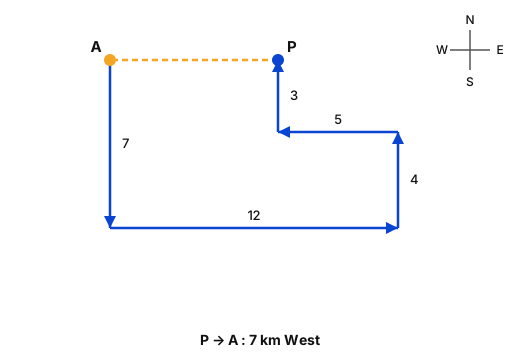
Gill starts from Point A and drives 7 km towards south. She then takes a left turn, drives 12 km, turns left and drives 4 km. She then takes a left turn and drives 5 km. She takes a final right turn, drives 3 km and stops at Point P. How far (shortest distance) and towards which direction should she drive in order to reach Point A again? (All turns are 90° turns only unless specified.)
गिल बिंदु A से चलना शुरू करती है और दक्षिण की ओर 7 km ड्राइव करती है। फिर वह बाएँ मुड़ती है, 12 km ड्राइव करती है, बाएँ मुड़ती है और 4 km ड्राइव करती है। फिर वह बाएँ मुड़ती है और 5 km ड्राइव करती है। वह अंतिम बार दाएँ मुड़ती है, 3 km ड्राइव करती है और बिंदु P पर रुक जाती है। बिंदु A पर फिर से पहुँचने के लिए उसे कितनी दूरी (न्यूनतम दूरी) तक और किस दिशा में ड्राइव करना चाहिए? (जब तक निर्दिष्ट न हो, सभी मोड़ केवल 90° के मोड़ हैं।)
  1. A9 km towards westपश्चिम की ओर 9 km
  2. B7 km towards eastपूर्व की ओर 7 km
  3. C7 km towards westपश्चिम की ओर 7 km
  4. D9 km towards southदक्षिण की ओर 9 km
Show answer

Concept: Track the coordinates; left turn from south faces east.

  1. 7 km south → (0, −7).
  2. Left (east) 12 km → (12, −7); left (north) 4 km → (12, −3).
  3. Left (west) 5 km → (7, −3); right (north) 3 km → P (7, 0).
  4. P is 7 km east of A on the same line, so she must drive 7 km west.

Trick: Net N–S: −7+4+3=0; net E–W: 12−5=7 east → go back west.

Answer: (C) 7 km towards west

अवधारणा: निर्देशांक से चलें; दक्षिण की ओर मुख से बाएँ मुड़ने पर पूर्व।

  1. 7 km दक्षिण → (0, −7)।
  2. बाएँ (पूर्व) 12 km → (12, −7); बाएँ (उत्तर) 4 km → (12, −3)।
  3. बाएँ (पश्चिम) 5 km → (7, −3); दाएँ (उत्तर) 3 km → P (7, 0)।
  4. P, A से 7 km पूर्व में उसी रेखा पर है, अतः 7 km पश्चिम जाना होगा।

ट्रिक: शुद्ध उत्तर–दक्षिण: −7+4+3=0; पूर्व–पश्चिम: 12−5=7 पूर्व → वापस पश्चिम।

उत्तर: (C) 7 km पश्चिम की ओर

RRB NTPC Undergraduate CBT 1General Intelligence and ReasoningDirection and DistanceRRB NTPC Undergraduate CBT 1 2024 · 21 Aug Shift 1 →
Q1091.
If + means −, − means ×, × means ÷ and ÷ means +, then what will come in place of the question mark (?) in the following equation?
6 − 3 + 77 × 7 ÷ 11 = ?
यदि + का अर्थ −, − का अर्थ ×, × का अर्थ ÷ और ÷ का अर्थ + है, तो निम्नलिखित समीकरण में प्रश्न चिह्न (?) के स्थान पर क्या आएगा?
6 − 3 + 77 × 7 ÷ 11 = ?
  1. A28
  2. B18
  3. C21
  4. D35
Show answer

Concept: Substitute the meanings, then use BODMAS.

  1. Expression becomes 6×3−77÷7+11.
  2. 6×3=18, 77÷7=11.
  3. 18−11+11=18.

Trick: −11+11 cancels, leaving 6×3.

Answer: (B) 18

अवधारणा: अर्थ रखकर BODMAS लगाएँ।

  1. व्यंजक: 6×3−77÷7+11।
  2. 6×3=18, 77÷7=11।
  3. 18−11+11=18।

ट्रिक: −11+11 कट जाता है, बचता है 6×3।

उत्तर: (B) 18

RRB NTPC Undergraduate CBT 1General Intelligence and ReasoningMathematical OperationsRRB NTPC Undergraduate CBT 1 2024 · 21 Aug Shift 1 →
Q1092.
Based on the English alphabetical order, three of the following four letter-clusters are alike in a certain way and thus form a group. Which letter-cluster DOES NOT belong to that group?
(Note: The odd one out is not based on the number of consonants/vowels or their position in the letter-cluster.)
अंग्रेज़ी वर्णमाला क्रम के आधार पर, निम्नलिखित चार अक्षर-समूहों में से तीन किसी निश्चित प्रकार से एकसमान हैं और इस प्रकार एक समूह बनाते हैं। कौन-सा अक्षर-समूह उस समूह से संबंधित नहीं है?
(नोट: असंगत अक्षर-समूह, उस अक्षर-समूह में व्यंजनों/स्वरों की संख्या या उनके स्थान पर आधारित नहीं है।)
  1. APLQ
  2. BEAG
  3. CHDI
  4. DLHM
Show answer

Concept: Compare the letter gaps in each cluster.

  1. PLQ: P−4=L, L+5=Q.
  2. HDI: H−4=D, D+5=I; LHM: L−4=H, H+5=M.
  3. EAG: E−4=A, but A+6=G (not +5) → odd one.

Trick: In the group, the third letter is always the next letter after the first (P→Q, H→I, L→M); E→G breaks it.

Answer: (B) EAG

अवधारणा: प्रत्येक समूह में अक्षरों के अंतर की तुलना करें।

  1. PLQ: P−4=L, L+5=Q।
  2. HDI: H−4=D, D+5=I; LHM: L−4=H, H+5=M।
  3. EAG: E−4=A, पर A+6=G (+5 नहीं) → विषम।

ट्रिक: समूह में तीसरा अक्षर पहले के ठीक बाद का है (P→Q, H→I, L→M); E→G इसे तोड़ता है।

उत्तर: (B) EAG

RRB NTPC Undergraduate CBT 1General Intelligence and ReasoningOdd One Out – LettersRRB NTPC Undergraduate CBT 1 2024 · 21 Aug Shift 1 →
Q1093.
Refer to the following number and symbol series and answer the question that follows. Counting to be done from left to right only. All numbers are single-digit numbers. (Left) 4 6 % Ω 9 # @ 8 $ 7 1 * £ 5 & + 3 2 (Right)
How many such symbols are there each of which is immediately preceded by a number and also immediately followed by another symbol?
निम्नलिखित संख्या और प्रतीक श्रृंखला को देखिए और उसके बाद दिए गए प्रश्न का उत्तर दीजिए। गिनती केवल बाएँ से दाएँ की जानी है। सभी संख्याएँ एक अंक वाली संख्याएँ हैं। (बाएँ) 4 6 % Ω 9 # @ 8 $ 7 1 * £ 5 & + 3 2 (दाएँ)
ऐसे कितने प्रतीक हैं, जिनमें से प्रत्येक के ठीक पहले एक संख्या है और ठीक बाद एक अन्य प्रतीक है?
  1. A2
  2. B1
  3. C3
  4. D4
Show answer

Concept: Check every symbol: number just before it and a symbol just after it.

  1. % : 6 before, Ω after ✓. # : 9 before, @ after ✓.
  2. * : 1 before, £ after ✓. & : 5 before, + after ✓.
  3. $ : 8 before but 7 after ✗; others fail the 'preceded by number' test. Total =4.

Trick: Find number–symbol–symbol triples; each gives one count.

Answer: (D) 4

अवधारणा: हर प्रतीक जाँचें: उसके ठीक पहले संख्या और ठीक बाद प्रतीक।

  1. % : पहले 6, बाद Ω ✓। # : पहले 9, बाद @ ✓।
  2. * : पहले 1, बाद £ ✓। & : पहले 5, बाद + ✓।
  3. $ : पहले 8 पर बाद 7 ✗; बाकी में पहले संख्या नहीं। कुल =4।

ट्रिक: संख्या–प्रतीक–प्रतीक के त्रिक ढूँढें; हर त्रिक एक गिनती।

उत्तर: (D) 4

RRB NTPC Undergraduate CBT 1General Intelligence and ReasoningSymbol SeriesRRB NTPC Undergraduate CBT 1 2024 · 21 Aug Shift 1 →
Q1094.
In the following number-pairs, the second number is obtained by applying certain mathematical operation(s) to the first number. Select the number-pair in which the numbers are related in the same way as are the numbers of the following pairs. (NOTE: Operations should be performed on the whole numbers, without breaking down the numbers into their constituent digits. E.g. 13 – Operations on 13 such as adding to/subtracting from/multiplying with 13 can be performed. Breaking down 13 into 1 and 3 and then performing mathematical operations on 1 and 3 is not allowed.)
86, 286
48, 248
निम्नलिखित संख्या-युग्मों में, पहली संख्या पर कुछ गणितीय संक्रिया/संक्रियाएँ करके दूसरी संख्या प्राप्त की जाती है। उस संख्या-युग्म का चयन कीजिए जिसमें संख्याएँ उसी प्रकार संबंधित हैं, जिस प्रकार निम्नलिखित युग्मों की संख्याएँ संबंधित हैं। (नोट: संख्याओं को उनके घटक अंकों में विभाजित किए बिना, पूर्ण संख्याओं पर संक्रियाएँ की जानी चाहिए। उदाहरण: 13 – 13 पर संक्रियाएँ, जैसे 13 में जोड़ना/13 में से घटाना/13 से गुणा करना आदि की जा सकती हैं। 13 को 1 और 3 में विभाजित करना और फिर 1 और 3 पर गणितीय संक्रियाएँ करना वर्जित है।)
86, 286
48, 248
  1. A65, 265
  2. B70, 280
  3. C78, 378
  4. D45, 235
Show answer

Concept: Find the single operation that works for both pairs.

  1. 86+200=286 and 48+200=248.
  2. Rule: second number = first + 200.
  3. 65+200=265 ✓ (70→270 not 280, 78→278 not 378, 45→245 not 235).

Trick: Look at the difference of each pair first – here it is always 200.

Answer: (A) 65, 265

अवधारणा: दोनों युग्मों पर लागू होने वाली संक्रिया खोजें।

  1. 86+200=286 और 48+200=248।
  2. नियम: दूसरी संख्या = पहली + 200।
  3. 65+200=265 ✓ (70→270 होना चाहिए, 78→278, 45→245)।

ट्रिक: पहले प्रत्येक युग्म का अंतर देखें – यहाँ हमेशा 200।

उत्तर: (A) 65, 265

RRB NTPC Undergraduate CBT 1General Intelligence and ReasoningNumber Pair AnalogyRRB NTPC Undergraduate CBT 1 2024 · 21 Aug Shift 1 →
Q1095.
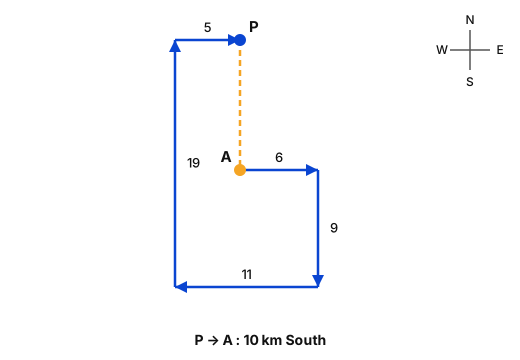
Dominic starts from Point A and drives 6 km towards east. He then takes a right turn, drives 9 km, turns right and drives 11 km. He then takes a right turn and drives 19 km. He takes a final right turn, drives 5 km and stops at Point P. How far (shortest distance) and towards which direction should he drive in order to reach Point A again? (All turns are 90° turns only unless specified.)
डोमिनिक बिंदु A से चलना शुरू करता है और पूर्व की ओर 6 km ड्राइव करता है। फिर वह दाएँ मुड़ता है, 9 km ड्राइव करता है, दाएँ मुड़ता है और 11 km ड्राइव करता है। फिर वह दाएँ मुड़ता है और 19 km ड्राइव करता है। वह अंतिम बार दाएँ मुड़ता है, 5 km ड्राइव करता है और बिंदु P पर रुक जाता है। बिंदु A पर फिर से पहुँचने के लिए उसे कितनी दूरी (न्यूनतम दूरी) तक और किस दिशा में ड्राइव करना चाहिए? (जब तक निर्दिष्ट न हो, सभी मोड़ केवल 90° के मोड़ हैं।)
  1. A11 km; south11 km; दक्षिण
  2. B10 km; south10 km; दक्षिण
  3. C13 km; south13 km; दक्षिण
  4. D12 km; south12 km; दक्षिण
Show answer

Concept: Track coordinates; a right turn from east faces south.

  1. 6 km east → (6, 0); right (south) 9 km → (6, −9).
  2. Right (west) 11 km → (−5, −9); right (north) 19 km → (−5, 10).
  3. Right (east) 5 km → P (0, 10).
  4. P is 10 km north of A, so drive 10 km south.

Trick: Net E–W: 6−11+5=0; net N–S: −9+19=10 north → go 10 km south.

Answer: (B) 10 km; south

अवधारणा: निर्देशांक से चलें; पूर्व की ओर मुख से दाएँ मुड़ने पर दक्षिण।

  1. 6 km पूर्व → (6, 0); दाएँ (दक्षिण) 9 km → (6, −9)।
  2. दाएँ (पश्चिम) 11 km → (−5, −9); दाएँ (उत्तर) 19 km → (−5, 10)।
  3. दाएँ (पूर्व) 5 km → P (0, 10)।
  4. P, A से 10 km उत्तर में है, अतः 10 km दक्षिण जाएँ।

ट्रिक: शुद्ध पूर्व–पश्चिम: 6−11+5=0; उत्तर–दक्षिण: −9+19=10 उत्तर → 10 km दक्षिण।

उत्तर: (B) 10 km; दक्षिण

RRB NTPC Undergraduate CBT 1General Intelligence and ReasoningDirection and DistanceRRB NTPC Undergraduate CBT 1 2024 · 21 Aug Shift 1 →
Q1096.
Based on the English alphabetical order, three of the following four letter-clusters are alike in a certain way and thus form a group. Which letter-cluster DOES NOT belong to that group?
(Note: The odd one out is not based on the number of consonants/vowels or their position in the letter-cluster.)
अंग्रेज़ी वर्णमाला क्रम के आधार पर, निम्नलिखित चार अक्षर-समूहों में से तीन किसी निश्चित प्रकार से एकसमान हैं और इस प्रकार एक समूह बनाते हैं। कौन-सा अक्षर-समूह उस समूह से संबंधित नहीं है?
(नोट: असंगत अक्षर-समूह, उस अक्षर-समूह में व्यंजनों/स्वरों की संख्या या उनके स्थान पर आधारित नहीं है।)
  1. AORM
  2. BKNI
  3. CRUP
  4. DTWS
Show answer

Concept: Compare the letter gaps in each cluster.

  1. ORM: O+3=R, R−5=M.
  2. KNI: K+3=N, N−5=I; RUP: R+3=U, U−5=P.
  3. TWS: T+3=W, but W−4=S (not −5) → odd one.

Trick: In the group, the third letter is 2 before the first (O→M, K→I, R→P); T→S is only 1 before.

Answer: (D) TWS

अवधारणा: प्रत्येक समूह में अक्षरों के अंतर की तुलना करें।

  1. ORM: O+3=R, R−5=M।
  2. KNI: K+3=N, N−5=I; RUP: R+3=U, U−5=P।
  3. TWS: T+3=W, पर W−4=S (−5 नहीं) → विषम।

ट्रिक: समूह में तीसरा अक्षर पहले से 2 पीछे है (O→M, K→I, R→P); T→S केवल 1 पीछे।

उत्तर: (D) TWS

RRB NTPC Undergraduate CBT 1General Intelligence and ReasoningOdd One Out – LettersRRB NTPC Undergraduate CBT 1 2024 · 21 Aug Shift 1 →
Q1097.
What should come in place of the question mark (?) in the given series based on the English alphabetical order?
BGK HMQ NSW TYC ?
अंग्रेज़ी वर्णमाला क्रम के आधार पर दी गई श्रृंखला में प्रश्न चिह्न (?) के स्थान पर क्या आना चाहिए?
BGK HMQ NSW TYC ?
  1. AZIE
  2. BZLE
  3. CZEL
  4. DZEI
Show answer

Concept: Each letter moves forward by 6 in every next cluster (wrap after Z).

  1. First letters: B, H, N, T → Z (+6).
  2. Second letters: G, M, S, Y → E (+6, wrapping).
  3. Third letters: K, Q, W, C → I (+6). Answer ZEI.

Trick: For wrap-around, subtract 26: Y(25)+6=31−26=5=E.

Answer: (D) ZEI

अवधारणा: हर अगले समूह में प्रत्येक अक्षर 6 आगे जाता है (Z के बाद फिर A)।

  1. पहले अक्षर: B, H, N, T → Z (+6)।
  2. दूसरे अक्षर: G, M, S, Y → E (+6)।
  3. तीसरे अक्षर: K, Q, W, C → I (+6)। उत्तर ZEI।

ट्रिक: Z के पार जाने पर 26 घटाएँ: Y(25)+6=31−26=5=E।

उत्तर: (D) ZEI

RRB NTPC Undergraduate CBT 1General Intelligence and ReasoningLetter SeriesRRB NTPC Undergraduate CBT 1 2024 · 21 Aug Shift 1 →
Q1098.
Each of the digits in the number 7356981 is arranged in ascending order from left to right. What will be the sum of the digits that are second from the left and second from the right in the new number thus formed?
संख्या 7356981 के प्रत्येक अंक को बाएँ से दाएँ आरोही क्रम में व्यवस्थित किया जाता है। इस प्रकार बनी नई संख्या में बाएँ से दूसरे और दाएँ से दूसरे अंकों का योग क्या होगा?
  1. A9
  2. B11
  3. C8
  4. D10
Show answer

Concept: Rearrange the digits in ascending order and pick the positions.

  1. Digits of 7356981 in ascending order: 1 3 5 6 7 8 9.
  2. Second from left =3; second from right =8.
  3. Sum =3+8=11.

Trick: Second from right in ascending order = second-largest digit.

Answer: (B) 11

अवधारणा: अंकों को आरोही क्रम में लगाकर स्थान चुनें।

  1. 7356981 के अंक आरोही क्रम में: 1 3 5 6 7 8 9।
  2. बाएँ से दूसरा =3; दाएँ से दूसरा =8।
  3. योग =3+8=11।

ट्रिक: आरोही क्रम में दाएँ से दूसरा = दूसरा सबसे बड़ा अंक।

उत्तर: (B) 11

RRB NTPC Undergraduate CBT 1General Intelligence and ReasoningDigit ArrangementRRB NTPC Undergraduate CBT 1 2024 · 21 Aug Shift 1 →
Q1099.
In a certain code language, ‘FELT’ is coded as ‘4629’ and ‘LOAN’ is coded as ‘1345’. What is the code for ‘L’ in the given code language?
एक निश्चित कूट भाषा में, ‘FELT’ को ‘4629’ के रूप में और ‘LOAN’ को ‘1345’ के रूप में कूटबद्ध किया जाता है। दी गई कूट भाषा में ‘L’ के लिए कूट क्या है?
  1. A4
  2. B3
  3. C1
  4. D2
Show answer

Concept: The letter common to both words has the digit common to both codes.

  1. Common letter in FELT and LOAN: L.
  2. Common digit in 4629 and 1345: 4.
  3. So L = 4.

Trick: Common letter ↔ common digit.

Answer: (A) 4

अवधारणा: दोनों शब्दों में उभयनिष्ठ अक्षर का कोड दोनों कोडों में उभयनिष्ठ अंक है।

  1. FELT और LOAN में उभयनिष्ठ अक्षर: L।
  2. 4629 और 1345 में उभयनिष्ठ अंक: 4।
  3. अतः L = 4।

ट्रिक: उभयनिष्ठ अक्षर ↔ उभयनिष्ठ अंक।

उत्तर: (A) 4

RRB NTPC Undergraduate CBT 1General Intelligence and ReasoningCoding-DecodingRRB NTPC Undergraduate CBT 1 2024 · 21 Aug Shift 1 →
Q1100.
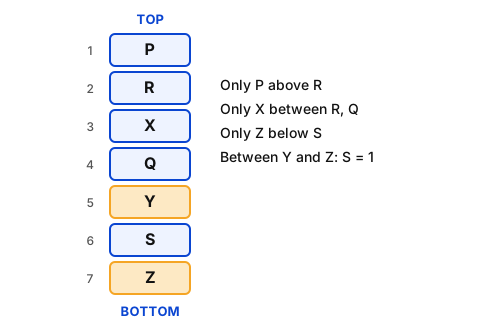
Seven boxes P, Q, R, S, X, Y and Z are kept one over the other, but not necessarily in the same order. Only P is kept above R. Only X is kept between R and Q. Only Z is kept below S. How many boxes are kept between Y and Z?
सात बॉक्स P, Q, R, S, X, Y और Z एक के ऊपर एक रखे गए हैं, लेकिन आवश्यक नहीं कि इसी क्रम में हों। R के ऊपर केवल P रखा गया है। R और Q के बीच केवल X रखा गया है। S के नीचे केवल Z रखा गया है। Y और Z के बीच कितने बॉक्स रखे गए हैं?
  1. AThreeतीन
  2. BOneएक
  3. CFourचार
  4. DTwoदो
Show answer

Concept: Number positions 1 (top) to 7 (bottom).

  1. Only P above R → P1, R2.
  2. Only X between R and Q → X3, Q4.
  3. Only Z below S → S6, Z7; Y takes 5.
  4. Between Y (5) and Z (7): S = 1 box.

Trick: 'Only one below' fixes the second-last place.

Answer: (B) One

अवधारणा: स्थान 1 (ऊपर) से 7 (नीचे) मानें।

  1. R के ऊपर केवल P → P1, R2।
  2. R और Q के बीच केवल X → X3, Q4।
  3. S के नीचे केवल Z → S6, Z7; Y स्थान 5 पर।
  4. Y (5) और Z (7) के बीच: S = 1 बॉक्स।

ट्रिक: 'नीचे केवल एक' से नीचे से दूसरा स्थान तय होता है।

उत्तर: (B) एक

RRB NTPC Undergraduate CBT 1General Intelligence and ReasoningBox ArrangementRRB NTPC Undergraduate CBT 1 2024 · 21 Aug Shift 1 →