Question bank

Q&A: practice questions with answers

Search questions on any topic. Filter by exam category, exam, subject and topic, try the question, then open the answer and explanation.

Courses – airGurukul

8,495 questions found.

Q1181.
What should come in place of the question mark (?) in the given series?
3, −2, −12, −32, −72, ?
दी गई श्रृंखला में प्रश्नचिह्न (?) के स्थान पर क्या आना चाहिए?
3, −2, −12, −32, −72, ?
  1. A−152
  2. B−135
  3. C−124
  4. D−125
Show answer

Concept: Look at the differences between consecutive terms.

  1. Differences: −5,−10,−20,−40 (each doubles).
  2. Next difference =−80.
  3. −72−80=−152

Trick: Doubling differences → next term = last term + 2 × last difference.

Answer: (A) −152

अवधारणा: क्रमागत पदों का अंतर देखें।

  1. अंतर: −5,−10,−20,−40 (हर बार दुगुना)।
  2. अगला अंतर =−80।
  3. −72−80=−152

ट्रिक: अंतर दुगुना हो रहा है → अगला पद = अंतिम पद + 2 × अंतिम अंतर।

उत्तर: (A) −152

RRB NTPC Undergraduate CBT 1General Intelligence and ReasoningNumber seriesRRB NTPC Undergraduate CBT 1 2024 · 20 Aug Shift 3 →
Q1182.
Refer to the following number and symbol series and answer the question given below. All numbers are single-digit numbers only. Counting is to be done from left to right only.
(Left) 7 1 * £ 5 9 # @ 8 $ & + 3 2 4 6 % Ω (Right)
How many such numbers are there each of which is immediately preceded by a symbol and also immediately followed by another number?
निम्नलिखित संख्या और प्रतीक श्रृंखला को देखिए और नीचे दिए गए प्रश्न का उत्तर दीजिए। सभी संख्याएँ केवल एक अंक वाली संख्याएँ हैं। गिनती केवल बाएँ से दाएँ की जानी है।
(बाएँ) 7 1 * £ 5 9 # @ 8 $ & + 3 2 4 6 % Ω (दाएँ)
ऐसी कितनी संख्याएँ हैं जिनमें से प्रत्येक के ठीक पहले एक प्रतीक है और ठीक बाद में एक अन्य संख्या है?
  1. A4
  2. B2
  3. C1
  4. D3
Show answer

Concept: Required pattern: symbol – number – number.

  1. £ 5 9 ✔ (before £, after 9).
  2. + 3 2 ✔ (before +, after 2).
  3. 8 is followed by a symbol ✘; 9, 2, 4, 6, 1 are preceded by numbers ✘; 7 has nothing before it.
  4. Count =2.

Trick: Only the first number of each number-group can qualify, and that group must have at least two numbers.

Answer: (B) 2

अवधारणा: आवश्यक पैटर्न: प्रतीक – संख्या – संख्या।

  1. £ 5 9 ✔ (पहले £, बाद में 9)।
  2. + 3 2 ✔ (पहले +, बाद में 2)।
  3. 8 के बाद प्रतीक है ✘; 9, 2, 4, 6, 1 के पहले संख्या है ✘; 7 के पहले कुछ नहीं है।
  4. गिनती =2।

ट्रिक: केवल हर संख्या-समूह की पहली संख्या ही योग्य हो सकती है, और उस समूह में कम से कम दो संख्याएँ होनी चाहिए।

उत्तर: (B) 2

RRB NTPC Undergraduate CBT 1General Intelligence and ReasoningNumber–symbol seriesRRB NTPC Undergraduate CBT 1 2024 · 20 Aug Shift 3 →
Q1183.
If 1 is added to each even digit of the number 36719542, what will be the product of the digits that appear more than once in the new number thus formed?
यदि संख्या 36719542 के प्रत्येक सम अंक में 1 जोड़ दिया जाए, तो इस प्रकार बनी नई संख्या में एक से अधिक बार आने वाले अंकों का गुणनफल क्या होगा?
  1. A105
  2. B35
  3. C21
  4. D15
Show answer

Concept: Change only the even digits (6, 4, 2), then look for repeated digits.

  1. 36719542 → 3 7 7 1 9 5 5 3 = 37719553.
  2. Repeated digits: 3 (twice), 7 (twice), 5 (twice).
  3. Product =3×7×5=105.

Yaad rakhein: Take each repeated digit once in the product.

Answer: (A) 105

अवधारणा: केवल सम अंक (6, 4, 2) बदलें, फिर दोहराए गए अंक देखें।

  1. 36719542 → 3 7 7 1 9 5 5 3 = 37719553।
  2. दोहराए गए अंक: 3 (दो बार), 7 (दो बार), 5 (दो बार)।
  3. गुणनफल =3×7×5=105।

याद रखें: गुणनफल में हर दोहराया अंक एक ही बार लें।

उत्तर: (A) 105

RRB NTPC Undergraduate CBT 1General Intelligence and ReasoningDigit operationsRRB NTPC Undergraduate CBT 1 2024 · 20 Aug Shift 3 →
Q1184.
If 1 is subtracted from each even digit of the number 97145286, what will be the sum of the digits that appear more than once in the new number thus formed?
यदि संख्या 97145286 के प्रत्येक सम अंक में से 1 घटा दिया जाए, तो इस प्रकार बनी नई संख्या में एक से अधिक बार आने वाले अंकों का योग क्या होगा?
  1. A12
  2. B6
  3. C8
  4. D13
Show answer

Concept: Change only the even digits (4, 2, 8, 6), then add the repeated digits.

  1. 97145286 → 9 7 1 3 5 1 7 5 = 97135175.
  2. Repeated digits: 7, 1, 5 (each twice); 9 and 3 appear once.
  3. Sum =7+1+5=13.

Yaad rakhein: Count each repeated digit only once in the sum.

Answer: (D) 13

अवधारणा: केवल सम अंक (4, 2, 8, 6) बदलें, फिर दोहराए गए अंक जोड़ें।

  1. 97145286 → 9 7 1 3 5 1 7 5 = 97135175।
  2. दोहराए गए अंक: 7, 1, 5 (प्रत्येक दो बार); 9 और 3 एक-एक बार।
  3. योग =7+1+5=13।

याद रखें: योग में हर दोहराया अंक एक ही बार गिनें।

उत्तर: (D) 13

RRB NTPC Undergraduate CBT 1General Intelligence and ReasoningDigit operationsRRB NTPC Undergraduate CBT 1 2024 · 20 Aug Shift 3 →
Q1185.
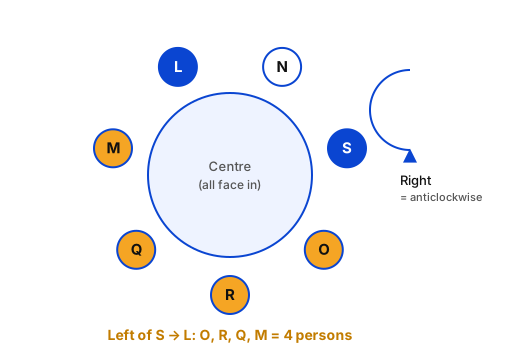
L, M, N, O, Q, R and S are sitting around a circular table, facing the centre. L sits fourth to the right of R. Only two people sit between Q and N when counted from the left of Q. M sits third to the left of O. S is an immediate neighbour of O and N. How many people sit between L and S when counted from the left of S?
L, M, N, O, Q, R और S एक वृत्ताकार मेज़ के चारों ओर केंद्र की ओर मुख करके बैठे हैं। L, R के दाएँ से चौथे स्थान पर बैठा है। Q के बाएँ से गिनने पर Q और N के बीच केवल दो व्यक्ति बैठे हैं। M, O के बाएँ से तीसरे स्थान पर बैठा है। S, O और N दोनों का निकटतम पड़ोसी है। S के बाएँ से गिनने पर L और S के बीच कितने व्यक्ति बैठे हैं?
  1. AOneएक
  2. BTwoदो
  3. CThreeतीन
  4. DFourचार
Show answer

Concept: Facing the centre, right = anticlockwise and left = clockwise.

  1. Fix R; L is 4th to the right of R.
  2. S sits between O and N (O–S–N together). M 3rd to the left of O works only with O just to the right of R; then S, N follow, M is 3rd left of O and Q is 3rd left of N (two people between) ✔.
  3. Order to the right of R: R, O, S, N, L, M, Q.
  4. From S going left: O, R, Q, M, then L → 4 people between.

Trick: Start with the block O–S–N; it leaves only one valid place.

Answer: (D) Four

अवधारणा: केंद्र की ओर मुख होने पर दायाँ = वामावर्त (anticlockwise), बायाँ = दक्षिणावर्त (clockwise)।

  1. R को स्थिर करें; L, R के दाएँ चौथे स्थान पर।
  2. S, O और N के बीच है (O–S–N साथ)। M, O के बाएँ तीसरा — यह तभी संभव है जब O, R के ठीक दाएँ हो; फिर S, N आते हैं, M, O के बाएँ तीसरा और Q, N के बाएँ तीसरा (बीच में दो) ✔।
  3. R के दाएँ क्रम: R, O, S, N, L, M, Q।
  4. S से बाएँ चलें: O, R, Q, M, फिर L → बीच में 4 लोग।

ट्रिक: O–S–N के ब्लॉक से शुरू करें; केवल एक ही स्थान बचता है।

उत्तर: (D) चार

RRB NTPC Undergraduate CBT 1General Intelligence and ReasoningCircular seating arrangementRRB NTPC Undergraduate CBT 1 2024 · 20 Aug Shift 3 →
Q1186.
Read the given statements and conclusions carefully. Assuming that the information given in the statements is true, even if it appears to be at variance with commonly known facts, decide which of the given conclusions logically follow from the statements.
Statements:
All hummingbirds are storks.
Some storks are flamingos.
Conclusions:
I. Some hummingbirds are flamingos.
II. No flamingo is a hummingbird.
दिए गए कथनों और निष्कर्षों को ध्यानपूर्वक पढ़िए। यह मानते हुए कि कथनों में दी गई जानकारी सत्य है, भले ही वह सामान्यतः ज्ञात तथ्यों से भिन्न प्रतीत होती हो, निर्णय कीजिए कि दिए गए निष्कर्षों में से कौन-से निष्कर्ष कथनों का तार्किक रूप से अनुसरण करते हैं।
कथन:
सभी हमिंगबर्ड, सारस हैं।
कुछ सारस, फ्लेमिंगो हैं।
निष्कर्ष:
I. कुछ हमिंगबर्ड, फ्लेमिंगो हैं।
II. कोई भी फ्लेमिंगो, हमिंगबर्ड नहीं है।
  1. AOnly conclusion (I) follows.केवल निष्कर्ष (I) अनुसरण करता है।
  2. BNeither conclusion (I) nor (II) follows.न तो निष्कर्ष (I) और न ही (II) अनुसरण करता है।
  3. COnly conclusion (II) follows.केवल निष्कर्ष (II) अनुसरण करता है।
  4. DBoth conclusions (I) and (II) follow.निष्कर्ष (I) और (II) दोनों अनुसरण करते हैं।
Show answer

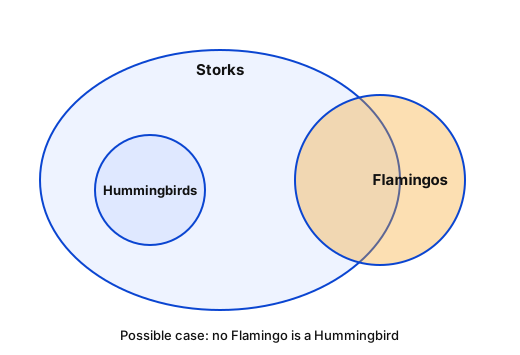
Concept: A conclusion follows only if it is true in every possible diagram.

  1. Flamingos overlap storks, but they may or may not touch the hummingbird circle.
  2. In the case drawn, no flamingo is a hummingbird → I is not definite.
  3. Flamingos could also overlap hummingbirds → II is not definite.
  4. Neither conclusion definitely follows.

Trick: "Some" linked through the bigger circle (storks) gives no definite relation between H and F.

Answer: (B) Neither conclusion (I) nor (II) follows.

अवधारणा: निष्कर्ष तभी अनुसरण करता है जब वह हर संभव आरेख में सत्य हो।

  1. फ्लेमिंगो (Flamingos) सारस (Storks) से मिलते हैं, पर हमिंगबर्ड वृत्त को छू भी सकते हैं और नहीं भी।
  2. चित्र वाली स्थिति में कोई फ्लेमिंगो हमिंगबर्ड नहीं है → I निश्चित नहीं।
  3. फ्लेमिंगो हमिंगबर्ड से मिल भी सकते हैं → II निश्चित नहीं।
  4. कोई भी निष्कर्ष निश्चित रूप से अनुसरण नहीं करता।

ट्रिक: बड़े वृत्त (सारस) के माध्यम से "कुछ" जुड़ने पर H और F में कोई निश्चित संबंध नहीं बनता।

उत्तर: (B) न तो निष्कर्ष (I) और न ही (II) अनुसरण करता है।

RRB NTPC Undergraduate CBT 1General Intelligence and ReasoningSyllogismRRB NTPC Undergraduate CBT 1 2024 · 20 Aug Shift 3 →
Q1187.
Select the set in which the numbers are related in the same way as are the numbers of the following sets.
(NOTE: Operations should be performed on the whole numbers, without breaking down the numbers into their constituent digits. E.g. 13 – Operations on 13 such as adding/subtracting/multiplying etc. to 13 can be performed. Breaking down 13 into 1 and 3 and then performing mathematical operations on 1 and 3 is not allowed.)
(52, 100, 196)
(65, 126, 248)
उस समुच्चय का चयन कीजिए जिसमें संख्याएँ उसी प्रकार संबंधित हैं जिस प्रकार निम्नलिखित समुच्चयों की संख्याएँ संबंधित हैं।
(ध्यान दें: संख्याओं को उनके घटक अंकों में तोड़े बिना, पूर्ण संख्याओं पर संक्रियाएँ की जानी चाहिए। उदाहरण के लिए 13 – 13 पर संक्रियाएँ जैसे 13 में जोड़ना/घटाना/गुणा करना आदि की जा सकती हैं। 13 को 1 और 3 में तोड़ना और फिर 1 और 3 पर गणितीय संक्रियाएँ करना वर्जित है।)
(52, 100, 196)
(65, 126, 248)
  1. A(72, 140, 256)
  2. B(56, 108, 202)
  3. C(68, 132, 260)
  4. D(94, 184, 264)
Show answer

Concept: Each number =2× previous −4.

  1. 52×2−4=100, 100×2−4=196 ✔; 65×2−4=126, 126×2−4=248 ✔.
  2. (68, 132, 260): 68×2−4=132, 132×2−4=260 ✔.
  3. (72, 140, 256): 140×2−4=276≠256 ✘.

Trick: Middle term is a bit less than double the first — test "×2−4".

Answer: (C) (68, 132, 260)

अवधारणा: प्रत्येक संख्या =2× पिछली −4।

  1. 52×2−4=100, 100×2−4=196 ✔; 65×2−4=126, 126×2−4=248 ✔।
  2. (68, 132, 260): 68×2−4=132, 132×2−4=260 ✔।
  3. (72, 140, 256): 140×2−4=276≠256 ✘।

ट्रिक: बीच वाली संख्या पहली के दुगुने से थोड़ी कम है — "×2−4" जाँचें।

उत्तर: (C) (68, 132, 260)

RRB NTPC Undergraduate CBT 1General Intelligence and ReasoningNumber analogy – setsRRB NTPC Undergraduate CBT 1 2024 · 20 Aug Shift 3 →
Q1188.
Based on the English alphabetical order, three of the following four letter-clusters are alike in a certain way and thus form a group. Which letter-cluster does NOT belong to that group?
(Note: The odd letter-cluster is not based on the number of consonants/vowels or their position in the letter cluster.)
अंग्रेज़ी वर्णमाला क्रम के आधार पर, निम्नलिखित चार अक्षर-समूहों में से तीन किसी निश्चित प्रकार से एकसमान हैं और इस प्रकार एक समूह बनाते हैं। कौन-सा अक्षर-समूह उस समूह से संबंधित नहीं है?
(ध्यान दें: असंगत अक्षर-समूह, उस अक्षर-समूह में व्यंजनों/स्वरों की संख्या या उनके स्थान पर आधारित नहीं है।)
  1. ANGO
  2. BIBJ
  3. CKDL
  4. DPIR
Show answer

Concept: Check the steps between letters using position values.

  1. NGO: 14, 7, 15 → −7,+8.
  2. IBJ: 9, 2, 10 → −7,+8. KDL: 11, 4, 12 → −7,+8.
  3. PIR: 16, 9, 18 → −7,+9 ✘.

Trick: In the group, the third letter is just after the first (N→O, I→J, K→L); P→R breaks it.

Answer: (D) PIR

अवधारणा: स्थानीय मान से अक्षरों के बीच के अंतर जाँचें।

  1. NGO: 14, 7, 15 → −7,+8।
  2. IBJ: 9, 2, 10 → −7,+8। KDL: 11, 4, 12 → −7,+8।
  3. PIR: 16, 9, 18 → −7,+9 ✘।

ट्रिक: समूह में तीसरा अक्षर पहले के ठीक बाद वाला है (N→O, I→J, K→L); P→R इसे तोड़ता है।

उत्तर: (D) PIR

RRB NTPC Undergraduate CBT 1General Intelligence and ReasoningOdd one out – letter clustersRRB NTPC Undergraduate CBT 1 2024 · 20 Aug Shift 3 →
Q1189.
In a certain code language, 'GIFT' is coded as '7529' and 'FITS' is coded as '2596'. What is the code for 'S' in the given code language?
एक निश्चित कूट भाषा में, 'GIFT' को '7529' लिखा जाता है और 'FITS' को '2596' लिखा जाता है। दी गई कूट भाषा में 'S' का कूट क्या है?
  1. A5
  2. B6
  3. C9
  4. D2
Show answer

Concept: Common letters take the common digits; the remaining letter gets the remaining digit.

  1. GIFT and FITS share F, I, T; codes 7529 and 2596 share 2, 5, 9.
  2. GIFT leftover: G ↔ 7.
  3. FITS leftover: S ↔ 6.

Trick: Cancel the common part from both words and both codes — what remains pairs up.

Answer: (B) 6

अवधारणा: उभयनिष्ठ अक्षरों के कूट उभयनिष्ठ अंक होंगे; बचा अक्षर बचे अंक से जुड़ेगा।

  1. GIFT और FITS में F, I, T उभयनिष्ठ; 7529 और 2596 में 2, 5, 9 उभयनिष्ठ।
  2. GIFT में बचा: G ↔ 7।
  3. FITS में बचा: S ↔ 6।

ट्रिक: दोनों शब्दों और दोनों कूटों से उभयनिष्ठ भाग हटाएँ — बचे हुए आपस में जुड़ते हैं।

उत्तर: (B) 6

RRB NTPC Undergraduate CBT 1General Intelligence and ReasoningCoding–decoding (letters to digits)RRB NTPC Undergraduate CBT 1 2024 · 20 Aug Shift 3 →
Q1190.
In the following triads, each group of letters is related to the next group following a certain logic. Select the option that follows the same logic.
MICE - EMCI - MEIC
DEAR - RDAE - DREA
निम्नलिखित त्रिकों में, अक्षरों का प्रत्येक समूह एक निश्चित तर्क का अनुसरण करते हुए अगले समूह से संबंधित है। उस विकल्प का चयन कीजिए जो उसी तर्क का अनुसरण करता है।
MICE - EMCI - MEIC
DEAR - RDAE - DREA
  1. AAGES - SAGE - GESA
  2. BGUST - TGSU - GTUS
  3. CNUTS - UNTS - SUTN
  4. DAXLE - EALX - AXEL
Show answer

Concept: Track letter positions 1 2 3 4.

  1. Step 1: MICE → EMCI is order 4-1-3-2 (DEAR → RDAE ✔).
  2. Step 2: swap each pair of the second group: EM CI → ME IC (RD AE → DR EA ✔).
  3. GUST → 4-1-3-2 = TGSU → swap pairs = GTUS ✔.

Trick: AXLE also passes step 1 (EALX), but swapping pairs gives AEXL, not AXEL — so check both steps.

Answer: (B) GUST - TGSU - GTUS

अवधारणा: अक्षरों की स्थितियाँ 1 2 3 4 देखें।

  1. चरण 1: MICE → EMCI क्रम 4-1-3-2 है (DEAR → RDAE ✔)।
  2. चरण 2: दूसरे समूह के जोड़ों को आपस में बदलें: EM CI → ME IC (RD AE → DR EA ✔)।
  3. GUST → 4-1-3-2 = TGSU → जोड़े बदलें = GTUS ✔।

ट्रिक: AXLE भी चरण 1 (EALX) पास करता है, पर जोड़े बदलने पर AEXL बनता है, AXEL नहीं — इसलिए दोनों चरण जाँचें।

उत्तर: (B) GUST - TGSU - GTUS

RRB NTPC Undergraduate CBT 1General Intelligence and ReasoningLetter-cluster triadsRRB NTPC Undergraduate CBT 1 2024 · 20 Aug Shift 3 →
Q1191.
In the following triads, each group of letters is related to the next group following a certain logic. Select the option that follows the same logic.
TRIM - ITRM - MIRT
MIST - SMIT - TSIM
निम्नलिखित त्रिकों में, अक्षरों का प्रत्येक समूह एक निश्चित तर्क का अनुसरण करते हुए अगले समूह से संबंधित है। उस विकल्प का चयन कीजिए जो उसी तर्क का अनुसरण करता है।
TRIM - ITRM - MIRT
MIST - SMIT - TSIM
  1. ACLUE - UCLE - EULC
  2. BFOLD - FLOD - DLOF
  3. CWEST - EWST - TESW
  4. DPLAY - APLY - LAYP
Show answer

Concept: Track letter positions 1 2 3 4 of the first group.

  1. Second group: order 3-1-2-4 (TRIM → ITRM, MIST → SMIT).
  2. Third group: first group reversed (TRIM → MIRT, MIST → TSIM).
  3. CLUE → 3-1-2-4 = UCLE ✔; reversed = EULC ✔.

Trick: PLAY passes the first step (APLY) but its reverse is YALP, not LAYP.

Answer: (A) CLUE - UCLE - EULC

अवधारणा: पहले समूह के अक्षरों की स्थितियाँ 1 2 3 4 देखें।

  1. दूसरा समूह: क्रम 3-1-2-4 (TRIM → ITRM, MIST → SMIT)।
  2. तीसरा समूह: पहले समूह का उल्टा (TRIM → MIRT, MIST → TSIM)।
  3. CLUE → 3-1-2-4 = UCLE ✔; उल्टा = EULC ✔।

ट्रिक: PLAY पहला चरण (APLY) पास करता है, पर उसका उल्टा YALP है, LAYP नहीं।

उत्तर: (A) CLUE - UCLE - EULC

RRB NTPC Undergraduate CBT 1General Intelligence and ReasoningLetter-cluster triadsRRB NTPC Undergraduate CBT 1 2024 · 20 Aug Shift 3 →
Q1192.
In a certain code language,
A + B means ‘A is the husband of B’,
A – B means ‘A is the brother of B’,
A x B means ‘A is the sister of B’ and
A ÷ B means ‘A is the daughter of B’.
How is C related to J if ‘C – E ÷ G + I x J’?
एक निश्चित कूट भाषा में,
A + B का अर्थ है ‘A, B का पति है’,
A – B का अर्थ है ‘A, B का भाई है’,
A x B का अर्थ है ‘A, B की बहन है’ और
A ÷ B का अर्थ है ‘A, B की पुत्री है’।
यदि ‘C – E ÷ G + I x J’ है, तो C का J से क्या संबंध है?
  1. AFather's brotherपिता का भाई
  2. BMother's brotherमाता का भाई
  3. CSister's sonबहन का पुत्र
  4. DSonपुत्र
Show answer

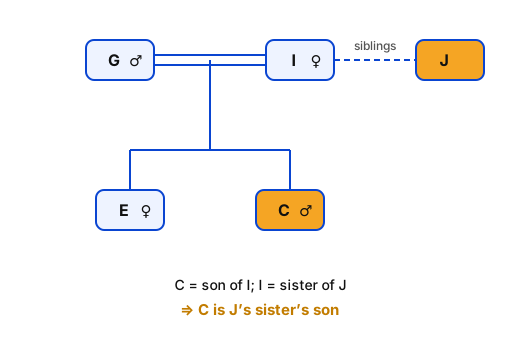
Concept: Decode each symbol in order and draw the family tree.

  1. C – E: C is the brother of E. E ÷ G: E is the daughter of G → C is G's son.
  2. G + I: G is the husband of I → C is I's son.
  3. I x J: I is the sister of J.
  4. So C is the son of J's sister.

Trick: J's gender is unknown, so only a relation through I (sister) can be stated — "Sister's son".

Answer: (C) Sister's son

अवधारणा: हर चिह्न को क्रम से डिकोड करें और वंश-वृक्ष बनाएँ।

  1. C – E: C, E का भाई है। E ÷ G: E, G की बेटी है → C, G का पुत्र है।
  2. G + I: G, I का पति है → C, I का पुत्र है।
  3. I x J: I, J की बहन है।
  4. अतः C, J की बहन का पुत्र (Sister's son) है।

ट्रिक: J का लिंग अज्ञात है, इसलिए संबंध केवल I (बहन) के माध्यम से बताया जा सकता है — "बहन का पुत्र"।

उत्तर: (C) Sister's son (बहन का पुत्र)

RRB NTPC Undergraduate CBT 1General Intelligence and ReasoningCoded blood relationsRRB NTPC Undergraduate CBT 1 2024 · 20 Aug Shift 3 →
Q1193.
Which of the following letter-number clusters should replace the question mark (?) to logically complete the given series?
GBD 14, KFH 17, OJL 20, SNP 23, ?
दी गई श्रृंखला को तार्किक रूप से पूरा करने के लिए निम्नलिखित में से कौन-सा अक्षर-संख्या समूह प्रश्नचिह्न (?) के स्थान पर आना चाहिए?
GBD 14, KFH 17, OJL 20, SNP 23, ?
  1. AWTS 26
  2. BVRT 26
  3. CWRT 26
  4. DVTR 25
Show answer

Concept: Track each letter position and the number separately.

  1. 1st letters: G, K, O, S → +4 → W.
  2. 2nd letters: B, F, J, N → +4 → R. 3rd letters: D, H, L, P → +4 → T.
  3. Numbers: 14, 17, 20, 23 → +3 → 26.

Trick: All three letters move +4 — just add 4 to S, N, P.

Answer: (C) WRT 26

अवधारणा: हर अक्षर-स्थान और संख्या को अलग-अलग देखें।

  1. पहले अक्षर: G, K, O, S → +4 → W।
  2. दूसरे अक्षर: B, F, J, N → +4 → R। तीसरे अक्षर: D, H, L, P → +4 → T।
  3. संख्याएँ: 14, 17, 20, 23 → +3 → 26।

ट्रिक: तीनों अक्षर +4 चलते हैं — S, N, P में सीधे 4 जोड़ें।

उत्तर: (C) WRT 26

RRB NTPC Undergraduate CBT 1General Intelligence and ReasoningAlpha-numeric seriesRRB NTPC Undergraduate CBT 1 2024 · 20 Aug Shift 3 →
Q1194.
A, B, C, D, E, F and G are sitting around a circular table, facing the centre.
C sits to the immediate right of D. Only three people sit between C and G when counted from the left of C. Only three people sit between D and B. A sits to the immediate right of F. How many people sit between C and A when counted from the right of C?
A, B, C, D, E, F और G एक वृत्ताकार मेज़ के चारों ओर केंद्र की ओर मुख करके बैठे हैं।
C, D के ठीक दाएँ बैठा है। C के बाएँ से गिनने पर C और G के बीच केवल तीन व्यक्ति बैठे हैं। D और B के बीच केवल तीन व्यक्ति बैठे हैं। A, F के ठीक दाएँ बैठा है। C के दाएँ से गिनने पर C और A के बीच कितने व्यक्ति बैठे हैं?
  1. A4
  2. B3
  3. C2
  4. D1
Show answer

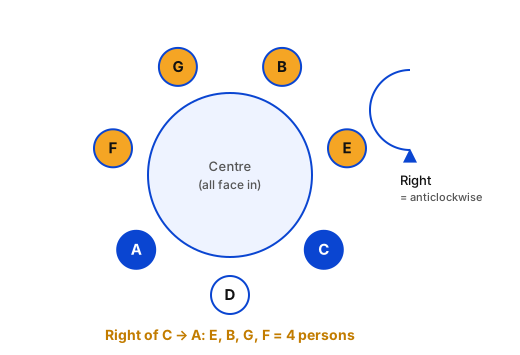
Concept: Facing the centre, right = anticlockwise, left = clockwise. With 7 seats, "three between on one side" means "two between on the other side".

  1. Number seats to the right (anticlockwise) from D: D =0, C =1.
  2. From C to the left: seats 0, 6, 5 lie between → G =4.
  3. Three between D and B → B is seat 3 or 4; seat 4 is G, so B =3 (seats 4, 5, 6 between).
  4. Free seats 2, 5, 6; A just right of F → F =5, A =6, E =2.
  5. From C to the right: E, B, G, F, then A → 4 people.

Trick: Fix D–C first; the F–A pair always goes into the only two adjacent empty seats.

Answer: (A) 4

अवधारणा: केंद्र की ओर मुख होने पर दायाँ = वामावर्त, बायाँ = दक्षिणावर्त। 7 सीटों में एक ओर "बीच में तीन" का अर्थ दूसरी ओर "बीच में दो" है।

  1. D से दाएँ (वामावर्त) सीटें गिनें: D =0, C =1।
  2. C से बाएँ: सीट 0, 6, 5 बीच में → G =4।
  3. D और B के बीच तीन → B सीट 3 या 4; सीट 4 पर G है, अतः B =3 (बीच में सीट 4, 5, 6)।
  4. खाली सीटें 2, 5, 6; A, F के ठीक दाएँ → F =5, A =6, E =2।
  5. C से दाएँ: E, B, G, F, फिर A → 4 लोग।

ट्रिक: पहले D–C तय करें; F–A का जोड़ा हमेशा केवल दो पास-पास खाली सीटों में जाता है।

उत्तर: (A) 4

RRB NTPC Undergraduate CBT 1General Intelligence and ReasoningCircular seating arrangementRRB NTPC Undergraduate CBT 1 2024 · 20 Aug Shift 3 →
Q1195.
What should come in place of the question mark (?) in the given series?
160 151 140 127 112 ?
दी गई श्रृंखला में प्रश्नचिह्न (?) के स्थान पर क्या आना चाहिए?
160 151 140 127 112 ?
  1. A93
  2. B91
  3. C95
  4. D84
Show answer

Concept: Find the differences between consecutive terms.

  1. Differences: −9,−11,−13,−15 (odd numbers increasing by 2).
  2. Next difference =−17.
  3. 112−17=95

Trick: Subtracting consecutive odd numbers — next one after 15 is 17.

Answer: (C) 95

अवधारणा: क्रमागत पदों का अंतर निकालें।

  1. अंतर: −9,−11,−13,−15 (विषम संख्याएँ 2 से बढ़ रही हैं)।
  2. अगला अंतर =−17।
  3. 112−17=95

ट्रिक: क्रमागत विषम संख्याएँ घट रही हैं — 15 के बाद 17।

उत्तर: (C) 95

RRB NTPC Undergraduate CBT 1General Intelligence and ReasoningNumber seriesRRB NTPC Undergraduate CBT 1 2024 · 20 Aug Shift 3 →
Q1196.
Which of the following letter-number clusters will logically complete the series if placed in place of the question mark (?) in the given series?
KFU-15 IIQ-22 GLM-31 EOI-42 ?
दी गई श्रृंखला में प्रश्नचिह्न (?) के स्थान पर रखे जाने पर निम्नलिखित में से कौन-सा अक्षर-संख्या समूह श्रृंखला को तार्किक रूप से पूरा करेगा?
KFU-15 IIQ-22 GLM-31 EOI-42 ?
  1. ACRE-55
  2. BRES-54
  3. CRDG-55
  4. DGTR-54
Show answer

Concept: Handle each letter position and the number separately.

  1. 1st letters: K, I, G, E → −2 → C.
  2. 2nd letters: F, I, L, O → +3 → R. 3rd letters: U, Q, M, I → −4 → E.
  3. Numbers: 15, 22, 31, 42 → +7,+9,+11 → +13 → 55.

Trick: Number gap grows by 2 each time; only CRE has the right first letter C.

Answer: (A) CRE-55

अवधारणा: हर अक्षर-स्थान और संख्या को अलग-अलग देखें।

  1. पहले अक्षर: K, I, G, E → −2 → C।
  2. दूसरे अक्षर: F, I, L, O → +3 → R। तीसरे अक्षर: U, Q, M, I → −4 → E।
  3. संख्याएँ: 15, 22, 31, 42 → +7,+9,+11 → +13 → 55।

ट्रिक: संख्या का अंतर हर बार 2 बढ़ता है; केवल CRE का पहला अक्षर C सही है।

उत्तर: (A) CRE-55

RRB NTPC Undergraduate CBT 1General Intelligence and ReasoningAlpha-numeric seriesRRB NTPC Undergraduate CBT 1 2024 · 20 Aug Shift 3 →
Q1197.
If '+' and '−' are interchanged and '×' and '÷' are interchanged, then what will come in place of the question mark (?) in the following equation?
65 × 5 − 19 ÷ 3 + 25 = ?
यदि '+' और '−' को आपस में बदल दिया जाए तथा '×' और '÷' को आपस में बदल दिया जाए, तो निम्नलिखित समीकरण में प्रश्नचिह्न (?) के स्थान पर क्या आएगा?
65 × 5 − 19 ÷ 3 + 25 = ?
  1. A45
  2. B40
  3. C44
  4. D46
Show answer

Concept: Swap the signs, then apply BODMAS.

  1. After swapping: 65÷5+19×3−25
  2. 65÷5=13, 19×3=57
  3. 13+57−25=45

Trick: Rewrite the expression with new signs first — avoids sign mistakes.

Answer: (A) 45

अवधारणा: चिह्न बदलें, फिर BODMAS लगाएँ।

  1. चिह्न बदलने पर: 65÷5+19×3−25
  2. 65÷5=13, 19×3=57
  3. 13+57−25=45

ट्रिक: पहले नए चिह्नों के साथ व्यंजक लिखें — चिह्न की गलती नहीं होगी।

उत्तर: (A) 45

RRB NTPC Undergraduate CBT 1General Intelligence and ReasoningMathematical operationsRRB NTPC Undergraduate CBT 1 2024 · 20 Aug Shift 3 →
Q1198.
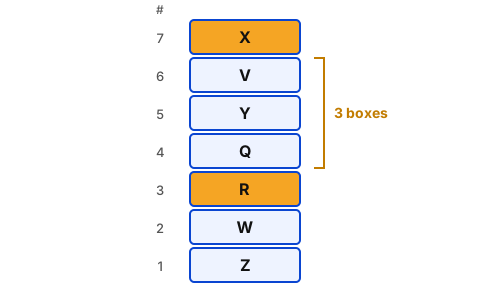
Seven boxes V, W, X, Y, Z, Q and R are placed one above the other, but not necessarily in the same order. Y is placed immediately above Q. W is placed immediately above Z. Only X is placed above V. Only two boxes are placed above Y. W is not placed third from the bottom. How many boxes are placed between R and X?
सात डिब्बे V, W, X, Y, Z, Q और R एक के ऊपर एक रखे गए हैं, लेकिन आवश्यक नहीं कि इसी क्रम में हों। Y को Q के ठीक ऊपर रखा गया है। W को Z के ठीक ऊपर रखा गया है। V के ऊपर केवल X रखा गया है। Y के ऊपर केवल दो डिब्बे रखे गए हैं। W को नीचे से तीसरे स्थान पर नहीं रखा गया है। R और X के बीच कितने डिब्बे रखे गए हैं?
  1. AOneएक
  2. BTwoदो
  3. CFourचार
  4. DThreeतीन
Show answer

Concept: Number positions from bottom =1 to top =7 and fix definite ones first.

  1. Only X above V → X =7, V =6.
  2. Only two above Y → Y =5; Q just below Y → Q =4.
  3. W just above Z in positions 3, 2, 1; W is not 3rd → W =2, Z =1, R =3.
  4. Between R (3) and X (7): Q, Y, V → 3 boxes.

Trick: Boxes between positions a and b =|a−b|−1=7−3−1=3.

Answer: (D) Three

अवधारणा: नीचे से 1 से ऊपर 7 तक स्थान गिनें और पहले निश्चित स्थान तय करें।

  1. V के ऊपर केवल X → X =7, V =6।
  2. Y के ऊपर केवल दो → Y =5; Q ठीक Y के नीचे → Q =4।
  3. W ठीक Z के ऊपर, स्थान 3, 2, 1 में; W तीसरे पर नहीं → W =2, Z =1, R =3।
  4. R (3) और X (7) के बीच: Q, Y, V → 3 बक्से।

ट्रिक: स्थान a और b के बीच बक्से =|a−b|−1=7−3−1=3।

उत्तर: (D) तीन

RRB NTPC Undergraduate CBT 1General Intelligence and ReasoningBox arrangementRRB NTPC Undergraduate CBT 1 2024 · 20 Aug Shift 3 →
Q1199.
Select the pair that follows the same pattern as that followed by the two pairs given below. Both pairs follow the same pattern.
VTM : ZQQ
DNU : HKY
उस युग्म का चयन कीजिए जो उसी पैटर्न का अनुसरण करता है जिसका अनुसरण नीचे दिए गए दो युग्म करते हैं। दोनों युग्म एक ही पैटर्न का अनुसरण करते हैं।
VTM : ZQQ
DNU : HKY
  1. AMHE : PCH
  2. BYFH : CAL
  3. CLHC : PEG
  4. DKZQ : PWL
Show answer

Concept: Compare letter-by-letter shifts.

  1. VTM → ZQQ: V+4=Z, T−3=Q, M+4=Q. DNU → HKY: D+4=H, N−3=K, U+4=Y.
  2. Pattern: (+4,−3,+4).
  3. LHC → L+4=P, H−3=E, C+4=G → PEG ✔.

Trick: Check the first letter (+4) of every option: M→Q (not P), Y→C ✔ but F−3=C not A, K→O (not P) — only LHC survives.

Answer: (C) LHC : PEG

अवधारणा: हर अक्षर का खिसकाव (shift) तुलना करें।

  1. VTM → ZQQ: V+4=Z, T−3=Q, M+4=Q। DNU → HKY: D+4=H, N−3=K, U+4=Y।
  2. पैटर्न: (+4,−3,+4)।
  3. LHC → L+4=P, H−3=E, C+4=G → PEG ✔।

ट्रिक: हर विकल्प का पहला अक्षर (+4) जाँचें: M→Q (P नहीं), Y→C ✔ पर F−3=C, A नहीं, K→O (P नहीं) — केवल LHC बचता है।

उत्तर: (C) LHC : PEG

RRB NTPC Undergraduate CBT 1General Intelligence and ReasoningLetter-pair analogyRRB NTPC Undergraduate CBT 1 2024 · 20 Aug Shift 3 →
Q1200.
In the series given below, what will come in place of the question mark (?)?
512 513 505 532 468 ?
नीचे दी गई श्रृंखला में, प्रश्नचिह्न (?) के स्थान पर क्या आएगा?
512 513 505 532 468 ?
  1. A587
  2. B597
  3. C583
  4. D593
Show answer

Concept: Differences are cubes with alternating signs.

  1. Differences: +1,−8,+27,−64 i.e. +13,−23,+33,−43.
  2. Next: +53=+125.
  3. 468+125=593

Trick: 1, 8, 27, 64 → spot cubes at once; signs alternate +,−.

Answer: (D) 593

अवधारणा: अंतर, घनों (cubes) के बराबर हैं और चिह्न बारी-बारी से बदलते हैं।

  1. अंतर: +1,−8,+27,−64 अर्थात् +13,−23,+33,−43।
  2. अगला: +53=+125।
  3. 468+125=593

ट्रिक: 1, 8, 27, 64 → तुरंत घन पहचानें; चिह्न +,− बारी-बारी से।

उत्तर: (D) 593

RRB NTPC Undergraduate CBT 1General Intelligence and ReasoningNumber seriesRRB NTPC Undergraduate CBT 1 2024 · 20 Aug Shift 3 →