Question bank

Q&A: practice questions with answers

Search questions on any topic. Filter by exam category, exam, subject and topic, try the question, then open the answer and explanation.

Courses – airGurukul

8,495 questions found.

Q1281.
What will come in the place of the question mark (?) in the following equation, if ‘+’ and ‘÷’ are interchanged and ‘−’ and ‘×’ are interchanged?
26 + 2 × 12 − 2 ÷ 16 = ?
यदि ‘+’ और ‘÷’ को आपस में बदल दिया जाए तथा ‘−’ और ‘×’ को आपस में बदल दिया जाए, तो निम्नलिखित समीकरण में प्रश्न चिह्न (?) के स्थान पर क्या आएगा?
26 + 2 × 12 − 2 ÷ 16 = ?
  1. A15
  2. B26
  3. C5
  4. D21
Show answer

Concept: Swap the signs as told, then apply BODMAS.

  1. After swapping: 26÷2−12×2+16
  2. =13−24+16
  3. =5

Trick: Rewrite the whole expression first; never solve while swapping.

Answer: (C) 5

अवधारणा: बताए अनुसार चिह्न बदलें, फिर BODMAS लगाएँ।

  1. बदलने के बाद: 26÷2−12×2+16
  2. =13−24+16
  3. =5

ट्रिक: पहले पूरा व्यंजक दोबारा लिखें, फिर हल करें।

उत्तर: (C) 5
RRB NTPC Undergraduate CBT 1General Intelligence and ReasoningMathematical OperationsRRB NTPC Undergraduate CBT 1 2024 · 20 Aug Shift 2 →
Q1282.
What should come in place of the question mark (?) in the given series?
591 592 596 605 621 ?
दी गई शृंखला में प्रश्न चिह्न (?) के स्थान पर क्या आना चाहिए?
591 592 596 605 621 ?
  1. A641
  2. B636
  3. C646
  4. D631
Show answer

Concept: Differences are perfect squares.

  1. Differences: 1,4,9,16 = 12,22,32,42
  2. Next difference =52=25
  3. 621+25=646

Trick: Differences 1, 4, 9 … ⇒ think squares.

Answer: (C) 646

अवधारणा: अंतर पूर्ण वर्ग हैं।

  1. अंतर: 1,4,9,16 = 12,22,32,42
  2. अगला अंतर =52=25
  3. 621+25=646

ट्रिक: अंतर 1, 4, 9 … ⇒ वर्ग सोचें।

उत्तर: (C) 646

RRB NTPC Undergraduate CBT 1General Intelligence and ReasoningNumber SeriesRRB NTPC Undergraduate CBT 1 2024 · 20 Aug Shift 2 →
Q1283.
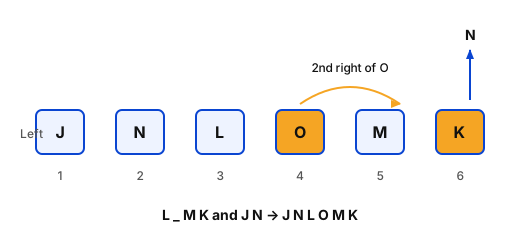
Six friends, J, K, L, M, N and O, are sitting in a straight line, facing north. L sits second to the left of M, who sits to the immediate left of K. J sits to the immediate left of N. L does not sit on any of the extreme ends. Who sits second to the right of O?
छह मित्र, J, K, L, M, N और O, एक सीधी पंक्ति में उत्तर की ओर मुख करके बैठे हैं। L, M के बाएँ से दूसरे स्थान पर बैठा है, और M, K के ठीक बाएँ बैठा है। J, N के ठीक बाएँ बैठा है। L किसी भी अंतिम छोर पर नहीं बैठा है। O के दाएँ से दूसरे स्थान पर कौन बैठा है?
  1. AN
  2. BM
  3. CJ
  4. DK
Show answer

Concept: Facing north: left of the picture = their left. Build the fixed blocks first.

  1. Block 1: L _ M K (L 2nd left of M, M immediately left of K).
  2. Block 2: J N. L is not at an end.
  3. Only fit: J N L O M K (O fills the gap).
  4. Second to the right of O (seat 4) is seat 6 = K.

Trick: Place the biggest block first, then test the end condition.

Answer: (D) K

अवधारणा: उत्तर की ओर मुख: चित्र का बायाँ = उनका बायाँ। पहले स्थिर ब्लॉक बनाएँ।

  1. ब्लॉक 1: L _ M K (L, M के दूसरे बाएँ; M, K के ठीक बाएँ)।
  2. ब्लॉक 2: J N। L किसी छोर पर नहीं।
  3. एकमात्र व्यवस्था: J N L O M K (रिक्त स्थान पर O)।
  4. O (सीट 4) के दूसरे दाएँ सीट 6 = K।

ट्रिक: सबसे बड़ा ब्लॉक पहले रखें, फिर छोर की शर्त जाँचें।

उत्तर: (D) K

RRB NTPC Undergraduate CBT 1General Intelligence and ReasoningLinear Seating ArrangementRRB NTPC Undergraduate CBT 1 2024 · 20 Aug Shift 2 →
Q1284.
If 2 is added to each even digit and 1 is subtracted from each odd digit in the number 4739215, what will be the difference between the greatest and smallest digits in the new number thus formed?
यदि संख्या 4739215 में प्रत्येक सम अंक में 2 जोड़ दिया जाए और प्रत्येक विषम अंक में से 1 घटा दिया जाए, तो इस प्रकार बनी नई संख्या में सबसे बड़े और सबसे छोटे अंक के बीच का अंतर क्या होगा?
  1. A8
  2. B6
  3. C2
  4. D4
Show answer

Concept: Change each digit by its own rule (even +2, odd −1).

  1. 4739215 → 4+2, 7−1, 3−1, 9−1, 2+2, 1−1, 5−1
  2. New number: 6 6 2 8 4 0 4
  3. Greatest 8, smallest 0 → 8−0=8

Trick: Remember 1−1=0 – the smallest digit becomes 0.

Answer: (A) 8

अवधारणा: हर अंक को उसके नियम से बदलें (सम +2, विषम −1)।

  1. 4739215 → 4+2, 7−1, 3−1, 9−1, 2+2, 1−1, 5−1
  2. नई संख्या: 6 6 2 8 4 0 4
  3. सबसे बड़ा 8, सबसे छोटा 0 → 8−0=8

ट्रिक: 1−1=0 – सबसे छोटा अंक 0 हो जाता है।

उत्तर: (A) 8

RRB NTPC Undergraduate CBT 1General Intelligence and ReasoningDigit OperationsRRB NTPC Undergraduate CBT 1 2024 · 20 Aug Shift 2 →
Q1285.
Read the given statement(s) and conclusions carefully. Assuming that the information given in the statements is true, even if it appears to be at variance with commonly known facts, decide which of the given conclusion(s) logically follow(s) from the statement(s).
Statements:
All Turquoises are Ochres.
All Ochres are Blues.
Conclusions:
I. No Blues are Turquoises.
II. Some Blues are Turquoises.
दिए गए कथन(नों) और निष्कर्षों को ध्यानपूर्वक पढ़िए। यह मानते हुए कि कथनों में दी गई जानकारी सत्य है, भले ही वह सामान्य रूप से ज्ञात तथ्यों से भिन्न प्रतीत होती हो, निर्णय कीजिए कि दिए गए निष्कर्षों में से कौन-सा/कौन-से निष्कर्ष कथन(नों) का तार्किक रूप से अनुसरण करता है/करते हैं।
कथन:
सभी फ़िरोज़ी, गेरुए हैं।
सभी गेरुए, नीले हैं।
निष्कर्ष:
I. कोई भी नीला, फ़िरोज़ी नहीं है।
II. कुछ नीले, फ़िरोज़ी हैं।
  1. AOnly conclusion (II) follows.केवल निष्कर्ष (II) अनुसरण करता है।
  2. BBoth conclusions (I) and (II) follow.निष्कर्ष (I) और (II) दोनों अनुसरण करते हैं।
  3. COnly conclusion (I) follows.केवल निष्कर्ष (I) अनुसरण करता है।
  4. DNeither conclusion (I) nor (II) follows.न तो निष्कर्ष (I) और न ही (II) अनुसरण करता है।
Show answer

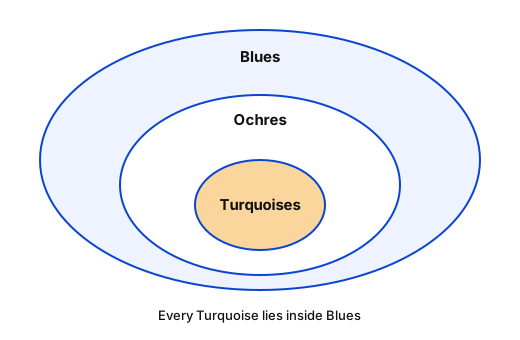
Concept: All T are O and all O are B ⇒ all T are B (nested circles).

  1. Turquoises lie completely inside Blues.
  2. So some Blues are Turquoises – II follows.
  3. I (No Blues are Turquoises) contradicts this – does not follow.

Yaad rakhein: 'All A are B' always gives 'Some B are A'.

Answer: (A) Only conclusion (II) follows.

अवधारणा: सभी T, O हैं और सभी O, B हैं ⇒ सभी T, B हैं (एक के अंदर एक वृत्त)।

  1. Turquoises पूरी तरह Blues के अंदर हैं।
  2. अतः कुछ Blues, Turquoises हैं – II अनुसरण करता है।
  3. I (कोई Blue, Turquoise नहीं) इसके विपरीत है – अनुसरण नहीं करता।

याद रखें: 'सभी A, B हैं' से हमेशा 'कुछ B, A हैं' निकलता है।

उत्तर: (A) केवल निष्कर्ष (II) अनुसरण करता है।

RRB NTPC Undergraduate CBT 1General Intelligence and ReasoningSyllogismRRB NTPC Undergraduate CBT 1 2024 · 20 Aug Shift 2 →
Q1286.
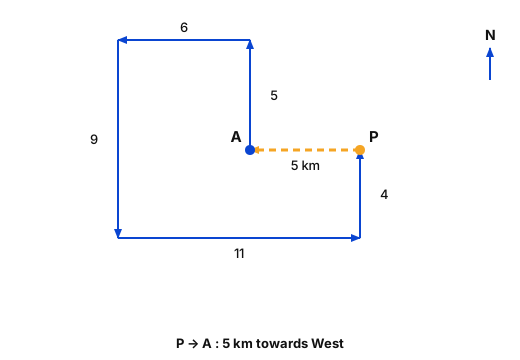
Anuj starts from Point A and drives 5 km towards north. He then takes a left turn, drives 6 km, turns left and drives 9 km. He then takes a left turn and drives 11 km. He takes a final left turn, drives 4 km and stops at Point P. How far (shortest distance) and towards which direction should he drive in order to reach Point A again? (All turns are 90° turns only unless specified.)
अनुज बिंदु A से चलना शुरू करता है और उत्तर की ओर 5 km गाड़ी चलाता है। फिर वह बाएँ मुड़ता है, 6 km गाड़ी चलाता है, बाएँ मुड़ता है और 9 km गाड़ी चलाता है। फिर वह बाएँ मुड़ता है और 11 km गाड़ी चलाता है। वह अंतिम बार बाएँ मुड़ता है, 4 km गाड़ी चलाता है और बिंदु P पर रुक जाता है। बिंदु A पर फिर से पहुँचने के लिए उसे कितनी दूरी (न्यूनतम दूरी) तक और किस दिशा में गाड़ी चलानी चाहिए? (जब तक निर्दिष्ट न हो, सभी मोड़ केवल 90° के मोड़ हैं।)
  1. A6 km to westपश्चिम की ओर 6 km
  2. B5 km to westपश्चिम की ओर 5 km
  3. C8 km to westपश्चिम की ओर 8 km
  4. D7 km to westपश्चिम की ओर 7 km
Show answer

Concept: Trace the path on axes (north up), then compare the end point with the start.

  1. A → 5 km N → left 6 km W → left 9 km S → left 11 km E → left 4 km N = P.
  2. East–west: −6+11=5 km east of A.
  3. North–south: 5−9+4=0 – same level as A.
  4. So A is 5 km to the west of P.

Trick: Four left turns bring you back to facing north – just add the E–W and N–S totals.

Answer: (B) 5 km to west

अवधारणा: पथ को अक्षों पर बनाएँ (उत्तर ऊपर), फिर अंतिम बिंदु की तुलना आरंभ से करें।

  1. A → 5 km उत्तर → बाएँ 6 km पश्चिम → बाएँ 9 km दक्षिण → बाएँ 11 km पूर्व → बाएँ 4 km उत्तर = P।
  2. पूर्व–पश्चिम: −6+11=5 km, A से पूर्व।
  3. उत्तर–दक्षिण: 5−9+4=0 – A के समान स्तर पर।
  4. अतः A, P से 5 km पश्चिम में है।

ट्रिक: पूर्व–पश्चिम और उत्तर–दक्षिण की दूरियाँ अलग-अलग जोड़ें।

उत्तर: (B) 5 km पश्चिम

RRB NTPC Undergraduate CBT 1General Intelligence and ReasoningDirection and DistanceRRB NTPC Undergraduate CBT 1 2024 · 20 Aug Shift 2 →
Q1287.
GULP is related to IWOS in a certain way based on the English alphabetical order. In the same way, KYRV is related to MAUY. To which of the following is OCXB related, following the same logic?
अंग्रेज़ी वर्णमाला क्रम के आधार पर GULP एक निश्चित प्रकार से IWOS से संबंधित है। उसी प्रकार, KYRV, MAUY से संबंधित है। समान तर्क का अनुसरण करते हुए, OCXB निम्नलिखित में से किससे संबंधित है?
  1. APFCG
  2. BRDZF
  3. CQEAE
  4. DPEBD
Show answer

Concept: Find the shift of each letter (wrap Z → A).

  1. GULP → IWOS: +2,+2,+3,+3
  2. KYRV → MAUY: +2,+2,+3,+3 (Y+2 = A)
  3. OCXB → O+2=Q, C+2=E, X+3=A, B+3=E → QEAE

Trick: After Z continue with A: X+3 = A.

Answer: (C) QEAE

अवधारणा: हर अक्षर का खिसकाव (shift) देखें (Z के बाद A)।

  1. GULP → IWOS: +2,+2,+3,+3
  2. KYRV → MAUY: +2,+2,+3,+3 (Y+2 = A)
  3. OCXB → O+2=Q, C+2=E, X+3=A, B+3=E → QEAE

ट्रिक: Z के बाद फिर A से गिनें: X+3 = A।

उत्तर: (C) QEAE

RRB NTPC Undergraduate CBT 1General Intelligence and ReasoningLetter AnalogyRRB NTPC Undergraduate CBT 1 2024 · 20 Aug Shift 2 →
Q1288.
What should come in place of the question mark (?) in the given series?
550 551 555 556 560 561 ? 566
दी गई शृंखला में प्रश्न चिह्न (?) के स्थान पर क्या आना चाहिए?
550 551 555 556 560 561 ? 566
  1. A567
  2. B565
  3. C563
  4. D564
Show answer

Concept: Alternate differences repeat.

  1. Differences: +1,+4,+1,+4,+1
  2. Next: 561+4=565
  3. Check: 565+1=566 ✓

Trick: Use the term after '?' to confirm.

Answer: (B) 565

अवधारणा: एकांतर अंतर दोहराए जाते हैं।

  1. अंतर: +1,+4,+1,+4,+1
  2. अगला: 561+4=565
  3. जाँच: 565+1=566 ✓

ट्रिक: '?' के बाद वाले पद से पुष्टि करें।

उत्तर: (B) 565

RRB NTPC Undergraduate CBT 1General Intelligence and ReasoningNumber SeriesRRB NTPC Undergraduate CBT 1 2024 · 20 Aug Shift 2 →
Q1289.
Refer to the following number and symbol series and answer the question that follows. Counting to be done from left to right only.
(Left) 9 9 5 € 2 3 £ © € * 3 4 * @ @ 1 & 7 @ £ * 1 (Right)
How many such symbols are there, each of which is immediately preceded by a number and also immediately followed by a number?
निम्नलिखित संख्या और प्रतीक शृंखला को देखिए और उसके बाद आने वाले प्रश्न का उत्तर दीजिए। गिनती केवल बाएँ से दाएँ की जानी है।
(बाएँ) 9 9 5 € 2 3 £ © € * 3 4 * @ @ 1 & 7 @ £ * 1 (दाएँ)
ऐसे कितने प्रतीक हैं, जिनमें से प्रत्येक के ठीक पहले एक संख्या है और ठीक बाद भी एक संख्या है?
  1. A1
  2. B2
  3. C4
  4. D3
Show answer

Concept: Look for the pattern number – symbol – number.

  1. 5 € 2 ✓
  2. 1 & 7 ✓
  3. All other symbols touch at least one other symbol (e.g. 3 £ ©, 4 * @, 7 @ £, £ * 1) ✗

Trick: Spot symbols standing alone between two numbers.

Answer: (B) 2

अवधारणा: पैटर्न देखें: संख्या – प्रतीक – संख्या।

  1. 5 € 2 ✓
  2. 1 & 7 ✓
  3. बाकी सभी प्रतीक किसी दूसरे प्रतीक से सटे हैं (जैसे 3 £ ©, 4 * @, 7 @ £, £ * 1) ✗

ट्रिक: दो संख्याओं के बीच अकेले खड़े प्रतीक खोजें।

उत्तर: (B) 2

RRB NTPC Undergraduate CBT 1General Intelligence and ReasoningNumber-Symbol SeriesRRB NTPC Undergraduate CBT 1 2024 · 20 Aug Shift 2 →
Q1290.
MONK is related to RTSP in a certain way based on the English alphabetical order. In the same way, GIHE is related to LNMJ. To which of the following is VXWT related, following the same logic?
अंग्रेज़ी वर्णमाला क्रम के आधार पर MONK एक निश्चित प्रकार से RTSP से संबंधित है। उसी प्रकार, GIHE, LNMJ से संबंधित है। समान तर्क का अनुसरण करते हुए, VXWT निम्नलिखित में से किससे संबंधित है?
  1. AACBY
  2. BACFR
  3. CAYTR
  4. DAVGF
Show answer

Concept: Each letter moves forward by the same number.

  1. MONK → RTSP: every letter +5
  2. GIHE → LNMJ: every letter +5
  3. VXWT → V+5=A, X+5=C, W+5=B, T+5=Y → ACBY

Trick: Wrap after Z: V+5 = A.

Answer: (A) ACBY

अवधारणा: हर अक्षर समान संख्या से आगे बढ़ता है।

  1. MONK → RTSP: हर अक्षर +5
  2. GIHE → LNMJ: हर अक्षर +5
  3. VXWT → V+5=A, X+5=C, W+5=B, T+5=Y → ACBY

ट्रिक: Z के बाद फिर A: V+5 = A।

उत्तर: (A) ACBY

RRB NTPC Undergraduate CBT 1General Intelligence and ReasoningLetter AnalogyRRB NTPC Undergraduate CBT 1 2024 · 20 Aug Shift 2 →
Q1291.
Shikhar ranked 38th from the top and 24th from the bottom in his class. How many students are there in his class?
शिखर अपनी कक्षा में ऊपर से 38वें और नीचे से 24वें स्थान पर है। उसकी कक्षा में कितने विद्यार्थी हैं?
  1. A60
  2. B62
  3. C61
  4. D63
Show answer

Concept: Total=rank from top+rank from bottom−1.

  1. 38+24−1=61

Trick: Subtract 1 – Shikhar is counted twice.

Answer: (C) 61

अवधारणा: कुल=ऊपर से स्थान+नीचे से स्थान−1।

  1. 38+24−1=61

ट्रिक: 1 घटाएँ – शिखर दो बार गिना गया।

उत्तर: (C) 61

RRB NTPC Undergraduate CBT 1General Intelligence and ReasoningRankingRRB NTPC Undergraduate CBT 1 2024 · 20 Aug Shift 2 →
Q1292.
Based on the English alphabetical order, three of the following four letter cluster pairs are alike in a certain way and thus form a group. Which pair DOES NOT belong to that group? (NOTE: The odd one out is not based on the number of consonants/vowels or their position in the letter cluster.)
अंग्रेज़ी वर्णमाला क्रम के आधार पर, निम्नलिखित चार अक्षर-समूह युग्मों में से तीन किसी निश्चित प्रकार से एक समान हैं और इस प्रकार एक समूह बनाते हैं। कौन-सा युग्म उस समूह से संबंधित नहीं है? (ध्यान दें: असंगत अक्षर-समूह, उस अक्षर-समूह में व्यंजनों/स्वरों की संख्या या उनके स्थान पर आधारित नहीं है।)
  1. AFM-CW
  2. BIP-FZ
  3. CMT-ID
  4. DRY-OI
Show answer

Concept: Compare letter positions (A=1 … Z=26).

  1. FM-CW: F−3=C, M+10=W. IP-FZ: I−3=F, P+10=Z.
  2. RY-OI: R−3=O, Y+10=I (wrapping).
  3. MT-ID: M−4=I, T+10=D – first letter moves −4, not −3.

Trick: Within each first cluster the gap is +7 for all – so check the change to the second cluster.

Answer: (C) MT-ID

अवधारणा: अक्षरों के स्थान देखें (A=1 … Z=26)।

  1. FM-CW: F−3=C, M+10=W। IP-FZ: I−3=F, P+10=Z।
  2. RY-OI: R−3=O, Y+10=I (Z के बाद A)।
  3. MT-ID: M−4=I, T+10=D – पहला अक्षर −4 खिसका, −3 नहीं।

ट्रिक: हर पहले समूह में अंतर +7 समान है – इसलिए दूसरे समूह में बदलाव जाँचें।

उत्तर: (C) MT-ID

RRB NTPC Undergraduate CBT 1General Intelligence and ReasoningOdd One Out – Letter PairsRRB NTPC Undergraduate CBT 1 2024 · 20 Aug Shift 2 →
Q1293.
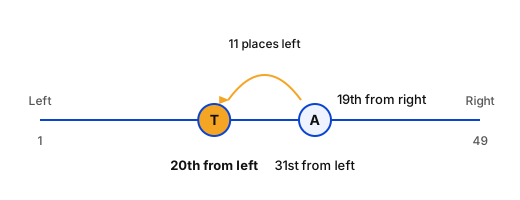
In a row of 49 students facing north, Ankur is 19th from the right end. If Tinu is 11th to the left of Ankur, what is Tinu's position from the left end of the line?
उत्तर की ओर मुख करके खड़े 49 विद्यार्थियों की एक पंक्ति में, अंकुर दाएँ छोर से 19वें स्थान पर है। यदि टीनू, अंकुर के बाईं ओर 11वें स्थान पर है, तो पंक्ति के बाएँ छोर से टीनू का स्थान क्या है?
  1. A17
  2. B19
  3. C20
  4. D18
Show answer

Concept: Position from left=Total−position from right+1.

  1. Ankur from left =49−19+1=31
  2. Tinu is 11 places to his left: 31−11=20

Trick: Moving left reduces the position from the left end.

Answer: (C) 20

अवधारणा: बाएँ से स्थान=कुल−दाएँ से स्थान+1।

  1. अंकुर बाएँ से =49−19+1=31
  2. टीनू उससे 11 स्थान बाएँ: 31−11=20

ट्रिक: बाईं ओर जाने पर बाएँ छोर से स्थान घटता है।

उत्तर: (C) 20

RRB NTPC Undergraduate CBT 1General Intelligence and ReasoningPosition in a RowRRB NTPC Undergraduate CBT 1 2024 · 20 Aug Shift 2 →
Q1294.
What will come in place of the question mark (?) in the following equation, if ‘+’ and ‘÷’ are interchanged and ‘−’ and ‘×’ are interchanged?
15 − 3 ÷ 21 + 3 × 36 = ?
यदि ‘+’ और ‘÷’ को आपस में बदल दिया जाए तथा ‘−’ और ‘×’ को आपस में बदल दिया जाए, तो निम्नलिखित समीकरण में प्रश्न चिह्न (?) के स्थान पर क्या आएगा?
15 − 3 ÷ 21 + 3 × 36 = ?
  1. A9
  2. B13
  3. C16
  4. D21
Show answer

Concept: Swap the signs as told, then apply BODMAS.

  1. After swapping: 15×3+21÷3−36
  2. =45+7−36
  3. =16

Trick: Rewrite first, solve later – avoids sign mix-ups.

Answer: (C) 16

अवधारणा: बताए अनुसार चिह्न बदलें, फिर BODMAS लगाएँ।

  1. बदलने के बाद: 15×3+21÷3−36
  2. =45+7−36
  3. =16

ट्रिक: पहले दोबारा लिखें, फिर हल करें।

उत्तर: (C) 16

RRB NTPC Undergraduate CBT 1General Intelligence and ReasoningMathematical OperationsRRB NTPC Undergraduate CBT 1 2024 · 20 Aug Shift 2 →
Q1295.
In the following number-pairs, the second number is obtained by applying certain mathematical operation(s) to the first number. Select the number-pair in which the numbers are related in the same way as are the numbers of the following pairs. (NOTE: Operations should be performed on the whole numbers, without breaking down the numbers into their constituent digits. E.g. 13 – Operations on 13 such as adding to/subtracting from/multiplying with 13 can be performed. Breaking down 13 into 1 and 3 and then performing mathematical operations on 1 and 3 is not allowed.)
18, 141
42, 165
निम्नलिखित संख्या-युग्मों में, पहली संख्या पर कुछ गणितीय संक्रिया(एँ) करके दूसरी संख्या प्राप्त की जाती है। उस संख्या-युग्म का चयन कीजिए जिसमें संख्याएँ उसी प्रकार संबंधित हैं जिस प्रकार निम्नलिखित युग्मों की संख्याएँ संबंधित हैं। (ध्यान दें: संक्रियाएँ संख्याओं को उनके घटक अंकों में विभाजित किए बिना, पूर्ण संख्याओं पर की जानी चाहिए। उदाहरण के लिए 13 – 13 पर संक्रियाएँ जैसे 13 में जोड़ना/13 में से घटाना/13 से गुणा करना आदि की जा सकती हैं। 13 को 1 और 3 में विभाजित करना और फिर 1 और 3 पर गणितीय संक्रियाएँ करना वर्जित है।)
18, 141
42, 165
  1. A36, 159
  2. B24, 167
  3. C28, 129
  4. D11, 155
Show answer

Concept: Find one operation that works for both given pairs.

  1. 18+123=141; 42+123=165 → rule: add 123
  2. 36+123=159 ✓
  3. Others: 24+123=147≠167, 28+123=151≠129, 11+123=134≠155

Trick: Check the difference of each pair first – here it is constant (123).

Answer: (A) 36, 159

अवधारणा: दोनों युग्मों पर लागू होने वाली एक संक्रिया खोजें।

  1. 18+123=141; 42+123=165 → नियम: 123 जोड़ें
  2. 36+123=159 ✓
  3. बाकी: 24+123=147≠167, 28+123=151≠129, 11+123=134≠155

ट्रिक: पहले हर युग्म का अंतर देखें – यहाँ स्थिर (123) है।

उत्तर: (A) 36, 159

RRB NTPC Undergraduate CBT 1General Intelligence and ReasoningNumber Pair AnalogyRRB NTPC Undergraduate CBT 1 2024 · 20 Aug Shift 2 →
Q1296.
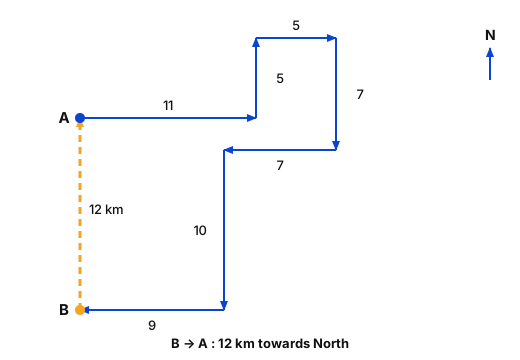
Shivani starts from point A and drives 11 km towards the east. She then takes a left turn, drives 5 km, turns right and drives 5 km. She then takes a right turn and drives 7 km. She then takes a right turn, drives 7 km. She then takes a left turn and drives 10 km. She then takes a final right turn and drives 9 km and stops at point B. How far and towards which direction should she drive in order to reach point A again? (All turns are 90 degrees unless specified)
शिवानी बिंदु A से चलना शुरू करती है और पूर्व की ओर 11 km गाड़ी चलाती है। फिर वह बाएँ मुड़ती है, 5 km गाड़ी चलाती है, दाएँ मुड़ती है और 5 km गाड़ी चलाती है। फिर वह दाएँ मुड़ती है और 7 km गाड़ी चलाती है। फिर वह दाएँ मुड़ती है, 7 km गाड़ी चलाती है। फिर वह बाएँ मुड़ती है और 10 km गाड़ी चलाती है। फिर वह अंतिम बार दाएँ मुड़ती है और 9 km गाड़ी चलाकर बिंदु B पर रुक जाती है। बिंदु A पर फिर से पहुँचने के लिए उसे कितनी दूरी तक और किस दिशा में गाड़ी चलानी चाहिए? (जब तक निर्दिष्ट न हो, सभी मोड़ 90 डिग्री के हैं)
  1. A10 km north10 km उत्तर
  2. B10 km south10 km दक्षिण
  3. C12 km north12 km उत्तर
  4. D11 km north11 km उत्तर
Show answer

Concept: Plot each move with north up; sum east–west and north–south movements.

  1. Moves: 11 E, 5 N, 5 E, 7 S, 7 W, 10 S, 9 W.
  2. East–west: 11+5−7−9=0 → B is directly below/above A.
  3. North–south: 5−7−10=−12 → B is 12 km south of A.
  4. So from B go 12 km north.

Trick: Turning left from west faces south; turning right from south faces west.

Answer: (C) 12 km north

अवधारणा: उत्तर को ऊपर रखकर हर चाल बनाएँ; पूर्व–पश्चिम और उत्तर–दक्षिण अलग जोड़ें।

  1. चालें: 11 पूर्व, 5 उत्तर, 5 पूर्व, 7 दक्षिण, 7 पश्चिम, 10 दक्षिण, 9 पश्चिम।
  2. पूर्व–पश्चिम: 11+5−7−9=0 → B, A की सीध में।
  3. उत्तर–दक्षिण: 5−7−10=−12 → B, A से 12 km दक्षिण।
  4. अतः B से 12 km उत्तर जाएँ।

ट्रिक: पश्चिम की ओर मुख से बाएँ मुड़ें तो दक्षिण; दक्षिण से दाएँ मुड़ें तो पश्चिम।

उत्तर: (C) 12 km उत्तर

RRB NTPC Undergraduate CBT 1General Intelligence and ReasoningDirection and DistanceRRB NTPC Undergraduate CBT 1 2024 · 20 Aug Shift 2 →
Q1297.
In a certain code language, ‘PORT’ is coded as ‘9125’ and ‘ROPE’ is coded as ‘1352’. What is the code for ‘E’ in the given code language?
एक निश्चित कूट भाषा में, ‘PORT’ को ‘9125’ लिखा जाता है और ‘ROPE’ को ‘1352’ लिखा जाता है। दी गई कूट भाषा में ‘E’ के लिए क्या कूट है?
  1. A2
  2. B5
  3. C3
  4. D1
Show answer

Concept: Common letters share common digits; the leftover letter takes the leftover digit.

  1. PORT = 9125, ROPE = 1352
  2. Common letters P, O, R ↔ common digits 1, 2, 5.
  3. Left in ROPE: letter E and digit 3 → E = 3.

Trick: Remove common letters and digits – what remains is matched.

Answer: (C) 3

अवधारणा: उभयनिष्ठ अक्षरों के उभयनिष्ठ अंक; बचा हुआ अक्षर बचा हुआ अंक लेता है।

  1. PORT = 9125, ROPE = 1352
  2. उभयनिष्ठ अक्षर P, O, R ↔ उभयनिष्ठ अंक 1, 2, 5।
  3. ROPE में बचे: अक्षर E और अंक 3 → E = 3।

ट्रिक: उभयनिष्ठ अक्षर-अंक हटाएँ – बचे हुए आपस में मिलते हैं।

उत्तर: (C) 3

RRB NTPC Undergraduate CBT 1General Intelligence and ReasoningCoding-DecodingRRB NTPC Undergraduate CBT 1 2024 · 20 Aug Shift 2 →
Q1298.
Based on the English alphabetical order, three of the following four letter-cluster pairs are alike in a certain way and thus form a group. Which letter-cluster pair DOES NOT belong to that group?
(Note: The odd one out is not based on the number of consonants/vowels or their position in the letter-cluster.)
अंग्रेज़ी वर्णमाला क्रम के आधार पर, निम्नलिखित चार अक्षर-समूह युग्मों में से तीन किसी निश्चित प्रकार से एक समान हैं और इस प्रकार एक समूह बनाते हैं। कौन-सा अक्षर-समूह युग्म उस समूह से संबंधित नहीं है?
(ध्यान दें: असंगत अक्षर-समूह, उस अक्षर-समूह में व्यंजनों/स्वरों की संख्या या उनके स्थान पर आधारित नहीं है।)
  1. AJU - OS
  2. BGR - KP
  3. CCN - GL
  4. DOA - SY
Show answer

Concept: Compare each letter of the first cluster with the matching letter of the second.

  1. GR-KP: G+4=K, R−2=P. CN-GL: C+4=G, N−2=L.
  2. OA-SY: O+4=S, A−2=Y (wrapping).
  3. JU-OS: J+5=O, U−2=S – first letter moves +5, not +4.

Trick: Rule (+4,−2); one mismatch is enough to reject a pair.

Answer: (A) JU - OS

अवधारणा: पहले समूह के हर अक्षर की तुलना दूसरे समूह के संगत अक्षर से करें।

  1. GR-KP: G+4=K, R−2=P। CN-GL: C+4=G, N−2=L।
  2. OA-SY: O+4=S, A−2=Y (A के पीछे Z, Y)।
  3. JU-OS: J+5=O, U−2=S – पहला अक्षर +5, +4 नहीं।

ट्रिक: नियम (+4,−2); एक भी अंतर युग्म को अलग कर देता है।

उत्तर: (A) JU - OS

RRB NTPC Undergraduate CBT 1General Intelligence and ReasoningOdd One Out – Letter PairsRRB NTPC Undergraduate CBT 1 2024 · 20 Aug Shift 2 →
Q1299.
Read the given statement(s) and conclusions carefully. Assuming that the information given in the statement(s) is true, even if it appears to be at variance with commonly known facts, decide which of the given conclusions logically follow(s) from the statement(s).
Statements:
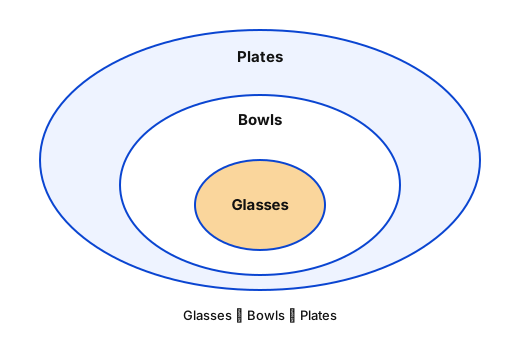
All glasses are bowls.
All bowls are plates.
Conclusions:
(I) Some plates are bowls.
(II) All glasses are plates.
दिए गए कथन(नों) और निष्कर्षों को ध्यानपूर्वक पढ़िए। यह मानते हुए कि कथनों में दी गई जानकारी सत्य है, भले ही वह सामान्य रूप से ज्ञात तथ्यों से भिन्न प्रतीत होती हो, निर्णय कीजिए कि दिए गए निष्कर्षों में से कौन-सा/कौन-से निष्कर्ष कथन(नों) का तार्किक रूप से अनुसरण करता है/करते हैं।
कथन:
सभी गिलास, कटोरे हैं।
सभी कटोरे, प्लेटें हैं।
निष्कर्ष:
(I) कुछ प्लेटें, कटोरे हैं।
(II) सभी गिलास, प्लेटें हैं।
  1. AOnly conclusion (I) follows.केवल निष्कर्ष (I) अनुसरण करता है।
  2. BOnly conclusion (II) follows.केवल निष्कर्ष (II) अनुसरण करता है।
  3. CNeither conclusion (I) nor (II) follows.न तो निष्कर्ष (I) और न ही (II) अनुसरण करता है।
  4. DBoth conclusions (I) and (II) follow.निष्कर्ष (I) और (II) दोनों अनुसरण करते हैं।
Show answer

Concept: All G are B and all B are P ⇒ Glasses ⊂ Bowls ⊂ Plates.

  1. All bowls are plates ⇒ some plates are bowls – I follows.
  2. Glasses inside bowls, bowls inside plates ⇒ all glasses are plates – II follows.

Yaad rakhein: 'All A are B' + 'All B are C' ⇒ 'All A are C' (chain rule).

Answer: (D) Both conclusions (I) and (II) follow.

अवधारणा: सभी G, B हैं और सभी B, P हैं ⇒ Glasses ⊂ Bowls ⊂ Plates।

  1. सभी bowls, plates हैं ⇒ कुछ plates, bowls हैं – I अनुसरण करता है।
  2. Glasses, bowls के अंदर और bowls, plates के अंदर ⇒ सभी glasses, plates हैं – II अनुसरण करता है।

याद रखें: 'सभी A, B हैं' + 'सभी B, C हैं' ⇒ 'सभी A, C हैं' (श्रृंखला नियम)।

उत्तर: (D) दोनों निष्कर्ष (I) और (II) अनुसरण करते हैं।

RRB NTPC Undergraduate CBT 1General Intelligence and ReasoningSyllogismRRB NTPC Undergraduate CBT 1 2024 · 20 Aug Shift 2 →
Q1300.
Which of the following letter-number clusters will replace the question mark (?) in the given series to make it logically complete?
UKM 1 SML 3 QOK 9 OQJ 27 ?
निम्नलिखित में से कौन-सा अक्षर-संख्या समूह दी गई शृंखला में प्रश्न चिह्न (?) के स्थान पर आकर उसे तार्किक रूप से पूर्ण करेगा?
UKM 1 SML 3 QOK 9 OQJ 27 ?
  1. AMTI 79
  2. BMSI 81
  3. CMSI 79
  4. DMSJ 81
Show answer

Concept: Track each letter position and the number separately.

  1. 1st letters: U, S, Q, O, M (−2)
  2. 2nd letters: K, M, O, Q, S (+2); 3rd letters: M, L, K, J, I (−1)
  3. Numbers: 1,3,9,27,81 (×3)

Trick: Option (C) has the right letters but the wrong number (79) – check both parts.

Answer: (B) MSI 81

अवधारणा: हर अक्षर-स्थान और संख्या को अलग-अलग देखें।

  1. पहले अक्षर: U, S, Q, O, M (−2)
  2. दूसरे अक्षर: K, M, O, Q, S (+2); तीसरे अक्षर: M, L, K, J, I (−1)
  3. संख्याएँ: 1,3,9,27,81 (×3)

ट्रिक: विकल्प (C) में अक्षर सही पर संख्या (79) गलत – दोनों भाग जाँचें।

उत्तर: (B) MSI 81

RRB NTPC Undergraduate CBT 1General Intelligence and ReasoningLetter-Number SeriesRRB NTPC Undergraduate CBT 1 2024 · 20 Aug Shift 2 →