Question bank

Q&A: practice questions with answers

Search questions on any topic. Filter by exam category, exam, subject and topic, try the question, then open the answer and explanation.

Courses – airGurukul

8,495 questions found.

Q1461.
Given that 500.92 = x, 500.26= y and xz = y3, then the value of z is close to:
दिया गया है कि 500.92 = x, 500.26= y और xz = y3 है, तो z का मान लगभग है:
  1. A0.39
  2. B0.83
  3. C0.85
  4. D3.85
Show answer

Concept: Write both sides with base 50 and compare powers: (am)n=amn.

  1. xz=(500.92)z=500.92z.
  2. y3=(500.26)3=500.78.
  3. 0.92z=0.78 ⇒ z=0.780.92≈0.848≈0.85.

Trick: z=3×0.260.92=7892=3946, a little less than 0.85.

Answer: (C) 0.85

अवधारणा: दोनों पक्षों को आधार 50 में लिखें और घात मिलाएँ: (am)n=amn।

  1. xz=(500.92)z=500.92z।
  2. y3=(500.26)3=500.78।
  3. 0.92z=0.78 ⇒ z=0.780.92≈0.848≈0.85।

ट्रिक: z=7892=3946, जो लगभग 0.85 है।

उत्तर: (C) 0.85

RRB NTPC Undergraduate CBT 1MathematicsIndices (Exponents)RRB NTPC Undergraduate CBT 1 2024 · 19 Aug Shift 3 →
Q1462.
Which of the following numbers is divisible by 5?
निम्नलिखित में से कौन-सी संख्या 5 से विभाज्य है?
  1. A7132956
  2. B6175753
  3. C7048030
  4. D6567359
Show answer

Concept: A number is divisible by 5 only if its last digit is 0 or 5.

  1. 7132956 ends in 6, 6175753 in 3, 6567359 in 9 → not divisible.
  2. 7048030 ends in 0 → divisible by 5 (and by 10).

Yaad rakhein: For 5 just look at the unit digit: 0 or 5.

Answer: (C) 7048030

अवधारणा: कोई संख्या 5 से तभी विभाज्य है जब उसका इकाई अंक 0 या 5 हो।

  1. 7132956 का अंतिम अंक 6, 6175753 का 3, 6567359 का 9 → विभाज्य नहीं।
  2. 7048030 का अंतिम अंक 0 → 5 (और 10) से विभाज्य।

याद रखें: 5 के लिए केवल इकाई अंक देखें: 0 या 5।

उत्तर: (C) 7048030

RRB NTPC Undergraduate CBT 1MathematicsDivisibility Rule of 5RRB NTPC Undergraduate CBT 1 2024 · 19 Aug Shift 3 →
Q1463.
Abdul and Mohsin together invested ₹76,800 in a business. At the end of the year, out of a total profit of ₹19,000, Mohsin's share was ₹3,800. What was the difference between their investments?
अब्दुल और मोहसिन ने मिलकर एक व्यवसाय में ₹76,800 का निवेश किया। वर्ष के अंत में, ₹19,000 के कुल लाभ में से मोहसिन का हिस्सा ₹3,800 था। उनके निवेशों के बीच कितना अंतर था?
  1. A₹46,300
  2. B₹45,780
  3. C₹44,260
  4. D₹46,080
Show answer

Concept: For the same time period, profit is shared in the ratio of investments.

  1. Mohsin's share =380019000=15 of profit ⇒ Abdul : Mohsin =4:1.
  2. Mohsin's investment =15×76800=15360; Abdul's =61440.
  3. Difference =61440−15360=46080.

Trick: Difference =4−15×76800=35×76800=46080.

Answer: (D) ₹46,080

अवधारणा: समान अवधि में लाभ निवेश के अनुपात में बँटता है।

  1. मोहसिन का हिस्सा =380019000=15 ⇒ अब्दुल : मोहसिन =4:1।
  2. मोहसिन का निवेश =15×76800=15360; अब्दुल का =61440।
  3. अंतर =61440−15360=46080।

ट्रिक: अंतर =35×76800=46080।

उत्तर: (D) ₹46,080

RRB NTPC Undergraduate CBT 1MathematicsPartnershipRRB NTPC Undergraduate CBT 1 2024 · 19 Aug Shift 3 →
Q1464.
Which of the following ratios is the greatest?
निम्नलिखित में से कौन-सा अनुपात सबसे बड़ा है?
  1. A28 : 74
  2. B45 : 85
  3. C33 : 72
  4. D40 : 53
Show answer

Concept: Convert each ratio to a decimal (or compare with 12).

  1. 2874≈0.38, 3372≈0.46 — both below 12.
  2. 4585≈0.53.
  3. 4053≈0.75 — the greatest.

Trick: Only 40 : 53 has the first term close to the second; it is clearly above 0.7.

Answer: (D) 40 : 53

अवधारणा: हर अनुपात को दशमलव में बदलें (या 12 से तुलना करें)।

  1. 2874≈0.38, 3372≈0.46 — दोनों 12 से कम।
  2. 4585≈0.53।
  3. 4053≈0.75 — सबसे बड़ा।

ट्रिक: केवल 40 : 53 में पहला पद दूसरे के काफ़ी पास है, यह 0.7 से भी बड़ा है।

उत्तर: (D) 40 : 53

RRB NTPC Undergraduate CBT 1MathematicsComparison of RatiosRRB NTPC Undergraduate CBT 1 2024 · 19 Aug Shift 3 →
Q1465.
The average of first 153 even numbers is
प्रथम 153 सम संख्याओं का औसत है
  1. A153.5
  2. B154
  3. C155
  4. D154.5
Show answer

Concept: Sum of first n even numbers =n(n+1), so their average =n+1.

  1. Sum =153×154.
  2. Average =153×154153=154.

Yaad rakhein: Average of first n even numbers =n+1; of first n odd numbers =n; of first n natural numbers =n+12.

Answer: (B) 154

अवधारणा: प्रथम n सम संख्याओं का योग =n(n+1), अतः औसत =n+1।

  1. योग =153×154।
  2. औसत =153×154153=154।

याद रखें: प्रथम n सम संख्याओं का औसत =n+1; प्रथम n विषम का =n; प्रथम n प्राकृत का =n+12।

उत्तर: (B) 154

RRB NTPC Undergraduate CBT 1MathematicsAverageRRB NTPC Undergraduate CBT 1 2024 · 19 Aug Shift 3 →
Q1466.
Simplify the given expression.
x(7x − 5) + 7(x2 − 2) + 18
दिए गए व्यंजक को सरल कीजिए।
x(7x − 5) + 7(x2 − 2) + 18
  1. A14x2 − 5x − 4
  2. B−14x2 − 5x − 4
  3. C14x2 − 5x + 4
  4. D−14x2 − 5x + 4
Show answer

Concept: Expand the brackets and combine like terms.

  1. x(7x−5)=7x2−5x.
  2. 7(x2−2)=7x2−14.
  3. Total =7x2−5x+7x2−14+18=14x2−5x+4.

Trick: Put x=0: expression =−14+18=4; only options with +4 survive, and the x2 coefficient is clearly positive.

Answer: (C) 14x2−5x+4

अवधारणा: कोष्ठक खोलें और समान पदों को जोड़ें।

  1. x(7x−5)=7x2−5x।
  2. 7(x2−2)=7x2−14।
  3. कुल =7x2−5x+7x2−14+18=14x2−5x+4।

ट्रिक: x=0 रखें: मान =−14+18=4; केवल +4 वाले विकल्प बचते हैं, और x2 का गुणांक धनात्मक है।

उत्तर: (C) 14x2−5x+4

RRB NTPC Undergraduate CBT 1MathematicsAlgebraic SimplificationRRB NTPC Undergraduate CBT 1 2024 · 19 Aug Shift 3 →
Q1467.
6 men can complete a piece of work in 8 days, while 3 women can do it in 18 days. In how many days can 9 women and 8 men complete this work?
6 पुरुष किसी कार्य को 8 दिनों में पूरा कर सकते हैं, जबकि 3 महिलाएँ उसे 18 दिनों में कर सकती हैं। 9 महिलाएँ और 8 पुरुष मिलकर इस कार्य को कितने दिनों में पूरा कर सकते हैं?
  1. A8 days8 दिन
  2. B1 day1 दिन
  3. C3 days3 दिन
  4. D6 days6 दिन
Show answer

Concept: Convert to man-days and woman-days to find one person's daily work.

  1. Work =6×8=48 man-days ⇒ 1 man does 148 per day.
  2. Work =3×18=54 woman-days ⇒ 1 woman does 154 per day.
  3. 9 women + 8 men per day =954+848=16+16=13.
  4. Time =3 days.

Trick: 8 men alone need 488=6 days, 9 women alone need 549=6 days; together half of 6 = 3 days.

Answer: (C) 3 days

अवधारणा: पुरुष-दिवस और महिला-दिवस बनाकर एक व्यक्ति का एक दिन का काम निकालें।

  1. कार्य =6×8=48 पुरुष-दिवस ⇒ 1 पुरुष प्रतिदिन 148।
  2. कार्य =3×18=54 महिला-दिवस ⇒ 1 महिला प्रतिदिन 154।
  3. 9 महिला + 8 पुरुष प्रतिदिन =954+848=16+16=13।
  4. समय =3 दिन।

ट्रिक: 8 पुरुष अकेले 488=6 दिन, 9 महिलाएँ अकेले 549=6 दिन; साथ में 6 का आधा = 3 दिन।

उत्तर: (C) 3 दिन

RRB NTPC Undergraduate CBT 1MathematicsTime and WorkRRB NTPC Undergraduate CBT 1 2024 · 19 Aug Shift 3 →
Q1468.
The marked price of a watch is ₹3,480. It is sold for ₹2,958. The rate of discount is _____.
एक घड़ी का अंकित मूल्य ₹3,480 है। इसे ₹2,958 में बेचा जाता है। छूट की दर _____ है।
  1. A15%
  2. B17%
  3. C13%
  4. D10%
Show answer

Concept: Discount%=MP−SPMP×100.

  1. Discount =3480−2958=522.
  2. Rate =5223480×100=15%.

Trick: 10% of 3480 = 348, 5% = 174; 348+174=522 ⇒ 15%.

Answer: (A) 15%

अवधारणा: छूट%=अंकित मूल्य−विक्रय मूल्यअंकित मूल्य×100।

  1. छूट =3480−2958=522।
  2. दर =5223480×100=15%।

ट्रिक: 3480 का 10% = 348, 5% = 174; 348+174=522 ⇒ 15%।

उत्तर: (A) 15%

RRB NTPC Undergraduate CBT 1MathematicsDiscountRRB NTPC Undergraduate CBT 1 2024 · 19 Aug Shift 3 →
Q1469.
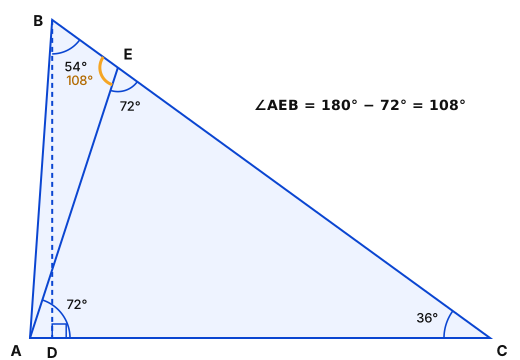
In △ABC, BD ⟂ AC at D and ∠DBC = 54°. E is a point on BC such that ∠CAE = 72°. What is the measure of ∠AEB?
△ABC में, BD ⟂ AC, D पर है और ∠DBC = 54° है। E, BC पर एक ऐसा बिंदु है कि ∠CAE = 72° है। ∠AEB की माप क्या है?
  1. A100°
  2. B98°
  3. C95°
  4. D108°
Show answer

Concept: Angle sum of a triangle is 180∘; an exterior (linear pair) angle is 180∘ minus the interior one.

  1. In right △BDC: ∠C=180∘−90∘−54∘=36∘.
  2. In △AEC: ∠AEC=180∘−72∘−36∘=72∘.
  3. B, E, C are collinear ⇒ ∠AEB=180∘−72∘=108∘.

Trick: Exterior angle of △AEC at E =∠CAE+∠C=72∘+36∘=108∘.

Answer: (D) 108∘

अवधारणा: त्रिभुज के कोणों का योग 180∘; रैखिक युग्म कोण = 180∘ − अंतः कोण।

  1. समकोण △BDC में: ∠C=180∘−90∘−54∘=36∘।
  2. △AEC में: ∠AEC=180∘−72∘−36∘=72∘।
  3. B, E, C एक रेखा पर ⇒ ∠AEB=180∘−72∘=108∘।

ट्रिक: △AEC का E पर बाह्य कोण =∠CAE+∠C=72∘+36∘=108∘।

उत्तर: (D) 108∘

RRB NTPC Undergraduate CBT 1MathematicsTriangles – AnglesRRB NTPC Undergraduate CBT 1 2024 · 19 Aug Shift 3 →
Q1470.
Evaluate: (−9) − (−60) ÷ (−6) + (−4) × 9
मान ज्ञात कीजिए: (−9) − (−60) ÷ (−6) + (−4) × 9
  1. A−57
  2. B−55
  3. C−58
  4. D−54
Show answer

Concept: BODMAS: division and multiplication before addition and subtraction; watch the signs.

  1. (−60)÷(−6)=10.
  2. (−4)×9=−36.
  3. −9−10+(−36)=−55.

Trick: Negative ÷ negative = positive, then the minus before it makes it −10.

Answer: (B) −55

अवधारणा: BODMAS: भाग और गुणा पहले, फिर जोड़-घटाव; चिह्नों पर ध्यान दें।

  1. (−60)÷(−6)=10।
  2. (−4)×9=−36।
  3. −9−10+(−36)=−55।

ट्रिक: ऋण ÷ ऋण = धन, फिर उससे पहले का ऋण चिह्न उसे −10 बना देता है।

उत्तर: (B) −55

RRB NTPC Undergraduate CBT 1MathematicsSimplification (BODMAS)RRB NTPC Undergraduate CBT 1 2024 · 19 Aug Shift 3 →
Q1471.
What should come in place of ? in the given series based on the English alphabetical order?
UXX VSU WNR ? YDL
अंग्रेज़ी वर्णमाला क्रम के आधार पर दी गई श्रृंखला में प्रश्न चिह्न (?) के स्थान पर क्या आना चाहिए?
UXX VSU WNR ? YDL
  1. AXLV
  2. BXIO
  3. CWLZ
  4. DPSL
Show answer

Concept: Track each letter position of the clusters separately.

  1. 1st letters: U, V, W, X, Y (+1).
  2. 2nd letters: X, S, N, I, D (−5).
  3. 3rd letters: X, U, R, O, L (−3).

Trick: First letter must be X — only XLV and XIO remain; N − 5 = I settles it.

Answer: (B) XIO

अवधारणा: हर समूह के प्रत्येक स्थान के अक्षर अलग-अलग देखें।

  1. पहले अक्षर: U, V, W, X, Y (+1)।
  2. दूसरे अक्षर: X, S, N, I, D (−5)।
  3. तीसरे अक्षर: X, U, R, O, L (−3)।

ट्रिक: पहला अक्षर X होना चाहिए — केवल XLV और XIO बचते हैं; N − 5 = I से उत्तर तय।

उत्तर: (B) XIO

RRB NTPC Undergraduate CBT 1General Intelligence and ReasoningLetter SeriesRRB NTPC Undergraduate CBT 1 2024 · 19 Aug Shift 3 →
Q1472.
Refer to the following number and symbol series and answer the question that follows. Counting to be done from left to right only.
(Left) + @ & ? % \ ? + < # 8 $ 1 % % 5 2 4 9 ^ 7 (Right)
How many such numbers are there, each of which is immediately preceded by a symbol and also immediately followed by a symbol?
निम्नलिखित संख्या और प्रतीक श्रृंखला को देखिए और उसके बाद आने वाले प्रश्न का उत्तर दीजिए। गिनती केवल बाएँ से दाएँ की जानी है।
(बाएँ) + @ & ? % \ ? + < # 8 $ 1 % % 5 2 4 9 ^ 7 (दाएँ)
ऐसी कितनी संख्याएँ हैं, जिनमें से प्रत्येक के ठीक पहले एक प्रतीक है और ठीक बाद में भी एक प्रतीक है?
  1. AThreeतीन
  2. BFiveपाँच
  3. COneएक
  4. DTwoदो
Show answer

Concept: Check each number's left and right neighbour.

  1. 8: preceded by #, followed by $ → both symbols ✔.
  2. 1: preceded by $, followed by % ✔.
  3. 5, 2, 4, 9 have a number on at least one side ✘; 7 is the last element (nothing after it) ✘.

Trick: Numbers inside a run of digits (5 2 4 9) can never qualify — skip them.

Answer: (D) Two

अवधारणा: हर संख्या का बायाँ और दायाँ पड़ोसी जाँचें।

  1. 8: पहले #, बाद में $ → दोनों प्रतीक ✔।
  2. 1: पहले $, बाद में % ✔।
  3. 5, 2, 4, 9 के कम से कम एक ओर संख्या ✘; 7 अंतिम है (बाद में कुछ नहीं) ✘।

ट्रिक: लगातार अंकों के समूह (5 2 4 9) के भीतर की संख्याएँ कभी शर्त पूरी नहीं करतीं — उन्हें छोड़ दें।

उत्तर: (D) दो

RRB NTPC Undergraduate CBT 1General Intelligence and ReasoningSymbol–Number SeriesRRB NTPC Undergraduate CBT 1 2024 · 19 Aug Shift 3 →
Q1473.
In a certain code language, ‘LUMA’ is coded as ‘5796’ and ‘MALI’ is coded as ‘8569’. What is the code for ‘I’ in that language?
एक निश्चित कूट भाषा में, ‘LUMA’ को ‘5796’ लिखा जाता है और ‘MALI’ को ‘8569’ लिखा जाता है। उस भाषा में ‘I’ के लिए कूट क्या है?
  1. A8
  2. B9
  3. C5
  4. D6
Show answer

Concept: Letters common to both words share the common digits; the leftover letter takes the leftover digit.

  1. LUMA → 5, 7, 9, 6; MALI → 8, 5, 6, 9.
  2. Common letters L, M, A ↔ common digits 5, 6, 9.
  3. LUMA's extra U = 7; MALI's extra I = 8.

Trick: Find the unmatched letter and unmatched digit — they pair up.

Answer: (A) 8

अवधारणा: दोनों शब्दों के समान अक्षर समान अंकों से कोडित; बचा अक्षर बचे अंक से।

  1. LUMA → 5, 7, 9, 6; MALI → 8, 5, 6, 9।
  2. समान अक्षर L, M, A ↔ समान अंक 5, 6, 9।
  3. LUMA में अतिरिक्त U = 7; MALI में अतिरिक्त I = 8।

ट्रिक: बेमेल अक्षर और बेमेल अंक ढूँढें — वही जोड़ी है।

उत्तर: (A) 8

RRB NTPC Undergraduate CBT 1General Intelligence and ReasoningCoding–DecodingRRB NTPC Undergraduate CBT 1 2024 · 19 Aug Shift 3 →
Q1474.
In the following triads, each group of letters is related to the subsequent one following a certain logic. Select from the given options, the one which follows the same logic. GULF – FLGU – GLUF
ALTS – STAL – ATLS
निम्नलिखित त्रिकों में, अक्षरों का प्रत्येक समूह एक निश्चित तर्क का पालन करते हुए अगले समूह से संबंधित है। दिए गए विकल्पों में से उसका चयन कीजिए जो समान तर्क का पालन करता है। GULF – FLGU – GLUF
ALTS – STAL – ATLS
  1. ASICK – KCSI – SCIK
  2. BLIMB – IMLB – IMBL
  3. CCALF – FLCA – ALCF
  4. DFINE – FNIE – ENIF
Show answer

Concept: Number the letters of the first word 1-2-3-4 and track the order.

  1. GULF (1234) → FLGU = 4-3-1-2 → GLUF = 1-3-2-4.
  2. Check ALTS: STAL (4312), ATLS (1324) ✔.
  3. SICK: 4312 = KCSI ✔; 1324 = SCIK ✔.

Trick: Third word = first word with middle two letters swapped — test this first.

Answer: (A) SICK – KCSI – SCIK

अवधारणा: पहले शब्द के अक्षरों को 1-2-3-4 क्रमांक देकर क्रम देखें।

  1. GULF (1234) → FLGU = 4-3-1-2 → GLUF = 1-3-2-4।
  2. ALTS जाँचें: STAL (4312), ATLS (1324) ✔।
  3. SICK: 4312 = KCSI ✔; 1324 = SCIK ✔।

ट्रिक: तीसरा शब्द = पहला शब्द, बीच के दो अक्षर आपस में बदले हुए — पहले यही जाँचें।

उत्तर: (A) SICK – KCSI – SCIK

RRB NTPC Undergraduate CBT 1General Intelligence and ReasoningLetter Position RearrangementRRB NTPC Undergraduate CBT 1 2024 · 19 Aug Shift 3 →
Q1475.
Read the given statement(s) and conclusions carefully. Assuming that the information given in the statements is true, even if it appears to be at variance with commonly known facts, decide which of the given conclusion(s) logically follow(s) from the statement(s).
Statements:
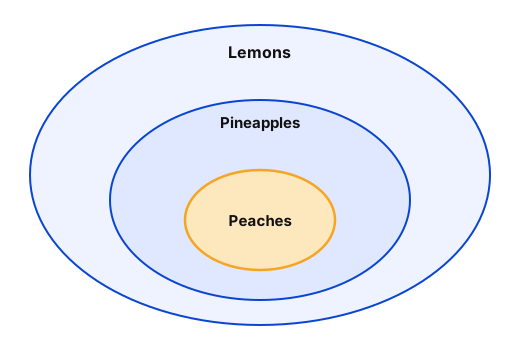
All Peaches are Pineapples.
All Pineapples are Lemons.
Conclusions:
I. No Lemons are Peaches.
II. Some Lemons are Peaches.
दिए गए कथन/कथनों और निष्कर्षों को ध्यानपूर्वक पढ़िए। यह मानते हुए कि कथनों में दी गई जानकारी सत्य है, भले ही वह सामान्यतः ज्ञात तथ्यों से भिन्न प्रतीत होती हो, निर्णय कीजिए कि दिए गए निष्कर्षों में से कौन-सा/कौन-से निष्कर्ष तार्किक रूप से कथन/कथनों का अनुसरण करता है/करते हैं।
कथन:
सभी आड़ू, अनानास हैं।
सभी अनानास, नींबू हैं।
निष्कर्ष:
I. कोई भी नींबू, आड़ू नहीं है।
II. कुछ नींबू, आड़ू हैं।
  1. AOnly conclusion (II) follows.केवल निष्कर्ष (II) अनुसरण करता है।
  2. BBoth conclusions (I) and (II) follow.निष्कर्ष (I) और (II) दोनों अनुसरण करते हैं।
  3. CNeither conclusion (I) nor (II) follows.न तो निष्कर्ष (I) और न ही (II) अनुसरण करता है।
  4. DOnly conclusion (I) follows.केवल निष्कर्ष (I) अनुसरण करता है।
Show answer

Concept: All A are B + All B are C ⇒ All A are C, so some C are A.

  1. Peaches ⊂ Pineapples ⊂ Lemons.
  2. All Peaches are Lemons ⇒ Some Lemons are Peaches (II) ✔.
  3. No Lemons are Peaches (I) contradicts this ✘.

Yaad rakhein: 'All A are B' always gives 'Some B are A' (conversion).

Answer: (A) Only conclusion (II) follows.

अवधारणा: सभी A, B हैं + सभी B, C हैं ⇒ सभी A, C हैं, अतः कुछ C, A हैं।

  1. Peaches ⊂ Pineapples ⊂ Lemons।
  2. सभी Peaches, Lemons हैं ⇒ कुछ Lemons, Peaches हैं (II) ✔।
  3. कोई Lemon, Peach नहीं (I) इसका उल्टा है ✘।

याद रखें: 'सभी A, B हैं' से हमेशा 'कुछ B, A हैं' निकलता है (परिवर्तन)।

उत्तर: (A) केवल निष्कर्ष (II) अनुसरण करता है।

RRB NTPC Undergraduate CBT 1General Intelligence and ReasoningSyllogismRRB NTPC Undergraduate CBT 1 2024 · 19 Aug Shift 3 →
Q1476.
If 1 is added to each even digit of the number 36719542, then how many digits are repeated more than once in the new number formed?
यदि संख्या 36719542 के प्रत्येक सम अंक में 1 जोड़ दिया जाए, तो इस प्रकार बनी नई संख्या में कितने अंक एक से अधिक बार आते हैं?
  1. AOneएक
  2. BNoneकोई नहीं
  3. CThreeतीन
  4. DTwoदो
Show answer

Concept: Change only the even digits, then count repeated digits.

  1. 36719542: even digits 6, 4, 2 → 7, 5, 3.
  2. New number: 3 7 7 1 9 5 5 3.
  3. Repeated: 3, 7, 5 → three digits.

Trick: Even + 1 always gives odd — the new number is all odd digits, so repeats are likely.

Answer: (C) Three

अवधारणा: केवल सम अंकों को बदलें, फिर दोहराए गए अंक गिनें।

  1. 36719542: सम अंक 6, 4, 2 → 7, 5, 3।
  2. नई संख्या: 3 7 7 1 9 5 5 3।
  3. दोहराए अंक: 3, 7, 5 → तीन।

ट्रिक: सम + 1 = विषम, इसलिए नई संख्या में सब विषम अंक होते हैं।

उत्तर: (C) तीन

RRB NTPC Undergraduate CBT 1General Intelligence and ReasoningNumber OperationsRRB NTPC Undergraduate CBT 1 2024 · 19 Aug Shift 3 →
Q1477.
Based on the English alphabetical order, three of the following four letter-clusters are alike in a certain way and thus form a group. Which letter-cluster DOES NOT belong to that group?
(Note: The odd one out is not based on the number of consonants/vowels or their position in the letter-cluster.)
अंग्रेज़ी वर्णमाला क्रम के आधार पर, निम्नलिखित चार अक्षर-समूहों में से तीन किसी निश्चित प्रकार से एकसमान हैं और इस प्रकार एक समूह बनाते हैं। कौन-सा अक्षर-समूह उस समूह से संबंधित नहीं है?
(नोट: असंगत अक्षर-समूह, उस अक्षर-समूह में व्यंजनों/स्वरों की संख्या या उनके स्थान पर आधारित नहीं है।)
  1. ATWA
  2. BHLO
  3. CJMQ
  4. DCFJ
Show answer

Concept: Find the gaps between letter positions (A = 1 … Z = 26).

  1. TWA: T(20) +3 W(23) +4 A(27 ≡ 1).
  2. JMQ: 10, 13, 17 → +3, +4. CFJ: 3, 6, 10 → +3, +4.
  3. HLO: 8, 12, 15 → +4, +3 ✘ (reversed).

Trick: Write the gap pattern of each — one pattern is reversed.

Answer: (B) HLO

अवधारणा: अक्षरों के स्थानीय मान (A = 1 … Z = 26) के अंतर देखें।

  1. TWA: T(20) +3 W(23) +4 A(27 ≡ 1)।
  2. JMQ: 10, 13, 17 → +3, +4; CFJ: 3, 6, 10 → +3, +4।
  3. HLO: 8, 12, 15 → +4, +3 ✘ (उल्टा)।

ट्रिक: हर समूह का अंतर-पैटर्न लिखें — जिसका उल्टा हो वही अलग है।

उत्तर: (B) HLO

RRB NTPC Undergraduate CBT 1General Intelligence and ReasoningOdd One Out – LettersRRB NTPC Undergraduate CBT 1 2024 · 19 Aug Shift 3 →
Q1478.
UFNE is related to YCRB in a certain way based on the English alphabetical order. In the same way, CZVY is related to GWZV. To which of the given options is KTDS related, following the same logic?
अंग्रेज़ी वर्णमाला क्रम के आधार पर UFNE एक निश्चित प्रकार से YCRB से संबंधित है। उसी प्रकार, CZVY, GWZV से संबंधित है। समान तर्क का अनुसरण करते हुए, KTDS दिए गए विकल्पों में से किससे संबंधित है?
  1. AOPGR
  2. BNRGQ
  3. CMPFO
  4. DOQHP
Show answer

Concept: Find the shift applied to each letter position.

  1. UFNE → YCRB: U+4, F−3, N+4, E−3.
  2. Check CZVY → GWZV: C+4, Z−3, V+4, Y−3 ✔.
  3. KTDS: K+4 = O, T−3 = Q, D+4 = H, S−3 = P → OQHP.

Trick: Pattern +4, −3, +4, −3; first letter O cuts options to OPGR and OQHP.

Answer: (D) OQHP

अवधारणा: हर स्थान के अक्षर पर लगा परिवर्तन ज्ञात करें।

  1. UFNE → YCRB: U+4, F−3, N+4, E−3।
  2. जाँच CZVY → GWZV: C+4, Z−3, V+4, Y−3 ✔।
  3. KTDS: K+4 = O, T−3 = Q, D+4 = H, S−3 = P → OQHP।

ट्रिक: पैटर्न +4, −3, +4, −3; पहला अक्षर O से विकल्प OPGR और OQHP बचते हैं।

उत्तर: (D) OQHP

RRB NTPC Undergraduate CBT 1General Intelligence and ReasoningLetter AnalogyRRB NTPC Undergraduate CBT 1 2024 · 19 Aug Shift 3 →
Q1479.
What should come in place of the question mark (?) in the given series?
1 2 4 7 28 33 ?
दी गई श्रृंखला में प्रश्न चिह्न (?) के स्थान पर क्या आना चाहिए?
1 2 4 7 28 33 ?
  1. A198
  2. B199
  3. C197
  4. D196
Show answer

Concept: Alternate addition and multiplication with 1, 2, 3, 4, 5, 6.

  1. 1+1=2, 2×2=4, 4+3=7.
  2. 7×4=28, 28+5=33.
  3. 33×6=198.

Trick: A sudden jump (7 → 28) signals multiplication — look for alternating +n, ×n.

Answer: (A) 198

अवधारणा: 1, 2, 3, 4, 5, 6 से बारी-बारी जोड़ और गुणा।

  1. 1+1=2, 2×2=4, 4+3=7।
  2. 7×4=28, 28+5=33।
  3. 33×6=198।

ट्रिक: अचानक बड़ी छलांग (7 → 28) गुणा का संकेत है — बारी-बारी +n, ×n खोजें।

उत्तर: (A) 198

RRB NTPC Undergraduate CBT 1General Intelligence and ReasoningNumber SeriesRRB NTPC Undergraduate CBT 1 2024 · 19 Aug Shift 3 →
Q1480.
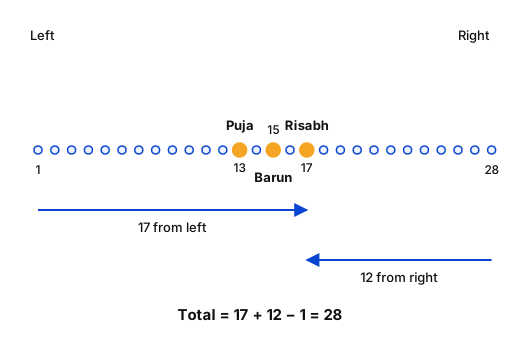
In a row of people all facing north, Puja is 13th from the left end. Barun is 15th from the left end. Barun is exactly between Puja and Risabh. If Risabh is 12th from the right end of the row, how many people are there in the row?
उत्तर की ओर मुख करके खड़े लोगों की एक पंक्ति में, पूजा बाएँ छोर से 13वें स्थान पर है। बरुण बाएँ छोर से 15वें स्थान पर है। बरुण, पूजा और रिसभ के ठीक बीच में है। यदि रिसभ पंक्ति के दाएँ छोर से 12वें स्थान पर है, तो पंक्ति में कितने लोग हैं?
  1. A30
  2. B25
  3. C28
  4. D27
Show answer

Concept: Total = position from left + position from right −1.

  1. Barun (15th) is exactly between Puja (13th) and Risabh ⇒ Risabh is 2 places further: 17th from left.
  2. Risabh is 12th from right.
  3. Total =17+12−1=28.

Trick: 'Exactly between' ⇒ equal gaps on both sides: 15+(15−13)=17.

Answer: (C) 28

अवधारणा: कुल = बाएँ से स्थान + दाएँ से स्थान −1।

  1. Barun (15वाँ) Puja (13वाँ) और Risabh के ठीक बीच ⇒ Risabh 2 स्थान आगे: बाएँ से 17वाँ।
  2. Risabh दाएँ से 12वाँ है।
  3. कुल =17+12−1=28।

ट्रिक: 'ठीक बीच' ⇒ दोनों ओर बराबर अंतर: 15+(15−13)=17।

उत्तर: (C) 28

RRB NTPC Undergraduate CBT 1General Intelligence and ReasoningRanking and Row ArrangementRRB NTPC Undergraduate CBT 1 2024 · 19 Aug Shift 3 →