Question bank

Q&A: practice questions with answers

Search questions on any topic. Filter by exam category, exam, subject and topic, try the question, then open the answer and explanation.

Courses – airGurukul

8,495 questions found.

Q1561.
By selling an article at 813 of its actual selling price, Ramesh incurs a loss of 20%. If he sells it at 85% of its actual selling price, then the profit percentage is:
किसी वस्तु को उसके वास्तविक विक्रय मूल्य के 813 पर बेचने पर रमेश को 20% की हानि होती है। यदि वह इसे उसके वास्तविक विक्रय मूल्य के 85% पर बेचता है, तो लाभ प्रतिशत कितना होगा?
  1. A9.3%
  2. B8.2%
  3. C12.3%
  4. D10.5%
Show answer

Concept: Express both selling prices in terms of the cost price (CP).

  1. 813 of actual SP =80% of CP → actual SP =0.8CP×138=1.3CP.
  2. New SP =85% of 1.3CP=1.105CP.
  3. Profit %=(1.105−1)×100=10.5%.

Trick: Let CP =100: 813SP =80 → SP =130; 0.85×130=110.5 → 10.5% profit.

Answer: (D) 10.5%

अवधारणा: दोनों विक्रय मूल्यों को क्रय मूल्य (CP) के रूप में लिखें।

  1. वास्तविक SP का 813=80% CP → SP =1.3CP।
  2. नया SP =1.3 का 85%=1.105CP।
  3. लाभ%=(1.105−1)×100=10.5%।

ट्रिक: CP =100 मानें: SP =130; 0.85×130=110.5 → 10.5% लाभ।

उत्तर: (D) 10.5%

RRB NTPC Undergraduate CBT 1MathematicsProfit and LossRRB NTPC Undergraduate CBT 1 2024 · 19 Aug Shift 2 →
Q1562.
An amount of ₹616 is divided among three persons in the ratio of 5 : 12 : 11. The difference between the largest and the smallest shares (in ₹) in the distribution is:
₹616 की राशि को तीन व्यक्तियों में 5 : 12 : 11 के अनुपात में बाँटा जाता है। इस वितरण में सबसे बड़े और सबसे छोटे हिस्सों के बीच का अंतर (₹ में) कितना है?
  1. A154
  2. B86
  3. C69
  4. D112
Show answer

Concept: Share =ratio partsum of parts×total.

  1. Sum of parts =5+12+11=28; one part =61628=22.
  2. Largest − smallest =(12−5) parts =7×22=154.

Trick: Find the value of one part, then multiply by the difference of ratio terms – no need to find each share.

Answer: (A) 154

अवधारणा: हिस्सा =अनुपात भागभागों का योग×कुल।

  1. भागों का योग =28; एक भाग =61628=22।
  2. सबसे बड़ा − सबसे छोटा =(12−5)×22=154।

ट्रिक: एक भाग का मान निकालें और अनुपात के अंतर से गुणा करें।

उत्तर: (A) 154

RRB NTPC Undergraduate CBT 1MathematicsRatio and ProportionRRB NTPC Undergraduate CBT 1 2024 · 19 Aug Shift 2 →
Q1563.
By how much is 65% of 75 greater than 45 of 15?
75 का 65%, 15 के 45 से कितना अधिक है?
  1. A36.75
  2. B33.75
  3. C30.75
  4. D34.75
Show answer

Concept: Compute both quantities separately and subtract.

  1. 65% of 75=65×75100=48.75.
  2. 45 of 15=12.
  3. Difference =48.75−12=36.75.

Trick: 65% of 75 =75×0.65: 75×0.6=45, 75×0.05=3.75 → 48.75.

Answer: (A) 36.75

अवधारणा: दोनों मात्राएँ अलग-अलग निकालकर घटाएँ।

  1. 75 का 65%=48.75।
  2. 15 का 45=12।
  3. अंतर =48.75−12=36.75।

ट्रिक: 75×0.6=45, 75×0.05=3.75 → 48.75।

उत्तर: (A) 36.75

RRB NTPC Undergraduate CBT 1MathematicsPercentage and FractionsRRB NTPC Undergraduate CBT 1 2024 · 19 Aug Shift 2 →
Q1564.
The average weight (in kg) of a family of five members whose weights are 40 kg, 49 kg, 56 kg, 75 kg and 35 kg is:
पाँच सदस्यों वाले एक परिवार, जिनके भार 40 kg, 49 kg, 56 kg, 75 kg और 35 kg हैं, का औसत भार (kg में) कितना है?
  1. A53
  2. B51
  3. C52
  4. D50
Show answer

Concept: Average =sum of observationsnumber of observations.

  1. Sum =40+49+56+75+35=255kg.
  2. Average =2555=51kg.

Trick: Assume 50 as base: deviations −10,−1,+6,+25,−15 sum to +5 → 50+55=51.

Answer: (B) 51

अवधारणा: औसत =प्रेक्षणों का योगप्रेक्षणों की संख्या।

  1. योग =255kg।
  2. औसत =2555=51kg।

ट्रिक: 50 आधार मानें: विचलनों का योग +5 → 50+1=51।

उत्तर: (B) 51

RRB NTPC Undergraduate CBT 1MathematicsAverageRRB NTPC Undergraduate CBT 1 2024 · 19 Aug Shift 2 →
Q1565.
Pipe P can fill 37 part of a tank in 12 hours, and pipe Q can fill 56 part of the same tank in 10 hours. Both P and Q were kept open for 2 hours, then both were closed. Pipe R alone was then opened and it emptied the water in the tank in 5 hours. Pipes P, Q and R together can fill the empty tank in:
पाइप P किसी टंकी के 37 भाग को 12 घंटे में भर सकता है, और पाइप Q उसी टंकी के 56 भाग को 10 घंटे में भर सकता है। P और Q दोनों को 2 घंटे तक खुला रखा गया, फिर दोनों को बंद कर दिया गया। इसके बाद केवल पाइप R को खोला गया और उसने टंकी का पानी 5 घंटे में खाली कर दिया। पाइप P, Q और R मिलकर खाली टंकी को कितने समय में भर सकते हैं?
  1. A24 hours24 घंटे
  2. B27 hours27 घंटे
  3. C14 hours14 घंटे
  4. D33 hours33 घंटे
Show answer

Concept: Rate of a pipe =part filledtime; an emptying pipe has a negative rate.

  1. P: 37÷12=128 per hour; Q: 56÷10=112 per hour.
  2. In 2 h, P + Q fill 2(128+112)=2×1084=521.
  3. R empties 521 in 5 h → R =121 per hour.
  4. P + Q − R =128+112−121=3+7−484=114 → 14 hours.

Trick: LCM of 28, 12, 21 =84 units: P = 3, Q = 7, R = −4 → net 6 units/h → 84÷6=14 h.

Answer: (C) 14 hours

अवधारणा: पाइप की दर =भरा भागसमय; खाली करने वाले पाइप की दर ऋणात्मक।

  1. P: 37÷12=128/घंटा; Q: 56÷10=112/घंटा।
  2. 2 घंटे में P + Q =2×1084=521 भरते हैं।
  3. R, 521 को 5 घंटे में खाली करता है → 121/घंटा।
  4. 128+112−121=684=114 → 14 घंटे।

ट्रिक: 84 इकाई: P = 3, Q = 7, R = −4 → शुद्ध 6 इकाई/घंटा → 14 घंटे।

उत्तर: (C) 14 घंटे

RRB NTPC Undergraduate CBT 1MathematicsPipes and CisternsRRB NTPC Undergraduate CBT 1 2024 · 19 Aug Shift 2 →
Q1566.
If 18% of first number is equal to two-fifths of second number, what is the ratio of first number to the second number?
यदि पहली संख्या का 18%, दूसरी संख्या के दो-पाँचवें भाग के बराबर है, तो पहली संख्या और दूसरी संख्या का अनुपात क्या है?
  1. A20 : 9
  2. B16 : 10
  3. C21 : 6
  4. D18 : 7
Show answer

Concept: Form an equation and divide to get the ratio.

  1. 18100a=25b.
  2. ab=25×10018=4018=209.

Trick: If x% of A =y% of B then A:B=y:x; here 40:18=20:9.

Answer: (A) 20 : 9

अवधारणा: समीकरण बनाकर भाग दें।

  1. 18100a=25b।
  2. ab=4018=209।

ट्रिक: A का x% = B का y% हो तो A:B=y:x; यहाँ 40:18=20:9।

उत्तर: (A) 20 : 9

RRB NTPC Undergraduate CBT 1MathematicsRatioRRB NTPC Undergraduate CBT 1 2024 · 19 Aug Shift 2 →
Q1567.
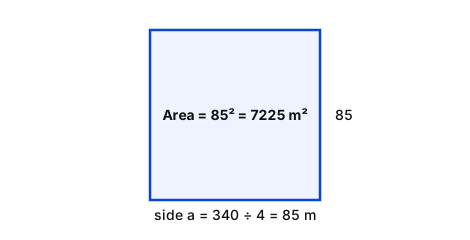
The perimeter of a square is 340 m. Its area (in m2) is:
एक वर्ग का परिमाप 340 m है। इसका क्षेत्रफल (m2 में) कितना है?
  1. A7204
  2. B7200
  3. C7207
  4. D7225
Show answer

Concept: Perimeter of a square =4a, area =a2.

  1. Side a=3404=85m.
  2. Area =852=7225m2.

Trick: Square of a number ending in 5: 852 → 8×9=72, append 25 → 7225.

Answer: (D) 7225

अवधारणा: वर्ग का परिमाप =4a, क्षेत्रफल =a2।

  1. भुजा a=3404=85m।
  2. क्षेत्रफल =852=7225m2।

ट्रिक: 5 पर समाप्त संख्या का वर्ग: 8×9=72, फिर 25 → 7225।

उत्तर: (D) 7225

RRB NTPC Undergraduate CBT 1MathematicsMensuration – SquareRRB NTPC Undergraduate CBT 1 2024 · 19 Aug Shift 2 →
Q1568.
Aman and Pawan together invested ₹76,500 in a business. At the end of the year, out of a total profit of ₹20,000, Pawan's share was ₹4,800. What was the difference between their investments?
अमन और पवन ने मिलकर एक व्यवसाय में ₹76,500 का निवेश किया। वर्ष के अंत में, ₹20,000 के कुल लाभ में से पवन का हिस्सा ₹4,800 था। उनके निवेशों के बीच का अंतर कितना था?
  1. A₹39,780
  2. B₹40,609
  3. C₹39,923
  4. D₹41,601
Show answer

Concept: For the same time period, profit is shared in the ratio of investments.

  1. Pawan's share of profit =480020000=625, so Aman's =1925.
  2. Pawan's investment =625×76500=18360; Aman's =58140.
  3. Difference =58140−18360=39780 → ₹39,780.

Trick: Difference =19−625×76500=1325×76500=39780.

Answer: (A) ₹39,780

अवधारणा: समान अवधि हो तो लाभ निवेश के अनुपात में बँटता है।

  1. पवन का हिस्सा =480020000=625, अमन का =1925।
  2. पवन का निवेश =18360; अमन का =58140।
  3. अंतर =39780 → ₹39,780।

ट्रिक: अंतर =1325×76500=39780।

उत्तर: (A) ₹39,780

RRB NTPC Undergraduate CBT 1MathematicsPartnershipRRB NTPC Undergraduate CBT 1 2024 · 19 Aug Shift 2 →
Q1569.
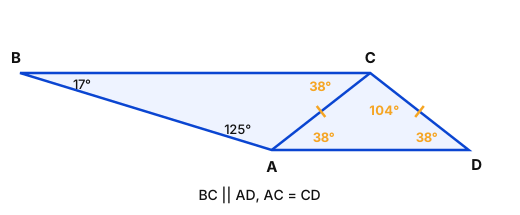
ABCD is a trapezium in which BC∥AD and AC=CD. If ∠ABC=17∘ and ∠BAC=125∘, then what is the measure of ∠ACD (in degree)?
ABCD एक समलंब चतुर्भुज है जिसमें BC∥AD और AC=CD है। यदि ∠ABC=17∘ और ∠BAC=125∘ है, तो ∠ACD की माप (डिग्री में) कितनी है?
  1. A104°
  2. B95°
  3. C106°
  4. D105°
Show answer

Concept: Angle sum of a triangle is 180∘; alternate angles between parallel lines are equal; angles opposite equal sides are equal.

  1. In △ABC: ∠BCA=180∘−17∘−125∘=38∘.
  2. BC∥AD with transversal AC → ∠CAD=∠BCA=38∘ (alternate angles).
  3. AC=CD → ∠CDA=∠CAD=38∘.
  4. ∠ACD=180∘−38∘−38∘=104∘.

Trick: Isosceles triangle: vertex angle =180∘−2×base angle.

Answer: (A) 104∘

अवधारणा: त्रिभुज के कोणों का योग 180∘; समांतर रेखाओं के एकांतर कोण बराबर; बराबर भुजाओं के सामने के कोण बराबर।

  1. △ABC में ∠BCA=180∘−17∘−125∘=38∘।
  2. BC∥AD → ∠CAD=∠BCA=38∘ (एकांतर कोण)।
  3. AC=CD → ∠CDA=38∘।
  4. ∠ACD=180∘−76∘=104∘।

ट्रिक: समद्विबाहु त्रिभुज: शीर्ष कोण =180∘−2×आधार कोण।

उत्तर: (A) 104∘

RRB NTPC Undergraduate CBT 1MathematicsGeometry – TrapeziumRRB NTPC Undergraduate CBT 1 2024 · 19 Aug Shift 2 →
Q1570.
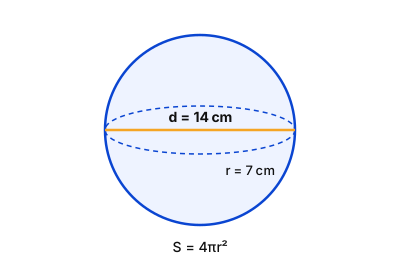
Find the surface area of a sphere whose diameter is 14 cm. (Use π=227)
उस गोले का पृष्ठीय क्षेत्रफल ज्ञात कीजिए जिसका व्यास 14 cm है। (Use π=227)
  1. A716cm2
  2. B516cm2
  3. C816cm2
  4. D616cm2
Show answer

Concept: Surface area of a sphere =4πr2.

  1. Radius r=142=7cm.
  2. S=4×227×7×7=4×22×7=616cm2.

Trick: With r=7: πr2=154; sphere surface =4×154=616.

Answer: (D) 616cm2

अवधारणा: गोले का पृष्ठीय क्षेत्रफल =4πr2।

  1. त्रिज्या r=7cm।
  2. S=4×227×49=616cm2।

ट्रिक: r=7 पर πr2=154; गोला =4×154=616।

उत्तर: (D) 616cm2

RRB NTPC Undergraduate CBT 1MathematicsMensuration – SphereRRB NTPC Undergraduate CBT 1 2024 · 19 Aug Shift 2 →
Q1571.
If 2 is added to each even digit and 4 is subtracted from each odd digit in the number 925746, what will be difference between the highest and second lowest digits thus formed?
यदि संख्या 925746 के प्रत्येक सम अंक में 2 जोड़ा जाए और प्रत्येक विषम अंक में से 4 घटाया जाए, तो इस प्रकार बने उच्चतम और दूसरे निम्नतम अंकों के बीच का अंतर क्या होगा?
  1. A5
  2. B4
  3. C6
  4. D7
Show answer

Concept: Change each digit by the given rule, then compare the new digits.

  1. 925746: odd digits 9, 5, 7 → −4 → 5, 1, 3; even digits 2, 4, 6 → +2 → 4, 6, 8.
  2. New number: 5 4 1 3 6 8.
  3. Highest digit =8; digits in ascending order 1, 3, 4, … → second lowest =3.
  4. Difference =8−3=5.

Trick: Write the new digits in ascending order once – both 'highest' and 'second lowest' can be read off directly.

Answer: (A) 5

अवधारणा: दिए गए नियम से हर अंक बदलें, फिर नए अंकों की तुलना करें।

  1. 925746: विषम अंक 9, 5, 7 → −4 → 5, 1, 3; सम अंक 2, 4, 6 → +2 → 4, 6, 8।
  2. नई संख्या: 5 4 1 3 6 8।
  3. सबसे बड़ा अंक 8; आरोही क्रम 1, 3, 4, … → दूसरा सबसे छोटा 3।
  4. अंतर =8−3=5।

ट्रिक: नए अंकों को एक बार आरोही क्रम में लिख लें – दोनों उत्तर सीधे मिल जाते हैं।

उत्तर: (A) 5

RRB NTPC Undergraduate CBT 1General Intelligence and ReasoningDigit OperationsRRB NTPC Undergraduate CBT 1 2024 · 19 Aug Shift 2 →
Q1572.
Refer to the following number and symbol series and answer the question that follows. Counting to be done from left to right only.
(Left) ^ > & 5 > ^ 3 6 < + $ % * % 7 1 % 2 + 2 1 (Right)
How many such symbols are there, each of which is immediately preceded by a number and also immediately followed by a number?
निम्नलिखित संख्या और प्रतीक श्रृंखला को देखिए और उसके बाद दिए गए प्रश्न का उत्तर दीजिए। गिनती केवल बाएँ से दाएँ की जानी है।
(बाएँ) ^ > & 5 > ^ 3 6 < + $ % * % 7 1 % 2 + 2 1 (दाएँ)
ऐसे कितने प्रतीक हैं, जिनमें से प्रत्येक के ठीक पहले एक संख्या है और ठीक बाद भी एक संख्या है?
  1. AOneएक
  2. BThreeतीन
  3. CNoneकोई नहीं
  4. DTwoदो
Show answer

Concept: Look for the pattern number – symbol – number (a symbol with a digit on both sides).

  1. Scan every symbol and check its left and right neighbours.
  2. '1 % 2' (near the right end): % has 1 before and 2 after ✔.
  3. '2 + 2': + has 2 before and 2 after ✔.
  4. Others fail, e.g. '5 > ' is followed by a symbol, '6 < +' is followed by a symbol, '7' and '1' are adjacent digits with no symbol between.

Trick: Only check symbols that sit right after a digit – this cuts the work in half.

Answer: (D) Two

अवधारणा: पैटर्न खोजें: संख्या – प्रतीक – संख्या (प्रतीक के दोनों ओर अंक)।

  1. हर प्रतीक के बाएँ और दाएँ पड़ोसी जाँचें।
  2. '1 % 2': % के पहले 1 और बाद में 2 ✔।
  3. '2 + 2': + के पहले 2 और बाद में 2 ✔।
  4. बाकी असफल, जैसे '5 >' के बाद प्रतीक है, '6 <' के बाद + है; '$ % *' में आस-पास अंक नहीं।

ट्रिक: केवल उन्हीं प्रतीकों को जाँचें जो किसी अंक के ठीक बाद आते हैं।

उत्तर: (D) दो (Two)

RRB NTPC Undergraduate CBT 1General Intelligence and ReasoningSymbol–Number SeriesRRB NTPC Undergraduate CBT 1 2024 · 19 Aug Shift 2 →
Q1573.
In a certain code language, ‘WHAT’ is coded as ‘3157’ and ‘HORN’ is coded as ‘2416’. What is the code for ‘H’ in the given code language?
एक निश्चित कूट भाषा में, ‘WHAT’ को ‘3157’ के रूप में और ‘HORN’ को ‘2416’ के रूप में कूटबद्ध किया जाता है। दी गई कूट भाषा में ‘H’ के लिए कूट क्या है?
  1. A2
  2. B6
  3. C1
  4. D5
Show answer

Concept: A letter common to two words takes the digit common to their codes.

  1. WHAT = 3157 and HORN = 2416.
  2. Common letter: H. Common digit: 1.
  3. So H = 1.

Trick: Match common letters with common digits – the positions inside the code do not matter.

Answer: (C) 1

अवधारणा: दो शब्दों में उभयनिष्ठ अक्षर का कोड उनके कोडों में उभयनिष्ठ अंक होता है।

  1. WHAT = 3157, HORN = 2416।
  2. उभयनिष्ठ अक्षर H, उभयनिष्ठ अंक 1।
  3. अतः H = 1।

ट्रिक: उभयनिष्ठ अक्षर ↔ उभयनिष्ठ अंक – कोड में स्थान मायने नहीं रखता।

उत्तर: (C) 1

RRB NTPC Undergraduate CBT 1General Intelligence and ReasoningCoding–DecodingRRB NTPC Undergraduate CBT 1 2024 · 19 Aug Shift 2 →
Q1574.
What should come in place of the question mark (?) in the given series based on the English alphabetical order?
UTP CBX KJF SRN ?
अंग्रेज़ी वर्णमाला क्रम के आधार पर दी गई श्रृंखला में प्रश्न चिह्न (?) के स्थान पर क्या आना चाहिए?
UTP CBX KJF SRN ?
  1. AVZA
  2. BAZV
  3. CAVZ
  4. DVAZ
Show answer

Concept: Track each position of the three-letter groups separately.

  1. 1st letters: U, C, K, S → each +8 (U(21) + 8 = 29 → C) → next S(19) + 8 = 27 → A.
  2. 2nd letters: T, B, J, R → +8 → R + 8 → Z.
  3. 3rd letters: P, X, F, N → +8 → N + 8 → V.
  4. Next group: AZV.

Trick: Each group is (letter, letter − 1, letter − 5): A, Z, V fits (A − 1 = Z, A − 5 = V cyclically).

Answer: (B) AZV

अवधारणा: तीन अक्षरों वाले समूह के हर स्थान को अलग से देखें।

  1. पहला अक्षर: U, C, K, S → हर बार +8 → S + 8 → A।
  2. दूसरा अक्षर: T, B, J, R → +8 → Z।
  3. तीसरा अक्षर: P, X, F, N → +8 → V।
  4. अगला समूह: AZV।

ट्रिक: हर समूह (अक्षर, अक्षर − 1, अक्षर − 5) है: A, Z, V।

उत्तर: (B) AZV

RRB NTPC Undergraduate CBT 1General Intelligence and ReasoningLetter SeriesRRB NTPC Undergraduate CBT 1 2024 · 19 Aug Shift 2 →
Q1575.
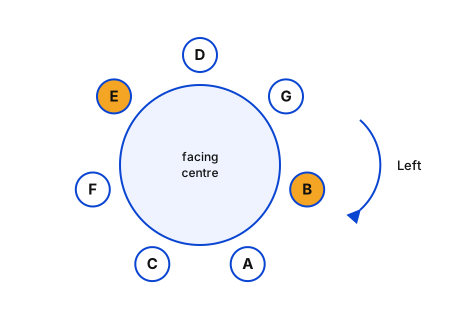
A, B, C, D, E, F and G are sitting around a circular table facing the centre.
Only two people sit between C and G when counted from the left of G. A sits third to the left of D. E sits to the immediate right of D. E sits second to the left of C. B is an immediate neighbour of A. How many people sit between B and E when counted from the right of B?
A, B, C, D, E, F और G एक वृत्ताकार मेज़ के चारों ओर केंद्र की ओर मुख करके बैठे हैं।
G के बाएँ से गिनने पर C और G के बीच केवल दो व्यक्ति बैठे हैं। A, D के बाएँ से तीसरे स्थान पर बैठा है। E, D के ठीक दाएँ बैठा है। E, C के बाएँ से दूसरे स्थान पर बैठा है। B, A का निकटतम पड़ोसी है। B के दाएँ से गिनने पर B और E के बीच कितने व्यक्ति बैठे हैं?
  1. A3
  2. B1
  3. C2
  4. D4
Show answer

Concept: Facing the centre, 'left' means clockwise and 'right' means anticlockwise.

  1. Fix D. E is immediate right of D; A is third to the left of D.
  2. E is second to the left of C → C is two places to the right of E, i.e. opposite side next to A.
  3. Two people between G and C counted from G's left → G is immediate left of D.
  4. B neighbours A → B sits between G and A; F takes the last seat between C and E.
  5. From B going right: G, D, then E → 2 people between.

Trick: Draw the circle and mark left (clockwise) once with an arrow before placing anyone.

Answer: (C) 2

अवधारणा: केंद्र की ओर मुख होने पर 'बाएँ' = दक्षिणावर्त (clockwise), 'दाएँ' = वामावर्त।

  1. D को स्थिर करें। E, D के ठीक दाएँ; A, D के बाएँ तीसरे स्थान पर।
  2. E, C के बाएँ दूसरे स्थान पर → C, E से दाएँ दो स्थान पर, A के पास।
  3. G के बाएँ से गिनने पर G और C के बीच दो लोग → G, D के ठीक बाएँ।
  4. B, A का पड़ोसी → B, G और A के बीच; F, C और E के बीच।
  5. B के दाएँ से: G, D, फिर E → बीच में 2 लोग।

ट्रिक: पहले वृत्त बनाकर बाएँ (clockwise) दिशा का तीर लगा लें।

उत्तर: (C) 2

RRB NTPC Undergraduate CBT 1General Intelligence and ReasoningCircular Seating ArrangementRRB NTPC Undergraduate CBT 1 2024 · 19 Aug Shift 2 →
Q1576.
What will come in the place of the question mark (?) in the following equation, if ‘+’ and ‘÷’ are interchanged, and ‘−’ and ‘×’ are interchanged?
24 + 3 × 10 − 2 ÷ 41 = ?
यदि ‘+’ और ‘÷’ को आपस में बदल दिया जाए तथा ‘−’ और ‘×’ को आपस में बदल दिया जाए, तो निम्नलिखित समीकरण में प्रश्न चिह्न (?) के स्थान पर क्या आएगा?
24 + 3 × 10 − 2 ÷ 41 = ?
  1. A36
  2. B22
  3. C41
  4. D29
Show answer

Concept: Interchange the signs first, then solve using BODMAS.

  1. Swap + ↔ ÷ and − ↔ ×: 24÷3−10×2+41.
  2. 24÷3=8, 10×2=20.
  3. 8−20+41=29.

Trick: Rewrite the full expression with new signs before calculating – never swap in your head.

Answer: (D) 29

अवधारणा: पहले चिह्न बदलें, फिर BODMAS से हल करें।

  1. + ↔ ÷ और − ↔ × बदलकर: 24÷3−10×2+41।
  2. 24÷3=8, 10×2=20।
  3. 8−20+41=29।

ट्रिक: नए चिह्नों के साथ पूरा व्यंजक दोबारा लिखें, फिर गणना करें।

उत्तर: (D) 29

RRB NTPC Undergraduate CBT 1General Intelligence and ReasoningMathematical OperationsRRB NTPC Undergraduate CBT 1 2024 · 19 Aug Shift 2 →
Q1577.
Based on the English alphabetical order, three of the following four letter-cluster pairs are alike in a certain way and thus form a group. Which letter-cluster pair DOES NOT belong to that group?
(Note: The odd one out is not based on the number of consonants/vowels or their position in the letter-cluster.)
अंग्रेज़ी वर्णमाला क्रम के आधार पर, निम्नलिखित चार अक्षर-समूह युग्मों में से तीन किसी निश्चित प्रकार से एक समान हैं और इस प्रकार एक समूह बनाते हैं। कौन-सा अक्षर-समूह युग्म उस समूह से संबंधित नहीं है?
(ध्यान दें: असंगत अक्षर-समूह, उस अक्षर-समूह में व्यंजनों/स्वरों की संख्या या उनके स्थान पर आधारित नहीं है।)
  1. ATQ−PM
  2. BZW−VS
  3. CNK−II
  4. DIF−EB
Show answer

Concept: Compare letter positions within and across each pair.

  1. TQ − PM: T(20) → Q(17) is −3; P(16) → M(13) is −3.
  2. ZW − VS: −3, −3. IF − EB: −3, −3.
  3. NK − II: N(14) → K(11) is −3, but I(9) → I(9) is 0 → breaks the pattern.

Trick: In each regular pair both clusters have a gap of 3, and the second cluster starts 4 letters before the first.

Answer: (C) NK − II

अवधारणा: हर युग्म के भीतर और बीच अक्षरों की स्थिति की तुलना करें।

  1. TQ − PM: 20→17 (−3), 16→13 (−3)।
  2. ZW − VS और IF − EB में भी −3, −3।
  3. NK − II: 14→11 (−3) पर 9→9 (0) → पैटर्न टूटता है।

ट्रिक: सही युग्मों में दोनों भागों का अंतर 3 है और दूसरा भाग पहले से 4 अक्षर पीछे शुरू होता है।

उत्तर: (C) NK − II

RRB NTPC Undergraduate CBT 1General Intelligence and ReasoningOdd One Out – Letter PairsRRB NTPC Undergraduate CBT 1 2024 · 19 Aug Shift 2 →
Q1578.
LEAV is related to SLHC in a certain way based on the English alphabetical order. In the same way, NGCX is related to UNJE. To which of the given options is IBXS related, following the same logic?
अंग्रेज़ी वर्णमाला क्रम के आधार पर LEAV एक निश्चित प्रकार से SLHC से संबंधित है। उसी प्रकार, NGCX, UNJE से संबंधित है। समान तर्क का अनुसरण करते हुए, IBXS दिए गए विकल्पों में से किससे संबंधित है?
  1. APIEZ
  2. BPZEW
  3. CPEZI
  4. DPIZE
Show answer

Concept: Find the shift for each letter from the example pairs.

  1. LEAV → SLHC: L + 7 = S, E + 7 = L, A + 7 = H, V + 7 = C.
  2. NGCX → UNJE also +7 each.
  3. IBXS: I + 7 = P, B + 7 = I, X + 7 = E, S + 7 = Z → PIEZ.

Trick: Check only the first letter (I + 7 = P) and second (B + 7 = I) – option A alone starts with PI.

Answer: (A) PIEZ

अवधारणा: उदाहरण युग्मों से हर अक्षर का खिसकाव ज्ञात करें।

  1. LEAV → SLHC: हर अक्षर +7।
  2. NGCX → UNJE भी +7।
  3. IBXS: I + 7 = P, B + 7 = I, X + 7 = E, S + 7 = Z → PIEZ।

ट्रिक: केवल पहले दो अक्षर (PI) जाँचें – सिर्फ विकल्प A मेल खाता है।

उत्तर: (A) PIEZ

RRB NTPC Undergraduate CBT 1General Intelligence and ReasoningLetter AnalogyRRB NTPC Undergraduate CBT 1 2024 · 19 Aug Shift 2 →
Q1579.
In a certain code language,
A + B means ‘A is the brother of B’,
A @ B means ‘A is the wife of B’,
A ¥ B means ‘A is the son of B’ and
A ÷ B means ‘A is the father of B’.
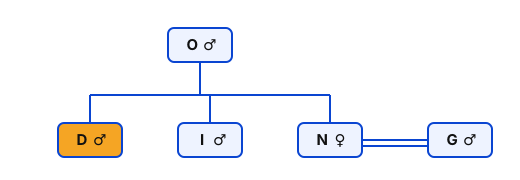
How is D related to G if 'D ¥ O ÷ I + N @ G’?
एक निश्चित कूट भाषा में,
A + B का अर्थ है ‘A, B का भाई है’,
A @ B का अर्थ है ‘A, B की पत्नी है’,
A ¥ B का अर्थ है ‘A, B का पुत्र है’ और
A ÷ B का अर्थ है ‘A, B का पिता है’।
यदि 'D ¥ O ÷ I + N @ G' है, तो D का G से क्या संबंध है?
  1. AWife's brotherपत्नी का भाई
  2. BWife's brother's wifeपत्नी के भाई की पत्नी
  3. CWife's father's sisterपत्नी के पिता की बहन
  4. DWife's fatherपत्नी का पिता
Show answer

Concept: Decode each symbol one by one and build the family tree.

  1. D ¥ O: D is the son of O.
  2. O ÷ I: O is the father of I. I + N: I is the brother of N → N is also O's child.
  3. N @ G: N is the wife of G.
  4. D is a son of O, so D is N's brother; N is G's wife → D is G's wife's brother.

Trick: Read the chain from the person asked about (D) towards G and name each link.

Answer: (A) Wife's brother

अवधारणा: हर प्रतीक को एक-एक कर डिकोड करें और वंश वृक्ष बनाएँ।

  1. D ¥ O: D, O का पुत्र है।
  2. O ÷ I: O, I का पिता; I + N: I, N का भाई → N भी O की संतान।
  3. N @ G: N, G की पत्नी है।
  4. D, N का भाई है और N, G की पत्नी → D, G की पत्नी का भाई (साला) है।

ट्रिक: पूछे गए व्यक्ति (D) से G तक की कड़ी क्रम से पढ़ें।

उत्तर: (A) Wife's brother (पत्नी का भाई)

RRB NTPC Undergraduate CBT 1General Intelligence and ReasoningCoded Blood RelationsRRB NTPC Undergraduate CBT 1 2024 · 19 Aug Shift 2 →
Q1580.
VALG is related to YYOE in a certain way based on the English alphabetical order. In the same way, BWRC is related to EUUA. To which of the given options is HSXY related, following the same logic?
अंग्रेज़ी वर्णमाला क्रम के आधार पर VALG एक निश्चित प्रकार से YYOE से संबंधित है। उसी प्रकार, BWRC, EUUA से संबंधित है। समान तर्क का अनुसरण करते हुए, HSXY दिए गए विकल्पों में से किससे संबंधित है?
  1. AKQAW
  2. BLQBW
  3. CLPZV
  4. DJRBU
Show answer

Concept: Find the shift of each letter position in the example pairs.

  1. VALG → YYOE: V + 3 = Y, A − 2 = Y, L + 3 = O, G − 2 = E.
  2. BWRC → EUUA: +3, −2, +3, −2 ✔.
  3. HSXY: H + 3 = K, S − 2 = Q, X + 3 = A, Y − 2 = W → KQAW.

Trick: Alternating pattern +3,−2,+3,−2; wrap around Z → A when needed (X + 3 = A).

Answer: (A) KQAW

अवधारणा: उदाहरण युग्मों में हर अक्षर का खिसकाव ज्ञात करें।

  1. VALG → YYOE: +3, −2, +3, −2।
  2. BWRC → EUUA में भी यही ✔।
  3. HSXY: K, Q, A, W → KQAW।

ट्रिक: एकांतर पैटर्न +3,−2; Z के बाद फिर A से गिनें (X + 3 = A)।

उत्तर: (A) KQAW

RRB NTPC Undergraduate CBT 1General Intelligence and ReasoningLetter AnalogyRRB NTPC Undergraduate CBT 1 2024 · 19 Aug Shift 2 →