Question bank

Q&A: practice questions with answers

Search questions on any topic. Filter by exam category, exam, subject and topic, try the question, then open the answer and explanation.

Courses – airGurukul

8,495 questions found.

Q1581.
Read the given statements and conclusions carefully. Assuming that the information given in the statements is true, even if it appears to be at variance with commonly known facts, decide which of the given conclusions logically follow(s) from the statements.
Statements: All chisels are hammers. No hammer is a maize.
Conclusions (I): No chisel is a maize.
Conclusions (II): Some maize are hammers.
दिए गए कथनों और निष्कर्षों को ध्यानपूर्वक पढ़िए। यह मानते हुए कि कथनों में दी गई जानकारी सत्य है, भले ही वह सामान्य रूप से ज्ञात तथ्यों से भिन्न प्रतीत होती हो, निर्णय कीजिए कि दिए गए निष्कर्षों में से कौन-सा/कौन-से निष्कर्ष तार्किक रूप से कथनों का अनुसरण करता है/करते हैं।
कथन: सभी छेनियाँ, हथौड़े हैं। कोई हथौड़ा, मक्का नहीं है।
निष्कर्ष (I): कोई छेनी, मक्का नहीं है।
निष्कर्ष (II): कुछ मक्का, हथौड़े हैं।
  1. ABoth conclusions (I) and (II) follow.निष्कर्ष (I) और (II) दोनों अनुसरण करते हैं।
  2. BNeither conclusion (I) nor (II) follows.न तो निष्कर्ष (I) और न ही (II) अनुसरण करता है।
  3. COnly conclusion (I) follows.केवल निष्कर्ष (I) अनुसरण करता है।
  4. DOnly conclusion (II) follows.केवल निष्कर्ष (II) अनुसरण करता है।
Show answer

Concept: Draw the minimum Venn diagram satisfying both statements.
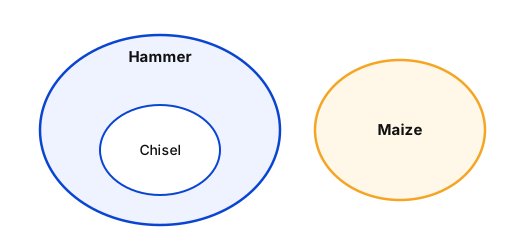
  1. All chisels are hammers → Chisel circle lies inside Hammer.
  2. No hammer is a maize → Maize is completely outside Hammer, hence outside Chisel too.
  3. I: No chisel is a maize ✔ (follows).
  4. II: Some maize are hammers ✘ (contradicts 'No hammer is a maize').

Trick: All A are B + No B is C ⇒ No A is C (always).

Answer: (C) Only conclusion (I) follows.

अवधारणा: दोनों कथनों को संतुष्ट करने वाला न्यूनतम वेन आरेख बनाएँ।

  1. सभी chisel, hammer हैं → Chisel वृत्त Hammer के भीतर।
  2. कोई hammer, maize नहीं → Maize, Hammer से पूरी तरह बाहर, अतः Chisel से भी बाहर।
  3. I: कोई chisel, maize नहीं ✔।
  4. II: कुछ maize, hammer हैं ✘ (कथन के विपरीत)।

ट्रिक: सभी A, B हैं + कोई B, C नहीं ⇒ कोई A, C नहीं।

उत्तर: (C) केवल निष्कर्ष (I) अनुसरण करता है।
RRB NTPC Undergraduate CBT 1General Intelligence and ReasoningSyllogismRRB NTPC Undergraduate CBT 1 2024 · 19 Aug Shift 2 →
Q1582.
PXTQ is related to NVRO in a certain way based on the English alphabetical order. In the same way, MUQN is related to KSOL. To which of the given options is JRNK related, following the same logic?
अंग्रेज़ी वर्णमाला क्रम के आधार पर PXTQ एक निश्चित प्रकार से NVRO से संबंधित है। उसी प्रकार, MUQN, KSOL से संबंधित है। समान तर्क का अनुसरण करते हुए, JRNK दिए गए विकल्पों में से किससे संबंधित है?
  1. APHLI
  2. BHPIL
  3. CPHIL
  4. DHPLI
Show answer

Concept: Find the shift for each letter.

  1. PXTQ → NVRO: each letter −2 (P → N, X → V, T → R, Q → O).
  2. MUQN → KSOL: also −2 each ✔.
  3. JRNK: J → H, R → P, N → L, K → I → HPLI.

Trick: Uniform shift: subtract 2 from every letter.

Answer: (D) HPLI

अवधारणा: हर अक्षर का खिसकाव ज्ञात करें।

  1. PXTQ → NVRO: हर अक्षर −2।
  2. MUQN → KSOL: भी −2 ✔।
  3. JRNK: H, P, L, I → HPLI।

ट्रिक: हर अक्षर से 2 घटाएँ।

उत्तर: (D) HPLI

RRB NTPC Undergraduate CBT 1General Intelligence and ReasoningLetter AnalogyRRB NTPC Undergraduate CBT 1 2024 · 19 Aug Shift 2 →
Q1583.
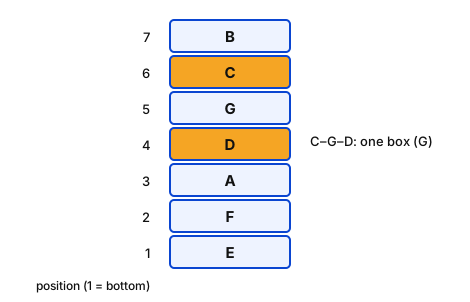
Seven boxes A, B, C, D, E, F and G are kept one over the other but not necessarily in the same order. F is kept second from the bottom. Only three boxes are kept between F and C. E is kept at one of the positions below F. Only G is kept between C and D. B is kept at one of the positions above C. How many boxes are kept between C and D?
सात बक्से A, B, C, D, E, F और G एक के ऊपर एक रखे गए हैं, लेकिन आवश्यक नहीं कि इसी क्रम में हों। F को नीचे से दूसरे स्थान पर रखा गया है। F और C के बीच केवल तीन बक्से रखे गए हैं। E को F से नीचे के किसी एक स्थान पर रखा गया है। C और D के बीच केवल G रखा गया है। B को C से ऊपर के किसी एक स्थान पर रखा गया है। C और D के बीच कितने बक्से रखे गए हैं?
  1. A3
  2. B2
  3. C1
  4. D4
Show answer

Concept: Number positions 1 (bottom) to 7 (top) and place the fixed clues first.

  1. F = 2. Three boxes between F and C → C = 6.
  2. E is below F → E = 1.
  3. Only G between C and D → D = 4, G = 5 (8 is not possible).
  4. B is above C → B = 7; A takes 3.
  5. Between C (6) and D (4): only G → 1 box.

Trick: 'Only X between P and Q' means P and Q are two positions apart with X in the middle.

Answer: (C) 1

अवधारणा: स्थान 1 (नीचे) से 7 (ऊपर) तक संख्या दें और पहले निश्चित संकेत रखें।

  1. F = 2; F और C के बीच तीन बॉक्स → C = 6।
  2. E, F से नीचे → E = 1।
  3. C और D के बीच केवल G → D = 4, G = 5।
  4. B, C से ऊपर → B = 7; A = 3।
  5. C और D के बीच केवल G → 1 बॉक्स।

ट्रिक: 'P और Q के बीच केवल X' → P और Q दो स्थान दूर, बीच में X।

उत्तर: (C) 1

RRB NTPC Undergraduate CBT 1General Intelligence and ReasoningBox ArrangementRRB NTPC Undergraduate CBT 1 2024 · 19 Aug Shift 2 →
Q1584.
Based on the English alphabetical order, three of the following four letter-cluster pairs are alike in a certain way and thus form a group. Which letter-cluster pair DOES NOT belong to that group?
(Note: The odd one out is not based on the number of consonants/vowels or their position in the letter-cluster.)
अंग्रेज़ी वर्णमाला क्रम के आधार पर, निम्नलिखित चार अक्षर-समूह युग्मों में से तीन किसी निश्चित प्रकार से एक समान हैं और इस प्रकार एक समूह बनाते हैं। कौन-सा अक्षर-समूह युग्म उस समूह से संबंधित नहीं है?
(ध्यान दें: असंगत अक्षर-समूह, उस अक्षर-समूह में व्यंजनों/स्वरों की संख्या या उनके स्थान पर आधारित नहीं है।)
  1. AZJ - DD
  2. BCU - GO
  3. CHR - ML
  4. DXB - BV
Show answer

Concept: Compare the 1st letters and the 2nd letters of each pair separately.

  1. ZJ − DD: Z(26) → D(4) is +4; J(10) → D(4) is −6.
  2. CU − GO: C → G +4; U(21) → O(15) −6. XB − BV: X → B +4; B → V −6.
  3. HR − ML: H(8) → M(13) is +5 (not +4); R → L −6 → odd one.

Trick: Use the reverse alphabet wrap: after Z comes A, before A comes Z.

Answer: (C) HR − ML

अवधारणा: हर युग्म में पहले और दूसरे अक्षरों की अलग-अलग तुलना करें।

  1. ZJ − DD: Z → D +4, J → D −6।
  2. CU − GO और XB − BV में भी +4, −6।
  3. HR − ML: H → M +5 (न कि +4) → विषम।

ट्रिक: Z के बाद फिर A और A से पहले Z गिनें।

उत्तर: (C) HR − ML

RRB NTPC Undergraduate CBT 1General Intelligence and ReasoningOdd One Out – Letter PairsRRB NTPC Undergraduate CBT 1 2024 · 19 Aug Shift 2 →
Q1585.
In the following number-pairs, the second number is obtained by applying certain mathematical operations to the first number. Select the set in which the numbers are related in the same way as are the numbers of the following sets.
(NOTE: Operations should be performed on the whole numbers, without breaking down the numbers into their constituent digits. E.g. 13 – Operations on 13 such as
adding/subtracting/multiplying to 13 can be performed. Breaking down 13 into 1 and 3 and then performing mathematical operations on 1 and 3 is not allowed.)
30, 125
25, 105
निम्नलिखित संख्या-युग्मों में, पहली संख्या पर कुछ गणितीय संक्रियाएँ करके दूसरी संख्या प्राप्त की जाती है। उस समुच्चय का चयन कीजिए जिसमें संख्याएँ उसी प्रकार संबंधित हैं जिस प्रकार निम्नलिखित समुच्चयों की संख्याएँ संबंधित हैं।
(ध्यान दें: संख्याओं को उनके घटक अंकों में विभाजित किए बिना, संक्रियाएँ पूर्ण संख्याओं पर की जानी चाहिए। उदाहरण के लिए 13 – 13 पर संक्रियाएँ, जैसे 13 में
जोड़ना/घटाना/गुणा करना आदि किया जा सकता है। 13 को 1 और 3 में विभाजित करना और फिर 1 और 3 पर गणितीय संक्रियाएँ करना वर्जित है।)
30, 125
25, 105
  1. A40, 155
  2. B35, 130
  3. C20, 85
  4. D15, 60
Show answer

Concept: Find one operation that converts the first number to the second in both given pairs.

  1. 30×4+5=125 and 25×4+5=105 ✔.
  2. Check options: 20×4+5=85 ✔.
  3. 40×4+5=165≠155, 35×4+5=145≠130, 15×4+5=65≠60.

Trick: Second number ≈ 4 times the first: compute 4n and look at the leftover (+5).

Answer: (C) 20, 85

अवधारणा: ऐसी संक्रिया खोजें जो दोनों युग्मों में पहली संख्या को दूसरी में बदले।

  1. 30×4+5=125, 25×4+5=105 ✔।
  2. 20×4+5=85 ✔।
  3. बाकी: 165 ≠ 155, 145 ≠ 130, 65 ≠ 60।

ट्रिक: दूसरी संख्या लगभग पहली का 4 गुना: 4n निकालकर शेष (+5) देखें।

उत्तर: (C) 20, 85

RRB NTPC Undergraduate CBT 1General Intelligence and ReasoningNumber Pair AnalogyRRB NTPC Undergraduate CBT 1 2024 · 19 Aug Shift 2 →
Q1586.
If + means −, − means ×, × means ÷ and ÷ means +, then what will come in place of the question mark (?) in the following equation?
21 + 70 × 10 ÷ 5 − 2 = ?
यदि + का अर्थ −, − का अर्थ ×, × का अर्थ ÷ और ÷ का अर्थ + है, तो निम्नलिखित समीकरण में प्रश्न चिह्न (?) के स्थान पर क्या आएगा?
21 + 70 × 10 ÷ 5 − 2 = ?
  1. A24
  2. B36
  3. C18
  4. D42
Show answer

Concept: Replace every sign by its meaning, then apply BODMAS.

  1. 21+70×10÷5−2 becomes 21−70÷10+5×2.
  2. 70÷10=7, 5×2=10.
  3. 21−7+10=24.

Trick: Write the substitution table (+ → −, − → ×, × → ÷, ÷ → +) above the equation before replacing.

Answer: (A) 24

अवधारणा: हर चिह्न को उसके अर्थ से बदलें, फिर BODMAS लगाएँ।

  1. व्यंजक: 21−70÷10+5×2।
  2. 70÷10=7, 5×2=10।
  3. 21−7+10=24।

ट्रिक: बदलाव तालिका (+ → −, − → ×, × → ÷, ÷ → +) पहले लिख लें।

उत्तर: (A) 24

RRB NTPC Undergraduate CBT 1General Intelligence and ReasoningMathematical OperationsRRB NTPC Undergraduate CBT 1 2024 · 19 Aug Shift 2 →
Q1587.
Which of the following letter-number clusters will replace the question mark (?) in the given series to make it logically complete?
CE 17 GI 19 KM 23 OQ 29 ?
निम्नलिखित में से कौन-सा अक्षर-संख्या समूह दी गई श्रृंखला में प्रश्न चिह्न (?) का स्थान लेकर उसे तार्किक रूप से पूर्ण करेगा?
CE 17 GI 19 KM 23 OQ 29 ?
  1. ARU 37
  2. BRT 37
  3. CST 37
  4. DSU 37
Show answer

Concept: Treat the letter pairs and the numbers as two separate series.

  1. Letters: CE, GI, KM, OQ → each letter +4 → S, U → SU.
  2. Numbers: 17, 19, 23, 29 → differences +2,+4,+6 → next +8 → 37.
  3. Next term: SU 37.

Trick: Inside each letter pair the gap is 2 (C_E, G_I …) – S_U fits, R_T/R_U do not follow the +4 start.

Answer: (D) SU 37

अवधारणा: अक्षर युग्म और संख्याओं को दो अलग श्रृंखलाएँ मानें।

  1. अक्षर: CE, GI, KM, OQ → हर अक्षर +4 → SU।
  2. संख्याएँ: 17, 19, 23, 29 → अंतर +2,+4,+6 → अगला +8 → 37।
  3. अगला पद: SU 37।

ट्रिक: हर युग्म में अक्षरों का अंतर 2 है और पहला अक्षर +4 बढ़ता है → SU।

उत्तर: (D) SU 37

RRB NTPC Undergraduate CBT 1General Intelligence and ReasoningLetter–Number SeriesRRB NTPC Undergraduate CBT 1 2024 · 19 Aug Shift 2 →
Q1588.
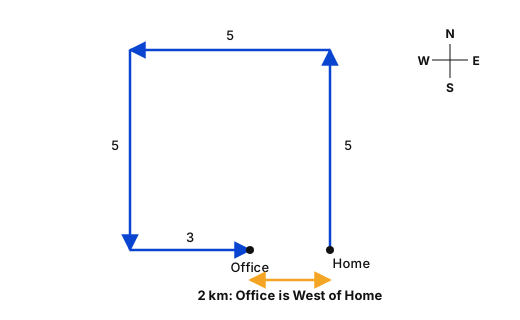
Vijay starts from his home and drives 5 km towards north. He then takes a left turn, drives 5 km, turns left, and drives 5 km. He then takes a left turn and drives 3 km and reaches his office. In which direction is the office with respect to his home?
(Note: All turns are 90° turns only, unless specified.)
विजय अपने घर से चलना शुरू करता है और उत्तर की ओर 5 km गाड़ी चलाता है। फिर वह बाएँ मुड़ता है, 5 km गाड़ी चलाता है, बाएँ मुड़ता है और 5 km गाड़ी चलाता है। फिर वह बाएँ मुड़ता है और 3 km गाड़ी चलाकर अपने कार्यालय पहुँचता है। उसके घर के सापेक्ष कार्यालय किस दिशा में है?
(ध्यान दें: जब तक निर्दिष्ट न किया जाए, सभी मोड़ केवल 90° के मोड़ हैं।)
  1. ANorthउत्तर
  2. BWestपश्चिम
  3. CSouth-westदक्षिण-पश्चिम
  4. DNorth-westउत्तर-पश्चिम
Show answer

Concept: Trace the path step by step; a left turn changes N → W → S → E.

  1. Home → 5 km North.
  2. Left → facing West, 5 km.
  3. Left → facing South, 5 km → back on Home's level, 5 km west of Home.
  4. Left → facing East, 3 km → Office is 5−3=2 km west of Home.

Trick: North 5 and South 5 cancel; net horizontal =5W−3E=2W.

Answer: (B) West

अवधारणा: रास्ते को क्रम से बनाइए; बाएँ मुड़ने पर दिशा N → W → S → E बदलती है।

  1. घर → 5 km उत्तर।
  2. बाएँ → पश्चिम, 5 km।
  3. बाएँ → दक्षिण, 5 km → घर की ऊँचाई पर, घर से 5 km पश्चिम।
  4. बाएँ → पूर्व, 3 km → ऑफिस घर से 2 km पश्चिम।

ट्रिक: उत्तर 5 और दक्षिण 5 कट जाते हैं; शुद्ध =5W−3E=2W।

उत्तर: (B) पश्चिम (West)

RRB NTPC Undergraduate CBT 1General Intelligence and ReasoningDirection SenseRRB NTPC Undergraduate CBT 1 2024 · 19 Aug Shift 2 →
Q1589.
What should come in place of the question mark (?) in the given series?
9 23 49 83 129 183 ?
दी गई श्रृंखला में प्रश्न चिह्न (?) के स्थान पर क्या आना चाहिए?
9 23 49 83 129 183 ?
  1. A294
  2. B254
  3. C250
  4. D249
Show answer

Concept: Take first differences, then second differences.

  1. Differences: 14, 26, 34, 46, 54.
  2. Second differences: 12, 8, 12, 8 → next 12.
  3. Next difference =54+12=66 → 183+66=249.

Trick: When first differences look irregular, check whether their differences alternate.

Answer: (D) 249

अवधारणा: पहले अंतर और फिर अंतरों के अंतर देखें।

  1. अंतर: 14, 26, 34, 46, 54।
  2. दूसरे अंतर: 12, 8, 12, 8 → अगला 12।
  3. अगला अंतर =66 → 183+66=249।

ट्रिक: पहले अंतर अनियमित लगें तो उनके अंतर एकांतर पैटर्न में होते हैं।

उत्तर: (D) 249

RRB NTPC Undergraduate CBT 1General Intelligence and ReasoningNumber SeriesRRB NTPC Undergraduate CBT 1 2024 · 19 Aug Shift 2 →
Q1590.
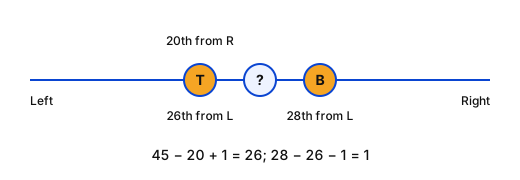
All 45 people are standing in a row facing north. Tina is 20th from the right end while Belamit is 28th from the left end. How many people are there between Tina and Belamit?
सभी 45 व्यक्ति उत्तर की ओर मुख करके एक पंक्ति में खड़े हैं। टीना दाएँ छोर से 20वें स्थान पर है, जबकि बेलामित बाएँ छोर से 28वें स्थान पर है। टीना और बेलामित के बीच कितने व्यक्ति हैं?
  1. AThreeतीन
  2. BFourचार
  3. COneएक
  4. DTwoदो
Show answer

Concept: Position from left = Total − Position from right +1.

  1. Tina from left =45−20+1=26th.
  2. Belamit is 28th from left.
  3. People between =28−26−1=1.

Trick: Between two positions (same end) = difference −1.

Answer: (C) One

अवधारणा: बाएँ से स्थान = कुल − दाएँ से स्थान +1।

  1. टीना बाएँ से =45−20+1=26वीं।
  2. बेलामित बाएँ से 28वाँ।
  3. बीच में =28−26−1=1।

ट्रिक: एक ही छोर से दो स्थानों के बीच = अंतर −1।

उत्तर: (C) एक (One)

RRB NTPC Undergraduate CBT 1General Intelligence and ReasoningRanking in a RowRRB NTPC Undergraduate CBT 1 2024 · 19 Aug Shift 2 →
Q1591.
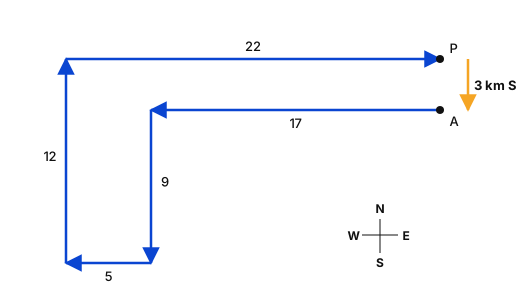
Vslam starts from Point A and drives 17 km towards West. He then takes a left turn, drives 9 km, turns right and drives 5 km. He then takes a right turn and drives 12 km. He takes a final right turn, drives 22 km and stops at Point P. How far (shortest distance) and towards which direction should he drive in order to reach Point A again? (All turns are 90° turns only unless specified.)
व्स्लम बिंदु A से चलना शुरू करता है और पश्चिम की ओर 17 km गाड़ी चलाता है। फिर वह बाएँ मुड़ता है, 9 km गाड़ी चलाता है, दाएँ मुड़ता है और 5 km गाड़ी चलाता है। फिर वह दाएँ मुड़ता है और 12 km गाड़ी चलाता है। वह अंतिम बार दाएँ मुड़ता है, 22 km गाड़ी चलाता है और बिंदु P पर रुक जाता है। बिंदु A पर फिर से पहुँचने के लिए उसे कितनी दूरी (न्यूनतम दूरी) और किस दिशा में गाड़ी चलानी चाहिए? (जब तक निर्दिष्ट न किया जाए, सभी मोड़ केवल 90° के मोड़ हैं।)
  1. A4 km to the East4 km पूर्व की ओर
  2. B1 km to the South1 km दक्षिण की ओर
  3. C2 km to the West2 km पश्चिम की ओर
  4. D3 km to the South3 km दक्षिण की ओर
Show answer

Concept: Use coordinates with A at (0,0), East =+x, North =+y.

  1. 17 km West → (−17,0). Left (facing West → South) 9 km → (−17,−9).
  2. Right (facing South → West) 5 km → (−22,−9).
  3. Right (facing West → North) 12 km → (−22,3).
  4. Right (facing North → East) 22 km → P =(0,3).
  5. A is 3 km south of P → drive 3 km to the South.

Trick: Net West =17+5−22=0; net North =−9+12=3 → P is 3 km north of A.

Answer: (D) 3 km to the South

अवधारणा: A को (0,0) मानें, पूर्व =+x, उत्तर =+y।

  1. 17 km पश्चिम → (−17,0); बाएँ (दक्षिण) 9 km → (−17,−9)।
  2. दाएँ (पश्चिम) 5 km → (−22,−9)।
  3. दाएँ (उत्तर) 12 km → (−22,3)।
  4. दाएँ (पूर्व) 22 km → P =(0,3)।
  5. A, P से 3 km दक्षिण → 3 km दक्षिण चलना होगा।

ट्रिक: शुद्ध पश्चिम =17+5−22=0; शुद्ध उत्तर =−9+12=3।

उत्तर: (D) 3 km दक्षिण (South)

RRB NTPC Undergraduate CBT 1General Intelligence and ReasoningDirection SenseRRB NTPC Undergraduate CBT 1 2024 · 19 Aug Shift 2 →
Q1592.
What should come in place of the question mark (?) in the given series?
96 105 115 126 138 ?
दी गई श्रृंखला में प्रश्न चिह्न (?) के स्थान पर क्या आना चाहिए?
96 105 115 126 138 ?
  1. A151
  2. B120
  3. C150
  4. D152
Show answer

Concept: Check the differences between consecutive terms.

  1. Differences: 9, 10, 11, 12 → increase by 1.
  2. Next difference =13 → 138+13=151.

Trick: Consecutive increasing differences → just add the next natural number.

Answer: (A) 151

अवधारणा: क्रमागत पदों के अंतर देखें।

  1. अंतर: 9, 10, 11, 12 → हर बार 1 अधिक।
  2. अगला अंतर 13 → 138+13=151।

ट्रिक: अंतर क्रमागत बढ़ें तो अगली प्राकृत संख्या जोड़ दें।

उत्तर: (A) 151

RRB NTPC Undergraduate CBT 1General Intelligence and ReasoningNumber SeriesRRB NTPC Undergraduate CBT 1 2024 · 19 Aug Shift 2 →
Q1593.
What should come in place of the question mark (?) in the given series?
45 63 87 105 129 147 171 ?
दी गई श्रृंखला में प्रश्न चिह्न (?) के स्थान पर क्या आना चाहिए?
45 63 87 105 129 147 171 ?
  1. A189
  2. B193
  3. C185
  4. D197
Show answer

Concept: Check the differences between consecutive terms.

  1. Differences: 18, 24, 18, 24, 18, 24.
  2. Pattern alternates → next difference =18.
  3. 171+18=189.

Trick: Alternating differences +18,+24 repeat.

Answer: (A) 189

अवधारणा: क्रमागत पदों के अंतर देखें।

  1. अंतर: 18, 24, 18, 24, 18, 24।
  2. एकांतर पैटर्न → अगला अंतर 18।
  3. 171+18=189।

ट्रिक: अंतर +18,+24 बारी-बारी से दोहराते हैं।

उत्तर: (A) 189

RRB NTPC Undergraduate CBT 1General Intelligence and ReasoningNumber SeriesRRB NTPC Undergraduate CBT 1 2024 · 19 Aug Shift 2 →
Q1594.
Seven people, A, B, C, D, P, Q and R, are sitting in a row, facing north.
No one sits to the left of Q. Only four people sit between Q and D. Only three people sit to the right of R. C sits to the immediate left of P. B is not an immediate neighbour of R. Who sits third to the left of B?
सात व्यक्ति, A, B, C, D, P, Q और R, उत्तर की ओर मुख करके एक पंक्ति में बैठे हैं।
Q के बाएँ कोई नहीं बैठा है। Q और D के बीच केवल चार व्यक्ति बैठे हैं। R के दाएँ केवल तीन व्यक्ति बैठे हैं। C, P के ठीक बाएँ बैठा है। B, R का निकटतम पड़ोसी नहीं है। B के बाएँ से तीसरे स्थान पर कौन बैठा है?
  1. AA
  2. BR
  3. CD
  4. DC
Show answer

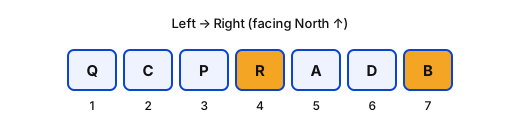
Concept: Facing North, positions are numbered 1 to 7 from left to right.

  1. No one left of Q → Q = 1. Four people between Q and D → D = 6.
  2. Three people to the right of R → R = 4.
  3. C immediately left of P: free pairs are only (2, 3) → C = 2, P = 3.
  4. A, B take 5 and 7; B not next to R → B = 7, A = 5.
  5. Third to the left of B (7) → position 4 = R.

Trick: Place the 'end' clue (no one to the left) first – it fixes every other count.

Answer: (B) R

अवधारणा: उत्तर की ओर मुख होने पर स्थान बाएँ से दाएँ 1 से 7।

  1. Q के बाएँ कोई नहीं → Q = 1; Q और D के बीच चार → D = 6।
  2. R के दाएँ तीन लोग → R = 4।
  3. C, P के ठीक बाएँ: खाली युग्म केवल (2, 3) → C = 2, P = 3।
  4. A, B के लिए 5 और 7; B, R का पड़ोसी नहीं → B = 7, A = 5।
  5. B (7) के बाएँ तीसरा → स्थान 4 = R।

ट्रिक: पहले 'छोर' वाला संकेत रखें – बाकी गिनती उसी से तय होती है।

उत्तर: (B) R

RRB NTPC Undergraduate CBT 1General Intelligence and ReasoningLinear Seating ArrangementRRB NTPC Undergraduate CBT 1 2024 · 19 Aug Shift 2 →
Q1595.
Based on the English alphabetical order, three of the following four letter-cluster pairs are alike in a certain way and thus form a group. Which letter-cluster pair DOES NOT belong to that group?
(Note: The odd one out is not based on the number of consonants/vowels or their position in the letter-cluster.)
अंग्रेज़ी वर्णमाला क्रम के आधार पर, निम्नलिखित चार अक्षर-समूह युग्मों में से तीन किसी निश्चित प्रकार से एक समान हैं और इस प्रकार एक समूह बनाते हैं। कौन-सा अक्षर-समूह युग्म उस समूह से संबंधित नहीं है?
(ध्यान दें: असंगत अक्षर-समूह, उस अक्षर-समूह में व्यंजनों/स्वरों की संख्या या उनके स्थान पर आधारित नहीं है।)
  1. AYG - BB
  2. BND - QX
  3. CAP - DK
  4. DSJ - VE
Show answer

Concept: Compare the 1st letters and 2nd letters of each pair separately.

  1. YG − BB: Y(25) → B(2) is +3; G(7) → B(2) is −5.
  2. AP − DK: +3, P(16) → K(11) −5. SJ − VE: +3, J(10) → E(5) −5.
  3. ND − QX: N → Q +3, but D(4) → X(24) is −6 → odd one.

Trick: Pattern +3 / −5; wrap around the alphabet when crossing Z or A.

Answer: (B) ND − QX

अवधारणा: हर युग्म के पहले और दूसरे अक्षरों की अलग तुलना करें।

  1. YG − BB: Y → B +3; G → B −5।
  2. AP − DK और SJ − VE: +3, −5।
  3. ND − QX: N → Q +3, पर D → X −6 → विषम।

ट्रिक: पैटर्न +3 / −5; Z या A पार करते समय वर्णमाला घुमाएँ।

उत्तर: (B) ND − QX

RRB NTPC Undergraduate CBT 1General Intelligence and ReasoningOdd One Out – Letter PairsRRB NTPC Undergraduate CBT 1 2024 · 19 Aug Shift 2 →
Q1596.
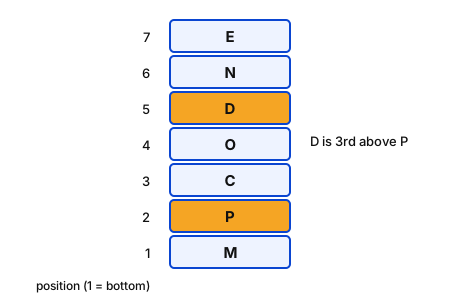
Seven boxes C, D, E, M, N, O and P are kept one over the other but not necessarily in the same order.
Only two boxes are kept between O and M. Only E is kept above N. No box is kept below M. C is kept at some place below D but at some place above P.
Which box is kept third above P?
सात बक्से C, D, E, M, N, O और P एक के ऊपर एक रखे गए हैं, लेकिन आवश्यक नहीं कि इसी क्रम में हों।
O और M के बीच केवल दो बक्से रखे गए हैं। N के ऊपर केवल E रखा गया है। M के नीचे कोई बक्सा नहीं रखा गया है। C को D से नीचे किसी स्थान पर, लेकिन P से ऊपर किसी स्थान पर रखा गया है।
P से तीसरे स्थान ऊपर कौन-सा बक्सा रखा गया है?
  1. AC
  2. BN
  3. CM
  4. DD
Show answer

Concept: Number positions 1 (bottom) to 7 (top) and place the definite clues first.

  1. No box below M → M = 1. Two boxes between O and M → O = 4.
  2. Only E above N → E = 7, N = 6.
  3. Remaining 2, 3, 5 for P, C, D with P below C below D → P = 2, C = 3, D = 5.
  4. Third above P (2) → position 5 = D.

Trick: 'Third above X' = position of X + 3.

Answer: (D) D

अवधारणा: स्थान 1 (नीचे) से 7 (ऊपर) तक संख्या दें और निश्चित संकेत पहले रखें।

  1. M के नीचे कोई नहीं → M = 1; O और M के बीच दो → O = 4।
  2. N के ऊपर केवल E → E = 7, N = 6।
  3. बचे 2, 3, 5 में P < C < D → P = 2, C = 3, D = 5।
  4. P (2) से तीसरा ऊपर → स्थान 5 = D।

ट्रिक: 'X से तीसरा ऊपर' = X का स्थान + 3।

उत्तर: (D) D

RRB NTPC Undergraduate CBT 1General Intelligence and ReasoningBox ArrangementRRB NTPC Undergraduate CBT 1 2024 · 19 Aug Shift 2 →
Q1597.
If 1 is added to each even digit and 2 is subtracted from each odd digit in the number 8265943, how many digits will appear more than once in the new number thus formed?
यदि संख्या 8265943 के प्रत्येक सम अंक में 1 जोड़ा जाए और प्रत्येक विषम अंक में से 2 घटाया जाए, तो इस प्रकार बनी नई संख्या में कितने अंक एक से अधिक बार आएँगे?
  1. AThreeतीन
  2. BTwoदो
  3. COneएक
  4. DNoneकोई नहीं
Show answer

Concept: Apply the rule digit by digit, then count repeated digits.

  1. 8265943: even 8, 2, 6, 4 → +1 → 9, 3, 7, 5; odd 5, 9, 3 → −2 → 3, 7, 1.
  2. New number: 9 3 7 3 7 5 1.
  3. 3 appears twice and 7 appears twice → two digits repeat.

Trick: Count 'digits that repeat', not 'number of repeated occurrences'.

Answer: (B) Two

अवधारणा: हर अंक पर नियम लगाएँ, फिर दोहराए गए अंक गिनें।

  1. 8265943: सम अंक 8, 2, 6, 4 → +1 → 9, 3, 7, 5; विषम 5, 9, 3 → −2 → 3, 7, 1।
  2. नई संख्या: 9 3 7 3 7 5 1।
  3. 3 और 7 दो-दो बार → दो अंक।

ट्रिक: दोहराने वाले अंकों की संख्या गिनें, बार-बार आने की गिनती नहीं।

उत्तर: (B) दो (Two)

RRB NTPC Undergraduate CBT 1General Intelligence and ReasoningDigit OperationsRRB NTPC Undergraduate CBT 1 2024 · 19 Aug Shift 2 →
Q1598.
This question is based on the five, three-digit numbers given below.
(Left) 617 259 165 784 349 (Right)
(Example- 697 – First digit = 6, second digit = 9 and third digit = 7)
(NOTE: All operations to be done from left to right.)
What will be the resultant if the third digit of the lowest number is subtracted from the second digit of the highest number?
यह प्रश्न नीचे दी गई पाँच, तीन-अंकीय संख्याओं पर आधारित है।
(बाएँ) 617 259 165 784 349 (दाएँ)
(उदाहरण- 697 – पहला अंक = 6, दूसरा अंक = 9 और तीसरा अंक = 7)
(ध्यान दें: सभी संक्रियाएँ बाएँ से दाएँ की जानी हैं।)
यदि सबसे बड़ी संख्या के दूसरे अंक में से सबसे छोटी संख्या का तीसरा अंक घटाया जाए, तो परिणाम क्या होगा?
  1. A3
  2. B1
  3. C2
  4. D4
Show answer

Concept: Identify the highest and lowest numbers, then pick the asked digits.

  1. Lowest number =165 → third digit =5.
  2. Highest number =784 → second digit =8.
  3. 8−5=3.

Trick: Read carefully which digit is subtracted from which – here (second of highest) − (third of lowest).

Answer: (A) 3

अवधारणा: सबसे बड़ी और सबसे छोटी संख्या पहचानें, फिर पूछे गए अंक लें।

  1. सबसे छोटी 165 → तीसरा अंक 5।
  2. सबसे बड़ी 784 → दूसरा अंक 8।
  3. 8−5=3।

ट्रिक: ध्यान दें कौन-सा अंक किससे घटाना है।

उत्तर: (A) 3

RRB NTPC Undergraduate CBT 1General Intelligence and ReasoningNumber ArrangementRRB NTPC Undergraduate CBT 1 2024 · 19 Aug Shift 2 →
Q1599.
In a certain code language, ‘BIRD’ is coded as ‘7394’ and ‘DRIP’ is coded as ‘4392’. What is the code for ‘P’ in the given code language?
एक निश्चित कूट भाषा में, ‘BIRD’ को ‘7394’ के रूप में और ‘DRIP’ को ‘4392’ के रूप में कूटबद्ध किया जाता है। दी गई कूट भाषा में ‘P’ के लिए कूट क्या है?
  1. A9
  2. B4
  3. C2
  4. D3
Show answer

Concept: Letters common to both words take the digits common to both codes; the leftover letter gets the leftover digit.

  1. BIRD = 7394, DRIP = 4392.
  2. Common letters I, R, D ↔ common digits 3, 9, 4.
  3. BIRD leftover B ↔ 7; DRIP leftover P ↔ 2.

Trick: Strike out common letters and digits – what remains pairs up directly.

Answer: (C) 2

अवधारणा: दोनों शब्दों के उभयनिष्ठ अक्षरों का कोड उभयनिष्ठ अंक; बचा अक्षर बचे अंक से जुड़ता है।

  1. BIRD = 7394, DRIP = 4392।
  2. उभयनिष्ठ I, R, D ↔ 3, 9, 4।
  3. BIRD में बचा B ↔ 7; DRIP में बचा P ↔ 2।

ट्रिक: उभयनिष्ठ अक्षर और अंक काट दें – जो बचे वे सीधे जुड़ते हैं।

उत्तर: (C) 2

RRB NTPC Undergraduate CBT 1General Intelligence and ReasoningCoding–DecodingRRB NTPC Undergraduate CBT 1 2024 · 19 Aug Shift 2 →
Q1600.
Read the given statements and conclusions carefully. Assuming that the information given in the statements is true, even if it appears to be at variance with commonly known facts, decide which of the given conclusion(s) logically follow(s) from the statements.
Statement:
Some Googles are apples.
Some apples are Amazons.
Conclusions:
I. Some Googles are Amazons.
II. No Google is an Amazon.
दिए गए कथनों और निष्कर्षों को ध्यानपूर्वक पढ़िए। यह मानते हुए कि कथनों में दी गई जानकारी सत्य है, भले ही वह सामान्य रूप से ज्ञात तथ्यों से भिन्न प्रतीत होती हो, निर्णय कीजिए कि दिए गए निष्कर्षों में से कौन-सा/कौन-से निष्कर्ष तार्किक रूप से कथनों का अनुसरण करता है/करते हैं।
कथन:
कुछ Googles, apples हैं।
कुछ apples, Amazons हैं।
निष्कर्ष:
I. कुछ Googles, Amazons हैं।
II. कोई Google, Amazon नहीं है।
  1. ANeither conclusion (I) nor (II) follows.न तो निष्कर्ष (I) और न ही (II) अनुसरण करता है।
  2. BOnly conclusion (II) follows.केवल निष्कर्ष (II) अनुसरण करता है।
  3. COnly conclusion (I) follows.केवल निष्कर्ष (I) अनुसरण करता है।
  4. DBoth conclusions (I) and (II) follow.निष्कर्ष (I) और (II) दोनों अनुसरण करते हैं।
Show answer

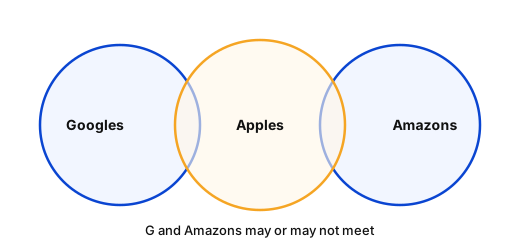
Concept: Two 'some' statements give no definite relation between the end terms.

  1. Googles and Amazons are linked only through Apples by 'some' statements.
  2. They may overlap or may not → 'Some Googles are Amazons' is not certain → I does not follow.
  3. 'No Google is an Amazon' is also not certain → II does not follow.
  4. So neither conclusion follows definitely.

Trick: Some + Some ⇒ no conclusion between the end terms.

Answer: (A) Neither conclusion (I) nor (II) follows.

अवधारणा: दो 'कुछ' कथनों से अंतिम पदों के बीच कोई निश्चित संबंध नहीं बनता।

  1. Googles और Amazons केवल Apples के माध्यम से 'कुछ' कथनों से जुड़े हैं।
  2. ये मिल भी सकते हैं, नहीं भी → I निश्चित नहीं।
  3. 'कोई Google, Amazon नहीं' भी निश्चित नहीं → II भी नहीं।
  4. अतः कोई भी निष्कर्ष निश्चित रूप से नहीं निकलता।

ट्रिक: कुछ + कुछ ⇒ अंतिम पदों में कोई निष्कर्ष नहीं।

उत्तर: (A) न तो निष्कर्ष (I) और न ही (II) अनुसरण करता है।

RRB NTPC Undergraduate CBT 1General Intelligence and ReasoningSyllogismRRB NTPC Undergraduate CBT 1 2024 · 19 Aug Shift 2 →