Question bank

Q&A: practice questions with answers

Search questions on any topic. Filter by exam category, exam, subject and topic, try the question, then open the answer and explanation.

Courses – airGurukul

8,495 questions found.

Q1761.
The product of two consecutive natural numbers is 870. The greater of the two numbers is:
दो क्रमागत प्राकृत संख्याओं का गुणनफल 870 है। दोनों में से बड़ी संख्या है:
  1. A38
  2. B30
  3. C41
  4. D21
Show answer

Concept: Consecutive numbers n and n+1 lie close to product.

  1. 870≈29.5.
  2. 29×30=870.
  3. Greater number =30.

Trick: Product ending in 0 → one number ends in 0 or 5; 29×30 fits.

Answer: (B) 30

अवधारणा: क्रमागत संख्याएँ गुणनफल के पास होती हैं।

  1. 870≈29.5।
  2. 29×30=870।
  3. बड़ी संख्या =30।

ट्रिक: गुणनफल का इकाई अंक 0 → एक संख्या का अंत 0 या 5।

उत्तर: (B) 30
RRB NTPC Undergraduate CBT 1MathematicsNumber SystemRRB NTPC Undergraduate CBT 1 2024 · 18 Aug Shift 3 →
Q1762.
The simple interest on a certain sum for 612 years at the rate of 6.4% per annum is ₹9,204.
What will be the amount payable on the same sum at the rate of 7.6% per annum simple interest in 623 years?
किसी निश्चित राशि पर 612 वर्ष के लिए 6.4% वार्षिक दर से साधारण ब्याज ₹9,204 है।
उसी राशि पर 7.6% वार्षिक साधारण ब्याज की दर से 623 वर्ष में देय मिश्रधन कितना होगा?
  1. A₹33,336
  2. B₹33,335
  3. C₹33,348
  4. D₹33,340
Show answer

Concept: SI=P×R×T100, Amount =P+SI.

  1. 9204=P×6.4×132100=0.416P⇒P= ₹22,125.
  2. New SI =22125×7.6×203100= ₹11,210.
  3. Amount =22125+11210= ₹33,335.

Trick: R×T first: 6.4×6.5=41.6% and 7.6×203=1523%.

Answer: (B) ₹33,335

अवधारणा: SI=P×R×T100, मिश्रधन =P+SI।

  1. 9204=0.416P⇒P= ₹22,125।
  2. नया SI =22125×7.6×203100= ₹11,210।
  3. मिश्रधन =22125+11210= ₹33,335।

ट्रिक: पहले R×T निकालें: 6.4×6.5=41.6%।

उत्तर: (B) ₹33,335

RRB NTPC Undergraduate CBT 1MathematicsSimple InterestRRB NTPC Undergraduate CBT 1 2024 · 18 Aug Shift 3 →
Q1763.
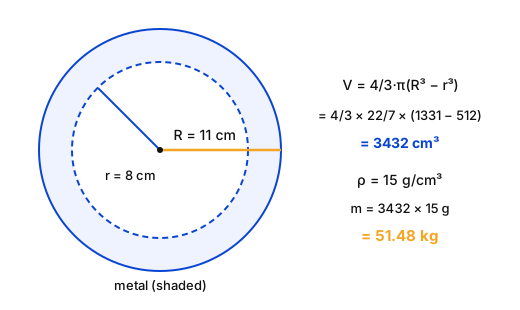
A hollow spherical shell is made of a metal of density 15 g/cm3. Its internal and external radii are 8 cm and 11 cm, respectively. What is the mass (in kg) of the shell?
(Take π=227.)
एक खोखला गोलीय कोश 15 g/cm3 घनत्व वाली धातु से बना है। इसकी आंतरिक और बाहरी त्रिज्याएँ क्रमशः 8 cm और 11 cm हैं। कोश का द्रव्यमान (kg में) कितना है?
(π=227 लीजिए।)
  1. A48.48
  2. B52.96
  3. C51.48
  4. D52.67
Show answer

Concept: Volume of a hollow sphere =43π(R3−r3); mass = volume × density.

  1. R3−r3=1331−512=819.
  2. V=43×227×819=3432cm3.
  3. Mass =3432×15=51480g=51.48kg.

Trick: 819=7×117, so 227 cancels neatly.

Answer: (C) 51.48

अवधारणा: खोखले गोले का आयतन =43π(R3−r3); द्रव्यमान = आयतन × घनत्व।

  1. R3−r3=1331−512=819।
  2. V=43×227×819=3432cm3।
  3. द्रव्यमान =3432×15=51480g=51.48kg।

ट्रिक: 819=7×117, इसलिए 7 कट जाता है।

उत्तर: (C) 51.48

RRB NTPC Undergraduate CBT 1MathematicsMensuration – SphereRRB NTPC Undergraduate CBT 1 2024 · 18 Aug Shift 3 →
Q1764.
The LCM of two numbers is seven times their HCF. The difference between the HCF and LCM is 222. Find the product of the two numbers.
दो संख्याओं का LCM उनके HCF का सात गुना है। HCF और LCM का अंतर 222 है। दोनों संख्याओं का गुणनफल ज्ञात कीजिए।
  1. A9158
  2. B9276
  3. C9583
  4. D9086
Show answer

Concept: Product of two numbers = HCF × LCM.

  1. Let HCF =h, LCM =7h.
  2. 7h−h=222⇒h=37, LCM =259.
  3. Product =37×259=9583.

Trick: Product =7h2=7×372=7×1369=9583.

Answer: (C) 9583

अवधारणा: दो संख्याओं का गुणनफल = HCF × LCM।

  1. HCF =h, LCM =7h।
  2. 6h=222⇒h=37, LCM =259।
  3. गुणनफल =37×259=9583।

ट्रिक: गुणनफल =7h2=7×1369=9583।

उत्तर: (C) 9583

RRB NTPC Undergraduate CBT 1MathematicsHCF and LCMRRB NTPC Undergraduate CBT 1 2024 · 18 Aug Shift 3 →
Q1765.
The average of first 154 odd natural numbers, is:
प्रथम 154 विषम प्राकृत संख्याओं का औसत है:
  1. A153.5
  2. B154
  3. C155
  4. D154.5
Show answer

Concept: Sum of the first n odd natural numbers =n2.

  1. Sum =1542.
  2. Average =1542154=154.

Trick: Average of the first n odd numbers is always n itself.

Answer: (B) 154

अवधारणा: पहली n विषम प्राकृत संख्याओं का योग =n2।

  1. योग =1542।
  2. औसत =1542154=154।

ट्रिक: पहली n विषम संख्याओं का औसत =n।

उत्तर: (B) 154

RRB NTPC Undergraduate CBT 1MathematicsAverageRRB NTPC Undergraduate CBT 1 2024 · 18 Aug Shift 3 →
Q1766.
A bus travelling at 36 km/hr completes a journey in 5 hours. What should be its speed to cover the same distance in 10 hours?
36 km/hr की चाल से चलने वाली एक बस 5 घंटे में यात्रा पूरी करती है। समान दूरी को 10 घंटे में तय करने के लिए उसकी चाल कितनी होनी चाहिए?
  1. A17 km/hr
  2. B18 km/hr
  3. C22 km/hr
  4. D9 km/hr
Show answer

Concept: Distance = speed × time; for the same distance, speed is inversely proportional to time.

  1. Distance =36×5=180km.
  2. Required speed =18010=18km/h.

Trick: Time doubles → speed halves: 362=18.

Answer: (B) 18 km/hr

अवधारणा: दूरी = चाल × समय; समान दूरी पर चाल समय के व्युत्क्रमानुपाती।

  1. दूरी =36×5=180km।
  2. चाल =18010=18km/h।

ट्रिक: समय दोगुना → चाल आधी।

उत्तर: (B) 18 km/hr

RRB NTPC Undergraduate CBT 1MathematicsSpeed, Time and DistanceRRB NTPC Undergraduate CBT 1 2024 · 18 Aug Shift 3 →
Q1767.
₹44,200 was divided among A, B and C such that 3 times the share of A = 9 times the share of B = 4 times the share of C. Find the share of A.
₹44,200 को A, B और C में इस प्रकार बाँटा गया कि A के हिस्से का 3 गुना = B के हिस्से का 9 गुना = C के हिस्से का 4 गुना। A का हिस्सा ज्ञात कीजिए।
  1. A₹21,304
  2. B₹21,216
  3. C₹21,081
  4. D₹21,178
Show answer

Concept: If 3A=9B=4C=k, then A:B:C=13:19:14.

  1. Multiply by LCM 36: A:B:C=12:4:9.
  2. Total parts =25; 1 part =4420025=1768.
  3. A =12×1768= ₹21,216.

Trick: Take k=36 (LCM of 3, 9, 4) to get the ratio directly.

Answer: (B) ₹21,216

अवधारणा: यदि 3A=9B=4C=k, तो A:B:C=13:19:14।

  1. LCM 36 से गुणा: 12:4:9।
  2. कुल 25 भाग; 1 भाग =1768।
  3. A =12×1768= ₹21,216।

ट्रिक: k=36 (3, 9, 4 का LCM) मानें।

उत्तर: (B) ₹21,216

RRB NTPC Undergraduate CBT 1MathematicsRatio and ProportionRRB NTPC Undergraduate CBT 1 2024 · 18 Aug Shift 3 →
Q1768.
Simplify x(3x − 6) + 5(x2 − 4) + 19.
x(3x − 6) + 5(x2 − 4) + 19 को सरल कीजिए।
  1. A8x2 − 6x − 1
  2. B−8x2 − 6x − 1
  3. C−8x2 − 6x + 1
  4. D8x2 − 6x + 1
Show answer

Concept: Expand the brackets and combine like terms.

  1. x(3x−6)=3x2−6x.
  2. 5(x2−4)=5x2−20.
  3. Sum +19: 8x2−6x−20+19=8x2−6x−1.

Trick: Put x=1: −3+(−15)+19=1 and 8−6−1=1 ✓.

Answer: (A) 8x2−6x−1

अवधारणा: कोष्ठक खोलें और समान पद जोड़ें।

  1. x(3x−6)=3x2−6x।
  2. 5(x2−4)=5x2−20।
  3. कुल: 8x2−6x−1।

ट्रिक: x=1 रखें: दोनों ओर 1 आता है ✓।

उत्तर: (A) 8x2−6x−1

RRB NTPC Undergraduate CBT 1MathematicsAlgebra – SimplificationRRB NTPC Undergraduate CBT 1 2024 · 18 Aug Shift 3 →
Q1769.
The value of 289+0.0324−7.29=
289+0.0324−7.29= का मान
  1. A14.48
  2. B12.59
  3. C9.08
  4. D11.21
Show answer

Concept: Use known squares: 172=289, 182=324, 272=729.

  1. 289=17.
  2. 0.0324=0.18, 7.29=2.7.
  3. 17+0.18−2.7=14.48.

Trick: For decimals, pair digits after the point: 0.0324→0.18 (2 decimal places).

Answer: (A) 14.48

अवधारणा: ज्ञात वर्ग: 172=289, 182=324, 272=729।

  1. 289=17।
  2. 0.0324=0.18, 7.29=2.7।
  3. 17+0.18−2.7=14.48।

ट्रिक: दशमलव के बाद अंकों के जोड़े बनाएँ: 0.0324→0.18।

उत्तर: (A) 14.48

RRB NTPC Undergraduate CBT 1MathematicsSquare RootsRRB NTPC Undergraduate CBT 1 2024 · 18 Aug Shift 3 →
Q1770.
Daksh travels 168 km at 21 km/hr, the next 100 km at 20 km/hr and the next 371 km at 53 km/hr. What is his average speed (in km/hr) for the whole journey?
दक्ष 168 km की दूरी 21 km/hr की चाल से, अगले 100 km 20 km/hr की चाल से और अगले 371 km 53 km/hr की चाल से तय करता है। पूरी यात्रा के लिए उसकी औसत चाल (km/hr में) कितनी है?
  1. A36.61
  2. B23.34
  3. C29.63
  4. D31.95
Show answer

Concept: Average speed=Total distanceTotal time.

  1. Times: 16821=8 h, 10020=5 h, 37153=7 h.
  2. Total distance =639km, total time =20 h.
  3. Average =63920=31.95km/h.

Trick: Never average the speeds directly; the times here come out whole.

Answer: (D) 31.95

अवधारणा: औसत चाल=कुल दूरीकुल समय।

  1. समय: 8 h, 5 h, 7 h।
  2. कुल दूरी =639km, कुल समय =20 h।
  3. औसत =63920=31.95km/h।

ट्रिक: चालों का सीधा औसत न लें।

उत्तर: (D) 31.95

RRB NTPC Undergraduate CBT 1MathematicsAverage SpeedRRB NTPC Undergraduate CBT 1 2024 · 18 Aug Shift 3 →
Q1771.
Select the pair that follows the same pattern as that followed by the two pairs given below. Both pairs follow the same pattern.
CSL : FPG
KGX : NDS
उस युग्म का चयन कीजिए जो उसी पैटर्न का अनुसरण करता है जिसका अनुसरण नीचे दिए गए दो युग्मों द्वारा किया जाता है। दोनों युग्म एक ही पैटर्न का अनुसरण करते हैं।
CSL : FPG
KGX : NDS
  1. AMMX : PQS
  2. BDJF : GGA
  3. CJKY : MMT
  4. DNGN : QJJ
Show answer

Concept: Find the position change of each letter.

  1. CSL → FPG: C+3=F, S−3=P, L−5=G.
  2. KGX → NDS: K+3=N, G−3=D, X−5=S.
  3. DJF: D+3=G, J−3=G, F−5=A → GGA ✓.

Trick: Check only the first letter (+3) to drop options, then verify the rest.

Answer: (B) DJF : GGA

अवधारणा: हर अक्षर का स्थान परिवर्तन देखें।

  1. CSL → FPG: +3, −3, −5।
  2. KGX → NDS: +3, −3, −5।
  3. DJF: G, G, A → GGA ✓।

ट्रिक: पहले केवल पहला अक्षर (+3) जाँचें, फिर बाकी।

उत्तर: (B) DJF : GGA

RRB NTPC Undergraduate CBT 1General Intelligence and ReasoningLetter AnalogyRRB NTPC Undergraduate CBT 1 2024 · 18 Aug Shift 3 →
Q1772.
KHIG is related to HEFD in a certain way based on the English alphabetical order. In the same way, DABZ is related to AXYW. To which of the given options is BYZX related, following the same logic?
अंग्रेज़ी वर्णमाला क्रम के आधार पर KHIG एक निश्चित प्रकार से HEFD से संबंधित है। उसी प्रकार DABZ, AXYW से संबंधित है। समान तर्क का अनुसरण करते हुए, BYZX दिए गए विकल्पों में से किससे संबंधित है?
  1. AYVVU
  2. BYWVD
  3. CYVWU
  4. DYUVU
Show answer

Concept: Each letter moves back by 3.

  1. KHIG → HEFD: each −3.
  2. DABZ → AXYW: each −3 (A−3=X wraps around).
  3. BYZX → B−3=Y, Y−3=V, Z−3=W, X−3=U → YVWU.

Trick: Backward wrap: A−3 = X, B−3 = Y.

Answer: (C) YVWU

अवधारणा: हर अक्षर 3 पीछे जाता है।

  1. KHIG → HEFD: −3।
  2. DABZ → AXYW: −3।
  3. BYZX → YVWU।

ट्रिक: पीछे घूमना: A−3 = X, B−3 = Y।

उत्तर: (C) YVWU

RRB NTPC Undergraduate CBT 1General Intelligence and ReasoningLetter AnalogyRRB NTPC Undergraduate CBT 1 2024 · 18 Aug Shift 3 →
Q1773.
Based on the English alphabetical order, three of the following four letter-clusters are alike in a certain way and thus form a group. Which letter-cluster DOES NOT belong to that group?
(Note: The odd one out is not based on the number of consonants/vowels or their position in the letter-cluster.)
अंग्रेज़ी वर्णमाला क्रम के आधार पर, निम्नलिखित चार अक्षर-समूहों में से तीन किसी निश्चित प्रकार से एकसमान हैं और इस प्रकार एक समूह बनाते हैं। कौन-सा अक्षर-समूह उस समूह से संबंधित नहीं है?
(ध्यान दें: असंगत अक्षर-समूह, उस अक्षर-समूह में व्यंजनों/स्वरों की संख्या या उनके स्थान पर आधारित नहीं है।)
  1. ALID
  2. BROK
  3. CMJF
  4. DFCY
Show answer

Concept: Find the gaps between consecutive letters (positions).

  1. ROK: 18, 15, 11 → −3, −4.
  2. MJF: 13, 10, 6 → −3, −4.
  3. FCY: 6, 3, 25 → −3, −4 (C−4 wraps to Y).
  4. LID: 12, 9, 4 → −3, −5 ✗.

Trick: Remember wrap-around: C − 4 = Y.

Answer: (A) LID

अवधारणा: अक्षरों के बीच अंतर देखें।

  1. ROK: −3, −4।
  2. MJF: −3, −4।
  3. FCY: −3, −4 (C−4 = Y)।
  4. LID: −3, −5 ✗।

ट्रिक: चक्र में घूमना याद रखें: C − 4 = Y।

उत्तर: (A) LID

RRB NTPC Undergraduate CBT 1General Intelligence and ReasoningOdd One Out – LettersRRB NTPC Undergraduate CBT 1 2024 · 18 Aug Shift 3 →
Q1774.
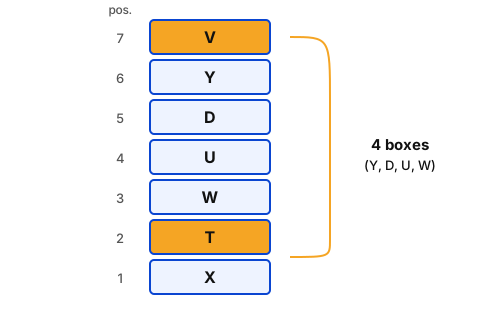
Seven boxes T, U, V, W, X, Y and D are kept one over the other but not necessarily in the same order. Only two boxes are kept below W. Only one box is kept above Y. Only one box is kept between Y and U. T is kept immediately above X. D is kept at some place below V. How many boxes are kept between V and T?
सात डिब्बे T, U, V, W, X, Y और D एक के ऊपर एक रखे गए हैं, लेकिन आवश्यक नहीं कि इसी क्रम में हों। W के नीचे केवल दो डिब्बे रखे गए हैं। Y के ऊपर केवल एक डिब्बा रखा गया है। Y और U के बीच केवल एक डिब्बा रखा गया है। T, X के ठीक ऊपर रखा गया है। D, V के नीचे किसी स्थान पर रखा गया है। V और T के बीच कितने डिब्बे रखे गए हैं?
  1. ATwoदो
  2. BOneएक
  3. CFourचार
  4. DThreeतीन
Show answer

Concept: Number positions 1 (bottom) to 7 (top) and fix definite clues first.

  1. Two boxes below W → W = 3. One box above Y → Y = 6.
  2. One box between Y and U → U = 4.
  3. T immediately above X: only free pair is X = 1, T = 2.
  4. D below V → D = 5, V = 7. Between V (7) and T (2): Y, D, U, W = 4.

Trick: Fixed-count clues (“only two below”) give exact positions – place them first.

Answer: (C) Four

अवधारणा: स्थान 1 (नीचे) से 7 (ऊपर) तक लें, पहले निश्चित संकेत लगाएँ।

  1. W के नीचे दो → W = 3; Y के ऊपर एक → Y = 6।
  2. Y और U के बीच एक → U = 4।
  3. T, X के ठीक ऊपर → X = 1, T = 2।
  4. D, V के नीचे → D = 5, V = 7। V और T के बीच: Y, D, U, W = 4।

ट्रिक: “केवल दो नीचे” जैसे संकेत सीधा स्थान देते हैं।

उत्तर: (C) चार

RRB NTPC Undergraduate CBT 1General Intelligence and ReasoningVertical ArrangementRRB NTPC Undergraduate CBT 1 2024 · 18 Aug Shift 3 →
Q1775.
What should come in place of the question mark (?) in the given series?
61 60 56 47 31 ?
दी गई श्रृंखला में प्रश्न चिह्न (?) के स्थान पर क्या आना चाहिए?
61 60 56 47 31 ?
  1. A6
  2. B14
  3. C28
  4. D9
Show answer

Concept: Differences are perfect squares.

  1. 61−1=60, 60−4=56, 56−9=47, 47−16=31.
  2. Next: 31−25=6.

Trick: Subtracted terms 12,22,32,42,52.

Answer: (A) 6

अवधारणा: अंतर पूर्ण वर्ग हैं।

  1. −1,−4,−9,−16।
  2. अगला: 31−25=6।

ट्रिक: घटाए गए पद 12,22,32,…

उत्तर: (A) 6

RRB NTPC Undergraduate CBT 1General Intelligence and ReasoningNumber SeriesRRB NTPC Undergraduate CBT 1 2024 · 18 Aug Shift 3 →
Q1776.
In a certain code language, ‘keep your goal’ is coded as ‘yt ru kj’ and ‘mind your business’ is coded as ‘kj gb mi’. How is ‘your’ coded in the given language?
एक निश्चित कूट भाषा में, ‘keep your goal’ को ‘yt ru kj’ के रूप में कूटबद्ध किया जाता है और ‘mind your business’ को ‘kj gb mi’ के रूप में कूटबद्ध किया जाता है। दी गई भाषा में ‘your’ को किस प्रकार कूटबद्ध किया जाता है?
  1. Akj
  2. Bmi
  3. Cru
  4. Dyt
Show answer

Concept: A word common to two sentences has the code common to both.

  1. ‘your’ is common to ‘keep your goal’ and ‘mind your business’.
  2. Common code in ‘yt ru kj’ and ‘kj gb mi’ is ‘kj’.

Trick: Common word ↔ common code.

Answer: (A) kj

अवधारणा: दोनों वाक्यों में समान शब्द का कोड भी समान होता है।

  1. ‘your’ दोनों वाक्यों में है।
  2. दोनों कोड में समान ‘kj’ है।

ट्रिक: समान शब्द ↔ समान कोड।

उत्तर: (A) kj

RRB NTPC Undergraduate CBT 1General Intelligence and ReasoningCoding-DecodingRRB NTPC Undergraduate CBT 1 2024 · 18 Aug Shift 3 →
Q1777.
This question is based on five, four-digit numbers given below.
(Left) 1338 2325 3627 5513 1764 (Right)
(Example: 6975 – First digit = 6, second digit = 9, third digit = 7 and fourth digit = 5) (NOTE: All operations to be done from left to right.)
If all the digits in each number are reversed, then what will be the resultant if the second digit of the second largest number is multiplied to the second digit of the smallest number?
यह प्रश्न नीचे दी गई चार अंकों वाली पाँच संख्याओं पर आधारित है।
(बाएँ) 1338 2325 3627 5513 1764 (दाएँ)
(उदाहरण: 6975 – पहला अंक = 6, दूसरा अंक = 9, तीसरा अंक = 7 और चौथा अंक = 5) (ध्यान दें: सभी संक्रियाएँ बाएँ से दाएँ की जानी हैं।)
यदि प्रत्येक संख्या के सभी अंकों को उलट दिया जाए, तो दूसरी सबसे बड़ी संख्या के दूसरे अंक को सबसे छोटी संख्या के दूसरे अंक से गुणा करने पर परिणाम क्या होगा?
  1. A3
  2. B2
  3. C1
  4. D4
Show answer

Concept: Reverse each number, arrange, then pick the asked digits.

  1. Reversed: 8331, 5232, 7263, 3155, 4671.
  2. Ascending: 3155 < 4671 < 5232 < 7263 < 8331.
  3. Second largest 7263 → second digit 2; smallest 3155 → second digit 1.
  4. 2×1=2.

Trick: Order changes after reversal – re-sort before choosing.

Answer: (B) 2

अवधारणा: संख्याओं को उलटें, क्रम में रखें, फिर अंक चुनें।

  1. उलटी: 8331, 5232, 7263, 3155, 4671।
  2. आरोही: 3155, 4671, 5232, 7263, 8331।
  3. दूसरी सबसे बड़ी 7263 → दूसरा अंक 2; सबसे छोटी 3155 → 1।
  4. 2×1=2।

ट्रिक: उलटने के बाद क्रम बदल जाता है।

उत्तर: (B) 2

RRB NTPC Undergraduate CBT 1General Intelligence and ReasoningNumber OperationsRRB NTPC Undergraduate CBT 1 2024 · 18 Aug Shift 3 →
Q1778.
Read the given statements and conclusions carefully. Assuming that the information given in the statements is true, even if it appears to be at variance with commonly known facts, decide which of the given conclusion(s) logically follow(s) from the statements.
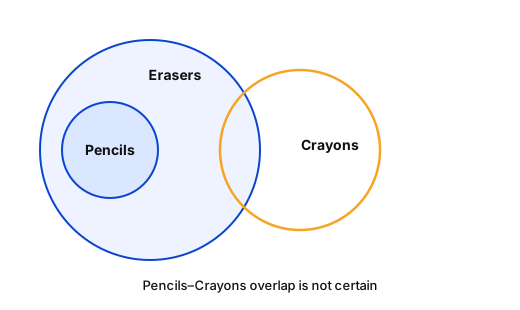
Statements: All pencils are erasers. Some erasers are crayons.
Conclusions (I): Some pencils are crayons.
Conclusions (II): Some erasers are pencils.
दिए गए कथनों और निष्कर्षों को ध्यानपूर्वक पढ़िए। कथनों में दी गई जानकारी को सत्य मानते हुए, भले ही वह सामान्यतः ज्ञात तथ्यों से भिन्न प्रतीत होती हो, निर्णय लीजिए कि दिए गए निष्कर्षों में से कौन-सा/कौन-से निष्कर्ष कथनों का तार्किक रूप से अनुसरण करता है/करते हैं।
कथन: सभी पेंसिलें, रबड़ हैं। कुछ रबड़, क्रेयॉन हैं।
निष्कर्ष (I): कुछ पेंसिलें, क्रेयॉन हैं।
निष्कर्ष (II): कुछ रबड़, पेंसिलें हैं।
  1. AOnly conclusion (II) follows.केवल निष्कर्ष (II) अनुसरण करता है।
  2. BBoth conclusions (I) and (II) follow.निष्कर्ष (I) और (II) दोनों अनुसरण करते हैं।
  3. COnly conclusion (I) follows.केवल निष्कर्ष (I) अनुसरण करता है।
  4. DNeither conclusion (I) nor (II) follows.न तो निष्कर्ष (I) और न ही (II) अनुसरण करता है।
Show answer

Concept: Draw the minimum possible Venn diagram.

  1. All pencils are erasers → Pencils circle lies inside Erasers.
  2. Some erasers are crayons: Crayons may touch Erasers away from Pencils → I (Some pencils are crayons) is not certain.
  3. Since all pencils are erasers, some erasers are pencils → II follows.

Trick: “All A are B” always gives “Some B are A”.

Answer: (A) Only conclusion (II) follows.

अवधारणा: न्यूनतम वेन आरेख बनाएँ।

  1. सभी पेंसिल इरेज़र हैं → Pencils, Erasers के अंदर।
  2. कुछ इरेज़र क्रेयॉन हैं: क्रेयॉन पेंसिल से अलग भाग में हो सकते हैं → I निश्चित नहीं।
  3. सभी पेंसिल इरेज़र हैं → कुछ इरेज़र पेंसिल हैं → II सही।

ट्रिक: “सभी A, B हैं” से “कुछ B, A हैं” हमेशा निकलता है।

उत्तर: (A) केवल निष्कर्ष (II) अनुसरण करता है।

RRB NTPC Undergraduate CBT 1General Intelligence and ReasoningSyllogismRRB NTPC Undergraduate CBT 1 2024 · 18 Aug Shift 3 →
Q1779.
Select the pair that follows the same pattern as that followed by the two set of pairs given below. Both pairs follow the same pattern.
ITM : LSO
SSV : VRX
उस युग्म का चयन कीजिए जो उसी पैटर्न का अनुसरण करता है जिसका अनुसरण नीचे दिए गए युग्मों के दो समूहों द्वारा किया जाता है। दोनों युग्म एक ही पैटर्न का अनुसरण करते हैं।
ITM : LSO
SSV : VRX
  1. ASUK : VTL
  2. BTNN : WMP
  3. CWQJ : ZRL
  4. DFTF : ISI
Show answer

Concept: Find the shift of each letter.

  1. ITM → LSO: +3, −1, +2.
  2. SSV → VRX: +3, −1, +2.
  3. TNN → T+3=W, N−1=M, N+2=P → WMP ✓.

Trick: Check the middle letter (−1) first – it eliminates most options.

Answer: (B) TNN : WMP

अवधारणा: हर अक्षर का परिवर्तन देखें।

  1. ITM → LSO: +3, −1, +2।
  2. SSV → VRX: +3, −1, +2।
  3. TNN → WMP ✓।

ट्रिक: पहले बीच का अक्षर (−1) जाँचें।

उत्तर: (B) TNN : WMP

RRB NTPC Undergraduate CBT 1General Intelligence and ReasoningLetter AnalogyRRB NTPC Undergraduate CBT 1 2024 · 18 Aug Shift 3 →
Q1780.
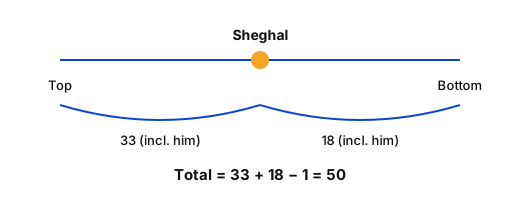
Sheghal ranked 33rd from the top and 18th from the bottom in his class. How many students are there in his class?
शेघल अपनी कक्षा में ऊपर से 33वें और नीचे से 18वें स्थान पर है। उसकी कक्षा में कितने विद्यार्थी हैं?
  1. A50
  2. B53
  3. C51
  4. D52
Show answer

Concept: Total = rank from top + rank from bottom − 1.

  1. 33+18−1=50.

Trick: Subtract 1 because the person is counted in both ranks.

Answer: (A) 50

अवधारणा: कुल = ऊपर से रैंक + नीचे से रैंक − 1।

  1. 33+18−1=50।

ट्रिक: व्यक्ति दोनों ओर गिना जाता है, इसलिए 1 घटाएँ।

उत्तर: (A) 50

RRB NTPC Undergraduate CBT 1General Intelligence and ReasoningRankingRRB NTPC Undergraduate CBT 1 2024 · 18 Aug Shift 3 →