Question bank

Q&A: practice questions with answers

Search questions on any topic. Filter by exam category, exam, subject and topic, try the question, then open the answer and explanation.

Courses – airGurukul

8,495 questions found.

Q1861.
The product of two positive numbers is 1805. If the first number is five times the second number, find the sum of the two numbers.
दो धनात्मक संख्याओं का गुणनफल 1805 है। यदि पहली संख्या दूसरी संख्या की पाँच गुनी है, तो दोनों संख्याओं का योगफल ज्ञात कीजिए।
  1. A127
  2. B126
  3. C114
  4. D107
Show answer

Concept: Write both numbers in terms of one variable.

  1. Let numbers be 5x and x: 5x2=1805 ⇒ x2=361 ⇒ x=19.
  2. Numbers 95 and 19; sum =114.

Trick: Sum =6x, so it must be a multiple of 6: only 114 and 126 qualify; x=19 gives 114.

Answer: (C) 114

अवधारणा: दोनों संख्याओं को एक चर में लिखें।

  1. संख्याएँ 5x और x: 5x2=1805 ⇒ x2=361 ⇒ x=19।
  2. संख्याएँ 95 और 19; योग =114।

ट्रिक: योग =6x, अतः 6 का गुणज होना चाहिए; x=19 से 114।

उत्तर: (C) 114

RRB NTPC Undergraduate CBT 1MathematicsNumbersRRB NTPC Undergraduate CBT 1 2024 · 18 Aug Shift 2 →
Q1862.
If 5 times the son's age is added to the father's age, the sum is 42 years. If 2.8 times the father's age is added to the son's age, the sum is 76 years. Find the father's age (in years).
यदि पुत्र की आयु के 5 गुने को पिता की आयु में जोड़ा जाए, तो योगफल 42 वर्ष होता है। यदि पिता की आयु के 2.8 गुने को पुत्र की आयु में जोड़ा जाए, तो योगफल 76 वर्ष होता है। पिता की आयु (वर्षों में) ज्ञात कीजिए।
  1. A26
  2. B31
  3. C30
  4. D21
Show answer

Concept: Form two equations and solve by substitution.

  1. F+5S=42 and 2.8F+S=76.
  2. F=42−5S ⇒ 2.8(42−5S)+S=76 ⇒ 117.6−13S=76 ⇒ S=3.2.
  3. F=42−16=26.

Trick: Check options: F=26 ⇒ S=3.2, and 2.8×26+3.2=76 ✓.

Answer: (A) 26

अवधारणा: दो समीकरण बनाकर प्रतिस्थापन से हल करें।

  1. F+5S=42 और 2.8F+S=76।
  2. F=42−5S ⇒ 2.8(42−5S)+S=76 ⇒ 117.6−13S=76 ⇒ S=3.2।
  3. F=42−16=26।

ट्रिक: विकल्प जाँचें: F=26 ⇒ S=3.2, और 2.8×26+3.2=76 ✓।

उत्तर: (A) 26

RRB NTPC Undergraduate CBT 1MathematicsAges – linear equationsRRB NTPC Undergraduate CBT 1 2024 · 18 Aug Shift 2 →
Q1863.
9 men can complete a piece of work in 8 days, while 4 women can complete it in 9 days. In how many days can 2 women and 4 men complete this work?
9 पुरुष किसी कार्य को 8 दिनों में पूरा कर सकते हैं, जबकि 4 महिलाएँ उसे 9 दिनों में पूरा कर सकती हैं। 2 महिलाएँ और 4 पुरुष इस कार्य को कितने दिनों में पूरा कर सकते हैं?
  1. A6 days6 दिन
  2. B11 days11 दिन
  3. C9 days9 दिन
  4. D8 days8 दिन
Show answer

Concept: Total work in man-days stays constant; convert women into men.

  1. Work =9×8=72 man-days =4×9=36 woman-days.
  2. So 1 woman =2 men.
  3. 2 women +4 men =8 men ⇒ days =728=9.

Trick: Equate total work: 72M=36W ⇒ W=2M.

Answer: (C) 9 days

अवधारणा: कुल कार्य (व्यक्ति-दिन) स्थिर रहता है; महिलाओं को पुरुषों में बदलें।

  1. कार्य =9×8=72 पुरुष-दिन =4×9=36 महिला-दिन।
  2. अतः 1 महिला =2 पुरुष।
  3. 2 महिलाएँ +4 पुरुष =8 पुरुष ⇒ दिन =728=9।

ट्रिक: कुल कार्य बराबर रखें: 72M=36W ⇒ W=2M।

उत्तर: (C) 9 दिन

RRB NTPC Undergraduate CBT 1MathematicsTime and workRRB NTPC Undergraduate CBT 1 2024 · 18 Aug Shift 2 →
Q1864.
Raman's income is ₹44,000. He saves 18.5% of his income. If his income increases by 17% and his expenditure increases by 40%, then his savings will ___________________.
रमन की आय ₹44,000 है। वह अपनी आय का 18.5% बचाता है। यदि उसकी आय में 17% की वृद्धि होती है और उसके व्यय में 40% की वृद्धि होती है, तो उसकी बचत ___________________।
  1. Aincrease by ₹6,862₹6,862 बढ़ जाएगी
  2. Bdecrease by ₹6,864₹6,864 घट जाएगी
  3. Cdecrease by ₹6,860₹6,860 घट जाएगी
  4. Dincrease by ₹6,859₹6,859 बढ़ जाएगी
Show answer

Concept: Savings = Income − Expenditure; increase income and expenditure separately.

  1. Savings =18.5% of 44000=8140; expenditure =35860.
  2. New income =44000×1.17=51480; new expenditure =35860×1.4=50204.
  3. New savings =51480−50204=1276.
  4. Change =8140−1276=6864 decrease.

Trick: Expenditure grows faster (40% vs 17%) on a big base – savings must fall, ruling out A and D.

Answer: (B) ₹6,864 decrease

अवधारणा: बचत = आय − व्यय; आय और व्यय को अलग-अलग बढ़ाएँ।

  1. बचत =44000 का 18.5%=8140; व्यय =35860।
  2. नई आय =44000×1.17=51480; नया व्यय =35860×1.4=50204।
  3. नई बचत =51480−50204=1276।
  4. परिवर्तन =8140−1276=6864 की कमी।

ट्रिक: व्यय बड़े आधार पर तेज़ी से (40%) बढ़ा – बचत घटेगी, A और D बाहर।

उत्तर: (B) ₹6,864 की कमी

RRB NTPC Undergraduate CBT 1MathematicsIncome, expenditure, savingsRRB NTPC Undergraduate CBT 1 2024 · 18 Aug Shift 2 →
Q1865.
Find the median of the observations 6, 48, 32, 3, 37 and 18.
प्रेक्षणों 6, 48, 32, 3, 37 और 18 की माध्यिका ज्ञात कीजिए।
  1. A25
  2. B27
  3. C30
  4. D32
Show answer

Concept: Median of an even number of observations = average of the two middle values (after sorting).

  1. Sorted: 3,6,18,32,37,48.
  2. Middle values: 18 and 32.
  3. Median =18+322=25.

Trick: Always sort first – never take the middle of the given order.

Answer: (A) 25

अवधारणा: सम संख्या में प्रेक्षण हों तो माध्यिका = दो मध्य मानों का औसत (क्रम में लगाने के बाद)।

  1. क्रम: 3,6,18,32,37,48।
  2. मध्य मान: 18 और 32।
  3. माध्यिका =18+322=25।

ट्रिक: पहले आरोही क्रम लगाएँ – दिए गए क्रम का मध्य न लें।

उत्तर: (A) 25

RRB NTPC Undergraduate CBT 1MathematicsMedianRRB NTPC Undergraduate CBT 1 2024 · 18 Aug Shift 2 →
Q1866.
The H.C.F. and L.C.M. of two numbers are 4 and 2600 respectively. If one of the numbers is 104, find the other number.
दो संख्याओं का म.स.प. (H.C.F.) और ल.स.प. (L.C.M.) क्रमशः 4 और 2600 हैं। यदि उनमें से एक संख्या 104 है, तो दूसरी संख्या ज्ञात कीजिए।
  1. A250
  2. B50
  3. C200
  4. D100
Show answer

Concept: HCF×LCM= product of the two numbers.

  1. 4×2600=10400.
  2. Other number =10400104=100.

Trick: Check: HCF(104,100)=4 ✓.

Answer: (D) 100

अवधारणा: HCF×LCM= दोनों संख्याओं का गुणनफल।

  1. 4×2600=10400।
  2. दूसरी संख्या =10400104=100।

ट्रिक: जाँच: HCF(104,100)=4 ✓।

उत्तर: (D) 100

RRB NTPC Undergraduate CBT 1MathematicsHCF and LCMRRB NTPC Undergraduate CBT 1 2024 · 18 Aug Shift 2 →
Q1867.
A person goes from Kanpur to Lucknow at a speed of 15 km/hr and returns to Kanpur by the same route at a speed of 30 km/hr. Find his average speed (in km/hr) for the whole journey.
एक व्यक्ति कानपुर से लखनऊ 15 km/hr की चाल से जाता है और उसी मार्ग से 30 km/hr की चाल से कानपुर लौटता है। पूरी यात्रा के लिए उसकी औसत चाल (km/hr में) ज्ञात कीजिए।
  1. A22
  2. B19
  3. C20
  4. D14
Show answer

Concept: For equal distances, average speed =2xyx+y.

  1. 2×15×3015+30=90045=20km/h.

Trick: Average speed is always below the simple average 22.5.

Answer: (C) 20

अवधारणा: समान दूरी पर औसत चाल =2xyx+y।

  1. 2×15×3015+30=90045=20km/h।

ट्रिक: औसत चाल हमेशा सामान्य औसत 22.5 से कम होती है।

उत्तर: (C) 20

RRB NTPC Undergraduate CBT 1MathematicsAverage speedRRB NTPC Undergraduate CBT 1 2024 · 18 Aug Shift 2 →
Q1868.
If x is the third proportional of 28 and 70, find the value of x.
यदि x, 28 और 70 का तृतीयानुपाती है, तो x का मान ज्ञात कीजिए।
  1. A174
  2. B175
  3. C173
  4. D172
Show answer

Concept: Third proportional of a and b is x where a:b=b:x, i.e. x=b2a.

  1. x=70228=490028=175.

Trick: 7028=2.5, so x=70×2.5=175.

Answer: (B) 175

अवधारणा: a और b का तृतीयानुपाती x: a:b=b:x, अर्थात x=b2a।

  1. x=70228=490028=175।

ट्रिक: 7028=2.5, अतः x=70×2.5=175।

उत्तर: (B) 175

RRB NTPC Undergraduate CBT 1MathematicsThird proportionalRRB NTPC Undergraduate CBT 1 2024 · 18 Aug Shift 2 →
Q1869.
Find the value of 55−6÷555×55−8.
55−6÷555×55−8 का मान ज्ञात कीजिए।
  1. A55−20
  2. B55−19
  3. C55−13
  4. D55−17
Show answer

Concept: am÷an=am−n and am×an=am+n (left to right).

  1. 55−6÷555=55−11.
  2. 55−11×55−8=55−19.

Trick: Just add/subtract powers: −6−5−8=−19.

Answer: (B) 55−19

अवधारणा: am÷an=am−n और am×an=am+n (बाएँ से दाएँ)।

  1. 55−6÷555=55−11।
  2. 55−11×55−8=55−19।

ट्रिक: घातें जोड़ें/घटाएँ: −6−5−8=−19।

उत्तर: (B) 55−19

RRB NTPC Undergraduate CBT 1MathematicsLaws of exponentsRRB NTPC Undergraduate CBT 1 2024 · 18 Aug Shift 2 →
Q1870.
What should come in place of the question mark (?) in the given series?
12 13 15 19 27 ?
दी गई श्रृंखला में प्रश्न चिह्न (?) के स्थान पर क्या आना चाहिए?
12 13 15 19 27 ?
  1. A43
  2. B44
  3. C45
  4. D48
Show answer

Concept: Look at the differences between consecutive terms.

  1. Differences: 1,2,4,8 – each doubles.
  2. Next difference =16: 27+16=43.

Trick: Doubling differences: 1,2,4,8,16.

Answer: (A) 43

अवधारणा: क्रमागत पदों का अंतर देखें।

  1. अंतर: 1,2,4,8 – हर बार दोगुना।
  2. अगला अंतर =16: 27+16=43।

ट्रिक: अंतर दोगुने होते हैं: 1,2,4,8,16।

उत्तर: (A) 43

RRB NTPC Undergraduate CBT 1General Intelligence and ReasoningNumber seriesRRB NTPC Undergraduate CBT 1 2024 · 18 Aug Shift 2 →
Q1871.
In a certain code language, 'BALD' is coded as '6184' and 'LAMB' is coded as '4136'. What is the code for 'M' in the given code language?
एक निश्चित कूट भाषा में, 'BALD' को '6184' और 'LAMB' को '4136' के रूप में कूटबद्ध किया जाता है। दी गई कूट भाषा में 'M' के लिए कूट क्या है?
  1. A3
  2. B1
  3. C6
  4. D4
Show answer

Concept: Letters common to both words share the common digits.

  1. BALD → 6184, LAMB → 4136.
  2. Common letters B, A, L ↔ common digits 6, 1, 4.
  3. Left over: M in LAMB ↔ 3 in 4136 (D ↔ 8).

Trick: Strike out common letters and digits; the leftovers pair up.

Answer: (A) 3

अवधारणा: दोनों शब्दों के समान अक्षरों के कूट भी समान अंक होते हैं।

  1. BALD → 6184, LAMB → 4136।
  2. समान अक्षर B, A, L ↔ समान अंक 6, 1, 4।
  3. शेष: LAMB का M ↔ 4136 का 3 (D ↔ 8)।

ट्रिक: समान अक्षर और अंक काटें; बचे हुए आपस में जुड़ते हैं।

उत्तर: (A) 3

RRB NTPC Undergraduate CBT 1General Intelligence and ReasoningCoding-decodingRRB NTPC Undergraduate CBT 1 2024 · 18 Aug Shift 2 →
Q1872.
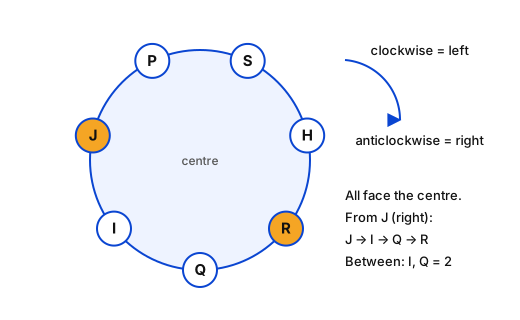
H, I, J, P, Q, R and S are sitting around a circular table facing the centre. P sits third to the left of Q. R sits second to the left of S. Q is the immediate neighbour of both I and R. H is not an immediate neighbour of P.
How many people sit between J and R when counted from the right of J?
H, I, J, P, Q, R और S एक वृत्ताकार मेज़ के चारों ओर केंद्र की ओर मुख करके बैठे हैं। P, Q के बाएँ से तीसरे स्थान पर बैठा है। R, S के बाएँ से दूसरे स्थान पर बैठा है। Q, I और R दोनों का निकटतम पड़ोसी है। H, P का निकटतम पड़ोसी नहीं है।
J के दाएँ से गिनने पर J और R के बीच कितने व्यक्ति बैठे हैं?
  1. AOneएक
  2. BTwoदो
  3. CThreeतीन
  4. DFourचार
Show answer

Concept: Facing the centre: left = clockwise, right = anticlockwise.

  1. Fix Q. P is 3rd to the left of Q; I and R sit on either side of Q.
  2. If R were on Q's left, S (two to R's right) would clash with I – so R is on Q's right, I on Q's left, and S is two places right of R.
  3. H is not next to P, so H sits between R and S; J takes the last seat (next to P and I).
  4. Going right from J: I, Q, then R – 2 persons between.

Trick: Fix the person mentioned most often (Q) first.

Answer: (B) Two

अवधारणा: केंद्र की ओर मुख: बायाँ = दक्षिणावर्त, दायाँ = वामावर्त।

  1. Q को स्थिर करें। P, Q के बाएँ तीसरा है; I और R, Q के दोनों ओर।
  2. यदि R, Q के बाएँ हो तो S (R के दाएँ दूसरा) I से टकराएगा – अतः R, Q के दाएँ, I बाएँ, और S, R से दो स्थान दाएँ।
  3. H, P का पड़ोसी नहीं, अतः H, R और S के बीच; J शेष सीट पर (P और I के बीच)।
  4. J के दाएँ से: I, Q, फिर R – बीच में 2 व्यक्ति।

ट्रिक: सबसे अधिक बार आए व्यक्ति (Q) को पहले स्थिर करें।

उत्तर: (B) दो

RRB NTPC Undergraduate CBT 1General Intelligence and ReasoningCircular seatingRRB NTPC Undergraduate CBT 1 2024 · 18 Aug Shift 2 →
Q1873.
Each digit of the number 8234619 is arranged in ascending order from left to right. How many digits will remain in the same position as in the original number?
संख्या 8234619 के प्रत्येक अंक को बाएँ से दाएँ आरोही क्रम में व्यवस्थित किया जाता है। कितने अंकों का स्थान मूल संख्या के समान ही रहेगा?
  1. ASixछह
  2. BFiveपाँच
  3. CThreeतीन
  4. DFourचार
Show answer

Concept: Write the digits in ascending order and compare position by position.

  1. Original: 8 2 3 4 6 1 9.
  2. Ascending: 1 2 3 4 6 8 9.
  3. Same positions: 2, 3, 4, 6, 9 – five digits.

Trick: Line the two numbers one under the other and tick matches.

Answer: (B) Five

अवधारणा: अंकों को आरोही क्रम में लिखकर हर स्थान की तुलना करें।

  1. मूल: 8 2 3 4 6 1 9।
  2. आरोही: 1 2 3 4 6 8 9।
  3. समान स्थान: 2, 3, 4, 6, 9 – पाँच अंक।

ट्रिक: दोनों संख्याएँ एक के नीचे एक लिखकर मिलान करें।

उत्तर: (B) पांच

RRB NTPC Undergraduate CBT 1General Intelligence and ReasoningDigit arrangementRRB NTPC Undergraduate CBT 1 2024 · 18 Aug Shift 2 →
Q1874.
If '÷' and '−' are interchanged and '×' and '+' are interchanged, what will come in place of the question mark (?) in the following equation?
45 + 5 ÷ 5 × 6 − 3 + 24 × 9 ÷ 3 × 2 = ?
यदि '÷' और '−' को आपस में बदल दिया जाए तथा '×' और '+' को आपस में बदल दिया जाए, तो निम्नलिखित समीकरण में प्रश्न चिह्न (?) के स्थान पर क्या आएगा?
45 + 5 ÷ 5 × 6 − 3 + 24 × 9 ÷ 3 × 2 = ?
  1. A198
  2. B260
  3. C276
  4. D246
Show answer

Concept: Interchange the signs first, then apply BODMAS.

  1. After swapping (÷↔−, ×↔+): 45×5−5+6÷3×24+9−3+2.
  2. 45×5=225; 6÷3×24=48.
  3. 225−5+48+9−3+2=276.

Trick: Rewrite the whole expression with new signs before calculating.

Answer: (C) 276

अवधारणा: पहले चिह्न बदलें, फिर BODMAS लगाएँ।

  1. बदलने पर (÷↔−, ×↔+): 45×5−5+6÷3×24+9−3+2।
  2. 45×5=225; 6÷3×24=48।
  3. 225−5+48+9−3+2=276।

ट्रिक: गणना से पहले पूरा व्यंजक नए चिह्नों के साथ लिख लें।

उत्तर: (C) 276

RRB NTPC Undergraduate CBT 1General Intelligence and ReasoningSymbol interchangeRRB NTPC Undergraduate CBT 1 2024 · 18 Aug Shift 2 →
Q1875.
Select the pair that follows the same pattern as that followed by the two pairs given below. Both pairs follow the same pattern.
PGS : LBO
HWK : DRG
उस युग्म का चयन कीजिए जो उसी पैटर्न का अनुसरण करता है जिसका अनुसरण नीचे दिए गए दो युग्मों द्वारा किया जाता है। दोनों युग्म एक ही पैटर्न का अनुसरण करते हैं।
PGS : LBO
HWK : DRG
  1. ALHC : PEG
  2. BQFM : VKP
  3. CCAL : GVP
  4. DXQA : TLW
Show answer

Concept: Find the letter-position shifts in the given pairs.

  1. PGS → LBO: P−4=L, G−5=B, S−4=O.
  2. HWK → DRG: H−4=D, W−5=R, K−4=G.
  3. XQA: X−4=T, Q−5=L, A−4=W (wrap back from A) → TLW.

Trick: Pattern −4,−5,−4; for A, count back to W.

Answer: (D) XQA : TLW

अवधारणा: दिए गए युग्मों में अक्षरों का स्थान-अंतर देखें।

  1. PGS → LBO: P−4=L, G−5=B, S−4=O।
  2. HWK → DRG: H−4=D, W−5=R, K−4=G।
  3. XQA: X−4=T, Q−5=L, A−4=W (A से पीछे गिनें) → TLW।

ट्रिक: पैटर्न −4,−5,−4; A से पीछे Z, Y, X, W।

उत्तर: (D) XQA : TLW

RRB NTPC Undergraduate CBT 1General Intelligence and ReasoningLetter analogyRRB NTPC Undergraduate CBT 1 2024 · 18 Aug Shift 2 →
Q1876.
Which of the following letter-number clusters will replace the question mark (?) in the given series to make it logically complete?
IVP 16 HQM 5 GLJ -6 ? EBD -28
दी गई श्रृंखला को तार्किक रूप से पूर्ण करने के लिए निम्नलिखित में से कौन-सा अक्षर-संख्या समूह प्रश्न चिह्न (?) को प्रतिस्थापित करेगा?
IVP 16 HQM 5 GLJ -6 ? EBD -28
  1. AHJI 21
  2. BGHI -30
  3. CFGG -17
  4. DBHJ 19
Show answer

Concept: Track each letter position and the number separately.

  1. 1st letters: I, H, G, F, E (−1).
  2. 2nd letters: V, Q, L, G, B (−5); 3rd letters: P, M, J, G, D (−3).
  3. Numbers: 16,5,−6,−17,−28 (−11).
  4. Missing term: FGG −17.

Trick: Check the number first: only −17 fits −6−11.

Answer: (C) FGG −17

अवधारणा: हर अक्षर-स्थान और संख्या को अलग-अलग देखें।

  1. पहले अक्षर: I, H, G, F, E (−1)।
  2. दूसरे: V, Q, L, G, B (−5); तीसरे: P, M, J, G, D (−3)।
  3. संख्याएँ: 16,5,−6,−17,−28 (−11)।
  4. लुप्त पद: FGG −17।

ट्रिक: पहले संख्या जाँचें: केवल −17 ही −6−11 है।

उत्तर: (C) FGG −17

RRB NTPC Undergraduate CBT 1General Intelligence and ReasoningAlpha-numeric seriesRRB NTPC Undergraduate CBT 1 2024 · 18 Aug Shift 2 →
Q1877.
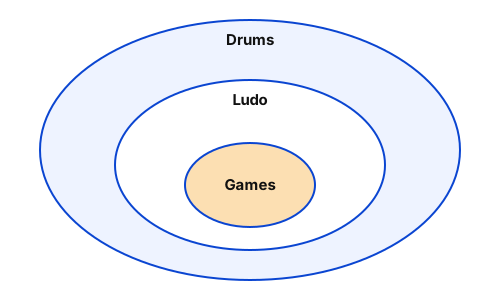
Read the given statements and conclusions carefully. Assuming that the information given in the statements is true, even if it appears to be at variance with commonly known facts, decide which of the given conclusions logically follow(s) from the statements.
Statements: All games are ludos. All ludos are drums.
Conclusion (I): Some drums are ludos.
Conclusion (II): All games are drums.
दिए गए कथनों और निष्कर्षों को ध्यानपूर्वक पढ़िए। यह मानते हुए कि कथनों में दी गई जानकारी सत्य है, भले ही वह सामान्य रूप से ज्ञात तथ्यों से भिन्न प्रतीत होती हो, निर्णय कीजिए कि दिए गए निष्कर्षों में से कौन-सा/से निष्कर्ष कथनों का तार्किक रूप से अनुसरण करता है/करते हैं।
कथन: सभी गेम, लूडो हैं। सभी लूडो, ड्रम हैं।
निष्कर्ष (I): कुछ ड्रम, लूडो हैं।
निष्कर्ष (II): सभी गेम, ड्रम हैं।
  1. AOnly conclusion (II) follows.केवल निष्कर्ष (II) अनुसरण करता है।
  2. BBoth conclusions (I) and (II) follow.निष्कर्ष (I) और (II) दोनों अनुसरण करते हैं।
  3. COnly conclusion (I) follows.केवल निष्कर्ष (I) अनुसरण करता है।
  4. DNeither conclusion (I) nor (II) follows.न तो निष्कर्ष (I) और न ही (II) अनुसरण करता है।
Show answer

Concept: Draw the Venn diagram with the minimum possible overlap.

  1. Games ⊂ Ludo ⊂ Drums.
  2. (I) Ludo lies inside Drums, so some drums are ludo – follows.
  3. (II) Games inside Ludo inside Drums – all games are drums – follows.

Trick: "All A are B" + "All B are C" ⇒ "All A are C"; and "All" always gives "Some" in reverse.

Answer: (B) Both conclusions (I) and (II) follow

अवधारणा: न्यूनतम संभव ओवरलैप के साथ वेन आरेख बनाएँ।

  1. खेल ⊂ लूडो ⊂ ड्रम।
  2. (I) लूडो पूरी तरह ड्रम के अंदर, अतः कुछ ड्रम लूडो हैं – अनुसरण करता है।
  3. (II) खेल ⊂ लूडो ⊂ ड्रम – सभी खेल ड्रम हैं – अनुसरण करता है।

ट्रिक: "सभी A, B हैं" + "सभी B, C हैं" ⇒ "सभी A, C हैं"; "सभी" से उल्टा "कुछ" हमेशा निकलता है।

उत्तर: (B) निष्कर्ष (I) और (II) दोनों अनुसरण करते हैं

RRB NTPC Undergraduate CBT 1General Intelligence and ReasoningSyllogismRRB NTPC Undergraduate CBT 1 2024 · 18 Aug Shift 2 →
Q1878.
If '+' means '−', '−' means '×', '×' means '÷' and '÷' means '+', what will come in place of the question mark (?) in the following equation?
26 + 14 − 2 ÷ 56 × 7 = ?
यदि '+' का अर्थ '−', '−' का अर्थ '×', '×' का अर्थ '÷' और '÷' का अर्थ '+' है, तो निम्नलिखित समीकरण में प्रश्न चिह्न (?) के स्थान पर क्या आएगा?
26 + 14 − 2 ÷ 56 × 7 = ?
  1. A6
  2. B21
  3. C10
  4. D14
Show answer

Concept: Replace the signs as told, then use BODMAS.

  1. 26−14×2+56÷7.
  2. 14×2=28, 56÷7=8.
  3. 26−28+8=6.

Trick: Write the new expression fully before solving.

Answer: (A) 6

अवधारणा: बताए अनुसार चिह्न बदलें, फिर BODMAS लगाएँ।

  1. 26−14×2+56÷7।
  2. 14×2=28, 56÷7=8।
  3. 26−28+8=6।

ट्रिक: हल करने से पहले नया व्यंजक पूरा लिखें।

उत्तर: (A) 6

RRB NTPC Undergraduate CBT 1General Intelligence and ReasoningMathematical operationsRRB NTPC Undergraduate CBT 1 2024 · 18 Aug Shift 2 →
Q1879.
Based on the English alphabetical order, three of the following four letter-cluster pairs are alike in a certain way and thus form a group. Which letter-cluster pair does NOT belong to that group? (Note: The odd letter-cluster pair is not based on the number of consonants/vowels or their position in the letter-cluster pair.)
अंग्रेज़ी वर्णमाला क्रम के आधार पर, निम्नलिखित चार अक्षर-समूह युग्मों में से तीन किसी निश्चित प्रकार से एकसमान हैं और इस प्रकार एक समूह बनाते हैं। कौन-सा अक्षर-समूह युग्म उस समूह से संबंधित नहीं है? (ध्यान दें: असंगत अक्षर-समूह युग्म, उस अक्षर-समूह युग्म में व्यंजनों/स्वरों की संख्या या उनके स्थान पर आधारित नहीं है।)
  1. ADH-KB
  2. BMQ-TK
  3. CJN-QG
  4. DGK-NE
Show answer

Concept: Compare the letter positions of the two groups in each pair.

  1. DH-KB: D+7=K, H−6=B.
  2. MQ-TK: M+7=T, Q−6=K; GK-NE: G+7=N, K−6=E.
  3. JN-QG: J+7=Q but N−6=H, not G – odd one.

Trick: Check the second letter: N(14)−6 = H(8), while G is 7.

Answer: (C) JN-QG

अवधारणा: हर युग्म में दोनों समूहों के अक्षर-स्थान की तुलना करें।

  1. DH-KB: D+7=K, H−6=B।
  2. MQ-TK: M+7=T, Q−6=K; GK-NE: G+7=N, K−6=E।
  3. JN-QG: J+7=Q, पर N−6=H, G नहीं – विषम।

ट्रिक: दूसरा अक्षर जाँचें: N(14)−6 = H(8), जबकि G = 7।

उत्तर: (C) JN-QG

RRB NTPC Undergraduate CBT 1General Intelligence and ReasoningOdd letter pairRRB NTPC Undergraduate CBT 1 2024 · 18 Aug Shift 2 →
Q1880.
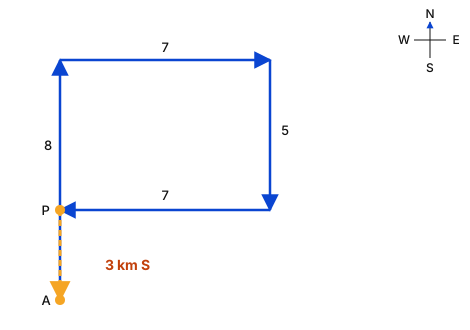
Manish started from point A and travelled 8 km towards North. Then he turned right and travelled 7 km. Then he turned right and travelled 5 km. Then he turned right, travelled 7 km and stopped at point P. How far (shortest distance) and in which direction should he travel to reach point A? (All turns are 90-degree turns only.)
मनीष ने बिंदु A से चलना शुरू किया और उत्तर की ओर 8 km की यात्रा की। फिर वह दाएँ मुड़ा और 7 km की यात्रा की। फिर वह दाएँ मुड़ा और 5 km की यात्रा की। फिर वह दाएँ मुड़ा, 7 km की यात्रा की और बिंदु P पर रुक गया। बिंदु A तक पहुँचने के लिए उसे कितनी दूरी (न्यूनतम दूरी) और किस दिशा में यात्रा करनी चाहिए? (सभी मोड़ केवल 90 डिग्री के मोड़ हैं।)
  1. A2 km, towards West2 km, पश्चिम की ओर
  2. B5 km, towards North5 km, उत्तर की ओर
  3. C4 km, towards East4 km, पूर्व की ओर
  4. D3 km, towards South3 km, दक्षिण की ओर
Show answer

Concept: Trace the path on axes (N up, E right) and join the end to the start.

  1. North 8 km, right → East 7 km, right → South 5 km, right → West 7 km.
  2. East-West: 7−7=0; North-South: 8−5=3 km north of A.
  3. So P is 3 km north of A ⇒ go 3 km south.

Trick: Equal east and west moves cancel; only the vertical difference remains.

Answer: (D) 3 km, towards South

अवधारणा: अक्ष पर रास्ता बनाएँ (ऊपर उत्तर, दाएँ पूर्व) और अंतिम बिंदु को आरंभ से जोड़ें।

  1. उत्तर 8 km, दाएँ → पूर्व 7 km, दाएँ → दक्षिण 5 km, दाएँ → पश्चिम 7 km।
  2. पूर्व-पश्चिम: 7−7=0; उत्तर-दक्षिण: 8−5=3 km (A के उत्तर)।
  3. अतः P, A से 3 km उत्तर ⇒ 3 km दक्षिण जाना होगा।

ट्रिक: बराबर पूर्व-पश्चिम दूरियाँ कट जाती हैं; केवल ऊर्ध्वाधर अंतर बचता है।

उत्तर: (D) 3 km, दक्षिण की ओर

RRB NTPC Undergraduate CBT 1General Intelligence and ReasoningDirection and distanceRRB NTPC Undergraduate CBT 1 2024 · 18 Aug Shift 2 →