Question bank

Q&A: practice questions with answers

Search questions on any topic. Filter by exam category, exam, subject and topic, try the question, then open the answer and explanation.

Courses – airGurukul

8,495 questions found.

Q1881.
Refer to the following number and symbol series and answer the question given below. Counting is to be done from left to right only.
(Note: All numbers are single-digit numbers only)
(Left) 5 ^ * # 0 2 4 @ % 9 $ % 3 > @ 7 & * (Right)
If all the numbers are removed from the series, which of the following will be sixth from the left?
निम्नलिखित संख्या और प्रतीक श्रृंखला को देखिए और नीचे दिए गए प्रश्न का उत्तर दीजिए। गिनती केवल बाएँ से दाएँ की जानी है।
(ध्यान दें: सभी संख्याएँ केवल एक-अंकीय संख्याएँ हैं)
(बाएँ) 5 ^ * # 0 2 4 @ % 9 $ % 3 > @ 7 & * (दाएँ)
यदि श्रृंखला से सभी संख्याएँ हटा दी जाएँ, तो निम्नलिखित में से कौन-सा बाएँ से छठे स्थान पर होगा?
  1. A#
  2. B@
  3. C%
  4. D$
Show answer

Concept: Remove the numbers and rewrite the remaining symbols in order.

  1. Symbols only: ^ * # @ % $ % > @ & *.
  2. Count from the left: ^(1), *(2), #(3), @(4), %(5), $(6).

Trick: Cross out digits on paper first, then count – avoids skipping.

Answer: (D) $

अवधारणा: संख्याएँ हटाकर बचे प्रतीक क्रम से लिखें।

  1. केवल प्रतीक: ^ * # @ % $ % > @ & *।
  2. बाएँ से गिनें: ^(1), *(2), #(3), @(4), %(5), $(6)।

ट्रिक: पहले अंक काट दें, फिर गिनें – कोई छूटेगा नहीं।

उत्तर: (D) $
RRB NTPC Undergraduate CBT 1General Intelligence and ReasoningNumber-symbol seriesRRB NTPC Undergraduate CBT 1 2024 · 18 Aug Shift 2 →
Q1882.
Based on the English alphabetical order, three of the following four letter-clusters are alike in a certain way and thus form a group. Which letter-cluster does NOT belong to that group? (Note: The odd letter-cluster is not based on the number of consonants/vowels or their position in the letter-cluster.)
अंग्रेज़ी वर्णमाला क्रम के आधार पर, निम्नलिखित चार अक्षर-समूहों में से तीन किसी निश्चित प्रकार से एकसमान हैं और इस प्रकार एक समूह बनाते हैं। कौन-सा अक्षर-समूह उस समूह से संबंधित नहीं है? (ध्यान दें: असंगत अक्षर-समूह, उस अक्षर-समूह में व्यंजनों/स्वरों की संख्या या उनके स्थान पर आधारित नहीं है।)
  1. AKFH
  2. BNIL
  3. CUPR
  4. DRMO
Show answer

Concept: Check the gaps between consecutive letters.

  1. KFH: K−5=F, F+2=H.
  2. UPR: U−5=P, P+2=R; RMO: R−5=M, M+2=O.
  3. NIL: N−5=I, but I+3=L – odd one.

Trick: Pattern −5,+2; NIL breaks it with +3.

Answer: (B) NIL

अवधारणा: क्रमागत अक्षरों के अंतर देखें।

  1. KFH: K−5=F, F+2=H।
  2. UPR: U−5=P, P+2=R; RMO: R−5=M, M+2=O।
  3. NIL: N−5=I, पर I+3=L – विषम।

ट्रिक: पैटर्न −5,+2; NIL में +3 है।

उत्तर: (B) NIL

RRB NTPC Undergraduate CBT 1General Intelligence and ReasoningOdd letter clusterRRB NTPC Undergraduate CBT 1 2024 · 18 Aug Shift 2 →
Q1883.
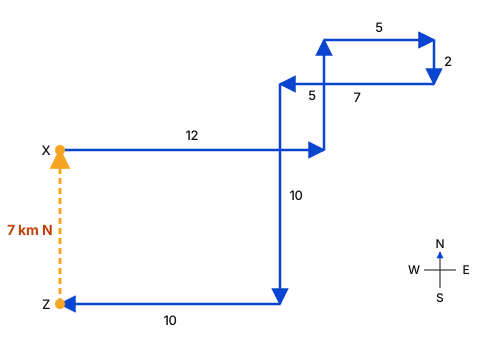
Shivam starts from point X and drives 12 km towards East. Then he turns left, drives 5 km, turns right and drives 5 km. Then he turns right and drives 2 km. Then he turns right and drives 7 km. Again he turns left and drives 10 km. Then he turns right for the last time, drives 10 km and stops at point Z. How far and in which direction should he drive to reach point X again? (All turns are 90-degree turns unless specified otherwise.)
शिवम बिंदु X से चलना शुरू करता है और पूर्व की ओर 12 km गाड़ी चलाता है। फिर वह बाएँ मुड़ता है, 5 km गाड़ी चलाता है, दाएँ मुड़ता है और 5 km गाड़ी चलाता है। फिर वह दाएँ मुड़ता है और 2 km गाड़ी चलाता है। फिर वह दाएँ मुड़ता है और 7 km गाड़ी चलाता है। पुनः वह बाएँ मुड़ता है और 10 km गाड़ी चलाता है। फिर वह अंतिम बार दाएँ मुड़ता है, 10 km गाड़ी चलाता है और बिंदु Z पर रुक जाता है। पुनः बिंदु X पर पहुँचने के लिए उसे कितनी दूरी और किस दिशा में गाड़ी चलानी चाहिए? (जब तक अन्यथा निर्दिष्ट न हो, सभी मोड़ 90 डिग्री के मोड़ हैं।)
  1. A5 km South5 km दक्षिण
  2. B10 km North10 km उत्तर
  3. C7 km South7 km दक्षिण
  4. D7 km North7 km उत्तर
Show answer

Concept: Track net East-West and North-South displacement.

  1. E 12 → left N 5 → right E 5 → right S 2 → right W 7 → left S 10 → right W 10.
  2. East-West: 12+5−7−10=0.
  3. North-South: 5−2−10=−7, i.e. Z is 7 km south of X.
  4. So drive 7 km north.

Trick: Net East and net North separately; a zero in one gives a straight-line answer.

Answer: (D) 7 km North

अवधारणा: कुल पूर्व-पश्चिम और उत्तर-दक्षिण विस्थापन निकालें।

  1. पूर्व 12 → बाएँ उत्तर 5 → दाएँ पूर्व 5 → दाएँ दक्षिण 2 → दाएँ पश्चिम 7 → बाएँ दक्षिण 10 → दाएँ पश्चिम 10।
  2. पूर्व-पश्चिम: 12+5−7−10=0।
  3. उत्तर-दक्षिण: 5−2−10=−7, अर्थात Z, X से 7 km दक्षिण।
  4. अतः 7 km उत्तर जाना होगा।

ट्रिक: पूर्व और उत्तर का कुल अलग-अलग निकालें; एक शून्य हो तो उत्तर सीधी रेखा में।

उत्तर: (D) 7 km उत्तर

RRB NTPC Undergraduate CBT 1General Intelligence and ReasoningDirection and distanceRRB NTPC Undergraduate CBT 1 2024 · 18 Aug Shift 2 →
Q1884.
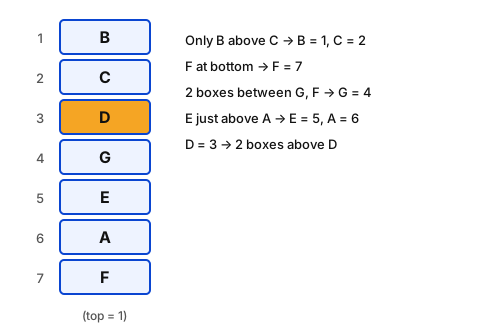
Seven boxes A, B, C, D, E, F and G are kept one above the other, but not necessarily in the same order. Only B is kept above C. Exactly two boxes are kept between G and F. E is kept immediately above A. No box is kept below F. How many boxes are kept above D?
सात बक्से A, B, C, D, E, F और G एक के ऊपर एक रखे गए हैं, लेकिन जरूरी नहीं कि इसी क्रम में हों। केवल B को C के ऊपर रखा गया है। G और F के बीच ठीक दो बक्से रखे गए हैं। E को A के ठीक ऊपर रखा गया है। F के नीचे कोई बक्सा नहीं रखा गया है। D के ऊपर कितने बक्से रखे गए हैं?
  1. AThreeतीन
  2. BTwoदो
  3. COneएक
  4. DFourचार
Show answer

Concept: Fix the definite positions first (top/bottom), then fill the rest.

  1. Only B is above C ⇒ B = 1st, C = 2nd from top.
  2. No box below F ⇒ F = 7th; two boxes between G and F ⇒ G = 4th.
  3. E just above A needs two adjacent free places ⇒ E = 5th, A = 6th; D = 3rd.
  4. Boxes above D: B and C = two.

Trick: "Only X above Y" means X is the topmost box and Y second.

Answer: (B) Two

अवधारणा: पहले निश्चित स्थान (ऊपर/नीचे) तय करें, फिर बाकी भरें।

  1. केवल B, C के ऊपर ⇒ B = 1, C = 2 (ऊपर से)।
  2. F के नीचे कोई नहीं ⇒ F = 7; G और F के बीच दो ⇒ G = 4।
  3. E ठीक A के ऊपर – दो लगातार खाली स्थान ⇒ E = 5, A = 6; D = 3।
  4. D के ऊपर: B और C = दो।

ट्रिक: "केवल X, Y के ऊपर" का अर्थ X सबसे ऊपर और Y दूसरा।

उत्तर: (B) दो

RRB NTPC Undergraduate CBT 1General Intelligence and ReasoningBox arrangementRRB NTPC Undergraduate CBT 1 2024 · 18 Aug Shift 2 →
Q1885.
Refer to the following number and symbol series and answer the question given below. Counting is to be done from left to right only.
(Left) 2 & * 4 6 % @ 7 $ & 1 # Ω 3 @ 8 * £ 5 9 (Right)
How many such symbols are there, each of which is immediately preceded by a number and immediately followed by another number?
निम्नलिखित संख्या और प्रतीक श्रृंखला को देखिए और नीचे दिए गए प्रश्न का उत्तर दीजिए। गिनती केवल बाएँ से दाएँ की जानी है।
(बाएँ) 2 & * 4 6 % @ 7 $ & 1 # Ω 3 @ 8 * £ 5 9 (दाएँ)
ऐसे कितने प्रतीक हैं, जिनमें से प्रत्येक के ठीक पहले एक संख्या है और ठीक बाद में एक अन्य संख्या है?
  1. AMore than twoदो से अधिक
  2. BNoneएक भी नहीं
  3. COneएक
  4. DTwoदो
Show answer

Concept: Check every symbol: digit just before it AND digit just after it.

  1. & (after 2) is followed by * ✗; % (after 6) followed by @ ✗; $ (after 7) followed by & ✗; # (after 1) followed by Ω ✗.
  2. @ in "3 @ 8": 3 before, 8 after ✓.
  3. Other symbols are preceded by a symbol ✗. Count = one.

Trick: Scan only symbols that follow a digit – it halves the work.

Answer: (C) One

अवधारणा: हर प्रतीक जाँचें: ठीक पहले अंक और ठीक बाद अंक।

  1. & (2 के बाद) के बाद * ✗; % (6 के बाद) के बाद @ ✗; $ (7 के बाद) के बाद & ✗; # (1 के बाद) के बाद Ω ✗।
  2. "3 @ 8" में @: पहले 3, बाद 8 ✓।
  3. बाकी प्रतीकों से पहले प्रतीक है ✗। संख्या = एक।

ट्रिक: केवल उन्हीं प्रतीकों को देखें जिनसे पहले अंक है।

उत्तर: (C) एक

RRB NTPC Undergraduate CBT 1General Intelligence and ReasoningNumber-symbol seriesRRB NTPC Undergraduate CBT 1 2024 · 18 Aug Shift 2 →
Q1886.
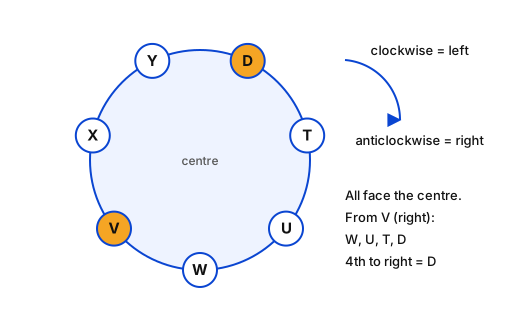
Seven persons, T, U, V, W, X, Y and D, are sitting around a circular table facing the centre of the table. Only two persons sit between X and U when counted from the right of X. Only three persons sit between Y and W when counted from the right of W. U sits to the immediate right of W. D sits to the immediate right of T. Who sits fourth to the right of V?
सात व्यक्ति, T, U, V, W, X, Y और D, एक वृत्ताकार मेज़ के चारों ओर मेज़ के केंद्र की ओर मुख करके बैठे हैं। X के दाएँ से गिनने पर X और U के बीच केवल दो व्यक्ति बैठे हैं। W के दाएँ से गिनने पर Y और W के बीच केवल तीन व्यक्ति बैठे हैं। U, W के ठीक दाएँ बैठा है। D, T के ठीक दाएँ बैठा है। V के दाएँ से चौथे स्थान पर कौन बैठा है?
  1. AD
  2. BU
  3. CX
  4. DT
Show answer

Concept: Facing the centre: right = anticlockwise, left = clockwise.

  1. Fix W; U is immediately to the right of W.
  2. Y is 4th to the right of W (three persons between, counted from W's right).
  3. X and U have two persons between, counted from X's right ⇒ X is 3rd to the left of U (2nd to the left of W).
  4. T and D (D right of T) fill the two seats between U and Y; V takes the last seat (left of W).
  5. 4th to the right of V: W, U, T, D ⇒ D.

Trick: Seat the "immediate neighbour" pairs first – they lock the circle quickly.

Answer: (A) D

अवधारणा: केंद्र की ओर मुख: दायाँ = वामावर्त, बायाँ = दक्षिणावर्त।

  1. W को स्थिर करें; U, W के ठीक दाएँ।
  2. Y, W के दाएँ चौथा (W के दाएँ से गिनने पर बीच में तीन)।
  3. X के दाएँ से गिनने पर X और U के बीच दो ⇒ X, U के बाएँ तीसरा (W के बाएँ दूसरा)।
  4. T और D (D, T के दाएँ) U और Y के बीच की दो सीटों पर; V शेष सीट (W के बाएँ)।
  5. V के दाएँ चौथा: W, U, T, D ⇒ D।

ट्रिक: पहले "ठीक पड़ोसी" वाले जोड़े बैठाएँ – वृत्त जल्दी तय होता है।

उत्तर: (A) D

RRB NTPC Undergraduate CBT 1General Intelligence and ReasoningCircular seatingRRB NTPC Undergraduate CBT 1 2024 · 18 Aug Shift 2 →
Q1887.
Based on the English alphabetical order, AGPV is related to DKSZ in a certain way. In the same way, MWBL is related to PAEP. Following the same logic, to which of the given options is VIKX related?
अंग्रेज़ी वर्णमाला क्रम के आधार पर, AGPV एक निश्चित प्रकार से DKSZ से संबंधित है। उसी प्रकार, MWBL, PAEP से संबंधित है। समान तर्क का अनुसरण करते हुए, VIKX दिए गए विकल्पों में से किससे संबंधित है?
  1. AYMNB
  2. BYBNM
  3. CTBNH
  4. DYMBN
Show answer

Concept: Find the shift applied to each letter.

  1. AGPV → DKSZ: +3,+4,+3,+4.
  2. MWBL → PAEP: M+3=P, W+4=A, B+3=E, L+4=P ✓.
  3. VIKX: V+3=Y, I+4=M, K+3=N, X+4=B → YMNB.

Trick: Alternate +3,+4; wrap after Z (X+4 = B).

Answer: (A) YMNB

अवधारणा: हर अक्षर पर लगा परिवर्तन देखें।

  1. AGPV → DKSZ: +3,+4,+3,+4।
  2. MWBL → PAEP: M+3=P, W+4=A, B+3=E, L+4=P ✓।
  3. VIKX: V+3=Y, I+4=M, K+3=N, X+4=B → YMNB।

ट्रिक: बारी-बारी +3,+4; Z के बाद A से गिनें (X+4 = B)।

उत्तर: (A) YMNB

RRB NTPC Undergraduate CBT 1General Intelligence and ReasoningLetter analogyRRB NTPC Undergraduate CBT 1 2024 · 18 Aug Shift 2 →
Q1888.
In a certain code language, 'keep it fun' is coded as 'tr cj ly' and 'lets have fun' is coded as 'mg ly ev'. How will 'fun' be coded in the given language?
एक निश्चित कूट भाषा में, 'keep it fun' को 'tr cj ly' और 'lets have fun' को 'mg ly ev' के रूप में कूटबद्ध किया जाता है। दी गई भाषा में 'fun' को किस प्रकार कूटबद्ध किया जाएगा?
  1. Acj
  2. Bev
  3. Ctr
  4. Dly
Show answer

Concept: A word common to two sentences has the code common to both.

  1. "keep it fun" → tr cj ly; "lets have fun" → mg ly ev.
  2. Common word: fun; common code: ly.

Trick: One common word ↔ one common code.

Answer: (D) ly

अवधारणा: दोनों वाक्यों में समान शब्द का कूट भी समान होता है।

  1. "keep it fun" → tr cj ly; "lets have fun" → mg ly ev।
  2. समान शब्द: fun; समान कूट: ly।

ट्रिक: एक समान शब्द ↔ एक समान कूट।

उत्तर: (D) ly

RRB NTPC Undergraduate CBT 1General Intelligence and ReasoningCoding-decodingRRB NTPC Undergraduate CBT 1 2024 · 18 Aug Shift 2 →
Q1889.
In the following triads, each group of letters is related to the next group following a certain logic. Select the option that follows the same logic.
PACK – AKCP – KCAP
FOLD – ODLF – DLOF
निम्नलिखित त्रिकों में, अक्षरों का प्रत्येक समूह एक निश्चित तर्क का अनुसरण करते हुए अगले समूह से संबंधित है। उस विकल्प का चयन कीजिए जो समान तर्क का अनुसरण करता है।
PACK – AKCP – KCAP
FOLD – ODLF – DLOF
  1. ASUIT – USIT – TUIS
  2. BBELT – EBLT – TELB
  3. CCLAP – LPAC – PALC
  4. DAPES – AEPS – SEPA
Show answer

Concept: Number the letters of the first word 1-2-3-4 and see how they move.

  1. PACK (1234) → AKCP = letters 2, 4, 3, 1.
  2. Third group = first word reversed: PACK → KCAP; FOLD → ODLF → DLOF ✓.
  3. CLAP → (2,4,3,1) LPAC → reversed PALC ✓.

Trick: Test the easy rule first: is the third group just the reverse?

Answer: (C) CLAP – LPAC – PALC

अवधारणा: पहले शब्द के अक्षरों को 1-2-3-4 क्रमांक देकर उनका स्थान देखें।

  1. PACK (1234) → AKCP = अक्षर 2, 4, 3, 1।
  2. तीसरा समूह = पहला शब्द उल्टा: PACK → KCAP; FOLD → ODLF → DLOF ✓।
  3. CLAP → (2,4,3,1) LPAC → उल्टा PALC ✓।

ट्रिक: पहले आसान नियम जाँचें: क्या तीसरा समूह उल्टा शब्द है?

उत्तर: (C) CLAP – LPAC – PALC

RRB NTPC Undergraduate CBT 1General Intelligence and ReasoningLetter rearrangementRRB NTPC Undergraduate CBT 1 2024 · 18 Aug Shift 2 →
Q1890.
Based on the English alphabetical order, three of the following four letter-clusters are alike in a certain way and thus form a group. Which letter-cluster does NOT belong to that group? (Note: The odd letter-cluster is not based on the number of consonants/vowels or their position in the letter-cluster.)
अंग्रेज़ी वर्णमाला क्रम के आधार पर, निम्नलिखित चार अक्षर-समूहों में से तीन किसी निश्चित प्रकार से एकसमान हैं और इस प्रकार एक समूह बनाते हैं। कौन-सा अक्षर-समूह उस समूह से संबंधित नहीं है? (ध्यान दें: असंगत अक्षर-समूह, उस अक्षर-समूह में व्यंजनों/स्वरों की संख्या या उनके स्थान पर आधारित नहीं है।)
  1. ABZX
  2. BHFD
  3. CTRP
  4. DYOU
Show answer

Concept: Check the step between consecutive letters.

  1. BZX: B−2=Z (wrap), Z−2=X.
  2. HFD and TRP: −2,−2.
  3. YOU: Y−10=O, O+6=U – odd one.

Trick: Pattern −2,−2; YOU only looks like a word.

Answer: (D) YOU

अवधारणा: क्रमागत अक्षरों का अंतर देखें।

  1. BZX: B−2=Z (A के बाद Z), Z−2=X।
  2. HFD और TRP: −2,−2।
  3. YOU: Y−10=O, O+6=U – विषम।

ट्रिक: पैटर्न −2,−2; YOU केवल अर्थपूर्ण शब्द जैसा दिखता है।

उत्तर: (D) YOU

RRB NTPC Undergraduate CBT 1General Intelligence and ReasoningOdd letter clusterRRB NTPC Undergraduate CBT 1 2024 · 18 Aug Shift 2 →
Q1891.
Based on the English alphabetical order, what should come in place of the question mark (?) in the given series?
VOR TMP RKN PIL ?
अंग्रेज़ी वर्णमाला क्रम के आधार पर, दी गई श्रृंखला में प्रश्न चिह्न (?) के स्थान पर क्या आना चाहिए?
VOR TMP RKN PIL ?
  1. ANHJ
  2. BNGJ
  3. CNGI
  4. DNHI
Show answer

Concept: Track each letter position separately.

  1. 1st: V, T, R, P → N (−2).
  2. 2nd: O, M, K, I → G (−2).
  3. 3rd: R, P, N, L → J (−2).

Trick: Every position moves back by 2.

Answer: (B) NGJ

अवधारणा: हर स्थान के अक्षर अलग-अलग देखें।

  1. पहला: V, T, R, P → N (−2)।
  2. दूसरा: O, M, K, I → G (−2)।
  3. तीसरा: R, P, N, L → J (−2)।

ट्रिक: हर स्थान 2 पीछे जाता है।

उत्तर: (B) NGJ

RRB NTPC Undergraduate CBT 1General Intelligence and ReasoningLetter seriesRRB NTPC Undergraduate CBT 1 2024 · 18 Aug Shift 2 →
Q1892.
Select the number from among the given options that can replace the question mark (?) in the following series.
174 152 134 120 110 ?
दिए गए विकल्पों में से उस संख्या का चयन कीजिए जो निम्नलिखित श्रृंखला में प्रश्न चिह्न (?) को प्रतिस्थापित कर सकती है।
174 152 134 120 110 ?
  1. A90
  2. B94
  3. C104
  4. D100
Show answer

Concept: Look at the differences.

  1. Differences: −22,−18,−14,−10 (shrinking by 4).
  2. Next difference =−6: 110−6=104.

Trick: Differences form an AP with step 4.

Answer: (C) 104

अवधारणा: अंतर देखें।

  1. अंतर: −22,−18,−14,−10 (हर बार 4 कम)।
  2. अगला अंतर =−6: 110−6=104।

ट्रिक: अंतर 4 के चरण वाली समांतर श्रेणी में हैं।

उत्तर: (C) 104

RRB NTPC Undergraduate CBT 1General Intelligence and ReasoningNumber seriesRRB NTPC Undergraduate CBT 1 2024 · 18 Aug Shift 2 →
Q1893.
What should come in place of the question mark (?) in the given series?
93 108 131 162 201 ?
दी गई श्रृंखला में प्रश्न चिह्न (?) के स्थान पर क्या आना चाहिए?
93 108 131 162 201 ?
  1. A235
  2. B241
  3. C228
  4. D248
Show answer

Concept: Look at the differences.

  1. Differences: 15,23,31,39 (increase by 8).
  2. Next difference =47: 201+47=248.

Trick: Second differences constant (8).

Answer: (D) 248

अवधारणा: अंतर देखें।

  1. अंतर: 15,23,31,39 (हर बार 8 अधिक)।
  2. अगला अंतर =47: 201+47=248।

ट्रिक: दूसरे क्रम के अंतर स्थिर (8)।

उत्तर: (D) 248

RRB NTPC Undergraduate CBT 1General Intelligence and ReasoningNumber seriesRRB NTPC Undergraduate CBT 1 2024 · 18 Aug Shift 2 →
Q1894.
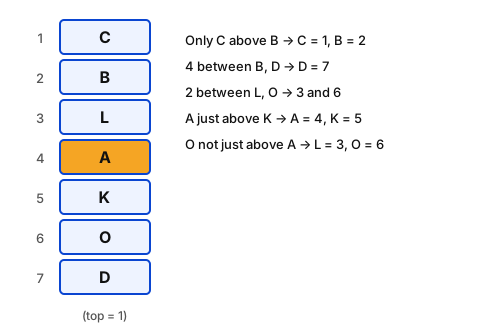
Seven boxes A, B, C, D, K, L and O are kept one above the other but not necessarily in the same order. Only four boxes are kept between B and D. Only C is kept above B. Only two boxes are kept between L and O. A is kept immediately above K. O is not kept immediately above A.
Which box is kept fourth from the top?
सात बक्से A, B, C, D, K, L और O एक के ऊपर एक रखे गए हैं, लेकिन जरूरी नहीं कि इसी क्रम में हों। B और D के बीच केवल चार बक्से रखे गए हैं। केवल C को B के ऊपर रखा गया है। L और O के बीच केवल दो बक्से रखे गए हैं। A को K के ठीक ऊपर रखा गया है। O को A के ठीक ऊपर नहीं रखा गया है।
ऊपर से चौथे स्थान पर कौन-सा बक्सा रखा गया है?
  1. AC
  2. BA
  3. CD
  4. DL
Show answer

Concept: Place the boxes with fixed positions first.

  1. Only C above B ⇒ C = 1st, B = 2nd.
  2. Four boxes between B and D ⇒ D = 7th.
  3. L and O with two between must take 3rd and 6th; A, K (A just above K) take 4th, 5th.
  4. O not just above A ⇒ O ≠ 3rd ⇒ L = 3rd, O = 6th. 4th from top = A.

Trick: Gaps like "four between" in a 7-stack almost fix the position at once.

Answer: (B) A

अवधारणा: पहले निश्चित स्थान वाले बॉक्स रखें।

  1. केवल C, B के ऊपर ⇒ C = 1, B = 2।
  2. B और D के बीच चार ⇒ D = 7।
  3. L और O (बीच में दो) – स्थान 3 और 6; A, K (A ठीक K के ऊपर) – स्थान 4, 5।
  4. O ठीक A के ऊपर नहीं ⇒ O ≠ 3 ⇒ L = 3, O = 6। ऊपर से चौथा = A।

ट्रिक: 7 के ढेर में "बीच में चार" जैसा अंतर स्थान लगभग तुरंत तय कर देता है।

उत्तर: (B) A

RRB NTPC Undergraduate CBT 1General Intelligence and ReasoningBox arrangementRRB NTPC Undergraduate CBT 1 2024 · 18 Aug Shift 2 →
Q1895.
In a certain code language,
A + B means 'A is the son of B',
A – B means 'A is the sister of B',
A x B means 'A is the wife of B' and
A ÷ B means 'A is the father of B'.
If 'Q ÷ E + R – C x D', then how is Q related to D?
एक निश्चित कूट भाषा में,
A + B का अर्थ है 'A, B का पुत्र है',
A – B का अर्थ है 'A, B की बहन है',
A x B का अर्थ है 'A, B की पत्नी है' और
A ÷ B का अर्थ है 'A, B का पिता है'।
यदि 'Q ÷ E + R – C x D' है, तो Q का D से क्या संबंध है?
  1. ASonपुत्र
  2. BWife's sister's husbandपत्नी की बहन का पति
  3. CSister's husbandबहन का पति
  4. DHusbandपति
Show answer

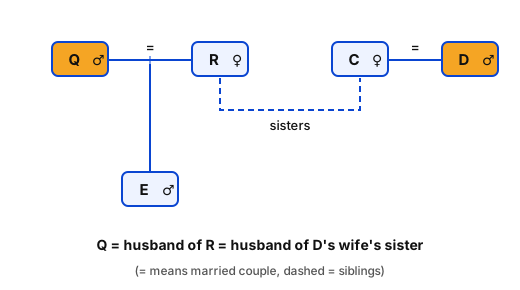
Concept: Decode each symbol and draw the family tree.

  1. Q ÷ E: Q is the father of E. E + R: E is the son of R ⇒ R is the mother, so Q is R's husband.
  2. R – C: R is the sister of C. C × D: C is the wife of D.
  3. So Q is the husband of the sister of D's wife.

Trick: R must be female (sister), so Q and R are E's parents.

Answer: (B) Wife's sister's husband

अवधारणा: हर चिह्न का अर्थ निकालकर परिवार-वृक्ष बनाएँ।

  1. Q ÷ E: Q, E का पिता। E + R: E, R का पुत्र ⇒ R माँ, अतः Q, R का पति।
  2. R – C: R, C की बहन। C × D: C, D की पत्नी।
  3. अतः Q, D की पत्नी की बहन का पति है।

ट्रिक: R बहन है (स्त्री), अतः Q और R, E के माता-पिता हैं।

उत्तर: (B) पत्नी की बहन का पति

RRB NTPC Undergraduate CBT 1General Intelligence and ReasoningBlood relations (coded)RRB NTPC Undergraduate CBT 1 2024 · 18 Aug Shift 2 →
Q1896.
Navjot is 15th from the bottom and 19th from the top in his class. How many students are there in his class?
नवजोत अपनी कक्षा में नीचे से 15वें और ऊपर से 19वें स्थान पर है। उसकी कक्षा में कितने विद्यार्थी हैं?
  1. A31
  2. B33
  3. C32
  4. D34
Show answer

Concept: Total = rank from top + rank from bottom −1.

  1. 19+15−1=33.

Trick: Subtract 1 because the person is counted twice.

Answer: (B) 33

अवधारणा: कुल = ऊपर से स्थान + नीचे से स्थान −1।

  1. 19+15−1=33।

ट्रिक: 1 घटाएँ क्योंकि वह व्यक्ति दो बार गिना गया।

उत्तर: (B) 33

RRB NTPC Undergraduate CBT 1General Intelligence and ReasoningRankingRRB NTPC Undergraduate CBT 1 2024 · 18 Aug Shift 2 →
Q1897.
Select the set in which the numbers are related in the same way as are the numbers of the following sets.
(NOTE: Operations should be performed on the whole numbers, without breaking down the numbers into their constituent digits. E.g. 13 – Operations on 13 such as adding /subtracting /multiplying etc. to 13 can be performed. Breaking down 13 into 1 and 3 and then performing mathematical operations on 1 and 3 is not allowed.)
(92, 6, 552)
(98, 5, 490)
उस समुच्चय का चयन कीजिए जिसमें संख्याएँ उसी प्रकार संबंधित हैं जिस प्रकार निम्नलिखित समुच्चयों की संख्याएँ संबंधित हैं।
(ध्यान दें: संख्याओं को उनके घटक अंकों में तोड़े बिना, पूर्ण संख्याओं पर संक्रियाएँ की जानी चाहिए। उदाहरण के लिए 13 – 13 पर संक्रियाएँ जैसे 13 में जोड़ना/घटाना/गुणा करना आदि किया जा सकता है। 13 को 1 और 3 में तोड़ना और फिर 1 और 3 पर गणितीय संक्रियाएँ करना वर्जित है।)
(92, 6, 552)
(98, 5, 490)
  1. A(52, 8, 438)
  2. B(46, 9, 405)
  3. C(48, 6, 478)
  4. D(84, 7, 588)
Show answer

Concept: Find how the third number comes from the first two.

  1. 92×6=552; 98×5=490 – third = first × second.
  2. (A) 52×8=416 ✗; (B) 46×9=414 ✗; (C) 48×6=288 ✗.
  3. (D) 84×7=588 ✓.

Trick: Check the last digit first: 4×7 ends in 8 – matches 588.

Answer: (D) (84, 7, 588)

अवधारणा: तीसरी संख्या पहली दो से कैसे बनती है, देखें।

  1. 92×6=552; 98×5=490 – तीसरी = पहली × दूसरी।
  2. (A) 52×8=416 ✗; (B) 46×9=414 ✗; (C) 48×6=288 ✗।
  3. (D) 84×7=588 ✓।

ट्रिक: पहले इकाई अंक जाँचें: 4×7 का इकाई अंक 8 – 588 से मेल।

उत्तर: (D) (84, 7, 588)

RRB NTPC Undergraduate CBT 1General Intelligence and ReasoningNumber triadsRRB NTPC Undergraduate CBT 1 2024 · 18 Aug Shift 2 →
Q1898.
If 'A' stands for '÷', 'B' stands for '×', 'C' stands for '+' and 'D' stands for '−', what will come in place of the question mark (?) in the following equation?
44 D 9 B 6 C 52 A 4 = ?
यदि 'A' का अर्थ '÷', 'B' का अर्थ '×', 'C' का अर्थ '+' और 'D' का अर्थ '−' है, तो निम्नलिखित समीकरण में प्रश्न चिह्न (?) के स्थान पर क्या आएगा?
44 D 9 B 6 C 52 A 4 = ?
  1. A3
  2. B14
  3. C21
  4. D8
Show answer

Concept: Substitute the letters with signs, then apply BODMAS.

  1. 44−9×6+52÷4.
  2. 9×6=54, 52÷4=13.
  3. 44−54+13=3.

Trick: Do × and ÷ first, then + and − left to right.

Answer: (A) 3

अवधारणा: अक्षरों के स्थान पर चिह्न रखें, फिर BODMAS लगाएँ।

  1. 44−9×6+52÷4।
  2. 9×6=54, 52÷4=13।
  3. 44−54+13=3।

ट्रिक: पहले × और ÷, फिर + और − बाएँ से दाएँ।

उत्तर: (A) 3

RRB NTPC Undergraduate CBT 1General Intelligence and ReasoningMathematical operationsRRB NTPC Undergraduate CBT 1 2024 · 18 Aug Shift 2 →
Q1899.
Read the given statements and conclusions carefully. Assuming that the information given in the statements is true, even if it appears to be at variance with commonly known facts, decide which of the given conclusions logically follow(s) from the statements.
Statements:
All bears are ants.
No bear is a horse.
Conclusions:
(I) No ant is a horse.
(II) No horse is a bear.
दिए गए कथनों और निष्कर्षों को ध्यानपूर्वक पढ़िए। यह मानते हुए कि कथनों में दी गई जानकारी सत्य है, भले ही वह सामान्य रूप से ज्ञात तथ्यों से भिन्न प्रतीत होती हो, निर्णय कीजिए कि दिए गए निष्कर्षों में से कौन-सा/से निष्कर्ष कथनों का तार्किक रूप से अनुसरण करता है/करते हैं।
कथन:
सभी भालू, चींटियाँ हैं।
कोई भालू, घोड़ा नहीं है।
निष्कर्ष:
(I) कोई चींटी, घोड़ा नहीं है।
(II) कोई घोड़ा, भालू नहीं है।
  1. AOnly conclusion (II) follows.केवल निष्कर्ष (II) अनुसरण करता है।
  2. BBoth conclusions (I) and (II) follow.निष्कर्ष (I) और (II) दोनों अनुसरण करते हैं।
  3. COnly conclusion (I) follows.केवल निष्कर्ष (I) अनुसरण करता है।
  4. DNeither conclusion (I) nor (II) follows.न तो निष्कर्ष (I) और न ही (II) अनुसरण करता है।
Show answer

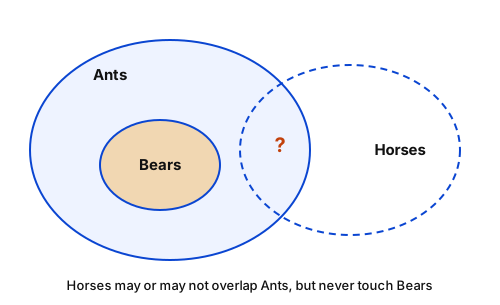
Concept: Draw the Venn diagram; a conclusion follows only if true in every possible diagram.

  1. Bears lie fully inside Ants; Horses lie outside Bears.
  2. (I) Horses may still overlap the Ants outside Bears – "No ant is horse" is not certain ✗.
  3. (II) "No bear is horse" converts to "No horse is bear" ✓.

Trick: "No A is B" can always be reversed to "No B is A".

Answer: (A) Only conclusion (II) follows

अवधारणा: वेन आरेख बनाएँ; निष्कर्ष तभी सही जब हर संभव आरेख में सत्य हो।

  1. भालू पूरी तरह चींटियों के अंदर; घोड़े भालुओं के बाहर।
  2. (I) घोड़े, भालुओं के बाहर वाली चींटियों से मिल सकते हैं – "कोई चींटी घोड़ा नहीं" निश्चित नहीं ✗।
  3. (II) "कोई भालू घोड़ा नहीं" का उलटा "कोई घोड़ा भालू नहीं" ✓।

ट्रिक: "कोई A, B नहीं" को हमेशा "कोई B, A नहीं" में बदल सकते हैं।

उत्तर: (A) केवल निष्कर्ष (II) अनुसरण करता है

RRB NTPC Undergraduate CBT 1General Intelligence and ReasoningSyllogismRRB NTPC Undergraduate CBT 1 2024 · 18 Aug Shift 2 →
Q1900.
Who is the chief judge of the Supreme Court of India, as of May 2025?
मई 2025 तक की स्थिति के अनुसार, भारत के सर्वोच्च न्यायालय के मुख्य न्यायाधीश कौन हैं?
  1. ADY Chandrachudडी. वाई. चंद्रचूड़
  2. BBhushan R Gavaiभूषण आर. गवई
  3. CSharad Arvind Bobdeशरद अरविंद बोबडे
  4. DNV Ramanaएन. वी. रमना
Show answer

Concept: The Chief Justice of India (CJI) is appointed by the President under Article 124 and heads the Supreme Court.

  1. Justice Sanjiv Khanna retired on 13 May 2025.
  2. Justice Bhushan Ramkrishna Gavai took oath as the 52nd CJI on 14 May 2025.
  3. D.Y. Chandrachud (50th), S.A. Bobde (47th) and N.V. Ramana (48th) are former CJIs.

Yaad rakhein: Order to remember: Ramana → Lalit → Chandrachud → Khanna → Gavai. Gavai is the first Buddhist CJI.

Answer: (B) Bhushan R Gavai

अवधारणा: भारत के मुख्य न्यायाधीश (CJI) की नियुक्ति राष्ट्रपति अनुच्छेद 124 के अंतर्गत करते हैं; वे सर्वोच्च न्यायालय के प्रमुख होते हैं।

  1. न्यायमूर्ति संजीव खन्ना 13 मई 2025 को सेवानिवृत्त हुए।
  2. न्यायमूर्ति भूषण रामकृष्ण गवई ने 14 मई 2025 को 52वें CJI के रूप में शपथ ली।
  3. डी.वाई. चंद्रचूड़ (50वें), एस.ए. बोबडे (47वें) और एन.वी. रमना (48वें) पूर्व CJI हैं।

याद रखें: क्रम: रमना → ललित → चंद्रचूड़ → खन्ना → गवई। गवई पहले बौद्ध CJI हैं।

उत्तर: (B) भूषण आर. गवई

RRB NTPC Undergraduate CBT 1General AwarenessChief Justice of IndiaRRB NTPC Undergraduate CBT 1 2024 · 18 Aug Shift 1 →