Question bank

Q&A: practice questions with answers

Search questions on any topic. Filter by exam category, exam, subject and topic, try the question, then open the answer and explanation.

Courses – airGurukul

3,200 questions found.

Q2041.
KPNS is related to QVTY in a certain way based on the English alphabetical order. In the same way, HMKP is related to NSQV. To which of the following options is DIGL related, following the same logic?
अंग्रेजी वर्णमाला क्रम के आधार पर KPNS एक निश्चित प्रकार से QVTY से संबंधित है। उसी प्रकार, HMKP, NSQV से संबंधित है। समान तर्क का अनुसरण करते हुए, DIGL निम्नलिखित में से किस विकल्प से संबंधित है?
  1. AOJMR
  2. BJORM
  3. COJRM
  4. DJOMR
Show answer

Concept: Find the shift applied to each letter.

  1. KPNS → QVTY: K+6=Q, P+6=V, N+6=T, S+6=Y.
  2. HMKP → NSQV: also +6 each.
  3. DIGL → D+6=J, I+6=O, G+6=M, L+6=R = JOMR.

Trick: Same +6 for every letter; (A), (C) reverse the order, (B) swaps the last two.

Answer: (D) JOMR

अवधारणा: हर अक्षर में लगा खिसकाव ज्ञात करें।

  1. KPNS → QVTY: K+6=Q, P+6=V, N+6=T, S+6=Y।
  2. HMKP → NSQV: फिर से हर अक्षर +6।
  3. DIGL → D+6=J, I+6=O, G+6=M, L+6=R = JOMR।

ट्रिक: हर अक्षर +6; (A), (C) में क्रम उलटा है, (B) में अंतिम दो बदले हैं।

उत्तर: (D) JOMR
RRB Technician Grade IIIGeneral Intelligence and ReasoningLetter AnalogyRRB Technician Grade III 2024 · 23 Dec Shift 1 →
Q2042.
Refer to the given series and answer the question that follows (all numbers are single-digit numbers only, and all counting is to be done from left to right).
(Left) 4 4 9 6 8 1 3 9 4 9 8 8 4 3 9 8 5 7 2 6 5 6 9 2 8 4 8 9 5 5 (Right)
How many such odd digits are there, each of which is immediately preceded by an even digit and also immediately followed by an odd digit?
दी गई श्रृंखला को देखें और उसके बाद दिए गए प्रश्न का उत्तर दें (सभी संख्याएँ केवल एक-अंकीय संख्याएँ हैं, और सभी गणना बाएँ से दाएँ की जानी है)।
(बाएँ) 4 4 9 6 8 1 3 9 4 9 8 8 4 3 9 8 5 7 2 6 5 6 9 2 8 4 8 9 5 5 (दाएँ)
ऐसे कितने विषम अंक हैं, जिनमें से प्रत्येक के ठीक पहले एक सम अंक है और ठीक बाद एक विषम अंक भी है?
  1. A5
  2. B0
  3. C4
  4. D3
Show answer

Concept: Look for the pattern Even – Odd – Odd and count the middle odd digits.

  1. Scan the series for an odd digit with an even digit before it and an odd digit after it.
  2. 8 1 3 (6th), 4 3 9 (14th), 8 5 7 (17th), 8 9 5 (28th).
  3. Total =4.

Trick: First mark every odd–odd pair, then keep only those whose left neighbour is even.

Answer: (C) 4

अवधारणा: सम – विषम – विषम का क्रम खोजें और बीच वाले विषम अंक गिनें।

  1. श्रृंखला में वह विषम अंक खोजें जिसके पहले सम और बाद में विषम अंक हो।
  2. 8 1 3 (6वाँ), 4 3 9 (14वाँ), 8 5 7 (17वाँ), 8 9 5 (28वाँ)।
  3. कुल =4।

ट्रिक: पहले सभी विषम–विषम जोड़े चिह्नित करें, फिर केवल वे रखें जिनका बायाँ पड़ोसी सम हो।

उत्तर: (C) 4

RRB Technician Grade IIIGeneral Intelligence and ReasoningDigit Series – ConditionsRRB Technician Grade III 2024 · 23 Dec Shift 1 →
Q2043.
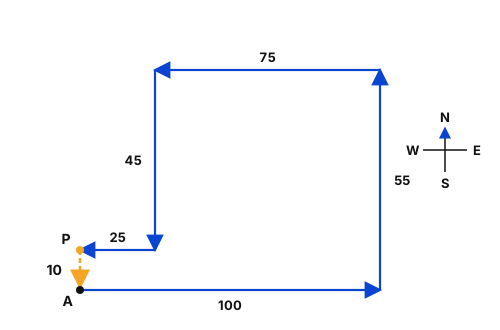
Gopi starts from Point A and drives 100 km towards East. He then takes a left turn, drives 55 km, turns left and drives 75 km. He then takes a left turn and drives 45 km. He takes a final right turn, drives 25 km and stops at Point P. How far (shortest distance) and towards which direction should he drive in order to reach Point A again?
(All turns are 90 degree turns only unless otherwise specified.)
गोपी बिंदु A से चलना शुरू करता है और पूर्व की ओर 100 km गाड़ी चलाता है। फिर वह बाएँ मुड़ता है, 55 km गाड़ी चलाता है, बाएँ मुड़ता है और 75 km गाड़ी चलाता है। फिर वह बाएँ मुड़ता है और 45 km गाड़ी चलाता है। वह अंतिम बार दाएँ मुड़ता है, 25 km गाड़ी चलाता है और बिंदु P पर रुक जाता है। बिंदु A पर फिर से पहुँचने के लिए उसे कितनी दूरी (न्यूनतम दूरी) तक और किस दिशा में गाड़ी चलानी चाहिए?
(जब तक अन्यथा निर्दिष्ट न हो, सभी मोड़ केवल 90 डिग्री के मोड़ हैं।)
  1. A8 km towards Southदक्षिण की ओर 8 km
  2. B8 km towards Northउत्तर की ओर 8 km
  3. C10 km towards Northउत्तर की ओर 10 km
  4. D10 km towards Southदक्षिण की ओर 10 km
Show answer

Concept: Take A as the origin; East/North are positive.

  1. East 100 →(100,0); left = North 55 →(100,55).
  2. Left = West 75 →(25,55); left = South 45 →(25,10).
  3. Right (facing South) = West 25 → P (0,10).
  4. P is 10 km due North of A, so he must drive 10 km towards South.

Trick: Net East =100−75−25=0; net North =55−45=10.

Answer: (D) 10 km towards South

अवधारणा: A को मूलबिंदु लें; पूर्व/उत्तर धनात्मक।

  1. पूर्व 100 →(100,0); बाएँ = उत्तर 55 →(100,55)।
  2. बाएँ = पश्चिम 75 →(25,55); बाएँ = दक्षिण 45 →(25,10)।
  3. दाएँ (दक्षिण की ओर मुख) = पश्चिम 25 → P (0,10)।
  4. P, A से ठीक 10 km उत्तर में है, अतः उसे 10 km दक्षिण की ओर जाना होगा।

ट्रिक: कुल पूर्व =100−75−25=0; कुल उत्तर =55−45=10।

उत्तर: (D) दक्षिण की ओर 10 km

RRB Technician Grade IIIGeneral Intelligence and ReasoningDirection SenseRRB Technician Grade III 2024 · 23 Dec Shift 1 →
Q2044.
Based on the English alphabetical order, three of the following four letter-clusters are alike in a certain way and thus form a group. Which letter-cluster does not belong to that group?
(Note: The odd one out is not based on the number of consonants/vowels or their position in the letter-cluster.)
अंग्रेजी वर्णमाला क्रम के आधार पर, निम्नलिखित चार अक्षर-समूहों में से तीन किसी निश्चित प्रकार से एकसमान हैं और इस प्रकार एक समूह बनाते हैं। कौन-सा अक्षर-समूह उस समूह से संबंधित नहीं है?
(नोट: असंगत अक्षर-समूह, उस अक्षर-समूह में व्यंजनों/स्वरों की संख्या या उनके स्थान पर आधारित नहीं है।)
  1. AAGM
  2. BDJP
  3. CMUI
  4. DSYE
Show answer

Concept: Check the gap between consecutive letters (cycle back after Z).

  1. AGM: A+6=G+6=M. DJP: D+6=J+6=P.
  2. SYE: S+6=Y+6=E (Y, Z, A, B, C, D, E).
  3. MUI: M+8=U, U+14=I — pattern breaks.

Trick: Three clusters follow the same +6,+6 rule; spot the one that doesn't.

Answer: (C) MUI

अवधारणा: क्रमागत अक्षरों का अंतर देखें (Z के बाद फिर A)।

  1. AGM: A+6=G+6=M। DJP: D+6=J+6=P।
  2. SYE: S+6=Y+6=E (Y, Z, A, B, C, D, E)।
  3. MUI: M+8=U, U+14=I — नियम टूटता है।

ट्रिक: तीन समूह +6,+6 नियम मानते हैं; जो नहीं मानता वही उत्तर।

उत्तर: (C) MUI

RRB Technician Grade IIIGeneral Intelligence and ReasoningOdd One Out (Letter Clusters)RRB Technician Grade III 2024 · 23 Dec Shift 1 →
Q2045.
Read the given statements and conclusions carefully. You have to take the given statements to be true even if they seem to be at variance from commonly known facts and decide which conclusion(s) logically follow(s) from the given statements.

Statements:
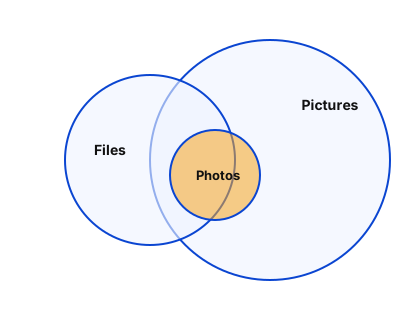
Some files are photos.
All photos are pictures.

Conclusions:
(I) No pictures are files.
(II) Some pictures are files.
कथन और निष्कर्ष ध्यानपूर्वक पढ़ें। आपको दिए गए कथनों को सत्य मानना है, भले ही वे सामान्यतः ज्ञात तथ्यों से भिन्न प्रतीत होते हों, और निर्णय लेना है कि कौन-सा/से निष्कर्ष दिए गए कथनों का तार्किक रूप से अनुसरण करता है/करते हैं।

कथन:
कुछ फाइलें, फोटो हैं।
सभी फोटो, चित्र हैं।

निष्कर्ष:
(I) कोई भी चित्र, फाइल नहीं है।
(II) कुछ चित्र, फाइलें हैं।
  1. AOnly conclusion (II) followsकेवल निष्कर्ष (II) अनुसरण करता है
  2. BOnly conclusion (I) followsकेवल निष्कर्ष (I) अनुसरण करता है
  3. CBoth conclusions (I) and (II) followदोनों निष्कर्ष (I) और (II) अनुसरण करते हैं
  4. DNeither conclusion (I) nor (II) followsन तो निष्कर्ष (I) और न ही (II) अनुसरण करता है
Show answer

Concept: Draw the least-overlap Venn diagram that satisfies both statements.

  1. Some files are photos and all photos lie inside pictures.
  2. So the files that are photos are also pictures ⇒ Some pictures are files: II follows.
  3. Since some pictures are definitely files, 'No pictures are files' (I) is false.

Trick: Some A are B + All B are C ⇒ Some A are C (and Some C are A).

Answer: (A) Only conclusion (II) follows

अवधारणा: दोनों कथनों को संतुष्ट करने वाला न्यूनतम आरेख बनाएँ।

  1. कुछ फाइलें फोटो हैं और सभी फोटो चित्रों के अंदर हैं।
  2. अतः जो फाइलें फोटो हैं वे चित्र भी हैं ⇒ कुछ चित्र फाइलें हैं: II अनुसरण करता है।
  3. चूँकि कुछ चित्र निश्चित रूप से फाइलें हैं, 'कोई चित्र फाइल नहीं' (I) गलत है।

ट्रिक: कुछ A, B हैं + सभी B, C हैं ⇒ कुछ A, C हैं (और कुछ C, A हैं)।

उत्तर: (A) केवल निष्कर्ष (II) अनुसरण करता है

RRB Technician Grade IIIGeneral Intelligence and ReasoningSyllogismRRB Technician Grade III 2024 · 23 Dec Shift 1 →
Q2046.
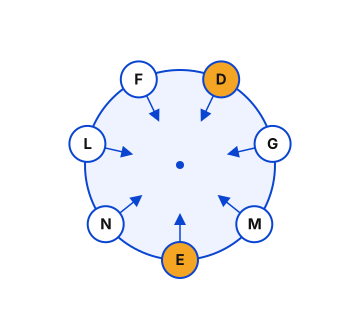
D, E, F, G, L, M and N are sitting around a circular table facing the centre. Only one person sits between L and E when counted from the left of E. G sits third to the right of N. M sits third to the left of F. G sits to the immediate right of M. D is not an immediate neighbour of M. How many people sit between D and E when counted from the right of D?
D, E, F, G, L, M और N एक वृत्ताकार मेज के चारों ओर केंद्र की ओर मुख करके बैठे हैं। E के बाएँ से गिनने पर L और E के बीच केवल एक व्यक्ति बैठा है। G, N के दाएँ से तीसरे स्थान पर बैठा है। M, F के बाएँ से तीसरे स्थान पर बैठा है। G, M के ठीक दाएँ बैठा है। D, M का निकटतम पड़ोसी नहीं है। D के दाएँ से गिनने पर D और E के बीच कितने व्यक्ति बैठे हैं?
  1. AFourचार
  2. BTwoदो
  3. CThreeतीन
  4. DOneएक
Show answer

Concept: Facing the centre: left = clockwise, right = anticlockwise.

  1. M is third to the left of F and G is immediately right of M: F, _, G, M (clockwise).
  2. G is third to the right of N ⇒ N is two seats clockwise from M, with E between them.
  3. L is second to the left of E ⇒ L sits next to N; D (not next to M) takes the seat between F and G.
  4. Clockwise: E, N, L, F, D, G, M. From D going right: F, L, N, then E ⇒ 3 people.

Trick: Start from the chain with most links (F–M–G–N), then fill the remaining seats.

Answer: (C) Three

अवधारणा: केंद्र की ओर मुख: बायाँ = दक्षिणावर्त, दायाँ = वामावर्त।

  1. M, F के बाएँ तीसरा है और G, M के ठीक दाएँ: F, _, G, M (दक्षिणावर्त)।
  2. G, N के दाएँ तीसरा ⇒ N, M से दो स्थान दक्षिणावर्त, बीच में E।
  3. L, E के बाएँ दूसरा ⇒ L, N के बगल में; D (M का पड़ोसी नहीं) F और G के बीच।
  4. दक्षिणावर्त: E, N, L, F, D, G, M। D से दाएँ: F, L, N, फिर E ⇒ 3 व्यक्ति।

ट्रिक: सबसे अधिक जुड़ी कड़ी (F–M–G–N) से शुरू करें, फिर बाकी स्थान भरें।

उत्तर: (C) तीन

RRB Technician Grade IIIGeneral Intelligence and ReasoningCircular Seating ArrangementRRB Technician Grade III 2024 · 23 Dec Shift 1 →
Q2047.
In a certain code language, ‘metro city transport’ is coded as ‘qi de pu’ and ‘train national transport’ is coded as ‘la qi ti’. What is the code for ‘transport’ in the given code language?
एक निश्चित कूट भाषा में, ‘metro city transport’ को ‘qi de pu’ के रूप में कूटबद्ध किया जाता है और ‘train national transport’ को ‘la qi ti’ के रूप में कूटबद्ध किया जाता है। दी गई कूट भाषा में ‘transport’ के लिए कूट क्या है?
  1. Apu
  2. Bde
  3. Cla
  4. Dqi
Show answer

Concept: A word common to two sentences has the code common to both.

  1. 'metro city transport' = qi de pu; 'train national transport' = la qi ti.
  2. Common word: transport; common code: qi.

Yaad rakhein: Codes need not be in the same order as the words; match only common words with common codes.

Answer: (D) qi

अवधारणा: दो वाक्यों में उभयनिष्ठ शब्द का कोड भी दोनों में उभयनिष्ठ होता है।

  1. 'metro city transport' = qi de pu; 'train national transport' = la qi ti।
  2. उभयनिष्ठ शब्द: transport; उभयनिष्ठ कोड: qi।

याद रखें: कोड शब्दों के क्रम में होना ज़रूरी नहीं; उभयनिष्ठ शब्द को उभयनिष्ठ कोड से मिलाएँ।

उत्तर: (D) qi

RRB Technician Grade IIIGeneral Intelligence and ReasoningCoding–Decoding (Word Codes)RRB Technician Grade III 2024 · 23 Dec Shift 1 →
Q2048.
In the following number-pairs, the second number is obtained by applying certain mathematical operations to the first number. Which numbers should replace X and Y so that the pattern followed by the two numbers on the left side of :: is the same as that on the right side of ::?
(NOTE: Operations should be performed on the whole numbers, without breaking down the numbers into its constituent digits. E.g. 13 - Operations on 13 such as adding/subtracting/multiplying etc. to 13 can be performed. Breaking down 13 into 1 and 3 and then performing mathematical operations on 1 and 3 is not allowed.)
X : 59 :: 20 : Y
निम्नलिखित संख्या-युग्मों में, पहली संख्या पर कुछ गणितीय संक्रियाएँ करके दूसरी संख्या प्राप्त की जाती है। X और Y के स्थान पर कौन-सी संख्याएँ आनी चाहिए ताकि :: के बाईं ओर की दोनों संख्याओं द्वारा अनुसरित पैटर्न वही हो जो :: के दाईं ओर की संख्याओं द्वारा अनुसरित है?
(नोट: संख्याओं को उनके घटक अंकों में विभाजित किए बिना, पूर्ण संख्याओं पर संक्रियाएँ की जानी चाहिए। उदाहरण के लिए 13 - 13 पर संक्रियाएँ जैसे 13 में जोड़ना/घटाना/गुणा करना आदि किया जा सकता है। 13 को 1 और 3 में विभाजित करना और फिर 1 और 3 पर गणितीय संक्रियाएँ करना वर्जित है।)
X : 59 :: 20 : Y
  1. AX = 15, Y = 80
  2. BX = 16, Y = 80
  3. CX = 16, Y = 79
  4. DX = 15, Y = 79
Show answer

Concept: Test each option: one rule must turn X into 59 and 20 into Y.

  1. Option (D): X = 15, Y = 79.
  2. 15×4−1=59 ✓ and 20×4−1=79 ✓.
  3. (C) fails: 16×4−5=59 but 20×4−5=75≠79.

Trick: Both outputs are one less than a multiple of 4 (60−1, 80−1), pointing to ×4−1.

Answer: (D) X = 15, Y = 79

अवधारणा: हर विकल्प जाँचें: एक ही नियम X को 59 और 20 को Y में बदले।

  1. विकल्प (D): X = 15, Y = 79।
  2. 15×4−1=59 ✓ तथा 20×4−1=79 ✓।
  3. (C) विफल: 16×4−5=59 पर 20×4−5=75≠79।

ट्रिक: दोनों परिणाम 4 के गुणज से 1 कम हैं (60−1, 80−1), अतः नियम ×4−1।

उत्तर: (D) X = 15, Y = 79

RRB Technician Grade IIIGeneral Intelligence and ReasoningNumber Analogy (Pairs)RRB Technician Grade III 2024 · 23 Dec Shift 1 →
Q2049.
In a certain code language,
'A + B' means ‘A is the sister of B’,
'A – B' means ‘A is the husband of B’,
'A x B' means ‘A is the mother of B’
and 'A ÷ B' means ‘A is the son of B’.
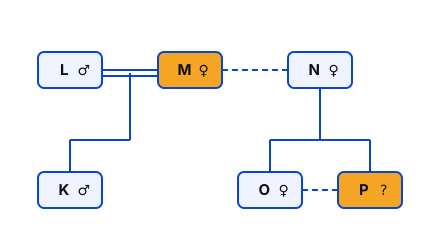
How is M related to P if ‘K ÷ L – M + N x O + P’?
एक निश्चित कूट भाषा में,
'A + B' का अर्थ है ‘A, B की बहन है’,
'A – B' का अर्थ है ‘A, B का पति है’,
'A x B' का अर्थ है ‘A, B की माँ है’
और 'A ÷ B' का अर्थ है ‘A, B का पुत्र है’।
यदि ‘K ÷ L – M + N x O + P’ है, तो M का P से क्या संबंध है?
  1. ASisterबहन
  2. BMotherमाँ
  3. CDaughterपुत्री
  4. DMother's sisterमाँ की बहन (मौसी)
Show answer

Concept: Decode each symbol and build the family tree step by step.

  1. K ÷ L: K is son of L. L – M: L is husband of M.
  2. M + N: M is sister of N. N × O: N is mother of O.
  3. O + P: O is sister of P, so N is also P's mother.
  4. M is the sister of P's mother ⇒ M is P's mother's sister.

Yaad rakhein: Gender of P is not given, so choose the option that does not depend on it.

Answer: (D) Mother's sister

अवधारणा: हर चिह्न का अर्थ निकालकर क्रम से वंश-वृक्ष बनाएँ।

  1. K ÷ L: K, L का पुत्र है। L – M: L, M का पति है।
  2. M + N: M, N की बहन है। N × O: N, O की माँ है।
  3. O + P: O, P की बहन है, अतः N, P की भी माँ है।
  4. M, P की माँ की बहन है ⇒ M, P की मौसी है।

याद रखें: P का लिंग नहीं दिया है, इसलिए वह विकल्प चुनें जो उस पर निर्भर न हो।

उत्तर: (D) माँ की बहन (मौसी)

RRB Technician Grade IIIGeneral Intelligence and ReasoningBlood Relation (Coded)RRB Technician Grade III 2024 · 23 Dec Shift 1 →
Q2050.
Read the given statements and conclusions carefully. You have to take the given statements to be true even if they seem to be at variance from commonly known facts and decide which conclusion(s) logically follow(s) from the given statements.

Statements:
All laptops are speakers.
All speakers are mics.

Conclusions:
(I) At least some speakers are laptops.
(II) All laptops are mics.
कथन और निष्कर्ष ध्यानपूर्वक पढ़ें। आपको दिए गए कथनों को सत्य मानना है, भले ही वे सामान्यतः ज्ञात तथ्यों से भिन्न प्रतीत होते हों, और निर्णय लेना है कि कौन-सा/से निष्कर्ष दिए गए कथनों का तार्किक रूप से अनुसरण करता है/करते हैं।

कथन:
सभी लैपटॉप, स्पीकर हैं।
सभी स्पीकर, माइक हैं।

निष्कर्ष:
(I) कम से कम कुछ स्पीकर, लैपटॉप हैं।
(II) सभी लैपटॉप, माइक हैं।
  1. ABoth conclusions I and II followदोनों निष्कर्ष I और II अनुसरण करते हैं
  2. BNeither conclusion I nor II followsन तो निष्कर्ष I और न ही II अनुसरण करता है
  3. COnly conclusion II followsकेवल निष्कर्ष II अनुसरण करता है
  4. DOnly conclusion I followsकेवल निष्कर्ष I अनुसरण करता है
Show answer

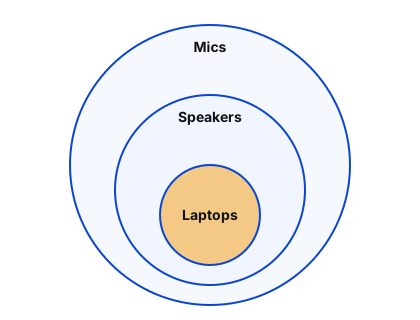
Concept: All A are B and All B are C give nested circles: Laptops ⊂ Speakers ⊂ Mics.

  1. All laptops are speakers ⇒ at least some speakers are laptops: I follows.
  2. Laptops lie inside speakers, which lie inside mics ⇒ all laptops are mics: II follows.

Trick: All A are B ⇒ Some B are A (conversion); All A are B + All B are C ⇒ All A are C.

Answer: (A) Both conclusions I and II follow

अवधारणा: सभी A, B हैं और सभी B, C हैं — एक-के-अंदर-एक वृत्त: लैपटॉप ⊂ स्पीकर ⊂ माइक।

  1. सभी लैपटॉप स्पीकर हैं ⇒ कम से कम कुछ स्पीकर लैपटॉप हैं: I अनुसरण करता है।
  2. लैपटॉप स्पीकर के अंदर और स्पीकर माइक के अंदर ⇒ सभी लैपटॉप माइक हैं: II अनुसरण करता है।

ट्रिक: सभी A, B हैं ⇒ कुछ B, A हैं; सभी A, B + सभी B, C ⇒ सभी A, C हैं।

उत्तर: (A) दोनों निष्कर्ष I और II अनुसरण करते हैं

RRB Technician Grade IIIGeneral Intelligence and ReasoningSyllogismRRB Technician Grade III 2024 · 23 Dec Shift 1 →
Q2051.
The atomic number of an element is determined by the number of:
किसी तत्व की परमाणु संख्या (atomic number) किसकी संख्या द्वारा निर्धारित होती है?
  1. Aelectronsइलेक्ट्रॉन
  2. Bprotonsप्रोटॉन
  3. Cneutronsन्यूट्रॉन
  4. Dboth protons and neutronsप्रोटॉन और न्यूट्रॉन दोनों
Show answer

Concept: Atomic number (Z) is the number of protons in the nucleus of an atom; it fixes the identity of the element.

  1. Every atom of an element has the same number of protons.
  2. Electrons can be gained or lost (ions), so they do not define the element.
  3. Neutrons vary in isotopes; protons + neutrons give the mass number (A), not Z.

Yaad rakhein: Z=protons, A=protons+neutrons. Change protons → element changes.

Answer: (B) protons

अवधारणा: परमाणु क्रमांक (Z) नाभिक में उपस्थित प्रोटॉनों की संख्या है; यही तत्व की पहचान तय करता है।

  1. किसी तत्व के सभी परमाणुओं में प्रोटॉन की संख्या समान होती है।
  2. इलेक्ट्रॉन घट-बढ़ सकते हैं (आयन बनते हैं), इसलिए वे तत्व तय नहीं करते।
  3. समस्थानिकों में न्यूट्रॉन बदलते हैं; प्रोटॉन + न्यूट्रॉन = द्रव्यमान संख्या (A), न कि Z।

याद रखें: Z=प्रोटॉन, A=प्रोटॉन+न्यूट्रॉन। प्रोटॉन बदले तो तत्व बदल जाता है।

उत्तर: (B) प्रोटॉन

RRB Technician Grade IIIGeneral ScienceAtomic numberRRB Technician Grade III 2024 · 23 Dec Shift 1 →
Q2052.
__________ are found in the epidermis of a leaf.
पत्ती की बाह्यत्वचा (epidermis) में __________ पाए जाते हैं।
  1. AVascular bundleसंवहन बंडल (Vascular bundle)
  2. BAerenchymaवायूतक (Aerenchyma)
  3. CStomataरंध्र (Stomata)
  4. DChlorenchymaहरितोतक (Chlorenchyma)
Show answer

Concept: The epidermis is the outermost protective layer of a leaf. It contains tiny pores called stomata, each surrounded by two guard cells.

  1. Stomata allow exchange of gases (CO2 in, O2 out) during photosynthesis.
  2. Water vapour is lost through them in transpiration.
  3. Vascular bundles, chlorenchyma and aerenchyma lie inside the leaf/stem, not in the epidermis.

Yaad rakhein: Stomata = 'mouths' of the leaf, mostly on the lower epidermis.

Answer: (C) Stomata

अवधारणा: बाह्यत्वचा (एपिडर्मिस) पत्ती की सबसे बाहरी सुरक्षात्मक परत है। इसमें छोटे-छोटे छिद्र होते हैं जिन्हें रंध्र (स्टोमेटा) कहते हैं, प्रत्येक दो द्वार कोशिकाओं से घिरा होता है।

  1. प्रकाश संश्लेषण में गैसों का आदान-प्रदान (CO2 अंदर, O2 बाहर) रंध्रों से होता है।
  2. वाष्पोत्सर्जन में जल-वाष्प भी इन्हीं से निकलती है।
  3. संवहन बंडल, हरित ऊतक (क्लोरेनकाइमा) और वायु ऊतक (एरेनकाइमा) अंदर के ऊतक हैं, बाह्यत्वचा में नहीं।

याद रखें: रंध्र = पत्ती का 'मुँह', अधिकतर निचली बाह्यत्वचा पर।

उत्तर: (C) रंध्र (Stomata)

RRB Technician Grade IIIGeneral ScienceLeaf epidermis – stomataRRB Technician Grade III 2024 · 23 Dec Shift 1 →
Q2053.
Which of the following represents the correct formula for calcium oxide?
निम्नलिखित में से कौन-सा कैल्शियम ऑक्साइड का सही सूत्र दर्शाता है?
  1. ACa2O
  2. BCaO2
  3. CCa2O3
  4. DCaO
Show answer

Concept: Write a formula by crossing over valencies of the ions and simplifying.

  1. Calcium ion: Ca2+ (valency 2).
  2. Oxide ion: O2− (valency 2).
  3. Cross-over gives Ca2O2, which simplifies to CaO (ratio 1:1).

Trick: Equal valencies (2 and 2) → simple 1:1 formula, e.g. MgO, CaO, ZnO.

Answer: (D) CaO

अवधारणा: सूत्र लिखने के लिए आयनों की संयोजकता का क्रॉस-ओवर करें और सरल करें।

  1. कैल्शियम आयन: Ca2+ (संयोजकता 2)।
  2. ऑक्साइड आयन: O2− (संयोजकता 2)।
  3. क्रॉस-ओवर से Ca2O2 मिलता है, जो सरल होकर CaO (अनुपात 1:1) बनता है।

ट्रिक: समान संयोजकता (2 और 2) → सरल 1:1 सूत्र, जैसे MgO, CaO, ZnO।

उत्तर: (D) CaO

RRB Technician Grade IIIGeneral ScienceChemical formula – valencyRRB Technician Grade III 2024 · 23 Dec Shift 1 →
Q2054.
A current of 1 A is drawn by a filament of an electric bulb. The number of electrons passing through a cross-section of the filament in 8 mins would be equal to _____.
(Given, charge of electron (e) is equal to 1.6×10⁻¹⁹ C)
एक विद्युत बल्ब का तंतु (filament) 1 A धारा लेता है। 8 मिनट में तंतु के किसी अनुप्रस्थ काट से गुजरने वाले इलेक्ट्रॉनों की संख्या _____ के बराबर होगी।
(दिया गया है, इलेक्ट्रॉन का आवेश (e) 1.6×10⁻¹⁹ C के बराबर है)
  1. A3×1020
  2. B3×1021
  3. C3×1019
  4. D3×1022
Show answer

Concept: Charge Q=I×t and number of electrons n=Qe.

  1. t=8×60=480 s.
  2. Q=1×480=480 C.
  3. n=4801.6×10−19=300×1019=3×10²¹.

Trick: 11.6×10−19=6.25×10¹⁸ electrons per coulomb; 480×6.25×1018=3×10²¹.

Answer: (B) 3×10²¹

अवधारणा: आवेश Q=I×t तथा इलेक्ट्रॉनों की संख्या n=Qe।

  1. t=8×60=480 s।
  2. Q=1×480=480 C।
  3. n=4801.6×10−19=300×1019=3×10²¹।

ट्रिक: 1 कूलॉम में 6.25×10¹⁸ इलेक्ट्रॉन; 480×6.25×1018=3×10²¹।

उत्तर: (B) 3×10²¹

RRB Technician Grade IIIGeneral ScienceElectric current and chargeRRB Technician Grade III 2024 · 23 Dec Shift 1 →
Q2055.
The tissue which makes the plant hard and stiff and provides strength to the plant parts is the:
वह ऊतक जो पौधे को कठोर और सख्त बनाता है तथा पौधे के भागों को मजबूती प्रदान करता है, कौन-सा है?
  1. Asclerenchymaदृढ़ोतक (sclerenchyma)
  2. Bchlorenchymaहरितोतक (chlorenchyma)
  3. Caerenchymaवायूतक (aerenchyma)
  4. Dcollenchymaस्थूलकोणोतक (collenchyma)
Show answer

Concept: Sclerenchyma is a dead simple permanent tissue whose cell walls are thickened with lignin, making plant parts hard and stiff.

  1. Cells are long, narrow and dead with almost no intercellular space.
  2. Found in stems, around vascular bundles, in leaf veins and in hard seed coats/husks.
  3. Collenchyma gives flexibility, chlorenchyma does photosynthesis, aerenchyma gives buoyancy.

Yaad rakhein: Sclero = hard → strength & stiffness (dead, lignified).

Answer: (A) sclerenchyma

अवधारणा: दृढ़ोतक (स्क्लेरेनकाइमा) एक मृत सरल स्थायी ऊतक है जिसकी कोशिका भित्ति लिग्निन से मोटी होती है, जिससे पौधे के भाग कठोर और सख्त बनते हैं।

  1. कोशिकाएँ लंबी, पतली और मृत होती हैं, अंतरकोशिकीय स्थान लगभग नहीं।
  2. तने, संवहन बंडलों के चारों ओर, पत्ती की शिराओं और बीज के कठोर आवरण/छिलके में पाया जाता है।
  3. स्थूलकोण ऊतक (कॉलेनकाइमा) लचीलापन, हरित ऊतक प्रकाश संश्लेषण और वायु ऊतक उत्प्लावकता देता है।

याद रखें: स्क्लेरो = कठोर → मज़बूती व सख्ती (मृत, लिग्निनयुक्त)।

उत्तर: (A) दृढ़ोतक (sclerenchyma)

RRB Technician Grade IIIGeneral SciencePlant tissues – sclerenchymaRRB Technician Grade III 2024 · 23 Dec Shift 1 →
Q2056.
Which of the following is equal to 1 Ohm (If V and A are volt and ampere, respectively)?
निम्नलिखित में से कौन-सा 1 ओम के बराबर है (यदि V और A क्रमशः वोल्ट और एम्पियर हैं)?
  1. A1V/2A
  2. B1V * 1A
  3. C1V/1A
  4. D1A/1V
Show answer

Concept: From Ohm's law, R=VI, so the unit of resistance is volt per ampere.

  1. 1 Ω=1 V1 A.
  2. A conductor has 1 Ω resistance if 1 V across it drives 1 A current.
  3. AV is the unit of conductance (siemens), V×A is watt.

Yaad rakhein: Ω=VA, W=V×A, S=AV.

Answer: (C) 1V/1A

अवधारणा: ओम के नियम से R=VI, अतः प्रतिरोध का मात्रक वोल्ट प्रति ऐम्पियर है।

  1. 1 Ω=1 V1 A।
  2. यदि चालक के सिरों पर 1 V लगाने से 1 A धारा बहे तो उसका प्रतिरोध 1 Ω है।
  3. AV चालकता (सीमेंस) का और V×A वाट का मात्रक है।

याद रखें: Ω=VA, W=V×A, S=AV।

उत्तर: (C) 1V/1A

RRB Technician Grade IIIGeneral ScienceOhm's law – unit of resistanceRRB Technician Grade III 2024 · 23 Dec Shift 1 →
Q2057.
A constant force of 4 N acts on a box of mass 2 kg for a duration of 2 s. If its initial velocity is 2 m/s, then the final velocity of this box will be:
2 kg द्रव्यमान के एक बक्से पर 2 s की अवधि तक 4 N का एक नियत बल कार्य करता है। यदि इसका प्रारंभिक वेग 2 m/s है, तो इस बक्से का अंतिम वेग कितना होगा?
  1. A6 m/s
  2. B2 m/s
  3. C3 m/s
  4. D4 m/s
Show answer

Concept: Use a=Fm, then v=u+at.

  1. a=42=2 m/s2.
  2. v=2+2×2=6 m/s.

Trick: Impulse method: Ft=m(v−u) → 4×2=2(v−2) → v=6.

Answer: (A) 6 m/s

अवधारणा: a=Fm लगाएँ, फिर v=u+at।

  1. a=42=2 m/s2।
  2. v=2+2×2=6 m/s।

ट्रिक: आवेग विधि: Ft=m(v−u) → 4×2=2(v−2) → v=6।

उत्तर: (A) 6 m/s

RRB Technician Grade IIIGeneral ScienceNewton's second law and kinematicsRRB Technician Grade III 2024 · 23 Dec Shift 1 →
Q2058.
Which of the following statements is/are correct related to eco-system?
(i) UV radiation is not damaging to organisms.
(ii) Ozone at the higher levels of the atmosphere is a product of UV radiation acting on oxygen molecule.
(iii) The amount of ozone in the atmosphere began to drop sharply in 1980.
पारितंत्र (eco-system) से संबंधित निम्नलिखित में से कौन-सा/से कथन सही है/हैं?
(i) UV विकिरण जीवों के लिए हानिकारक नहीं है।
(ii) वायुमंडल के उच्च स्तरों पर ओज़ोन, ऑक्सीजन अणु पर UV विकिरण की क्रिया का उत्पाद है।
(iii) वायुमंडल में ओज़ोन की मात्रा 1980 में तेजी से घटने लगी।
  1. AOnly (ii) and (iii)केवल (ii) और (iii)
  2. B(i), (ii) and (iii)(i), (ii) और (iii)
  3. COnly (i) and (ii)केवल (i) और (ii)
  4. DOnly (i)केवल (i)
Show answer

Concept: Ozone (O3) in the upper atmosphere shields the earth from harmful ultraviolet (UV) radiation of the sun.

  1. (i) is wrong – UV radiation is highly damaging (e.g. skin cancer).
  2. (ii) is correct – UV splits O2 into O atoms, which combine with O2: O+O2→O3.
  3. (iii) is correct – ozone levels began to drop sharply in the 1980s, mainly due to CFCs.

Yaad rakhein: Ozone depletion ← CFCs; ozone forms from UV acting on O2.

Answer: (A) Only (ii) and (iii)

अवधारणा: ऊपरी वायुमंडल की ओज़ोन (O3) सूर्य के हानिकारक पराबैंगनी (UV) विकिरण से पृथ्वी की रक्षा करती है।

  1. (i) गलत – UV विकिरण बहुत हानिकारक है (जैसे त्वचा कैंसर)।
  2. (ii) सही – UV, O2 को O परमाणुओं में तोड़ता है, जो O2 से मिलकर ओज़ोन बनाते हैं: O+O2→O3।
  3. (iii) सही – 1980 के दशक में ओज़ोन की मात्रा तेज़ी से घटने लगी, मुख्यतः CFC के कारण।

याद रखें: ओज़ोन क्षय ← CFC; ओज़ोन बनती है UV + O2 से।

उत्तर: (A) केवल (ii) और (iii)

RRB Technician Grade IIIGeneral ScienceOzone layerRRB Technician Grade III 2024 · 23 Dec Shift 1 →
Q2059.
Select the correct IUPAC names for CH3COCH3 and C2H5OH compounds, respectively.
यौगिकों CH3COCH3 और C2H5OH के सही IUPAC नाम क्रमशः चुनिए।
  1. APropanoic acid and ethanolप्रोपेनोइक अम्ल और एथेनॉल
  2. BPropanone and ethanolप्रोपेनोन और एथेनॉल
  3. CPropanone and methanolप्रोपेनोन और मेथेनॉल
  4. DEthanol and propanoneएथेनॉल और प्रोपेनोन
Show answer

Concept: IUPAC name = word root (number of C atoms) + suffix of the functional group.

  1. CH3COCH3: 3 carbons (prop-) + ketone (C=O inside chain, suffix -one) → propanone (acetone).
  2. C2H5OH: 2 carbons (eth-) + alcohol (–OH, suffix -ol) → ethanol.
  3. Propanoic acid would need –COOH; methanol is CH3OH.

Yaad rakhein: -ol = alcohol, -al = aldehyde, -one = ketone, -oic acid = carboxylic acid.

Answer: (B) Propanone and ethanol

अवधारणा: IUPAC नाम = मूल शब्द (C परमाणुओं की संख्या) + क्रियात्मक समूह का प्रत्यय।

  1. CH3COCH3: 3 कार्बन (प्रोप-) + कीटोन (श्रृंखला के बीच C=O, प्रत्यय -ओन) → प्रोपेनोन (ऐसीटोन)।
  2. C2H5OH: 2 कार्बन (एथ-) + ऐल्कोहॉल (–OH, प्रत्यय -ऑल) → एथेनॉल।
  3. प्रोपेनोइक अम्ल में –COOH होता है; मेथेनॉल CH3OH है।

याद रखें: -ऑल = ऐल्कोहॉल, -ऐल = ऐल्डिहाइड, -ओन = कीटोन, -ओइक अम्ल = कार्बोक्सिलिक अम्ल।

उत्तर: (B) प्रोपेनोन और एथेनॉल

RRB Technician Grade IIIGeneral ScienceIUPAC nomenclatureRRB Technician Grade III 2024 · 23 Dec Shift 1 →
Q2060.
The chemical reaction Fe(s)+CuSO4(aq)→FeSO4(aq)+Cu(s) represents which type of reaction?
रासायनिक अभिक्रिया Fe(s)+CuSO4(aq)→FeSO4(aq)+Cu(s) किस प्रकार की अभिक्रिया को दर्शाती है?
  1. ACombination reactionसंयोजन अभिक्रिया (Combination reaction)
  2. BCombustion reactionदहन अभिक्रिया (Combustion reaction)
  3. CDisplacement reactionविस्थापन अभिक्रिया (Displacement reaction)
  4. DDouble Displacement reactionद्वि-विस्थापन अभिक्रिया (Double Displacement reaction)
Show answer

Concept: In a displacement reaction, a more reactive element pushes out a less reactive element from its compound.

  1. Iron is more reactive than copper.
  2. Fe displaces Cu from CuSO4 forming FeSO4; copper is deposited.
  3. Blue solution turns pale green and the iron nail gets a brownish coat.

Trick: Single element + compound → new element + new compound = displacement; two compounds swapping ions = double displacement.

Answer: (C) Displacement reaction

अवधारणा: विस्थापन अभिक्रिया में अधिक क्रियाशील तत्व, कम क्रियाशील तत्व को उसके यौगिक से बाहर निकाल देता है।

  1. लोहा, ताँबे से अधिक क्रियाशील है।
  2. Fe, CuSO4 से Cu को हटाकर FeSO4 बनाता है; ताँबा जमा हो जाता है।
  3. नीला विलयन हल्का हरा हो जाता है और कील पर भूरी परत चढ़ जाती है।

ट्रिक: एक तत्व + यौगिक → नया तत्व + नया यौगिक = विस्थापन; दो यौगिक आयन बदलें = द्वि-विस्थापन।

उत्तर: (C) विस्थापन अभिक्रिया (Displacement reaction)

RRB Technician Grade IIIGeneral ScienceTypes of chemical reactionsRRB Technician Grade III 2024 · 23 Dec Shift 1 →