Question bank

Q&A: practice questions with answers

Search questions on any topic. Filter by exam category, exam, subject and topic, try the question, then open the answer and explanation.

Courses – airGurukul

3,200 questions found.

Q2061.
Which of the following is an example of a mixture?
निम्नलिखित में से कौन-सा मिश्रण का उदाहरण है?
  1. ASalt (NaCl)नमक (NaCl)
  2. BWater (H2O)जल (H2O)
  3. CIron (Fe)लोहा (Fe)
  4. DAirवायु
Show answer

Concept: A mixture contains two or more substances physically mixed in any proportion, keeping their own properties.

  1. NaCl and H2O are compounds (fixed ratio, chemically combined).
  2. Fe is an element.
  3. Air is a mixture of N2, O2, Ar, CO2, water vapour etc. in varying amounts.

Yaad rakhein: Has a chemical formula with fixed ratio → compound/element; variable composition → mixture (air, brass, milk).

Answer: (D) Air

अवधारणा: मिश्रण में दो या अधिक पदार्थ किसी भी अनुपात में भौतिक रूप से मिले होते हैं और अपने गुण बनाए रखते हैं।

  1. NaCl और H2O यौगिक हैं (निश्चित अनुपात, रासायनिक रूप से जुड़े)।
  2. Fe एक तत्व है।
  3. वायु N2, O2, Ar, CO2, जल-वाष्प आदि का परिवर्ती अनुपात वाला मिश्रण है।

याद रखें: निश्चित अनुपात वाला सूत्र → यौगिक/तत्व; परिवर्ती संघटन → मिश्रण (वायु, पीतल, दूध)।

उत्तर: (D) वायु
RRB Technician Grade IIIGeneral ScienceMixtures and compoundsRRB Technician Grade III 2024 · 23 Dec Shift 1 →
Q2062.
The atomic number of phosphorus atom is:
फॉस्फोरस परमाणु की परमाणु संख्या क्या है?
  1. A17
  2. B14
  3. C16
  4. D15
Show answer

Concept: Phosphorus (P) is in group 15, period 3 of the periodic table.

  1. Period 3: Na 11, Mg 12, Al 13, Si 14, P 15, S 16, Cl 17, Ar 18.
  2. So phosphorus has 15 protons; configuration 2, 8, 5 (valency 3 or 5).

Yaad rakhein: 14 = Si, 15 = P, 16 = S, 17 = Cl.

Answer: (D) 15

अवधारणा: फॉस्फोरस (P) आवर्त सारणी के समूह 15, आवर्त 3 में है।

  1. आवर्त 3: Na 11, Mg 12, Al 13, Si 14, P 15, S 16, Cl 17, Ar 18।
  2. अतः फॉस्फोरस में 15 प्रोटॉन; इलेक्ट्रॉनिक विन्यास 2, 8, 5 (संयोजकता 3 या 5)।

याद रखें: 14 = Si, 15 = P, 16 = S, 17 = Cl।

उत्तर: (D) 15

RRB Technician Grade IIIGeneral ScienceAtomic numbers of elementsRRB Technician Grade III 2024 · 23 Dec Shift 1 →
Q2063.
Chlorination of alkane is an example of:
एल्केन का क्लोरीनीकरण किसका उदाहरण है?
  1. Aaddition reactionयोगात्मक अभिक्रिया (addition reaction)
  2. Brearrangement reactionपुनर्विन्यास अभिक्रिया (rearrangement reaction)
  3. Cboth addition and substitution chain reactionयोगात्मक और प्रतिस्थापन श्रृंखला अभिक्रिया दोनों
  4. Dsubstitution reactionप्रतिस्थापन अभिक्रिया (substitution reaction)
Show answer

Concept: Alkanes are saturated (only single bonds), so they cannot add atoms; instead an H atom is replaced.

  1. In sunlight: CH4+Cl2→CH3Cl+HCl.
  2. One H is replaced by Cl – this is substitution.
  3. Further steps give CH2Cl2, CHCl3, CCl4.

Yaad rakhein: Saturated (alkane) → substitution; unsaturated (alkene/alkyne) → addition.

Answer: (D) substitution reaction

अवधारणा: ऐल्केन संतृप्त होते हैं (केवल एकल आबंध), अतः इनमें योग नहीं होता; बल्कि H परमाणु प्रतिस्थापित होता है।

  1. सूर्य के प्रकाश में: CH4+Cl2→CH3Cl+HCl।
  2. एक H की जगह Cl आ जाता है – यह प्रतिस्थापन है।
  3. आगे CH2Cl2, CHCl3, CCl4 बनते हैं।

याद रखें: संतृप्त (ऐल्केन) → प्रतिस्थापन; असंतृप्त (ऐल्कीन/ऐल्काइन) → योगात्मक।

उत्तर: (D) प्रतिस्थापन अभिक्रिया (substitution reaction)

RRB Technician Grade IIIGeneral ScienceSubstitution reactionRRB Technician Grade III 2024 · 23 Dec Shift 1 →
Q2064.
Plant cells change shape by changing the amount of _______ in them, resulting in swelling or shrinking, and therefore in changing shapes.
पादप कोशिकाएँ अपने अंदर _______ की मात्रा बदलकर अपना आकार बदलती हैं, जिसके परिणामस्वरूप वे फूलती या सिकुड़ती हैं और इस प्रकार उनका आकार बदलता है।
  1. Achlorophyllपर्णहरित (chlorophyll)
  2. Bfatवसा
  3. Cwaterजल
  4. Dcarbon dioxideकार्बन डाइऑक्साइड
Show answer

Concept: Plant cells lack muscles; they move by changing their water content (turgor pressure).

  1. Water entering cells makes them swell (turgid); water leaving makes them shrink (flaccid).
  2. This changes cell shape, e.g. leaves of touch-me-not (Mimosa) folding, opening/closing of stomata by guard cells.

Yaad rakhein: Plant movement without growth = water (turgor) changes.

Answer: (C) water

अवधारणा: पादप कोशिकाओं में पेशियाँ नहीं होतीं; वे जल की मात्रा (स्फीति दाब) बदलकर गति करती हैं।

  1. जल के अंदर आने से कोशिका फूलती (स्फीत) है; जल निकलने से सिकुड़ती (श्लथ) है।
  2. इससे कोशिका का आकार बदलता है, जैसे छुई-मुई की पत्तियों का मुड़ना, द्वार कोशिकाओं द्वारा रंध्रों का खुलना-बंद होना।

याद रखें: वृद्धि रहित पादप गति = जल (स्फीति) परिवर्तन।

उत्तर: (C) जल

RRB Technician Grade IIIGeneral SciencePlant movement – turgorRRB Technician Grade III 2024 · 23 Dec Shift 1 →
Q2065.
The phenomenon of scattering of light by the colloidal particles gives rise to:
कोलॉइडी कणों द्वारा प्रकाश के प्रकीर्णन की परिघटना से क्या उत्पन्न होता है?
  1. Adelay in sunsetसूर्यास्त में विलंब
  2. BTyndall effectटिंडल प्रभाव (Tyndall effect)
  3. Crainbowइंद्रधनुष
  4. Dtwinkling of starsतारों का टिमटिमाना
Show answer

Concept: When a beam of light passes through a colloid, its particles scatter the light and the path becomes visible. This is the Tyndall effect.

  1. Colloidal particles are big enough to scatter light, unlike particles of a true solution.
  2. Examples: sunbeam in a dusty room, light through forest canopy/mist, headlight beam in fog.

Yaad rakhein: Visible light path in colloid = Tyndall; twinkling = refraction; rainbow = dispersion + reflection.

Answer: (B) Tyndall effect

अवधारणा: जब प्रकाश किरण किसी कोलॉइड से गुज़रती है, तो उसके कण प्रकाश का प्रकीर्णन करते हैं और किरण का मार्ग दिखाई देता है। यही टिंडल प्रभाव है।

  1. कोलॉइडी कण इतने बड़े होते हैं कि प्रकाश प्रकीर्णित करें, वास्तविक विलयन के कण नहीं।
  2. उदाहरण: धूल भरे कमरे में सूर्य-किरण, घने जंगल/कोहरे में प्रकाश, कोहरे में हेडलाइट की किरण।

याद रखें: कोलॉइड में प्रकाश मार्ग दिखना = टिंडल; तारों का टिमटिमाना = अपवर्तन; इंद्रधनुष = विक्षेपण + परावर्तन।

उत्तर: (B) टिंडल प्रभाव (Tyndall effect)

RRB Technician Grade IIIGeneral ScienceTyndall effectRRB Technician Grade III 2024 · 23 Dec Shift 1 →
Q2066.
What will be the atomicity of oxygen and phosphorous?
ऑक्सीजन और फॉस्फोरस की परमाणुकता (atomicity) क्या होगी?
  1. ADiatomic and monoatomicद्विपरमाणुक और एकपरमाणुक
  2. BDiatomic and diatomicद्विपरमाणुक और द्विपरमाणुक
  3. CDiatomic and tetra-atomicद्विपरमाणुक और चतुष्परमाणुक
  4. DDiatomic and triatomicद्विपरमाणुक और त्रिपरमाणुक
Show answer

Concept: Atomicity is the number of atoms in one molecule of an element.

  1. Oxygen exists as O2 → diatomic.
  2. Phosphorus exists as P4 → tetra-atomic.
  3. For comparison: Ar is monoatomic, O3 triatomic, S8 poly-atomic.

Yaad rakhein: P4 – 4, S8 – 8; noble gases – 1.

Answer: (C) Diatomic and tetra-atomic

अवधारणा: किसी तत्व के एक अणु में परमाणुओं की संख्या उसकी परमाणुकता कहलाती है।

  1. ऑक्सीजन O2 के रूप में रहती है → द्विपरमाणुक।
  2. फॉस्फोरस P4 के रूप में रहता है → चतुष्परमाणुक।
  3. तुलना: Ar एकपरमाणुक, O3 त्रिपरमाणुक, S8 बहुपरमाणुक।

याद रखें: P4 – 4, S8 – 8; उत्कृष्ट गैसें – 1।

उत्तर: (C) द्विपरमाणुक और चतुष्परमाणुक

RRB Technician Grade IIIGeneral ScienceAtomicityRRB Technician Grade III 2024 · 23 Dec Shift 1 →
Q2067.
Which of the following options does NOT represent a characteristic of solids?
निम्नलिखित में से कौन-सा विकल्प ठोसों की विशेषता को नहीं दर्शाता है?
  1. ASolids have a definite shape.ठोसों का एक निश्चित आकार होता है।
  2. BSolids have negligible compressibility.ठोसों की संपीड्यता नगण्य होती है।
  3. CSolids have fixed volume.ठोसों का आयतन निश्चित होता है।
  4. DSolids have indistinct boundaries.ठोसों की सीमाएँ अस्पष्ट होती हैं।
Show answer

Concept: Particles in solids are tightly packed with strong attractive forces, so solids keep their shape and volume.

  1. Solids have a definite shape and fixed volume.
  2. They have negligible compressibility.
  3. They have distinct (clear) boundaries – so 'indistinct boundaries' is NOT a property of solids.

Yaad rakhein: Solid: definite shape + fixed volume + distinct boundary + rigid.

Answer: (D) Solids have indistinct boundaries.

अवधारणा: ठोसों में कण पास-पास और प्रबल आकर्षण बल से बंधे होते हैं, इसलिए ठोस अपना आकार और आयतन बनाए रखते हैं।

  1. ठोसों का निश्चित आकार और निश्चित आयतन होता है।
  2. इनकी संपीड्यता नगण्य होती है।
  3. इनकी सीमाएँ स्पष्ट होती हैं – अतः 'अस्पष्ट सीमाएँ' ठोस का गुण नहीं है।

याद रखें: ठोस: निश्चित आकार + निश्चित आयतन + स्पष्ट सीमा + दृढ़।

उत्तर: (D) ठोसों की सीमाएँ अस्पष्ट होती हैं।

RRB Technician Grade IIIGeneral ScienceProperties of solidsRRB Technician Grade III 2024 · 23 Dec Shift 1 →
Q2068.
What is the unit of refractive index?
अपवर्तनांक (refractive index) का मात्रक क्या है?
  1. AUnitlessमात्रकहीन (Unitless)
  2. Bm/s
  3. Cm/s2
  4. Dm3
Show answer

Concept: Refractive index is the ratio of two speeds: n=cv (speed of light in vacuum ÷ speed in the medium).

  1. Both c and v are in m/s.
  2. Units cancel, so n has no unit (dimensionless).

Yaad rakhein: Any ratio of like quantities (refractive index, relative density, strain) is unitless.

Answer: (A) Unitless

अवधारणा: अपवर्तनांक दो चालों का अनुपात है: n=cv (निर्वात में प्रकाश की चाल ÷ माध्यम में चाल)।

  1. c और v दोनों m/s में हैं।
  2. मात्रक कट जाते हैं, अतः n मात्रकहीन है।

याद रखें: समान राशियों का अनुपात (अपवर्तनांक, आपेक्षिक घनत्व, विकृति) मात्रकहीन होता है।

उत्तर: (A) मात्रकहीन (Unitless)

RRB Technician Grade IIIGeneral ScienceRefractive indexRRB Technician Grade III 2024 · 23 Dec Shift 1 →
Q2069.
Which of the following statements is/are correct regarding the ecosystem?
(i) Non-biodegradable substances harm the various members of the ecosystem.
(ii) Non-biodegradable substances are broken down by biological processes.
(iii) Non-biodegradable substances never persist in the environment.
पारितंत्र के संबंध में निम्नलिखित में से कौन-सा/से कथन सही है/हैं?
(i) अजैव निम्नीकरणीय पदार्थ पारितंत्र के विभिन्न सदस्यों को हानि पहुँचाते हैं।
(ii) अजैव निम्नीकरणीय पदार्थ जैविक प्रक्रमों द्वारा विघटित हो जाते हैं।
(iii) अजैव निम्नीकरणीय पदार्थ पर्यावरण में कभी भी बने नहीं रहते।
  1. AOnly (i) and (ii)केवल (i) और (ii)
  2. BOnly (ii) and (iii)केवल (ii) और (iii)
  3. COnly (i)केवल (i)
  4. D(i), (ii) and (iii)(i), (ii) और (iii)
Show answer

Concept: Non-biodegradable substances (plastics, DDT, glass) cannot be broken down by microbes/biological processes.

  1. (i) correct – they harm members of the ecosystem (e.g. biomagnification of pesticides).
  2. (ii) wrong – by definition they are NOT broken down biologically.
  3. (iii) wrong – they persist in the environment for a long time.

Yaad rakhein: Non-biodegradable = not decomposed + persists + harms.

Answer: (C) Only (i)

अवधारणा: अजैव निम्नीकरणीय पदार्थ (प्लास्टिक, DDT, काँच) सूक्ष्मजीवों/जैविक प्रक्रमों से अपघटित नहीं होते।

  1. (i) सही – ये पारितंत्र के सदस्यों को हानि पहुँचाते हैं (जैसे कीटनाशकों का जैव आवर्धन)।
  2. (ii) गलत – परिभाषा से ही ये जैविक रूप से नहीं टूटते।
  3. (iii) गलत – ये पर्यावरण में लंबे समय तक बने रहते हैं।

याद रखें: अजैव निम्नीकरणीय = अपघटन नहीं + लंबे समय तक बने + हानिकारक।

उत्तर: (C) केवल (i)

RRB Technician Grade IIIGeneral ScienceBiodegradable and non-biodegradable substancesRRB Technician Grade III 2024 · 23 Dec Shift 1 →
Q2070.
Which of the following is/are NOT related to the phenomenon of the universal law of gravitation?
(A) The motion of the moon around the earth.
(B) The tides caused by the moon.
(C) The motion of electron around the nucleus.
निम्नलिखित में से कौन-सा/से गुरुत्वाकर्षण के सार्वत्रिक नियम की परिघटना से संबंधित नहीं है/हैं?
(A) पृथ्वी के चारों ओर चंद्रमा की गति।
(B) चंद्रमा के कारण आने वाले ज्वार-भाटे।
(C) नाभिक के चारों ओर इलेक्ट्रॉन की गति।
  1. AOnly (C)केवल (C)
  2. B(A) and (B)(A) और (B)
  3. C(B) and (C)(B) और (C)
  4. DOnly (B)केवल (B)
Show answer

Concept: Gravitation explains the force that binds the moon to the earth, planets to the sun, and the tides.

  1. (A) Moon's motion around the earth – gravitation.
  2. (B) Tides – due to the moon's (and sun's) gravitational pull.
  3. (C) Electron around the nucleus – held by electrostatic (Coulomb) attraction, not gravitation.

Yaad rakhein: Gravitation explains: weight, motion of moon/planets, tides. Atomic level → electric force.

Answer: (A) Only (C)

अवधारणा: गुरुत्वाकर्षण वह बल बताता है जो चंद्रमा को पृथ्वी से, ग्रहों को सूर्य से बाँधता है और ज्वार-भाटा उत्पन्न करता है।

  1. (A) पृथ्वी के चारों ओर चंद्रमा की गति – गुरुत्वाकर्षण।
  2. (B) ज्वार-भाटा – चंद्रमा (और सूर्य) के गुरुत्वाकर्षण से।
  3. (C) नाभिक के चारों ओर इलेक्ट्रॉन – स्थिरवैद्युत (कूलॉम) आकर्षण से, गुरुत्वाकर्षण से नहीं।

याद रखें: गुरुत्वाकर्षण से: भार, चंद्रमा/ग्रहों की गति, ज्वार-भाटा। परमाणु स्तर पर → विद्युत बल।

उत्तर: (A) केवल (C)

RRB Technician Grade IIIGeneral ScienceUniversal law of gravitationRRB Technician Grade III 2024 · 23 Dec Shift 1 →
Q2071.
Sometimes, when there is a lack of oxygen in our muscle cells, the pyruvate by anaerobic respiration is converted into:
कभी-कभी, जब हमारी पेशी कोशिकाओं में ऑक्सीजन की कमी होती है, तो अवायवीय श्वसन द्वारा पायरूवेट किसमें परिवर्तित हो जाता है?
  1. Aethyl alcoholएथिल ऐल्कोहॉल
  2. Bmethyl alcoholमेथिल ऐल्कोहॉल
  3. Cacetic acidएसीटिक अम्ल
  4. Dlactic acidलैक्टिक अम्ल
Show answer

Concept: Glucose is first broken into pyruvate (3-carbon) in the cytoplasm. Its fate depends on oxygen availability.

  1. Plenty of O2 (mitochondria): pyruvate → CO2 + water + energy.
  2. Yeast (no O2): pyruvate → ethanol + CO2.
  3. Muscle cells with lack of O2: pyruvate → lactic acid; its build-up causes cramps.

Yaad rakhein: Yeast → alcohol; muscle → lactic acid (cramps).

Answer: (D) lactic acid

अवधारणा: ग्लूकोज़ पहले कोशिकाद्रव्य में पाइरुवेट (3-कार्बन) में टूटता है। आगे क्या बनेगा, यह ऑक्सीजन पर निर्भर है।

  1. पर्याप्त O2 (माइटोकॉन्ड्रिया): पाइरुवेट → CO2 + जल + ऊर्जा।
  2. यीस्ट (O2 के बिना): पाइरुवेट → एथेनॉल + CO2।
  3. पेशी कोशिकाओं में O2 की कमी: पाइरुवेट → लैक्टिक अम्ल; इसके जमाव से ऐंठन (क्रैम्प) होती है।

याद रखें: यीस्ट → ऐल्कोहॉल; पेशी → लैक्टिक अम्ल (ऐंठन)।

उत्तर: (D) लैक्टिक अम्ल

RRB Technician Grade IIIGeneral ScienceAnaerobic respiration in musclesRRB Technician Grade III 2024 · 23 Dec Shift 1 →
Q2072.
Ferrous sulphate decomposes to which of the following substances?
फेरस सल्फेट विघटित होकर निम्नलिखित में से किन पदार्थों में परिवर्तित होता है?
  1. AFerric oxide (Fe2O3), sulphur dioxide (SO2) and sulphur trioxide (SO3)फेरिक ऑक्साइड (Fe2O3), सल्फर डाइऑक्साइड (SO2) और सल्फर ट्राइऑक्साइड (SO3)
  2. BFerric oxide (Fe2O3) and sulphur dioxide (SO2) onlyकेवल फेरिक ऑक्साइड (Fe2O3) और सल्फर डाइऑक्साइड (SO2)
  3. CFerric oxide (Fe2O3) onlyकेवल फेरिक ऑक्साइड (Fe2O3)
  4. DFerric oxide (Fe2O3) and sulphur trioxide (SO3) onlyकेवल फेरिक ऑक्साइड (Fe2O3) और सल्फर ट्राइऑक्साइड (SO3)
Show answer

Concept: On heating, green ferrous sulphate crystals first lose water, then decompose (thermal decomposition).

  1. FeSO4·7H2O→FeSO4+7H2O.
  2. 2FeSO4→Fe2O3+SO2+SO3.
  3. Products: ferric oxide (brown solid), sulphur dioxide and sulphur trioxide (smell of burning sulphur).

Yaad rakhein: 2→1+1+1: one FeSO4 pair gives Fe2O3, SO2 and SO3.

Answer: (A) Ferric oxide (Fe2O3), sulphur dioxide (SO2) and sulphur trioxide (SO3)

अवधारणा: गर्म करने पर हरे फेरस सल्फेट क्रिस्टल पहले जल खोते हैं, फिर अपघटित होते हैं (तापीय अपघटन)।

  1. FeSO4·7H2O→FeSO4+7H2O।
  2. 2FeSO4→Fe2O3+SO2+SO3।
  3. उत्पाद: फेरिक ऑक्साइड (भूरा ठोस), सल्फर डाइऑक्साइड और सल्फर ट्राइऑक्साइड (जलते गंधक की गंध)।

याद रखें: 2→1+1+1: दो FeSO4 से Fe2O3, SO2 और SO3।

उत्तर: (A) फेरिक ऑक्साइड (Fe2O3), सल्फर डाइऑक्साइड (SO2) और सल्फर ट्राइऑक्साइड (SO3)

RRB Technician Grade IIIGeneral ScienceThermal decomposition of ferrous sulphateRRB Technician Grade III 2024 · 23 Dec Shift 1 →
Q2073.
The energy possessed by a ball of mass 5 kg when it is raised to a height of 5 m above the ground is (take g=10 m/s2):
5 kg द्रव्यमान की एक गेंद को जमीन से 5 m की ऊँचाई तक उठाने पर उसमें निहित ऊर्जा कितनी होगी? (g=10 m/s2 लें)
  1. A10 J
  2. B2.5 J
  3. C2 J
  4. D250 J
Show answer

Concept: Energy due to height is gravitational potential energy: Ep=mgh.

  1. m=5 kg, g=10 m/s2, h=5 m.
  2. Ep=5×10×5=250 J.

Trick: Just multiply the three numbers: 5×10×5.

Answer: (D) 250 J

अवधारणा: ऊँचाई के कारण ऊर्जा गुरुत्वीय स्थितिज ऊर्जा है: Ep=mgh।

  1. m=5 kg, g=10 m/s2, h=5 m।
  2. Ep=5×10×5=250 J।

ट्रिक: तीनों संख्याओं का गुणा करें: 5×10×5।

उत्तर: (D) 250 J

RRB Technician Grade IIIGeneral SciencePotential energyRRB Technician Grade III 2024 · 23 Dec Shift 1 →
Q2074.
Which of the following were found as dominant traits by Mendel in his experiment with pea plants?
मटर के पौधों पर अपने प्रयोग में मेंडल ने निम्नलिखित में से किन्हें प्रभावी लक्षणों (dominant traits) के रूप में पाया?
  1. ATall plant and round seedलंबा पौधा और गोल बीज
  2. BShort plant and round seedबौना पौधा और गोल बीज
  3. CShort plant and wrinkled seedबौना पौधा और झुर्रीदार बीज
  4. DTall plant and wrinkled seedलंबा पौधा और झुर्रीदार बीज
Show answer

Concept: A dominant trait is the one that appears in the F1 generation when two contrasting pure traits are crossed.

  1. Tall × short pea plants → all F1 tall, so tall is dominant.
  2. Round × wrinkled seeds → all F1 round, so round is dominant.
  3. Short and wrinkled reappear only in F2 (recessive).

Yaad rakhein: Mendel's dominant set: tall, round, yellow seed, violet flower, axial flower, green pod, inflated pod.

Answer: (A) Tall plant and round seed

अवधारणा: दो विपरीत शुद्ध लक्षणों के संकरण से F1 पीढ़ी में जो लक्षण दिखाई देता है, वह प्रभावी लक्षण है।

  1. लंबा × बौना मटर → F1 में सभी लंबे, अतः लंबा प्रभावी।
  2. गोल × झुर्रीदार बीज → F1 में सभी गोल, अतः गोल प्रभावी।
  3. बौना और झुर्रीदार केवल F2 में फिर दिखते हैं (अप्रभावी)।

याद रखें: मेंडल के प्रभावी लक्षण: लंबा, गोल, पीला बीज, बैंगनी फूल, अक्षीय फूल, हरी फली, फूली फली।

उत्तर: (A) लंबा पौधा और गोल बीज

RRB Technician Grade IIIGeneral ScienceMendel's experiments – dominant traitsRRB Technician Grade III 2024 · 23 Dec Shift 1 →
Q2075.
In the digestive system, which of the following releases hydrochloric acid, a protein digesting enzyme called pepsin, and mucus?
पाचन तंत्र में, निम्नलिखित में से कौन हाइड्रोक्लोरिक अम्ल, पेप्सिन नामक प्रोटीन पाचक एंजाइम और श्लेष्मा (mucus) स्रावित करता है?
  1. APancreasअग्न्याशय (Pancreas)
  2. BGall bladderपित्ताशय (Gall bladder)
  3. CGastric glandsजठर ग्रंथियाँ (Gastric glands)
  4. DSalivary glandsलार ग्रंथियाँ (Salivary glands)
Show answer

Concept: The gastric glands in the wall of the stomach secrete gastric juice.

  1. HCl – makes the medium acidic and activates pepsin.
  2. Pepsin – digests proteins.
  3. Mucus – protects the stomach lining from the acid.
  4. Pancreas gives pancreatic juice; gall bladder stores bile; salivary glands give salivary amylase.

Yaad rakhein: Stomach (gastric glands) = HCl + pepsin + mucus.

Answer: (C) Gastric glands

अवधारणा: आमाशय की भित्ति में स्थित जठर ग्रंथियाँ जठर रस स्रावित करती हैं।

  1. HCl – माध्यम को अम्लीय बनाता है और पेप्सिन को सक्रिय करता है।
  2. पेप्सिन – प्रोटीन का पाचन करता है।
  3. श्लेष्मा – अम्ल से आमाशय की परत की रक्षा करता है।
  4. अग्न्याशय अग्न्याशयी रस देता है; पित्ताशय पित्त संग्रहित करता है; लार ग्रंथियाँ लार एमाइलेज देती हैं।

याद रखें: आमाशय (जठर ग्रंथियाँ) = HCl + पेप्सिन + श्लेष्मा।

उत्तर: (C) जठर ग्रंथियाँ (Gastric glands)

RRB Technician Grade IIIGeneral ScienceDigestion in stomachRRB Technician Grade III 2024 · 23 Dec Shift 1 →
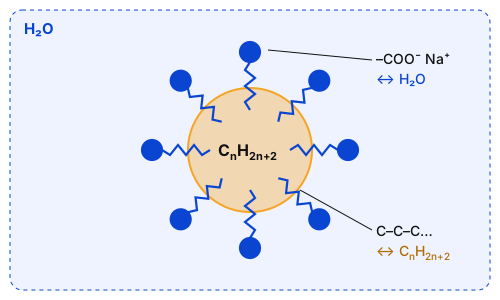
Q2076.
Hydrophobic end and hydrophilic end of soap molecule:
साबुन के अणु का जलविरागी (hydrophobic) सिरा और जलरागी (hydrophilic) सिरा:
  1. Ainteracts with hydrocarbons and interacts with base, respectivelyक्रमशः हाइड्रोकार्बन के साथ और क्षारक के साथ अन्योन्यक्रिया करते हैं
  2. Binteracts with water and interacts with hydrocarbons, respectivelyक्रमशः जल के साथ और हाइड्रोकार्बन के साथ अन्योन्यक्रिया करते हैं
  3. Cinteracts with hydrocarbons and interacts with water, respectivelyक्रमशः हाइड्रोकार्बन के साथ और जल के साथ अन्योन्यक्रिया करते हैं
  4. Dinteracts with water and interacts with acid, respectivelyक्रमशः जल के साथ और अम्ल के साथ अन्योन्यक्रिया करते हैं
Show answer

Concept: A soap molecule is a sodium salt of a long-chain fatty acid with two ends: a long hydrocarbon tail and an ionic head (−COO−Na+).

  1. Hydrophobic tail (water-hating) dissolves in hydrocarbons – oil/grease.
  2. Hydrophilic ionic head (water-loving) faces and interacts with water.
  3. Many molecules form a micelle: tails trap oily dirt inside, heads outside; rinsing water washes it away.

Yaad rakhein: Hydro-phobic = fears water → goes to oil; hydro-philic = loves water.

Answer: (C) interacts with hydrocarbons and interacts with water, respectively

अवधारणा: साबुन का अणु लंबी श्रृंखला वाले वसीय अम्ल का सोडियम लवण है जिसके दो सिरे हैं: लंबी हाइड्रोकार्बन पूँछ और आयनिक सिरा (−COO−Na+)।

  1. जलविरागी (हाइड्रोफोबिक) पूँछ हाइड्रोकार्बन – तेल/चिकनाई – में घुलती है।
  2. जलरागी (हाइड्रोफिलिक) आयनिक सिरा जल की ओर रहता है और जल से अन्योन्यक्रिया करता है।
  3. अनेक अणु मिसेल बनाते हैं: पूँछ अंदर तेलीय मैल को फँसाती है, सिरे बाहर; पानी से धोने पर मैल निकल जाता है।

याद रखें: जलविरागी = पानी से दूर → तेल की ओर; जलरागी = पानी पसंद।

उत्तर: (C) क्रमशः हाइड्रोकार्बन के साथ और जल के साथ अन्योन्यक्रिया करते हैं

RRB Technician Grade IIIGeneral ScienceCleansing action of soapRRB Technician Grade III 2024 · 23 Dec Shift 1 →
Q2077.
What is the value of 1 kWh in Joule(J)?
1 kWh का मान जूल (J) में कितना है?
  1. A3.6×105
  2. B3.6×10−5
  3. C3.6×106
  4. D3.6
Show answer

Concept: 1 kWh is the energy used by a 1000 W device in one hour; energy = power × time.

  1. 1 kW=1000 J/s, 1 h=3600 s.
  2. 1 kWh=1000×3600=3600000 J.
  3. =3.6×10⁶ J.

Yaad rakhein: 1 kWh=1 unit=3.6 MJ.

Answer: (C) 3.6×10⁶

अवधारणा: 1 kWh वह ऊर्जा है जो 1000 W का उपकरण एक घंटे में खर्च करता है; ऊर्जा = शक्ति × समय।

  1. 1 kW=1000 J/s, 1 h=3600 s।
  2. 1 kWh=1000×3600=3600000 J।
  3. =3.6×10⁶ J।

याद रखें: 1 kWh=1 यूनिट=3.6 MJ।

उत्तर: (C) 3.6×10⁶

RRB Technician Grade IIIGeneral ScienceCommercial unit of energyRRB Technician Grade III 2024 · 23 Dec Shift 1 →
Q2078.
Which of the following organisms is commonly referred to as bread mould?
निम्नलिखित में से किस जीव को सामान्यतः ब्रेड मोल्ड (रोटी का कवक) कहा जाता है?
  1. ASpirogyraस्पाइरोगाइरा
  2. BPlanariaप्लेनेरिया
  3. CRhizopusराइज़ोपस
  4. DYeastयीस्ट (खमीर)
Show answer

Concept: Rhizopus is a fungus that grows on moist bread as a white cottony mass with black dots – hence called bread mould.

  1. Thread-like hyphae spread over the bread; black dots are sporangia containing spores.
  2. Spirogyra is an alga, Planaria a flatworm, and yeast a unicellular fungus (used in baking, not the mould).

Yaad rakhein: Bread mould = Rhizopus; reproduces by spore formation.

Answer: (C) Rhizopus

अवधारणा: राइज़ोपस एक कवक है जो नम ब्रेड पर सफ़ेद रुई जैसे जाल और काले बिंदुओं के रूप में उगता है – इसलिए इसे ब्रेड मोल्ड कहते हैं।

  1. धागे जैसी कवक तंतु (हाइफ़ी) ब्रेड पर फैलती हैं; काले बिंदु बीजाणुधानी हैं जिनमें बीजाणु होते हैं।
  2. स्पाइरोगायरा एक शैवाल है, प्लेनेरिया चपटा कृमि और यीस्ट एककोशिकीय कवक (बेकिंग में प्रयुक्त, मोल्ड नहीं)।

याद रखें: ब्रेड मोल्ड = राइज़ोपस; बीजाणु निर्माण से प्रजनन।

उत्तर: (C) राइज़ोपस

RRB Technician Grade IIIGeneral ScienceFungi – RhizopusRRB Technician Grade III 2024 · 23 Dec Shift 1 →
Q2079.
In which simple multi-cellular organism does sporangia develop on hyphae and spore formation occurs in sporangia?
किस सरल बहुकोशिकीय जीव में कवक-तंतुओं (hyphae) पर बीजाणुधानी (sporangia) विकसित होती है और बीजाणुधानी में बीजाणु निर्माण होता है?
  1. AYeastयीस्ट (खमीर)
  2. BAmoebaअमीबा
  3. CLeishmaniaलीशमैनिया
  4. DRhizopusराइज़ोपस
Show answer

Concept: Spore formation is an asexual method in which sporangia produce many spores.

  1. In Rhizopus, thread-like hyphae bear knob-like sporangia.
  2. Sporangia contain spores that, released in moist conditions, grow into new Rhizopus.
  3. Yeast reproduces by budding; Amoeba and Leishmania by binary fission (and are unicellular).

Yaad rakhein: Spores → Rhizopus; budding → yeast/Hydra; binary fission → Amoeba/Leishmania.

Answer: (D) Rhizopus

अवधारणा: बीजाणु निर्माण एक अलैंगिक विधि है जिसमें बीजाणुधानी अनेक बीजाणु बनाती है।

  1. राइज़ोपस में धागे जैसी कवक तंतुओं पर घुंडी जैसी बीजाणुधानियाँ बनती हैं।
  2. इनमें बीजाणु होते हैं जो नमी मिलने पर नए राइज़ोपस में विकसित होते हैं।
  3. यीस्ट मुकुलन से, अमीबा और लीशमैनिया द्विविभाजन से प्रजनन करते हैं (और एककोशिकीय हैं)।

याद रखें: बीजाणु → राइज़ोपस; मुकुलन → यीस्ट/हाइड्रा; द्विविभाजन → अमीबा/लीशमैनिया।

उत्तर: (D) राइज़ोपस

RRB Technician Grade IIIGeneral ScienceSpore formationRRB Technician Grade III 2024 · 23 Dec Shift 1 →
Q2080.
The roots of a plant always grow downwards while the shoots usually grow upwards and away from the earth. This upward and downward growth of shoots and roots is known as:
पौधे की जड़ें सदैव नीचे की ओर वृद्धि करती हैं जबकि प्ररोह सामान्यतः ऊपर की ओर तथा पृथ्वी से दूर वृद्धि करते हैं। प्ररोह और जड़ों की इस ऊपर और नीचे की ओर होने वाली वृद्धि को क्या कहा जाता है?
  1. Ageotropismगुरुत्वानुवर्तन (geotropism)
  2. Bhydrotropismजलानुवर्तन (hydrotropism)
  3. Cphototropic movementप्रकाशानुवर्ती गति (phototropic movement)
  4. Dchemotropismरसायनानुवर्तन (chemotropism)
Show answer

Concept: Growth movement of a plant part in response to gravity is called geotropism (gravitropism).

  1. Roots grow towards gravity (downwards) → positively geotropic.
  2. Shoots grow away from gravity (upwards) → negatively geotropic.
  3. Hydro = water, photo = light, chemo = chemicals (e.g. pollen tube).

Yaad rakhein: Geo = earth (gravity). Root +ve geo, shoot +ve photo.

Answer: (A) geotropism

अवधारणा: गुरुत्व बल की प्रतिक्रिया में पौधे के भाग की वृद्धि गति को गुरुत्वानुवर्तन कहते हैं।

  1. जड़ें गुरुत्व की ओर (नीचे) बढ़ती हैं → धनात्मक गुरुत्वानुवर्ती।
  2. तने गुरुत्व से दूर (ऊपर) बढ़ते हैं → ऋणात्मक गुरुत्वानुवर्ती।
  3. जलानुवर्तन = जल, प्रकाशानुवर्तन = प्रकाश, रसायनानुवर्तन = रसायन (जैसे पराग नलिका)।

याद रखें: जियो = पृथ्वी (गुरुत्व)। जड़ धनात्मक गुरुत्वानुवर्ती, तना धनात्मक प्रकाशानुवर्ती।

उत्तर: (A) गुरुत्वानुवर्तन (geotropism)

RRB Technician Grade IIIGeneral ScienceTropic movements – geotropismRRB Technician Grade III 2024 · 23 Dec Shift 1 →