Question bank

Q&A: practice questions with answers

Search questions on any topic. Filter by exam category, exam, subject and topic, try the question, then open the answer and explanation.

Courses – airGurukul

3,200 questions found.

Q2141.
Refer to the given series and answer the question that follows (all numbers are single-digit numbers only, and all counting is to be done from left to right).
(Left) 5 3 0 3 5 7 7 9 4 4 8 3 5 0 2 0 9 5 1 9 2 8 5 4 6 3 2 8 1 5 (Right)
How many such odd digits are there, each of which is immediately preceded by an even digit and also immediately followed by an even digit?
दी गई श्रृंखला को देखिए और उसके बाद आने वाले प्रश्न का उत्तर दीजिए (सभी संख्याएँ केवल एक-अंकीय संख्याएँ हैं, और सभी गणना बाएँ से दाएँ की जानी है)।
(बाएँ) 5 3 0 3 5 7 7 9 4 4 8 3 5 0 2 0 9 5 1 9 2 8 5 4 6 3 2 8 1 5 (दाएँ)
ऐसे कितने विषम अंक हैं, जिनमें से प्रत्येक के ठीक पहले एक सम अंक है और ठीक बाद में भी एक सम अंक है?
  1. A4
  2. B3
  3. C2
  4. D0
Show answer

Concept: Look only at odd digits and check both neighbours are even.

  1. …8 5 4…: 5 has 8 before and 4 after ✓.
  2. …6 3 2…: 3 has 6 before and 2 after ✓.
  3. Every other odd digit has at least one odd neighbour (e.g. 0 3 5, 8 3 5, 0 9 5) → count =2.

Trick: Scan for the pattern even–odd–even in one pass; 0 counts as even.

Answer: (C) 2

अवधारणा: केवल विषम अंकों को देखें और जाँचें कि दोनों पड़ोसी सम हों।

  1. …8 5 4…: 5 के पहले 8, बाद में 4 ✓।
  2. …6 3 2…: 3 के पहले 6, बाद में 2 ✓।
  3. बाकी हर विषम अंक का कम से कम एक पड़ोसी विषम है (जैसे 0 3 5, 8 3 5, 0 9 5) → कुल 2।

ट्रिक: एक बार में सम–विषम–सम पैटर्न खोजें; 0 सम है।

उत्तर: (C) 2

RRB Technician Grade IIIGeneral Intelligence and ReasoningNumber Series – Odd/Even NeighboursRRB Technician Grade III 2024 · 20 Dec Shift 3 →
Q2142.
Based on the English alphabetical order, three of the following four letter-cluster pairs are alike in a certain way and thus form a group. Which pair does not belong to that group?
(Note: The odd one out is not based on the number of consonants/vowels or their position in the letter cluster.)
अंग्रेजी वर्णमाला क्रम के आधार पर, निम्नलिखित चार अक्षर-समूह युग्मों में से तीन किसी निश्चित प्रकार से एक समान हैं और इस प्रकार एक समूह बनाते हैं। कौन-सा युग्म उस समूह से संबंधित नहीं है?
(ध्यान दें: असंगत अक्षर-समूह, उस अक्षर-समूह में व्यंजनों/स्वरों की संख्या या उनके स्थान पर आधारित नहीं है।)
  1. AEI-MH
  2. BPT-XR
  3. CGK-OJ
  4. DNR-VQ
Show answer

Concept: Find the gaps: 1st→2nd letter, 2nd→3rd, 3rd→4th.

  1. EI-MH: E+4=I, I+4=M, M−5=H.
  2. GK-OJ: +4, +4, O−5=J ✓. NR-VQ: +4, +4, V−5=Q ✓.
  3. PT-XR: +4, +4, but X−6=R ✗ → odd.

Trick: The last letter should be one before the first letter's partner: H is just before I, J before K, Q before R — but R is not just before T.

Answer: (B) PT-XR

अवधारणा: अंतर देखें: 1→2, 2→3, 3→4 अक्षर।

  1. EI-MH: E+4=I, I+4=M, M−5=H।
  2. GK-OJ: +4, +4, O−5=J ✓। NR-VQ: +4, +4, V−5=Q ✓।
  3. PT-XR: +4, +4, पर X−6=R ✗ → विषम।

ट्रिक: अंतिम अक्षर दूसरे अक्षर से ठीक एक पहले होना चाहिए: I से पहले H, K से पहले J, R से पहले Q — पर T से पहले R नहीं।

उत्तर: (B) PT-XR

RRB Technician Grade IIIGeneral Intelligence and ReasoningOdd One Out – Letter PairsRRB Technician Grade III 2024 · 20 Dec Shift 3 →
Q2143.
In a certain code language, 'morning sun rises' is coded as 'xyq tdj zat', and 'sun rises brightly' is coded as 'tdj zat rfp'. What is the code for 'morning' in the given code language?
एक निश्चित कूट भाषा में, 'morning sun rises' को 'xyq tdj zat' के रूप में कूटबद्ध किया जाता है, और 'sun rises brightly' को 'tdj zat rfp' के रूप में कूटबद्ध किया जाता है। दी गई कूट भाषा में 'morning' के लिए कूट क्या है?
  1. Azat
  2. Brfp
  3. Cxyq
  4. Dtdj
Show answer

Concept: Common words in two sentences have common codes.

  1. 'sun rises' is common → codes 'tdj zat'.
  2. Sentence 1 is left with 'morning' and code 'xyq'.
  3. So morning = xyq.

Trick: Strike out the common codes; the leftover code in that sentence is the answer.

Answer: (C) xyq

अवधारणा: दोनों वाक्यों के समान शब्दों के कोड समान होते हैं।

  1. 'sun rises' दोनों में → कोड 'tdj zat'।
  2. वाक्य 1 में बचा 'morning' और कोड 'xyq'।
  3. अतः morning = xyq।

ट्रिक: समान कोड काट दें; उस वाक्य का बचा कोड ही उत्तर है।

उत्तर: (C) xyq

RRB Technician Grade IIIGeneral Intelligence and ReasoningCoding–DecodingRRB Technician Grade III 2024 · 20 Dec Shift 3 →
Q2144.
Given below is a statement followed by two possible reasons numbered I and II. Read the statement carefully and decide which of the two explain(s) the event/observation/information given in the statement.
Statement - Even though the students of school X have ranked among the top three in board exams for the past three years, the school has never received the best school award.
Reasons:
I. School X has high tuition fees.
II. The best school award takes into consideration other activities along with academics.
नीचे एक कथन और उसके बाद I और II क्रमांकित दो संभावित कारण दिए गए हैं। कथन को ध्यानपूर्वक पढ़िए और निर्णय कीजिए कि दोनों में से कौन-सा/से कारण कथन में दी गई घटना/अवलोकन/सूचना की व्याख्या करता/करते है/हैं।
कथन - यद्यपि विद्यालय X के छात्र पिछले तीन वर्षों से बोर्ड परीक्षाओं में शीर्ष तीन में स्थान प्राप्त करते रहे हैं, फिर भी विद्यालय को कभी सर्वश्रेष्ठ विद्यालय पुरस्कार नहीं मिला है।
कारण:
I. विद्यालय X की ट्यूशन फीस अधिक है।
II. सर्वश्रेष्ठ विद्यालय पुरस्कार में शैक्षणिक प्रदर्शन के साथ-साथ अन्य गतिविधियों को भी ध्यान में रखा जाता है।
  1. ANeither I nor II is a possible reason.न तो I और न ही II संभावित कारण है।
  2. BOnly I is a possible reason.केवल I संभावित कारण है।
  3. COnly II is a possible reason.केवल II संभावित कारण है।
  4. DBoth I and II are possible reasons.I और II दोनों संभावित कारण हैं।
Show answer

Concept: A valid reason must explain why top academic results still did not bring the award.

  1. I: High fees have no link with the selection of the best school → not a reason.
  2. II: If the award also judges non-academic activities, a school strong only in academics can miss it → explains the event.

Trick: Choose the reason that directly bridges the gap in the statement (academics good, award missing).

Answer: (C) Only II is a possible reason.

अवधारणा: सही कारण वह है जो बताए कि शीर्ष शैक्षिक परिणाम के बावजूद पुरस्कार क्यों नहीं मिला।

  1. I: अधिक फीस का सर्वश्रेष्ठ विद्यालय चयन से कोई संबंध नहीं → कारण नहीं।
  2. II: यदि पुरस्कार में पढ़ाई के साथ अन्य गतिविधियाँ भी देखी जाती हैं, तो केवल पढ़ाई में अच्छा विद्यालय चूक सकता है → घटना स्पष्ट करता है।

ट्रिक: वही कारण चुनें जो कथन के अंतर (पढ़ाई अच्छी, पुरस्कार नहीं) को सीधे जोड़े।

उत्तर: (C) केवल II संभावित कारण है।

RRB Technician Grade IIIGeneral Intelligence and ReasoningStatement and ReasonsRRB Technician Grade III 2024 · 20 Dec Shift 3 →
Q2145.
In the following number-pairs, the second number is obtained by applying certain mathematical operations to the first number. Which numbers should replace X and Y so that the pattern followed by the two numbers on the left side of :: is the same as that on the right side of ::?
(NOTE: Operations should be performed on the whole numbers, without breaking down the numbers into its constituent digits. E.g. 13 - Operations on 13 such as adding/subtracting/multiplying etc. to 13 can be performed. Breaking down 13 into 1 and 3 and then performing mathematical operations on 1 and 3 is not allowed.)
X : 27 :: 15 : Y
निम्नलिखित संख्या-युग्मों में, पहली संख्या पर कुछ गणितीय संक्रियाएँ करके दूसरी संख्या प्राप्त की जाती है। X और Y को किन संख्याओं से प्रतिस्थापित किया जाना चाहिए ताकि :: के बाईं ओर की दोनों संख्याओं द्वारा अपनाया गया पैटर्न वही हो जो :: के दाईं ओर है?
(ध्यान दें: संक्रियाएँ पूर्ण संख्याओं पर की जानी चाहिए, संख्याओं को उनके घटक अंकों में विभाजित किए बिना। उदाहरण: 13 - 13 पर संक्रियाएँ जैसे 13 में जोड़ना/घटाना/गुणा करना आदि किया जा सकता है। 13 को 1 और 3 में विभाजित करना और फिर 1 और 3 पर गणितीय संक्रियाएँ करना वर्जित है।)
X : 27 :: 15 : Y
  1. AX = 11, Y = 35
  2. BX = 17, Y = 38
  3. CX = 17, Y = 35
  4. DX = 11, Y = 37
Show answer

Concept: Test each option to find one rule that fits both pairs.

  1. Option A: 11×2+5=27 and 15×2+5=35 ✓
  2. Option C: 17→27 means +10, but 15+10=25≠35 ✗
  3. Option D: 11→27 needs ×2+5, giving 35≠37 ✗

Trick: Rule: n→2n+5.

Answer: (A) X = 11, Y = 35

अवधारणा: प्रत्येक विकल्प जाँचें, ऐसा एक नियम खोजें जो दोनों युग्मों पर लागू हो।

  1. विकल्प A: 11×2+5=27 और 15×2+5=35 ✓
  2. विकल्प C: 17→27 यानी +10, पर 15+10=25≠35 ✗
  3. विकल्प D: 11→27 में ×2+5, जिससे 35≠37 ✗

ट्रिक: नियम: n→2n+5।

उत्तर: (A) X = 11, Y = 35

RRB Technician Grade IIIGeneral Intelligence and ReasoningNumber AnalogyRRB Technician Grade III 2024 · 20 Dec Shift 3 →
Q2146.
Refer to the given number and symbol series and answer the question that follows. Counting to be done from left to right only.
(Left) 5 3 @ # 1 & 9 + Ω 6 £ * $ 2 % 8 4 7 (Right)
How many such numbers are there, each of which is immediately preceded by a symbol and also immediately followed by another symbol?
दी गई संख्या और प्रतीक श्रृंखला को देखिए और उसके बाद आने वाले प्रश्न का उत्तर दीजिए। गणना केवल बाएँ से दाएँ की जानी है।
(बाएँ) 5 3 @ # 1 & 9 + Ω 6 £ * $ 2 % 8 4 7 (दाएँ)
ऐसी कितनी संख्याएँ हैं, जिनमें से प्रत्येक के ठीक पहले एक प्रतीक है और ठीक बाद में भी एक अन्य प्रतीक है?
  1. A1
  2. B2
  3. C0
  4. D4
Show answer

Concept: Check each number: the element just before and just after must both be symbols.

  1. # 1 & → ✓; & 9 + → ✓
  2. Ω 6 £ → ✓; $ 2 % → ✓
  3. 8 (after % but before 4), 5,3,4,7 fail → total 4.

Trick: Underline numbers sandwiched between two symbols; ignore ones touching another number or the ends.

Answer: (D) 4

अवधारणा: हर संख्या जाँचें: उसके ठीक पहले और ठीक बाद दोनों प्रतीक होने चाहिए।

  1. # 1 & → ✓; & 9 + → ✓
  2. Ω 6 £ → ✓; $ 2 % → ✓
  3. 8 (% के बाद पर 4 से पहले), 5,3,4,7 नहीं → कुल 4।

ट्रिक: दो प्रतीकों के बीच फँसी संख्याएँ रेखांकित करें; किसी संख्या या सिरे से सटी संख्याएँ छोड़ दें।

उत्तर: (D) 4

RRB Technician Grade IIIGeneral Intelligence and ReasoningSymbol–Number SeriesRRB Technician Grade III 2024 · 20 Dec Shift 3 →
Q2147.
Which of the following options should come in place of the question mark (?) in the given series based on the English alphabetical order?
DGJ, LOR, TWZ, BEH, ?
अंग्रेजी वर्णमाला क्रम के आधार पर, दी गई श्रृंखला में प्रश्न चिह्न (?) के स्थान पर निम्नलिखित में से कौन-सा विकल्प आना चाहिए?
DGJ, LOR, TWZ, BEH, ?
  1. AJMP
  2. BJLN
  3. CKNQ
  4. DKMO
Show answer

Concept: Compare corresponding letters of consecutive terms.

  1. D→L, G→O, J→R: each +8.
  2. LOR→TWZ→BEH: each +8 (wrapping after Z).
  3. BEH +8 → JMP.

Trick: Inside each term letters go +3; so B+8=J gives JMP directly.

Answer: (A) JMP

अवधारणा: क्रमागत पदों के संगत अक्षरों की तुलना करें।

  1. D→L, G→O, J→R: प्रत्येक +8।
  2. LOR→TWZ→BEH: प्रत्येक +8 (Z के बाद फिर A)।
  3. BEH +8 → JMP।

ट्रिक: हर पद के अंदर +3; अतः B+8=J से सीधे JMP।

उत्तर: (A) JMP

RRB Technician Grade IIIGeneral Intelligence and ReasoningLetter SeriesRRB Technician Grade III 2024 · 20 Dec Shift 3 →
Q2148.
Which of the following options should come in place of the question mark (?) in the given series to make it logically complete?
33, 41, 57, 89, 153, ?
दी गई श्रृंखला को तार्किक रूप से पूर्ण करने के लिए प्रश्न चिह्न (?) के स्थान पर निम्नलिखित में से कौन-सा विकल्प आना चाहिए?
33, 41, 57, 89, 153, ?
  1. A269
  2. B297
  3. C253
  4. D281
Show answer

Concept: Find the differences between consecutive terms.

  1. Differences: 8,16,32,64 — doubling each time.
  2. Next difference =128
  3. 153+128=281

Trick: Differences are 23,24,25,… → next is 27.

Answer: (D) 281

अवधारणा: क्रमागत पदों का अंतर निकालें।

  1. अंतर: 8,16,32,64 — हर बार दुगुना।
  2. अगला अंतर =128
  3. 153+128=281

ट्रिक: अंतर 23,24,25,… → अगला 27।

उत्तर: (D) 281

RRB Technician Grade IIIGeneral Intelligence and ReasoningNumber SeriesRRB Technician Grade III 2024 · 20 Dec Shift 3 →
Q2149.
Read the given statements and conclusions carefully. You have to take the given statements to be true even if they seem to be at variance from commonly known facts and decide which conclusion(s) logically follow(s) from the given statements.
Statements:
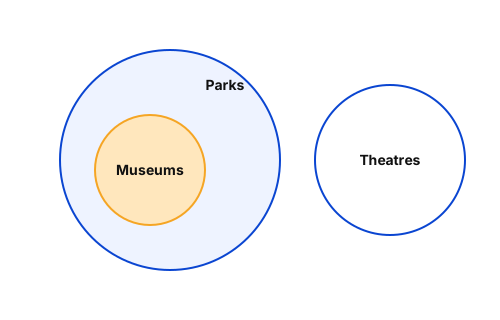
All museums are parks.
No park is a theatre.
Conclusions:
(I) No museum is a theatre.
(II) At least some parks are museums.
दिए गए कथनों और निष्कर्षों को ध्यानपूर्वक पढ़िए। आपको दिए गए कथनों को सत्य मानना है, भले ही वे सामान्यतः ज्ञात तथ्यों से भिन्न प्रतीत होते हों, और निर्णय कीजिए कि कौन-सा/से निष्कर्ष दिए गए कथनों का तार्किक रूप से अनुसरण करता/करते है/हैं।
कथन:
सभी संग्रहालय, पार्क हैं।
कोई भी पार्क, थिएटर नहीं है।
निष्कर्ष:
(I) कोई भी संग्रहालय, थिएटर नहीं है।
(II) कम से कम कुछ पार्क, संग्रहालय हैं।
  1. AOnly conclusion I followsकेवल निष्कर्ष I अनुसरण करता है
  2. BBoth conclusions I and II followनिष्कर्ष I और II दोनों अनुसरण करते हैं
  3. CNeither conclusion I nor II followsन तो निष्कर्ष I और न ही II अनुसरण करता है
  4. DOnly conclusion II followsकेवल निष्कर्ष II अनुसरण करता है
Show answer

Concept: Venn diagram: Museums circle inside Parks; Theatres completely outside Parks.

  1. I: Museums lie wholly inside Parks, and Parks never touch Theatres → No museum is a theatre → follows.
  2. II: 'All museums are parks' converts to 'Some parks are museums' → follows.

Yaad rakhein: All A are B + No B is C ⇒ No A is C; and 'All A are B' always gives 'Some B are A'.

Answer: (B) Both conclusions I and II follow

अवधारणा: वेन आरेख: संग्रहालय का वृत्त पार्क के अंदर; थिएटर पार्क से पूरी तरह बाहर।

  1. I: संग्रहालय पूरी तरह पार्क में हैं और पार्क थिएटर को नहीं छूते → कोई संग्रहालय थिएटर नहीं → अनुसरण करता है।
  2. II: 'सभी संग्रहालय पार्क हैं' का विलोम 'कुछ पार्क संग्रहालय हैं' → अनुसरण करता है।

याद रखें: सभी A, B हैं + कोई B, C नहीं ⇒ कोई A, C नहीं; और 'सभी A, B हैं' से हमेशा 'कुछ B, A हैं'।

उत्तर: (B) निष्कर्ष I और II दोनों अनुसरण करते हैं

RRB Technician Grade IIIGeneral Intelligence and ReasoningSyllogismRRB Technician Grade III 2024 · 20 Dec Shift 3 →
Q2150.
In the following number-pairs, the second number is obtained by applying certain mathematical operations to the first number. Which numbers should replace X and Y so that the pattern followed by the two numbers on the left side of :: is the same as that on the right side of ::?
(NOTE: Operations should be performed on the whole numbers, without breaking down the numbers into its constituent digits. E.g. 13 - Operations on 13 such as adding/subtracting/multiplying etc. to 13 can be performed. Breaking down 13 into 1 and 3 and then performing mathematical operations on 1 and 3 is not allowed.)
X : 84 :: 11 : Y
निम्नलिखित संख्या-युग्मों में, पहली संख्या पर कुछ गणितीय संक्रियाएँ करके दूसरी संख्या प्राप्त की जाती है। X और Y को किन संख्याओं से प्रतिस्थापित किया जाना चाहिए ताकि :: के बाईं ओर की दोनों संख्याओं द्वारा अपनाया गया पैटर्न वही हो जो :: के दाईं ओर है?
(ध्यान दें: संक्रियाएँ पूर्ण संख्याओं पर की जानी चाहिए, संख्याओं को उनके घटक अंकों में विभाजित किए बिना। उदाहरण: 13 - 13 पर संक्रियाएँ जैसे 13 में जोड़ना/घटाना/गुणा करना आदि किया जा सकता है। 13 को 1 और 3 में विभाजित करना और फिर 1 और 3 पर गणितीय संक्रियाएँ करना वर्जित है।)
X : 84 :: 11 : Y
  1. AX = 6, Y = 153
  2. BX = 7, Y = 154
  3. CX = 6, Y = 152
  4. DX = 6, Y = 154
Show answer

Concept: Test the options to find one rule fitting both pairs.

  1. X=6: 6×14=84
  2. Same rule: 11×14=154
  3. So X=6, Y=154 (options with 153 or 152 break the rule; 7→84 is ×12, giving 132)

Trick: Rule: n→14n.

Answer: (D) X = 6, Y = 154

अवधारणा: विकल्प जाँचकर ऐसा नियम खोजें जो दोनों युग्मों पर लागू हो।

  1. X=6: 6×14=84
  2. वही नियम: 11×14=154
  3. अतः X=6, Y=154 (153 या 152 नियम तोड़ते हैं; 7→84 में ×12, जिससे 132)

ट्रिक: नियम: n→14n।

उत्तर: (D) X = 6, Y = 154

RRB Technician Grade IIIGeneral Intelligence and ReasoningNumber AnalogyRRB Technician Grade III 2024 · 20 Dec Shift 3 →
Q2151.
What will be the effect of surface area on the evaporation process?
वाष्पीकरण (evaporation) की प्रक्रिया पर पृष्ठीय क्षेत्रफल का क्या प्रभाव पड़ेगा?
  1. AEvaporation decreases with increase in surface area.पृष्ठीय क्षेत्रफल में वृद्धि के साथ वाष्पीकरण घटता है।
  2. BEvaporation increases with decrease in surface area.पृष्ठीय क्षेत्रफल में कमी के साथ वाष्पीकरण बढ़ता है।
  3. CEvaporation increases with increase in surface area.पृष्ठीय क्षेत्रफल में वृद्धि के साथ वाष्पीकरण बढ़ता है।
  4. DNo effect of surface area on evaporation process.वाष्पीकरण प्रक्रिया पर पृष्ठीय क्षेत्रफल का कोई प्रभाव नहीं पड़ता।
Show answer

Concept: Evaporation is a surface phenomenon – only particles at the surface escape into the air.

  1. Larger surface area → more particles exposed at the surface.
  2. More exposed particles → more of them escape per second.
  3. So the rate of evaporation increases with surface area (e.g. clothes are spread out to dry).

Yaad rakhein: Evaporation ↑ with surface area, temperature and wind speed; ↓ with humidity.

Answer: (C) Evaporation increases with increase in surface area.

अवधारणा: वाष्पीकरण एक सतही प्रक्रिया है – केवल सतह के कण ही हवा में निकलते हैं।

  1. सतह का क्षेत्रफल बड़ा → अधिक कण सतह पर।
  2. अधिक कण सतह पर → प्रति सेकंड अधिक कण वाष्पित।
  3. इसलिए क्षेत्रफल बढ़ने पर वाष्पीकरण बढ़ता है (जैसे कपड़े फैलाकर सुखाते हैं)।

याद रखें: वाष्पीकरण ↑ : क्षेत्रफल, ताप, हवा की गति; ↓ : आर्द्रता।

उत्तर: (C) पृष्ठीय क्षेत्रफल में वृद्धि के साथ वाष्पीकरण बढ़ता है।

RRB Technician Grade IIIGeneral ScienceEvaporationRRB Technician Grade III 2024 · 20 Dec Shift 3 →
Q2152.
Who was the first to use a glass prism to obtain a spectrum of sunlight?
सूर्य के प्रकाश का स्पेक्ट्रम प्राप्त करने के लिए काँच के प्रिज़्म का उपयोग करने वाले पहले व्यक्ति कौन थे?
  1. AIsaac Newtonआइज़क न्यूटन
  2. BFermiफर्मी
  3. CEinsteinआइंस्टीन
  4. DEdisonएडिसन
Show answer

Concept: When white light passes through a glass prism it splits into seven colours (VIBGYOR) – this is dispersion.

  1. Isaac Newton was the first to use a glass prism to obtain the spectrum of sunlight.
  2. He then placed a second, inverted prism and recombined the colours into white light.
  3. This proved that sunlight is made of seven colours.

Yaad rakhein: Newton – prism and spectrum; Raman – scattering of light.

Answer: (A) Isaac Newton

अवधारणा: श्वेत प्रकाश काँच के प्रिज्म से गुजरकर सात रंगों (VIBGYOR) में बँट जाता है – इसे विक्षेपण कहते हैं।

  1. सूर्य के प्रकाश का स्पेक्ट्रम पाने के लिए प्रिज्म का सबसे पहले प्रयोग आइज़ैक न्यूटन ने किया।
  2. उन्होंने दूसरा उल्टा प्रिज्म रखकर रंगों को फिर से श्वेत प्रकाश में मिला दिया।
  3. इससे सिद्ध हुआ कि सूर्य का प्रकाश सात रंगों से बना है।

याद रखें: न्यूटन – प्रिज्म व स्पेक्ट्रम; रमन – प्रकाश का प्रकीर्णन।

उत्तर: (A) आइज़क न्यूटन

RRB Technician Grade IIIGeneral ScienceDispersion of lightRRB Technician Grade III 2024 · 20 Dec Shift 3 →
Q2153.
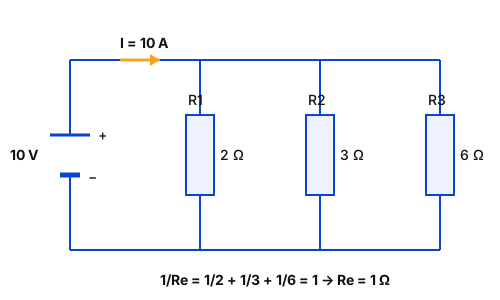
In a circuit, a 10 volt battery and three resistors R1=2 Ω, R2=3 Ω, and R3=6 Ω are connected in parallel to each other. Which of the following is the correct value of effective resistance Re and current I flowing through the circuit?
एक परिपथ में, एक 10 वोल्ट की बैटरी और तीन प्रतिरोधक R1=2 Ω, R2=3 Ω और R3=6 Ω एक-दूसरे से पार्श्वक्रम (parallel) में जुड़े हैं। निम्नलिखित में से कौन-सा प्रभावी प्रतिरोध Re और परिपथ में प्रवाहित धारा I का सही मान है?
  1. ARe=2 Ω,I=1 A
  2. BRe=1 Ω,I=1 A
  3. CRe=2 Ω,I=10 A
  4. DRe=1 Ω,I=10 A
Show answer

Concept: For resistors in parallel, 1Re=1R1+1R2+1R3, and current I=VRe (Ohm\'s law).

  1. 1Re=12+13+16=3+2+16=1
  2. Re=1 Ω
  3. I=VRe=101=10 A

Trick: Parallel Re is always smaller than the smallest resistor (<2 Ω) – only options with 1 Ω survive; then I=10 A.

Answer: (D) Re=1 Ω,I=10 A

अवधारणा: समानांतर क्रम में 1Re=1R1+1R2+1R3 तथा ओम के नियम से I=VRe।

  1. 1Re=12+13+16=3+2+16=1
  2. Re=1 Ω
  3. I=VRe=101=10 A

ट्रिक: समानांतर में Re सबसे छोटे प्रतिरोध से भी कम होता है (<2 Ω) – अतः 1 Ω वाले विकल्प ही बचते हैं; फिर I=10 A।

उत्तर: (D) Re=1 Ω,I=10 A

RRB Technician Grade IIIGeneral ScienceResistors in parallelRRB Technician Grade III 2024 · 20 Dec Shift 3 →
Q2154.
Which of the following connects the kidney with the urinary bladder?
निम्नलिखित में से कौन वृक्क (kidney) को मूत्राशय (urinary bladder) से जोड़ता है?
  1. APelvisश्रोणि (Pelvis)
  2. BPenisशिश्न (Penis)
  3. CUreterमूत्रवाहिनी (Ureter)
  4. DUrethraमूत्रमार्ग (Urethra)
Show answer

Concept: The excretory system has: kidneys → ureters → urinary bladder → urethra.

  1. Kidneys filter blood and form urine.
  2. A pair of ureters carries urine from each kidney to the urinary bladder.
  3. The bladder stores urine; the urethra carries it out of the body.

Yaad rakhein: UreTER = kidney To bladder; urethRA = bladder to outside.

Answer: (C) Ureter

अवधारणा: उत्सर्जन तंत्र: वृक्क → मूत्रवाहिनी (ureter) → मूत्राशय → मूत्रमार्ग (urethra)।

  1. वृक्क रक्त को छानकर मूत्र बनाते हैं।
  2. मूत्रवाहिनी (ureter) मूत्र को वृक्क से मूत्राशय तक ले जाती है।
  3. मूत्राशय मूत्र जमा करता है; मूत्रमार्ग उसे शरीर से बाहर निकालता है।

याद रखें: Ureter = वृक्क से मूत्राशय; Urethra = मूत्राशय से बाहर।

उत्तर: (C) मूत्रवाहिनी (Ureter)

RRB Technician Grade IIIGeneral ScienceHuman excretory systemRRB Technician Grade III 2024 · 20 Dec Shift 3 →
Q2155.
What is the chemical composition of washing soda?
धावन सोडा (washing soda) का रासायनिक संघटन क्या है?
  1. AAl2(CO3)3.10H2O
  2. BNa2SO4.10H2O
  3. CAl2(SO4)3.10H2O
  4. DNa2CO3.10H2O
Show answer

Concept: Washing soda is hydrated sodium carbonate with 10 molecules of water of crystallisation.

  1. Washing soda = Na2CO3·10H2O.
  2. Na2SO4·10H2O is Glauber\'s salt, not washing soda.
  3. Aluminium compounds (options A, C) are not washing soda.

Yaad rakhein: Washing soda Na2CO3·10H2O; baking soda NaHCO3; gypsum CaSO4·2H2O.

Answer: (D) Na2CO3.10H2O

अवधारणा: धोने का सोडा सोडियम कार्बोनेट है जिसमें क्रिस्टलन जल के 10 अणु होते हैं।

  1. धोने का सोडा = Na2CO3·10H2O।
  2. Na2SO4·10H2O ग्लॉबर लवण है, धोने का सोडा नहीं।
  3. विकल्प A व C ऐलुमिनियम यौगिक हैं।

याद रखें: धोने का सोडा Na2CO3·10H2O; खाने का सोडा NaHCO3; जिप्सम CaSO4·2H2O।

उत्तर: (D) Na2CO3.10H2O

RRB Technician Grade IIIGeneral ScienceWashing sodaRRB Technician Grade III 2024 · 20 Dec Shift 3 →
Q2156.
In which of the following organisms is fragmentation common?
निम्नलिखित में से किन जीवों में खंडन (fragmentation) सामान्य है?
  1. AOnly in few unicellular organismsकेवल कुछ एककोशिकीय जीवों में
  2. BOnly a few multicellular organismsकेवल कुछ बहुकोशिकीय जीवों में
  3. CIn all multicellular organismsसभी बहुकोशिकीय जीवों में
  4. DIn all unicellular organismsसभी एककोशिकीय जीवों में
Show answer

Concept: In fragmentation, a simple multicellular organism breaks into pieces and each piece grows into a new individual.

  1. It needs a body made of many cells – so it does not occur in unicellular organisms.
  2. Complex multicellular organisms (like humans) cannot reproduce this way.
  3. So it is seen only in a few simple multicellular organisms, e.g. Spirogyra.

Yaad rakhein: Fragmentation – Spirogyra; budding – Hydra, yeast; binary fission – Amoeba.

Answer: (B) Only a few multicellular organisms

अवधारणा: खंडन में सरल बहुकोशिकीय जीव टुकड़ों में टूट जाता है और हर टुकड़ा नया जीव बन जाता है।

  1. इसके लिए अनेक कोशिकाओं वाला शरीर चाहिए – अतः एककोशिकीय जीवों में नहीं होता।
  2. जटिल बहुकोशिकीय जीव (जैसे मनुष्य) इस विधि से जनन नहीं करते।
  3. अतः यह केवल कुछ सरल बहुकोशिकीय जीवों में होता है, जैसे स्पाइरोगाइरा।

याद रखें: खंडन – स्पाइरोगाइरा; मुकुलन – हाइड्रा, यीस्ट; द्विखंडन – अमीबा।

उत्तर: (B) केवल कुछ बहुकोशिकीय जीवों में

RRB Technician Grade IIIGeneral ScienceAsexual reproduction – fragmentationRRB Technician Grade III 2024 · 20 Dec Shift 3 →
Q2157.
Which of the following grows rapidly and ripens to form a fruit?
निम्नलिखित में से कौन तेजी से वृद्धि करता है और पककर फल बनाता है?
  1. AAntherपरागकोश (Anther)
  2. BStigmaवर्तिकाग्र (Stigma)
  3. COvaryअंडाशय (Ovary)
  4. DPollen tubeपराग नलिका (Pollen tube)
Show answer

Concept: After fertilisation, different parts of the flower change into seed and fruit.

  1. The fertilised ovule (zygote inside) develops into the seed.
  2. The ovary grows rapidly and ripens to form the fruit.
  3. Petals, sepals, stamens and style usually wither and fall off.

Yaad rakhein: Ovule → seed; ovary → fruit; ovary wall → fruit wall (pericarp).

Answer: (C) Ovary

अवधारणा: निषेचन के बाद पुष्प के विभिन्न भाग बीज और फल में बदलते हैं।

  1. निषेचित बीजांड (ovule) बीज बनता है।
  2. अंडाशय (ovary) तेजी से बढ़कर पकता है और फल बनाता है।
  3. पंखुड़ियाँ, बाह्यदल, पुंकेसर व वर्तिका प्रायः मुरझाकर गिर जाते हैं।

याद रखें: बीजांड → बीज; अंडाशय → फल; अंडाशय भित्ति → फलभित्ति।

उत्तर: (C) अंडाशय (Ovary)

RRB Technician Grade IIIGeneral ScienceFertilisation in flowersRRB Technician Grade III 2024 · 20 Dec Shift 3 →
Q2158.
Which of the following metals reacts only with steam NOT with cold or hot water?
निम्नलिखित में से कौन-सी धातु केवल भाप के साथ अभिक्रिया करती है, ठंडे या गर्म जल के साथ नहीं?
  1. AAluminiumऐलुमिनियम
  2. BMagnesiumमैग्नीशियम
  3. CPotassiumपोटैशियम
  4. DSodiumसोडियम
Show answer

Concept: Reactivity with water falls down the reactivity series.

  1. Sodium and potassium react violently even with cold water.
  2. Magnesium reacts with hot water.
  3. Aluminium, iron and zinc react neither with cold nor hot water – only with steam, forming metal oxide and hydrogen.

Yaad rakhein: Cold water: K, Na, Ca; hot water: Mg; steam: Al, Zn, Fe; no reaction: Pb, Cu, Ag, Au.

Answer: (A) Aluminium

अवधारणा: जल के साथ अभिक्रियाशीलता सक्रियता श्रेणी में नीचे जाने पर घटती है।

  1. सोडियम व पोटैशियम ठंडे जल से ही तीव्र अभिक्रिया करते हैं।
  2. मैग्नीशियम गर्म जल से अभिक्रिया करता है।
  3. ऐलुमिनियम, आयरन व जिंक न ठंडे न गर्म जल से – केवल भाप से अभिक्रिया कर धातु ऑक्साइड व हाइड्रोजन बनाते हैं।

याद रखें: ठंडा जल: K, Na, Ca; गर्म जल: Mg; भाप: Al, Zn, Fe; कोई अभिक्रिया नहीं: Pb, Cu, Ag, Au।

उत्तर: (A) ऐलुमिनियम

RRB Technician Grade IIIGeneral ScienceReaction of metals with waterRRB Technician Grade III 2024 · 20 Dec Shift 3 →
Q2159.
The main thinking part of the brain that receives sensory impulses from various receptors is the:
मस्तिष्क का मुख्य सोचने वाला भाग, जो विभिन्न ग्राहियों (receptors) से संवेदी आवेग प्राप्त करता है, कौन-सा है?
  1. Ahind-brainपश्चमस्तिष्क (hind-brain)
  2. Bfore-brainअग्रमस्तिष्क (fore-brain)
  3. Cspinal cordमेरुरज्जु (spinal cord)
  4. Dmid-brainमध्यमस्तिष्क (mid-brain)
Show answer

Concept: The brain has three parts – fore-brain, mid-brain and hind-brain.

  1. The fore-brain (cerebrum) is the main thinking part.
  2. It has areas that receive sensory impulses from receptors (sight, hearing, smell etc.).
  3. Mid-brain and hind-brain mostly control involuntary actions (reflexes of eye, heartbeat, balance).

Yaad rakhein: Thinking, memory, intelligence → fore-brain (cerebrum); balance/posture → cerebellum (hind-brain).

Answer: (B) fore-brain

अवधारणा: मस्तिष्क के तीन भाग हैं – अग्रमस्तिष्क, मध्यमस्तिष्क और पश्चमस्तिष्क।

  1. अग्रमस्तिष्क (प्रमस्तिष्क) सोचने वाला मुख्य भाग है।
  2. इसमें ग्राही (receptors) से संवेदी आवेग प्राप्त करने वाले क्षेत्र होते हैं।
  3. मध्य व पश्च मस्तिष्क अधिकतर अनैच्छिक क्रियाएँ (आँख की प्रतिवर्ती क्रिया, हृदय गति, संतुलन) नियंत्रित करते हैं।

याद रखें: सोचना, स्मृति, बुद्धि → अग्रमस्तिष्क; संतुलन → अनुमस्तिष्क (पश्चमस्तिष्क)।

उत्तर: (B) अग्रमस्तिष्क (fore-brain)

RRB Technician Grade IIIGeneral ScienceHuman brainRRB Technician Grade III 2024 · 20 Dec Shift 3 →
Q2160.
Select the correct option related to the function of villi in the small intestine.
छोटी आँत में दीर्घरोमों (villi) के कार्य से संबंधित सही विकल्प का चयन करें।
  1. AProtection from acidअम्ल से सुरक्षा
  2. BSecretion of mineralsखनिजों का स्रावण
  3. CIncreases absorptive surface areaअवशोषण के लिए सतही क्षेत्रफल बढ़ाते हैं
  4. DHelps in excretionउत्सर्जन में सहायता करते हैं
Show answer

Concept: Villi are finger-like projections on the inner wall of the small intestine.

  1. They greatly increase the surface area of the intestinal wall.
  2. They are rich in blood vessels, which take the digested food to every cell.
  3. So their function is to increase the absorptive surface area.

Yaad rakhein: Villi in intestine = absorption; alveoli in lungs = gas exchange – both increase surface area.

Answer: (C) Increases absorptive surface area

अवधारणा: दीर्घरोम (villi) छोटी आँत की भीतरी दीवार पर उँगली जैसे उभार हैं।

  1. ये आँत की दीवार का सतही क्षेत्रफल बहुत बढ़ा देते हैं।
  2. इनमें रक्त वाहिकाएँ अधिक होती हैं जो पचा भोजन कोशिकाओं तक पहुँचाती हैं।
  3. अतः इनका कार्य अवशोषण के लिए सतह का क्षेत्रफल बढ़ाना है।

याद रखें: आँत में दीर्घरोम = अवशोषण; फेफड़ों में कूपिकाएँ = गैस विनिमय – दोनों क्षेत्रफल बढ़ाते हैं।

उत्तर: (C) अवशोषण के लिए सतही क्षेत्रफल बढ़ाते हैं

RRB Technician Grade IIIGeneral ScienceVilli in small intestineRRB Technician Grade III 2024 · 20 Dec Shift 3 →