Question bank

Q&A: practice questions with answers

Search questions on any topic. Filter by exam category, exam, subject and topic, try the question, then open the answer and explanation.

Courses – airGurukul

3,200 questions found.

Q2161.
Who developed the planetary model of the atom with electrons orbiting the nucleus in discrete energy levels?
परमाणु का ग्रहीय मॉडल, जिसमें इलेक्ट्रॉन नाभिक के चारों ओर विविक्त ऊर्जा स्तरों में परिक्रमा करते हैं, किसने विकसित किया?
  1. AErnest Rutherfordअर्नेस्ट रदरफोर्ड
  2. BJ.J. Thomson (Joseph John Thomson)जे.जे. थॉमसन (जोसेफ जॉन थॉमसन)
  3. CNiels Bohrनील्स बोर
  4. DDmitri Mendeleevदमित्री मेंडेलीव
Show answer

Concept: Different scientists gave different models of the atom.

  1. Thomson – plum-pudding model.
  2. Rutherford – nucleus at the centre, electrons revolving around it (but could not explain stability).
  3. Niels Bohr (1913) – electrons revolve in fixed orbits (discrete energy levels/shells K, L, M…) without radiating energy.

Yaad rakhein: Discrete energy levels / fixed shells = Bohr; nucleus discovery = Rutherford.

Answer: (C) Niels Bohr

अवधारणा: विभिन्न वैज्ञानिकों ने परमाणु के अलग-अलग मॉडल दिए।

  1. टॉमसन – प्लम-पुडिंग मॉडल।
  2. रदरफोर्ड – केंद्र में नाभिक, उसके चारों ओर इलेक्ट्रॉन (स्थायित्व की व्याख्या नहीं)।
  3. नील्स बोर (1913) – इलेक्ट्रॉन निश्चित ऊर्जा स्तरों (कक्षाओं K, L, M…) में घूमते हैं और ऊर्जा नहीं खोते।

याद रखें: निश्चित ऊर्जा स्तर/कक्षा = बोर; नाभिक की खोज = रदरफोर्ड।

उत्तर: (C) नील्स बोर
RRB Technician Grade IIIGeneral ScienceAtomic modelsRRB Technician Grade III 2024 · 20 Dec Shift 3 →
Q2162.
Which organism uses regenerative cells for reproduction in the process of budding?
मुकुलन (budding) की प्रक्रिया में जनन के लिए कौन-सा जीव पुनर्जनी कोशिकाओं (regenerative cells) का उपयोग करता है?
  1. AAmoebaअमीबा
  2. BLeishmaniaलीशमैनिया
  3. CYeastयीस्ट
  4. DHydraहाइड्रा
Show answer

Concept: Hydra reproduces asexually by budding using its regenerative cells.

  1. A bud develops as an outgrowth due to repeated cell division at one specific site.
  2. The bud grows into a tiny individual and detaches when mature.
  3. Yeast also buds, but the use of regenerative cells is described for Hydra; Amoeba and Leishmania use fission.

Yaad rakhein: Hydra – budding and regeneration; Planaria – regeneration; Amoeba – binary fission; Plasmodium – multiple fission.

Answer: (D) Hydra

अवधारणा: हाइड्रा अपनी पुनर्जनी (regenerative) कोशिकाओं की सहायता से मुकुलन द्वारा जनन करता है।

  1. एक विशिष्ट स्थान पर बार-बार कोशिका विभाजन से मुकुल (bud) बनता है।
  2. मुकुल नन्हे जीव में विकसित होकर परिपक्व होने पर अलग हो जाता है।
  3. यीस्ट में भी मुकुलन होता है, पर पुनर्जनी कोशिकाओं का उल्लेख हाइड्रा के लिए है; अमीबा व लीशमैनिया विखंडन करते हैं।

याद रखें: हाइड्रा – मुकुलन व पुनर्जनन; प्लेनेरिया – पुनर्जनन; अमीबा – द्विखंडन; प्लाज्मोडियम – बहुखंडन।

उत्तर: (D) हाइड्रा

RRB Technician Grade IIIGeneral ScienceBudding in HydraRRB Technician Grade III 2024 · 20 Dec Shift 3 →
Q2163.
Which of the following will be the average velocity of the particle with initial velocity u and final velocity v in the given time interval?
दिए गए समय अंतराल में प्रारंभिक वेग u और अंतिम वेग v वाले कण का औसत वेग निम्नलिखित में से क्या होगा?
  1. Au−v2
  2. Bu+v
  3. Cu+v2
  4. D0
Show answer

Concept: For uniformly accelerated motion, velocity changes at a steady rate, so the average velocity is the mean of initial and final velocities.

  1. Average velocity=initial velocity+final velocity2
  2. =u+v2
  3. Total displacement then =racu+v2×t.

Trick: If u=v (uniform motion), the formula should give u – only u+v2 does.

Answer: (C) u+v2

अवधारणा: समान त्वरित गति में वेग समान दर से बदलता है, इसलिए औसत वेग प्रारंभिक और अंतिम वेग का औसत होता है।

  1. औसत वेग=प्रारंभिक वेग+अंतिम वेग2
  2. =u+v2
  3. कुल विस्थापन =racu+v2×t।

ट्रिक: यदि u=v हो (एकसमान गति), तो सूत्र से u आना चाहिए – केवल u+v2 ही देता है।

उत्तर: (C) u+v2

RRB Technician Grade IIIGeneral ScienceAverage velocityRRB Technician Grade III 2024 · 20 Dec Shift 3 →
Q2164.
Which of the following reactions is NOT an example of oxidation?
निम्नलिखित में से कौन-सी अभिक्रिया ऑक्सीकरण का उदाहरण नहीं है?
  1. AMg+O2→2MgO
  2. B2AgCl→2Ag+Cl2
  3. CC+O2→CO2
  4. D2Cu+O2→CuO
Show answer

Concept: Oxidation = gain of oxygen (or loss of hydrogen) by a substance.

  1. Mg, C and Cu combine with O2 to form oxides → oxidation (A, C, D).
  2. 2AgCl→2Ag+Cl2 – silver chloride breaks down in sunlight.
  3. No oxygen is added; it is a (photo)decomposition reaction in which silver is reduced.

Trick: Look for O2 on the reactant side – the only reaction without it is the answer.

Answer: (B) 2AgCl→2Ag+Cl2

अवधारणा: ऑक्सीकरण = किसी पदार्थ द्वारा ऑक्सीजन ग्रहण करना (या हाइड्रोजन खोना)।

  1. Mg, C और Cu ऑक्सीजन से जुड़कर ऑक्साइड बनाते हैं → ऑक्सीकरण (A, C, D)।
  2. 2AgCl→2Ag+Cl2 – सूर्य के प्रकाश में सिल्वर क्लोराइड का अपघटन।
  3. इसमें ऑक्सीजन नहीं जुड़ती; यह (प्रकाश) अपघटन अभिक्रिया है जिसमें सिल्वर का अपचयन होता है।

ट्रिक: अभिकारक में O2 देखें – जिसमें नहीं है वही उत्तर।

उत्तर: (B) 2AgCl→2Ag+Cl2

RRB Technician Grade IIIGeneral ScienceOxidation and reductionRRB Technician Grade III 2024 · 20 Dec Shift 3 →
Q2165.
Which of the following is an example of an object moving in uniform circular motion?
निम्नलिखित में से कौन-सा एकसमान वृत्तीय गति (uniform circular motion) में गतिमान वस्तु का उदाहरण है?
  1. AA bird flying in the skyआकाश में उड़ता हुआ पक्षी
  2. BA person walking on a sidewalkफुटपाथ पर चलता हुआ व्यक्ति
  3. CA satellite in a circular orbit around the earth.पृथ्वी के चारों ओर वृत्तीय कक्षा में एक उपग्रह।
  4. DA car driving straight on a highwayराजमार्ग पर सीधी चलती हुई कार
Show answer

Concept: Uniform circular motion = motion along a circular path with constant speed (direction keeps changing).

  1. A bird flies along an irregular path – not circular.
  2. A walking person or a car on a straight highway moves in a straight line.
  3. A satellite in a circular orbit moves round the earth at constant speed → uniform circular motion.

Yaad rakhein: In uniform circular motion speed is constant but velocity changes, so it is accelerated motion.

Answer: (C) A satellite in a circular orbit around the earth.

अवधारणा: एकसमान वृत्तीय गति = वृत्ताकार पथ पर नियत चाल से गति (दिशा लगातार बदलती है)।

  1. उड़ता पक्षी अनियमित पथ पर चलता है – वृत्तीय नहीं।
  2. फुटपाथ पर चलता व्यक्ति या सीधे हाईवे पर कार सरल रेखा में चलते हैं।
  3. वृत्ताकार कक्षा में उपग्रह नियत चाल से पृथ्वी की परिक्रमा करता है → एकसमान वृत्तीय गति।

याद रखें: एकसमान वृत्तीय गति में चाल नियत पर वेग बदलता है, अतः यह त्वरित गति है।

उत्तर: (C) पृथ्वी के चारों ओर वृत्तीय कक्षा में एक उपग्रह।

RRB Technician Grade IIIGeneral ScienceUniform circular motionRRB Technician Grade III 2024 · 20 Dec Shift 3 →
Q2166.
Which of the following substances is in solid form in the given reaction?
Sodium sulphate + barium chloride → sodium chloride + barium sulphate
दी गई अभिक्रिया में निम्नलिखित में से कौन-सा पदार्थ ठोस रूप में है?
सोडियम सल्फेट + बेरियम क्लोराइड → सोडियम क्लोराइड + बेरियम सल्फेट
  1. ABarium chlorideबेरियम क्लोराइड
  2. BBarium sulphateबेरियम सल्फेट
  3. CSodium sulphateसोडियम सल्फेट
  4. DSodium chlorideसोडियम क्लोराइड
Show answer

Concept: A reaction in which an insoluble solid (precipitate) is formed is a precipitation (double displacement) reaction.

  1. Na2SO4(aq)+BaCl2(aq)→BaSO4(s)+2NaCl(aq)
  2. Sodium sulphate, barium chloride and sodium chloride stay dissolved (aqueous).
  3. Barium sulphate BaSO4 is insoluble and appears as a white precipitate (solid).

Yaad rakhein: Double displacement + white ppt = BaSO4.

Answer: (B) Barium sulphate

अवधारणा: जिस अभिक्रिया में अघुलनशील ठोस (अवक्षेप) बनता है उसे अवक्षेपण (द्विविस्थापन) अभिक्रिया कहते हैं।

  1. Na2SO4(aq)+BaCl2(aq)→BaSO4(s)+2NaCl(aq)
  2. सोडियम सल्फेट, बेरियम क्लोराइड व सोडियम क्लोराइड विलयन (जलीय) में रहते हैं।
  3. बेरियम सल्फेट BaSO4 अघुलनशील है और सफेद अवक्षेप (ठोस) बनाता है।

याद रखें: द्विविस्थापन + सफेद अवक्षेप = BaSO4।

उत्तर: (B) बेरियम सल्फेट

RRB Technician Grade IIIGeneral SciencePrecipitation reactionRRB Technician Grade III 2024 · 20 Dec Shift 3 →
Q2167.
Which of the following metals is found in a free state in the earth's crust?
निम्नलिखित में से कौन-सी धातु भूपर्पटी (earth's crust) में मुक्त अवस्था में पाई जाती है?
  1. AAluminiumऐलुमिनियम
  2. BSodiumसोडियम
  3. CZincजिंक
  4. DGoldसोना (Gold)
Show answer

Concept: Metals at the bottom of the reactivity series are least reactive and occur in the free (native) state.

  1. Sodium, aluminium and zinc are reactive – found only as compounds (oxides, sulphides, carbonates).
  2. Gold is very unreactive – it does not combine with oxygen or water.
  3. So gold is found in the free state in the earth's crust.

Yaad rakhein: Native metals: Au, Pt, Ag, Cu (Cu and Ag also as sulphides/oxides).

Answer: (D) Gold

अवधारणा: सक्रियता श्रेणी में सबसे नीचे की धातुएँ सबसे कम अभिक्रियाशील होती हैं और मुक्त (प्राकृत) अवस्था में मिलती हैं।

  1. सोडियम, ऐलुमिनियम व जिंक अभिक्रियाशील हैं – केवल यौगिकों (ऑक्साइड, सल्फाइड, कार्बोनेट) के रूप में मिलते हैं।
  2. सोना बहुत कम अभिक्रियाशील है – ऑक्सीजन या जल से नहीं जुड़ता।
  3. अतः सोना भूपर्पटी में मुक्त अवस्था में मिलता है।

याद रखें: मुक्त अवस्था की धातुएँ: Au, Pt, Ag, Cu (Cu व Ag यौगिक रूप में भी)।

उत्तर: (D) सोना (Gold)

RRB Technician Grade IIIGeneral ScienceOccurrence of metalsRRB Technician Grade III 2024 · 20 Dec Shift 3 →
Q2168.
According to the reactivity series of metals, which metal pair is found in native state?
धातुओं की सक्रियता श्रेणी के अनुसार, कौन-सा धातु युग्म प्राकृत (मुक्त) अवस्था में पाया जाता है?
  1. ACalcium and magnesiumकैल्शियम और मैग्नीशियम
  2. BCalcium and aluminiumकैल्शियम और ऐलुमिनियम
  3. CGold and platinumसोना और प्लैटिनम
  4. DSodium and potassiumसोडियम और पोटैशियम
Show answer

Concept: Least reactive metals at the bottom of the reactivity series occur in the native (free) state.

  1. Na, K, Ca, Mg, Al are at the top – highly reactive, never found free.
  2. Gold and platinum are at the bottom – they are not attacked by air, water or most acids.
  3. So gold and platinum are found in native state.

Yaad rakhein: Top of series (K, Na, Ca, Mg, Al) → electrolysis; bottom (Au, Pt) → native.

Answer: (C) Gold and platinum

अवधारणा: सक्रियता श्रेणी में सबसे नीचे की कम अभिक्रियाशील धातुएँ प्राकृत (मुक्त) अवस्था में मिलती हैं।

  1. Na, K, Ca, Mg, Al सबसे ऊपर – अत्यधिक अभिक्रियाशील, मुक्त अवस्था में कभी नहीं।
  2. सोना और प्लैटिनम सबसे नीचे – वायु, जल व अधिकांश अम्लों का प्रभाव नहीं।
  3. अतः सोना और प्लैटिनम प्राकृत अवस्था में मिलते हैं।

याद रखें: श्रेणी में ऊपर (K, Na, Ca, Mg, Al) → विद्युत अपघटन; नीचे (Au, Pt) → मुक्त अवस्था।

उत्तर: (C) सोना और प्लैटिनम

RRB Technician Grade IIIGeneral ScienceReactivity seriesRRB Technician Grade III 2024 · 20 Dec Shift 3 →
Q2169.
What is the power of this combination of lens placed together when the power of the converging lens is 4.50 D and diverging lens is 3.00 D?
जब अभिसारी लेंस की क्षमता 4.50 D और अपसारी लेंस की क्षमता 3.00 D हो, तो एक साथ रखे गए इन लेंसों के संयोजन की क्षमता क्या है?
  1. A−13.5D
  2. B+1.5D
  3. C−1.5D
  4. D−7.5D
Show answer

Concept: For lenses in contact, net power P=P1+P2; a converging (convex) lens has positive power and a diverging (concave) lens has negative power.

  1. P1=+4.50 D, P2=−3.00 D
  2. P=4.50+(−3.00)
  3. P=+1.5 D (net converging)

Trick: Convex = plus, concave = minus; then just add.

Answer: (B) +1.5D

अवधारणा: सटे हुए लेंसों की कुल क्षमता P=P1+P2; अभिसारी (उत्तल) लेंस की क्षमता धनात्मक और अपसारी (अवतल) की ऋणात्मक होती है।

  1. P1=+4.50 D, P2=−3.00 D
  2. P=4.50+(−3.00)
  3. P=+1.5 D (कुल अभिसारी)

ट्रिक: उत्तल = धन, अवतल = ऋण; फिर बस जोड़ दें।

उत्तर: (B) +1.5D

RRB Technician Grade IIIGeneral SciencePower of lens combinationRRB Technician Grade III 2024 · 20 Dec Shift 3 →
Q2170.
If a machine does 500 J of work in 4 seconds, what is its power output?
यदि एक मशीन 4 सेकंड में 500 J कार्य करती है, तो उसकी शक्ति निर्गत (power output) क्या है?
  1. A250 watt250 वाट
  2. B2000 watt2000 वाट
  3. C125 watt125 वाट
  4. D8000 watt8000 वाट
Show answer

Concept: Power is the rate of doing work: P=Wt (unit watt = joule per second).

  1. W=500 J, t=4 s
  2. P=5004
  3. P=125 W

Trick: Work ÷ time; multiplying (2000 W) is the common trap.

Answer: (C) 125 watt

अवधारणा: कार्य करने की दर को शक्ति कहते हैं: P=Wt (मात्रक वाट = जूल प्रति सेकंड)।

  1. W=500 J, t=4 s
  2. P=5004
  3. P=125 W

ट्रिक: कार्य ÷ समय; गुणा करना (2000 W) आम गलती है।

उत्तर: (C) 125 वाट

RRB Technician Grade IIIGeneral SciencePowerRRB Technician Grade III 2024 · 20 Dec Shift 3 →
Q2171.
Which of the following non-biodegradable substances may be inert and simply persist in the environment for a long time or may harm the various members of the eco-system?
निम्नलिखित में से कौन-से अजैव निम्नीकरणीय (non-biodegradable) पदार्थ अक्रिय हो सकते हैं और लंबे समय तक पर्यावरण में बने रह सकते हैं या पारितंत्र के विभिन्न सदस्यों को हानि पहुँचा सकते हैं?
  1. APlastic made materialप्लास्टिक से बनी सामग्री
  2. BPaper made materialकागज़ से बनी सामग्री
  3. CClay made materialमिट्टी से बनी सामग्री
  4. DPlant leaves made materialपौधों की पत्तियों से बनी सामग्री
Show answer

Concept: Substances not broken down by microbes (bacteria, fungi) are non-biodegradable.

  1. Paper, clay and plant leaves are decomposed or merged back into soil over time.
  2. Plastic is not broken down by microorganisms.
  3. It persists for a long time and may harm members of the ecosystem (animals swallowing it, soil and water pollution).

Yaad rakhein: Non-biodegradable: plastic, polythene, DDT, glass, metal cans.

Answer: (A) Plastic made material

अवधारणा: जिन पदार्थों को सूक्ष्मजीव (जीवाणु, कवक) अपघटित नहीं कर पाते वे अजैव-निम्नीकरणीय हैं।

  1. कागज, मिट्टी और पौधों की पत्तियाँ समय के साथ अपघटित होकर मिट्टी में मिल जाती हैं।
  2. प्लास्टिक सूक्ष्मजीवों द्वारा अपघटित नहीं होता।
  3. यह लंबे समय तक बना रहता है और पारितंत्र के जीवों को हानि पहुँचाता है।

याद रखें: अजैव-निम्नीकरणीय: प्लास्टिक, पॉलिथीन, DDT, काँच, धातु के डिब्बे।

उत्तर: (A) प्लास्टिक से बनी सामग्री

RRB Technician Grade IIIGeneral ScienceBiodegradable and non-biodegradable substancesRRB Technician Grade III 2024 · 20 Dec Shift 3 →
Q2172.
Which of the following best describes the relationship between distance, time and speed when a body is NOT accelerating?
जब कोई वस्तु त्वरित नहीं हो रही हो, तब दूरी, समय और चाल के बीच संबंध का सबसे अच्छा वर्णन निम्नलिखित में से कौन करता है?
  1. Aspeed=timedistanceचाल=समयदूरी
  2. Btime=distancespeedसमय=दूरीचाल
  3. Cdistance=speedtimeदूरी=चालसमय
  4. Ddistance=timespeedदूरी=समयचाल
Show answer

Concept: For a body moving with uniform speed (no acceleration): speed=distancetime.

  1. So distance=speed×time.
  2. Rearranging: time=distancespeed.
  3. Only option B matches this rearranged form.

Trick: Triangle D over S×T – cover the quantity you want.

Answer: (B) time=distancespeed

अवधारणा: एकसमान चाल (बिना त्वरण) से चलती वस्तु के लिए चाल=दूरीसमय।

  1. अतः दूरी=चाल×समय।
  2. पुनर्व्यवस्थित करने पर समय=दूरीचाल।
  3. केवल विकल्प B इससे मेल खाता है।

ट्रिक: त्रिभुज: ऊपर दूरी, नीचे चाल × समय – जो चाहिए उसे ढक दें।

उत्तर: (B) समय=दूरीचाल

RRB Technician Grade IIIGeneral ScienceSpeed, distance and timeRRB Technician Grade III 2024 · 20 Dec Shift 3 →
Q2173.
Which of the following statements is/are NOT true about the principal focus of a spherical mirror?
i) It always lies on the principal axis.
ii) An incident ray passing through the focus after reflection becomes parallel to the principal axis.
iii) Principal focus is a point where all the incident rays after reflection from the mirror meet.
गोलीय दर्पण के मुख्य फोकस के बारे में निम्नलिखित में से कौन-सा/से कथन सत्य नहीं है/हैं?
i) यह सदैव मुख्य अक्ष पर स्थित होता है।
ii) फोकस से होकर गुजरने वाली आपतित किरण परावर्तन के पश्चात मुख्य अक्ष के समांतर हो जाती है।
iii) मुख्य फोकस वह बिंदु है जहाँ दर्पण से परावर्तन के पश्चात सभी आपतित किरणें मिलती हैं।
  1. AOnly (i)केवल (i)
  2. BOnly (iii)केवल (iii)
  3. COnly (ii) and (iii)केवल (ii) और (iii)
  4. DOnly (i) and (ii)केवल (i) और (ii)
Show answer

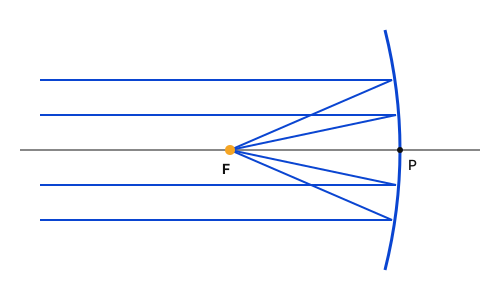
Concept: The principal focus F is the point on the principal axis where rays parallel to the principal axis meet (concave) or appear to diverge from (convex) after reflection.

  1. (i) F always lies on the principal axis – true.
  2. (ii) A ray through F becomes parallel to the axis after reflection – true.
  3. (iii) Not all incident rays meet at F – only rays parallel to the principal axis do. So (iii) is NOT true.

Trick: Watch the word "all" – it usually makes a definition wrong.

Answer: (B) Only (iii)

अवधारणा: मुख्य फोकस F मुख्य अक्ष पर वह बिंदु है जहाँ मुख्य अक्ष के समानांतर किरणें परावर्तन के बाद मिलती हैं (अवतल) या जहाँ से आती प्रतीत होती हैं (उत्तल)।

  1. (i) F सदैव मुख्य अक्ष पर होता है – सत्य।
  2. (ii) F से होकर जाने वाली किरण परावर्तन के बाद अक्ष के समानांतर हो जाती है – सत्य।
  3. (iii) सभी आपतित किरणें F पर नहीं मिलतीं – केवल अक्ष के समानांतर किरणें मिलती हैं। अतः (iii) सत्य नहीं है।

ट्रिक: "सभी" शब्द पर ध्यान दें – यह प्रायः परिभाषा को गलत बना देता है।

उत्तर: (B) केवल (iii)

RRB Technician Grade IIIGeneral SciencePrincipal focus of spherical mirrorRRB Technician Grade III 2024 · 20 Dec Shift 3 →
Q2174.
The atomic mass of an element is usually expressed in which of the following units?
किसी तत्व का परमाणु द्रव्यमान सामान्यतः निम्नलिखित में से किस मात्रक में व्यक्त किया जाता है?
  1. AGrams per mole (g/mol)ग्राम प्रति मोल (g/mol)
  2. BPoundsपाउंड
  3. CKilogramsकिलोग्राम
  4. DAtomic mass units (amu)परमाणु द्रव्यमान मात्रक (amu)
Show answer

Concept: Atomic mass is expressed in atomic mass units (amu, now written u), where 1 u=112 of the mass of one carbon-12 atom.

  1. One atom is extremely light (1 u≈1.66×10⁻²⁷ kg), so grams, kilograms or pounds are impractical.
  2. Grams per mole is the unit of molar mass, not atomic mass.
  3. So atomic mass is expressed in amu (u).

Yaad rakhein: Atomic mass → u (amu); molar mass → g/mol.

Answer: (D) Atomic mass units (amu)

अवधारणा: परमाणु द्रव्यमान परमाणु द्रव्यमान मात्रक (amu, अब u) में व्यक्त होता है, जहाँ 1 u=112 × कार्बन-12 के एक परमाणु का द्रव्यमान।

  1. एक परमाणु अत्यंत हल्का है (1 u≈1.66×10⁻²⁷ kg), अतः ग्राम, किलोग्राम या पाउंड व्यावहारिक नहीं।
  2. ग्राम प्रति मोल मोलर द्रव्यमान का मात्रक है, परमाणु द्रव्यमान का नहीं।
  3. अतः परमाणु द्रव्यमान amu (u) में व्यक्त होता है।

याद रखें: परमाणु द्रव्यमान → u (amu); मोलर द्रव्यमान → g/mol।

उत्तर: (D) परमाणु द्रव्यमान मात्रक (amu)

RRB Technician Grade IIIGeneral ScienceAtomic mass unitRRB Technician Grade III 2024 · 20 Dec Shift 3 →
Q2175.
Kulhads are disposable cups made of clay. A little thought shows that making these kulhads on a large scale would result in:
कुल्हड़ मिट्टी से बने डिस्पोजेबल (एक बार प्रयोग होने वाले) कप हैं। थोड़ा विचार करने पर पता चलता है कि बड़े पैमाने पर इन कुल्हड़ों को बनाने का परिणाम होगा:
  1. AUnhygienic of its useइसका उपयोग अस्वास्थ्यकर होना
  2. Blosing the fertile top-soilउपजाऊ ऊपरी मिट्टी (top-soil) का नष्ट होना
  3. Clarge remains collected in environmentपर्यावरण में बड़ी मात्रा में अवशेष एकत्र होना
  4. Dchoking the sewage lineसीवर लाइन का अवरुद्ध होना
Show answer

Concept: Kulhads are biodegradable, but they are made by baking clay dug from the ground.

  1. Large-scale making of kulhads needs huge amounts of clay.
  2. This clay comes from the fertile top layer of soil.
  3. So making them on a large scale would cause loss of fertile top-soil (NCERT example).

Yaad rakhein: Disposable ≠ eco-friendly: kulhads waste top-soil, plastic cups persist in the environment.

Answer: (B) losing the fertile top-soil

अवधारणा: कुल्हड़ जैव-निम्नीकरणीय हैं, पर ये जमीन से खोदी गई मिट्टी को पकाकर बनाए जाते हैं।

  1. बड़े पैमाने पर कुल्हड़ बनाने के लिए अधिक मात्रा में मिट्टी चाहिए।
  2. यह मिट्टी उपजाऊ ऊपरी परत से ली जाती है।
  3. अतः बड़े पैमाने पर बनाने से उपजाऊ ऊपरी मृदा नष्ट होगी (NCERT उदाहरण)।

याद रखें: डिस्पोज़ेबल ≠ पर्यावरण-हितैषी: कुल्हड़ से ऊपरी मृदा की हानि, प्लास्टिक कप पर्यावरण में बने रहते हैं।

उत्तर: (B) उपजाऊ ऊपरी मिट्टी (top-soil) का नष्ट होना

RRB Technician Grade IIIGeneral ScienceEnvironmental impact – kulhadsRRB Technician Grade III 2024 · 20 Dec Shift 3 →
Q2176.
All information from our environment is detected by the specialised tips of some nerve cells and these receptors are usually located in our sense organs such as:
हमारे पर्यावरण से सभी सूचनाओं का पता कुछ तंत्रिका कोशिकाओं के विशिष्ट सिरों द्वारा लगाया जाता है और ये ग्राही (receptors) सामान्यतः हमारी ज्ञानेंद्रियों में स्थित होते हैं, जैसे:
  1. Athe inner earआंतरिक कर्ण
  2. Bthe inner ear, the nose and the tongueआंतरिक कर्ण, नाक और जीभ
  3. Cthe tongueजीभ
  4. Dthe noseनाक
Show answer

Concept: Receptors are specialised tips of nerve cells that detect information from the environment.

  1. They are located in sense organs.
  2. Inner ear – hearing and balance; nose – smell (olfactory receptors); tongue – taste (gustatory receptors).
  3. The most complete option lists all three: inner ear, nose and tongue.

Trick: When options are subsets of one another, choose the most complete correct list.

Answer: (B) the inner ear, the nose and the tongue

अवधारणा: ग्राही (receptors) तंत्रिका कोशिकाओं के विशिष्ट सिरे हैं जो वातावरण से सूचना ग्रहण करते हैं।

  1. ये ज्ञानेंद्रियों में स्थित होते हैं।
  2. आंतरिक कान – सुनना व संतुलन; नाक – गंध (घ्राणग्राही); जीभ – स्वाद (स्वादग्राही)।
  3. सबसे पूर्ण विकल्प तीनों को शामिल करता है: आंतरिक कान, नाक और जीभ।

ट्रिक: जब विकल्प एक-दूसरे के भाग हों, तो सबसे पूर्ण सही सूची चुनें।

उत्तर: (B) आंतरिक कर्ण, नाक और जीभ

RRB Technician Grade IIIGeneral ScienceReceptorsRRB Technician Grade III 2024 · 20 Dec Shift 3 →
Q2177.
According to the sign convention, the focal length of a convex lens is _______ and that of a concave lens is _______.
चिह्न परिपाटी के अनुसार, उत्तल लेंस की फोकस दूरी _______ होती है और अवतल लेंस की फोकस दूरी _______ होती है।
  1. Anegative; negativeऋणात्मक; ऋणात्मक
  2. Bpositive; positiveधनात्मक; धनात्मक
  3. Cpositive; negativeधनात्मक; ऋणात्मक
  4. Dnegative; positiveऋणात्मक; धनात्मक
Show answer

Concept: In the New Cartesian sign convention, distances are measured from the optical centre; those in the direction of incident light are positive.

  1. A convex lens forms its real focus on the other side (in the direction of light) → f positive.
  2. A concave lens has a virtual focus on the same side as the object → f negative.
  3. So convex: positive; concave: negative.

Yaad rakhein: Lens: convex +, concave −. Mirror: concave −, convex + (just opposite).

Answer: (C) positive; negative

अवधारणा: नई कार्तीय चिह्न परिपाटी में दूरियाँ प्रकाशिक केंद्र से मापी जाती हैं; आपतित प्रकाश की दिशा में मापी दूरी धनात्मक होती है।

  1. उत्तल लेंस का वास्तविक फोकस दूसरी ओर (प्रकाश की दिशा में) → f धनात्मक।
  2. अवतल लेंस का आभासी फोकस वस्तु की ओर → f ऋणात्मक।
  3. अतः उत्तल: धनात्मक; अवतल: ऋणात्मक।

याद रखें: लेंस: उत्तल +, अवतल −। दर्पण: अवतल −, उत्तल + (ठीक उल्टा)।

उत्तर: (C) धनात्मक; ऋणात्मक

RRB Technician Grade IIIGeneral ScienceSign convention for lensesRRB Technician Grade III 2024 · 20 Dec Shift 3 →
Q2178.
Which of the following in eukaryotes is separated from the cytoplasm by a double-layered membrane and it directs the life processes of the cell?
यूकैरियोट्स में निम्नलिखित में से कौन दोहरी परत वाली झिल्ली द्वारा कोशिकाद्रव्य (cytoplasm) से अलग होता है और कोशिका की जैविक प्रक्रियाओं को निर्देशित करता है?
  1. ANucleusकेंद्रक (Nucleus)
  2. BPlastidsलवक (Plastids)
  3. CRibosomeराइबोसोम (Ribosome)
  4. DEndoplasmic reticulumअंतर्द्रव्यी जालिका (Endoplasmic reticulum)
Show answer

Concept: In eukaryotic cells the nucleus is enclosed by a double-layered nuclear membrane.

  1. The nuclear membrane separates the nucleus from the cytoplasm and has pores.
  2. The nucleus contains chromosomes (DNA) which carry information for all activities.
  3. Hence it directs the life processes of the cell – the "control centre".

Yaad rakhein: Double membrane organelles: nucleus, mitochondria, plastids; ribosome has no membrane.

Answer: (A) Nucleus

अवधारणा: यूकैरियोटिक कोशिकाओं में केंद्रक दोहरी परत वाली केंद्रक झिल्ली से घिरा होता है।

  1. केंद्रक झिल्ली केंद्रक को कोशिकाद्रव्य से अलग करती है और इसमें छिद्र होते हैं।
  2. केंद्रक में गुणसूत्र (DNA) होते हैं जो सभी क्रियाओं की सूचना रखते हैं।
  3. अतः यह कोशिका की जैविक क्रियाओं को निर्देशित करता है – "नियंत्रण केंद्र"।

याद रखें: दोहरी झिल्ली वाले अंगक: केंद्रक, माइटोकॉन्ड्रिया, लवक; राइबोसोम झिल्ली-रहित।

उत्तर: (A) केंद्रक (Nucleus)

RRB Technician Grade IIIGeneral ScienceNucleusRRB Technician Grade III 2024 · 20 Dec Shift 3 →
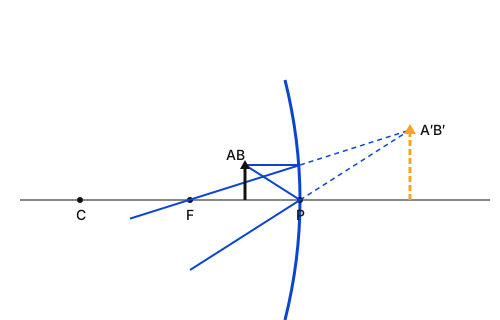
Q2179.
If the position of an object is in between the principal focus and pole of a concave mirror, then the image formed will be:
यदि किसी वस्तु की स्थिति अवतल दर्पण के मुख्य फोकस और ध्रुव के बीच है, तो बनने वाला प्रतिबिंब होगा:
  1. Areal and diminishedवास्तविक और छोटा
  2. Bvirtual and diminishedआभासी और छोटा
  3. Creal and enlargedवास्तविक और बड़ा
  4. Dvirtual, erect and enlargedआभासी, सीधा और बड़ा
Show answer

Concept: When an object is placed between the principal focus F and pole P of a concave mirror, the reflected rays diverge.

  1. A ray parallel to the axis reflects through F; a ray to P reflects at an equal angle.
  2. These reflected rays do not meet in front; extended backwards they meet behind the mirror.
  3. So the image is behind the mirror – virtual, erect and enlarged (used in shaving/makeup mirrors).

Yaad rakhein: Concave mirror gives a virtual image only when the object is between P and F.

Answer: (D) virtual, erect and enlarged

अवधारणा: जब वस्तु अवतल दर्पण के मुख्य फोकस F और ध्रुव P के बीच रखी जाती है, तो परावर्तित किरणें अपसरित होती हैं।

  1. अक्ष के समानांतर किरण परावर्तन के बाद F से गुजरती है; P पर पड़ी किरण समान कोण पर परावर्तित होती है।
  2. ये किरणें आगे नहीं मिलतीं; पीछे बढ़ाने पर दर्पण के पीछे मिलती हैं।
  3. अतः प्रतिबिंब दर्पण के पीछे – आभासी, सीधा और बड़ा (शेविंग/मेकअप दर्पण)।

याद रखें: अवतल दर्पण आभासी प्रतिबिंब केवल तभी बनाता है जब वस्तु P और F के बीच हो।

उत्तर: (D) आभासी, सीधा और बड़ा

RRB Technician Grade IIIGeneral ScienceImage by concave mirrorRRB Technician Grade III 2024 · 20 Dec Shift 3 →
Q2180.
How many isotopes of hydrogen element exist in nature?
प्रकृति में हाइड्रोजन तत्व के कितने समस्थानिक (isotopes) पाए जाते हैं?
  1. A5
  2. B2
  3. C1
  4. D3
Show answer

Concept: Isotopes are atoms of the same element with the same atomic number but different mass numbers.

  1. Protium 11H – no neutron (most abundant).
  2. Deuterium 12H (D) – one neutron.
  3. Tritium 13H (T) – two neutrons, radioactive, in traces. So there are 3 isotopes.

Yaad rakhein: P-D-T: Protium, Deuterium, Tritium – neutrons 0, 1, 2.

Answer: (D) 3

अवधारणा: समस्थानिक एक ही तत्व के वे परमाणु हैं जिनकी परमाणु संख्या समान पर द्रव्यमान संख्या भिन्न होती है।

  1. प्रोटियम 11H – कोई न्यूट्रॉन नहीं (सबसे अधिक)।
  2. ड्यूटेरियम 12H (D) – एक न्यूट्रॉन।
  3. ट्रिटियम 13H (T) – दो न्यूट्रॉन, रेडियोधर्मी, सूक्ष्म मात्रा में। अतः 3 समस्थानिक।

याद रखें: P-D-T: प्रोटियम, ड्यूटेरियम, ट्रिटियम – न्यूट्रॉन 0, 1, 2।

उत्तर: (D) 3

RRB Technician Grade IIIGeneral ScienceIsotopes of hydrogenRRB Technician Grade III 2024 · 20 Dec Shift 3 →