Question bank

Q&A: practice questions with answers

Search questions on any topic. Filter by exam category, exam, subject and topic, try the question, then open the answer and explanation.

Courses – airGurukul

3,200 questions found.

Q2241.
Shahid starts from Point A and drives 20 km towards West. He then takes a left turn, drives 20 km, turns left and drives 15 km. He then takes a left turn and drives 12 km. He takes a final right turn, drives 5 km and stops at Point P. How far (shortest distance) and towards which direction should he drive in order to reach Point A again?
(All turns are 90 degree turns only unless otherwise specified.)
शाहिद बिंदु A से चलना शुरू करता है और पश्चिम की ओर 20 km गाड़ी चलाता है। फिर वह बाएँ मुड़ता है, 20 km गाड़ी चलाता है, बाएँ मुड़ता है और 15 km गाड़ी चलाता है। फिर वह बाएँ मुड़ता है और 12 km गाड़ी चलाता है। वह अंतिम बार दाएँ मुड़ता है, 5 km गाड़ी चलाता है और बिंदु P पर रुक जाता है। फिर से बिंदु A पर पहुँचने के लिए उसे कितनी दूरी (न्यूनतम दूरी) और किस दिशा में गाड़ी चलानी चाहिए?
(जब तक अन्यथा निर्दिष्ट न हो, सभी मोड़ केवल 90 डिग्री के मोड़ हैं।)
  1. A10 km towards Southदक्षिण की ओर 10 km
  2. B5 km towards Northउत्तर की ओर 5 km
  3. C8 km towards Eastपूर्व की ओर 8 km
  4. D8 km towards Northउत्तर की ओर 8 km
Show answer

Concept: Track the moves on a grid with A at the origin.
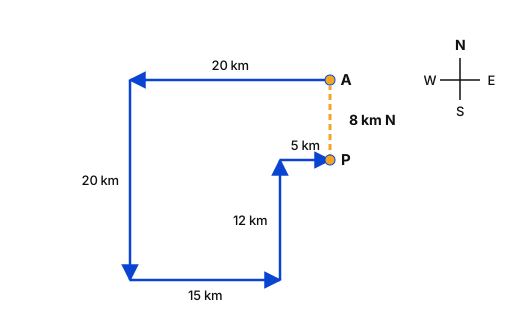
  1. 20 km West → (−20, 0); left → South 20 km → (−20, −20).
  2. Left → East 15 km → (−5, −20); left → North 12 km → (−5, −8).
  3. Right → East 5 km → P (0, −8).
  4. P is 8 km directly south of A, so he must drive 8 km North.

Trick: Net East–West =−20+15+5=0; net North–South =−20+12=−8 → 8 km back North.

Answer: (D) 8 km towards North

अवधारणा: A को मूल बिंदु मानकर ग्रिड पर चालें लिखें।

  1. पश्चिम 20 km → (−20, 0); बाएँ → दक्षिण 20 km → (−20, −20)।
  2. बाएँ → पूर्व 15 km → (−5, −20); बाएँ → उत्तर 12 km → (−5, −8)।
  3. दाएँ → पूर्व 5 km → P (0, −8)।
  4. P, A से ठीक 8 km दक्षिण है, अतः 8 km उत्तर जाना होगा।

ट्रिक: शुद्ध पूर्व–पश्चिम =−20+15+5=0; उत्तर–दक्षिण =−20+12=−8 → 8 km उत्तर।

उत्तर: (D) उत्तर की ओर 8 km
RRB Technician Grade IIIGeneral Intelligence and ReasoningDirection SenseRRB Technician Grade III 2024 · 20 Dec Shift 2 →
Q2242.
PLSO is related to VRYU in a certain way based on the English alphabetical order. In the same way, MIPL is related to SOVR. To which of the following options is IELH related, following the same logic?
अंग्रेज़ी वर्णमाला क्रम के आधार पर PLSO एक निश्चित प्रकार से VRYU से संबंधित है। उसी प्रकार, MIPL, SOVR से संबंधित है। समान तर्क का अनुसरण करते हुए, IELH निम्नलिखित में से किस विकल्प से संबंधित है?
  1. AOKRN
  2. BKONR
  3. CKORN
  4. DOKNR
Show answer

Concept: Find the shift between corresponding letters using positions.

  1. PLSO → VRYU: P(16) → V(22), L(12) → R(18), S(19) → Y(25), O(15) → U(21): each +6.
  2. Check MIPL → SOVR: +6 each ✓.
  3. IELH +6: I → O, E → K, L → R, H → N = OKRN.

Trick: Check only the first letter of each option first – I + 6 = O leaves OKRN and OKNR; second check settles it.

Answer: (A) OKRN

अवधारणा: संगत अक्षरों के स्थानों का अंतर खोजें।

  1. PLSO → VRYU: P(16) → V(22), L(12) → R(18), S(19) → Y(25), O(15) → U(21): प्रत्येक +6।
  2. जाँच MIPL → SOVR: +6 ✓।
  3. IELH +6: I → O, E → K, L → R, H → N = OKRN।

ट्रिक: पहले केवल पहला अक्षर जाँचें – I + 6 = O; फिर तीसरा अक्षर R से उत्तर तय।

उत्तर: (A) OKRN

RRB Technician Grade IIIGeneral Intelligence and ReasoningLetter AnalogyRRB Technician Grade III 2024 · 20 Dec Shift 2 →
Q2243.
TPVS is related to LHNK in a certain way based on the English alphabetical order. In the same way, WSYV is related to OKQN. To which of the following options is RNTQ related, following the same logic?
अंग्रेज़ी वर्णमाला क्रम के आधार पर TPVS एक निश्चित प्रकार से LHNK से संबंधित है। उसी प्रकार, WSYV, OKQN से संबंधित है। समान तर्क का अनुसरण करते हुए, RNTQ निम्नलिखित में से किस विकल्प से संबंधित है?
  1. AJFLI
  2. BFJLI
  3. CFJIL
  4. DJFIL
Show answer

Concept: Find the shift between corresponding letters using positions.

  1. TPVS → LHNK: T(20) → L(12), P(16) → H(8), V(22) → N(14), S(19) → K(11): each −8.
  2. Check WSYV → OKQN: −8 each ✓.
  3. RNTQ −8: R → J, N → F, T → L, Q → I = JFLI.

Trick: Moving −8 is the same as +18 – use whichever is easier.

Answer: (A) JFLI

अवधारणा: संगत अक्षरों के स्थानों का अंतर खोजें।

  1. TPVS → LHNK: T(20) → L(12), P(16) → H(8), V(22) → N(14), S(19) → K(11): प्रत्येक −8।
  2. जाँच WSYV → OKQN: −8 ✓।
  3. RNTQ −8: R → J, N → F, T → L, Q → I = JFLI।

ट्रिक: −8 चलना, +18 चलने के समान है – जो आसान हो वही लें।

उत्तर: (A) JFLI

RRB Technician Grade IIIGeneral Intelligence and ReasoningLetter AnalogyRRB Technician Grade III 2024 · 20 Dec Shift 2 →
Q2244.
Given below is a statement followed by two possible reasons numbered I and II. Read the statement carefully and decide which of the two explain(s) the event/observation/information given in the statement.
Statement - Even though Company X is the biggest exporter of wheat in the country, it is not among one of the biggest profit earning companies in the Country.
Reasons:
I. Trading in other materials other than wheat, like iron, is much more profitable
II. Company X has heavy miscellaneous expenditure
नीचे एक कथन और उसके बाद I और II क्रमांकित दो संभावित कारण दिए गए हैं। कथन को ध्यानपूर्वक पढ़िए और निर्णय कीजिए कि दोनों में से कौन-सा/से कारण कथन में दी गई घटना/प्रेक्षण/सूचना की व्याख्या करता है/करते हैं।
कथन - यद्यपि कंपनी X देश में गेहूँ की सबसे बड़ी निर्यातक है, फिर भी यह देश की सबसे अधिक लाभ कमाने वाली कंपनियों में से एक नहीं है।
कारण:
I. गेहूँ के अलावा अन्य सामग्रियों, जैसे लोहे, का व्यापार कहीं अधिक लाभदायक है
II. कंपनी X का विविध व्यय बहुत अधिक है
  1. AOnly I is a possible reason.केवल I एक संभावित कारण है।
  2. BNeither I nor II is a possible reason.न तो I और न ही II एक संभावित कारण है।
  3. CBoth I and II are possible reasons.I और II दोनों संभावित कारण हैं।
  4. DOnly II is a possible reason.केवल II एक संभावित कारण है।
Show answer

Concept: A valid reason must directly explain why high exports do not give high profits.

  1. I: other goods (like iron) are more profitable, so other companies trading them can earn more – explains it.
  2. II: heavy miscellaneous expenses reduce X's profit despite large sales – explains it.
  3. Both are possible reasons.

Trick: Profit = revenue − cost; a reason may work on either side – others' higher margins or X's higher costs.

Answer: (C) Both I and II are possible reasons.

अवधारणा: मान्य कारण वह है जो सीधे बताए कि अधिक निर्यात के बावजूद अधिक लाभ क्यों नहीं।

  1. I: अन्य वस्तुओं (जैसे लोहा) में अधिक लाभ है, अतः उनके व्यापारी अधिक कमा सकते हैं – कारण बनता है।
  2. II: भारी विविध खर्च, बड़ी बिक्री के बावजूद X का लाभ घटाते हैं – कारण बनता है।
  3. दोनों संभावित कारण हैं।

ट्रिक: लाभ = आय − खर्च; कारण किसी भी पक्ष पर लागू हो सकता है।

उत्तर: (C) I और II दोनों संभावित कारण हैं।

RRB Technician Grade IIIGeneral Intelligence and ReasoningStatement and ReasonsRRB Technician Grade III 2024 · 20 Dec Shift 2 →
Q2245.
Which of the following options should come in place of the question mark (?) in the given series based on the English alphabetical order?
JLO, KMP, LNQ, MOR, ?
अंग्रेज़ी वर्णमाला क्रम के आधार पर दी गई श्रृंखला में प्रश्न चिह्न (?) के स्थान पर निम्नलिखित में से कौन-सा विकल्प आना चाहिए?
JLO, KMP, LNQ, MOR, ?
  1. APNS
  2. BPSN
  3. CNSP
  4. DNPS
Show answer

Concept: Track each letter position separately.

  1. 1st letters: J, K, L, M → N.
  2. 2nd letters: L, M, N, O → P.
  3. 3rd letters: O, P, Q, R → S.
  4. Next term: NPS.

Trick: Each whole cluster moves +1 – just shift MOR by one: NPS.

Answer: (D) NPS

अवधारणा: प्रत्येक स्थान के अक्षर अलग-अलग देखें।

  1. पहले अक्षर: J, K, L, M → N।
  2. दूसरे अक्षर: L, M, N, O → P।
  3. तीसरे अक्षर: O, P, Q, R → S।
  4. अगला पद: NPS।

ट्रिक: पूरा समूह +1 खिसकता है – MOR को एक आगे करें: NPS।

उत्तर: (D) NPS

RRB Technician Grade IIIGeneral Intelligence and ReasoningLetter SeriesRRB Technician Grade III 2024 · 20 Dec Shift 2 →
Q2246.
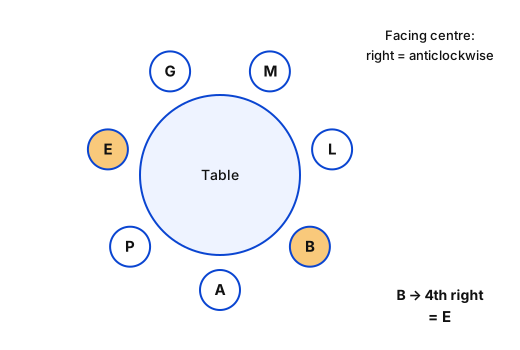
A, B, E, G, P, L and M are sitting around a circular table facing the centre. Only two people sit between A and M when counted from the right of A. Only three people sit between P and L when counted from the right of L. M sits to the immediate right of L. E sits to the immediate right of G. Who sits fourth to the right of B?
A, B, E, G, P, L और M एक वृत्ताकार मेज़ के चारों ओर केंद्र की ओर मुख करके बैठे हैं। A के दाएँ से गिनने पर A और M के बीच केवल दो व्यक्ति बैठे हैं। L के दाएँ से गिनने पर P और L के बीच केवल तीन व्यक्ति बैठे हैं। M, L के ठीक दाएँ बैठा है। E, G के ठीक दाएँ बैठा है। B के दाएँ से चौथे स्थान पर कौन बैठा है?
  1. AP
  2. BG
  3. CM
  4. DE
Show answer

Concept: Facing the centre, "right" means anticlockwise. Fix A and place others.

  1. Two between A and M from A's right → M is 3rd to the right of A.
  2. M is immediate right of L → L is 2nd right of A.
  3. Three between L and P from L's right → P is 4th right of L, i.e. immediate left of A.
  4. Remaining seats: E immediately right of G → B is right of A, then G, E after M.
  5. Order (anticlockwise): A, B, L, M, G, E, P → 4th right of B is E.

Trick: With 7 seats, "4th to the right" = "3rd to the left".

Answer: (D) E

अवधारणा: केंद्र की ओर मुख होने पर "दाएँ" = वामावर्त। A को स्थिर करके बाकी रखें।

  1. A के दाएँ से A और M के बीच दो → M, A के दाएँ तीसरा।
  2. M, L के ठीक दाएँ → L, A के दाएँ दूसरा।
  3. L के दाएँ से L और P के बीच तीन → P, L के दाएँ चौथा, यानी A के ठीक बाएँ।
  4. बचे स्थान: E, G के ठीक दाएँ → B, A के दाएँ; M के बाद G, E।
  5. क्रम (वामावर्त): A, B, L, M, G, E, P → B के दाएँ चौथा E।

ट्रिक: 7 सीटों में "दाएँ चौथा" = "बाएँ तीसरा"।

उत्तर: (D) E

RRB Technician Grade IIIGeneral Intelligence and ReasoningSeating Arrangement – CircularRRB Technician Grade III 2024 · 20 Dec Shift 2 →
Q2247.
In a row of people all facing North, Shreya is 11th from the left end. Ravi is 12th from the left end. Ravi is exactly between Shreya and Rahul. If Rahul is 15th from the right end of the line, how many people are there in the row?
उत्तर की ओर मुख करके खड़े लोगों की एक पंक्ति में, श्रेया बाएँ छोर से 11वें स्थान पर है। रवि बाएँ छोर से 12वें स्थान पर है। रवि, श्रेया और राहुल के ठीक बीच में है। यदि राहुल पंक्ति के दाएँ छोर से 15वें स्थान पर है, तो पंक्ति में कितने लोग हैं?
  1. A29
  2. B45
  3. C28
  4. D27
Show answer

Concept: Total = position from left + position from right −1.

  1. Shreya is 11th, Ravi 12th from the left; Ravi is exactly between Shreya and Rahul.
  2. So Rahul is 13th from the left.
  3. Rahul is 15th from the right → total =13+15−1=27.

Trick: The middle person is equidistant: Rahul =12+(12−11)=13th.

Answer: (D) 27

अवधारणा: कुल = बाएँ से स्थान + दाएँ से स्थान −1।

  1. श्रेया बाएँ से 11वीं, रवि 12वाँ; रवि ठीक श्रेया और राहुल के बीच है।
  2. अतः राहुल बाएँ से 13वाँ।
  3. राहुल दाएँ से 15वाँ → कुल =13+15−1=27।

ट्रिक: बीच वाला दोनों से समान दूरी पर: राहुल =12+(12−11)=13वाँ।

उत्तर: (D) 27

RRB Technician Grade IIIGeneral Intelligence and ReasoningRanking and OrderRRB Technician Grade III 2024 · 20 Dec Shift 2 →
Q2248.
Which of the following options should come in place of the question mark (?) in the given series based on the English alphabetical order?
YEF, VFI, SGL, PHO, ?
अंग्रेज़ी वर्णमाला क्रम के आधार पर दी गई श्रृंखला में प्रश्न चिह्न (?) के स्थान पर निम्नलिखित में से कौन-सा विकल्प आना चाहिए?
YEF, VFI, SGL, PHO, ?
  1. ANMR
  2. BMIR
  3. CNMQ
  4. DIMR
Show answer

Concept: Track each letter position separately.

  1. 1st letters: Y(25), V(22), S(19), P(16) → −3 → M(13).
  2. 2nd letters: E, F, G, H → I.
  3. 3rd letters: F(6), I(9), L(12), O(15) → +3 → R(18).
  4. Next term: MIR.

Trick: Here the middle letter alone moves by +1 – check it first to eliminate options.

Answer: (B) MIR

अवधारणा: प्रत्येक स्थान के अक्षर अलग-अलग देखें।

  1. पहले अक्षर: Y(25), V(22), S(19), P(16) → −3 → M(13)।
  2. दूसरे अक्षर: E, F, G, H → I।
  3. तीसरे अक्षर: F(6), I(9), L(12), O(15) → +3 → R(18)।
  4. अगला पद: MIR।

ट्रिक: बीच का अक्षर +1 चलता है – उसी से विकल्प हटाएँ।

उत्तर: (B) MIR

RRB Technician Grade IIIGeneral Intelligence and ReasoningLetter SeriesRRB Technician Grade III 2024 · 20 Dec Shift 2 →
Q2249.
Refer to the given series and answer the question that follows (all numbers are single-digit numbers only, and all counting is to be done from left to right).
(Left) 1 2 8 2 4 1 7 6 1 7 3 2 9 7 5 1 7 8 6 8 2 4 3 9 4 6 6 2 (Right)
How many such odd digits are there, each of which is immediately preceded by a perfect square and immediately followed by an even digit? (Note: 1 will be considered as a perfect square.)
दी गई श्रृंखला का संदर्भ लेकर उसके बाद दिए गए प्रश्न का उत्तर दीजिए (सभी संख्याएँ केवल एक अंक वाली संख्याएँ हैं, और सभी गिनती बाएँ से दाएँ की जानी है)।
(बाएँ) 1 2 8 2 4 1 7 6 1 7 3 2 9 7 5 1 7 8 6 8 2 4 3 9 4 6 6 2 (दाएँ)
ऐसे कितने विषम अंक हैं, जिनमें से प्रत्येक के ठीक पहले एक पूर्ण वर्ग है और ठीक बाद एक सम अंक है? (नोट: 1 को पूर्ण वर्ग माना जाएगा।)
  1. A4
  2. B1
  3. C2
  4. D3
Show answer

Concept: Perfect-square digits are 0, 1, 4, 9. Look for: square – odd digit – even digit.

  1. Scan each odd digit and check its neighbours.
  2. "1 7 6" (positions 6–8): 1 is a square, 7 odd, 6 even ✓.
  3. "1 7 8" (positions 16–18): 1 square, 7 odd, 8 even ✓.
  4. Others fail, e.g. "6 1 7" (6 is not a square), "1 7 3" (3 is odd). Count =2.

Trick: First list every odd digit preceded by 0, 1, 4 or 9, then check only those for an even neighbour on the right.

Answer: (C) 2

अवधारणा: पूर्ण वर्ग अंक 0, 1, 4, 9 हैं। खोजें: वर्ग – विषम अंक – सम अंक।

  1. हर विषम अंक के दोनों पड़ोसी जाँचें।
  2. "1 7 6" (स्थान 6–8): 1 वर्ग, 7 विषम, 6 सम ✓।
  3. "1 7 8" (स्थान 16–18): 1 वर्ग, 7 विषम, 8 सम ✓।
  4. बाकी असफल, जैसे "6 1 7" (6 वर्ग नहीं), "1 7 3" (3 विषम)। संख्या =2।

ट्रिक: पहले 0, 1, 4, 9 के बाद आने वाले विषम अंक चुनें, फिर केवल उनके दाएँ सम अंक जाँचें।

उत्तर: (C) 2

RRB Technician Grade IIIGeneral Intelligence and ReasoningDigit SeriesRRB Technician Grade III 2024 · 20 Dec Shift 2 →
Q2250.
Refer to the given series and answer the question that follows (all numbers are single-digit numbers only).
(Left) 2 7 5 3 1 5 8 7 7 4 0 6 3 1 2 1 9 2 2 6 5 0 8 6 2 7 5 3 9 3 (Right)
What is the sum of the 1st digit from the left and the 15th digit from the right?
दी गई श्रृंखला का संदर्भ लेकर उसके बाद दिए गए प्रश्न का उत्तर दीजिए (सभी संख्याएँ केवल एक अंक वाली संख्याएँ हैं)।
(बाएँ) 2 7 5 3 1 5 8 7 7 4 0 6 3 1 2 1 9 2 2 6 5 0 8 6 2 7 5 3 9 3 (दाएँ)
बाएँ से 1ले अंक और दाएँ से 15वें अंक का योग क्या है?
  1. A0
  2. B6
  3. C3
  4. D5
Show answer

Concept: For n digits, the kth from the right is the (n−k+1)th from the left.

  1. 1st digit from the left =2.
  2. There are 30 digits, so 15th from the right = (30−15+1)=16th from the left =1.
  3. Sum =2+1=3.

Trick: Convert "from right" to "from left" with n−k+1 and count once.

Answer: (C) 3

अवधारणा: n अंकों में दाएँ से kवाँ अंक = बाएँ से (n−k+1)वाँ।

  1. बाएँ से पहला अंक =2।
  2. कुल 30 अंक, अतः दाएँ से 15वाँ = बाएँ से (30−15+1)=16वाँ =1।
  3. योग =2+1=3।

ट्रिक: "दाएँ से" को n−k+1 से "बाएँ से" में बदलें और एक बार गिनें।

उत्तर: (C) 3

RRB Technician Grade IIIGeneral Intelligence and ReasoningDigit SeriesRRB Technician Grade III 2024 · 20 Dec Shift 2 →
Q2251.
Starting from rest, a car is moving with a uniform acceleration of 0.5 m/s2. The velocity of the car after 20 s is:
विरामावस्था से प्रारंभ करते हुए, एक कार 0.5 m/s2 के एकसमान त्वरण से गति कर रही है। 20 s के बाद कार का वेग कितना होगा?
  1. A15 m/s
  2. B0 m/s
  3. C5 m/s
  4. D10 m/s
Show answer

Concept: For uniform acceleration, the first equation of motion gives final velocity: v=u+at.

  1. Starting from rest, so u=0.
  2. a=0.5 m/s2, t=20 s.
  3. v=0+0.5×20=10 m/s.

Trick: From rest, velocity is simply a×t.

Answer: (D) 10 m/s

अवधारणा: एकसमान त्वरण में अंतिम वेग गति के पहले समीकरण v=u+at से मिलता है।

  1. विराम से शुरू, अतः u=0।
  2. a=0.5 m/s2, t=20 s।
  3. v=0+0.5×20=10 m/s।

ट्रिक: विराम से चलने पर वेग सीधे a×t होता है।

उत्तर: (D) 10 m/s

RRB Technician Grade IIIGeneral ScienceEquations of motionRRB Technician Grade III 2024 · 20 Dec Shift 2 →
Q2252.
Which of the following events is a consequence of atmospheric refraction?
निम्नलिखित में से कौन-सी घटना वायुमंडलीय अपवर्तन (atmospheric refraction) का परिणाम है?
  1. AImage formation by plain mirrorsसमतल दर्पणों द्वारा प्रतिबिंब का बनना
  2. BRainbow formationइंद्रधनुष का बनना
  3. CAdvance sunrise and delayed sunsetअग्रिम सूर्योदय और विलंबित सूर्यास्त
  4. DCurved mirrors to form enlarged image of an objectकिसी वस्तु का बड़ा प्रतिबिंब बनाने के लिए वक्र दर्पण
Show answer

Concept: Air layers of different density bend (refract) light. Near the horizon, sunlight bends towards the Earth.

  1. When the Sun is just below the horizon, refracted rays still reach us, so we see it about 2 minutes early.
  2. Similarly the Sun stays visible about 2 minutes after it actually sets.
  3. Plane mirror and curved mirror images are reflection; a rainbow is dispersion with internal reflection in drops.

Yaad rakhein: Atmospheric refraction: twinkling of stars, advance sunrise and delayed sunset (day longer by about 4 minutes).

Answer: (C) Advance sunrise and delayed sunset

अवधारणा: अलग-अलग घनत्व की वायु परतें प्रकाश को मोड़ती (अपवर्तित करती) हैं। क्षितिज के पास सूर्य का प्रकाश पृथ्वी की ओर मुड़ जाता है।

  1. सूर्य क्षितिज से थोड़ा नीचे हो तब भी अपवर्तित किरणें हम तक पहुँचती हैं, इसलिए वह लगभग 2 मिनट पहले दिखता है।
  2. इसी तरह वास्तविक सूर्यास्त के लगभग 2 मिनट बाद तक सूर्य दिखता है।
  3. समतल व वक्र दर्पण के प्रतिबिंब परावर्तन हैं; इंद्रधनुष बूँदों में विक्षेपण व आंतरिक परावर्तन है।

याद रखें: वायुमंडलीय अपवर्तन: तारों का टिमटिमाना, अग्रिम सूर्योदय व विलंबित सूर्यास्त (दिन लगभग 4 मिनट लंबा)।

उत्तर: (C) अग्रिम सूर्योदय और विलंबित सूर्यास्त

RRB Technician Grade IIIGeneral ScienceAtmospheric refractionRRB Technician Grade III 2024 · 20 Dec Shift 2 →
Q2253.
Which of the following is an example of a sol?
निम्नलिखित में से कौन-सा सॉल (sol) का एक उदाहरण है?
  1. AFoamझाग (फोम)
  2. BMilk of magnesiaमिल्क ऑफ मैग्नीशिया
  3. CRubberरबड़
  4. DFace creamफेस क्रीम
Show answer

Concept: A sol is a colloid in which the dispersed phase is a solid and the dispersion medium is a liquid.

  1. Milk of magnesia: solid Mg(OH)2 dispersed in water → sol.
  2. Foam (shaving cream): gas in liquid.
  3. Rubber: gas in solid (solid foam); face cream: liquid in liquid (emulsion).

Yaad rakhein: Sol = solid in liquid (milk of magnesia, mud, paint); Gel = liquid in solid (jelly, cheese); Emulsion = liquid in liquid.

Answer: (B) Milk of magnesia

अवधारणा: सॉल वह कोलाइड है जिसमें परिक्षिप्त प्रावस्था ठोस और परिक्षेपण माध्यम द्रव होता है।

  1. मिल्क ऑफ मैग्नीशिया: ठोस Mg(OH)2 जल में फैला → सॉल।
  2. झाग (शेविंग क्रीम): द्रव में गैस।
  3. रबर: ठोस में गैस (ठोस झाग); फेस क्रीम: द्रव में द्रव (पायस)।

याद रखें: सॉल = द्रव में ठोस (मिल्क ऑफ मैग्नीशिया, कीचड़, पेंट); जेल = ठोस में द्रव (जेली, पनीर); पायस = द्रव में द्रव।

उत्तर: (B) मिल्क ऑफ मैग्नीशिया

RRB Technician Grade IIIGeneral ScienceColloids – typesRRB Technician Grade III 2024 · 20 Dec Shift 2 →
Q2254.
Which functions both as a passageway for intracellular transport and as a manufacturing surface?
कौन-सा कोशिकांग अंतःकोशिकीय परिवहन के लिए मार्ग और निर्माण सतह, दोनों के रूप में कार्य करता है?
  1. AEndoplasmic reticulumअंतर्द्रव्यी जालिका (Endoplasmic reticulum)
  2. BRibosomeराइबोसोम (Ribosome)
  3. CPlastidsलवक (Plastids)
  4. DMitochondriaमाइटोकॉन्ड्रिया (Mitochondria)
Show answer

Concept: The endoplasmic reticulum (ER) is a network of membrane-bound tubes and sheets in the cytoplasm.

  1. Its channels transport proteins and other materials between parts of the cell (and to the nucleus).
  2. Its surface works as a factory floor: RER (with ribosomes) makes proteins, SER makes lipids.
  3. Ribosomes only make proteins; mitochondria make energy; plastids store/photosynthesise.

Yaad rakhein: ER = cell's 'highway + workshop'; it also helps in membrane biogenesis.

Answer: (A) Endoplasmic reticulum

अवधारणा: अंतर्द्रव्यी जालिका (ER) कोशिकाद्रव्य में झिल्लीयुक्त नलिकाओं व चादरों का जाल है।

  1. इसकी नलिकाएँ प्रोटीन आदि पदार्थों को कोशिका के विभिन्न भागों (व केंद्रक) तक पहुँचाती हैं।
  2. इसकी सतह कारखाने का काम करती है: RER (राइबोसोम सहित) प्रोटीन, SER वसा/लिपिड बनाती है।
  3. राइबोसोम केवल प्रोटीन बनाते हैं; माइटोकॉन्ड्रिया ऊर्जा; लवक भंडारण/प्रकाश-संश्लेषण।

याद रखें: ER = कोशिका का 'राजमार्ग + कारखाना'; यह झिल्ली जैवजनन में भी मदद करती है।

उत्तर: (A) अंतर्द्रव्यी जालिका (Endoplasmic reticulum)

RRB Technician Grade IIIGeneral ScienceCell organelles – ERRRB Technician Grade III 2024 · 20 Dec Shift 2 →
Q2255.
Select the correct option related to the function regulated by ovaries.
अंडाशय (ovaries) द्वारा नियंत्रित कार्य से संबंधित सही विकल्प का चयन करें।
  1. AStimulates pituitary glandsपीयूष ग्रंथियों को उत्तेजित करता है
  2. BStimulates growth in all organsसभी अंगों में वृद्धि को उत्तेजित करता है
  3. CRegulates metabolismउपापचय (metabolism) का नियमन करता है
  4. DMenstrual cycleऋतुस्राव चक्र (Menstrual cycle)
Show answer

Concept: Ovaries secrete the female hormones oestrogen and progesterone.

  1. Oestrogen develops female sex organs and secondary sexual characters.
  2. Oestrogen and progesterone together regulate the menstrual cycle.
  3. Pituitary is stimulated by hypothalamus; metabolism → thyroid; growth of all organs → growth hormone.

Yaad rakhein: Testes → testosterone; Ovaries → oestrogen/progesterone (menstrual cycle).

Answer: (D) Menstrual cycle

अवधारणा: अंडाशय मादा हॉर्मोन एस्ट्रोजन और प्रोजेस्टेरोन स्रावित करते हैं।

  1. एस्ट्रोजन मादा जनन अंगों व द्वितीयक लैंगिक लक्षणों का विकास करता है।
  2. एस्ट्रोजन व प्रोजेस्टेरोन मिलकर ऋतुस्राव (मासिक धर्म) चक्र नियंत्रित करते हैं।
  3. पीयूष ग्रंथि को हाइपोथैलेमस उत्तेजित करता है; उपापचय → थायरॉइड; सभी अंगों की वृद्धि → वृद्धि हॉर्मोन।

याद रखें: वृषण → टेस्टोस्टेरोन; अंडाशय → एस्ट्रोजन/प्रोजेस्टेरोन (मासिक चक्र)।

उत्तर: (D) ऋतुस्राव चक्र (Menstrual cycle)

RRB Technician Grade IIIGeneral ScienceEndocrine glands – ovaryRRB Technician Grade III 2024 · 20 Dec Shift 2 →
Q2256.
What is the function of growth hormones?
वृद्धि हार्मोन (growth hormones) का क्या कार्य है?
  1. AIt regulates metabolism for body growth.यह शरीर की वृद्धि के लिए उपापचय का नियमन करता है।
  2. BIt stimulates development of female sex organs.यह मादा लैंगिक अंगों के विकास को उत्तेजित करता है।
  3. CIt regulates blood sugar level.यह रक्त में शर्करा के स्तर का नियमन करता है।
  4. DIt stimulates growth in all organs.यह सभी अंगों में वृद्धि को उत्तेजित करता है।
Show answer

Concept: Growth hormone (GH) is secreted by the pituitary gland.

  1. GH stimulates growth in all organs of the body.
  2. Deficiency in childhood → dwarfism; excess → gigantism.
  3. Metabolism → thyroxin; female sex organs → oestrogen; blood sugar → insulin.

Yaad rakhein: Pituitary = 'master gland'; its growth hormone controls overall body growth.

Answer: (D) It stimulates growth in all organs.

अवधारणा: वृद्धि हॉर्मोन (GH) पीयूष ग्रंथि (पिट्यूटरी) से स्रावित होता है।

  1. GH शरीर के सभी अंगों की वृद्धि को उद्दीपित करता है।
  2. बचपन में कमी → बौनापन; अधिकता → भीमकायता।
  3. उपापचय → थायरॉक्सिन; मादा जनन अंग → एस्ट्रोजन; रक्त शर्करा → इंसुलिन।

याद रखें: पीयूष ग्रंथि = 'मास्टर ग्रंथि'; इसका वृद्धि हॉर्मोन पूरे शरीर की वृद्धि नियंत्रित करता है।

उत्तर: (D) यह सभी अंगों में वृद्धि को उत्तेजित करता है।

RRB Technician Grade IIIGeneral ScienceGrowth hormoneRRB Technician Grade III 2024 · 20 Dec Shift 2 →
Q2257.
In electrolytic refining process, on passing the current impurities settle down, those impurities are known as _______.
विद्युत-अपघटनी परिष्करण (electrolytic refining) प्रक्रम में, विद्युत धारा प्रवाहित करने पर अशुद्धियाँ नीचे बैठ जाती हैं, उन अशुद्धियों को _______ कहा जाता है।
  1. Aelectrolytic mudविद्युत-अपघटनी पंक (electrolytic mud)
  2. Bgangueगैंग (gangue)
  3. Ccathode mudकैथोड पंक (cathode mud)
  4. Danode mudएनोड पंक (anode mud)
Show answer

Concept: In electrolytic refining, impure metal is the anode, a thin strip of pure metal is the cathode, and a salt solution of the metal is the electrolyte.

  1. On passing current, pure metal from the anode dissolves and deposits on the cathode.
  2. Soluble impurities go into the solution.
  3. Insoluble impurities settle below the anode — called anode mud.

Yaad rakhein: Impure → Anode, Pure → Cathode, waste below anode → anode mud.

Answer: (D) anode mud

अवधारणा: विद्युत-अपघटनी परिष्करण में अशुद्ध धातु एनोड, शुद्ध धातु की पतली पट्टी कैथोड और उसी धातु के लवण का विलयन विद्युत-अपघट्य होता है।

  1. धारा प्रवाहित करने पर एनोड से शुद्ध धातु घुलकर कैथोड पर जमती है।
  2. घुलनशील अशुद्धियाँ विलयन में चली जाती हैं।
  3. अघुलनशील अशुद्धियाँ एनोड के नीचे बैठ जाती हैं — इन्हें एनोड पंक कहते हैं।

याद रखें: अशुद्ध → एनोड, शुद्ध → कैथोड, एनोड के नीचे कचरा → एनोड पंक।

उत्तर: (D) एनोड पंक (anode mud)

RRB Technician Grade IIIGeneral ScienceElectrolytic refiningRRB Technician Grade III 2024 · 20 Dec Shift 2 →
Q2258.
With which of the following does the hydrophilic end of soaps react?
साबुन का जलरागी (hydrophilic) सिरा निम्नलिखित में से किसके साथ अभिक्रिया करता है?
  1. ABoth water and oilजल और तेल दोनों
  2. BHydrocarbonहाइड्रोकार्बन
  3. CWaterजल
  4. DOilतेल
Show answer

Concept: A soap molecule has two ends: a long hydrocarbon tail and an ionic (carboxylate) head.

  1. The ionic end is hydrophilic — it dissolves in (interacts with) water.
  2. The hydrocarbon tail is hydrophobic — it dissolves in oil/grease.
  3. In a micelle, tails point inward to trap oil and heads face the water.

Yaad rakhein: Hydro-PHILIC = water-loving (ionic head); hydro-PHOBIC = water-hating (oil-loving tail).

Answer: (C) Water

अवधारणा: साबुन के अणु के दो सिरे होते हैं: लंबी हाइड्रोकार्बन पूँछ और आयनिक (कार्बोक्सिलेट) सिरा।

  1. आयनिक सिरा जलरागी (हाइड्रोफिलिक) है — यह जल से क्रिया करता/घुलता है।
  2. हाइड्रोकार्बन पूँछ जलविरागी है — यह तेल/ग्रीस में घुलती है।
  3. मिसेल में पूँछें अंदर तेल को फँसाती हैं और सिरे जल की ओर रहते हैं।

याद रखें: जलरागी = पानी पसंद (आयनिक सिरा); जलविरागी = पानी से दूर (तेल-प्रिय पूँछ)।

उत्तर: (C) जल

RRB Technician Grade IIIGeneral ScienceSoaps – micelleRRB Technician Grade III 2024 · 20 Dec Shift 2 →
Q2259.
According to Rutherford's model of an atom, where is most of the mass of the atom located?
रदरफोर्ड के परमाणु मॉडल के अनुसार, परमाणु का अधिकांश द्रव्यमान कहाँ स्थित होता है?
  1. AIn the shells of electronsइलेक्ट्रॉनों के कोशों में
  2. BIn the nucleusनाभिक में
  3. CIt is equally distributed throughoutयह पूरे परमाणु में समान रूप से वितरित होता है
  4. DIn the electron cloudइलेक्ट्रॉन मेघ में
Show answer

Concept: Rutherford's alpha-particle scattering experiment showed that the atom has a tiny, dense, positively charged centre — the nucleus.

  1. Most alpha particles passed straight → most of the atom is empty space.
  2. A very few bounced back → positive charge and mass are concentrated in a small region.
  3. Electrons revolve around the nucleus and have negligible mass.

Yaad rakhein: Rutherford: nucleus holds nearly all the mass; size of nucleus is about 10−5 times that of the atom.

Answer: (B) In the nucleus

अवधारणा: रदरफोर्ड के अल्फा-कण प्रकीर्णन प्रयोग से पता चला कि परमाणु के केंद्र में एक अत्यंत छोटा, सघन, धनावेशित भाग — नाभिक — होता है।

  1. अधिकांश अल्फा कण सीधे निकल गए → परमाणु का अधिकांश भाग खाली है।
  2. बहुत कम कण वापस लौटे → धनावेश व द्रव्यमान एक छोटे भाग में केंद्रित है।
  3. इलेक्ट्रॉन नाभिक के चारों ओर घूमते हैं और उनका द्रव्यमान नगण्य है।

याद रखें: रदरफोर्ड: लगभग पूरा द्रव्यमान नाभिक में; नाभिक का आकार परमाणु का लगभग 10−5 गुना।

उत्तर: (B) नाभिक में

RRB Technician Grade IIIGeneral ScienceRutherford's atomic modelRRB Technician Grade III 2024 · 20 Dec Shift 2 →
Q2260.
Doubly-charged helium ions are also known as which of the following?
द्वि-आवेशित हीलियम आयनों को निम्नलिखित में से किस नाम से भी जाना जाता है?
  1. AX-raysX-किरणें
  2. BGamma particlesगामा कण
  3. CAlpha particlesअल्फा कण
  4. DBeta particlesबीटा कण
Show answer

Concept: A helium atom has 2 protons and 2 electrons. Removing both electrons gives He2+ — a doubly-charged helium ion.

  1. He2+ has 2 protons + 2 neutrons, mass 4 u, charge +2.
  2. This is exactly an alpha particle (used by Rutherford).
  3. Beta particles are electrons; gamma rays and X-rays are electromagnetic waves (no charge).

Yaad rakhein: Alpha = He2+ nucleus; Beta = electron; Gamma = EM radiation.

Answer: (C) Alpha particles

अवधारणा: हीलियम परमाणु में 2 प्रोटॉन व 2 इलेक्ट्रॉन होते हैं। दोनों इलेक्ट्रॉन हटाने पर He2+ — द्वि-आवेशित हीलियम आयन — बनता है।

  1. He2+ में 2 प्रोटॉन + 2 न्यूट्रॉन, द्रव्यमान 4 u, आवेश +2।
  2. यही अल्फा कण है (रदरफोर्ड ने इसका उपयोग किया)।
  3. बीटा कण इलेक्ट्रॉन हैं; गामा किरणें व X-किरणें विद्युतचुंबकीय तरंगें हैं (आवेश नहीं)।

याद रखें: अल्फा = He2+ नाभिक; बीटा = इलेक्ट्रॉन; गामा = विद्युतचुंबकीय विकिरण।

उत्तर: (C) अल्फा कण

RRB Technician Grade IIIGeneral ScienceAlpha particlesRRB Technician Grade III 2024 · 20 Dec Shift 2 →