Question bank

Q&A: practice questions with answers

Search questions on any topic. Filter by exam category, exam, subject and topic, try the question, then open the answer and explanation.

Courses – airGurukul

3,200 questions found.

Q2261.
Which of the following is the correct order of movement of food in the digestive tract?
पाचन तंत्र में भोजन की गति का सही क्रम निम्नलिखित में से कौन-सा है?
  1. AMouth - Stomach - Oesophagusमुख - आमाशय - ग्रसिका
  2. BMouth - Oesophagus - Stomachमुख - ग्रसिका - आमाशय
  3. COesophagus - Stomach - Mouthग्रसिका - आमाशय - मुख
  4. DOesophagus - Mouth - Stomachग्रसिका - मुख - आमाशय
Show answer

Concept: Food passes through the alimentary canal in a fixed sequence.

  1. Mouth: chewing and saliva (starch digestion begins).
  2. Oesophagus (food pipe): carries food by peristalsis.
  3. Stomach → small intestine → large intestine → anus.

Yaad rakhein: Order: Mouth → Oesophagus → Stomach → Small intestine → Large intestine.

Answer: (B) Mouth - Oesophagus - Stomach

अवधारणा: भोजन आहार नाल में एक निश्चित क्रम से आगे बढ़ता है।

  1. मुख: चबाना व लार (मंड का पाचन शुरू)।
  2. ग्रसिका (भोजन नली): क्रमाकुंचन द्वारा भोजन आगे ले जाती है।
  3. आमाशय → छोटी आंत → बड़ी आंत → गुदा।

याद रखें: क्रम: मुख → ग्रसिका → आमाशय → छोटी आंत → बड़ी आंत।

उत्तर: (B) मुख - ग्रसिका - आमाशय
RRB Technician Grade IIIGeneral ScienceHuman digestive systemRRB Technician Grade III 2024 · 20 Dec Shift 2 →
Q2262.
Rambabu is under uniform motion, and he has covered 25 m in 5 s. How much distance can he cover in 3 s?
रामबाबू एकसमान गति में है, और उसने 5 s में 25 m की दूरी तय की है। वह 3 s में कितनी दूरी तय कर सकता है?
  1. A20 m
  2. B5 m
  3. C15 m
  4. D10 m
Show answer

Concept: In uniform motion speed is constant, so distance is proportional to time: d=v×t.

  1. v=255=5 m/s.
  2. Distance in 3 s =5×3=15 m.

Trick: Unitary method: 5 s → 25 m, so 3 s → 255×3=15 m.

Answer: (C) 15 m

अवधारणा: एकसमान गति में चाल स्थिर रहती है, इसलिए दूरी समय के समानुपाती: d=v×t।

  1. v=255=5 m/s।
  2. 3 s में दूरी =5×3=15 m।

ट्रिक: ऐकिक विधि: 5 s → 25 m, अतः 3 s → 255×3=15 m।

उत्तर: (C) 15 m

RRB Technician Grade IIIGeneral ScienceUniform motionRRB Technician Grade III 2024 · 20 Dec Shift 2 →
Q2263.
Consider the magnetic field produced by a current carrying solenoid. Which of the following statements is INCORRECT?
धारावाही परिनालिका (solenoid) द्वारा उत्पन्न चुंबकीय क्षेत्र पर विचार करें। निम्नलिखित में से कौन-सा कथन गलत है?
  1. AThe strength of the magnetic field increases if we increase the number of turns.यदि हम फेरों की संख्या बढ़ाते हैं तो चुंबकीय क्षेत्र की तीव्रता बढ़ जाती है।
  2. BThe solenoid in a way acts similar to the bar magnet.परिनालिका एक प्रकार से छड़ चुंबक के समान कार्य करती है।
  3. CThe magnetic field near the centre of long solenoid is nearly constant.लंबी परिनालिका के केंद्र के निकट चुंबकीय क्षेत्र लगभग स्थिर होता है।
  4. DThe magnitude of the magnetic field outside but close to the solenoid is extremely large.परिनालिका के बाहर किंतु उसके निकट चुंबकीय क्षेत्र का परिमाण अत्यधिक होता है।
Show answer

Concept: A current-carrying solenoid behaves like a bar magnet; inside it the field lines are parallel and the field is strong and uniform.

  1. More turns → stronger field: (A) correct.
  2. Acts like a bar magnet with N and S ends: (B) correct.
  3. Near the centre of a long solenoid field is nearly uniform: (C) correct.
  4. Outside, field lines spread out, so the field is weak, not extremely large: (D) is INCORRECT.

Trick: Solenoid: strong & uniform INSIDE, weak OUTSIDE.

Answer: (D) The magnitude of the magnetic field outside but close to the solenoid is extremely large.

अवधारणा: धारावाही परिनालिका छड़ चुंबक जैसा व्यवहार करती है; इसके अंदर क्षेत्र रेखाएँ समांतर होती हैं और क्षेत्र प्रबल व एकसमान होता है।

  1. फेरों की संख्या बढ़ाने पर क्षेत्र बढ़ता है: (A) सही।
  2. यह N व S सिरों वाले छड़ चुंबक की तरह कार्य करती है: (B) सही।
  3. लंबी परिनालिका के केंद्र के पास क्षेत्र लगभग एकसमान: (C) सही।
  4. बाहर रेखाएँ फैल जाती हैं, अतः क्षेत्र दुर्बल होता है, अत्यधिक नहीं: (D) गलत है।

ट्रिक: परिनालिका: अंदर प्रबल व एकसमान, बाहर दुर्बल।

उत्तर: (D) परिनालिका के बाहर किंतु उसके निकट चुंबकीय क्षेत्र का परिमाण अत्यधिक होता है।

RRB Technician Grade IIIGeneral ScienceMagnetic field of a solenoidRRB Technician Grade III 2024 · 20 Dec Shift 2 →
Q2264.
The reaction given below is an example which of the following types of reaction?
Potassium bromide(aq) + Barium iodide(aq) → Potassium iodide(aq) + Barium bromide(s)
नीचे दी गई अभिक्रिया निम्नलिखित में से किस प्रकार की अभिक्रिया का उदाहरण है?
पोटैशियम ब्रोमाइड(aq) + बेरियम आयोडाइड(aq) → पोटैशियम आयोडाइड(aq) + बेरियम ब्रोमाइड(s)
  1. ADisplacement reactionविस्थापन अभिक्रिया
  2. BCombination reactionसंयोजन अभिक्रिया
  3. CDouble displacement reactionद्वि-विस्थापन अभिक्रिया
  4. DDecomposition reactionवियोजन अभिक्रिया
Show answer

Concept: In a double displacement reaction two compounds exchange their ions: AB+CD→AD+CB.

  1. 2KBr+BaI2→2KI+BaBr2.
  2. K+ pairs with I− and Ba2+ pairs with Br− — partners swapped.
  3. A product separates out as a solid (precipitate), typical of such reactions.

Trick: Both sides have two compounds with swapped partners → double displacement.

Answer: (C) Double displacement reaction

अवधारणा: द्विविस्थापन अभिक्रिया में दो यौगिक अपने आयनों का आदान-प्रदान करते हैं: AB+CD→AD+CB।

  1. 2KBr+BaI2→2KI+BaBr2।
  2. K+ अब I− के साथ और Ba2+ अब Br− के साथ — साथी बदल गए।
  3. एक उत्पाद ठोस (अवक्षेप) के रूप में अलग होता है, जो ऐसी अभिक्रियाओं में सामान्य है।

ट्रिक: दोनों ओर दो-दो यौगिक और साथी आपस में बदले → द्विविस्थापन।

उत्तर: (C) द्वि-विस्थापन अभिक्रिया

RRB Technician Grade IIIGeneral ScienceTypes of chemical reactionsRRB Technician Grade III 2024 · 20 Dec Shift 2 →
Q2265.
The splitting of the two cells during division can take place in any plane. Such patterns of fission have been observed in which protozoan?
विभाजन के दौरान दो कोशिकाओं का पृथक्करण किसी भी तल में हो सकता है। विखंडन के ऐसे प्रतिरूप किस प्रोटोजोआ में देखे गए हैं?
  1. ALeishmaniaलीशमैनिया
  2. BAmoebaअमीबा
  3. CHydraहाइड्रा
  4. DPlasmodiumप्लाज्मोडियम
Show answer

Concept: Binary fission is division of a unicellular organism into two daughter cells.

  1. In Amoeba, the splitting can occur in any plane (irregular binary fission).
  2. In Leishmania, division occurs in a definite plane (longitudinal) because of its flagellum.
  3. Plasmodium shows multiple fission; Hydra reproduces by budding (and is not a protozoan).

Yaad rakhein: Amoeba – any plane; Leishmania – definite plane; Plasmodium – multiple fission.

Answer: (B) Amoeba

अवधारणा: द्विविखंडन में एककोशिकीय जीव दो संतति कोशिकाओं में बँट जाता है।

  1. अमीबा में विभाजन किसी भी तल में हो सकता है।
  2. लेस्मानिया में कशाभ के कारण विभाजन एक निश्चित तल (अनुदैर्ध्य) में होता है।
  3. प्लाज्मोडियम में बहुखंडन होता है; हाइड्रा मुकुलन से जनन करता है (और प्रोटोजोआ नहीं है)।

याद रखें: अमीबा – किसी भी तल में; लेस्मानिया – निश्चित तल; प्लाज्मोडियम – बहुखंडन।

उत्तर: (B) अमीबा

RRB Technician Grade IIIGeneral ScienceBinary fissionRRB Technician Grade III 2024 · 20 Dec Shift 2 →
Q2266.
Which of the following is correct about trophic levels in a food chain?
आहार श्रृंखला में पोषी स्तरों (trophic levels) के बारे में निम्नलिखित में से कौन-सा सही है?
  1. AThe heterotrophs fix up the solar energy and make it available for herbivores or other consumers.विषमपोषी सौर ऊर्जा का स्थिरीकरण करते हैं और उसे शाकाहारियों या अन्य उपभोक्ताओं के लिए उपलब्ध कराते हैं।
  2. BThe Larger carnivores or the tertiary consumers form the third trophic level.बड़े मांसाहारी या तृतीयक उपभोक्ता तीसरा पोषी स्तर बनाते हैं।
  3. CThe autotrophs or the producers are at the first trophic level.स्वपोषी या उत्पादक प्रथम पोषी स्तर पर होते हैं।
  4. DThe herbivores or the secondary consumers come at the second level.शाकाहारी या द्वितीयक उपभोक्ता दूसरे स्तर पर आते हैं।
Show answer

Concept: Each step of a food chain is a trophic level.

  1. 1st level: autotrophs/producers (green plants) fix solar energy.
  2. 2nd level: herbivores = primary consumers.
  3. 3rd level: small carnivores = secondary consumers; 4th: larger carnivores = tertiary consumers.
  4. So options A, B, D misplace the organisms; C is correct.

Yaad rakhein: Producer → Primary (herbivore) → Secondary → Tertiary consumer; only about 10% energy passes to the next level.

Answer: (C) The autotrophs or the producers are at the first trophic level.

अवधारणा: खाद्य शृंखला का प्रत्येक चरण एक पोषी स्तर है।

  1. पहला स्तर: स्वपोषी/उत्पादक (हरे पौधे) सौर ऊर्जा का स्थिरीकरण करते हैं।
  2. दूसरा स्तर: शाकाहारी = प्राथमिक उपभोक्ता।
  3. तीसरा स्तर: छोटे मांसाहारी = द्वितीयक उपभोक्ता; चौथा: बड़े मांसाहारी = तृतीयक उपभोक्ता।
  4. इसलिए विकल्प A, B, D गलत हैं; C सही है।

याद रखें: उत्पादक → प्राथमिक (शाकाहारी) → द्वितीयक → तृतीयक उपभोक्ता; अगले स्तर तक केवल लगभग 10% ऊर्जा जाती है।

उत्तर: (C) स्वपोषी या उत्पादक प्रथम पोषी स्तर पर होते हैं।

RRB Technician Grade IIIGeneral ScienceFood chain – trophic levelsRRB Technician Grade III 2024 · 20 Dec Shift 2 →
Q2267.
What does the subscript in a chemical formula represent?
रासायनिक सूत्र में पादांक (subscript) क्या दर्शाता है?
  1. AThe mass of the compoundयौगिक का द्रव्यमान
  2. BThe charge of the ionआयन का आवेश
  3. CThe oxidation state of the elementतत्व की ऑक्सीकरण अवस्था
  4. DThe number of atoms of each element in a moleculeएक अणु में प्रत्येक तत्व के परमाणुओं की संख्या
Show answer

Concept: A chemical formula shows the elements in a substance and, through subscripts, how many atoms of each are present.

  1. H2O: subscript 2 → 2 hydrogen atoms, 1 oxygen atom.
  2. CO2: 1 carbon, 2 oxygen atoms.
  3. Charge is written as a superscript (e.g. Ca2+), not a subscript.

Trick: Subscript (below) = atom count; superscript (above) = charge.

Answer: (D) The number of atoms of each element in a molecule

अवधारणा: रासायनिक सूत्र किसी पदार्थ के तत्व और पादांक (subscript) द्वारा प्रत्येक तत्व के परमाणुओं की संख्या बताता है।

  1. H2O: पादांक 2 → 2 हाइड्रोजन परमाणु, 1 ऑक्सीजन परमाणु।
  2. CO2: 1 कार्बन, 2 ऑक्सीजन परमाणु।
  3. आवेश ऊपर (superscript) लिखा जाता है (जैसे Ca2+), पादांक में नहीं।

ट्रिक: नीचे की संख्या = परमाणुओं की संख्या; ऊपर की संख्या = आवेश।

उत्तर: (D) एक अणु में प्रत्येक तत्व के परमाणुओं की संख्या

RRB Technician Grade IIIGeneral ScienceChemical formulaRRB Technician Grade III 2024 · 20 Dec Shift 2 →
Q2268.
When plant cells lose water by osmosis, the contents shrink away from the cell wall; this process is known as _______.
जब पादप कोशिकाएँ परासरण द्वारा जल खो देती हैं, तो उनकी अंतर्वस्तु कोशिका भित्ति से दूर सिकुड़ जाती है; इस प्रक्रिया को _______ कहा जाता है।
  1. APassive Transportनिष्क्रिय परिवहन (Passive Transport)
  2. BActive Transportसक्रिय परिवहन (Active Transport)
  3. CPlasmolysisजीवद्रव्यकुंचन (Plasmolysis)
  4. DDiffusionविसरण (Diffusion)
Show answer

Concept: When a plant cell is placed in a hypertonic solution, water leaves the cell by osmosis.

  1. The cell contents (protoplasm) shrink away from the cell wall.
  2. This shrinking is called plasmolysis.
  3. The reverse (cell swelling in hypotonic solution) gives turgidity / deplasmolysis.

Yaad rakhein: Plasmolysis = 'plasma moves away' from the wall; seen only in cells with a cell wall.

Answer: (C) Plasmolysis

अवधारणा: पादप कोशिका को अतिपरासरी (hypertonic) विलयन में रखने पर परासरण द्वारा जल कोशिका से बाहर निकलता है।

  1. कोशिका की सामग्री (जीवद्रव्य) कोशिका भित्ति से सिकुड़कर अलग हो जाती है।
  2. इसी सिकुड़न को जीवद्रव्यकुंचन (plasmolysis) कहते हैं।
  3. उल्टी प्रक्रिया (अल्पपरासरी विलयन में फूलना) से स्फीति/विजीवद्रव्यकुंचन होता है।

याद रखें: Plasmolysis = जीवद्रव्य भित्ति से दूर हटना; केवल कोशिका भित्ति वाली कोशिकाओं में।

उत्तर: (C) जीवद्रव्यकुंचन (Plasmolysis)

RRB Technician Grade IIIGeneral SciencePlasmolysisRRB Technician Grade III 2024 · 20 Dec Shift 2 →
Q2269.
Which of the following is/are correct regarding the components of an ecosystem?
A. Living organisms - Abiotic Component
B. Soil - Biotic component
C. Minerals - Abiotic component
पारितंत्र के घटकों के संबंध में निम्नलिखित में से कौन-सा/से सही है/हैं?
A. सजीव - अजैविक घटक
B. मृदा - जैविक घटक
C. खनिज - अजैविक घटक
  1. AOnly Bकेवल B
  2. BBoth A and CA और C दोनों
  3. COnly Cकेवल C
  4. DA, B and CA, B और C
Show answer

Concept: Biotic components are living (plants, animals, microbes); abiotic components are non-living (soil, water, air, minerals, temperature).

  1. A: Living organisms are biotic, not abiotic → wrong.
  2. B: Soil is abiotic, not biotic → wrong.
  3. C: Minerals are abiotic → correct.

Trick: 'Bio' = life: if it is alive it is biotic, otherwise abiotic.

Answer: (C) Only C

अवधारणा: जैविक घटक सजीव हैं (पौधे, जंतु, सूक्ष्मजीव); अजैविक घटक निर्जीव हैं (मिट्टी, जल, वायु, खनिज, ताप)।

  1. A: सजीव जैविक हैं, अजैविक नहीं → गलत।
  2. B: मिट्टी अजैविक है, जैविक नहीं → गलत।
  3. C: खनिज अजैविक हैं → सही।

ट्रिक: जीवित है तो जैविक, नहीं तो अजैविक।

उत्तर: (C) केवल C

RRB Technician Grade IIIGeneral ScienceEcosystem componentsRRB Technician Grade III 2024 · 20 Dec Shift 2 →
Q2270.
Which of the following is the characteristic of a liquid?
निम्नलिखित में से कौन-सा द्रव का अभिलक्षण है?
  1. AIt has fixed shape and volume.इसका आकार और आयतन निश्चित होता है।
  2. BIt is highly compressible.यह अत्यधिक संपीड्य होता है।
  3. CIt has fixed volume but not fixed shape.इसका आयतन निश्चित होता है लेकिन आकार निश्चित नहीं होता।
  4. DIt is hard.यह कठोर होता है।
Show answer

Concept: Liquids have particles closer than gases but free to slide past each other.

  1. Fixed volume: particles are held by fairly strong attraction.
  2. No fixed shape: liquid takes the shape of its container.
  3. Liquids are almost incompressible and not hard; fixed shape and volume belong to solids; high compressibility to gases.

Yaad rakhein: Solid: fixed shape + volume; Liquid: fixed volume only; Gas: neither.

Answer: (C) It has fixed volume but not fixed shape.

अवधारणा: द्रव के कण गैस से पास-पास होते हैं, पर एक-दूसरे पर फिसल सकते हैं।

  1. निश्चित आयतन: कणों के बीच पर्याप्त आकर्षण होता है।
  2. निश्चित आकार नहीं: द्रव पात्र का आकार ले लेता है।
  3. द्रव लगभग असंपीड्य होते हैं और कठोर नहीं; निश्चित आकार व आयतन ठोस का गुण है; अधिक संपीड्यता गैस का।

याद रखें: ठोस: निश्चित आकार + आयतन; द्रव: केवल निश्चित आयतन; गैस: दोनों नहीं।

उत्तर: (C) इसका आयतन निश्चित होता है लेकिन आकार निश्चित नहीं होता।

RRB Technician Grade IIIGeneral ScienceStates of matterRRB Technician Grade III 2024 · 20 Dec Shift 2 →
Q2271.
Select the correct pair from the following options.
निम्नलिखित विकल्पों में से सही युग्म का चयन कीजिए।
  1. AVelocity does not change with time - Non-uniform motionवेग समय के साथ नहीं बदलता - असमान गति (Non-uniform motion)
  2. BChange in velocity per unit time - Accelerationप्रति इकाई समय में वेग में परिवर्तन - त्वरण (Acceleration)
  3. CMotion of a freely falling body - Non-uniform accelerationस्वतंत्र रूप से गिरती हुई वस्तु की गति - असमान त्वरण (Non-uniform acceleration)
  4. DVelocity varies with time - Uniform motionवेग समय के साथ बदलता है - एकसमान गति (Uniform motion)
Show answer

Concept: Acceleration is the rate of change of velocity: a=v−ut.

  1. Velocity not changing with time → uniform motion (A is wrong).
  2. Change in velocity per unit time → acceleration (B is correct).
  3. Free fall → uniform acceleration g (C wrong); velocity varying with time → non-uniform motion (D wrong).

Yaad rakhein: Free fall is the classic example of uniform acceleration (g≈9.8 m/s2).

Answer: (B) Change in velocity per unit time - Acceleration

अवधारणा: त्वरण वेग परिवर्तन की दर है: a=v−ut।

  1. समय के साथ वेग न बदले → एकसमान गति (A गलत)।
  2. प्रति इकाई समय वेग में परिवर्तन → त्वरण (B सही)।
  3. मुक्त पतन → एकसमान त्वरण g (C गलत); समय के साथ बदलता वेग → असमान गति (D गलत)।

याद रखें: मुक्त पतन एकसमान त्वरण का प्रमुख उदाहरण है (g≈9.8 m/s2)।

उत्तर: (B) प्रति इकाई समय में वेग में परिवर्तन - त्वरण (Acceleration)

RRB Technician Grade IIIGeneral ScienceMotion – basic termsRRB Technician Grade III 2024 · 20 Dec Shift 2 →
Q2272.
Which of the following is an example of suspension?
निम्नलिखित में से कौन-सा निलंबन (suspension) का एक उदाहरण है?
  1. AOil in waterपानी में तेल
  2. BSolution of sugar in waterपानी में चीनी का विलयन
  3. CChalk powder in waterपानी में चॉक का चूर्ण
  4. DFew drops of milk in waterपानी में दूध की कुछ बूँदें
Show answer

Concept: A suspension is a heterogeneous mixture whose solid particles are visible to the naked eye and settle down on standing.

  1. Chalk powder in water: particles visible and settle → suspension.
  2. Sugar in water → true solution.
  3. Few drops of milk in water → colloid; oil in water → emulsion (colloid type).

Yaad rakhein: Suspension examples: chalk/sand/muddy water, flour in water; particle size more than 100 nm.

Answer: (C) Chalk powder in water

अवधारणा: निलंबन एक विषमांगी मिश्रण है जिसके ठोस कण नंगी आँखों से दिखते हैं और रखने पर नीचे बैठ जाते हैं।

  1. पानी में चॉक पाउडर: कण दिखते हैं और बैठते हैं → निलंबन।
  2. पानी में चीनी → वास्तविक विलयन।
  3. पानी में दूध की कुछ बूँदें → कोलाइड; पानी में तेल → पायस (कोलाइड का प्रकार)।

याद रखें: निलंबन के उदाहरण: चॉक/रेत/गंदला पानी, पानी में आटा; कण आकार 100 nm से अधिक।

उत्तर: (C) पानी में चॉक का चूर्ण

RRB Technician Grade IIIGeneral ScienceSuspensionRRB Technician Grade III 2024 · 20 Dec Shift 2 →
Q2273.
In electrolytic refining procedure, the cathode is made up of:
विद्युत अपघटनी परिष्करण (electrolytic refining) प्रक्रिया में, कैथोड किससे बना होता है?
  1. Aalloy metalमिश्रधातु धातु
  2. Bimpure metalअशुद्ध धातु
  3. Cmetal saltधातु लवण
  4. Dpure metalशुद्ध धातु
Show answer

Concept: In electrolytic refining, metal ions move from the impure anode through the electrolyte and deposit as pure metal on the cathode.

  1. Anode: thick block of impure metal.
  2. Cathode: thin strip of pure metal.
  3. Electrolyte: solution of a salt of the same metal (e.g. acidified CuSO4 for copper).

Yaad rakhein: Pure metal collects on the pure-metal cathode; impurities fall as anode mud.

Answer: (D) pure metal

अवधारणा: विद्युत-अपघटनी परिष्करण में धातु आयन अशुद्ध एनोड से विद्युत-अपघट्य द्वारा कैथोड पर शुद्ध धातु के रूप में जमते हैं।

  1. एनोड: अशुद्ध धातु का मोटा टुकड़ा।
  2. कैथोड: शुद्ध धातु की पतली पट्टी।
  3. विद्युत-अपघट्य: उसी धातु के लवण का विलयन (जैसे ताँबे हेतु अम्लीकृत CuSO4)।

याद रखें: शुद्ध धातु शुद्ध धातु वाले कैथोड पर जमती है; अशुद्धियाँ एनोड पंक बनती हैं।

उत्तर: (D) शुद्ध धातु

RRB Technician Grade IIIGeneral ScienceElectrolytic refiningRRB Technician Grade III 2024 · 20 Dec Shift 2 →
Q2274.
Which of the following is the olfactory indicator to check the acidic or basic nature of the substance?
किसी पदार्थ की अम्लीय या क्षारीय प्रकृति की जाँच के लिए निम्नलिखित में से कौन-सा गंधीय सूचक (olfactory indicator) है?
  1. APhenolphthaleinफीनॉल्फ्थेलिन
  2. BVanilla essenceवैनिला एसेंस
  3. CRed litmusलाल लिटमस
  4. DMethyl orangeमेथिल ऑरेंज
Show answer

Concept: Olfactory indicators change their smell in acidic or basic medium.

  1. Vanilla essence, onion and clove oil are olfactory indicators.
  2. Vanilla smell disappears in a base but remains in an acid.
  3. Phenolphthalein, litmus and methyl orange are visual (colour-change) indicators.

Yaad rakhein: Olfactory = smell: vanilla, onion, clove.

Answer: (B) Vanilla essence

अवधारणा: गंधीय सूचक अम्लीय या क्षारीय माध्यम में अपनी गंध बदलते हैं।

  1. वनीला एसेंस, प्याज और लौंग का तेल गंधीय सूचक हैं।
  2. क्षार में वनीला की गंध समाप्त हो जाती है, अम्ल में बनी रहती है।
  3. फिनॉल्फ्थेलिन, लिटमस व मेथिल ऑरेंज दृश्य (रंग बदलने वाले) सूचक हैं।

याद रखें: गंधीय = गंध: वनीला, प्याज, लौंग।

उत्तर: (B) वैनिला एसेंस

RRB Technician Grade IIIGeneral ScienceOlfactory indicatorsRRB Technician Grade III 2024 · 20 Dec Shift 2 →
Q2275.
What is the angle between the two lateral faces of a triangular glass prism called?
त्रिभुजाकार काँच के प्रिज़्म के दो पार्श्व फलकों के बीच के कोण को क्या कहते हैं?
  1. AInclination angleआनति कोण (Inclination angle)
  2. BAngle of deviationविचलन कोण (Angle of deviation)
  3. CBase angleआधार कोण (Base angle)
  4. DAngle of prismप्रिज़्म कोण (Angle of prism)
Show answer

Concept: A triangular prism has two triangular bases and three rectangular lateral faces.

  1. Light enters through one lateral face and leaves through another.
  2. The angle between these two refracting lateral faces is the angle of prism (A).
  3. Angle of deviation is the angle between incident ray and emergent ray.

Yaad rakhein: For a prism: A+δ=i+e.

Answer: (D) Angle of prism

अवधारणा: त्रिभुजाकार प्रिज्म के दो त्रिभुजाकार आधार और तीन आयताकार पार्श्व फलक होते हैं।

  1. प्रकाश एक पार्श्व फलक से प्रवेश करता है और दूसरे से निकलता है।
  2. इन दो अपवर्तक पार्श्व फलकों के बीच का कोण प्रिज्म कोण (A) है।
  3. विचलन कोण आपतित किरण और निर्गत किरण के बीच का कोण है।

याद रखें: प्रिज्म के लिए: A+δ=i+e।

उत्तर: (D) प्रिज़्म कोण (Angle of prism)

RRB Technician Grade IIIGeneral SciencePrismRRB Technician Grade III 2024 · 20 Dec Shift 2 →
Q2276.
Which of the following techniques is used to separate colloidal particles from the mixture?
मिश्रण से कोलॉइडी कणों को अलग करने के लिए निम्नलिखित में से किस तकनीक का उपयोग किया जाता है?
  1. AFiltrationनिस्यंदन (Filtration)
  2. BEvaporationवाष्पीकरण (Evaporation)
  3. CDistillationआसवन (Distillation)
  4. DCentrifugationअपकेंद्रण (Centrifugation)
Show answer

Concept: Colloidal particles are too small to be stopped by filter paper and do not settle on their own.

  1. Centrifugation spins the mixture very fast.
  2. The denser particles are forced to the bottom and separate out.
  3. Example: separating cream from milk; blood cells from plasma.

Trick: Filter paper fails for colloids → spin them out (centrifuge).

Answer: (D) Centrifugation

अवधारणा: कोलाइडी कण इतने छोटे होते हैं कि फिल्टर पेपर से नहीं रुकते और स्वयं नीचे नहीं बैठते।

  1. अपकेंद्रण (centrifugation) में मिश्रण को बहुत तेज़ी से घुमाया जाता है।
  2. भारी कण नीचे की ओर धकेले जाकर अलग हो जाते हैं।
  3. उदाहरण: दूध से क्रीम अलग करना; प्लाज़्मा से रक्त कोशिकाएँ।

ट्रिक: कोलाइड पर फिल्टर पेपर बेकार → तेज़ घुमाकर (अपकेंद्रण) अलग करें।

उत्तर: (D) अपकेंद्रण (Centrifugation)

RRB Technician Grade IIIGeneral ScienceSeparation techniquesRRB Technician Grade III 2024 · 20 Dec Shift 2 →
Q2277.
When we are standing in a bus facing towards the driver and the bus begins to move straight suddenly, we tend to fall:
जब हम बस में चालक की ओर मुँह करके खड़े होते हैं और बस अचानक सीधी चलने लगती है, तो हम किस ओर गिरने लगते हैं?
  1. Abackwardsपीछे की ओर
  2. Bleft sideबाईं ओर
  3. Cright sideदाईं ओर
  4. Dforwardआगे की ओर
Show answer

Concept: Newton's first law: a body tends to remain in its state of rest or motion (inertia).

  1. When the bus starts suddenly, our feet in contact with the floor move forward with the bus.
  2. The upper body, due to inertia of rest, tends to stay where it was.
  3. So we fall backwards. (On sudden braking we fall forward — inertia of motion.)

Trick: Bus starts → fall backward; bus stops → fall forward.

Answer: (A) backwards

अवधारणा: न्यूटन का पहला नियम: वस्तु अपनी विराम या गति की अवस्था बनाए रखना चाहती है (जड़त्व)।

  1. बस अचानक चलने पर फर्श से जुड़े हमारे पैर बस के साथ आगे बढ़ जाते हैं।
  2. शरीर का ऊपरी भाग विराम के जड़त्व के कारण वहीं रहना चाहता है।
  3. इसलिए हम पीछे की ओर गिरते हैं। (अचानक ब्रेक पर आगे गिरते हैं — गति का जड़त्व।)

ट्रिक: बस चली → पीछे गिरें; बस रुकी → आगे गिरें।

उत्तर: (A) पीछे की ओर

RRB Technician Grade IIIGeneral ScienceInertia of restRRB Technician Grade III 2024 · 20 Dec Shift 2 →
Q2278.
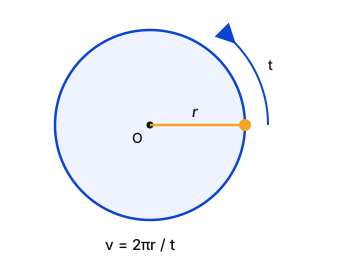
What is the speed v of an athlete, if the athlete takes t seconds to go once around a circular path of radius r ?
यदि एक धावक को त्रिज्या r वाले वृत्ताकार पथ का एक चक्कर लगाने में t सेकंड लगते हैं, तो धावक की चाल v क्या है?
  1. Av=2πr/t
  2. Bv=2 m/s
  3. Cv=0
  4. Dv=πr2/t
Show answer

Concept: Speed = distance ÷ time. In one round of a circle the distance covered is its circumference 2πr.

  1. Distance in one round =2πr.
  2. Time for one round =t.
  3. v=2πrt.

Yaad rakhein: πr2 is area, not distance — reject such options at once.

Answer: (A) v=2πr/t

अवधारणा: चाल = दूरी ÷ समय। वृत्त के एक चक्कर में तय दूरी उसकी परिधि 2πr होती है।

  1. एक चक्कर में दूरी =2πr।
  2. एक चक्कर का समय =t।
  3. v=2πrt।

याद रखें: πr2 क्षेत्रफल है, दूरी नहीं — ऐसे विकल्प तुरंत हटाएँ।

उत्तर: (A) v=2πr/t

RRB Technician Grade IIIGeneral ScienceUniform circular motionRRB Technician Grade III 2024 · 20 Dec Shift 2 →
Q2279.
Which of the options provides the correct explanation for the following statement?
Sweating cools down your body on a hot day.
निम्नलिखित कथन के लिए कौन-सा विकल्प सही व्याख्या प्रदान करता है?
गर्म दिन में पसीना आने से आपका शरीर ठंडा होता है।
  1. ASweating increases the body's temperature.पसीना आने से शरीर का तापमान बढ़ता है।
  2. BSweating increases blood circulation and cools the body.पसीना आने से रक्त परिसंचरण बढ़ता है और शरीर ठंडा होता है।
  3. CThe given statement is wrong.दिया गया कथन गलत है।
  4. DSweating causes rapid evaporation, which absorbs heat from the body surface and cools the body.पसीना आने से तीव्र वाष्पीकरण होता है, जो शरीर की सतह से ऊष्मा अवशोषित करता है और शरीर को ठंडा करता है।
Show answer

Concept: Evaporation needs latent heat; the liquid takes this heat from its surroundings, which cool down.

  1. Sweat on the skin evaporates.
  2. The heat needed for evaporation is absorbed from the body surface.
  3. So the body loses heat and feels cool.

Yaad rakhein: Same reason: earthen pot cools water; we wear cotton clothes in summer.

Answer: (D) Sweating causes rapid evaporation, which absorbs heat from the body surface and cools the body.

अवधारणा: वाष्पन के लिए गुप्त ऊष्मा चाहिए; द्रव यह ऊष्मा अपने परिवेश से लेता है, जिससे परिवेश ठंडा होता है।

  1. त्वचा पर पसीना वाष्पित होता है।
  2. वाष्पन हेतु आवश्यक ऊष्मा शरीर की सतह से अवशोषित होती है।
  3. इसलिए शरीर ऊष्मा खोता है और ठंडक महसूस होती है।

याद रखें: इसी कारण: मिट्टी का घड़ा पानी ठंडा रखता है; गर्मी में सूती कपड़े पहनते हैं।

उत्तर: (D) पसीना आने से तीव्र वाष्पीकरण होता है, जो शरीर की सतह से ऊष्मा अवशोषित करता है और शरीर को ठंडा करता है।

RRB Technician Grade IIIGeneral ScienceEvaporation causes coolingRRB Technician Grade III 2024 · 20 Dec Shift 2 →
Q2280.
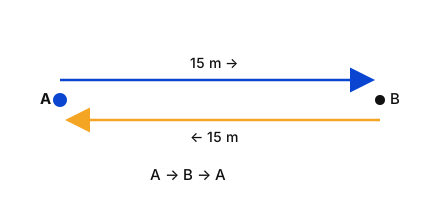
What is the displacement accomplished by an object if it moves 15 m to the right from point 'A' and then moves 15 m to the opposite direction to reach the same point 'A'?
यदि कोई वस्तु बिंदु 'A' से 15 m दाईं ओर चलती है और फिर विपरीत दिशा में 15 m चलकर उसी बिंदु 'A' पर पहुँच जाती है, तो वस्तु द्वारा तय किया गया विस्थापन कितना है?
  1. A0 m
  2. B15 m
  3. C30 m
  4. D7.5 m
Show answer

Concept: Displacement is the shortest straight-line distance from initial to final position (with direction); distance is the total path length.

  1. A → B: 15 m right; B → A: 15 m left.
  2. Final position = initial position A.
  3. Displacement =0 m (distance =15+15=30 m).

Trick: Back to the starting point → displacement is always zero.

Answer: (A) 0 m

अवधारणा: विस्थापन प्रारंभिक से अंतिम स्थिति तक की न्यूनतम सीधी दूरी (दिशा सहित) है; दूरी कुल पथ की लंबाई है।

  1. A → B: 15 m दाएँ; B → A: 15 m बाएँ।
  2. अंतिम स्थिति = प्रारंभिक स्थिति A।
  3. विस्थापन =0 m (दूरी =15+15=30 m)।

ट्रिक: आरंभ बिंदु पर लौट आए → विस्थापन हमेशा शून्य।

उत्तर: (A) 0 m

RRB Technician Grade IIIGeneral ScienceDistance and displacementRRB Technician Grade III 2024 · 20 Dec Shift 2 →