Question bank

Q&A: practice questions with answers

Search questions on any topic. Filter by exam category, exam, subject and topic, try the question, then open the answer and explanation.

Courses – airGurukul

3,200 questions found.

Q2461.
A 2.0 cm tall object is placed 20 cm from a convex lens of focal length 15 cm. What is the magnification produced by the lens?
2.0 cm ऊँची एक वस्तु को 15 cm फोकस दूरी वाले एक उत्तल लेंस से 20 cm की दूरी पर रखा गया है। लेंस द्वारा उत्पन्न आवर्धन क्या है?
  1. A+1
  2. B-3
  3. C- 1
  4. D+3
Show answer

Concept: Lens formula: 1v−1u=1f; magnification m=vu.

  1. u=−20 cm, f=+15 cm: 1v=115−120=160, so v=+60 cm
  2. m=60−20=−3 (real, inverted, 3 times enlarged)

Trick: The object is between f and 2f (20 cm lies between 15 and 30 cm), so the image is real, inverted and magnified: m must be negative with |m|>1, which is −3.

Answer: (B) -3

अवधारणा: लेंस सूत्र: 1v−1u=1f; आवर्धन m=vu

हल:

  1. u=−20 cm, f=+15 cm: 1v=115−120=160, v=+60 cm
  2. m=60−20=−3 (वास्तविक, उल्टा, 3 गुना बड़ा)

ट्रिक: वस्तु f और 2f के बीच है, इसलिए प्रतिबिंब वास्तविक, उल्टा, बड़ा होगा: m ऋणात्मक और |m|>1, यानी −3।

उत्तर: (B) -3

RRB Technician Grade IIIGeneral ScienceConvex lens – magnificationRRB Technician Grade III 2025 · 10 Mar Shift 2 →
Q2462.
The female reproductive part of the flower is known as:
पुष्प के मादा जनन भाग को क्या कहा जाता है?
  1. Asepalsबाह्यदल
  2. Bstamensपुंकेसर
  3. Cpetalsपंखुड़ियाँ (दल)
  4. Dpistilस्त्रीकेसर
Show answer

Concept: The pistil (carpel) is the female reproductive part.

  1. Pistil = stigma + style + ovary (ovules inside)
  2. Stamen (anther + filament) is the male part; sepals and petals are non-reproductive

Yaad rakhein: After fertilisation the ovary becomes the fruit and the ovules become seeds.

Answer: (D) pistil

अवधारणा: स्त्रीकेसर (पिस्टिल/अंडप) मादा जनन भाग है।

हल:

  1. स्त्रीकेसर = वर्तिकाग्र + वर्तिका + अंडाशय (बीजांड सहित)
  2. पुंकेसर (परागकोश + तंतु) नर भाग है; बाह्यदल और दल जनन भाग नहीं हैं

याद रखें: निषेचन के बाद अंडाशय फल बनता है और बीजांड बीज बनते हैं।

उत्तर: (D) स्त्रीकेसर

RRB Technician Grade IIIGeneral ScienceParts of a flowerRRB Technician Grade III 2025 · 10 Mar Shift 2 →
Q2463.
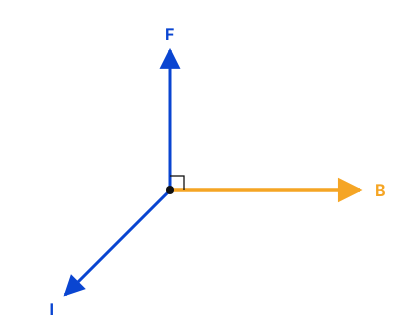
In Fleming’s Left Hand Rule, which finger represents the direction of the magnetic field?
फ्लेमिंग के वामहस्त नियम में, कौन-सी उँगली चुंबकीय क्षेत्र की दिशा को दर्शाती है?
  1. ALittle fingerकनिष्ठा (छोटी उँगली)
  2. BThumbअँगूठा
  3. CFirst (index) fingerपहली (तर्जनी) उँगली
  4. DMiddle fingerमध्यमा (बीच की उँगली)
Show answer

Concept: Thumb, first finger and middle finger are held mutually perpendicular.

  1. First (index) finger = magnetic Field
  2. Middle finger = Current
  3. Thumb = Motion (force on the conductor)

Trick: FBI order: F (thumb) = Force, B (index) = magnetic field, I (middle) = current. Or 'Father, Mother, Child' = Motion (thumb), Field (first), Current (middle).

Answer: (C) First (index) finger

अवधारणा: अंगूठा, तर्जनी और मध्यमा परस्पर लंबवत रखे जाते हैं।

हल:

  1. तर्जनी (first finger) = चुंबकीय क्षेत्र
  2. मध्यमा = विद्युत धारा
  3. अंगूठा = गति/बल

ट्रिक: FBI: F (अंगूठा) = Force, B (तर्जनी) = Field, I (मध्यमा) = Current।

उत्तर: (C) पहली (तर्जनी) उँगली

RRB Technician Grade IIIGeneral ScienceFleming's left-hand ruleRRB Technician Grade III 2025 · 10 Mar Shift 2 →
Q2464.
If a conductor has a potential difference of 1 V across its ends and a current of 1 A flows through it, what is the resistance of the conductor?
यदि किसी चालक के सिरों के बीच 1 V का विभवांतर है और उसमें 1 A धारा प्रवाहित होती है, तो चालक का प्रतिरोध (resistance) क्या है?
  1. A0.5 Ω
  2. B2 Ω
  3. C10 Ω
  4. D1 Ω
Show answer

Concept: R=VI.

  1. R=1V÷1A
  2. =1Ω

Yaad rakhein: This is the definition of 1 ohm: the resistance of a conductor through which 1 A flows when 1 V is applied across it.

Answer: (D) 1 Ω

अवधारणा: R=VI

हल:

  1. R=1V÷1A
  2. =1Ω

याद रखें: यही 1 ओम की परिभाषा है: 1 V विभवांतर पर 1 A धारा बहे तो प्रतिरोध 1 Ω।

उत्तर: (D) 1 Ω

RRB Technician Grade IIIGeneral ScienceOhm's law – definition of 1 ohmRRB Technician Grade III 2025 · 10 Mar Shift 2 →
Q2465.
What is the formula unit mass of ammonium sulphate (NH4)2SO4?
अमोनियम सल्फेट (NH4)2SO4 का सूत्र इकाई द्रव्यमान क्या है?
  1. A146 u
  2. B114 u
  3. C132 u
  4. D98 u
Show answer

Concept: Add the atomic masses: N = 14, H = 1, S = 32, O = 16 u. The formula is (NH4)2SO4.

  1. 2×NH4=2×(14+4)=36
  2. SO4=32+4×16=96
  3. Total = 36+96=132 u

Trick: Remember NH4=18 and SO4=96 (H2SO4=98, take away 2 H). So 2×18+96=132.

Answer: (C) 132 u

अवधारणा: परमाणु द्रव्यमान जोड़ें: N = 14, H = 1, S = 32, O = 16 u; सूत्र (NH4)2SO4

हल:

  1. 2×NH4=2×18=36
  2. SO4=32+64=96
  3. कुल = 132 u

ट्रिक: NH4=18 और SO4=96 (H2SO4=98 में से 2 H घटाएँ) याद रखें: 2×18+96=132।

उत्तर: (C) 132 u

RRB Technician Grade IIIGeneral ScienceFormula unit massRRB Technician Grade III 2025 · 10 Mar Shift 2 →
Q2466.
Which of the following observations best confirms that a neutralisation reaction has occurred?
निम्नलिखित में से कौन-सा प्रेक्षण सबसे अच्छी तरह पुष्टि करता है कि उदासीनीकरण अभिक्रिया हुई है?
  1. AThe temperature of the solution drops drastically.विलयन का ताप अत्यधिक घट जाता है।
  2. BThe solution changes from blue to red.विलयन नीले से लाल हो जाता है।
  3. CThe pH of the solution becomes close to 7.विलयन का pH, 7 के निकट हो जाता है।
  4. DA gas with a pungent smell is evolved.तीखी गंध वाली एक गैस निकलती है।
Show answer

Concept: Acid + base → salt + water; H⁺ and OH⁻ cancel each other.

  1. When neutralisation is complete, the solution is neither acidic nor basic, so pH ≈ 7
  2. The reaction is exothermic, so the temperature rises (it does not fall)
  3. Blue → red litmus shows an acid, not neutralisation; a pungent gas is not a sign of it

Trick: 'Neutral' means pH 7. The option with pH 7 is the right one.

Answer: (C) The pH of the solution becomes close to 7.

अवधारणा: अम्ल + क्षार → लवण + जल; H⁺ और OH⁻ एक-दूसरे को निष्क्रिय करते हैं।

हल:

  1. पूर्ण उदासीनीकरण पर विलयन न अम्लीय न क्षारीय रहता है, यानी pH ≈ 7
  2. अभिक्रिया ऊष्माक्षेपी है, ताप बढ़ता है (घटता नहीं)
  3. नीला → लाल अम्ल दर्शाता है; तीखी गैस उदासीनीकरण का प्रमाण नहीं

ट्रिक: 'उदासीन' = pH 7; उसी विकल्प को चुनें।

उत्तर: (C) विलयन का pH, 7 के निकट हो जाता है।

RRB Technician Grade IIIGeneral ScienceNeutralisation reactionRRB Technician Grade III 2025 · 10 Mar Shift 2 →
Q2467.
The alpha particles that passed straight through the gold foil showed that:
स्वर्ण पन्नी से सीधे पार निकल जाने वाले अल्फा कणों ने यह दर्शाया कि:
  1. Athe nucleus is negatively chargedनाभिक ऋणावेशित है
  2. Bthe atom is mostly empty spaceपरमाणु का अधिकांश भाग रिक्त है
  3. Cthe nucleus is hugeनाभिक बहुत बड़ा है
  4. Dthe atom has a positive chargeपरमाणु पर धनावेश होता है
Show answer

Concept: Each observation of α-scattering leads to one conclusion.

  1. Most α-particles passed straight through, so the atom is mostly empty space
  2. A few were deflected, so the positive charge is concentrated in a small region
  3. Very few (about 1 in 12,000) bounced back, so the nucleus is very small and dense

Yaad rakhein: The nucleus is about 10⁵ times smaller than the atom (radius ~10⁻¹⁵ m vs ~10⁻¹⁰ m).

Answer: (B) the atom is mostly empty space

अवधारणा: α-प्रकीर्णन के हर प्रेक्षण से एक निष्कर्ष निकलता है।

हल:

  1. अधिकांश α-कण सीधे निकल गए, यानी परमाणु का अधिकांश भाग खाली है
  2. कुछ विक्षेपित हुए, यानी धनावेश छोटे क्षेत्र में केंद्रित है
  3. बहुत कम (लगभग 12,000 में 1) वापस लौटे, यानी नाभिक बहुत छोटा और सघन है

याद रखें: नाभिक परमाणु से लगभग 10⁵ गुना छोटा है।

उत्तर: (B) परमाणु का अधिकांश भाग रिक्त है

RRB Technician Grade IIIGeneral ScienceRutherford's α-scattering experimentRRB Technician Grade III 2025 · 10 Mar Shift 2 →
Q2468.
Why are xylem and phloem called “complex permanent tissues”?
जाइलम और फ्लोएम को “जटिल स्थायी ऊतक” क्यों कहा जाता है?
  1. AThey consist of only one type of cell for performing a single function.इनमें एक ही कार्य करने के लिए केवल एक प्रकार की कोशिकाएँ होती हैं।
  2. BThey are temporary in function and disappear after growth.इनका कार्य अस्थायी होता है और वृद्धि के बाद ये समाप्त हो जाते हैं।
  3. CThey contain different types of cells working together for transport.इनमें विभिन्न प्रकार की कोशिकाएँ होती हैं जो परिवहन के लिए साथ मिलकर कार्य करती हैं।
  4. DTheir cells can divide and form new tissues.इनकी कोशिकाएँ विभाजित होकर नए ऊतक बना सकती हैं।
Show answer

Concept: A complex tissue is made of more than one type of cell, all working together for one function.

  1. Xylem: tracheids, vessels, xylem parenchyma, xylem fibres; carries water and minerals
  2. Phloem: sieve tubes, companion cells, phloem parenchyma, phloem fibres; carries food
  3. They are 'permanent' because their cells have lost the ability to divide

Yaad rakhein: Simple permanent tissues (parenchyma, collenchyma, sclerenchyma) have only one type of cell.

Answer: (C) They contain different types of cells working together for transport.

अवधारणा: जटिल ऊतक में एक से अधिक प्रकार की कोशिकाएँ एक साथ एक कार्य करती हैं।

हल:

  1. जाइलम: ट्रेकीड, वाहिकाएँ, जाइलम मृदूतक, जाइलम रेशे; जल व खनिज का परिवहन
  2. फ्लोएम: चालनी नलिका, सहचर कोशिका, फ्लोएम मृदूतक, फ्लोएम रेशे; भोजन का परिवहन
  3. 'स्थायी' क्योंकि इनकी कोशिकाएँ विभाजन क्षमता खो चुकी हैं

याद रखें: सरल स्थायी ऊतक (मृदूतक, स्थूलकोण, दृढ़ोतक) में एक ही प्रकार की कोशिकाएँ होती हैं।

उत्तर: (C) इनमें विभिन्न प्रकार की कोशिकाएँ होती हैं जो परिवहन के लिए साथ मिलकर कार्य करती हैं।

RRB Technician Grade IIIGeneral ScienceComplex permanent tissueRRB Technician Grade III 2025 · 10 Mar Shift 2 →
Q2469.
Which of the following statements is correct regarding molecules of an element?
किसी तत्व के अणुओं के संबंध में निम्नलिखित में से कौन-सा कथन सही है?
  1. AMolecules of an element always contain two or more different types of atoms.किसी तत्व के अणुओं में सदैव दो या अधिक भिन्न प्रकार के परमाणु होते हैं।
  2. BAll elements exist as monoatomic molecules in their natural state.सभी तत्व अपनी प्राकृतिक अवस्था में एकपरमाणुक अणुओं के रूप में पाए जाते हैं।
  3. CA molecule of an element consists of only one type of atom bonded together.किसी तत्व का अणु केवल एक ही प्रकार के परमाणुओं के आपस में आबंधित होने से बनता है।
  4. DElements do not form molecules, only compounds do.तत्व अणु नहीं बनाते, केवल यौगिक बनाते हैं।
Show answer

Concept: A molecule of an element contains only one kind of atom.

  1. Examples: O₂, N₂, O₃, P₄, S₈ (same atoms bonded together)
  2. Noble gases (He, Ne) are monoatomic, but not all elements are, so B is wrong
  3. Different types of atoms make a compound, not an element (A is wrong)

Yaad rakhein: Atomicity: Ar = 1, O₂ = 2, O₃ = 3, P₄ = 4, S₈ = 8.

Answer: (C) A molecule of an element consists of only one type of atom bonded together.

अवधारणा: तत्व के अणु में केवल एक ही प्रकार के परमाणु होते हैं।

हल:

  1. उदाहरण: O₂, N₂, O₃, P₄, S₈
  2. उत्कृष्ट गैसें (He, Ne) एकपरमाणुक हैं, पर सभी तत्व नहीं, अतः B गलत
  3. भिन्न परमाणु यौगिक बनाते हैं, तत्व नहीं (A गलत)

याद रखें: परमाणुकता: Ar = 1, O₂ = 2, O₃ = 3, P₄ = 4, S₈ = 8।

उत्तर: (C) किसी तत्व का अणु केवल एक ही प्रकार के परमाणुओं के आपस में आबंधित होने से बनता है।

RRB Technician Grade IIIGeneral ScienceMolecules of elementsRRB Technician Grade III 2025 · 10 Mar Shift 2 →
Q2470.
In a school canteen, students notice that many plastic cups and plates are thrown away daily. To solve this problem, they suggest switching to steel plates and reusable water bottles. This action mainly promotes ________.
एक विद्यालय की कैंटीन में, विद्यार्थी देखते हैं कि प्रतिदिन बहुत-से प्लास्टिक के कप और प्लेटें फेंक दी जाती हैं। इस समस्या को हल करने के लिए, वे स्टील की प्लेटों और पुन: उपयोग योग्य पानी की बोतलों को अपनाने का सुझाव देते हैं। यह कार्य मुख्य रूप से ________ को बढ़ावा देता है।
  1. AMore plastic recyclingअधिक प्लास्टिक पुनर्चक्रण
  2. BFaster waste collectionतेज़ अपशिष्ट संग्रहण
  3. CBetter packaging designबेहतर पैकेजिंग डिज़ाइन
  4. DReduction and reuse of wasteअपशिष्ट में कमी और उसका पुन: उपयोग
Show answer

Concept: 3R = Reduce, Reuse, Recycle.

  1. Steel plates and bottles are used again and again, which is reuse
  2. Fewer disposable cups thrown away means waste is reduced
  3. Nothing is reprocessed, so this is not recycling

Yaad rakhein: Reuse is better than recycle because it needs no energy for reprocessing.

Answer: (D) Reduction and reuse of waste

अवधारणा: 3R = कम करना (Reduce), पुनः उपयोग (Reuse), पुनर्चक्रण (Recycle)

हल:

  1. स्टील की प्लेटें और बोतलें बार-बार उपयोग होती हैं, यह पुनः उपयोग है
  2. डिस्पोज़ेबल कप कम फेंके जाते हैं, यानी कचरे में कमी
  3. कोई पुनर्संसाधन नहीं होता, इसलिए यह पुनर्चक्रण नहीं

याद रखें: पुनः उपयोग, पुनर्चक्रण से बेहतर है क्योंकि इसमें दोबारा संसाधन के लिए ऊर्जा नहीं लगती।

उत्तर: (D) अपशिष्ट में कमी और उसका पुन: उपयोग

RRB Technician Grade IIIGeneral ScienceWaste management – 3RRRB Technician Grade III 2025 · 10 Mar Shift 2 →
Q2471.
Two beakers contain sugar solution of different concentrations. A semipermeable membrane separates them. After some time, the level of solution in one beaker rises while in the other, it falls. Which property of solutions does this experiment best demonstrate, and why?
दो बीकरों में भिन्न-भिन्न सांद्रता वाले चीनी के विलयन हैं। एक अर्धपारगम्य झिल्ली उन्हें अलग करती है। कुछ समय बाद, एक बीकर में विलयन का स्तर बढ़ जाता है जबकि दूसरे में घट जाता है। यह प्रयोग विलयनों के किस गुण को सबसे अच्छी तरह प्रदर्शित करता है, और क्यों?
  1. ASedimentation – because sugar crystals settle at the bottom due to gravityअवसादन – क्योंकि गुरुत्व के कारण चीनी के क्रिस्टल तली में बैठ जाते हैं
  2. BDiffusion – because sugar molecules move freely across the membrane until equilibrium is reachedविसरण – क्योंकि साम्यावस्था प्राप्त होने तक चीनी के अणु झिल्ली के आर-पार स्वतंत्र रूप से गति करते हैं
  3. CEvaporation – because water molecules escape from the surface of the solution causing a level differenceवाष्पन – क्योंकि जल के अणु विलयन की सतह से बाहर निकल जाते हैं जिससे स्तर में अंतर आ जाता है
  4. DOsmosis – because solvent molecules move from the dilute solution to the concentrated solution through the semipermeable membraneपरासरण (osmosis) – क्योंकि विलायक के अणु अर्धपारगम्य झिल्ली से होकर तनु विलयन से सांद्र विलयन की ओर गति करते हैं
Show answer

Concept: Osmosis is the movement of solvent (water) through a semipermeable membrane from a dilute to a concentrated solution.

  1. The membrane lets water pass but not sugar
  2. Water moves into the concentrated side, so its level rises and the other side falls
  3. Diffusion is wrong because sugar cannot cross a semipermeable membrane

Trick: Semipermeable membrane + change in levels = osmosis. Water moves toward more solute.

Answer: (D) Osmosis – because solvent molecules move from the dilute solution to the concentrated solution through the semipermeable membrane

अवधारणा: परासरण: अर्धपारगम्य झिल्ली से विलायक (जल) का तनु से सांद्र विलयन की ओर जाना।

हल:

  1. झिल्ली जल को जाने देती है, चीनी को नहीं
  2. जल सांद्र भाग में जाता है, वहाँ स्तर बढ़ता है और दूसरी ओर घटता है
  3. विसरण गलत, क्योंकि चीनी झिल्ली पार नहीं कर सकती

ट्रिक: अर्धपारगम्य झिल्ली + स्तर में परिवर्तन = परासरण; जल अधिक विलेय की ओर जाता है।

उत्तर: (D) परासरण (osmosis) – क्योंकि विलायक के अणु अर्धपारगम्य झिल्ली से होकर तनु विलयन से सांद्र विलयन की ओर गति करते हैं

RRB Technician Grade IIIGeneral ScienceOsmosisRRB Technician Grade III 2025 · 10 Mar Shift 2 →
Q2472.
Which part of a plant cell helps it stay intact and prevents bursting in a hypotonic environment?
पादप कोशिका का कौन-सा भाग अल्पपरासारी (hypotonic) वातावरण में उसे अक्षुण्ण बनाए रखने में सहायता करता है और फटने से रोकता है?
  1. AVacuoleरिक्तिका
  2. BCytoplasmकोशिकाद्रव्य
  3. CCell wall made of celluloseसेलुलोस से बनी कोशिका भित्ति
  4. DCell membraneकोशिका झिल्ली
Show answer

Concept: In a hypotonic medium water enters the cell by osmosis and the cell swells.

  1. The rigid cellulose cell wall resists the swelling, so the cell becomes turgid but does not burst
  2. Animal cells have no cell wall, so they can burst (e.g. RBCs in water)

Yaad rakhein: The pressure of the cell contents against the wall is called turgor pressure; it keeps soft plant parts firm.

Answer: (C) Cell wall made of cellulose

अवधारणा: अल्पपरासारी (hypotonic) माध्यम में जल परासरण से कोशिका में आता है और कोशिका फूलती है।

हल:

  1. कठोर सेलुलोज़ भित्ति फूलने को रोकती है, कोशिका स्फीत (turgid) होती है पर फटती नहीं
  2. जंतु कोशिका में भित्ति नहीं होती, इसलिए वह फट सकती है (जैसे जल में RBC)

याद रखें: भित्ति पर कोशिका द्रव्य का दबाव स्फीति दाब कहलाता है; यह कोमल पादप भागों को सीधा रखता है।

उत्तर: (C) सेलुलोस से बनी कोशिका भित्ति

RRB Technician Grade IIIGeneral SciencePlant cell wallRRB Technician Grade III 2025 · 10 Mar Shift 2 →
Q2473.
A body of mass 10 kg is thrown vertically upwards with a velocity of 10 m/s. How much potential energy will be possessed by the body when it reaches the maximum height? (Take g = 10 m/s2)
10 kg द्रव्यमान की एक वस्तु को 10 m/s के वेग से ऊर्ध्वाधर ऊपर की ओर फेंका जाता है। अधिकतम ऊँचाई पर पहुँचने पर वस्तु में कितनी स्थितिज ऊर्जा होगी? (g = 10 m/s2 लीजिए)
  1. A500 J
  2. B25 J
  3. C2.5 J
  4. D250 J
Show answer

Concept: At maximum height all the initial KE has changed into PE.

  1. KE=12mv2=12×10×102=500 J
  2. PE at the top = 500 J (check: h=v22g=5 m, so mgh=10×10×5=500 J)

Trick: PE at the top = KE at launch, so you do not need to find the height.

Answer: (A) 500 J

अवधारणा: अधिकतम ऊँचाई पर पूरी प्रारंभिक गतिज ऊर्जा स्थितिज ऊर्जा बन जाती है।

हल:

  1. KE=12mv2=12×10×100=500 J
  2. शीर्ष पर PE = 500 J (जाँच: h=v22g=5 m, mgh=500 J)

ट्रिक: शीर्ष पर PE = प्रारंभ की KE, ऊँचाई निकालने की ज़रूरत नहीं।

उत्तर: (A) 500 J

RRB Technician Grade IIIGeneral ScienceConservation of energy – vertical throwRRB Technician Grade III 2025 · 10 Mar Shift 2 →
Q2474.
A train starting from rest reaches a speed of 40 km/h in 10 minutes. What is its final speed in m/s?
विरामावस्था से चलना प्रारंभ करने वाली एक रेलगाड़ी 10 मिनट में 40 km/h की चाल प्राप्त कर लेती है। m/s में इसकी अंतिम चाल क्या है?
  1. A4 m/s
  2. B400 m/s
  3. C6.67 m/s
  4. D11.11 m/s
Show answer

Concept: To convert km/h to m/s, multiply by 518.

  1. 40×518=20018
  2. =11.11 m/s (the 10 minutes is extra data)

Trick: Divide by 3.6: 40÷3.6≈11.1.

Answer: (D) 11.11 m/s

अवधारणा: km/h को m/s में बदलने के लिए 518 से गुणा करें।

हल:

  1. 40×518=20018
  2. =11.11 m/s (10 मिनट का डेटा अतिरिक्त है)

ट्रिक: 3.6 से भाग दें: 40÷3.6≈11.1।

उत्तर: (D) 11.11 m/s

RRB Technician Grade IIIGeneral ScienceUnit conversion – km/h to m/sRRB Technician Grade III 2025 · 10 Mar Shift 2 →
Q2475.
Which of the following pairs must represent the same element?
निम्नलिखित में से कौन-सा युग्म अनिवार्य रूप से एक ही तत्व को दर्शाता है?
  1. ASame mass number, different atomic numbersसमान द्रव्यमान संख्या, भिन्न परमाणु संख्याएँ
  2. BSame number of neutrons, different atomic numbersन्यूट्रॉनों की समान संख्या, भिन्न परमाणु संख्याएँ
  3. CDifferent number of protons, same number of neutronsप्रोटॉनों की भिन्न संख्या, न्यूट्रॉनों की समान संख्या
  4. DSame atomic number, different mass numbersसमान परमाणु संख्या, भिन्न द्रव्यमान संख्याएँ
Show answer

Concept: The atomic number (number of protons) decides which element an atom is.

  1. Same atomic number but different mass numbers means isotopes of the same element (e.g. 12C, 14C)
  2. Different atomic numbers always mean different elements (isobars, isotones)

Yaad rakhein: Isotopes: same Z. Isobars: same A (e.g. 40Ca, 40Ar). Isotones: same number of neutrons.

Answer: (D) Same atomic number, different mass numbers

अवधारणा: परमाणु क्रमांक (प्रोटॉनों की संख्या) से तत्व की पहचान होती है।

हल:

  1. समान परमाणु क्रमांक, भिन्न द्रव्यमान संख्या = एक ही तत्व के समस्थानिक (12C, 14C)
  2. भिन्न परमाणु क्रमांक = भिन्न तत्व (समभारिक, समन्यूट्रॉनिक)

याद रखें: समस्थानिक: समान Z; समभारिक: समान A (40Ca, 40Ar); समन्यूट्रॉनिक: समान न्यूट्रॉन।

उत्तर: (D) समान परमाणु संख्या, भिन्न द्रव्यमान संख्याएँ

RRB Technician Grade IIIGeneral ScienceIsotopes – identity of an elementRRB Technician Grade III 2025 · 10 Mar Shift 2 →
Q2476.
Which of the following are properties of ionic compounds?
A. High melting point
B. Soluble in non-polar solvents
C. Conduct electricity in solid state
D. Brittle in nature
निम्नलिखित में से कौन-से आयनिक यौगिकों के गुण हैं?
A. उच्च गलनांक
B. अध्रुवीय विलायकों में विलेय
C. ठोस अवस्था में विद्युत का चालन करते हैं
D. भंगुर प्रकृति
  1. AOnly (C) and (B)केवल (C) और (B)
  2. BOnly (A) and (B)केवल (A) और (B)
  3. COnly (C) and (D)केवल (C) और (D)
  4. DOnly (A) and (D)केवल (A) और (D)
Show answer

Concept: Ions are held by strong electrostatic forces in a rigid crystal lattice.

  1. Strong attraction gives a high melting point (A ✓); the rigid lattice makes them brittle (D ✓)
  2. They dissolve in water but not in non-polar solvents like kerosene (B ✗)
  3. They conduct only when molten or in solution, not as solids, since the ions cannot move (C ✗)

Trick: Rule out B and C (both are false), which leaves only A and D.

Answer: (D) Only (A) and (D)

अवधारणा: आयन मज़बूत स्थिरवैद्युत बल से कठोर क्रिस्टल जालक में बंधे रहते हैं।

हल:

  1. प्रबल आकर्षण से उच्च गलनांक (A ✓); कठोर जालक से भंगुर (D ✓)
  2. जल में घुलते हैं, केरोसिन जैसे अध्रुवीय विलायक में नहीं (B ✗)
  3. ठोस में आयन गतिशील नहीं, केवल गलित/विलयन में चालन (C ✗)

ट्रिक: B और C दोनों गलत हैं, उन्हें हटाते ही केवल A और D बचते हैं।

उत्तर: (D) केवल (A) और (D)

RRB Technician Grade IIIGeneral ScienceProperties of ionic compoundsRRB Technician Grade III 2025 · 10 Mar Shift 2 →
Q2477.
What is the primary function of the axon in a neuron?
न्यूरॉन में तंत्रिकाक्ष (axon) का प्राथमिक कार्य क्या है?
  1. AStore neurotransmitters for later use.बाद में उपयोग के लिए तंत्रिकाप्रेषकों को संग्रहित करना।
  2. BProvide structural support to the neuron.न्यूरॉन को संरचनात्मक आधार प्रदान करना।
  3. CTransmit electrical impulses to other neurons or target organs.विद्युत आवेगों को अन्य न्यूरॉनों या लक्ष्य अंगों तक संचारित करना।
  4. DSupply nutrients to the cell body.कोशिका काय को पोषक तत्वों की आपूर्ति करना।
Show answer

Concept: Dendrite → cell body → axon → nerve ending.

  1. Dendrites receive the signal; the axon carries the electrical impulse away from the cell body
  2. At the axon ending, chemicals are released across the synapse to the next neuron or to a muscle/gland

Yaad rakhein: The longest cell in the human body is the nerve cell (neuron).

Answer: (C) Transmit electrical impulses to other neurons or target organs.

अवधारणा: डेंड्राइट → कोशिका काय → एक्सॉन → तंत्रिका सिरा

हल:

  1. डेंड्राइट संदेश ग्रहण करते हैं; एक्सॉन विद्युत आवेग को कोशिका काय से दूर ले जाता है
  2. एक्सॉन के सिरे पर रसायन सिनैप्स के पार अगले न्यूरॉन या पेशी/ग्रंथि तक जाते हैं

याद रखें: मानव शरीर की सबसे लंबी कोशिका तंत्रिका कोशिका (न्यूरॉन) है।

उत्तर: (C) विद्युत आवेगों को अन्य न्यूरॉनों या लक्ष्य अंगों तक संचारित करना।

RRB Technician Grade IIIGeneral ScienceNeuron – axonRRB Technician Grade III 2025 · 10 Mar Shift 2 →
Q2478.
What is produced when an acid reacts with a metal hydrogen carbonate?
जब कोई अम्ल किसी धातु हाइड्रोजनकार्बोनेट के साथ अभिक्रिया करता है, तो क्या उत्पन्न होता है?
  1. ASalt, oxygen and waterलवण, ऑक्सीजन और जल
  2. BSalt, carbon dioxide and waterलवण, कार्बन डाइऑक्साइड और जल
  3. CSalt, hydrogen gas and waterलवण, हाइड्रोजन गैस और जल
  4. DSalt, ammonia and waterलवण, अमोनिया और जल
Show answer

Concept: Acid + carbonate/hydrogen carbonate → salt + CO₂ + water.

  1. NaHCO3+HCl→NaCl+H2O+CO2↑
  2. CO₂ turns lime water milky

Trick: 'Carbonate' means CO₂ will be formed. Acid + metal gives H₂; acid + carbonate gives CO₂.

Answer: (B) Salt, carbon dioxide and water

अवधारणा: अम्ल + कार्बोनेट/हाइड्रोजन कार्बोनेट → लवण + CO₂ + जल

हल:

  1. NaHCO3+HCl→NaCl+H2O+CO2↑
  2. CO₂ चूने के पानी को दूधिया कर देती है

ट्रिक: 'कार्बोनेट' का मतलब CO₂ बनेगी; अम्ल + धातु = H₂, अम्ल + कार्बोनेट = CO₂।

उत्तर: (B) लवण, कार्बन डाइऑक्साइड और जल

RRB Technician Grade IIIGeneral ScienceAcid + metal hydrogen carbonateRRB Technician Grade III 2025 · 10 Mar Shift 2 →
Q2479.
Which of the following movements is controlled by unstriated and involuntary smooth muscle tissue?
निम्नलिखित में से कौन-सी गति अरेखित और अनैच्छिक चिकनी पेशी ऊतक द्वारा नियंत्रित होती है?
  1. AMoving the legs to walkचलने के लिए पैरों को हिलाना
  2. BRhythmic contraction of the heartहृदय का लयबद्ध संकुचन
  3. CMovement of food in the alimentary canalआहार नाल में भोजन की गति
  4. DWaving the handहाथ हिलाना
Show answer

Concept: Smooth muscle is involuntary and found in the walls of internal organs.

  1. Peristalsis (movement of food in the alimentary canal) is done by smooth muscle
  2. Walking and waving use striated (voluntary) muscle; the heart has cardiac muscle (striated + involuntary)

Trick: Heart = involuntary but striated, so it is the trap option. Only gut movement is both involuntary and unstriated.

Answer: (C) Movement of food in the alimentary canal

अवधारणा: चिकनी पेशी अनैच्छिक होती है और आंतरिक अंगों की दीवारों में पाई जाती है।

हल:

  1. आहारनाल में भोजन की गति (क्रमाकुंचन) चिकनी पेशी से होती है
  2. चलना, हाथ हिलाना = रेखित (ऐच्छिक) पेशी; हृदय = हृदय पेशी (रेखित + अनैच्छिक)

ट्रिक: हृदय अनैच्छिक पर रेखित है, यही जाल विकल्प है; अनैच्छिक + अरेखित केवल आहारनाल।

उत्तर: (C) आहार नाल में भोजन की गति

RRB Technician Grade IIIGeneral ScienceSmooth (unstriated) muscleRRB Technician Grade III 2025 · 10 Mar Shift 2 →
Q2480.
The principal role of the large central vacuole in mature plant cells is to:
परिपक्व पादप कोशिकाओं में बड़ी केंद्रीय रिक्तिका की प्रमुख भूमिका है:
  1. AControl cell division and heredity.कोशिका विभाजन और आनुवंशिकता को नियंत्रित करना।
  2. BCarry out cellular respiration to produce energy.ऊर्जा उत्पन्न करने के लिए कोशिकीय श्वसन करना।
  3. CSynthesize proteins for export.निर्यात के लिए प्रोटीनों का संश्लेषण करना।
  4. DStore cell sap and help maintain turgor pressure.कोशिका रस का संग्रह करना और स्फीति दाब बनाए रखने में सहायता करना।
Show answer

Concept: Mature plant cells have one large central vacuole filled with cell sap.

  1. It stores water, sugars, amino acids, salts and wastes
  2. It keeps the cell turgid (turgor pressure), giving rigidity to the plant
  3. Heredity = nucleus, respiration = mitochondria, protein synthesis = ribosomes

Yaad rakhein: A vacuole can take up 50–90% of a mature plant cell's volume; animal cells have small vacuoles.

Answer: (D) Store cell sap and help maintain turgor pressure.

अवधारणा: परिपक्व पादप कोशिका में कोशिका रस से भरी एक बड़ी केंद्रीय रिक्तिका होती है।

हल:

  1. जल, शर्करा, अमीनो अम्ल, लवण और अपशिष्ट संचित करती है
  2. स्फीति दाब बनाए रखकर पौधे को दृढ़ता देती है
  3. आनुवंशिकता = केंद्रक, श्वसन = माइटोकॉन्ड्रिया, प्रोटीन = राइबोसोम

याद रखें: रिक्तिका पादप कोशिका का 50–90% आयतन घेर सकती है; जंतु कोशिका में ये छोटी होती हैं।

उत्तर: (D) कोशिका रस का संग्रह करना और स्फीति दाब बनाए रखने में सहायता करना।

RRB Technician Grade IIIGeneral SciencePlant cell vacuoleRRB Technician Grade III 2025 · 10 Mar Shift 2 →