Question bank

Q&A: practice questions with answers

Search questions on any topic. Filter by exam category, exam, subject and topic, try the question, then open the answer and explanation.

Courses – airGurukul

3,200 questions found.

Q2641.
In a certain code language,
A # B means ‘A is the sister of B’,
A + B means ‘A is the son of B’,
A ÷ B means ‘A is the wife of B’,
and A @ B means ‘A is the father of B’.
How is A related to T if ‘A + B # H @ K ÷ T’?
एक निश्चित कूट भाषा में,
A # B का अर्थ है ‘A, B की बहन है’,
A + B का अर्थ है ‘A, B का पुत्र है’,
A ÷ B का अर्थ है ‘A, B की पत्नी है’,
और A @ B का अर्थ है ‘A, B का पिता है’।
यदि ‘A + B # H @ K ÷ T’ है, तो A, T से किस प्रकार संबंधित है?
  1. AWife's fatherपत्नी का पिता
  2. BWife's brotherपत्नी का भाई
  3. CWife's father's sister's husbandपत्नी के पिता की बहन का पति
  4. DWife's father's sister's sonपत्नी के पिता की बहन का पुत्र
Show answer

Concept: Decode from T backwards to A.
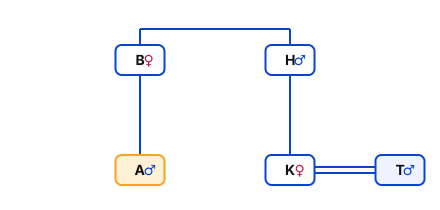
  1. K ÷ T → K is T's wife.
  2. H @ K → H is K's father (T's wife's father).
  3. B # H → B is H's sister.
  4. A + B → A is B's son.
  5. So A = wife's father's sister's son.

Trick: Read the chain from the end (T) to the start (A) and keep adding ''s'.

Answer: (D) Wife's father's sister's son

अवधारणा: T से पीछे की ओर A तक डिकोड करें।

  1. K ÷ T → K, T की पत्नी
  2. H @ K → H, K का पिता (पत्नी के पिता)
  3. B # H → B, H की बहन
  4. A + B → A, B का पुत्र
  5. अतः A = पत्नी के पिता की बहन का पुत्र

ट्रिक: श्रृंखला को अंत (T) से शुरू (A) तक पढ़ें और 'का/की' जोड़ते जाएँ।

उत्तर: (D) पत्नी के पिता की बहन का पुत्र
RRB Technician Grade IIIGeneral Intelligence and ReasoningCoded blood relationsRRB Technician Grade III 2025 · 9 Mar Shift 3 →
Q2642.
In a certain code language, ‘PICK’ is coded as ‘2384’ and ‘SKIP’ is coded as ‘4638’. What is the code for ‘S’ in that language?
एक निश्चित कूट भाषा में, ‘PICK’ को ‘2384’ के रूप में कूटबद्ध किया जाता है और ‘SKIP’ को ‘4638’ के रूप में कूटबद्ध किया जाता है। उस भाषा में ‘S’ के लिए कूट क्या है?
  1. A8
  2. B3
  3. C6
  4. D2
Show answer

Concept: Common letters ↔ common digits; leftover letter ↔ leftover digit.

  1. PICK → 2384, SKIP → 4638.
  2. Common letters P, I, K ↔ common digits 3, 8, 4.
  3. C = 2 (left in PICK), S = 6 (left in SKIP).

Trick: Digit in SKIP's code not in PICK's code → 6 = S.

Answer: (C) 6

अवधारणा: सामान्य अक्षर ↔ सामान्य अंक; बचा अक्षर ↔ बचा अंक।

  1. PICK → 2384, SKIP → 4638
  2. सामान्य P, I, K ↔ 3, 8, 4
  3. C = 2, S = 6

ट्रिक: SKIP के कोड का वह अंक जो PICK में नहीं → 6 = S।

उत्तर: (C) 6

RRB Technician Grade IIIGeneral Intelligence and ReasoningCoding-decoding – common lettersRRB Technician Grade III 2025 · 9 Mar Shift 3 →
Q2643.
If ‘A’ stands for ‘÷’, ‘B’ stands for ‘×’, ‘C’ stands for ‘+’ and ‘D’ stands for ‘−‘, what will come in place of the question mark ‘?’ in the following equation?
57 D 34 C 90 A 18 B 6 = ?
यदि ‘A’ का अर्थ ‘÷’, ‘B’ का अर्थ ‘×’, ‘C’ का अर्थ ‘+’ और ‘D’ का अर्थ ‘−‘ है, तो निम्नलिखित समीकरण में प्रश्न चिह्न ‘?’ के स्थान पर क्या आएगा?
57 D 34 C 90 A 18 B 6 = ?
  1. A54
  2. B55
  3. C57
  4. D53
Show answer

Concept: Replace letters by signs, then use BODMAS.

  1. 57−34+90÷18×6
  2. 90÷18=5; 5×6=30.
  3. 57−34+30=53.

Trick: Do ÷ and × left to right before + and −.

Answer: (D) 53

अवधारणा: अक्षरों की जगह चिह्न रखें, फिर BODMAS।

  1. 57−34+90÷18×6
  2. 90÷18=5; 5×6=30
  3. 57−34+30=53

ट्रिक: + और − से पहले ÷ और × को बाएँ से दाएँ हल करें।

उत्तर: (D) 53

RRB Technician Grade IIIGeneral Intelligence and ReasoningMathematical operations – letter substitutionRRB Technician Grade III 2025 · 9 Mar Shift 3 →
Q2644.
Select the set in which the numbers are related in the same way as are the numbers of the following sets.
(Note: Operations should be performed on the whole numbers, without breaking down the numbers into their constituent digits. E.g. 13 – Operations on 13 such as
adding/subtracting/multiplying to 13 can be performed. Breaking down 13 into 1 and 3 and then performing mathematical operations on 1 and 3 is not allowed.)
(6, 18, 14)
(8, 20, 16)
उस समुच्चय का चयन कीजिए जिसमें संख्याएँ उसी प्रकार संबंधित हैं जिस प्रकार निम्नलिखित समुच्चयों की संख्याएँ संबंधित हैं।
(ध्यान दें: संक्रियाएँ संख्याओं को उनके घटक अंकों में तोड़े बिना, पूर्ण संख्याओं पर की जानी चाहिए। उदाहरण के लिए 13 – 13 पर संक्रियाएँ जैसे 13 में
जोड़ना/घटाना/गुणा करना आदि किया जा सकता है। 13 को 1 और 3 में तोड़ना और फिर 1 और 3 पर गणितीय संक्रियाएँ करना वर्जित है।)
(6, 18, 14)
(8, 20, 16)
  1. A(14, 26, 30)
  2. B(12, 28,24)
  3. C(13, 25, 21)
  4. D(9, 21, 25)
Show answer

Concept: Find the operations linking the three numbers.

  1. (6, 18, 14): 6 + 12 = 18, 18 − 4 = 14.
  2. (8, 20, 16): 8 + 12 = 20, 20 − 4 = 16.
  3. (13, 25, 21): 13 + 12 = 25, 25 − 4 = 21 ✓.

Trick: Pattern: 2nd = 1st + 12 and 3rd = 1st + 8 — options A, B, D all break the 3rd number.

Answer: (C) (13, 25, 21)

अवधारणा: तीनों संख्याओं को जोड़ने वाली संक्रियाएँ खोजें।

  1. (6, 18, 14): 6 + 12 = 18, 18 − 4 = 14
  2. (8, 20, 16): +12, −4
  3. (13, 25, 21): 13 + 12 = 25, 25 − 4 = 21 ✓

ट्रिक: दूसरी = पहली + 12, तीसरी = पहली + 8 — A, B, D में तीसरी संख्या गलत है।

उत्तर: (C) (13, 25, 21)

RRB Technician Grade IIIGeneral Intelligence and ReasoningNumber triads – relationRRB Technician Grade III 2025 · 9 Mar Shift 3 →
Q2645.
In a certain code language,
‘A + B’ means ‘A is the son of B’,
‘A @ B’ means ‘A is the sister of B’,
‘A # B’ means ‘A is the wife of B’ and
‘A ÷ B’ means ‘A is the father of B’.
​
How is Q related to H if ‘Q # W + R ÷ G @ H’?
एक निश्चित कूट भाषा में,
‘A + B’ का अर्थ है ‘A, B का पुत्र है’,
‘A @ B’ का अर्थ है ‘A, B की बहन है’,
‘A # B’ का अर्थ है ‘A, B की पत्नी है’ और
‘A ÷ B’ का अर्थ है ‘A, B का पिता है’।

यदि ‘Q # W + R ÷ G @ H’ है, तो Q, H से किस प्रकार संबंधित है?
  1. ABrother's daughterभाई की पुत्री
  2. BBrother's wifeभाई की पत्नी
  3. CDaughterपुत्री
  4. DWifeपत्नी
Show answer

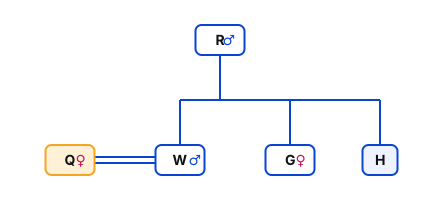
Concept: Decode step by step and connect Q to H.

  1. G @ H → G is H's sister.
  2. R ÷ G → R is father of G (and so of H).
  3. W + R → W is R's son → W is H's brother.
  4. Q # W → Q is W's wife → Q is H's brother's wife.

Trick: Children of the same father (W, G, H) are siblings — so W's wife is H's brother's wife (sister-in-law).

Answer: (B) Brother's wife

अवधारणा: क्रम से डिकोड करके Q को H से जोड़ें।

  1. G @ H → G, H की बहन
  2. R ÷ G → R, G (और H) का पिता
  3. W + R → W, R का पुत्र → H का भाई
  4. Q # W → Q, W की पत्नी → H के भाई की पत्नी

ट्रिक: एक ही पिता के बच्चे (W, G, H) भाई-बहन हैं — W की पत्नी = H की भाभी।

उत्तर: (B) भाई की पत्नी

RRB Technician Grade IIIGeneral Intelligence and ReasoningCoded blood relationsRRB Technician Grade III 2025 · 9 Mar Shift 3 →
Q2646.
In the following triad, each group of letters is related to the subsequent one following a certain logic. Select from the given options, the one that follows the same logic. MATH – AMTH – AHTM
MELT – EMLT – ETLM
निम्नलिखित त्रयी में, अक्षरों का प्रत्येक समूह एक निश्चित तर्क का अनुसरण करते हुए अपने बाद वाले समूह से संबंधित है। दिए गए विकल्पों में से उसका चयन कीजिए जो उसी तर्क का अनुसरण करता है। MATH – AMTH – AHTM
MELT – EMLT – ETLM
  1. ATEAM – AEMT – TEAM
  2. BCOLD – OCLD – ODLC
  3. CLEAD – ALDE– ADLE
  4. DHART – RTAH – AHRT
Show answer

Concept: Identify which positions are swapped at each step.

  1. MATH → AMTH: swap 1st and 2nd letters.
  2. AMTH → AHTM: swap 2nd and 4th letters.
  3. COLD → OCLD (1↔2) → ODLC (2↔4) ✓.

Trick: Check only step 1 (first two letters swapped, rest same) — it already eliminates A, C and D.

Answer: (B) COLD – OCLD – ODLC

अवधारणा: हर चरण में कौन-से स्थान बदले, पहचानें।

  1. MATH → AMTH: पहला और दूसरा अक्षर बदला।
  2. AMTH → AHTM: दूसरा और चौथा अक्षर बदला।
  3. COLD → OCLD → ODLC ✓

ट्रिक: केवल पहला चरण जाँचें (पहले दो अक्षर बदले, बाकी वही) — A, C, D तुरंत हट जाते हैं।

उत्तर: (B) COLD – OCLD – ODLC

RRB Technician Grade IIIGeneral Intelligence and ReasoningLetter rearrangement – positional swapsRRB Technician Grade III 2025 · 9 Mar Shift 3 →
Q2647.
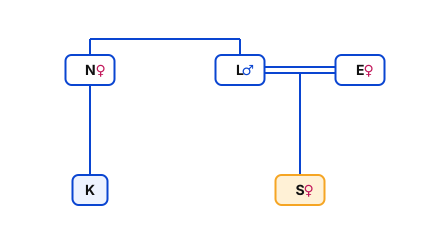
S is the daughter of E. E is the wife of L. N is the mother of K. N is the sister of L. How is S related to K?
S, E की पुत्री है। E, L की पत्नी है। N, K की माता है। N, L की बहन है। S, K से किस प्रकार संबंधित है?
  1. AMother's brother's wifeमाता के भाई की पत्नी
  2. BBrother's wifeभाई की पत्नी
  3. CMother's brother's daughterमाता के भाई की पुत्री
  4. DBrother's daughterभाई की पुत्री
Show answer

Concept: Draw the family tree from the statements.

  1. E is L's wife; S is their daughter.
  2. N is L's sister and K's mother → L is K's mother's brother (maternal uncle).
  3. S, daughter of L → K's mother's brother's daughter.

Trick: S and K are cousins; route through K's mother N → her brother L → his daughter S.

Answer: (C) Mother's brother's daughter

अवधारणा: कथनों से परिवार वृक्ष बनाएँ।

  1. E, L की पत्नी; S उनकी पुत्री।
  2. N, L की बहन और K की माँ → L, K का मामा।
  3. S, L की पुत्री → K के मामा की पुत्री।

ट्रिक: S और K ममेरे भाई-बहन हैं: K की माँ N → उसका भाई L → उसकी बेटी S।

उत्तर: (C) माता के भाई की पुत्री

RRB Technician Grade IIIGeneral Intelligence and ReasoningBlood relationsRRB Technician Grade III 2025 · 9 Mar Shift 3 →
Q2648.
Select the pair which follows the same pattern as that followed by the two set of pairs given below. Both pairs follow the same pattern.
HDF−DZB
GCE−CYA
उस युग्म का चयन कीजिए जो उसी पैटर्न का अनुसरण करता है जिसका अनुसरण नीचे दिए गए दो युग्मों द्वारा किया गया है। दोनों युग्म एक ही पैटर्न का अनुसरण करते हैं।
HDF−DZB
GCE−CYA
  1. AUQS−PMN
  2. BUPQ−QMO
  3. CUQS−QMO
  4. DUPQ−PLN
Show answer

Concept: Each letter moves back the same number of places.

  1. HDF → DZB: H − 4 = D, D − 4 = Z, F − 4 = B.
  2. GCE → CYA: −4 each ✓.
  3. UQS → U − 4 = Q, Q − 4 = M, S − 4 = O → QMO.

Trick: In the given pairs, 1st and 3rd letters differ by 2 (H, F / G, E) — so the source must look like UQS; then just −4.

Answer: (C) UQS−QMO

अवधारणा: हर अक्षर समान स्थान पीछे जाता है।

  1. HDF → DZB: हर अक्षर −4
  2. GCE → CYA: −4 ✓
  3. UQS → Q, M, O → QMO

ट्रिक: दिए युग्मों में पहला अक्षर − 4 = दूसरा अक्षर (H→D, G→C) — इसलिए स्रोत UQS जैसा हो; फिर −4 लगाएँ।

उत्तर: (C) UQS−QMO

RRB Technician Grade IIIGeneral Intelligence and ReasoningLetter analogy – constant shiftRRB Technician Grade III 2025 · 9 Mar Shift 3 →
Q2649.
In the following number-pairs, the second number is obtained by applying certain mathematical operations to the first number. Select the set in which the numbers are related in the same way as are the numbers of the following sets.
(NOTE : Operations should be performed on the whole numbers, without breaking down the numbers into its constituent digits. E.g. 13 – Operations on 13 such as adding / subtracting /multiplying etc. to 13 can be performed. Breaking down 13 into 1 and 3 and then performing mathematical operations on 1 and 3 is not allowed.)
32, 192
41, 246
निम्नलिखित संख्या-युग्मों में, पहली संख्या पर कुछ गणितीय संक्रियाएँ करके दूसरी संख्या प्राप्त की जाती है। उस समुच्चय का चयन कीजिए जिसमें संख्याएँ उसी प्रकार संबंधित हैं जिस प्रकार निम्नलिखित समुच्चयों की संख्याएँ संबंधित हैं।
(ध्यान दें: संक्रियाएँ संख्याओं को उनके घटक अंकों में तोड़े बिना, पूर्ण संख्याओं पर की जानी चाहिए। उदाहरण के लिए 13 – 13 पर संक्रियाएँ जैसे 13 में जोड़ना / घटाना / गुणा करना आदि किया जा सकता है। 13 को 1 और 3 में तोड़ना और फिर 1 और 3 पर गणितीय संक्रियाएँ करना वर्जित है।)
32, 192
41, 246
  1. A43, 254
  2. B44, 364
  3. C35, 210
  4. D38, 226
Show answer

Concept: Find the single operation from first to second number.

  1. 32×6=192; 41×6=246.
  2. 35×6=210 ✓.
  3. 43×6=258, 44×6=264, 38×6=228 → others fail.

Trick: Second number must be divisible by 6 (even + digit-sum multiple of 3): only 210 among 254, 364, 210, 226 qualifies.

Answer: (C) 35, 210

अवधारणा: पहली से दूसरी संख्या बनाने वाली संक्रिया खोजें।

  1. 32×6=192; 41×6=246
  2. 35×6=210 ✓
  3. 43×6=258, 44×6=264, 38×6=228 → बाकी गलत

ट्रिक: दूसरी संख्या 6 से विभाज्य होनी चाहिए — 254, 364, 210, 226 में केवल 210।

उत्तर: (C) 35, 210

RRB Technician Grade IIIGeneral Intelligence and ReasoningNumber pairs – multiplication relationRRB Technician Grade III 2025 · 9 Mar Shift 3 →
Q2650.
In a certain code language,
A + B means ‘A is the sister of B’
A – B means ‘A is the brother of B’
A x B means ‘A is the wife of B’
A ÷ B means ‘A is the father of B’
Based on the above, how is M related to R if ‘M – K + L ÷ P x R’?
एक निश्चित कूट भाषा में,
A + B का अर्थ है ‘A, B की बहन है’
A – B का अर्थ है ‘A, B का भाई है’
A x B का अर्थ है ‘A, B की पत्नी है’
A ÷ B का अर्थ है ‘A, B का पिता है’
उपर्युक्त के आधार पर, यदि ‘M – K + L ÷ P x R’ है, तो M, R से किस प्रकार संबंधित है?
  1. AWife's father's brotherपत्नी के पिता का भाई
  2. BWife's fatherपत्नी का पिता
  3. CWife's brotherपत्नी का भाई
  4. DWife's father's fatherपत्नी के पिता का पिता
Show answer

Concept: Decode from R backwards to M.

  1. P × R → P is R's wife.
  2. L ÷ P → L is P's father (R's wife's father).
  3. K + L → K is L's sister.
  4. M − K → M is K's brother → M is also L's brother.
  5. M = R's wife's father's brother.

Trick: Brother of a sister = brother of her sibling too, so M sits beside L in the tree.

Answer: (A) Wife's father's brother

अवधारणा: R से पीछे की ओर M तक डिकोड करें।

  1. P × R → P, R की पत्नी
  2. L ÷ P → L, P का पिता (पत्नी के पिता)
  3. K + L → K, L की बहन
  4. M − K → M, K का भाई → L का भी भाई
  5. M = पत्नी के पिता का भाई

ट्रिक: बहन का भाई उसके भाई का भी भाई है — M, L के बगल में बैठता है।

उत्तर: (A) पत्नी के पिता का भाई

RRB Technician Grade IIIGeneral Intelligence and ReasoningCoded blood relationsRRB Technician Grade III 2025 · 9 Mar Shift 3 →
Q2651.
The main reason for twinkling of stars is _________.
तारों के टिमटिमाने का मुख्य कारण _________ है।
  1. APresence of cloudsबादलों की उपस्थिति
  2. BNuclear reactions inside starsतारों के अंदर नाभिकीय अभिक्रियाएँ
  3. CAtmospheric refraction varying with timeसमय के साथ बदलता वायुमंडलीय अपवर्तन (atmospheric refraction)
  4. DScattering of star lightतारों के प्रकाश का प्रकीर्णन (scattering)
Show answer

Concept: Starlight is refracted by air layers whose density keeps changing.

  1. Stars are so far away that they act as point sources.
  2. Changing atmospheric refraction shifts the apparent position and brightness of the star continuously → twinkling.
  3. Scattering explains the blue sky, not twinkling.

Yaad rakhein: Planets do not twinkle — they are closer and act as extended sources, so the fluctuations average out.

Answer: (C) Atmospheric refraction varying with time

अवधारणा: तारे का प्रकाश बदलते घनत्व वाली वायु परतों में अपवर्तित होता है।

  1. तारे बहुत दूर हैं, इसलिए बिंदु-स्रोत जैसे हैं।
  2. लगातार बदलता वायुमंडलीय अपवर्तन उनकी आभासी स्थिति और चमक बदलता रहता है → टिमटिमाना।
  3. प्रकीर्णन (scattering) आकाश के नीले रंग का कारण है, टिमटिमाने का नहीं।

याद रखें: ग्रह नहीं टिमटिमाते — वे पास हैं और विस्तृत स्रोत की तरह व्यवहार करते हैं।

उत्तर: (C) समय के साथ बदलता वायुमंडलीय अपवर्तन (atmospheric refraction)

RRB Technician Grade IIIGeneral ScienceTwinkling of stars – atmospheric refractionRRB Technician Grade III 2025 · 9 Mar Shift 3 →
Q2652.
Which of the following statements correctly differentiates a compound from a mixture?
निम्नलिखित में से कौन-सा कथन यौगिक और मिश्रण के बीच सही अंतर बताता है?
  1. ACompounds show variable composition, mixtures do not.यौगिक परिवर्तनशील संघटन दर्शाते हैं, मिश्रण नहीं।
  2. BMixtures are formed through chemical reactions.मिश्रण रासायनिक अभिक्रियाओं द्वारा बनते हैं।
  3. CMixtures can be separated by physical means, but compounds cannot.मिश्रणों को भौतिक विधियों द्वारा पृथक किया जा सकता है, परंतु यौगिकों को नहीं।
  4. DCompounds retain the properties of their constituents.यौगिक अपने घटकों के गुणों को बनाए रखते हैं।
Show answer

Concept: Mixtures are physical combinations; compounds are chemical combinations.

  1. Mixture components can be separated by physical methods (filtration, distillation, magnet).
  2. Compounds need chemical methods; they have fixed composition and new properties.
  3. Options A, B, D state the reverse of the truth.

Yaad rakhein: Fe + S mixture – iron removed by magnet; FeS compound – not magnetic, no separation by magnet.

Answer: (C) Mixtures can be separated by physical means, but compounds cannot.

अवधारणा: मिश्रण भौतिक मेल है; यौगिक रासायनिक मेल।

  1. मिश्रण के घटक भौतिक विधियों (छानना, आसवन, चुंबक) से अलग हो जाते हैं।
  2. यौगिक को अलग करने के लिए रासायनिक विधि चाहिए; उसका संघटन निश्चित और गुण नए होते हैं।
  3. A, B, D उल्टी बातें कहते हैं।

याद रखें: Fe + S मिश्रण से चुंबक लोहा खींच लेता है; FeS यौगिक से नहीं।

उत्तर: (C) मिश्रणों को भौतिक विधियों द्वारा पृथक किया जा सकता है, परंतु यौगिकों को नहीं।

RRB Technician Grade IIIGeneral ScienceCompound vs mixtureRRB Technician Grade III 2025 · 9 Mar Shift 3 →
Q2653.
Which of the following best distinguishes a food web from a food chain?
निम्नलिखित में से कौन-सा खाद्य जाल (food web) को खाद्य श्रृंखला (food chain) से सबसे अच्छी तरह अलग करता है?
  1. AA food web allows backward energy flow; a food chain is unidirectionalखाद्य जाल में ऊर्जा का पश्चगामी प्रवाह संभव है; खाद्य श्रृंखला एकदिशीय होती है
  2. BA food web shows multiple trophic levels; a food chain shows one levelखाद्य जाल अनेक पोषी स्तर दर्शाता है; खाद्य श्रृंखला एक स्तर दर्शाती है
  3. CA food chain always has decomposers; a food web does notखाद्य श्रृंखला में सदैव अपघटक होते हैं; खाद्य जाल में नहीं
  4. DA food web transfers all energy; a food chain loses energyखाद्य जाल सारी ऊर्जा स्थानांतरित करता है; खाद्य श्रृंखला में ऊर्जा की हानि होती है
Show answer

Concept: A food web is a network of many interconnected food chains.

  1. A food chain is a single linear path; a food web shows many feeding links across trophic levels.
  2. Energy flow is unidirectional in both — so option A is wrong.
  3. Energy is lost at every level in both (10% law) — so D is wrong.

Trick: Any option saying energy flows backward or is fully transferred is always false.

Answer: (B) A food web shows multiple trophic levels; a food chain shows one level

अवधारणा: खाद्य जाल कई आपस में जुड़ी खाद्य श्रृंखलाओं का नेटवर्क है।

  1. खाद्य श्रृंखला एक सीधा रास्ता है; खाद्य जाल कई पोषी स्तरों के बीच अनेक संबंध दिखाता है।
  2. दोनों में ऊर्जा प्रवाह एकदिशीय है — A गलत।
  3. दोनों में हर स्तर पर ऊर्जा घटती है (10% नियम) — D गलत।

ट्रिक: 'ऊर्जा पीछे बहती है' या 'पूरी ऊर्जा स्थानांतरित' वाले विकल्प हमेशा गलत।

उत्तर: (B) खाद्य जाल अनेक पोषी स्तर दर्शाता है; खाद्य श्रृंखला एक स्तर दर्शाती है

RRB Technician Grade IIIGeneral ScienceFood chain vs food webRRB Technician Grade III 2025 · 9 Mar Shift 3 →
Q2654.
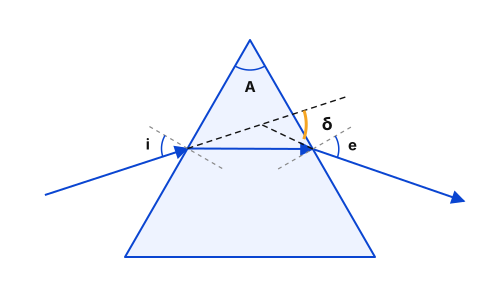
In a prism, the emergent ray comes out at an angle different from the incident ray. What is this angle called?
एक प्रिज़्म में, निर्गत किरण आपतित किरण से भिन्न कोण पर बाहर निकलती है। इस कोण को क्या कहते हैं?
  1. AAngle of deviationविचलन कोण (Angle of deviation)
  2. BAngle of incidenceआपतन कोण
  3. CAngle of reflectionपरावर्तन कोण
  4. DAngle of the prismप्रिज़्म कोण
Show answer

Concept: The angle between the incident ray (extended) and the emergent ray is the angle of deviation.

  1. A prism bends light twice (entry and exit), turning it towards the base.
  2. This total bending = angle of deviation (δ).
  3. Angle of the prism (A) is the angle between its two refracting faces.

Yaad rakhein: i + e = A + δ for a prism.

Answer: (A) Angle of deviation

अवधारणा: आपतित किरण (बढ़ाई गई) और निर्गत किरण के बीच का कोण विचलन कोण है।

  1. प्रिज्म प्रकाश को दो बार मोड़ता है और आधार की ओर झुकाता है।
  2. यह कुल मोड़ = विचलन कोण (δ)।
  3. प्रिज्म कोण (A) दो अपवर्तक सतहों के बीच का कोण है।

याद रखें: प्रिज्म के लिए i + e = A + δ।

उत्तर: (A) विचलन कोण (Angle of deviation)

RRB Technician Grade IIIGeneral ScienceRefraction through prism – angle of deviationRRB Technician Grade III 2025 · 9 Mar Shift 3 →
Q2655.
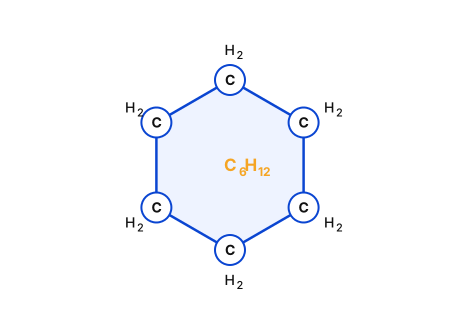
Which of the following is a ring compound with the molecular formula C₆H₁₂?
निम्नलिखित में से कौन-सा, आण्विक सूत्र C₆H₁₂ वाला एक वलय यौगिक है?
  1. AButaneब्यूटेन
  2. BBenzeneबेंज़ीन
  3. CCyclohexaneसाइक्लोहेक्सेन
  4. DHexaneहेक्सेन
Show answer

Concept: A saturated ring (cycloalkane) has formula CₙH₂ₙ.

  1. Cyclohexane = 6-carbon ring with single bonds → C₆H₁₂.
  2. Benzene is a ring but C₆H₆; hexane is open-chain C₆H₁₄; butane is C₄H₁₀.

Trick: Ring + only single bonds = 'cyclo' + alkane name; CₙH₂ₙ with n = 6 → C₆H₁₂.

Answer: (C) Cyclohexane

अवधारणा: संतृप्त वलय (साइक्लोएल्केन) का सूत्र CₙH₂ₙ होता है।

  1. साइक्लोहेक्सेन = 6 कार्बन का एकल-बंध वलय → C₆H₁₂।
  2. बेंज़ीन भी वलय है पर C₆H₆; हेक्सेन खुली श्रृंखला C₆H₁₄; ब्यूटेन C₄H₁₀।

ट्रिक: वलय + केवल एकल बंध = 'साइक्लो' + एल्केन; n = 6 → C₆H₁₂।

उत्तर: (C) साइक्लोहेक्सेन

RRB Technician Grade IIIGeneral ScienceCyclic hydrocarbons – cyclohexaneRRB Technician Grade III 2025 · 9 Mar Shift 3 →
Q2656.
Crossbreeding in cattle is done to achieve ______.
पशुओं (मवेशियों) में संकरण (crossbreeding) ______ प्राप्त करने के लिए किया जाता है।
  1. ALonger lactation and disease resistanceलंबी दुग्धस्रवण अवधि और रोग प्रतिरोधक क्षमता
  2. BExcessive draught powerअत्यधिक भारवाहक शक्ति
  3. CReduced milk productionकम दुग्ध उत्पादन
  4. DOnly higher milk fat contentकेवल दूध में अधिक वसा की मात्रा
Show answer

Concept: Cross-breeding combines desirable traits of two breeds.

  1. Exotic breeds (Jersey, Brown Swiss) → long lactation period.
  2. Local breeds (Red Sindhi, Sahiwal) → excellent disease resistance.
  3. Cross gives both: long lactation + disease resistance.

Trick: Options with 'reduced', 'only' or 'excessive' are rarely the goal of improvement — eliminate them.

Answer: (A) Longer lactation and disease resistance

अवधारणा: संकरण से दो नस्लों के अच्छे गुण एक साथ मिलते हैं।

  1. विदेशी नस्लें (जर्सी, ब्राउन स्विस) → लंबी दुग्धस्रवण अवधि।
  2. देसी नस्लें (रेड सिंधी, साहीवाल) → अच्छी रोग प्रतिरोधक क्षमता।
  3. संकर नस्ल में दोनों गुण।

ट्रिक: 'कम', 'केवल', 'अत्यधिक' वाले विकल्प सुधार का लक्ष्य नहीं होते — हटा दें।

उत्तर: (A) लंबी दुग्धस्रवण अवधि और रोग प्रतिरोधक क्षमता

RRB Technician Grade IIIGeneral ScienceAnimal husbandry – cross-breeding of cattleRRB Technician Grade III 2025 · 9 Mar Shift 3 →
Q2657.
A wire carrying current is placed between the poles of a magnet. It experiences maximum force when it _____.
धारावाही तार को एक चुंबक के ध्रुवों के बीच रखा जाता है। उस पर अधिकतम बल तब लगता है जब वह _____।
  1. Ais perpendicular to the magnetic fieldचुंबकीय क्षेत्र के लंबवत हो
  2. Bis outside the magnetic fieldचुंबकीय क्षेत्र के बाहर हो
  3. Cis parallel to the magnetic fieldचुंबकीय क्षेत्र के समांतर हो
  4. Dis at 45° to the magnetic fieldचुंबकीय क्षेत्र से 45° पर हो
Show answer

Concept: F = BIL sinθ, where θ = angle between wire and field.

  1. θ = 90° → sin90° = 1 → force maximum.
  2. θ = 0° (parallel) → force zero.
  3. Outside the field → no force.

Yaad rakhein: Direction of this force is given by Fleming's left-hand rule.

Answer: (A) is perpendicular to the magnetic field

अवधारणा: F = BIL sinθ, θ = तार और क्षेत्र के बीच कोण।

  1. θ = 90° → sin90° = 1 → बल अधिकतम।
  2. θ = 0° (समांतर) → बल शून्य।
  3. क्षेत्र के बाहर → कोई बल नहीं।

याद रखें: इस बल की दिशा फ्लेमिंग के वाम-हस्त नियम से मिलती है।

उत्तर: (A) चुंबकीय क्षेत्र के लंबवत हो

RRB Technician Grade IIIGeneral ScienceForce on current-carrying conductor in magnetic fieldRRB Technician Grade III 2025 · 9 Mar Shift 3 →
Q2658.
An object moving at 25 m/s is brought to rest in 5 seconds. The final velocity is _________.
25 m/s से गतिमान एक वस्तु को 5 सेकंड में विरामावस्था में लाया जाता है। अंतिम वेग _________ है।
  1. A20 m/s
  2. B0 m/s
  3. C25 m/s
  4. D5 m/s
Show answer

Concept: 'Brought to rest' means final velocity v=0.

  1. Initial velocity u=25 m/s, final v=0.
  2. The 5 s only decides the retardation: a=0−255=−5m/s2.

Trick: 'Comes to rest / stops' = v=0 — no calculation needed.

Answer: (B) 0 m/s

अवधारणा: 'विराम में लाया गया' = अंतिम वेग v=0।

  1. u=25 m/s, v=0
  2. 5 s से केवल मंदन निकलता है: a=0−255=−5m/s2।

ट्रिक: 'रुक जाना / विराम में आना' = v=0 — गणना की जरूरत नहीं।

उत्तर: (B) 0 m/s

RRB Technician Grade IIIGeneral ScienceMotion – final velocityRRB Technician Grade III 2025 · 9 Mar Shift 3 →
Q2659.
Which of the following is the product formed when ethene (C2H4) reacts with hydrogen (H2) in the presence of a catalyst nickel?
उत्प्रेरक निकेल की उपस्थिति में एथीन (C2H4) की हाइड्रोजन (H2) के साथ अभिक्रिया होने पर निम्नलिखित में से कौन-सा उत्पाद बनता है?
  1. APropene (C3H6)प्रोपीन (C3H6)
  2. BEthyne (C2H2)एथाइन (C2H2)
  3. CPropane (C3H8)प्रोपेन (C3H8)
  4. DEthane (C2H6)एथेन (C2H6)
Show answer

Concept: Addition of H₂ to an unsaturated compound (Ni catalyst) gives a saturated compound.

  1. CH₂=CH₂ + H₂ → (Ni) → CH₃–CH₃.
  2. Ethene (C₂H₄) becomes ethane (C₂H₆) — carbon count stays 2.

Trick: Hydrogenation never changes the number of carbons → eliminate propene and propane.

Answer: (D) Ethane (C2H6)

अवधारणा: असंतृप्त यौगिक में Ni उत्प्रेरक की उपस्थिति में H₂ जुड़ने से संतृप्त यौगिक बनता है।

  1. CH₂=CH₂ + H₂ → (Ni) → CH₃–CH₃
  2. एथीन (C₂H₄) → एथेन (C₂H₆) — कार्बन 2 ही रहते हैं।

ट्रिक: हाइड्रोजनीकरण में कार्बन संख्या नहीं बदलती → प्रोपीन, प्रोपेन हटाएँ।

उत्तर: (D) एथेन (C2H6)

RRB Technician Grade IIIGeneral ScienceHydrogenation of alkenesRRB Technician Grade III 2025 · 9 Mar Shift 3 →
Q2660.
Metals in the middle of the activity series, such as iron and zinc, are generally extracted by:
सक्रियता श्रेणी के मध्य में स्थित धातुएँ, जैसे लोहा और जिंक, सामान्यतः किसके द्वारा निष्कर्षित की जाती हैं?
  1. AHeating alone without any reducing agentकिसी अपचायक के बिना केवल गर्म करके
  2. BReduction of their oxides with carbon or carbon monoxideउनके ऑक्साइडों का कार्बन या कार्बन मोनोऑक्साइड द्वारा अपचयन करके
  3. CElectrolysis of molten saltsगलित लवणों के विद्युत अपघटन द्वारा
  4. DDisplacement from aqueous solutionजलीय विलयन से विस्थापन द्वारा
Show answer

Concept: Method of extraction depends on position in the activity series.

  1. Middle metals (Fe, Zn, Pb): ore → oxide (roasting/calcination) → reduced by carbon/CO.
  2. e.g. ZnO + C → Zn + CO.
  3. Electrolysis of molten salts is for highly reactive metals (Na, K, Mg, Al).

Yaad rakhein: Top → electrolysis; middle → carbon reduction; bottom (Hg, Cu) → heating alone.

Answer: (B) Reduction of their oxides with carbon or carbon monoxide

अवधारणा: निष्कर्षण की विधि सक्रियता श्रेणी में धातु के स्थान पर निर्भर है।

  1. मध्य धातुएँ (Fe, Zn, Pb): अयस्क → ऑक्साइड (भर्जन/निस्तापन) → कार्बन/CO से अपचयन।
  2. उदा. ZnO + C → Zn + CO
  3. गलित लवण का विद्युत अपघटन अति सक्रिय धातुओं (Na, K, Mg, Al) के लिए है।

याद रखें: ऊपर → विद्युत अपघटन; बीच → कार्बन अपचयन; नीचे (Hg, Cu) → केवल गर्म करना।

उत्तर: (B) उनके ऑक्साइडों का कार्बन या कार्बन मोनोऑक्साइड द्वारा अपचयन करके

RRB Technician Grade IIIGeneral ScienceExtraction of metals of medium reactivityRRB Technician Grade III 2025 · 9 Mar Shift 3 →