Question bank

Q&A: practice questions with answers

Search questions on any topic. Filter by exam category, exam, subject and topic, try the question, then open the answer and explanation.

Courses – airGurukul

3,200 questions found.

Q2661.
A bus moves from one end A to the other end B of a straight 1000 m road in 100 s and then turns around and moves 500 m back to point C in another 100 s. What will be the average velocity (in m/s) and the type of motion of the bus in going from point A to point C?
एक बस 1000 m लंबी सीधी सड़क के एक छोर A से दूसरे छोर B तक 100 s में जाती है और फिर मुड़कर अगले 100 s में 500 m पीछे बिंदु C तक जाती है। बिंदु A से बिंदु C तक जाने में बस का औसत वेग (m/s में) और गति का प्रकार क्या होगा?
  1. A0.4 m/s and Non-Uniform Motion0.4 m/s और असमान गति
  2. B0.4 m/s and Uniform Motion0.4 m/s और समान गति
  3. C2.5 m/s and Non-Uniform Motion2.5 m/s और असमान गति
  4. D2.5 m/s and Uniform Motion2.5 m/s और समान गति
Show answer

Concept: Average velocity = net displacement ÷ total time.

  1. Displacement A → C = 1000−500=500 m.
  2. Total time = 100+100=200 s.
  3. Average velocity = 500200=2.5 m/s.
  4. Speed changes (10 → 5 m/s) and direction reverses → non-uniform motion.

Trick: 0.4 is a trap (200500 inverted); a turning body can never be in uniform motion.

Answer: (C) 2.5 m/s and Non-Uniform Motion

अवधारणा: औसत वेग = कुल विस्थापन ÷ कुल समय।

  1. A → C विस्थापन = 1000−500=500 m
  2. कुल समय = 200 s
  3. औसत वेग = 500200=2.5 m/s
  4. चाल बदलती है (10 → 5 m/s) और दिशा उलटती है → असमान गति।

ट्रिक: 0.4 उल्टा भाग (200500) है — जाल; मुड़ने वाली वस्तु की गति कभी समान नहीं।

उत्तर: (C) 2.5 m/s और असमान गति
RRB Technician Grade IIIGeneral ScienceAverage velocity and non-uniform motionRRB Technician Grade III 2025 · 9 Mar Shift 3 →
Q2662.
Choose a term to complete the analogy.
Columnar Epithelium : Absorption :: Cuboidal Epithelium : ____________
सादृश्य को पूरा करने के लिए एक पद चुनिए।
स्तंभाकार उपकला (Columnar Epithelium) : अवशोषण :: घनाकार उपकला (Cuboidal Epithelium) : ____________
  1. AMechanical supportयांत्रिक सहारा
  2. BPushing mucusश्लेष्मा को आगे धकेलना
  3. CForming a delicate liningकोमल अस्तर बनाना
  4. DPreventing wear and tearटूट-फूट से बचाना
Show answer

Concept: Each epithelium type matches a function (NCERT Class 9).

  1. Columnar epithelium → absorption and secretion (intestine lining).
  2. Cuboidal epithelium → mechanical support (kidney tubules, salivary gland ducts).
  3. Ciliated → pushing mucus; squamous → delicate lining; stratified → preventing wear and tear.

Yaad rakhein: Cube = box = strong → 'support'; Column = tall cells → 'absorb'.

Answer: (A) Mechanical support

अवधारणा: हर उपकला का एक विशेष कार्य (NCERT कक्षा 9)।

  1. स्तंभाकार उपकला → अवशोषण व स्रावण (आंत)।
  2. घनाकार उपकला → यांत्रिक सहारा (वृक्क नलिका, लार ग्रंथि नलिका)।
  3. पक्ष्माभी → श्लेष्मा धकेलना; शल्की → कोमल अस्तर; स्तरित → टूट-फूट से बचाव।

याद रखें: घन = डिब्बा = मजबूत → 'सहारा'; स्तंभ = लंबी कोशिकाएँ → 'अवशोषण'।

उत्तर: (A) यांत्रिक सहारा

RRB Technician Grade IIIGeneral ScienceEpithelial tissue – functionsRRB Technician Grade III 2025 · 9 Mar Shift 3 →
Q2663.
Lysosomes are also known as:
लयनकाय (Lysosomes) को और किस नाम से जाना जाता है?
  1. AControl centersनियंत्रण केंद्र
  2. BEnergy powerhousesऊर्जा घर (पावरहाउस)
  3. CSuicidal bags of the cellकोशिका की आत्मघाती थैलियाँ
  4. DProtein factoriesप्रोटीन कारखाने
Show answer

Concept: Lysosomes contain powerful digestive enzymes.

  1. When a cell is damaged, lysosomes burst and their enzymes digest the cell itself.
  2. Hence they are called 'suicide bags' of the cell.
  3. Nucleus = control centre, mitochondria = powerhouse, ribosomes = protein factories.

Yaad rakhein: Lysosomes also act as the cell's waste-disposal system.

Answer: (C) Suicidal bags of the cell

अवधारणा: लाइसोसोम में शक्तिशाली पाचक एंजाइम होते हैं।

  1. कोशिका क्षतिग्रस्त होने पर लाइसोसोम फटकर कोशिका को ही पचा देते हैं।
  2. इसलिए इन्हें 'आत्मघाती थैलियाँ' कहते हैं।
  3. केंद्रक = नियंत्रण केंद्र, माइटोकॉन्ड्रिया = ऊर्जा घर, राइबोसोम = प्रोटीन कारखाना।

याद रखें: लाइसोसोम कोशिका की सफाई व्यवस्था (waste disposal) भी हैं।

उत्तर: (C) कोशिका की आत्मघाती थैलियाँ

RRB Technician Grade IIIGeneral ScienceCell organelles – lysosomeRRB Technician Grade III 2025 · 9 Mar Shift 3 →
Q2664.
An object travels 16 m in 4 s and then another 16 m in 2 s. What is the average speed of the object?
एक वस्तु 4 s में 16 m चलती है और फिर 2 s में अगले 16 m चलती है। वस्तु की औसत चाल क्या है?
  1. A5.33 m/s
  2. B2.67 m/s
  3. C8 m/s
  4. D4 m/s
Show answer

Concept: Average speed = total distance ÷ total time.

  1. Total distance = 16+16=32 m.
  2. Total time = 4+2=6 s.
  3. Average speed = 326≈5.33 m/s.

Trick: Don't average the speeds (4 and 8 → 6 is wrong); for equal distances use 2aba+b=2×4×812=5.33.

Answer: (A) 5.33 m/s

अवधारणा: औसत चाल = कुल दूरी ÷ कुल समय।

  1. कुल दूरी = 32 m
  2. कुल समय = 6 s
  3. औसत चाल = 326≈5.33 m/s

ट्रिक: चालों का साधारण औसत न लें; समान दूरी पर 2aba+b=2×4×812=5.33।

उत्तर: (A) 5.33 m/s

RRB Technician Grade IIIGeneral ScienceAverage speedRRB Technician Grade III 2025 · 9 Mar Shift 3 →
Q2665.
How long does an unfertilised egg survive after being released from the ovary?
अंडाशय से निर्मुक्त होने के बाद एक अनिषेचित अंडाणु कितने समय तक जीवित रहता है?
  1. AAbout one dayलगभग एक दिन
  2. BOne weekएक सप्ताह
  3. CTwo hoursदो घंटे
  4. DOne monthएक महीना
Show answer

Concept: After ovulation the egg can be fertilised only for a short time.

  1. An unfertilised ovum survives for about one day (12–24 hours).
  2. If not fertilised, it degenerates and the uterine lining is later shed as menstruation.

Yaad rakhein: The ovary releases one egg roughly every month — 'one month' is the cycle, not the egg's life.

Answer: (A) About one day

अवधारणा: अंडोत्सर्ग के बाद अंडाणु थोड़े समय तक ही निषेचित हो सकता है।

  1. अनिषेचित अंडाणु लगभग एक दिन (12–24 घंटे) जीवित रहता है।
  2. निषेचन न होने पर वह नष्ट हो जाता है और बाद में गर्भाशय की परत मासिक धर्म के रूप में निकलती है।

याद रखें: अंडाशय लगभग हर महीने एक अंडाणु छोड़ता है — 'एक महीना' चक्र है, अंडाणु की आयु नहीं।

उत्तर: (A) लगभग एक दिन

RRB Technician Grade IIIGeneral ScienceHuman reproduction – life of ovumRRB Technician Grade III 2025 · 9 Mar Shift 3 →
Q2666.
The SI unit of force (F) is __________ .
बल (F) का SI मात्रक __________ है।
  1. AN m
  2. BJouleजूल
  3. Ckg m/s²
  4. Dkg m/s
Show answer

Concept: F=m×a.

  1. Unit = kg×m/s2=kg m/s2 = 1 newton (N).
  2. N m (= joule) is unit of work/torque; kg m/s is unit of momentum.

Trick: Write the formula's units: mass (kg) × acceleration (m/s²).

Answer: (C) kg m/s²

अवधारणा: F=m×a

  1. मात्रक = kg×m/s2=kg m/s2 = 1 न्यूटन (N)
  2. N m (= जूल) कार्य/बल-आघूर्ण का; kg m/s संवेग का मात्रक है।

ट्रिक: सूत्र के मात्रक लिखें: द्रव्यमान (kg) × त्वरण (m/s²)।

उत्तर: (C) kg m/s²

RRB Technician Grade IIIGeneral ScienceSI unit of forceRRB Technician Grade III 2025 · 9 Mar Shift 3 →
Q2667.
The molecular mass of a compound is '60'. If it contains 40% carbon, 6.7% hydrogen, and 53.3% oxygen, what is the molecular formula?
एक यौगिक का आण्विक द्रव्यमान '60' है। यदि इसमें 40% कार्बन, 6.7% हाइड्रोजन और 53.3% ऑक्सीजन है, तो इसका आण्विक सूत्र क्या है?
  1. AC₂H₄O₂
  2. BC₃H₆O₃
  3. CCH₂O
  4. DC₄H₈O₄
Show answer

Concept: Molecular formula = n × empirical formula, n = molar mass ÷ empirical mass.

  1. C : H : O = 4012:6.71:53.316 = 3.33 : 6.7 : 3.33 = 1 : 2 : 1 → CH₂O.
  2. Empirical mass = 12+2+16=30.
  3. n=6030=2 → C₂H₄O₂ (acetic acid).

Trick: Just find the option with mass 60: C₂H₄O₂ = 24+4+32=60.

Answer: (A) C₂H₄O₂

अवधारणा: आण्विक सूत्र = n × मूलानुपाती सूत्र, n = आण्विक द्रव्यमान ÷ मूलानुपाती द्रव्यमान।

  1. C : H : O = 4012:6.71:53.316 = 1 : 2 : 1 → CH₂O
  2. मूलानुपाती द्रव्यमान = 30
  3. n=6030=2 → C₂H₄O₂ (एसिटिक अम्ल)

ट्रिक: वह विकल्प चुनें जिसका द्रव्यमान 60 हो: C₂H₄O₂ = 24+4+32=60।

उत्तर: (A) C₂H₄O₂

RRB Technician Grade IIIGeneral ScienceEmpirical and molecular formulaRRB Technician Grade III 2025 · 9 Mar Shift 3 →
Q2668.
Implantation of developing embryo occurs in which part of the female reproductive system in human beings?
मनुष्यों में, विकासशील भ्रूण का रोपण (implantation) स्त्री जनन तंत्र के किस भाग में होता है?
  1. ALining of the uterusगर्भाशय की भित्ति (अस्तर)
  2. BCervixगर्भाशय ग्रीवा
  3. CFallopian tubesअंडवाहिनियाँ (फैलोपियन नलिकाएँ)
  4. DOvaryअंडाशय
Show answer

Concept: The embryo attaches to the thick, blood-rich inner wall of the uterus.

  1. Fertilisation occurs in the fallopian tube (oviduct).
  2. The developing embryo moves down and gets implanted in the uterine lining.
  3. Placenta then forms there for nutrition.

Yaad rakhein: Fertilisation → oviduct; implantation → uterus wall.

Answer: (A) Lining of the uterus

अवधारणा: भ्रूण गर्भाशय की मोटी, रक्त-समृद्ध भीतरी परत में जुड़ता है।

  1. निषेचन अंडवाहिनी (फैलोपियन नलिका) में होता है।
  2. विकसित होता भ्रूण नीचे आकर गर्भाशय की परत में आरोपित होता है।
  3. फिर वहीं अपरा (placenta) बनता है।

याद रखें: निषेचन → अंडवाहिनी; आरोपण → गर्भाशय की दीवार।

उत्तर: (A) गर्भाशय की भित्ति (अस्तर)

RRB Technician Grade IIIGeneral ScienceHuman reproduction – implantationRRB Technician Grade III 2025 · 9 Mar Shift 3 →
Q2669.
A body undergoes a displacement of 50 m under the action of a constant force of 5 N in the same direction as that of the force. What will be the work done under the action of this force?
5 N के एक नियत बल की क्रिया के अंतर्गत कोई वस्तु बल की दिशा में ही 50 m का विस्थापन करती है। इस बल की क्रिया के अंतर्गत किया गया कार्य कितना होगा?
  1. A+ 25 J
  2. B- 250 J
  3. C- 25 J
  4. D+ 250 J
Show answer

Concept: W=F×s×cosθ.

  1. Force and displacement in same direction → θ=0∘, cos0∘=1.
  2. W=5×50=+250 J.

Trick: Same direction → work is positive; this alone removes both negative options.

Answer: (D) + 250 J

अवधारणा: W=F×s×cosθ

  1. बल और विस्थापन एक ही दिशा में → θ=0∘, cos0∘=1
  2. W=5×50=+250 J

ट्रिक: एक ही दिशा → कार्य धनात्मक; दोनों ऋणात्मक विकल्प तुरंत हटें।

उत्तर: (D) + 250 J

RRB Technician Grade IIIGeneral ScienceWork done by a constant forceRRB Technician Grade III 2025 · 9 Mar Shift 3 →
Q2670.
What is the importance of sexual reproduction in creating variation in plant
populations?
पादप
समष्टियों में विविधता उत्पन्न करने में लैंगिक जनन का क्या महत्व है?
  1. AIt speeds up DNA copying errors.यह DNA प्रतिकृति की त्रुटियों को तेज़ करता है।
  2. BIt prevents any variations from occurring.यह किसी भी विविधता को उत्पन्न होने से रोकता है।
  3. CIt copies DNA without any changes.यह DNA की प्रतिलिपि बिना किसी परिवर्तन के बनाता है।
  4. DIt mixes DNA from two parents to create new variations.यह दो जनकों के DNA को मिलाकर नई विविधताएँ उत्पन्न करता है।
Show answer

Concept: Sexual reproduction combines DNA of two parents.

  1. Gametes from two different individuals fuse → new combinations of genes.
  2. This creates variation, which helps populations survive changing environments.
  3. Asexual reproduction copies DNA almost exactly → little variation.

Yaad rakhein: Variation is the raw material for evolution.

Answer: (D) It mixes DNA from two parents to create new variations.

अवधारणा: लैंगिक जनन में दो जनकों का DNA मिलता है।

  1. दो अलग जीवों के युग्मक मिलते हैं → जीनों के नए संयोजन।
  2. इससे विविधता आती है, जो बदलते पर्यावरण में जीवित रहने में मदद करती है।
  3. अलैंगिक जनन में DNA लगभग हूबहू कॉपी होता है → कम विविधता।

याद रखें: विविधता ही विकास (evolution) का आधार है।

उत्तर: (D) यह दो जनकों के DNA को मिलाकर नई विविधताएँ उत्पन्न करता है।

RRB Technician Grade IIIGeneral ScienceSexual reproduction and variationRRB Technician Grade III 2025 · 9 Mar Shift 3 →
Q2671.
What will be the pH of a 0.01 M HCl solution?
0.01 M HCl विलयन का pH क्या होगा?
  1. A8
  2. B18
  3. C2
  4. D12
Show answer

Concept: pH=−log[H+]; HCl is a strong acid and ionises completely.

  1. [H+]=0.01M=10−2M.
  2. pH=−log(10−2)=2.

Trick: For 10−n M strong monobasic acid, pH=n. Acid → pH must be below 7, so 8 and 12 are out at once.

Answer: (C) 2

अवधारणा: pH=−log[H+]; HCl प्रबल अम्ल है, पूर्ण आयनित होता है।

  1. [H+]=0.01M=10−2M
  2. pH=−log(10−2)=2

ट्रिक: 10−n M प्रबल एकक्षारकी अम्ल का pH=n। अम्ल का pH 7 से कम — 8 और 12 तुरंत बाहर।

उत्तर: (C) 2

RRB Technician Grade IIIGeneral SciencepH of strong acidRRB Technician Grade III 2025 · 9 Mar Shift 3 →
Q2672.
Which of the following describes a key function of lysosomal enzymes?
निम्नलिखित में से कौन-सा लयनकायी (lysosomal) एंज़ाइमों के एक प्रमुख कार्य का वर्णन करता है?
  1. ABreaking down proteins, lipids, and carbohydratesप्रोटीन, लिपिड और कार्बोहाइड्रेट को तोड़ना (विघटित करना)
  2. BCreating new proteins for the cellकोशिका के लिए नए प्रोटीन बनाना
  3. CTransporting molecules across the membraneझिल्ली के आर-पार अणुओं का परिवहन करना
  4. DStoring genetic materialआनुवंशिक पदार्थ का भंडारण करना
Show answer

Concept: Lysosomes hold hydrolytic (digestive) enzymes.

  1. These enzymes break down proteins, lipids, carbohydrates and nucleic acids, and worn-out organelles.
  2. Protein synthesis = ribosomes; membrane transport = plasma membrane; genetic material = nucleus.

Yaad rakhein: Lyso = 'to break/digest' — lysosome = digestive bag of the cell.

Answer: (A) Breaking down proteins, lipids, and carbohydrates

अवधारणा: लाइसोसोम में जल-अपघटनी (पाचक) एंजाइम होते हैं।

  1. ये प्रोटीन, वसा, कार्बोहाइड्रेट, न्यूक्लिक अम्ल और पुराने कोशिकांगों को तोड़ते हैं।
  2. प्रोटीन निर्माण = राइबोसोम; परिवहन = प्लाज्मा झिल्ली; आनुवंशिक पदार्थ = केंद्रक।

याद रखें: Lyso = तोड़ना/पचाना — लाइसोसोम = कोशिका की पाचक थैली।

उत्तर: (A) प्रोटीन, लिपिड और कार्बोहाइड्रेट को तोड़ना (विघटित करना)

RRB Technician Grade IIIGeneral ScienceLysosomal enzymes – functionRRB Technician Grade III 2025 · 9 Mar Shift 3 →
Q2673.
What are the two main categories of factors responsible for storage losses in
agricultural produce?
कृषि उपज में भंडारण
हानि के लिए उत्तरदायी कारकों की दो मुख्य श्रेणियाँ कौन-सी हैं?
  1. ABiotic and Abioticजैविक और अजैविक
  2. BMechanical and Thermalयांत्रिक और तापीय
  3. CHarvesting and Processingकटाई और प्रसंस्करण
  4. DChemical and Electricalरासायनिक और विद्युत
Show answer

Concept: Storage losses come from living and non-living factors.

  1. Biotic: insects, rodents, fungi, mites, bacteria.
  2. Abiotic: inappropriate moisture and temperature.

Yaad rakhein: Prevention: dry grains well, clean storage, and fumigation with chemicals.

Answer: (A) Biotic and Abiotic

अवधारणा: भंडारण में हानि सजीव और निर्जीव कारकों से होती है।

  1. जैविक (Biotic): कीट, कृंतक (चूहे), कवक, माइट, जीवाणु।
  2. अजैविक (Abiotic): अनुचित नमी और तापमान।

याद रखें: बचाव: अनाज को सुखाना, साफ भंडार और धूमन (fumigation)।

उत्तर: (A) जैविक और अजैविक

RRB Technician Grade IIIGeneral ScienceStorage of grains – factors causing lossRRB Technician Grade III 2025 · 9 Mar Shift 3 →
Q2674.
If a sample of air is compressed to half its volume, which of the following statements is correct?
यदि वायु के एक नमूने को संपीडित करके उसका आयतन आधा कर दिया जाए, तो निम्नलिखित में से कौन-सा कथन सही है?
  1. AThe composition of air remains same because it is a mixture.वायु का संघटन समान रहता है क्योंकि यह एक मिश्रण है।
  2. BAir becomes a compound on compression.संपीडन पर वायु एक यौगिक बन जाती है।
  3. CThe composition of air changes.वायु का संघटन बदल जाता है।
  4. DThe proportion of gases changes.गैसों का अनुपात बदल जाता है।
Show answer

Concept: Compression is a physical change; it cannot alter the composition of a mixture.

  1. Air is a homogeneous mixture of N₂, O₂, Ar, CO₂ etc.
  2. Halving the volume only brings molecules closer; the proportion of gases stays the same.
  3. No chemical reaction occurs, so no compound forms.

Trick: Options B, C, D all claim a change in composition — only A is consistent with a physical process.

Answer: (A) The composition of air remains same because it is a mixture.

अवधारणा: संपीडन भौतिक परिवर्तन है; मिश्रण का संघटन नहीं बदलता।

  1. वायु N₂, O₂, Ar, CO₂ आदि का समांगी मिश्रण है।
  2. आयतन आधा करने से अणु केवल पास आते हैं; गैसों का अनुपात वही रहता है।
  3. कोई रासायनिक अभिक्रिया नहीं → कोई यौगिक नहीं बनता।

ट्रिक: B, C, D सभी संघटन बदलने की बात करते हैं — भौतिक प्रक्रिया से केवल A मेल खाता है।

उत्तर: (A) वायु का संघटन समान रहता है क्योंकि यह एक मिश्रण है।

RRB Technician Grade IIIGeneral ScienceAir as a mixtureRRB Technician Grade III 2025 · 9 Mar Shift 3 →
Q2675.
In the process of electrolytic refining of copper, which of the following is correctly matched?
कॉपर (ताँबे) के विद्युत-अपघटनी परिष्करण की प्रक्रिया में, निम्नलिखित में से कौन-सा सही सुमेलित है?
  1. ACathode – Impure copperकैथोड – अशुद्ध कॉपर
  2. BElectrolyte – Acidified Copper sulphate solutionविद्युत-अपघट्य – अम्लीकृत कॉपर सल्फेट विलयन
  3. CCathode Mud – Pure copper crystalsकैथोड पंक – शुद्ध कॉपर के क्रिस्टल
  4. DAnode – Pure copperऐनोड – शुद्ध कॉपर
Show answer

Concept: Impure metal = anode, pure metal = cathode, salt solution of the metal = electrolyte.

  1. Electrolyte: acidified copper sulphate solution ✓.
  2. Anode = impure Cu, cathode = pure Cu (A and D reversed).
  3. Impurities settle below the anode as anode mud, not cathode mud.

Trick: 'Pure goes to cathode' — anything saying pure copper at anode is wrong.

Answer: (B) Electrolyte – Acidified Copper sulphate solution

अवधारणा: अशुद्ध धातु = एनोड, शुद्ध धातु = कैथोड, उसी धातु का लवण विलयन = विद्युत अपघट्य।

  1. विद्युत अपघट्य: अम्लीकृत कॉपर सल्फेट विलयन ✓
  2. एनोड = अशुद्ध Cu, कैथोड = शुद्ध Cu (A, D उल्टे हैं)।
  3. अशुद्धियाँ एनोड के नीचे 'एनोड मड' बनाती हैं, कैथोड मड नहीं।

ट्रिक: 'शुद्ध धातु कैथोड पर जमती है' — एनोड पर शुद्ध Cu कहने वाला विकल्प गलत।

उत्तर: (B) विद्युत-अपघट्य – अम्लीकृत कॉपर सल्फेट विलयन

RRB Technician Grade IIIGeneral ScienceElectrolytic refining of copperRRB Technician Grade III 2025 · 9 Mar Shift 3 →
Q2676.
Refer to the two statements given below and choose the CORRECT option.
Statement A: Nervous tissue is responsible for rapid transmission of electrical impulses in the body.
Statement B: Nervous tissue mainly provides structural and mechanical support to organs.
नीचे दिए गए दो कथनों को देखिए और सही विकल्प चुनिए।
कथन A: तंत्रिका ऊतक शरीर में विद्युत आवेगों के तीव्र संचरण के लिए उत्तरदायी है।
कथन B: तंत्रिका ऊतक मुख्य रूप से अंगों को संरचनात्मक और यांत्रिक सहारा प्रदान करता है।
  1. AStatement A is correct but B is incorrect.कथन A सही है लेकिन B गलत है।
  2. BBoth statements A and B are correct.कथन A और B दोनों सही हैं।
  3. CBoth statements A and B are incorrect.कथन A और B दोनों गलत हैं।
  4. DStatement A is incorrect but B is correct.कथन A गलत है लेकिन B सही है।
Show answer

Concept: Nervous tissue is specialised for receiving and conducting impulses.

  1. Statement A: neurons transmit electrical impulses rapidly → correct.
  2. Statement B: structural/mechanical support is the job of connective tissue (bone, cartilage) → incorrect.

Yaad rakhein: Neuron = cell body (cyton) + dendrites + axon; it is the longest cell in the body.

Answer: (A) Statement A is correct but B is incorrect.

अवधारणा: तंत्रिका ऊतक आवेग ग्रहण करने और संचारित करने के लिए विशेष है।

  1. कथन A: न्यूरॉन विद्युत आवेग तेजी से भेजते हैं → सही।
  2. कथन B: संरचनात्मक/यांत्रिक सहारा संयोजी ऊतक (अस्थि, उपास्थि) का काम है → गलत।

याद रखें: न्यूरॉन = कोशिका काय + द्रुमिकाएँ + तंत्रिकाक्ष; यह शरीर की सबसे लंबी कोशिका है।

उत्तर: (A) कथन A सही है लेकिन B गलत है।

RRB Technician Grade IIIGeneral ScienceNervous tissue – functionRRB Technician Grade III 2025 · 9 Mar Shift 3 →
Q2677.
An object's mass remains constant everywhere (on the Earth or the Moon), whereas its weight changes because ___________.
किसी वस्तु का द्रव्यमान हर जगह (पृथ्वी पर या चंद्रमा पर) स्थिर रहता है, जबकि उसका भार बदल जाता है क्योंकि ___________।
  1. AThe SI unit of weight is Newtons, while mass is kilogramsभार का SI मात्रक न्यूटन है, जबकि द्रव्यमान का किलोग्राम है
  2. BWeight depends on the local value of g, which varies with locationभार g के स्थानीय मान पर निर्भर करता है, जो स्थान के साथ बदलता है
  3. CMass is dependent on inertia, but weight is notद्रव्यमान जड़त्व पर निर्भर है, लेकिन भार नहीं
  4. DWeight is a scalar quantity, while mass is vectorभार एक अदिश राशि है, जबकि द्रव्यमान सदिश है
Show answer

Concept: W=m×g; mass is the amount of matter, g depends on location.

  1. Mass is constant everywhere.
  2. g on the Moon ≈ 16 of Earth's → weight changes.
  3. Option A is a true fact but doesn't explain why; weight is a vector and mass a scalar (D reversed).

Trick: Choose the option that gives the cause (g varies), not just a related fact.

Answer: (B) Weight depends on the local value of g, which varies with location

अवधारणा: W=m×g; द्रव्यमान पदार्थ की मात्रा है, g स्थान पर निर्भर है।

  1. द्रव्यमान हर जगह समान।
  2. चंद्रमा पर g ≈ पृथ्वी का 16 → भार बदलता है।
  3. A सही तथ्य है पर कारण नहीं बताता; भार सदिश और द्रव्यमान अदिश है (D उल्टा)।

ट्रिक: वह विकल्प चुनें जो कारण बताए (g बदलता है), केवल संबंधित तथ्य नहीं।

उत्तर: (B) भार g के स्थानीय मान पर निर्भर करता है, जो स्थान के साथ बदलता है

RRB Technician Grade IIIGeneral ScienceMass and weightRRB Technician Grade III 2025 · 9 Mar Shift 3 →
Q2678.
Which of the following epithelial tissues is specialised for absorption and lines the inner surface of the intestine?
निम्नलिखित में से कौन-सा उपकला ऊतक अवशोषण के लिए विशिष्टीकृत है और आंत की भीतरी सतह को आस्तरित करता है?
  1. AColumnar epitheliumस्तंभाकार उपकला
  2. BCuboidal epitheliumघनाकार उपकला
  3. CStratified epitheliumस्तरित उपकला
  4. DCiliated epitheliumपक्ष्माभी उपकला
Show answer

Concept: Tall pillar-like cells increase surface for absorption and secretion.

  1. Columnar epithelium lines the inner surface of the intestine → absorption.
  2. Cuboidal → mechanical support; stratified → protects skin from wear and tear.
  3. Ciliated columnar is found in the respiratory tract, not intestine.

Yaad rakhein: Columnar ↔ absorption (intestine) — the same pair appears in analogy questions.

Answer: (A) Columnar epithelium

अवधारणा: लंबी स्तंभ जैसी कोशिकाएँ अवशोषण व स्रावण के लिए सतह बढ़ाती हैं।

  1. स्तंभाकार उपकला आंत की भीतरी सतह पर → अवशोषण।
  2. घनाकार → यांत्रिक सहारा; स्तरित → त्वचा को टूट-फूट से बचाना।
  3. पक्ष्माभी स्तंभाकार श्वसन मार्ग में होती है, आंत में नहीं।

याद रखें: स्तंभाकार ↔ अवशोषण (आंत) — यही जोड़ी सादृश्य प्रश्नों में भी आती है।

उत्तर: (A) स्तंभाकार उपकला

RRB Technician Grade IIIGeneral ScienceEpithelial tissue – columnar epitheliumRRB Technician Grade III 2025 · 9 Mar Shift 3 →
Q2679.
Read the given assertion and reason and select the correct option based on the analysis of these statements.
Assertion: Stethoscope uses the concept of multiple reflection of sound waves for its working.
Reason: Sound waves require a material medium for their propagation.
दिए गए अभिकथन और कारण को पढ़िए तथा इन कथनों के विश्लेषण के आधार पर सही विकल्प का चयन कीजिए।
अभिकथन: स्टेथोस्कोप अपनी कार्यप्रणाली के लिए ध्वनि तरंगों के बहुल परावर्तन की अवधारणा का उपयोग करता है।
कारण: ध्वनि तरंगों को अपने संचरण के लिए एक द्रव्यात्मक माध्यम की आवश्यकता होती है।
  1. ABoth assertion and reason are true and the reason is the correct explanation of the assertion.अभिकथन और कारण दोनों सत्य हैं और कारण, अभिकथन की सही व्याख्या है।
  2. BAssertion is false and reason is true.अभिकथन असत्य है और कारण सत्य है।
  3. CBoth assertion and reason are true and the reason is not the correct explanation of the assertion.अभिकथन और कारण दोनों सत्य हैं और कारण, अभिकथन की सही व्याख्या नहीं है।
  4. DAssertion is true but reason is false.अभिकथन सत्य है लेकिन कारण असत्य है।
Show answer

Concept: In a stethoscope, the heartbeat sound travels along the tube by repeated (multiple) reflections.

  1. Assertion: true.
  2. Reason: true — sound is a mechanical wave and needs a medium.
  3. But the reason does not explain why multiple reflection is used → not the correct explanation.

Trick: Ask 'Assertion because Reason?' — 'stethoscope uses reflection because sound needs a medium' doesn't make sense → option C.

Answer: (C) Both assertion and reason are true and the reason is not the correct explanation of the assertion.

अवधारणा: स्टेथोस्कोप में हृदय की ध्वनि नली में बार-बार (बहुल) परावर्तन से कान तक पहुँचती है।

  1. कथन (A): सही।
  2. कारण (R): सही — ध्वनि यांत्रिक तरंग है, माध्यम चाहिए।
  3. पर R, A की व्याख्या नहीं करता।

ट्रिक: 'A क्योंकि R?' पूछें — 'स्टेथोस्कोप परावर्तन का उपयोग करता है क्योंकि ध्वनि को माध्यम चाहिए' अर्थहीन है → विकल्प C।

उत्तर: (C) अभिकथन और कारण दोनों सत्य हैं और कारण, अभिकथन की सही व्याख्या नहीं है।

RRB Technician Grade IIIGeneral ScienceMultiple reflection of sound – stethoscopeRRB Technician Grade III 2025 · 9 Mar Shift 3 →
Q2680.
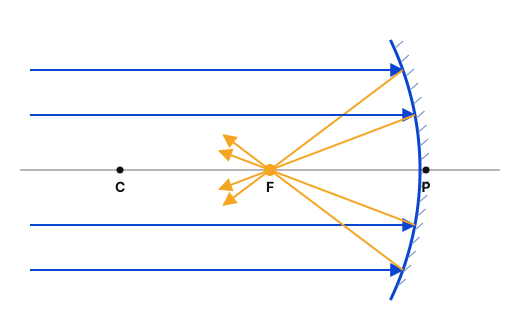
When several rays parallel to the principal axis fall on a concave mirror, how do the reflected rays behave?
जब मुख्य अक्ष के समांतर कई किरणें एक अवतल दर्पण पर पड़ती हैं, तो परावर्तित किरणें किस प्रकार व्यवहार करती हैं?
  1. AThey spread out and appear to come from behind the mirror.वे फैल जाती हैं और दर्पण के पीछे से आती हुई प्रतीत होती हैं।
  2. BThey are reflected back along the same path.वे उसी पथ के अनुदिश वापस परावर्तित हो जाती हैं।
  3. CThey travel parallel to the principal axis after reflection.परावर्तन के बाद वे मुख्य अक्ष के समांतर चलती हैं।
  4. DThey all meet at a single point on the principal axis.वे सभी मुख्य अक्ष पर एक ही बिंदु पर मिलती हैं।
Show answer

Concept: Rays parallel to the principal axis converge at the principal focus after reflection from a concave mirror.

  1. Concave mirror is a converging mirror.
  2. All parallel rays meet at one point F on the principal axis.
  3. Option A describes a convex mirror (rays appear to diverge from F behind it).

Yaad rakhein: Concave → converge (real F in front); Convex → diverge (virtual F behind).

Answer: (D) They all meet at a single point on the principal axis.

अवधारणा: मुख्य अक्ष के समांतर किरणें अवतल दर्पण से परावर्तन के बाद मुख्य फोकस पर मिलती हैं।

  1. अवतल दर्पण अभिसारी है।
  2. सभी समांतर किरणें मुख्य अक्ष के एक बिंदु F पर मिलती हैं।
  3. विकल्प A उत्तल दर्पण का वर्णन है।

याद रखें: अवतल → अभिसरण (सामने वास्तविक F); उत्तल → अपसरण (पीछे आभासी F)।

उत्तर: (D) वे सभी मुख्य अक्ष पर एक ही बिंदु पर मिलती हैं।

RRB Technician Grade IIIGeneral ScienceConcave mirror – principal focusRRB Technician Grade III 2025 · 9 Mar Shift 3 →