Question bank

Q&A: practice questions with answers

Search questions on any topic. Filter by exam category, exam, subject and topic, try the question, then open the answer and explanation.

Courses – airGurukul

3,200 questions found.

Q2941.
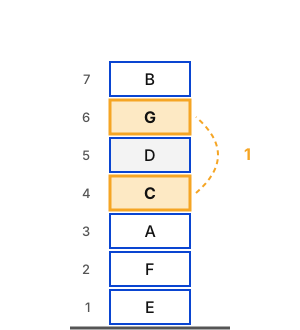
Seven boxes A, B, C, D, E, F and G are kept one over the other but not necessarily in the same order. Exactly five boxes are kept between E and B. D is kept fifth from the bottom. F is kept immediately below A but above E. C is not kept below A. G is kept below B but above D. How many boxes are kept between C and G?
सात बक्से A, B, C, D, E, F और G एक के ऊपर एक रखे गए हैं, लेकिन यह आवश्यक नहीं कि इसी क्रम में हों। E और B के बीच ठीक पाँच बक्से रखे गए हैं। D नीचे से पाँचवें स्थान पर रखा गया है। F, A के ठीक नीचे लेकिन E के ऊपर रखा गया है। C, A के नीचे नहीं रखा गया है। G, B के नीचे लेकिन D के ऊपर रखा गया है। C और G के बीच कितने बक्से रखे गए हैं?
  1. ATwoदो
  2. BThreeतीन
  3. COneएक
  4. DFourचार
Show answer

Concept: Fix certain positions (bottom = 1) and fill the rest.
Solution:

  1. D = 5th from bottom; five between E and B → they are at 1 and 7
  2. G below B, above D → B = 7, G = 6, E = 1
  3. F just below A, C above A → A = 3, F = 2, C = 4
  4. Between C (4) and G (6): D → 1 box

Trick: 'Five between' in 7 boxes means one is top and the other bottom.

Answer: (C) One

अवधारणा: नीचे = 1 मानकर निश्चित स्थान भरें, फिर बाकी।

हल:

  1. D = 5; E व B के बीच पाँच → 1 और 7
  2. G, B के नीचे व D के ऊपर → B = 7, G = 6, E = 1
  3. F, A के ठीक नीचे; C, A के ऊपर → A = 3, F = 2, C = 4
  4. C (4) और G (6) के बीच: D → 1

ट्रिक: 7 बॉक्स में 'बीच में पाँच' = एक सबसे ऊपर, एक सबसे नीचे।

उत्तर: (C) एक
RRB Technician Grade IIIGeneral Intelligence and ReasoningBox stacking puzzleRRB Technician Grade III 2025 · 6 Mar Shift 3 →
Q2942.
The position(s) of how many letters will remain unchanged if each letter in the word ALTERING is arranged in the English alphabetical order?
यदि शब्द ALTERING के प्रत्येक अक्षर को अंग्रेज़ी वर्णमाला क्रम में व्यवस्थित किया जाए, तो कितने अक्षरों का/के स्थान अपरिवर्तित रहेगा/रहेंगे?
  1. AThreeतीन
  2. BOneएक
  3. CTwoदो
  4. DNoneएक भी नहीं
Show answer

Concept: Sort the letters and compare position by position.

Solution:

  1. Original: A L T E R I N G
  2. Sorted: A E G I L N R T
  3. Only A (position 1) stays the same → 1

Trick: Write both rows one under the other and tick the matches.

Answer: (B) One

अवधारणा: अक्षरों को क्रम से लगाकर स्थान-दर-स्थान मिलाएँ।

हल:

  1. मूल: A L T E R I N G
  2. क्रमबद्ध: A E G I L N R T
  3. केवल A (पहला) अपरिवर्तित → 1

ट्रिक: दोनों पंक्तियाँ ऊपर-नीचे लिखकर मिलान करें।

उत्तर: (B) एक

RRB Technician Grade IIIGeneral Intelligence and ReasoningAlphabetical rearrangementRRB Technician Grade III 2025 · 6 Mar Shift 3 →
Q2943.
Mr. Kell ranked 155th from the bottom and 37th from the top in his class. How many students are there in his class?
श्री केल अपनी कक्षा में नीचे से 155वें और ऊपर से 37वें स्थान पर हैं। उनकी कक्षा में कितने विद्यार्थी हैं?
  1. A199
  2. B197
  3. C191
  4. D198
Show answer

Concept: Total = rank from top + rank from bottom − 1.

Solution:

  1. Total = 37 + 155 − 1
  2. = 191

Yaad rakhein: Subtract 1 because the person is counted in both ranks.

Answer: (C) 191

अवधारणा: कुल = ऊपर से रैंक + नीचे से रैंक − 1।

हल:

  1. कुल = 37 + 155 − 1
  2. = 191

याद रखें: 1 इसलिए घटाते हैं क्योंकि व्यक्ति दोनों गिनती में शामिल है।

उत्तर: (C) 191

RRB Technician Grade IIIGeneral Intelligence and ReasoningRankingRRB Technician Grade III 2025 · 6 Mar Shift 3 →
Q2944.
In the following number-pairs, the second number is obtained by applying certain mathematical operations to the first number. Select the set in which the numbers are related in the same way as are the numbers of the following sets.
(Note: Operations should be performed on the whole numbers, without breaking down the numbers into their constituent digits. E.g. 13 – Operations on 13 such as
adding/subtracting/multiplying to 13 can be performed. Breaking down 13 into 1 and 3 and then performing mathematical operations on 1 and 3 is not allowed.)
29, 59
35, 71
निम्नलिखित संख्या-युग्मों में, पहली संख्या पर कुछ गणितीय संक्रियाएँ करके दूसरी संख्या प्राप्त की जाती है। उस समुच्चय का चयन कीजिए जिसमें संख्याएँ उसी प्रकार संबंधित हैं जिस प्रकार निम्नलिखित समुच्चयों की संख्याएँ संबंधित हैं।
(ध्यान दें: संक्रियाएँ संख्याओं को उनके घटक अंकों में विभाजित किए बिना, पूर्ण संख्याओं पर की जानी चाहिए। उदाहरण के लिए 13 – 13 पर संक्रियाएँ जैसे
13 में जोड़ना/घटाना/गुणा करना आदि किया जा सकता है। 13 को 1 और 3 में विभाजित करना और फिर 1 और 3 पर गणितीय संक्रियाएँ करना वर्जित है।)
29, 59
35, 71
  1. A46, 91
  2. B56, 112
  3. C41, 83
  4. D53, 105
Show answer

Concept: Find the operation linking first and second number.

Solution:

  1. 29×2+1=59
  2. 35×2+1=71
  3. 41×2+1=83 ✓

Trick: Second number is always odd and just above double — 46,91 / 56,112 / 53,105 all fail.

Answer: (C) 41, 83

अवधारणा: पहली व दूसरी संख्या का संबंध खोजें।

हल:

  1. 29×2+1=59
  2. 35×2+1=71
  3. 41×2+1=83 ✓

ट्रिक: दूसरी संख्या=दोगुना+1; बाकी विकल्प फिट नहीं।

उत्तर: (C) 41, 83

RRB Technician Grade IIIGeneral Intelligence and ReasoningNumber pair relationRRB Technician Grade III 2025 · 6 Mar Shift 3 →
Q2945.
In a certain code language, ‘lamp of wisdom’ is coded as ‘nh rz vk’ and ‘light the lamp’ is coded as ‘rz bw mt’. How is ‘lamp’ coded in the given language? (All the codes are two- letter codes only.)
एक निश्चित कूट भाषा में, ‘lamp of wisdom’ को ‘nh rz vk’ के रूप में कूटबद्ध किया जाता है और ‘light the lamp’ को ‘rz bw mt’ के रूप में कूटबद्ध किया जाता है। दी गई भाषा में ‘lamp’ को किस प्रकार कूटबद्ध किया जाता है? (सभी कूट केवल दो-अक्षर वाले कूट हैं।)
  1. Anh
  2. Bmt
  3. Cbw
  4. Drz
Show answer

Concept: The common word gets the common code.

Solution:

  1. 'lamp' is in both sentences
  2. Common code in 'nh rz vk' and 'rz bw mt' = rz
  3. lamp = rz

Trick: Match repeated word with repeated code.

Answer: (D) rz

अवधारणा: common शब्द का कोड common होगा।

हल:

  1. 'lamp' दोनों वाक्यों में
  2. दोनों में common कोड = rz
  3. lamp = rz

ट्रिक: दोहराया शब्द ↔ दोहराया कोड।

उत्तर: (D) rz

RRB Technician Grade IIIGeneral Intelligence and ReasoningCoding – common wordRRB Technician Grade III 2025 · 6 Mar Shift 3 →
Q2946.
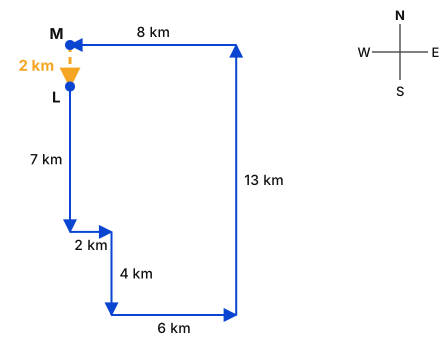
Mr. O starts from Point L and drives 7 km towards the south. He then takes a left turn, drives 2 km, turns right and drives 4 km. He then takes a left turn and drives 6 km. He then takes a left turn and drives 13 km. He takes a final left turn, drives 8 km and stops at Point M. How far (shortest distance) and towards which direction should he drive in order to reach Point L again? (All turns are 90 degrees turns only unless specified.)
श्री O बिंदु L से शुरू करते हैं और दक्षिण की ओर 7 km गाड़ी चलाते हैं। फिर वे बाएँ मुड़ते हैं, 2 km गाड़ी चलाते हैं, दाएँ मुड़ते हैं और 4 km गाड़ी चलाते हैं। फिर वे बाएँ मुड़ते हैं और 6 km गाड़ी चलाते हैं। फिर वे बाएँ मुड़ते हैं और 13 km गाड़ी चलाते हैं। वे अंतिम बार बाएँ मुड़ते हैं, 8 km गाड़ी चलाते हैं और बिंदु M पर रुक जाते हैं। बिंदु L पर फिर से पहुँचने के लिए उन्हें कितनी दूरी (न्यूनतम दूरी) और किस दिशा में गाड़ी चलानी चाहिए? (जब तक निर्दिष्ट न हो, सभी मोड़ केवल 90 डिग्री के हैं।)
  1. A4 km towards South4 km दक्षिण की ओर
  2. B2 km towards South2 km दक्षिण की ओर
  3. C7 km towards East7 km पूर्व की ओर
  4. D7 km towards West7 km पश्चिम की ओर
Show answer

Concept: Track x (east) and y (north) coordinates.

Solution:

  1. Start (0, 0); 7 S → (0, −7); left (E) 2 → (2, −7)
  2. Right (S) 4 → (2, −11); left (E) 6 → (8, −11)
  3. Left (N) 13 → (8, 2); left (W) 8 → (0, 2) = M
  4. M is 2 km north of L → drive 2 km south

Trick: East total 2 + 6 − 8 = 0; North total −7 − 4 + 13 = +2 → go 2 km South.

Answer: (B) 2 km towards South

अवधारणा: x (पूर्व) और y (उत्तर) निर्देशांक रखें।

हल:

  1. (0, 0) से 7 दक्षिण → (0, −7); बाएँ (पूर्व) 2 → (2, −7)
  2. दाएँ (दक्षिण) 4 → (2, −11); बाएँ (पूर्व) 6 → (8, −11)
  3. बाएँ (उत्तर) 13 → (8, 2); बाएँ (पश्चिम) 8 → (0, 2) = M
  4. M, L से 2 km उत्तर → 2 km दक्षिण जाएँ

ट्रिक: पूर्व: 2 + 6 − 8 = 0; उत्तर: −7 − 4 + 13 = 2 → 2 km दक्षिण।

उत्तर: (B) 2 km दक्षिण की ओर

RRB Technician Grade IIIGeneral Intelligence and ReasoningDirection and distanceRRB Technician Grade III 2025 · 6 Mar Shift 3 →
Q2947.
Select the set in which the numbers are related in the same way as are the numbers of the following sets.
(Note: Operations should be performed on the whole numbers, without breaking down the numbers into their constituent digits. E.g. 13 – Operations on 13 such as
adding/subtracting/multiplying to 13 can be performed. Breaking down 13 into 1 and 3 and then performing mathematical operations on 1 and 3 is not allowed.)
(5, 16, 3)
(6, 18, 3)
उस समुच्चय का चयन कीजिए जिसमें संख्याएँ उसी प्रकार संबंधित हैं जिस प्रकार निम्नलिखित समुच्चयों की संख्याएँ संबंधित हैं।
(ध्यान दें: संक्रियाएँ संख्याओं को उनके घटक अंकों में विभाजित किए बिना, पूर्ण संख्याओं पर की जानी चाहिए। उदाहरण के लिए 13 – 13 पर संक्रियाएँ जैसे
13 में जोड़ना/घटाना/गुणा करना आदि किया जा सकता है। 13 को 1 और 3 में विभाजित करना और फिर 1 और 3 पर गणितीय संक्रियाएँ करना वर्जित है।)
(5, 16, 3)
(6, 18, 3)
  1. A(7, 28, 4)
  2. B(4, 13, 2)
  3. C(6, 19, 4)
  4. D(8, 40, 12)
Show answer

Concept: Find how the middle number comes from the outer two.

Solution:

  1. (5 + 3) × 2 = 16
  2. (6 + 3) × 2 = 18
  3. (8 + 12) × 2 = 40 ✓; others: (7+4)×2 = 22, (4+2)×2 = 12, (6+4)×2 = 20 ✗

Trick: Middle number must be even (it is a double) — this removes (4, 13, 2) and (6, 19, 4) at once.

Answer: (D) (8, 40, 12)

अवधारणा: बीच की संख्या बाहरी दो से कैसे बनी, खोजें।

हल:

  1. (5 + 3) × 2 = 16
  2. (6 + 3) × 2 = 18
  3. (8 + 12) × 2 = 40 ✓; बाकी फिट नहीं

ट्रिक: बीच की संख्या सम होगी — 13 और 19 वाले विकल्प तुरंत बाहर।

उत्तर: (D) (8, 40, 12)

RRB Technician Grade IIIGeneral Intelligence and ReasoningNumber triad relationRRB Technician Grade III 2025 · 6 Mar Shift 3 →
Q2948.
What should come in place of ? in the given series based on the English alphabetical order?
MFY UNG CVO KDW ?
अंग्रेज़ी वर्णमाला क्रम के आधार पर, दी गई श्रृंखला में ? के स्थान पर क्या आना चाहिए?
MFY UNG CVO KDW ?
  1. ASEL
  2. BSLO
  3. CSLP
  4. DSLE
Show answer

Concept: Track each letter position separately.

Solution:

  1. 1st letters: M, U, C, K → +8 each → S
  2. 2nd letters: F, N, V, D → +8 → L
  3. 3rd letters: Y, G, O, W → +8 → E
  4. Answer = SLE

Trick: All three positions move +8 (wrap after Z), so find one and match.

Answer: (D) SLE

अवधारणा: हर स्थान के अक्षर अलग-अलग देखें।

हल:

  1. पहले अक्षर: M, U, C, K → +8 → S
  2. दूसरे: F, N, V, D → +8 → L
  3. तीसरे: Y, G, O, W → +8 → E
  4. उत्तर = SLE

ट्रिक: तीनों स्थान +8 चलते हैं (Z के बाद A से)।

उत्तर: (D) SLE

RRB Technician Grade IIIGeneral Intelligence and ReasoningLetter seriesRRB Technician Grade III 2025 · 6 Mar Shift 3 →
Q2949.
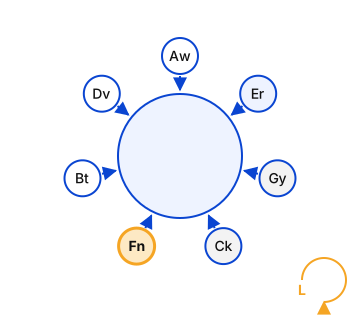
Aw, Bt, Ck, Dv, Er, Fn and Gy are sitting around a circular table facing the centre. Bt sits second to the right of Aw. Ck sits third to the left of Aw. Er sits to the immediate right of Gy. Dv sits second to the right of Er. What is the position of Fe with respect to Er?
Aw, Bt, Ck, Dv, Er, Fn और Gy एक वृत्ताकार मेज़ के चारों ओर केंद्र की ओर मुख करके बैठे हैं। Bt, Aw के दाईं ओर दूसरे स्थान पर बैठा है। Ck, Aw के बाईं ओर तीसरे स्थान पर बैठा है। Er, Gy के ठीक दाईं ओर बैठा है। Dv, Er के दाईं ओर दूसरे स्थान पर बैठा है। Er के सापेक्ष Fe का स्थान क्या है?
  1. AThird to the leftबाईं ओर तीसरा
  2. BThird to the rightदाईं ओर तीसरा
  3. CImmediate rightठीक दाईं ओर
  4. DSecond to the leftबाईं ओर दूसरा
Show answer

Concept: Number 7 seats, counting rightwards from Aw (Fe in the question means Fn).

Solution:

  1. Aw = 0, Bt = 2 (2nd right), Ck = 4 (3rd left = 4th right)
  2. Free seats 1, 3, 5, 6: Gy, Er = Gy + 1, Dv = Er + 2 → only Gy = 5, Er = 6, Dv = 1
  3. Fn = 3
  4. Fn is 4th to the right of Er = 3rd to the left

Trick: In 7 seats, k-th to the right = (7 − k)-th to the left.

Answer: (A) Third to the left

अवधारणा: 7 सीटें, Aw से दाएँ गिनें (प्रश्न में Fe = Fn)।

हल:

  1. Aw = 0, Bt = 2, Ck = 4 (बाएँ तीसरा)
  2. खाली 1, 3, 5, 6: Gy, Er = Gy + 1, Dv = Er + 2 → Gy = 5, Er = 6, Dv = 1
  3. Fn = 3
  4. Fn, Er के दाएँ 4था = बाएँ 3रा

ट्रिक: 7 सीटों में दाएँ k-वाँ = बाएँ (7 − k)-वाँ।

उत्तर: (A) बाईं ओर तीसरा

RRB Technician Grade IIIGeneral Intelligence and ReasoningCircular seating arrangementRRB Technician Grade III 2025 · 6 Mar Shift 3 →
Q2950.
What should come in place of ? in the given series based on the English alphabetical order?
ZJF OYU DNJ SCY ?
अंग्रेज़ी वर्णमाला क्रम के आधार पर, दी गई श्रृंखला में ? के स्थान पर क्या आना चाहिए?
ZJF OYU DNJ SCY ?
  1. AHRN
  2. BHRT
  3. CHUY
  4. DHTY
Show answer

Concept: Each position moves by a fixed step (wrap after Z).

Solution:

  1. 1st: Z, O, D, S → +15 → S + 15 = H
  2. 2nd: J, Y, N, C → +15 → R
  3. 3rd: F, U, J, Y → +15 → N
  4. Answer = HRN

Trick: +15 is the same as −11: S − 11 = H, C − 11 = R, Y − 11 = N.

Answer: (A) HRN

अवधारणा: हर स्थान निश्चित अंतर से चलता है (Z के बाद A)।

हल:

  1. पहले: Z, O, D, S → +15 → H
  2. दूसरे: J, Y, N, C → +15 → R
  3. तीसरे: F, U, J, Y → +15 → N
  4. उत्तर = HRN

ट्रिक: +15 = −11: S − 11 = H, C − 11 = R, Y − 11 = N।

उत्तर: (A) HRN

RRB Technician Grade IIIGeneral Intelligence and ReasoningLetter seriesRRB Technician Grade III 2025 · 6 Mar Shift 3 →
Q2951.
Which of the following explains why most food chains do not exceed four trophic levels?
निम्नलिखित में से कौन-सा कथन स्पष्ट करता है कि अधिकांश खाद्य श्रृंखलाएँ चार पोषी स्तरों (trophic levels) से अधिक क्यों नहीं होतीं?
  1. AProducers are rare in ecosystemsपारितंत्र में उत्पादक दुर्लभ होते हैं
  2. BOnly 10% of energy passes to the next levelकेवल 10% ऊर्जा ही अगले स्तर तक पहुँचती है
  3. CDecomposers consume all organisms at higher levelsअपघटक उच्च स्तरों के सभी जीवों का उपभोग कर लेते हैं
  4. DPredators eat only herbivoresपरभक्षी केवल शाकाहारियों को खाते हैं
Show answer

Concept: Only about 10% of energy passes from one trophic level to the next (Lindeman's 10% law).

Solution:

  1. About 90% energy is lost as heat, respiration and waste at each level
  2. After 4 levels only ~0.1% of producer energy remains — too little to support another level
  3. Producers are not rare; decomposers act at all levels, not just top

Yaad rakhein: Energy flow in an ecosystem is unidirectional; the energy pyramid is always upright.

Answer: (B) Only 10% of energy passes to the next level

अवधारणा: एक पोषी स्तर से अगले में केवल लगभग 10% ऊर्जा जाती है (लिंडमैन का 10% नियम)।

हल:

  1. हर स्तर पर ~90% ऊर्जा ऊष्मा, श्वसन व अपशिष्ट में नष्ट
  2. 4 स्तरों के बाद केवल ~0.1% ऊर्जा बचती है — अगले स्तर के लिए अपर्याप्त
  3. उत्पादक दुर्लभ नहीं; अपघटक हर स्तर पर कार्य करते हैं

याद रखें: पारितंत्र में ऊर्जा प्रवाह एकदिशीय होता है; ऊर्जा पिरामिड सदा सीधा।

उत्तर: (B) केवल 10% ऊर्जा ही अगले स्तर तक पहुँचती है

RRB Technician Grade IIIGeneral Science10% law of energy transferRRB Technician Grade III 2025 · 6 Mar Shift 3 →
Q2952.
An unbalanced force of 100 N acts on a body at rest such that it acquires a velocity of 5 m/s in 10 s. How much is the mass of the body?
विरामावस्था में स्थित एक वस्तु पर 100 N का असंतुलित बल इस प्रकार कार्य करता है कि वह 10 s में 5 m/s का वेग प्राप्त कर लेती है। वस्तु का द्रव्यमान कितना है?
  1. A2 kg
  2. B200 kg
  3. C5 kg
  4. D50 kg
Show answer

Concept: F=ma, where a=v−ut.

Solution:

  1. a=5−010=0.5m/s2
  2. m=Fa=1000.5
  3. =200 kg

Trick: m=Ftv=100×105=200 kg (impulse = change in momentum).

Answer: (B) 200 kg

अवधारणा: F=ma, जहाँ a=v−ut।

हल:

  1. a=510=0.5m/s2
  2. m=1000.5
  3. =200 kg

ट्रिक: m=Ftv=100×105=200 kg (आवेग = संवेग परिवर्तन)।

उत्तर: (B) 200 kg

RRB Technician Grade IIIGeneral ScienceNewton's second lawRRB Technician Grade III 2025 · 6 Mar Shift 3 →
Q2953.
Which method involves coating iron with a layer of zinc to protect it from rusting?
किस विधि में लोहे को जंग लगने से बचाने के लिए उस पर जस्ते (zinc) की परत चढ़ाई जाती है?
  1. AGalvanisationयशदलेपन (Galvanisation)
  2. BElectroplatingविद्युत लेपन (Electroplating)
  3. CTinningकलई करना (Tinning)
  4. DPaintingपेंट करना
Show answer

Concept: Galvanisation = coating iron/steel with a thin layer of zinc to prevent rusting.

Solution:

  1. Zinc layer blocks air and moisture
  2. Zinc is more reactive, so it corrodes first and protects iron even if scratched
  3. Tinning uses tin; electroplating is a general method using electricity

Yaad rakhein: G for Galvanise, Z for Zinc — 'GZ' pair; tin-coating is for food cans.

Answer: (A) Galvanisation

अवधारणा: Galvanisation = लोहे पर जस्ते (zinc) की पतली परत चढ़ाना ताकि जंग न लगे।

हल:

  1. Zinc परत हवा व नमी रोकती है
  2. Zinc अधिक क्रियाशील है, खरोंच पर भी पहले वही संक्षारित होता है
  3. Tinning में टिन, electroplating बिजली से परत चढ़ाने की सामान्य विधि

याद रखें: Galvanise = Zinc; टिन की परत डिब्बों (cans) पर लगती है।

उत्तर: (A) यशदलेपन (Galvanisation)

RRB Technician Grade IIIGeneral ScienceGalvanisationRRB Technician Grade III 2025 · 6 Mar Shift 3 →
Q2954.
Choose a term to complete the analogy.
Xylem Parenchyma : Food Storage :: Xylem Fibres : _______________
सादृश्य को पूरा करने के लिए एक पद चुनिए।
जाइलम मृदूतक (Xylem Parenchyma) : भोजन का भंडारण :: जाइलम रेशे (Xylem Fibres) : _______________
  1. ATransporting mineralsखनिजों का परिवहन
  2. BSupportive functionसहायक (आधारीय) कार्य
  3. CBeing tubular structuresनलिकाकार संरचनाएँ होना
  4. DTransporting water verticallyजल का ऊर्ध्वाधर परिवहन
Show answer

Concept: Xylem has tracheids, vessels, xylem parenchyma and xylem fibres, each with a role.

Solution:

  1. Xylem parenchyma (only living part) stores food
  2. Xylem fibres are dead, thick-walled cells → mechanical support
  3. Water/mineral transport is done mainly by tracheids and vessels

Yaad rakhein: Of the 4 xylem elements, only xylem parenchyma is living.

Answer: (B) Supportive function

अवधारणा: जाइलम में ट्रेकीड, वाहिकाएँ, जाइलम पैरेंकाइमा और जाइलम फाइबर होते हैं।

हल:

  1. जाइलम पैरेंकाइमा (एकमात्र जीवित) भोजन संचय करता है
  2. जाइलम फाइबर मृत, मोटी भित्ति वाली → सहारा देना
  3. जल/खनिज संवहन ट्रेकीड व वाहिकाएँ करती हैं

याद रखें: जाइलम के 4 घटकों में केवल पैरेंकाइमा जीवित है।

उत्तर: (B) सहायक (आधारीय) कार्य

RRB Technician Grade IIIGeneral ScienceXylem components – functionsRRB Technician Grade III 2025 · 6 Mar Shift 3 →
Q2955.
Why do cells in a multicellular organism exhibit a wide range of shapes and sizes?
बहुकोशिकीय जीव में कोशिकाएँ विभिन्न प्रकार की आकृतियाँ और आकार क्यों प्रदर्शित करती हैं?
  1. ATheir structure is adapted to perform specific functions.उनकी संरचना विशिष्ट कार्यों को करने के लिए अनुकूलित होती है।
  2. BVariation in cell shape and size occurs without any functional significance.कोशिका की आकृति और आकार में भिन्नता बिना किसी कार्यात्मक महत्व के होती है।
  3. CCell shape is random and unrelated to function.कोशिका की आकृति यादृच्छिक होती है और कार्य से संबंधित नहीं होती।
  4. DEach cell type contains a different genome in the same organism.एक ही जीव में प्रत्येक प्रकार की कोशिका में भिन्न जीनोम होता है।
Show answer

Concept: Cell shape and size are adapted to the specific job the cell does.

Solution:

  1. Nerve cells are long and branched to carry messages
  2. RBCs are biconcave discs to carry oxygen
  3. All body cells of one organism have the same genome — so the last option is wrong

Yaad rakhein: Division of labour in multicellular organisms leads to specialised cells.

Answer: (A) Their structure is adapted to perform specific functions.

अवधारणा: कोशिका का आकार व माप उसके कार्य के अनुसार अनुकूलित होता है।

हल:

  1. तंत्रिका कोशिका लंबी व शाखित — संदेश ले जाने हेतु
  2. RBC उभयावतल — ऑक्सीजन वहन हेतु
  3. एक जीव की सभी कोशिकाओं में समान genome होता है

याद रखें: बहुकोशिकीय जीवों में श्रम विभाजन से विशेष कोशिकाएँ बनती हैं।

उत्तर: (A) उनकी संरचना विशिष्ट कार्यों को करने के लिए अनुकूलित होती है।

RRB Technician Grade IIIGeneral ScienceCell structure and functionRRB Technician Grade III 2025 · 6 Mar Shift 3 →
Q2956.
When a small piece of sodium metal is added to chlorine gas under controlled conditions, a vigorous reaction occurs producing sodium chloride. Which of the following statements best explains the reason for the stability of the product formed?
जब नियंत्रित परिस्थितियों में सोडियम धातु का एक छोटा टुकड़ा क्लोरीन गैस में डाला जाता है, तो एक तीव्र अभिक्रिया होती है जिससे सोडियम क्लोराइड बनता है। निम्नलिखित में से कौन-सा कथन बनने वाले उत्पाद के स्थायित्व के कारण को सबसे अच्छी तरह स्पष्ट करता है?
  1. ASodium donates one electron to chlorine, forming oppositely charged ions held by strong electrostatic forces.सोडियम क्लोरीन को एक इलेक्ट्रॉन दान करता है, जिससे विपरीत आवेशित आयन बनते हैं जो प्रबल स्थिरवैद्युत बलों द्वारा बँधे रहते हैं।
  2. BBoth sodium and chlorine attain stability by forming a metallic lattice with delocalized electrons.सोडियम और क्लोरीन दोनों विस्थानीकृत इलेक्ट्रॉनों के साथ धात्विक जालक बनाकर स्थायित्व प्राप्त करते हैं।
  3. CSodium and chlorine share one electron each, forming a stable covalent bond.सोडियम और क्लोरीन एक-एक इलेक्ट्रॉन साझा करते हैं, जिससे एक स्थायी सहसंयोजक बंध बनता है।
  4. DSodium gains one electron from chlorine, forming a neutral molecule through mutual sharing.सोडियम क्लोरीन से एक इलेक्ट्रॉन ग्रहण करता है, जिससे परस्पर साझेदारी द्वारा एक उदासीन अणु बनता है।
Show answer

Concept: Metal loses electrons, non-metal gains them; ions are held by electrostatic attraction.

Solution:

  1. Na (2,8,1) loses 1 e⁻ → Na⁺; Cl (2,8,7) gains it → Cl⁻
  2. Both get noble-gas configuration
  3. Strong attraction between Na⁺ and Cl⁻ makes NaCl stable (ionic, not covalent)

Trick: Metal + non-metal → transfer (ionic); non-metal + non-metal → sharing (covalent).

Answer: (A) Sodium donates one electron to chlorine, forming oppositely charged ions held by strong electrostatic forces.

अवधारणा: धातु इलेक्ट्रॉन देती है, अधातु लेती है; आयन स्थिरविद्युत आकर्षण से बंधे रहते हैं।

हल:

  1. Na (2,8,1) 1 e⁻ देकर Na⁺; Cl (2,8,7) लेकर Cl⁻
  2. दोनों को noble gas विन्यास मिलता है
  3. Na⁺ व Cl⁻ के प्रबल आकर्षण से NaCl स्थिर (आयनिक)

ट्रिक: धातु + अधातु → स्थानांतरण (आयनिक); अधातु + अधातु → साझेदारी (सहसंयोजक)।

उत्तर: (A) सोडियम क्लोरीन को एक इलेक्ट्रॉन दान करता है, जिससे विपरीत आवेशित आयन बनते हैं जो प्रबल स्थिरवैद्युत बलों द्वारा बँधे रहते हैं।

RRB Technician Grade IIIGeneral ScienceIonic bond – NaClRRB Technician Grade III 2025 · 6 Mar Shift 3 →
Q2957.
An object is placed at infinity in front of a concave lens. The image formed will be _____________ .
एक अवतल लेंस के सामने अनंत पर एक वस्तु रखी गई है। बनने वाला प्रतिबिंब _____________ होगा।
  1. AReal, erect, and at the principal focusवास्तविक, सीधा और मुख्य फोकस पर
  2. BVirtual, erect, and highly diminished at the focusआभासी, सीधा और फोकस पर अत्यधिक छोटा
  3. CVirtual, erect, and enlargedआभासी, सीधा और बड़ा
  4. DReal, inverted, and at infinityवास्तविक, उल्टा और अनंत पर
Show answer

Concept: Rays from infinity are parallel; a concave lens diverges them so they appear to come from the focus.

Solution:

  1. Object at infinity → image at focus F₁ (same side)
  2. Image is virtual and erect
  3. Image is highly diminished (point-sized)

Yaad rakhein: A concave lens always gives a virtual, erect, diminished image for any object position.

Answer: (B) Virtual, erect, and highly diminished at the focus

अवधारणा: अनंत से समांतर किरणें अवतल लेंस से फैलकर फोकस से आती प्रतीत होती हैं।

हल:

  1. वस्तु अनंत पर → प्रतिबिंब फोकस F₁ पर
  2. आभासी व सीधा
  3. अत्यधिक छोटा (बिंदु-आकार)

याद रखें: अवतल लेंस हर स्थिति में आभासी, सीधा, छोटा प्रतिबिंब बनाता है।

उत्तर: (B) आभासी, सीधा और फोकस पर अत्यधिक छोटा

RRB Technician Grade IIIGeneral ScienceConcave lens – image formationRRB Technician Grade III 2025 · 6 Mar Shift 3 →
Q2958.
Which of the following correctly represents the changes that occur in the floral parts after fertilisation?
निम्नलिखित में से कौन-सा निषेचन के बाद पुष्प के भागों में होने वाले परिवर्तनों को सही ढंग से दर्शाता है?
  1. AThe stigma and ovary both develop into fruitsवर्तिकाग्र और अंडाशय दोनों फल में विकसित होते हैं
  2. BAll floral parts persist and develop into fruitsपुष्प के सभी भाग बने रहते हैं और फल में विकसित होते हैं
  3. CThe ovary develops into a fruit while the ovule becomes a seedअंडाशय फल में विकसित होता है जबकि बीजांड बीज बन जाता है
  4. DThe ovule develops into a fruit and the ovary becomes a seedबीजांड फल में विकसित होता है और अंडाशय बीज बन जाता है
Show answer

Concept: After fertilisation, ovary → fruit and ovule → seed.

Solution:

  1. Zygote inside the ovule forms the embryo; ovule becomes seed
  2. Ovary ripens into fruit
  3. Sepals, petals, stamens, stigma and style usually wither and fall

Trick: 'Ovary is bigger → fruit (bigger); ovule is smaller → seed (smaller)'.

Answer: (C) The ovary develops into a fruit while the ovule becomes a seed

अवधारणा: निषेचन के बाद अंडाशय → फल और बीजांड → बीज।

हल:

  1. बीजांड में युग्मनज से भ्रूण बनता है; बीजांड → बीज
  2. अंडाशय पककर फल बनता है
  3. बाह्यदल, पंखुड़ी, पुंकेसर, वर्तिकाग्र आदि झड़ जाते हैं

ट्रिक: बड़ा अंडाशय → बड़ा फल; छोटा बीजांड → छोटा बीज।

उत्तर: (C) अंडाशय फल में विकसित होता है जबकि बीजांड बीज बन जाता है

RRB Technician Grade IIIGeneral SciencePost-fertilisation changesRRB Technician Grade III 2025 · 6 Mar Shift 3 →
Q2959.
If an object is placed between F1 and 2F1 of a convex lens, the image produced is ________. (F1is the position of the principal focus.)
यदि किसी उत्तल लेंस के F1 और 2F1 के बीच कोई वस्तु रखी जाती है, तो बनने वाला प्रतिबिंब ________ होता है। (F1मुख्य फोकस की स्थिति है।)
  1. AEnlarged, real, invertedबड़ा, वास्तविक, उल्टा
  2. BSame size, real, invertedसमान आकार का, वास्तविक, उल्टा
  3. CDiminished, real, invertedछोटा, वास्तविक, उल्टा
  4. DEnlarged, virtual, erectबड़ा, आभासी, सीधा
Show answer

Concept: Object between F₁ and 2F₁ of a convex lens → image beyond 2F₂.

Solution:

  1. Image forms beyond 2F₂ on the other side
  2. It is real and inverted
  3. It is enlarged

Trick: Object between F and 2F ↔ image beyond 2F (they swap with object beyond 2F). Closer object (but beyond F) → bigger image.

Answer: (A) Enlarged, real, inverted

अवधारणा: उत्तल लेंस में वस्तु F₁ और 2F₁ के बीच → प्रतिबिंब 2F₂ से परे।

हल:

  1. प्रतिबिंब दूसरी ओर 2F₂ से आगे
  2. वास्तविक व उल्टा
  3. बड़ा

ट्रिक: F और 2F के बीच वस्तु ↔ 2F से परे प्रतिबिंब; वस्तु F के पास → प्रतिबिंब बड़ा।

उत्तर: (A) बड़ा, वास्तविक, उल्टा

RRB Technician Grade IIIGeneral ScienceConvex lens – image formationRRB Technician Grade III 2025 · 6 Mar Shift 3 →
Q2960.
Which muscular tissue in animals is responsible for voluntary movements and is attached to bones?
जंतुओं में कौन-सा पेशी ऊतक ऐच्छिक गतियों के लिए उत्तरदायी है और अस्थियों से जुड़ा होता है?
  1. ATendonकंडरा (Tendon)
  2. BUnstriated (smooth) muscleअरेखित (चिकनी) पेशी
  3. CStriated (skeletal) muscleरेखित (कंकाल) पेशी
  4. DCardiac muscleहृदय पेशी
Show answer

Concept: Striated (skeletal) muscles are voluntary and attached to bones.

Solution:

  1. Striated muscles: long, cylindrical, multinucleate, light-dark bands, voluntary
  2. Smooth muscle: involuntary (gut, blood vessels)
  3. Cardiac: involuntary, heart only; tendon is connective tissue, not muscle

Yaad rakhein: Tendon joins muscle to bone; ligament joins bone to bone.

Answer: (C) Striated (skeletal) muscle

अवधारणा: रेखित (कंकाल) पेशियाँ ऐच्छिक होती हैं और हड्डियों से जुड़ी रहती हैं।

हल:

  1. रेखित: लंबी, बहुकेंद्रकीय, धारीदार, ऐच्छिक
  2. चिकनी पेशी: अनैच्छिक (आहारनाल, रक्त वाहिकाएँ)
  3. हृदय पेशी: अनैच्छिक; tendon संयोजी ऊतक है

याद रखें: Tendon = पेशी से हड्डी; Ligament = हड्डी से हड्डी।

उत्तर: (C) रेखित (कंकाल) पेशी

RRB Technician Grade IIIGeneral ScienceMuscular tissue typesRRB Technician Grade III 2025 · 6 Mar Shift 3 →