Question bank

Q&A: practice questions with answers

Search questions on any topic. Filter by exam category, exam, subject and topic, try the question, then open the answer and explanation.

Courses – airGurukul

3,200 questions found.

Q3161.
Which quantity decreases when a solid object is immersed in water?
जब किसी ठोस वस्तु को जल में डुबोया जाता है, तो कौन-सी राशि घटती है?
  1. AMassद्रव्यमान
  2. BBuoyant forceउत्प्लावन बल
  3. CApparent weightआभासी भार
  4. DDensityघनत्व
Show answer

Concept: Water pushes up with a buoyant force, so the object feels lighter.

  1. Apparent weight = true weight − buoyant force → decreases.
  2. Mass and density do not change; buoyant force appears/increases.

Yaad rakhein: Archimedes' principle: loss in weight = weight of liquid displaced.

Answer: (C) Apparent weight

अवधारणा: पानी ऊपर की ओर उत्प्लावन बल लगाता है, वस्तु हल्की लगती है।

  1. आभासी भार = वास्तविक भार − उत्प्लावन बल → घटता है।
  2. द्रव्यमान और घनत्व नहीं बदलते।

याद रखें: आर्किमिडीज़ सिद्धांत: भार में कमी = हटाए गए द्रव का भार।

उत्तर: (C) आभासी भार
RRB Technician Grade IIIGeneral ScienceBuoyancy – apparent weightRRB Technician Grade III 2025 · 6 Mar Shift 1 →
Q3162.
The process wherein the body of the living organism splits into two exactly identical halves is termed as ___________.
वह प्रक्रम जिसमें सजीव का शरीर दो बिल्कुल समान अर्धभागों में विभाजित हो जाता है, ___________ कहलाता है।
  1. Abuddingमुकुलन
  2. Bfragmentationखंडन
  3. Cbinary fissionद्विखंडन
  4. Dmultiple fissionबहुखंडन
Show answer

Concept: Binary fission = one cell divides into two equal daughter cells.

  1. Seen in Amoeba, Paramecium, bacteria.
  2. Budding = small outgrowth (Hydra, yeast); multiple fission = many cells (Plasmodium).

Yaad rakhein: Leishmania shows binary fission in a definite plane.

Answer: (C) binary fission

अवधारणा: द्विखंडन = एक कोशिका दो बराबर संतति कोशिकाओं में बँटती है।

  1. अमीबा, पैरामीशियम, जीवाणु में।
  2. मुकुलन = छोटी कली (हाइड्रा, यीस्ट); बहुखंडन = अनेक कोशिकाएँ (प्लाज़्मोडियम)।

याद रखें: लीशमानिया में द्विखंडन एक निश्चित तल में होता है।

उत्तर: (C) द्विखंडन

RRB Technician Grade IIIGeneral ScienceAsexual reproduction – binary fissionRRB Technician Grade III 2025 · 6 Mar Shift 1 →
Q3163.
Even though people eat different types of food, they may still absorb harmful chemical residues. This is because ____________.
यद्यपि लोग भिन्न-भिन्न प्रकार के भोजन करते हैं, फिर भी वे हानिकारक रासायनिक अवशेषों को अवशोषित कर सकते हैं। ऐसा इसलिए है क्योंकि ____________।
  1. AFood grains absorb only useful chemicals from soilखाद्यान्न मृदा से केवल उपयोगी रसायनों को अवशोषित करते हैं
  2. BAll plants produce natural pesticidesसभी पौधे प्राकृतिक पीड़कनाशी उत्पन्न करते हैं
  3. CChemicals persist and accumulate via biomagnificationरसायन बने रहते हैं और जैव आवर्धन के माध्यम से संचित होते हैं
  4. DPesticides are completely destroyed during cookingपकाने के दौरान पीड़कनाशी पूरी तरह से नष्ट हो जाते हैं
Show answer

Concept: Pesticides are non-biodegradable and pass up the food chain.

  1. Plants absorb them from soil and water; animals eating plants accumulate them.
  2. So any diet – cereals, vegetables or meat – can carry residues.
  3. Cooking does not destroy them.

Yaad rakhein: Concentration is highest in top consumers such as humans.

Answer: (C) Chemicals persist and accumulate via biomagnification

अवधारणा: कीटनाशक अजैव-निम्नीकरणीय हैं और खाद्य श्रृंखला में ऊपर पहुँचते हैं।

  1. पौधे इन्हें मिट्टी-पानी से सोखते हैं; उन्हें खाने वाले जंतुओं में ये जमा होते हैं।
  2. अतः अनाज, सब्ज़ी या मांस – हर भोजन में अवशेष हो सकते हैं।
  3. पकाने से ये नष्ट नहीं होते।

याद रखें: सबसे अधिक सांद्रता शीर्ष उपभोक्ता (मनुष्य) में।

उत्तर: (C) रसायन बने रहते हैं और जैव आवर्धन के माध्यम से संचित होते हैं

RRB Technician Grade IIIGeneral ScienceBiomagnification – food residuesRRB Technician Grade III 2025 · 6 Mar Shift 1 →
Q3164.
The resistivity of an alloy is generally higher than its constituent metals, and this property makes alloys suitable for ___________.
किसी मिश्रातु की प्रतिरोधकता (resistivity) सामान्यतः उसकी अवयवी धातुओं से अधिक होती है, और यह गुण मिश्रातुओं को ___________ के लिए उपयुक्त बनाता है।
  1. AConnecting wires (e.g., copper transmission lines)संयोजक तार (उदाहरण, कॉपर संचरण लाइनें)
  2. BFilaments of electric bulbs (e.g., tungsten)विद्युत बल्बों के तंतु (उदाहरण, टंगस्टन)
  3. CHeating elements (e.g., nichrome)तापन अवयव (उदाहरण, नाइक्रोम)
  4. DCircuit fuses (e.g., lead/tin alloy)परिपथ फ़्यूज़ (उदाहरण, लेड/टिन मिश्रातु)
Show answer

Concept: High resistivity + no oxidation at high temperature → good heating element.

  1. Nichrome (Ni–Cr alloy) is used in heaters, irons, toasters.
  2. Copper wires need low resistivity; bulb filament is pure tungsten (very high melting point).

Yaad rakhein: Fuse wire needs a low melting point, not high resistivity.

Answer: (C) Heating elements (e.g., nichrome)

अवधारणा: अधिक प्रतिरोधकता + उच्च ताप पर ऑक्सीकरण नहीं → तापन अवयव के लिए उपयुक्त।

  1. नाइक्रोम (Ni–Cr मिश्रातु) हीटर, इस्त्री, टोस्टर में।
  2. तांबे के तार में कम प्रतिरोधकता चाहिए; बल्ब का तंतु शुद्ध टंगस्टन है।

याद रखें: फ्यूज़ तार का गलनांक कम होना ज़रूरी है।

उत्तर: (C) तापन अवयव (उदाहरण, नाइक्रोम)

RRB Technician Grade IIIGeneral ScienceResistivity of alloysRRB Technician Grade III 2025 · 6 Mar Shift 1 →
Q3165.
Select the correct option regarding the given statements.
Statement 1: Suspensions scatter light.
Statement 2: When particles settle down, they no longer scatter light.
दिए गए कथनों के संबंध में सही विकल्प का चयन कीजिए।
कथन 1: निलंबन (suspensions) प्रकाश का प्रकीर्णन करते हैं।
कथन 2: जब कण नीचे बैठ जाते हैं, तो वे प्रकाश का प्रकीर्णन नहीं करते।
  1. AStatement 1 is true and Statement 2 is false.कथन 1 सत्य है और कथन 2 असत्य है।
  2. BBoth statements are false.दोनों कथन असत्य हैं।
  3. CBoth statements are true, and Statement 2 explains Statement 1.दोनों कथन सत्य हैं, और कथन 2, कथन 1 की व्याख्या करता है।
  4. DBoth statements are true, but Statement 2 does not explain Statement 1.दोनों कथन सत्य हैं, लेकिन कथन 2, कथन 1 की व्याख्या नहीं करता है।
Show answer

Concept: Suspension particles are large enough to scatter light (Tyndall effect).

  1. Statement 1 true: suspended particles scatter a light beam.
  2. Statement 2 true: after settling, the liquid clears and stops scattering.
  3. Settling does not explain why scattering happens → no explanation link.

Yaad rakhein: Suspensions are unstable and heterogeneous; particle size > 100 nm.

Answer: (D) Both statements are true, but Statement 2 does not explain Statement 1.

अवधारणा: निलंबन के कण बड़े होते हैं, प्रकाश का प्रकीर्णन करते हैं (टिंडल प्रभाव)।

  1. कथन 1 सही: निलंबित कण प्रकाश बिखेरते हैं।
  2. कथन 2 सही: कण बैठ जाने पर द्रव साफ़ हो जाता है, प्रकीर्णन नहीं।
  3. कणों का बैठना प्रकीर्णन का कारण नहीं बताता।

याद रखें: निलंबन अस्थायी और विषमांगी है; कण आकार > 100 nm।

उत्तर: (D) दोनों कथन सत्य हैं, लेकिन कथन 2, कथन 1 की व्याख्या नहीं करता है।

RRB Technician Grade IIIGeneral ScienceSuspension – scattering of lightRRB Technician Grade III 2025 · 6 Mar Shift 1 →
Q3166.
Which of the following is an example of a double displacement reaction?
निम्नलिखित में से कौन-सा द्विविस्थापन अभिक्रिया (double displacement reaction) का एक उदाहरण है?
  1. AFe + CuSO₄ → FeSO₄ + Cu
  2. B2H₂ + O₂ → 2H₂O
  3. CCaCO₃ → CaO + CO₂
  4. DNa₂SO₄ + BaCl₂ → BaSO₄ + 2NaCl
Show answer

Concept: Two compounds exchange their ions: AB + CD → AD + CB.

  1. Na₂SO₄ + BaCl₂ → BaSO₄↓ + 2NaCl: ions swapped, white BaSO₄ precipitate.
  2. A = displacement, B = combination, C = decomposition.

Trick: Two compounds on both sides with partners swapped = double displacement.

Answer: (D) Na₂SO₄ + BaCl₂ → BaSO₄ + 2NaCl

अवधारणा: दो यौगिक आपस में आयनों का आदान-प्रदान करते हैं: AB + CD → AD + CB।

  1. Na₂SO₄ + BaCl₂ → BaSO₄↓ + 2NaCl: आयन बदले, सफ़ेद BaSO₄ अवक्षेप।
  2. A = विस्थापन, B = संयोजन, C = वियोजन।

ट्रिक: दोनों ओर दो-दो यौगिक और साथी बदले हों = द्विविस्थापन।

उत्तर: (D) Na₂SO₄ + BaCl₂ → BaSO₄ + 2NaCl

RRB Technician Grade IIIGeneral ScienceDouble displacement reactionRRB Technician Grade III 2025 · 6 Mar Shift 1 →
Q3167.
The symbol ‘B’ represents which element?
प्रतीक ‘B’ किस तत्व को निरूपित करता है?
  1. ABromineब्रोमीन
  2. BBariumबेरियम
  3. CBerylliumबेरिलियम
  4. DBoronबोरॉन
Show answer

Concept: Single-letter symbol B stands for boron.

  1. Bromine = Br, Barium = Ba, Beryllium = Be.
  2. Boron (atomic number 5) = B.

Yaad rakhein: Some symbols come from Latin names: Na (natrium), K (kalium), Fe (ferrum).

Answer: (D) Boron

अवधारणा: एकल अक्षर B बोरॉन का प्रतीक है।

  1. ब्रोमीन = Br, बेरियम = Ba, बेरिलियम = Be।
  2. बोरॉन (परमाणु संख्या 5) = B।

याद रखें: कुछ प्रतीक लैटिन नामों से: Na (नेट्रियम), K (कैलियम), Fe (फेरम)।

उत्तर: (D) बोरॉन

RRB Technician Grade IIIGeneral ScienceChemical symbolsRRB Technician Grade III 2025 · 6 Mar Shift 1 →
Q3168.
When potassium reacts with water, we observe:
जब पोटैशियम जल के साथ अभिक्रिया करता है, तो हम देखते हैं:
  1. ANo visible changeकोई दृश्य परिवर्तन नहीं
  2. BFormation of a greenish compoundहरे रंग के यौगिक का बनना
  3. CGentle bubbling and slow reactionधीमी बुदबुदाहट और मंद अभिक्रिया
  4. DBright flame and rapid reactionतीव्र ज्वाला और तीव्र अभिक्रिया
Show answer

Concept: Potassium is highly reactive; its reaction with cold water is violent and exothermic.

  1. 2K + 2H₂O → 2KOH + H₂ + heat.
  2. The heat ignites the hydrogen → bright (lilac) flame.
  3. That is why K and Na are stored in kerosene.

Yaad rakhein: Order with water: K > Na > Ca > Mg.

Answer: (D) Bright flame and rapid reaction

अवधारणा: पोटैशियम अत्यधिक क्रियाशील है; ठंडे जल से तीव्र, ऊष्माक्षेपी अभिक्रिया।

  1. 2K + 2H₂O → 2KOH + H₂ + ऊष्मा।
  2. ऊष्मा से हाइड्रोजन जल उठती है → चमकीली ज्वाला।
  3. इसीलिए K और Na मिट्टी के तेल में रखे जाते हैं।

याद रखें: जल से क्रियाशीलता: K > Na > Ca > Mg।

उत्तर: (D) तीव्र ज्वाला और तीव्र अभिक्रिया

RRB Technician Grade IIIGeneral ScienceReactivity of potassium with waterRRB Technician Grade III 2025 · 6 Mar Shift 1 →
Q3169.
What is the primary function of the cell wall in plant cells?
पादप कोशिकाओं में कोशिका भित्ति का प्राथमिक कार्य क्या है?
  1. AControl cellular respirationकोशिकीय श्वसन को नियंत्रित करना
  2. BTransport nutrientsपोषक तत्वों का परिवहन करना
  3. CControl cell divisionकोशिका विभाजन को नियंत्रित करना
  4. DProvide rigidity and protectionदृढ़ता और सुरक्षा प्रदान करना
Show answer

Concept: Cell wall (mainly cellulose) lies outside the plasma membrane.

  1. It gives shape, rigidity and mechanical protection.
  2. Lets plant cells withstand dilute media without bursting.
  3. Respiration = mitochondria; division = nucleus.

Yaad rakhein: Animal cells lack a cell wall; fungal cell walls contain chitin.

Answer: (D) Provide rigidity and protection

अवधारणा: कोशिका भित्ति (मुख्यतः सेलुलोज़) प्लाज़्मा झिल्ली के बाहर होती है।

  1. यह आकार, दृढ़ता और यांत्रिक सुरक्षा देती है।
  2. पतले माध्यम में कोशिका को फटने से बचाती है।
  3. श्वसन = माइटोकॉन्ड्रिया; विभाजन = केंद्रक।

याद रखें: जंतु कोशिका में भित्ति नहीं होती; कवक की भित्ति में काइटिन।

उत्तर: (D) दृढ़ता और सुरक्षा प्रदान करना

RRB Technician Grade IIIGeneral SciencePlant cell wallRRB Technician Grade III 2025 · 6 Mar Shift 1 →
Q3170.
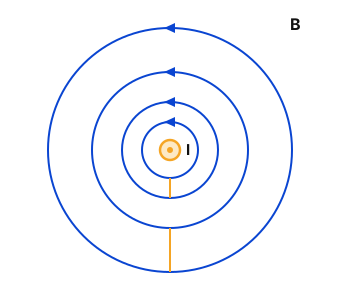
Which of the following statement(s) is/are true regarding the magnetic field line pattern around a straight current carrying wire?
(i) The magnetic field lines around a current carrying wire are in the form of concentric circles.
(ii) The magnetic field lines around a current carrying wire intersect at various points. (iii) The magnetic field lines move farther apart as one moves away from the wire.
सीधे धारावाही तार के चारों ओर चुंबकीय क्षेत्र रेखाओं के पैटर्न के संबंध में निम्नलिखित में से कौन-सा/से कथन सत्य है/हैं?
(i) धारावाही तार के चारों ओर चुंबकीय क्षेत्र रेखाएँ संकेंद्री वृत्तों के रूप में होती हैं।
(ii) धारावाही तार के चारों ओर चुंबकीय क्षेत्र रेखाएँ विभिन्न बिंदुओं पर प्रतिच्छेद करती हैं। (iii) तार से दूर जाने पर चुंबकीय क्षेत्र रेखाएँ एक-दूसरे से दूर होती जाती हैं।
  1. AOnly (i)केवल (i)
  2. BBoth (ii) and (iii)(ii) और (iii) दोनों
  3. CBoth (i) and (iii)(i) और (iii) दोनों
  4. DOnly (ii)केवल (ii)
Show answer

Concept: Field lines around a straight current-carrying wire are concentric circles.

  1. (i) True – concentric circles centred on the wire.
  2. (ii) False – field lines never intersect.
  3. (iii) True – field weakens (B∝1r), so circles spread apart.

Trick: 'Field lines intersect' is always false – eliminate any option with (ii).

Answer: (C) Both (i) and (iii)

अवधारणा: सीधे धारावाही तार के चारों ओर क्षेत्र रेखाएँ संकेंद्रित वृत्त होती हैं।

  1. (i) सही – तार केंद्र वाले संकेंद्रित वृत्त।
  2. (ii) गलत – क्षेत्र रेखाएँ कभी नहीं काटतीं।
  3. (iii) सही – दूरी पर क्षेत्र कमज़ोर (B∝1r), वृत्त दूर-दूर।

ट्रिक: 'रेखाएँ काटती हैं' सदा गलत – (ii) वाले विकल्प हटाएँ।

उत्तर: (C) (i) और (iii) दोनों

RRB Technician Grade IIIGeneral ScienceMagnetic field of a straight conductorRRB Technician Grade III 2025 · 6 Mar Shift 1 →
Q3171.
Which of the following factor helps in increasing crop yield?
निम्नलिखित में से कौन-सा कारक फसल उपज बढ़ाने में सहायक है?
  1. AUsing only rainwater for irrigationसिंचाई के लिए केवल वर्षा जल का उपयोग करना
  2. BUsing poor seeds without irrigationसिंचाई के बिना निम्न गुणवत्ता वाले बीजों का उपयोग करना
  3. CIgnoring crop protectionफसल सुरक्षा की उपेक्षा करना
  4. DUsing quality seeds, irrigation, fertilisers, crop protectionगुणवत्तापूर्ण बीज, सिंचाई, उर्वरक, फसल सुरक्षा का उपयोग करना
Show answer

Concept: Yield rises with good inputs and protection together.

  1. Quality seeds, timely irrigation, fertilisers and crop protection all raise yield.
  2. Other options (poor seeds, rain only, no protection) reduce yield.

Yaad rakhein: Three stages of crop improvement: choice of seeds, nurturing of crops, protection of crops.

Answer: (D) Using quality seeds, irrigation, fertilisers, crop protection

अवधारणा: अच्छे निवेश और फसल सुरक्षा साथ हों तो उपज बढ़ती है।

  1. गुणवत्ता बीज, सिंचाई, उर्वरक और फसल सुरक्षा से उपज बढ़ती है।
  2. बाकी विकल्प (खराब बीज, केवल वर्षा, सुरक्षा नहीं) उपज घटाते हैं।

याद रखें: फसल सुधार के तीन चरण: बीज चयन, फसल पोषण, फसल सुरक्षा।

उत्तर: (D) गुणवत्तापूर्ण बीज, सिंचाई, उर्वरक, फसल सुरक्षा का उपयोग करना

RRB Technician Grade IIIGeneral ScienceCrop yield improvementRRB Technician Grade III 2025 · 6 Mar Shift 1 →
Q3172.
Which of the following correctly explains why toothpaste is basic in nature?
निम्नलिखित में से कौन-सा सही व्याख्या करता है कि टूथपेस्ट क्षारकीय प्रकृति का क्यों होता है?
  1. ATo neutralise the acid formed in the mouth after eating foodभोजन करने के बाद मुँह में बनने वाले अम्ल को उदासीन करने के लिए
  2. BTo provide an acidic medium for enzyme action in salivaलार में एंजाइम क्रिया के लिए अम्लीय माध्यम प्रदान करने के लिए
  3. CTo react with water and release hydrogen ionsजल के साथ अभिक्रिया करके हाइड्रोजन आयन मुक्त करने के लिए
  4. DTo lower the pH of saliva and prevent cavitiesलार का pH कम करने और दंत क्षय को रोकने के लिए
Show answer

Concept: Bacteria break down food to acids; pH below 5.5 corrodes tooth enamel.

  1. Toothpaste is basic and neutralises this excess acid.
  2. This prevents tooth decay; B, C and D describe acidic behaviour.

Yaad rakhein: Tooth enamel is calcium hydroxyapatite (calcium phosphate) – hardest substance in the body.

Answer: (A) To neutralise the acid formed in the mouth after eating food

अवधारणा: बैक्टीरिया भोजन से अम्ल बनाते हैं; pH 5.5 से कम होने पर दाँतों का इनेमल घुलता है।

  1. टूथपेस्ट क्षारीय होता है और इस अम्ल को उदासीन करता है।
  2. इससे दंत क्षय रुकता है; B, C, D अम्लीय व्यवहार बताते हैं।

याद रखें: दाँतों का इनेमल कैल्शियम हाइड्रॉक्सीएपेटाइट है – शरीर का सबसे कठोर पदार्थ।

उत्तर: (A) भोजन करने के बाद मुँह में बनने वाले अम्ल को उदासीन करने के लिए

RRB Technician Grade IIIGeneral ScienceAcids and bases – toothpasteRRB Technician Grade III 2025 · 6 Mar Shift 1 →
Q3173.
What will be the wavelength of a sound wave whose frequency is 220 Hz and speed is 440 m/s in a given medium?
किसी दिए गए माध्यम में उस ध्वनि तरंग की तरंगदैर्ध्य क्या होगी जिसकी आवृत्ति 220 Hz और चाल 440 m/s है?
  1. A440 m
  2. B220 m
  3. C2 m
  4. D0.5 m
Show answer

Concept: Speed = frequency × wavelength.

  1. λ=v÷f=440÷220.
  2. λ=2 m.

Yaad rakhein: Frequency depends on the source and stays the same in any medium; speed and wavelength change.

Answer: (C) 2 m

अवधारणा: चाल = आवृत्ति × तरंगदैर्ध्य।

  1. λ=v÷f=440÷220।
  2. λ=2 m।

याद रखें: आवृत्ति स्रोत पर निर्भर – माध्यम बदलने पर नहीं बदलती; चाल और λ बदलते हैं।

उत्तर: (C) 2 m

RRB Technician Grade IIIGeneral ScienceWave equation v = fλRRB Technician Grade III 2025 · 6 Mar Shift 1 →
Q3174.
Which calculation correctly determines the formula unit mass of CaCl2?
कौन-सी गणना CaCl2 के सूत्र इकाई द्रव्यमान को सही रूप से ज्ञात करती है?
  1. AAtomic mass of Ca + (atomic mass of Cl ÷ 2) = 40 + 17.75 = 57.75 uCa का परमाणु द्रव्यमान + (Cl का परमाणु द्रव्यमान ÷ 2) = 40 + 17.75 = 57.75 u
  2. BAtomic mass of Ca + (2 × atomic mass of Cl) = 40 + 71 = 111 uCa का परमाणु द्रव्यमान + (2 × Cl का परमाणु द्रव्यमान) = 40 + 71 = 111 u
  3. CAtomic mass of Ca + atomic mass of Cl = 40 + 35.5 = 75.5 uCa का परमाणु द्रव्यमान + Cl का परमाणु द्रव्यमान = 40 + 35.5 = 75.5 u
  4. DAtomic mass of Ca × atomic mass of Cl = 40 × 35.5 = 1420 uCa का परमाणु द्रव्यमान × Cl का परमाणु द्रव्यमान = 40 × 35.5 = 1420 u
Show answer

Concept: Add atomic masses of all atoms in the formula (CaCl₂ has 1 Ca and 2 Cl).

  1. Ca = 40 u, Cl = 35.5 u.
  2. 40+2×35.5=40+71=111 u.

Yaad rakhein: 'Formula unit mass' is used for ionic compounds like NaCl (58.5 u), CaCl₂ (111 u).

Answer: (B) Atomic mass of Ca + (2 × atomic mass of Cl) = 40 + 71 = 111 u

अवधारणा: सूत्र के सभी परमाणुओं के द्रव्यमान जोड़ें (CaCl₂ में 1 Ca, 2 Cl)।

  1. Ca = 40 u, Cl = 35.5 u।
  2. 40+2×35.5=40+71=111 u।

याद रखें: आयनिक यौगिकों (NaCl = 58.5 u, CaCl₂ = 111 u) के लिए 'सूत्र इकाई द्रव्यमान' शब्द प्रयोग होता है।

उत्तर: (B) Ca का परमाणु द्रव्यमान + (2 × Cl का परमाणु द्रव्यमान) = 40 + 71 = 111 u

RRB Technician Grade IIIGeneral ScienceFormula unit massRRB Technician Grade III 2025 · 6 Mar Shift 1 →
Q3175.
Dhritiman tries to extract magnesium from magnesium oxide using carbon. The attempt fails. What is the reason?
धृतिमान कार्बन का उपयोग करके मैग्नीशियम ऑक्साइड से मैग्नीशियम निष्कर्षित करने का प्रयास करता है। प्रयास विफल हो जाता है। इसका कारण क्या है?
  1. ACarbon reacts violently with oxygen.कार्बन ऑक्सीजन के साथ तीव्रता से अभिक्रिया करता है।
  2. BThe reaction produces carbon monoxide only.अभिक्रिया से केवल कार्बन मोनोऑक्साइड बनता है।
  3. CMagnesium forms a volatile compound with carbon.मैग्नीशियम कार्बन के साथ एक वाष्पशील यौगिक बनाता है।
  4. DCarbon is less reactive than magnesium.कार्बन, मैग्नीशियम से कम अभिक्रियाशील है।
Show answer

Concept: Carbon can reduce only oxides of metals less reactive than itself.

  1. Mg is more reactive than carbon, so C cannot remove oxygen from MgO.
  2. Highly reactive metals (Na, Mg, Ca, Al) are obtained by electrolytic reduction of molten compounds.

Yaad rakhein: Carbon reduces oxides of middle-reactivity metals like Zn, Fe, Pb (e.g. ZnO + C → Zn + CO).

Answer: (D) Carbon is less reactive than magnesium.

अवधारणा: कार्बन केवल अपने से कम क्रियाशील धातुओं के ऑक्साइड का अपचयन कर सकता है।

  1. Mg कार्बन से अधिक क्रियाशील है, इसलिए C, MgO से ऑक्सीजन नहीं हटा सकता।
  2. अति क्रियाशील धातुएँ (Na, Mg, Ca, Al) गलित यौगिकों के विद्युत-अपघटन से मिलती हैं।

याद रखें: कार्बन Zn, Fe, Pb जैसी मध्यम क्रियाशील धातुओं के ऑक्साइड अपचयित करता है।

उत्तर: (D) कार्बन, मैग्नीशियम से कम अभिक्रियाशील है।

RRB Technician Grade IIIGeneral ScienceExtraction of metals – reactivityRRB Technician Grade III 2025 · 6 Mar Shift 1 →
Q3176.
Plants get macro-nutrients mainly from the ________, and micro-nutrients in small quantities from the ________.
पौधे वृहत् पोषक तत्व (macro-nutrients) मुख्य रूप से ________ से, और सूक्ष्म पोषक तत्व (micro-nutrients) अल्प मात्रा में ________ से प्राप्त करते हैं।
  1. Asoil ; soilमृदा ; मृदा
  2. Bwater ; sandजल ; रेत
  3. Csunlight ; mineralsसूर्य का प्रकाश ; खनिज
  4. Dair ; waterवायु ; जल
Show answer

Concept: Of 16 essential nutrients, C, H, O come from air and water; the other 13 come from soil.

  1. These 13 include 6 macro-nutrients (N, P, K, Ca, Mg, S) and 7 micro-nutrients (Fe, Mn, B, Zn, Cu, Mo, Cl).
  2. So both macro- and micro-nutrients come from the soil.

Yaad rakhein: Macro-nutrients are needed in large amounts, micro-nutrients in very small amounts.

Answer: (A) soil ; soil

अवधारणा: 16 आवश्यक पोषकों में C, H, O वायु-जल से; बाकी 13 मिट्टी से।

  1. इन 13 में 6 वृहत् (N, P, K, Ca, Mg, S) और 7 सूक्ष्म पोषक (Fe, Mn, B, Zn, Cu, Mo, Cl) हैं।
  2. अतः वृहत् और सूक्ष्म दोनों पोषक मिट्टी से मिलते हैं।

याद रखें: वृहत् पोषक अधिक मात्रा में, सूक्ष्म पोषक बहुत कम मात्रा में चाहिए।

उत्तर: (A) मृदा ; मृदा

RRB Technician Grade IIIGeneral SciencePlant nutrients – sourcesRRB Technician Grade III 2025 · 6 Mar Shift 1 →
Q3177.
Which of the following is an example of a double displacement reaction?
निम्नलिखित में से कौन-सा द्विविस्थापन अभिक्रिया का एक उदाहरण है?
  1. ANa2O + H2O→ 2 NaOH
  2. BAgNO₃ + NaCl → AgCl + NaNO₃
  3. C2Mg + O₂ → 2MgO
  4. DH₂ + Cl₂ → 2HCl
Show answer

Concept: Exchange of ions between two compounds.

  1. AgNO₃ + NaCl → AgCl↓ + NaNO₃: Ag⁺ and Na⁺ swap partners; white AgCl precipitate forms.
  2. A, C and D are combination reactions (two reactants → one product).

Trick: One product only = combination; two compounds swapping partners = double displacement.

Answer: (B) AgNO₃ + NaCl → AgCl + NaNO₃

अवधारणा: दो यौगिकों के बीच आयनों का आदान-प्रदान।

  1. AgNO₃ + NaCl → AgCl↓ + NaNO₃: Ag⁺ और Na⁺ साथी बदलते हैं; सफ़ेद AgCl अवक्षेप।
  2. A, C, D संयोजन अभिक्रियाएँ हैं (एक ही उत्पाद)।

ट्रिक: एक उत्पाद = संयोजन; दो यौगिक साथी बदलें = द्विविस्थापन।

उत्तर: (B) AgNO₃ + NaCl → AgCl + NaNO₃

RRB Technician Grade IIIGeneral ScienceDouble displacement – precipitationRRB Technician Grade III 2025 · 6 Mar Shift 1 →
Q3178.
If a lens forms a real and inverted image, the height of the image h' is generally taken as _____________.
यदि कोई लेंस वास्तविक और उल्टा प्रतिबिंब बनाता है, तो प्रतिबिंब की ऊँचाई h' को सामान्यतः _____________ लिया जाता है।
  1. APositive, but less than the object heightधनात्मक, परंतु वस्तु की ऊँचाई से कम
  2. BPositive, as it is above the axisधनात्मक, क्योंकि यह अक्ष के ऊपर है
  3. CNegative, only if the object is virtualऋणात्मक, केवल तभी जब वस्तु आभासी हो
  4. DNegative, as it is below the axisऋणात्मक, क्योंकि यह अक्ष के नीचे है
Show answer

Concept: Heights above the principal axis are positive, below are negative.

  1. A real image formed by a lens is inverted, i.e., below the axis.
  2. So h' is taken negative (and magnification m = h'/h is negative).

Yaad rakhein: Virtual, erect images have positive h' and positive m.

Answer: (D) Negative, as it is below the axis

अवधारणा: मुख्य अक्ष से ऊपर ऊँचाई धनात्मक, नीचे ऋणात्मक।

  1. लेंस का वास्तविक प्रतिबिंब उल्टा, यानी अक्ष के नीचे बनता है।
  2. इसलिए h' ऋणात्मक (और आवर्धन m = h'/h भी ऋणात्मक)।

याद रखें: आभासी, सीधे प्रतिबिंब के लिए h' और m धनात्मक।

उत्तर: (D) ऋणात्मक, क्योंकि यह अक्ष के नीचे है

RRB Technician Grade IIIGeneral ScienceSign convention – image heightRRB Technician Grade III 2025 · 6 Mar Shift 1 →
Q3179.
Which of the following correctly explains the adaptation of desert plants in
photosynthesis?
निम्नलिखित में से कौन-सा प्रकाश संश्लेषण में
मरुस्थलीय पौधों के अनुकूलन की सही व्याख्या करता है?
  1. ALight energy is captured at night and converted into starch for daytime use.प्रकाश ऊर्जा को रात में ग्रहण किया जाता है और दिन में उपयोग के लिए स्टार्च में परिवर्तित किया जाता है।
  2. BOxygen is absorbed at night while carbon dioxide is released during the day.रात में ऑक्सीजन अवशोषित की जाती है जबकि दिन में कार्बन डाइऑक्साइड मुक्त की जाती है।
  3. CCarbon dioxide uptake occurs at night and carbohydrates are synthesized during the day.कार्बन डाइऑक्साइड का अंतर्ग्रहण रात में होता है और दिन में कार्बोहाइड्रेट का संश्लेषण होता है।
  4. DPhotosynthesis is restricted to night-time only to minimise water loss.जल की हानि को न्यूनतम करने के लिए प्रकाश संश्लेषण केवल रात तक सीमित रहता है।
Show answer

Concept: Desert plants keep stomata closed by day to save water.

  1. They take in CO₂ at night and store it as an intermediate (acid).
  2. In daytime, light energy is used to make carbohydrates from this stored CO₂.

Yaad rakhein: This is CAM (Crassulacean Acid Metabolism), seen in cacti, pineapple.

Answer: (C) Carbon dioxide uptake occurs at night and carbohydrates are synthesized during the day.

अवधारणा: मरुस्थलीय पौधे पानी बचाने हेतु दिन में रंध्र बंद रखते हैं।

  1. वे रात में CO₂ लेकर उसे मध्यवर्ती (अम्ल) के रूप में संचित करते हैं।
  2. दिन में प्रकाश ऊर्जा से इस CO₂ से कार्बोहाइड्रेट बनाते हैं।

याद रखें: इसे CAM कहते हैं – कैक्टस, अनानास में।

उत्तर: (C) कार्बन डाइऑक्साइड का अंतर्ग्रहण रात में होता है और दिन में कार्बोहाइड्रेट का संश्लेषण होता है।

RRB Technician Grade IIIGeneral SciencePhotosynthesis in desert plants (CAM)RRB Technician Grade III 2025 · 6 Mar Shift 1 →
Q3180.
Which of the following is a complex permanent tissue responsible for the transport of water in plants?
निम्नलिखित में से कौन-सा एक जटिल स्थायी ऊतक है जो पौधों में जल के परिवहन के लिए उत्तरदायी है?
  1. ACollenchymaस्थूलकोण ऊतक (Collenchyma)
  2. BXylemजाइलम (Xylem)
  3. CParenchymaमृदूतक (Parenchyma)
  4. DPhloemफ्लोएम (Phloem)
Show answer

Concept: Complex tissues have more than one type of cell; xylem and phloem are complex.

  1. Xylem (tracheids, vessels, xylem parenchyma, fibres) conducts water and minerals.
  2. Phloem carries food; parenchyma and collenchyma are simple tissues.

Trick: X for 'water' – Xylem eXports water up; Phloem = food.

Answer: (B) Xylem

अवधारणा: जटिल ऊतक में एक से अधिक प्रकार की कोशिकाएँ होती हैं; जाइलम, फ्लोएम जटिल हैं।

  1. जाइलम (वाहिनिकाएँ, वाहिकाएँ, जाइलम पैरेन्काइमा, रेशे) जल व खनिज ले जाता है।
  2. फ्लोएम भोजन ले जाता है; पैरेन्काइमा, कॉलेन्काइमा सरल ऊतक हैं।

ट्रिक: जाइलम = जल, फ्लोएम = फूड (भोजन)।

उत्तर: (B) जाइलम (Xylem)

RRB Technician Grade IIIGeneral ScienceComplex permanent tissue – xylemRRB Technician Grade III 2025 · 6 Mar Shift 1 →