Question bank

Q&A: practice questions with answers

Search questions on any topic. Filter by exam category, exam, subject and topic, try the question, then open the answer and explanation.

Courses – airGurukul

3,200 questions found.

Q341.
What will come in the place of ‘?’ in the following equation, if ‘+’ and ‘−’ are interchanged and ‘×’ and ‘÷’ are interchanged?
35×7+2÷6−13=?
यदि ‘+’ और ‘−’ को आपस में बदल दिया जाए तथा ‘×’ और ‘÷’ को आपस में बदल दिया जाए, तो निम्नलिखित समीकरण में ‘?’ के स्थान पर क्या आएगा?
35×7+2÷6−13=?
  1. A7
  2. B6
  3. C4
  4. D9
Show answer

Concept: Swap the signs first, then apply BODMAS.

  1. After swapping: 35÷7−2×6+13
  2. =5−12+13
  3. =6

Trick: Rewrite the whole expression with new signs before calculating.

Answer: (B) 6

अवधारणा: पहले चिह्न बदलें, फिर BODMAS लगाएँ।

  1. बदलने पर: 35÷7−2×6+13
  2. =5−12+13
  3. =6

ट्रिक: गणना से पहले पूरा व्यंजक नए चिह्नों के साथ दोबारा लिखें।

उत्तर: (B) 6
RRB Technician Grade IIIGeneral Intelligence and ReasoningMathematical operations – interchangeRRB Technician Grade III 2024 · 29 Dec Shift 3 →
Q342.
If ‘A’ stands for ‘÷’, ‘B’ stands for ‘×’, ‘C’ stands for ‘+’, and ‘D’ stands for ‘−’, what will come in place of the question mark ‘?’ in the following equation?
16 C 24 A 3 B 8 D 5 = ?
यदि ‘A’ का अर्थ ‘÷’, ‘B’ का अर्थ ‘×’, ‘C’ का अर्थ ‘+’ और ‘D’ का अर्थ ‘−’ है, तो निम्नलिखित समीकरण में प्रश्न चिह्न ‘?’ के स्थान पर क्या आएगा?
16 C 24 A 3 B 8 D 5 = ?
  1. A75
  2. B65
  3. C70
  4. D80
Show answer

Concept: Replace letters by operators, then use BODMAS.

  1. 16+24÷3×8−5
  2. 24÷3=8, 8×8=64
  3. 16+64−5=75

Trick: Division and multiplication are done left to right before + and −.

Answer: (A) 75

अवधारणा: अक्षरों को संक्रियाओं से बदलें, फिर BODMAS लगाएँ।

  1. 16+24÷3×8−5
  2. 24÷3=8, 8×8=64
  3. 16+64−5=75

ट्रिक: + और − से पहले भाग व गुणा बाएँ से दाएँ।

उत्तर: (A) 75

RRB Technician Grade IIIGeneral Intelligence and ReasoningMathematical operations – symbol substitutionRRB Technician Grade III 2024 · 29 Dec Shift 3 →
Q343.
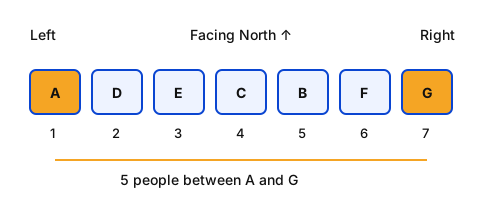
Seven people, A, B, C, D, E, F and G, are sitting in a row, facing north. B sits third from the right end. Only one person sits to the left of D. F sits to the right of B but left of G. E is an immediate neighbour of C and D. How many people sit between A and G?
सात व्यक्ति, A, B, C, D, E, F और G, उत्तर की ओर मुख करके एक पंक्ति में बैठे हैं। B दाएँ छोर से तीसरे स्थान पर बैठा है। D के बाईं ओर केवल एक व्यक्ति बैठा है। F, B के दाईं ओर परंतु G के बाईं ओर बैठा है। E, C और D दोनों का निकटतम पड़ोसी है। A और G के बीच कितने व्यक्ति बैठे हैं?
  1. AThreeतीन
  2. BFiveपाँच
  3. CTwoदो
  4. DFourचार
Show answer

Concept: All face north; fix definite positions first, then neighbours.

  1. B third from right ⇒ B at 5th (from left).
  2. Only one person left of D ⇒ D at 2nd.
  3. F right of B, left of G ⇒ F 6th, G 7th.
  4. E is neighbour of both C and D ⇒ E 3rd, C 4th, A 1st. Row: A D E C B F G ⇒ 5 people between A and G.

Trick: “E is neighbour of C and D” means E sits between them.

Answer: (B) Five

अवधारणा: सभी उत्तर की ओर; पहले निश्चित स्थान, फिर पड़ोसी तय करें।

  1. B दाएँ से तीसरा ⇒ B बाएँ से 5वें।
  2. D के बाएँ केवल एक ⇒ D 2रे।
  3. F, B के दाएँ और G के बाएँ ⇒ F 6ठे, G 7वें।
  4. E, C और D दोनों का पड़ोसी ⇒ E 3रे, C 4थे, A 1ले। पंक्ति: A D E C B F G ⇒ A और G के बीच 5।

ट्रिक: “E, C और D दोनों का पड़ोसी” = E उन दोनों के बीच।

उत्तर: (B) पाँच

RRB Technician Grade IIIGeneral Intelligence and ReasoningLinear seating arrangementRRB Technician Grade III 2024 · 29 Dec Shift 3 →
Q344.
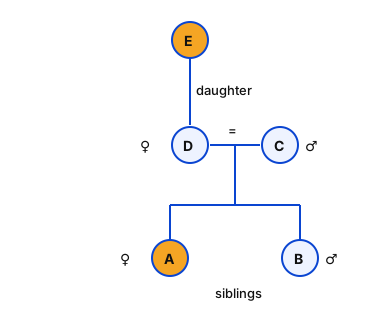
In a certain code language,
‘P + Q’ means ‘P is the sister of Q’,
‘P – Q’ means ‘P is the son of Q’,
‘P x Q’ means ‘P is the husband of Q’ and
‘P ÷ Q’ means ‘P is the daughter of Q’.
How is A related to E if ‘A + B – C x D ÷ E’?
एक निश्चित कूट भाषा में,
‘P + Q’ का अर्थ है ‘P, Q की बहन है’,
‘P – Q’ का अर्थ है ‘P, Q का पुत्र है’,
‘P x Q’ का अर्थ है ‘P, Q का पति है’ और
‘P ÷ Q’ का अर्थ है ‘P, Q की पुत्री है’।
यदि ‘A + B – C x D ÷ E’ है, तो A का E से क्या संबंध है?
  1. ASon’s daughterपुत्र की पुत्री
  2. BDaughterपुत्री
  3. CDaughter’s daughterपुत्री की पुत्री
  4. DSisterबहन
Show answer

Concept: Decode each symbol from left to right and draw the family tree.

  1. A + B: A is sister of B (A is female).
  2. B − C: B is son of C.
  3. C × D: C is husband of D ⇒ D is mother of A and B.
  4. D ÷ E: D is daughter of E ⇒ A is daughter of E’s daughter.

Trick: Mark gender with each code (sister/daughter = female) to fix the final relation.

Answer: (C) Daughter’s daughter

अवधारणा: हर चिह्न को बाएँ से दाएँ खोलें और वंश-वृक्ष बनाएँ।

  1. A + B: A, B की बहन है (A स्त्री)।
  2. B − C: B, C का पुत्र है।
  3. C × D: C, D का पति है ⇒ D, A और B की माँ।
  4. D ÷ E: D, E की पुत्री ⇒ A, E की पुत्री की पुत्री (नातिन)।

ट्रिक: हर कोड के साथ लिंग लिखें (बहन/पुत्री = स्त्री), अंतिम संबंध तुरंत मिलेगा।

उत्तर: (C) पुत्री की पुत्री

RRB Technician Grade IIIGeneral Intelligence and ReasoningCoded blood relationsRRB Technician Grade III 2024 · 29 Dec Shift 3 →
Q345.
In a certain code language, ‘REPS’ is coded as ‘9631’ and ‘EARS’ is coded as ‘6914’. What is the code for ‘A’ in the given code language?
एक निश्चित कूट भाषा में, ‘REPS’ को ‘9631’ के रूप में कूटबद्ध किया जाता है और ‘EARS’ को ‘6914’ के रूप में कूटबद्ध किया जाता है। उसी कूट भाषा में ‘A’ के लिए कूट क्या है?
  1. A6
  2. B9
  3. C1
  4. D4
Show answer

Concept: Letters common to both words share the digits common to both codes.

  1. REPS → 9631; EARS → 6914
  2. Common letters R, E, S ↔ common digits 9, 6, 1
  3. Left over: A ↔ 4 (and P ↔ 3)

Trick: Remove the common part; the leftover letter takes the leftover digit.

Answer: (D) 4

अवधारणा: दोनों शब्दों के उभयनिष्ठ अक्षरों के कोड भी दोनों कोड में उभयनिष्ठ होते हैं।

  1. REPS → 9631; EARS → 6914
  2. उभयनिष्ठ अक्षर R, E, S ↔ उभयनिष्ठ अंक 9, 6, 1
  3. शेष: A ↔ 4 (और P ↔ 3)

ट्रिक: उभयनिष्ठ भाग हटाएँ; बचा अक्षर बचे अंक से जुड़ता है।

उत्तर: (D) 4

RRB Technician Grade IIIGeneral Intelligence and ReasoningCoding-decoding (common letters)RRB Technician Grade III 2024 · 29 Dec Shift 3 →
Q346.
Read the given statements and conclusions carefully. You have to take the given statements to be true even if they seem to be at variance from commonly known facts and decide which conclusion(s) logically follow(s) from the given statements.
Statements:
No door is a lock.
No lock is a key
Conclusions:
I. No door is a key.
II. No lock is a door.
दिए गए कथनों और निष्कर्षों को ध्यानपूर्वक पढ़िए। आपको दिए गए कथनों को सत्य मानना है, भले ही वे सामान्य रूप से ज्ञात तथ्यों से भिन्न प्रतीत होते हों, और निर्णय लीजिए कि कौन-सा/से निष्कर्ष तार्किक रूप से दिए गए कथनों का अनुसरण करता है/करते हैं।
कथन:
कोई भी दरवाज़ा, ताला नहीं है।
कोई भी ताला, चाबी नहीं है।
निष्कर्ष:
I. कोई भी दरवाज़ा, चाबी नहीं है।
II. कोई भी ताला, दरवाज़ा नहीं है।
  1. ABoth conclusions I and II followनिष्कर्ष I और II दोनों अनुसरण करते हैं
  2. BOnly conclusion II followsकेवल निष्कर्ष II अनुसरण करता है
  3. COnly conclusion I followsकेवल निष्कर्ष I अनुसरण करता है
  4. DNeither conclusion I nor II followsन तो निष्कर्ष I और न ही II अनुसरण करता है
Show answer

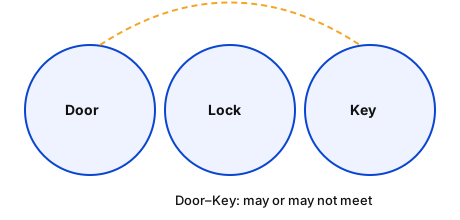
Concept: Draw the Venn diagram; a conclusion follows only if it is true in every possible diagram.

  1. Door and Lock are separate; Lock and Key are separate.
  2. Door and Key may or may not overlap ⇒ I (No door is a key) is not certain.
  3. “No door is a lock” is the same as “No lock is a door” ⇒ II follows.

Yaad rakhein: “No A is B” can always be reversed to “No B is A”. Two negative statements give no definite link between the end terms.

Answer: (B) Only conclusion II follows

अवधारणा: वेन आरेख बनाएँ; निष्कर्ष तभी अनुसरण करता है जब हर संभव आरेख में सत्य हो।

  1. दरवाज़ा और ताला अलग; ताला और चाबी अलग।
  2. दरवाज़ा और चाबी मिल भी सकते हैं, नहीं भी ⇒ I (कोई दरवाज़ा चाबी नहीं) निश्चित नहीं।
  3. “कोई दरवाज़ा ताला नहीं” = “कोई ताला दरवाज़ा नहीं” ⇒ II अनुसरण करता है।

याद रखें: “कोई A, B नहीं” को उलटकर “कोई B, A नहीं” लिख सकते हैं। दो नकारात्मक कथनों से अंतिम पदों में कोई निश्चित संबंध नहीं बनता।

उत्तर: (B) केवल निष्कर्ष II अनुसरण करता है

RRB Technician Grade IIIGeneral Intelligence and ReasoningSyllogismRRB Technician Grade III 2024 · 29 Dec Shift 3 →
Q347.
Given below is a statement followed by two courses of actions, numbered I and II. You must assume everything in the statement to be true, and on the basis of the information given in the statement, decide which of the courses of action logically follow(s) for pursuing.
Statement:
School X has received a notice from the Commissioner of Police on the many complaints that have been received regarding the traffic jam caused outside the school gates every morning between 8 a.m. and 9 a.m. due to illegal parking of cars.
Courses of Action:
(I) School X should deploy security personnel to monitor the illegal car parking outside school gates and clear any jams being caused.
(II) School X should ban parents from dropping their children by car to the school.
नीचे एक कथन और उसके बाद I और II क्रमांकित दो कार्यवाहियाँ दी गई हैं। आपको कथन में दी गई प्रत्येक बात को सत्य मानना है, और कथन में दी गई जानकारी के आधार पर निर्णय लेना है कि कौन-सी कार्यवाही/कार्यवाहियाँ अपनाने के लिए तार्किक रूप से अनुसरण करती है/करती हैं।
कथन:
स्कूल X को पुलिस आयुक्त से एक नोटिस प्राप्त हुआ है, जो कारों की अवैध पार्किंग के कारण प्रतिदिन सुबह 8 बजे से 9 बजे के बीच स्कूल के गेटों के बाहर लगने वाले ट्रैफ़िक जाम के संबंध में प्राप्त अनेक शिकायतों के बारे में है।
कार्यवाहियाँ:
(I) स्कूल X को स्कूल के गेटों के बाहर अवैध कार पार्किंग की निगरानी करने और लगने वाले किसी भी जाम को हटाने के लिए सुरक्षा कर्मियों को तैनात करना चाहिए।
(II) स्कूल X को अभिभावकों द्वारा अपने बच्चों को कार से स्कूल छोड़ने पर प्रतिबंध लगा देना चाहिए।
  1. ABoth I and II followI और II दोनों अनुसरण करती हैं
  2. BOnly I followsकेवल I अनुसरण करती है
  3. CNeither I nor II followsन तो I और न ही II अनुसरण करती है
  4. DOnly II followsकेवल II अनुसरण करती है
Show answer

Concept: A valid course of action should solve the stated problem practically, without being extreme.

  1. Problem: traffic jam due to illegal parking at drop-off time.
  2. I: Deploying security to monitor parking and clear jams directly tackles it ⇒ follows.
  3. II: Banning all car drops is extreme and impractical; parents can drop children legally ⇒ does not follow.

Trick: Reject actions with “ban/stop all” type extreme words unless the situation demands it.

Answer: (B) Only I follows

अवधारणा: सही कार्यवाही वह है जो समस्या को व्यावहारिक रूप से हल करे और अतिवादी न हो।

  1. समस्या: छोड़ने के समय अवैध पार्किंग से जाम।
  2. I: पार्किंग पर नज़र रखने और जाम हटाने हेतु सुरक्षाकर्मी लगाना सीधे समस्या हल करता है ⇒ अनुसरण करता है।
  3. II: कार से छोड़ने पर पूर्ण प्रतिबंध अतिवादी व अव्यावहारिक ⇒ अनुसरण नहीं करता।

ट्रिक: “पूर्ण प्रतिबंध/सब बंद” जैसे अतिवादी कदम सामान्यतः अस्वीकार करें।

उत्तर: (B) केवल I अनुसरण करती है

RRB Technician Grade IIIGeneral Intelligence and ReasoningCourse of actionRRB Technician Grade III 2024 · 29 Dec Shift 3 →
Q348.
Which of the following options should come in place of the question mark (?) in the given series based on the English alphabetical order?
ORN, QTP, SVR, UXT, ?
अंग्रेज़ी वर्णमाला क्रम के आधार पर दी गई श्रृंखला में प्रश्न चिह्न (?) के स्थान पर निम्नलिखित में से कौन-सा विकल्प आना चाहिए?
ORN, QTP, SVR, UXT, ?
  1. AWVZ
  2. BWZV
  3. CVZW
  4. DVWZ
Show answer

Concept: Check each letter position of the clusters separately.

  1. 1st letters: O, Q, S, U → +2 → W
  2. 2nd letters: R, T, V, X → +2 → Z
  3. 3rd letters: N, P, R, T → +2 → V

Trick: Every letter moves +2, so just add 2 to each letter of UXT.

Answer: (B) WZV

अवधारणा: समूहों के हर स्थान के अक्षर अलग-अलग देखें।

  1. पहले अक्षर: O, Q, S, U → +2 → W
  2. दूसरे अक्षर: R, T, V, X → +2 → Z
  3. तीसरे अक्षर: N, P, R, T → +2 → V

ट्रिक: हर अक्षर +2 बढ़ रहा है, अतः UXT के हर अक्षर में 2 जोड़ें।

उत्तर: (B) WZV

RRB Technician Grade IIIGeneral Intelligence and ReasoningLetter seriesRRB Technician Grade III 2024 · 29 Dec Shift 3 →
Q349.
Read the given statements and conclusions carefully. You have to take the given statements to be true even if they seem to be at variance from commonly known facts and decide which conclusion(s) logically follow(s) from the given statements.
Statements:
All coats are jackets.
Some coats are sweaters.
Conclusions:
(I) Some jackets are coats.
(II) Some jackets are sweaters.
दिए गए कथनों और निष्कर्षों को ध्यानपूर्वक पढ़िए। आपको दिए गए कथनों को सत्य मानना है, भले ही वे सामान्य रूप से ज्ञात तथ्यों से भिन्न प्रतीत होते हों, और निर्णय लीजिए कि कौन-सा/से निष्कर्ष तार्किक रूप से दिए गए कथनों का अनुसरण करता है/करते हैं।
कथन:
सभी कोट, जैकेट हैं।
कुछ कोट, स्वेटर हैं।
निष्कर्ष:
(I) कुछ जैकेट, कोट हैं।
(II) कुछ जैकेट, स्वेटर हैं।
  1. AOnly conclusion II followsकेवल निष्कर्ष II अनुसरण करता है
  2. BOnly conclusion I followsकेवल निष्कर्ष I अनुसरण करता है
  3. CNeither conclusion I nor II followsन तो निष्कर्ष I और न ही II अनुसरण करता है
  4. DBoth conclusions I and II followनिष्कर्ष I और II दोनों अनुसरण करते हैं
Show answer

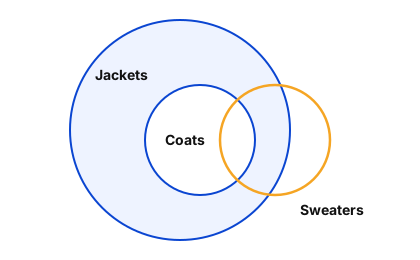
Concept: Draw the Coats circle inside the Jackets circle, with Sweaters overlapping Coats.

  1. All coats are jackets ⇒ every coat is a jacket, so some jackets (the coats) are coats ⇒ I follows.
  2. Some coats are sweaters, and all coats are jackets ⇒ those coats are jackets that are sweaters ⇒ II follows.
  3. Hence both conclusions follow.

Yaad rakhein: “All A are B” ⇒ “Some B are A”; “All A are B” + “Some A are C” ⇒ “Some B are C” — both always follow.

Answer: (D) Both conclusions I and II follow

अवधारणा: कोट का वृत्त जैकेट के वृत्त के अंदर बनाएँ, और स्वेटर कोट को काटता हुआ।

  1. सभी कोट जैकेट हैं ⇒ हर कोट एक जैकेट है, अतः कुछ जैकेट (कोट) कोट हैं ⇒ I अनुसरण करता है।
  2. कुछ कोट स्वेटर हैं और सभी कोट जैकेट हैं ⇒ वे कोट ऐसी जैकेट हैं जो स्वेटर भी हैं ⇒ II अनुसरण करता है।
  3. अतः दोनों निष्कर्ष अनुसरण करते हैं।

याद रखें: “सभी A, B हैं” ⇒ “कुछ B, A हैं”; “सभी A, B हैं” + “कुछ A, C हैं” ⇒ “कुछ B, C हैं” — दोनों हमेशा अनुसरण करते हैं।

उत्तर: (D) निष्कर्ष I और II दोनों अनुसरण करते हैं

RRB Technician Grade IIIGeneral Intelligence and ReasoningSyllogismRRB Technician Grade III 2024 · 29 Dec Shift 3 →
Q350.
Which of the following options should come in place of the question mark (?) in the given series based on the English alphabetical order?
IMH, LPK, OSN, RVQ, ?
अंग्रेज़ी वर्णमाला क्रम के आधार पर दी गई श्रृंखला में प्रश्न चिह्न (?) के स्थान पर निम्नलिखित में से कौन-सा विकल्प आना चाहिए?
IMH, LPK, OSN, RVQ, ?
  1. AYUT
  2. BYTU
  3. CUTY
  4. DUYT
Show answer

Concept: Check each letter position of the clusters separately.

  1. 1st letters: I, L, O, R → +3 → U
  2. 2nd letters: M, P, S, V → +3 → Y
  3. 3rd letters: H, K, N, Q → +3 → T

Trick: Every letter moves +3, so add 3 to each letter of RVQ.

Answer: (D) UYT

अवधारणा: समूहों के हर स्थान के अक्षर अलग-अलग देखें।

  1. पहले अक्षर: I, L, O, R → +3 → U
  2. दूसरे अक्षर: M, P, S, V → +3 → Y
  3. तीसरे अक्षर: H, K, N, Q → +3 → T

ट्रिक: हर अक्षर +3 बढ़ रहा है, अतः RVQ के हर अक्षर में 3 जोड़ें।

उत्तर: (D) UYT

RRB Technician Grade IIIGeneral Intelligence and ReasoningLetter seriesRRB Technician Grade III 2024 · 29 Dec Shift 3 →
Q351.
An object is placed in front of a concave mirror of focal length f, and it is found that an image of the same size as that of the object is formed. The object distance u is:
एक वस्तु को फोकस दूरी f वाले अवतल दर्पण (concave mirror) के सामने रखा जाता है, और यह पाया जाता है कि वस्तु के समान आकार का प्रतिबिंब बनता है। वस्तु की दूरी u है:
  1. Aless than ff से कम
  2. Bequal to 2f2f के बराबर
  3. Cgreater than 2f2f से अधिक
  4. Dequal to ff के बराबर
Show answer

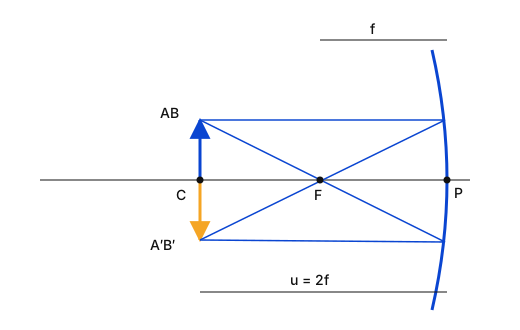
Concept: For a concave mirror, the centre of curvature C lies at R=2f from the pole. An object placed at C gives an image at C itself.

  1. Same-size image means magnification m=−vu=−1, so v=u.
  2. Mirror formula: 1v+1u=1f⇒2u=1f.
  3. So u=2f (object at C); image is real, inverted and of the same size.

Trick: Object at C → image at C (same size); beyond C → diminished; between F and C → enlarged.

Answer: (B) equal to 2f

अवधारणा: अवतल दर्पण में वक्रता केंद्र C ध्रुव से R=2f दूरी पर होता है। वस्तु को C पर रखने से प्रतिबिंब भी C पर ही बनता है।

  1. समान आकार का प्रतिबिंब अर्थात आवर्धन m=−vu=−1, इसलिए v=u।
  2. दर्पण सूत्र: 1v+1u=1f⇒2u=1f।
  3. अतः u=2f (वस्तु C पर); प्रतिबिंब वास्तविक, उल्टा और समान आकार का।

ट्रिक: वस्तु C पर → प्रतिबिंब C पर (समान आकार); C से परे → छोटा; F और C के बीच → बड़ा।

उत्तर: (B) 2f के बराबर

RRB Technician Grade IIIGeneral ScienceConcave mirror – image formationRRB Technician Grade III 2024 · 29 Dec Shift 3 →
Q352.
Identify the INCORRECT statement related to neurons.
न्यूरॉन (तंत्रिका कोशिका) से संबंधित गलत कथन की पहचान कीजिए।
  1. ANeurons typically have one long section called the axon.न्यूरॉन में सामान्यतः एक लंबा भाग होता है जिसे एक्सॉन (axon) कहते हैं।
  2. BEach neuron has multiple short, branching sections called dendrites.प्रत्येक न्यूरॉन में कई छोटे, शाखित भाग होते हैं जिन्हें डेंड्राइट (dendrites) कहते हैं।
  3. CNervous tissue consists of cells known as neurons.तंत्रिका ऊतक न्यूरॉन नामक कोशिकाओं से बना होता है।
  4. DThe cell body of a neuron has many nuclei.न्यूरॉन के कोशिका काय में कई केंद्रक होते हैं।
Show answer

Concept: A neuron (nerve cell) is the structural and functional unit of nervous tissue. It has a cell body (cyton), dendrites and an axon.

  1. Each neuron has one long axon that carries impulses away from the cell body.
  2. It has many short branched dendrites that receive impulses.
  3. The cell body contains a single nucleus, not many nuclei – so statement (D) is incorrect.

Yaad rakhein: Neuron = one nucleus, one axon, many dendrites. (Many nuclei is a feature of skeletal muscle fibres.)

Answer: (D) The cell body of a neuron has many nuclei.

अवधारणा: न्यूरॉन (तंत्रिका कोशिका) तंत्रिका ऊतक की संरचनात्मक व क्रियात्मक इकाई है। इसमें कोशिका काय (साइटॉन), द्रुमिका (डेंड्राइट) और तंत्रिकाक्ष (एक्सॉन) होते हैं।

  1. प्रत्येक न्यूरॉन में एक लंबा एक्सॉन होता है जो आवेग को कोशिका काय से दूर ले जाता है।
  2. इसमें कई छोटी शाखित द्रुमिकाएँ होती हैं जो आवेग ग्रहण करती हैं।
  3. कोशिका काय में केवल एक केंद्रक होता है, अनेक नहीं – अतः कथन (D) गलत है।

याद रखें: न्यूरॉन = एक केंद्रक, एक एक्सॉन, अनेक डेंड्राइट। (बहुकेंद्रकी होना कंकाल पेशी तंतु का लक्षण है।)

उत्तर: (D) न्यूरॉन के कोशिका काय में कई केंद्रक होते हैं।

RRB Technician Grade IIIGeneral ScienceStructure of neuronRRB Technician Grade III 2024 · 29 Dec Shift 3 →
Q353.
The energy transfer within the food web has a ________ pattern.
खाद्य जाल (food web) में ऊर्जा स्थानांतरण का ________ प्रतिरूप होता है।
  1. AUnidirectionalएकदिशीय
  2. BCircularवृत्ताकार
  3. CMultidimensionalबहुआयामी
  4. DBidirectionalद्विदिशीय
Show answer

Concept: In a food chain or food web, energy flows from the sun → producers → herbivores → carnivores, and never returns to the previous level.

  1. Energy captured by autotrophs does not go back to the sun.
  2. Energy passed to herbivores does not come back to autotrophs.
  3. At each level some energy is lost as heat, so the flow is one-way (unidirectional).

Yaad rakhein: Energy flows (one-way); nutrients cycle (circular).

Answer: (A) Unidirectional

अवधारणा: खाद्य श्रृंखला या खाद्य जाल में ऊर्जा सूर्य → उत्पादक → शाकाहारी → मांसाहारी की ओर बहती है और पिछले स्तर पर कभी वापस नहीं लौटती।

  1. स्वपोषियों द्वारा ग्रहण की गई ऊर्जा सूर्य को वापस नहीं जाती।
  2. शाकाहारियों को मिली ऊर्जा स्वपोषियों को वापस नहीं लौटती।
  3. हर स्तर पर कुछ ऊर्जा ऊष्मा के रूप में नष्ट होती है, अतः प्रवाह एकदिशीय होता है।

याद रखें: ऊर्जा का प्रवाह एकदिशीय; पोषक तत्वों का चक्रण (चक्रीय)।

उत्तर: (A) एकदिशीय

RRB Technician Grade IIIGeneral ScienceEnergy flow in ecosystemRRB Technician Grade III 2024 · 29 Dec Shift 3 →
Q354.
What will happen if you pour some acetone on your palm?
यदि आप अपनी हथेली पर कुछ एसीटोन डालें तो क्या होगा?
  1. AIt will cause no effect on the palm.हथेली पर इसका कोई प्रभाव नहीं होगा।
  2. BIt will cause the palm to feel cool.हथेली ठंडी महसूस होगी।
  3. CIt will cause the palm to feel hot.हथेली गर्म महसूस होगी।
  4. DIt will cause the palm to feel itchy.हथेली में खुजली महसूस होगी।
Show answer

Concept: Evaporation causes cooling. A volatile liquid takes the latent heat of vaporisation from the surface it is on.

  1. Acetone is highly volatile and evaporates quickly at room temperature.
  2. The energy needed for evaporation is absorbed from the palm.
  3. The palm loses heat, so it feels cool.

Yaad rakhein: Acetone, petrol, perfume, spirit on skin → quick evaporation → cooling.

Answer: (B) It will cause the palm to feel cool.

अवधारणा: वाष्पन से शीतलता उत्पन्न होती है। वाष्पशील द्रव जिस सतह पर होता है, उससे वाष्पन की गुप्त ऊष्मा ले लेता है।

  1. एसीटोन अत्यधिक वाष्पशील है और कमरे के ताप पर तेजी से वाष्पित होता है।
  2. वाष्पन के लिए आवश्यक ऊर्जा हथेली से अवशोषित होती है।
  3. हथेली की ऊष्मा घटती है, इसलिए वह ठंडी महसूस होती है।

याद रखें: एसीटोन, पेट्रोल, इत्र, स्पिरिट त्वचा पर → तेज वाष्पन → ठंडक।

उत्तर: (B) हथेली ठंडी महसूस होगी।

RRB Technician Grade IIIGeneral ScienceEvaporation causes coolingRRB Technician Grade III 2024 · 29 Dec Shift 3 →
Q355.
Select the INCORRECT pair.
गलत युग्म का चयन कीजिए।
  1. ALactic acid – 4 carbon moleculesलैक्टिक अम्ल – 4 कार्बन अणु
  2. BPyruvate – 3 carbon moleculesपाइरुवेट – 3 कार्बन अणु
  3. CGlucose – 6 carbon moleculesग्लूकोज – 6 कार्बन अणु
  4. DEthanol – 2 carbon moleculesएथेनॉल – 2 कार्बन अणु
Show answer

Concept: In respiration, glucose (6-carbon) is broken in the cytoplasm into two molecules of pyruvate (3-carbon). Pyruvate then forms different products.

  1. Glucose C6H12O6 – 6 carbons ✔
  2. Pyruvate – 3 carbons ✔
  3. Anaerobic (yeast): ethanol C2H5OH (2 C) + CO2 ✔
  4. Lack of oxygen in muscles: lactic acid C3H6O3 – 3 carbons, not 4 ✘

Yaad rakhein: Glucose 6 → pyruvate 3 → lactic acid 3 / ethanol 2 + CO2.

Answer: (A) Lactic acid – 4 carbon molecules

अवधारणा: श्वसन में ग्लूकोज (6-कार्बन) कोशिकाद्रव्य में टूटकर पाइरुवेट (3-कार्बन) के दो अणु बनाता है। पाइरुवेट फिर अलग-अलग उत्पाद बनाता है।

  1. ग्लूकोज C6H12O6 – 6 कार्बन ✔
  2. पाइरुवेट – 3 कार्बन ✔
  3. अवायवीय (यीस्ट): एथेनॉल C2H5OH (2 C) + CO2 ✔
  4. पेशियों में ऑक्सीजन की कमी: लैक्टिक अम्ल C3H6O3 – 3 कार्बन, 4 नहीं ✘

याद रखें: ग्लूकोज 6 → पाइरुवेट 3 → लैक्टिक अम्ल 3 / एथेनॉल 2 + CO2।

उत्तर: (A) लैक्टिक अम्ल – 4 कार्बन अणु

RRB Technician Grade IIIGeneral ScienceRespiration – carbon count of moleculesRRB Technician Grade III 2024 · 29 Dec Shift 3 →
Q356.
Which of the following is produced when copper is heated in the presence of air?
जब कॉपर (ताँबे) को वायु की उपस्थिति में गर्म किया जाता है, तो निम्नलिखित में से क्या बनता है?
  1. ABlack-coloured copper (II) oxideकाले रंग का कॉपर (II) ऑक्साइड
  2. BBrown-coloured copper(II) oxideभूरे रंग का कॉपर(II) ऑक्साइड
  3. CBlack-coloured copper (I) oxideकाले रंग का कॉपर (I) ऑक्साइड
  4. DBlue-coloured copper(II) oxideनीले रंग का कॉपर(II) ऑक्साइड
Show answer

Concept: When copper powder is heated in air, it combines with oxygen to form copper(II) oxide, which is black.

  1. Reaction: 2Cu+O2→heat2CuO.
  2. Copper is brown/reddish; the surface turns black due to CuO.
  3. Copper(I) oxide Cu2O is red, not black.

Yaad rakhein: Heated copper turns black (CuO); passing H2 over hot CuO turns it brown again (reduction).

Answer: (A) Black-coloured copper (II) oxide

अवधारणा: कॉपर चूर्ण को वायु में गर्म करने पर वह ऑक्सीजन से मिलकर कॉपर(II) ऑक्साइड बनाता है, जो काले रंग का होता है।

  1. अभिक्रिया: 2Cu+O2→heat2CuO।
  2. कॉपर भूरा/लालिमा लिए होता है; सतह CuO बनने से काली हो जाती है।
  3. कॉपर(I) ऑक्साइड Cu2O लाल होता है, काला नहीं।

याद रखें: गर्म कॉपर काला (CuO); गर्म CuO पर H2 प्रवाहित करने से फिर भूरा (अपचयन)।

उत्तर: (A) काले रंग का कॉपर (II) ऑक्साइड

RRB Technician Grade IIIGeneral ScienceOxidation of copperRRB Technician Grade III 2024 · 29 Dec Shift 3 →
Q357.
A current of 1 A is drawn by a filament of an electric bulb for 5 minutes. Then the amount of electric charge that flows through the circuit will be ____________.
एक विद्युत बल्ब का तंतु (filament) 5 मिनट तक 1 A की धारा लेता है। तब परिपथ से प्रवाहित होने वाले विद्युत आवेश की मात्रा ____________ होगी।
  1. A150 C
  2. B10 C
  3. C300 C
  4. D5 C
Show answer

Concept: Electric current is the rate of flow of charge: I=Qt, so Q=I×t (time in seconds).

  1. I=1 A, t=5 min=5×60=300 s.
  2. Q=I×t=1×300.
  3. Q=300 C.

Trick: Always convert minutes to seconds before using Q=It.

Answer: (C) 300 C

अवधारणा: विद्युत धारा आवेश प्रवाह की दर है: I=Qt, अतः Q=I×t (समय सेकंड में)।

  1. I=1 A, t=5 मिनट=5×60=300 s।
  2. Q=I×t=1×300।
  3. Q=300 C।

ट्रिक: Q=It लगाने से पहले मिनट को सेकंड में बदलें।

उत्तर: (C) 300 C

RRB Technician Grade IIIGeneral ScienceElectric charge and currentRRB Technician Grade III 2024 · 29 Dec Shift 3 →
Q358.
The kinetic energy E possessed by an object of mass m and moving with a uniform velocity v is ______.
द्रव्यमान m वाली तथा एकसमान वेग v से गतिमान किसी वस्तु की गतिज ऊर्जा E ______ होती है।
  1. A13mv2
  2. B12mv2
  3. Cmv2
  4. Dmv−2
Show answer

Concept: Kinetic energy is the energy possessed by a body due to its motion. It equals the work done to bring the body from rest to velocity v.

  1. Using v2−u2=2as with u=0: s=v22a.
  2. Work W=F×s=ma×v22a.
  3. So Ek=12mv2.

Yaad rakhein: Double the speed → KE becomes 4 times (since Ek∝v2).

Answer: (B) 12mv2

अवधारणा: गतिज ऊर्जा वह ऊर्जा है जो किसी वस्तु में उसकी गति के कारण होती है। यह वस्तु को विराम से वेग v तक लाने में किए गए कार्य के बराबर है।

  1. v2−u2=2as में u=0 रखने पर: s=v22a।
  2. कार्य W=F×s=ma×v22a।
  3. अतः Ek=12mv2।

याद रखें: वेग दोगुना → गतिज ऊर्जा 4 गुनी (क्योंकि Ek∝v2)।

उत्तर: (B) 12mv2

RRB Technician Grade IIIGeneral ScienceKinetic energyRRB Technician Grade III 2024 · 29 Dec Shift 3 →
Q359.
The sodium or potassium salts of which acid are defined as soaps?
किस अम्ल के सोडियम या पोटैशियम लवणों को साबुन के रूप में परिभाषित किया जाता है?
  1. ASulphuric acidसल्फ्यूरिक अम्ल
  2. BHydrochloric acidहाइड्रोक्लोरिक अम्ल
  3. CCarboxylic acidकार्बोक्सिलिक अम्ल
  4. DNitric acidनाइट्रिक अम्ल
Show answer

Concept: Soaps are sodium or potassium salts of long-chain carboxylic acids (fatty acids), e.g. sodium stearate C17H35COONa.

  1. Soaps are made by saponification: oil/fat + NaOH → soap + glycerol.
  2. The ionic end (−COO−Na+) is water-loving; the long hydrocarbon tail is oil-loving.
  3. Detergents, in contrast, are sodium salts of sulphonic acids.

Yaad rakhein: Soap → carboxylic acid salt; Detergent → sulphonic acid salt.

Answer: (C) Carboxylic acid

अवधारणा: साबुन लंबी श्रृंखला वाले कार्बोक्सिलिक अम्लों (वसा अम्लों) के सोडियम या पोटैशियम लवण हैं, जैसे सोडियम स्टीयरेट C17H35COONa।

  1. साबुन साबुनीकरण से बनते हैं: तेल/वसा + NaOH → साबुन + ग्लिसरॉल।
  2. आयनिक सिरा (−COO−Na+) जलरागी और लंबी हाइड्रोकार्बन पूँछ तेलरागी होती है।
  3. इसके विपरीत, अपमार्जक सल्फोनिक अम्लों के सोडियम लवण होते हैं।

याद रखें: साबुन → कार्बोक्सिलिक अम्ल का लवण; अपमार्जक → सल्फोनिक अम्ल का लवण।

उत्तर: (C) कार्बोक्सिलिक अम्ल

RRB Technician Grade IIIGeneral ScienceSoapsRRB Technician Grade III 2024 · 29 Dec Shift 3 →
Q360.
Which of the following statements is correct when an acid is dissolved in water ?
a) The separation of H+ ions from HCl molecules cannot occur in the absence of water.
b) Hydrogen ions must always be shown as H+ (aq) or hydronium ion (H3O+).
जब किसी अम्ल को जल में घोला जाता है, तो निम्नलिखित में से कौन-सा कथन सही है?
a) जल की अनुपस्थिति में HCl अणुओं से H+ आयनों का पृथक्करण नहीं हो सकता।
b) हाइड्रोजन आयनों को सदैव H+ (aq) या हाइड्रोनियम आयन (H3O+) के रूप में दर्शाया जाना चाहिए।
  1. AOnly aकेवल a
  2. BNeither a nor bन तो a और न ही b
  3. CBoth a and ba और b दोनों
  4. DOnly bकेवल b
Show answer

Concept: Acids show acidic behaviour only in water, because water helps them release H+ ions.

  1. HCl+H2O→H3O++Cl− – without water, H+ does not separate from HCl. Statement a is correct.
  2. H+ cannot exist alone; it combines with water: H++H2O→H3O+.
  3. So hydrogen ions are always written as H+(aq) or H3O+. Statement b is correct.

Yaad rakhein: Dry HCl gas does not change the colour of dry blue litmus – no water, no H+.

Answer: (C) Both a and b

अवधारणा: अम्ल केवल जल में ही अम्लीय व्यवहार दिखाते हैं, क्योंकि जल उन्हें H+ आयन मुक्त करने में मदद करता है।

  1. HCl+H2O→H3O++Cl− – जल के बिना HCl से H+ अलग नहीं होता। कथन a सही है।
  2. H+ अकेले नहीं रह सकता; यह जल से जुड़ता है: H++H2O→H3O+।
  3. इसलिए हाइड्रोजन आयन को सदैव H+(aq) या H3O+ लिखा जाता है। कथन b सही है।

याद रखें: शुष्क HCl गैस शुष्क नीले लिटमस का रंग नहीं बदलती – जल नहीं तो H+ नहीं।

उत्तर: (C) a और b दोनों

RRB Technician Grade IIIGeneral ScienceAcids in water – H⁺ / hydronium ionsRRB Technician Grade III 2024 · 29 Dec Shift 3 →