Question bank

Q&A: practice questions with answers

Search questions on any topic. Filter by exam category, exam, subject and topic, try the question, then open the answer and explanation.

Courses – airGurukul

3,200 questions found.

Q361.
Which of the following was discovered by Rutherford’s gold foil experiment?
रदरफोर्ड के स्वर्ण पन्नी (gold foil) प्रयोग द्वारा निम्नलिखित में से किसकी खोज की गई थी?
  1. AElectronइलेक्ट्रॉन
  2. BProtonप्रोटॉन
  3. CNucleusनाभिक
  4. DNeutronन्यूट्रॉन
Show answer

Concept: Rutherford bombarded a thin gold foil with fast α-particles and studied how they scattered. This led to the discovery of the nucleus (1911).

  1. Most α-particles passed straight → most of the atom is empty space.
  2. A few were deflected → positive charge occupies a very small volume.
  3. Very few (about 1 in 20,000) bounced back → a tiny, dense, positively charged nucleus at the centre.

Yaad rakhein: Electron – J.J. Thomson; Proton – Goldstein; Nucleus – Rutherford; Neutron – Chadwick.

Answer: (C) Nucleus

अवधारणा: रदरफोर्ड ने पतली सोने की पन्नी पर तीव्र α-कणों की बौछार की और उनके प्रकीर्णन का अध्ययन किया। इससे नाभिक की खोज हुई (1911)।

  1. अधिकांश α-कण सीधे निकल गए → परमाणु का अधिकांश भाग खाली है।
  2. कुछ कण विचलित हुए → धनावेश बहुत छोटे आयतन में है।
  3. बहुत कम (लगभग 20,000 में 1) वापस लौटे → केंद्र में अत्यंत छोटा, सघन, धनावेशित नाभिक।

याद रखें: इलेक्ट्रॉन – जे.जे. थॉमसन; प्रोटॉन – गोल्डस्टीन; नाभिक – रदरफोर्ड; न्यूट्रॉन – चैडविक।

उत्तर: (C) नाभिक
RRB Technician Grade IIIGeneral ScienceRutherford's α-scattering experimentRRB Technician Grade III 2024 · 29 Dec Shift 3 →
Q362.
If the earth had no atmosphere, then the colour of the sky would be _________.
यदि पृथ्वी पर कोई वायुमंडल न होता, तो आकाश का रंग _________ होता।
  1. Ablackकाला
  2. Bblueनीला
  3. Cyellowपीला
  4. Dredलाल
Show answer

Concept: The sky looks blue because tiny air molecules scatter blue light (shorter wavelength) much more than red light.

  1. Scattering needs particles of the atmosphere.
  2. With no atmosphere, there would be no scattering of sunlight.
  3. No scattered light reaches the eye from the sky, so it appears dark (black).

Yaad rakhein: Astronauts and the Moon's sky see a black sky – no atmosphere, no scattering.

Answer: (A) black

अवधारणा: आकाश नीला दिखता है क्योंकि वायु के सूक्ष्म अणु नीले प्रकाश (कम तरंगदैर्ध्य) को लाल की तुलना में अधिक प्रकीर्णित करते हैं।

  1. प्रकीर्णन के लिए वायुमंडल के कण आवश्यक हैं।
  2. वायुमंडल न होने पर सूर्य के प्रकाश का प्रकीर्णन नहीं होगा।
  3. आकाश से कोई प्रकीर्णित प्रकाश आँख तक नहीं पहुँचेगा, इसलिए वह काला दिखेगा।

याद रखें: अंतरिक्ष यात्रियों को और चंद्रमा पर आकाश काला दिखता है – वायुमंडल नहीं, प्रकीर्णन नहीं।

उत्तर: (A) काला

RRB Technician Grade IIIGeneral ScienceScattering of light – colour of skyRRB Technician Grade III 2024 · 29 Dec Shift 3 →
Q363.
The speed of light is ____________.
प्रकाश की चाल ____________ है।
  1. Agreater in glass than in waterजल की तुलना में काँच में अधिक
  2. Bsame in air, glass and waterवायु, काँच और जल में समान
  3. Cgreater in water than in airवायु की तुलना में जल में अधिक
  4. Dgreater in water than in glassकाँच की तुलना में जल में अधिक
Show answer

Concept: Speed of light in a medium v=cn; a greater refractive index means a smaller speed.

  1. Refractive indices: air ≈1.0003, water =1.33, glass ≈1.5.
  2. So speed: air > water > glass.
  3. Hence light is faster in water than in glass.

Trick: Optically denser medium → light slows down (higher n, lower v).

Answer: (D) greater in water than in glass

अवधारणा: किसी माध्यम में प्रकाश की चाल v=cn; अपवर्तनांक जितना अधिक, चाल उतनी कम।

  1. अपवर्तनांक: वायु ≈1.0003, जल =1.33, काँच ≈1.5।
  2. अतः चाल: वायु > जल > काँच।
  3. इसलिए प्रकाश जल में काँच की तुलना में तेज चलता है।

ट्रिक: प्रकाशतः सघन माध्यम → प्रकाश की चाल कम (अधिक n, कम v)।

उत्तर: (D) काँच की तुलना में जल में अधिक

RRB Technician Grade IIIGeneral ScienceSpeed of light in mediaRRB Technician Grade III 2024 · 29 Dec Shift 3 →
Q364.
Which of the following is the general formula of alkane?
निम्नलिखित में से कौन-सा एल्केन (alkane) का सामान्य सूत्र है?
  1. AC2nH2n
  2. BCnH2n
  3. CCnHn
  4. DCnH2n+2
Show answer

Concept: Alkanes are saturated hydrocarbons with only single C–C bonds. Their general formula is CnH2n+2.

  1. Methane (n=1): CH4; ethane (n=2): C2H6.
  2. Alkenes (one double bond): CnH2n.
  3. Alkynes (one triple bond): CnH2n−2.

Trick: Alkane +2, alkene 0, alkyne −2 (H count relative to 2n).

Answer: (D) CnH2n+2

अवधारणा: एल्केन संतृप्त हाइड्रोकार्बन हैं जिनमें केवल एकल C–C आबंध होते हैं। इनका सामान्य सूत्र CnH2n+2 है।

  1. मेथेन (n=1): CH4; एथेन (n=2): C2H6।
  2. एल्कीन (एक द्विआबंध): CnH2n।
  3. एल्काइन (एक त्रिआबंध): CnH2n−2।

ट्रिक: एल्केन +2, एल्कीन 0, एल्काइन −2 (2n के सापेक्ष H की संख्या)।

उत्तर: (D) CnH2n+2

RRB Technician Grade IIIGeneral ScienceAlkanes – general formulaRRB Technician Grade III 2024 · 29 Dec Shift 3 →
Q365.
Which of the following is NOT a suitable method to deal with non-biodegradable substances?
निम्नलिखित में से कौन-सी विधि अजैव निम्नीकरणीय (non-biodegradable) पदार्थों से निपटने के लिए उपयुक्त नहीं है?
  1. AReuse themउनका पुन: उपयोग करना
  2. BReduce their productionउनका उत्पादन कम करना
  3. CThrow them openlyउन्हें खुले में फेंकना
  4. DRecycle themउनका पुनर्चक्रण करना
Show answer

Concept: Non-biodegradable substances (plastics, glass, metals) are not broken down by microbes and stay in the environment for a long time.

  1. Reduce – use less of such materials.
  2. Reuse – use items again; Recycle – convert them into new products.
  3. Throwing them openly pollutes soil and water, blocks drains and harms animals – not a suitable method.

Yaad rakhein: 3 R's – Reduce, Reuse, Recycle. Open dumping is never a solution.

Answer: (C) Throw them openly

अवधारणा: अजैव-निम्नीकरणीय पदार्थ (प्लास्टिक, काँच, धातु) सूक्ष्मजीवों द्वारा अपघटित नहीं होते और लंबे समय तक पर्यावरण में बने रहते हैं।

  1. कम उपयोग (Reduce) – ऐसे पदार्थों का उपयोग घटाएँ।
  2. पुनः उपयोग (Reuse) – वस्तुओं को दोबारा उपयोग करें; पुनःचक्रण (Recycle) – नए उत्पाद बनाएँ।
  3. इन्हें खुले में फेंकने से मिट्टी व जल प्रदूषित होते हैं, नालियाँ बंद होती हैं, जीवों को हानि होती है – यह उचित तरीका नहीं है।

याद रखें: 3 R – Reduce, Reuse, Recycle। खुले में फेंकना कभी समाधान नहीं।

उत्तर: (C) उन्हें खुले में फेंकना

RRB Technician Grade IIIGeneral ScienceManaging non-biodegradable wasteRRB Technician Grade III 2024 · 29 Dec Shift 3 →
Q366.
If a constant force of 2 Newton is applied on a body such that displacement of the body in the direction of the applied force is zero, then the work done by the force is _____.
यदि किसी पिंड पर 2 न्यूटन का एक नियत बल इस प्रकार लगाया जाता है कि लगाए गए बल की दिशा में पिंड का विस्थापन शून्य है, तो बल द्वारा किया गया कार्य _____ है।
  1. A1 joules1 जूल
  2. B20 joules20 जूल
  3. C2 joules2 जूल
  4. D0
Show answer

Concept: Work done by a constant force: W=F×s, where s is the displacement in the direction of the force.

  1. F=2 N, s=0.
  2. W=2×0=0.
  3. No displacement along the force → no work, however large the force.

Yaad rakhein: Pushing a wall or holding a load still → work done =0.

Answer: (D) 0

अवधारणा: स्थिर बल द्वारा किया गया कार्य: W=F×s, जहाँ s बल की दिशा में विस्थापन है।

  1. F=2 N, s=0।
  2. W=2×0=0।
  3. बल की दिशा में विस्थापन नहीं → कार्य नहीं, बल चाहे कितना भी हो।

याद रखें: दीवार को धकेलना या भार को स्थिर पकड़े रखना → कार्य =0।

उत्तर: (D) 0

RRB Technician Grade IIIGeneral ScienceWork done – zero displacementRRB Technician Grade III 2024 · 29 Dec Shift 3 →
Q367.
An electric geyser of resistance 4 Ω produces 100 J of heat per sec. The current flowing through it will be:
4 Ω प्रतिरोध वाला एक विद्युत गीज़र प्रति सेकंड 100 J ऊष्मा उत्पन्न करता है। इसमें प्रवाहित होने वाली धारा होगी:
  1. A5 A
  2. B50 A
  3. C25 A
  4. D2.5 A
Show answer

Concept: Heat produced per second (power) in a resistor: P=I2R.

  1. P=100 J/s=100 W, R=4 Ω.
  2. I2=PR=1004=25.
  3. I=25=5 A.

Yaad rakhein: Heat per second =I2R; total heat H=I2Rt.

Answer: (A) 5 A

अवधारणा: प्रतिरोधक में प्रति सेकंड उत्पन्न ऊष्मा (शक्ति): P=I2R।

  1. P=100 J/s=100 W, R=4 Ω।
  2. I2=PR=1004=25।
  3. I=25=5 A।

याद रखें: प्रति सेकंड ऊष्मा =I2R; कुल ऊष्मा H=I2Rt।

उत्तर: (A) 5 A

RRB Technician Grade IIIGeneral ScienceJoule's law of heatingRRB Technician Grade III 2024 · 29 Dec Shift 3 →
Q368.
Which of the following best describes the mixture of air?
निम्नलिखित में से कौन-सा वायु के मिश्रण का सबसे अच्छा वर्णन करता है?
  1. AColloidsकोलॉइड
  2. BSuspensionनिलंबन (suspension)
  3. CHeterogeneous mixtureविषमांगी मिश्रण
  4. DHomogeneous mixtureसमांगी मिश्रण
Show answer

Concept: A homogeneous mixture has a uniform composition throughout and no visible boundaries between its components.

  1. Air is a mixture of gases – mainly N2 (~78%) and O2 (~21%), plus Ar, CO2, water vapour.
  2. The gases mix uniformly, so any sample has the same composition.
  3. Hence air is a homogeneous mixture (a gaseous solution).

Yaad rakhein: Air, sugar solution, brass – homogeneous; muddy water, oil + water – heterogeneous.

Answer: (D) Homogeneous mixture

अवधारणा: समांगी मिश्रण का संघटन पूरे में एक समान होता है और घटकों के बीच कोई दृश्य सीमा नहीं होती।

  1. वायु गैसों का मिश्रण है – मुख्यतः N2 (~78%) और O2 (~21%), साथ में Ar, CO2, जलवाष्प।
  2. गैसें समान रूप से मिल जाती हैं, इसलिए किसी भी नमूने का संघटन समान होता है।
  3. अतः वायु समांगी मिश्रण (गैसीय विलयन) है।

याद रखें: वायु, चीनी का घोल, पीतल – समांगी; गंदला पानी, तेल + पानी – विषमांगी।

उत्तर: (D) समांगी मिश्रण

RRB Technician Grade IIIGeneral ScienceAir – homogeneous mixtureRRB Technician Grade III 2024 · 29 Dec Shift 3 →
Q369.
Which of the following statements is/are correct related to eco-system?
(i) UV radiation is not damaging to organisms.
(ii) Ozone at the higher levels of the atmosphere is a product of UV radiation acting on oxygen molecule.
(iii) The amount of ozone in the atmosphere began to drop sharply in 1980.
पारितंत्र (eco-system) से संबंधित निम्नलिखित में से कौन-सा/से कथन सही है/हैं?
(i) UV विकिरण जीवों के लिए हानिकारक नहीं है।
(ii) वायुमंडल के उच्च स्तरों पर ओज़ोन, ऑक्सीजन अणु पर UV विकिरण की क्रिया का उत्पाद है।
(iii) वायुमंडल में ओज़ोन की मात्रा 1980 में तेज़ी से घटने लगी।
  1. A(i), (ii) and (iii)(i), (ii) और (iii)
  2. BOnly (ii) and (iii)केवल (ii) और (iii)
  3. COnly (i)केवल (i)
  4. DOnly (i) and (ii)केवल (i) और (ii)
Show answer

Concept: Ozone (O3) in the upper atmosphere shields the earth from harmful ultraviolet (UV) radiation of the sun.

  1. (i) UV radiation is highly damaging (e.g. skin cancer) – incorrect.
  2. (ii) UV splits O2 into O atoms, which combine with O2 to form O3 – correct.
  3. (iii) Ozone levels began to drop sharply in the 1980s, linked to CFCs – correct.

Yaad rakhein: O2→UVO+O, O+O2→O3; CFCs deplete ozone (Montreal Protocol, 1987).

Answer: (B) Only (ii) and (iii)

अवधारणा: ऊपरी वायुमंडल में ओज़ोन (O3) पृथ्वी को सूर्य के हानिकारक पराबैंगनी (UV) विकिरण से बचाती है।

  1. (i) UV विकिरण अत्यधिक हानिकारक है (जैसे त्वचा कैंसर) – गलत।
  2. (ii) UV O2 को O परमाणुओं में तोड़ता है, जो O2 से मिलकर O3 बनाते हैं – सही।
  3. (iii) 1980 के दशक में ओज़ोन की मात्रा तेजी से घटने लगी, CFC इसका कारण – सही।

याद रखें: O2→UVO+O, O+O2→O3; CFC ओज़ोन घटाते हैं (मॉन्ट्रियल प्रोटोकॉल, 1987)।

उत्तर: (B) केवल (ii) और (iii)

RRB Technician Grade IIIGeneral ScienceOzone layerRRB Technician Grade III 2024 · 29 Dec Shift 3 →
Q370.
Match the following.
(i) Ovary | (a) fertilisation
(ii) Oviduct | (b) implantation
(iii) Uterus | (c) nourishes the growing embryo
(iv) Placenta | (d) makes the female gametes
निम्नलिखित का मिलान कीजिए।
(i) अंडाशय (Ovary) | (a) निषेचन
(ii) अंडवाहिनी (Oviduct) | (b) रोपण (implantation)
(iii) गर्भाशय (Uterus) | (c) विकसित हो रहे भ्रूण को पोषण देता है
(iv) अपरा (Placenta) | (d) मादा युग्मक बनाता है
  1. A(i)-(d), (ii)-(b), (iii)-(a), (iv)-(c)
  2. B(i)-(d), (ii)-(c), (iii)-(b), (iv)-(a)
  3. C(i)-(d), (ii)-(a), (iii)-(b), (iv)-(c)
  4. D(i)-(b), (ii)-(a), (iii)-(d), (iv)-(c)
Show answer

Concept: Each part of the female reproductive system has a specific role from making eggs to nourishing the embryo.

  1. Ovary → makes female gametes (eggs): (i)-(d).
  2. Oviduct (fallopian tube) → site of fertilisation: (ii)-(a).
  3. Uterus → implantation of the embryo: (iii)-(b).
  4. Placenta → nourishes the growing embryo: (iv)-(c).

Trick: Egg made in ovary → meets sperm in oviduct → sticks in uterus → fed by placenta.

Answer: (C) (i)-(d), (ii)-(a), (iii)-(b), (iv)-(c)

अवधारणा: मादा जनन तंत्र के प्रत्येक भाग की विशिष्ट भूमिका है – अंडाणु बनाने से लेकर भ्रूण के पोषण तक।

  1. अंडाशय → मादा युग्मक (अंडाणु) बनाता है: (i)-(d)।
  2. अंडवाहिनी (फैलोपियन ट्यूब) → निषेचन का स्थान: (ii)-(a)।
  3. गर्भाशय → भ्रूण का रोपण: (iii)-(b)।
  4. अपरा (प्लेसेंटा) → विकसित होते भ्रूण को पोषण: (iv)-(c)।

ट्रिक: अंडाशय में अंडाणु → अंडवाहिनी में शुक्राणु से मिलन → गर्भाशय में रोपण → अपरा से पोषण।

उत्तर: (C) (i)-(d), (ii)-(a), (iii)-(b), (iv)-(c)

RRB Technician Grade IIIGeneral ScienceHuman female reproductive systemRRB Technician Grade III 2024 · 29 Dec Shift 3 →
Q371.
In a displacement reaction, what is the key factor that determines whether a more reactive metal will displace a less reactive metal from its compound?
विस्थापन अभिक्रिया में, वह मुख्य कारक क्या है जो यह निर्धारित करता है कि एक अधिक अभिक्रियाशील धातु किसी कम अभिक्रियाशील धातु को उसके यौगिक से विस्थापित करेगी या नहीं?
  1. AConcentration of the compoundयौगिक की सांद्रता
  2. BTemperature of the reactionअभिक्रिया का तापमान
  3. CSize of the metal atomsधातु परमाणुओं का आकार
  4. DPosition of the metals in the reactivity seriesसक्रियता श्रेणी (reactivity series) में धातुओं की स्थिति
Show answer

Concept: In a displacement reaction, a more reactive metal pushes out a less reactive metal from its salt solution.

  1. Example: Fe+CuSO4→FeSO4+Cu – iron is above copper in the series.
  2. Cu+FeSO4 → no reaction, as copper is below iron.
  3. So the deciding factor is the relative position of the metals in the reactivity series.

Yaad rakhein: Higher in the reactivity series displaces lower – never the reverse.

Answer: (D) Position of the metals in the reactivity series

अवधारणा: विस्थापन अभिक्रिया में अधिक क्रियाशील धातु कम क्रियाशील धातु को उसके लवण विलयन से विस्थापित कर देती है।

  1. उदाहरण: Fe+CuSO4→FeSO4+Cu – सक्रियता श्रेणी में आयरन, कॉपर से ऊपर है।
  2. Cu+FeSO4 → कोई अभिक्रिया नहीं, क्योंकि कॉपर आयरन से नीचे है।
  3. अतः निर्णायक कारक सक्रियता श्रेणी में धातुओं की सापेक्ष स्थिति है।

याद रखें: सक्रियता श्रेणी में ऊपर वाली धातु नीचे वाली को विस्थापित करती है – उलटा कभी नहीं।

उत्तर: (D) सक्रियता श्रेणी (reactivity series) में धातुओं की स्थिति

RRB Technician Grade IIIGeneral ScienceDisplacement reactionsRRB Technician Grade III 2024 · 29 Dec Shift 3 →
Q372.
Which of the following is a covalent compound?
निम्नलिखित में से कौन-सा एक सहसंयोजक यौगिक है?
  1. AMgCl2
  2. BNaCl
  3. CMgO
  4. DCH4
Show answer

Concept: Covalent compounds form by sharing of electrons, usually between non-metals. Ionic compounds form by transfer of electrons from a metal to a non-metal.

  1. MgCl2, NaCl, MgO – metal + non-metal → ionic.
  2. CH4 – carbon shares its 4 valence electrons with 4 H atoms.
  3. So CH4 is covalent (4 single C–H bonds).

Trick: Metal + non-metal → ionic; non-metal + non-metal → covalent.

Answer: (D) CH4

अवधारणा: सहसंयोजक यौगिक इलेक्ट्रॉनों की साझेदारी से बनते हैं, प्रायः अधातुओं के बीच। आयनिक यौगिक धातु से अधातु में इलेक्ट्रॉन स्थानांतरण से बनते हैं।

  1. MgCl2, NaCl, MgO – धातु + अधातु → आयनिक।
  2. CH4 – कार्बन अपने 4 संयोजी इलेक्ट्रॉन 4 H परमाणुओं से साझा करता है।
  3. अतः CH4 सहसंयोजक है (4 एकल C–H आबंध)।

ट्रिक: धातु + अधातु → आयनिक; अधातु + अधातु → सहसंयोजक।

उत्तर: (D) CH4

RRB Technician Grade IIIGeneral ScienceCovalent vs ionic compoundsRRB Technician Grade III 2024 · 29 Dec Shift 3 →
Q373.
Which one of the following organisms shows multiple fission?
निम्नलिखित में से कौन-सा जीव बहुखंडन (multiple fission) दर्शाता है?
  1. APlasmodiumप्लाज्मोडियम
  2. BYeastयीस्ट
  3. CHydraहाइड्रा
  4. DLeishmaniaलीशमैनिया
Show answer

Concept: In multiple fission, the nucleus of a single-celled organism divides many times and the cell splits into many daughter cells at once.

  1. Plasmodium (malaria parasite) reproduces by multiple fission.
  2. Leishmania – binary fission (in a definite plane).
  3. Yeast and Hydra – budding.

Yaad rakhein: Plasmodium → multiple; Amoeba, Leishmania → binary; Yeast, Hydra → budding.

Answer: (A) Plasmodium

अवधारणा: बहुखंडन में एककोशिकीय जीव का केंद्रक कई बार विभाजित होता है और कोशिका एक साथ अनेक संतति कोशिकाओं में बँट जाती है।

  1. प्लाज्मोडियम (मलेरिया परजीवी) बहुखंडन से जनन करता है।
  2. लीशमैनिया – द्विखंडन (निश्चित तल में)।
  3. यीस्ट और हाइड्रा – मुकुलन।

याद रखें: प्लाज्मोडियम → बहुखंडन; अमीबा, लीशमैनिया → द्विखंडन; यीस्ट, हाइड्रा → मुकुलन।

उत्तर: (A) प्लाज्मोडियम

RRB Technician Grade IIIGeneral ScienceMultiple fissionRRB Technician Grade III 2024 · 29 Dec Shift 3 →
Q374.
Which of the following statements about solutions is correct?
विलयनों के बारे में निम्नलिखित में से कौन-सा कथन सही है?
  1. AA solution is a heterogeneous mixture.विलयन एक विषमांगी मिश्रण (heterogeneous mixture) है।
  2. BThe concentration of a solution can only be expressed in terms of mass per cent.विलयन की सांद्रता को केवल द्रव्यमान प्रतिशत (mass per cent) के रूप में व्यक्त किया जा सकता है।
  3. CThe solute is present in a smaller amount than the solvent.विलेय (solute), विलायक (solvent) की तुलना में कम मात्रा में उपस्थित होता है।
  4. DSolutions can be separated using simple filtration.विलयनों को साधारण निस्पंदन (filtration) द्वारा पृथक किया जा सकता है।
Show answer

Concept: A solution is a homogeneous mixture of two or more substances. The component present in larger amount is the solvent; the one in smaller amount is the solute.

  1. (A) Wrong – a solution is homogeneous.
  2. (B) Wrong – concentration can also be mass by volume, volume by volume, etc.
  3. (D) Wrong – solute particles are too small to be separated by filtration.
  4. (C) Correct – solute is present in a smaller amount than the solvent.

Yaad rakhein: Solution particles <1 nm – they pass through filter paper and do not settle.

Answer: (C) The solute is present in a smaller amount than the solvent.

अवधारणा: विलयन दो या अधिक पदार्थों का समांगी मिश्रण है। अधिक मात्रा वाला घटक विलायक और कम मात्रा वाला घटक विलेय कहलाता है।

  1. (A) गलत – विलयन समांगी होता है।
  2. (B) गलत – सांद्रता द्रव्यमान/आयतन, आयतन/आयतन आदि में भी व्यक्त होती है।
  3. (D) गलत – विलेय कण इतने छोटे होते हैं कि छानने से अलग नहीं होते।
  4. (C) सही – विलेय की मात्रा विलायक से कम होती है।

याद रखें: विलयन के कण <1 nm – ये फिल्टर पेपर से निकल जाते हैं और नीचे नहीं बैठते।

उत्तर: (C) विलेय (solute), विलायक (solvent) की तुलना में कम मात्रा में उपस्थित होता है।

RRB Technician Grade IIIGeneral ScienceSolutions – solute and solventRRB Technician Grade III 2024 · 29 Dec Shift 3 →
Q375.
Which of the following is NOT a reproductive part of Rhizopus?
निम्नलिखित में से कौन-सा राइज़ोपस (Rhizopus) का जनन भाग नहीं है?
  1. ASporangiophoresबीजाणुधानीधर (Sporangiophores)
  2. BSporangiumबीजाणुधानी (Sporangium)
  3. CSporesबीजाणु (Spores)
  4. DHyphaeकवकतंतु (Hyphae)
Show answer

Concept: Rhizopus (bread mould) reproduces by spore formation. The thread-like hyphae form the vegetative body, not the reproductive part.

  1. Sporangiophores – vertical hyphae carrying the sporangia (reproductive).
  2. Sporangium – knob-like sac containing spores (reproductive).
  3. Spores – develop into new Rhizopus (reproductive).
  4. Hyphae – fine threads that spread over bread for nutrition, i.e. vegetative.

Yaad rakhein: Rhizopus: hyphae = body; blob on top (sporangium) = spore bag.

Answer: (D) Hyphae

अवधारणा: राइज़ोपस (ब्रेड मोल्ड) बीजाणु निर्माण द्वारा जनन करता है। धागे जैसी कवकतंतु (हाइफी) कायिक शरीर बनाती हैं, जनन भाग नहीं।

  1. स्पोरेंजियोफोर – बीजाणुधानी को धारण करने वाली सीधी कवकतंतु (जनन भाग)।
  2. बीजाणुधानी (स्पोरेंजियम) – बीजाणुओं से भरी गोल थैली (जनन भाग)।
  3. बीजाणु – नए राइज़ोपस में विकसित होते हैं (जनन भाग)।
  4. हाइफी – पोषण हेतु ब्रेड पर फैले महीन धागे, अर्थात कायिक भाग।

याद रखें: राइज़ोपस: हाइफी = शरीर; ऊपर की गोल घुंडी (बीजाणुधानी) = बीजाणुओं की थैली।

उत्तर: (D) कवकतंतु (Hyphae)

RRB Technician Grade IIIGeneral ScienceRhizopus – spore formationRRB Technician Grade III 2024 · 29 Dec Shift 3 →
Q376.
What term is used for the reaction between acids and bases that results in the formation of salt and water?
अम्लों और क्षारकों के बीच होने वाली उस अभिक्रिया के लिए किस शब्द का प्रयोग किया जाता है जिसके परिणामस्वरूप लवण और जल का निर्माण होता है?
  1. ANeutralisation reactionउदासीनीकरण अभिक्रिया (Neutralisation reaction)
  2. BHydrolysis reactionजल-अपघटन अभिक्रिया (Hydrolysis reaction)
  3. CPolymerisation reactionबहुलकीकरण अभिक्रिया (Polymerisation reaction)
  4. DPhotosynthesis reactionप्रकाश-संश्लेषण अभिक्रिया (Photosynthesis reaction)
Show answer

Concept: The reaction between an acid and a base to give salt and water is called a neutralisation reaction.

  1. General form: acid + base → salt + water.
  2. Example: NaOH+HCl→NaCl+H2O.
  3. The H+ of the acid and OH− of the base combine to form H2O.

Yaad rakhein: Antacid for acidity, baking soda for ant/bee sting, lime for acidic soil – all neutralisation.

Answer: (A) Neutralisation reaction

अवधारणा: अम्ल और क्षारक के बीच होने वाली वह अभिक्रिया जिसमें लवण और जल बनते हैं, उदासीनीकरण अभिक्रिया कहलाती है।

  1. सामान्य रूप: अम्ल + क्षारक → लवण + जल।
  2. उदाहरण: NaOH+HCl→NaCl+H2O।
  3. अम्ल का H+ और क्षारक का OH− मिलकर H2O बनाते हैं।

याद रखें: अम्लता में एंटासिड, चींटी/मधुमक्खी के डंक पर बेकिंग सोडा, अम्लीय मृदा में चूना – सभी उदासीनीकरण।

उत्तर: (A) उदासीनीकरण अभिक्रिया (Neutralisation reaction)

RRB Technician Grade IIIGeneral ScienceNeutralisation reactionRRB Technician Grade III 2024 · 29 Dec Shift 3 →
Q377.
A book is pushed with a constant force of 1 N. It displaces 1 m in the direction of the force. The work done by the force is:
एक पुस्तक को 1 N के नियत बल से धकेला जाता है। यह बल की दिशा में 1 m विस्थापित होती है। बल द्वारा किया गया कार्य है:
  1. A0
  2. B−1 J
  3. C+1 J
  4. D2 J
Show answer

Concept: Work done W=F×s. When force and displacement are in the same direction, the work is positive.

  1. F=1 N, s=1 m along the force.
  2. W=1×1=1 J.
  3. Same direction → positive, so W=+1 J.

Yaad rakhein: 1 joule = work done when a force of 1 N moves an object by 1 m along the force.

Answer: (C) +1 J

अवधारणा: किया गया कार्य W=F×s। जब बल और विस्थापन एक ही दिशा में हों, तो कार्य धनात्मक होता है।

  1. F=1 N, बल की दिशा में s=1 m।
  2. W=1×1=1 J।
  3. एक ही दिशा → धनात्मक, अतः W=+1 J।

याद रखें: 1 जूल = 1 N बल द्वारा वस्तु को बल की दिशा में 1 m विस्थापित करने में किया गया कार्य।

उत्तर: (C) +1 J

RRB Technician Grade IIIGeneral ScienceWork done – positive workRRB Technician Grade III 2024 · 29 Dec Shift 3 →
Q378.
Which of the following natural phenomena is due to the force of gravitation between the moon and the earth?
निम्नलिखित में से कौन-सी प्राकृतिक घटना चंद्रमा और पृथ्वी के बीच गुरुत्वाकर्षण बल के कारण होती है?
  1. ABlue color of the skyआकाश का नीला रंग
  2. BThunderstormsतड़ित झंझा (Thunderstorms)
  3. CTidesज्वार-भाटा (Tides)
  4. DRainbowइंद्रधनुष
Show answer

Concept: Tides (periodic rise and fall of sea water) are caused mainly by the gravitational pull of the moon on the earth's oceans.

  1. The moon pulls the ocean water facing it more strongly, causing a bulge (high tide).
  2. As the earth rotates, places pass through bulges, giving high and low tides.
  3. Blue sky and rainbow are due to scattering/dispersion of light; thunderstorms are weather phenomena.

Yaad rakhein: Gravitation explains: tides, the moon orbiting the earth, planets orbiting the sun.

Answer: (C) Tides

अवधारणा: ज्वार-भाटा (समुद्री जल का आवर्ती चढ़ाव-उतार) मुख्यतः चंद्रमा के पृथ्वी के महासागरों पर गुरुत्वाकर्षण खिंचाव के कारण होता है।

  1. चंद्रमा अपनी ओर वाले समुद्री जल को अधिक खींचता है, जिससे उभार (ज्वार) बनता है।
  2. पृथ्वी के घूर्णन से स्थान इन उभारों से गुजरते हैं, जिससे ज्वार और भाटा आते हैं।
  3. नीला आकाश और इंद्रधनुष प्रकाश के प्रकीर्णन/विक्षेपण से; आँधी-तूफान मौसमी घटनाएँ हैं।

याद रखें: गुरुत्वाकर्षण से: ज्वार-भाटा, चंद्रमा का पृथ्वी की परिक्रमा, ग्रहों का सूर्य की परिक्रमा।

उत्तर: (C) ज्वार-भाटा (Tides)

RRB Technician Grade IIIGeneral ScienceGravitation – tidesRRB Technician Grade III 2024 · 29 Dec Shift 3 →
Q379.
The distance from the focus point of a mirror to the pole is known as:
दर्पण के फोकस बिंदु से ध्रुव तक की दूरी को क्या कहा जाता है?
  1. Aradius of curvatureवक्रता त्रिज्या (radius of curvature)
  2. Bfocal lengthफोकस दूरी (focal length)
  3. Capertureद्वारक (aperture)
  4. Dcentre of curvatureवक्रता केंद्र (centre of curvature)
Show answer

Concept: For a spherical mirror, the distance between the pole (P) and the principal focus (F) is called the focal length f.

  1. Radius of curvature R = distance from pole to centre of curvature C.
  2. Aperture = diameter of the reflecting surface.
  3. Relation: R=2f, i.e. f=R2.

Trick: PF = f, PC = R = 2f.

Answer: (B) focal length

अवधारणा: गोलीय दर्पण में ध्रुव (P) और मुख्य फोकस (F) के बीच की दूरी को फोकस दूरी f कहते हैं।

  1. वक्रता त्रिज्या R = ध्रुव से वक्रता केंद्र C तक की दूरी।
  2. द्वारक = परावर्तक सतह का व्यास।
  3. संबंध: R=2f, अर्थात f=R2।

ट्रिक: PF = f, PC = R = 2f।

उत्तर: (B) फोकस दूरी (focal length)

RRB Technician Grade IIIGeneral ScienceSpherical mirror termsRRB Technician Grade III 2024 · 29 Dec Shift 3 →
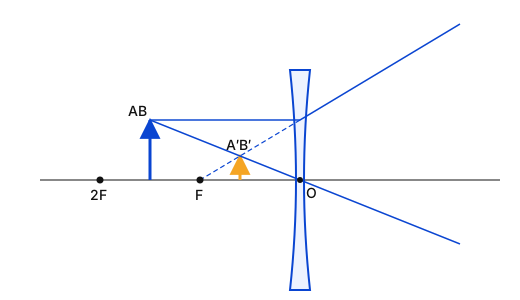
Q380.
An object is placed between F and 2F of a concave lens. Which of the following options represents the characteristics of the image formed?
एक वस्तु को अवतल लेंस (concave lens) के F और 2F के बीच रखा गया है। निम्नलिखित में से कौन-सा विकल्प बनने वाले प्रतिबिंब की विशेषताओं को दर्शाता है?
  1. AVirtual and enlargedआभासी और आवर्धित
  2. BVirtual and diminishedआभासी और छोटा (diminished)
  3. CReal and diminishedवास्तविक और छोटा (diminished)
  4. DReal and enlargedवास्तविक और आवर्धित
Show answer

Concept: A concave (diverging) lens always forms a virtual, erect and diminished image between F and the optical centre, on the same side as the object – wherever the object is placed.

  1. Ray parallel to the axis diverges as if coming from F.
  2. Ray through the optical centre O goes straight.
  3. Their backward extensions meet between F and O → virtual, erect, smaller image.

Trick: Concave lens and convex mirror: image always virtual, erect, diminished.

Answer: (B) Virtual and diminished

अवधारणा: अवतल (अपसारी) लेंस हमेशा F और प्रकाशिक केंद्र के बीच, वस्तु की ओर ही आभासी, सीधा और छोटा प्रतिबिंब बनाता है – वस्तु कहीं भी रखी हो।

  1. अक्ष के समांतर किरण अपवर्तन के बाद F से आती हुई प्रतीत होती है।
  2. प्रकाशिक केंद्र O से जाने वाली किरण सीधी निकल जाती है।
  3. इनके पीछे की ओर बढ़ाए गए भाग F और O के बीच मिलते हैं → आभासी, सीधा, छोटा प्रतिबिंब।

ट्रिक: अवतल लेंस और उत्तल दर्पण: प्रतिबिंब सदैव आभासी, सीधा, छोटा।

उत्तर: (B) आभासी और छोटा (diminished)

RRB Technician Grade IIIGeneral ScienceConcave lens – image formationRRB Technician Grade III 2024 · 29 Dec Shift 3 →