Question bank

Q&A: practice questions with answers

Search questions on any topic. Filter by exam category, exam, subject and topic, try the question, then open the answer and explanation.

Courses – airGurukul

3,200 questions found.

Q441.
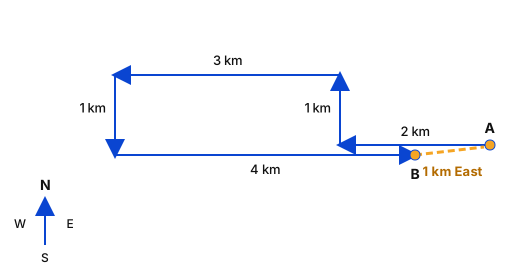
Rajiv starts from point A and drives 2 km towards the West. He then takes a right turn and drives 1 km. He then takes a left turn and drives 3 km. He takes another left turn and drives 1 km. He then takes a final left turn and drives 4 km to reach point B. How far (shortest distance) and towards which direction should he drive to reach Point A again? (All turns are 90 degrees turns only unless specified.)
राजीव बिंदु A से चलना शुरू करता है और पश्चिम की ओर 2 km गाड़ी चलाता है। फिर वह दाएँ मुड़ता है और 1 km गाड़ी चलाता है। फिर वह बाएँ मुड़ता है और 3 km गाड़ी चलाता है। वह फिर से बाएँ मुड़ता है और 1 km गाड़ी चलाता है। फिर वह अंतिम बार बाएँ मुड़ता है और बिंदु B तक पहुँचने के लिए 4 km गाड़ी चलाता है। बिंदु A पर फिर से पहुँचने के लिए उसे कितनी दूरी (न्यूनतम दूरी) तक और किस दिशा में गाड़ी चलानी चाहिए? (जब तक निर्दिष्ट न हो, सभी मोड़ केवल 90 डिग्री के हैं।)
  1. A1 km South1 km दक्षिण
  2. B1 km East1 km पूर्व
  3. C1 km West1 km पश्चिम
  4. D1 km North1 km उत्तर
Show answer

Concept: Take A as origin; East =+x, North =+y, and follow each turn.

  1. 2 km West → (−2,0); right turn (North) 1 km → (−2,1).
  2. Left turn (West) 3 km → (−5,1); left turn (South) 1 km → (−5,0).
  3. Left turn (East) 4 km → B =(−1,0).
  4. B is 1 km West of A, so he must drive 1 km East.

Trick: Net East–West: −2−3+4=−1; net North–South: +1−1=0.

Answer: (B) 1 km East

अवधारणा: A को मूल बिंदु लें; पूर्व =+x, उत्तर =+y, और हर मोड़ का पालन करें।

  1. 2 किमी पश्चिम → (−2,0); दाएँ मुड़कर (उत्तर) 1 किमी → (−2,1)।
  2. बाएँ (पश्चिम) 3 किमी → (−5,1); बाएँ (दक्षिण) 1 किमी → (−5,0)।
  3. बाएँ (पूर्व) 4 किमी → B =(−1,0)।
  4. B, A से 1 किमी पश्चिम है, अतः 1 किमी पूर्व जाना होगा।

ट्रिक: शुद्ध पूर्व–पश्चिम: −2−3+4=−1; शुद्ध उत्तर–दक्षिण: +1−1=0।

उत्तर: (B) 1 km पूर्व

RRB Technician Grade IIIGeneral Intelligence and ReasoningDirection SenseRRB Technician Grade III 2024 · 29 Dec Shift 2 →
Q442.
Read the given statements and conclusions carefully. You have to take the given statements to be true even if they seem to be at variance from commonly known facts and decide which conclusion(s) logically follow(s) from the given statements.
Statements:
Some tigers are lions.
Some lions are cheetahs.
Conclusions:
I. Some lions are tigers.
II. Some tigers are cheetahs.
दिए गए कथनों और निष्कर्षों को ध्यानपूर्वक पढ़िए। आपको दिए गए कथनों को सत्य मानना है, भले ही वे सामान्य रूप से ज्ञात तथ्यों से भिन्न प्रतीत होते हों, और निर्णय लेना है कि कौन-सा/से निष्कर्ष दिए गए कथनों का तार्किक रूप से अनुसरण करता/करते है/हैं।
कथन:
कुछ बाघ, शेर हैं।
कुछ शेर, चीते हैं।
निष्कर्ष:
I. कुछ शेर, बाघ हैं।
II. कुछ बाघ, चीते हैं।
  1. AOnly conclusion II followsकेवल निष्कर्ष II अनुसरण करता है
  2. BNeither conclusion I nor II followsन तो निष्कर्ष I और न ही II अनुसरण करता है
  3. CBoth conclusions I and II followनिष्कर्ष I और II दोनों अनुसरण करते हैं
  4. DOnly conclusion I followsकेवल निष्कर्ष I अनुसरण करता है
Show answer

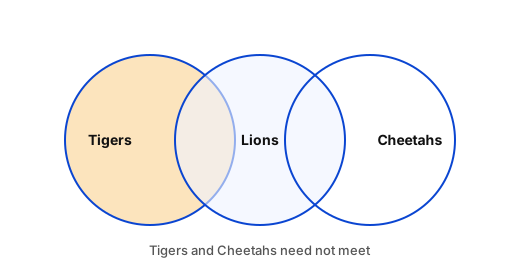
Concept: 'Some' statements can be reversed; two 'some' statements give no definite link between the end terms.

  1. Some tigers are lions ⇒ some lions are tigers (conversion). (I) follows.
  2. Tigers and cheetahs are linked only through 'some lions' on both sides, so they may not overlap at all.
  3. (II) does not follow.

Yaad rakhein: Some + Some = no conclusion.

Answer: (D) Only conclusion I follows

अवधारणा: 'कुछ' वाले कथन को उलटा जा सकता है; दो 'कुछ' कथनों से सिरों के पदों में कोई निश्चित संबंध नहीं बनता।

  1. कुछ बाघ शेर हैं ⇒ कुछ शेर बाघ हैं (परिवर्तन)। (I) अनुसरण करता है।
  2. बाघ और चीते केवल 'कुछ शेरों' से जुड़े हैं, अतः उनका मेल आवश्यक नहीं।
  3. (II) अनुसरण नहीं करता।

याद रखें: कुछ + कुछ = कोई निष्कर्ष नहीं।

उत्तर: (D) केवल निष्कर्ष I अनुसरण करता है

RRB Technician Grade IIIGeneral Intelligence and ReasoningSyllogismRRB Technician Grade III 2024 · 29 Dec Shift 2 →
Q443.
Seven boxes, A, B, E, F, L, M and P, are kept one over the other but not necessarily in the same order. Only two boxes are kept between L and B. Only A is kept above E. No box is kept below B. M is kept at some place below F but at some place above P. Which box is kept third above P?
सात बक्से, A, B, E, F, L, M और P, एक के ऊपर एक रखे गए हैं, लेकिन जरूरी नहीं कि इसी क्रम में हों। L और B के बीच केवल दो बक्से रखे गए हैं। E के ऊपर केवल A रखा गया है। B के नीचे कोई बक्सा नहीं रखा गया है। M, F के नीचे किसी स्थान पर लेकिन P के ऊपर किसी स्थान पर रखा गया है। P के ठीक ऊपर तीसरे स्थान पर कौन-सा बक्सा रखा गया है?
  1. AL
  2. BE
  3. CA
  4. DF
Show answer

Concept: Number the positions 1 (bottom) to 7 (top) and fill the definite clues first.

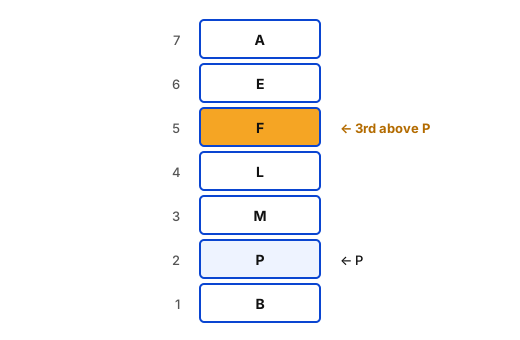
  1. No box below B: B = 1. Two boxes between L and B: L = 4.
  2. Only A above E: A = 7, E = 6.
  3. Free positions 2, 3, 5 for F, M, P with P below M below F: P = 2, M = 3, F = 5.
  4. Third above P (2) is position 5 = F.

Trick: Fix boxes at the ends (top/bottom) first — they anchor all the other clues.

Answer: (D) F

अवधारणा: स्थानों को 1 (नीचे) से 7 (ऊपर) तक क्रमांक दें और पहले निश्चित संकेत भरें।

  1. B के नीचे कोई नहीं: B = 1। L और B के बीच दो बॉक्स: L = 4।
  2. केवल A, E के ऊपर: A = 7, E = 6।
  3. खाली स्थान 2, 3, 5 में F, M, P; P नीचे, M बीच, F ऊपर: P = 2, M = 3, F = 5।
  4. P (2) के ऊपर तीसरा स्थान 5 = F।

ट्रिक: पहले सिरों (ऊपर/नीचे) वाले बॉक्स तय करें — वे बाकी संकेतों को आधार देते हैं।

उत्तर: (D) F

RRB Technician Grade IIIGeneral Intelligence and ReasoningBox Arrangement (Stacking)RRB Technician Grade III 2024 · 29 Dec Shift 2 →
Q444.
What will come in the place of ‘?’ in the following equation, if ‘+’ and ‘–’ are interchanged?
23−7×15÷5+17=?
यदि ‘+’ और ‘–’ को आपस में बदल दिया जाए, तो निम्नलिखित समीकरण में ‘?’ के स्थान पर क्या आएगा?
23−7×15÷5+17=?
  1. A30
  2. B24
  3. C27
  4. D25
Show answer

Concept: Swap the signs as instructed, then solve by BODMAS.

  1. Interchanging + and −: 23+7×15÷5−17.
  2. 15÷5=3, 7×3=21.
  3. 23+21−17=27.

Trick: Rewrite the full expression before calculating — never swap mentally while solving.

Answer: (C) 27

अवधारणा: बताए अनुसार चिह्न बदलें, फिर BODMAS से हल करें।

  1. + और − बदलने पर: 23+7×15÷5−17।
  2. 15÷5=3, 7×3=21।
  3. 23+21−17=27।

ट्रिक: गणना से पहले पूरा व्यंजक दोबारा लिखें — मन में बदलते हुए हल न करें।

उत्तर: (C) 27

RRB Technician Grade IIIGeneral Intelligence and ReasoningMathematical Operations (Interchange of Signs)RRB Technician Grade III 2024 · 29 Dec Shift 2 →
Q445.
Refer to the given number and symbol series and answer the question that follows. Counting to be done from left to right only.
(Left) & % 4 6 @ 8 $ & 3 Ω 2 7 ℧ 9 # 1 * £ 1 + & @ 5 (Right)
If all the symbols are dropped from the series, which of the following will be sixth from the right?
दी गई संख्या और प्रतीक श्रृंखला को देखिए और उसके बाद आने वाले प्रश्न का उत्तर दीजिए। गिनती केवल बाएँ से दाएँ की जानी है।
(बाएँ) & % 4 6 @ 8 $ & 3 Ω 2 7 ℧ 9 # 1 * £ 1 + & @ 5 (दाएँ)
यदि श्रृंखला से सभी प्रतीकों को हटा दिया जाए, तो निम्नलिखित में से कौन-सा दाएँ से छठा होगा?
  1. A7
  2. B3
  3. C1
  4. D2
Show answer

Concept: Remove all symbols, keep only the numbers, then count from the right.

  1. Numbers left to right: 4, 6, 8, 3, 2, 7, 9, 1, 1, 5.
  2. From the right: 5 (1st), 1 (2nd), 1 (3rd), 9 (4th), 7 (5th), 2 (6th).

Trick: With 10 numbers, 6th from right = (10−6+1)= 5th from left =2.

Answer: (D) 2

अवधारणा: सभी चिह्न हटाएँ, केवल संख्याएँ रखें, फिर दाएँ से गिनें।

  1. बाएँ से संख्याएँ: 4, 6, 8, 3, 2, 7, 9, 1, 1, 5।
  2. दाएँ से: 5 (पहला), 1, 1, 9, 7, 2 (छठा)।

ट्रिक: 10 संख्याओं में दाएँ से छठा =(10−6+1)= बाएँ से पाँचवाँ =2।

उत्तर: (D) 2

RRB Technician Grade IIIGeneral Intelligence and ReasoningNumber–Symbol Series (Position)RRB Technician Grade III 2024 · 29 Dec Shift 2 →
Q446.
In the following number-pairs, the second number is obtained by applying certain mathematical operations to the first number. Which numbers should replace X and Y so that the pattern followed by the two numbers on the left side of :: is same as that on the right side of ::?
(NOTE: Operations should be performed on the whole numbers, without breaking down the numbers into its constituent digits. E.g. 13 – Operations on 13 such as adding/subtracting/multiplying etc. to 13 can be performed. Breaking down 13 into 1 and 3 and then performing mathematical operations on 1 and 3 is not allowed.)
X : 56 :: 84 : Y
निम्नलिखित संख्या-युग्मों में, पहली संख्या पर कुछ गणितीय संक्रियाएँ करके दूसरी संख्या प्राप्त की जाती है। X और Y के स्थान पर कौन-सी संख्याएँ आनी चाहिए ताकि :: के बाईं ओर की दोनों संख्याओं द्वारा अनुसरण किया गया पैटर्न वही हो जो :: के दाईं ओर है?
(ध्यान दें: संक्रियाएँ पूर्ण संख्याओं पर की जानी चाहिए, संख्याओं को उनके घटक अंकों में तोड़े बिना। उदाहरण के लिए 13 – 13 पर की जाने वाली संक्रियाएँ जैसे 13 में जोड़ना/घटाना/गुणा करना आदि की जा सकती हैं। 13 को 1 और 3 में तोड़ना और फिर 1 और 3 पर गणितीय संक्रियाएँ करना वर्जित है।)
X : 56 :: 84 : Y
  1. AX = 96, Y = 54
  2. BX = 92, Y = 48
  3. CX = 108, Y = 62
  4. DX = 98, Y = 32
Show answer

Concept: Find one operation that works on both sides of :: — test each option.

  1. (B) X = 92: 92−36=56.
  2. Same rule on the right: 84−36=48=Y ✓.
  3. Others fail: (A) 96−40=56 but 84−40=44≠54; (C) 108−52=56 but 84−52=32≠62; (D) 98−42=56 but 84−42=42≠32.

Trick: Since 56 and 84 sit in mirror places, X−56 must equal 84−Y, i.e. X+Y=140: only 92+48=140.

Answer: (B) X = 92, Y = 48

अवधारणा: ऐसी एक संक्रिया खोजें जो :: के दोनों ओर लागू हो — हर विकल्प जाँचें।

  1. (B) X = 92: 92−36=56।
  2. दाईं ओर वही नियम: 84−36=48=Y ✓।
  3. अन्य विफल: (A) 84−40=44≠54; (C) 84−52=32≠62; (D) 84−42=42≠32।

ट्रिक: X−56=84−Y होना चाहिए, यानी X+Y=140: केवल 92+48=140।

उत्तर: (B) X = 92, Y = 48

RRB Technician Grade IIIGeneral Intelligence and ReasoningNumber AnalogyRRB Technician Grade III 2024 · 29 Dec Shift 2 →
Q447.
Given below is a statement followed by two possible reasons numbered I and II. Read the statement carefully and decide which of the two explain(s) the event/observation/information given in the statement.
Statement - Noise pollution is an invisible danger. It cannot be seen, but it is present nonetheless, both on land and under the sea. Noise pollution is considered to be any unwanted or disturbing sound that affects the health and well-being of humans and other organisms.
Reasons:
I. Some of its major causes are vehicles, aircraft, industrial machines, loudspeakers, crackers, etc.
II. When used at high volume, some other appliances also contribute to noise pollution, like television, transistor, radio, etc.
नीचे एक कथन और उसके बाद I और II क्रमांकित दो संभावित कारण दिए गए हैं। कथन को ध्यानपूर्वक पढ़िए और निर्णय लीजिए कि दोनों में से कौन-सा/से कथन में दी गई घटना/अवलोकन/जानकारी की व्याख्या करता/करते है/हैं।
कथन - ध्वनि प्रदूषण एक अदृश्य खतरा है। इसे देखा नहीं जा सकता, फिर भी यह भूमि और समुद्र के भीतर, दोनों जगह मौजूद है। ध्वनि प्रदूषण किसी भी ऐसी अवांछित या परेशान करने वाली ध्वनि को माना जाता है जो मनुष्यों और अन्य जीवों के स्वास्थ्य और कल्याण को प्रभावित करती है।
कारण:
I. इसके कुछ प्रमुख कारण वाहन, विमान, औद्योगिक मशीनें, लाउडस्पीकर, पटाखे आदि हैं।
II. तेज़ आवाज़ में उपयोग किए जाने पर, कुछ अन्य उपकरण भी ध्वनि प्रदूषण में योगदान करते हैं, जैसे टेलीविज़न, ट्रांजिस्टर, रेडियो आदि।
  1. AOnly II is a possible reason.केवल II एक संभावित कारण है।
  2. BNeither I nor II is a possible reason.न तो I और न ही II एक संभावित कारण है।
  3. COnly I is a possible reason.केवल I एक संभावित कारण है।
  4. DBoth I and II are possible reasons.I और II दोनों संभावित कारण हैं।
Show answer

Concept: A reason is valid if it directly explains how the stated problem arises.

  1. The statement describes noise pollution as unwanted, harmful sound.
  2. I: vehicles, aircraft, machines, loudspeakers, crackers are well-known sources of such sound — valid.
  3. II: TV, radio etc. at high volume also produce disturbing sound — valid.

Trick: Both reasons name sources of noise, and the statement is about noise as a danger, so both explain it.

Answer: (D) Both I and II are possible reasons.

अवधारणा: कारण तभी मान्य है जब वह सीधे बताए कि समस्या कैसे उत्पन्न होती है।

  1. कथन ध्वनि प्रदूषण को अवांछित, हानिकारक ध्वनि बताता है।
  2. I: वाहन, विमान, मशीनें, लाउडस्पीकर, पटाखे ऐसी ध्वनि के प्रमुख स्रोत हैं — मान्य।
  3. II: तेज़ आवाज़ में टीवी, रेडियो आदि भी परेशान करने वाली ध्वनि देते हैं — मान्य।

ट्रिक: दोनों कारण शोर के स्रोत बताते हैं, अतः दोनों कथन को स्पष्ट करते हैं।

उत्तर: (D) I और II दोनों संभावित कारण हैं।

RRB Technician Grade IIIGeneral Intelligence and ReasoningStatement and Reasons (Cause–Effect)RRB Technician Grade III 2024 · 29 Dec Shift 2 →
Q448.
In a certain code language, ‘CARD’ is coded as ‘5193’ and ‘ROSE’ is coded as ‘8612’. What is the code for ‘R’ in the given code language?
एक निश्चित कूट भाषा में, ‘CARD’ को ‘5193’ के रूप में कूटबद्ध किया जाता है और ‘ROSE’ को ‘8612’ के रूप में कूटबद्ध किया जाता है। दी गई कूट भाषा में ‘R’ के लिए कूट क्या है?
  1. A8
  2. B9
  3. C5
  4. D1
Show answer

Concept: The letter common to two words gets the digit common to their codes.

  1. CARD = 5193, ROSE = 8612.
  2. Common letter: R only.
  3. Common digit: 1 only. So R = 1.

Trick: One common letter + one common digit = direct answer.

Answer: (D) 1

अवधारणा: दो शब्दों में उभयनिष्ठ अक्षर का कोड उनके कोडों का उभयनिष्ठ अंक होता है।

  1. CARD = 5193, ROSE = 8612।
  2. उभयनिष्ठ अक्षर: केवल R।
  3. उभयनिष्ठ अंक: केवल 1। अतः R = 1।

ट्रिक: एक उभयनिष्ठ अक्षर + एक उभयनिष्ठ अंक = सीधा उत्तर।

उत्तर: (D) 1

RRB Technician Grade IIIGeneral Intelligence and ReasoningCoding–Decoding (Common Letters)RRB Technician Grade III 2024 · 29 Dec Shift 2 →
Q449.
Based on the English alphabetical order, three of the following four letter-clusters are alike in a certain way and thus form a group. Which letter-cluster does not belong to that group?
(Note: The odd one out is not based on the number of consonants/vowels or their position in the letter-cluster.)
अंग्रेजी वर्णमाला क्रम के आधार पर, निम्नलिखित चार अक्षर-समूहों में से तीन किसी निश्चित प्रकार से एकसमान हैं और इस प्रकार एक समूह बनाते हैं। कौन-सा अक्षर-समूह उस समूह से संबंधित नहीं है?
(ध्यान दें: असंगत अक्षर-समूह, उस अक्षर-समूह में व्यंजनों/स्वरों की संख्या या उनके स्थान पर आधारित नहीं है।)
  1. AFCG
  2. BIFK
  3. CQNS
  4. DLIN
Show answer

Concept: Write letter positions and compare the gaps.

  1. IFK: I(9)→F(6) −3, F→K(11) +5.
  2. QNS: 17→14→19: −3, +5; LIN: 12→9→14: −3, +5.
  3. FCG: 6→3→7: −3, +4 — different.

Trick: Use EJOTY (5, 10, 15, 20, 25) to get letter positions quickly.

Answer: (A) FCG

अवधारणा: अक्षरों की स्थिति लिखकर अंतर की तुलना करें।

  1. IFK: I(9)→F(6) −3, F→K(11) +5।
  2. QNS: 17→14→19: −3, +5; LIN: 12→9→14: −3, +5।
  3. FCG: 6→3→7: −3, +4 — भिन्न।

ट्रिक: अक्षरों की स्थिति जल्दी जानने के लिए EJOTY (5, 10, 15, 20, 25) याद रखें।

उत्तर: (A) FCG

RRB Technician Grade IIIGeneral Intelligence and ReasoningOdd One Out (Letter Clusters)RRB Technician Grade III 2024 · 29 Dec Shift 2 →
Q450.
The position(s) of how many letters will remain unchanged if each of the letters in the word DEFAULT is arranged in the English alphabetical order ?
यदि शब्द DEFAULT के प्रत्येक अक्षर को अंग्रेजी वर्णमाला क्रम में व्यवस्थित किया जाए, तो कितने अक्षरों का/के स्थान अपरिवर्तित रहेगा/रहेंगे?
  1. A0
  2. B2
  3. C1
  4. D3
Show answer

Concept: Arrange the letters alphabetically and compare position by position with the original word.

  1. Original: D E F A U L T.
  2. Sorted: A D E F L T U.
  3. Compare: D/A, E/D, F/E, A/F, U/L, L/T, T/U — no letter is in the same place.

Trick: Since A (the smallest) is 4th, D, E, F all shift right by one, and U being 5th pushes L, T left — nothing stays.

Answer: (A) 0

अवधारणा: अक्षरों को वर्णानुक्रम में लगाएँ और मूल शब्द से स्थान-दर-स्थान तुलना करें।

  1. मूल: D E F A U L T।
  2. क्रमबद्ध: A D E F L T U।
  3. तुलना: D/A, E/D, F/E, A/F, U/L, L/T, T/U — कोई अक्षर अपने स्थान पर नहीं।

ट्रिक: A सबसे छोटा होकर चौथे स्थान पर है, इसलिए D, E, F एक-एक स्थान खिसकते हैं; U के कारण L, T भी खिसकते हैं।

उत्तर: (A) 0

RRB Technician Grade IIIGeneral Intelligence and ReasoningAlphabetical Arrangement of LettersRRB Technician Grade III 2024 · 29 Dec Shift 2 →
Q451.
An electric water heater converts electrical energy into _______.
विद्युत वॉटर हीटर विद्युत ऊर्जा को _______ में परिवर्तित करता है।
  1. Apotential energyस्थितिज ऊर्जा
  2. Bwind energyपवन ऊर्जा
  3. Clight energyप्रकाश ऊर्जा
  4. Dheat energyऊष्मा ऊर्जा
Show answer

Concept: An appliance is named by the useful energy it gives out. A heater's coil has high resistance, so current through it produces heat (Joule heating).

  1. Input to the heater: electrical energy.
  2. Current through the high-resistance element heats it: H=I2Rt.
  3. This heat is passed to the water, so the useful output is heat energy.

Yaad rakhein: Heater, iron, toaster, geyser → electrical to heat; bulb → electrical to light; fan/motor → electrical to mechanical.

Answer: (D) heat energy

अवधारणा: उपकरण जिस उपयोगी ऊर्जा को देता है, उसी से उसका रूपांतरण पहचाना जाता है। हीटर की कुंडली का प्रतिरोध अधिक होता है, इसलिए धारा से ऊष्मा बनती है (जूल तापन)।

  1. हीटर में जाने वाली ऊर्जा: विद्युत ऊर्जा।
  2. उच्च प्रतिरोध वाले तत्व में धारा से ऊष्मा बनती है: H=I2Rt।
  3. यह ऊष्मा पानी को मिलती है, अतः उपयोगी निर्गत ऊर्जा = ऊष्मा ऊर्जा।

याद रखें: हीटर, इस्त्री, टोस्टर, गीज़र → विद्युत से ऊष्मा; बल्ब → विद्युत से प्रकाश; पंखा/मोटर → विद्युत से यांत्रिक।

उत्तर: (D) ऊष्मा ऊर्जा

RRB Technician Grade IIIGeneral ScienceEnergy conversionRRB Technician Grade III 2024 · 29 Dec Shift 2 →
Q452.
Which of the following statements is/are correct related to transportation?
(i) Arteries are the vessels which carry blood away from the heart to various organs of the body.
(ii) The arteries have thin and elastic walls.
(iii) Veins have valves that ensure that blood flows only in one direction.
परिवहन से संबंधित निम्नलिखित में से कौन-सा/से कथन सही है/हैं?
(i) धमनियाँ वे वाहिकाएँ हैं जो रुधिर को हृदय से शरीर के विभिन्न अंगों तक ले जाती हैं।
(ii) धमनियों की भित्ति पतली और लचीली होती है।
(iii) शिराओं में वाल्व होते हैं जो सुनिश्चित करते हैं कि रुधिर केवल एक ही दिशा में प्रवाहित हो।
  1. AOnly (i)केवल (i)
  2. BOnly (i) and (ii)केवल (i) और (ii)
  3. COnly (i) and (iii)केवल (i) और (iii)
  4. D(i), (ii) and (iii)(i), (ii) और (iii)
Show answer

Concept: Arteries carry blood away from the heart under high pressure; veins bring blood back to the heart under low pressure.

  1. (i) Arteries carry blood from the heart to organs – correct.
  2. (ii) Arteries have thick, elastic walls to bear high pressure, not thin walls – wrong.
  3. (iii) Veins have valves that keep blood flowing one way, towards the heart – correct.

Yaad rakhein: Artery = Away from heart, thick walls; Vein = towards heart, thin walls + valves.

Answer: (C) Only (i) and (iii)

अवधारणा: धमनियाँ उच्च दाब पर रक्त को हृदय से दूर ले जाती हैं; शिराएँ कम दाब पर रक्त को हृदय तक वापस लाती हैं।

  1. (i) धमनियाँ हृदय से अंगों तक रक्त ले जाती हैं – सही।
  2. (ii) अधिक दाब सहने के लिए धमनियों की भित्ति मोटी और लचीली होती है, पतली नहीं – गलत।
  3. (iii) शिराओं में वाल्व होते हैं जो रक्त को एक ही दिशा (हृदय की ओर) में बहने देते हैं – सही।

याद रखें: धमनी = हृदय से दूर, मोटी भित्ति; शिरा = हृदय की ओर, पतली भित्ति + वाल्व।

उत्तर: (C) केवल (i) और (iii)

RRB Technician Grade IIIGeneral ScienceBlood vesselsRRB Technician Grade III 2024 · 29 Dec Shift 2 →
Q453.
What product will be formed when ethanol at 443K with excess concentrated sulphuric acid is heated?
जब एथेनॉल को 443K पर अधिक मात्रा में सांद्र सल्फ्यूरिक अम्ल के साथ गर्म किया जाता है, तो कौन-सा उत्पाद बनेगा?
  1. AEthyne and hydrogenएथाइन (Ethyne) और हाइड्रोजन
  2. BEthane and waterएथेन (Ethane) और जल
  3. CEthene and waterएथीन (Ethene) और जल
  4. DOnly ethyneकेवल एथाइन (Ethyne)
Show answer

Concept: Hot concentrated sulphuric acid is a dehydrating agent; it removes a water molecule from ethanol and forms an alkene.

  1. Heat ethanol at 443 K with excess conc. H2SO4.
  2. CH3CH2OH→443 KCH2=CH2+H2O
  3. Products: ethene and water.

Yaad rakhein: Ethanol + conc. H2SO4 → ethene (dehydration); ethanol + alkaline KMnO4 → ethanoic acid (oxidation).

Answer: (C) Ethene and water

अवधारणा: गर्म सांद्र सल्फ्यूरिक अम्ल निर्जलीकारक है; यह एथेनॉल से जल का एक अणु हटाकर एल्कीन बनाता है।

  1. एथेनॉल को 443 K पर अधिक सांद्र H2SO4 के साथ गर्म करें।
  2. CH3CH2OH→443 KCH2=CH2+H2O
  3. उत्पाद: एथीन और जल।

याद रखें: एथेनॉल + सांद्र H2SO4 → एथीन (निर्जलीकरण); एथेनॉल + क्षारीय KMnO4 → एथेनॉइक अम्ल (ऑक्सीकरण)।

उत्तर: (C) एथीन (Ethene) और जल

RRB Technician Grade IIIGeneral ScienceDehydration of ethanolRRB Technician Grade III 2024 · 29 Dec Shift 2 →
Q454.
Which of the following compounds is/are saturated?
(i) C2H6
(ii) C3H8
(iii) C2H4
(iv) C4H10
निम्नलिखित में से कौन-सा/से यौगिक संतृप्त है/हैं?
(i) C2H6
(ii) C3H8
(iii) C2H4
(iv) C4H10
  1. Ai, ii and ivi, ii और iv
  2. Bi, ii and iiii, ii और iii
  3. Ci and ivi और iv
  4. Di and iii और ii
Show answer

Concept: Saturated hydrocarbons (alkanes) have only single C–C bonds and follow the formula CnH2n+2.

  1. C2H6: n=2, 2n+2=6 → alkane (ethane).
  2. C3H8: 2×3+2=8 → alkane (propane).
  3. C2H4: fits CnH2n → alkene (ethene), unsaturated.
  4. C4H10: 2×4+2=10 → alkane (butane).

Trick: Check H count: 2n+2 → saturated; 2n → alkene; 2n−2 → alkyne.

Answer: (A) i, ii and iv

अवधारणा: संतृप्त हाइड्रोकार्बन (एल्केन) में केवल एकल C–C बंध होते हैं और सूत्र CnH2n+2 होता है।

  1. C2H6: n=2, 2n+2=6 → एल्केन (एथेन)।
  2. C3H8: 2×3+2=8 → एल्केन (प्रोपेन)।
  3. C2H4: CnH2n के अनुरूप → एल्कीन (एथीन), असंतृप्त।
  4. C4H10: 2×4+2=10 → एल्केन (ब्यूटेन)।

ट्रिक: H की संख्या देखें: 2n+2 → संतृप्त; 2n → एल्कीन; 2n−2 → एल्काइन।

उत्तर: (A) i, ii और iv

RRB Technician Grade IIIGeneral ScienceSaturated hydrocarbonsRRB Technician Grade III 2024 · 29 Dec Shift 2 →
Q455.
What product is formed in the chlor-alkali process?
क्लोर-क्षार प्रक्रिया (chlor-alkali process) में कौन-सा उत्पाद बनता है?
  1. AWashing Sodaधावन सोडा (Washing Soda)
  2. BSodium Chlorideसोडियम क्लोराइड
  3. CSodium Hydroxideसोडियम हाइड्रॉक्साइड
  4. DBaking Sodaबेकिंग सोडा
Show answer

Concept: Electrolysis of brine (aqueous sodium chloride) is called the chlor-alkali process, named after its products chlorine and the alkali NaOH.

  1. 2NaCl+2H2O→2NaOH+Cl2+H2
  2. Chlorine forms at the anode, hydrogen at the cathode.
  3. Sodium hydroxide solution forms near the cathode.

Yaad rakhein: chlor = Cl2, alkali = NaOH; sodium chloride is the raw material, not the product.

Answer: (C) Sodium Hydroxide

अवधारणा: ब्राइन (सोडियम क्लोराइड का जलीय विलयन) के विद्युत अपघटन को क्लोर-क्षार प्रक्रिया कहते हैं, क्योंकि इसके उत्पाद क्लोरीन और क्षार NaOH हैं।

  1. 2NaCl+2H2O→2NaOH+Cl2+H2
  2. ऐनोड पर क्लोरीन, कैथोड पर हाइड्रोजन बनती है।
  3. कैथोड के पास सोडियम हाइड्रॉक्साइड विलयन बनता है।

याद रखें: क्लोर = Cl2, क्षार = NaOH; सोडियम क्लोराइड कच्चा माल है, उत्पाद नहीं।

उत्तर: (C) सोडियम हाइड्रॉक्साइड

RRB Technician Grade IIIGeneral ScienceChlor-alkali processRRB Technician Grade III 2024 · 29 Dec Shift 2 →
Q456.
A ray of light passing or appear to pass through the principal focus of a concave/convex mirror after reflection _______.
अवतल/उत्तल दर्पण के मुख्य फोकस से होकर गुजरने वाली या गुजरती हुई प्रतीत होने वाली प्रकाश किरण परावर्तन के बाद _______।
  1. Awill emerge parallel to the principal axisमुख्य अक्ष के समांतर निकलेगी
  2. Bwill emerge perpendicular to the principal axis, only in the case of concave mirrorमुख्य अक्ष के लंबवत निकलेगी, केवल अवतल दर्पण की स्थिति में
  3. Cwill emerge perpendicular to the principal axisमुख्य अक्ष के लंबवत निकलेगी
  4. Dwill emerge perpendicular to the principal axis, only in the case of convex mirrorमुख्य अक्ष के लंबवत निकलेगी, केवल उत्तल दर्पण की स्थिति में
Show answer

Concept: For spherical mirrors, a ray parallel to the principal axis passes (or appears to pass) through F after reflection. By reversibility of light, the reverse is also true.

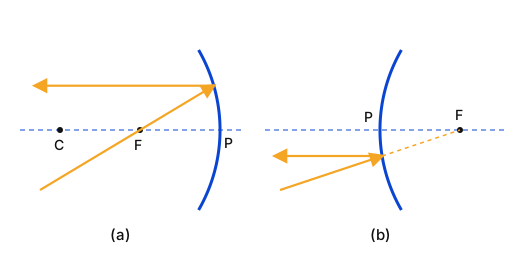
  1. (a) Concave: ray passing through F hits the mirror and returns parallel to the axis.
  2. (b) Convex: ray directed towards F (behind the mirror) reflects parallel to the axis.
  3. So in both mirrors the reflected ray is parallel to the principal axis.

Yaad rakhein: Parallel ⇄ through F; through C → retraces its path; at pole P → reflects symmetrically.

Answer: (A) will emerge parallel to the principal axis

अवधारणा: गोलीय दर्पण में मुख्य अक्ष के समांतर किरण परावर्तन के बाद F से होकर जाती है (या आती प्रतीत होती है)। प्रकाश की उत्क्रमणीयता से उल्टा भी सत्य है।

  1. (a) अवतल: F से होकर जाने वाली किरण दर्पण से टकराकर अक्ष के समांतर लौटती है।
  2. (b) उत्तल: F (दर्पण के पीछे) की ओर जाती किरण परावर्तन के बाद अक्ष के समांतर हो जाती है।
  3. अतः दोनों दर्पणों में परावर्तित किरण मुख्य अक्ष के समांतर होती है।

याद रखें: समांतर ⇄ F से होकर; C से होकर → उसी पथ पर लौटती है; ध्रुव P पर → सममित परावर्तन।

उत्तर: (A) मुख्य अक्ष के समांतर निकलेगी

RRB Technician Grade IIIGeneral ScienceRay diagrams – spherical mirrorsRRB Technician Grade III 2024 · 29 Dec Shift 2 →
Q457.
Complex substances are broken down into simpler ones with the use of bio-catalysts called:
जटिल पदार्थों को सरल पदार्थों में तोड़ने के लिए जिन जैव-उत्प्रेरकों का उपयोग होता है, उन्हें क्या कहते हैं?
  1. Afatवसा
  2. Boilतेल
  3. Ccarbohydratesकार्बोहाइड्रेट
  4. Denzymesएंजाइम
Show answer

Concept: Enzymes are proteins that act as biological catalysts: they speed up reactions in living cells, such as breaking complex food into simpler substances, without being used up.

  1. Amylase breaks starch into sugars.
  2. Pepsin/trypsin break proteins; lipase breaks fats.
  3. Fat, oil and carbohydrates are food substances, not catalysts.

Yaad rakhein: Bio-catalyst = enzyme; most enzyme names end in '-ase' (amylase, lipase, maltase).

Answer: (D) enzymes

अवधारणा: एंजाइम प्रोटीन होते हैं जो जैव-उत्प्रेरक का कार्य करते हैं: ये जीवित कोशिकाओं में अभिक्रियाओं को तेज करते हैं, जैसे जटिल भोजन को सरल पदार्थों में तोड़ना, और स्वयं खर्च नहीं होते।

  1. एमाइलेज स्टार्च को शर्करा में तोड़ता है।
  2. पेप्सिन/ट्रिप्सिन प्रोटीन को और लाइपेज वसा को तोड़ता है।
  3. वसा, तेल और कार्बोहाइड्रेट भोज्य पदार्थ हैं, उत्प्रेरक नहीं।

याद रखें: जैव-उत्प्रेरक = एंजाइम; अधिकांश एंजाइमों के नाम '-ase' पर समाप्त होते हैं (एमाइलेज, लाइपेज, माल्टेज)।

उत्तर: (D) एंजाइम

RRB Technician Grade IIIGeneral ScienceEnzymesRRB Technician Grade III 2024 · 29 Dec Shift 2 →
Q458.
Flexibility in plants is due to:
पौधों में लचीलापन किसके कारण होता है?
  1. Asclerenchymaदृढ़ोतक (sclerenchyma)
  2. Bcollenchymaस्थूलकोणोतक (collenchyma)
  3. Ccambiumएधा (cambium)
  4. Dparenchymaमृदूतक (parenchyma)
Show answer

Concept: Collenchyma is a simple permanent tissue with cells irregularly thickened at the corners; it gives mechanical support along with flexibility.

  1. Collenchyma lies below the epidermis in leaf stalks and young stems.
  2. It lets these parts bend without breaking (flexibility).
  3. Sclerenchyma gives rigidity, parenchyma stores food, cambium is a meristem for growth.

Yaad rakhein: Collenchyma → flexibility; Sclerenchyma → hardness/stiffness (husk of coconut); Parenchyma → storage.

Answer: (B) collenchyma

अवधारणा: स्थूलकोण ऊतक (कॉलेनकाइमा) एक सरल स्थायी ऊतक है जिसकी कोशिकाएँ कोनों पर अनियमित रूप से मोटी होती हैं; यह यांत्रिक सहारे के साथ लचीलापन देता है।

  1. कॉलेनकाइमा पत्तियों के डंठल और नए तनों में बाह्यत्वचा के नीचे होता है।
  2. इससे ये भाग बिना टूटे मुड़ सकते हैं (लचीलापन)।
  3. दृढ़ ऊतक (स्क्लेरेनकाइमा) कठोरता देता है, मृदूतक भोजन संचय करता है, कैम्बियम वृद्धि करने वाला विभज्योतक है।

याद रखें: कॉलेनकाइमा → लचीलापन; स्क्लेरेनकाइमा → कठोरता (नारियल का रेशा); पैरेनकाइमा → संचय।

उत्तर: (B) स्थूलकोणोतक (collenchyma)

RRB Technician Grade IIIGeneral SciencePlant tissuesRRB Technician Grade III 2024 · 29 Dec Shift 2 →
Q459.
In a triangular glass prism, there is/are _______.
एक त्रिभुजाकार काँच के प्रिज़्म में _______ होता/होते है/हैं।
  1. Aone triangular base and three rectangular lateral surfacesएक त्रिभुजाकार आधार और तीन आयताकार पार्श्व पृष्ठ
  2. Bthree triangular bases and one rectangular lateral surfaceतीन त्रिभुजाकार आधार और एक आयताकार पार्श्व पृष्ठ
  3. Ctwo triangular bases and three rectangular lateral surfacesदो त्रिभुजाकार आधार और तीन आयताकार पार्श्व पृष्ठ
  4. Dthree triangular bases and three rectangular lateral surfacesतीन त्रिभुजाकार आधार और तीन आयताकार पार्श्व पृष्ठ
Show answer

Concept: A triangular prism is a solid with two identical triangular faces (bases) joined by rectangular side faces – one for each side of the triangle.

  1. Triangle has 3 sides → 3 rectangular lateral surfaces.
  2. Top and bottom faces are triangles → 2 triangular bases.
  3. Total faces =2+3=5; the two refracting surfaces in experiments are two of the rectangles.

Yaad rakhein: Triangular prism: 5 faces, 9 edges, 6 vertices.

Answer: (C) two triangular bases and three rectangular lateral surfaces

अवधारणा: त्रिभुजाकार प्रिज़्म एक ठोस है जिसके दो समान त्रिभुजाकार फलक (आधार) होते हैं, जो आयताकार पार्श्व फलकों से जुड़े होते हैं – त्रिभुज की प्रत्येक भुजा के लिए एक।

  1. त्रिभुज की 3 भुजाएँ → 3 आयताकार पार्श्व पृष्ठ।
  2. ऊपर और नीचे के फलक त्रिभुज → 2 त्रिभुजाकार आधार।
  3. कुल फलक =2+3=5; प्रयोग में अपवर्तक पृष्ठ इन्हीं आयतों में से दो होते हैं।

याद रखें: त्रिभुजाकार प्रिज़्म: 5 फलक, 9 किनारे, 6 शीर्ष।

उत्तर: (C) दो त्रिभुजाकार आधार और तीन आयताकार पार्श्व पृष्ठ

RRB Technician Grade IIIGeneral ScienceGlass prismRRB Technician Grade III 2024 · 29 Dec Shift 2 →
Q460.
Identify the gas that is evolved when magnesium and manganese react with nitric acid.
उस गैस की पहचान कीजिए जो मैग्नीशियम और मैंगनीज़ के नाइट्रिक अम्ल से अभिक्रिया करने पर निकलती है।
  1. ANitrogen gasनाइट्रोजन गैस
  2. BHydrogen gasहाइड्रोजन गैस
  3. COxygen gasऑक्सीजन गैस
  4. DHelium gasहीलियम गैस
Show answer

Concept: Nitric acid is a strong oxidising agent, so it usually oxidises the H2 formed to water. Magnesium and manganese are exceptions with very dilute HNO3.

  1. Mg+2HNO3→Mg(NO3)2+H2
  2. Mn+2HNO3→Mn(NO3)2+H2
  3. So the gas evolved is hydrogen.

Yaad rakhein: Only Mg and Mn give H2 with very dilute nitric acid; other metals give oxides of nitrogen.

Answer: (B) Hydrogen gas

अवधारणा: नाइट्रिक अम्ल प्रबल ऑक्सीकारक है, इसलिए बनी H2 को प्रायः जल में ऑक्सीकृत कर देता है। अति तनु HNO3 के साथ मैग्नीशियम और मैंगनीज़ इसके अपवाद हैं।

  1. Mg+2HNO3→Mg(NO3)2+H2
  2. Mn+2HNO3→Mn(NO3)2+H2
  3. अतः निकलने वाली गैस हाइड्रोजन है।

याद रखें: केवल Mg और Mn अति तनु नाइट्रिक अम्ल से H2 देते हैं; अन्य धातुएँ नाइट्रोजन के ऑक्साइड देती हैं।

उत्तर: (B) हाइड्रोजन गैस

RRB Technician Grade IIIGeneral ScienceMetals and nitric acidRRB Technician Grade III 2024 · 29 Dec Shift 2 →