Question bank

Q&A: practice questions with answers

Search questions on any topic. Filter by exam category, exam, subject and topic, try the question, then open the answer and explanation.

Courses – airGurukul

3,200 questions found.

Q541.
Based on the English alphabetical order, three of the following four letter-cluster pairs are alike in a certain way and thus form a group. Which pair does not belong to that group?
(Note: The odd one out is not based on the number of consonants/vowels or their position in the letter-cluster.)
अंग्रेजी वर्णमाला क्रम के आधार पर, निम्नलिखित चार अक्षर-समूह युग्मों में से तीन किसी निश्चित प्रकार से एक समान हैं और इस प्रकार एक समूह बनाते हैं। कौन-सा युग्म उस समूह से संबंधित नहीं है?
(ध्यान दें: असंगत अक्षर-समूह, उस अक्षर-समूह में व्यंजनों/स्वरों की संख्या या उनके स्थान पर आधारित नहीं है।)
  1. ADI – FK
  2. BTY – VA
  3. CXB – YC
  4. DBG – DI
Show answer

Concept: Check the gap inside each cluster and the shift from the first cluster to the second.

  1. DI – FK: D→I +5, F→K +5; D→F +2.
  2. TY – VA: T→Y +5, V→A +5; T→V +2.
  3. BG – DI: +5, +5; B→D +2.
  4. XB – YC: X→B +4, Y→C +4; X→Y +1 — odd one.

Trick: Three pairs follow “+5 inside, +2 across”; XB – YC does not.

Answer: (C) XB – YC

अवधारणा: हर समूह के भीतर का अंतर और पहले से दूसरे समूह का खिसकाव देखें।

  1. DI – FK: D→I +5, F→K +5; D→F +2।
  2. TY – VA: T→Y +5, V→A +5; T→V +2।
  3. BG – DI: +5, +5; B→D +2।
  4. XB – YC: X→B +4, Y→C +4; X→Y +1 — यही अलग है।

ट्रिक: तीन युग्मों में “भीतर +5, आगे +2” है; XB – YC में नहीं।

उत्तर: (C) XB – YC
RRB Technician Grade IIIGeneral Intelligence and ReasoningOdd One Out (Letter Pairs)RRB Technician Grade III 2024 · 29 Dec Shift 1 →
Q542.
MPLO is related to RUQT in a certain way based on the English alphabetical order. In the same way, ILHK is related to NQMP. To which of the following options is FIEH related, following the same logic?
अंग्रेजी वर्णमाला क्रम के आधार पर MPLO एक निश्चित प्रकार से RUQT से संबंधित है। उसी प्रकार, ILHK, NQMP से संबंधित है। समान तर्क का अनुसरण करते हुए, FIEH निम्नलिखित में से किस विकल्प से संबंधित है?
  1. ANKMJ
  2. BKNMJ
  3. CKNJM
  4. DNKJM
Show answer

Concept: Each letter of the first cluster moves forward by 5.

  1. MPLO → RUQT: M→R, P→U, L→Q, O→T (each +5).
  2. ILHK → NQMP: also +5 each.
  3. FIEH +5: F→K, I→N, E→J, H→M ⇒ KNJM.

Trick: Check just the first letter: F +5 = K leaves KNMJ or KNJM; third letter E +5 = J ⇒ KNJM.

Answer: (C) KNJM

अवधारणा: पहले समूह का हर अक्षर 5 आगे जाता है।

  1. MPLO → RUQT: M→R, P→U, L→Q, O→T (हर बार +5)।
  2. ILHK → NQMP: यहाँ भी हर बार +5।
  3. FIEH +5: F→K, I→N, E→J, H→M ⇒ KNJM।

ट्रिक: पहला अक्षर F +5 = K से KNMJ या KNJM बचते हैं; तीसरा E +5 = J ⇒ KNJM।

उत्तर: (C) KNJM

RRB Technician Grade IIIGeneral Intelligence and ReasoningLetter AnalogyRRB Technician Grade III 2024 · 29 Dec Shift 1 →
Q543.
TQSO is related to MJLH in a certain way based on the English alphabetical order. In the same way, VSUQ is related to OLNJ. To which of the following options is ROQM related, following the same logic ?
अंग्रेजी वर्णमाला क्रम के आधार पर TQSO एक निश्चित प्रकार से MJLH से संबंधित है। उसी प्रकार, VSUQ, OLNJ से संबंधित है। समान तर्क का अनुसरण करते हुए, ROQM निम्नलिखित में से किस विकल्प से संबंधित है?
  1. AHKJF
  2. BHKFJ
  3. CKHFJ
  4. DKHJF
Show answer

Concept: Each letter moves back by 7.

  1. TQSO → MJLH: T→M, Q→J, S→L, O→H (each −7).
  2. VSUQ → OLNJ: also −7 each.
  3. ROQM −7: R(18)→K(11), O(15)→H(8), Q(17)→J(10), M(13)→F(6) ⇒ KHJF.

Trick: Use positions: subtract 7 from 18, 15, 17, 13 to get 11, 8, 10, 6.

Answer: (D) KHJF

अवधारणा: हर अक्षर 7 पीछे जाता है।

  1. TQSO → MJLH: T→M, Q→J, S→L, O→H (हर बार −7)।
  2. VSUQ → OLNJ: यहाँ भी हर बार −7।
  3. ROQM −7: R(18)→K(11), O(15)→H(8), Q(17)→J(10), M(13)→F(6) ⇒ KHJF।

ट्रिक: स्थानीय मान 18, 15, 17, 13 में से 7 घटाएँ: 11, 8, 10, 6।

उत्तर: (D) KHJF

RRB Technician Grade IIIGeneral Intelligence and ReasoningLetter AnalogyRRB Technician Grade III 2024 · 29 Dec Shift 1 →
Q544.
Refer to the given series and answer the question that follows (all numbers are single-digit numbers only, and all counting is to be done from left to right).
(Left) 5 6 5 8 6 4 9 5 2 2 4 4 9 3 0 7 5 7 2 9 9 8 8 1 9 1 3 7 2 5 (Right)
How many such odd digits are there, each of which is immediately preceded by an even digit and also immediately followed by an even digit?
दी गई श्रृंखला का संदर्भ लें और उसके बाद आने वाले प्रश्न का उत्तर दें (सभी संख्याएँ केवल एक-अंकीय संख्याएँ हैं, और सभी गणना बाएँ से दाएँ की जानी है)।
(बाएँ) 5 6 5 8 6 4 9 5 2 2 4 4 9 3 0 7 5 7 2 9 9 8 8 1 9 1 3 7 2 5 (दाएँ)
ऐसे कितने विषम अंक हैं, जिनमें से प्रत्येक के ठीक पहले एक सम अंक है और ठीक बाद में भी एक सम अंक है?
  1. A3
  2. B0
  3. C4
  4. D1
Show answer

Concept: Look for the pattern even – odd – even (0 is even).

  1. Check each odd digit's neighbours: 6 5 8 ✓ (positions 2–4).
  2. 4 9 5, 4 9 3, 0 7 5, 2 9 9, 8 1 9 — the right neighbour is odd ✗.
  3. Other odd digits have an odd digit on the left ✗.
  4. Only one such case: 6 5 8.

Trick: Scan for odd digits sitting between two even ones; check both neighbours every time.

Answer: (D) 1

अवधारणा: सम – विषम – सम पैटर्न खोजें (0 सम है)।

  1. हर विषम अंक के पड़ोसी देखें: 6 5 8 ✓ (स्थान 2–4)।
  2. 4 9 5, 4 9 3, 0 7 5, 2 9 9, 8 1 9 — दायाँ पड़ोसी विषम ✗।
  3. बाकी विषम अंकों के बाएँ विषम अंक है ✗।
  4. ऐसा केवल एक मामला: 6 5 8।

ट्रिक: दो सम अंकों के बीच बैठे विषम अंक खोजें; हर बार दोनों पड़ोसी जाँचें।

उत्तर: (D) 1

RRB Technician Grade IIIGeneral Intelligence and ReasoningNumber Series (Digit Pattern)RRB Technician Grade III 2024 · 29 Dec Shift 1 →
Q545.
Read the given statements and conclusions carefully. You have to take the given statements to be true even if they seem to be at variance from commonly known facts and decide which conclusion(s) logically follow(s) from the given statements.
Statements:
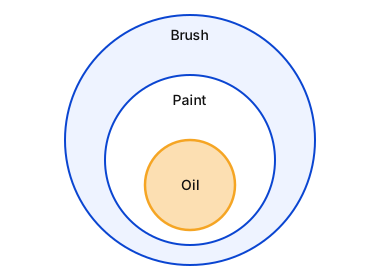
All oil is paint.
All paint is brush.
Conclusions:
(I) Some brushes are oil.
(II) No brush is oil.
दिए गए कथनों और निष्कर्षों को ध्यानपूर्वक पढ़ें। आपको दिए गए कथनों को सत्य मानना है, भले ही वे सामान्यतः ज्ञात तथ्यों से भिन्न प्रतीत होते हों और निर्णय लें कि कौन-सा/से निष्कर्ष तार्किक रूप से दिए गए कथनों का अनुसरण करता/करते है/हैं।
कथन:
सभी तेल, पेंट हैं।
सभी पेंट, ब्रश हैं।
निष्कर्ष:
(I) कुछ ब्रश, तेल हैं।
(II) कोई ब्रश, तेल नहीं है।
  1. ANeither conclusion (I) nor (II) followsन तो निष्कर्ष (I) और न ही (II) अनुसरण करता है
  2. BBoth conclusions (I) and (II) followदोनों निष्कर्ष (I) और (II) अनुसरण करते हैं
  3. COnly conclusion (II) followsकेवल निष्कर्ष (II) अनुसरण करता है
  4. DOnly conclusion (I) followsकेवल निष्कर्ष (I) अनुसरण करता है
Show answer

Concept: “All A are B” and “All B are C” give “All A are C”, hence also “Some C are A”.

  1. Oil ⊂ Paint ⊂ Brush, so all oil is brush.
  2. I: “Some brushes are oil” — true (the oil circle lies inside Brush). Follows.
  3. II: “No brush is oil” — contradicts the above. Does not follow.

Yaad rakhein: An “All” statement always gives a “Some” conclusion in reverse.

Answer: (D) Only conclusion (I) follows

अवधारणा: “सभी A, B हैं” और “सभी B, C हैं” से “सभी A, C हैं” और इसलिए “कुछ C, A हैं”।

  1. तेल ⊂ पेंट ⊂ ब्रश, अतः सारा तेल ब्रश है।
  2. I: “कुछ ब्रश तेल हैं” — सत्य (तेल का वृत्त ब्रश के अंदर है)। अनुसरण करता है।
  3. II: “कोई ब्रश तेल नहीं है” — ऊपर के विपरीत। अनुसरण नहीं करता।

याद रखें: “सभी” वाले कथन से उल्टा “कुछ” वाला निष्कर्ष हमेशा निकलता है।

उत्तर: (D) केवल निष्कर्ष (I) अनुसरण करता है

RRB Technician Grade IIIGeneral Intelligence and ReasoningSyllogismRRB Technician Grade III 2024 · 29 Dec Shift 1 →
Q546.
If ‘A’ stands for ‘÷’, ‘B’ stands for ‘×’, ‘C’ stands for ‘+’, and ‘D’ stands for ‘−’, then the resultant of which of the following would be 99?
यदि ‘A’ का अर्थ ‘÷’, ‘B’ का अर्थ ‘×’, ‘C’ का अर्थ ‘+’ और ‘D’ का अर्थ ‘−’ है, तो निम्नलिखित में से किसका परिणाम 99 होगा?
  1. A28 C 39 B 3 D 12 A 7
  2. B28 B 39 C 3 A 12 D 7
  3. C28 A 39 D 3 B 12 C 7
  4. D28 D 39 A 3 C 12 B 7
Show answer

Concept: Replace letters by signs (A = ÷, B = ×, C = +, D = −) and apply BODMAS.

  1. Option D: 28−39÷3+12×7.
  2. 39÷3=13, 12×7=84.
  3. 28−13+84=99 ✓.

Trick: Look for an option whose biggest product brings the total near 99 (12×7=84).

Answer: (D) 28 D 39 A 3 C 12 B 7

अवधारणा: अक्षरों को चिह्नों से बदलें (A = ÷, B = ×, C = +, D = −) और BODMAS लगाएँ।

  1. विकल्प D: 28−39÷3+12×7।
  2. 39÷3=13, 12×7=84।
  3. 28−13+84=99 ✓।

ट्रिक: ऐसा विकल्प देखें जिसमें सबसे बड़ा गुणनफल योग को 99 के पास ले जाए (12×7=84)।

उत्तर: (D) 28 D 39 A 3 C 12 B 7

RRB Technician Grade IIIGeneral Intelligence and ReasoningMathematical Operations (Symbol Substitution)RRB Technician Grade III 2024 · 29 Dec Shift 1 →
Q547.
Based on the English alphabetical order, three of the following four letter-clusters are alike in a certain way and thus form a group. Which letter-cluster does not belong to that group?
(Note: The odd one out is not based on the number of consonants/vowels or their position in the letter-cluster.)
अंग्रेजी वर्णमाला क्रम के आधार पर, निम्नलिखित चार अक्षर-समूहों में से तीन किसी निश्चित प्रकार से एक समान हैं और इस प्रकार एक समूह बनाते हैं। कौन-सा अक्षर-समूह उस समूह से संबंधित नहीं है?
(ध्यान दें: असंगत अक्षर-समूह, उस अक्षर-समूह में व्यंजनों/स्वरों की संख्या या उनके स्थान पर आधारित नहीं है।)
  1. ATXV
  2. BOSP
  3. CJNK
  4. DEIF
Show answer

Concept: Use alphabet positions and compare the gaps.

  1. OSP: O(15) → S(19) +4, S → P(16) −3.
  2. JNK: +4, −3; EIF: +4, −3.
  3. TXV: T(20) → X(24) +4, X → V(22) −2 — odd one.

Trick: In the other three, the third letter is just after the first (O-P, J-K, E-F); in TXV it is not.

Answer: (A) TXV

अवधारणा: अक्षरों के स्थानीय मान लेकर अंतर की तुलना करें।

  1. OSP: O(15) → S(19) +4, S → P(16) −3।
  2. JNK: +4, −3; EIF: +4, −3।
  3. TXV: T(20) → X(24) +4, X → V(22) −2 — यही अलग है।

ट्रिक: बाकी तीन में तीसरा अक्षर पहले के ठीक बाद वाला है (O-P, J-K, E-F); TXV में नहीं।

उत्तर: (A) TXV

RRB Technician Grade IIIGeneral Intelligence and ReasoningOdd One Out (Letter Clusters)RRB Technician Grade III 2024 · 29 Dec Shift 1 →
Q548.
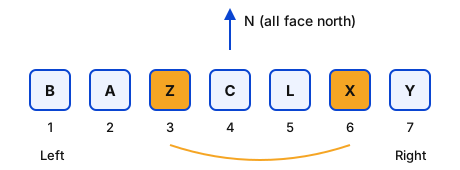
Seven people, A, B, C, L, X, Y and Z are sitting in a row, facing north. Only three people sit between B and L. C sits to the immediate left of L. No one sits to the right of Y. Only two people sit between Y and C. Z sits to the immediate right of A.
How many people sit between X and Z?
सात व्यक्ति A, B, C, L, X, Y और Z एक पंक्ति में उत्तर की ओर मुख करके बैठे हैं। B और L के बीच केवल तीन व्यक्ति बैठे हैं। C, L के ठीक बाएँ बैठा है। Y के दाईं ओर कोई नहीं बैठा है। Y और C के बीच केवल दो व्यक्ति बैठे हैं। Z, A के ठीक दाएँ बैठा है।
X और Z के बीच कितने व्यक्ति बैठे हैं?
  1. ATwoदो
  2. BThreeतीन
  3. CFourचार
  4. DOneएक
Show answer

Concept: Facing north, left and right are the viewer's left and right; start with the fixed clue.

  1. No one to the right of Y ⇒ Y at seat 7.
  2. Two between Y and C ⇒ C at seat 4; L just right of C ⇒ L at 5.
  3. Three between B and L ⇒ B at seat 1.
  4. A and Z together (Z right of A) ⇒ A = 2, Z = 3; X = 6.

Trick: Order: B A Z C L X Y — between Z (3) and X (6) sit C and L.

Answer: (A) Two

अवधारणा: उत्तर की ओर मुख होने पर बायाँ-दायाँ हमारे जैसा ही है; निश्चित संकेत से शुरू करें।

  1. Y के दाएँ कोई नहीं ⇒ Y सीट 7 पर।
  2. Y और C के बीच दो ⇒ C सीट 4 पर; L, C के ठीक दाएँ ⇒ L सीट 5।
  3. B और L के बीच तीन ⇒ B सीट 1 पर।
  4. A और Z साथ (Z, A के दाएँ) ⇒ A = 2, Z = 3; X = 6।

ट्रिक: क्रम: B A Z C L X Y — Z (3) और X (6) के बीच C और L बैठे हैं।

उत्तर: (A) दो

RRB Technician Grade IIIGeneral Intelligence and ReasoningSeating Arrangement (Linear)RRB Technician Grade III 2024 · 29 Dec Shift 1 →
Q549.
Refer to the given number and symbol series and answer the question that follows. Counting to be done from left to right only.
(Left) 5 % 4 6 @ 8 $ 7 & 3 Ω 9 2 % # 1 * £ 5 (Right)
How many such symbols are there, each of which is immediately preceded by an odd number and also immediately followed by an odd number?
दी गई संख्या और प्रतीक श्रृंखला का संदर्भ लें और उसके बाद आने वाले प्रश्न का उत्तर दें। गणना केवल बाएँ से दाएँ की जानी है।
(बाएँ) 5 % 4 6 @ 8 $ 7 & 3 Ω 9 2 % # 1 * £ 5 (दाएँ)
ऐसे कितने प्रतीक हैं, जिनमें से प्रत्येक के ठीक पहले एक विषम संख्या है और ठीक बाद में भी एक विषम संख्या है?
  1. AMore than twoदो से अधिक
  2. BNoneएक भी नहीं
  3. CTwoदो
  4. DOneएक
Show answer

Concept: For each symbol, check that the element just before and just after are both odd numbers.

  1. Symbols: % @ $ & Ω % # * £.
  2. &: between 7 and 3 ✓; Ω: between 3 and 9 ✓.
  3. % (5, 4), @ (6, 8), $ (8, 7), % (2, #), # (%, 1), * (1, £), £ (*, 5) ✗.

Trick: Note that a neighbour which is itself a symbol is not a number, so the condition fails.

Answer: (C) Two

अवधारणा: हर प्रतीक के ठीक पहले और ठीक बाद वाला तत्व विषम संख्या है या नहीं, जाँचें।

  1. प्रतीक: % @ $ & Ω % # * £।
  2. &: 7 और 3 के बीच ✓; Ω: 3 और 9 के बीच ✓।
  3. % (5, 4), @ (6, 8), $ (8, 7), % (2, #), # (%, 1), * (1, £), £ (*, 5) ✗।

ट्रिक: यदि पड़ोसी स्वयं प्रतीक है तो वह संख्या नहीं, अतः शर्त पूरी नहीं होती।

उत्तर: (C) दो

RRB Technician Grade IIIGeneral Intelligence and ReasoningNumber–Symbol SeriesRRB Technician Grade III 2024 · 29 Dec Shift 1 →
Q550.
Different cell organelles such as mitochondria, ribosome, etc., together constitute the basic unit of life called the:
माइटोकॉन्ड्रिया, राइबोसोम आदि जैसे विभिन्न कोशिकांग मिलकर जीवन की मूल इकाई बनाते हैं, जिसे कहते हैं:
  1. Atissueऊतक (tissue)
  2. Borganअंग (organ)
  3. Ccellकोशिका (cell)
  4. Dorgan systemअंग तंत्र (organ system)
Show answer

Concept: The cell is the structural and functional unit of life; it contains organelles such as mitochondria, ribosomes, Golgi bodies and the nucleus.

  1. Organelles together form a cell.
  2. Similar cells form a tissue; tissues form an organ; organs form an organ system.
  3. So the basic unit of life is the cell.

Yaad rakhein: Order of organisation: organelle → cell → tissue → organ → organ system → organism. The cell was discovered by Robert Hooke (1665).

Answer: (C) cell

अवधारणा: कोशिका जीवन की संरचनात्मक और कार्यात्मक इकाई है; इसमें माइटोकॉन्ड्रिया, राइबोसोम, गॉल्जी काय, केंद्रक जैसे कोशिकांग होते हैं।

  1. कोशिकांग मिलकर कोशिका बनाते हैं।
  2. समान कोशिकाएँ ऊतक, ऊतक अंग, और अंग अंग-तंत्र बनाते हैं।
  3. अतः जीवन की मूल इकाई कोशिका है।

याद रखें: संगठन का क्रम: कोशिकांग → कोशिका → ऊतक → अंग → अंग-तंत्र → जीव। कोशिका की खोज रॉबर्ट हुक (1665) ने की।

उत्तर: (C) कोशिका (cell)

RRB Technician Grade IIIGeneral ScienceCell – Basic Unit of LifeRRB Technician Grade III 2024 · 29 Dec Shift 1 →
Q551.
If F1 force is required to accelerate an object of 5 kg mass at 10 m s−2 and F2 force to accelerate an object of 10 kg mass at 12 m s−2, then which of the following statements is true?
यदि 5 kg द्रव्यमान की किसी वस्तु को 10 m s−2 से त्वरित करने के लिए F1 बल की आवश्यकता होती है और 10 kg द्रव्यमान की वस्तु को 12 m s−2 से त्वरित करने के लिए F2 बल की, तो निम्नलिखित में से कौन-सा कथन सत्य है?
  1. AF2>F1
  2. BF1=F2
  3. CF2=−2×F1
  4. DF1>F2
Show answer

Concept: Force needed to accelerate a body is F=ma (Newton's second law).

  1. F1=5×10=50 N
  2. F2=10×12=120 N
  3. 120>50, so F2>F1 (in fact F2=2.4F1).

Trick: Just compare the products m×a: 50 vs 120 — bigger product means bigger force.

Answer: (A) F2>F1

अवधारणा: किसी वस्तु को त्वरित करने के लिए आवश्यक बल F=ma (न्यूटन का द्वितीय नियम)।

  1. F1=5×10=50 N
  2. F2=10×12=120 N
  3. 120>50, अतः F2>F1 (वास्तव में F2=2.4F1)।

ट्रिक: केवल गुणनफल m×a की तुलना करें: 50 बनाम 120 — बड़ा गुणनफल यानी बड़ा बल।

उत्तर: (A) F2>F1

RRB Technician Grade IIIGeneral ScienceNewton's Second LawRRB Technician Grade III 2024 · 29 Dec Shift 1 →
Q552.
Gas to liquid and liquid to solid conversion is:
गैस से द्रव और द्रव से ठोस में परिवर्तन है:
  1. Acondensation and solidification respectivelyक्रमशः संघनन (condensation) और ठोसीकरण (solidification)
  2. Bfusion and vaporisation respectivelyक्रमशः संगलन (fusion) और वाष्पन (vaporisation)
  3. Csolidification and condensation respectivelyक्रमशः ठोसीकरण (solidification) और संघनन (condensation)
  4. Dsublimation and fusion respectivelyक्रमशः ऊर्ध्वपातन (sublimation) और संगलन (fusion)
Show answer

Concept: Each change of state of matter has its own name; cooling causes gas → liquid → solid.

  1. Gas → liquid on cooling is condensation (e.g., water drops on a cold glass).
  2. Liquid → solid on cooling is solidification/freezing (water → ice).
  3. Fusion = solid → liquid; vaporisation = liquid → gas; sublimation = solid → gas directly.

Yaad rakhein: Heating: fusion (melting) → vaporisation. Cooling: condensation → solidification.

Answer: (A) condensation and solidification respectively

अवधारणा: पदार्थ की हर अवस्था-परिवर्तन प्रक्रिया का अलग नाम है; ठंडा करने पर गैस → द्रव → ठोस।

  1. गैस → द्रव (ठंडा करने पर) = संघनन (ठंडे गिलास पर पानी की बूँदें)।
  2. द्रव → ठोस = ठोसीकरण/हिमीकरण (पानी → बर्फ)।
  3. गलन = ठोस → द्रव; वाष्पन = द्रव → गैस; ऊर्ध्वपातन = ठोस → सीधे गैस।

याद रखें: गरम करने पर: गलन → वाष्पन। ठंडा करने पर: संघनन → ठोसीकरण।

उत्तर: (A) क्रमशः संघनन (condensation) और ठोसीकरण (solidification)

RRB Technician Grade IIIGeneral ScienceChange of StateRRB Technician Grade III 2024 · 29 Dec Shift 1 →
Q553.
Which of the following statements about the reaction of a non-metallic oxide with a base is/are correct?
Statement I: The reaction of non-metallic oxide with base produces salt and water.
Statement II: Non-metallic oxides are acidic in nature.
किसी अधात्विक ऑक्साइड की क्षार के साथ अभिक्रिया के बारे में निम्नलिखित में से कौन-सा/से कथन सही है/हैं?
कथन I: अधात्विक ऑक्साइड की क्षार के साथ अभिक्रिया से लवण और जल बनते हैं।
कथन II: अधात्विक ऑक्साइड अम्लीय प्रकृति के होते हैं।
  1. AOnly statement I is correct.केवल कथन I सही है।
  2. BBoth statements I and II are correct.कथन I और II दोनों सही हैं।
  3. CNeither statement I nor II is correct.न तो कथन I और न ही II सही है।
  4. DOnly statement II is correct.केवल कथन II सही है।
Show answer

Concept: Non-metallic oxides are acidic, so they react with bases like an acid does (neutralisation).

  1. Example: Ca(OH)2+CO2→CaCO3+H2O → salt + water. Statement I is correct.
  2. Non-metallic oxides such as CO2, SO2 dissolve in water to give acids → acidic nature. Statement II is correct.
  3. Statement II actually explains Statement I.

Yaad rakhein: Metal oxides → basic; non-metal oxides → acidic. Acid + base → salt + water.

Answer: (B) Both statements I and II are correct.

अवधारणा: अधात्विक ऑक्साइड अम्लीय होते हैं, इसलिए वे क्षारक से अम्ल की तरह अभिक्रिया करते हैं (उदासीनीकरण)।

  1. उदाहरण: Ca(OH)2+CO2→CaCO3+H2O → लवण + जल। कथन I सही।
  2. CO2, SO2 जैसे अधात्विक ऑक्साइड जल में घुलकर अम्ल बनाते हैं → अम्लीय प्रकृति। कथन II सही।
  3. कथन II ही कथन I की व्याख्या करता है।

याद रखें: धातु ऑक्साइड → क्षारीय; अधातु ऑक्साइड → अम्लीय। अम्ल + क्षारक → लवण + जल।

उत्तर: (B) कथन I और II दोनों सही हैं।

RRB Technician Grade IIIGeneral ScienceNon-metallic OxidesRRB Technician Grade III 2024 · 29 Dec Shift 1 →
Q554.
Which of the following statements is correct?
निम्नलिखित में से कौन-सा कथन सही है?
  1. AAt maturity, the rate of general body growth in humans begins to get faster.परिपक्वता पर, मनुष्यों में सामान्य शारीरिक वृद्धि की दर तेज होने लगती है।
  2. BIn sexual mode of reproduction, germ-cells from one individual have to join together.लैंगिक जनन में, एक ही जीव की जनन-कोशिकाओं (germ-cells) को आपस में जुड़ना होता है।
  3. CAt maturity, the rate of general body growth in humans begins to slow down.परिपक्वता पर, मनुष्यों में सामान्य शारीरिक वृद्धि की दर धीमी होने लगती है।
  4. DAt maturity, the reproductive tissue stops to mature in humans.परिपक्वता पर, मनुष्यों में जनन ऊतक परिपक्व होना बंद हो जाता है।
Show answer

Concept: In humans, general body growth is fast in childhood; as sexual maturity (puberty) is reached, general growth slows down while reproductive tissues begin to mature.

  1. Option 1 is wrong: growth does not get faster at maturity.
  2. Option 2 is wrong: in sexual reproduction germ cells from two individuals join, not from one.
  3. Option 4 is wrong: reproductive tissue starts maturing at this stage, it does not stop.
  4. Option 3 matches NCERT: general body growth begins to slow down.

Yaad rakhein: At puberty: body growth slows ↓, reproductive tissue matures ↑.

Answer: (C) At maturity, the rate of general body growth in humans begins to slow down.

अवधारणा: मनुष्य में बचपन में शारीरिक वृद्धि तेज होती है; यौवनारंभ (लैंगिक परिपक्वता) पर सामान्य वृद्धि धीमी होने लगती है और जनन ऊतक परिपक्व होने लगते हैं।

  1. विकल्प 1 गलत: परिपक्वता पर वृद्धि तेज नहीं होती।
  2. विकल्प 2 गलत: लैंगिक जनन में दो जीवों की जनन कोशिकाएँ मिलती हैं, एक की नहीं।
  3. विकल्प 4 गलत: इस समय जनन ऊतक परिपक्व होना शुरू होते हैं, रुकते नहीं।
  4. विकल्प 3 NCERT के अनुसार सही: सामान्य शारीरिक वृद्धि धीमी होने लगती है।

याद रखें: यौवनारंभ पर: शरीर की वृद्धि धीमी ↓, जनन ऊतक परिपक्व ↑।

उत्तर: (C) परिपक्वता पर, मनुष्यों में सामान्य शारीरिक वृद्धि की दर धीमी होने लगती है।

RRB Technician Grade IIIGeneral ScienceHuman Growth & ReproductionRRB Technician Grade III 2024 · 29 Dec Shift 1 →
Q555.
What is the energy currency for most cellular processes?
अधिकांश कोशिकीय प्रक्रियाओं के लिए ऊर्जा मुद्रा क्या है?
  1. AATP
  2. BNAD
  3. CDNA
  4. DRNA
Show answer

Concept: Energy released during cellular respiration is stored in ATP (adenosine triphosphate), which cells use to power their activities.

  1. Breaking the terminal phosphate bond of ATP releases energy (about 30.5 kJ/mol).
  2. This energy drives muscle contraction, protein synthesis, nerve impulses, etc.
  3. NAD is an electron carrier; DNA and RNA carry genetic information.

Yaad rakhein: ATP = 'energy currency' of the cell.

Answer: (A) ATP

अवधारणा: कोशिकीय श्वसन में मुक्त ऊर्जा ATP (एडिनोसिन ट्राइफॉस्फेट) में संचित होती है, जिसका उपयोग कोशिका अपनी क्रियाओं के लिए करती है।

  1. ATP का अंतिम फॉस्फेट बंध टूटने पर ऊर्जा (लगभग 30.5 kJ/mol) मुक्त होती है।
  2. यह ऊर्जा पेशी संकुचन, प्रोटीन संश्लेषण, तंत्रिका आवेग आदि चलाती है।
  3. NAD इलेक्ट्रॉन वाहक है; DNA और RNA आनुवंशिक सूचना वाहक हैं।

याद रखें: ATP = कोशिका की 'ऊर्जा मुद्रा'।

उत्तर: (A) ATP

RRB Technician Grade IIIGeneral ScienceCellular RespirationRRB Technician Grade III 2024 · 29 Dec Shift 1 →
Q556.
Protein digesting enzyme pepsin is secreted in the:
प्रोटीन पचाने वाला एंजाइम पेप्सिन कहाँ स्रावित होता है?
  1. Aduodenumग्रहणी (duodenum)
  2. Bileumक्षुद्रांत्र (ileum)
  3. Cstomachआमाशय (stomach)
  4. Dmouthमुख (mouth)
Show answer

Concept: Pepsin is a protein-digesting enzyme released by the gastric glands of the stomach wall.

  1. Gastric glands secrete HCl, pepsin and mucus.
  2. HCl makes the medium acidic, which activates pepsin.
  3. Pepsin breaks proteins into smaller peptides; protein digestion is completed later by trypsin in the small intestine.

Yaad rakhein: Mouth → salivary amylase (starch); Stomach → pepsin (protein); Small intestine → trypsin, lipase.

Answer: (C) stomach

अवधारणा: पेप्सिन प्रोटीन पचाने वाला एंजाइम है, जो आमाशय की भित्ति की जठर ग्रंथियों से स्रावित होता है।

  1. जठर ग्रंथियाँ HCl, पेप्सिन और श्लेष्मा स्रावित करती हैं।
  2. HCl माध्यम को अम्लीय बनाता है, जिससे पेप्सिन सक्रिय होता है।
  3. पेप्सिन प्रोटीन को छोटे पेप्टाइड में तोड़ता है; आगे पाचन छोटी आँत में ट्रिप्सिन करता है।

याद रखें: मुख → लार एमाइलेज (मंड); आमाशय → पेप्सिन (प्रोटीन); छोटी आँत → ट्रिप्सिन, लाइपेज।

उत्तर: (C) आमाशय (stomach)

RRB Technician Grade IIIGeneral ScienceHuman DigestionRRB Technician Grade III 2024 · 29 Dec Shift 1 →
Q557.
When a more reactive metal is placed in a salt solution containing a less reactive metal, it replaces the less reactive metal. This reaction is known as _________.
जब किसी अधिक अभिक्रियाशील धातु को कम अभिक्रियाशील धातु वाले लवण के विलयन में रखा जाता है, तो वह कम अभिक्रियाशील धातु को विस्थापित कर देती है। इस अभिक्रिया को _________ कहते हैं।
  1. ANeutralisation reactionउदासीनीकरण अभिक्रिया (Neutralisation reaction)
  2. BCombination reactionसंयोजन अभिक्रिया (Combination reaction)
  3. CDecomposition reactionवियोजन अभिक्रिया (Decomposition reaction)
  4. DDisplacement reactionविस्थापन अभिक्रिया (Displacement reaction)
Show answer

Concept: A more reactive metal pushes out (displaces) a less reactive metal from its salt solution — a displacement reaction.

  1. Example: Fe+CuSO4→FeSO4+Cu
  2. Iron is more reactive than copper, so it takes copper's place in the salt.
  3. Neutralisation = acid + base; combination = two substances form one; decomposition = one substance breaks into many.

Yaad rakhein: Reactivity series (short): K Na Ca Mg Al Zn Fe Pb H Cu Hg Ag Au — a metal displaces any metal below it.

Answer: (D) Displacement reaction

अवधारणा: अधिक अभिक्रियाशील धातु कम अभिक्रियाशील धातु को उसके लवण विलयन से बाहर कर देती है — यह विस्थापन अभिक्रिया है।

  1. उदाहरण: Fe+CuSO4→FeSO4+Cu
  2. लोहा ताँबे से अधिक अभिक्रियाशील है, इसलिए लवण में ताँबे की जगह ले लेता है।
  3. उदासीनीकरण = अम्ल + क्षारक; संयोजन = दो पदार्थ मिलकर एक; वियोजन = एक पदार्थ टूटकर अनेक।

याद रखें: सक्रियता श्रेणी: K Na Ca Mg Al Zn Fe Pb H Cu Hg Ag Au — ऊपर वाली धातु नीचे वाली को विस्थापित करती है।

उत्तर: (D) विस्थापन अभिक्रिया (Displacement reaction)

RRB Technician Grade IIIGeneral ScienceDisplacement ReactionRRB Technician Grade III 2024 · 29 Dec Shift 1 →
Q558.
A porter lifts a luggage weighing 10 kg from the ground and puts it on his head 1 m above the ground. Then the work done by him on the luggage (g is acceleration due to gravity in SI unit) is ___________.
एक कुली 10 kg भार का सामान जमीन से उठाकर जमीन से 1 m ऊपर अपने सिर पर रखता है। तब उसके द्वारा सामान पर किया गया कार्य (g, SI मात्रक में गुरुत्वीय त्वरण है) ___________ है।
  1. A20g J
  2. B15g J
  3. C10g J
  4. D18g J
Show answer

Concept: Work done in lifting a body slowly to height h equals the gain in potential energy: W=mgh.

  1. m=10 kg, h=1 m
  2. W=mgh=10×g×1=10g J

Trick: Since h=1 m, the answer is simply (mass)×g = 10g.

Answer: (C) 10g J

अवधारणा: किसी वस्तु को ऊँचाई h तक उठाने में किया गया कार्य स्थितिज ऊर्जा में वृद्धि के बराबर: W=mgh।

  1. m=10 kg, h=1 m
  2. W=mgh=10×g×1=10g J

ट्रिक: h=1 m है, इसलिए उत्तर सीधे (द्रव्यमान)×g = 10g।

उत्तर: (C) 10g J

RRB Technician Grade IIIGeneral ScienceWork Done against GravityRRB Technician Grade III 2024 · 29 Dec Shift 1 →
Q559.
Which of the following statements is/are correct?
A) Zinc and lead are more reactive elements than copper.
B) Zinc and lead are less reactive elements than copper.
C) An iron nail become yellow in colour when it is dipped in the copper sulphate solutions.
निम्नलिखित में से कौन-सा/से कथन सही है/हैं?
A) जिंक और लेड, कॉपर की तुलना में अधिक अभिक्रियाशील तत्व हैं।
B) जिंक और लेड, कॉपर की तुलना में कम अभिक्रियाशील तत्व हैं।
C) लोहे की कील को कॉपर सल्फेट विलयन में डुबोने पर वह पीले रंग की हो जाती है।
  1. AOnly A and Cकेवल A और C
  2. BOnly Aकेवल A
  3. COnly Cकेवल C
  4. DOnly A and Bकेवल A और B
Show answer

Concept: In the reactivity series Zn and Pb lie above Cu, so they are more reactive than copper.

  1. Statement A: Zn and Pb more reactive than Cu — correct.
  2. Statement B says the opposite — wrong.
  3. Statement C: iron in CuSO4 gets a reddish-brown coating of copper and the blue solution turns light green; it does not become yellow — wrong.

Yaad rakhein: Order: Zn > Fe > Pb > Cu. Iron nail in copper sulphate → brown nail, green solution.

Answer: (B) Only A

अवधारणा: सक्रियता श्रेणी में Zn और Pb, Cu से ऊपर हैं, अतः वे ताँबे से अधिक अभिक्रियाशील हैं।

  1. कथन A: Zn और Pb, Cu से अधिक अभिक्रियाशील — सही।
  2. कथन B इसका उल्टा कहता है — गलत।
  3. कथन C: CuSO4 में लोहे की कील पर ताँबे की लाल-भूरी परत चढ़ती है और नीला विलयन हल्का हरा हो जाता है; पीली नहीं होती — गलत।

याद रखें: क्रम: Zn > Fe > Pb > Cu। कॉपर सल्फेट में लोहे की कील → भूरी कील, हरा विलयन।

उत्तर: (B) केवल A

RRB Technician Grade IIIGeneral ScienceReactivity of MetalsRRB Technician Grade III 2024 · 29 Dec Shift 1 →
Q560.
Convex mirrors are fitted on the sides of vehicles because they always give _________.
वाहनों के किनारों पर उत्तल दर्पण लगाए जाते हैं क्योंकि वे सदैव _________ देते हैं।
  1. Aa real imageवास्तविक प्रतिबिंब
  2. Ban erect and an enlarged imageसीधा और आवर्धित प्रतिबिंब
  3. Ca narrower field of the viewदृष्टि का संकरा क्षेत्र
  4. Dan erect and diminished imageसीधा और छोटा (diminished) प्रतिबिंब
Show answer

Concept: A convex mirror always forms a virtual, erect and diminished image, and gives a wider field of view.

  1. Erect image → driver sees vehicles the right way up.
  2. Diminished image → a large area behind fits in a small mirror (wide field of view).
  3. Hence convex mirrors are used as rear-view (side) mirrors.

Yaad rakhein: Convex mirror: always virtual, erect, diminished — whatever the object position.

Answer: (D) an erect and diminished image

अवधारणा: उत्तल दर्पण सदैव आभासी, सीधा और छोटा प्रतिबिंब बनाता है तथा दृष्टि-क्षेत्र विस्तृत देता है।

  1. सीधा प्रतिबिंब → चालक को पीछे के वाहन सीधे दिखते हैं।
  2. छोटा प्रतिबिंब → पीछे का बड़ा क्षेत्र छोटे दर्पण में दिख जाता है (विस्तृत दृष्टि-क्षेत्र)।
  3. इसीलिए वाहनों में पश्च-दृश्य (साइड) दर्पण उत्तल होते हैं।

याद रखें: उत्तल दर्पण: वस्तु कहीं भी हो — प्रतिबिंब सदा आभासी, सीधा, छोटा।

उत्तर: (D) सीधा और छोटा (diminished) प्रतिबिंब

RRB Technician Grade IIIGeneral ScienceConvex Mirror UsesRRB Technician Grade III 2024 · 29 Dec Shift 1 →