Question bank

Q&A: practice questions with answers

Search questions on any topic. Filter by exam category, exam, subject and topic, try the question, then open the answer and explanation.

Courses – airGurukul

3,200 questions found.

Q561.
If the focal length of a lens is −25 cm, the power of the lens will be:
यदि किसी लेंस की फोकस दूरी −25 cm है, तो लेंस की क्षमता होगी:
  1. A−0.04 D
  2. B+4 D
  3. C−4 D
  4. D+0.04 D
Show answer

Concept: Power P=1f with f in metres; unit dioptre (D). Negative f means a concave lens.

  1. f=−25 cm=−0.25 m
  2. P=1−0.25=−4 D

Trick: With f in cm: P=100f=100−25=−4 D.

Answer: (C) −4 D

अवधारणा: क्षमता P=1f (f मीटर में); मात्रक डायोप्टर (D)। ऋणात्मक f = अवतल लेंस।

  1. f=−25 cm=−0.25 m
  2. P=1−0.25=−4 D

ट्रिक: f सेमी में हो तो: P=100f=100−25=−4 D।

उत्तर: (C) −4 D

RRB Technician Grade IIIGeneral SciencePower of a LensRRB Technician Grade III 2024 · 29 Dec Shift 1 →
Q562.
Carbon has the unique ability to form bonds with other atoms of carbon, giving rise to large molecules. This property is called ______.
कार्बन में कार्बन के अन्य परमाणुओं के साथ आबंध बनाने की अद्वितीय क्षमता होती है, जिससे बड़े अणु बनते हैं। इस गुण को ______ कहते हैं।
  1. ACatenationशृंखलन (Catenation)
  2. BPolymerisationबहुलकीकरण (Polymerisation)
  3. CCyclisationचक्रीकरण (Cyclisation)
  4. DMetallic bondingधात्विक आबंधन (Metallic bonding)
Show answer

Concept: Carbon atoms can link with other carbon atoms to form long chains, branched chains and rings. This self-linking property is called catenation.

  1. Carbon is tetravalent and C–C bonds are very strong, so long stable chains form.
  2. This is why carbon forms millions of compounds.
  3. Polymerisation is joining of monomers; it is not the name of the self-linking property.

Yaad rakhein: Two special properties of carbon: catenation and tetravalency.

Answer: (A) Catenation

अवधारणा: कार्बन परमाणु दूसरे कार्बन परमाणुओं से जुड़कर लंबी शृंखलाएँ, शाखित शृंखलाएँ और वलय बनाते हैं। इस गुण को शृंखलन (कैटेनेशन) कहते हैं।

  1. कार्बन चतुःसंयोजी है और C–C बंध बहुत प्रबल होते हैं, इसलिए स्थिर लंबी शृंखलाएँ बनती हैं।
  2. इसी कारण कार्बन के लाखों यौगिक बनते हैं।
  3. बहुलकीकरण एकलकों का जुड़ना है; यह इस गुण का नाम नहीं है।

याद रखें: कार्बन के दो विशेष गुण: शृंखलन और चतुःसंयोजकता।

उत्तर: (A) शृंखलन (Catenation)

RRB Technician Grade IIIGeneral ScienceCarbon CompoundsRRB Technician Grade III 2024 · 29 Dec Shift 1 →
Q563.
Which of the following statements is true?
निम्नलिखित में से कौन-सा कथन सत्य है?
  1. AThe weight of an object is the power with which it is attracted towards the earth.किसी वस्तु का भार वह शक्ति (power) है जिससे वह पृथ्वी की ओर आकर्षित होती है।
  2. BThe mass of an object is constant and does not change from place to place.किसी वस्तु का द्रव्यमान स्थिर होता है और स्थान-स्थान पर नहीं बदलता।
  3. CThe weight is equal to the product of velocity and acceleration due to gravity.भार, वेग और गुरुत्वीय त्वरण के गुणनफल के बराबर होता है।
  4. DThe weight of an object is constant and does not change from place to place.किसी वस्तु का भार स्थिर होता है और स्थान-स्थान पर नहीं बदलता।
Show answer

Concept: Mass is the quantity of matter in a body — constant everywhere. Weight is the force of attraction of the earth, W=mg, so it changes with g.

  1. Option 1 is wrong: weight is a force, not power.
  2. Option 3 is wrong: W=m×g, not velocity ×g.
  3. Option 4 is wrong: weight changes from place to place (e.g., on the moon it is about 16).
  4. Option 2 is correct: mass stays constant.

Yaad rakhein: Mass — scalar, kg, constant. Weight — force, N, varies with g.

Answer: (B) The mass of an object is constant and does not change from place to place.

अवधारणा: द्रव्यमान वस्तु में पदार्थ की मात्रा है — हर जगह स्थिर। भार पृथ्वी का आकर्षण बल है, W=mg, अतः g के साथ बदलता है।

  1. विकल्प 1 गलत: भार एक बल है, शक्ति नहीं।
  2. विकल्प 3 गलत: W=m×g, वेग ×g नहीं।
  3. विकल्प 4 गलत: भार स्थान के साथ बदलता है (चंद्रमा पर लगभग 16)।
  4. विकल्प 2 सही: द्रव्यमान स्थिर रहता है।

याद रखें: द्रव्यमान — अदिश, kg, स्थिर। भार — बल, N, g के साथ बदलता है।

उत्तर: (B) किसी वस्तु का द्रव्यमान स्थिर होता है और स्थान-स्थान पर नहीं बदलता।

RRB Technician Grade IIIGeneral ScienceMass and WeightRRB Technician Grade III 2024 · 29 Dec Shift 1 →
Q564.
If the mass of a football is 3 kg, then what would be its weight on the earth? (Given, g= 9.8 m s−2 )
यदि एक फुटबॉल का द्रव्यमान 3 kg है, तो पृथ्वी पर उसका भार क्या होगा? (दिया है, g= 9.8 m s−2 )
  1. A35 N
  2. B29.4 N
  3. C25 N
  4. D30.5 N
Show answer

Concept: Weight of a body on earth: W=mg.

  1. m=3 kg, g=9.8 m s−2
  2. W=3×9.8=29.4 N

Trick: 3×10=30, so the answer must be a little less than 30 → 29.4.

Answer: (B) 29.4 N

अवधारणा: पृथ्वी पर किसी वस्तु का भार: W=mg।

  1. m=3 kg, g=9.8 m s−2
  2. W=3×9.8=29.4 N

ट्रिक: 3×10=30, अतः उत्तर 30 से थोड़ा कम → 29.4।

उत्तर: (B) 29.4 N

RRB Technician Grade IIIGeneral ScienceWeightRRB Technician Grade III 2024 · 29 Dec Shift 1 →
Q565.
Sodium or potassium salt of long chain carboxylic acid is known as which of the following?
लंबी शृंखला वाले कार्बोक्सिलिक अम्ल के सोडियम या पोटैशियम लवण को निम्नलिखित में से क्या कहा जाता है?
  1. ABoth detergent and soapअपमार्जक (detergent) और साबुन दोनों
  2. BMicelleमिसेल (Micelle)
  3. CSoapसाबुन (Soap)
  4. DDetergentअपमार्जक (Detergent)
Show answer

Concept: Soaps are sodium or potassium salts of long-chain carboxylic (fatty) acids, e.g. sodium stearate C17H35COONa.

  1. Detergents are sodium salts of long-chain sulphonic acids or ammonium salts — not carboxylic acids.
  2. A micelle is the cluster that soap molecules form in water, not the compound itself.
  3. So the given definition is of soap.

Yaad rakhein: Soap = −COONa (carboxylate); detergent = −SO3Na (sulphonate).

Answer: (C) Soap

अवधारणा: साबुन लंबी शृंखला वाले कार्बोक्सिलिक (वसीय) अम्लों के सोडियम या पोटैशियम लवण हैं, जैसे सोडियम स्टीयरेट C17H35COONa।

  1. अपमार्जक लंबी शृंखला वाले सल्फोनिक अम्लों के सोडियम लवण या अमोनियम लवण हैं — कार्बोक्सिलिक अम्ल के नहीं।
  2. मिसेल जल में साबुन अणुओं का गुच्छा है, स्वयं यौगिक नहीं।
  3. अतः दी गई परिभाषा साबुन की है।

याद रखें: साबुन = −COONa (कार्बोक्सिलेट); अपमार्जक = −SO3Na (सल्फोनेट)।

उत्तर: (C) साबुन (Soap)

RRB Technician Grade IIIGeneral ScienceSoaps and DetergentsRRB Technician Grade III 2024 · 29 Dec Shift 1 →
Q566.
A dentist usually uses:
एक दंत चिकित्सक सामान्यतः किसका उपयोग करता है?
  1. Aa plano-convex mirrorसमतल-उत्तल (plano-convex) दर्पण
  2. Ba convex mirrorउत्तल दर्पण
  3. Ca concave mirrorअवतल दर्पण
  4. Da plane mirrorसमतल दर्पण
Show answer

Concept: When an object is placed between the pole and focus of a concave mirror, it forms an enlarged, erect, virtual image.

  1. A dentist holds the concave mirror close to the tooth (within F).
  2. The tooth appears magnified and upright, so it can be examined clearly.
  3. Convex mirror gives diminished images; plane mirror gives same-size images. 'Plano-convex' is a lens shape, not a mirror.

Yaad rakhein: Concave mirror uses: dentist's mirror, shaving mirror, torch/headlight reflector, solar furnace.

Answer: (C) a concave mirror

अवधारणा: जब वस्तु अवतल दर्पण के ध्रुव और फोकस के बीच हो, तो बड़ा, सीधा और आभासी प्रतिबिंब बनता है।

  1. दंत चिकित्सक अवतल दर्पण को दाँत के पास (F के भीतर) रखता है।
  2. दाँत बड़ा और सीधा दिखता है, जिससे जाँच आसान होती है।
  3. उत्तल दर्पण छोटा प्रतिबिंब देता है; समतल दर्पण समान आकार का। 'समतल-उत्तल' लेंस का आकार है, दर्पण नहीं।

याद रखें: अवतल दर्पण के उपयोग: दंत चिकित्सक, दाढ़ी बनाने का दर्पण, टॉर्च/हेडलाइट परावर्तक, सौर भट्टी।

उत्तर: (C) अवतल दर्पण

RRB Technician Grade IIIGeneral ScienceUses of Concave MirrorRRB Technician Grade III 2024 · 29 Dec Shift 1 →
Q567.
Which of the following is NOT a property of a colloid?
निम्नलिखित में से कौन-सा कोलॉइड (colloid) का गुण नहीं है?
  1. AParticles of colloids do not settle down when left undisturbed.अविक्षुब्ध छोड़ देने पर कोलॉइड के कण नीचे नहीं बैठते।
  2. BColloids cannot be separated by filtration.कोलॉइड को निस्यंदन (filtration) द्वारा पृथक नहीं किया जा सकता।
  3. CColloid is a heterogeneous mixture.कोलॉइड एक विषमांगी मिश्रण है।
  4. DColloid is a homogeneous mixture.कोलॉइड एक समांगी मिश्रण है।
Show answer

Concept: A colloid looks uniform but is actually a heterogeneous mixture; its particles (about 1–100 nm) are too small to see but bigger than solution particles.

  1. Particles do not settle on standing — true property.
  2. They pass through filter paper, so cannot be separated by filtration — true property.
  3. Colloid is heterogeneous — true. Hence 'colloid is a homogeneous mixture' is NOT a property.

Yaad rakhein: Solution = homogeneous; colloid and suspension = heterogeneous. Colloids show the Tyndall effect.

Answer: (D) Colloid is a homogeneous mixture.

अवधारणा: कोलॉइड देखने में समान लगता है पर वास्तव में विषमांगी मिश्रण है; इसके कण (लगभग 1–100 nm) दिखते नहीं, पर विलयन के कणों से बड़े होते हैं।

  1. रखे रहने पर कण नीचे नहीं बैठते — सही गुण।
  2. कण फिल्टर पेपर से निकल जाते हैं, अतः छानकर अलग नहीं होते — सही गुण।
  3. कोलॉइड विषमांगी है — सही। अतः 'कोलॉइड समांगी मिश्रण है' इसका गुण नहीं।

याद रखें: विलयन = समांगी; कोलॉइड व निलंबन = विषमांगी। कोलॉइड टिंडल प्रभाव दिखाते हैं।

उत्तर: (D) कोलॉइड एक समांगी मिश्रण है।

RRB Technician Grade IIIGeneral ScienceColloidsRRB Technician Grade III 2024 · 29 Dec Shift 1 →
Q568.
In an ecosystem, physical factors like temperature, rainfall, wind, soil and minerals are:
किसी पारितंत्र में, ताप, वर्षा, पवन, मृदा और खनिज जैसे भौतिक कारक हैं:
  1. Adecomposersअपघटक (decomposers)
  2. Babiotic componentsअजैव घटक (abiotic components)
  3. Cbiotic componentsजैव घटक (biotic components)
  4. Dliving componentsसजीव घटक (living components)
Show answer

Concept: An ecosystem has biotic (living) components and abiotic (non-living, physical) components.

  1. Temperature, rainfall, wind, soil and minerals are non-living factors → abiotic.
  2. Plants, animals and microbes (producers, consumers, decomposers) are biotic.
  3. Decomposers are living organisms, so that option does not fit.

Yaad rakhein: 'A' in abiotic = 'without life' → physical and chemical factors.

Answer: (B) abiotic components

अवधारणा: पारितंत्र में जैविक (सजीव) घटक और अजैविक (निर्जीव, भौतिक) घटक होते हैं।

  1. तापमान, वर्षा, पवन, मृदा और खनिज निर्जीव कारक हैं → अजैविक।
  2. पौधे, जंतु और सूक्ष्मजीव (उत्पादक, उपभोक्ता, अपघटक) जैविक हैं।
  3. अपघटक सजीव हैं, इसलिए वह विकल्प सही नहीं।

याद रखें: अजैविक = 'जीवन रहित' → भौतिक और रासायनिक कारक।

उत्तर: (B) अजैव घटक (abiotic components)

RRB Technician Grade IIIGeneral ScienceEcosystem ComponentsRRB Technician Grade III 2024 · 29 Dec Shift 1 →
Q569.
Who among the following scientists was the first to use a glass prism to discover the spectrum of sunlight?
निम्नलिखित वैज्ञानिकों में से कौन सूर्य के प्रकाश के स्पेक्ट्रम की खोज के लिए काँच के प्रिज्म का उपयोग करने वाले पहले व्यक्ति थे?
  1. ASir Isaac Newtonसर आइज़क न्यूटन
  2. BAlbert Einsteinअल्बर्ट आइंस्टीन
  3. CProf CV Ramanप्रो. सी.वी. रमन
  4. DArchimedesआर्किमिडीज़
Show answer

Concept: Splitting of white light into its seven colours by a prism is called dispersion.

  1. Isaac Newton first used a glass prism to obtain the spectrum of sunlight.
  2. He placed a second, inverted prism and recombined the colours into white light, showing sunlight is made of seven colours.
  3. C. V. Raman is known for the Raman effect (scattering), not for the prism spectrum.

Yaad rakhein: Spectrum order: VIBGYOR — violet bends the most, red the least.

Answer: (A) Sir Isaac Newton

अवधारणा: प्रिज़्म द्वारा श्वेत प्रकाश का सात रंगों में बँटना विक्षेपण कहलाता है।

  1. आइज़क न्यूटन ने सबसे पहले काँच के प्रिज़्म से सूर्य के प्रकाश का स्पेक्ट्रम प्राप्त किया।
  2. उन्होंने दूसरा उल्टा प्रिज़्म रखकर रंगों को पुनः श्वेत प्रकाश में मिला दिया, जिससे सिद्ध हुआ कि सूर्य का प्रकाश सात रंगों से बना है।
  3. सी. वी. रमन रमन प्रभाव (प्रकीर्णन) के लिए प्रसिद्ध हैं, प्रिज़्म स्पेक्ट्रम के लिए नहीं।

याद रखें: स्पेक्ट्रम क्रम: VIBGYOR (बैंजनीआहपीनाला) — बैंगनी सबसे अधिक, लाल सबसे कम मुड़ता है।

उत्तर: (A) सर आइज़क न्यूटन

RRB Technician Grade IIIGeneral ScienceDispersion of LightRRB Technician Grade III 2024 · 29 Dec Shift 1 →
Q570.
Which of the following methods is used for refining impure metals?
अशुद्ध धातुओं के परिष्करण के लिए निम्नलिखित में से किस विधि का उपयोग किया जाता है?
  1. AElectrolytic refiningविद्युत-अपघटनी परिष्करण (Electrolytic refining)
  2. BOilingतेल लगाना (Oiling)
  3. CGalvanisationयशदलेपन (Galvanisation)
  4. DPaintingपेंट करना (Painting)
Show answer

Concept: Impure metals like copper, zinc, tin, nickel, silver and gold are purified by electrolytic refining.

  1. Impure metal is made the anode; a thin strip of pure metal is the cathode.
  2. A salt solution of the same metal is the electrolyte.
  3. On passing current, pure metal deposits on the cathode; impurities settle as anode mud.
  4. Oiling, painting and galvanisation only prevent rusting — they do not purify.

Yaad rakhein: Anode = impure, Cathode = pure. Galvanisation = zinc coating on iron.

Answer: (A) Electrolytic refining

अवधारणा: ताँबा, जिंक, टिन, निकेल, चाँदी, सोना जैसी अशुद्ध धातुओं का शोधन विद्युत-अपघटनी परिष्करण से होता है।

  1. अशुद्ध धातु को एनोड और शुद्ध धातु की पतली पट्टी को कैथोड बनाते हैं।
  2. उसी धातु के लवण का विलयन विद्युत-अपघट्य होता है।
  3. धारा प्रवाहित करने पर शुद्ध धातु कैथोड पर जमती है; अशुद्धियाँ एनोड पंक के रूप में नीचे बैठती हैं।
  4. तेल लगाना, पेंट करना, यशदलेपन केवल जंग रोकते हैं — शुद्ध नहीं करते।

याद रखें: एनोड = अशुद्ध, कैथोड = शुद्ध। यशदलेपन = लोहे पर जिंक की परत।

उत्तर: (A) विद्युत-अपघटनी परिष्करण (Electrolytic refining)

RRB Technician Grade IIIGeneral ScienceRefining of MetalsRRB Technician Grade III 2024 · 29 Dec Shift 1 →
Q571.
24-carat gold is called ________.
24-कैरेट सोने को ________ कहा जाता है।
  1. Aspongy goldस्पंजी सोना
  2. Bimpure goldअशुद्ध सोना
  3. Cpure goldशुद्ध सोना
  4. Dwrought goldपिटवाँ सोना (wrought gold)
Show answer

Concept: Purity of gold is measured in carats; 24 carat is the maximum, i.e. pure gold.

  1. 24-carat gold is pure but very soft, so it is not used for jewellery.
  2. Jewellery gold is usually 22 carat: 22 parts gold + 2 parts copper or silver (an alloy).
  3. Purity of 22 carat =2224×100≈91.7%.

Yaad rakhein: Carat value ÷24 = fraction of gold.

Answer: (C) pure gold

अवधारणा: सोने की शुद्धता कैरेट में मापी जाती है; 24 कैरेट अधिकतम है, अर्थात शुद्ध सोना।

  1. 24 कैरेट सोना शुद्ध पर बहुत नरम होता है, इसलिए गहनों में नहीं लगता।
  2. गहनों में प्रायः 22 कैरेट: 22 भाग सोना + 2 भाग ताँबा या चाँदी (मिश्रातु)।
  3. 22 कैरेट की शुद्धता =2224×100≈91.7%।

याद रखें: कैरेट मान ÷24 = सोने का अंश।

उत्तर: (C) शुद्ध सोना

RRB Technician Grade IIIGeneral ScienceAlloys – GoldRRB Technician Grade III 2024 · 29 Dec Shift 1 →
Q572.
Which of the following products is NOT formed when electricity is passed through an aqueous solution of sodium chloride?
सोडियम क्लोराइड के जलीय विलयन में विद्युत प्रवाहित करने पर निम्नलिखित में से कौन-सा उत्पाद नहीं बनता है?
  1. ASodium hydroxideसोडियम हाइड्रॉक्साइड
  2. BChlorine gasक्लोरीन गैस
  3. CHydrogen gasहाइड्रोजन गैस
  4. DOxygen gasऑक्सीजन गैस
Show answer

Concept: Electrolysis of aqueous NaCl (brine) is the chlor-alkali process: 2NaCl+2H2O→2NaOH+Cl2+H2.

  1. Chlorine gas is released at the anode.
  2. Hydrogen gas is released at the cathode.
  3. Sodium hydroxide solution forms near the cathode.
  4. Oxygen gas is not a product.

Yaad rakhein: Chlor (Cl2) + alkali (NaOH) + H2 — name itself tells the products.

Answer: (D) Oxygen gas

अवधारणा: जलीय NaCl (लवण-जल) का विद्युत-अपघटन क्लोर-क्षार प्रक्रिया है: 2NaCl+2H2O→2NaOH+Cl2+H2।

  1. एनोड पर क्लोरीन गैस निकलती है।
  2. कैथोड पर हाइड्रोजन गैस निकलती है।
  3. कैथोड के पास सोडियम हाइड्रॉक्साइड बनता है।
  4. ऑक्सीजन गैस उत्पाद नहीं है।

याद रखें: क्लोर (Cl2) + क्षार (NaOH) + H2 — नाम ही उत्पाद बताता है।

उत्तर: (D) ऑक्सीजन गैस

RRB Technician Grade IIIGeneral ScienceChlor-alkali ProcessRRB Technician Grade III 2024 · 29 Dec Shift 1 →
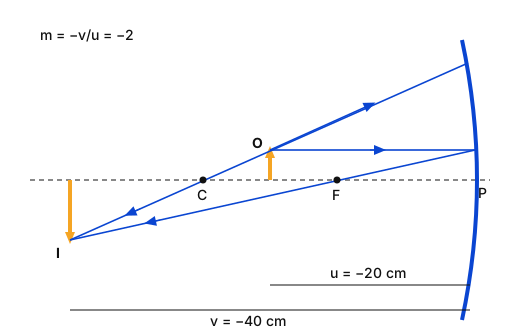
Q573.
If an object is placed in front of a concave mirror at a distance of 20 cm and the image is formed on the same side at a distance of 40 cm, then the magnification of the mirror will be:
यदि किसी वस्तु को अवतल दर्पण (concave mirror) के सामने 20 cm की दूरी पर रखा जाता है और प्रतिबिंब उसी ओर 40 cm की दूरी पर बनता है, तो दर्पण का आवर्धन (magnification) क्या होगा?
  1. A+0.4
  2. B+2.0
  3. C−0.4
  4. D−2.0
Show answer

Concept: For a mirror, magnification m=−vu. With the sign convention, distances in front of the mirror are negative.

  1. Object in front: u=−20 cm; image on the same side (real): v=−40 cm.
  2. m=−vu=−−40−20=−2
  3. Negative sign → real, inverted image, twice the size.

Trick: Real image of a mirror always has negative m; size ratio =4020=2 → −2.

Answer: (D) −2.0

अवधारणा: दर्पण का आवर्धन m=−vu। चिह्न परिपाटी में दर्पण के सामने की दूरियाँ ऋणात्मक होती हैं।

  1. वस्तु सामने: u=−20 cm; प्रतिबिंब उसी ओर (वास्तविक): v=−40 cm।
  2. m=−vu=−−40−20=−2
  3. ऋणात्मक चिह्न → वास्तविक, उल्टा प्रतिबिंब, दोगुना बड़ा।

ट्रिक: दर्पण का वास्तविक प्रतिबिंब हमेशा ऋणात्मक m देता है; आकार अनुपात =4020=2 → −2।

उत्तर: (D) −2.0

RRB Technician Grade IIIGeneral ScienceMirror MagnificationRRB Technician Grade III 2024 · 29 Dec Shift 1 →
Q574.
The kinetic energy of a moving body of mass ‘m’ and velocity ‘v’ is ________.
द्रव्यमान ‘m’ और वेग ‘v’ वाले किसी गतिमान पिंड की गतिज ऊर्जा ________ होती है।
  1. Ainversely proportional to its mass and square of its velocityउसके द्रव्यमान और उसके वेग के वर्ग के व्युत्क्रमानुपाती
  2. Bdirectly proportional to its mass but inversely proportional to its velocityउसके द्रव्यमान के अनुक्रमानुपाती परंतु उसके वेग के व्युत्क्रमानुपाती
  3. Cdirectly proportional to its velocity but inversely proportional to its massउसके वेग के अनुक्रमानुपाती परंतु उसके द्रव्यमान के व्युत्क्रमानुपाती
  4. Ddirectly proportional to its mass and square of its velocityउसके द्रव्यमान और उसके वेग के वर्ग के अनुक्रमानुपाती
Show answer

Concept: Kinetic energy KE=12mv2.

  1. KE∝m → directly proportional to mass.
  2. KE∝v2 → directly proportional to the square of velocity.
  3. E.g., doubling v makes KE four times.

Trick: Read the formula: m and v2 are both in the numerator → both 'directly proportional'.

Answer: (D) directly proportional to its mass and square of its velocity

अवधारणा: गतिज ऊर्जा KE=12mv2।

  1. KE∝m → द्रव्यमान के अनुक्रमानुपाती।
  2. KE∝v2 → वेग के वर्ग के अनुक्रमानुपाती।
  3. उदाहरण: v दोगुना करने पर KE चार गुना।

ट्रिक: सूत्र देखें: m और v2 दोनों अंश में हैं → दोनों 'अनुक्रमानुपाती'।

उत्तर: (D) उसके द्रव्यमान और उसके वेग के वर्ग के अनुक्रमानुपाती

RRB Technician Grade IIIGeneral ScienceKinetic EnergyRRB Technician Grade III 2024 · 29 Dec Shift 1 →
Q575.
Which of the following is NOT a sign of sexual maturity in girls?
निम्नलिखित में से कौन-सा लड़कियों में लैंगिक परिपक्वता का लक्षण नहीं है?
  1. ACracking of voiceआवाज का फटना (भारी होना)
  2. BIncrease in breast sizeस्तनों के आकार में वृद्धि
  3. CMenstruationरजोधर्म (मासिक धर्म)
  4. DOily skinतैलीय त्वचा
Show answer

Concept: At puberty, sex hormones bring changes; some are common to both sexes, some specific to girls or boys.

  1. Girls: increase in breast size, start of menstruation.
  2. Both sexes: oily skin, pimples, hair in armpits and genital area.
  3. Cracking of voice (and facial hair) is a sign in boys, due to testosterone and growth of the larynx.

Yaad rakhein: Cracking voice, beard, moustache → boys only.

Answer: (A) Cracking of voice

अवधारणा: यौवनारंभ में लिंग हॉर्मोन से परिवर्तन होते हैं; कुछ दोनों में सामान्य, कुछ केवल लड़कियों या लड़कों में।

  1. लड़कियाँ: स्तनों के आकार में वृद्धि, ऋतुस्राव (मासिक धर्म) का आरंभ।
  2. दोनों में: त्वचा तैलीय, मुहाँसे, बगल और जननांग क्षेत्र में बाल।
  3. आवाज़ का फटना (और चेहरे पर बाल) लड़कों का लक्षण है, टेस्टोस्टेरोन और स्वरयंत्र की वृद्धि के कारण।

याद रखें: आवाज़ फटना, दाढ़ी, मूँछ → केवल लड़कों में।

उत्तर: (A) आवाज का फटना (भारी होना)

RRB Technician Grade IIIGeneral SciencePuberty ChangesRRB Technician Grade III 2024 · 29 Dec Shift 1 →
Q576.
What is the process by which autotrophs take in substance from outside and in the presence of sunlight, convert them into stored forms of energy?
वह कौन-सा प्रक्रम है जिसके द्वारा स्वपोषी (autotrophs) बाहर से पदार्थ ग्रहण करते हैं और सूर्य के प्रकाश की उपस्थिति में उन्हें ऊर्जा के संचित रूपों में परिवर्तित करते हैं?
  1. APhotosynthesisप्रकाश संश्लेषण
  2. BCirculationपरिसंचरण
  3. CMovementगति
  4. DDigestionपाचन
Show answer

Concept: Autotrophs (green plants) take in CO2 and water from outside and, using sunlight and chlorophyll, convert them into carbohydrates — stored energy. This is photosynthesis.

  1. Equation: 6CO2+12H2O→sunlight, chlorophyllC6H12O6+6O2+6H2O
  2. Glucose formed is stored as starch.
  3. Digestion, circulation and movement do not convert light energy into chemical energy.

Yaad rakhein: Photo = light, synthesis = making — 'making food using light'.

Answer: (A) Photosynthesis

अवधारणा: स्वपोषी (हरे पौधे) बाहर से CO2 और जल लेकर सूर्य के प्रकाश और क्लोरोफिल की उपस्थिति में कार्बोहाइड्रेट (संचित ऊर्जा) बनाते हैं। यह प्रकाश-संश्लेषण है।

  1. समीकरण: 6CO2+12H2O→sunlight, chlorophyllC6H12O6+6O2+6H2O
  2. बना हुआ ग्लूकोज़ मंड (स्टार्च) के रूप में संचित होता है।
  3. पाचन, परिसंचरण और गति प्रकाश ऊर्जा को रासायनिक ऊर्जा में नहीं बदलते।

याद रखें: फोटो = प्रकाश, संश्लेषण = बनाना — 'प्रकाश से भोजन बनाना'।

उत्तर: (A) प्रकाश संश्लेषण

RRB Technician Grade IIIGeneral ScienceNutrition in PlantsRRB Technician Grade III 2024 · 29 Dec Shift 1 →
Q577.
A body of mass m and a body of mass 4m are dropped from the same height, the ratio of the time taken by the two bodies to reach the ground would be:
(Air resistance is neglected)
द्रव्यमान m वाले एक पिंड और द्रव्यमान 4m वाले एक पिंड को समान ऊँचाई से गिराया जाता है, दोनों पिंडों द्वारा जमीन तक पहुँचने में लिए गए समय का अनुपात क्या होगा?
(वायु प्रतिरोध की उपेक्षा की गई है)
  1. A4:1
  2. B1:4
  3. C1:1
  4. D1:2
Show answer

Concept: Without air resistance, all bodies fall with the same acceleration g, whatever their mass. Time to fall height h: t=2hg.

  1. t depends only on h and g — mass does not appear.
  2. Both bodies fall from the same height, so t1=t2.
  3. Ratio t1:t2=1:1.

Yaad rakhein: Galileo: a feather and a coin fall together in vacuum.

Answer: (C) 1:1

अवधारणा: वायु प्रतिरोध न हो तो सभी वस्तुएँ द्रव्यमान से स्वतंत्र, समान त्वरण g से गिरती हैं। ऊँचाई h से गिरने का समय: t=2hg।

  1. t केवल h और g पर निर्भर है — द्रव्यमान सूत्र में नहीं।
  2. दोनों वस्तुएँ समान ऊँचाई से गिरती हैं, अतः t1=t2।
  3. अनुपात t1:t2=1:1।

याद रखें: गैलीलियो: निर्वात में पंख और सिक्का साथ-साथ गिरते हैं।

उत्तर: (C) 1:1

RRB Technician Grade IIIGeneral ScienceFree FallRRB Technician Grade III 2024 · 29 Dec Shift 1 →
Q578.
The upward and downward growth of a plant is due to which of the following tropisms?
पौधे की ऊपर और नीचे की ओर वृद्धि निम्नलिखित में से किस अनुवर्तन (tropism) के कारण होती है?
  1. AGeotropismगुरुत्वानुवर्तन (Geotropism)
  2. BPhototropismप्रकाशानुवर्तन (Phototropism)
  3. CHydrotropismजलानुवर्तन (Hydrotropism)
  4. DChemotropismरसायनानुवर्तन (Chemotropism)
Show answer

Concept: Movement of plant parts in response to gravity is geotropism (gravitropism).

  1. Roots grow downward, towards gravity → positive geotropism.
  2. Shoots grow upward, away from gravity → negative geotropism.
  3. So both upward and downward growth are due to geotropism. (Phototropism = light, hydrotropism = water, chemotropism = chemicals, e.g. pollen tube.)

Yaad rakhein: Geo = earth: roots go to the earth, shoot goes away from it.

Answer: (A) Geotropism

अवधारणा: गुरुत्व के प्रति पौधे के भागों की गति गुरुत्वानुवर्तन (जियोट्रॉपिज़्म) कहलाती है।

  1. जड़ें नीचे, गुरुत्व की ओर बढ़ती हैं → धनात्मक गुरुत्वानुवर्तन।
  2. तना ऊपर, गुरुत्व से दूर बढ़ता है → ऋणात्मक गुरुत्वानुवर्तन।
  3. अतः ऊपर और नीचे दोनों वृद्धि गुरुत्वानुवर्तन से है। (प्रकाशानुवर्तन = प्रकाश, जलानुवर्तन = जल, रसायनानुवर्तन = रसायन, जैसे पराग नलिका।)

याद रखें: जियो = पृथ्वी: जड़ पृथ्वी की ओर, तना उससे दूर।

उत्तर: (A) गुरुत्वानुवर्तन (Geotropism)

RRB Technician Grade IIIGeneral SciencePlant TropismsRRB Technician Grade III 2024 · 29 Dec Shift 1 →
Q579.
Express the speed of 25 m/s in km/h.
25 m/s की चाल को km/h में व्यक्त कीजिए।
  1. A50 km/h
  2. B90 km/h
  3. C15 km/h
  4. D99 km/h
Show answer

Concept: 1 m/s=36001000 km/h=185 km/h.

  1. 25 m/s=25×185 km/h
  2. =5×18=90 km/h

Trick: m/s → km/h: multiply by 3.6: 25×3.6=90.

Answer: (B) 90 km/h

अवधारणा: 1 m/s=36001000 km/h=185 km/h।

  1. 25 m/s=25×185 km/h
  2. =5×18=90 km/h

ट्रिक: m/s → km/h: 3.6 से गुणा करें: 25×3.6=90।

उत्तर: (B) 90 km/h

RRB Technician Grade IIIGeneral ScienceUnit Conversion – SpeedRRB Technician Grade III 2024 · 29 Dec Shift 1 →
Q580.
Which of the following metals reacts with cold water?
निम्नलिखित में से कौन-सी धातु ठंडे जल के साथ अभिक्रिया करती है?
  1. AZincजिंक
  2. BIronआयरन
  3. CAluminiumएल्युमिनियम
  4. DSodiumसोडियम
Show answer

Concept: Highly reactive metals like sodium and potassium react violently even with cold water.

  1. 2Na+2H2O→2NaOH+H2 (heat released; hydrogen may catch fire).
  2. Aluminium, iron and zinc do not react with cold water; they react only with steam.
  3. Sodium is therefore stored in kerosene.

Yaad rakhein: Cold water: K, Na (violent), Ca (less violent). Hot water: Mg. Steam: Al, Zn, Fe.

Answer: (D) Sodium

अवधारणा: सोडियम और पोटैशियम जैसी अति अभिक्रियाशील धातुएँ ठंडे जल से भी तीव्रता से अभिक्रिया करती हैं।

  1. 2Na+2H2O→2NaOH+H2 (ऊष्मा मुक्त; हाइड्रोजन आग पकड़ सकती है)।
  2. एल्युमिनियम, लोहा और जिंक ठंडे जल से अभिक्रिया नहीं करते; केवल भाप से करते हैं।
  3. इसीलिए सोडियम को केरोसिन में रखते हैं।

याद रखें: ठंडा जल: K, Na (तीव्र), Ca (कम तीव्र)। गरम जल: Mg। भाप: Al, Zn, Fe।

उत्तर: (D) सोडियम

RRB Technician Grade IIIGeneral ScienceReaction of Metals with WaterRRB Technician Grade III 2024 · 29 Dec Shift 1 →