Question bank

Q&A: practice questions with answers

Search questions on any topic. Filter by exam category, exam, subject and topic, try the question, then open the answer and explanation.

Courses – airGurukul

3,200 questions found.

Q621.
If y3=0.008, then the value of y5 is:
यदि y3=0.008 है, तो y5 का मान है:
  1. A0.0032
  2. B0.000032
  3. C0.00032
  4. D0.032
Show answer

Concept: Find y by cube root, then raise to the 5th power.

  1. y3=0.008=(0.2)3⇒y=0.2.
  2. y5=(0.2)5=32100000=0.00032.

Trick: 25=32 and (0.1)5 gives 5 decimal places: 0.00032.

Answer: (C) 0.00032

अवधारणा: घनमूल से y निकालें, फिर 5वीं घात लें।

  1. y3=0.008=(0.2)3⇒y=0.2।
  2. y5=(0.2)5=32100000=0.00032।

ट्रिक: 25=32 और 5 दशमलव स्थान: 0.00032।

उत्तर: (C) 0.00032

RRB Technician Grade IIIMathematicsPowers and DecimalsRRB Technician Grade III 2024 · 28 Dec Shift 3 →
Q622.
If a+b+c=9 and ab+bc+ca=23, then a2+b2+c2= ?
यदि a+b+c=9 और ab+bc+ca=23 है, तो a2+b2+c2= ?
  1. A127
  2. B35
  3. C25
  4. D58
Show answer

Concept: (a+b+c)2=a2+b2+c2+2(ab+bc+ca).

  1. 81=a2+b2+c2+2×23.
  2. a2+b2+c2=81−46=35.

Yaad rakhein: a2+b2+c2=(a+b+c)2−2(ab+bc+ca).

Answer: (B) 35

अवधारणा: (a+b+c)2=a2+b2+c2+2(ab+bc+ca)।

  1. 81=a2+b2+c2+2×23।
  2. a2+b2+c2=81−46=35।

याद रखें: a2+b2+c2=(a+b+c)2−2(ab+bc+ca)।

उत्तर: (B) 35

RRB Technician Grade IIIMathematicsAlgebraic IdentitiesRRB Technician Grade III 2024 · 28 Dec Shift 3 →
Q623.
The sum of the first five prime numbers is:
प्रथम पाँच अभाज्य संख्याओं का योग है:
  1. A27
  2. B28
  3. C29
  4. D26
Show answer

Concept: A prime has exactly two factors; the first prime is 2.

  1. First five primes: 2, 3, 5, 7, 11.
  2. Sum =2+3+5+7+11=28.

Yaad rakhein: 1 is not a prime number, and 2 is the only even prime.

Answer: (B) 28

अवधारणा: अभाज्य संख्या के ठीक दो गुणनखंड होते हैं; पहली अभाज्य संख्या 2 है।

  1. पहली पाँच अभाज्य संख्याएँ: 2, 3, 5, 7, 11।
  2. योग =2+3+5+7+11=28।

याद रखें: 1 अभाज्य नहीं है, और 2 एकमात्र सम अभाज्य संख्या है।

उत्तर: (B) 28

RRB Technician Grade IIIMathematicsPrime NumbersRRB Technician Grade III 2024 · 28 Dec Shift 3 →
Q624.
Nine men went to a restaurant. Eight of them spent ₹3 each on their meals and the ninth spent ₹2 more than the average expenditure of all the nine. Determine the total money spent by them.
नौ व्यक्ति एक रेस्तरां में गए। उनमें से आठ ने अपने भोजन पर प्रत्येक ने ₹3 खर्च किए और नौवें ने सभी नौ के औसत व्यय से ₹2 अधिक खर्च किए। उनके द्वारा खर्च की गई कुल राशि ज्ञात कीजिए।
  1. A₹29.25
  2. B₹30.25
  3. C₹32
  4. D₹35
Show answer

Concept: Let the average of all nine be x; total =9x.

  1. 8×3+(x+2)=9x.
  2. 26=8x⇒x=3.25.
  3. Total =9×3.25=29.25.

Trick: The extra ₹2 of the ninth man is shared by 8 others: average =3+28=3.25.

Answer: (A) ₹29.25

अवधारणा: नौ लोगों का औसत x मानें; कुल =9x।

  1. 8×3+(x+2)=9x।
  2. 26=8x⇒x=3.25।
  3. कुल =9×3.25=29.25।

ट्रिक: नौवें व्यक्ति के अतिरिक्त ₹2 बाकी 8 में बँटते हैं: औसत =3+28=3.25।

उत्तर: (A) ₹29.25

RRB Technician Grade IIIMathematicsAverageRRB Technician Grade III 2024 · 28 Dec Shift 3 →
Q625.
Find the greatest number by which when the numbers 57, 95 and 211 are divided, it leaves the same reminder in each case.
वह सबसे बड़ी संख्या ज्ञात कीजिए जिससे संख्याओं 57, 95 और 211 को विभाजित करने पर प्रत्येक स्थिति में समान शेषफल प्राप्त होता है।
  1. A4
  2. B2
  3. C1
  4. D3
Show answer

Concept: Greatest number giving the same remainder =HCF of the differences of the numbers.

  1. Differences: 95−57=38, 211−95=116, 211−57=154.
  2. HCF(38,116,154): 38=2×19, 116=2×58, 154=2×77.
  3. HCF =2.

Yaad rakhein: Same remainder ⇒ use HCF of differences; zero remainder ⇒ HCF of numbers.

Answer: (B) 2

अवधारणा: समान शेषफल देने वाली सबसे बड़ी संख्या = संख्याओं के अंतरों का HCF।

  1. अंतर: 95−57=38, 211−95=116, 211−57=154।
  2. HCF(38,116,154): 38=2×19, 116=2×58, 154=2×77।
  3. HCF =2।

याद रखें: समान शेषफल ⇒ अंतरों का HCF; शेषफल शून्य ⇒ संख्याओं का HCF।

उत्तर: (B) 2

RRB Technician Grade IIIMathematicsHCF – Same RemainderRRB Technician Grade III 2024 · 28 Dec Shift 3 →
Q626.
Given below is a cause followed by possible effects numbered I, II and III. Read the cause carefully and decide which of the three can be a/the possible effect(s).
Cause:
Heavy rains and flash floods have inundated many low lying areas of City X.
Effects:
(I) The State Government has appointed a new head for the municipality of City X.
(II) The State Government has evacuated over 5500 people stranded in low lying areas of City X.
(III) Food and water is being distributed at multiple locations to help citizens who have been evacuated from City X.
नीचे एक कारण दिया गया है जिसके बाद I, II और III क्रमांकित संभावित प्रभाव दिए गए हैं। कारण को ध्यानपूर्वक पढ़िए और निर्णय कीजिए कि तीनों में से कौन-सा/से संभावित प्रभाव हो सकता/सकते है/हैं।
कारण:
भारी वर्षा और अचानक आई बाढ़ ने शहर X के कई निचले इलाकों को जलमग्न कर दिया है।
प्रभाव:
(I) राज्य सरकार ने शहर X की नगरपालिका के लिए एक नया प्रमुख नियुक्त किया है।
(II) राज्य सरकार ने शहर X के निचले इलाकों में फंसे 5500 से अधिक लोगों को निकाला है।
(III) शहर X से निकाले गए नागरिकों की सहायता के लिए कई स्थानों पर भोजन और पानी वितरित किया जा रहा है।
  1. ABoth I and II can be the possible effectsI और II दोनों संभावित प्रभाव हो सकते हैं
  2. BBoth II and III can be the possible effectsII और III दोनों संभावित प्रभाव हो सकते हैं
  3. COnly II can be a possible effectकेवल II संभावित प्रभाव हो सकता है
  4. DOnly I can be a possible effectकेवल I संभावित प्रभाव हो सकता है
Show answer

Concept: An effect must follow directly from the cause (heavy rain and floods in low-lying areas).

  1. I: Changing the municipality head is an administrative decision, not a direct result of floods – not an effect.
  2. II: Evacuating stranded people is a direct response to flooding – effect.
  3. III: Food and water for evacuated citizens follows from the evacuation – effect.

Yaad rakhein: Rescue and relief actions are natural effects of a disaster; unrelated policy changes are not.

Answer: (B) Both II and III can be the possible effects

अवधारणा: प्रभाव कारण (भारी बारिश और निचले क्षेत्रों में बाढ़) से सीधे उत्पन्न होना चाहिए।

  1. I: नगर पालिका का नया प्रमुख नियुक्त करना प्रशासनिक निर्णय है, बाढ़ का सीधा परिणाम नहीं।
  2. II: फँसे लोगों को निकालना बाढ़ की सीधी प्रतिक्रिया है – प्रभाव।
  3. III: निकाले गए नागरिकों को भोजन-पानी देना निकासी के बाद होता है – प्रभाव।

याद रखें: बचाव और राहत कार्य आपदा के स्वाभाविक प्रभाव हैं; असंबंधित नीतिगत बदलाव नहीं।

उत्तर: (B) II और III दोनों संभावित प्रभाव हो सकते हैं

RRB Technician Grade IIIGeneral Intelligence and ReasoningCause and EffectRRB Technician Grade III 2024 · 28 Dec Shift 3 →
Q627.
In a certain code language,
‘P + Q’ means ‘P is the mother of Q’,
‘P – Q’ means ‘P is the wife of Q’,
‘P x Q’ means ‘P is the father of Q’ and
‘P ÷ Q’ means ‘P is the brother of Q’.
How is A related to E if ‘A + B – C x D ÷ E’?
एक निश्चित कूट भाषा में,
‘P + Q’ का अर्थ है ‘P, Q की माता है’,
‘P – Q’ का अर्थ है ‘P, Q की पत्नी है’,
‘P x Q’ का अर्थ है ‘P, Q का पिता है’ और
‘P ÷ Q’ का अर्थ है ‘P, Q का भाई है’।
यदि ‘A + B – C x D ÷ E’ है, तो A का E से क्या संबंध है?
  1. AMother’s sisterमाता की बहन
  2. BMother’s motherमाता की माता
  3. CFather’s motherपिता की माता
  4. DFather’s sisterपिता की बहन
Show answer

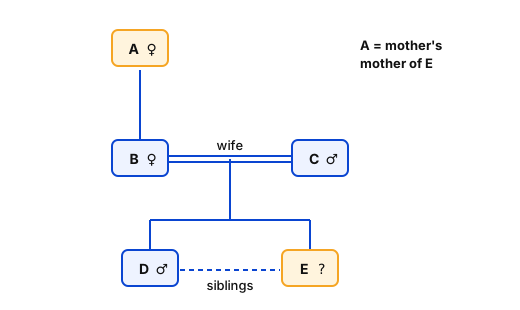
Concept: Decode each symbol from left to right and draw the family tree.

  1. A+B: A is the mother of B.
  2. B−C: B is the wife of C.
  3. C×D: C is the father of D; D÷E: D is the brother of E.
  4. So B is E's mother and A is B's mother.

Yaad rakhein: Mother's mother = maternal grandmother (नानी).

Answer: (B) Mother’s mother

अवधारणा: हर चिह्न को बाएँ से दाएँ डिकोड करें और वंश-वृक्ष बनाएँ।

  1. A+B: A, B की माँ है।
  2. B−C: B, C की पत्नी है।
  3. C×D: C, D का पिता है; D÷E: D, E का भाई है।
  4. अतः B, E की माँ है और A, B की माँ है।

याद रखें: माँ की माँ = नानी।

उत्तर: (B) माता की माता

RRB Technician Grade IIIGeneral Intelligence and ReasoningCoded Blood RelationsRRB Technician Grade III 2024 · 28 Dec Shift 3 →
Q628.
Based on the English alphabetical order, three of the following four letter-clusters are alike in a certain way and thus form a group. Which letter-cluster does not belong to that group?
(Note: The odd one out is not based on the number of consonants/vowels or their position in the letter-cluster.)
अंग्रेजी वर्णमाला क्रम के आधार पर, निम्नलिखित चार अक्षर-समूहों में से तीन किसी निश्चित प्रकार से एकसमान हैं और इस प्रकार एक समूह बनाते हैं। कौन-सा अक्षर-समूह उस समूह से संबंधित नहीं है?
(ध्यान दें: असंगत अक्षर-समूह, उस अक्षर-समूह में व्यंजनों/स्वरों की संख्या या उनके स्थान पर आधारित नहीं है।)
  1. APSN
  2. BWZV
  3. CUXS
  4. DQTO
Show answer

Concept: Check the position gaps between consecutive letters.

  1. PSN: P+3=S, S−5=N.
  2. UXS: U+3=X, X−5=S; QTO: Q+3=T, T−5=O.
  3. WZV: W+3=Z, but Z−4=V – pattern breaks.

Trick: Simply compare first and last letters: P–N, U–S, Q–O differ by 2, but W–V differ by 1.

Answer: (B) WZV

अवधारणा: क्रमागत अक्षरों के बीच स्थान-अंतर जाँचें।

  1. PSN: P+3=S, S−5=N।
  2. UXS: U+3=X, X−5=S; QTO: Q+3=T, T−5=O।
  3. WZV: W+3=Z, पर Z−4=V – पैटर्न टूटता है।

ट्रिक: केवल पहला और अंतिम अक्षर देखें: P–N, U–S, Q–O में अंतर 2 है, पर W–V में 1।

उत्तर: (B) WZV

RRB Technician Grade IIIGeneral Intelligence and ReasoningOdd One Out – LettersRRB Technician Grade III 2024 · 28 Dec Shift 3 →
Q629.
What will come in the place of ‘?’ in the following equation, if ‘+’ and ‘–’ are interchanged and ‘×’ and ‘÷’ are interchanged?
24×6÷3−11+13=?
यदि ‘+’ और ‘–’ को आपस में बदल दिया जाए तथा ‘×’ और ‘÷’ को आपस में बदल दिया जाए, तो निम्नलिखित समीकरण में ‘?’ के स्थान पर क्या आएगा?
24×6÷3−11+13=?
  1. A12
  2. B9
  3. C8
  4. D10
Show answer

Concept: Swap the signs first, then apply BODMAS.

  1. 24÷6×3+11−13.
  2. =4×3+11−13=12+11−13.
  3. =10.

Yaad rakhein: Division and multiplication are done left to right before addition and subtraction.

Answer: (D) 10

अवधारणा: पहले चिह्न बदलें, फिर BODMAS लगाएँ।

  1. 24÷6×3+11−13।
  2. =4×3+11−13=12+11−13।
  3. =10।

याद रखें: भाग और गुणा बाएँ से दाएँ, जोड़-घटाव से पहले करें।

उत्तर: (D) 10

RRB Technician Grade IIIGeneral Intelligence and ReasoningMathematical OperationsRRB Technician Grade III 2024 · 28 Dec Shift 3 →
Q630.
YTXS is related to QLPK in a certain way based on the English alphabetical order. In the same way, UPTO is related to MHLG. To which of the following options is RMQL related, following the same logic ?
अंग्रेजी वर्णमाला क्रम के आधार पर YTXS एक निश्चित प्रकार से QLPK से संबंधित है। उसी प्रकार UPTO, MHLG से संबंधित है। समान तर्क का अनुसरण करते हुए, RMQL निम्नलिखित में से किस विकल्प से संबंधित है?
  1. AEJID
  2. BEJDI
  3. CJEID
  4. DJEDI
Show answer

Concept: Find the shift applied to each letter.

  1. Y−8=Q, T−8=L, X−8=P, S−8=K; UPTO → MHLG also uses −8.
  2. RMQL: R−8=J, M−8=E, Q−8=I, L−8=D.
  3. Result: JEID.

Trick: Positions: R = 18, M = 13, Q = 17, L = 12; subtract 8 → 10, 5, 9, 4 = J, E, I, D.

Answer: (C) JEID

अवधारणा: हर अक्षर पर लगाया गया खिसकाव ज्ञात करें।

  1. Y−8=Q, T−8=L, X−8=P, S−8=K; UPTO → MHLG में भी −8।
  2. RMQL: R−8=J, M−8=E, Q−8=I, L−8=D।
  3. परिणाम: JEID।

ट्रिक: स्थान: R = 18, M = 13, Q = 17, L = 12; 8 घटाएँ → 10, 5, 9, 4 = J, E, I, D।

उत्तर: (C) JEID

RRB Technician Grade IIIGeneral Intelligence and ReasoningLetter AnalogyRRB Technician Grade III 2024 · 28 Dec Shift 3 →
Q631.
If each vowel in the word PLASTID is changed to the letter following it in the English alphabetical order and each consonant is changed to the letter preceding it in the English alphabetical order, and the set of letters thus arrived are then rearranged in reverse of English alphabetical order, then which of the following letters will be third from the left in the group of letter thus formed?
यदि शब्द PLASTID के प्रत्येक स्वर को अंग्रेजी वर्णमाला क्रम में उसके बाद आने वाले अक्षर से बदल दिया जाए और प्रत्येक व्यंजन को अंग्रेजी वर्णमाला क्रम में उसके पहले आने वाले अक्षर से बदल दिया जाए, और इस प्रकार प्राप्त अक्षरों को फिर अंग्रेजी वर्णमाला के विपरीत क्रम में पुनर्व्यवस्थित किया जाए, तो इस प्रकार बने अक्षर-समूह में बाएं से तीसरा अक्षर निम्नलिखित में से कौन-सा होगा?
  1. AH
  2. BK
  3. CO
  4. DR
Show answer

Concept: Vowels → next letter, consonants → previous letter; then arrange in reverse alphabetical order.

  1. P→O, L→K, A→B, S→R, T→S, I→J, D→C.
  2. Letters: O, K, B, R, S, J, C.
  3. Reverse order: S, R, O, K, J, C, B.
  4. Third from left = O.

Yaad rakhein: Reverse alphabetical order means Z to A.

Answer: (C) O

अवधारणा: स्वर → अगला अक्षर, व्यंजन → पिछला अक्षर; फिर उल्टे वर्णमाला क्रम में लगाएँ।

  1. P→O, L→K, A→B, S→R, T→S, I→J, D→C।
  2. अक्षर: O, K, B, R, S, J, C।
  3. उल्टा क्रम: S, R, O, K, J, C, B।
  4. बाएँ से तीसरा = O।

याद रखें: उल्टा वर्णमाला क्रम अर्थात Z से A।

उत्तर: (C) O

RRB Technician Grade IIIGeneral Intelligence and ReasoningAlphabet TestRRB Technician Grade III 2024 · 28 Dec Shift 3 →
Q632.
In a certain code language, ‘POEM’ is coded as ‘7591’ and ‘MINT’ is coded as ‘6728’. What is the code for ‘M’ in the given code language?
एक निश्चित कूट भाषा में, ‘POEM’ को ‘7591’ के रूप में कूटबद्ध किया जाता है और ‘MINT’ को ‘6728’ के रूप में कूटबद्ध किया जाता है। दी गई कूट भाषा में ‘M’ का कूट क्या है?
  1. A2
  2. B7
  3. C6
  4. D1
Show answer

Concept: A letter common to both words gets the digit common to both codes.

  1. POEM → 7591 and MINT → 6728.
  2. Common letter: M; common digit: 7.
  3. So M = 7.

Yaad rakhein: Codes may be jumbled, so match by common letters, not by position.

Answer: (B) 7

अवधारणा: दोनों शब्दों में उभयनिष्ठ अक्षर को दोनों कूटों का उभयनिष्ठ अंक मिलता है।

  1. POEM → 7591 और MINT → 6728।
  2. उभयनिष्ठ अक्षर: M; उभयनिष्ठ अंक: 7।
  3. अतः M = 7।

याद रखें: कूट क्रम बदल सकता है, इसलिए स्थान से नहीं, उभयनिष्ठ अक्षर से मिलान करें।

उत्तर: (B) 7

RRB Technician Grade IIIGeneral Intelligence and ReasoningCoding–DecodingRRB Technician Grade III 2024 · 28 Dec Shift 3 →
Q633.
Which of the following options should come in place of the question mark (?) in the given series to make it logically complete?
HN18, KQ27, NT36, QW45, ?
दी गई श्रृंखला को तार्किक रूप से पूर्ण करने के लिए प्रश्न चिह्न (?) के स्थान पर निम्नलिखित में से कौन-सा विकल्प आना चाहिए?
HN18, KQ27, NT36, QW45, ?
  1. ATZ55
  2. BTZ54
  3. CSY54
  4. DSY55
Show answer

Concept: Treat the first letter, second letter and number as three separate series.

  1. First letter: H, K, N, Q, T (+3).
  2. Second letter: N, Q, T, W, Z (+3).
  3. Number: 18, 27, 36, 45, 54 (+9).

Trick: Number =9×2,9×3,…,9×6=54; only TZ54 fits.

Answer: (B) TZ54

अवधारणा: पहला अक्षर, दूसरा अक्षर और संख्या को तीन अलग श्रृंखलाएँ मानें।

  1. पहला अक्षर: H, K, N, Q, T (+3)।
  2. दूसरा अक्षर: N, Q, T, W, Z (+3)।
  3. संख्या: 18, 27, 36, 45, 54 (+9)।

ट्रिक: संख्या =9×2,9×3,…,9×6=54; केवल TZ54 फिट है।

उत्तर: (B) TZ54

RRB Technician Grade IIIGeneral Intelligence and ReasoningAlpha-Numeric SeriesRRB Technician Grade III 2024 · 28 Dec Shift 3 →
Q634.
Based on the English alphabetical order, three of the following four letter-cluster pairs are alike in a certain way and thus form a group. Which pair does not belong to that group?
(Note: The odd one out is not based on the number of consonants/vowels or their position in the letter-cluster.)
अंग्रेजी वर्णमाला क्रम के आधार पर, निम्नलिखित चार अक्षर-समूह युग्मों में से तीन किसी निश्चित प्रकार से एकसमान हैं और इस प्रकार एक समूह बनाते हैं। कौन-सा युग्म उस समूह से संबंधित नहीं है?
(ध्यान दें: असंगत युग्म, उस अक्षर-समूह में व्यंजनों/स्वरों की संख्या या उनके स्थान पर आधारित नहीं है।)
  1. AWC – BF
  2. BTZ – YC
  3. CBH – GK
  4. DAD – YW
Show answer

Concept: Compare first letters and second letters of the two clusters (wrap Z → A).

  1. WC – BF: W+5=B, C+3=F.
  2. TZ – YC: T+5=Y, Z+3=C; BH – GK: B+5=G, H+3=K.
  3. AD – YW: A−2=Y, D−7=W – different.

Yaad rakhein: After Z, counting continues from A (circular alphabet).

Answer: (D) AD – YW

अवधारणा: दोनों समूहों के पहले और दूसरे अक्षरों की तुलना करें (Z के बाद A)।

  1. WC – BF: W+5=B, C+3=F।
  2. TZ – YC: T+5=Y, Z+3=C; BH – GK: B+5=G, H+3=K।
  3. AD – YW: A−2=Y, D−7=W – भिन्न।

याद रखें: Z के बाद गिनती फिर A से शुरू होती है (चक्रीय वर्णमाला)।

उत्तर: (D) AD – YW

RRB Technician Grade IIIGeneral Intelligence and ReasoningOdd One Out – Letter PairsRRB Technician Grade III 2024 · 28 Dec Shift 3 →
Q635.
If + means −, − means ×, × means ÷, and ÷ means +, then what will come in place of the question mark (?) in the following equation?
27÷66×11−7+10=?
यदि + का अर्थ −, − का अर्थ ×, × का अर्थ ÷ और ÷ का अर्थ + है, तो निम्नलिखित समीकरण में प्रश्न चिह्न (?) के स्थान पर क्या आएगा?
27÷66×11−7+10=?
  1. A59
  2. B60
  3. C58
  4. D56
Show answer

Concept: Replace symbols (÷→+, ×→÷, −→×, +→−), then apply BODMAS.

  1. 27+66÷11×7−10.
  2. =27+6×7−10=27+42−10.
  3. =59.

Yaad rakhein: Do ÷ and × first (left to right), then + and −.

Answer: (A) 59

अवधारणा: चिह्न बदलें (÷→+, ×→÷, −→×, +→−), फिर BODMAS लगाएँ।

  1. 27+66÷11×7−10।
  2. =27+6×7−10=27+42−10।
  3. =59।

याद रखें: पहले ÷ और × (बाएँ से दाएँ), फिर + और −।

उत्तर: (A) 59

RRB Technician Grade IIIGeneral Intelligence and ReasoningMathematical OperationsRRB Technician Grade III 2024 · 28 Dec Shift 3 →
Q636.
Select the set in which the numbers are related in the same way as are the numbers of the following sets.
(NOTE: Operations should be performed on the whole numbers, without breaking down the numbers into its constituent digits. E.g. 13 – Operations on 13 such as adding/subtracting/multiplying etc. to 13 can be performed. Breaking down 13 into 1 and 3 and then performing mathematical operations on 1 and 3 is not allowed.)
(7, 28, 56)
(9, 36, 72)
उस समुच्चय का चयन कीजिए जिसमें संख्याएँ उसी प्रकार संबंधित हैं जिस प्रकार निम्नलिखित समुच्चयों की संख्याएँ संबंधित हैं।
(ध्यान दें: संक्रियाएँ संख्याओं को उनके घटक अंकों में विभाजित किए बिना, पूर्ण संख्याओं पर की जानी चाहिए। उदाहरण के लिए 13 – 13 पर संक्रियाएँ जैसे 13 में जोड़ना/घटाना/गुणा करना आदि की जा सकती हैं। 13 को 1 और 3 में विभाजित करना और फिर 1 और 3 पर गणितीय संक्रियाएँ करना वर्जित है।)
(7, 28, 56)
(9, 36, 72)
  1. A(13, 50, 104)
  2. B(13, 52, 104)
  3. C(11, 52, 104)
  4. D(13, 52, 94)
Show answer

Concept: Find the rule: (7, 28, 56) and (9, 36, 72) → second = first ×4, third = second ×2.

  1. 7×4=28, 28×2=56; 9×4=36, 36×2=72.
  2. (13, 52, 104): 13×4=52, 52×2=104 ✓.
  3. Others fail, e.g. 13×4≠50, 11×4≠52.

Trick: Third = first ×8: 13×8=104 with middle 52.

Answer: (B) (13, 52, 104)

अवधारणा: नियम ज्ञात करें: (7, 28, 56) और (9, 36, 72) → दूसरी = पहली ×4, तीसरी = दूसरी ×2।

  1. 7×4=28, 28×2=56; 9×4=36, 36×2=72।
  2. (13, 52, 104): 13×4=52, 52×2=104 ✓।
  3. अन्य विफल, जैसे 13×4≠50, 11×4≠52।

ट्रिक: तीसरी = पहली ×8: 13×8=104 और बीच में 52।

उत्तर: (B) (13, 52, 104)

RRB Technician Grade IIIGeneral Intelligence and ReasoningNumber TriadsRRB Technician Grade III 2024 · 28 Dec Shift 3 →
Q637.
Select the triad which follows the same pattern as that followed by the two triads given below. Both triads follow the same pattern.
HE-JG-LN
MJ-OL-QS
उस त्रिक का चयन कीजिए जो नीचे दिए गए दो त्रिकों द्वारा अनुसरण किए गए पैटर्न का ही अनुसरण करता है। दोनों त्रिक एक ही पैटर्न का अनुसरण करते हैं।
HE-JG-LN
MJ-OL-QS
  1. APM-RO-TU
  2. BQN-SP-UW
  3. COL-QN-ST
  4. DRO-TQ-VW
Show answer

Concept: In HE-JG-LN: first letters +2, +2; second letters +2, then +7.

  1. MJ-OL-QS: M, O, Q (+2) and J, L (+2), S (+7) ✓.
  2. QN-SP-UW: Q, S, U (+2); N, P (+2), W (+7) ✓.
  3. Others fail, e.g. PM-RO-TU: O+6=U.

Trick: Check only the last jump of the second letters: it must be +7 (P→W).

Answer: (B) QN-SP-UW

अवधारणा: HE-JG-LN में: पहले अक्षर +2, +2; दूसरे अक्षर +2, फिर +7।

  1. MJ-OL-QS: M, O, Q (+2) और J, L (+2), S (+7) ✓।
  2. QN-SP-UW: Q, S, U (+2); N, P (+2), W (+7) ✓।
  3. अन्य विफल, जैसे PM-RO-TU: O+6=U।

ट्रिक: केवल दूसरे अक्षरों की अंतिम छलाँग देखें: यह +7 होनी चाहिए (P→W)।

उत्तर: (B) QN-SP-UW

RRB Technician Grade IIIGeneral Intelligence and ReasoningLetter TriadsRRB Technician Grade III 2024 · 28 Dec Shift 3 →
Q638.
Seven boxes, A, B, E, F, L, M and P, are kept one over the other but not necessarily in the same order. Only A is kept above E. Only two boxes are kept between E and F. Only P is kept below M. B is not kept immediately above F. Which box is kept second above L?
सात बक्से, A, B, E, F, L, M और P, एक के ऊपर एक रखे गए हैं, लेकिन जरूरी नहीं कि इसी क्रम में हों। केवल A, E के ऊपर रखा गया है। E और F के बीच केवल दो बक्से रखे गए हैं। केवल P, M के नीचे रखा गया है। B, F के ठीक ऊपर नहीं रखा गया है। L के ऊपर दूसरे स्थान पर कौन-सा बक्सा रखा गया है?
  1. AA
  2. BE
  3. CB
  4. DF
Show answer

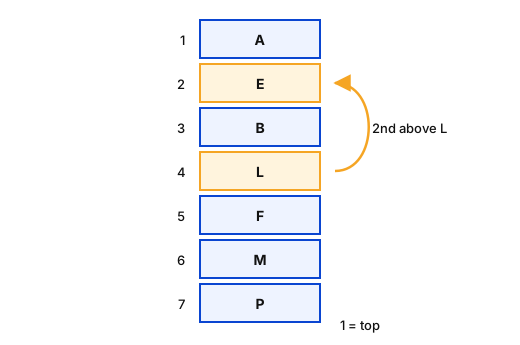
Concept: Number positions 1 (top) to 7 (bottom) and place the fixed clues first.

  1. Only A above E → A = 1, E = 2.
  2. Two boxes between E and F → F = 5.
  3. Only P below M → M = 6, P = 7.
  4. B, L fill 3, 4; B not just above F → B = 3, L = 4. Second above L = position 2 = E.

Yaad rakhein: 'Only X above Y' fixes Y at position 2 from the top.

Answer: (B) E

अवधारणा: स्थान 1 (ऊपर) से 7 (नीचे) तक मानें और पहले निश्चित संकेत रखें।

  1. केवल A, E के ऊपर → A = 1, E = 2।
  2. E और F के बीच दो डिब्बे → F = 5।
  3. केवल P, M के नीचे → M = 6, P = 7।
  4. B, L स्थान 3, 4 पर; B, F के ठीक ऊपर नहीं → B = 3, L = 4। L से दूसरा ऊपर = स्थान 2 = E।

याद रखें: 'केवल X, Y के ऊपर' का अर्थ है Y ऊपर से दूसरे स्थान पर है।

उत्तर: (B) E

RRB Technician Grade IIIGeneral Intelligence and ReasoningVertical ArrangementRRB Technician Grade III 2024 · 28 Dec Shift 3 →
Q639.
In a certain code language, ‘PAIN’ is coded as ‘9315’ and ‘LIFT’ is coded as ‘4256’. What is the code for ‘I’ in the given code language?
एक निश्चित कूट भाषा में, ‘PAIN’ को ‘9315’ के रूप में कूटबद्ध किया जाता है और ‘LIFT’ को ‘4256’ के रूप में कूटबद्ध किया जाता है। दी गई कूट भाषा में ‘I’ का कूट क्या है?
  1. A5
  2. B2
  3. C4
  4. D1
Show answer

Concept: A letter common to both words gets the digit common to both codes.

  1. PAIN → 9315 and LIFT → 4256.
  2. Common letter: I; common digit: 5.
  3. So I = 5.

Yaad rakhein: Codes may be jumbled, so match by common letters, not by position.

Answer: (A) 5

अवधारणा: दोनों शब्दों में उभयनिष्ठ अक्षर को दोनों कूटों का उभयनिष्ठ अंक मिलता है।

  1. PAIN → 9315 और LIFT → 4256।
  2. उभयनिष्ठ अक्षर: I; उभयनिष्ठ अंक: 5।
  3. अतः I = 5।

याद रखें: कूट क्रम बदल सकता है, इसलिए स्थान से नहीं, उभयनिष्ठ अक्षर से मिलान करें।

उत्तर: (A) 5

RRB Technician Grade IIIGeneral Intelligence and ReasoningCoding–DecodingRRB Technician Grade III 2024 · 28 Dec Shift 3 →
Q640.
A, B, E, F, P, Q and R are sitting around a circular table facing the centre. A sits fourth to the right of F. Only two people sit between A and Q. Only two people sit between R and Q. P sits to the immediate left of B. How many people sit between P and E when counted from the right of E?
A, B, E, F, P, Q और R एक वृत्ताकार मेज के चारों ओर केंद्र की ओर मुख करके बैठे हैं। A, F के दाएँ से चौथे स्थान पर बैठा है। A और Q के बीच केवल दो व्यक्ति बैठे हैं। R और Q के बीच केवल दो व्यक्ति बैठे हैं। P, B के ठीक बाएँ बैठा है। E के दाएँ से गिनने पर P और E के बीच कितने व्यक्ति बैठे हैं?
  1. AThreeतीन
  2. BTwoदो
  3. COneएक
  4. DFourचार
Show answer

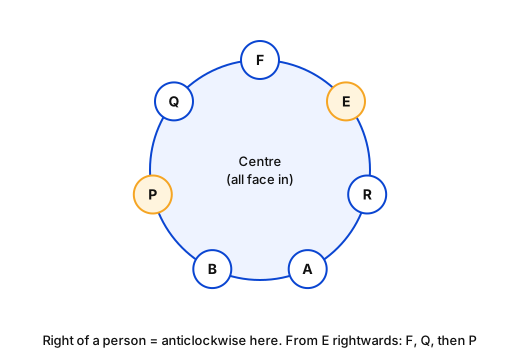
Concept: Facing the centre, a person's right is the anticlockwise direction (as drawn). Fix F and place others.

  1. A is 4th to the right of F; Q is 3 places from A → Q is to the immediate right of F.
  2. R is 3 places from Q (not A) → R is to the immediate right of A.
  3. P immediately left of B → B is 3rd to the right of F, P 2nd; E sits in the last seat (immediate left of F).
  4. From E going right: F, Q, then P → 2 people between.

Yaad rakhein: Count the people strictly between, not the seats moved.

Answer: (B) Two

अवधारणा: केंद्र की ओर मुख होने पर व्यक्ति का दायाँ, चित्र में वामावर्त दिशा है। F को स्थिर करके बाकी बैठाएँ।

  1. A, F के दाएँ चौथा; Q, A से 3 स्थान दूर → Q, F के ठीक दाएँ।
  2. R, Q से 3 स्थान दूर (A नहीं) → R, A के ठीक दाएँ।
  3. P, B के ठीक बाएँ → B, F के दाएँ तीसरा, P दूसरा; E बचे स्थान पर (F के ठीक बाएँ)।
  4. E से दाएँ चलें: F, Q, फिर P → बीच में 2 व्यक्ति।

याद रखें: बीच में बैठे व्यक्ति गिनें, खिसके हुए स्थान नहीं।

उत्तर: (B) दो

RRB Technician Grade IIIGeneral Intelligence and ReasoningCircular SeatingRRB Technician Grade III 2024 · 28 Dec Shift 3 →