Question bank

Q&A: practice questions with answers

Search questions on any topic. Filter by exam category, exam, subject and topic, try the question, then open the answer and explanation.

Courses – airGurukul

3,200 questions found.

Q641.
Read the given statements and conclusions carefully. You have to take the given statements to be true even if they seem to be at variance from commonly known facts and decide which conclusion(s) logically follow(s) from the given statements.
Statements:
All roses are lilies.
No lily is a marigold.
Conclusions:
(I) All lilies are roses.
(II) No rose is a marigold.
दिए गए कथनों और निष्कर्षों को ध्यानपूर्वक पढ़ें। आपको दिए गए कथनों को सत्य मानना है, भले ही वे सामान्यतः ज्ञात तथ्यों से भिन्न प्रतीत होते हों, और निर्णय लेना है कि कौन-सा/से निष्कर्ष दिए गए कथनों का तार्किक रूप से अनुसरण करता है/करते हैं।
कथन:
सभी गुलाब, लिली हैं।
कोई लिली, गेंदा नहीं है।
निष्कर्ष:
(I) सभी लिली, गुलाब हैं।
(II) कोई गुलाब, गेंदा नहीं है।
  1. AOnly conclusion II followsकेवल निष्कर्ष II अनुसरण करता है
  2. BNeither conclusion I nor II followsन तो निष्कर्ष I और न ही II अनुसरण करता है
  3. CBoth conclusions I and II followनिष्कर्ष I और II दोनों अनुसरण करते हैं
  4. DOnly conclusion I followsकेवल निष्कर्ष I अनुसरण करता है
Show answer

Concept: Draw the Venn diagram: Rose inside Lily; Lily separate from Marigold.
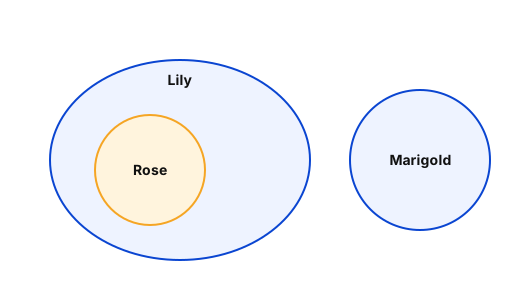
  1. I: 'All lilies are roses' – the lily circle can be bigger than rose, so it does not follow.
  2. II: Every rose is a lily and no lily is a marigold, so no rose is a marigold – follows.

Yaad rakhein: 'All A are B' cannot be reversed to 'All B are A'.

Answer: (A) Only conclusion II follows

अवधारणा: वेन आरेख बनाएँ: गुलाब, लिली के अंदर; लिली, गेंदे से अलग।

  1. I: 'सभी लिली गुलाब हैं' – लिली का वृत्त गुलाब से बड़ा हो सकता है, अतः अनुसरण नहीं करता।
  2. II: हर गुलाब लिली है और कोई लिली गेंदा नहीं, अतः कोई गुलाब गेंदा नहीं – अनुसरण करता है।

याद रखें: 'सभी A, B हैं' को उलटकर 'सभी B, A हैं' नहीं कह सकते।

उत्तर: (A) केवल निष्कर्ष II अनुसरण करता है
RRB Technician Grade IIIGeneral Intelligence and ReasoningSyllogismRRB Technician Grade III 2024 · 28 Dec Shift 3 →
Q642.
If each vowel in the word DREAMS is changed to the letter following it in the English alphabetical order and each consonant is changed to the letter following it in the English alphabetical order and the set of letters thus arrived are then rearranged in English alphabetical order, then which of the following letters will be fourth from the right in the group of letters thus formed?
यदि शब्द DREAMS में प्रत्येक स्वर को अंग्रेजी वर्णमाला क्रम में उसके बाद आने वाले अक्षर में बदल दिया जाए और प्रत्येक व्यंजन को अंग्रेजी वर्णमाला क्रम में उसके बाद आने वाले अक्षर में बदल दिया जाए, और इस प्रकार प्राप्त अक्षरों के समूह को फिर अंग्रेजी वर्णमाला क्रम में पुनर्व्यवस्थित किया जाए, तो इस प्रकार बने अक्षरों के समूह में दाएँ से चौथा अक्षर निम्नलिखित में से कौन-सा होगा?
  1. AF
  2. BN
  3. CE
  4. DS
Show answer

Concept: Every letter (vowel or consonant) moves to the next letter; then arrange alphabetically.

  1. D→E, R→S, E→F, A→B, M→N, S→T.
  2. Letters: E, S, F, B, N, T.
  3. Alphabetical: B, E, F, N, S, T.
  4. Fourth from right = F.

Trick: In 6 letters, 4th from right =6−4+1=3rd from left = F.

Answer: (A) F

अवधारणा: हर अक्षर (स्वर या व्यंजन) अगले अक्षर में बदलता है; फिर वर्णमाला क्रम में लगाएँ।

  1. D→E, R→S, E→F, A→B, M→N, S→T।
  2. अक्षर: E, S, F, B, N, T।
  3. वर्णमाला क्रम: B, E, F, N, S, T।
  4. दाएँ से चौथा = F।

ट्रिक: 6 अक्षरों में दाएँ से चौथा =6−4+1= बाएँ से तीसरा = F।

उत्तर: (A) F

RRB Technician Grade IIIGeneral Intelligence and ReasoningAlphabet TestRRB Technician Grade III 2024 · 28 Dec Shift 3 →
Q643.
Read the given statements and conclusions carefully. You have to take the given statements to be true even if they seem to be at variance from commonly known facts and decide which conclusion(s) logically follow(s) from the given statements.
Statements:
All watches are perfumes.
No watch is a tie.
Conclusions:
(I) All perfumes are watches.
(II) No perfume is a tie.
दिए गए कथनों और निष्कर्षों को ध्यानपूर्वक पढ़ें। आपको दिए गए कथनों को सत्य मानना है, भले ही वे सामान्यतः ज्ञात तथ्यों से भिन्न प्रतीत होते हों, और निर्णय लेना है कि कौन-सा/से निष्कर्ष दिए गए कथनों का तार्किक रूप से अनुसरण करता है/करते हैं।
कथन:
सभी घड़ियाँ, इत्र हैं।
कोई घड़ी, टाई नहीं है।
निष्कर्ष:
(I) सभी इत्र, घड़ियाँ हैं।
(II) कोई इत्र, टाई नहीं है।
  1. AOnly conclusion I followsकेवल निष्कर्ष I अनुसरण करता है
  2. BNeither conclusion I nor II followsन तो निष्कर्ष I और न ही II अनुसरण करता है
  3. COnly conclusion II followsकेवल निष्कर्ष II अनुसरण करता है
  4. DBoth conclusions I and II followनिष्कर्ष I और II दोनों अनुसरण करते हैं
Show answer

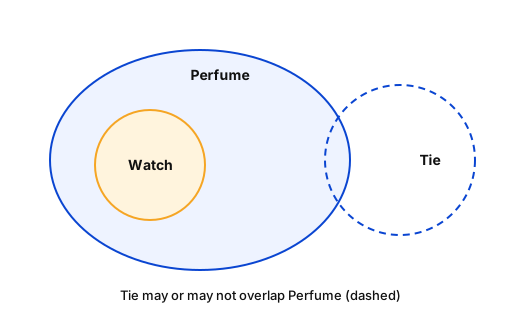
Concept: Draw the Venn diagram: Watch inside Perfume; Watch separate from Tie; Tie's relation with Perfume is unknown.

  1. I: 'All perfumes are watches' – reverse of the statement; does not follow.
  2. II: Perfumes outside the watch circle may be ties, so 'No perfume is a tie' is not certain – does not follow.

Yaad rakhein: A negative fact about the smaller set (watch) says nothing definite about the bigger set (perfume).

Answer: (B) Neither conclusion I nor II follows

अवधारणा: वेन आरेख बनाएँ: घड़ी, इत्र के अंदर; घड़ी, टाई से अलग; टाई और इत्र का संबंध अज्ञात।

  1. I: 'सभी इत्र घड़ियाँ हैं' – कथन का उलटा; अनुसरण नहीं करता।
  2. II: घड़ी के बाहर वाले इत्र टाई हो सकते हैं, अतः 'कोई इत्र टाई नहीं' निश्चित नहीं – अनुसरण नहीं करता।

याद रखें: छोटे समूह (घड़ी) के बारे में नकारात्मक कथन बड़े समूह (इत्र) के बारे में कुछ निश्चित नहीं बताता।

उत्तर: (B) न तो निष्कर्ष I और न ही II अनुसरण करता है

RRB Technician Grade IIIGeneral Intelligence and ReasoningSyllogismRRB Technician Grade III 2024 · 28 Dec Shift 3 →
Q644.
Refer to the given series and answer the question that follows (all numbers are single-digit numbers only, and all counting is to be done from left to right).
(Left) 7 2 5 5 2 1 9 2 4 1 2 2 6 9 5 5 5 3 8 5 5 3 1 1 6 3 3 (Right)
How many such even digits are there, each of which is immediately preceded by a perfect square and immediately followed by an even digit? (Note: 1 will be considered as a perfect square.)
दी गई श्रृंखला को देखें और उसके बाद पूछे गए प्रश्न का उत्तर दें (सभी संख्याएँ केवल एक अंक वाली संख्याएँ हैं, और सभी गणना बाएँ से दाएँ की जानी है)।
(बाएँ) 7 2 5 5 2 1 9 2 4 1 2 2 6 9 5 5 5 3 8 5 5 3 1 1 6 3 3 (दाएँ)
ऐसे कितने सम अंक हैं, जिनमें से प्रत्येक के ठीक पहले एक पूर्ण वर्ग है और ठीक बाद एक सम अंक है? (नोट: 1 को पूर्ण वर्ग माना जाएगा।)
  1. A0
  2. B2
  3. C3
  4. D1
Show answer

Concept: Look for the pattern: (1, 4 or 9) – even digit – even digit.

  1. Check each even digit with its neighbours.
  2. 9 2 4: 2 is preceded by 9 (perfect square) and followed by 4 (even) ✓.
  3. 1 2 2: 2 is preceded by 1 and followed by 2 ✓.
  4. Other even digits fail (e.g. 1 6 3: 3 is odd). Count =2.

Yaad rakhein: Single-digit perfect squares: 0, 1, 4, 9.

Answer: (B) 2

अवधारणा: पैटर्न खोजें: (1, 4 या 9) – सम अंक – सम अंक।

  1. हर सम अंक को उसके पड़ोसियों के साथ जाँचें।
  2. 9 2 4: 2 से पहले 9 (पूर्ण वर्ग) और बाद में 4 (सम) ✓।
  3. 1 2 2: 2 से पहले 1 और बाद में 2 ✓।
  4. अन्य सम अंक विफल (जैसे 1 6 3: 3 विषम)। गिनती =2।

याद रखें: एक-अंकीय पूर्ण वर्ग: 0, 1, 4, 9।

उत्तर: (B) 2

RRB Technician Grade IIIGeneral Intelligence and ReasoningNumber Series – PositionRRB Technician Grade III 2024 · 28 Dec Shift 3 →
Q645.
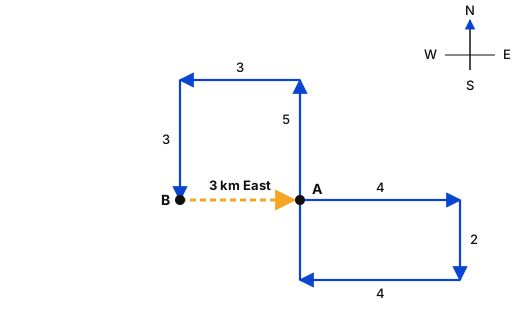
Divit starts from point A and drives 4 km towards the East. He then takes two simultaneous right turns and drives 2 km and 4 km, respectively. He takes another right turn and drives 5 km. He then takes a left turn and drives 3 km. He takes a final left turn and drives 3 km to reach point B. How far (shortest distance) and towards which direction should he drive to reach Point A again? (All turns are 90 degrees turns only unless specified.)
दिवित बिंदु A से चलना शुरू करता है और पूर्व की ओर 4 km गाड़ी चलाता है। फिर वह लगातार दो बार दाएँ मुड़ता है और क्रमशः 2 km और 4 km गाड़ी चलाता है। वह फिर से दाएँ मुड़ता है और 5 km गाड़ी चलाता है। फिर वह बाएँ मुड़ता है और 3 km गाड़ी चलाता है। वह अंतिम बार बाएँ मुड़ता है और बिंदु B पर पहुँचने के लिए 3 km गाड़ी चलाता है। बिंदु A पर फिर से पहुँचने के लिए उसे कितनी दूर (न्यूनतम दूरी) और किस दिशा में गाड़ी चलानी चाहिए? (जब तक निर्दिष्ट न हो, सभी मोड़ केवल 90 डिग्री के हैं।)
  1. A3 km north3 km उत्तर
  2. B3 km South3 km दक्षिण
  3. C3 km East3 km पूर्व
  4. D3 km West3 km पश्चिम
Show answer

Concept: Trace the path on axes with A at the origin (East =+x, North =+y).

  1. 4 km East → (4,0); right turn: 2 km South → (4,−2).
  2. Right: 4 km West → (0,−2); right: 5 km North → (0,3).
  3. Left: 3 km West → (−3,3); left: 3 km South → B (−3,0).
  4. B is 3 km West of A, so he must drive 3 km East.

Trick: Net East–West: 4−4−3=−3; net North–South: −2+5−3=0. So B is 3 km West of A.

Answer: (C) 3 km East

अवधारणा: A को मूल बिंदु मानकर पथ बनाएँ (पूर्व =+x, उत्तर =+y)।

  1. 4 km पूर्व → (4,0); दाएँ मुड़कर 2 km दक्षिण → (4,−2)।
  2. दाएँ: 4 km पश्चिम → (0,−2); दाएँ: 5 km उत्तर → (0,3)।
  3. बाएँ: 3 km पश्चिम → (−3,3); बाएँ: 3 km दक्षिण → B (−3,0)।
  4. B, A से 3 km पश्चिम में है, अतः 3 km पूर्व जाना होगा।

ट्रिक: कुल पूर्व–पश्चिम: 4−4−3=−3; उत्तर–दक्षिण: −2+5−3=0। अतः B, A से 3 km पश्चिम है।

उत्तर: (C) 3 km पूर्व

RRB Technician Grade IIIGeneral Intelligence and ReasoningDirection SenseRRB Technician Grade III 2024 · 28 Dec Shift 3 →
Q646.
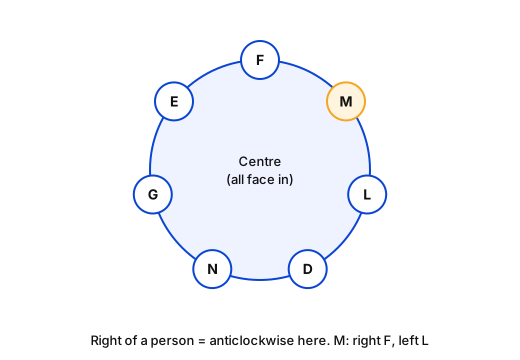
D, E, F, G, L, M and N are sitting around a circular table facing the centre. Only one person sits between F and G when counted from the right of F. Only one person sits between G and D when counted from right of G. Only one person sits between F and L when counted from left of F. Only two people sit between E and D when counted from left of D. Only one person sits between N and L when counted from right of N. Who sits to the immediate right and left of M, respectively?
D, E, F, G, L, M और N एक वृत्ताकार मेज के चारों ओर केंद्र की ओर मुख करके बैठे हैं। F के दाएँ से गिनने पर F और G के बीच केवल एक व्यक्ति बैठा है। G के दाएँ से गिनने पर G और D के बीच केवल एक व्यक्ति बैठा है। F के बाएँ से गिनने पर F और L के बीच केवल एक व्यक्ति बैठा है। D के बाएँ से गिनने पर E और D के बीच केवल दो व्यक्ति बैठे हैं। N के दाएँ से गिनने पर N और L के बीच केवल एक व्यक्ति बैठा है। M के क्रमशः ठीक दाएँ और ठीक बाएँ कौन बैठा है?
  1. AN and EN और E
  2. BE and NE और N
  3. CD and ED और E
  4. DF and LF और L
Show answer

Concept: Facing the centre, a person's right is the anticlockwise direction (as drawn). Fix F first.

  1. G is 2nd to the right of F; D is 2nd to the right of G (4th right of F).
  2. L is 2nd to the left of F; E is 3rd to the left of D, i.e. immediate right of F.
  3. N has L 2nd to its right → N sits 3rd right of F; M takes the last seat.
  4. M sits between F and L: F to its right, L to its left.

Yaad rakhein: 'One person between X and Y counted from the right of X' means Y is 2nd to the right of X.

Answer: (D) F and L

अवधारणा: केंद्र की ओर मुख होने पर व्यक्ति का दायाँ, चित्र में वामावर्त दिशा है। पहले F को स्थिर करें।

  1. G, F के दाएँ दूसरा; D, G के दाएँ दूसरा (F के दाएँ चौथा)।
  2. L, F के बाएँ दूसरा; E, D के बाएँ तीसरा, अर्थात F के ठीक दाएँ।
  3. N के दाएँ दूसरा L → N, F के दाएँ तीसरा; M बचे स्थान पर।
  4. M, F और L के बीच: दाएँ F, बाएँ L।

याद रखें: 'X के दाएँ से गिनने पर X और Y के बीच एक व्यक्ति' अर्थात Y, X के दाएँ दूसरा है।

उत्तर: (D) F और L

RRB Technician Grade IIIGeneral Intelligence and ReasoningCircular SeatingRRB Technician Grade III 2024 · 28 Dec Shift 3 →
Q647.
Select the set in which the numbers are related in the same way as are the numbers of the following sets.
(NOTE: Operations should be performed on the whole numbers, without breaking down the numbers into its constituent digits. E.g. 13 – Operations on 13 such as adding/subtracting/multiplying etc. to 13 can be performed. Breaking down 13 into 1 and 3 and then performing mathematical operations on 1 and 3 is not allowed.)
(6, 12, 48)
(8, 16, 64)
उस समुच्चय का चयन करें जिसमें संख्याएँ उसी प्रकार संबंधित हैं जिस प्रकार निम्नलिखित समुच्चयों की संख्याएँ संबंधित हैं।
(नोट: संक्रियाएँ पूर्ण संख्याओं पर की जानी चाहिए, संख्याओं को उनके घटक अंकों में तोड़े बिना। उदाहरण के लिए 13 – 13 पर संक्रियाएँ जैसे 13 में जोड़ना/घटाना/गुणा करना आदि किया जा सकता है। 13 को 1 और 3 में तोड़कर फिर 1 और 3 पर गणितीय संक्रियाएँ करने की अनुमति नहीं है।)
(6, 12, 48)
(8, 16, 64)
  1. A(15, 30, 130)
  2. B(5, 30, 120)
  3. C(15, 30, 120)
  4. D(15, 40, 120)
Show answer

Concept: Find the rule: (6, 12, 48) and (8, 16, 64) → second = first ×2, third = second ×4.

  1. 6×2=12, 12×4=48; 8×2=16, 16×4=64.
  2. (15, 30, 120): 15×2=30, 30×4=120 ✓.
  3. Others fail, e.g. 30×4≠130, 5×2≠30.

Trick: Third = first ×8: 15×8=120 with middle 30.

Answer: (C) (15, 30, 120)

अवधारणा: नियम ज्ञात करें: (6, 12, 48) और (8, 16, 64) → दूसरी = पहली ×2, तीसरी = दूसरी ×4।

  1. 6×2=12, 12×4=48; 8×2=16, 16×4=64।
  2. (15, 30, 120): 15×2=30, 30×4=120 ✓।
  3. अन्य विफल, जैसे 30×4≠130, 5×2≠30।

ट्रिक: तीसरी = पहली ×8: 15×8=120 और बीच में 30।

उत्तर: (C) (15, 30, 120)

RRB Technician Grade IIIGeneral Intelligence and ReasoningNumber TriadsRRB Technician Grade III 2024 · 28 Dec Shift 3 →
Q648.
Which of the following options should come in place of the question mark (?) in the given series to make it logically complete?
19, 26, 33, 40, 47, ?
दी गई श्रृंखला को तार्किक रूप से पूर्ण करने के लिए प्रश्न चिह्न (?) के स्थान पर निम्नलिखित में से कौन-सा विकल्प आना चाहिए?
19, 26, 33, 40, 47, ?
  1. A54
  2. B52
  3. C51
  4. D53
Show answer

Concept: Check the difference between consecutive terms.

  1. 26−19=7, 33−26=7, 40−33=7, 47−40=7.
  2. Next =47+7=54.

Trick: Constant difference ⇒ arithmetic series; just add the common difference.

Answer: (A) 54

अवधारणा: क्रमागत पदों का अंतर जाँचें।

  1. 26−19=7, 33−26=7, 40−33=7, 47−40=7।
  2. अगला =47+7=54।

ट्रिक: समान अंतर ⇒ समांतर श्रृंखला; बस सार्व अंतर जोड़ें।

उत्तर: (A) 54

RRB Technician Grade IIIGeneral Intelligence and ReasoningNumber SeriesRRB Technician Grade III 2024 · 28 Dec Shift 3 →
Q649.
Which of the following options should come in place of the question mark (?) in the given series based on the English alphabetical order?
GKF JNI MQL PTO ?
अंग्रेजी वर्णमाला क्रम के आधार पर दी गई श्रृंखला में प्रश्न चिह्न (?) के स्थान पर निम्नलिखित में से कौन-सा विकल्प आना चाहिए?
GKF JNI MQL PTO ?
  1. ASWR
  2. BWRS
  3. CWSR
  4. DSRW
Show answer

Concept: Treat each position of the clusters as a separate series.

  1. First letters: G, J, M, P, S (+3).
  2. Second letters: K, N, Q, T, W (+3).
  3. Third letters: F, I, L, O, R (+3). Answer SWR.

Trick: Within each cluster: 2nd = 1st +4, 3rd = 2nd −5; S+4=W, W−5=R ✓.

Answer: (A) SWR

अवधारणा: समूहों के हर स्थान को अलग श्रृंखला मानें।

  1. पहले अक्षर: G, J, M, P, S (+3)।
  2. दूसरे अक्षर: K, N, Q, T, W (+3)।
  3. तीसरे अक्षर: F, I, L, O, R (+3)। उत्तर SWR।

ट्रिक: हर समूह में: दूसरा = पहला +4, तीसरा = दूसरा −5; S+4=W, W−5=R ✓।

उत्तर: (A) SWR

RRB Technician Grade IIIGeneral Intelligence and ReasoningLetter SeriesRRB Technician Grade III 2024 · 28 Dec Shift 3 →
Q650.
________ is useful for the survival of species over time.
समय के साथ प्रजातियों की उत्तरजीविता के लिए ________ उपयोगी है।
  1. AVariationविभिन्नता (Variation)
  2. BBuddingमुकुलन (Budding)
  3. CReproductionजनन (Reproduction)
  4. DPopulationसमष्टि (Population)
Show answer

Concept: Variation means differences among individuals of a species, arising mainly during sexual reproduction (and DNA copying errors).

  1. When the environment changes, some variants are better suited and survive.
  2. These survivors pass on their traits, so the species continues over time.
  3. Budding and reproduction create new individuals, but variation is what helps the species survive change.

Yaad rakhein: Variation is the raw material for natural selection and evolution (NCERT Class 10).

Answer: (A) Variation

अवधारणा: विविधता का अर्थ है किसी प्रजाति के सदस्यों में अंतर, जो मुख्यतः लैंगिक जनन (और DNA प्रतिलिपि की त्रुटियों) से आता है।

  1. पर्यावरण बदलने पर कुछ भिन्न सदस्य बेहतर अनुकूलित होकर जीवित रहते हैं।
  2. ये अपने गुण अगली पीढ़ी को देते हैं, जिससे प्रजाति लंबे समय तक बनी रहती है।
  3. मुकुलन और जनन नए जीव बनाते हैं, पर बदलाव में प्रजाति को बचाने का काम विविधता करती है।

याद रखें: विविधता प्राकृतिक वरण और विकास का आधार है (NCERT कक्षा 10)।

उत्तर: (A) विभिन्नता (Variation)

RRB Technician Grade IIIGeneral ScienceHeredity and EvolutionRRB Technician Grade III 2024 · 28 Dec Shift 3 →
Q651.
What happens to the motion of an object when balanced forces act on it?
जब किसी वस्तु पर संतुलित बल (balanced forces) कार्य करते हैं, तो उसकी गति पर क्या प्रभाव पड़ता है?
  1. AIt slows down.वह धीमी हो जाती है।
  2. BIts state of motion remains unchanged.उसकी गति की अवस्था अपरिवर्तित रहती है।
  3. CIt changes its direction of motion.वह अपनी गति की दिशा बदल लेती है।
  4. DIt speeds up.उसकी चाल बढ़ जाती है।
Show answer

Concept: When balanced forces act on a body, the net (resultant) force is zero, so no acceleration is produced.

  1. Balanced forces: equal in size, opposite in direction, so Fnet=0.
  2. From F=ma, a=0; velocity does not change.
  3. A body at rest stays at rest; a moving body keeps the same speed and direction.

Yaad rakhein: Balanced force changes only shape (sometimes), never the state of motion; unbalanced force changes speed or direction.

Answer: (B) Its state of motion remains unchanged.

अवधारणा: जब किसी वस्तु पर संतुलित बल लगते हैं तो परिणामी बल शून्य होता है, इसलिए कोई त्वरण नहीं होता।

  1. संतुलित बल: बराबर परिमाण, विपरीत दिशा, अतः Fnet=0।
  2. F=ma से a=0; वेग नहीं बदलता।
  3. विरामावस्था वाली वस्तु विराम में और गतिमान वस्तु समान चाल व दिशा में चलती रहती है।

याद रखें: संतुलित बल गति की अवस्था नहीं बदलता; असंतुलित बल ही चाल या दिशा बदलता है।

उत्तर: (B) उसकी गति की अवस्था अपरिवर्तित रहती है।

RRB Technician Grade IIIGeneral ScienceBalanced forcesRRB Technician Grade III 2024 · 28 Dec Shift 3 →
Q652.
Find the magnitude of applied force on a box of mass 10 kg for 20 s. It increases the box's velocity from 5 ms−1 to 15 ms−1.
10 kg द्रव्यमान वाले एक बक्से पर 20 s तक लगाए गए बल का परिमाण ज्ञात कीजिए। यह बल बक्से के वेग को 5 ms−1 से 15 ms−1 तक बढ़ा देता है।
  1. A5 N
  2. B10 N
  3. C4 N
  4. D1 N
Show answer

Concept: Force F=ma, where acceleration a=v−ut.

  1. u=5 m/s, v=15 m/s, t=20 s, m=10 kg.
  2. a=15−520=1020=0.5 m/s2.
  3. F=ma=10×0.5=5 N.

Trick: Directly: F=m(v−u)t=10×1020=5 N (change in momentum ÷ time).

Answer: (A) 5 N

अवधारणा: बल F=ma, जहाँ त्वरण a=v−ut।

  1. u=5 m/s, v=15 m/s, t=20 s, m=10 kg।
  2. a=15−520=1020=0.5 m/s2।
  3. F=ma=10×0.5=5 N।

ट्रिक: सीधे: F=m(v−u)t=10×1020=5 N (संवेग परिवर्तन ÷ समय)।

उत्तर: (A) 5 N

RRB Technician Grade IIIGeneral ScienceForce and accelerationRRB Technician Grade III 2024 · 28 Dec Shift 3 →
Q653.
What are the balanced products of the following reaction?
Na2SO4(aq)+BaCl2(aq)→ _____ + _____
निम्नलिखित अभिक्रिया के संतुलित उत्पाद क्या हैं?
Na2SO4(aq)+BaCl2(aq)→ _____ + _____
  1. A2BaSO2(s)+2NaCl(aq)+2O2(g)
  2. BBaSO2(s)+NaCl(aq)+O2(g)
  3. CBaSO4(s)+2NaCl(aq)
  4. DBaSO4(s)+2NaCl2(aq)
Show answer

Concept: Sodium sulphate and barium chloride exchange ions (double displacement) and form a white precipitate of barium sulphate.

  1. Ions swap: Ba2+ joins SO42−; Na+ joins Cl−.
  2. Na2SO4+BaCl2→BaSO4↓+2NaCl.
  3. Balance check: 2 Na, 1 Ba, 1 S, 4 O, 2 Cl on each side. No O2 is released.

Yaad rakhein: BaSO4 is the classic white precipitate; NaCl stays in solution (aq).

Answer: (C) BaSO4(s)+2NaCl(aq)

अवधारणा: सोडियम सल्फेट और बेरियम क्लोराइड आयनों की अदला-बदली (द्विविस्थापन) करके बेरियम सल्फेट का सफ़ेद अवक्षेप बनाते हैं।

  1. आयन बदलते हैं: Ba2+ और SO42− जुड़ते हैं; Na+ और Cl− जुड़ते हैं।
  2. Na2SO4+BaCl2→BaSO4↓+2NaCl।
  3. संतुलन: दोनों ओर 2 Na, 1 Ba, 1 S, 4 O, 2 Cl; कोई O2 नहीं बनती।

याद रखें: BaSO4 प्रसिद्ध सफ़ेद अवक्षेप है; NaCl विलयन (aq) में रहता है।

उत्तर: (C) BaSO4(s)+2NaCl(aq)

RRB Technician Grade IIIGeneral ScienceDouble displacement reactionRRB Technician Grade III 2024 · 28 Dec Shift 3 →
Q654.
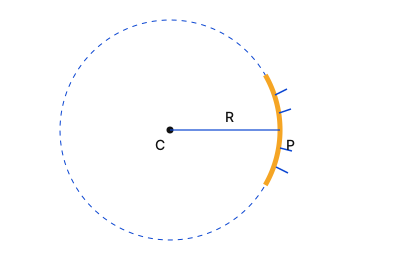
A spherical mirror, whose reflecting surface faces towards the centre of the sphere, is called a ________.
वह गोलीय दर्पण, जिसका परावर्तक पृष्ठ गोले के केंद्र की ओर होता है, ________ कहलाता है।
  1. Aconcave mirrorअवतल दर्पण (concave mirror)
  2. Bplane mirrorसमतल दर्पण (plane mirror)
  3. Cconvex mirrorउत्तल दर्पण (convex mirror)
  4. Dplano-convex mirrorसमतलोत्तल दर्पण (plano-convex mirror)
Show answer

Concept: A spherical mirror is part of a hollow sphere. If the reflecting surface is curved inwards, i.e. faces the centre of curvature C, it is a concave mirror.

  1. Reflecting side faces C (inside of the sphere) → concave mirror.
  2. Reflecting side bulges outward (away from C) → convex mirror.
  3. Plane mirror has no curvature; plano-convex is a lens, not a mirror.

Yaad rakhein: Concave = 'caves in' towards the centre (like the inside of a spoon); convex = outer back of the spoon.

Answer: (A) concave mirror

अवधारणा: गोलीय दर्पण एक खोखले गोले का भाग है। यदि परावर्तक सतह अंदर की ओर, अर्थात वक्रता केंद्र C की ओर हो, तो वह अवतल दर्पण है।

  1. परावर्तक सतह C की ओर (गोले के भीतर) → अवतल दर्पण।
  2. परावर्तक सतह बाहर की ओर उभरी (C से दूर) → उत्तल दर्पण।
  3. समतल दर्पण वक्र नहीं होता; समतल-उत्तल एक लेंस है, दर्पण नहीं।

याद रखें: अवतल = चम्मच का भीतरी भाग (केंद्र की ओर); उत्तल = चम्मच का बाहरी पिछला भाग।

उत्तर: (A) अवतल दर्पण (concave mirror)

RRB Technician Grade IIIGeneral ScienceSpherical mirrorsRRB Technician Grade III 2024 · 28 Dec Shift 3 →
Q655.
Express the speed of 36 km/h in m/s.
36 km/h की चाल को m/s में व्यक्त कीजिए।
  1. A78 m/s
  2. B10 m/s
  3. C60 m/s
  4. D11 m/s
Show answer

Concept: 1 km/h=1000 m3600 s=518 m/s.

  1. Multiply by 518.
  2. 36×518=2×5=10 m/s.

Trick: km/h → m/s: ×518; m/s → km/h: ×185. Also 36 km/h=10 m/s, 72 km/h=20 m/s.

Answer: (B) 10 m/s

अवधारणा: 1 km/h=1000 m3600 s=518 m/s।

  1. 518 से गुणा करें।
  2. 36×518=2×5=10 m/s।

ट्रिक: km/h → m/s: ×518; m/s → km/h: ×185। 36 km/h=10 m/s, 72 km/h=20 m/s।

उत्तर: (B) 10 m/s

RRB Technician Grade IIIGeneral ScienceUnit conversion of speedRRB Technician Grade III 2024 · 28 Dec Shift 3 →
Q656.
Which of the following represents the molecular formula for carbon monoxide?
निम्नलिखित में से कौन-सा कार्बन मोनोऑक्साइड का आण्विक सूत्र दर्शाता है?
  1. ACO
  2. BCO2
  3. CCO3
  4. DC2O
Show answer

Concept: 'Mono' means one: carbon monoxide has one carbon atom and one oxygen atom.

  1. Carbon monoxide → CO (1 C + 1 O).
  2. Carbon dioxide → CO2 ('di' = two O).
  3. CO32− is the carbonate ion, not a gas.

Yaad rakhein: Mono = 1, Di = 2, Tri = 3; the prefix tells the number of oxygen atoms.

Answer: (A) CO

अवधारणा: 'मोनो' का अर्थ एक है: कार्बन मोनोऑक्साइड में एक कार्बन और एक ऑक्सीजन परमाणु होता है।

  1. कार्बन मोनोऑक्साइड → CO (1 C + 1 O)।
  2. कार्बन डाइऑक्साइड → CO2 ('डाइ' = दो O)।
  3. CO32− कार्बोनेट आयन है, गैस नहीं।

याद रखें: मोनो = 1, डाइ = 2, ट्राइ = 3; उपसर्ग ऑक्सीजन परमाणुओं की संख्या बताता है।

उत्तर: (A) CO

RRB Technician Grade IIIGeneral ScienceChemical formulaeRRB Technician Grade III 2024 · 28 Dec Shift 3 →
Q657.
Which of the following is produced when carbon dioxide reacts with calcium hydroxide?
जब कार्बन डाइऑक्साइड, कैल्शियम हाइड्रॉक्साइड के साथ अभिक्रिया करती है, तो निम्नलिखित में से क्या उत्पन्न होता है?
  1. ACaO+H2O
  2. BCO+H2O
  3. CH2CO3+H2O
  4. DCaCO3+H2O
Show answer

Concept: Carbon dioxide passed through lime water (calcium hydroxide) forms insoluble calcium carbonate, which turns it milky.

  1. Ca(OH)2+CO2→CaCO3↓+H2O.
  2. CaCO3 is a white precipitate → milkiness.
  3. Excess CO2 forms soluble Ca(HCO3)2 and milkiness disappears.

Yaad rakhein: Lime water turns milky = test for CO2.

Answer: (D) CaCO3+H2O

अवधारणा: कार्बन डाइऑक्साइड को चूने के पानी (कैल्शियम हाइड्रॉक्साइड) में प्रवाहित करने पर अघुलनशील कैल्शियम कार्बोनेट बनता है, जिससे वह दूधिया हो जाता है।

  1. Ca(OH)2+CO2→CaCO3↓+H2O।
  2. CaCO3 सफ़ेद अवक्षेप → दूधियापन।
  3. अधिक CO2 से घुलनशील Ca(HCO3)2 बनता है और दूधियापन मिट जाता है।

याद रखें: चूने का पानी दूधिया होना = CO2 का परीक्षण।

उत्तर: (D) CaCO3+H2O

RRB Technician Grade IIIGeneral ScienceLime water testRRB Technician Grade III 2024 · 28 Dec Shift 3 →
Q658.
Cranial nerves arising from the brain and spinal nerves arising from the spinal cord together constitute the:
मस्तिष्क से निकलने वाली कपाल तंत्रिकाएँ और मेरुरज्जु से निकलने वाली मेरु तंत्रिकाएँ मिलकर ______ का निर्माण करती हैं:
  1. Aperipheral nervous systemपरिधीय तंत्रिका तंत्र (peripheral nervous system)
  2. Bautonomic nervous systemस्वायत्त तंत्रिका तंत्र (autonomic nervous system)
  3. Cendocrine systemअंतःस्रावी तंत्र (endocrine system)
  4. Dcentral nervous systemकेंद्रीय तंत्रिका तंत्र (central nervous system)
Show answer

Concept: The nervous system has two parts: the central nervous system (brain + spinal cord) and the peripheral nervous system (nerves connecting CNS to the body).

  1. Cranial nerves arise from the brain (12 pairs in humans).
  2. Spinal nerves arise from the spinal cord (31 pairs).
  3. Together they form the peripheral nervous system (PNS).

Yaad rakhein: CNS = brain + spinal cord; PNS = cranial + spinal nerves.

Answer: (A) peripheral nervous system

अवधारणा: तंत्रिका तंत्र के दो भाग हैं: केंद्रीय तंत्रिका तंत्र (मस्तिष्क + मेरुरज्जु) और परिधीय तंत्रिका तंत्र (CNS को शरीर से जोड़ने वाली तंत्रिकाएँ)।

  1. कपाल तंत्रिकाएँ मस्तिष्क से निकलती हैं (मनुष्य में 12 जोड़े)।
  2. मेरु तंत्रिकाएँ मेरुरज्जु से निकलती हैं (31 जोड़े)।
  3. दोनों मिलकर परिधीय तंत्रिका तंत्र (PNS) बनाती हैं।

याद रखें: CNS = मस्तिष्क + मेरुरज्जु; PNS = कपाल + मेरु तंत्रिकाएँ।

उत्तर: (A) परिधीय तंत्रिका तंत्र (peripheral nervous system)

RRB Technician Grade IIIGeneral ScienceHuman nervous systemRRB Technician Grade III 2024 · 28 Dec Shift 3 →
Q659.
Which one of the following options is correctly paired according to their mode of action?
निम्नलिखित में से कौन-सा विकल्प उनकी क्रियाविधि के अनुसार सही सुमेलित है?
  1. ACondom – Mechanical barrierकंडोम – यांत्रिक अवरोध
  2. BTubectomy – Chemical barrierट्यूबेक्टॉमी – रासायनिक अवरोध
  3. CContraceptive pills – Uterine deviceगर्भनिरोधक गोलियाँ – गर्भाशयी युक्ति
  4. DCopper T – Hormonal imbalanceकॉपर-T – हार्मोनल असंतुलन
Show answer

Concept: Contraceptive methods work as barriers, hormones, intra-uterine devices or surgery.

  1. Condom: mechanical barrier stopping sperm from reaching the egg — correct.
  2. Tubectomy: surgical method (fallopian tubes cut/tied), not chemical.
  3. Oral pills: hormonal; Copper-T: intra-uterine device (IUD). The other pairs are swapped.

Yaad rakhein: Barrier → condom; Hormonal → pills; IUD → Copper-T; Surgical → vasectomy/tubectomy.

Answer: (A) Condom – Mechanical barrier

अवधारणा: गर्भनिरोधक विधियाँ अवरोध, हार्मोन, अंतर्गर्भाशयी युक्ति या शल्य क्रिया द्वारा काम करती हैं।

  1. कंडोम: यांत्रिक अवरोध, शुक्राणु को अंडाणु तक पहुँचने से रोकता है — सही।
  2. ट्यूबेक्टॉमी: शल्य विधि (अंडवाहिनी काटना/बाँधना), रासायनिक नहीं।
  3. गोलियाँ: हार्मोनल; कॉपर-टी: अंतर्गर्भाशयी युक्ति (IUD)। बाकी जोड़े उलटे हैं।

याद रखें: अवरोध → कंडोम; हार्मोनल → गोलियाँ; IUD → कॉपर-टी; शल्य → पुरुष/स्त्री नसबंदी।

उत्तर: (A) कंडोम – यांत्रिक अवरोध

RRB Technician Grade IIIGeneral ScienceContraceptive methodsRRB Technician Grade III 2024 · 28 Dec Shift 3 →
Q660.
Where is glucose converted into pyruvate?
ग्लूकोज का पाइरुवेट में रूपांतरण कहाँ होता है?
  1. ARibosomeराइबोसोम
  2. BCytoplasmकोशिका द्रव्य (Cytoplasm)
  3. CGolgi-complexगॉल्जी-काय (Golgi-complex)
  4. DMitochondriaमाइटोकॉन्ड्रिया
Show answer

Concept: The first step of respiration, glycolysis, breaks one glucose (6-carbon) into two pyruvate (3-carbon) molecules.

  1. Glycolysis occurs in the cytoplasm and needs no oxygen.
  2. Pyruvate then enters mitochondria (aerobic) to form CO2, water and energy.
  3. Ribosome = protein synthesis; Golgi = packaging.

Yaad rakhein: Glucose → pyruvate in cytoplasm; pyruvate → CO2+H2O in mitochondria.

Answer: (B) Cytoplasm

अवधारणा: श्वसन का पहला चरण ग्लाइकोलाइसिस एक ग्लूकोज़ (6-कार्बन) को दो पाइरूवेट (3-कार्बन) अणुओं में तोड़ता है।

  1. ग्लाइकोलाइसिस कोशिकाद्रव्य में होता है, ऑक्सीजन की आवश्यकता नहीं।
  2. फिर पाइरूवेट माइटोकॉन्ड्रिया में जाकर (वायवीय) CO2, जल और ऊर्जा बनाता है।
  3. राइबोसोम = प्रोटीन संश्लेषण; गॉल्जी = पैकेजिंग।

याद रखें: ग्लूकोज़ → पाइरूवेट: कोशिकाद्रव्य; पाइरूवेट → CO2+H2O: माइटोकॉन्ड्रिया।

उत्तर: (B) कोशिका द्रव्य (Cytoplasm)

RRB Technician Grade IIIGeneral ScienceRespiration – glycolysisRRB Technician Grade III 2024 · 28 Dec Shift 3 →