Question bank

Q&A: practice questions with answers

Search questions on any topic. Filter by exam category, exam, subject and topic, try the question, then open the answer and explanation.

Courses – airGurukul

3,200 questions found.

Q661.
At what temperature does water transform into steam under normal atmospheric pressure?
सामान्य वायुमंडलीय दाब पर जल किस ताप पर भाप में परिवर्तित होता है?
  1. A50°C (122°F)
  2. B100°C (212°F)
  3. C80°C (176°F)
  4. D0°C (32°F)
Show answer

Concept: At normal atmospheric pressure (1 atm), water boils and changes into steam at its boiling point.

  1. Boiling point of water =100∘C.
  2. In Fahrenheit: F=95×100+32=212∘F.
  3. 0∘C is the freezing/melting point.

Yaad rakhein: Water: melts at 0∘C (32∘F), boils at 100∘C (212∘F) = 373 K.

Answer: (B) 100°C (212°F)

अवधारणा: सामान्य वायुमंडलीय दाब (1 atm) पर जल अपने क्वथनांक पर उबलकर भाप बनता है।

  1. जल का क्वथनांक =100∘C।
  2. फ़ारेनहाइट में: F=95×100+32=212∘F।
  3. 0∘C हिमांक/गलनांक है।

याद रखें: जल: 0∘C (32∘F) पर पिघलता, 100∘C (212∘F) = 373 K पर उबलता है।

उत्तर: (B) 100°C (212°F)

RRB Technician Grade IIIGeneral ScienceBoiling point of waterRRB Technician Grade III 2024 · 28 Dec Shift 3 →
Q662.
Which gas is primarily produced during the burning of coke?
कोक के दहन के दौरान मुख्य रूप से कौन-सी गैस उत्पन्न होती है?
  1. AOxygenऑक्सीजन
  2. BSulphur dioxideसल्फर डाइऑक्साइड
  3. CCarbon dioxideकार्बन डाइऑक्साइड
  4. DNitrogen dioxideनाइट्रोजन डाइऑक्साइड
Show answer

Concept: Coke is almost pure carbon (about 98%), so burning it in air mainly produces carbon dioxide.

  1. C+O2→CO2 + heat.
  2. Oxygen is consumed, not produced.
  3. SO2 comes from sulphur impurities only in small amounts.

Yaad rakhein: Coke = nearly pure carbon → burns to CO2 (CO only when air is limited).

Answer: (C) Carbon dioxide

अवधारणा: कोक लगभग शुद्ध कार्बन (लगभग 98%) है, इसलिए इसे हवा में जलाने पर मुख्यतः कार्बन डाइऑक्साइड बनती है।

  1. C+O2→CO2 + ऊष्मा।
  2. ऑक्सीजन ख़र्च होती है, बनती नहीं।
  3. SO2 केवल सल्फ़र अशुद्धि से थोड़ी मात्रा में बनती है।

याद रखें: कोक = लगभग शुद्ध कार्बन → जलकर CO2 (वायु कम हो तो CO)।

उत्तर: (C) कार्बन डाइऑक्साइड

RRB Technician Grade IIIGeneral ScienceCombustion of cokeRRB Technician Grade III 2024 · 28 Dec Shift 3 →
Q663.
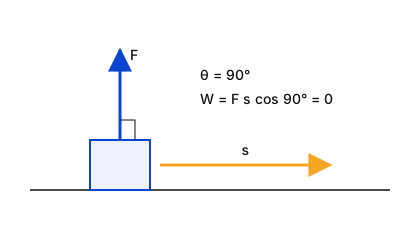
The displacement of a body is perpendicular to the direction in which the force is applied; the work done in this case will be:
किसी वस्तु का विस्थापन, लगाए गए बल की दिशा के लंबवत है; इस स्थिति में किया गया कार्य होगा:
  1. ANegativeऋणात्मक
  2. BInfiniteअनंत
  3. CPositiveधनात्मक
  4. DZeroशून्य
Show answer

Concept: Work W=Fscosθ, where θ is the angle between force and displacement.

  1. Displacement is perpendicular to force, so θ=90∘.
  2. cos90∘=0.
  3. W=Fs×0=0.

Trick: θ=0∘ → positive work, θ=90∘ → zero work, θ=180∘ → negative work (e.g. coolie walking with load on head does zero work against gravity).

Answer: (D) Zero

अवधारणा: कार्य W=Fscosθ, जहाँ θ बल और विस्थापन के बीच का कोण है।

  1. विस्थापन बल के लंबवत है, अतः θ=90∘।
  2. cos90∘=0।
  3. W=Fs×0=0।

ट्रिक: θ=0∘ → धनात्मक कार्य, θ=90∘ → शून्य कार्य, θ=180∘ → ऋणात्मक कार्य (जैसे सिर पर बोझ लेकर चलता कुली गुरुत्व के विरुद्ध शून्य कार्य करता है)।

उत्तर: (D) शून्य

RRB Technician Grade IIIGeneral ScienceWork doneRRB Technician Grade III 2024 · 28 Dec Shift 3 →
Q664.
Burning of unsaturated compounds gives which of the following?
असंतृप्त यौगिकों के दहन से निम्नलिखित में से क्या प्राप्त होता है?
  1. AClean flameस्वच्छ ज्वाला
  2. BGreen flameहरी ज्वाला
  3. CYellow flameपीली ज्वाला
  4. DRed flameलाल ज्वाला
Show answer

Concept: Saturated hydrocarbons burn with a clean blue flame; unsaturated hydrocarbons burn with a yellow, sooty (smoky) flame.

  1. Unsaturated compounds have a higher proportion of carbon.
  2. Carbon does not burn completely, so unburnt carbon particles glow → yellow flame with black smoke.
  3. Saturated compounds (in enough air) give a clean blue flame.

Yaad rakhein: Saturated → blue, clean flame; Unsaturated → yellow, sooty flame.

Answer: (C) Yellow flame

अवधारणा: संतृप्त हाइड्रोकार्बन स्वच्छ नीली ज्वाला से जलते हैं; असंतृप्त हाइड्रोकार्बन पीली, कालिख युक्त (धुएँदार) ज्वाला देते हैं।

  1. असंतृप्त यौगिकों में कार्बन का अनुपात अधिक होता है।
  2. कार्बन पूर्ण रूप से नहीं जलता, बिना जले कण चमकते हैं → पीली ज्वाला व काला धुआँ।
  3. संतृप्त यौगिक (पर्याप्त वायु में) स्वच्छ नीली ज्वाला देते हैं।

याद रखें: संतृप्त → नीली स्वच्छ ज्वाला; असंतृप्त → पीली कालिखयुक्त ज्वाला।

उत्तर: (C) पीली ज्वाला

RRB Technician Grade IIIGeneral ScienceCombustion of carbon compoundsRRB Technician Grade III 2024 · 28 Dec Shift 3 →
Q665.
Match the hormones with their respective functions.
Hormones — Functions
1. Thyroxin — a. Control body’s growth and development
2. Growth hormone — b. Male sex organ development
3. Testosterone — c. Controls the level of blood sugar in the body
4. Insulin — d. Controls the body's metabolism of fat, protein and carbohydrates.
हार्मोनों का उनके संबंधित कार्यों से मिलान कीजिए।
हार्मोन — कार्य
1. थायरॉक्सिन — a. शरीर की वृद्धि और विकास को नियंत्रित करता है
2. वृद्धि हार्मोन — b. नर लैंगिक अंगों का विकास
3. टेस्टोस्टेरोन — c. शरीर में रक्त शर्करा के स्तर को नियंत्रित करता है
4. इंसुलिन — d. शरीर में वसा, प्रोटीन और कार्बोहाइड्रेट के उपापचय को नियंत्रित करता है।
  1. A1-d, 2-b, 3-c, 4-a
  2. B1-b, 2-a, 3-d, 4-c
  3. C1-d, 2-a, 3-b, 4-c
  4. D1-a, 2-c, 3-b, 4-d
Show answer

Concept: Each endocrine hormone has a specific role in the body.

  1. Thyroxin (thyroid) → regulates metabolism of carbohydrate, fat and protein: 1-d.
  2. Growth hormone (pituitary) → growth and development: 2-a.
  3. Testosterone (testes) → male sex organ development: 3-b.
  4. Insulin (pancreas) → controls blood sugar: 4-c.

Yaad rakhein: Thyroxin–metabolism, GH–growth, Testosterone–male traits, Insulin–blood sugar (deficiency causes diabetes).

Answer: (C) 1-d, 2-a, 3-b, 4-c

अवधारणा: प्रत्येक अंतःस्रावी हार्मोन शरीर में एक विशेष कार्य करता है।

  1. थायरॉक्सिन (थायरॉइड) → कार्बोहाइड्रेट, वसा, प्रोटीन का उपापचय: 1-d।
  2. वृद्धि हार्मोन (पीयूष ग्रंथि) → वृद्धि व विकास: 2-a।
  3. टेस्टोस्टेरोन (वृषण) → नर जनन अंगों का विकास: 3-b।
  4. इंसुलिन (अग्न्याशय) → रक्त शर्करा नियंत्रण: 4-c।

याद रखें: थायरॉक्सिन–उपापचय, GH–वृद्धि, टेस्टोस्टेरोन–नर लक्षण, इंसुलिन–रक्त शर्करा (कमी से मधुमेह)।

उत्तर: (C) 1-d, 2-a, 3-b, 4-c

RRB Technician Grade IIIGeneral ScienceHormones and functionsRRB Technician Grade III 2024 · 28 Dec Shift 3 →
Q666.
Which of the options below represents the correct chemical formula of calcium hydroxide?
नीचे दिए गए विकल्पों में से कौन-सा कैल्शियम हाइड्रॉक्साइड (calcium hydroxide) का सही रासायनिक सूत्र दर्शाता है?
  1. ACa(OH)2
  2. BMg(OH)2
  3. CNaOH
  4. DKOH
Show answer

Concept: Calcium is divalent (Ca2+) and hydroxide is monovalent (OH−).

  1. Criss-cross valencies: Ca (2) and OH (1).
  2. Formula: Ca(OH)2 (slaked lime).
  3. Mg(OH)2 = magnesium hydroxide, NaOH = sodium hydroxide, KOH = potassium hydroxide.

Yaad rakhein: Slaked lime / lime water = Ca(OH)2; quicklime = CaO.

Answer: (A) Ca(OH)2

अवधारणा: कैल्शियम द्विसंयोजी (Ca2+) और हाइड्रॉक्साइड एकसंयोजी (OH−) है।

  1. संयोजकता का क्रॉस-गुणन: Ca (2) और OH (1)।
  2. सूत्र: Ca(OH)2 (बुझा हुआ चूना)।
  3. Mg(OH)2 = मैग्नीशियम हाइड्रॉक्साइड, NaOH = सोडियम हाइड्रॉक्साइड, KOH = पोटैशियम हाइड्रॉक्साइड।

याद रखें: बुझा चूना / चूने का पानी = Ca(OH)2; बिना बुझा चूना = CaO।

उत्तर: (A) Ca(OH)2

RRB Technician Grade IIIGeneral ScienceChemical formulaeRRB Technician Grade III 2024 · 28 Dec Shift 3 →
Q667.
The pressure exerted on a body is 10 Nm−2, if the area of the body is 2 m2; then the thrust acting on the body will be:
किसी वस्तु पर लगने वाला दाब 10 Nm−2 है, यदि वस्तु का क्षेत्रफल 2 m2 है; तो वस्तु पर लगने वाला प्रणोद (thrust) होगा:
  1. A2 N
  2. B5 N
  3. C10 N
  4. D20 N
Show answer

Concept: Pressure=ThrustArea, so Thrust=Pressure×Area.

  1. P=10 Nm−2, A=2 m2.
  2. Thrust=10×2=20 N.

Yaad rakhein: Thrust is a force (unit N); pressure is force per unit area (unit Nm−2 = Pa).

Answer: (D) 20 N

अवधारणा: दाब=प्रणोदक्षेत्रफल, अतः प्रणोद=दाब×क्षेत्रफल।

  1. P=10 Nm−2, A=2 m2।
  2. प्रणोद=10×2=20 N।

याद रखें: प्रणोद एक बल है (मात्रक N); दाब प्रति इकाई क्षेत्रफल बल है (मात्रक Nm−2 = Pa)।

उत्तर: (D) 20 N

RRB Technician Grade IIIGeneral ScienceThrust and pressureRRB Technician Grade III 2024 · 28 Dec Shift 3 →
Q668.
What is the filtration unit of the kidney?
वृक्क (kidney) की निस्यंदन इकाई क्या है?
  1. ASeminiferous tubuleशुक्रजनक नलिका (Seminiferous tubule)
  2. BNephronवृक्काणु (Nephron)
  3. CNeuronतंत्रिका कोशिका (Neuron)
  4. DSpermशुक्राणु (Sperm)
Show answer

Concept: The kidney filters blood through about a million tiny units called nephrons.

  1. Each nephron has a Bowman's capsule with glomerulus where filtration happens.
  2. Useful substances are reabsorbed in the tubule; urine is formed.
  3. Neuron = nerve cell; seminiferous tubules and sperm belong to the male reproductive system.

Yaad rakhein: Structural & functional unit: kidney → nephron, nervous system → neuron.

Answer: (B) Nephron

अवधारणा: वृक्क लगभग दस लाख छोटी इकाइयों, नेफ्रॉन, द्वारा रक्त को छानता है।

  1. प्रत्येक नेफ्रॉन में बोमन संपुट व ग्लोमेरुलस होता है जहाँ निस्यंदन होता है।
  2. उपयोगी पदार्थ नलिका में पुनः अवशोषित होते हैं और मूत्र बनता है।
  3. न्यूरॉन = तंत्रिका कोशिका; शुक्रजनक नलिका व शुक्राणु नर जनन तंत्र के भाग हैं।

याद रखें: संरचनात्मक व क्रियात्मक इकाई: वृक्क → नेफ्रॉन, तंत्रिका तंत्र → न्यूरॉन।

उत्तर: (B) वृक्काणु (Nephron)

RRB Technician Grade IIIGeneral ScienceHuman excretory systemRRB Technician Grade III 2024 · 28 Dec Shift 3 →
Q669.
Methane, on burning with oxygen, gives which of the following products?
मेथेन, ऑक्सीजन के साथ जलने पर, निम्नलिखित में से कौन-से उत्पाद देती है?
  1. ACarbonic acidकार्बोनिक अम्ल
  2. BCarbon monoxide onlyकेवल कार्बन मोनोऑक्साइड
  3. CCarbon monoxide and waterकार्बन मोनोऑक्साइड और जल
  4. DCarbon dioxide and waterकार्बन डाइऑक्साइड और जल
Show answer

Concept: Complete combustion of a hydrocarbon in sufficient oxygen gives carbon dioxide and water with heat and light.

  1. CH4+2O2→CO2+2H2O + heat + light.
  2. Carbon → CO2; hydrogen → H2O.
  3. CO forms only in limited oxygen (incomplete combustion).

Yaad rakhein: Any hydrocarbon + enough O2 → CO2+H2O.

Answer: (D) Carbon dioxide and water

अवधारणा: पर्याप्त ऑक्सीजन में हाइड्रोकार्बन का पूर्ण दहन ऊष्मा व प्रकाश के साथ कार्बन डाइऑक्साइड और जल देता है।

  1. CH4+2O2→CO2+2H2O + ऊष्मा + प्रकाश।
  2. कार्बन → CO2; हाइड्रोजन → H2O।
  3. CO केवल सीमित ऑक्सीजन (अपूर्ण दहन) में बनती है।

याद रखें: कोई भी हाइड्रोकार्बन + पर्याप्त O2 → CO2+H2O।

उत्तर: (D) कार्बन डाइऑक्साइड और जल

RRB Technician Grade IIIGeneral ScienceCombustion of methaneRRB Technician Grade III 2024 · 28 Dec Shift 3 →
Q670.
Which of the following statements about a colloidal solution is INCORRECT?
कोलॉइडी विलयन (colloidal solution) के बारे में निम्नलिखित में से कौन-सा कथन गलत है?
  1. AComponents cannot be separated by the process of filtration.घटकों को निस्यंदन (filtration) की प्रक्रिया द्वारा अलग नहीं किया जा सकता।
  2. BColloidal solutions are a heterogeneous mixture.कोलॉइडी विलयन एक विषमांगी मिश्रण होते हैं।
  3. CMilk is not a colloidal solution.दूध एक कोलॉइडी विलयन नहीं है।
  4. DFog is an example of a colloidal solution.कोहरा एक कोलॉइडी विलयन का उदाहरण है।
Show answer

Concept: A colloid is a heterogeneous mixture with particle size about 1–1000 nm; particles pass through filter paper and scatter light.

  1. (A) True: colloid particles pass through filter paper.
  2. (B) True: colloids are heterogeneous (appear homogeneous).
  3. (C) False: milk is a colloid — an emulsion of fat (liquid) in water (liquid).
  4. (D) True: fog is an aerosol (liquid in gas).

Yaad rakhein: Colloid examples: milk, butter, fog, cloud, smoke, jelly, shaving cream.

Answer: (C) Milk is not a colloidal solution.

अवधारणा: कोलॉइड लगभग 1–1000 nm कण आकार वाला विषमांगी मिश्रण है; इसके कण फ़िल्टर पेपर से निकल जाते हैं और प्रकाश प्रकीर्णित करते हैं।

  1. (A) सही: कोलॉइड कण फ़िल्टर पेपर से पार हो जाते हैं।
  2. (B) सही: कोलॉइड विषमांगी होते हैं (समांगी दिखते हैं)।
  3. (C) गलत: दूध कोलॉइड है — जल (द्रव) में वसा (द्रव) का पायस।
  4. (D) सही: कोहरा एरोसोल (गैस में द्रव) है।

याद रखें: कोलॉइड उदाहरण: दूध, मक्खन, कोहरा, बादल, धुआँ, जेली, शेविंग क्रीम।

उत्तर: (C) दूध एक कोलॉइडी विलयन नहीं है।

RRB Technician Grade IIIGeneral ScienceColloidsRRB Technician Grade III 2024 · 28 Dec Shift 3 →
Q671.
Organisms whose cells lack a nuclear membrane are called ________.
वे जीव जिनकी कोशिकाओं में केंद्रक झिल्ली (nuclear membrane) का अभाव होता है, ________ कहलाते हैं।
  1. Acytoplasmकोशिकाद्रव्य (cytoplasm)
  2. Bchromatinक्रोमैटिन (chromatin)
  3. Ceukaryotesयूकैरियोट (eukaryotes)
  4. Dprokaryotesप्रोकैरियोट (prokaryotes)
Show answer

Concept: Cells without a well-defined nucleus (no nuclear membrane) are prokaryotic; the nuclear region is called the nucleoid.

  1. Prokaryotes: bacteria, blue-green algae (cyanobacteria).
  2. Eukaryotes have a true nucleus bounded by a nuclear membrane.
  3. Cytoplasm and chromatin are cell parts, not types of organisms.

Yaad rakhein: Pro = before ('before nucleus'), Eu = true ('true nucleus').

Answer: (D) prokaryotes

अवधारणा: जिन कोशिकाओं में सुस्पष्ट केंद्रक (केंद्रक झिल्ली) नहीं होता, वे प्रोकैरियोटिक हैं; केंद्रकीय क्षेत्र को न्यूक्लियॉइड कहते हैं।

  1. प्रोकैरियोट: जीवाणु, नील-हरित शैवाल (सायनोबैक्टीरिया)।
  2. यूकैरियोट में केंद्रक झिल्ली से घिरा वास्तविक केंद्रक होता है।
  3. कोशिकाद्रव्य व क्रोमैटिन कोशिका के भाग हैं, जीवों के प्रकार नहीं।

याद रखें: प्रो = पूर्व ('केंद्रक से पहले'), यू = सच्चा ('सच्चा केंद्रक')।

उत्तर: (D) प्रोकैरियोट (prokaryotes)

RRB Technician Grade IIIGeneral ScienceProkaryotic cellsRRB Technician Grade III 2024 · 28 Dec Shift 3 →
Q672.
Asexual reproduction does NOT involve the formation of ________.
अलैंगिक जनन में ________ का निर्माण नहीं होता है।
  1. Azygotesयुग्मनज (zygotes)
  2. Bsporesबीजाणु (spores)
  3. Cbudsमुकुल (buds)
  4. Dleavesपत्तियाँ (leaves)
Show answer

Concept: Asexual reproduction involves a single parent and no fusion of gametes, so no zygote is formed.

  1. Zygote = fusion product of male and female gametes (sexual reproduction).
  2. Spores (Rhizopus), buds (Hydra, yeast) and leaves (Bryophyllum, vegetative propagation) are all asexual methods.
  3. Hence asexual reproduction does not form zygotes.

Yaad rakhein: No gametes → no fertilisation → no zygote; offspring are clones of the parent.

Answer: (A) zygotes

अवधारणा: अलैंगिक जनन में एक ही जनक होता है और युग्मकों का संलयन नहीं होता, इसलिए युग्मनज नहीं बनता।

  1. युग्मनज = नर व मादा युग्मकों के संलयन का परिणाम (लैंगिक जनन)।
  2. बीजाणु (राइज़ोपस), मुकुल (हाइड्रा, यीस्ट) और पत्तियाँ (ब्रायोफ़िलम, कायिक प्रवर्धन) सभी अलैंगिक विधियाँ हैं।
  3. अतः अलैंगिक जनन में युग्मनज नहीं बनता।

याद रखें: युग्मक नहीं → निषेचन नहीं → युग्मनज नहीं; संतति जनक की प्रतिरूप (क्लोन) होती है।

उत्तर: (A) युग्मनज (zygotes)

RRB Technician Grade IIIGeneral ScienceAsexual reproductionRRB Technician Grade III 2024 · 28 Dec Shift 3 →
Q673.
Which of the following symbols were used by Bohr to represent different electron orbits in his atomic model?
बोर (Bohr) ने अपने परमाणु मॉडल में विभिन्न इलेक्ट्रॉन कक्षाओं को दर्शाने के लिए निम्नलिखित में से किन प्रतीकों का प्रयोग किया था?
  1. AR, S T, U, V....
  2. BA, B, C, D, E....
  3. CK, L, M, N, O....
  4. DW, X, Y, Z, A....
Show answer

Concept: Bohr proposed that electrons revolve in fixed energy levels (shells/orbits) numbered n=1,2,3,4…

  1. These shells are named K, L, M, N, O… starting from the nucleus.
  2. K (n=1), L (n=2), M (n=3), N (n=4).
  3. Maximum electrons in a shell =2n2: K = 2, L = 8, M = 18.

Yaad rakhein: Shell letters start from K: K, L, M, N…; capacity 2n2.

Answer: (C) K, L, M, N, O....

अवधारणा: बोर ने बताया कि इलेक्ट्रॉन निश्चित ऊर्जा स्तरों (कोशों/कक्षाओं) n=1,2,3,4… में घूमते हैं।

  1. नाभिक से आरंभ करके इन कोशों के नाम K, L, M, N, O… हैं।
  2. K (n=1), L (n=2), M (n=3), N (n=4)।
  3. किसी कोश में अधिकतम इलेक्ट्रॉन =2n2: K = 2, L = 8, M = 18।

याद रखें: कोश के अक्षर K से शुरू: K, L, M, N…; क्षमता 2n2।

उत्तर: (C) K, L, M, N, O....

RRB Technician Grade IIIGeneral ScienceBohr's atomic modelRRB Technician Grade III 2024 · 28 Dec Shift 3 →
Q674.
Which of the following metals is most ductile?
निम्नलिखित में से कौन-सी धातु सबसे अधिक तन्य (ductile) है?
  1. ALeadसीसा (Lead)
  2. BSodiumसोडियम (Sodium)
  3. CGoldसोना (Gold)
  4. DLithiumलिथियम (Lithium)
Show answer

Concept: Ductility is the ability of a metal to be drawn into thin wires.

  1. Gold is the most ductile metal: 1 gram can be drawn into a wire about 2 km long.
  2. Silver comes next; lead is poorly ductile.
  3. Sodium and lithium are soft alkali metals, not used for wires.

Yaad rakhein: Most ductile and most malleable metal: gold; best conductor: silver.

Answer: (C) Gold

अवधारणा: तन्यता किसी धातु का पतले तारों में खींचे जा सकने का गुण है।

  1. सोना सबसे अधिक तन्य धातु है: 1 ग्राम सोने से लगभग 2 km लंबा तार खींचा जा सकता है।
  2. उसके बाद चाँदी; सीसा कम तन्य है।
  3. सोडियम व लीथियम मुलायम क्षार धातुएँ हैं, तार बनाने में प्रयुक्त नहीं।

याद रखें: सर्वाधिक तन्य व आघातवर्धनीय धातु: सोना; सर्वश्रेष्ठ चालक: चाँदी।

उत्तर: (C) सोना (Gold)

RRB Technician Grade IIIGeneral ScienceProperties of metals – ductilityRRB Technician Grade III 2024 · 28 Dec Shift 3 →
Q675.
Which of the following correctly represents the relationship between u(object distance), v (image distance) and f (focal length) of a spherical mirror?
निम्नलिखित में से कौन-सा एक गोलीय दर्पण के u (बिंब दूरी), v (प्रतिबिंब दूरी) और f (फोकस दूरी) के बीच संबंध को सही रूप से दर्शाता है?
  1. A1v−1u=12f
  2. B1v−1u=1f
  3. C1v+1u=1f
  4. D1v+1u=12f
Show answer

Concept: For a spherical mirror, object distance u, image distance v and focal length f are related by the mirror formula (New Cartesian sign convention).

  1. Mirror formula: 1v+1u=1f.
  2. Also f=R2.
  3. Lens formula uses a minus sign: 1v−1u=1f.

Trick: Mirror → plus (M for 'More'/+), Lens → minus.

Answer: (C) 1v+1u=1f

अवधारणा: गोलीय दर्पण के लिए वस्तु दूरी u, प्रतिबिंब दूरी v और फ़ोकस दूरी f दर्पण सूत्र (नई कार्तीय चिह्न परिपाटी) से संबंधित हैं।

  1. दर्पण सूत्र: 1v+1u=1f।
  2. साथ ही f=R2।
  3. लेंस सूत्र में ऋण चिह्न: 1v−1u=1f।

ट्रिक: दर्पण → धन (+), लेंस → ऋण (−)।

उत्तर: (C) 1v+1u=1f

RRB Technician Grade IIIGeneral ScienceMirror formulaRRB Technician Grade III 2024 · 28 Dec Shift 3 →
Q676.
If a current of 1 A is flowing through a conductor for 10 secs, then the charge flowing through it (in coulombs) will be:
यदि किसी चालक में 10 सेकंड तक 1 A की धारा प्रवाहित हो रही है, तो उसमें से प्रवाहित होने वाला आवेश (कूलॉम में) होगा:
  1. A10
  2. B100
  3. C1
  4. D0.1
Show answer

Concept: Current is the rate of flow of charge: I=Qt, so Q=It.

  1. I=1 A, t=10 s.
  2. Q=1×10=10 C.

Yaad rakhein: 1 C=1 A×1 s (one ampere-second).

Answer: (A) 10

अवधारणा: धारा आवेश प्रवाह की दर है: I=Qt, अतः Q=It।

  1. I=1 A, t=10 s।
  2. Q=1×10=10 C।

याद रखें: 1 C=1 A×1 s (एक एम्पियर-सेकंड)।

उत्तर: (A) 10

RRB Technician Grade IIIGeneral ScienceElectric charge and currentRRB Technician Grade III 2024 · 28 Dec Shift 3 →
Q677.
If a stone is thrown up, the value of acceleration due to gravity ‘g’ will be taken as _______.
यदि किसी पत्थर को ऊपर की ओर फेंका जाता है, तो गुरुत्वीय त्वरण ‘g’ का मान _______ लिया जाएगा।
  1. Azeroशून्य
  2. Binfiniteअनंत
  3. Cpositiveधनात्मक
  4. Dnegativeऋणात्मक
Show answer

Concept: Taking the upward direction as positive, acceleration due to gravity (always downward) is taken as negative for an object thrown up.

  1. Stone moves up, but g acts downward, opposite to motion.
  2. So g=−9.8 m/s2 and the stone's speed decreases.
  3. At the highest point v=0.

Yaad rakhein: Thrown up → g negative (retardation); falling down → g positive.

Answer: (D) negative

अवधारणा: ऊपर की दिशा को धनात्मक मानने पर, ऊपर फेंकी गई वस्तु के लिए गुरुत्वीय त्वरण (सदैव नीचे की ओर) ऋणात्मक लिया जाता है।

  1. पत्थर ऊपर जाता है, परंतु g नीचे की ओर, गति के विपरीत कार्य करता है।
  2. अतः g=−9.8 m/s2 और पत्थर की चाल घटती है।
  3. उच्चतम बिंदु पर v=0।

याद रखें: ऊपर फेंका → g ऋणात्मक (मंदन); नीचे गिरता → g धनात्मक।

उत्तर: (D) ऋणात्मक

RRB Technician Grade IIIGeneral ScienceMotion under gravityRRB Technician Grade III 2024 · 28 Dec Shift 3 →
Q678.
The effective resistance of the parallel combination of two resistors is always ________.
दो प्रतिरोधकों के समांतर संयोजन का प्रभावी प्रतिरोध सदैव ________ होता है।
  1. Agreater than the resistance of the individual resistorsअलग-अलग प्रतिरोधकों के प्रतिरोध से अधिक
  2. Bequal to the product of resistance of the individual resistorsअलग-अलग प्रतिरोधकों के प्रतिरोध के गुणनफल के बराबर
  3. Cequal to the sum of the resistance of the resistorsप्रतिरोधकों के प्रतिरोध के योग के बराबर
  4. Dless than the resistance of the individual resistorsअलग-अलग प्रतिरोधकों के प्रतिरोध से कम
Show answer

Concept: In parallel, 1Rp=1R1+1R2; current gets more paths, so total resistance falls.

  1. Example: R1=R2=4 Ω → 1Rp=14+14=12, Rp=2 Ω.
  2. 2 Ω is less than each 4 Ω resistor.
  3. In series, Rs=R1+R2, greater than each.

Yaad rakhein: Parallel → less than the smallest; Series → more than the largest.

Answer: (D) less than the resistance of the individual resistors

अवधारणा: समांतर में 1Rp=1R1+1R2; धारा को अधिक मार्ग मिलते हैं, इसलिए कुल प्रतिरोध घटता है।

  1. उदाहरण: R1=R2=4 Ω → 1Rp=14+14=12, Rp=2 Ω।
  2. 2 Ω प्रत्येक 4 Ω से कम है।
  3. श्रेणी में Rs=R1+R2, प्रत्येक से अधिक।

याद रखें: समांतर → सबसे छोटे से भी कम; श्रेणी → सबसे बड़े से भी अधिक।

उत्तर: (D) अलग-अलग प्रतिरोधकों के प्रतिरोध से कम

RRB Technician Grade IIIGeneral ScienceResistors in parallelRRB Technician Grade III 2024 · 28 Dec Shift 3 →
Q679.
Which of the following options is the same as Newton’s second law of motion?
निम्नलिखित में से कौन-सा विकल्प न्यूटन के गति के द्वितीय नियम के समान है?
  1. AThe rate of change of momentum of an object is independent of the applied unbalanced force.किसी वस्तु के संवेग परिवर्तन की दर लगाए गए असंतुलित बल से स्वतंत्र होती है।
  2. BApplied force on a body is inversely proportional to the acceleration of the body.किसी वस्तु पर लगाया गया बल वस्तु के त्वरण के व्युत्क्रमानुपाती होता है।
  3. CIf an object is in motion, applied force is directly proportional to the acceleration.यदि कोई वस्तु गति में है, तो लगाया गया बल त्वरण के समानुपाती होता है।
  4. DAn object at rest will remain at rest when external force is not applied.विराम अवस्था में स्थित वस्तु तब तक विराम में रहेगी जब तक उस पर बाह्य बल नहीं लगाया जाता।
Show answer

Concept: Rate of change of momentum is directly proportional to the applied unbalanced force: F=Δpt=ma.

  1. For fixed mass, F∝a → option (C) is correct.
  2. (A) says 'independent' — wrong; (B) says 'inversely' — wrong.
  3. (D) describes the first law (inertia).

Yaad rakhein: 1st law → inertia; 2nd law → F=ma; 3rd law → action–reaction.

Answer: (C) If an object is in motion, applied force is directly proportional to the acceleration.

अवधारणा: संवेग परिवर्तन की दर लगाए गए असंतुलित बल के अनुक्रमानुपाती होती है: F=Δpt=ma।

  1. नियत द्रव्यमान के लिए F∝a → विकल्प (C) सही।
  2. (A) 'स्वतंत्र' कहता है — गलत; (B) 'व्युत्क्रमानुपाती' — गलत।
  3. (D) पहला नियम (जड़त्व) है।

याद रखें: पहला नियम → जड़त्व; दूसरा नियम → F=ma; तीसरा नियम → क्रिया–प्रतिक्रिया।

उत्तर: (C) यदि कोई वस्तु गति में है, तो लगाया गया बल त्वरण के समानुपाती होता है।

RRB Technician Grade IIIGeneral ScienceNewton's second lawRRB Technician Grade III 2024 · 28 Dec Shift 3 →
Q680.
The ovule develops and gets converted into which of the following after fertilisation?
निषेचन के बाद बीजांड (ovule) विकसित होकर निम्नलिखित में से किसमें परिवर्तित हो जाता है?
  1. AFruitफल (Fruit)
  2. BSeedबीज (Seed)
  3. CSepalबाह्यदल (Sepal)
  4. DAntherपरागकोश (Anther)
Show answer

Concept: After fertilisation, the zygote forms the embryo and the parts of the flower change.

  1. Ovule → seed (contains the embryo).
  2. Ovary → fruit.
  3. Sepals, petals, stamens usually wither and fall.

Yaad rakhein: Ovule → Seed, Ovary → Fruit, Zygote → Embryo.

Answer: (B) Seed

अवधारणा: निषेचन के बाद युग्मनज भ्रूण बनाता है और पुष्प के भाग बदल जाते हैं।

  1. बीजांड → बीज (जिसमें भ्रूण होता है)।
  2. अंडाशय → फल।
  3. बाह्यदल, पंखुड़ियाँ, पुंकेसर प्रायः मुरझाकर गिर जाते हैं।

याद रखें: बीजांड → बीज, अंडाशय → फल, युग्मनज → भ्रूण।

उत्तर: (B) बीज (Seed)

RRB Technician Grade IIIGeneral SciencePost-fertilisation changes in flowersRRB Technician Grade III 2024 · 28 Dec Shift 3 →