Question bank

Q&A: practice questions with answers

Search questions on any topic. Filter by exam category, exam, subject and topic, try the question, then open the answer and explanation.

Courses – airGurukul

3,200 questions found.

Q761.
Work done can be defined as _______.
किए गए कार्य को _______ के रूप में परिभाषित किया जा सकता है।
  1. Aforce × displacementबल × विस्थापन
  2. Bforce − displacementबल − विस्थापन
  3. Cforce + displacementबल + विस्थापन
  4. Dforce / displacementबल / विस्थापन
Show answer

Concept: Work is done when a force produces displacement in its direction.

  1. W=F×s (force and displacement along the same direction).
  2. In general, W=Fscosθ.
  3. SI unit: joule (1 J=1 N×1 m).

Trick: Work is a product, never a sum or difference: W=F×s.

Answer: (A) force × displacement

अवधारणा: जब बल अपनी दिशा में विस्थापन उत्पन्न करता है, तब कार्य होता है।

  1. W=F×s (बल और विस्थापन एक ही दिशा में)।
  2. सामान्यतः W=Fscosθ।
  3. SI मात्रक: जूल (1 J=1 N×1 m)।

ट्रिक: कार्य गुणनफल है: कार्य=बल×विस्थापन।

उत्तर: (A) बल × विस्थापन

RRB Technician Grade IIIGeneral ScienceWorkRRB Technician Grade III 2024 · 28 Dec Shift 2 →
Q762.
Iodine is necessary for which gland to make the thyroxine hormone?
थायरॉक्सिन हॉर्मोन बनाने के लिए किस ग्रंथि को आयोडीन आवश्यक है?
  1. AThyroid glandअवटु ग्रंथि (Thyroid gland)
  2. BPineal glandपीनियल ग्रंथि (Pineal gland)
  3. CThymusथाइमस (Thymus)
  4. DPancreasअग्न्याशय (Pancreas)
Show answer

Concept: The thyroid gland makes the hormone thyroxine, which needs iodine.

  1. Thyroxine regulates carbohydrate, protein and fat metabolism.
  2. Iodine deficiency → less thyroxine → swollen neck (goitre).
  3. That is why iodised salt is recommended.

Yaad rakhein: Iodine → Thyroid → Thyroxine; deficiency → Goitre.

Answer: (A) Thyroid gland

अवधारणा: थायरॉइड ग्रंथि थायरॉक्सिन हॉर्मोन बनाती है, जिसके लिए आयोडीन आवश्यक है।

  1. थायरॉक्सिन कार्बोहाइड्रेट, प्रोटीन व वसा के उपापचय को नियंत्रित करता है।
  2. आयोडीन की कमी → थायरॉक्सिन कम → गर्दन फूलना (घेंघा/गॉयटर)।
  3. इसीलिए आयोडीन युक्त नमक की सलाह दी जाती है।

याद रखें: आयोडीन → थायरॉइड → थायरॉक्सिन; कमी → घेंघा।

उत्तर: (A) अवटु ग्रंथि (Thyroid gland)

RRB Technician Grade IIIGeneral ScienceEndocrine glands – thyroidRRB Technician Grade III 2024 · 28 Dec Shift 2 →
Q763.
When a body falls freely under gravity, then which of the following quantities DOES NOT remain constant:
जब कोई पिंड गुरुत्व के अधीन मुक्त रूप से गिरता है, तो निम्नलिखित में से कौन-सी राशि स्थिर नहीं रहती है:
  1. AMassद्रव्यमान
  2. BUniversal Gravitational Constantसार्वत्रिक गुरुत्वीय नियतांक
  3. CDistanceदूरी
  4. DAccelerationत्वरण
Show answer

Concept: In free fall, the body moves only under gravity with constant acceleration g≈9.8 ms−2.

  1. Mass of the body does not change.
  2. G=6.67×10⁻¹¹ Nm2kg−2 is a universal constant.
  3. Acceleration g stays constant near the Earth.
  4. Distance fallen keeps increasing: s=12gt2 – it does NOT remain constant.

Trick: In free fall, velocity and distance change; g, G and mass stay fixed.

Answer: (C) Distance

अवधारणा: मुक्त पतन में वस्तु केवल गुरुत्व के अधीन, नियत त्वरण g≈9.8 ms−2 से गिरती है।

  1. वस्तु का द्रव्यमान नहीं बदलता।
  2. G=6.67×10⁻¹¹ Nm2kg−2 सार्वत्रिक नियतांक है।
  3. पृथ्वी के पास त्वरण g नियत रहता है।
  4. तय दूरी लगातार बढ़ती है: s=12gt2 – यह नियत नहीं रहती।

ट्रिक: मुक्त पतन में वेग और दूरी बदलते हैं; g, G और द्रव्यमान स्थिर रहते हैं।

उत्तर: (C) दूरी

RRB Technician Grade IIIGeneral ScienceFree fallRRB Technician Grade III 2024 · 28 Dec Shift 2 →
Q764.
Which of the following compounds undergoes thermal decomposition to produce calcium oxide and carbon dioxide?
निम्नलिखित में से कौन-सा यौगिक ऊष्मीय वियोजन द्वारा कैल्सियम ऑक्साइड और कार्बन डाइऑक्साइड उत्पन्न करता है?
  1. ACalcium chlorideकैल्सियम क्लोराइड
  2. BCalcium carbonateकैल्सियम कार्बोनेट
  3. CCalcium nitrateकैल्सियम नाइट्रेट
  4. DCalcium sulphateकैल्सियम सल्फेट
Show answer

Concept: A decomposition reaction caused by heat is called thermal decomposition.

  1. Limestone (calcium carbonate) on heating gives quicklime and carbon dioxide.
  2. CaCO3→ΔCaO+CO2
  3. Only a carbonate can release CO2, so the answer is calcium carbonate.

Trick: Need CO2 as product → look for carbonate (CO3).

Answer: (B) Calcium carbonate

अवधारणा: ऊष्मा द्वारा होने वाली वियोजन अभिक्रिया को ऊष्मीय वियोजन कहते हैं।

  1. चूना पत्थर (कैल्सियम कार्बोनेट) गर्म करने पर बिना बुझा चूना और कार्बन डाइऑक्साइड देता है।
  2. CaCO3→ΔCaO+CO2
  3. CO2 केवल कार्बोनेट से ही निकल सकती है, अतः उत्तर कैल्सियम कार्बोनेट।

ट्रिक: उत्पाद में CO2 चाहिए → कार्बोनेट (CO3) चुनें।

उत्तर: (B) कैल्सियम कार्बोनेट

RRB Technician Grade IIIGeneral ScienceThermal decompositionRRB Technician Grade III 2024 · 28 Dec Shift 2 →
Q765.
Which of the following is part of mechanical energy?
निम्नलिखित में से कौन-सी यांत्रिक ऊर्जा का भाग है?
  1. AOnly Light energyकेवल प्रकाश ऊर्जा
  2. BOnly Heat energyकेवल ऊष्मा ऊर्जा
  3. COnly Chemical energyकेवल रासायनिक ऊर्जा
  4. DPotential energyस्थितिज ऊर्जा
Show answer

Concept: Mechanical energy = kinetic energy + potential energy.

  1. Kinetic energy: Ek=12mv2 (due to motion).
  2. Potential energy: Ep=mgh (due to position or shape).
  3. Light, heat and chemical energy are other forms, not parts of mechanical energy.

Yaad rakhein: Mechanical energy = KE + PE only.

Answer: (D) Potential energy

अवधारणा: यांत्रिक ऊर्जा = गतिज ऊर्जा + स्थितिज ऊर्जा।

  1. गतिज ऊर्जा: Ek=12mv2 (गति के कारण)।
  2. स्थितिज ऊर्जा: Ep=mgh (स्थिति या आकृति के कारण)।
  3. प्रकाश, ऊष्मा व रासायनिक ऊर्जा अन्य रूप हैं, यांत्रिक ऊर्जा के भाग नहीं।

याद रखें: यांत्रिक ऊर्जा = गतिज + स्थितिज ऊर्जा।

उत्तर: (D) स्थितिज ऊर्जा

RRB Technician Grade IIIGeneral ScienceMechanical energyRRB Technician Grade III 2024 · 28 Dec Shift 2 →
Q766.
Which of the following statements is /are true about the field around a current carrying solenoid:
(i)The field inside the solenoid is uniform.
(ii) The field outside the solenoid is same in magnitude as the field inside the solenoid.
(iii) The field around the solenoid is similar to the field around a bar magnet.
धारावाही परिनालिका (solenoid) के चारों ओर के क्षेत्र के बारे में निम्नलिखित में से कौन-सा/से कथन सत्य है/हैं:
(i) परिनालिका के भीतर क्षेत्र एकसमान होता है।
(ii) परिनालिका के बाहर क्षेत्र का परिमाण परिनालिका के भीतर के क्षेत्र के समान होता है।
(iii) परिनालिका के चारों ओर का क्षेत्र एक छड़ चुंबक के चारों ओर के क्षेत्र के समान होता है।
  1. ABoth (i) and (iii)(i) और (iii) दोनों
  2. BOnly (iii)केवल (iii)
  3. COnly(i)केवल (i)
  4. DBoth (ii) and (iii)(ii) और (iii) दोनों
Show answer

Concept: A solenoid is a long coil of many turns of insulated wire.

  1. Inside the solenoid the field lines are parallel straight lines → field is uniform. (i) true.
  2. Outside, the lines spread out, so the field is much weaker – not equal to inside. (ii) false.
  3. The field pattern resembles that of a bar magnet, with N and S ends. (iii) true.

Yaad rakhein: Solenoid = bar magnet; uniform field inside (used to make electromagnets).

Answer: (A) Both (i) and (iii)

अवधारणा: परिनालिका, विद्युतरोधी तार के अनेक फेरों वाली लंबी कुंडली है।

  1. परिनालिका के अंदर क्षेत्र रेखाएँ समांतर सीधी होती हैं → क्षेत्र एकसमान। (i) सत्य।
  2. बाहर रेखाएँ फैल जाती हैं, क्षेत्र बहुत दुर्बल होता है – अंदर के बराबर नहीं। (ii) असत्य।
  3. क्षेत्र का पैटर्न छड़ चुंबक जैसा होता है, जिसके N और S सिरे होते हैं। (iii) सत्य।

याद रखें: परिनालिका = छड़ चुंबक; अंदर एकसमान क्षेत्र (विद्युत चुंबक बनाने में उपयोग)।

उत्तर: (A) (i) और (iii) दोनों

RRB Technician Grade IIIGeneral ScienceMagnetic field of a solenoidRRB Technician Grade III 2024 · 28 Dec Shift 2 →
Q767.
Asexual reproduction by fragmentation occurs:
खंडन (fragmentation) द्वारा अलैंगिक जनन होता है:
  1. Aonly in simple body organised multicellular organismsकेवल सरल शारीरिक संगठन वाले बहुकोशिकीय जीवों में
  2. Bin all multicellular organismsसभी बहुकोशिकीय जीवों में
  3. Conly in unicellular organismsकेवल एककोशिकीय जीवों में
  4. Donly in complex body organised multicellular organismsकेवल जटिल शारीरिक संगठन वाले बहुकोशिकीय जीवों में
Show answer

Concept: Fragmentation: the body breaks into pieces and each piece grows into a new individual.

  1. Example: Spirogyra (a filamentous alga).
  2. It is possible only when the body is simply organised, since every fragment can regrow the whole body.
  3. Complex organisms have specialised organs and cannot regrow from fragments; unicellular organisms use fission instead.

Yaad rakhein: Fragmentation → simple multicellular (Spirogyra); fission → unicellular.

Answer: (A) only in simple body organised multicellular organisms

अवधारणा: खंडन: शरीर टुकड़ों में टूटता है और प्रत्येक टुकड़ा नए जीव में विकसित होता है।

  1. उदाहरण: स्पाइरोगाइरा (तंतुमय शैवाल)।
  2. यह केवल सरल संरचना वाले जीवों में संभव है, क्योंकि हर टुकड़ा पूरा शरीर बना सकता है।
  3. जटिल जीवों में विशिष्ट अंग होते हैं, अतः खंडन संभव नहीं; एककोशिकीय जीव विखंडन करते हैं।

याद रखें: खंडन → सरल बहुकोशिकीय (स्पाइरोगाइरा); विखंडन → एककोशिकीय।

उत्तर: (A) केवल सरल शारीरिक संगठन वाले बहुकोशिकीय जीवों में

RRB Technician Grade IIIGeneral ScienceFragmentationRRB Technician Grade III 2024 · 28 Dec Shift 2 →
Q768.
In the process of photosynthesis, what happens to the carbohydrates (glucose) that are produced?
प्रकाश संश्लेषण की प्रक्रिया में, उत्पन्न होने वाले कार्बोहाइड्रेट (ग्लूकोज) का क्या होता है?
  1. ACarbohydrates are stored in the form of glycogen.कार्बोहाइड्रेट ग्लाइकोजन के रूप में संचित होते हैं।
  2. BAll the carbohydrates are stored in the form of a starch.सभी कार्बोहाइड्रेट मंड (स्टार्च) के रूप में संचित होते हैं।
  3. CFirst, carbohydrates are utilised for energy production and the rest are stored in the form of starch.पहले, कार्बोहाइड्रेट का उपयोग ऊर्जा उत्पादन के लिए किया जाता है और शेष मंड (स्टार्च) के रूप में संचित होते हैं।
  4. DAll the carbohydrates are immediately used as energy.सभी कार्बोहाइड्रेट तुरंत ऊर्जा के रूप में उपयोग हो जाते हैं।
Show answer

Concept: Photosynthesis: 6CO2+12H2O→C6H12O6+6O2+6H2O (in presence of sunlight and chlorophyll).

  1. The glucose made is first used by the plant to provide energy (respiration).
  2. The remaining carbohydrate is stored as starch – the internal energy reserve of plants.
  3. Glycogen is the storage form in animals, not plants.

Yaad rakhein: Plants store starch; animals store glycogen.

Answer: (C) First, carbohydrates are utilised for energy production and the rest are stored in the form of starch.

अवधारणा: प्रकाश संश्लेषण: 6CO2+12H2O→C6H12O6+6O2+6H2O (सूर्य-प्रकाश व क्लोरोफिल की उपस्थिति में)।

  1. बना ग्लूकोज पहले पौधे को ऊर्जा देने (श्वसन) में प्रयुक्त होता है।
  2. शेष कार्बोहाइड्रेट मंड (स्टार्च) के रूप में संचित होता है – यह पौधों का आंतरिक ऊर्जा भंडार है।
  3. ग्लाइकोजन जंतुओं का संचय रूप है, पौधों का नहीं।

याद रखें: पौधे = स्टार्च; जंतु = ग्लाइकोजन।

उत्तर: (C) पहले, कार्बोहाइड्रेट का उपयोग ऊर्जा उत्पादन के लिए किया जाता है और शेष मंड (स्टार्च) के रूप में संचित होते हैं।

RRB Technician Grade IIIGeneral SciencePhotosynthesis – fate of glucoseRRB Technician Grade III 2024 · 28 Dec Shift 2 →
Q769.
Which of the following is the most common application of plaster of Paris?
प्लास्टर ऑफ़ पेरिस का सबसे सामान्य उपयोग निम्नलिखित में से कौन-सा है?
  1. ARemove the hardness of waterजल की कठोरता दूर करना
  2. BBakingबेकिंग
  3. CFire extinguisherअग्निशामक
  4. DCreating casts for supporting fractured bonesटूटी हड्डियों को सहारा देने के लिए प्लास्टर (कास्ट) बनाना
Show answer

Concept: Plaster of Paris (POP) is calcium sulphate hemihydrate, CaSO4·12H2O.

  1. On mixing with water it sets into a hard mass of gypsum: CaSO4·12H2O+112H2O→CaSO4·2H2O.
  2. This property is used for plaster casts supporting fractured bones, toys, decorative items and smooth surfaces.
  3. Washing soda removes hardness; baking soda is used in baking and fire extinguishers.

Trick: POP + water → hard gypsum → bone cast.

Answer: (D) Creating casts for supporting fractured bones

अवधारणा: प्लास्टर ऑफ पेरिस (POP) कैल्सियम सल्फेट हेमिहाइड्रेट CaSO4·12H2O है।

  1. जल मिलाने पर यह कठोर जिप्सम बन जाता है: CaSO4·12H2O+112H2O→CaSO4·2H2O।
  2. इसी गुण के कारण टूटी हड्डियों को सहारा देने वाले प्लास्टर, खिलौने व सजावटी वस्तुएँ बनती हैं।
  3. धावन सोडा कठोरता हटाता है; खाने का सोडा बेकिंग व अग्निशामक में प्रयुक्त होता है।

ट्रिक: POP + जल → कठोर जिप्सम → हड्डी का प्लास्टर।

उत्तर: (D) टूटी हड्डियों को सहारा देने के लिए प्लास्टर (कास्ट) बनाना

RRB Technician Grade IIIGeneral SciencePlaster of ParisRRB Technician Grade III 2024 · 28 Dec Shift 2 →
Q770.
Select the bisexual flower from the provided options.
दिए गए विकल्पों में से उभयलिंगी पुष्प (bisexual flower) का चयन कीजिए।
  1. APapayaपपीता
  2. BMustardसरसों
  3. CPumpkinकद्दू
  4. DWatermelonतरबूज
Show answer

Concept: A bisexual flower has both stamens (male) and pistil (female); a unisexual flower has only one of them.

  1. Mustard and Hibiscus flowers have both stamens and pistil → bisexual.
  2. Papaya and watermelon have separate male and female flowers → unisexual.
  3. Pumpkin (cucurbit) flowers are also unisexual.

Yaad rakhein: Bisexual: Mustard, Hibiscus; Unisexual: Papaya, Watermelon (and cucurbits).

Answer: (B) Mustard

अवधारणा: उभयलिंगी पुष्प में पुंकेसर (नर) और स्त्रीकेसर (मादा) दोनों होते हैं; एकलिंगी में केवल एक।

  1. सरसों व गुड़हल के पुष्प में दोनों होते हैं → उभयलिंगी।
  2. पपीता व तरबूज में नर व मादा पुष्प अलग होते हैं → एकलिंगी।
  3. कद्दू के पुष्प भी एकलिंगी होते हैं।

याद रखें: उभयलिंगी: सरसों, गुड़हल; एकलिंगी: पपीता, तरबूज (कद्दू वर्ग)।

उत्तर: (B) सरसों

RRB Technician Grade IIIGeneral ScienceBisexual and unisexual flowersRRB Technician Grade III 2024 · 28 Dec Shift 2 →
Q771.
Apical meristem increases the _______ of the stem and the root.
शीर्षस्थ विभज्योतक (apical meristem) तने और जड़ की _______ बढ़ाता है।
  1. Aflowersफूलों
  2. Blengthलंबाई
  3. Cgirthमोटाई (घेरा)
  4. Dbranchesशाखाओं
Show answer

Concept: Meristems are growing tissues whose cells keep dividing.

  1. Apical meristem – at the tips of stem and root – increases the length.
  2. Lateral meristem (cambium) increases the girth (thickness).
  3. Intercalary meristem – at the base of leaves or internodes – also adds to length.

Yaad rakhein: Apical = Apex = Length; Lateral = Girth.

Answer: (B) length

अवधारणा: विभज्योतक वृद्धि करने वाले ऊतक हैं, जिनकी कोशिकाएँ लगातार विभाजित होती हैं।

  1. शीर्षस्थ विभज्योतक – तने व जड़ के शीर्ष पर – लंबाई बढ़ाता है।
  2. पार्श्व विभज्योतक (एधा) मोटाई (घेरा) बढ़ाता है।
  3. अंतर्वेशी विभज्योतक – पत्तियों के आधार या पर्व पर – भी लंबाई बढ़ाता है।

याद रखें: शीर्षस्थ = शीर्ष = लंबाई; पार्श्व = मोटाई।

उत्तर: (B) लंबाई

RRB Technician Grade IIIGeneral ScienceMeristematic tissueRRB Technician Grade III 2024 · 28 Dec Shift 2 →
Q772.
Which of the following organisms have three-chambered hearts?
निम्नलिखित में से किन जीवों में तीन-कक्षीय हृदय होता है?
  1. AAmphibiansउभयचर (Amphibians)
  2. BBirdsपक्षी (Birds)
  3. CFishesमछलियाँ (Fishes)
  4. DMammalsस्तनधारी (Mammals)
Show answer

Concept: The number of heart chambers differs among vertebrate groups.

  1. Fishes: 2 chambers (1 atrium + 1 ventricle).
  2. Amphibians (and most reptiles): 3 chambers (2 atria + 1 ventricle), so oxygenated and deoxygenated blood mix slightly.
  3. Birds and mammals: 4 chambers – complete separation of blood.

Yaad rakhein: Fish 2, Amphibian 3, Bird/Mammal 4.

Answer: (A) Amphibians

अवधारणा: विभिन्न कशेरुकी वर्गों में हृदय के कक्षों की संख्या भिन्न होती है।

  1. मछलियाँ: 2 कक्ष (1 अलिंद + 1 निलय)।
  2. उभयचर (व अधिकांश सरीसृप): 3 कक्ष (2 अलिंद + 1 निलय), जिससे रक्त थोड़ा मिश्रित होता है।
  3. पक्षी और स्तनधारी: 4 कक्ष – रक्त का पूर्ण पृथक्करण।

याद रखें: मछली 2, उभयचर 3, पक्षी/स्तनधारी 4।

उत्तर: (A) उभयचर (Amphibians)

RRB Technician Grade IIIGeneral ScienceHeart chambers in vertebratesRRB Technician Grade III 2024 · 28 Dec Shift 2 →
Q773.
Which of the following parts of a plant does NOT take part in vegetative propagation?
पौधे का निम्नलिखित में से कौन-सा भाग कायिक प्रवर्धन (vegetative propagation) में भाग नहीं लेता है?
  1. ALeavesपत्तियाँ
  2. BRootजड़
  3. CStemतना
  4. DFlowerफूल
Show answer

Concept: Vegetative propagation: new plants grow from vegetative parts – root, stem or leaf.

  1. Leaves: Bryophyllum (buds on leaf margins).
  2. Stem: potato, sugarcane, rose cuttings; Root: sweet potato, dahlia.
  3. The flower is a reproductive part used for sexual reproduction, so it does not take part.

Yaad rakhein: Vegetative = root, stem, leaf; flower = sexual reproduction.

Answer: (D) Flower

अवधारणा: कायिक प्रवर्धन: नए पौधे कायिक भागों – जड़, तना या पत्ती – से उगते हैं।

  1. पत्ती: ब्रायोफिलम (पत्ती के किनारों पर कलिकाएँ)।
  2. तना: आलू, गन्ना, गुलाब की कलम; जड़: शकरकंद, डहलिया।
  3. पुष्प लैंगिक जनन का अंग है, अतः यह कायिक प्रवर्धन में भाग नहीं लेता।

याद रखें: कायिक = जड़, तना, पत्ती; पुष्प = लैंगिक जनन।

उत्तर: (D) फूल

RRB Technician Grade IIIGeneral ScienceVegetative propagationRRB Technician Grade III 2024 · 28 Dec Shift 2 →
Q774.
The magnetic field due to a current carrying coil increases when:
धारावाही कुंडली के कारण उत्पन्न चुंबकीय क्षेत्र कब बढ़ता है?
  1. Acurrent through the coil is decreasedकुंडली में प्रवाहित धारा घटाई जाती है
  2. Bnumber of turns of the coil is decreasedकुंडली के फेरों की संख्या घटाई जाती है
  3. COne moves way from the coilकोई कुंडली से दूर जाता है
  4. Dcurrent through the coil is increasedकुंडली में प्रवाहित धारा बढ़ाई जाती है
Show answer

Concept: The magnetic field at the centre of a current-carrying coil is B∝nIr.

  1. Field increases when current I is increased.
  2. Field increases when number of turns n is increased.
  3. Field decreases as we move away from the coil.
  4. So only 'current is increased' raises the field.

Trick: More current, more turns → stronger field; more distance → weaker.

Answer: (D) current through the coil is increased

अवधारणा: धारावाही कुंडली के केंद्र पर चुंबकीय क्षेत्र B∝nIr होता है।

  1. धारा I बढ़ाने पर क्षेत्र बढ़ता है।
  2. फेरों की संख्या n बढ़ाने पर क्षेत्र बढ़ता है।
  3. कुंडली से दूर जाने पर क्षेत्र घटता है।
  4. अतः केवल 'धारा बढ़ाना' क्षेत्र बढ़ाता है।

ट्रिक: अधिक धारा, अधिक फेरे → प्रबल क्षेत्र; अधिक दूरी → दुर्बल।

उत्तर: (D) कुंडली में प्रवाहित धारा बढ़ाई जाती है

RRB Technician Grade IIIGeneral ScienceMagnetic field of a coilRRB Technician Grade III 2024 · 28 Dec Shift 2 →
Q775.
The force of gravitation between two bodies is F; if the mass of one of the bodies is increased to four times it's initial value, then the gravitational force between the bodies will now be:
दो पिंडों के बीच गुरुत्वाकर्षण बल F है; यदि किसी एक पिंड का द्रव्यमान उसके प्रारंभिक मान का चार गुना कर दिया जाए, तो अब पिंडों के बीच गुरुत्वाकर्षण बल कितना होगा?
  1. AF/4
  2. B2F
  3. CF
  4. D4F
Show answer

Concept: Newton's law: F=Gm1m2d2, so F∝m1m2.

  1. New mass m1′=4m1, m2 and d unchanged.
  2. F′=G(4m1)m2d2=4×Gm1m2d2
  3. F′=4F

Trick: Force changes in the same ratio as the product of masses.

Answer: (D) 4F

अवधारणा: न्यूटन का नियम: F=Gm1m2d2, अर्थात F∝m1m2।

  1. नया द्रव्यमान m1′=4m1; m2 और d अपरिवर्तित।
  2. F′=G(4m1)m2d2=4×Gm1m2d2
  3. F′=4F

ट्रिक: बल, द्रव्यमानों के गुणनफल के अनुपात में ही बदलता है।

उत्तर: (D) 4F

RRB Technician Grade IIIGeneral ScienceUniversal law of gravitationRRB Technician Grade III 2024 · 28 Dec Shift 2 →
Q776.
Which of following pairs belongs to homologous series of alkenes?
निम्नलिखित में से कौन-सा युग्म एल्कीन (alkenes) की समजातीय श्रेणी (homologous series) से संबंधित है?
  1. AC3H6 and C4H8C3H6 और C4H8
  2. BCH4 and C4H8CH4 और C4H8
  3. CC2H6 and C3H10C2H6 और C3H10
  4. DCH4 and C2H4CH4 और C2H4
Show answer

Concept: Alkenes have general formula CnH2n; successive members differ by CH2.

  1. C3H6: n=3, 2n=6 ✓; C4H8: n=4, 2n=8 ✓ – both alkenes, differ by CH2.
  2. CH4 and C2H6 are alkanes (CnH2n+2).
  3. C3H10 is not a valid hydrocarbon; so only (A) fits.

Yaad rakhein: Alkane CnH2n+2, Alkene CnH2n, Alkyne CnH2n−2.

Answer: (A) C3H6 and C4H8

अवधारणा: एल्कीन का सामान्य सूत्र CnH2n है; क्रमागत सदस्यों में CH2 का अंतर होता है।

  1. C3H6: n=3, 2n=6 ✓; C4H8: n=4, 2n=8 ✓ – दोनों एल्कीन, अंतर CH2।
  2. CH4 और C2H6 एल्केन (CnH2n+2) हैं।
  3. C3H10 कोई मान्य हाइड्रोकार्बन नहीं है; अतः केवल (A) सही।

याद रखें: एल्केन CnH2n+2, एल्कीन CnH2n, एल्काइन CnH2n−2।

उत्तर: (A) C3H6 और C4H8

RRB Technician Grade IIIGeneral ScienceHomologous series – alkenesRRB Technician Grade III 2024 · 28 Dec Shift 2 →
Q777.
Which of the following is the longest part of the alimentary canal?
निम्नलिखित में से आहार नाल (alimentary canal) का सबसे लंबा भाग कौन-सा है?
  1. ALarge intestineबड़ी आँत
  2. BFood pipeग्रसिका (भोजन नली)
  3. CStomachआमाशय
  4. DSmall intestineछोटी आँत
Show answer

Concept: The alimentary canal runs from mouth to anus: oesophagus → stomach → small intestine → large intestine.

  1. The small intestine is the longest part (about 6–7 m in adults), highly coiled.
  2. Its length gives a large surface for complete digestion and absorption (villi).
  3. The large intestine is shorter (about 1.5 m) but wider.

Yaad rakhein: Small intestine = longest; large intestine = wider, not longer.

Answer: (D) Small intestine

अवधारणा: आहारनाल मुख से गुदा तक: ग्रसिका → आमाशय → क्षुद्रांत्र → बृहदांत्र।

  1. क्षुद्रांत्र (छोटी आँत) सबसे लंबा भाग है (वयस्क में लगभग 6–7 m), अत्यधिक कुंडलित।
  2. इसकी लंबाई पूर्ण पाचन व अवशोषण (दीर्घरोम) के लिए बड़ा क्षेत्र देती है।
  3. बृहदांत्र छोटा (लगभग 1.5 m) पर चौड़ा होता है।

याद रखें: छोटी आँत = सबसे लंबी; बड़ी आँत = चौड़ी, लंबी नहीं।

उत्तर: (D) छोटी आँत

RRB Technician Grade IIIGeneral ScienceHuman digestive systemRRB Technician Grade III 2024 · 28 Dec Shift 2 →
Q778.
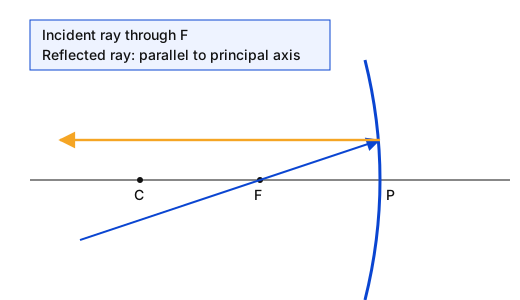
Consider a ray passing through the principal focus and not parallel to the principal axis of a concave mirror, after reflection, it will:
अवतल दर्पण के मुख्य फोकस से होकर गुजरने वाली और मुख्य अक्ष के समानांतर न होने वाली एक किरण पर विचार कीजिए, परावर्तन के बाद, वह:
  1. Apass through the principal focusमुख्य फोकस से होकर गुजरेगी
  2. Bemerge obliquely to the principal axisमुख्य अक्ष से तिरछी निकलेगी
  3. Cemerge parallel to the principal axisमुख्य अक्ष के समानांतर निकलेगी
  4. Dpass through the centre of curvatureवक्रता केंद्र से होकर गुजरेगी
Show answer

Concept: Standard rays for a concave mirror: a ray parallel to the principal axis passes through F after reflection, and vice versa.

  1. The path of light is reversible.
  2. So a ray passing through the principal focus F, after reflection, emerges parallel to the principal axis.
  3. A ray through C retraces its path; a ray to the pole reflects at an equal angle.

Yaad rakhein: Parallel → F, and F → Parallel.

Answer: (C) emerge parallel to the principal axis

अवधारणा: अवतल दर्पण की मानक किरणें: मुख्य अक्ष के समांतर किरण परावर्तन के बाद F से गुजरती है, और इसका विलोम भी सत्य है।

  1. प्रकाश का पथ उत्क्रमणीय होता है।
  2. अतः मुख्य फोकस F से गुजरने वाली किरण परावर्तन के बाद मुख्य अक्ष के समांतर निकलती है।
  3. C से गुजरने वाली किरण उसी पथ पर लौटती है; ध्रुव पर पड़ने वाली किरण समान कोण पर परावर्तित होती है।

याद रखें: समांतर → F, और F → समांतर।

उत्तर: (C) मुख्य अक्ष के समानांतर निकलेगी

RRB Technician Grade IIIGeneral ScienceReflection rules for concave mirrorRRB Technician Grade III 2024 · 28 Dec Shift 2 →
Q779.
Which of the following is NOT a characteristic of a solution?
निम्नलिखित में से कौन-सा विलयन (solution) का अभिलक्षण नहीं है?
  1. AThe particles of a solution are smaller than 1 nm (10−9 metre) in diameter.विलयन के कणों का व्यास 1 nm (10−9 मीटर) से छोटा होता है।
  2. BBecause of very small particle size, particles do not scatter a beam of light passing through the solution.कणों का आकार बहुत छोटा होने के कारण, कण विलयन से होकर गुजरने वाले प्रकाश के किरण-पुंज को प्रकीर्णित नहीं करते हैं।
  3. CA solution is a homogenous mixture.विलयन एक समांगी मिश्रण है।
  4. DThe solute particles can be separated from the mixture by the process of filtration.विलेय कणों को निस्पंदन (filtration) की प्रक्रिया द्वारा मिश्रण से अलग किया जा सकता है।
Show answer

Concept: A solution is a homogeneous mixture of two or more substances.

  1. Particle size is less than 1 nm (10−9 m) – true.
  2. Particles are too small to scatter light, so no Tyndall effect – true.
  3. Solute particles pass through filter paper and cannot be separated by filtration – so (D) is NOT a characteristic.

Yaad rakhein: Solution: no Tyndall effect, no settling, not separable by filtration.

Answer: (D) The solute particles can be separated from the mixture by the process of filtration.

अवधारणा: विलयन दो या अधिक पदार्थों का समांगी मिश्रण है।

  1. कणों का आकार 1 nm (10−9 m) से कम – सत्य।
  2. कण इतने छोटे होते हैं कि प्रकाश का प्रकीर्णन नहीं करते, टिंडल प्रभाव नहीं – सत्य।
  3. विलेय के कण फ़िल्टर पेपर से निकल जाते हैं, छानकर अलग नहीं होते – अतः (D) अभिलक्षण नहीं है।

याद रखें: विलयन: टिंडल प्रभाव नहीं, नीचे नहीं बैठता, छानकर अलग नहीं होता।

उत्तर: (D) विलेय कणों को निस्पंदन (filtration) की प्रक्रिया द्वारा मिश्रण से अलग किया जा सकता है।

RRB Technician Grade IIIGeneral ScienceSolutionsRRB Technician Grade III 2024 · 28 Dec Shift 2 →
Q780.
The pH value of the neutral solution is _______.
उदासीन विलयन का pH मान _______ होता है।
  1. A5
  2. B14
  3. C0
  4. D7
Show answer

Concept: The pH scale runs from 0 to 14 and measures H+ ion concentration.

  1. pH less than 7 → acidic.
  2. pH = 7 → neutral (e.g. pure water).
  3. pH greater than 7 → basic (alkaline).

Yaad rakhein: Pure water at room temperature has pH exactly 7.

Answer: (D) 7

अवधारणा: pH स्केल 0 से 14 तक होता है और H+ आयन की सांद्रता बताता है।

  1. pH 7 से कम → अम्लीय।
  2. pH = 7 → उदासीन (जैसे शुद्ध जल)।
  3. pH 7 से अधिक → क्षारीय।

याद रखें: कमरे के ताप पर शुद्ध जल का pH ठीक 7 होता है।

उत्तर: (D) 7

RRB Technician Grade IIIGeneral SciencepH scaleRRB Technician Grade III 2024 · 28 Dec Shift 2 →