Question bank

Q&A: practice questions with answers

Search questions on any topic. Filter by exam category, exam, subject and topic, try the question, then open the answer and explanation.

Courses – airGurukul

3,200 questions found.

Q941.
In a certain code language, ‘ROSE’ is coded as ‘4618’ and ‘SEAR’ is coded as ‘6438’. What is the code for ‘O’ in the given code language?
एक निश्चित कूट भाषा में, ‘ROSE’ को ‘4618’ के रूप में कूटबद्ध किया जाता है और ‘SEAR’ को ‘6438’ के रूप में कूटबद्ध किया जाता है। उसी कूट भाषा में ‘O’ के लिए कूट क्या है?
  1. A4
  2. B6
  3. C8
  4. D1
Show answer

Concept: Common letters in both words share the common digits.

  1. ROSE = {R, O, S, E} ↔ {4, 6, 1, 8}.
  2. SEAR = {S, E, A, R} ↔ {6, 4, 3, 8}.
  3. Common R, S, E ↔ common 4, 6, 8.
  4. O is left in ROSE and 1 is left in its code → O = 1.

Trick: Letter unique to word 1 = digit unique to code 1.

Answer: (D) 1

अवधारणा: दोनों शब्दों के उभयनिष्ठ अक्षरों के उभयनिष्ठ अंक होते हैं।

  1. ROSE = {R, O, S, E} ↔ {4, 6, 1, 8}।
  2. SEAR = {S, E, A, R} ↔ {6, 4, 3, 8}।
  3. उभयनिष्ठ R, S, E ↔ उभयनिष्ठ 4, 6, 8।
  4. ROSE में O बचा और कूट में 1 बचा → O = 1।

ट्रिक: पहले शब्द का अनोखा अक्षर = पहले कूट का अनोखा अंक।

उत्तर: (D) 1
RRB Technician Grade IIIGeneral Intelligence and ReasoningCoding–DecodingRRB Technician Grade III 2024 · 27 Dec Shift 3 →
Q942.
Based on the English alphabetical order, three of the following four letter-cluster pairs are alike in a certain way and thus form a group. Which pair does not belong to that group?
(Note: The odd one out is not based on the number of consonants/vowels or their position in the letter-cluster.)
अंग्रेजी वर्णमाला क्रम के आधार पर, निम्नलिखित चार अक्षर-समूह युग्मों में से तीन किसी निश्चित प्रकार से एकसमान हैं और इस प्रकार एक समूह बनाते हैं। कौन-सा युग्म उस समूह से संबंधित नहीं है?
(नोट: असंगत युग्म, व्यंजनों/स्वरों की संख्या या अक्षर-समूह में उनके स्थान पर आधारित नहीं है।)
  1. ATP – OI
  2. BKO – WA
  3. CBX – WQ
  4. DAW – VP
Show answer

Concept: Compare each letter of the first cluster with the corresponding letter of the second.

  1. TP – OI: T−5=O, P−7=I.
  2. BX – WQ: B−5=W, X−7=Q; AW – VP: A−5=V, W−7=P.
  3. KO – WA: K−5=F (not W), O−14=A.
  4. KO – WA does not follow (−5, −7).

Trick: Count backward with wrap-around: B−5 → A, Z, Y, X, W.

Answer: (B) KO – WA

अवधारणा: पहले समूह के प्रत्येक अक्षर की तुलना दूसरे समूह के संगत अक्षर से करें।

  1. TP – OI: T−5=O, P−7=I।
  2. BX – WQ: B−5=W, X−7=Q; AW – VP: A−5=V, W−7=P।
  3. KO – WA: K−5=F (W नहीं), O−14=A।
  4. KO – WA, (−5, −7) प्रतिरूप नहीं मानता।

ट्रिक: पीछे गिनते समय A के बाद Z पर जाएँ: B−5 → A, Z, Y, X, W।

उत्तर: (B) KO – WA

RRB Technician Grade IIIGeneral Intelligence and ReasoningOdd One Out (Letter Pairs)RRB Technician Grade III 2024 · 27 Dec Shift 3 →
Q943.
Refer to the given series and answer the question that follows (all numbers are single-digit numbers only, and all counting is to be done from left to right).
(Left) 8 7 7 8 5 2 7 1 4 3 2 4 7 7 6 4 5 3 1 2 6 7 9 7 9 8 0 1 3 3 (Right)
How many such odd digits are there, each of which is immediately preceded by a perfect square and immediately followed by an even digit? (Note: 1 will be considered as a perfect square.)
दी गई श्रृंखला को देखिए और उसके बाद आने वाले प्रश्न का उत्तर दीजिए (सभी संख्याएँ केवल एक-अंकीय संख्याएँ हैं, और सभी गणना बाएँ से दाएँ की जानी है)।
(बाएँ) 8 7 7 8 5 2 7 1 4 3 2 4 7 7 6 4 5 3 1 2 6 7 9 7 9 8 0 1 3 3 (दाएँ)
ऐसे कितने विषम अंक हैं, जिनमें से प्रत्येक के ठीक पहले एक पूर्ण वर्ग है और ठीक बाद एक सम अंक है? (नोट: 1 को पूर्ण वर्ग माना जाएगा।)
  1. A4
  2. B1
  3. C2
  4. D3
Show answer

Concept: Check every odd digit: the digit before must be 0, 1, 4 or 9 and the digit after must be even.

  1. Odd digits preceded by a perfect square: 3 (after 4), 7 (after 4), 5 (after 4), 7 (after 9), 1 (after 0), 3 (after 1).
  2. Followed by an even digit? 4 3 2 ✓; 4 7 7 ✗; 4 5 3 ✗; 9 7 9 ✗; 0 1 3 ✗; 1 3 3 ✗.
  3. Only one such digit: 3 in '4 3 2'.

Trick: First list triplets 'square – odd – even', e.g. scan for every 4, 9, 1, 0 and look two places ahead.

Answer: (B) 1

अवधारणा: हर विषम अंक जाँचें: पहले वाला अंक 0, 1, 4 या 9 हो और बाद वाला सम हो।

  1. पूर्ण वर्ग के बाद आने वाले विषम अंक: 3 (4 के बाद), 7 (4 के बाद), 5 (4 के बाद), 7 (9 के बाद), 1 (0 के बाद), 3 (1 के बाद)।
  2. बाद में सम अंक? 4 3 2 ✓; 4 7 7 ✗; 4 5 3 ✗; 9 7 9 ✗; 0 1 3 ✗; 1 3 3 ✗।
  3. ऐसा केवल एक अंक: '4 3 2' में 3।

ट्रिक: 'वर्ग – विषम – सम' वाले त्रिक खोजें: हर 4, 9, 1, 0 के बाद दो स्थान तक देखें।

उत्तर: (B) 1

RRB Technician Grade IIIGeneral Intelligence and ReasoningNumber Series (Conditions)RRB Technician Grade III 2024 · 27 Dec Shift 3 →
Q944.
Which of the following options should come in place of the question mark (?) in the given series to make it logically complete?
78, 124, 152, 198, 226, 272, ?
दी गई श्रृंखला को तार्किक रूप से पूर्ण करने के लिए प्रश्न चिह्न (?) के स्थान पर निम्नलिखित में से कौन-सा विकल्प आना चाहिए?
78, 124, 152, 198, 226, 272, ?
  1. A300
  2. B286
  3. C320
  4. D294
Show answer

Concept: Look at the differences between consecutive terms.

  1. 124−78=46, 152−124=28, 198−152=46, 226−198=28, 272−226=46.
  2. Differences alternate +46,+28.
  3. Next =272+28=300.

Trick: Alternating differences: the next one repeats the pattern.

Answer: (A) 300

अवधारणा: क्रमागत पदों का अंतर देखें।

  1. 124−78=46, 152−124=28, 198−152=46, 226−198=28, 272−226=46।
  2. अंतर बारी-बारी से +46,+28।
  3. अगला =272+28=300।

ट्रिक: अंतर बारी-बारी से दोहराते हैं, अगला अंतर +28।

उत्तर: (A) 300

RRB Technician Grade IIIGeneral Intelligence and ReasoningNumber SeriesRRB Technician Grade III 2024 · 27 Dec Shift 3 →
Q945.
Read the given statements and conclusions carefully. You have to take the given statements to be true even if they seem to be at variance from commonly known facts and decide which conclusion(s) logically follow(s) from the given statements.
Statements:
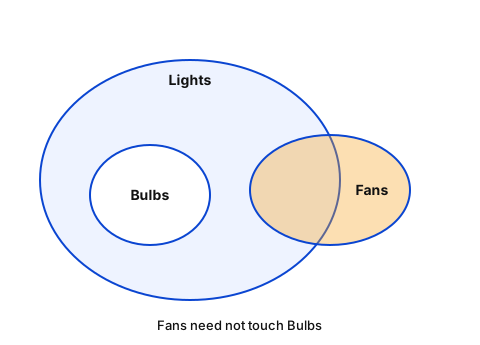
All bulbs are lights.
Some lights are fans.
Conclusions:
(I) Some fans are bulbs.
(II) All bulbs are fans.
दिए गए कथनों और निष्कर्षों को ध्यानपूर्वक पढ़िए। आपको दिए गए कथनों को सत्य मानना है, भले ही वे सामान्य रूप से ज्ञात तथ्यों से भिन्न प्रतीत होते हों, और निर्णय लेना है कि कौन-सा/से निष्कर्ष दिए गए कथनों का तार्किक रूप से अनुसरण करता/करते है/हैं।
कथन:
सभी बल्ब, लाइटें हैं।
कुछ लाइटें, पंखे हैं।
निष्कर्ष:
(I) कुछ पंखे, बल्ब हैं।
(II) सभी बल्ब, पंखे हैं।
  1. AOnly conclusion (I) followsकेवल निष्कर्ष (I) अनुसरण करता है
  2. BOnly conclusion (II) followsकेवल निष्कर्ष (II) अनुसरण करता है
  3. CNeither conclusion (I) nor (II) followsन तो निष्कर्ष (I) और न ही (II) अनुसरण करता है
  4. DBoth conclusions (I) and (II) followदोनों निष्कर्ष (I) और (II) अनुसरण करते हैं
Show answer

Concept: Fans are linked to lights, but nothing links fans to bulbs.

  1. All bulbs are lights; some lights are fans.
  2. Fans may lie in the part of lights outside bulbs, so (I) 'some fans are bulbs' is not certain.
  3. (II) 'all bulbs are fans' is also not certain.

Yaad rakhein: 'All A are B' + 'Some B are C' gives no definite conclusion between A and C.

Answer: (C) Neither conclusion (I) nor (II) follows

अवधारणा: पंखे, लाइटों से जुड़े हैं, पर बल्बों से कोई सीधा संबंध नहीं है।

  1. सभी बल्ब लाइट हैं; कुछ लाइट पंखे हैं।
  2. पंखे लाइट के उस भाग में हो सकते हैं जो बल्ब से बाहर है, अतः (I) निश्चित नहीं।
  3. (II) 'सभी बल्ब पंखे हैं' भी निश्चित नहीं।

याद रखें: 'सभी A, B हैं' + 'कुछ B, C हैं' से A और C के बीच कोई निश्चित निष्कर्ष नहीं।

उत्तर: (C) न तो निष्कर्ष (I) और न ही (II) अनुसरण करता है

RRB Technician Grade IIIGeneral Intelligence and ReasoningSyllogismRRB Technician Grade III 2024 · 27 Dec Shift 3 →
Q946.
Read the given statements and conclusions carefully. You have to take the given statements to be true even if they seem to be at variance from commonly known facts and decide which conclusion(s) logically follow(s) from the given statements.
Statements:
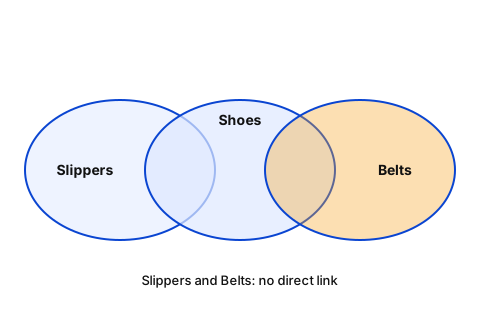
Some slippers are shoes.
Some shoes are belts.
Conclusions:
(I) Some belts are slippers.
(II) No belt is a slipper.
दिए गए कथनों और निष्कर्षों को ध्यानपूर्वक पढ़िए। आपको दिए गए कथनों को सत्य मानना है, भले ही वे सामान्य रूप से ज्ञात तथ्यों से भिन्न प्रतीत होते हों, और निर्णय लेना है कि कौन-सा/से निष्कर्ष दिए गए कथनों का तार्किक रूप से अनुसरण करता/करते है/हैं।
कथन:
कुछ चप्पलें, जूते हैं।
कुछ जूते, बेल्ट हैं।
निष्कर्ष:
(I) कुछ बेल्ट, चप्पलें हैं।
(II) कोई बेल्ट, चप्पल नहीं है।
  1. AOnly conclusion (II) followsकेवल निष्कर्ष (II) अनुसरण करता है
  2. BNeither conclusion (I) nor (II) followsन तो निष्कर्ष (I) और न ही (II) अनुसरण करता है
  3. CBoth conclusions (I) and (II) followदोनों निष्कर्ष (I) और (II) अनुसरण करते हैं
  4. DOnly conclusion (I) followsकेवल निष्कर्ष (I) अनुसरण करता है
Show answer

Concept: Two 'Some' statements give no definite link between the end terms.

  1. Slippers are linked only to shoes, and belts only to shoes.
  2. 'Some belts are slippers' is possible, not certain → (I) does not follow.
  3. 'No belt is a slipper' is also only possible → (II) does not follow.

Yaad rakhein: Some + Some ⇒ no conclusion. (I) and (II) form an 'either–or' pair, but each alone does not follow.

Answer: (B) Neither conclusion (I) nor (II) follows

अवधारणा: दो 'कुछ' वाले कथनों से अंतिम पदों के बीच कोई निश्चित संबंध नहीं बनता।

  1. चप्पलें केवल जूतों से और बेल्ट भी केवल जूतों से जुड़ी हैं।
  2. 'कुछ बेल्ट चप्पल हैं' संभव है, निश्चित नहीं → (I) अनुसरण नहीं करता।
  3. 'कोई बेल्ट चप्पल नहीं है' भी केवल संभव है → (II) अनुसरण नहीं करता।

याद रखें: कुछ + कुछ ⇒ कोई निष्कर्ष नहीं। (I) व (II) 'या तो–या' युग्म हैं, पर अकेले कोई अनुसरण नहीं करता।

उत्तर: (B) न तो निष्कर्ष (I) और न ही (II) अनुसरण करता है

RRB Technician Grade IIIGeneral Intelligence and ReasoningSyllogismRRB Technician Grade III 2024 · 27 Dec Shift 3 →
Q947.
Select the triad which follows the same pattern as that followed by the two triads given below. Both triads follow the same pattern.
SALT - ALST - TLAS
HOLE - OLHE - ELOH
उस त्रिक का चयन कीजिए जो उसी पैटर्न का अनुसरण करता है जिसका अनुसरण नीचे दिए गए दो त्रिकों द्वारा किया गया है। दोनों त्रिक एक ही पैटर्न का अनुसरण करते हैं।
SALT - ALST - TLAS
HOLE - OLHE - ELOH
  1. AGREW - GERW - WERG
  2. BVIBE - IBVE - EBIV
  3. CFING - INFG - INGF
  4. DROAM - ORAM - MOAR
Show answer

Concept: Find how the 2nd and 3rd words are made from the 1st.

  1. SALT → ALST: letters in order 2, 3, 1, 4. HOLE → OLHE: same.
  2. 3rd word is the 1st word reversed: TLAS, ELOH.
  3. VIBE → IBVE (2, 3, 1, 4) ✓ and EBIV (reverse) ✓.

Trick: Check the easy rule (reverse) first to eliminate options quickly – only VIBE gives EBIV.

Answer: (B) VIBE - IBVE - EBIV

अवधारणा: देखें कि दूसरा और तीसरा शब्द पहले से कैसे बने हैं।

  1. SALT → ALST: अक्षर क्रम 2, 3, 1, 4। HOLE → OLHE: वही।
  2. तीसरा शब्द पहले शब्द का उल्टा है: TLAS, ELOH।
  3. VIBE → IBVE (2, 3, 1, 4) ✓ और EBIV (उल्टा) ✓।

ट्रिक: पहले आसान नियम (उल्टा) जाँचें – केवल VIBE से EBIV बनता है।

उत्तर: (B) VIBE - IBVE - EBIV

RRB Technician Grade IIIGeneral Intelligence and ReasoningLetter TriadsRRB Technician Grade III 2024 · 27 Dec Shift 3 →
Q948.
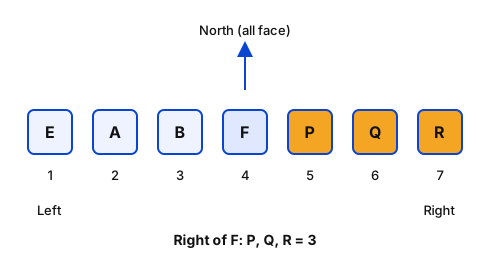
Seven people, A, B, E, F, P, Q and R, are sitting in a row, facing north. Only two people sit to the left of B. Only three people sit between B and R. P sits second to the right of B. Only two people sit between P and A. F sits at some place to the right of E but at some place to the left of Q. How many people sit to the right of F?
सात व्यक्ति, A, B, E, F, P, Q और R, एक पंक्ति में उत्तर की ओर मुख करके बैठे हैं। B के बाईं ओर केवल दो व्यक्ति बैठे हैं। B और R के बीच केवल तीन व्यक्ति बैठे हैं। P, B के दाईं ओर दूसरे स्थान पर बैठा है। P और A के बीच केवल दो व्यक्ति बैठे हैं। F, E के दाईं ओर किसी स्थान पर लेकिन Q के बाईं ओर किसी स्थान पर बैठा है। F के दाईं ओर कितने व्यक्ति बैठे हैं?
  1. ATwoदो
  2. BThreeतीन
  3. CFourचार
  4. DOneएक
Show answer

Concept: Facing north, left and right are the viewer's left and right. Number seats 1–7 from the left.

  1. Two to the left of B → B at 3. Three between B and R → R at 7.
  2. P second to the right of B → P at 5. Two between P and A → A at 2.
  3. Seats 1, 4, 6 remain; E left of F left of Q → E 1, F 4, Q 6.
  4. Right of F: P, Q, R → three people.

Trick: Fill the seat numbers from the fixed clues first, then use the order clue for the rest.

Answer: (B) Three

अवधारणा: उत्तर की ओर मुख होने पर बाएँ-दाएँ हमारे ही बाएँ-दाएँ हैं। बाएँ से स्थान 1–7 लें।

  1. B के बाएँ दो → B स्थान 3 पर। B और R के बीच तीन → R स्थान 7 पर।
  2. P, B के दाएँ दूसरा → P स्थान 5 पर। P और A के बीच दो → A स्थान 2 पर।
  3. स्थान 1, 4, 6 बचे; E, F के बाएँ और F, Q के बाएँ → E 1, F 4, Q 6।
  4. F के दाएँ: P, Q, R → तीन व्यक्ति।

ट्रिक: पहले निश्चित सूचनाओं से स्थान भरें, फिर क्रम वाली सूचना से बाकी।

उत्तर: (B) तीन

RRB Technician Grade IIIGeneral Intelligence and ReasoningLinear Seating ArrangementRRB Technician Grade III 2024 · 27 Dec Shift 3 →
Q949.
If ‘A’ stands for ‘÷’, ‘B’ stands for ‘×’, ‘C’ stands for ‘+’ and ‘D’ stands for ‘−’, what will be come in place of the question mark ‘?’ in the following equation?
(14 B 4) A 2 C (15 A 5) B 9 D 34 C (48 A 6) B 2 = ?
यदि ‘A’ का अर्थ ‘÷’, ‘B’ का अर्थ ‘×’, ‘C’ का अर्थ ‘+’ और ‘D’ का अर्थ ‘−’ है, तो निम्नलिखित समीकरण में प्रश्न चिह्न ‘?’ के स्थान पर क्या आएगा?
(14 B 4) A 2 C (15 A 5) B 9 D 34 C (48 A 6) B 2 = ?
  1. A17
  2. B45
  3. C22
  4. D37
Show answer

Concept: Replace letters by signs and solve using BODMAS.

  1. (14×4)÷2+(15÷5)×9−34+(48÷6)×2.
  2. =56÷2+3×9−34+8×2.
  3. =28+27−34+16=37.

Yaad rakhein: Solve each bracket, then all × and ÷, then + and − left to right.

Answer: (D) 37

अवधारणा: अक्षरों के स्थान पर चिह्न रखें और BODMAS से हल करें।

  1. (14×4)÷2+(15÷5)×9−34+(48÷6)×2।
  2. =56÷2+3×9−34+8×2।
  3. =28+27−34+16=37।

याद रखें: पहले कोष्ठक, फिर × और ÷, फिर बाएँ से दाएँ + और −।

उत्तर: (D) 37

RRB Technician Grade IIIGeneral Intelligence and ReasoningMathematical OperationsRRB Technician Grade III 2024 · 27 Dec Shift 3 →
Q950.
Which of the following options should come in place of the question mark (?) in the given series based on the English alphabetical order?
YTL, QLD, IDV, AVN, ?
अंग्रेजी वर्णमाला क्रम के आधार पर दी गई श्रृंखला में प्रश्न चिह्न (?) के स्थान पर निम्नलिखित में से कौन-सा विकल्प आना चाहिए?
YTL, QLD, IDV, AVN, ?
  1. ASNF
  2. BSNG
  3. CSMG
  4. DSMF
Show answer

Concept: Each letter position moves back by 8 (with wrap-around).

  1. 1st letters: Y, Q, I, A → −8 → S (A−8 wraps to S).
  2. 2nd letters: T, L, D, V → −8 → N.
  3. 3rd letters: L, D, V, N → −8 → F.
  4. Next term: SNF.

Trick: Position values: 1−8+26=19 → S, 22−8=14 → N, 14−8=6 → F.

Answer: (A) SNF

अवधारणा: हर स्थान का अक्षर 8 पीछे जाता है (Z के बाद चक्र में)।

  1. पहले अक्षर: Y, Q, I, A → −8 → S (A−8 = S)।
  2. दूसरे अक्षर: T, L, D, V → −8 → N।
  3. तीसरे अक्षर: L, D, V, N → −8 → F।
  4. अगला पद: SNF।

ट्रिक: स्थान मान: 1−8+26=19 → S, 22−8=14 → N, 14−8=6 → F।

उत्तर: (A) SNF

RRB Technician Grade IIIGeneral Intelligence and ReasoningLetter SeriesRRB Technician Grade III 2024 · 27 Dec Shift 3 →
Q951.
Which products are formed in the chlor-alkali process when electricity is passed through an aqueous sodium chloride solution?
NaCl(aq)+H2O(l)→Products
क्लोर-क्षार प्रक्रम (chlor-alkali process) में जब सोडियम क्लोराइड के जलीय विलयन से विद्युत प्रवाहित की जाती है, तो कौन-से उत्पाद बनते हैं?
NaCl(aq)+H2O(l)→उत्पाद
  1. ANaCl+H2
  2. BNaOH+H2+Cl2
  3. CH2+O2
  4. DNaHCO3+Cl2
Show answer

Concept: Electrolysis of brine (aqueous NaCl) is called the chlor-alkali process because it gives chlorine and an alkali (NaOH).

  1. Equation: 2NaCl(aq)+2H2O(l)→2NaOH(aq)+Cl2(g)+H2(g).
  2. Cl2 gas is released at the anode.
  3. H2 gas is released at the cathode; NaOH solution forms near the cathode.

Yaad rakhein: "Chlor" = Cl2, "alkali" = NaOH, plus H2 as a by-product – three products.

Answer: (B) NaOH+H2+Cl2

अवधारणा: नमक के जलीय विलयन (ब्राइन) का विद्युत अपघटन क्लोर-क्षार प्रक्रिया कहलाता है, क्योंकि इससे क्लोरीन और क्षार (NaOH) बनते हैं।

  1. समीकरण: 2NaCl(aq)+2H2O(l)→2NaOH(aq)+Cl2(g)+H2(g)।
  2. एनोड पर Cl2 गैस निकलती है।
  3. कैथोड पर H2 गैस निकलती है और कैथोड के पास NaOH विलयन बनता है।

याद रखें: "क्लोर" = Cl2, "क्षार" = NaOH, साथ में H2 – कुल तीन उत्पाद।

उत्तर: (B) NaOH+H2+Cl2

RRB Technician Grade IIIGeneral ScienceChlor-alkali processRRB Technician Grade III 2024 · 27 Dec Shift 3 →
Q952.
Select the INCORRECT pair.
गलत युग्म का चयन कीजिए।
  1. APlastic glass – non-biodegradableप्लास्टिक गिलास – जैव-अनिम्नीकरणीय (non-biodegradable)
  2. BVegetable – biodegradableसब्जी – जैव-निम्नीकरणीय (biodegradable)
  3. CPaper cup – biodegradableकागज़ का कप – जैव-निम्नीकरणीय
  4. DKulhad – non-biodegradableकुल्हड़ – जैव-अनिम्नीकरणीय
Show answer

Concept: Biodegradable materials are broken down by microbes (bacteria, fungi); non-biodegradable ones (plastic, glass, metals) are not.

  1. Plastic glass – non-biodegradable: correct.
  2. Vegetable peels – biodegradable: correct.
  3. Paper cup – made of paper (cellulose), biodegradable: correct.
  4. Kulhad – baked clay cup; it breaks down and mixes back into the soil, so it is eco-friendly/biodegradable. Calling it non-biodegradable is wrong.

Yaad rakhein: Kulhads replaced plastic cups on railways precisely because they are eco-friendly and return to soil.

Answer: (D) Kulhad – non-biodegradable

अवधारणा: जैव-निम्नीकरणीय पदार्थ सूक्ष्मजीवों (बैक्टीरिया, कवक) द्वारा अपघटित हो जाते हैं; अजैव-निम्नीकरणीय (प्लास्टिक, काँच, धातु) नहीं होते।

  1. प्लास्टिक गिलास – अजैव-निम्नीकरणीय: सही।
  2. सब्ज़ी के छिलके – जैव-निम्नीकरणीय: सही।
  3. कागज़ का कप – सेलुलोज़ से बना, जैव-निम्नीकरणीय: सही।
  4. कुल्हड़ – पकी मिट्टी का कप, जो टूटकर फिर मिट्टी में मिल जाता है, अतः पर्यावरण-अनुकूल है। इसे अजैव-निम्नीकरणीय कहना गलत है।

याद रखें: रेलवे में प्लास्टिक कप की जगह कुल्हड़ इसलिए लाए गए क्योंकि वे मिट्टी में मिल जाते हैं।

उत्तर: (D) कुल्हड़ – जैव-अनिम्नीकरणीय

RRB Technician Grade IIIGeneral ScienceBiodegradable substancesRRB Technician Grade III 2024 · 27 Dec Shift 3 →
Q953.
A combination of two lenses of power +2.0 D and −0.25 D is equivalent to a single lens of power:
+2.0 D और −0.25 D क्षमता वाले दो लेंसों का संयोजन किस क्षमता के एकल लेंस के तुल्य है?
  1. A+2.25 D
  2. B+1.75 D
  3. C+1.25 D
  4. D−3.5 D
Show answer

Concept: For lenses in contact, the net power is the algebraic sum of the individual powers: P=P1+P2.

  1. P1=+2.0 D, P2=−0.25 D.
  2. P=2.0+(−0.25)=+1.75 D.
  3. Positive sign → the combination acts as a converging lens.

Trick: Just add with signs – convex (+) and concave (−) partly cancel each other.

Answer: (B) +1.75 D

अवधारणा: संपर्क में रखे लेंसों की कुल क्षमता उनकी क्षमताओं का बीजगणितीय योग होती है: P=P1+P2।

  1. P1=+2.0 D, P2=−0.25 D।
  2. P=2.0+(−0.25)=+1.75 D।
  3. धनात्मक चिह्न → संयोजन अभिसारी लेंस की तरह कार्य करता है।

ट्रिक: चिह्न सहित सीधे जोड़ दें – उत्तल (+) और अवतल (−) एक-दूसरे को आंशिक रूप से काटते हैं।

उत्तर: (B) +1.75 D

RRB Technician Grade IIIGeneral SciencePower of lens combinationRRB Technician Grade III 2024 · 27 Dec Shift 3 →
Q954.
Which statement is NOT true for magnetic field lines?
चुंबकीय क्षेत्र रेखाओं के लिए कौन-सा कथन सत्य नहीं है?
  1. AThe relative strength of the magnetic field is shown by the degree of closeness of the field lines.चुंबकीय क्षेत्र की आपेक्षिक प्रबलता को क्षेत्र रेखाओं की निकटता की कोटि द्वारा दर्शाया जाता है।
  2. BNo two field lines are found to cross each other.कोई भी दो क्षेत्र रेखाएँ एक-दूसरे को प्रतिच्छेद करती हुई नहीं पाई जातीं।
  3. CMagnetic field lines are not closed curves.चुंबकीय क्षेत्र रेखाएँ बंद वक्र नहीं होतीं।
  4. DInside the magnet, the direction of field lines is from its south pole to its north pole.चुंबक के भीतर, क्षेत्र रेखाओं की दिशा उसके दक्षिणी ध्रुव से उत्तरी ध्रुव की ओर होती है।
Show answer

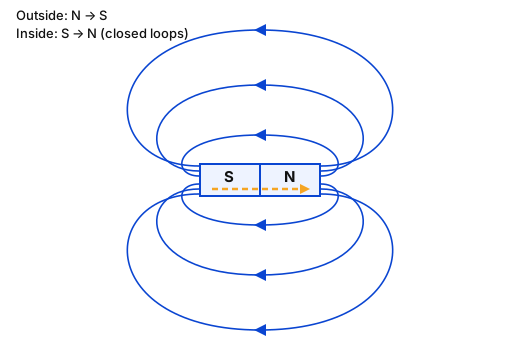
Concept: Magnetic field lines of a magnet are continuous closed curves.

  1. Outside the magnet they go from N to S; inside, from S to N – so each line forms a closed loop. Hence (C) is NOT true.
  2. Closer lines mean stronger field – (A) true.
  3. Two lines never cross, otherwise the field would have two directions at one point – (B) true.
  4. Inside the magnet the direction is S → N – (D) true.

Yaad rakhein: Field lines never start or end – they always form closed loops.

Answer: (C) Magnetic field lines are not closed curves.

अवधारणा: चुंबक की चुंबकीय क्षेत्र रेखाएँ सतत बंद वक्र होती हैं।

  1. चुंबक के बाहर ये N से S तथा अंदर S से N जाती हैं – अतः प्रत्येक रेखा बंद लूप बनाती है। इसलिए (C) सत्य नहीं है।
  2. रेखाएँ जितनी पास, क्षेत्र उतना प्रबल – (A) सत्य।
  3. दो रेखाएँ कभी नहीं काटतीं, वरना एक बिंदु पर क्षेत्र की दो दिशाएँ होतीं – (B) सत्य।
  4. चुंबक के अंदर दिशा S → N – (D) सत्य।

याद रखें: क्षेत्र रेखाएँ न शुरू होती हैं न खत्म – हमेशा बंद लूप बनाती हैं।

उत्तर: (C) चुंबकीय क्षेत्र रेखाएँ बंद वक्र नहीं होतीं।

RRB Technician Grade IIIGeneral ScienceMagnetic field linesRRB Technician Grade III 2024 · 27 Dec Shift 3 →
Q955.
A change of state directly from gas to solid without changing into liquid state is called:
द्रव अवस्था में परिवर्तित हुए बिना गैस से सीधे ठोस में अवस्था परिवर्तन को क्या कहा जाता है?
  1. Adepositionनिक्षेपण (deposition)
  2. Bfusionसंगलन (fusion)
  3. Csolidificationठोसीकरण (solidification)
  4. Dvaporisationवाष्पन (vaporisation)
Show answer

Concept: Gas → solid directly (skipping the liquid state) is deposition (desublimation); the reverse, solid → gas, is sublimation.

  1. Fusion = solid → liquid (melting).
  2. Solidification = liquid → solid.
  3. Vaporisation = liquid → gas.
  4. Gas → solid directly = deposition, e.g. frost forming from water vapour.

Yaad rakhein: Sublimation and deposition are opposite pairs that skip the liquid state.

Answer: (A) deposition

अवधारणा: गैस का सीधे ठोस में बदलना (द्रव अवस्था छोड़कर) निक्षेपण (deposition) कहलाता है; इसका उल्टा, ठोस → गैस, ऊर्ध्वपातन है।

  1. संगलन (fusion) = ठोस → द्रव।
  2. ठोसीकरण = द्रव → ठोस।
  3. वाष्पन = द्रव → गैस।
  4. गैस → सीधे ठोस = निक्षेपण, जैसे जलवाष्प से पाला (frost) बनना।

याद रखें: ऊर्ध्वपातन और निक्षेपण उल्टे जोड़े हैं, दोनों में द्रव अवस्था नहीं आती।

उत्तर: (A) निक्षेपण (deposition)

RRB Technician Grade IIIGeneral ScienceChange of stateRRB Technician Grade III 2024 · 27 Dec Shift 3 →
Q956.
Vacuoles are present mainly of large size in ______.
रिक्तिकाएँ (vacuoles) मुख्य रूप से बड़े आकार की ______ में उपस्थित होती हैं।
  1. Aboth plant cells and animal cellsपादप कोशिकाओं और जंतु कोशिकाओं दोनों
  2. Bplant cellsपादप कोशिकाओं
  3. Canimal cellsजंतु कोशिकाओं
  4. Dbacteriaजीवाणुओं
Show answer

Concept: Vacuoles are storage sacs filled with cell sap. Plant cells have one very large central vacuole; animal cells have small ones or none.

  1. A mature plant cell vacuole can occupy 50–90% of the cell volume.
  2. It stores water, salts, sugars and wastes and keeps the cell turgid.
  3. Animal cells have only small, temporary vacuoles.

Yaad rakhein: Large central vacuole + cell wall + chloroplast → plant cell.

Answer: (B) plant cells

अवधारणा: रिक्तिकाएँ कोशिका रस से भरी भंडारण थैलियाँ हैं। पादप कोशिका में एक बहुत बड़ी केंद्रीय रिक्तिका होती है; जंतु कोशिका में छोटी या नहीं होतीं।

  1. परिपक्व पादप कोशिका में रिक्तिका कोशिका के 50–90% आयतन तक घेर सकती है।
  2. यह जल, लवण, शर्करा और अपशिष्ट संग्रहित करती है तथा कोशिका को स्फीत रखती है।
  3. जंतु कोशिकाओं में केवल छोटी, अस्थायी रिक्तिकाएँ होती हैं।

याद रखें: बड़ी केंद्रीय रिक्तिका + कोशिका भित्ति + हरितलवक → पादप कोशिका।

उत्तर: (B) पादप कोशिकाओं

RRB Technician Grade IIIGeneral ScienceVacuolesRRB Technician Grade III 2024 · 27 Dec Shift 3 →
Q957.
Which of the following metals does NOT react with cold water?
निम्नलिखित में से कौन-सी धातु ठंडे जल के साथ अभिक्रिया नहीं करती है?
  1. AMagnesiumमैग्नीशियम
  2. BSodiumसोडियम
  3. CCalciumकैल्शियम
  4. DPotassiumपोटैशियम
Show answer

Concept: Reactivity series: K > Na > Ca > Mg > Al > Zn > Fe … Very reactive metals react even with cold water.

  1. K and Na react violently with cold water: 2Na+2H2O→2NaOH+H2.
  2. Ca reacts with cold water less violently (the H2 bubbles make it float).
  3. Mg does not react with cold water; it reacts with hot water and with steam to form MgO and H2.

Yaad rakhein: K, Na, Ca – cold water; Mg – hot water; Al, Zn, Fe – only steam.

Answer: (A) Magnesium

अवधारणा: सक्रियता श्रेणी: K > Na > Ca > Mg > Al > Zn > Fe … अत्यधिक सक्रिय धातुएँ ठंडे जल से भी अभिक्रिया करती हैं।

  1. K और Na ठंडे जल से तीव्र अभिक्रिया करते हैं: 2Na+2H2O→2NaOH+H2।
  2. Ca ठंडे जल से कम तीव्रता से अभिक्रिया करता है (H2 के बुलबुलों से तैरने लगता है)।
  3. Mg ठंडे जल से अभिक्रिया नहीं करता; गर्म जल और भाप से MgO तथा H2 बनाता है।

याद रखें: K, Na, Ca – ठंडा जल; Mg – गर्म जल; Al, Zn, Fe – केवल भाप।

उत्तर: (A) मैग्नीशियम

RRB Technician Grade IIIGeneral ScienceReaction of metals with waterRRB Technician Grade III 2024 · 27 Dec Shift 3 →
Q958.
A worker lifts a rice bag of 10 kg from the ground and puts it on the truck 2 m above the ground. Calculate the work done by him on the rice bag. (Given, g = 10 m s−2)
एक श्रमिक 10 kg के चावल के बोरे को जमीन से उठाकर जमीन से 2 m ऊपर ट्रक पर रखता है। उसके द्वारा चावल के बोरे पर किए गए कार्य की गणना कीजिए। (दिया है, g = 10 m s−2)
  1. A100 J
  2. B59 J
  3. C200 J
  4. D153 J
Show answer

Concept: Work done in lifting a body = gain in potential energy: W=mgh.

  1. m=10 kg, g=10 ms−2, h=2 m.
  2. W=10×10×2=200 J.

Trick: Lifting work = weight × height: 100 N×2 m=200 J.

Answer: (C) 200 J

अवधारणा: किसी वस्तु को ऊपर उठाने में किया गया कार्य = स्थितिज ऊर्जा में वृद्धि: W=mgh।

  1. m=10 kg, g=10 ms−2, h=2 m।
  2. W=10×10×2=200 J।

ट्रिक: उठाने का कार्य = भार × ऊँचाई: 100 N×2 m=200 J।

उत्तर: (C) 200 J

RRB Technician Grade IIIGeneral ScienceWork done against gravityRRB Technician Grade III 2024 · 27 Dec Shift 3 →
Q959.
Select the correct option related to the function of auxin in plants.
पौधों में ऑक्सिन (auxin) के कार्य से संबंधित सही विकल्प का चयन कीजिए।
  1. AHelps the cells to grow longerकोशिकाओं को लंबा होने में सहायता करता है
  2. BInduce floweringपुष्पन को प्रेरित करना
  3. CIncreases stem widthतने की चौड़ाई बढ़ाता है
  4. DMake plants insect resistantपौधों को कीट प्रतिरोधी बनाना
Show answer

Concept: Auxin is a growth hormone made at shoot tips; it promotes cell elongation.

  1. Auxin makes cells grow longer – this causes bending of shoots towards light (phototropism).
  2. Inducing flowering is linked to florigen/gibberellins, not mainly auxin.
  3. Increase in stem girth is due to cytokinin-driven cell division / cambium activity, not auxin elongation.

Yaad rakhein: Auxin → elongation; gibberellin → stem growth; cytokinin → cell division; abscisic acid → inhibits growth.

Answer: (A) Helps the cells to grow longer

अवधारणा: ऑक्सिन तने के शीर्ष पर बनने वाला वृद्धि हार्मोन है; यह कोशिकाओं को लंबा करता है।

  1. ऑक्सिन कोशिकाओं को लंबा बढ़ाता है – इसी से तना प्रकाश की ओर मुड़ता है (प्रकाशानुवर्तन)।
  2. पुष्पन प्रेरित करना फ्लोरिजन/जिबरेलिन से जुड़ा है, मुख्यतः ऑक्सिन से नहीं।
  3. तने की मोटाई कोशिका विभाजन/कैंबियम सक्रियता से बढ़ती है, ऑक्सिन से नहीं।

याद रखें: ऑक्सिन → लंबाई; जिबरेलिन → तने की वृद्धि; साइटोकाइनिन → कोशिका विभाजन; एब्सिसिक अम्ल → वृद्धि रोकता है।

उत्तर: (A) कोशिकाओं को लंबा होने में सहायता करता है

RRB Technician Grade IIIGeneral SciencePlant hormones – auxinRRB Technician Grade III 2024 · 27 Dec Shift 3 →
Q960.
Which of the following statements is/are correct regarding the atomic number of an element?
Statement I: The atomic number of an element represents the number of protons present in the nucleus of an atom.
Statement II: The atomic number of an element represents the number of neutrons present in the nucleus of an atom.
किसी तत्व के परमाणु क्रमांक के संबंध में निम्नलिखित में से कौन-सा/से कथन सही है/हैं?
कथन I: किसी तत्व का परमाणु क्रमांक, परमाणु के नाभिक में उपस्थित प्रोटॉनों की संख्या को दर्शाता है।
कथन II: किसी तत्व का परमाणु क्रमांक, परमाणु के नाभिक में उपस्थित न्यूट्रॉनों की संख्या को दर्शाता है।
  1. AOnly statement I is correct.केवल कथन I सही है।
  2. BOnly statement II is correct.केवल कथन II सही है।
  3. CBoth statements I and II are correct.कथन I और II दोनों सही हैं।
  4. DNeither statement I nor II is correct.न तो कथन I और न ही II सही है।
Show answer

Concept: Atomic number (Z) = number of protons in the nucleus (= electrons in a neutral atom).

  1. Statement I: Z = number of protons – correct.
  2. Statement II: neutrons are given by mass number − atomic number (A−Z), not by Z – incorrect.

Yaad rakhein: Z = protons; A = protons + neutrons; neutrons = A−Z.

Answer: (A) Only statement I is correct.

अवधारणा: परमाणु क्रमांक (Z) = नाभिक में प्रोटॉनों की संख्या (उदासीन परमाणु में इलेक्ट्रॉनों के बराबर)।

  1. कथन I: Z = प्रोटॉनों की संख्या – सही।
  2. कथन II: न्यूट्रॉन = द्रव्यमान संख्या − परमाणु क्रमांक (A−Z), Z नहीं – गलत।

याद रखें: Z = प्रोटॉन; A = प्रोटॉन + न्यूट्रॉन; न्यूट्रॉन = A−Z।

उत्तर: (A) केवल कथन I सही है।

RRB Technician Grade IIIGeneral ScienceAtomic numberRRB Technician Grade III 2024 · 27 Dec Shift 3 →