Question bank

Q&A: practice questions with answers

Search questions on any topic. Filter by exam category, exam, subject and topic, try the question, then open the answer and explanation.

Courses – airGurukul

3,200 questions found.

Q961.
Which of the following statements is correct about the ozone?
ओज़ोन के बारे में निम्नलिखित में से कौन-सा कथन सही है?
  1. AIt is formed by combining only two atoms of oxygen.यह ऑक्सीजन के केवल दो परमाणुओं के संयोजन से बनती है।
  2. BIt causes blood cancer.यह रक्त कैंसर का कारण बनती है।
  3. CDecrease in the amount of ozone in the atmosphere is due to chlorofluorocarbons (CFC).वायुमंडल में ओज़ोन की मात्रा में कमी क्लोरोफ्लोरोकार्बन (CFC) के कारण होती है।
  4. DIt is not poisonous.यह विषैली नहीं है।
Show answer

Concept: Ozone (O3) has three oxygen atoms. It is poisonous at ground level, but in the stratosphere it shields us from UV rays.

  1. (A) wrong – ozone is O3, three atoms, not two.
  2. (B) wrong – UV radiation reaching Earth due to ozone loss causes skin cancer, not blood cancer from ozone.
  3. (D) wrong – ozone is a deadly poison.
  4. (C) correct – chlorofluorocarbons (CFCs) used in refrigerants and aerosols release chlorine that destroys ozone.

Yaad rakhein: CFC → ozone depletion (Montreal Protocol, 1987).

Answer: (C) Decrease in the amount of ozone in the atmosphere is due to chlorofluorocarbons (CFC).

अवधारणा: ओज़ोन (O3) में तीन ऑक्सीजन परमाणु होते हैं। धरातल पर यह विषैली है, पर समताप मंडल में यह पराबैंगनी (UV) किरणों से हमारी रक्षा करती है।

  1. (A) गलत – ओज़ोन O3 है, तीन परमाणु, दो नहीं।
  2. (B) गलत – ओज़ोन क्षय से पृथ्वी पर पहुँचने वाली UV किरणें त्वचा कैंसर करती हैं, ओज़ोन रक्त कैंसर नहीं।
  3. (D) गलत – ओज़ोन घातक विष है।
  4. (C) सही – रेफ्रिजरेंट व एरोसोल में प्रयुक्त क्लोरोफ्लोरोकार्बन (CFC) क्लोरीन मुक्त कर ओज़ोन नष्ट करते हैं।

याद रखें: CFC → ओज़ोन क्षय (मॉन्ट्रियल प्रोटोकॉल, 1987)।

उत्तर: (C) वायुमंडल में ओज़ोन की मात्रा में कमी क्लोरोफ्लोरोकार्बन (CFC) के कारण होती है।
RRB Technician Grade IIIGeneral ScienceOzone layerRRB Technician Grade III 2024 · 27 Dec Shift 3 →
Q962.
Which of the following metals reacts with very dilute nitric acid to evolve hydrogen gas?
निम्नलिखित में से कौन-सी धातु अति तनु नाइट्रिक अम्ल के साथ अभिक्रिया करके हाइड्रोजन गैस मुक्त करती है?
  1. AZn
  2. BMn
  3. CFe
  4. DAl
Show answer

Concept: Nitric acid is a strong oxidising agent: it oxidises the H2 formed to water and itself is reduced to oxides of nitrogen, so usually no H2 is released.

  1. Exception: magnesium (Mg) and manganese (Mn) react with very dilute HNO3 to give H2 gas.
  2. Mn+2HNO3→Mn(NO3)2+H2.
  3. Zn, Fe and Al give nitrogen oxides instead.

Yaad rakhein: Only "M-M" – Mg and Mn – give H2 with very dilute nitric acid.

Answer: (B) Mn

अवधारणा: नाइट्रिक अम्ल प्रबल ऑक्सीकारक है: यह बनने वाली H2 को जल में ऑक्सीकृत कर देता है और स्वयं नाइट्रोजन के ऑक्साइडों में अपचयित हो जाता है, अतः सामान्यतः H2 नहीं निकलती।

  1. अपवाद: मैग्नीशियम (Mg) और मैंगनीज़ (Mn) अति तनु HNO3 से H2 गैस देते हैं।
  2. Mn+2HNO3→Mn(NO3)2+H2।
  3. Zn, Fe और Al इसके बजाय नाइट्रोजन के ऑक्साइड देते हैं।

याद रखें: केवल "M-M" – Mg और Mn – अति तनु नाइट्रिक अम्ल से H2 देते हैं।

उत्तर: (B) Mn

RRB Technician Grade IIIGeneral ScienceMetals with nitric acidRRB Technician Grade III 2024 · 27 Dec Shift 3 →
Q963.
Use of regenerative cells in the process of budding is present in:
मुकुलन (budding) की प्रक्रिया में पुनर्योजी कोशिकाओं (regenerative cells) का उपयोग किसमें होता है?
  1. ASpirogyraस्पाइरोगायरा
  2. BAmoebaअमीबा
  3. CHydraहाइड्रा
  4. DPlanariaप्लेनेरिया
Show answer

Concept: In Hydra, regenerative cells divide repeatedly at one site to form a bud, which grows into a new individual and detaches.

  1. Spirogyra – fragmentation.
  2. Amoeba – binary fission.
  3. Planaria – regeneration from body pieces.
  4. Hydra – budding using regenerative cells.

Yaad rakhein: Hydra and yeast → budding.

Answer: (C) Hydra

अवधारणा: हाइड्रा में पुनर्जनन कोशिकाएँ एक स्थान पर बार-बार विभाजित होकर मुकुल (bud) बनाती हैं, जो नया जीव बनकर अलग हो जाता है।

  1. स्पाइरोगायरा – खंडन।
  2. अमीबा – द्विविभाजन।
  3. प्लेनेरिया – शरीर के टुकड़ों से पुनर्जनन।
  4. हाइड्रा – पुनर्जनन कोशिकाओं द्वारा मुकुलन।

याद रखें: हाइड्रा और यीस्ट → मुकुलन।

उत्तर: (C) हाइड्रा

RRB Technician Grade IIIGeneral ScienceAsexual reproduction – buddingRRB Technician Grade III 2024 · 27 Dec Shift 3 →
Q964.
A girl pushes a trolley with a constant force F through a distance s, the work done will be:
एक लड़की एक ट्रॉली को नियत बल F से दूरी s तक धकेलती है, किया गया कार्य होगा:
  1. AF+s
  2. BF/s
  3. CF−s
  4. DF×s
Show answer

Concept: Work done by a constant force along the direction of displacement = force × displacement.

  1. Force = F, displacement in the direction of force = s.
  2. W=F×s (SI unit joule, 1 J=1 Nm).

Yaad rakhein: Work needs both force and displacement – multiply them.

Answer: (D) F×s

अवधारणा: नियत बल द्वारा विस्थापन की दिशा में किया गया कार्य = बल × विस्थापन।

  1. बल = F, बल की दिशा में विस्थापन = s।
  2. W=F×s (SI मात्रक जूल, 1 J=1 Nm)।

याद रखें: कार्य के लिए बल और विस्थापन दोनों चाहिए – दोनों का गुणा करें।

उत्तर: (D) F×s

RRB Technician Grade IIIGeneral ScienceWork doneRRB Technician Grade III 2024 · 27 Dec Shift 3 →
Q965.
Which of the following processes involves the transfer of a source of energy (food) from outside the body of an organism to inside?
निम्नलिखित में से किस प्रक्रम में ऊर्जा के स्रोत (भोजन) का किसी जीव के शरीर के बाहर से अंदर की ओर स्थानांतरण होता है?
  1. ANutritionपोषण (Nutrition)
  2. BMetabolismउपापचय (Metabolism)
  3. CTransportationपरिवहन (Transportation)
  4. DTranslocationस्थानांतरण (Translocation)
Show answer

Concept: Nutrition is the process of taking in food (a source of energy and raw materials) from outside into the body of an organism.

  1. Metabolism = all chemical reactions inside the body.
  2. Transportation = moving substances within the body.
  3. Translocation = transport of food in plants through phloem.
  4. Taking food from outside to inside = nutrition.

Yaad rakhein: Outside → inside (food) = nutrition; inside → outside (waste) = excretion.

Answer: (A) Nutrition

अवधारणा: पोषण वह प्रक्रम है जिसमें ऊर्जा के स्रोत (भोजन) को बाहर से जीव के शरीर के अंदर लिया जाता है।

  1. उपापचय = शरीर में होने वाली सभी रासायनिक अभिक्रियाएँ।
  2. परिवहन = शरीर के भीतर पदार्थों का एक स्थान से दूसरे स्थान जाना।
  3. स्थानांतरण (translocation) = पौधों में फ्लोएम द्वारा भोजन का परिवहन।
  4. भोजन को बाहर से अंदर लेना = पोषण।

याद रखें: बाहर → अंदर (भोजन) = पोषण; अंदर → बाहर (अपशिष्ट) = उत्सर्जन।

उत्तर: (A) पोषण (Nutrition)

RRB Technician Grade IIIGeneral ScienceLife processes – nutritionRRB Technician Grade III 2024 · 27 Dec Shift 3 →
Q966.
Which of the following is produced when zinc oxide reacts with carbon?
जब ज़िंक ऑक्साइड, कार्बन के साथ अभिक्रिया करता है, तो निम्नलिखित में से क्या उत्पन्न होता है?
  1. ABoth Zn and COZn और CO दोनों
  2. BOnly COकेवल CO
  3. COnly Znकेवल Zn
  4. DZn and CO2Zn और CO2
Show answer

Concept: Carbon is a reducing agent: it removes oxygen from zinc oxide (smelting).

  1. ZnO+C→Zn+CO.
  2. ZnO is reduced to zinc metal; carbon is oxidised to carbon monoxide.

Yaad rakhein: Metal oxide + C → metal + CO (standard NCERT reaction for zinc).

Answer: (A) Both Zn and CO

अवधारणा: कार्बन अपचायक है: यह जिंक ऑक्साइड से ऑक्सीजन हटा देता है (प्रगलन)।

  1. ZnO+C→Zn+CO।
  2. ZnO अपचयित होकर जिंक धातु बनता है; कार्बन ऑक्सीकृत होकर कार्बन मोनोऑक्साइड बनता है।

याद रखें: धातु ऑक्साइड + C → धातु + CO (जिंक के लिए NCERT की मानक अभिक्रिया)।

उत्तर: (A) Zn और CO दोनों

RRB Technician Grade IIIGeneral ScienceReduction of metal oxideRRB Technician Grade III 2024 · 27 Dec Shift 3 →
Q967.
The kind of energy possessed by a moving body by virtue of its motion is ______.
किसी गतिशील वस्तु में उसकी गति के कारण निहित ऊर्जा का प्रकार ______ है।
  1. Aelectromagnetic energyविद्युत-चुंबकीय ऊर्जा
  2. Bpotential energyस्थितिज ऊर्जा
  3. Ckinetic energyगतिज ऊर्जा
  4. Dnuclear energyनाभिकीय ऊर्जा
Show answer

Concept: Energy possessed by a body due to its motion is kinetic energy: KE=12mv2.

  1. Potential energy is due to position or configuration.
  2. Nuclear energy comes from the nucleus; electromagnetic energy is carried by radiation.
  3. Energy due to motion = kinetic energy.

Yaad rakhein: "Kinetic" comes from the Greek word for motion.

Answer: (C) kinetic energy

अवधारणा: किसी वस्तु में उसकी गति के कारण निहित ऊर्जा गतिज ऊर्जा है: KE=12mv2।

  1. स्थितिज ऊर्जा स्थिति या आकृति के कारण होती है।
  2. नाभिकीय ऊर्जा नाभिक से और विद्युतचुंबकीय ऊर्जा विकिरण से जुड़ी है।
  3. गति के कारण ऊर्जा = गतिज ऊर्जा।

याद रखें: "काइनेटिक" का अर्थ ही गति है।

उत्तर: (C) गतिज ऊर्जा

RRB Technician Grade IIIGeneral ScienceKinetic energyRRB Technician Grade III 2024 · 27 Dec Shift 3 →
Q968.
In the rear-view mirror of cars, people use which of the following?
कारों के पश्च-दृश्य दर्पण (rear-view mirror) में लोग निम्नलिखित में से किसका उपयोग करते हैं?
  1. APlano-convex lensसमतल-उत्तल लेंस (Plano-convex lens)
  2. BConcave mirrorअवतल दर्पण
  3. CBiconvex lensउभयोत्तल लेंस (Biconvex lens)
  4. DConvex mirrorउत्तल दर्पण
Show answer

Concept: A convex mirror always forms a virtual, erect and diminished image, and has a wide field of view.

  1. Because the image is erect and small, a large area of traffic behind fits in the mirror.
  2. Concave mirrors are used in shaving mirrors, torches and headlights.
  3. Lenses are not used as rear-view devices.

Yaad rakhein: Rear-view / street-corner mirrors → convex; headlights/dentist → concave.

Answer: (D) Convex mirror

अवधारणा: उत्तल दर्पण सदैव आभासी, सीधा और छोटा प्रतिबिंब बनाता है तथा इसका दृष्टि-क्षेत्र विस्तृत होता है।

  1. प्रतिबिंब सीधा और छोटा होने से पीछे का बड़ा क्षेत्र दर्पण में दिख जाता है।
  2. अवतल दर्पण शेविंग दर्पण, टॉर्च और हेडलाइट में प्रयुक्त होते हैं।
  3. लेंस पश्च-दृश्य के लिए प्रयोग नहीं होते।

याद रखें: पश्च-दृश्य / मोड़ वाले दर्पण → उत्तल; हेडलाइट/दंत चिकित्सक → अवतल।

उत्तर: (D) उत्तल दर्पण

RRB Technician Grade IIIGeneral ScienceUses of spherical mirrorsRRB Technician Grade III 2024 · 27 Dec Shift 3 →
Q969.
The weight of an object on the Moon is ______
चंद्रमा पर किसी वस्तु का भार ______ होता है।
  1. Agreater than the weight on the earthपृथ्वी पर भार से अधिक
  2. Bless than the weight on the earthपृथ्वी पर भार से कम
  3. Cequal to the weight on the earthपृथ्वी पर भार के बराबर
  4. Dmay be greater than or less than depending on the density of the objectवस्तु के घनत्व के आधार पर अधिक या कम हो सकता है
Show answer

Concept: Weight W=mg. Mass stays the same, but g on the Moon is about one-sixth of g on Earth.

  1. gmoon≈16gearth.
  2. So Wmoon≈16Wearth – less than on Earth.
  3. This does not depend on the object's density.

Yaad rakhein: Mass is constant everywhere; weight changes with g.

Answer: (B) less than the weight on the earth

अवधारणा: भार W=mg। द्रव्यमान वही रहता है, पर चंद्रमा पर g पृथ्वी के g का लगभग छठा भाग है।

  1. gचंद्रमा≈16gपृथ्वी।
  2. अतः Wचंद्रमा≈16Wपृथ्वी – पृथ्वी से कम।
  3. यह वस्तु के घनत्व पर निर्भर नहीं करता।

याद रखें: द्रव्यमान हर जगह समान; भार g के साथ बदलता है।

उत्तर: (B) पृथ्वी पर भार से कम

RRB Technician Grade IIIGeneral ScienceWeight on the MoonRRB Technician Grade III 2024 · 27 Dec Shift 3 →
Q970.
Which of the following compounds is used in a soda-acid fire extinguisher?
सोडा-अम्ल अग्निशामक में निम्नलिखित में से किस यौगिक का उपयोग किया जाता है?
  1. ACa(OH)2
  2. BNa2CO3
  3. CH2CO3
  4. DNaHCO3
Show answer

Concept: A soda-acid extinguisher contains sodium hydrogencarbonate (baking soda) solution and sulphuric acid, which react to give CO2.

  1. 2NaHCO3+H2SO4→Na2SO4+2H2O+2CO2.
  2. CO2 is heavier than air and cuts off oxygen supply to the fire.

Yaad rakhein: Soda-acid = NaHCO3 (soda) + H2SO4 (acid).

Answer: (D) NaHCO3

अवधारणा: सोडा-अम्ल अग्निशामक में सोडियम हाइड्रोजनकार्बोनेट (बेकिंग सोडा) का विलयन और सल्फ्यूरिक अम्ल होता है, जो अभिक्रिया कर CO2 देते हैं।

  1. 2NaHCO3+H2SO4→Na2SO4+2H2O+2CO2।
  2. CO2 वायु से भारी है और आग की ऑक्सीजन आपूर्ति रोक देती है।

याद रखें: सोडा-अम्ल = NaHCO3 (सोडा) + H2SO4 (अम्ल)।

उत्तर: (D) NaHCO3

RRB Technician Grade IIIGeneral ScienceSoda-acid fire extinguisherRRB Technician Grade III 2024 · 27 Dec Shift 3 →
Q971.
Accumulation of which substance in our muscles during sudden activity causes cramps?
अचानक गतिविधि के दौरान हमारी पेशियों में किस पदार्थ का संचय ऐंठन (cramps) का कारण बनता है?
  1. AGlucoseग्लूकोज़
  2. BPyruvic acidपाइरुविक अम्ल
  3. CSucroseसुक्रोज़
  4. DLactic acidलैक्टिक अम्ल
Show answer

Concept: During sudden heavy exercise, oxygen falls short in muscle cells, so pyruvate is converted into lactic acid (anaerobic respiration).

  1. Glucose → pyruvate (in cytoplasm).
  2. Lack of oxygen: pyruvate → lactic acid + energy.
  3. Build-up of lactic acid in muscles causes cramps.

Yaad rakhein: Muscles (no O2) → lactic acid; yeast (no O2) → ethanol + CO2.

Answer: (D) Lactic acid

अवधारणा: अचानक भारी व्यायाम में मांसपेशी कोशिकाओं में ऑक्सीजन कम पड़ जाती है, अतः पाइरुवेट लैक्टिक अम्ल में बदल जाता है (अवायवीय श्वसन)।

  1. ग्लूकोज़ → पाइरुवेट (कोशिकाद्रव्य में)।
  2. ऑक्सीजन की कमी: पाइरुवेट → लैक्टिक अम्ल + ऊर्जा।
  3. मांसपेशियों में लैक्टिक अम्ल जमा होने से ऐंठन (cramps) होती है।

याद रखें: मांसपेशी (O2 नहीं) → लैक्टिक अम्ल; यीस्ट (O2 नहीं) → एथेनॉल + CO2।

उत्तर: (D) लैक्टिक अम्ल

RRB Technician Grade IIIGeneral ScienceAnaerobic respiration in musclesRRB Technician Grade III 2024 · 27 Dec Shift 3 →
Q972.
Which of the following is/are NOT a parasitic organism?
निम्नलिखित में से कौन-सा/से परजीवी जीव नहीं है/हैं?
  1. ATicksकिलनी (Ticks)
  2. BLiceजूँ (Lice)
  3. CAmoebaअमीबा
  4. DCuscutaअमरबेल (Cuscuta)
Show answer

Concept: Parasites obtain food from a living host and harm it.

  1. Ticks – blood-sucking parasites on animals.
  2. Lice – parasites living on human hair/skin.
  3. Cuscuta (amarbel) – parasitic plant that takes food from the host plant.
  4. Amoeba – free-living; it engulfs food particles (holozoic nutrition), so it is not a parasite.

Yaad rakhein: Amoeba = holozoic; Plasmodium/Entamoeba = parasites – do not confuse them.

Answer: (C) Amoeba

अवधारणा: परजीवी जीवित परपोषी से भोजन लेते हैं और उसे हानि पहुँचाते हैं।

  1. किलनी (ticks) – जानवरों का रक्त चूसने वाले परजीवी।
  2. जूँ (lice) – मनुष्य के बालों/त्वचा पर रहने वाले परजीवी।
  3. अमरबेल (Cuscuta) – परपोषी पौधे से भोजन लेने वाला परजीवी पौधा।
  4. अमीबा – स्वतंत्र रूप से रहता है और भोजन कणों को निगलता है (प्राणिसम पोषण), अतः परजीवी नहीं।

याद रखें: अमीबा = प्राणिसम पोषण; प्लाज़्मोडियम/एंटअमीबा = परजीवी – इन्हें न मिलाएँ।

उत्तर: (C) अमीबा

RRB Technician Grade IIIGeneral ScienceParasitic nutritionRRB Technician Grade III 2024 · 27 Dec Shift 3 →
Q973.
What is the colour of the flame when magnesium burns in air?
जब मैग्नीशियम वायु में जलता है, तो ज्वाला का रंग क्या होता है?
  1. AWhiteसफेद
  2. BRedलाल
  3. CGreenहरा
  4. DPinkगुलाबी
Show answer

Concept: Magnesium ribbon burns in air with a dazzling white flame, forming white powder of magnesium oxide.

  1. 2Mg+O2→2MgO.
  2. The light is so bright that it should not be looked at directly.
  3. MgO dissolves in water to give the base Mg(OH)2.

Yaad rakhein: Mg burns with a dazzling white light – used in fireworks and flares.

Answer: (A) White

अवधारणा: मैग्नीशियम रिबन वायु में चमकदार सफ़ेद ज्वाला के साथ जलता है और मैग्नीशियम ऑक्साइड का सफ़ेद चूर्ण बनता है।

  1. 2Mg+O2→2MgO।
  2. प्रकाश इतना तेज़ होता है कि इसे सीधे नहीं देखना चाहिए।
  3. MgO जल में घुलकर क्षार Mg(OH)2 बनाता है।

याद रखें: Mg चमकदार सफ़ेद प्रकाश के साथ जलता है – आतिशबाज़ी व फ्लेयर में प्रयोग।

उत्तर: (A) सफेद

RRB Technician Grade IIIGeneral ScienceBurning of magnesiumRRB Technician Grade III 2024 · 27 Dec Shift 3 →
Q974.
Which one of the following plant parts is NOT used for vegetative propagation?
निम्नलिखित में से कौन-सा पादप भाग कायिक प्रवर्धन (vegetative propagation) के लिए उपयोग नहीं किया जाता है?
  1. ALeavesपत्तियाँ
  2. BStemतना
  3. CSeedबीज
  4. DRootजड़
Show answer

Concept: Vegetative propagation produces new plants from vegetative parts – root, stem or leaf – without seeds.

  1. Leaves – Bryophyllum (buds on leaf margins).
  2. Stem – potato, sugarcane, rose cuttings.
  3. Root – sweet potato, dahlia.
  4. Seed is formed by sexual reproduction, so it is not a vegetative part.

Yaad rakhein: Vegetative = root, stem, leaf; seed/flower = sexual.

Answer: (C) Seed

अवधारणा: कायिक प्रवर्धन में बिना बीज के कायिक भागों – जड़, तना या पत्ती – से नए पौधे बनते हैं।

  1. पत्ती – ब्रायोफिलम (पत्ती के किनारों पर कलिकाएँ)।
  2. तना – आलू, गन्ना, गुलाब की कलम।
  3. जड़ – शकरकंद, डहेलिया।
  4. बीज लैंगिक जनन से बनता है, अतः यह कायिक भाग नहीं है।

याद रखें: कायिक = जड़, तना, पत्ती; बीज/पुष्प = लैंगिक।

उत्तर: (C) बीज

RRB Technician Grade IIIGeneral ScienceVegetative propagationRRB Technician Grade III 2024 · 27 Dec Shift 3 →
Q975.
Which of the following equations is true, when two objects A and B of masses M and m are separated by a distance d, F is the force of attraction between them and G is the universal gravitational constant?
जब द्रव्यमान M और m वाली दो वस्तुएँ A और B एक-दूसरे से d दूरी पर स्थित हों, F उनके बीच आकर्षण बल हो और G सार्वत्रिक गुरुत्वाकर्षण नियतांक हो, तो निम्नलिखित में से कौन-सा समीकरण सत्य है?
  1. AF=GM×md2
  2. BF=GMd2
  3. CF=GM×md
  4. DF=G1d2
Show answer

Concept: Force between two masses is directly proportional to the product of masses and inversely proportional to the square of the distance between them.

  1. F∝M×m and F∝1d2.
  2. So F=GM×md2, where G=6.67×10⁻¹¹ Nm2kg−2.

Yaad rakhein: Inverse-square law – distance is always squared, and both masses appear.

Answer: (A) F=GM×md2

अवधारणा: दो द्रव्यमानों के बीच बल उनके द्रव्यमानों के गुणनफल के अनुक्रमानुपाती तथा उनके बीच की दूरी के वर्ग के व्युत्क्रमानुपाती होता है।

  1. F∝M×m तथा F∝1d2।
  2. अतः F=GM×md2, जहाँ G=6.67×10⁻¹¹ Nm2kg−2।

याद रखें: व्युत्क्रम-वर्ग नियम – दूरी का हमेशा वर्ग, और दोनों द्रव्यमान आते हैं।

उत्तर: (A) F=GM×md2

RRB Technician Grade IIIGeneral ScienceUniversal law of gravitationRRB Technician Grade III 2024 · 27 Dec Shift 3 →
Q976.
A ball of mass 0.5 kg is moving with a uniform velocity of 6 m/s. The kinetic energy of the ball is:
0.5 kg द्रव्यमान की एक गेंद 6 m/s के एकसमान वेग से गतिमान है। गेंद की गतिज ऊर्जा है:
  1. A15 J
  2. B12 J
  3. C6 J
  4. D9 J
Show answer

Concept: KE=12mv2.

  1. m=0.5 kg, v=6 m/s.
  2. KE=12×0.5×62=0.25×36=9 J.

Trick: Half of 0.5 is 0.25 = 14; so KE = 364=9.

Answer: (D) 9 J

अवधारणा: KE=12mv2।

  1. m=0.5 kg, v=6 m/s।
  2. KE=12×0.5×62=0.25×36=9 J।

ट्रिक: 0.5 का आधा 0.25 = 14; अतः KE = 364=9।

उत्तर: (D) 9 J

RRB Technician Grade IIIGeneral ScienceKinetic energy calculationRRB Technician Grade III 2024 · 27 Dec Shift 3 →
Q977.
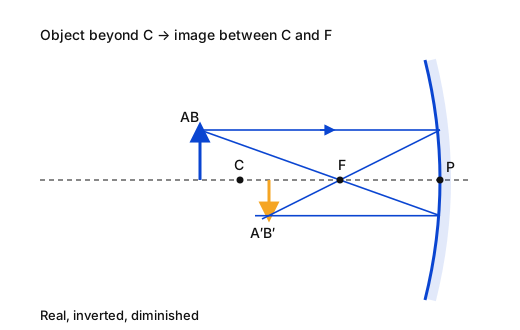
What is the position of the image formed by a concave mirror if the object is placed just beyond the centre of curvature of the mirror?
यदि वस्तु को दर्पण के वक्रता केंद्र से ठीक आगे रखा जाए, तो अवतल दर्पण द्वारा बने प्रतिबिंब की स्थिति क्या होगी?
  1. AAt infinityअनंत पर
  2. BAt the focusफोकस पर
  3. CBetween the centre of curvature and the focus pointवक्रता केंद्र और फोकस बिंदु के बीच
  4. DAt the centre of curvatureवक्रता केंद्र पर
Show answer

Concept: For a concave mirror, the image position depends on where the object is placed with respect to C and F.

  1. A ray parallel to the axis reflects through F.
  2. A ray through F reflects parallel to the axis.
  3. For an object beyond C, these rays meet between C and F – the image is real, inverted and diminished.

Yaad rakhein: Object and image swap: beyond C ↔ between C and F; at C ↔ at C; at F ↔ at infinity.

Answer: (C) Between the centre of curvature and the focus point

अवधारणा: अवतल दर्पण में प्रतिबिंब की स्थिति इस पर निर्भर करती है कि वस्तु C और F के सापेक्ष कहाँ रखी है।

  1. मुख्य अक्ष के समांतर किरण परावर्तन के बाद F से गुज़रती है।
  2. F से गुज़रने वाली किरण परावर्तन के बाद अक्ष के समांतर जाती है।
  3. C से परे रखी वस्तु के लिए ये किरणें C और F के बीच मिलती हैं – प्रतिबिंब वास्तविक, उल्टा और छोटा।

याद रखें: वस्तु और प्रतिबिंब की अदला-बदली: C से परे ↔ C और F के बीच; C पर ↔ C पर; F पर ↔ अनंत पर।

उत्तर: (C) वक्रता केंद्र और फोकस बिंदु के बीच

RRB Technician Grade IIIGeneral ScienceImage by concave mirrorRRB Technician Grade III 2024 · 27 Dec Shift 3 →
Q978.
What is the SI unit of momentum?
संवेग का SI मात्रक क्या है?
  1. Akg m−1 s−1
  2. Bkg m s
  3. Ckg m s−1
  4. Dkg m
Show answer

Concept: Momentum p=m×v.

  1. Unit of mass = kg, unit of velocity = ms−1.
  2. Unit of momentum = kgms−1 (same as Ns).

Yaad rakhein: Momentum unit = force unit × time: Ns=kgms−1.

Answer: (C) kg m s−1

अवधारणा: संवेग p=m×v।

  1. द्रव्यमान का मात्रक = kg, वेग का मात्रक = ms−1।
  2. संवेग का मात्रक = kgms−1 (Ns के बराबर)।

याद रखें: संवेग का मात्रक = बल का मात्रक × समय: Ns=kgms−1।

उत्तर: (C) kg m s−1

RRB Technician Grade IIIGeneral ScienceMomentumRRB Technician Grade III 2024 · 27 Dec Shift 3 →
Q979.
The atomic mass of carbon-12 isotope is:
कार्बन-12 समस्थानिक (isotope) का परमाणु द्रव्यमान है:
  1. A12 u
  2. B6 u
  3. C16 u
  4. D14 u
Show answer

Concept: One atomic mass unit (u) is defined as exactly 112 of the mass of one carbon-12 atom.

  1. So the mass of a C-12 atom is exactly 12 u by definition.
  2. C-12 has 6 protons + 6 neutrons; mass number = 12.

Yaad rakhein: C-12 is the reference standard: 12 u exactly.

Answer: (A) 12 u

अवधारणा: एक परमाणु द्रव्यमान इकाई (u) को कार्बन-12 के एक परमाणु के द्रव्यमान का ठीक 112 भाग माना गया है।

  1. अतः परिभाषा से C-12 परमाणु का द्रव्यमान ठीक 12 u है।
  2. C-12 में 6 प्रोटॉन + 6 न्यूट्रॉन; द्रव्यमान संख्या = 12।

याद रखें: C-12 मानक संदर्भ है: ठीक 12 u।

उत्तर: (A) 12 u

RRB Technician Grade IIIGeneral ScienceAtomic mass unitRRB Technician Grade III 2024 · 27 Dec Shift 3 →
Q980.
Which organ of the human body pumps blood?
मानव शरीर का कौन-सा अंग रक्त को पंप करता है?
  1. APancreasअग्न्याशय
  2. BHeartहृदय
  3. CLiverयकृत
  4. DStomachआमाशय
Show answer

Concept: The heart is a muscular organ that pumps blood to all parts of the body through arteries.

  1. Human heart has four chambers – two atria and two ventricles.
  2. Pancreas secretes enzymes and insulin; liver makes bile; stomach digests food.

Yaad rakhein: Heart – pump; blood vessels – pipes; blood – fluid carrier.

Answer: (B) Heart

अवधारणा: हृदय एक पेशीय अंग है जो धमनियों द्वारा शरीर के सभी भागों में रक्त पंप करता है।

  1. मानव हृदय में चार कक्ष होते हैं – दो अलिंद और दो निलय।
  2. अग्न्याशय एंजाइम व इंसुलिन बनाता है; यकृत पित्त बनाता है; आमाशय भोजन पचाता है।

याद रखें: हृदय – पंप; रक्त वाहिकाएँ – पाइप; रक्त – वाहक द्रव।

उत्तर: (B) हृदय

RRB Technician Grade IIIGeneral ScienceHuman circulatory systemRRB Technician Grade III 2024 · 27 Dec Shift 3 →