Question bank

Q&A: practice questions with answers

Search questions on any topic. Filter by exam category, exam, subject and topic, try the question, then open the answer and explanation.

Courses – airGurukul

3,200 questions found.

Q1041.
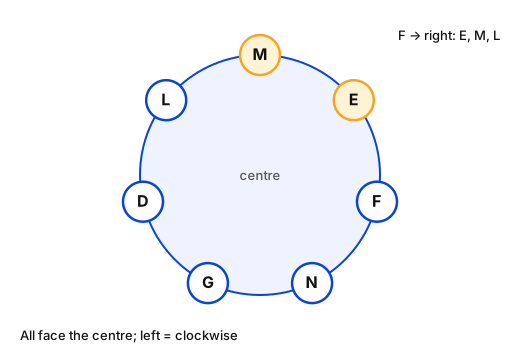
D, E, F, G, L, M and N are sitting around a circular table facing the centre. N sits third to the left of M. L sits second to the left of G. M is an immediate neighbour of both E and L. D is not an immediate neighbour of N. How many people sit between F and L when counted from the right of F?
D, E, F, G, L, M और N एक वृत्ताकार मेज के चारों ओर केंद्र की ओर मुख करके बैठे हैं। N, M के बाएँ से तीसरे स्थान पर बैठा है। L, G के बाएँ से दूसरे स्थान पर बैठा है। M, E और L दोनों का निकटतम पड़ोसी है। D, N का निकटतम पड़ोसी नहीं है। F के दाएँ से गिनने पर F और L के बीच कितने व्यक्ति बैठे हैं?
  1. AOneएक
  2. BTwoदो
  3. CFourचार
  4. DThreeतीन
Show answer

Concept: Facing the centre: left = clockwise, right = anticlockwise.

  1. Fix M; N is 3rd to M's left. M's neighbours are E and L.
  2. If L were on M's left, G (two places right of L) would clash with E; so L is on M's right, E on M's left, G two right of L.
  3. D, F fill the two gaps; D not beside N ⇒ order (clockwise): M, E, F, N, G, D, L.
  4. From F going right: E, M, then L ⇒ 2 people between.

Trick: Start with the person mentioned most (M) and test both sides for the neighbours.

Answer: (B) Two

अवधारणा: केंद्र की ओर मुख: बायाँ = दक्षिणावर्त, दायाँ = वामावर्त।

  1. M को स्थिर करें; N, M के बाएँ तीसरा। M के पड़ोसी E और L.
  2. यदि L, M के बाएँ हो तो G (L के दाएँ दूसरा) E से टकराता है; अतः L, M के दाएँ, E बाएँ, G, L के दाएँ दूसरा।
  3. D, F दो खाली स्थानों में; D, N के पास नहीं ⇒ क्रम (दक्षिणावर्त): M, E, F, N, G, D, L.
  4. F से दाएँ: E, M, फिर L ⇒ बीच में 2 व्यक्ति।

ट्रिक: सबसे अधिक बार आए व्यक्ति (M) से शुरू करें और पड़ोसियों के दोनों विकल्प जाँचें।

उत्तर: (B) दो
RRB Technician Grade IIIGeneral Intelligence and ReasoningCircular Seating ArrangementRRB Technician Grade III 2024 · 27 Dec Shift 2 →
Q1042.
Refer to the given number and symbol series and answer the question that follows. Counting to be done from left to right only.
(Left) 3 Ω 2 * £ 1 + & & % 4 6 @ 8 $ 7 ℧ 9 # 1 @ 5 (Right)
If all the symbols are dropped from the series, which of the following will be seventh from the left?
दी गई संख्या और प्रतीक श्रृंखला को देखें और उसके बाद आने वाले प्रश्न का उत्तर दें। गिनती केवल बाएँ से दाएँ की जानी है।
(बाएँ) 3 Ω 2 * £ 1 + & & % 4 6 @ 8 $ 7 ℧ 9 # 1 @ 5 (दाएँ)
यदि श्रृंखला से सभी प्रतीकों को हटा दिया जाए, तो निम्नलिखित में से कौन-सा बाएँ से सातवें स्थान पर होगा?
  1. A6
  2. B4
  3. C8
  4. D7
Show answer

Concept: Drop all symbols and keep only the digits in order.

  1. Digits left: 3, 2, 1, 4, 6, 8, 7, 9, 1, 5.
  2. 7th from left =7.

Trick: Write only the digits in a line, then count – don't count symbols by mistake.

Answer: (D) 7

अवधारणा: सभी प्रतीक हटाएँ और केवल अंक क्रम से रखें।

  1. बचे अंक: 3, 2, 1, 4, 6, 8, 7, 9, 1, 5.
  2. बाएँ से 7वाँ =7.

ट्रिक: केवल अंकों को एक पंक्ति में लिखें, फिर गिनें – प्रतीक न गिनें।

उत्तर: (D) 7

RRB Technician Grade IIIGeneral Intelligence and ReasoningSymbol-Number SeriesRRB Technician Grade III 2024 · 27 Dec Shift 2 →
Q1043.
Based on the English alphabetical order, three of the following four letter-cluster pairs are alike in a certain way and thus form a group. Which pair does not belong to that group?
(Note: The odd one out is not based on the number of consonants/vowels or their position in the letter-cluster.)
अंग्रेजी वर्णमाला क्रम के आधार पर, निम्नलिखित चार अक्षर-समूह युग्मों में से तीन किसी निश्चित तरीके से एकसमान हैं और इस प्रकार एक समूह बनाते हैं। कौन-सा युग्म उस समूह से संबंधित नहीं है?
(ध्यान दें: असंगत युग्म, व्यंजनों/स्वरों की संख्या या अक्षर-समूह में उनके स्थान पर आधारित नहीं है।)
  1. ATQ – OG
  2. BZW – UM
  3. CGK – PW
  4. DBY – WO
Show answer

Concept: Check the gaps inside each cluster (positions: A=1 … Z=26).

  1. TQ–OG: T−3=Q, O−8=G. ZW–UM: Z−3=W, U−8=M.
  2. BY–WO: B−3=Y (cyclic), W−8=O.
  3. GK–PW: G+4=K, P+7=W ✗.

Trick: Backward counting wraps around: B → A → Z → Y is −3.

Answer: (C) GK – PW

अवधारणा: हर समूह के अंदर के अंतर देखें (स्थान: A=1 … Z=26)।

  1. TQ–OG: T−3=Q, O−8=G. ZW–UM: Z−3=W, U−8=M.
  2. BY–WO: B−3=Y (चक्रीय), W−8=O.
  3. GK–PW: G+4=K, P+7=W ✗.

ट्रिक: पीछे गिनती चक्र में घूमती है: B → A → Z → Y =−3.

उत्तर: (C) GK – PW

RRB Technician Grade IIIGeneral Intelligence and ReasoningOdd Letter-PairRRB Technician Grade III 2024 · 27 Dec Shift 2 →
Q1044.
If each vowel in the word SHOWING is changed to the letter immediately preceding it in the English alphabetical order and each consonant is changed to the letter immediately following it in the English alphabetical order, then how many letters in the original word will also appear in the group of letters thus formed?
यदि शब्द SHOWING के प्रत्येक स्वर को अंग्रेजी वर्णमाला क्रम में उसके ठीक पहले वाले अक्षर से बदल दिया जाए और प्रत्येक व्यंजन को अंग्रेजी वर्णमाला क्रम में उसके ठीक बाद वाले अक्षर से बदल दिया जाए, तो मूल शब्द के कितने अक्षर इस प्रकार बने अक्षरों के समूह में भी दिखाई देंगे?
  1. A2
  2. B1
  3. C4
  4. D3
Show answer

Concept: Vowels → previous letter; consonants → next letter.

  1. S→T, H→I, O→N, W→X, I→H, N→O, G→H ⇒ TINXHOH.
  2. Original letters S, H, O, W, I, N, G: H, O, I, N appear in the new group; S, W, G do not.

Trick: Vowel O→N and I→H create letters N and H; consonants N→O and H→I bring O and I back.

Answer: (C) 4

अवधारणा: स्वर → पिछला अक्षर; व्यंजन → अगला अक्षर।

  1. S→T, H→I, O→N, W→X, I→H, N→O, G→H ⇒ TINXHOH.
  2. मूल अक्षर S, H, O, W, I, N, G में से H, O, I, N नए समूह में हैं; S, W, G नहीं।

ट्रिक: O→N और I→H से N, H बनते हैं; N→O और H→I से O, I वापस आते हैं।

उत्तर: (C) 4

RRB Technician Grade IIIGeneral Intelligence and ReasoningLetter CodingRRB Technician Grade III 2024 · 27 Dec Shift 2 →
Q1045.
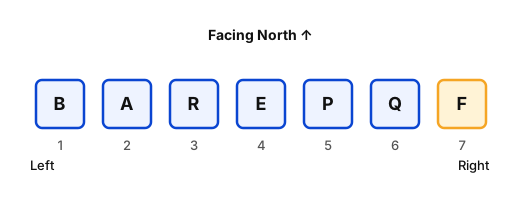
Seven people, A, B, E, F, P, Q and R are sitting in a row, facing north. Only B sits to the left of A. Only four people sit between B and Q. Only E sits between R and P and R is not an immediate neighbour of Q. Who sits at the extreme right of the row?
सात व्यक्ति, A, B, E, F, P, Q और R एक पंक्ति में उत्तर की ओर मुख करके बैठे हैं। A के बाईं ओर केवल B बैठा है। B और Q के बीच केवल चार व्यक्ति बैठे हैं। R और P के बीच केवल E बैठा है और R, Q का निकटतम पड़ोसी नहीं है। पंक्ति के सबसे दाएँ छोर पर कौन बैठा है?
  1. AR
  2. BP
  3. CE
  4. DF
Show answer

Concept: Facing north: left end = position 1, right end = position 7.

  1. Only B is left of A ⇒ B =1, A =2.
  2. Four between B and Q ⇒ Q =6.
  3. R-E-P together with E in middle, R not beside Q ⇒ R =3, E =4, P =5.
  4. F takes the last seat, 7 (extreme right).

Trick: Fix 'only' clues first – they lock exact positions.

Answer: (D) F

अवधारणा: उत्तर की ओर मुख: बायाँ सिरा = स्थान 1, दायाँ सिरा = स्थान 7.

  1. केवल B, A के बाएँ ⇒ B =1, A =2.
  2. B और Q के बीच चार ⇒ Q =6.
  3. R-E-P साथ, E बीच में, R, Q के पास नहीं ⇒ R =3, E =4, P =5.
  4. F अंतिम स्थान 7 (सबसे दाएँ) पर।

ट्रिक: पहले 'केवल' वाले संकेत लगाएँ – वे सटीक स्थान तय करते हैं।

उत्तर: (D) F

RRB Technician Grade IIIGeneral Intelligence and ReasoningLinear Seating ArrangementRRB Technician Grade III 2024 · 27 Dec Shift 2 →
Q1046.
In a certain code language, ‘POKED’ is coded as ‘85263’ and ‘TOKED’ is coded as ‘36584’. What is the code for ‘T’ in the given code language?
एक निश्चित कूट भाषा में, ‘POKED’ को ‘85263’ के रूप में और ‘TOKED’ को ‘36584’ के रूप में कूटबद्ध किया जाता है। दी गई कूट भाषा में ‘T’ का कूट क्या है?
  1. A3
  2. B5
  3. C8
  4. D4
Show answer

Concept: Common letters get common digits; the unique letter gets the unique digit.

  1. POKED → 8, 5, 2, 6, 3; TOKED → 3, 6, 5, 8, 4.
  2. Common letters O, K, E, D ↔ common digits 3, 5, 6, 8.
  3. P ↔ 2 (only in first), T ↔ 4 (only in second).

Trick: Cancel common digits in both codes; what remains pairs with the odd letters.

Answer: (D) 4

अवधारणा: समान अक्षरों के समान अंक; अलग अक्षर का अलग अंक।

  1. POKED → 8, 5, 2, 6, 3; TOKED → 3, 6, 5, 8, 4.
  2. समान अक्षर O, K, E, D ↔ समान अंक 3, 5, 6, 8.
  3. P ↔ 2 (केवल पहले में), T ↔ 4 (केवल दूसरे में)।

ट्रिक: दोनों कोड में समान अंक काटें; बचे अंक अलग अक्षरों के हैं।

उत्तर: (D) 4

RRB Technician Grade IIIGeneral Intelligence and ReasoningLetter-Digit CodingRRB Technician Grade III 2024 · 27 Dec Shift 2 →
Q1047.
Which of the following options should come in place of the question mark (?) in the given series based on the English alphabetical order?
PRT, QSU, RTV, SUW, ?
अंग्रेजी वर्णमाला क्रम के आधार पर दी गई श्रृंखला में प्रश्न चिह्न (?) के स्थान पर निम्नलिखित में से कौन-सा विकल्प आना चाहिए?
PRT, QSU, RTV, SUW, ?
  1. AVXT
  2. BVTX
  3. CTXV
  4. DTVX
Show answer

Concept: Each letter of a group moves one step forward in the next group.

  1. P→Q→R→S→T; R→S→T→U→V; T→U→V→W→X.
  2. Next group = TVX.

Trick: Inside each group the letters skip one (P_R_T), so the answer must also skip one: TVX.

Answer: (D) TVX

अवधारणा: हर समूह का प्रत्येक अक्षर अगले समूह में एक स्थान आगे जाता है।

  1. P→Q→R→S→T; R→S→T→U→V; T→U→V→W→X.
  2. अगला समूह = TVX.

ट्रिक: हर समूह में अक्षर एक छोड़कर हैं (P_R_T), अतः उत्तर भी TVX.

उत्तर: (D) TVX

RRB Technician Grade IIIGeneral Intelligence and ReasoningLetter SeriesRRB Technician Grade III 2024 · 27 Dec Shift 2 →
Q1048.
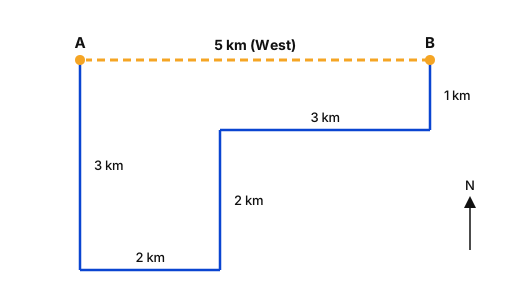
Gaurav starts from point A and drives 3 km South. He then takes a left turn and drives 2 km. He takes another left turn and drives 2 km. He then takes a right turn and drives 3 km. He takes a final left turn and drives 1 km to reach point B. How far (shortest distance) and towards which direction should he drive to reach Point A again? (All turns are 90 degrees turns only unless specified.)
गौरव बिंदु A से चलना शुरू करता है और 3 km दक्षिण की ओर गाड़ी चलाता है। फिर वह बाएँ मुड़ता है और 2 km गाड़ी चलाता है। वह फिर से बाएँ मुड़ता है और 2 km गाड़ी चलाता है। फिर वह दाएँ मुड़ता है और 3 km गाड़ी चलाता है। वह अंतिम बार बाएँ मुड़ता है और बिंदु B तक पहुँचने के लिए 1 km गाड़ी चलाता है। बिंदु A पर फिर से पहुँचने के लिए उसे कितनी दूरी (न्यूनतम दूरी) तक और किस दिशा में गाड़ी चलानी चाहिए? (जब तक निर्दिष्ट न हो, सभी मोड़ केवल 90 डिग्री के हैं।)
  1. A3 km West3 km पश्चिम
  2. B4 km South4 km दक्षिण
  3. C2 km South2 km दक्षिण
  4. D5 km West5 km पश्चिम
Show answer

Concept: Track net East–West and North–South movement (South first, then left turns from South face East).

  1. 3 km South, left → 2 km East, left → 2 km North, right → 3 km East, left → 1 km North.
  2. North–South: −3+2+1=0.
  3. East: 2+3=5 km ⇒ B is 5 km East of A.

Trick: Net vertical =0 means A and B are on the same line; just add the East moves.

Answer: (D) 5 km West

अवधारणा: कुल पूर्व–पश्चिम और उत्तर–दक्षिण गति निकालें (दक्षिण की ओर से बाएँ मुड़ने पर पूर्व)।

  1. 3 km दक्षिण, बाएँ → 2 km पूर्व, बाएँ → 2 km उत्तर, दाएँ → 3 km पूर्व, बाएँ → 1 km उत्तर।
  2. उत्तर–दक्षिण: −3+2+1=0.
  3. पूर्व: 2+3=5 km ⇒ B, A से 5 km पूर्व।

ट्रिक: ऊर्ध्वाधर कुल =0 यानी A और B एक ही रेखा पर; बस पूर्व की दूरियाँ जोड़ें।

उत्तर: (D) 5 km पश्चिम

RRB Technician Grade IIIGeneral Intelligence and ReasoningDirection and DistanceRRB Technician Grade III 2024 · 27 Dec Shift 2 →
Q1049.
In a certain code language, ‘REST’ is coded as ‘4529’ and ‘HERS’ is coded as ‘5279’. What is the code for ‘H’ in the given code language?
एक निश्चित कूट भाषा में, ‘REST’ को ‘4529’ के रूप में और ‘HERS’ को ‘5279’ के रूप में कूटबद्ध किया जाता है। दी गई कूट भाषा में ‘H’ का कूट क्या है?
  1. A7
  2. B2
  3. C5
  4. D9
Show answer

Concept: Common letters get common digits; the unique letter gets the unique digit.

  1. REST → 4, 5, 2, 9; HERS → 5, 2, 7, 9.
  2. Common letters R, E, S ↔ common digits 2, 5, 9.
  3. T ↔ 4 (only in REST), H ↔ 7 (only in HERS).

Trick: Cancel common digits in both codes; the leftover digit belongs to the odd letter.

Answer: (A) 7

अवधारणा: समान अक्षरों के समान अंक; अलग अक्षर का अलग अंक।

  1. REST → 4, 5, 2, 9; HERS → 5, 2, 7, 9.
  2. समान अक्षर R, E, S ↔ समान अंक 2, 5, 9.
  3. T ↔ 4 (केवल REST में), H ↔ 7 (केवल HERS में)।

ट्रिक: दोनों कोड में समान अंक काटें; बचा अंक अलग अक्षर का है।

उत्तर: (A) 7

RRB Technician Grade IIIGeneral Intelligence and ReasoningLetter-Digit CodingRRB Technician Grade III 2024 · 27 Dec Shift 2 →
Q1050.
The position(s) of how many letters will remain unchanged if each of the letters in the word DRAWING is arranged in the English alphabetical order ?
यदि शब्द DRAWING के प्रत्येक अक्षर को अंग्रेजी वर्णमाला क्रम में व्यवस्थित किया जाए, तो कितने अक्षरों का/के स्थान अपरिवर्तित रहेगा/रहेंगे?
  1. A0
  2. B2
  3. C3
  4. D1
Show answer

Concept: Arrange the letters alphabetically and compare position by position.

  1. Original: D R A W I N G.
  2. Sorted: A D G I N R W.
  3. Compare: D/A, R/D, A/G, W/I, I/N, N/R, G/W – no letter stays in place.

Trick: Write both words one under the other and tick matching columns.

Answer: (A) 0

अवधारणा: अक्षरों को वर्णानुक्रम में लगाएँ और स्थान-दर-स्थान तुलना करें।

  1. मूल: D R A W I N G.
  2. क्रमबद्ध: A D G I N R W.
  3. तुलना: D/A, R/D, A/G, W/I, I/N, N/R, G/W – कोई अक्षर अपने स्थान पर नहीं।

ट्रिक: दोनों शब्द एक के नीचे एक लिखें और समान कॉलम गिनें।

उत्तर: (A) 0

RRB Technician Grade IIIGeneral Intelligence and ReasoningAlphabetical ArrangementRRB Technician Grade III 2024 · 27 Dec Shift 2 →
Q1051.
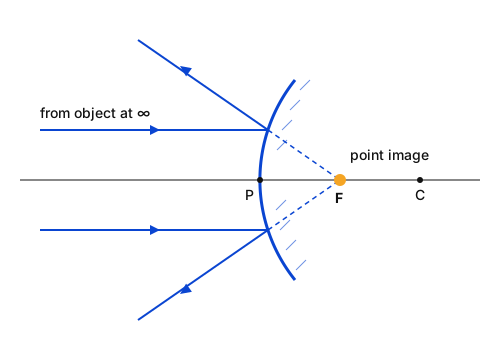
A convex mirror created a highly diminished, point-sized virtual image, then the position of the image is:
एक उत्तल दर्पण (convex mirror) ने अत्यधिक छोटा, बिंदु के आकार का आभासी प्रतिबिंब बनाया, तो प्रतिबिंब की स्थिति क्या है?
  1. Ain front of the mirror at the centre of curvature Cदर्पण के सामने वक्रता केंद्र C पर
  2. Bbehind the mirror at the focus Fदर्पण के पीछे फोकस F पर
  3. Cbehind the mirror at the centre of curvature Cदर्पण के पीछे वक्रता केंद्र C पर
  4. Din front of the mirror at the focus Fदर्पण के सामने फोकस F पर
Show answer

Concept: A convex mirror always forms a virtual, erect and diminished image behind the mirror, between P and F.

  1. As the object moves farther away, the image shrinks and moves towards F.
  2. For an object at infinity, parallel rays reflect and appear to diverge from the focus F.
  3. So the image is highly diminished, point-sized and virtual, located at F behind the mirror.

Trick: Convex mirror: object at ∞ → image at F (behind); any other position → between P and F.

Answer: (B) behind the mirror at the focus F

अवधारणा: उत्तल दर्पण हमेशा दर्पण के पीछे P और F के बीच आभासी, सीधा और छोटा प्रतिबिंब बनाता है।

  1. वस्तु जितनी दूर जाती है, प्रतिबिंब उतना छोटा होकर F की ओर खिसकता है।
  2. अनंत पर रखी वस्तु से आने वाली समानांतर किरणें परावर्तन के बाद F से आती हुई प्रतीत होती हैं।
  3. अतः अत्यधिक छोटा, बिंदु-आकार का आभासी प्रतिबिंब दर्पण के पीछे फोकस F पर बनता है।

ट्रिक: उत्तल दर्पण: वस्तु ∞ पर → प्रतिबिंब F पर (पीछे); अन्य स्थिति → P और F के बीच।

उत्तर: (B) दर्पण के पीछे फोकस F पर

RRB Technician Grade IIIGeneral ScienceConvex mirror – image formationRRB Technician Grade III 2024 · 27 Dec Shift 2 →
Q1052.
Plasma membrane is made up of ______.
प्लाज्मा झिल्ली (Plasma membrane) ______ से बनी होती है।
  1. AOnly lipidsकेवल लिपिड
  2. BOnly celluloseकेवल सेलुलोज
  3. CBoth proteins and lipidsप्रोटीन और लिपिड दोनों
  4. DOnly proteinsकेवल प्रोटीन
Show answer

Concept: The plasma membrane is the selectively permeable outer boundary of every cell.

  1. It is a lipid bilayer (mainly phospholipids).
  2. Proteins are embedded in or attached to this bilayer (fluid mosaic model).
  3. Cellulose is found in the plant cell wall, not in the membrane.

Yaad rakhein: Membrane = lipids + proteins (fluid mosaic); cell wall = cellulose.

Answer: (C) Both proteins and lipids

अवधारणा: प्लाज्मा झिल्ली हर कोशिका की वर्णात्मक पारगम्य बाहरी सीमा है।

  1. यह लिपिड की दोहरी परत (मुख्यतः फॉस्फोलिपिड) से बनी होती है।
  2. इस परत में प्रोटीन धँसे या जुड़े रहते हैं (तरल मोज़ेक मॉडल)।
  3. सेल्युलोज पादप कोशिका भित्ति में होता है, झिल्ली में नहीं।

याद रखें: झिल्ली = लिपिड + प्रोटीन; कोशिका भित्ति = सेल्युलोज।

उत्तर: (C) प्रोटीन और लिपिड दोनों

RRB Technician Grade IIIGeneral ScienceCell – plasma membraneRRB Technician Grade III 2024 · 27 Dec Shift 2 →
Q1053.
Variation is useful for the survival of species over time. These variations occur due to errors in:
विभिन्नता (Variation) समय के साथ प्रजातियों की उत्तरजीविता के लिए उपयोगी है। ये विभिन्नताएँ किसमें होने वाली त्रुटियों के कारण उत्पन्न होती हैं?
  1. Aformation of red blood cellsलाल रक्त कोशिकाओं के निर्माण में
  2. BDNA copyingDNA प्रतिकृति (DNA copying) में
  3. Cdifferentiation of white blood cellsश्वेत रक्त कोशिकाओं के विभेदन में
  4. Dformation of neuronsतंत्रिका कोशिकाओं (neurons) के निर्माण में
Show answer

Concept: Variations arise mainly because DNA copying during reproduction is never 100% accurate.

  1. Before cell division, the cell makes a copy of its DNA.
  2. Small errors in this copying create slightly different DNA in offspring.
  3. These variations help some individuals survive changing environments, aiding the species over time.

Yaad rakhein: Inaccurate DNA copying → variation → survival of species (NCERT Class 10).

Answer: (B) DNA copying

अवधारणा: विभिन्नताएँ मुख्यतः इसलिए आती हैं क्योंकि जनन के समय DNA की प्रतिकृति कभी पूर्णतः सटीक नहीं होती।

  1. कोशिका विभाजन से पहले कोशिका अपने DNA की प्रति बनाती है।
  2. इस प्रतिलिपि में छोटी त्रुटियाँ संतानों में थोड़ा अलग DNA बनाती हैं।
  3. ये विभिन्नताएँ बदलते पर्यावरण में कुछ जीवों को जीवित रखती हैं, जिससे स्पीशीज़ बची रहती है।

याद रखें: DNA प्रतिकृति में त्रुटि → विभिन्नता → स्पीशीज़ की उत्तरजीविता।

उत्तर: (B) DNA प्रतिकृति (DNA copying) में

RRB Technician Grade IIIGeneral ScienceHeredity – variationRRB Technician Grade III 2024 · 27 Dec Shift 2 →
Q1054.
Which of the following is used in the oxidation of alcohol into carboxylic acid?
ऐल्कोहॉल के कार्बोक्सिलिक अम्ल में ऑक्सीकरण में निम्नलिखित में से किसका उपयोग किया जाता है?
  1. APalladiumपैलेडियम
  2. BZincज़िंक (जस्ता)
  3. CAlkaline potassium permanganateक्षारीय पोटैशियम परमैंगनेट
  4. DNickelनिकेल
Show answer

Concept: Oxidising agents add oxygen to alcohols and convert them into carboxylic acids.

  1. Alkaline KMnO4 (or acidified K2Cr2O7) is a strong oxidising agent.
  2. CH3CH2OH→alk. KMnO4+heatCH3COOH
  3. Pd and Ni are hydrogenation catalysts; Zn is a reducing metal.

Trick: Purple KMnO4 loses its colour while it oxidises the alcohol.

Answer: (C) Alkaline potassium permanganate

अवधारणा: ऑक्सीकारक ऐल्कोहॉल में ऑक्सीजन जोड़कर उसे कार्बोक्सिलिक अम्ल में बदलते हैं।

  1. क्षारीय KMnO4 (या अम्लीय K2Cr2O7) प्रबल ऑक्सीकारक है।
  2. CH3CH2OH→alk. KMnO4+heatCH3COOH
  3. Pd और Ni हाइड्रोजनीकरण के उत्प्रेरक हैं; Zn अपचायक धातु है।

ट्रिक: बैंगनी KMnO4 ऐल्कोहॉल को ऑक्सीकृत करते समय रंगहीन हो जाता है।

उत्तर: (C) क्षारीय पोटैशियम परमैंगनेट

RRB Technician Grade IIIGeneral ScienceCarbon compounds – oxidationRRB Technician Grade III 2024 · 27 Dec Shift 2 →
Q1055.
Amphibians have a ______ chambered heart.
उभयचरों (Amphibians) का हृदय ______ कक्षीय होता है।
  1. AOneएक
  2. BTwoदो
  3. CFourचार
  4. DThreeतीन
Show answer

Concept: The number of heart chambers differs among vertebrate groups.

  1. Fishes: 2 chambers (1 atrium, 1 ventricle).
  2. Amphibians and most reptiles: 3 chambers (2 atria, 1 ventricle), so some mixing of blood occurs.
  3. Birds, mammals and crocodiles: 4 chambers.

Trick: Fish 2 → Frog 3 → Bird/Man 4.

Answer: (D) Three

अवधारणा: कशेरुकी समूहों में हृदय के कक्षों की संख्या अलग-अलग होती है।

  1. मछलियाँ: 2 कक्ष (1 अलिंद, 1 निलय)।
  2. उभयचर व अधिकांश सरीसृप: 3 कक्ष (2 अलिंद, 1 निलय), इसलिए रक्त कुछ मिल जाता है।
  3. पक्षी, स्तनधारी और मगरमच्छ: 4 कक्ष।

ट्रिक: मछली 2 → मेंढक 3 → पक्षी/मनुष्य 4।

उत्तर: (D) तीन

RRB Technician Grade IIIGeneral ScienceAnimal kingdom – heart chambersRRB Technician Grade III 2024 · 27 Dec Shift 2 →
Q1056.
Among the following which is NOT a homologous compound as compared to others?
निम्नलिखित में से कौन-सा अन्य की तुलना में समजातीय (homologous) यौगिक नहीं है?
  1. ACH3OH
  2. BC2H5OH
  3. CC3H7OH
  4. DC6H5OH
Show answer

Concept: Members of a homologous series have the same functional group and differ by a −CH2− unit.

  1. CH3OH, C2H5OH, C3H7OH fit CnH2n+1OH — alcohols, each differing by CH2.
  2. C6H5OH (phenol) has –OH on a benzene ring, not on an alkyl chain.
  3. It does not fit the general formula, so it is the odd one out.

Trick: Check the formula CnH2n+1OH: for n=6 it should be C6H13OH, not C6H5OH.

Answer: (D) C6H5OH

अवधारणा: सजातीय श्रेणी के सदस्यों में समान क्रियात्मक समूह होता है और वे −CH2− से भिन्न होते हैं।

  1. CH3OH, C2H5OH, C3H7OH सूत्र CnH2n+1OH वाले ऐल्कोहॉल हैं।
  2. C6H5OH (फ़ीनॉल) में –OH बेंज़ीन वलय पर है, ऐल्किल श्रृंखला पर नहीं।
  3. यह सामान्य सूत्र में नहीं बैठता, इसलिए यह भिन्न है।

ट्रिक: n=6 के लिए सूत्र C6H13OH होना चाहिए, C6H5OH नहीं।

उत्तर: (D) C6H5OH

RRB Technician Grade IIIGeneral ScienceHomologous seriesRRB Technician Grade III 2024 · 27 Dec Shift 2 →
Q1057.
The twinkling of stars is due to ______.
तारों का टिमटिमाना ______ के कारण होता है।
  1. Athe atmospheric reflection of light from the starsतारों से आने वाले प्रकाश के वायुमंडलीय परावर्तन
  2. Bthe atmospheric refraction of light from the starतारे से आने वाले प्रकाश के वायुमंडलीय अपवर्तन
  3. Cthe interference of light from a star and moonकिसी तारे और चंद्रमा से आने वाले प्रकाश के व्यतिकरण
  4. Dthe interference of light from different starsविभिन्न तारों से आने वाले प्रकाश के व्यतिकरण
Show answer

Concept: Starlight passes through atmospheric layers of continuously changing density and refractive index.

  1. Light from a star bends (refracts) repeatedly on entering the atmosphere.
  2. Since the air is always moving, the amount of bending keeps changing.
  3. So the amount of light reaching the eye flickers — the star twinkles.

Yaad rakhein: Twinkling, advance sunrise, delayed sunset → atmospheric refraction. Blue sky → scattering.

Answer: (B) the atmospheric refraction of light from the star

अवधारणा: तारे का प्रकाश लगातार बदलते घनत्व और अपवर्तनांक वाली वायुमंडलीय परतों से गुजरता है।

  1. वायुमंडल में प्रवेश करते समय प्रकाश बार-बार मुड़ता (अपवर्तित होता) है।
  2. वायु के लगातार गतिशील रहने से मुड़ने की मात्रा बदलती रहती है।
  3. इसलिए आँख तक पहुँचने वाला प्रकाश घटता-बढ़ता है — तारा टिमटिमाता है।

याद रखें: टिमटिमाना, अग्रिम सूर्योदय, विलंबित सूर्यास्त → वायुमंडलीय अपवर्तन; नीला आकाश → प्रकीर्णन।

उत्तर: (B) तारे से आने वाले प्रकाश के वायुमंडलीय अपवर्तन

RRB Technician Grade IIIGeneral ScienceAtmospheric refractionRRB Technician Grade III 2024 · 27 Dec Shift 2 →
Q1058.
Which of the following represents voltage?
निम्नलिखित में से कौन-सा वोल्टता (voltage) को निरूपित करता है?
  1. AWork done × Chargeकिया गया कार्य × आवेश
  2. BWork done × Charge × Timeकिया गया कार्य × आवेश × समय
  3. CWork doneCurrent×Chargeकिया गया कार्यधारा×आवेश
  4. DWork doneCurrent×Timeकिया गया कार्यधारा×समय
Show answer

Concept: Voltage is work done per unit charge: V=WQ.

  1. Charge Q=I×t.
  2. Substitute: V=WQ=WI×t.
  3. So voltage =Work doneCurrent×Time.

Trick: Units check: JA·s=JC=V.

Answer: (D) Work doneCurrent×Time

अवधारणा: वोल्टता प्रति इकाई आवेश किया गया कार्य है: V=WQ।

  1. आवेश Q=I×t।
  2. रखने पर: V=WQ=WI×t।
  3. अतः वोल्टता=कार्यधारा×समय।

ट्रिक: मात्रक जाँचें: JA·s=JC=V।

उत्तर: (D) किया गया कार्यधारा×समय

RRB Technician Grade IIIGeneral ScienceElectricity – potential differenceRRB Technician Grade III 2024 · 27 Dec Shift 2 →
Q1059.
Which of the following is a unicellular ciliary organism?
निम्नलिखित में से कौन-सा एककोशिकीय पक्ष्माभी (ciliary) जीव है?
  1. AParameciumपैरामीशियम
  2. BTicksकिलनी (Ticks)
  3. CLeechesजोंक (Leeches)
  4. DAmoebaअमीबा
Show answer

Concept: Paramecium is a unicellular protozoan whose body is covered with cilia used for movement and feeding.

  1. Amoeba is unicellular but moves by pseudopodia, not cilia.
  2. Ticks (arthropods) and leeches (annelids) are multicellular.
  3. So the unicellular ciliated organism is Paramecium.

Trick: Paramecium → cilia; Amoeba → pseudopodia; Euglena → flagellum.

Answer: (A) Paramecium

अवधारणा: पैरामीशियम एककोशिकीय प्रोटोजोआ है जिसका शरीर पक्ष्माभों (सिलिया) से ढका होता है, जो गति और भोजन ग्रहण में मदद करते हैं।

  1. अमीबा एककोशिकीय है पर पादाभ (स्यूडोपोडिया) से चलता है।
  2. किलनी (आर्थ्रोपोडा) और जोंक (ऐनेलिडा) बहुकोशिकीय हैं।
  3. अतः एककोशिकीय पक्ष्माभी जीव पैरामीशियम है।

ट्रिक: पैरामीशियम → सिलिया; अमीबा → पादाभ; यूग्लीना → कशाभ।

उत्तर: (A) पैरामीशियम

RRB Technician Grade IIIGeneral ScienceProtozoa – ParameciumRRB Technician Grade III 2024 · 27 Dec Shift 2 →
Q1060.
If the surface area is increased, the rate of evaporation is:
यदि पृष्ठीय क्षेत्रफल बढ़ा दिया जाए, तो वाष्पीकरण की दर:
  1. AFirst increases then decreasesपहले बढ़ती है फिर घटती है
  2. Bincreasedबढ़ जाती है
  3. Cconstantस्थिर रहती है
  4. Ddecreasedघट जाती है
Show answer

Concept: Evaporation is a surface phenomenon — only surface particles escape into vapour.

  1. Larger surface area exposes more particles to the air.
  2. More particles escape per second, so evaporation becomes faster.
  3. That is why clothes are spread out to dry.

Yaad rakhein: Evaporation ↑ with surface area, temperature and wind speed; ↓ with humidity.

Answer: (B) increased

अवधारणा: वाष्पीकरण एक सतही प्रक्रिया है — केवल सतह के कण वाष्प बनते हैं।

  1. अधिक पृष्ठ क्षेत्रफल से अधिक कण वायु के संपर्क में आते हैं।
  2. प्रति सेकंड अधिक कण निकलते हैं, अतः वाष्पीकरण तेज़ होता है।
  3. इसीलिए कपड़े सुखाने के लिए फैलाए जाते हैं।

याद रखें: वाष्पीकरण ↑: पृष्ठ क्षेत्रफल, ताप, वायु की गति; ↓: आर्द्रता।

उत्तर: (B) बढ़ जाती है

RRB Technician Grade IIIGeneral ScienceEvaporationRRB Technician Grade III 2024 · 27 Dec Shift 2 →