Question bank

Q&A: practice questions with answers

Search questions on any topic. Filter by exam category, exam, subject and topic, try the question, then open the answer and explanation.

Courses – airGurukul

3,200 questions found.

Q1161.
Which of the following parts of a plant always grow downwards?
पौधे के निम्नलिखित में से कौन-से भाग सदैव नीचे की ओर वृद्धि करते हैं?
  1. ARootsजड़ें
  2. BBudsकलियाँ
  3. CLeavesपत्तियाँ
  4. DBranchesशाखाएँ
Show answer

Concept: Roots are positively geotropic – they grow downward in the direction of gravity.

  1. Gravity acts as the stimulus (geotropism).
  2. Roots bend towards gravity → always grow downwards.
  3. Shoots, buds, branches are negatively geotropic and phototropic – they grow up towards light.

Yaad rakhein: Root – down (towards earth); shoot – up (towards light).

Answer: (A) Roots

अवधारणा: जड़ें धनात्मक गुरुत्वानुवर्ती होती हैं – वे गुरुत्व की दिशा में नीचे की ओर बढ़ती हैं।

  1. गुरुत्व उद्दीपन है (गुरुत्वानुवर्तन)।
  2. जड़ें गुरुत्व की ओर मुड़ती हैं → सदा नीचे बढ़ती हैं।
  3. तना, कलियाँ, शाखाएँ ऋणात्मक गुरुत्वानुवर्ती व प्रकाशानुवर्ती हैं – ऊपर प्रकाश की ओर बढ़ती हैं।

याद रखें: जड़ – नीचे (पृथ्वी की ओर); तना – ऊपर (प्रकाश की ओर)।

उत्तर: (A) जड़ें
RRB Technician Grade IIIGeneral SciencePlant Movements – TropismRRB Technician Grade III 2024 · 27 Dec Shift 1 →
Q1162.
In which of the following matter are particles held together with maximum force?
निम्नलिखित में से किस पदार्थ में कण अधिकतम बल के साथ एक-दूसरे से बंधे रहते हैं?
  1. AWaterजल
  2. BPerfumeइत्र
  3. CInk of penपेन की स्याही
  4. DIron stickलोहे की छड़
Show answer

Concept: Interparticle force of attraction is maximum in solids, less in liquids and least in gases.

  1. Water and ink are liquids – moderate attraction.
  2. Perfume vapour is a gas – weakest attraction.
  3. Iron stick is a solid – particles held most tightly, so it has a fixed shape.

Yaad rakhein: Force of attraction: solid > liquid > gas.

Answer: (D) Iron stick

अवधारणा: कणों के बीच आकर्षण बल ठोस में अधिकतम, द्रव में कम और गैस में न्यूनतम होता है।

  1. पानी और स्याही द्रव हैं – मध्यम आकर्षण।
  2. इत्र की वाष्प गैस है – सबसे कमज़ोर आकर्षण।
  3. लोहे की छड़ ठोस है – कण सबसे मज़बूती से बँधे, इसलिए निश्चित आकार।

याद रखें: आकर्षण बल: ठोस > द्रव > गैस।

उत्तर: (D) लोहे की छड़

RRB Technician Grade IIIGeneral ScienceStates of MatterRRB Technician Grade III 2024 · 27 Dec Shift 1 →
Q1163.
How does a plant move its leaves in response to touch?
स्पर्श की अनुक्रिया में पौधा अपनी पत्तियों को कैसे गति देता है?
  1. ABy changing the amount of nucleic acid in themउनमें न्यूक्लिक अम्ल की मात्रा में परिवर्तन करके
  2. BBy changing the amount of protein in themउनमें प्रोटीन की मात्रा में परिवर्तन करके
  3. CBy changing the amount of lipid in themउनमें लिपिड की मात्रा में परिवर्तन करके
  4. DBy changing the amount of water in themउनमें जल की मात्रा में परिवर्तन करके
Show answer

Concept: In 'touch-me-not' (Mimosa), leaves fold on touch due to a change in the amount of water in their cells.

  1. Touch is sensed; an electrical-chemical signal passes from cell to cell.
  2. Cells at the leaf base quickly lose water and shrink.
  3. Loss of turgor makes the leaflets fold – no growth is involved.

Yaad rakhein: Touch-me-not = water (turgor) change, not growth.

Answer: (D) By changing the amount of water in them

अवधारणा: छुईमुई (मिमोसा) में स्पर्श से पत्तियाँ कोशिकाओं में जल की मात्रा बदलने के कारण मुड़ जाती हैं।

  1. स्पर्श का अनुभव होता है; विद्युत-रासायनिक संकेत कोशिका से कोशिका तक जाता है।
  2. पत्ती के आधार की कोशिकाएँ तेज़ी से जल खोकर सिकुड़ जाती हैं।
  3. स्फीति घटने से पत्तियाँ मुड़ जाती हैं – इसमें वृद्धि नहीं होती।

याद रखें: छुईमुई = जल (स्फीति) परिवर्तन, वृद्धि नहीं।

उत्तर: (D) उनमें जल की मात्रा में परिवर्तन करके

RRB Technician Grade IIIGeneral SciencePlant Movements – TouchRRB Technician Grade III 2024 · 27 Dec Shift 1 →
Q1164.
If your nose is blocked, the olfactory receptors are NOT able to detect:
यदि आपकी नाक बंद है, तो घ्राणग्राही (olfactory receptors) किसका पता लगाने में सक्षम नहीं होते?
  1. Awalkingचलना
  2. Btasteस्वाद
  3. Csmellगंध
  4. Dhearingसुनना
Show answer

Concept: Olfactory receptors are present in the nose and detect smell.

  1. Olfactory = related to the sense of smell.
  2. A blocked nose stops odour molecules reaching these receptors.
  3. So smell is not detected (food also tastes flat, but taste is sensed by gustatory receptors on the tongue).

Yaad rakhein: Olfactory – smell (nose); gustatory – taste (tongue).

Answer: (C) smell

अवधारणा: घ्राण ग्राही नाक में होते हैं और गंध का पता लगाते हैं।

  1. घ्राण = सूँघने की संवेदना से संबंधित।
  2. बंद नाक में गंध के अणु इन ग्राहियों तक नहीं पहुँचते।
  3. अतः गंध पता नहीं चलती (स्वाद जीभ के स्वाद ग्राही पहचानते हैं)।

याद रखें: घ्राण – गंध (नाक); स्वाद ग्राही – स्वाद (जीभ)।

उत्तर: (C) गंध

RRB Technician Grade IIIGeneral ScienceSense OrgansRRB Technician Grade III 2024 · 27 Dec Shift 1 →
Q1165.
Which state of matter has the highest kinetic energy of particles?
पदार्थ की किस अवस्था में कणों की गतिज ऊर्जा सर्वाधिक होती है?
  1. AGasगैस
  2. BBose–Einstein condensateबोस–आइंस्टीन संघनित
  3. CLiquidद्रव
  4. DSolidठोस
Show answer

Concept: Kinetic energy of particles increases with freedom of movement: solid < liquid < gas.

  1. Solid – particles only vibrate about fixed positions.
  2. Liquid – particles slide past each other.
  3. Gas – particles move very fast in all directions, so their kinetic energy is the highest. A Bose–Einstein condensate exists near absolute zero, where particles have the least kinetic energy.

Yaad rakhein: Heat a solid → liquid → gas: each step adds kinetic energy.

Answer: (A) Gas

अवधारणा: कणों की गतिज ऊर्जा गति की स्वतंत्रता के साथ बढ़ती है: ठोस < द्रव < गैस।

  1. ठोस – कण केवल अपनी जगह पर कंपन करते हैं।
  2. द्रव – कण एक-दूसरे पर फिसलते हैं।
  3. गैस – कण सभी दिशाओं में बहुत तेज़ चलते हैं, अतः गतिज ऊर्जा सर्वाधिक। बोस–आइंस्टीन संघनित परम शून्य के निकट बनता है, जहाँ कणों की गतिज ऊर्जा न्यूनतम होती है।

याद रखें: ठोस को गर्म करें → द्रव → गैस: हर चरण में गतिज ऊर्जा बढ़ती है।

उत्तर: (A) गैस

RRB Technician Grade IIIGeneral ScienceStates of MatterRRB Technician Grade III 2024 · 27 Dec Shift 1 →
Q1166.
Which of the following is correctly matched?
निम्नलिखित में से कौन-सा सही सुमेलित है?
  1. ABisexual flower - Papayaउभयलिंगी पुष्प - पपीता
  2. BUnisexual flower - Watermelonएकलिंगी पुष्प - तरबूज
  3. CBisexual flower - Watermelonउभयलिंगी पुष्प - तरबूज
  4. DUnisexual flower - Mustardएकलिंगी पुष्प - सरसों
Show answer

Concept: A unisexual flower has either stamens or pistil; a bisexual flower has both.

  1. Papaya and watermelon – unisexual flowers.
  2. Mustard and hibiscus – bisexual flowers.
  3. So 'Unisexual flower – Watermelon' is the correct match.

Yaad rakhein: Papaya & Watermelon = unisexual; Mustard & Hibiscus = bisexual.

Answer: (B) Unisexual flower - Watermelon

अवधारणा: एकलिंगी पुष्प में या तो पुंकेसर या स्त्रीकेसर होता है; द्विलिंगी पुष्प में दोनों होते हैं।

  1. पपीता और तरबूज़ – एकलिंगी पुष्प।
  2. सरसों और गुड़हल – द्विलिंगी पुष्प।
  3. अतः 'एकलिंगी पुष्प – तरबूज़' सही मिलान है।

याद रखें: पपीता व तरबूज़ = एकलिंगी; सरसों व गुड़हल = द्विलिंगी।

उत्तर: (B) एकलिंगी पुष्प - तरबूज

RRB Technician Grade IIIGeneral ScienceFlowers – Unisexual and BisexualRRB Technician Grade III 2024 · 27 Dec Shift 1 →
Q1167.
Which is/are present at the growing tips of stems and roots and increase(s) the length of the stem and the root?
कौन-सा/से तने और जड़ों के वृद्धि करने वाले शीर्षों पर उपस्थित होता है/होते हैं और तने तथा जड़ की लंबाई में वृद्धि करता है/करते हैं?
  1. AOnly intercalary meristemकेवल अंतर्वेशी विभज्योतक (intercalary meristem)
  2. BOnly apical meristemकेवल शीर्षस्थ विभज्योतक (apical meristem)
  3. CLateral meristem and intercalary meristemपार्श्व विभज्योतक और अंतर्वेशी विभज्योतक
  4. DOnly lateral meristemकेवल पार्श्व विभज्योतक (lateral meristem)
Show answer

Concept: Meristems are dividing tissues; their position decides how the plant grows.

  1. Apical meristem – at tips of stem and root → increases length.
  2. Lateral meristem (cambium) – increases girth.
  3. Intercalary meristem – at base of leaves/internodes.

Yaad rakhein: Apical = apex (tip) = length; Lateral = side = thickness.

Answer: (B) Only apical meristem

अवधारणा: विभज्योतक विभाजित होने वाले ऊतक हैं; उनकी स्थिति वृद्धि का प्रकार तय करती है।

  1. शीर्षस्थ विभज्योतक – तने व जड़ के सिरों पर → लंबाई बढ़ाता है।
  2. पार्श्व विभज्योतक (कैंबियम) – मोटाई बढ़ाता है।
  3. अंतर्वेशी विभज्योतक – पत्तियों/पर्वों के आधार पर।

याद रखें: शीर्षस्थ = सिरा = लंबाई; पार्श्व = बगल = मोटाई।

उत्तर: (B) केवल शीर्षस्थ विभज्योतक (apical meristem)

RRB Technician Grade IIIGeneral ScienceMeristematic TissueRRB Technician Grade III 2024 · 27 Dec Shift 1 →
Q1168.
In plants, some waste products are stored as resins and gums especially in the:
पौधों में, कुछ अपशिष्ट उत्पाद रेज़िन तथा गोंद के रूप में विशेष रूप से कहाँ संचित होते हैं?
  1. Atissues with dead cellsमृत कोशिकाओं वाले ऊतक
  2. Bcellular vacuolesकोशिकीय रिक्तिकाएँ
  3. Cleavesपत्तियाँ
  4. Dold xylemपुराना जाइलम
Show answer

Concept: Plants store some waste products in parts that are no longer active.

  1. Wastes may be stored in vacuoles or in leaves that fall off.
  2. Resins and gums are stored especially in old xylem.
  3. Some wastes are excreted into the soil around the roots.

Yaad rakhein: Resins & gums → old xylem.

Answer: (D) old xylem

अवधारणा: पौधे कुछ अपशिष्ट पदार्थों को अपने निष्क्रिय भागों में संचित करते हैं।

  1. अपशिष्ट रिक्तिकाओं में या गिरने वाली पत्तियों में संचित हो सकते हैं।
  2. रेज़िन और गोंद विशेष रूप से पुराने जाइलम में संचित होते हैं।
  3. कुछ अपशिष्ट जड़ों द्वारा मिट्टी में छोड़े जाते हैं।

याद रखें: रेज़िन व गोंद → पुराना जाइलम।

उत्तर: (D) पुराना जाइलम

RRB Technician Grade IIIGeneral ScienceExcretion in PlantsRRB Technician Grade III 2024 · 27 Dec Shift 1 →
Q1169.
If multiple fission :: many cells, then binary fission :: ______.
यदि बहुखंडन :: अनेक कोशिकाएँ, तो द्विखंडन :: ______।
  1. Afour cellsचार कोशिकाएँ
  2. Btwo cellsदो कोशिकाएँ
  3. Cthree cellsतीन कोशिकाएँ
  4. Done cellएक कोशिका
Show answer

Concept: In fission a unicellular organism divides to form daughter cells.

  1. Multiple fission (e.g. Plasmodium) – one cell gives many daughter cells.
  2. Binary fission (e.g. Amoeba) – one cell divides into two cells.
  3. So the analogy gives 'two cells'.

Yaad rakhein: Binary = two (bi = 2).

Answer: (B) two cells

अवधारणा: विखंडन में एककोशिकीय जीव विभाजित होकर संतति कोशिकाएँ बनाता है।

  1. बहुखंडन (जैसे प्लाज़्मोडियम) – एक कोशिका से अनेक कोशिकाएँ।
  2. द्विखंडन (जैसे अमीबा) – एक कोशिका दो में बँटती है।
  3. अतः उत्तर 'दो कोशिकाएँ'।

याद रखें: द्वि = दो।

उत्तर: (B) दो कोशिकाएँ

RRB Technician Grade IIIGeneral ScienceReproduction – FissionRRB Technician Grade III 2024 · 27 Dec Shift 1 →
Q1170.
A bus travel the first 60 m in 30 s and then another 80 m in 40 s. Calculate the average speed of the bus in m s−1.
एक बस पहले 60 m की दूरी 30 s में और फिर अगले 80 m की दूरी 40 s में तय करती है। बस की औसत चाल m s−1 में परिकलित कीजिए।
  1. A2.28 m s−1
  2. B1 m s−1
  3. C0.15 m s−1
  4. D2 m s−1
Show answer

Concept: Average speed=Total distanceTotal time

  1. Total distance =60+80=140 m
  2. Total time =30+40=70 s
  3. Average speed =14070=2 ms−1

Trick: Both parts have speed 6030=8040=2; equal speeds give the same average.

Answer: (D) 2 m s−1

अवधारणा: औसत चाल=कुल दूरीकुल समय

  1. कुल दूरी =60+80=140 m
  2. कुल समय =30+40=70 s
  3. औसत चाल =14070=2 ms−1

ट्रिक: दोनों भागों की चाल 6030=8040=2; बराबर चाल का औसत भी वही।

उत्तर: (D) 2 m s−1

RRB Technician Grade IIIGeneral ScienceMotion – Average SpeedRRB Technician Grade III 2024 · 27 Dec Shift 1 →
Q1171.
A student has an eye-power of −0.5D. What is the focal length and type of lens of spectacles that she should use for correcting this defect?
एक छात्रा की आँख की क्षमता −0.5D है। इस दोष को ठीक करने के लिए उसे जिस चश्मे का उपयोग करना चाहिए, उसके लेंस की फोकस दूरी और प्रकार क्या है?
  1. A–2.5 m, concave lens–2.5 m, अवतल लेंस (concave lens)
  2. B2.5 m, convex lens2.5 m, उत्तल लेंस (convex lens)
  3. C–2.0 m, concave lens–2.0 m, अवतल लेंस (concave lens)
  4. D2.0 m, convex lens2.0 m, उत्तल लेंस (convex lens)
Show answer

Concept: Power P=1f (f in metres). Negative power means a concave (diverging) lens.

  1. P=−0.5 D
  2. f=1P=1−0.5=−2.0 m
  3. Negative f → concave lens (used to correct myopia).

Yaad rakhein: Minus power = concave lens = myopia correction.

Answer: (C) –2.0 m, concave lens

अवधारणा: क्षमता P=1f (f मीटर में)। ऋणात्मक क्षमता का अर्थ अवतल (अपसारी) लेंस।

  1. P=−0.5 D
  2. f=1P=1−0.5=−2.0 m
  3. ऋणात्मक f → अवतल लेंस (निकट-दृष्टि दोष के लिए)।

याद रखें: ऋण क्षमता = अवतल लेंस = निकट-दृष्टि सुधार।

उत्तर: (C) –2.0 m, अवतल लेंस (concave lens)

RRB Technician Grade IIIGeneral SciencePower of LensRRB Technician Grade III 2024 · 27 Dec Shift 1 →
Q1172.
Which of the following statements is true about a compound?
यौगिक के बारे में निम्नलिखित में से कौन-सा कथन सत्य है?
  1. AThe constituents can be separated by physical process.घटकों को भौतिक प्रक्रिया द्वारा पृथक किया जा सकता है।
  2. BIt is a physical change.यह एक भौतिक परिवर्तन है।
  3. CThe new product formed has totally different properties.बनने वाले नए उत्पाद के गुण पूर्णतः भिन्न होते हैं।
  4. DThe new product formed has similar properties to the constituents.बनने वाले नए उत्पाद के गुण घटकों के समान होते हैं।
Show answer

Concept: A compound is formed by chemical combination of elements in a fixed ratio.

  1. It is a chemical change, not a physical one.
  2. Its constituents cannot be separated by physical methods.
  3. The compound has properties totally different from its elements, e.g. FeS is not magnetic though iron is.

Yaad rakhein: Compound = new substance, new properties; mixture keeps old properties.

Answer: (C) The new product formed has totally different properties.

अवधारणा: यौगिक तत्वों के निश्चित अनुपात में रासायनिक संयोग से बनता है।

  1. यह रासायनिक परिवर्तन है, भौतिक नहीं।
  2. इसके अवयव भौतिक विधियों से अलग नहीं होते।
  3. यौगिक के गुण तत्वों से बिल्कुल अलग होते हैं, जैसे FeS चुंबकीय नहीं, जबकि लोहा है।

याद रखें: यौगिक = नया पदार्थ, नए गुण; मिश्रण पुराने गुण रखता है।

उत्तर: (C) बनने वाले नए उत्पाद के गुण पूर्णतः भिन्न होते हैं।

RRB Technician Grade IIIGeneral ScienceMixtures and CompoundsRRB Technician Grade III 2024 · 27 Dec Shift 1 →
Q1173.
Which of the following is the correct formula for pentane?
निम्नलिखित में से कौन-सा पेंटेन (pentane) का सही सूत्र है?
  1. AC5H12
  2. BC5H10
  3. CC5H14
  4. DC5H9
Show answer

Concept: Pentane is an alkane (saturated); alkanes follow CnH2n+2.

  1. 'Pent' means 5 carbons: n=5.
  2. 2n+2=2×5+2=12
  3. Formula: C5H12

Yaad rakhein: Alkane CnH2n+2, alkene CnH2n, alkyne CnH2n−2.

Answer: (A) C5H12

अवधारणा: पेंटेन एक ऐल्केन (संतृप्त) है; ऐल्केन का सूत्र CnH2n+2 है।

  1. 'पेंट' = 5 कार्बन: n=5।
  2. 2n+2=2×5+2=12
  3. सूत्र: C5H12

याद रखें: ऐल्केन CnH2n+2, ऐल्कीन CnH2n, ऐल्काइन CnH2n−2।

उत्तर: (A) C5H12

RRB Technician Grade IIIGeneral ScienceHydrocarbons – AlkanesRRB Technician Grade III 2024 · 27 Dec Shift 1 →
Q1174.
If a ligament connects two bones, which of the following connects muscles to bones?
यदि स्नायुबंधन (ligament) दो हड्डियों को जोड़ता है, तो निम्नलिखित में से कौन-सा पेशियों को हड्डियों से जोड़ता है?
  1. ACartilageउपास्थि (Cartilage)
  2. BFibroblastफाइब्रोब्लास्ट (Fibroblast)
  3. CTendonकंडरा (Tendon)
  4. DBloodरक्त (Blood)
Show answer

Concept: Ligaments and tendons are fibrous connective tissues that join body parts.

  1. Ligament – joins bone to bone; it is elastic.
  2. Tendon – joins muscle to bone; it is strong with limited flexibility.
  3. Cartilage smoothens joint surfaces; blood is a fluid connective tissue.

Yaad rakhein: Ligament: Bone–Bone; Tendon: Muscle–Bone.

Answer: (C) Tendon

अवधारणा: स्नायु (लिगामेंट) और कंडरा (टेंडन) रेशेदार संयोजी ऊतक हैं जो अंगों को जोड़ते हैं।

  1. स्नायु – हड्डी को हड्डी से जोड़ता है; लचीला होता है।
  2. कंडरा – पेशी को हड्डी से जोड़ता है; मज़बूत, कम लचीला।
  3. उपास्थि जोड़ों की सतह चिकनी करती है; रक्त तरल संयोजी ऊतक है।

याद रखें: स्नायु: हड्डी–हड्डी; कंडरा: पेशी–हड्डी।

उत्तर: (C) कंडरा (Tendon)

RRB Technician Grade IIIGeneral ScienceConnective TissueRRB Technician Grade III 2024 · 27 Dec Shift 1 →
Q1175.
Which of the following statements is NOT true about a solution?
विलयन के बारे में निम्नलिखित में से कौन-सा कथन सत्य नहीं है?
  1. AParticles of the solution can be seen by the naked eye.विलयन के कणों को नंगी आँखों से देखा जा सकता है।
  2. BThe solute particles do not settle down when left undisturbed.अविचलित छोड़ देने पर विलेय के कण नीचे नहीं बैठते हैं।
  3. CA solution is a homogeneous mixture.विलयन एक समांगी मिश्रण है।
  4. DThe solute particles cannot be separated by filtration.विलेय के कणों को निस्पंदन द्वारा पृथक नहीं किया जा सकता है।
Show answer

Concept: A true solution is a homogeneous mixture with particles smaller than about 1 nm.

  1. Particles are too small to be seen with the naked eye – statement A is false.
  2. They do not settle down when left undisturbed – true.
  3. They cannot be separated by filtration – true; it is homogeneous – true.

Yaad rakhein: Solution particles: invisible, non-settling, pass through filter paper.

Answer: (A) Particles of the solution can be seen by the naked eye.

अवधारणा: वास्तविक विलयन समांगी मिश्रण है जिसके कण लगभग 1 nm से छोटे होते हैं।

  1. कण नंगी आँखों से नहीं दिखते – कथन A असत्य है।
  2. छोड़ देने पर कण नीचे नहीं बैठते – सत्य।
  3. छानकर अलग नहीं होते – सत्य; विलयन समांगी है – सत्य।

याद रखें: विलयन के कण: अदृश्य, नीचे नहीं बैठते, फ़िल्टर पेपर से निकल जाते हैं।

उत्तर: (A) विलयन के कणों को नंगी आँखों से देखा जा सकता है।

RRB Technician Grade IIIGeneral ScienceSolutions – PropertiesRRB Technician Grade III 2024 · 27 Dec Shift 1 →
Q1176.
The pH of gastric juice is _______.
जठर रस (gastric juice) का pH _______ होता है।
  1. A7.4
  2. B2.2
  3. C1.2
  4. D10.0
Show answer

Concept: The stomach secretes hydrochloric acid, so gastric juice is strongly acidic.

  1. HCl in the stomach activates pepsin and kills germs.
  2. pH of gastric juice ≈ 1.2.
  3. For comparison: blood ≈ 7.4 (slightly basic); lemon juice ≈ 2.2.

Yaad rakhein: Stomach ≈ 1.2, Lemon ≈ 2.2, Blood ≈ 7.4.

Answer: (C) 1.2

अवधारणा: आमाशय हाइड्रोक्लोरिक अम्ल स्रावित करता है, इसलिए जठर रस प्रबल अम्लीय होता है।

  1. आमाशय का HCl पेप्सिन को सक्रिय करता है और कीटाणु मारता है।
  2. जठर रस का pH ≈ 1.2।
  3. तुलना: रक्त ≈ 7.4 (हल्का क्षारीय); नींबू रस ≈ 2.2।

याद रखें: आमाशय ≈ 1.2, नींबू ≈ 2.2, रक्त ≈ 7.4।

उत्तर: (C) 1.2

RRB Technician Grade IIIGeneral SciencepH in Daily LifeRRB Technician Grade III 2024 · 27 Dec Shift 1 →
Q1177.
In the electrolytic refining process of metals, electrolyte is made up of which of the following?
धातुओं के विद्युत-अपघटनी परिष्करण (electrolytic refining) की प्रक्रम में, विद्युत-अपघट्य (electrolyte) निम्नलिखित में से किससे बना होता है?
  1. ACombination of pure metal and metal saltशुद्ध धातु और धातु लवण का संयोजन
  2. BImpure metalअशुद्ध धातु
  3. CMetal saltधातु लवण
  4. DPure metalशुद्ध धातु
Show answer

Concept: In electrolytic refining, impure metal is the anode, pure metal is the cathode and a solution of a soluble salt of that metal is the electrolyte.

  1. Example (copper): anode – impure Cu; cathode – thin strip of pure Cu.
  2. Electrolyte – acidified CuSO4 solution (a metal salt).
  3. On passing current, pure metal deposits on the cathode; impurities fall as anode mud.

Yaad rakhein: Anode = impure, Cathode = pure, Electrolyte = metal salt solution.

Answer: (C) Metal salt

अवधारणा: विद्युत अपघटनी परिष्करण में अशुद्ध धातु एनोड, शुद्ध धातु कैथोड और उसी धातु के घुलनशील लवण का विलयन विद्युत अपघट्य होता है।

  1. उदाहरण (ताँबा): एनोड – अशुद्ध Cu; कैथोड – शुद्ध Cu की पतली पट्टी।
  2. विद्युत अपघट्य – अम्लीकृत CuSO4 विलयन (धातु लवण)।
  3. धारा प्रवाहित करने पर शुद्ध धातु कैथोड पर जमती है; अशुद्धियाँ एनोड पंक बनती हैं।

याद रखें: एनोड = अशुद्ध, कैथोड = शुद्ध, विद्युत अपघट्य = धातु लवण विलयन।

उत्तर: (C) धातु लवण

RRB Technician Grade IIIGeneral ScienceMetallurgy – Electrolytic RefiningRRB Technician Grade III 2024 · 27 Dec Shift 1 →
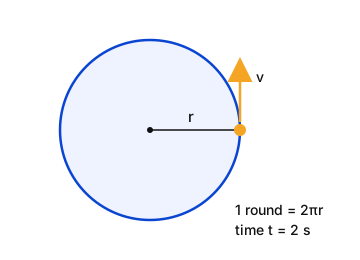
Q1178.
If an object takes 2 seconds to travel once around a circular path with radius 'r', its speed 'v' is given by _____.
यदि कोई वस्तु त्रिज्या 'r' वाले वृत्ताकार पथ का एक चक्कर लगाने में 2 सेकंड लेती है, तो उसकी चाल 'v' _____ द्वारा दी जाती है।
  1. Aπr2 metre/secondπr2 मीटर/सेकंड
  2. Bπr metre/secondπr मीटर/सेकंड
  3. C2πr metre/second2πr मीटर/सेकंड
  4. Dπr4 metre/secondπr4 मीटर/सेकंड
Show answer

Concept: Speed = distance ÷ time; one round of a circle covers its circumference 2πr.

  1. Distance in one round =2πr
  2. Time taken t=2 s
  3. v=2πr2=πr metre/second

Trick: v=2πrT; put T=2 and the 2's cancel.

Answer: (B) πr metre/second

अवधारणा: चाल = दूरी ÷ समय; वृत्त के एक चक्कर में परिधि 2πr तय होती है।

  1. एक चक्कर की दूरी =2πr
  2. लगा समय t=2 s
  3. v=2πr2=πr मीटर/सेकंड

ट्रिक: v=2πrT; T=2 रखें तो 2 कट जाता है।

उत्तर: (B) πr मीटर/सेकंड

RRB Technician Grade IIIGeneral ScienceUniform Circular MotionRRB Technician Grade III 2024 · 27 Dec Shift 1 →
Q1179.
Ozone shields the surface of the earth from ultraviolet (UV) radiation from the Sun and the amount of ozone in the atmosphere begins to drop sharply due to which of the following synthetic chemicals?
ओज़ोन पृथ्वी की सतह को सूर्य से आने वाले पराबैंगनी (UV) विकिरण से बचाती है और निम्नलिखित में से किस संश्लेषित रसायन के कारण वायुमंडल में ओज़ोन की मात्रा तेजी से घटने लगती है?
  1. ACarbon monoxideकार्बन मोनोऑक्साइड
  2. BChlorofluorocarbonsक्लोरोफ्लोरोकार्बन
  3. CPesticidesपीड़कनाशी (Pesticides)
  4. DInsecticidesकीटनाशी (Insecticides)
Show answer

Concept: Ozone (O3) in the stratosphere absorbs harmful UV rays; synthetic CFCs destroy it.

  1. CFCs were used as refrigerants and in fire extinguishers/aerosols.
  2. In the upper atmosphere UV light releases chlorine atoms from CFCs.
  3. Chlorine breaks down ozone, so ozone levels dropped sharply (from 1980s).

Yaad rakhein: CFC → chlorine → ozone hole. Montreal Protocol (1987) limits CFCs.

Answer: (B) Chlorofluorocarbons

अवधारणा: समतापमंडल की ओज़ोन (O3) हानिकारक UV किरणें सोखती है; कृत्रिम CFC इसे नष्ट करते हैं।

  1. CFC प्रशीतक तथा अग्निशामक/एरोसोल में प्रयुक्त होते थे।
  2. ऊपरी वायुमंडल में UV प्रकाश CFC से क्लोरीन परमाणु मुक्त करता है।
  3. क्लोरीन ओज़ोन को तोड़ता है, जिससे (1980 के दशक से) ओज़ोन तेज़ी से घटी।

याद रखें: CFC → क्लोरीन → ओज़ोन छिद्र। मॉन्ट्रियल प्रोटोकॉल (1987) CFC को सीमित करता है।

उत्तर: (B) क्लोरोफ्लोरोकार्बन

RRB Technician Grade IIIGeneral ScienceOzone DepletionRRB Technician Grade III 2024 · 27 Dec Shift 1 →
Q1180.
In what direction is fluid pressure transmitted in any confined mass of fluid?
किसी परिरुद्ध तरल द्रव्यमान में तरल दाब किस दिशा में संचरित होता है?
  1. AIn two directions only.केवल दो दिशाओं में।
  2. BUndiminished in all directions.सभी दिशाओं में बिना घटे (समान रूप से)।
  3. CIn one direction only.केवल एक दिशा में।
  4. DIn three directions only.केवल तीन दिशाओं में।
Show answer

Concept: Pascal's law: pressure applied to a confined fluid is transmitted undiminished in all directions.

  1. Fluid particles push equally on every side.
  2. Pressure applied at one point reaches every part of the fluid and the container walls equally.
  3. Used in hydraulic lifts, hydraulic brakes and presses.

Yaad rakhein: Pascal = all directions, undiminished → hydraulic lift.

Answer: (B) Undiminished in all directions.

अवधारणा: पास्कल का नियम: बंद तरल पर लगाया गया दाब बिना घटे सभी दिशाओं में संचरित होता है।

  1. तरल के कण हर ओर बराबर धक्का देते हैं।
  2. एक बिंदु पर लगाया दाब तरल के हर भाग व पात्र की दीवारों तक समान पहुँचता है।
  3. उपयोग: हाइड्रोलिक लिफ्ट, हाइड्रोलिक ब्रेक, प्रेस।

याद रखें: पास्कल = सभी दिशाएँ, बिना घटे → हाइड्रोलिक लिफ्ट।

उत्तर: (B) सभी दिशाओं में बिना घटे (समान रूप से)।

RRB Technician Grade IIIGeneral SciencePascal's LawRRB Technician Grade III 2024 · 27 Dec Shift 1 →