Question bank

Q&A: practice questions with answers

Search questions on any topic. Filter by exam category, exam, subject and topic, try the question, then open the answer and explanation.

Courses – airGurukul

3,200 questions found.

Q1241.
VRXT is related to QMSO in a certain way based on the English alphabetical order. In the same way, SOUQ is related to NJPL. To which of the following options is PLRN related, following the same logic?
अंग्रेज़ी वर्णमाला क्रम के आधार पर VRXT एक निश्चित प्रकार से QMSO से संबंधित है। उसी प्रकार, SOUQ, NJPL से संबंधित है। समान तर्क का अनुसरण करते हुए, PLRN निम्नलिखित में से किस विकल्प से संबंधित है?
  1. AKGIM
  2. BGKMI
  3. CKGMI
  4. DGKIM
Show answer

Concept: Find the shift applied to each letter of the first pair and apply it to the new cluster.

  1. VRXT → QMSO: V→Q, R→M, X→S, T→O (each −5). SOUQ → NJPL also −5.
  2. PLRN, each −5: P→K, L→G, R→M, N→I.
  3. Result: KGMI.

Trick: Going back 5 letters = going forward 21; use positions: 16−5=11 (K), 12−5=7 (G), 18−5=13 (M), 14−5=9 (I).

Answer: (C) KGMI

अवधारणा: पहले युग्म में हर अक्षर पर लगा परिवर्तन ज्ञात करें और नए समूह पर लगाएँ।

  1. VRXT → QMSO: V→Q, R→M, X→S, T→O (हर एक −5)। SOUQ → NJPL भी −5।
  2. PLRN, हर अक्षर −5: P→K, L→G, R→M, N→I।
  3. परिणाम: KGMI।

ट्रिक: स्थिति संख्याएँ: 16−5=11 (K), 12−5=7 (G), 18−5=13 (M), 14−5=9 (I)।

उत्तर: (C) KGMI

RRB Technician Grade IIIGeneral Intelligence and ReasoningLetter AnalogyRRB Technician Grade III 2024 · 26 Dec Shift 3 →
Q1242.
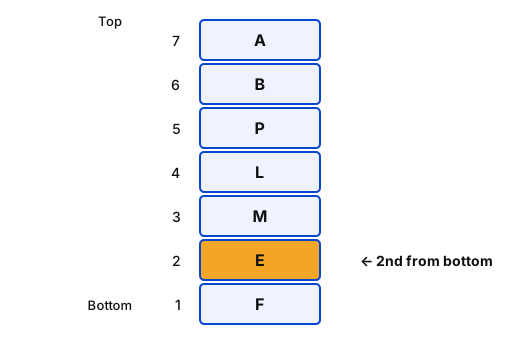
Seven boxes, A, B, E, F, L, M and P, are kept one over the other but not necessarily in the same order. Only three boxes are kept below L. Only two boxes are kept between L and F. Only A is kept above B. M is kept at some place below P and at some place above E. Which box is kept at the second position from the bottom?
सात बक्से, A, B, E, F, L, M और P, एक के ऊपर एक रखे गए हैं, लेकिन जरूरी नहीं कि इसी क्रम में हों। L के नीचे केवल तीन बक्से रखे गए हैं। L और F के बीच केवल दो बक्से रखे गए हैं। B के ऊपर केवल A रखा गया है। M को P के नीचे किसी स्थान पर और E के ऊपर किसी स्थान पर रखा गया है। नीचे से दूसरे स्थान पर कौन-सा बक्सा रखा गया है?
  1. AE
  2. BF
  3. CM
  4. DL
Show answer

Concept: Number positions 1 (bottom) to 7 (top) and fix the definite clues first.

  1. Three boxes below L → L at 4. Only A above B → A at 7, B at 6.
  2. Two boxes between L and F → F at 1 (position 7 is taken).
  3. Positions 2, 3, 5 remain for P, M, E with P above M above E → P = 5, M = 3, E = 2.

Yaad rakhein: “Only X above Y” always means X is on top and Y just below it.

Answer: (A) E

अवधारणा: स्थान 1 (नीचे) से 7 (ऊपर) तक संख्या दें और पहले निश्चित संकेत लगाएँ।

  1. L के नीचे तीन बक्से → L स्थान 4 पर। B के ऊपर केवल A → A स्थान 7, B स्थान 6।
  2. L और F के बीच दो बक्से → F स्थान 1 (7 भरा है)।
  3. शेष 2, 3, 5 पर P, M, E; P, M के ऊपर और M, E के ऊपर → P = 5, M = 3, E = 2।

याद रखें: “केवल X, Y के ऊपर” का अर्थ है X सबसे ऊपर और Y ठीक उसके नीचे।

उत्तर: (A) E

RRB Technician Grade IIIGeneral Intelligence and ReasoningPuzzle – Box StackingRRB Technician Grade III 2024 · 26 Dec Shift 3 →
Q1243.
In a certain code language, ‘here we are’ is written as ‘aj tm yg’ and ‘are we done’ is written as ‘gm aj tm’. How is ‘done’ written in the given language?
एक निश्चित कूट भाषा में, ‘here we are’ को ‘aj tm yg’ लिखा जाता है और ‘are we done’ को ‘gm aj tm’ लिखा जाता है। उसी भाषा में ‘done’ को कैसे लिखा जाता है?
  1. Ayg
  2. Btm
  3. Caj
  4. Dgm
Show answer

Concept: Words common to two sentences share the codes common to both.

  1. here we are → aj tm yg; are we done → gm aj tm.
  2. Common words “are, we” ↔ common codes “aj, tm”.
  3. Remaining word “done” ↔ remaining code “gm”.

Trick: Eliminate common pairs; what is left in the same sentence matches directly.

Answer: (D) gm

अवधारणा: दो वाक्यों में समान शब्दों के कूट भी दोनों में समान होते हैं।

  1. here we are → aj tm yg; are we done → gm aj tm।
  2. समान शब्द “are, we” ↔ समान कूट “aj, tm”।
  3. बचा हुआ शब्द “done” ↔ बचा हुआ कूट “gm”।

ट्रिक: समान युग्म हटाएँ; उसी वाक्य में बचा शब्द और कूट सीधे मेल खाते हैं।

उत्तर: (D) gm

RRB Technician Grade IIIGeneral Intelligence and ReasoningWord CodingRRB Technician Grade III 2024 · 26 Dec Shift 3 →
Q1244.
In the following number-pairs, the second number is obtained by applying certain mathematical operations to the first number. Which numbers should replace X and Y so that the pattern followed by the two numbers on the left side of :: is the same as that on the right side of :: ?
(NOTE: Operations should be performed on the whole numbers, without breaking down the numbers into its constituent digits. E.g. 13 – Operations on 13 such as adding /subtracting /multiplying etc. to 13 can be performed. Breaking down 13 into 1 and 3 and then performing mathematical operations on 1 and 3 is not allowed.)
X : 58 :: 117 : Y
निम्नलिखित संख्या-युग्मों में, पहली संख्या पर कुछ गणितीय संक्रियाएँ करके दूसरी संख्या प्राप्त की जाती है। X और Y के स्थान पर कौन-सी संख्याएँ आनी चाहिए ताकि :: के बाईं ओर की दोनों संख्याओं द्वारा अनुसरित पैटर्न वही हो जो :: के दाईं ओर है?
(नोट: संक्रियाएँ पूर्ण संख्याओं पर की जानी चाहिए, संख्याओं को उनके घटक अंकों में तोड़े बिना। उदाहरण के लिए 13 – 13 पर संक्रियाएँ जैसे 13 में जोड़ना/घटाना/गुणा करना आदि किया जा सकता है। 13 को 1 और 3 में तोड़ना और फिर 1 और 3 पर गणितीय संक्रियाएँ करना वर्जित है।)
X : 58 :: 117 : Y
  1. AX = 94, Y = 81
  2. BX = 92, Y = 88
  3. CX = 102, Y = 95
  4. DX = 109, Y = 99
Show answer

Concept: The same operation must give 58 from X and Y from 117; test each option.

  1. Option (A): 94−36=58 and 117−36=81 ✔.
  2. Others give different differences: 92−58=34 but 117−88=29; 102−58=44 but 117−95=22; 109−58=51 but 117−99=18.

Trick: Quick check: the rule here is “subtract 36”, so X−58 must equal 117−Y.

Answer: (A) X = 94, Y = 81

अवधारणा: X से 58 और 117 से Y एक ही संक्रिया से बनना चाहिए; हर विकल्प जाँचें।

  1. विकल्प (A): 94−36=58 तथा 117−36=81 ✔।
  2. अन्य में अंतर अलग: 92−58=34 पर 117−88=29; 102−58=44 पर 117−95=22; 109−58=51 पर 117−99=18।

ट्रिक: नियम “36 घटाओ” है, अतः X−58 और 117−Y बराबर होने चाहिए।

उत्तर: (A) X = 94, Y = 81

RRB Technician Grade IIIGeneral Intelligence and ReasoningNumber Pair AnalogyRRB Technician Grade III 2024 · 26 Dec Shift 3 →
Q1245.
Given below is a cause followed by possible effects numbered I and II. Read the cause carefully and decide which of the two can be a/the possible effect(s).
Cause - Inflation is an increase in the general price level of goods and services in an economy. More jobs and higher wages increase household incomes and lead to a rise in consumer spending, further increasing aggregate demand and the scope for firms to increase the prices of their goods and services. When this happens across a large number of businesses and sectors, this leads to an increase in inflation.
Effect I - In an inflationary environment, unevenly rising prices inevitably reduce the purchasing power of some consumers.
Effect II - Those with wealth tend to inherit more and as they have managed to put aside money and invest surpluses, they will be least damaged by any rampant inflation in the economy.
नीचे एक कारण दिया गया है, जिसके बाद I और II क्रमांकित संभावित प्रभाव दिए गए हैं। कारण को ध्यानपूर्वक पढ़िए और निर्णय लीजिए कि दोनों में से कौन-सा/से संभावित प्रभाव हो सकता है/सकते हैं।
कारण - मुद्रास्फीति किसी अर्थव्यवस्था में वस्तुओं और सेवाओं के सामान्य मूल्य स्तर में वृद्धि है। अधिक नौकरियाँ और उच्च मजदूरी घरेलू आय बढ़ाती हैं और उपभोक्ता व्यय में वृद्धि करती हैं, जिससे समग्र माँग और फर्मों के लिए अपनी वस्तुओं और सेवाओं की कीमतें बढ़ाने की गुंजाइश और बढ़ जाती है। जब ऐसा बड़ी संख्या में व्यवसायों और क्षेत्रों में होता है, तो इससे मुद्रास्फीति में वृद्धि होती है।
प्रभाव I - मुद्रास्फीतिकारी परिवेश में, असमान रूप से बढ़ती कीमतें अनिवार्य रूप से कुछ उपभोक्ताओं की क्रय शक्ति को कम कर देती हैं।
प्रभाव II - धनी लोगों को अधिक विरासत मिलने की प्रवृत्ति होती है और चूँकि वे धन बचाकर रखने और अधिशेष का निवेश करने में सफल रहे हैं, इसलिए अर्थव्यवस्था में किसी भी अनियंत्रित मुद्रास्फीति से उन्हें सबसे कम नुकसान होगा।
  1. AOnly II is a possible effect.केवल II एक संभावित प्रभाव है।
  2. BNeither I nor II are possible effects.न तो I और न ही II संभावित प्रभाव हैं।
  3. COnly I is a possible effect.केवल I एक संभावित प्रभाव है।
  4. DBoth I and II are possible effects.I और II दोनों संभावित प्रभाव हैं।
Show answer

Concept: An effect must follow directly from the stated cause (rising prices/inflation).

  1. Effect I: rising prices reduce purchasing power of consumers – a direct result of inflation ✔.
  2. Effect II talks about inheritance and wealth of the rich – it is not caused by the stated rise in demand and prices.

Yaad rakhein: Ask “Does the cause produce this?” – not “Is this statement true?”

Answer: (C) Only I is a possible effect.

अवधारणा: प्रभाव वही है जो दिए गए कारण (मूल्य वृद्धि/मुद्रास्फीति) से सीधे उत्पन्न हो।

  1. प्रभाव I: बढ़ती कीमतें उपभोक्ताओं की क्रय शक्ति घटाती हैं – मुद्रास्फीति का सीधा परिणाम ✔।
  2. प्रभाव II अमीरों की विरासत व संपत्ति की बात करता है – यह मांग और कीमतों के बढ़ने का परिणाम नहीं है।

याद रखें: पूछें “क्या यह कारण इसे उत्पन्न करता है?” – न कि “क्या कथन सही है?”

उत्तर: (C) केवल I एक संभावित प्रभाव है।

RRB Technician Grade IIIGeneral Intelligence and ReasoningCause and EffectRRB Technician Grade III 2024 · 26 Dec Shift 3 →
Q1246.
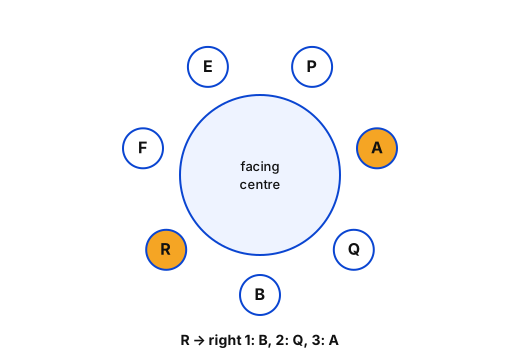
A, B, E, F, P, Q and R are sitting around a circular table facing the centre. Only two people sit between B and P when counted from the right of B. F sits second to the left of B. Q sits to the immediate left of A. E is not an immediate neighbour of B. Who sits third to the right of R?
A, B, E, F, P, Q और R एक वृत्ताकार मेज के चारों ओर केंद्र की ओर मुख करके बैठे हैं। B के दाईं ओर से गिनने पर B और P के बीच केवल दो व्यक्ति बैठे हैं। F, B के बाईं ओर दूसरे स्थान पर बैठा है। Q, A के ठीक बाईं ओर बैठा है। E, B का निकटतम पड़ोसी नहीं है। R के दाईं ओर तीसरे स्थान पर कौन बैठा है?
  1. AE
  2. BA
  3. CQ
  4. DP
Show answer

Concept: Facing the centre, “right” is anticlockwise and “left” is clockwise.

  1. Fix B. Two people between B and P from B’s right → P is 3rd to B’s right. F is 2nd to B’s left.
  2. Two adjacent free seats lie on B’s right: Q (immediate left of A) and A → Q is B’s immediate right, A next.
  3. Remaining seats: one beside F (neighbour of B on left) and one between P and F. E is not B’s neighbour → E between P and F, R beside B.
  4. Third to the right of R: B, Q, A → A.

Trick: Place the person with the most clues (B) first, then fill pairs like “Q immediate left of A”.

Answer: (B) A

अवधारणा: केंद्र की ओर मुख होने पर “दाएँ” = वामावर्त और “बाएँ” = दक्षिणावर्त।

  1. B को स्थिर करें। B के दाएँ से गिनने पर B और P के बीच दो लोग → P, B के दाएँ तीसरा। F, B के बाएँ दूसरा।
  2. B के दाएँ दो लगातार खाली स्थान: Q (A के ठीक बाएँ) और A → Q, B के ठीक दाएँ, फिर A।
  3. शेष स्थान: B के ठीक बाएँ और P–F के बीच। E, B का पड़ोसी नहीं → E, P और F के बीच; R, B के ठीक बाएँ।
  4. R के दाएँ तीसरा: B, Q, A → A।

ट्रिक: सबसे अधिक संकेतों वाले व्यक्ति (B) को पहले रखें, फिर “Q, A के ठीक बाएँ” जैसे युग्म भरें।

उत्तर: (B) A

RRB Technician Grade IIIGeneral Intelligence and ReasoningCircular Seating ArrangementRRB Technician Grade III 2024 · 26 Dec Shift 3 →
Q1247.
Which of the following options should come in place of the question mark (?) in the given series to make it logically complete?
24, 31, 45, 66, 94, ?
दी गई श्रृंखला को तार्किक रूप से पूर्ण करने के लिए प्रश्न चिह्न (?) के स्थान पर निम्नलिखित में से कौन-सा विकल्प आना चाहिए?
24, 31, 45, 66, 94, ?
  1. A129
  2. B119
  3. C134
  4. D110
Show answer

Concept: Check the differences between consecutive terms.

  1. Differences: 7,14,21,28 (multiples of 7).
  2. Next difference =35; 94+35=129.

Trick: Differences 7×1,7×2,7×3,… – keep adding the next multiple of 7.

Answer: (A) 129

अवधारणा: क्रमागत पदों का अंतर देखें।

  1. अंतर: 7,14,21,28 (7 के गुणज)।
  2. अगला अंतर =35; 94+35=129।

ट्रिक: अंतर 7×1,7×2,7×3,… – अगला 7 का गुणज जोड़ते रहें।

उत्तर: (A) 129

RRB Technician Grade IIIGeneral Intelligence and ReasoningNumber SeriesRRB Technician Grade III 2024 · 26 Dec Shift 3 →
Q1248.
Which of the following options should come in place of the question mark (?) in the given series based on the English alphabetical order?
MOK, NPL, OQM, PRN, ?
अंग्रेज़ी वर्णमाला क्रम के आधार पर दी गई श्रृंखला में प्रश्न चिह्न (?) के स्थान पर निम्नलिखित में से कौन-सा विकल्प आना चाहिए?
MOK, NPL, OQM, PRN, ?
  1. AQOS
  2. BQSO
  3. CSOQ
  4. DSQO
Show answer

Concept: Each letter of the cluster moves forward by one each term.

  1. 1st: M, N, O, P, Q; 2nd: O, P, Q, R, S; 3rd: K, L, M, N, O (each +1).
  2. Next term: QSO.

Trick: Simply add 1 to every letter of PRN → QSO.

Answer: (B) QSO

अवधारणा: समूह का हर अक्षर हर पद में एक आगे बढ़ता है।

  1. पहला: M, N, O, P, Q; दूसरा: O, P, Q, R, S; तीसरा: K, L, M, N, O (हर एक +1)।
  2. अगला पद: QSO।

ट्रिक: PRN के हर अक्षर में 1 जोड़ें → QSO।

उत्तर: (B) QSO

RRB Technician Grade IIIGeneral Intelligence and ReasoningLetter SeriesRRB Technician Grade III 2024 · 26 Dec Shift 3 →
Q1249.
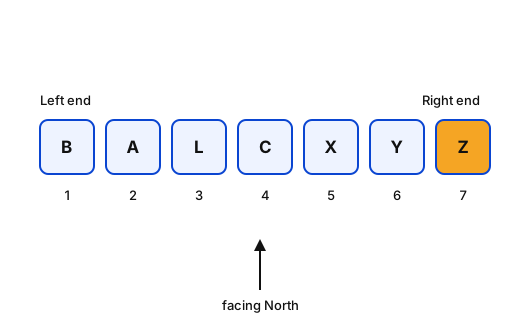
Seven people, A, B, C, L, X, Y and Z are sitting in a row, facing north. No one sits to the left of B. Only four people sit between B and Y. Only three people sit to the right of C. A sits to the immediate left of L. Z is not an immediate neighbour of C.
Who sits at the rightmost end of the row?
सात व्यक्ति, A, B, C, L, X, Y और Z एक पंक्ति में उत्तर की ओर मुख करके बैठे हैं। B के बाईं ओर कोई नहीं बैठा है। B और Y के बीच केवल चार व्यक्ति बैठे हैं। C के दाईं ओर केवल तीन व्यक्ति बैठे हैं। A, L के ठीक बाईं ओर बैठा है। Z, C का निकटतम पड़ोसी नहीं है।
पंक्ति के सबसे दाहिने छोर पर कौन बैठा है?
  1. AX
  2. BZ
  3. CL
  4. DY
Show answer

Concept: Facing north, left and right are the same as ours; number seats 1 (left) to 7 (right).

  1. No one to the left of B → B = 1. Four people between B and Y → Y = 6.
  2. Three people to the right of C → C = 4.
  3. A immediately left of L needs two adjacent free seats → A = 2, L = 3.
  4. Seats 5, 7 left for X, Z; Z is not next to C → X = 5, Z = 7.

Trick: Fix extreme-end and “count” clues first; neighbour clues come last.

Answer: (B) Z

अवधारणा: उत्तर की ओर मुख होने पर बायाँ–दायाँ हमारे समान; स्थान 1 (बाएँ) से 7 (दाएँ) तक।

  1. B के बाएँ कोई नहीं → B = 1। B और Y के बीच चार लोग → Y = 6।
  2. C के दाएँ तीन लोग → C = 4।
  3. A, L के ठीक बाएँ – दो लगातार खाली स्थान चाहिए → A = 2, L = 3।
  4. शेष 5, 7 पर X, Z; Z, C का पड़ोसी नहीं → X = 5, Z = 7।

ट्रिक: पहले छोर व “गिनती” वाले संकेत लगाएँ; पड़ोसी वाले संकेत अंत में।

उत्तर: (B) Z

RRB Technician Grade IIIGeneral Intelligence and ReasoningLinear Seating ArrangementRRB Technician Grade III 2024 · 26 Dec Shift 3 →
Q1250.
The position(s) of how many letters will remain unchanged if each of the letters in the word DISPLAY is arranged in the English alphabetical order ?
यदि शब्द DISPLAY के प्रत्येक अक्षर को अंग्रेज़ी वर्णमाला क्रम में व्यवस्थित किया जाए, तो कितने अक्षरों का स्थान अपरिवर्तित रहेगा?
  1. A2
  2. B0
  3. C1
  4. D3
Show answer

Concept: Write the letters in alphabetical order under the original word and compare position by position.

  1. DISPLAY → sorted: A D I L P S Y.
  2. Compare: D/A, I/D, S/I, P/L, L/P, A/S, Y/Y.
  3. Only Y (7th) stays in place → 1 letter.

Trick: Y is the largest letter and already last, so it stays; check the rest quickly.

Answer: (C) 1

अवधारणा: मूल शब्द के नीचे अक्षरों को वर्णानुक्रम में लिखें और स्थान-दर-स्थान तुलना करें।

  1. DISPLAY → क्रम में: A D I L P S Y।
  2. तुलना: D/A, I/D, S/I, P/L, L/P, A/S, Y/Y।
  3. केवल Y (7वाँ) अपनी जगह पर → 1 अक्षर।

ट्रिक: Y सबसे बड़ा अक्षर है और पहले से अंत में है, इसलिए नहीं हिलता; बाकी जल्दी जाँचें।

उत्तर: (C) 1

RRB Technician Grade IIIGeneral Intelligence and ReasoningAlphabetical ArrangementRRB Technician Grade III 2024 · 26 Dec Shift 3 →
Q1251.
What type of plant tissue is classified as apical, lateral and intercalary?
किस प्रकार के पादप ऊतक को शीर्षस्थ (apical), पार्श्व (lateral) और अंतर्वेशी (intercalary) के रूप में वर्गीकृत किया जाता है?
  1. ASimple permanent tissueसरल स्थायी ऊतक
  2. BConnective tissueसंयोजी ऊतक
  3. CMeristematic tissueविभज्योतक ऊतक (Meristematic tissue)
  4. DComplex permanent tissueजटिल स्थायी ऊतक
Show answer

Concept: Meristematic tissue is the dividing tissue of plants; it is classified by its position in the plant body.

  1. Apical meristem – at tips of root and stem; increases length.
  2. Lateral meristem (cambium) – on the sides; increases girth.
  3. Intercalary meristem – at the base of leaves or internodes.
  4. Permanent tissues are classified as simple/complex, not by position.

Yaad rakhein: Meristem = growth tissue; classified by location: tip (apical), side (lateral), in-between (intercalary).

Answer: (C) Meristematic tissue

अवधारणा: विभज्योतक (मेरिस्टेमेटिक) ऊतक पौधों का विभाजित होने वाला ऊतक है; इसे पौधे में उसकी स्थिति के आधार पर वर्गीकृत किया जाता है।

  1. शीर्षस्थ (apical) – जड़ और तने के सिरे पर; लंबाई बढ़ाता है।
  2. पार्श्व (lateral, कैंबियम) – किनारों पर; मोटाई बढ़ाता है।
  3. अंतर्वेशी (intercalary) – पत्तियों के आधार या पर्वों पर।
  4. स्थायी ऊतक सरल/जटिल में बँटते हैं, स्थिति के आधार पर नहीं।

याद रखें: विभज्योतक = वृद्धि ऊतक; स्थान के अनुसार – सिरा, किनारा, बीच।

उत्तर: (C) विभज्योतक ऊतक (Meristematic tissue)

RRB Technician Grade IIIGeneral SciencePlant tissuesRRB Technician Grade III 2024 · 26 Dec Shift 3 →
Q1252.
Select the INCORRECT statement.
गलत कथन का चयन कीजिए।
  1. AWarts are a protozoan disease.मस्से (Warts) एक प्रोटोज़ोआ जनित रोग हैं।
  2. BAIDS is caused by the HIV virus.एड्स (AIDS) HIV वायरस के कारण होता है।
  3. CGonorrhea is a bacterial disease.सुजाक (Gonorrhea) एक जीवाणु जनित रोग है।
  4. DMany diseases can be sexually transmitted.कई रोग यौन संचारित हो सकते हैं।
Show answer

Concept: Diseases are grouped by the causative agent – virus, bacteria, protozoa, fungi.

  1. Warts are caused by a virus (human papilloma virus), not a protozoan – statement A is wrong.
  2. AIDS is caused by HIV (virus) – correct.
  3. Gonorrhoea is caused by bacteria – correct.
  4. Many diseases (AIDS, syphilis, gonorrhoea, warts) are sexually transmitted – correct.

Yaad rakhein: Sexually transmitted: bacterial – gonorrhoea, syphilis; viral – warts, AIDS.

Answer: (A) Warts are a protozoan disease.

अवधारणा: रोगों को उनके कारक के आधार पर बाँटा जाता है – वायरस, बैक्टीरिया, प्रोटोज़ोआ, कवक।

  1. मस्से (warts) वायरस (ह्यूमन पैपिलोमा वायरस) से होते हैं, प्रोटोज़ोआ से नहीं – कथन A गलत है।
  2. एड्स HIV वायरस से होता है – सही।
  3. गोनोरिया बैक्टीरिया से होता है – सही।
  4. कई रोग (एड्स, सिफलिस, गोनोरिया, मस्से) यौन संचारित होते हैं – सही।

याद रखें: यौन संचारित: जीवाणु – गोनोरिया, सिफलिस; वायरस – मस्से, एड्स।

उत्तर: (A) मस्से (Warts) एक प्रोटोज़ोआ जनित रोग हैं।

RRB Technician Grade IIIGeneral ScienceHuman diseasesRRB Technician Grade III 2024 · 26 Dec Shift 3 →
Q1253.
Which of the following actions are regulated by the medulla in the hind brain?
निम्नलिखित में से कौन-सी क्रियाएँ पश्चमस्तिष्क (hind brain) में स्थित मेडुला द्वारा नियंत्रित होती हैं?
  1. AMaintaining balance and postureसंतुलन और शारीरिक मुद्रा बनाए रखना
  2. BWalkingचलना
  3. CRiding a bicycleसाइकिल चलाना
  4. DSalivationलार स्रावण (Salivation)
Show answer

Concept: The medulla (in the hind-brain) controls involuntary actions.

  1. Medulla controls blood pressure, salivation and vomiting.
  2. Balance and posture, walking and riding a bicycle (precise voluntary movements) are controlled by the cerebellum.
  3. So the action regulated by the medulla is salivation.

Trick: Medulla = 'automatic' work (BP, saliva, vomiting); Cerebellum = balance & coordination.

Answer: (D) Salivation

अवधारणा: हिंद-ब्रेन का मेडुला (मेरुरज्जु शीर्ष) अनैच्छिक क्रियाओं को नियंत्रित करता है।

  1. मेडुला – रक्तचाप, लार आना और उल्टी को नियंत्रित करता है।
  2. संतुलन व मुद्रा, चलना, साइकिल चलाना – अनुमस्तिष्क (cerebellum) का कार्य है।
  3. अतः मेडुला द्वारा नियंत्रित क्रिया है – लार आना।

ट्रिक: मेडुला = अपने-आप होने वाले कार्य (BP, लार, उल्टी); सेरिबेलम = संतुलन।

उत्तर: (D) लार स्रावण (Salivation)

RRB Technician Grade IIIGeneral ScienceHuman brainRRB Technician Grade III 2024 · 26 Dec Shift 3 →
Q1254.
Which of the following compounds is used in tincture iodine?
टिंचर आयोडीन में निम्नलिखित में से किस यौगिक का उपयोग किया जाता है?
  1. AEthanoic acidएथेनोइक अम्ल (Ethanoic acid)
  2. BEthanolएथेनॉल (Ethanol)
  3. CPropanolप्रोपेनॉल (Propanol)
  4. DMethanolमेथेनॉल (Methanol)
Show answer

Concept: Ethanol (C2H5OH) is a good solvent and is used in medicines such as tincture iodine, cough syrups and tonics.

  1. Tincture of iodine = iodine dissolved in ethanol (alcohol).
  2. Ethanoic acid is vinegar; methanol is poisonous; propanol is not used here.

Yaad rakhein: Tincture = solution in alcohol (ethanol).

Answer: (B) Ethanol

अवधारणा: एथेनॉल (C2H5OH) एक अच्छा विलायक है और टिंचर आयोडीन, कफ सिरप, टॉनिक जैसी दवाओं में प्रयुक्त होता है।

  1. टिंचर आयोडीन = एथेनॉल (एल्कोहॉल) में घुला आयोडीन।
  2. एथेनॉइक अम्ल सिरका है; मेथनॉल विषैला है; प्रोपेनॉल यहाँ प्रयुक्त नहीं होता।

याद रखें: टिंचर = एल्कोहॉल (एथेनॉल) में बना विलयन।

उत्तर: (B) एथेनॉल (Ethanol)

RRB Technician Grade IIIGeneral ScienceCarbon compounds – ethanolRRB Technician Grade III 2024 · 26 Dec Shift 3 →
Q1255.
Which of the following metals is LEAST reactive towards dilute hydrochloric acid?
निम्नलिखित में से कौन-सी धातु तनु हाइड्रोक्लोरिक अम्ल के प्रति सबसे कम अभिक्रियाशील है?
  1. AAl
  2. BFe
  3. CZn
  4. DMg
Show answer

Concept: Reactivity series: K>Na>Ca>Mg>Al>Zn>Fe>Pb>H>Cu. The lower the metal, the slower it reacts with dilute HCl.

  1. Order of given metals: Mg>Al>Zn>Fe.
  2. Fe is lowest, so it reacts least vigorously with dilute HCl.

Trick: 'Mg Al Zn Fe' – Mg reacts fastest, Fe slowest among these.

Answer: (B) Fe

अवधारणा: सक्रियता श्रेणी: K>Na>Ca>Mg>Al>Zn>Fe>Pb>H>Cu। श्रेणी में जितना नीचे, तनु HCl से उतनी धीमी अभिक्रिया।

  1. दिए गए धातुओं का क्रम: Mg>Al>Zn>Fe।
  2. Fe सबसे नीचे है, अतः तनु HCl के प्रति सबसे कम सक्रिय।

ट्रिक: 'Mg Al Zn Fe' – इनमें Mg सबसे तेज, Fe सबसे धीमा।

उत्तर: (B) Fe

RRB Technician Grade IIIGeneral ScienceReactivity seriesRRB Technician Grade III 2024 · 26 Dec Shift 3 →
Q1256.
Which of the following factors do NOT affect the resistance of a conductor (at constant temperature):
(i) Area of cross-section of the conductor
(ii) Current flowing through the conductor
(iii)Length of the conductor
निम्नलिखित में से कौन-से कारक किसी चालक के प्रतिरोध को प्रभावित नहीं करते हैं (स्थिर तापमान पर):
(i) चालक के अनुप्रस्थ काट का क्षेत्रफल
(ii) चालक से प्रवाहित धारा
(iii) चालक की लंबाई
  1. AOnly (iii)केवल (iii)
  2. BBoth (i) and (ii)(i) और (ii) दोनों
  3. CBoth (i) and (iii)(i) और (iii) दोनों
  4. DOnly (ii)केवल (ii)
Show answer

Concept: At constant temperature, R=ρlA – resistance depends on length, area of cross-section and material.

  1. Length (iii): R∝l – affects.
  2. Area (i): R∝1A – affects.
  3. Current (ii) does not appear in the formula; changing V changes I but R stays the same.

Yaad rakhein: R depends on 'L-A-M' – Length, Area, Material (and temperature); never on V or I.

Answer: (D) Only (ii)

अवधारणा: स्थिर ताप पर R=ρlA – प्रतिरोध लंबाई, अनुप्रस्थ काट के क्षेत्रफल और पदार्थ पर निर्भर करता है।

  1. लंबाई (iii): R∝l – प्रभावित करती है।
  2. क्षेत्रफल (i): R∝1A – प्रभावित करता है।
  3. धारा (ii) सूत्र में नहीं है; V बदलने से I बदलती है पर R वही रहता है।

याद रखें: R निर्भर है – लंबाई, क्षेत्रफल, पदार्थ (और ताप) पर; V या I पर नहीं।

उत्तर: (D) केवल (ii)

RRB Technician Grade IIIGeneral ScienceResistanceRRB Technician Grade III 2024 · 26 Dec Shift 3 →
Q1257.
Which of the following statements related to the law of conservation of energy is true?
ऊर्जा संरक्षण के नियम से संबंधित निम्नलिखित में से कौन-सा कथन सत्य है?
  1. AEnergy can be created or destroyed.ऊर्जा का सृजन या विनाश किया जा सकता है।
  2. BThe total energy before and after a transformation process are different.किसी रूपांतरण प्रक्रिया से पहले और बाद में कुल ऊर्जा भिन्न होती है।
  3. CEnergy cannot be converted from one form to another.ऊर्जा को एक रूप से दूसरे रूप में परिवर्तित नहीं किया जा सकता है।
  4. DThe law of conservation of energy is valid in all situations and for all kinds of transformations.ऊर्जा संरक्षण का नियम सभी परिस्थितियों में और सभी प्रकार के रूपांतरणों के लिए मान्य है।
Show answer

Concept: Law of conservation of energy: energy can neither be created nor destroyed; it only changes from one form to another, and total energy stays constant.

  1. A is false – energy cannot be created or destroyed.
  2. B is false – total energy before and after is the same.
  3. C is false – energy does change form (e.g. electrical → heat).
  4. D is true – the law holds in all situations and all transformations.

Yaad rakhein: Total energy of an isolated system is always constant.

Answer: (D) The law of conservation of energy is valid in all situations and for all kinds of transformations.

अवधारणा: ऊर्जा संरक्षण का नियम: ऊर्जा न तो उत्पन्न की जा सकती है न नष्ट; वह केवल एक रूप से दूसरे रूप में बदलती है और कुल ऊर्जा स्थिर रहती है।

  1. A गलत – ऊर्जा बनाई या नष्ट नहीं की जा सकती।
  2. B गलत – रूपांतरण से पहले और बाद कुल ऊर्जा समान रहती है।
  3. C गलत – ऊर्जा रूप बदलती है (जैसे विद्युत → ऊष्मा)।
  4. D सही – यह नियम सभी परिस्थितियों और सभी रूपांतरणों में लागू है।

याद रखें: विलगित निकाय की कुल ऊर्जा सदैव स्थिर रहती है।

उत्तर: (D) ऊर्जा संरक्षण का नियम सभी परिस्थितियों में और सभी प्रकार के रूपांतरणों के लिए मान्य है।

RRB Technician Grade IIIGeneral ScienceConservation of energyRRB Technician Grade III 2024 · 26 Dec Shift 3 →
Q1258.
Select the correct option related to the function of villi in the small intestine.
छोटी आंत में दीर्घरोम (villi) के कार्य से संबंधित सही विकल्प का चयन कीजिए।
  1. AHelps in excretionउत्सर्जन में सहायता करता है
  2. BIncreases absorptive surface areaअवशोषण के लिए सतही क्षेत्रफल बढ़ाता है
  3. CSecretion of mineralsखनिजों का स्रावण
  4. DProtection from acidअम्ल से सुरक्षा
Show answer

Concept: The inner wall of the small intestine has finger-like projections called villi.

  1. Villi greatly increase the surface area for absorption of digested food.
  2. They are richly supplied with blood vessels that carry absorbed food to body cells.
  3. They are not for excretion, mineral secretion or acid protection.

Yaad rakhein: Villi = more surface area = more absorption.

Answer: (B) Increases absorptive surface area

अवधारणा: छोटी आँत की भीतरी दीवार पर अंगुली जैसे उभार होते हैं जिन्हें दीर्घरोम (villi) कहते हैं।

  1. दीर्घरोम पचे भोजन के अवशोषण के लिए सतही क्षेत्रफल बहुत बढ़ा देते हैं।
  2. इनमें रक्त वाहिकाएँ अधिक होती हैं जो अवशोषित भोजन को कोशिकाओं तक ले जाती हैं।
  3. ये उत्सर्जन, खनिज स्राव या अम्ल से रक्षा के लिए नहीं हैं।

याद रखें: विलाई = अधिक क्षेत्रफल = अधिक अवशोषण।

उत्तर: (B) अवशोषण के लिए सतही क्षेत्रफल बढ़ाता है

RRB Technician Grade IIIGeneral ScienceDigestion – villiRRB Technician Grade III 2024 · 26 Dec Shift 3 →
Q1259.
Which of the following ion concentrations is measured by the pH scale?
pH स्केल द्वारा निम्नलिखित में से किस आयन की सांद्रता मापी जाती है?
  1. AH+ ion concentrationH+ आयन सांद्रता
  2. BF− ion concentrationF− आयन सांद्रता
  3. CCl− ion concentrationCl− आयन सांद्रता
  4. DNa+ ion concentrationNa+ आयन सांद्रता
Show answer

Concept: pH measures the hydrogen ion concentration of a solution: pH=−log[H+].

  1. 'p' stands for 'potenz' (power) of H.
  2. More H+ → lower pH (acidic); fewer H+ → higher pH (basic).
  3. Scale runs from 0 to 14; 7 is neutral.

Yaad rakhein: pH = power of Hydrogen.

Answer: (A) H+ ion concentration

अवधारणा: pH किसी विलयन में हाइड्रोजन आयन की सांद्रता को मापता है: pH=−log[H+]।

  1. 'p' का अर्थ 'potenz' (शक्ति) है।
  2. अधिक H+ → कम pH (अम्लीय); कम H+ → अधिक pH (क्षारीय)।
  3. स्केल 0 से 14 तक; 7 उदासीन।

याद रखें: pH = हाइड्रोजन की शक्ति।

उत्तर: (A) H+ आयन सांद्रता

RRB Technician Grade IIIGeneral SciencepH scaleRRB Technician Grade III 2024 · 26 Dec Shift 3 →
Q1260.
A bus accelerates uniformly from 12 m s−1 to 30 m s−1 in 30 s. Calculate the distance covered by the bus in that time.
एक बस 30 s में 12 m s−1 से 30 m s−1 तक एकसमान रूप से त्वरित होती है। उस समय में बस द्वारा तय की गई दूरी की गणना कीजिए।
  1. A1900 m
  2. B400 m
  3. C630 m
  4. D175 m
Show answer

Concept: For uniform acceleration, distance = average velocity × time: s=u+v2×t.

  1. u=12 m/s, v=30 m/s, t=30 s.
  2. Average velocity =12+302=21 m/s.
  3. s=21×30=630 m.
  4. Check: a=30−1230=0.6, s=12×30+12×0.6×302=360+270=630.

Trick: With u, v and t given, skip 'a' – use s=u+v2t directly.

Answer: (C) 630 m

अवधारणा: एकसमान त्वरण में दूरी = औसत वेग × समय: s=u+v2×t।

  1. u=12 m/s, v=30 m/s, t=30 s।
  2. औसत वेग =12+302=21 m/s।
  3. s=21×30=630 m।
  4. जाँच: a=30−1230=0.6, s=360+12×0.6×302=630।

ट्रिक: u, v, t दिए हों तो a निकाले बिना s=u+v2t लगाएँ।

उत्तर: (C) 630 m

RRB Technician Grade IIIGeneral ScienceEquations of motionRRB Technician Grade III 2024 · 26 Dec Shift 3 →