Question bank

Q&A: practice questions with answers

Search questions on any topic. Filter by exam category, exam, subject and topic, try the question, then open the answer and explanation.

Courses – airGurukul

3,200 questions found.

Q1261.
When water enters into the guard cells, the guard cells ______ and the stomatal pore ______.
जब द्वार कोशिकाओं (guard cells) में जल प्रवेश करता है, तो द्वार कोशिकाएँ ______ और रंध्र छिद्र ______।
  1. Aswell; shrinksफूल जाती हैं; सिकुड़ जाता है
  2. Bshrink; opensसिकुड़ जाती हैं; खुल जाता है
  3. Cshrink; closesसिकुड़ जाती हैं; बंद हो जाता है
  4. Dswell; opensफूल जाती हैं; खुल जाता है
Show answer

Concept: Opening and closing of stomata is controlled by guard cells through water movement.

  1. Water enters the guard cells → they become turgid and swell.
  2. Swollen guard cells curve outward → the stomatal pore opens.
  3. When water leaves, guard cells shrink and the pore closes.

Yaad rakhein: Swell → Open; Shrink → Close.

Answer: (D) swell; opens

अवधारणा: रंध्रों का खुलना-बंद होना द्वार कोशिकाएँ (guard cells) जल की गति द्वारा नियंत्रित करती हैं।

  1. जल द्वार कोशिकाओं में जाता है → वे स्फीत होकर फूल जाती हैं।
  2. फूली हुई द्वार कोशिकाएँ बाहर की ओर मुड़ती हैं → रंध्र छिद्र खुल जाता है।
  3. जल बाहर जाने पर कोशिकाएँ सिकुड़ती हैं और छिद्र बंद हो जाता है।

याद रखें: फूलना → खुलना; सिकुड़ना → बंद होना।

उत्तर: (D) फूल जाती हैं; खुल जाता है
RRB Technician Grade IIIGeneral ScienceStomataRRB Technician Grade III 2024 · 26 Dec Shift 3 →
Q1262.
What would be the name of hydrocarbon having three carbon chain with a double bond?
द्विबंध युक्त तीन कार्बन श्रृंखला वाले हाइड्रोकार्बन का नाम क्या होगा?
  1. APropaneप्रोपेन (Propane)
  2. BPropanoneप्रोपेनोन (Propanone)
  3. CPropyneप्रोपाइन (Propyne)
  4. DPropeneप्रोपीन (Propene)
Show answer

Concept: Name = word root (carbons) + suffix (bond type): -ane (single), -ene (double), -yne (triple).

  1. Three carbons → root 'prop'.
  2. Double bond → suffix '-ene' → propene, CH2=CH−CH3.
  3. Propane – single bonds; propyne – triple bond; propanone – ketone, not a hydrocarbon.

Trick: a-e-y order = 1, 2, 3 bonds: ane, ene, yne.

Answer: (D) Propene

अवधारणा: नाम = मूल शब्द (कार्बन संख्या) + प्रत्यय (बंध): -ane (एकल), -ene (द्विबंध), -yne (त्रिबंध)।

  1. तीन कार्बन → 'prop'।
  2. द्विबंध → '-ene' → प्रोपीन, CH2=CH−CH3।
  3. प्रोपेन – एकल बंध; प्रोपाइन – त्रिबंध; प्रोपेनोन – कीटोन है, हाइड्रोकार्बन नहीं।

ट्रिक: a-e-y = 1, 2, 3 बंध: ane, ene, yne।

उत्तर: (D) प्रोपीन (Propene)

RRB Technician Grade IIIGeneral ScienceHydrocarbon nomenclatureRRB Technician Grade III 2024 · 26 Dec Shift 3 →
Q1263.
Which of the following is a suspension?
निम्नलिखित में से कौन-सा एक निलंबन (suspension) है?
  1. AGases dispersed in liquidsद्रवों में परिक्षिप्त गैसें
  2. BGases dispersed in solidsठोसों में परिक्षिप्त गैसें
  3. CSolids dispersed in solidsठोसों में परिक्षिप्त ठोस
  4. DSolids dispersed in liquidsद्रवों में परिक्षिप्त ठोस
Show answer

Concept: A suspension is a heterogeneous mixture in which solid particles are dispersed (not dissolved) in a liquid and are visible.

  1. Examples: chalk in water, muddy water, sand in water.
  2. Gas in liquid (soda water/foam), gas in solid and solid in solid (alloys/coloured gems) are solutions or colloids, not suspensions.

Yaad rakhein: Suspension = solid in liquid, particles visible, settle down on standing.

Answer: (D) Solids dispersed in liquids

अवधारणा: निलंबन एक विषमांगी मिश्रण है जिसमें ठोस कण द्रव में फैले (घुले नहीं) रहते हैं और दिखाई देते हैं।

  1. उदाहरण: पानी में चॉक, मटमैला पानी, पानी में रेत।
  2. द्रव में गैस, ठोस में गैस, ठोस में ठोस – ये विलयन या कोलॉइड हैं, निलंबन नहीं।

याद रखें: निलंबन = द्रव में ठोस, कण दिखते हैं, रखने पर नीचे बैठ जाते हैं।

उत्तर: (D) द्रवों में परिक्षिप्त ठोस

RRB Technician Grade IIIGeneral ScienceSuspensionsRRB Technician Grade III 2024 · 26 Dec Shift 3 →
Q1264.
When a white light falls on a glass prism, ________ colour undergoes maximum deviation.
जब श्वेत प्रकाश काँच के प्रिज़्म पर पड़ता है, तो ________ रंग का अधिकतम विचलन होता है।
  1. ARedलाल
  2. BBlueनीला
  3. CYellowपीला
  4. DVioletबैंगनी
Show answer

Concept: A prism splits white light into VIBGYOR because each colour bends by a different amount.

  1. Deviation depends on wavelength: shorter wavelength → greater refractive index → more bending.
  2. Violet has the shortest wavelength → maximum deviation.
  3. Red has the longest wavelength → least deviation.

Trick: VIBGYOR – V bends the most (bottom of spectrum), R the least (top).

Answer: (D) Violet

अवधारणा: प्रिज्म श्वेत प्रकाश को VIBGYOR में बाँट देता है क्योंकि हर रंग अलग-अलग मात्रा में मुड़ता है।

  1. विचलन तरंगदैर्ध्य पर निर्भर: कम तरंगदैर्ध्य → अधिक अपवर्तनांक → अधिक मुड़ना।
  2. बैंगनी की तरंगदैर्ध्य सबसे कम → अधिकतम विचलन।
  3. लाल की तरंगदैर्ध्य सबसे अधिक → न्यूनतम विचलन।

ट्रिक: बैंगनी सबसे ज्यादा मुड़ता है, लाल सबसे कम।

उत्तर: (D) बैंगनी

RRB Technician Grade IIIGeneral ScienceDispersion of lightRRB Technician Grade III 2024 · 26 Dec Shift 3 →
Q1265.
When hydrochloric acid (HCl) reacts with sodium hydroxide (NaOH), which of the following products is formed?
जब हाइड्रोक्लोरिक अम्ल (HCl) सोडियम हाइड्रॉक्साइड (NaOH) के साथ अभिक्रिया करता है, तो निम्नलिखित में से कौन-सा उत्पाद बनता है?
  1. AOnly waterकेवल जल
  2. BOnly saltकेवल लवण
  3. CWater and saltजल और लवण
  4. DCarbon dioxide and waterकार्बन डाइऑक्साइड और जल
Show answer

Concept: Acid + base → salt + water (neutralisation reaction).

  1. HCl+NaOH→NaCl+H2O.
  2. NaCl is the salt, H2O is water.
  3. CO2 forms only when an acid reacts with a carbonate/hydrogencarbonate.

Yaad rakhein: Acid + Base = Salt + Water.

Answer: (C) Water and salt

अवधारणा: अम्ल + क्षार → लवण + जल (उदासीनीकरण अभिक्रिया)।

  1. HCl+NaOH→NaCl+H2O।
  2. NaCl लवण है, H2O जल है।
  3. CO2 केवल अम्ल और कार्बोनेट/हाइड्रोजनकार्बोनेट की अभिक्रिया में बनती है।

याद रखें: अम्ल + क्षार = लवण + जल।

उत्तर: (C) जल और लवण

RRB Technician Grade IIIGeneral ScienceNeutralisationRRB Technician Grade III 2024 · 26 Dec Shift 3 →
Q1266.
Which of the following substances can act as a source of OH− ions when dissolved in water?
जल में घुलने पर निम्नलिखित में से कौन-सा पदार्थ OH− आयनों के स्रोत के रूप में कार्य कर सकता है?
  1. ANitric acidनाइट्रिक अम्ल
  2. BCarbon dioxideकार्बन डाइऑक्साइड
  3. CHydrochloric acidहाइड्रोक्लोरिक अम्ल
  4. DSodium hydroxideसोडियम हाइड्रॉक्साइड
Show answer

Concept: Bases give hydroxide ions (OH−) in water; acids give H+ ions.

  1. NaOH→Na++OH− – source of OH−.
  2. HNO3 and HCl are acids – give H+.
  3. CO2 in water forms carbonic acid – acidic.

Yaad rakhein: Name ends in 'hydroxide' → base → OH−.

Answer: (D) Sodium hydroxide

अवधारणा: क्षारक जल में हाइड्रॉक्साइड आयन (OH−) देते हैं; अम्ल H+ आयन देते हैं।

  1. NaOH→Na++OH− – OH− का स्रोत।
  2. HNO3 और HCl अम्ल हैं – H+ देते हैं।
  3. CO2 जल में कार्बोनिक अम्ल बनाती है – अम्लीय।

याद रखें: नाम में 'हाइड्रॉक्साइड' → क्षारक → OH−।

उत्तर: (D) सोडियम हाइड्रॉक्साइड

RRB Technician Grade IIIGeneral ScienceBasesRRB Technician Grade III 2024 · 26 Dec Shift 3 →
Q1267.
Which of the following statements is/are correct related to respiration?
(i) In alveoli, exchange of gases takes place.
(ii) The walls of alveoli contain an extensive network of blood vessel.
(iii) In human beings, the respiratory pigments is haemoglobin.
श्वसन से संबंधित निम्नलिखित में से कौन-सा/से कथन सही है/हैं?
(i) कूपिकाओं (alveoli) में गैसों का आदान-प्रदान होता है।
(ii) कूपिकाओं की भित्तियों में रुधिर वाहिकाओं का विस्तृत जाल होता है।
(iii) मनुष्यों में श्वसन वर्णक हीमोग्लोबिन है।
  1. AOnly (i) and (ii)केवल (i) और (ii)
  2. B(i), (ii) and (iii)(i), (ii) और (iii)
  3. COnly (i)केवल (i)
  4. DOnly (i) and (iii)केवल (i) और (iii)
Show answer

Concept: Alveoli are tiny balloon-like sacs in the lungs where gas exchange occurs.

  1. (i) Correct – O2 and CO2 are exchanged in the alveoli.
  2. (ii) Correct – alveolar walls have an extensive network of blood capillaries.
  3. (iii) Correct – haemoglobin in RBCs is the respiratory pigment in humans.
  4. All three are true.

Yaad rakhein: Alveoli = large surface + thin walls + rich blood supply.

Answer: (B) (i), (ii) and (iii)

अवधारणा: कूपिकाएँ (alveoli) फेफड़ों में गुब्बारे जैसी छोटी थैलियाँ हैं जहाँ गैसों का आदान-प्रदान होता है।

  1. (i) सही – कूपिकाओं में O2 और CO2 का विनिमय होता है।
  2. (ii) सही – कूपिकाओं की दीवारों में रक्त केशिकाओं का घना जाल होता है।
  3. (iii) सही – मनुष्य में श्वसन वर्णक हीमोग्लोबिन (RBC में) है।
  4. तीनों कथन सही।

याद रखें: कूपिका = बड़ा क्षेत्रफल + पतली दीवार + अधिक रक्त आपूर्ति।

उत्तर: (B) (i), (ii) और (iii)

RRB Technician Grade IIIGeneral ScienceRespirationRRB Technician Grade III 2024 · 26 Dec Shift 3 →
Q1268.
Cells of the meristematic tissue are very active, but they lack:
विभज्योतक ऊतक (meristematic tissue) की कोशिकाएँ बहुत सक्रिय होती हैं, परंतु उनमें ______ का अभाव होता है:
  1. Aprominent nucleiसुस्पष्ट केंद्रक
  2. Bdense cytoplasmसघन कोशिकाद्रव्य
  3. Cvacuolesरिक्तिकाएँ (vacuoles)
  4. Dthin cellulose wallsपतली सेलुलोज भित्तियाँ
Show answer

Concept: Meristematic cells divide actively, so they are packed with living material.

  1. They have dense cytoplasm, thin cellulose walls and prominent nuclei.
  2. They lack vacuoles (no space is needed to store food/waste while dividing).

Yaad rakhein: Meristem: dense cytoplasm, big nucleus, thin wall, NO vacuole.

Answer: (C) vacuoles

अवधारणा: विभज्योतक कोशिकाएँ लगातार विभाजित होती हैं, इसलिए जीवद्रव्य से भरी रहती हैं।

  1. इनमें सघन कोशिकाद्रव्य, पतली सेलुलोज़ भित्ति और स्पष्ट केंद्रक होता है।
  2. इनमें रिक्तिकाएँ (vacuoles) नहीं होतीं।

याद रखें: विभज्योतक: सघन कोशिकाद्रव्य, बड़ा केंद्रक, पतली भित्ति, रिक्तिका नहीं।

उत्तर: (C) रिक्तिकाएँ (vacuoles)

RRB Technician Grade IIIGeneral ScienceMeristematic tissueRRB Technician Grade III 2024 · 26 Dec Shift 3 →
Q1269.
Which of the following is NOT an example of oxidation reaction?
निम्नलिखित में से कौन-सा ऑक्सीकरण अभिक्रिया का उदाहरण नहीं है?
  1. AFormation of zinc from zinc oxideजिंक ऑक्साइड से जिंक का निर्माण
  2. BCorrosionसंक्षारण (Corrosion)
  3. CFormation of magnesium oxide from magnesiumमैग्नीशियम से मैग्नीशियम ऑक्साइड का निर्माण
  4. DRancidity of oilsतेलों का विकृतगंधिता (Rancidity)
Show answer

Concept: Oxidation = gain of oxygen (or loss of hydrogen); reduction = loss of oxygen.

  1. ZnO+C→Zn+CO – ZnO loses oxygen → reduction.
  2. Corrosion (iron + oxygen) – oxidation.
  3. 2Mg+O2→2MgO – oxidation.
  4. Rancidity – oxidation of fats/oils.

Trick: Metal from its oxide = reduction; metal → oxide = oxidation.

Answer: (A) Formation of zinc from zinc oxide

अवधारणा: ऑक्सीकरण = ऑक्सीजन का जुड़ना (या हाइड्रोजन का हटना); अपचयन = ऑक्सीजन का हटना।

  1. ZnO+C→Zn+CO – ZnO से ऑक्सीजन हटी → अपचयन।
  2. संक्षारण (लोहा + ऑक्सीजन) – ऑक्सीकरण।
  3. 2Mg+O2→2MgO – ऑक्सीकरण।
  4. विकृतगंधिता – वसा/तेल का ऑक्सीकरण।

ट्रिक: ऑक्साइड से धातु = अपचयन; धातु से ऑक्साइड = ऑक्सीकरण।

उत्तर: (A) जिंक ऑक्साइड से जिंक का निर्माण

RRB Technician Grade IIIGeneral ScienceOxidation and reductionRRB Technician Grade III 2024 · 26 Dec Shift 3 →
Q1270.
In which of the following modes of asexual reproduction if an individual is cut or broken into many pieces, many of these pieces grow into separate individuals?
अलैंगिक जनन की निम्नलिखित में से किस विधि में यदि किसी जीव को कई टुकड़ों में काट या तोड़ दिया जाए, तो इनमें से कई टुकड़े अलग-अलग जीवों के रूप में विकसित हो जाते हैं?
  1. Aregenerationपुनरुद्भवन (regeneration)
  2. Bfissionविखंडन (fission)
  3. Cbuddingमुकुलन (budding)
  4. Dspore formationबीजाणु समासंघ (spore formation)
Show answer

Concept: Regeneration is the ability of a fully differentiated organism to grow a whole new body from its body parts.

  1. In Planaria and Hydra, if the body is cut into pieces, each piece grows into a complete organism.
  2. Fission – the parent cell splits; budding – a bud grows out; spore formation – spores germinate.

Yaad rakhein: Cut into pieces → each piece a new organism = Regeneration (Planaria).

Answer: (A) regeneration

अवधारणा: पुनर्जनन वह क्षमता है जिसमें जीव अपने कटे हुए भागों से पूरा नया जीव बना लेता है।

  1. प्लेनेरिया और हाइड्रा को कई टुकड़ों में काटने पर हर टुकड़ा पूरा जीव बन जाता है।
  2. विखंडन – कोशिका का बँटना; मुकुलन – कली निकलना; बीजाणु जनन – बीजाणु से नया जीव।

याद रखें: टुकड़े → हर टुकड़ा नया जीव = पुनर्जनन (प्लेनेरिया)।

उत्तर: (A) पुनरुद्भवन (regeneration)

RRB Technician Grade IIIGeneral ScienceAsexual reproduction – regenerationRRB Technician Grade III 2024 · 26 Dec Shift 3 →
Q1271.
If an object on the surface of the moon weighs 3 N, the weight of the same object on surface of the Earth is ______.
यदि चंद्रमा की सतह पर किसी वस्तु का भार 3 N है, तो पृथ्वी की सतह पर उसी वस्तु का भार ______ होगा।
  1. A12 N
  2. B18 N
  3. C24 N
  4. D3 N
Show answer

Concept: Weight on the Moon is 16 of weight on the Earth, because gmoon≈g6.

  1. Wmoon=16Wearth.
  2. Wearth=6×Wmoon=6×3=18 N.
  3. Mass stays the same; only weight changes.

Trick: Moon → Earth: multiply by 6; Earth → Moon: divide by 6.

Answer: (B) 18 N

अवधारणा: चंद्रमा पर भार पृथ्वी के भार का 16 होता है, क्योंकि gmoon≈g6।

  1. Wmoon=16Wearth।
  2. Wearth=6×3=18 N।
  3. द्रव्यमान वही रहता है; केवल भार बदलता है।

ट्रिक: चंद्रमा → पृथ्वी: 6 से गुणा; पृथ्वी → चंद्रमा: 6 से भाग।

उत्तर: (B) 18 N

RRB Technician Grade IIIGeneral ScienceGravitation – weight on MoonRRB Technician Grade III 2024 · 26 Dec Shift 3 →
Q1272.
Which of the following does NOT belong to the category of asexual reproduction?
निम्नलिखित में से कौन-सा अलैंगिक जनन की श्रेणी में नहीं आता है?
  1. AVegetative propagationकायिक प्रवर्धन (Vegetative propagation)
  2. BFertilisationनिषेचन (Fertilisation)
  3. CRegenerationपुनरुद्भवन (Regeneration)
  4. DSpore formationबीजाणु समासंघ (Spore formation)
Show answer

Concept: Asexual reproduction involves a single parent and no fusion of gametes.

  1. Vegetative propagation, regeneration and spore formation – single parent → asexual.
  2. Fertilisation is the fusion of male and female gametes → part of sexual reproduction.

Yaad rakhein: Gametes / fertilisation / zygote → sexual reproduction.

Answer: (B) Fertilisation

अवधारणा: अलैंगिक जनन में एक ही जनक होता है और युग्मकों का संलयन नहीं होता।

  1. कायिक प्रवर्धन, पुनर्जनन, बीजाणु जनन – एक जनक → अलैंगिक।
  2. निषेचन नर और मादा युग्मकों का संलयन है → लैंगिक जनन का भाग।

याद रखें: युग्मक / निषेचन / युग्मनज → लैंगिक जनन।

उत्तर: (B) निषेचन (Fertilisation)

RRB Technician Grade IIIGeneral ScienceModes of reproductionRRB Technician Grade III 2024 · 26 Dec Shift 3 →
Q1273.
The rate of doing work can be defined as ______.
कार्य करने की दर को ______ के रूप में परिभाषित किया जा सकता है।
  1. Aworkकार्य
  2. Bpowerशक्ति
  3. Cenergyऊर्जा
  4. Dforceबल
Show answer

Concept: Power is the rate of doing work: P=Wt.

  1. SI unit: watt; 1 W=1 J/s.
  2. Work and energy are measured in joule; force in newton.

Yaad rakhein: Rate of work = Power; rate of change of momentum = Force.

Answer: (B) power

अवधारणा: कार्य करने की दर को शक्ति कहते हैं: P=Wt।

  1. SI मात्रक: वाट; 1 W=1 J/s।
  2. कार्य और ऊर्जा का मात्रक जूल; बल का न्यूटन।

याद रखें: कार्य की दर = शक्ति; संवेग परिवर्तन की दर = बल।

उत्तर: (B) शक्ति

RRB Technician Grade IIIGeneral SciencePowerRRB Technician Grade III 2024 · 26 Dec Shift 3 →
Q1274.
Which of the following statements is true regarding a suspension?
निलंबन (suspension) के संबंध में निम्नलिखित में से कौन-सा कथन सत्य है?
  1. AParticles are smaller than those in a solution.कण विलयन के कणों से छोटे होते हैं।
  2. BParticles cannot be separated by filtration.कणों को निस्पंदन द्वारा पृथक नहीं किया जा सकता।
  3. CParticles do not scatter light.कण प्रकाश को प्रकीर्णित नहीं करते।
  4. DParticles settle down after some time.कुछ समय बाद कण नीचे बैठ जाते हैं।
Show answer

Concept: A suspension has large particles (bigger than 100 nm) dispersed in a medium – it is heterogeneous and unstable.

  1. Particles are larger than in a solution – A wrong.
  2. They can be separated by filtration – B wrong.
  3. Being large, they scatter light – C wrong.
  4. They settle down when left undisturbed – D correct.

Yaad rakhein: Suspension: visible, scatter light, filterable, settle down.

Answer: (D) Particles settle down after some time.

अवधारणा: निलंबन में बड़े कण (100 nm से बड़े) माध्यम में फैले रहते हैं – यह विषमांगी और अस्थायी होता है।

  1. कण विलयन से बड़े होते हैं – A गलत।
  2. कणों को छानकर अलग किया जा सकता है – B गलत।
  3. बड़े कण प्रकाश को प्रकीर्णित करते हैं – C गलत।
  4. स्थिर छोड़ने पर कण नीचे बैठ जाते हैं – D सही।

याद रखें: निलंबन: कण दिखते हैं, प्रकाश बिखेरते हैं, छनते हैं, नीचे बैठते हैं।

उत्तर: (D) कुछ समय बाद कण नीचे बैठ जाते हैं।

RRB Technician Grade IIIGeneral ScienceSuspensionsRRB Technician Grade III 2024 · 26 Dec Shift 3 →
Q1275.
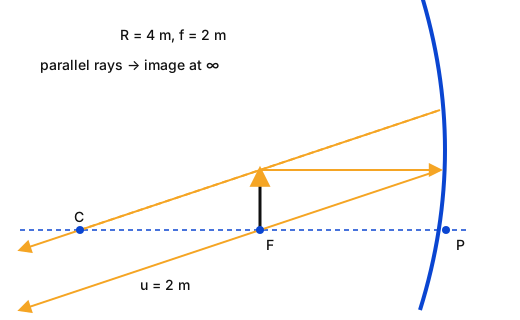
A concave mirror has a radius of curvature of 4.00 m. If any object is located at 2.00 m from this mirror, find the position of the image.
एक अवतल दर्पण की वक्रता त्रिज्या 4.00 m है। यदि कोई वस्तु इस दर्पण से 2.00 m की दूरी पर स्थित है, तो प्रतिबिंब की स्थिति ज्ञात कीजिए।
  1. ABetween pole and focus pointध्रुव और फोकस बिंदु के बीच
  2. BInfinityअनंत
  3. CAt centre of curvatureवक्रता केंद्र पर
  4. DZeroशून्य
Show answer

Concept: For a spherical mirror f=R2. An object placed at the focus of a concave mirror gives reflected rays that are parallel.

  1. f=4.002=2.00 m.
  2. Object distance =2.00 m → the object is at F.
  3. Mirror formula: 1v=1f−1u=1−2−1−2=0 → v=∞.
  4. Image is at infinity (highly enlarged, real, inverted).

Yaad rakhein: Object at F → image at infinity; object at infinity → image at F.

Answer: (B) Infinity

अवधारणा: गोलीय दर्पण में f=R2। अवतल दर्पण के फोकस पर रखी वस्तु से परावर्तित किरणें समांतर हो जाती हैं।

  1. f=4.002=2.00 m।
  2. वस्तु दूरी =2.00 m → वस्तु F पर है।
  3. दर्पण सूत्र: 1v=1f−1u=1−2−1−2=0 → v=∞।
  4. प्रतिबिंब अनंत पर (अत्यधिक बड़ा, वास्तविक, उल्टा)।

याद रखें: वस्तु F पर → प्रतिबिंब अनंत पर; वस्तु अनंत पर → प्रतिबिंब F पर।

उत्तर: (B) अनंत

RRB Technician Grade IIIGeneral ScienceConcave mirror – image formationRRB Technician Grade III 2024 · 26 Dec Shift 3 →
Q1276.
What is the full form of CNG?
CNG का पूर्ण रूप क्या है?
  1. ACombustible Nitrogen Gas
  2. BCompressed Natural Gas
  3. CChemical Natural Gas
  4. DCarbonated Natural Gas
Show answer

Concept: CNG stands for Compressed Natural Gas – natural gas (mainly methane, CH4) stored under high pressure.

  1. It burns cleanly with little smoke, so it is used in buses, autos and cars.
  2. It is easily transported through pipelines.

Yaad rakhein: CNG – Compressed Natural Gas; LPG – Liquefied Petroleum Gas.

Answer: (B) Compressed Natural Gas

अवधारणा: CNG का पूर्ण रूप है Compressed Natural Gas (संपीडित प्राकृतिक गैस) – उच्च दाब पर भरी प्राकृतिक गैस (मुख्यतः मेथेन, CH4)।

  1. यह कम धुएँ के साथ स्वच्छ रूप से जलती है, इसलिए बस, ऑटो, कार में प्रयुक्त।
  2. इसे पाइपलाइन से आसानी से पहुँचाया जाता है।

याद रखें: CNG – संपीडित प्राकृतिक गैस; LPG – द्रवित पेट्रोलियम गैस।

उत्तर: (B) Compressed Natural Gas

RRB Technician Grade IIIGeneral ScienceFuels – CNGRRB Technician Grade III 2024 · 26 Dec Shift 3 →
Q1277.
What is the term used to describe a solution that cannot dissolve any more solute at a given temperature?
उस विलयन को क्या कहा जाता है जो किसी दिए गए तापमान पर और अधिक विलेय को घोल नहीं सकता?
  1. AHeterogeneous solutionविषमांगी विलयन
  2. BUnsaturated solutionअसंतृप्त विलयन
  3. CDilute solutionतनु विलयन
  4. DSaturated solutionसंतृप्त विलयन
Show answer

Concept: A solution in which no more solute can dissolve at a given temperature is called a saturated solution.

  1. If more solute can still dissolve, it is unsaturated.
  2. The amount of solute in a saturated solution at that temperature is its solubility.
  3. Heating usually allows more solute to dissolve.

Yaad rakhein: Saturated = 'full' at that temperature.

Answer: (D) Saturated solution

अवधारणा: किसी निश्चित ताप पर जिस विलयन में और विलेय न घुल सके उसे संतृप्त विलयन कहते हैं।

  1. यदि और विलेय घुल सके तो वह असंतृप्त विलयन है।
  2. उस ताप पर संतृप्त विलयन में विलेय की मात्रा उसकी विलेयता कहलाती है।
  3. गर्म करने पर प्रायः और विलेय घुल जाता है।

याद रखें: संतृप्त = उस ताप पर 'भरा हुआ'।

उत्तर: (D) संतृप्त विलयन

RRB Technician Grade IIIGeneral ScienceSolutionsRRB Technician Grade III 2024 · 26 Dec Shift 3 →
Q1278.
In which state of matter does evaporation occur?
वाष्पीकरण पदार्थ की किस अवस्था में होता है?
  1. APlasma onlyकेवल प्लाज्मा
  2. BBoth plasma and liquidप्लाज्मा और द्रव दोनों
  3. CSolid onlyकेवल ठोस
  4. DLiquid onlyकेवल द्रव
Show answer

Concept: Evaporation is the change of a liquid into vapour at any temperature below its boiling point, from the surface.

  1. It is a surface phenomenon of liquids only.
  2. Solids changing directly to vapour is sublimation, not evaporation.
  3. Plasma is an ionised gas – no evaporation.

Yaad rakhein: Evaporation – liquid, surface, below boiling point, causes cooling.

Answer: (D) Liquid only

अवधारणा: वाष्पीकरण क्वथनांक से कम किसी भी ताप पर द्रव की सतह से उसका वाष्प में बदलना है।

  1. यह केवल द्रवों की सतही प्रक्रिया है।
  2. ठोस का सीधे वाष्प बनना ऊर्ध्वपातन है, वाष्पीकरण नहीं।
  3. प्लाज़्मा आयनित गैस है – वाष्पीकरण नहीं होता।

याद रखें: वाष्पीकरण – द्रव, सतह, क्वथनांक से नीचे, ठंडक पैदा करता है।

उत्तर: (D) केवल द्रव

RRB Technician Grade IIIGeneral ScienceEvaporationRRB Technician Grade III 2024 · 26 Dec Shift 3 →
Q1279.
Which of the following statements is correct about soaps and detergents?
साबुन और अपमार्जकों के बारे में निम्नलिखित में से कौन-सा कथन सही है?
  1. AHydrophilic ends interact with hydrocarbons.जलरागी (hydrophilic) सिरे हाइड्रोकार्बन से अन्योन्यक्रिया करते हैं।
  2. BHydrophobic interacts with water molecules.जलविरागी (hydrophobic) जल के अणुओं से अन्योन्यक्रिया करता है।
  3. CSoap molecules have no ends.साबुन के अणुओं के कोई सिरे नहीं होते।
  4. DSoaps molecules have two ends – one is hydrophilic and the other end is hydrophobic.साबुन के अणुओं के दो सिरे होते हैं – एक जलरागी (hydrophilic) और दूसरा सिरा जलविरागी (hydrophobic) होता है।
Show answer

Concept: A soap molecule has two ends: an ionic hydrophilic head and a long hydrocarbon hydrophobic tail.

  1. Hydrophilic end interacts with water (not hydrocarbons) – A wrong.
  2. Hydrophobic end interacts with oil/hydrocarbons (not water) – B wrong.
  3. Soap molecules do have two ends – C wrong; D is correct.
  4. Tails trap oil forming micelles, which are washed away by water.

Yaad rakhein: Head loves water, tail loves oil → micelle.

Answer: (D) Soaps molecules have two ends – one is hydrophilic and the other end is hydrophobic.

अवधारणा: साबुन के अणु के दो सिरे होते हैं: आयनिक जलरागी (hydrophilic) सिर और लंबी हाइड्रोकार्बन जलविरागी (hydrophobic) पूँछ।

  1. जलरागी सिरा जल से जुड़ता है (हाइड्रोकार्बन से नहीं) – A गलत।
  2. जलविरागी सिरा तेल/हाइड्रोकार्बन से जुड़ता है (जल से नहीं) – B गलत।
  3. साबुन अणु के दो सिरे होते हैं – C गलत; D सही।
  4. पूँछ तेल को फँसाकर मिसेल बनाती है जो पानी से धुल जाता है।

याद रखें: सिर को पानी पसंद, पूँछ को तेल → मिसेल।

उत्तर: (D) साबुन के अणुओं के दो सिरे होते हैं – एक जलरागी (hydrophilic) और दूसरा सिरा जलविरागी (hydrophobic) होता है।

RRB Technician Grade IIIGeneral ScienceSoaps and detergentsRRB Technician Grade III 2024 · 26 Dec Shift 3 →
Q1280.
A force of 20 N acts on a body in a direction opposite to the displacement of the body. If under the action of this force the displacement is 2m, the work done will be:
20 N का एक बल किसी पिंड पर उसके विस्थापन की विपरीत दिशा में कार्य करता है। यदि इस बल की क्रिया के अंतर्गत विस्थापन 2m है, तो किया गया कार्य होगा:
  1. A0 J
  2. B- 20 J
  3. C- 40 J
  4. D40 J
Show answer

Concept: Work W=Fscosθ. When force is opposite to displacement, θ=180∘ and cos180∘=−1.

  1. F=20 N, s=2 m, θ=180∘.
  2. W=20×2×(−1)=−40 J.
  3. Negative work – e.g. friction opposing motion.

Yaad rakhein: Force along motion → +W; opposite → −W; perpendicular → zero.

Answer: (C) - 40 J

अवधारणा: कार्य W=Fscosθ। बल विस्थापन के विपरीत हो तो θ=180∘ और cos180∘=−1।

  1. F=20 N, s=2 m, θ=180∘।
  2. W=20×2×(−1)=−40 J।
  3. ऋणात्मक कार्य – जैसे गति का विरोध करता घर्षण।

याद रखें: बल गति की दिशा में → धनात्मक; विपरीत → ऋणात्मक; लंबवत → शून्य।

उत्तर: (C) - 40 J

RRB Technician Grade IIIGeneral ScienceWork doneRRB Technician Grade III 2024 · 26 Dec Shift 3 →