Question bank

Q&A: practice questions with answers

Search questions on any topic. Filter by exam category, exam, subject and topic, try the question, then open the answer and explanation.

Courses – airGurukul

3,200 questions found.

Q1341.
Refer to the given series and answer the question that follows (all numbers are single-digit numbers only, and all counting is to be done from left to right).
(Left) 6 8 9 4 4 8 6 5 3 5 1 7 5 8 6 5 8 9 7 3 4 7 0 1 6 8 7 4 5 4 (Right)
How many such even digits are there, each of which is immediately preceded by an odd digit and also immediately followed by an even digit?
दी गई श्रृंखला को देखिए और उसके बाद आने वाले प्रश्न का उत्तर दीजिए (सभी संख्याएँ केवल एक अंक वाली संख्याएँ हैं, और सभी गणना बाएँ से दाएँ की जानी है)।
(बाएँ) 6 8 9 4 4 8 6 5 3 5 1 7 5 8 6 5 8 9 7 3 4 7 0 1 6 8 7 4 5 4 (दाएँ)
ऐसे कितने सम अंक हैं, जिनमें से प्रत्येक के ठीक पहले एक विषम अंक है और ठीक बाद भी एक सम अंक है?
  1. A6
  2. B0
  3. C4
  4. D3
Show answer

Concept: Pattern: (odd) X (even), where X is an even digit.

  1. 9 4 4 ✓ (positions 3–5).
  2. 5 8 6 ✓ (…7 5 8 6…).
  3. 1 6 8 ✓ (…0 1 6 8…).
  4. Others fail: 5 8 9, 3 4 7, 7 0 1, 7 4 5. Count =3.

Trick: Look only at even digits that come right after an odd digit, then check the next digit.

Answer: (D) 3

अवधारणा: ढाँचा: (विषम) X (सम), जहाँ X सम अंक है।

  1. 9 4 4 ✓ (स्थान 3–5)।
  2. 5 8 6 ✓ (…7 5 8 6…)।
  3. 1 6 8 ✓ (…0 1 6 8…)।
  4. बाकी असफल: 5 8 9, 3 4 7, 7 0 1, 7 4 5। संख्या =3।

ट्रिक: केवल उन सम अंकों को देखें जो विषम अंक के ठीक बाद हैं, फिर अगला अंक जाँचें।

उत्तर: (D) 3
RRB Technician Grade IIIGeneral Intelligence and ReasoningNumber series (digit positions)RRB Technician Grade III 2024 · 26 Dec Shift 2 →
Q1342.
Refer to the given series and answer the question that follows (all numbers are single-digit numbers only, and all counting is to be done from left to right).
(Left) 1 8 4 5 9 6 5 2 4 8 0 9 5 9 5 7 9 5 3 3 5 1 5 1 4 7 6 6 4 9 (Right)
How many such odd digits are there, each of which is immediately preceded by an odd digit and also immediately followed by an even digit?
दी गई श्रृंखला को देखिए और उसके बाद आने वाले प्रश्न का उत्तर दीजिए (सभी संख्याएँ केवल एक अंक वाली संख्याएँ हैं, और सभी गणना बाएँ से दाएँ की जानी है)।
(बाएँ) 1 8 4 5 9 6 5 2 4 8 0 9 5 9 5 7 9 5 3 3 5 1 5 1 4 7 6 6 4 9 (दाएँ)
ऐसे कितने विषम अंक हैं, जिनमें से प्रत्येक के ठीक पहले एक विषम अंक है और ठीक बाद एक सम अंक है?
  1. A2
  2. B0
  3. C3
  4. D4
Show answer

Concept: Pattern: (odd) X (even), where X is an odd digit.

  1. Odd digits followed by an even digit: 5→2, 7→6 and the two below.
  2. 5 9 6 ✓ (…4 5 9 6…).
  3. 5 1 4 ✓ (…1 5 1 4…).
  4. 6 5 2 and 4 7 6 fail (preceded by even). Count =2.

Trick: First mark odd digits followed by an even digit, then check the left neighbour.

Answer: (A) 2

अवधारणा: ढाँचा: (विषम) X (सम), जहाँ X विषम अंक है।

  1. सम अंक से पहले आने वाले विषम अंक: 5→2, 7→6 और नीचे के दो।
  2. 5 9 6 ✓ (…4 5 9 6…)।
  3. 5 1 4 ✓ (…1 5 1 4…)।
  4. 6 5 2 और 4 7 6 असफल (पहले सम अंक)। संख्या =2।

ट्रिक: पहले सम अंक से ठीक पहले वाले विषम अंक चिह्नित करें, फिर उनका बायाँ पड़ोसी जाँचें।

उत्तर: (A) 2

RRB Technician Grade IIIGeneral Intelligence and ReasoningNumber series (digit positions)RRB Technician Grade III 2024 · 26 Dec Shift 2 →
Q1343.
Six boxes G, H, I, J, K and L are kept one over the other but not necessarily in the same order. G is kept third from the bottom. Only two boxes are kept between G and H. Only three boxes are kept between H and I. J is kept immediately above G. K is kept immediately below I.
Q. How many boxes are kept between H and L?
छह बक्से G, H, I, J, K और L एक के ऊपर एक रखे गए हैं, लेकिन जरूरी नहीं कि इसी क्रम में हों। G नीचे से तीसरे स्थान पर रखा गया है। G और H के बीच केवल दो बक्से रखे गए हैं। H और I के बीच केवल तीन बक्से रखे गए हैं। J को G के ठीक ऊपर रखा गया है। K को I के ठीक नीचे रखा गया है।
प्रश्न: H और L के बीच कितने बक्से रखे गए हैं?
  1. AZeroशून्य
  2. BTwoदो
  3. CThreeतीन
  4. DOneएक
Show answer

Concept: Number positions 1 (bottom) to 6 (top) and place fixed clues first.

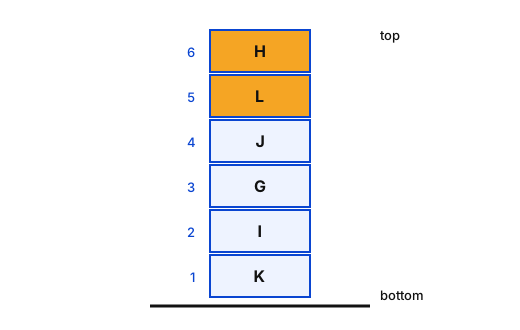
  1. G at 3; J immediately above ⇒ J at 4.
  2. Two between G and H ⇒ H at 6.
  3. Three between H and I ⇒ I at 2; K below I ⇒ K at 1; L at 5.
  4. H (6) and L (5) are adjacent ⇒ zero boxes between.

Yaad rakhein: 'n boxes between' means positions differ by n+1.

Answer: (A) Zero

अवधारणा: स्थान 1 (नीचे) से 6 (ऊपर) तक क्रमांकित करें और पहले निश्चित सूचनाएँ रखें।

  1. G स्थान 3 पर; J ठीक ऊपर ⇒ J स्थान 4।
  2. G और H के बीच दो ⇒ H स्थान 6।
  3. H और I के बीच तीन ⇒ I स्थान 2; K, I के नीचे ⇒ K स्थान 1; L स्थान 5।
  4. H (6) और L (5) सटे हैं ⇒ बीच में शून्य बक्से।

याद रखें: 'बीच में n बक्से' का अर्थ है स्थानों का अंतर n+1।

उत्तर: (A) शून्य

RRB Technician Grade IIIGeneral Intelligence and ReasoningBox arrangementRRB Technician Grade III 2024 · 26 Dec Shift 2 →
Q1344.
Select the triad which follows the same pattern as that followed by the two triads given below. Both triads follow the same pattern.
RM-HL-OQ
NI-DH-KM
उस त्रिक का चयन कीजिए जो उसी पैटर्न का अनुसरण करता है जिसका अनुसरण नीचे दिए गए दो त्रिक करते हैं। दोनों त्रिक एक ही पैटर्न का अनुसरण करते हैं।
RM-HL-OQ
NI-DH-KM
  1. APK-FI-MN
  2. BPK-FJ-MO
  3. CQK-FI-MO
  4. DQK-FJ-MN
Show answer

Concept: Compare letter positions across the three pairs of each triad.

  1. RM→HL: R−10=H, M−1=L; HL→OQ: H+7=O, L+5=Q.
  2. NI→DH→KM follows the same (−10,−1), (+7,+5).
  3. PK→FJ: P−10=F, K−1=J; FJ→MO: F+7=M, J+5=O ✓.

Trick: Second letters: K−1=J eliminates 'FI' options; then J+5=O picks PK-FJ-MO.

Answer: (B) PK-FJ-MO

अवधारणा: हर त्रिक के तीनों युग्मों में अक्षरों की स्थिति की तुलना करें।

  1. RM→HL: R−10=H, M−1=L; HL→OQ: H+7=O, L+5=Q।
  2. NI→DH→KM भी (−10,−1), (+7,+5) का पालन करता है।
  3. PK→FJ: P−10=F, K−1=J; FJ→MO: F+7=M, J+5=O ✓।

ट्रिक: दूसरे अक्षर: K−1=J से 'FI' वाले विकल्प हटते हैं; फिर J+5=O से PK-FJ-MO।

उत्तर: (B) PK-FJ-MO

RRB Technician Grade IIIGeneral Intelligence and ReasoningLetter triad analogyRRB Technician Grade III 2024 · 26 Dec Shift 2 →
Q1345.
OTRP is related to UZXV in a certain way based on the English alphabetical order. In the same way, HMKI is related to NSQO. To which of the following options is MRPN related, following the same logic?
अंग्रेजी वर्णमाला क्रम के आधार पर OTRP एक निश्चित प्रकार से UZXV से संबंधित है। उसी प्रकार, HMKI, NSQO से संबंधित है। समान तर्क का अनुसरण करते हुए, MRPN निम्नलिखित में से किस विकल्प से संबंधित है?
  1. ASXTV
  2. BXSVT
  3. CSXVT
  4. DXSTV
Show answer

Concept: Each letter moves forward by the same number of places.

  1. OTRP→UZXV: O+6=U, T+6=Z, R+6=X, P+6=V.
  2. HMKI→NSQO: each +6 ✓.
  3. MRPN: M+6=S, R+6=X, P+6=V, N+6=T → SXVT.

Trick: Find the shift from the first letter only, then apply it to all.

Answer: (C) SXVT

अवधारणा: हर अक्षर समान स्थान आगे बढ़ता है।

  1. OTRP→UZXV: O+6=U, T+6=Z, R+6=X, P+6=V।
  2. HMKI→NSQO: प्रत्येक +6 ✓।
  3. MRPN: M+6=S, R+6=X, P+6=V, N+6=T → SXVT।

ट्रिक: पहले अक्षर से अंतर निकालें, फिर सब पर लागू करें।

उत्तर: (C) SXVT

RRB Technician Grade IIIGeneral Intelligence and ReasoningLetter analogyRRB Technician Grade III 2024 · 26 Dec Shift 2 →
Q1346.
Based on the English alphabetical order, three of the following four letter-clusters are alike in a certain way and thus form a group. Which letter-cluster does not belong to that group?
(Note: The odd one out is not based on the number of consonants/vowels or their position in the letter-cluster.)
अंग्रेजी वर्णमाला क्रम के आधार पर, निम्नलिखित चार अक्षर-समूहों में से तीन किसी निश्चित प्रकार से एक समान हैं और इस प्रकार एक समूह बनाते हैं। कौन-सा अक्षर-समूह उस समूह से संबंधित नहीं है?
(ध्यान दें: असंगत अक्षर-समूह, उसमें व्यंजनों/स्वरों की संख्या या उनके स्थान पर आधारित नहीं है।)
  1. AQWC
  2. BGMS
  3. CIOU
  4. DSDF
Show answer

Concept: Check the gap between consecutive letters (Z wraps to A).

  1. QWC: Q+6=W, W+6=C (wraps). GMS: G+6=M, M+6=S.
  2. IOU: I+6=O, O+6=U.
  3. SDF: S→D is not +6 ⇒ odd one.

Trick: Use EJOTY positions (E5, J10, O15, T20, Y25) to count gaps fast.

Answer: (D) SDF

अवधारणा: क्रमागत अक्षरों के बीच का अंतर देखें (Z के बाद फिर A)।

  1. QWC: Q+6=W, W+6=C (चक्रीय)। GMS: G+6=M, M+6=S।
  2. IOU: I+6=O, O+6=U।
  3. SDF: S→D, +6 नहीं ⇒ भिन्न।

ट्रिक: अंतर जल्दी गिनने के लिए EJOTY (E5, J10, O15, T20, Y25) याद रखें।

उत्तर: (D) SDF

RRB Technician Grade IIIGeneral Intelligence and ReasoningOdd one out (letter clusters)RRB Technician Grade III 2024 · 26 Dec Shift 2 →
Q1347.
In a certain code language,
'A + B' means 'A is the mother of B',
'A – B' means 'A is the son of B',
'A x B' means 'A is the husband of B'
and 'A ÷ B' means 'A is the brother of B'.
How is O related to Q if 'M + N ÷ O x P + Q'?
एक निश्चित कूट भाषा में,
'A + B' का अर्थ है 'A, B की माता है',
'A – B' का अर्थ है 'A, B का पुत्र है',
'A x B' का अर्थ है 'A, B का पति है'
और 'A ÷ B' का अर्थ है 'A, B का भाई है'।
यदि 'M + N ÷ O x P + Q' है, तो O का Q से क्या संबंध है?
  1. AFatherपिता
  2. BSonपुत्र
  3. CFather's brotherपिता का भाई
  4. DBrotherभाई
Show answer

Concept: Decode each symbol step by step and draw the family tree.

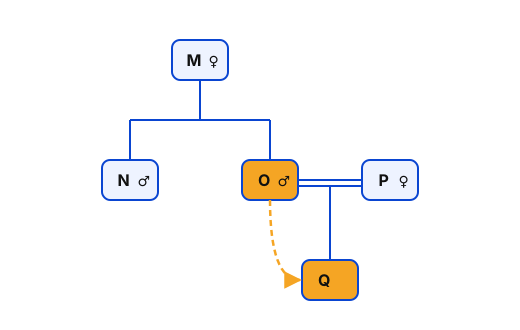
  1. M + N: M is mother of N. N ÷ O: N is brother of O ⇒ M is mother of O too.
  2. O × P: O is husband of P (O is male).
  3. P + Q: P is mother of Q ⇒ O (P's husband) is father of Q.

Trick: Husband of the mother = father.

Answer: (A) Father

अवधारणा: हर चिह्न को क्रम से डिकोड करें और वंश-वृक्ष बनाएँ।

  1. M + N: M, N की माँ है। N ÷ O: N, O का भाई है ⇒ M, O की भी माँ है।
  2. O × P: O, P का पति है (O पुरुष)।
  3. P + Q: P, Q की माँ है ⇒ O (P का पति), Q का पिता है।

ट्रिक: माँ का पति = पिता।

उत्तर: (A) पिता

RRB Technician Grade IIIGeneral Intelligence and ReasoningBlood relation (coded)RRB Technician Grade III 2024 · 26 Dec Shift 2 →
Q1348.
Select the set in which the numbers are related in the same way as are the numbers of the following sets.
(NOTE: Operations should be performed on the whole numbers, without breaking down the numbers into its constituent digits. E.g. 13 – Operations on 13 such as adding/subtracting/multiplying etc. to 13 can be performed. Breaking down 13 into 1 and 3 and then performing mathematical operations on 1 and 3 is not allowed.)
(8, 4, 12)
(18, 9, 27)
उस समुच्चय का चयन कीजिए जिसकी संख्याएँ आपस में उसी प्रकार संबंधित हैं जिस प्रकार निम्नलिखित समुच्चयों की संख्याएँ संबंधित हैं।
(ध्यान दें: संक्रियाएँ पूर्ण संख्याओं पर की जानी चाहिए, संख्याओं को उनके घटक अंकों में तोड़े बिना। उदाहरण के लिए 13 – 13 पर संक्रियाएँ जैसे 13 में जोड़ना/घटाना/गुणा करना आदि किया जा सकता है। 13 को 1 और 3 में तोड़कर फिर 1 और 3 पर गणितीय संक्रियाएँ करने की अनुमति नहीं है।)
(8, 4, 12)
(18, 9, 27)
  1. A(20, 12, 36)
  2. B(24, 12, 34)
  3. C(24, 12, 36)
  4. D(24, 14, 36)
Show answer

Concept: Find the rule: second =first2, third = first + second.

  1. (8,4,12): 82=4, 8+4=12.
  2. (18,9,27): 182=9, 18+9=27.
  3. (24,12,36): 242=12, 24+12=36 ✓.

Trick: Third =1.5× first; only 24→36 with middle 12 fits.

Answer: (C) (24, 12, 36)

अवधारणा: नियम: दूसरी =पहली2, तीसरी = पहली + दूसरी।

  1. (8,4,12): 82=4, 8+4=12।
  2. (18,9,27): 182=9, 18+9=27।
  3. (24,12,36): 242=12, 24+12=36 ✓।

ट्रिक: तीसरी =1.5× पहली; केवल 24→36 और बीच में 12 सही बैठता है।

उत्तर: (C) (24, 12, 36)

RRB Technician Grade IIIGeneral Intelligence and ReasoningNumber set analogyRRB Technician Grade III 2024 · 26 Dec Shift 2 →
Q1349.
In a certain code language, 'Come Back Home' is written as 'Tu Ru Qu' and 'She Went Back' is written as 'Du Su Ru' and 'He Went Home' is written as 'Pu Tu Du'. How is 'She' written in the given language?
एक निश्चित कूट भाषा में, 'Come Back Home' को 'Tu Ru Qu' लिखा जाता है, 'She Went Back' को 'Du Su Ru' लिखा जाता है और 'He Went Home' को 'Pu Tu Du' लिखा जाता है। दी गई भाषा में 'She' को कैसे लिखा जाता है?
  1. ATu
  2. BSu
  3. CDu
  4. DRu
Show answer

Concept: Words common to two sentences share the common code.

  1. Back (sentences 1, 2) = Ru; Home (1, 3) = Tu; Went (2, 3) = Du.
  2. Sentence 2: She Went Back = Du Su Ru.
  3. Remove Du (Went) and Ru (Back) ⇒ She = Su.

Trick: Find codes of the shared words first; the leftover code is the answer.

Answer: (B) Su

अवधारणा: दो वाक्यों में समान शब्दों का कूट भी समान होता है।

  1. Back (वाक्य 1, 2) = Ru; Home (1, 3) = Tu; Went (2, 3) = Du।
  2. वाक्य 2: She Went Back = Du Su Ru।
  3. Du (Went) और Ru (Back) हटाने पर ⇒ She = Su।

ट्रिक: पहले साझा शब्दों के कूट निकालें; बचा हुआ कूट ही उत्तर है।

उत्तर: (B) Su

RRB Technician Grade IIIGeneral Intelligence and ReasoningCoding-decodingRRB Technician Grade III 2024 · 26 Dec Shift 2 →
Q1350.
Which of the following options should come in place of the question mark (?) in the given series based on the English alphabetical order?
IUF, LVJ, OWN, RXR, ?
अंग्रेजी वर्णमाला क्रम के आधार पर दी गई श्रृंखला में प्रश्न चिह्न (?) के स्थान पर निम्नलिखित में से कौन-सा विकल्प आना चाहिए?
IUF, LVJ, OWN, RXR, ?
  1. AUSV
  2. BVYU
  3. CVYX
  4. DUYV
Show answer

Concept: Track each letter position separately.

  1. 1st: I, L, O, R → +3 → U.
  2. 2nd: U, V, W, X → +1 → Y.
  3. 3rd: F, J, N, R → +4 → V. Answer: UYV.

Trick: Middle letters run U, V, W, X, Y — only options with Y in the middle remain; then check the first letter U.

Answer: (D) UYV

अवधारणा: हर स्थान के अक्षर को अलग-अलग देखें।

  1. पहला: I, L, O, R → +3 → U।
  2. दूसरा: U, V, W, X → +1 → Y।
  3. तीसरा: F, J, N, R → +4 → V। उत्तर: UYV।

ट्रिक: बीच के अक्षर U, V, W, X, Y — केवल Y वाले विकल्प बचते हैं; फिर पहला अक्षर U जाँचें।

उत्तर: (D) UYV

RRB Technician Grade IIIGeneral Intelligence and ReasoningAlphabet seriesRRB Technician Grade III 2024 · 26 Dec Shift 2 →
Q1351.
A pea plant climbs on other plants or fences with the help of:
मटर का पौधा किसकी सहायता से अन्य पौधों या बाड़ पर चढ़ता है?
  1. Asepalsबाह्यदल (sepals)
  2. Bpricklesकांटे (prickles)
  3. Ctendrilsप्रतान (tendrils)
  4. Drootsजड़ें (roots)
Show answer

Concept: Weak-stemmed climbers like pea have thin, thread-like tendrils that are sensitive to touch.

  1. When a tendril touches a support, the part away from the support grows faster.
  2. So the tendril coils around the fence or plant and the pea plant climbs up.
  3. Sepals protect the bud, prickles give defence, roots absorb water – none help in climbing.

Yaad rakhein: Pea, cucumber, grapes, gourd climb using tendrils (touch-sensitive growth = thigmotropism).

Answer: (C) tendrils

अवधारणा: मटर जैसी कमज़ोर तने वाली बेलों में पतले, धागे जैसे प्रतान (tendrils) होते हैं जो स्पर्श के प्रति संवेदनशील होते हैं।

  1. सहारे को छूने पर प्रतान का दूर वाला भाग तेज़ी से बढ़ता है।
  2. इससे प्रतान सहारे के चारों ओर लिपट जाता है और पौधा ऊपर चढ़ता है।
  3. बाह्यदल कली की रक्षा, काँटे सुरक्षा और जड़ें जल-अवशोषण करती हैं – चढ़ने में नहीं।

याद रखें: मटर, खीरा, अंगूर, लौकी – सभी प्रतान से चढ़ते हैं (स्पर्श-अनुवर्तन)।

उत्तर: (C) प्रतान (tendrils)

RRB Technician Grade IIIGeneral SciencePlant movement – tendrilsRRB Technician Grade III 2024 · 26 Dec Shift 2 →
Q1352.
Which of the following observable changes indicate that a chemical reaction has occurred?
(a) Formation of gas
(b) Formation of precipitates
(c) Change in physical state
(d) Colour change
निम्नलिखित में से कौन-से प्रेक्षणीय परिवर्तन यह दर्शाते हैं कि एक रासायनिक अभिक्रिया हुई है?
(a) गैस का बनना
(b) अवक्षेप का बनना
(c) भौतिक अवस्था में परिवर्तन
(d) रंग में परिवर्तन
  1. AAll (a), (b), (c) and (d)(a), (b), (c) और (d) सभी
  2. BOnly (a) and (b)केवल (a) और (b)
  3. COnly (a), (b) and (c)केवल (a), (b) और (c)
  4. DOnly (c) and (d)केवल (c) और (d)
Show answer

Concept: A chemical reaction is recognised by observable signs: gas evolution, precipitate formation, change in state, colour change and temperature change.

  1. (a) Gas: Zn + dil. H2SO4 gives H2 bubbles.
  2. (b) Precipitate: Pb(NO3)2 + KI gives yellow PbI2.
  3. (c) State change: burning candle wax; (d) colour change: iron nail in CuSO4 solution.

Yaad rakhein: NCERT list – gas, precipitate, state, colour, temperature: all indicate a chemical reaction.

Answer: (A) All (a), (b), (c) and (d)

अवधारणा: रासायनिक अभिक्रिया की पहचान इन परिवर्तनों से होती है: गैस निकलना, अवक्षेप बनना, अवस्था परिवर्तन, रंग परिवर्तन और ताप परिवर्तन।

  1. (a) गैस: Zn + तनु H2SO4 से H2 के बुलबुले।
  2. (b) अवक्षेप: Pb(NO3)2 + KI से पीला PbI2।
  3. (c) अवस्था परिवर्तन: मोमबत्ती का जलना; (d) रंग परिवर्तन: CuSO4 विलयन में लोहे की कील।

याद रखें: NCERT सूची – गैस, अवक्षेप, अवस्था, रंग, ताप – सभी रासायनिक अभिक्रिया के संकेत हैं।

उत्तर: (A) (a), (b), (c) और (d) सभी

RRB Technician Grade IIIGeneral ScienceChemical reactions – observable changesRRB Technician Grade III 2024 · 26 Dec Shift 2 →
Q1353.
Which hormone regulates carbohydrate, protein and fat metabolism in the body and iodine is essential for the synthesis of it?
कौन-सा हार्मोन शरीर में कार्बोहाइड्रेट, प्रोटीन और वसा के उपापचय का नियंत्रण करता है और इसके संश्लेषण के लिए आयोडीन आवश्यक है?
  1. AAdrenaline hormoneएड्रीनलीन हार्मोन
  2. BTestosterone hormoneटेस्टोस्टेरोन हार्मोन
  3. CInsulin hormoneइंसुलिन हार्मोन
  4. DThyroxin hormoneथायरॉक्सिन हार्मोन
Show answer

Concept: The thyroid gland secretes thyroxin, which controls carbohydrate, protein and fat metabolism.

  1. Iodine is an essential part of the thyroxin molecule.
  2. Iodine deficiency → less thyroxin → goitre (swollen neck).
  3. Adrenaline – emergency; insulin – blood sugar; testosterone – male characters.

Trick: Iodine → Thyroid → Thyroxin → Metabolism; that is why iodised salt is advised.

Answer: (D) Thyroxin hormone

अवधारणा: थायरॉयड ग्रंथि थायरॉक्सिन स्रावित करती है, जो कार्बोहाइड्रेट, प्रोटीन और वसा के उपापचय को नियंत्रित करता है।

  1. थायरॉक्सिन बनाने के लिए आयोडीन आवश्यक है।
  2. आयोडीन की कमी → थायरॉक्सिन कम → घेंघा (गॉयटर)।
  3. एड्रीनलिन – आपातकाल; इंसुलिन – रक्त शर्करा; टेस्टोस्टेरोन – नर लक्षण।

ट्रिक: आयोडीन → थायरॉयड → थायरॉक्सिन → उपापचय; इसलिए आयोडीन युक्त नमक की सलाह दी जाती है।

उत्तर: (D) थायरॉक्सिन हार्मोन

RRB Technician Grade IIIGeneral ScienceThyroxin hormoneRRB Technician Grade III 2024 · 26 Dec Shift 2 →
Q1354.
Which of the following correctly describes the sum of kinetic energy and potential energy of an object?
निम्नलिखित में से कौन-सा किसी वस्तु की गतिज ऊर्जा और स्थितिज ऊर्जा के योग का सही वर्णन करता है?
  1. ATotal mechanical energyकुल यांत्रिक ऊर्जा
  2. BTotal thermal energyकुल तापीय ऊर्जा
  3. CTotal chemical energyकुल रासायनिक ऊर्जा
  4. DTotal electrical energyकुल विद्युत ऊर्जा
Show answer

Concept: Energy due to motion is kinetic energy and energy due to position/height is potential energy.

  1. KE=12mv2 and PE=mgh.
  2. Their sum is the total mechanical energy: E=KE+PE.
  3. For a freely falling body (no air resistance), this total stays constant.

Yaad rakhein: Mechanical = Kinetic + Potential; thermal, chemical, electrical are other forms.

Answer: (A) Total mechanical energy

अवधारणा: गति के कारण ऊर्जा गतिज ऊर्जा और स्थिति/ऊँचाई के कारण ऊर्जा स्थितिज ऊर्जा कहलाती है।

  1. KE=12mv2 तथा PE=mgh।
  2. दोनों का योग कुल यांत्रिक ऊर्जा है: E=KE+PE।
  3. मुक्त रूप से गिरती वस्तु (वायु प्रतिरोध नहीं) में यह योग स्थिर रहता है।

याद रखें: यांत्रिक = गतिज + स्थितिज; ऊष्मीय, रासायनिक, विद्युत अलग रूप हैं।

उत्तर: (A) कुल यांत्रिक ऊर्जा

RRB Technician Grade IIIGeneral ScienceMechanical energyRRB Technician Grade III 2024 · 26 Dec Shift 2 →
Q1355.
Which of the following is NOT a phase transition between the states of matter?
निम्नलिखित में से कौन-सा पदार्थ की अवस्थाओं के बीच प्रावस्था संक्रमण (phase transition) नहीं है?
  1. ASublimationऊर्ध्वपातन (Sublimation)
  2. BEmissionउत्सर्जन (Emission)
  3. CVaporizationवाष्पन (Vaporization)
  4. DCondensationसंघनन (Condensation)
Show answer

Concept: A phase transition is a change of matter from one state (solid, liquid, gas) to another.

  1. Sublimation: solid → gas directly (camphor).
  2. Vaporization: liquid → gas; Condensation: gas → liquid.
  3. Emission (e.g. of light or gases) is not a change of state.

Yaad rakhein: State changes: melting, freezing, vaporization, condensation, sublimation, deposition.

Answer: (B) Emission

अवधारणा: अवस्था परिवर्तन में पदार्थ एक अवस्था (ठोस, द्रव, गैस) से दूसरी में बदलता है।

  1. ऊर्ध्वपातन: ठोस → सीधे गैस (कपूर)।
  2. वाष्पन: द्रव → गैस; संघनन: गैस → द्रव।
  3. उत्सर्जन (प्रकाश या गैसों का निकलना) अवस्था परिवर्तन नहीं है।

याद रखें: अवस्था परिवर्तन: गलन, हिमीकरण, वाष्पन, संघनन, ऊर्ध्वपातन, निक्षेपण।

उत्तर: (B) उत्सर्जन (Emission)

RRB Technician Grade IIIGeneral ScienceChange of stateRRB Technician Grade III 2024 · 26 Dec Shift 2 →
Q1356.
The magnetic field lines inside a current carrying solenoid are in the form of:
विद्युत धारावाही परिनालिका (solenoid) के अंदर चुंबकीय क्षेत्र रेखाएँ किस रूप में होती हैं?
  1. Aperpendicular straight linesलंबवत सरल रेखाएँ
  2. Bconcentric circlesसंकेंद्री वृत्त
  3. Cparallel straight linesसमांतर सरल रेखाएँ
  4. Dcurved linesवक्र रेखाएँ
Show answer

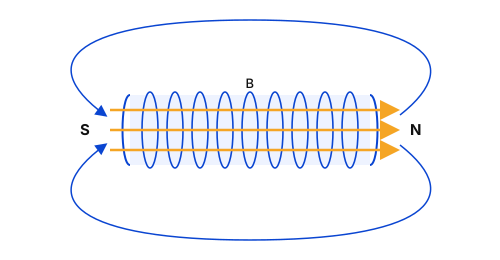
Concept: A solenoid is a long coil of many turns of insulated wire. The field produced by all turns adds up inside it.

  1. Inside the solenoid the field is uniform (same everywhere).
  2. A uniform field is shown by parallel straight lines, equally spaced.
  3. Outside, lines curve from N to S like a bar magnet.

Yaad rakhein: Concentric circles = straight wire; parallel straight lines = inside a solenoid.

Answer: (C) parallel straight lines

अवधारणा: परिनालिका विद्युतरोधी तार के अनेक फेरों की लंबी कुंडली है। सभी फेरों का क्षेत्र भीतर जुड़ जाता है।

  1. परिनालिका के भीतर चुंबकीय क्षेत्र एकसमान होता है।
  2. एकसमान क्षेत्र को समान दूरी वाली समांतर सीधी रेखाओं से दिखाते हैं।
  3. बाहर रेखाएँ छड़ चुंबक की तरह N से S की ओर मुड़ती हैं।

याद रखें: संकेंद्री वृत्त = सीधा तार; समांतर सीधी रेखाएँ = परिनालिका के भीतर।

उत्तर: (C) समांतर सरल रेखाएँ

RRB Technician Grade IIIGeneral ScienceMagnetic field of a solenoidRRB Technician Grade III 2024 · 26 Dec Shift 2 →
Q1357.
Which of the following changes take place in plants by environmental triggers such as light, or gravity?
प्रकाश या गुरुत्व जैसे पर्यावरणीय उद्दीपकों द्वारा पौधों में निम्नलिखित में से कौन-से परिवर्तन होते हैं?
  1. AChange in the size of ovary and anther of the flower they produceउनके द्वारा उत्पन्न पुष्प के अंडाशय और परागकोश के आकार में परिवर्तन
  2. BChange in the directions that plant parts grow inपौधे के भागों के वृद्धि करने की दिशाओं में परिवर्तन
  3. CChange in the shape of the leaves and fruits they provideउनके द्वारा दी जाने वाली पत्तियों और फलों की आकृति में परिवर्तन
  4. DChange in the branching pattern of their rootsउनकी जड़ों के शाखन प्रतिरूप में परिवर्तन
Show answer

Concept: Plants respond to environmental stimuli like light, gravity, water and chemicals by directional growth called tropism.

  1. Phototropism: shoot grows towards light.
  2. Geotropism: root grows downward with gravity, shoot upward.
  3. So these triggers change the direction in which plant parts grow.

Yaad rakhein: Photo – light, Geo – gravity, Hydro – water, Chemo – chemicals.

Answer: (B) Change in the directions that plant parts grow in

अवधारणा: पौधे प्रकाश, गुरुत्व, जल और रसायन जैसे उद्दीपनों पर दिशात्मक वृद्धि द्वारा अनुक्रिया करते हैं, जिसे अनुवर्तन कहते हैं।

  1. प्रकाशानुवर्तन: तना प्रकाश की ओर बढ़ता है।
  2. गुरुत्वानुवर्तन: जड़ नीचे और तना ऊपर बढ़ता है।
  3. अतः ये उद्दीपन पौधों के भागों की वृद्धि की दिशा बदलते हैं।

याद रखें: प्रकाश – Photo, गुरुत्व – Geo, जल – Hydro, रसायन – Chemo।

उत्तर: (B) पौधे के भागों के वृद्धि करने की दिशाओं में परिवर्तन

RRB Technician Grade IIIGeneral ScienceTropic movements in plantsRRB Technician Grade III 2024 · 26 Dec Shift 2 →
Q1358.
If 400 J of heat is produced each second in a 4 Ω resistance, then the current flowing across the resistor is:
यदि 4 Ω के प्रतिरोध में प्रत्येक सेकंड 400 J ऊष्मा उत्पन्न होती है, तो प्रतिरोधक से प्रवाहित होने वाली धारा है:
  1. A40 A
  2. B20 A
  3. C30 A
  4. D10 A
Show answer

Concept: Heat produced per second (power) in a resistor: P=I2R.

  1. P=400 W (400 J each second), R=4 Ω.
  2. I2=PR=4004=100.
  3. I=100=10 A.

Trick: Check option: 102×4=400 ✓ – just square each option and multiply by 4.

Answer: (D) 10 A

अवधारणा: प्रतिरोध में प्रति सेकंड उत्पन्न ऊष्मा (शक्ति): P=I2R।

  1. P=400 W (प्रति सेकंड 400 J), R=4 Ω।
  2. I2=PR=4004=100।
  3. I=100=10 A।

ट्रिक: विकल्प जाँचें: 102×4=400 ✓ – हर विकल्प का वर्ग करके 4 से गुणा करें।

उत्तर: (D) 10 A

RRB Technician Grade IIIGeneral ScienceHeating effect of currentRRB Technician Grade III 2024 · 26 Dec Shift 2 →
Q1359.
As the temperature increases, the kinetic energy of particles of matter _______.
जैसे-जैसे तापमान बढ़ता है, पदार्थ के कणों की गतिज ऊर्जा _______।
  1. Aremains the sameसमान रहती है
  2. Bbecomes zeroशून्य हो जाती है
  3. Cdecreasesघटती है
  4. Dincreasesबढ़ती है
Show answer

Concept: Temperature is a measure of the average kinetic energy of the particles of matter.

  1. On heating, particles absorb energy and vibrate/move faster.
  2. Faster motion means higher kinetic energy.
  3. That is why heated solids melt and liquids evaporate faster.

Yaad rakhein: Temperature ↑ ⇒ KE of particles ↑ (and diffusion becomes faster).

Answer: (D) increases

अवधारणा: ताप पदार्थ के कणों की औसत गतिज ऊर्जा का माप है।

  1. गर्म करने पर कण ऊर्जा लेकर तेज़ी से गति/कंपन करते हैं।
  2. तेज़ गति का अर्थ अधिक गतिज ऊर्जा है।
  3. इसी कारण गर्म ठोस पिघलते हैं और द्रव तेज़ी से वाष्पित होते हैं।

याद रखें: ताप ↑ ⇒ कणों की गतिज ऊर्जा ↑ (विसरण भी तेज़)।

उत्तर: (D) बढ़ती है

RRB Technician Grade IIIGeneral ScienceKinetic energy and temperatureRRB Technician Grade III 2024 · 26 Dec Shift 2 →
Q1360.
In which of the following types of reaction is there an exchange of ions between the reactants?
निम्नलिखित में से किस प्रकार की अभिक्रिया में अभिकारकों के बीच आयनों का आदान-प्रदान होता है?
  1. ADouble displacement reactionद्विविस्थापन अभिक्रिया
  2. BDisproportion reactionअसमानुपातन अभिक्रिया
  3. CDecompositionवियोजन (अपघटन)
  4. DAddition reactionयोगात्मक अभिक्रिया
Show answer

Concept: In a double displacement reaction, two compounds exchange their ions to form two new compounds.

  1. General form: AB+CD→AD+CB.
  2. Example: Na2SO4+BaCl2→BaSO4↓+2NaCl.
  3. Decomposition breaks one compound; addition joins molecules – no ion exchange.

Trick: “Partners swap” = double displacement; often a precipitate forms.

Answer: (A) Double displacement reaction

अवधारणा: द्वि-विस्थापन अभिक्रिया में दो यौगिक आपस में आयनों का आदान-प्रदान करके दो नए यौगिक बनाते हैं।

  1. सामान्य रूप: AB+CD→AD+CB।
  2. उदाहरण: Na2SO4+BaCl2→BaSO4↓+2NaCl।
  3. अपघटन में एक यौगिक टूटता है; योगात्मक में अणु जुड़ते हैं – आयन विनिमय नहीं।

ट्रिक: “साथी बदलो” = द्वि-विस्थापन; प्रायः अवक्षेप बनता है।

उत्तर: (A) द्विविस्थापन अभिक्रिया

RRB Technician Grade IIIGeneral ScienceDouble displacement reactionRRB Technician Grade III 2024 · 26 Dec Shift 2 →